1. Introduction
Live Fuel Moisture Content (LFMC) is a critical determinant of vegetation flammability and fire behaviour, influencing ignition potential, fire spread, and severity [
1,
2,
3]. Accurate LFMC estimation is essential for operational fire management planning, including prescribed burning, treatment prioritisation, and containment planning, as well as wildfire risk modelling [
4,
5]. Remote sensing has enabled large-scale LFMC monitoring, but existing approaches face limitations in spatial resolution and computational efficiency [
6].
Optical remote sensing has historically been the primary domain for LFMC estimation, exploiting the sensitivity of vegetation water content to reflectance variations in the shortwave infrared (SWIR) and near-infrared (NIR) regions [
3]. Retrieval strategies generally rely on radiative transfer model (RTM) inversions and empirical techniques, including machine learning and statistical models [
5,
7,
8,
9]. RTM-based methods provide strong theoretical foundations but are computationally demanding, especially at high spatial resolutions. Empirical models are computationally efficient but depend on geographically biassed ground samples, limiting global applicability.
The Moderate Resolution Imaging Spectroradiometer (MODIS) has been the primary sensor for LFMC modelling due to its daily observations and long-term data record [
3]. In Australia, the Australian Flammability Monitoring System (AFMS) is the only MODIS-based LFMC product operating in a pre-operational capacity [
5]. AFMS estimates LFMC using vegetation-type-specific look-up tables (LUTs) for forests, shrub-lands, and grasslands. For each pixel, the 40 most spectrally similar entries are selected from the LUT, and the median LFMC of those entries is used as the final estimate. The number of selected spectra was determined through sensitivity analysis to maximise R
2 and minimise RMSE against field observations. [
5]. While effective, this approach is computationally intensive and constrained by the 500 m spatial resolution of MODIS data, which limits its suitability for fine-scale fire management. Additionally, in heterogeneous landscapes, a single MODIS pixel may encompass multiple vegetation types and microclimates, reducing retrieval accuracy.
Alternative sensors have been explored, such as the Advanced Himawari Imager (AHI), which provides sub-daily observations useful for short-term moisture dynamics [
10]. However, this increased temporal frequency comes at the cost of spatial resolution (2 km), which is even coarser than MODIS and restricts its applicability for detailed landscape-scale assessments. Together, MODIS- and AHI-based approaches illustrate the fundamental trade-off between temporal frequency and spatial detail for operational LFMC monitoring. While both remain valuable for continental-scale fire season outlooks and strategic planning, their coarse spatial resolution limits their utility for fine-scale fuel management and tactical fire planning.
The launch of Sentinel-2 in 2015 under the Copernicus Programme introduced multispectral imagery at 10–20 m resolution and red-edge bands, which are particularly sensitive to vegetation structure and pigment dynamics [
11], thereby offering a significant opportunity to improve LFMC mapping at fine scales.
Recent studies have applied both RTM inversion frameworks and empirical approaches to Sentinel-2 reflectance for site-level or regional LFMC retrievals [
12,
13,
14], in some cases incorporating meteorological variables [
15], or Sentinel-1 radar backscatter [
16]. While investigations demonstrate strong potential for high-resolution LFMC estimation, their implementation has typically focused on specific species or homogeneous vegetation types and remains geographically constrained. Empirical approaches offer a computationally efficient solution and are relatively straightforward to deploy over large spatial domains. However, their transferability across ecosystems and climatic gradients is often limited, as model performance depends strongly on the representativeness of the training data. Although global datasets such as Globe-LFMC 2.0 [
17] substantially improve data availability, the spatial and ecological distribution of LFMC measurements remains uneven worldwide, which can constrain model generalisation in underrepresented vegetation types or climatic regions without additional recalibration.
In contrast, physically based inversion methods grounded in RTM theory are less reliant on local calibration and may offer stronger theoretical transferability. Nevertheless, applying full RTM inversion at Sentinel-2 spatial resolution remains computationally demanding, particularly when extended to continental-scale domains.
Two conceptually distinct approaches can be followed when generating satellite-based LFMC products: (i) direct physical or semi-physical estimation of LFMC from reflectance using radiative transfer inversion or empirical relationships calibrated against field data, and (ii) operational product emulation, in which a higher-resolution sensor is trained to reproduce the behaviour of an existing, validated LFMC monitoring system. The first approach aims to retrieve LFMC as a biophysical variable directly from spectral signals, whereas the second prioritises consistency, scalability, and operational continuity with an established framework. These approaches differ not only in methodology but also in their intended application and evaluation criteria.
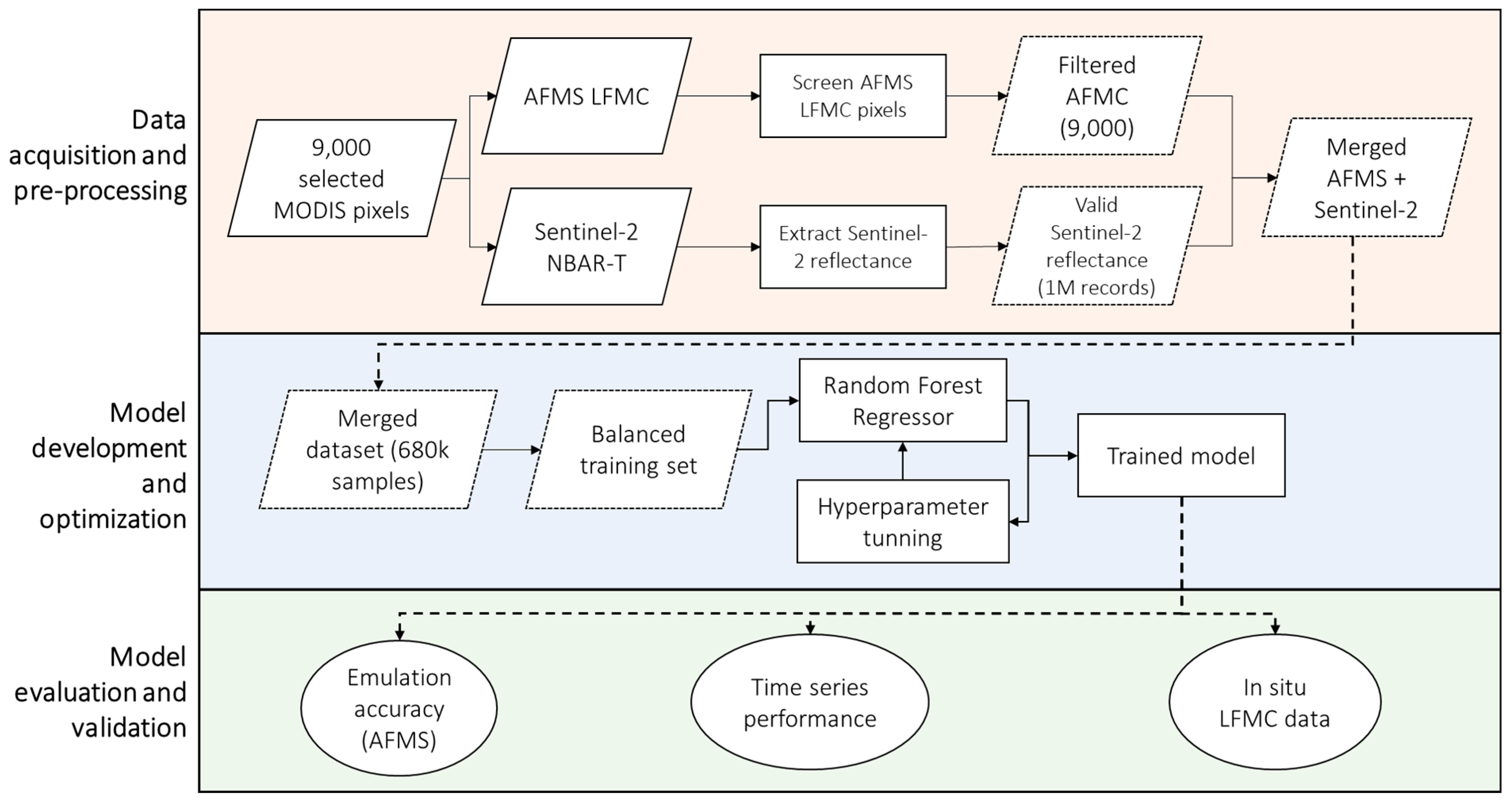
Building on this operational perspective, we adopted the emulator strategy to develop the first continental-scale LFMC product for Australia, derived from Sentinel-2 imagery at 20 m resolution. Specifically, Sentinel-2 reflectance is used to emulate the behaviour of the pre-operational Australian Flammability Monitoring System (AFMS). A Random Forest regression model was trained on approximately 680,000 paired Sentinel-2 reflectance and MODIS-LFMC samples (2015–2022) to reproduce AFMS-derived LFMC patterns at higher spatial resolution. Rather than directly estimating LFMC from first principles, this approach preserves the operational logic and long-term consistency of AFMS while enhancing spatial detail and computational efficiency.
Model performance was assessed against AFMS and 2279 in situ LFMC measurements from Globe-LFMC 2.0. Further, a dedicated Sentinel-2 evaluation campaign, comprising a subset of Globe-LFMC 2.0 samples collected specifically for Sentinel-2-based LFMC estimations, was used to assess the model performance under controlled sampling conditions. Finally, we assessed the model’s ability to reproduce temporal LFMC dynamics by visually comparing predicted and observed LFMC time series at Globe-LFMC 2.0 sites with long-term repeated measurements.
The Sentinel-2 LFMC product establishes the first operational framework for high-resolution LFMC mapping across Australia, bridging the gap between coarse-resolution MODIS products and the fine-scale requirements of fire management. The product captures spatial patterns and seasonal LFMC dynamics, providing relevant actionable insights for prescribed burning, fuel treatment planning, and fire behaviour modelling in fire-prone landscapes. It is designed for operational deployment and is currently distributed through Digital Earth Australia as regularly updated 5-day mosaics [
18].
3. Results
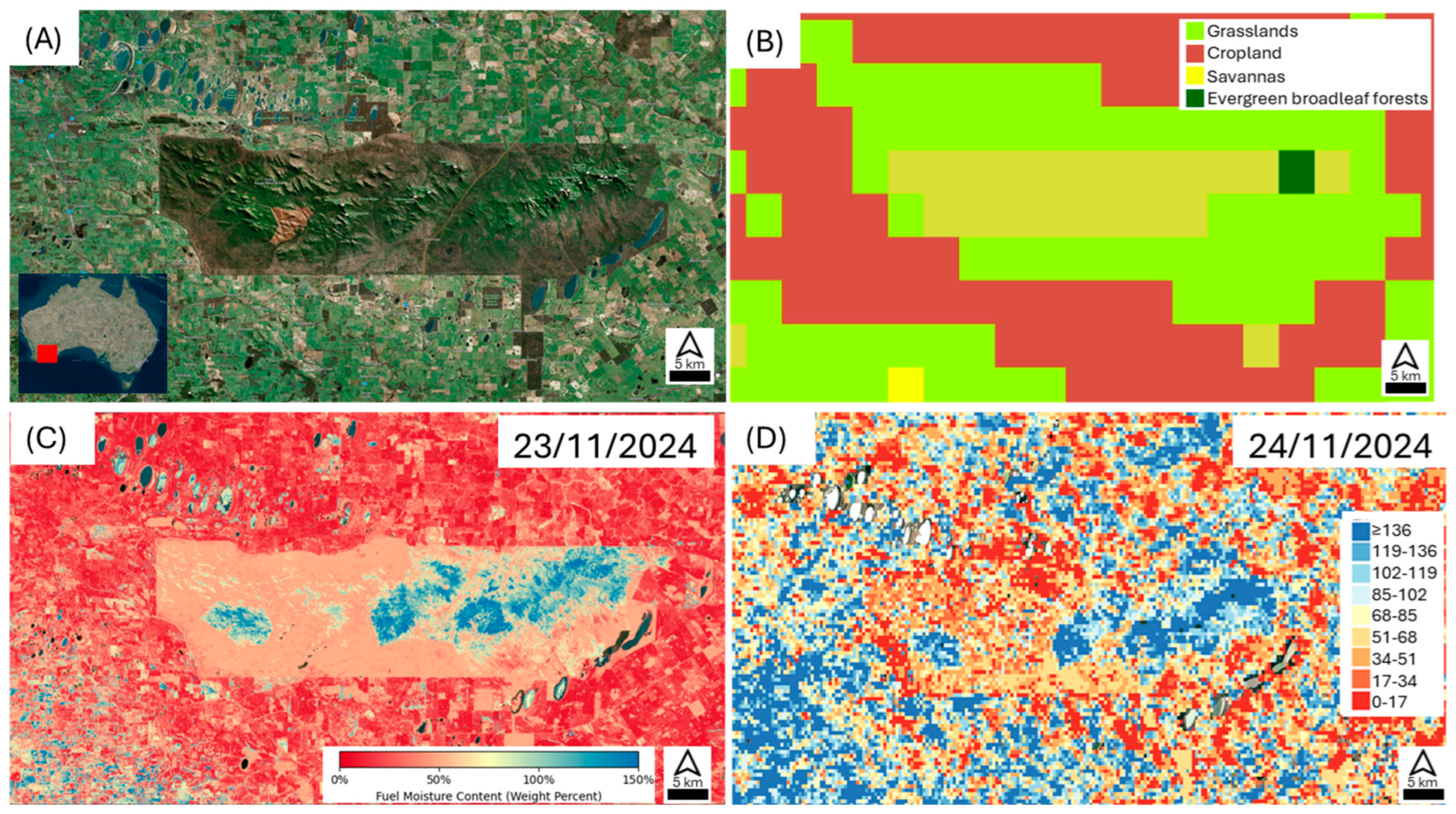
The primary aim of this work is to demonstrate the enhanced spatial detail provided by the Sentinel-2-derived LFMC product when compared to the MODIS-based AFMS product. The improvement in spatial resolution of the Sentinel-2 LFMC product is evident in
Figure 3, which shows the Koi Kyenunuruff region in Western Australia (also known as Stirling Range National Park). This landscape comprises a heterogeneous mixture of shrublands, mallee-heath, and woodlands surrounded by an agricultural mosaic.
The finer spatial resolution of the Sentinel-2 LFMC product (20 m) enables the differentiation of individual land plots, roads, and sharp transitions between different vegetation types (
Figure 3C). In contrast, the coarser 500 m resolution of the AFMS product (
Figure 3D) results in substantial spatial aggregation, limiting the ability to resolve landscape heterogeneity.
3.1. Emulation Accuracy and Feature Importance
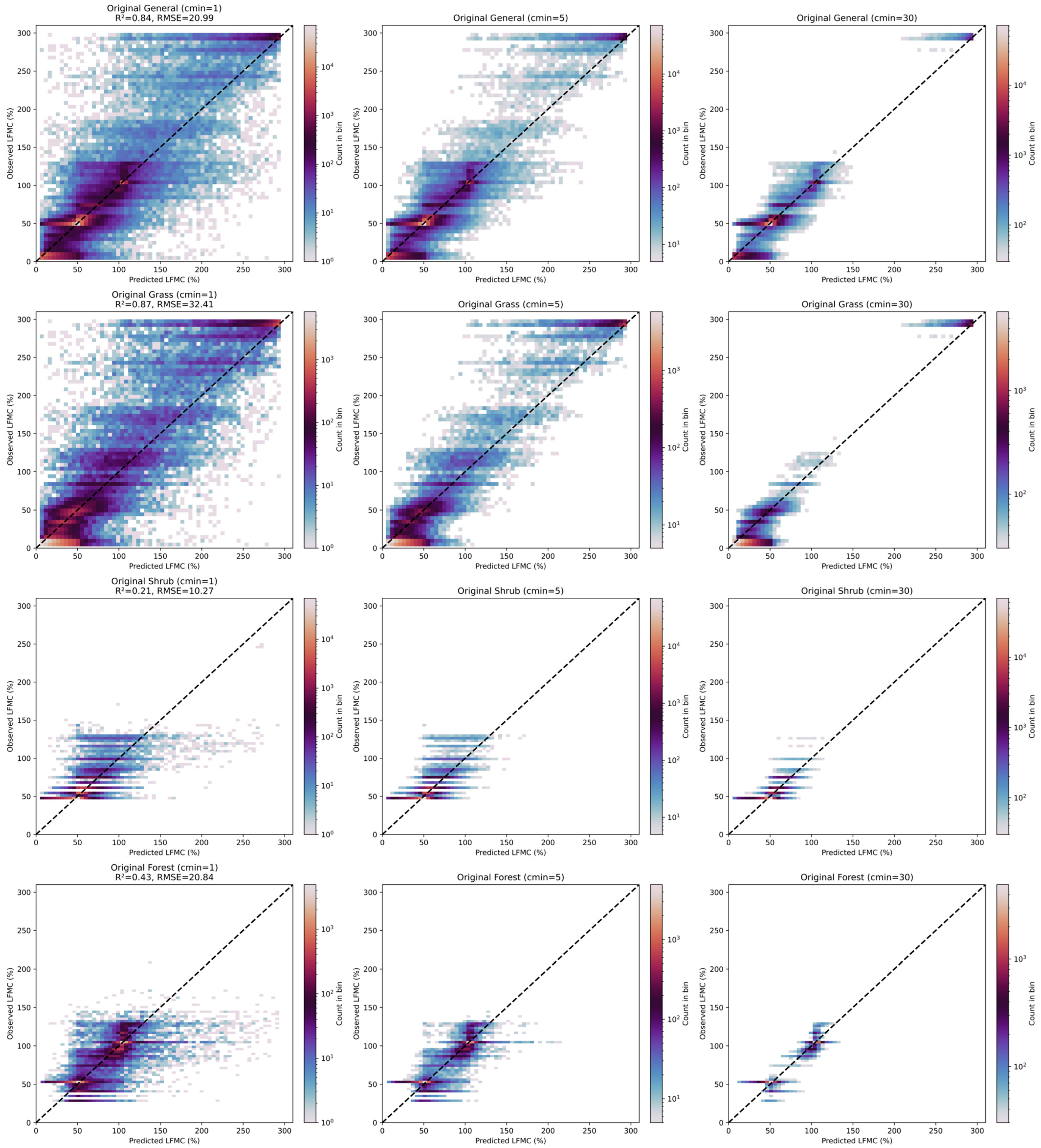
The Sentinel-2 LFMC emulator reproduced the AFMS-derived LFMC with high overall accuracy across balanced and the full (unbalanced) datasets. When evaluated on the balanced dataset, the model yielded an RMSE of 22.92% and R
2 = 0.83. Comparable performance was observed for the full (unbalanced) test dataset (RMSE = 21.01% and R
2 = 0.84), indicating that the balancing strategy applied during training did not compromise generalisation ability. The slightly higher accuracy for the unbalanced dataset is likely influenced by the larger proportion of grassland samples, which represent the vegetation type the model predicts most accurately (see
Supplementary Materials).
Model performance varied among vegetation types (
Figure 4). Grasslands showed the strongest agreement, with predictions closely following AFMS LFMC across most of the observed range (R
2 = 0.83, RMSE = 32.41%). Predictions remained well distributed around the 1:1 line, although some biases occurred mainly at the extremes, where the model slightly underestimated very high LFMC values (~300%) and overestimated very low values (<10%).
Forests showed moderate performance (R2 = 0.43, RMSE = 20.84%). The densest portion of the predicted–observed point cloud aligned closely with the 1:1 relationship, though a general tendency to underestimate LFMC was evident across the distribution.
Shrublands exhibited the weakest agreement (R2 = 0.21), with systematic overestimations at AFMS values >80%. However, because shrubland LFMC in the AFMS product spans a relatively narrow range (~0–150%), which limits the magnitude of absolute errors, and explains the relatively low RMSE (10.27%) despite modest explanatory power.
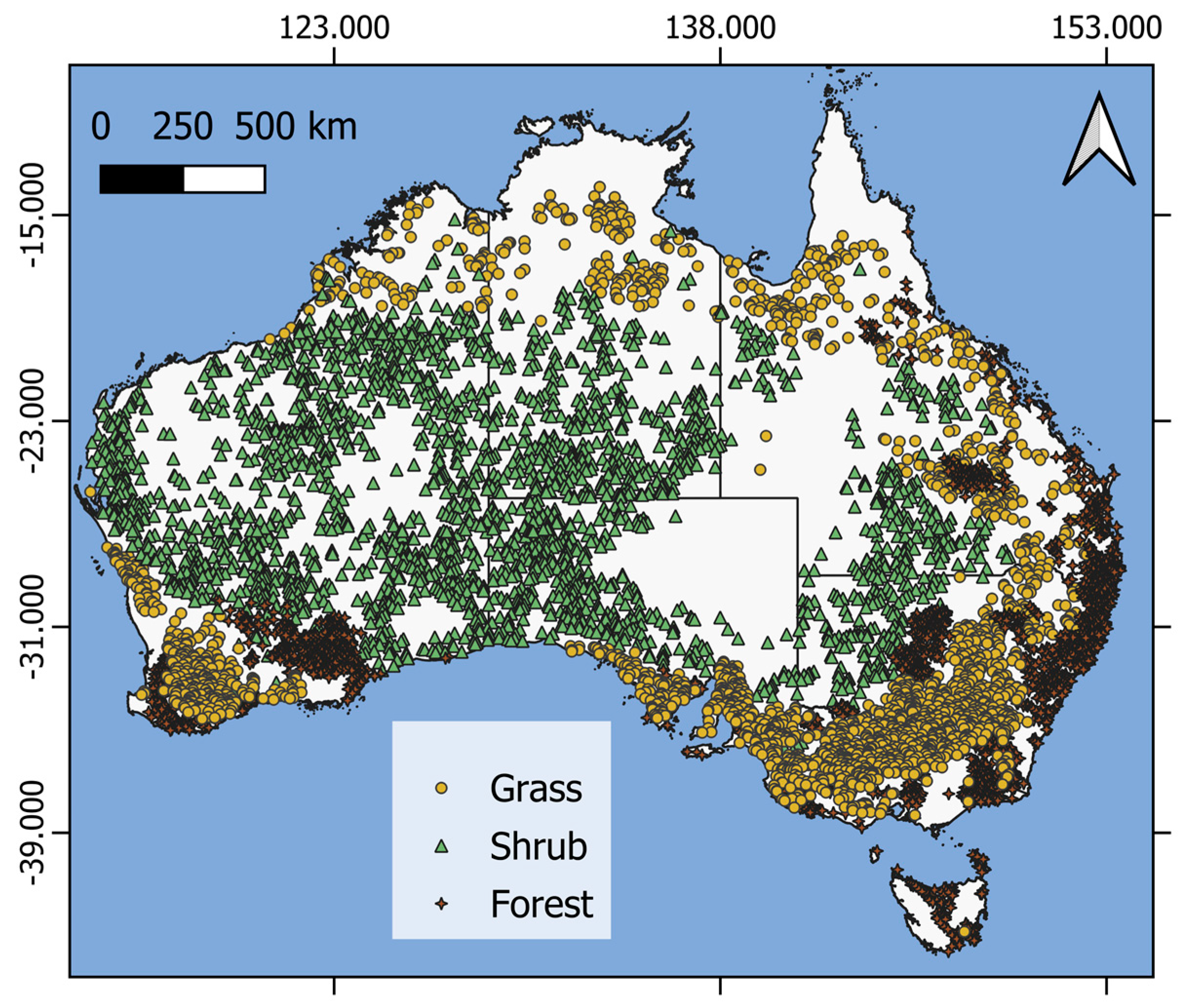
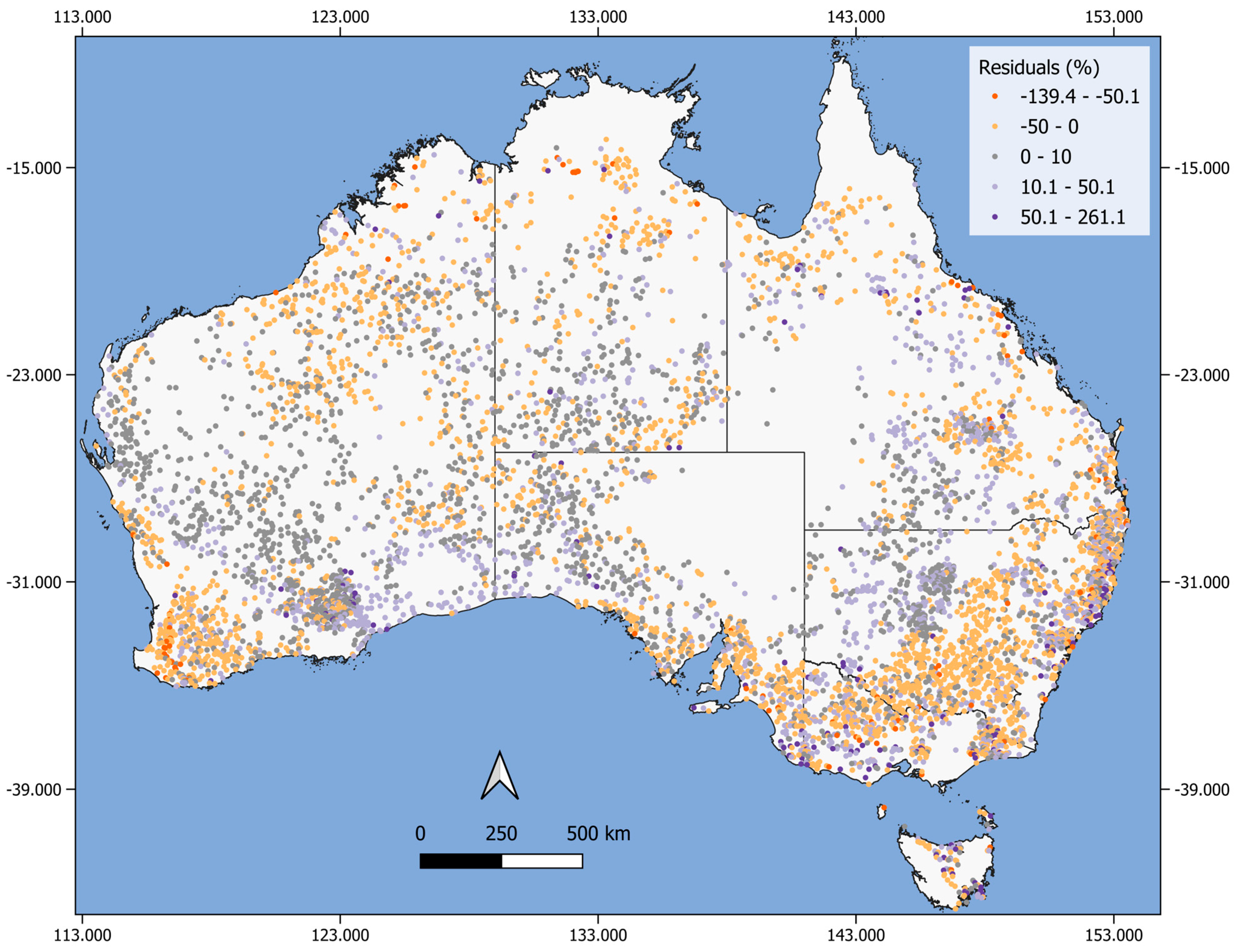
To examine the geographical performance of the model, we calculated the residuals for each training data point (
Figure 5) by subtracting the Sentinel-2 LFMC from the MODIS-based LFMC. In general, the residuals are normally distributed (µ = 2.7, σ = 22.1,
Figure S4); the spatial distribution of the residuals (
Figure 5) does not reveal systematic biases in particular regions of the continent, but it does reveal a distribution that resembles the vegetation type (
Figure 5, see more in
Section 4.3).
Feature importance analysis indicated that NDII was the most influential predictor in the final Random Forest model according to both Gini and permutation importance metrics (
Figure S3). NDII is derived from the Sentinel-2 NIR and SWIR2 bands, and individual SWIR bands ranked lower, likely reflecting their strong correlation with the index.
Following NDII, NDVI, and the green reflectance band are the next most important predictors in the permutation ranking. Red-edge bands also contributed at intermediate levels. The consistency between impurity-based (Gini) and permutation importance metrics supports the stability of the feature ranking and indicates that model predictions are informed by complementary spectral regions spanning the visible, red-edge, and infrared domains rather than being dominated by a single band or narrow spectral range.
3.2. Independent Quantitative Validations Using In Situ LFMC Measurements
3.2.1. Validation with Globe-LFMC 2.0
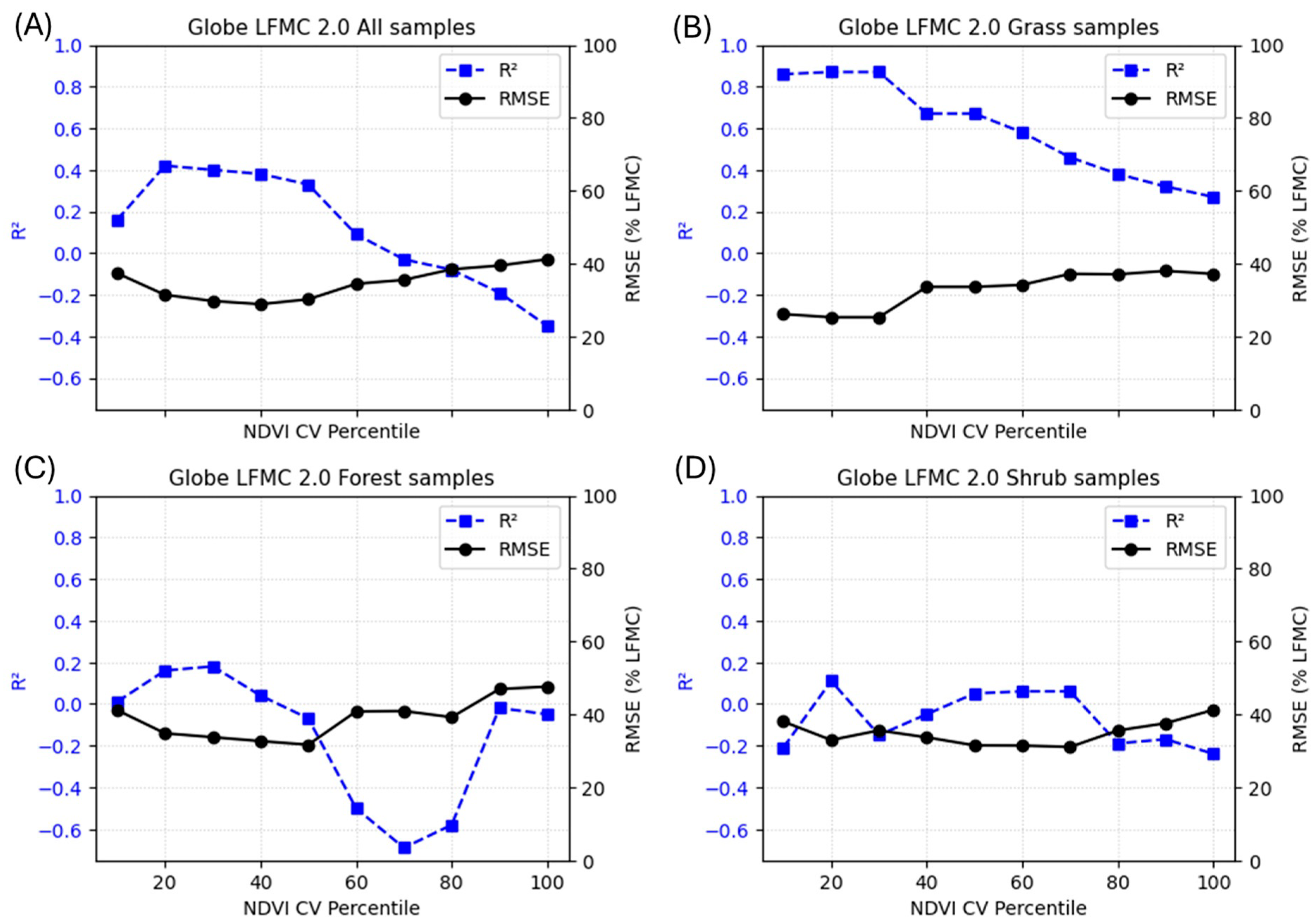
Independent quantitative validation using post-2015 Globe-LFMC 2.0 measurements in Australia revealed that model performance was strongly influenced by site homogeneity, as quantified by NDVI CV (6,
Table S1). When all vegetation types were pooled, the highest agreement between Sentinel-2 predictions and in situ LFMC occurred at the most homogeneous sites (≤40th percentile NDVI CV), where the model achieved R
2 ≈ 0.25 and RMSE = 29.10% LFMC. As progressively more heterogeneous sites were included, predictive performance declined markedly, with R
2 dropping below zero for the upper NDVI CV percentiles (
Figure 5).
This pattern indicates that site heterogeneity, rather than sample size, is the dominant factor limiting agreement with field observations. For example, although the number of samples increases from 40 at the 20th percentile to 197 when using all sites, model performance deteriorates as NDVI CV rises.
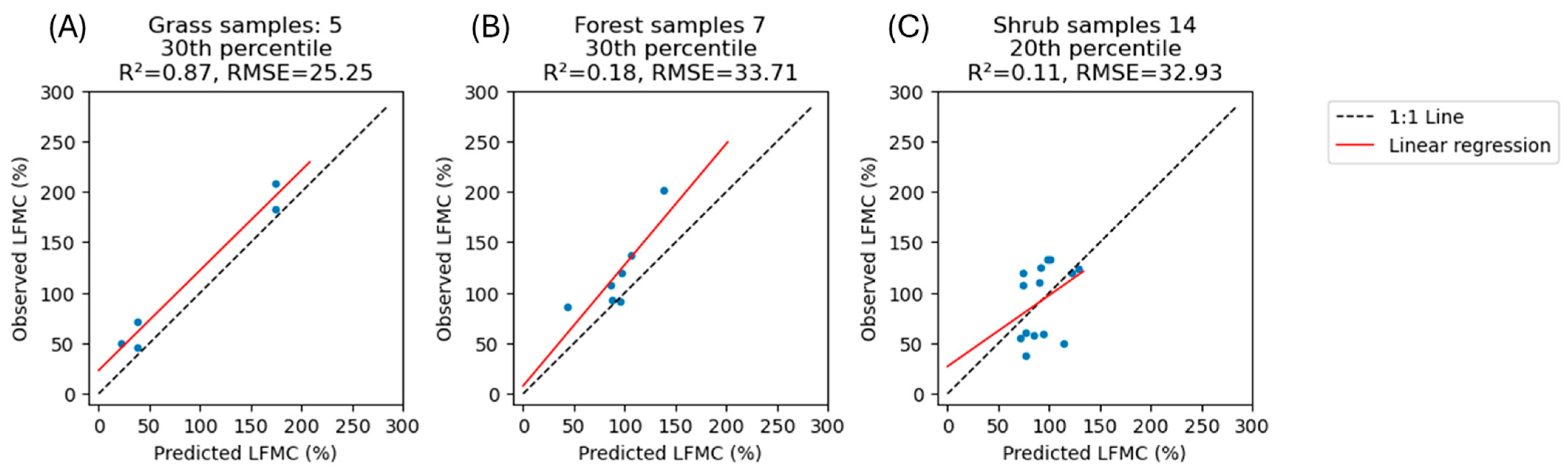
Grasslands exhibited the strongest agreement between Sentinel-2 estimates and field-measured LFMC (
Figure 6 and
Figure 7). In the most homogeneous sites (10th–30th NDVI_CV percentiles), model performance was high (R
2 > 0.85, RMSE ≈ 25%), although these thresholds included relatively few samples (<6). Performance declined gradually with increasing site heterogeneity, but remained robust even at the 60th percentile (R
2 = 0.58, RMSE = 34%). When all grassland samples were considered (100th percentile), the model still exhibited moderate predictive skill (R
2 = 0.27).
Agreement between predicted and measured LFMC in forests was modest and highly sensitive to site heterogeneity (
Figure 6 and
Figure 7). The best performance was observed for the 30th NDVI_CV percentile (R
2 = 0.18, RMSE = 33.7%). Above this threshold, accuracy declined rapidly, and R
2 became negative for percentiles >50%, reflecting weak correspondence between field samples and surface reflectance in more heterogeneous or structurally complex sites.
Shrublands showed the weakest and most variable performance (
Figure 6). For homogeneous sites (10th–30th percentiles), R
2 ranged from −0.21 to 0.11 and RMSE from 32% to 38%. Performance did not improve with additional samples at higher percentiles, indicating that heterogeneity alone does not fully explain the discrepancies.
The influence of the temporal matching window between satellite acquisition and field sampling was also evaluated (
Table S2). Model performance remained broadly consistent across ±3-, ±5-, and ±10-day windows, indicating that moderate temporal offsets had limited influence on validation outcomes. Differences in R
2 and RMSE between the ±3- and ±5-day windows were generally small. Slightly improved performance was occasionally observed for the ±10-day window. However, this improvement is likely attributable to the larger number of available samples rather than to a genuine increase in predictive accuracy.
3.2.2. Dedicated Sentinel-2 LFMC Field Campaign Validation
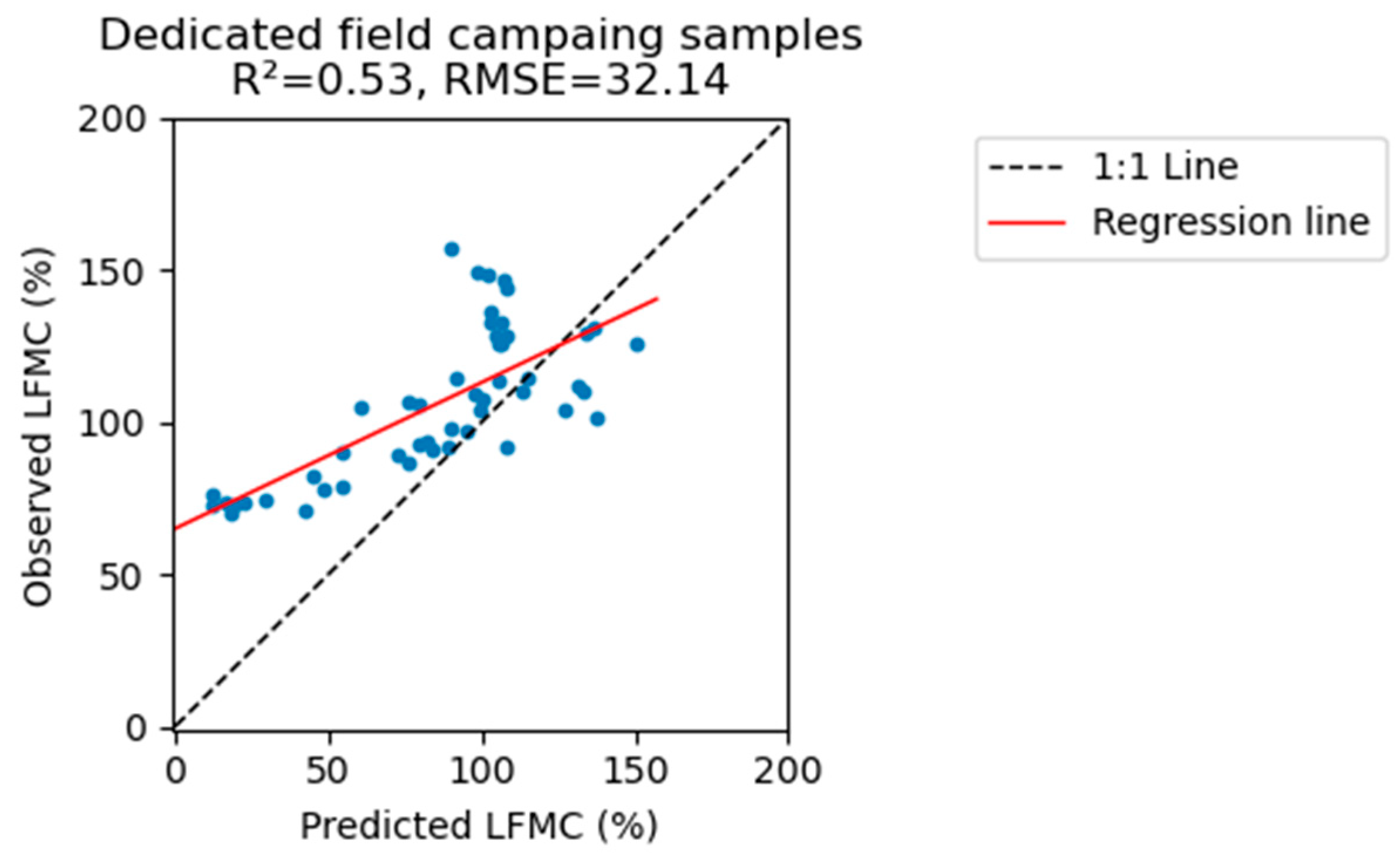
The samples originated from a Sentinel-2 targeted validation campaign in forest environments across New South Wales and showed substantially stronger agreement with in situ LFMC than in the broader national evaluation. The mean observed LFMC for each site and date is moderately correlated with the predicted values (R
2 = 0.53), with an RMSE of 32.14% LFMC (
Figure 8).
3.3. Temporal Validation Using Long-Term LFMC Time Series
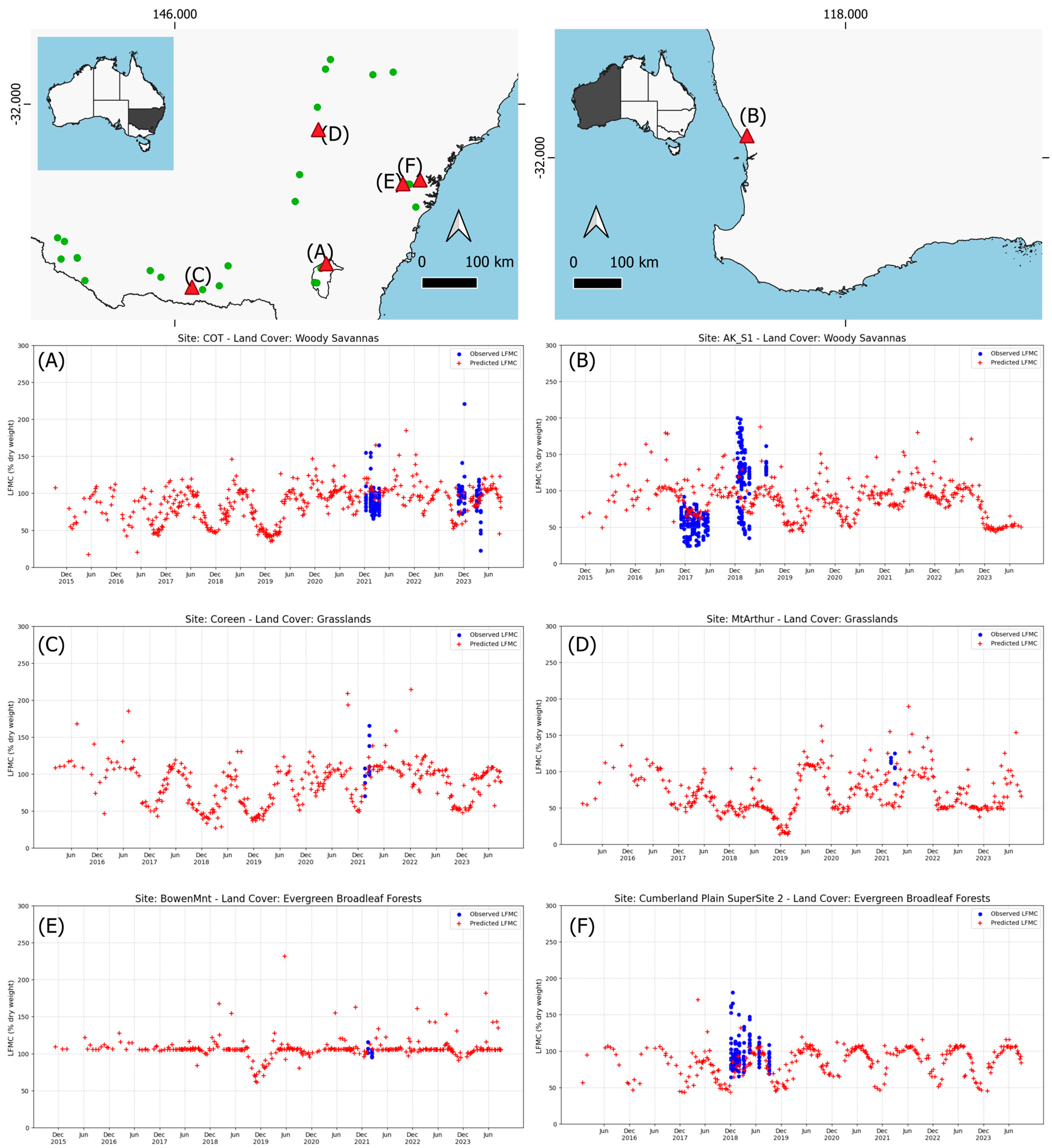
Visual inspection of sites with long-term LFMC time series shows that the Sentinel-2 model successfully reproduces the seasonal dynamics observed in the in situ measurements (
Figure 9). Predicted LFMC follows the timing and magnitude of seasonal drying and recovery, with the strongest correspondence at sites with frequent monitoring, such as the Cumberland Plain SuperSite.
3.4. Continental-Scale LFMC Dynamics
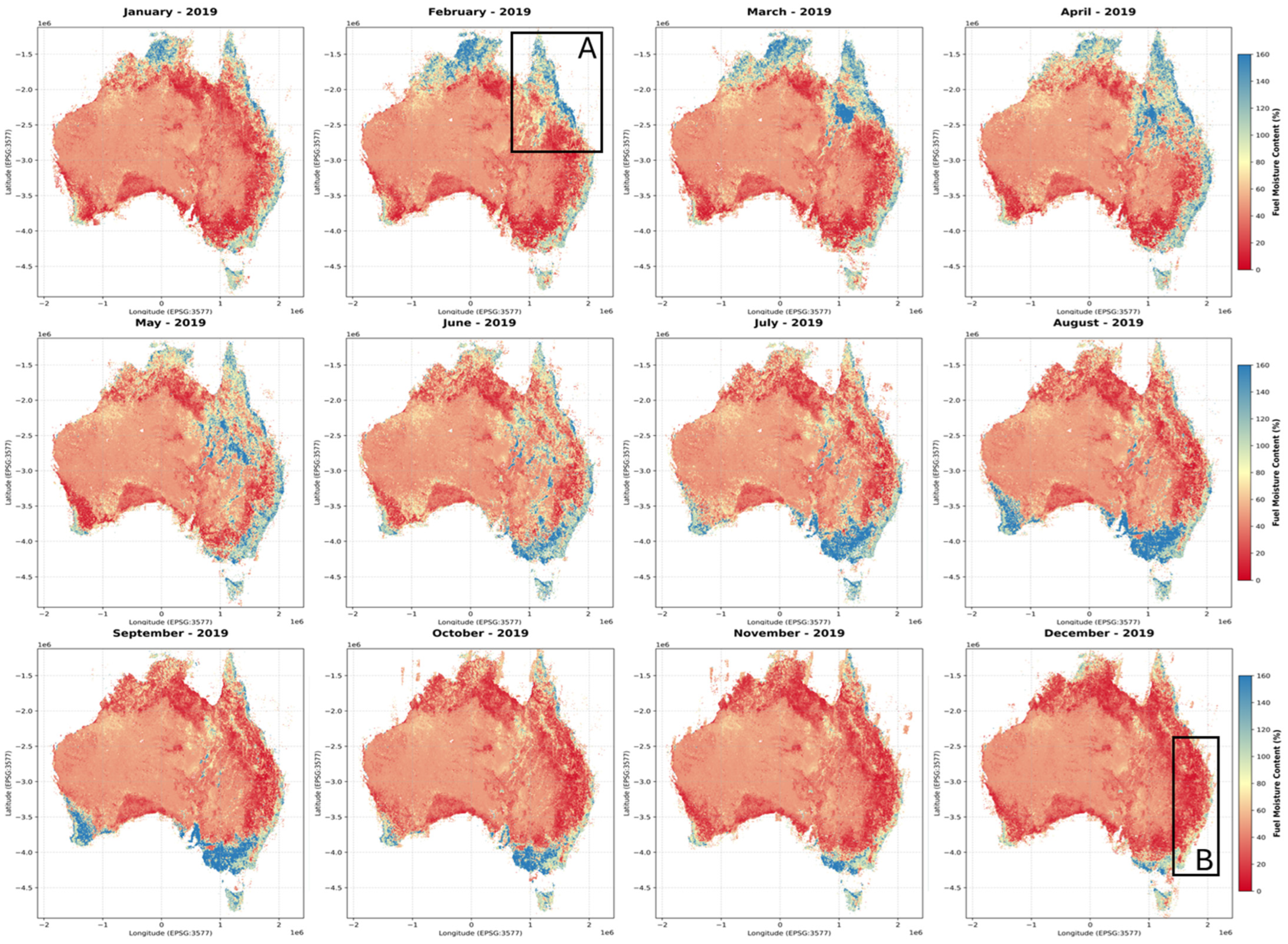
Monthly median LFMC maps for 2019 (
Figure 10) reflect major climatic events, including elevated rainfall and flooding in northern Queensland early in the year, followed by widespread drying and the onset of the Black Summer fires in southeastern Australia during spring and early summer. Between January and March 2019 unusually high rainfall in northeastern Australia [
30] meant that vegetation had plenty of water available for storage and growth. This increased water content is shown in the monthly median LFMC values between February and July 2019 (
Figure 10 box region A). From August to December, the region showed a trend towards lower LFMC values, which coincided with the start of large-scale wildfires [
30,
31]. In the southeast of the country, monthly median LFMC changes were also detectable from the model (
Figure 10, box region B). In this region, record low rainfall and high temperatures meant that large fuel loads were available to burn and spread fire [
1,
30,
31,
32]. While there are other regions where changes in LFMC occur, these examples show that the Sentinel-2 LFMC product captures the spatial and temporal dynamics of vegetation water content across Australia, providing information to decision makers across the country.
4. Discussion
4.1. Emulation Accuracy (Sentinel2 LFMC Versus AFMS LFMC)
Across vegetation types, the emulator displayed systematic behaviour at the extremes of the LFMC range, tending to underestimate very high LFMC values (>250%) and overestimate extremely low values (<30%). Underestimation at the wettest end has limited operational consequence, as fuels above this threshold are unequivocally moist. Overestimation of very low LFMC is more relevant to fire danger applications; however, most inflated values remained below ~50% LFMC—already a high-risk domain [
33]. A small number of outliers highlight the need for caution in site-level interpretation but do not compromise broad-scale applicability.
Emulation performance varied systematically across MODIS vegetation classes. Grasslands showed the strongest correspondence with AFMS LFMC, which reflects the wider LFMC dynamic range allowed by the MODIS-based algorithm (0–300%) and the more direct spectral–moisture relationships in herbaceous vegetation.
Shrublands exhibited the weakest emulation accuracy, consistent with structural constraints inherited from the AFMS shrubland algorithm. The radiative-transfer inversion used for AFMS shrublands restricts LFMC to ~50–130% [
5], preventing the model from expressing the full physiological range. This limited variability propagates into the emulator’s training set, weakening its ability to learn robust LFMC–reflectance relationships. Unlike the MODIS algorithm, the Sentinel-2 emulator does not enforce LUT-based physical constraints and can generate LFMC > 200% when shrubland reflectance resembles that of grasslands or mixed pixels, an artefact of limited training variability rather than sensor behaviour.
Forests showed intermediate performance with agreement being the strongest within the central, data-rich portion of the LFMC range, with larger errors at the low and high extremes where training samples were sparse. Forest spectral complexity, combining tree crowns, shadows, stems, and understorey vegetation, reduces the distinctiveness of LFMC signals relative to grasslands. In addition, the narrower AFMS forest LUT range provides less functional contrast for the emulator to learn from. Together, these factors limit emulation precision in forests despite Sentinel-2’s high spatial resolution.
4.2. Independent Validation Using In Situ LFMC Measurements
Independent validation using Globe-LFMC 2.0 confirmed that agreement between predicted and measured LFMC depends strongly on site homogeneity and sampling representativeness. The highest R2 values were generally observed at the most homogeneous sites (lowest NDVI_CV), particularly in grasslands and forests. As spatial heterogeneity increased, predictive power declined. This demonstrates that part of the model–measurement discrepancy originates from mismatches between what the satellite observes (a 40 m × 40 m mixed region) and what field protocols typically measure (a single vegetation stratum). Temporal offsets of up to ±10 days between field sampling and the nearest available Sentinel-2 acquisition were also evaluated, but differences in model performance across temporal matching windows were small.
The mismatch between satellite pixel composition and field sampling protocols is most apparent in open-canopy forests and shrublands, where Sentinel-2 reflectance captures a mixture of tree crowns, grasses, shrubs, and soil. Many Globe-LFMC 2.0 measurements capture only one of these components, most commonly tree foliage, thereby under-representing the vegetation mixture observed by the satellite. As progressively more heterogeneous sites were included in validation, RMSE increased, and R2 decreased, consistent with mixed-pixel effects rather than emulator failure.
Shrublands again showed the lowest validation performance, reflecting both inherited LUT constraints and additional limitations in the in situ dataset. Globe-LFMC 2.0 shrubland samples were collected using two distinct protocols: fresh-weight measurements in the field versus fresh-weight measurements in the laboratory. These methodological differences systematically affect the calculated LFMC, producing two artificial clusters of values unrelated to vegetation differences. This protocol-induced variance reduces the apparent predictive accuracy of the Sentinel-2 emulator in shrublands.
Model performance improved substantially when evaluated against samples from a dedicated field campaign explicitly designed for Sentinel-2 LFMC validation. Under unified sampling protocols, matched spatial footprints, and closely aligned sampling dates, the emulator achieved markedly higher accuracy, outperforming results obtained using the broader and more heterogeneous dataset for forested sites. These findings confirm that when field measurements accurately represent the Sentinel-2 pixel, the emulator can reproduce LFMC with considerably greater fidelity, and emphasise the critical role of sampling design in remote-sensing validation.
When contextualised against other Sentinel-2 LFMC studies conducted at site or regional scales, our validation results fall within the performance envelope commonly reported in the literature. Under geographically constrained domains, locally calibrated and structurally homogeneous conditions, R
2 values typically vary between ~0.4–0.7 and RMSE between 8–25% LFMC. These performances are similar or slightly better than results from multi-sensor approaches at landscape scales (e.g., SAR-optical (Landsat or Sentinel-2) models with R
2 ≈ 0.3–0.7, RMSE ≈ 25–31%) [
34,
35].
Direct numerical comparison across studies remains challenging due to differences in vegetation types, spatial resolution, calibration strategies, validation protocols, and LFMC dynamic ranges. Nevertheless, a consistent finding across the literature is that performance is strongly influenced by site homogeneity, representativeness of the training data, and the scale at which models are developed and validated.
In contrast, the present study evaluates a continental-scale operational product across diverse ecosystems, heterogeneous vegetation structures, and mixed sampling protocols, without local recalibration. Therefore, the comparatively lower R2 values observed in parts of the national-scale validation primarily reflect differences in representativeness, structural complexity, and spatial scale, rather than intrinsic limitations of Sentinel-2 reflectance for LFMC estimation
The emulator also successfully captured temporal LFMC dynamics, reproducing seasonal drying and recovery patterns observed in Globe-LFMC 2.0 time series. This behaviour is particularly valuable for identifying seasonal windows for prescribed burning, monitoring post-treatment fuel recovery, and assessing shifts in vegetation moisture under climate extremes. Temporal alignment between predicted and measured LFMC demonstrates that, even where absolute accuracy varies among vegetation types, the emulator captures the ecologically meaningful temporal trajectories required for many fire-management applications.
4.3. Implications and Limitations
Three interacting factors underpin the observed discrepancies between the Sentinel-2 LFMC product, the MODIS-based AFMS estimates, and independent field measurements: (i) limitations inherited from the AFMS model, including restricted LFMC ranges for forests and shrublands; (ii) structural mismatches between satellite footprints and field sampling protocols; and (iii) the inherent constraints of statistical emulation. Because the emulator approximates a model that itself contains structural uncertainty, deviations from field measurements reflect combined effects of the AFMS model, the emulator, and representativeness limitations in the in situ dataset. Insufficient field data represents another challenge for the validation of the product. When data are aggregated by site and date, low sample sizes lead to undetermined performance in some vegetation types (e.g., savannas,
Supplementary Materials); in these cases, additional field data covering large spatial extents are needed to accurately assess the performance of the model.
These limitations are particularly evident in shrubland ecosystems, where the spatial coverage of validation samples was most limited; LFMC estimations should be interpreted with caution. In these ecosystems, the Sentinel-2 LFMC product is more appropriately used to monitor relative spatial (
Figure 3) and temporal (e.g.,
Figure 9 and
Figure 10) variability, as opposed to inferring absolute moisture values. The ability of this product to capture the LFMC dynamics over space and time supports the identification of seasonal drying patterns and anomalous moisture conditions, thereby contributing to improved understanding of vegetation responses to long-term climatic variability and change. Despite these constraints, the emulator demonstrates strong capacity to reproduce AFMS variability, reasonable accuracy against independent field measurements under representative conditions, and robust temporal dynamics (
Figure 10,
Table 2). These properties make the Sentinel-2 LFMC product suitable for proactive fuel management interventions, conservation and land management planning, and a range of operational and strategic fire management applications, including landscape-scale fuel monitoring, prescribed burn planning, and integration into fire behaviour and air quality and emissions modelling frameworks.
4.4. Future Directions
Several avenues have been identified to further improve this novel dataset. A primary priority is the inclusion of a per-pixel uncertainty flag to inform users about the reliability of LFMC estimates. Such uncertainty later would not imply a direct dependence of the Sentinel-2 LFMC model on a specific land cover product, but would instead characterise structural sources of uncertainty associated with each pixel. These may include the spatial resolution and classification accuracy of the IGBP land cover and MODIS datasets (e.g.,
Figure 3), the representativeness and spatial distribution of ground validation samples, and the temporal stability of the land cover classes. In particular, pixels located in heterogeneous or transitional landscapes, in vegetation types with limited validation coverage, or in ecosystems such as shrublands where model performance was comparatively lower, may exhibit inherently higher uncertainty.
Another key improvement involves the integration of more recent and spatially detailed land cover products. This would help reduce mixed-pixel effects and improve vegetation class assignment, particularly in heterogeneous landscapes where coarse land cover maps may introduce structural uncertainty.
In the longer term, advances in computational resources and machine learning methodologies may enable direct estimation of LFMC from Sentinel-2 reflectance and ancillary data, bypassing the limitations inherited from the MODIS-based model. At the same time, coordinated and standardised field sampling efforts targeting underrepresented regions and vegetation types in current databases, such as Globe-LFMC [
17] will be critical to improving model generalisability and reducing structural uncertainty. Future efforts should therefore prioritise expanded in situ calibration/validation campaigns across diverse ecosystems, using standardised protocols that explicitly capture both canopy and understorey components. Such measurements are essential to better characterise what the satellite sensor effectively integrates within its footprint, particularly across fuel types with varying vertical structural complexity.
5. Conclusions
We present a national Sentinel-2 LFMC product designed to support both strategic and operational fire management activities in Australia. By emulating the MODIS-based LFMC model currently used within the Australian Flammability Monitoring System, the Sentinel-2 approach provides a more spatially detailed and computationally efficient alternative while maintaining broad consistency with AFMS-derived LFMC patterns. Emulation performance varied across vegetation types, with the strongest agreement in grasslands and lower fidelity in shrublands and open forests due to inherited AFMS constraints and representativeness limitations in available in situ datasets.
Validation against Globe-LFMC 2.0 showed modest but encouraging accuracy, especially at spatially homogeneous sites where field measurements more closely reflect the Sentinel-2 footprint. Temporal mismatch between field measurements and satellite observations was not the primary source of validation of uncertainty. Purpose-designed field campaigns aligned with the Sentinel-2 spatial and temporal sampling strategy yielded substantially higher accuracy, demonstrating that the emulator performs best when validated with representative, harmonised in situ measurements. The model also captured seasonal LFMC dynamics at long-term monitoring sites, highlighting its potential utility for seasonal fuel moisture monitoring and prescribed-burn planning.
Given its high spatial and temporal resolution, the Sentinel-2 LFMC dataset provides valuable information for a wide range of applications, including delineating ignitable zones for prescribed burns, monitoring fuel treatments (e.g., mechanical thinning, hazard reduction burns), characterising landscape-scale fuel dynamics, and informing fire behaviour and emission or air-quality models. Beyond fire agencies, this dataset offers actionable intelligence for sectors such as insurance, infrastructure planning, health, and community risk reduction. Importantly, the product also offers opportunities for Indigenous and First Nations land managers to combine satellite-derived fuel moisture information with cultural knowledge systems to support cultural burning and land stewardship (see e.g.,
https://youtu.be/tLgqBDuSOdU?si=oDJWn4Wz71M0qNLf, accessed on 20 March 2025).
Despite limitations in specific vegetation types, the Sentinel-2 LFMC product represents a significant advancement in operational fuel moisture monitoring and provides a foundation for continued refinement through improved validation datasets, updated land-cover information, and next-generation modelling approaches.