1. Introduction
Wetland ecosystems play a crucial role in regulating the hydrological cycle, purifying water, controlling soil erosion, and sequestering carbon [
1,
2,
3]. As key nodes along the Asia-Pacific migratory flyway, coastal wetlands substantially contribute to global biodiversity conservation and serve as critical ecological barriers for coastal protection [
4]. However, under the dual pressures of accelerating climate change and intensified human activities, coastal wetlands in the East China Sea have experienced severe degradation driven by large-scale land reclamation and environmental pollution, resulting in significant declines in ecosystem service functions [
5,
6]. Therefore, accurate and timely wetland monitoring is urgently needed to generate up-to-date, high-resolution maps of coastal wetlands with detailed classification categories.
Wetland mapping along the East China Sea coast is particularly challenging because natural and human-made wetland types are closely interwoven within a narrow coastal belt. Tidal flats, marshes, rivers, and lakes commonly coexist with aquaculture ponds, salt pans, and reservoirs, resulting in fragmented landscapes and complex boundaries. This complexity has been further intensified by reclamation, aquaculture development, port construction, and urban expansion [
7,
8,
9,
10]. In addition, tidal fluctuations frequently change shoreline position and water extent, increasing the uncertainty of wetland delineation. Several water-related classes, especially rivers, lakes, aquaculture ponds, and salt pans, also show similar spectral responses in optical imagery [
11,
12]. Together, these factors make fine-scale wetland mapping in the East China Sea especially difficult.
Remote sensing has become the primary tool for large-scale wetland monitoring because of its wide spatial coverage, frequent revisit cycles, and ability to provide continuous observations. However, coastal wetlands are highly heterogeneous systems, characterized by diverse wetland types, indistinct boundaries [
3], and pronounced tidal dynamics, substantially hampering accurate classification and boundary delineation [
2,
7,
8]. Rapid urbanization, intensive reclamation, and biological invasions further increase landscape fragmentation and structural complexity [
9,
10]. In addition, several wetland types exhibit strong spectral similarity, particularly among water-related classes such as rivers, lakes, aquaculture ponds, and salt pans, which frequently leads to classification confusion in optical remote sensing approaches [
11,
12]. Field-based data collection in coastal environments is also constrained by limited accessibility, resulting in insufficient training samples for machine-learning models [
12]. These characteristics make the East China Sea a particularly challenging region for fine-scale wetland mapping.
Current global and national land-cover datasets provide important information for large-scale wetland assessment; however, wetlands are typically represented using broad thematic classes, which limits the ability of these products to capture detailed spatial patterns in complex coastal environments [
13,
14]. Their coarse spatial resolution and limited temporal coverage further restrict the characterization of fine-scale heterogeneity. This limitation is particularly evident in heterogeneous coastal environments, where coarse pixels frequently integrate multiple land-cover types, thereby obscuring key ecological boundaries and internal spatial heterogeneity [
15,
16]. The national wetland and aquaculture datasets developed by the Chinese Academy of Sciences provide important support for wetland monitoring, yet their medium-resolution imagery limits the differentiation of natural and artificial coastal wetlands. Consequently, detailed wetland categories such as aquaculture ponds, salt pans, rivers, and small lakes are often merged or misclassified in existing datasets. This issue is especially pronounced along the East China Sea coast, where diverse natural and human-made wetland types coexist within highly fragmented coastal landscapes. As a result, the fine-scale spatial delineation of coastal wetlands remains insufficiently resolved [
17,
18,
19].
Recent large-scale wetland mapping efforts have produced several regional wetland products for East Asia and China. For example, the EA_Wetlands products [
20] generated a 10 m resolution wetland map for East Asia using Sentinel-1 and Sentinel-2 time-series imagery and hierarchical classification strategies. At the national scale, the CAS_Wetlands products [
21] mapped wetlands across China using Landsat imagery and object-based classification approaches. In recent years, studies have increasingly explored the integration of multi-source satellite data, time-series analysis, and advanced machine learning methods to improve wetland mapping accuracy in coastal environments. For instance, several studies have combined Sentinel-1 SAR and Sentinel-2 optical imagery to enhance wetland discrimination under cloudy coastal conditions, while others have employed deep learning or object-based approaches to better capture spatial patterns in complex coastal landscapes. These studies have significantly improved mapping accuracy compared with traditional classification methods and provided valuable insights into wetland dynamics in regions such as the Yangtze River Estuary, Yancheng coastal wetlands, and Hangzhou Bay [
15,
20,
22,
23,
24]. Despite these advances, existing wetland products still exhibit several limitations when applied to highly dynamic coastal environments such as the East China Sea. Many datasets rely on medium-resolution imagery and generalized classification schemes, which often fail to distinguish detailed coastal wetland types such as rivers, aquaculture ponds, salt pans, and small lakes. As a result, the complex spatial composition of natural and human-made wetlands along the East China Sea coast cannot be adequately represented, particularly in regions where aquaculture ponds, tidal flats, and natural marshes coexist within fragmented coastal landscapes.
Recent advances in satellite remote sensing have created new opportunities for improving coastal wetland mapping. Compared with Landsat imagery, Sentinel-2 imagery provides finer spatial resolution and additional red-edge bands that are particularly sensitive to vegetation structure and moisture conditions in wetland environments [
25]. Previous studies have demonstrated that Sentinel-2 imagery can enhance the discrimination of wetland vegetation and improve classification performance in complex coastal wetland environments [
26,
27,
28]. Meanwhile, Sentinel-1 synthetic aperture radar (SAR) data provide complementary structural information that is sensitive to vegetation structure and surface moisture and are not affected by cloud cover, making them particularly suitable for coastal regions with frequent cloud contamination [
27]. The integration of Sentinel-1 SAR and Sentinel-2 optical imagery therefore enables a more comprehensive representation of wetland spectral, structural, and hydrological characteristics, which can substantially improve the discrimination of spectrally similar wetland types. Recent studies have investigated coastal wetland mapping and dynamics along the East China Sea coast using multi-source satellite data and time-series imagery, particularly in regions such as the Yangtze River Estuary, Yancheng coastal wetlands, and Hangzhou Bay [
20,
22,
29]. These studies provide important insights into wetland distribution and environmental changes in the East China Sea region. However, accurately distinguishing spectrally similar wetland types and representing fine-scale spatial heterogeneity across large coastal landscapes remains challenging. Furthermore, although multi-source remote sensing data have been increasingly applied in recent studies, effectively integrating multi-source features within classification frameworks for large and heterogeneous coastal regions remains challenging.
Despite these advances, existing wetland products still exhibit several limitations when applied to highly dynamic coastal environments such as the East China Sea [
30,
31]. In conventional classification approaches, water-related wetland categories such as rivers, lakes, aquaculture ponds, and salt pans are frequently grouped into a single “water” class, thereby obscuring important ecological differences [
32,
33]. Although multi-source remote sensing data have improved classification performance, the ability to refine detailed wetland categories across large and heterogeneous coastal landscapes remains limited. Moreover, effectively integrating multi-source features within classification frameworks for large and heterogeneous coastal regions remains challenging [
20,
34]. Specifically, two key challenges remain: (1) the insufficient discrimination of spectrally similar coastal wetland types in existing products, and (2) the limited integration of multi-source features within hierarchical classification frameworks for large-scale coastal environments.
Machine learning methods such as Support Vector Machines (SVM), Random Forests (RF), and deep learning have been widely applied in large-scale wetland mapping due to their strong feature-learning capabilities [
35,
36,
37]. However, when applied to complex coastal landscapes with multiple spectrally similar classes, conventional machine learning approaches often struggle to fully capture landscape heterogeneity and may lead to misclassification among similar wetland types [
38,
39,
40]. Recent studies in East Asia have attempted to address these issues by integrating multi-source satellite data and hierarchical classification methods, achieving promising improvements in wetland mapping accuracy [
20]. Nevertheless, further methodological development is still required to integrate multi-source features and hierarchical classification strategies for improving fine-scale wetland discrimination across large coastal regions. Consequently, developing a hierarchical classification framework that integrates multi-source remote sensing features and multi-stage classification strategies is essential for improving fine-scale wetland discrimination across large coastal landscapes.
Given these issues, the objectives of this study are to: (1) develop a hierarchical coastal wetland classification framework based on multi-feature fusion, integrating Sentinel-1 SAR and Sentinel-2 imagery, and combining the spatial-constraint capability of K-means clustering with the feature-selection strength of Random Forest and the decision refinement of a hierarchical classifier and (2) implement this framework on the Google Earth Engine platform to produce a 10 m resolution coastal wetland map of the East China Sea in 2023 and reveal its fine-scale spatial distribution patterns. The developed framework and its outputs are intended to facilitate wetland evaluation, guide ecosystem management and coastal conservation, and assist in monitoring progress toward wetland-related targets of the Sustainable Development Goals (SDGs).
3. Methods
Coastal wetlands in this study were classified into two broad categories and seven sub-categories (
Table 3). The classification system was developed based on existing wetland classification frameworks, particularly the definition and criteria provided by the Ramsar Convention [
51], and was refined to reflect the actual distribution characteristics of wetland resources in the study area [
52]. Two major categories included natural wetlands and human-made wetlands. To account for the influence of human activities on land use, dominant land cover types such as forest, grassland, built-up area, and bare land were separately designated as non-wetland categories. Natural wetlands were classified into rivers, lakes, tidal flats, and marshes, while human-made wetlands were categorized as aquaculture ponds, salt pans, and reservoirs.
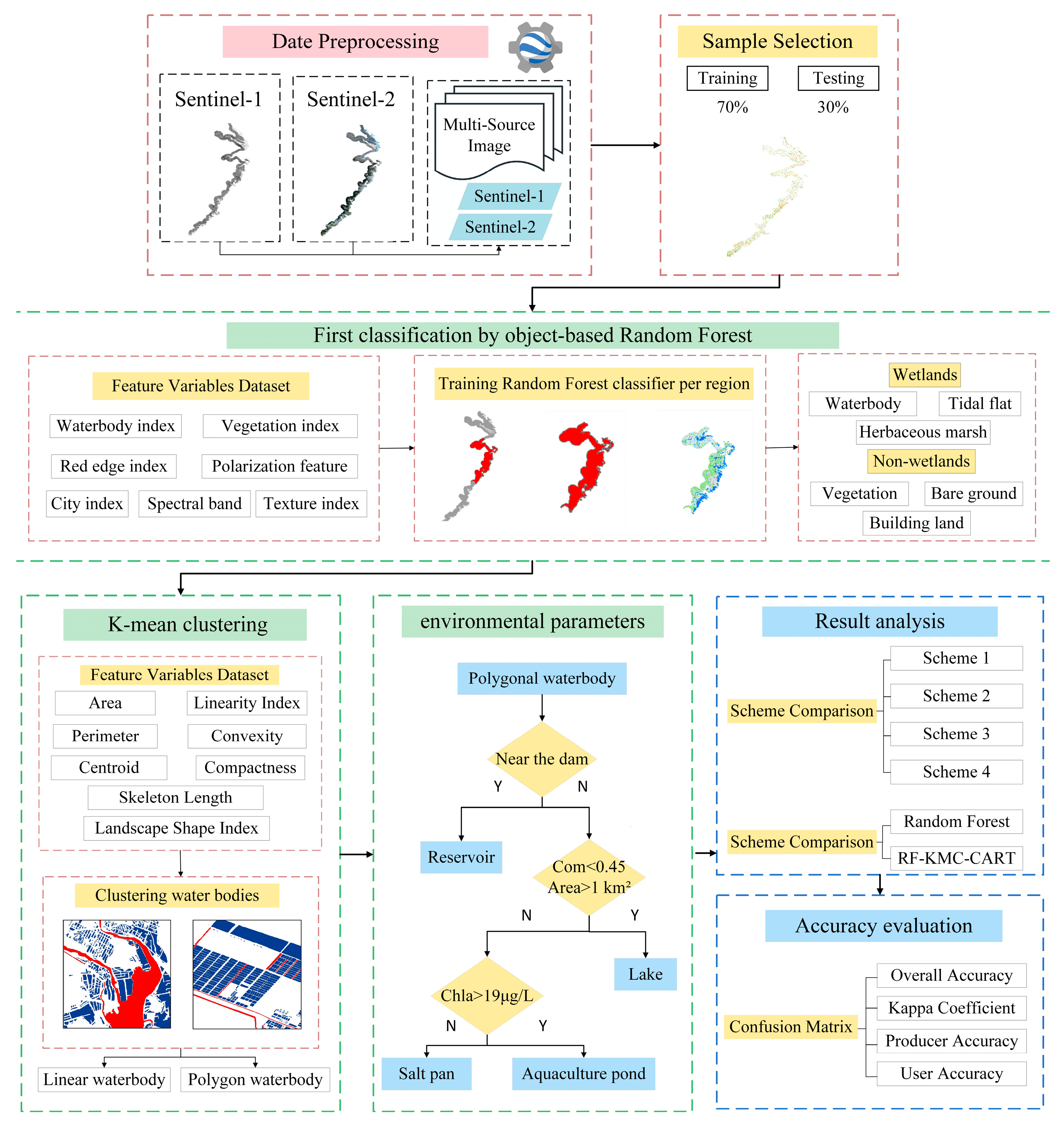
In this study, a novel hierarchical coastal wetland classification method incorporating object-based random forest, K-means clustering, and hierarchical decision tree was developed, and fine-grained coastal wetland maps of the East China Sea were produced. Firstly, various features, including spectral, texture, and polarization characteristics, were extracted from multi-source data and used in an object-based random forest algorithm to preliminarily classify wetlands and non-wetlands, resulting in the initial categorization of coastal wetlands into four broad classes: water body, tidal flat, marsh, and other non-wetland types. Secondly, the water body category was subdivided into linear and polygonal water bodies using K-means clustering, combined with shape features. Finally, a decision tree classifier was applied using environmental and shape features to classify polygonal water bodies into reservoir, lake, aquaculture pond, and salt pan. The classification framework consists of three main components: (1) selection and construction of the feature variable set; (2) derivation and calculation of environmental feature variables; (3) hierarchical coastal wetland classification mapping and accuracy assessment. The overall methodological framework is illustrated in
Figure 2.
3.1. Feature Variable Set Construction
3.1.1. Extraction and Selection of Multi-Source Remote Sensing Features
Multiple source remote sensing features were extracted from Sentinel-1 and Sentinel-2 satellites (
Table 4), including intrinsic bands of Sentinel-1/2 imagery, 2 water indices, 7 red-edge indices, 6 vegetation indices, 5 texture features, and 2 urban indices [
20,
53]. By means of multi-source feature fusion, the all-weather observation capability of radar data was combined with the rich spectral characteristics of optical imagery, resulting in improved reliability and precision of wetland classification [
54]. All feature variables were normalized using min–max scaling to ensure comparable ranges across spectral, polarization, texture, and shape features.
3.1.2. Extraction and Selection of Shape Feature
The initial classification results were binarized to extract water body regions. Connectivity region analysis was then applied to the binarized image to derive representative geometric, shape, and skeleton features from each segmented region (
Table 5). The extracted features were normalized to eliminate differences in magnitude among variables. In addition to spectral characteristics, geometric and morphological attributes provide important information for distinguishing different types of water bodies. Rivers typically exhibit elongated and narrow shapes, characterized by high linearity and long skeleton lengths, whereas lakes generally display more compact and rounded forms. Consequently, indices such as the Linearity Index and Skeleton Length are effective for identifying river-like structures. In contrast, lakes and reservoirs usually have larger areas and relatively regular boundaries, which can be described by features such as area, compactness, and the Landscape Shape Index (LSI). Convexity and perimeter further characterize boundary complexity and help differentiate irregular natural wetlands from more geometrically regular artificial water bodies such as aquaculture ponds. These shape descriptors complement spectral information and enhance the discrimination of spectrally similar wetland types during classification.
3.2. Hierarchical Wetland Classification Method Integrating Multi-Dimensional Features
To account for the spectral diversity of wetland types, several feature fusion schemes were constructed for comparative analysis. Texture features proved particularly effective in delineating complex boundaries and geomorphology-dependent wetlands, while the various indices enhanced the discrimination of marsh, water body, tidal flat, and related classes. Classification was performed using the Random Forest algorithm in the Google Earth Engine platform, and the optimal model was obtained through iterative adjustments of the feature combinations.
3.2.1. Classification of Wetland and Non-Wetland Areas Using Random Forest
The Random Forest classifier was implemented with 100 trees, and the number of variables considered at each split was set to the square root of the total number of input features. The maximum tree depth was not explicitly limited to allow the model to fully capture feature variability. Under the same training sample conditions, four feature fusion schemes were designed to evaluate the impact of multi-source variables on the accuracy of wetland information extraction. The first scheme used spectral features only. The second scheme combined spectral features with texture features. The third scheme integrated spectral and polarization features, while the fourth scheme incorporated spectral, polarization, and texture features simultaneously to assess the contribution of multi-source feature integration to classification performance.
3.2.2. Accuracy Assessment
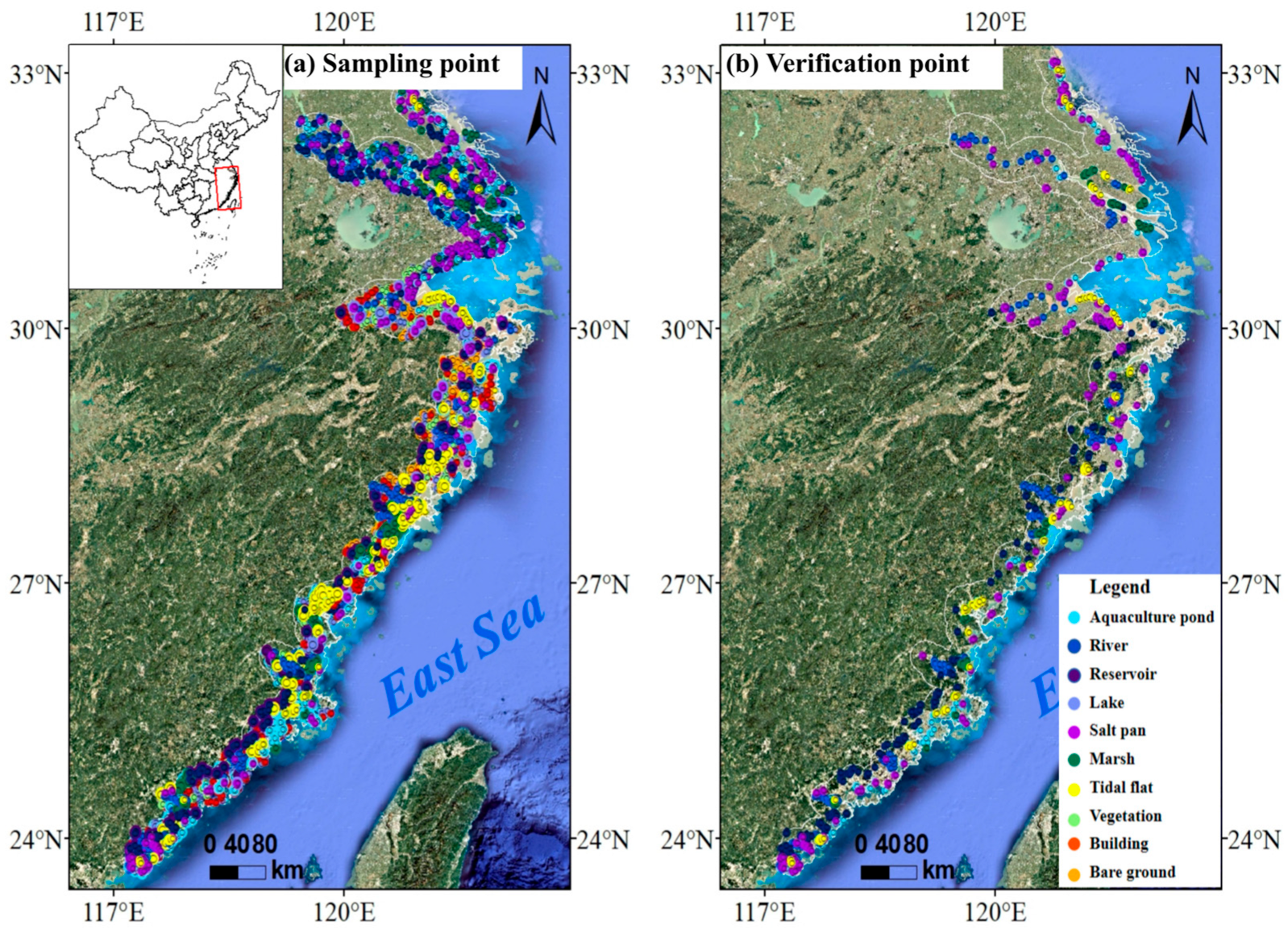
Accuracy assessment and comparison were conducted to evaluate the classification results. Sample points were divided into training and validation sets at a 7:3 ratio. Model training was performed on the training set, while accuracy was assessed using the validation set. Classification accuracy was verified by comparing the predicted results with reference data, and metrics such as Overall Accuracy (OA), Kappa coefficient, User’s Accuracy (UA), and Producer’s Accuracy (PA) were calculated.
3.2.3. Categorization of Different Water Bodies Based on K-Means Clustering
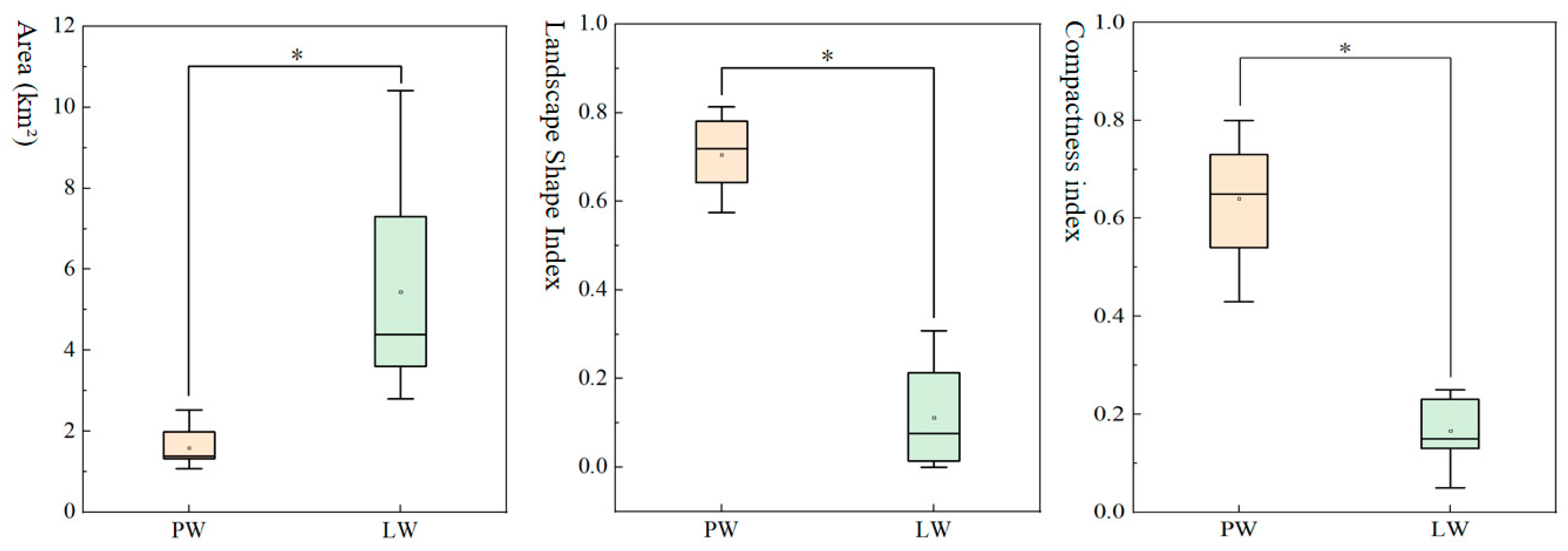
A secondary water body classification method based on image segmentation and cluster analysis was proposed to automatically distinguish between linear water bodies (LW) and polygonal water bodies (PW). Image segmentation was conducted on the initially classified data to extract individual water body objects, and feature parameters were calculated for each. These were then classified into distinct water body types using the K-means clustering algorithm. Linear water bodies, including rivers and canals with elongated spatial patterns, were uniformly classified as rivers. In contrast, polygonal water bodies exhibit more regular shapes and include types such as lakes, reservoirs, aquaculture ponds, and salt pans. Statistical analysis of geometric shape parameter distributions was conducted based on four representative water body types: river, lake, aquaculture pond, and salt pan (
Figure 3). Significant differences in area, LSI, and compactness were observed between polygonal and linear water bodies. Polygonal water bodies were typically smaller, more compact, and had higher LSI values, whereas linear water bodies were characterized by larger areas, lower LSI values, and elongated shapes, making them readily distinguishable.
3.2.4. Analysis of the Impact of Different Shape Feature Combinations on Wetland Information Extraction Accuracy
Connected component analysis was applied to the initial classification masks to generate individual water body objects. For each object, boundaries were extracted, and a set of shape-related features, including Area, Perimeter, Compactness (COM), Landscape Shape Index (LSI), Convexity, Linearity Index, and Skeleton Length, were calculated and normalized.
To evaluate the contribution of different shape descriptors to wetland information extraction, three feature combination schemes were designed within the same training sample area. The first scheme included basic geometric features (Area and Perimeter). The second scheme incorporated additional morphology-related features (Area, Perimeter, LSI, Linearity Index, Compactness, and Convexity). The third scheme further integrated skeleton-based structural information by adding Skeleton Length to the previous feature set. These schemes were compared to assess how different combinations of shape features influence classification performance.
3.2.5. Hierarchical Wetland Classification Method
Within the same training sample area, three different combinations of shape feature variables were designed to comparatively analyze their impact on the accuracy of wetland information extraction.
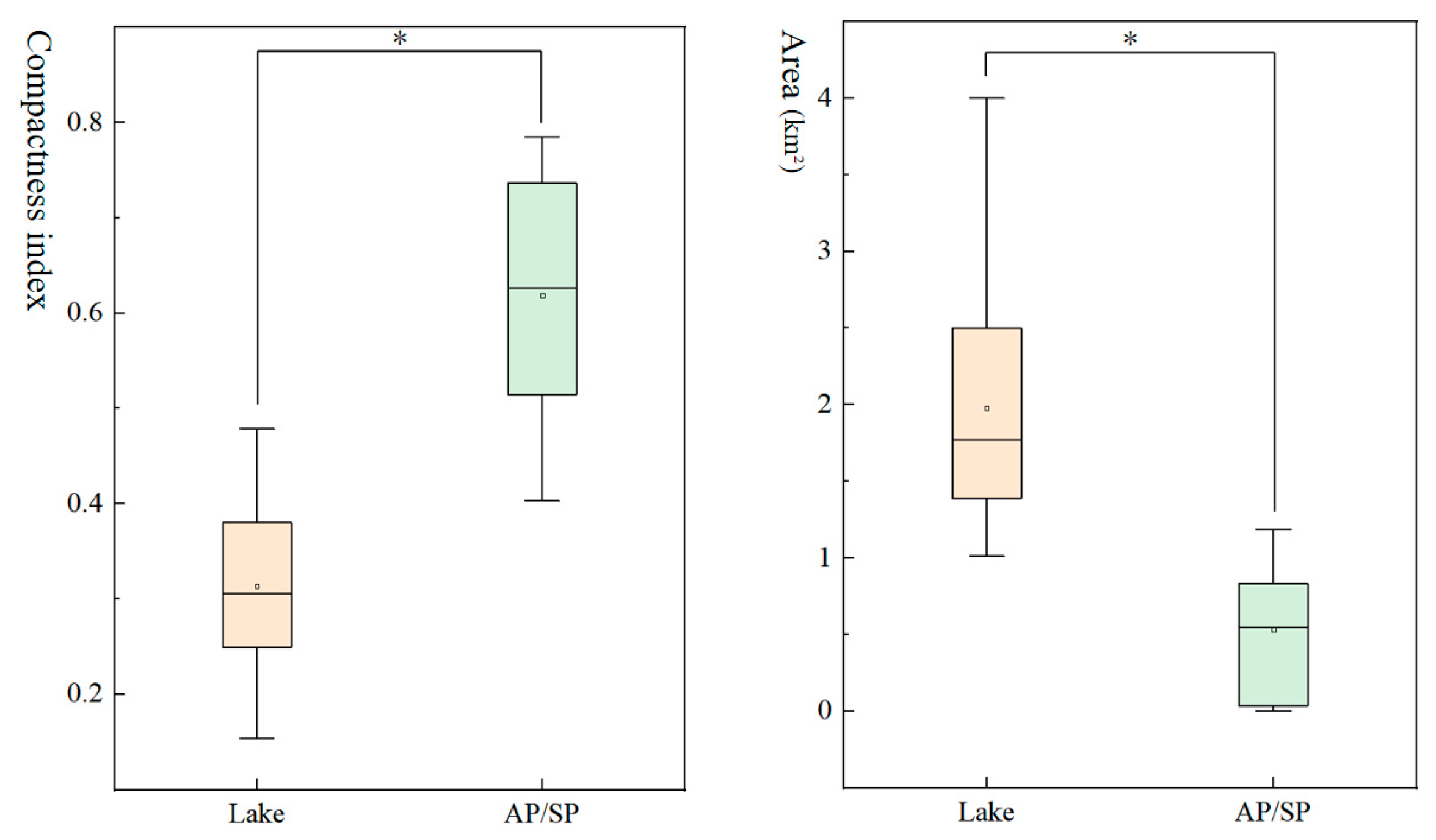
The hierarchical decision tree was employed in third-stage classification, incorporating dam data, area, shape, and Chla, to further refine the polygonal water body into four detailed types: reservoir, lake, aquaculture pond, and salt pan. If there was a dam within the spatial extent of a water body, it was classified as a reservoir; if there was no dam and the value of compactness was less than 4.5, and the area was greater than 1 km
2, it was classified as a lake [
20]. The comparative distributions of area and compactness are shown in
Figure 4.
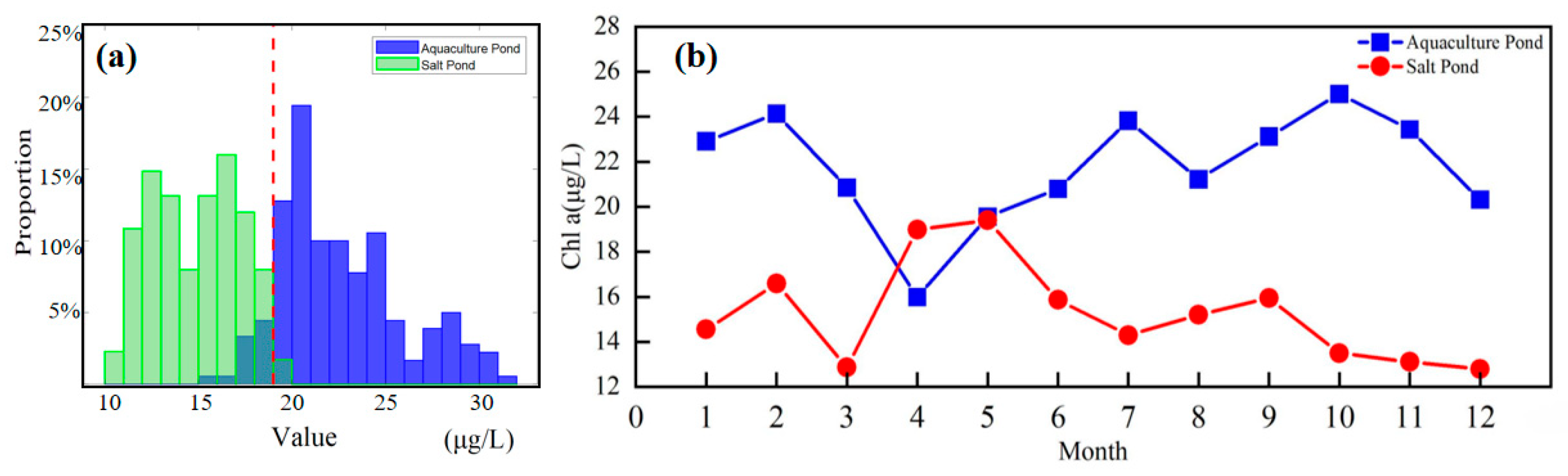
During aquaculture operations, the input of feed and biological metabolism leads to an increased abundance of phytoplankton in the aquaculture pond, resulting in significantly higher Chla concentrations compared to the salt pan. In contrast, the salt pan, as an enclosed evaporative water body, was characterized by high transparency and relatively low Chla concentration (
Figure 5). Accordingly, the Chla concentration threshold derived from remote sensing can serve as an effective approach to differentiate between an aquaculture pond and a salt pan, two representative types of artificial water bodies [
19].
The Normalized Difference Chlorophyll Index (NDCI), proposed by Mishra et al. [
55], was used as a relative proxy for chlorophyll-a variability in polygonal water bodies. The NDCI is defined as follows:
Chla was then calculated using the following formula:
To effectively distinguish between aquaculture ponds and salt pans, representative sample points were selected from the training dataset to analyze the temporal variation in Chla concentrations in the two water body types. From June to December, the Chla concentrations exhibited significant differences between the two. By utilizing satellite imagery from June to December 2023, the Chla concentration ranges of the sample points were calculated. When the Chla threshold was set to 19 μg/L, the optimal separation between the aquaculture pond and salt pan was achieved.
4. Results
4.1. Performance of the Random Forest Algorithm in Wetland Classification
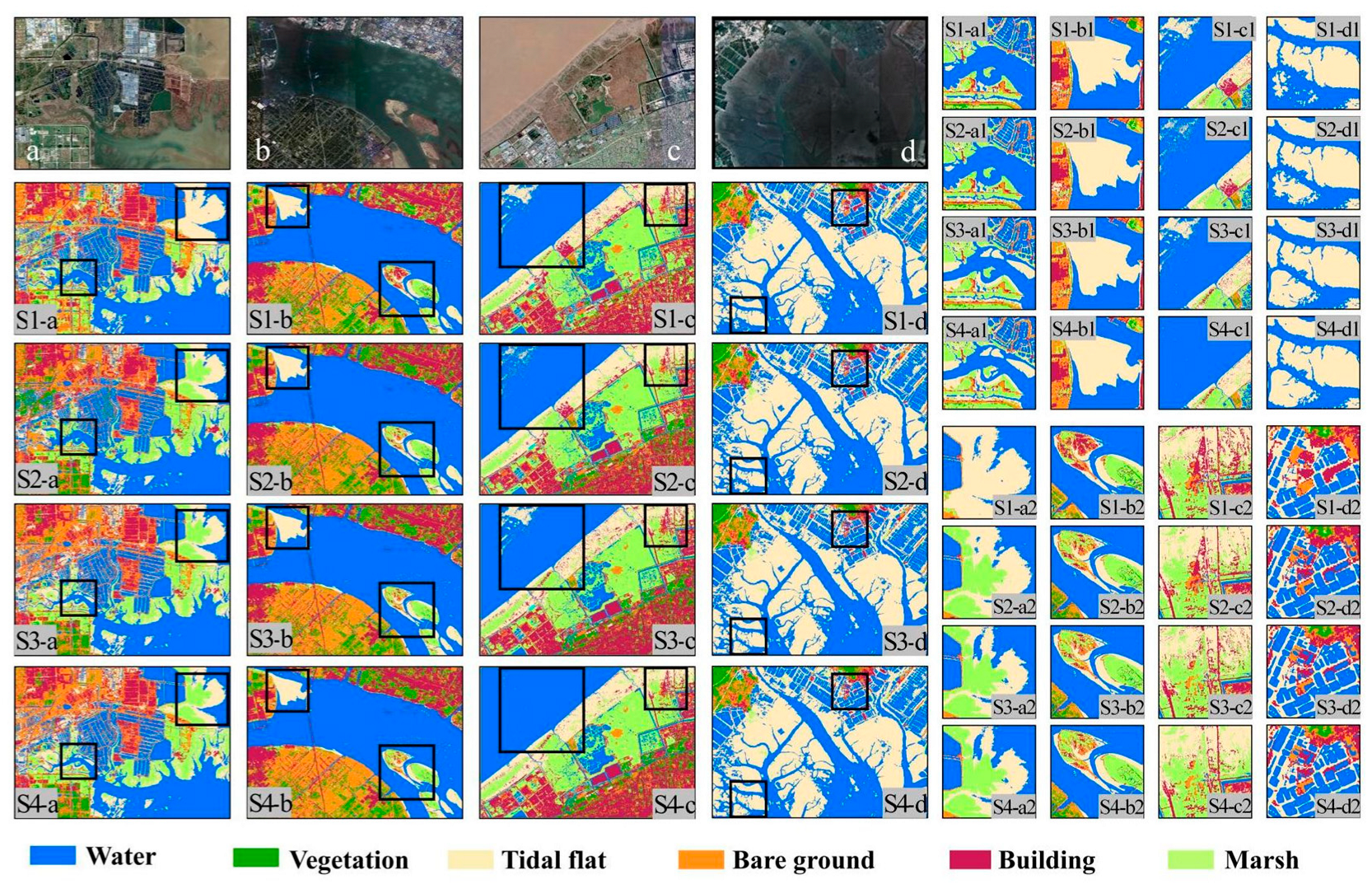
Under the same training sample conditions, four Random Forest classification schemes were constructed to investigate the influence of different feature combinations on wetland classification accuracy. The four schemes include Scheme 1 using only spectral features, Scheme 2 combining spectral and texture features, Scheme 3 combining spectral and polarization features, and Scheme 4 integrating spectral, polarization, and texture features simultaneously. The classification results obtained from different feature combinations are shown in
Figure 6, and the quantitative evaluation results for the three study areas, SJ, ZJ, and FJ, are presented in
Table 6,
Table 7 and
Table 8. Overall, all four feature combinations achieved good classification performance. The overall accuracy in the three study areas exceeded 83 percent, and the Kappa coefficient was higher than 0.80 in all cases, indicating that the Random Forest model has strong capability in identifying coastal wetland types. Meanwhile, the spatial distribution patterns of land cover reflected by the four classification results were generally consistent, with only minor differences observed in some local areas.
A comprehensive comparison of the classification results across the three study areas shows that different feature combinations have different effects on classification accuracy. With the introduction of texture features and polarization features, the overall classification accuracy of the model shows an increasing trend. Among the four schemes, Scheme 4, which integrates spectral, polarization, and texture features, achieved the highest classification accuracy in all three study areas. This result indicates that multi-source feature fusion can effectively improve both the accuracy and stability of wetland classification. Therefore, the influence of different feature combinations on classification performance is further analyzed and discussed from three aspects.
- (1)
Influence of texture features on classification accuracy
By comparing Scheme 1 and Scheme 2, it can be observed that the classification accuracy in most study areas improved after introducing texture features based on spectral information. In the SJ study area, the overall accuracy increased from 83.61 percent to 85.06 percent, and the Kappa coefficient improved from 0.80 to 0.82. In the ZJ study area, the overall accuracy increased from 90.94 percent to 92.13 percent, while the Kappa coefficient increased from 0.89 to 0.90. In the FJ study area, the overall accuracy increased from 90.30 percent to 91.07 percent. In addition, from the perspective of class-level accuracy, the producer accuracy and user accuracy of certain wetland types, such as marsh and tidal flat, were improved to varying degrees.
This phenomenon can be explained by the fact that texture features can represent the spatial structure and spatial heterogeneity of land cover, which helps compensate for the limitations of relying solely on spectral information and enhances the ability to distinguish land cover types with similar spectral characteristics. The classification maps also show that the introduction of texture features results in more complete classification patterns, better spatial continuity of land patches, and a significant reduction in fragmented patches. Therefore, the inclusion of texture features plays an important role in improving wetland classification accuracy.
- (2)
Influence of polarization features on classification accuracy
By comparing Scheme 1 and Scheme 3, the effect of polarization features on classification accuracy can be further analyzed. Overall, the introduction of polarization features also improves classification accuracy to a certain extent. In the SJ study area, the overall accuracy significantly increased from 83.61 percent to 89.03 percent, and the Kappa coefficient increased from 0.80 to 0.84. In the ZJ study area, the overall accuracy increased from 90.94 percent to 92.20 percent. In the FJ study area, the overall accuracy remained at 91.07 percent, indicating relatively stable classification performance. Meanwhile, the classification accuracy of wetland types such as marsh and tidal flat was also improved.
This improvement can be attributed to the fact that SAR polarization data can provide information about surface scattering characteristics and vegetation structure, and these data are less affected by cloud cover and illumination conditions. Therefore, combining polarization features with optical spectral information can further enhance the separability between different land cover types and improve classification accuracy.
- (3)
Combined influence of texture and polarization features on classification accuracy
A comparison of the four experimental schemes shows that Scheme 4, which simultaneously incorporates texture and polarization features, achieved the highest classification accuracy. In the SJ study area, the overall accuracy reached 90.04 percent and the Kappa coefficient reached 0.88. In the ZJ study area, the overall accuracy further increased to 92.51 percent and the Kappa coefficient reached 0.91. In the FJ study area, the overall accuracy reached 93.53 percent and the Kappa coefficient reached 0.92, which is the highest among all schemes.
The classification results shown in
Figure 6 indicate that Scheme 4 produces more complete classification patterns, better spatial continuity of land patches, and significantly fewer fragmented patches. In particular, the classification boundaries of wetland types such as marsh and tidal flat are clearer. These results indicate that polarization and texture features provide complementary information to spectral data, and their combined use significantly improves both classification accuracy and spatial consistency.
In summary, satisfactory classification results can be achieved using only spectral features in wetland classification, although there is still room for improvement in classification accuracy. The introduction of either texture features or polarization features improves classification accuracy to some extent. Among all schemes, Scheme 4, integrating spectral, polarization, and texture features, produces the least fragmented patches and the clearest and most complete land cover boundaries. Therefore, multi-source feature fusion effectively improves the accuracy and stability of coastal wetland classification and provides strong support for coastal wetland monitoring and resource investigation based on remote sensing.
4.2. Application of K-Means Clustering in Water Body Classification
In the second stage, shape features were utilized to further subdivide the water body into linear and polygonal water bodies. Three combinations of shape-related parameters were designed and compared to evaluate classification performance. In Scheme 1, only shape features were considered. In Scheme 2, both shape and morphological features were incorporated, while in Scheme 3, skeleton features were additionally integrated. As shown in
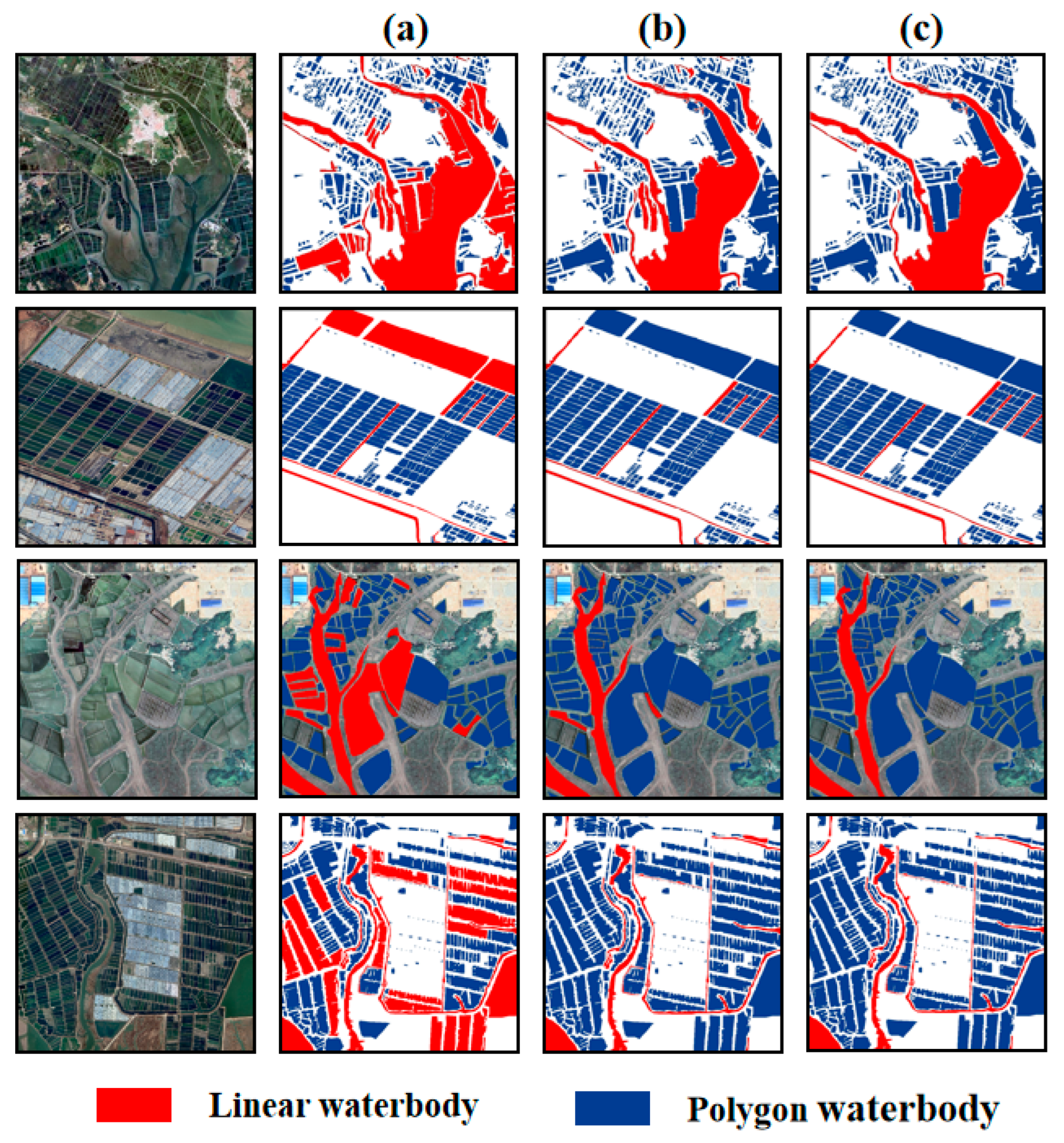
Figure 7a–c correspond to classification Schemes 1–3, respectively. In
Figure 7a, the poorest classification performance was observed under Scheme 1, with evident misclassification. Most notably, elongated polygonal water bodies were misclassified as rivers, resulting in a classification accuracy of only 62.5%. In
Figure 7b, an accuracy improvement of 27.74% compared to Scheme 1 was observed, indicating that the incorporation of morphological features significantly enhanced classification performance. However, misclassifications persisted due to morphological similarities between an elongated polygonal water body and a river. Additionally, linear water bodies were fragmented by artificial structures such as bridges, causing broader river segments to be misclassified as polygonal water bodies. To tackle this issue and further improve classification accuracy, the complete river structure was reconstructed and treated as a compact object. Therefore, in Scheme 3, a skeletonization algorithm was introduced to extract the river’s central axis, allowing spatial topological relationships between river segments to be captured and the identification of linear water bodies to be enhanced. As shown in
Table 9, with the progressive refinement of the classification method from Scheme 1 to Scheme 3, classification accuracy was steadily improved, with Scheme 3 achieving an accuracy of 98.66%. It was demonstrated that the integration of shape, morphological, and skeleton features could significantly enhance water body classification in complex scenarios, particularly in the identification of fragmented river structures.
4.3. Application of the Hierarchical Wetland Classification Method in Wetland Mapping
In the third stage, polygonal water bodies were further subdivided into four categories, including reservoir, lake, aquaculture pond, and salt pan, using a hierarchical classification tree that incorporated environmental and shape features. The classification rules and threshold settings were established based on the sample data described in
Section 3.2.5 and relevant literature.
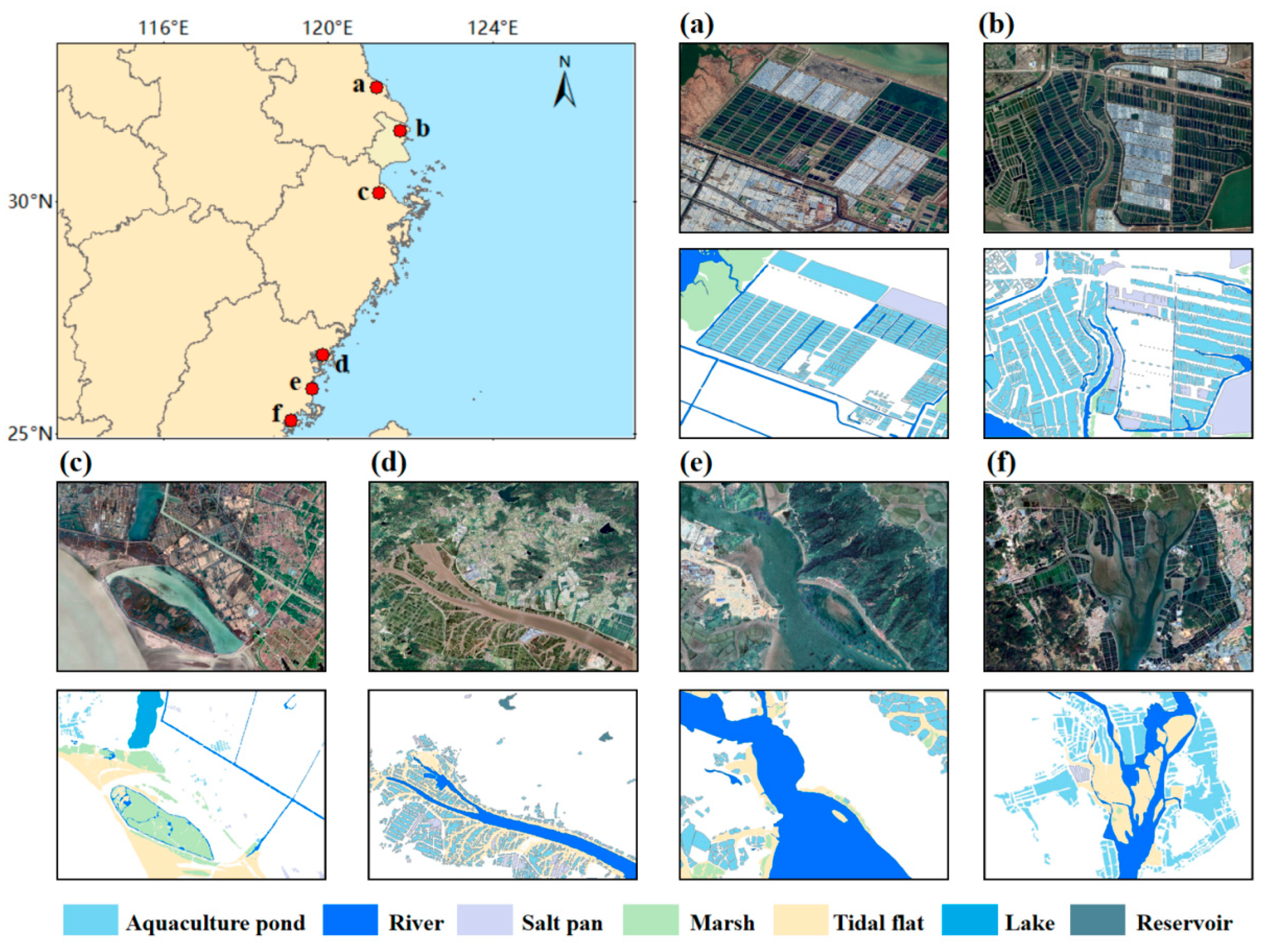
The 10 m resolution wetland maps of the East China Sea, generated using the proposed classification method, clearly depict the spatial distribution and composition of wetlands across six representative regions, with well-defined boundaries and distinct patterns characteristic of the coastal landscape (
Figure 8). In estuarine areas, where marine biological resources were abundant and fisheries were well developed, aquaculture ponds were continuously distributed along the shoreline. These ponds were primarily concentrated in the Yangtze River Estuary-Hangzhou Bay and the Min River Estuary-Xiamen Bay regions. In the transitional zones between the coast and the inland areas, abundant freshwater resources supported the formation of key wetland types such as lakes and reservoirs. In addition, areas near the open sea, characterized by higher soil salinity, offered favorable conditions for the formation and development of salt pans, which were predominantly distributed in zones adjacent to the open coastline.
4.4. Accuracy Verification
The classification results were evaluated using validation sample points (
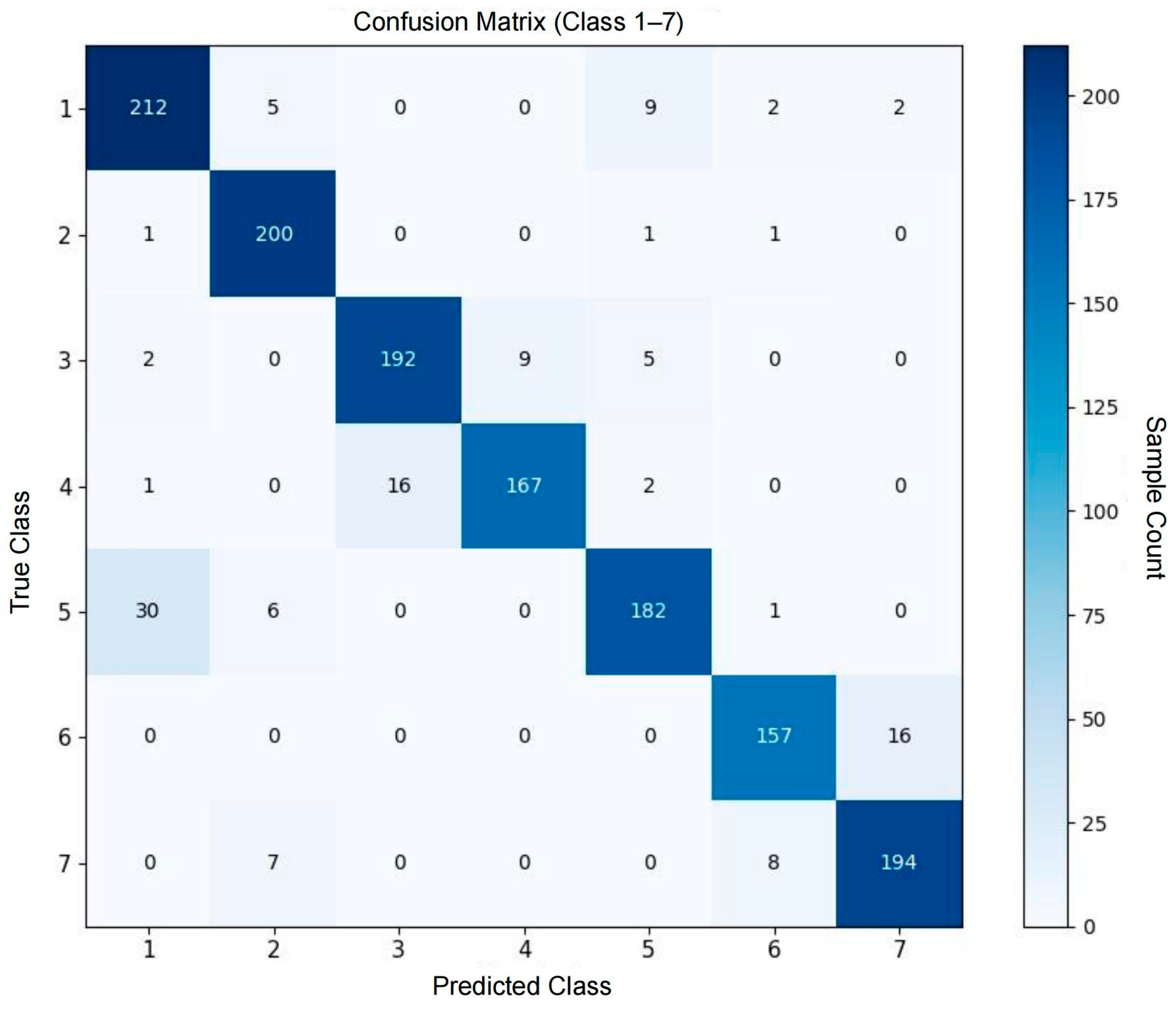
Table 10), and the corresponding confusion matrix is shown in
Figure 9. The overall accuracy of the East China Sea wetland classification reached 91.32% in 2023, with UA and PA for each wetland class exceeding 86.18% and 83.11%, respectively. Among all classes, reservoir classification achieved the highest accuracy, followed by river and marsh. The highest confusion error was observed between aquaculture ponds and salt pans, primarily due to their morphological similarity and the connectivity between elongated aquaculture ponds and adjacent river channels. Additionally, some actual salt pans were not accurately identified, which may be attributed to similar Chla values during the evaporation crystallization period of salt pans and the drainage period of the aquaculture pond, as well as comparable reflectance characteristics between salt crusts on crystallization ponds and algal-rich water surfaces in the aquaculture pond. Overall, natural wetlands exhibited higher classification accuracy than human-made wetlands, likely due to natural wetlands having more stable and distinguishable spectral features. In contrast, human-made wetlands were subject to frequent anthropogenic disturbances and fluctuating water conditions, which led to stronger spatiotemporal heterogeneity and increased classification uncertainty.
5. Discussion
5.1. Advantages and Limitations of the Hierarchical Classification Framework
To further evaluate the contribution of the hierarchical strategy, we conducted a comparison experiment against a conventional single-stage Random Forest classifier using the same reference sample set, training and validation split, and feature preparation procedure. Under this controlled experimental setting, the hierarchical framework achieved a higher overall accuracy than the conventional RF classifier, indicating that the improvement mainly resulted from differences in classification strategy rather than from differences in sample allocation or data preparation.
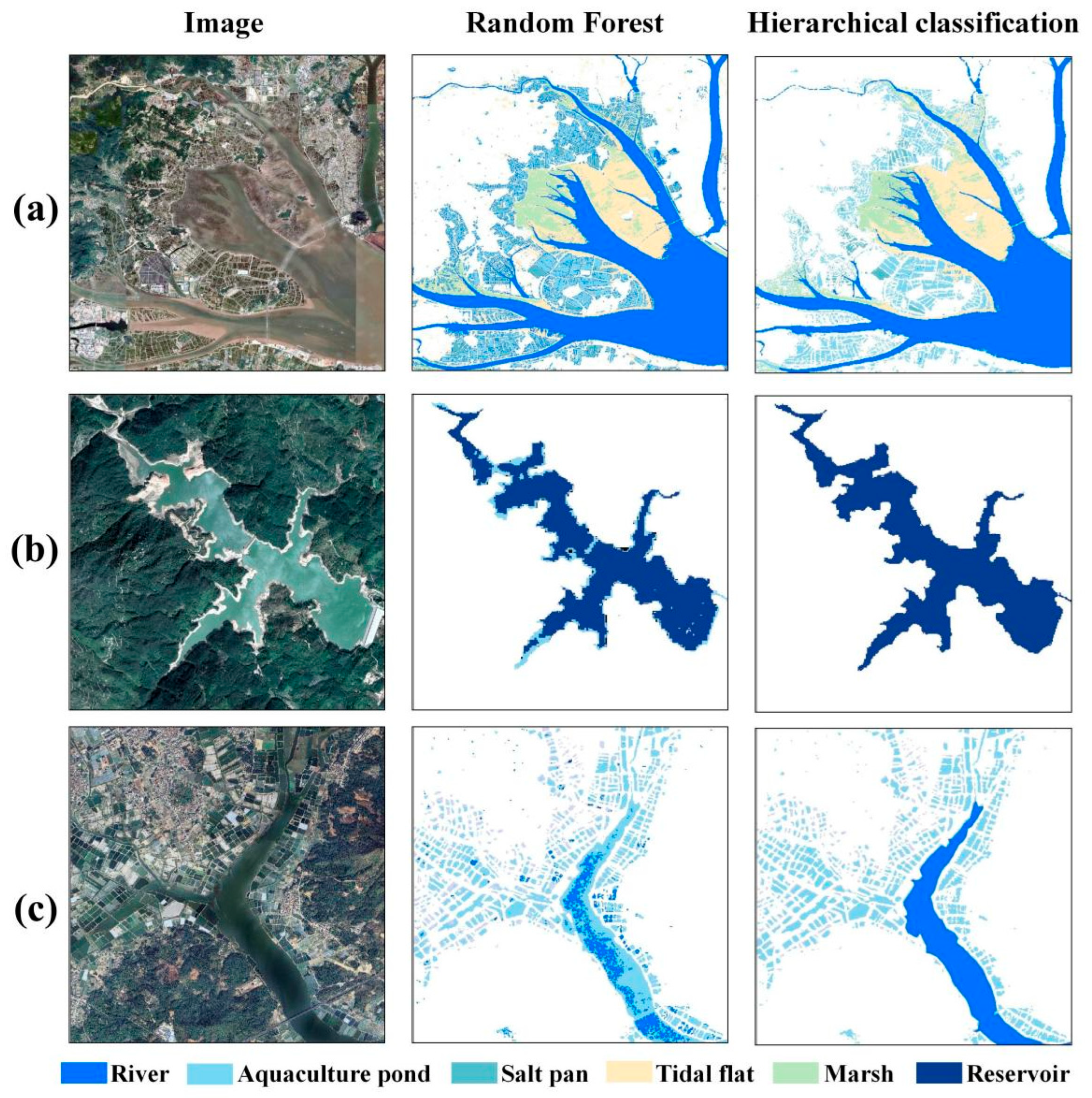
The results of this comparison experiment further illustrate the advantage of the hierarchical approach over a conventional single-stage Random Forest classifier, as shown in
Figure 10 and
Table 11. When the RF classifier was directly applied to the complete feature set, the overall accuracy reached only 81.78% with a kappa coefficient of 0.77. In contrast, the hierarchical classification strategy achieved an overall accuracy of 96.35% and a kappa coefficient of 0.96. Particularly large improvements were observed for categories that are spectrally or spatially similar to other wetland types. For instance, the user’s accuracy of salt pans increased from 58.33% to 93.10%, indicating that the hierarchical framework effectively reduced confusion between salt pans and aquaculture ponds or tidal flats. Similarly, lake classification accuracy improved from 40.95% to 89.50%, suggesting that the multi-stage classification strategy helped separate lakes from reservoirs and rivers that often exhibit similar spectral signatures in medium-resolution imagery. Improvements were also observed for river and aquaculture pond classes, further demonstrating the ability of the hierarchical framework to reduce misclassification among hydrologically connected wetland types.
These improvements can be attributed to three key characteristics of the hierarchical framework. First, the stepwise classification structure allows different feature combinations to be introduced at different stages, enabling more targeted discrimination among wetland types with similar spectral characteristics. Second, the integration of supervised classification and unsupervised clustering enhances class separability while reducing the reliance on large quantities of labeled training samples. Third, the regionalization strategy divides the study area into multiple ecological zones and trains independent RF models for each zone, which improves the adaptability of the classification model to regional environmental heterogeneity and reduces computational memory requirements.
5.2. Quantitative Comparison with Recent Coastal Wetland Mapping Studies
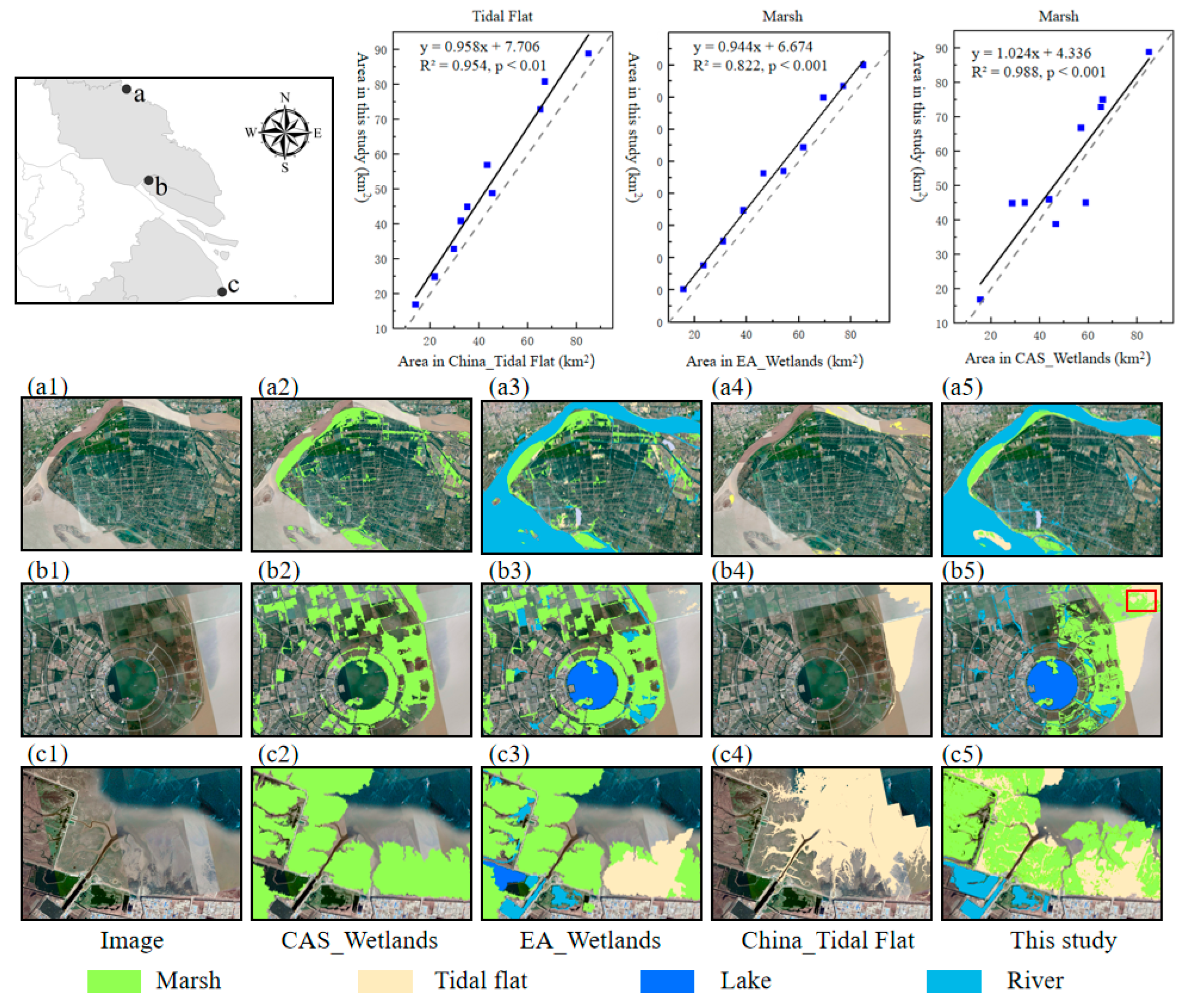
Figure 11 evaluates the wetland map produced in this study against three existing datasets in the East China Sea coastal region, including the CAS_Wetlands dataset, the China_Tidal Flat dataset, and the EA_Wetlands dataset. To reduce the influence of temporal inconsistency among datasets, the comparison was conducted in areas with relatively limited interannual wetland change. Overall, the wetland map derived in this study shows good agreement with the reference datasets, while also revealing several systematic differences in wetland delineation. Compared with CAS_Wetlands, the map generated in this study provides a more up-to-date and finer-resolution representation of wetland patterns, which allows better identification of fragmented wetland patches and boundary details. Relative to EA_Wetlands, the mapped wetland extent in this study is spatially more coherent and less affected by local classification noise, which is likely related to differences in mapping strategies. The object-based classification framework adopted in this study, integrating superpixel segmentation and random forest classification, is more effective in reducing patch fragmentation and the salt-and-pepper effect than pixel-based classification approaches.
The quantitative comparison further confirms the consistency between this study and the reference products. For tidal flats, the regression analysis against the China_Tidal Flat dataset showed a strong linear relationship, indicating a high level of agreement in provincial area estimates. For marshes, the comparison with EA_Wetlands also showed a significant correlation, although the relatively lower coefficient of determination suggests larger discrepancies in marsh identification. By contrast, the marsh comparison with CAS_Wetlands yielded a stronger relationship, indicating a closer correspondence in spatial pattern and area distribution. Nevertheless, the fitted lines in all three panels deviate to some extent from the 1:1 line, suggesting systematic differences in area estimation among datasets. In particular, the marsh area extracted in this study tends to be lower than that in EA_Wetlands in some provinces, whereas it is slightly higher than that in CAS_Wetlands overall. These differences are likely caused by variations in classification schemes, spatial resolution, and boundary delineation rules across datasets.
The visual comparison in representative subregions further illustrates these differences. In the marsh-dominated examples (
Figure 11a1–a5,b1–b5), CAS_Wetlands and EA_Wetlands tend to produce more fragmented patches or overextended wetland boundaries, whereas the results of this study show clearer patch integrity and more realistic wetland edges. In the tidal-flat example (
Figure 11c1–c5), the wetland extent derived in this study is generally consistent with China_Tidal Flat, but appears more refined in coastal transition zones and better captures narrow or irregular land–water boundaries. These results suggest that the wetland map generated in this study maintains good consistency with existing products while improving the spatial detail and thematic reliability of wetland mapping in the East China Sea coastal region.
5.3. Characterization of the Spatial Distribution of Wetlands in the East China Sea
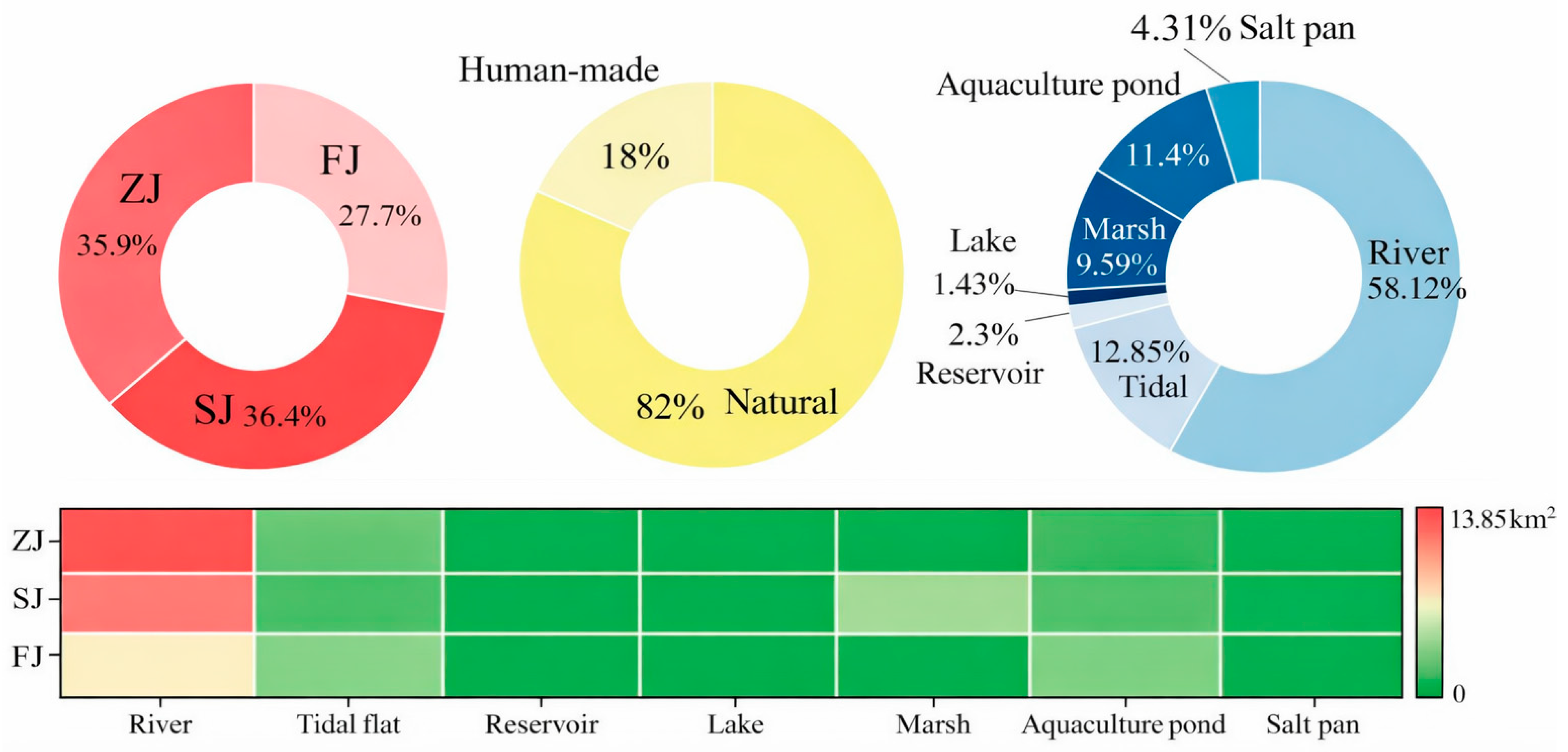
Coastal wetlands in the East China Sea were widely distributed, covering a total area of 5652.63 km
2. Among them, 82% were classified as natural wetlands, while 18% were identified as human-made wetlands. As shown in
Figure 12, among the seven secondary categories, rivers occupied the largest area, accounting for 58.12%, followed by tidal flats, which were extensively distributed along the coastline and constituted 12.85% of the total wetland area. Lakes represented the smallest proportion, comprising only 1.43%. Within human-made wetlands, coastal aquaculture ponds accounted for 11.4% and were primarily distributed in a belt-like pattern along the shoreline.
Among the three major ecological zones, the largest wetland area was observed in the SJ region (36.41%), followed by the ZJ region (35.89%), while the smallest share was found in the FJ region (27.7%). The ZJ region, located on the southern wing of the Yangtze River Delta, was mainly characterized by river and lake wetlands due to its dense hydrographic network and favorable climatic and geomorphic conditions, which support the view that hydrographic density is a key factor influencing river wetland distribution. In contrast, the FJ region, with its indented coastline and extensive intertidal zones, showed the highest proportion of tidal flats, consistent with findings that tidal dynamics and coastal morphology play dominant roles in shaping coastal wetlands.
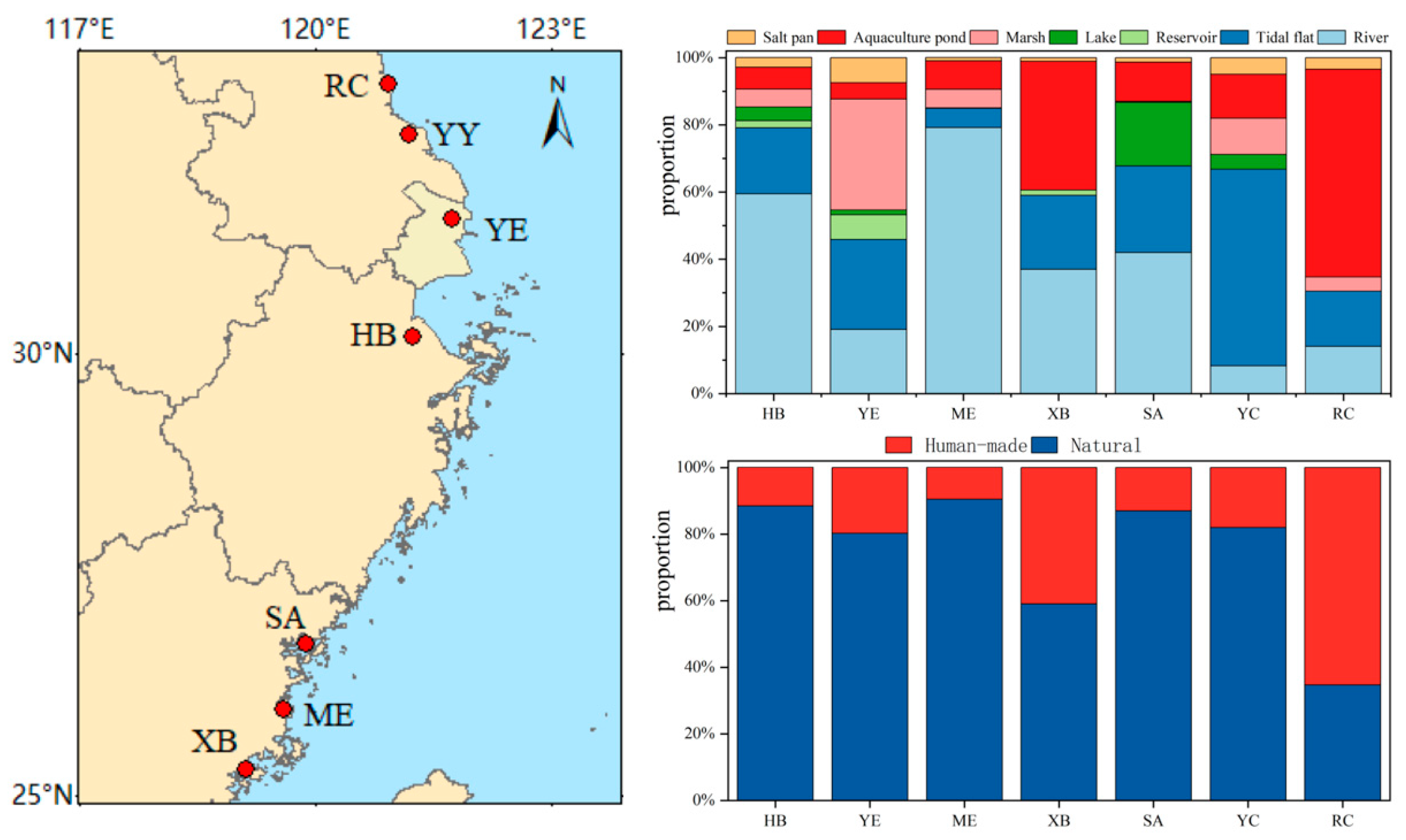
To investigate the influence of natural geographical conditions and human activities on coastal wetland patterns, seven representative wetland regions along the East China Sea were selected, including Rudong Coast (RC), Yancheng (YC), the Yangtze Estuary (YE), Hangzhou Bay (HB), Sanduao Bay (SA), the Minjiang Estuary (ME), and Xinghua Bay (XB) (
Figure 13). The analysis focused on wetland composition and spatial distribution characteristics across these regions.
At the regional scale, natural wetlands dominated in most study areas. In SA, ME, HB, YC, and YE, natural wetlands accounted for more than 80% of the total wetland area, indicating that these regions have largely retained natural wetland landscapes. Among them, SA exhibited the most diverse wetland composition, whereas HB and ME maintained relatively high landscape integrity under the combined influence of tidal dynamics, sediment supply, and ecological protection policies. Although YC has been affected by reclamation and population pressure, natural wetlands still occupy a relatively high proportion of the total wetland area. In contrast, YE showed a marked expansion of human-made wetlands and fragmentation of natural tidal flats due to long-term reclamation and salt production. Human-made wetlands were more prominent in XB and RC, where they accounted for more than 40% of the total wetland area. In RC, aquaculture ponds were the dominant type, comprising 61.86% of the total wetland area, which reflects the regional transition from traditional salt production to modern aquaculture and the associated degradation and fragmentation of natural wetlands.
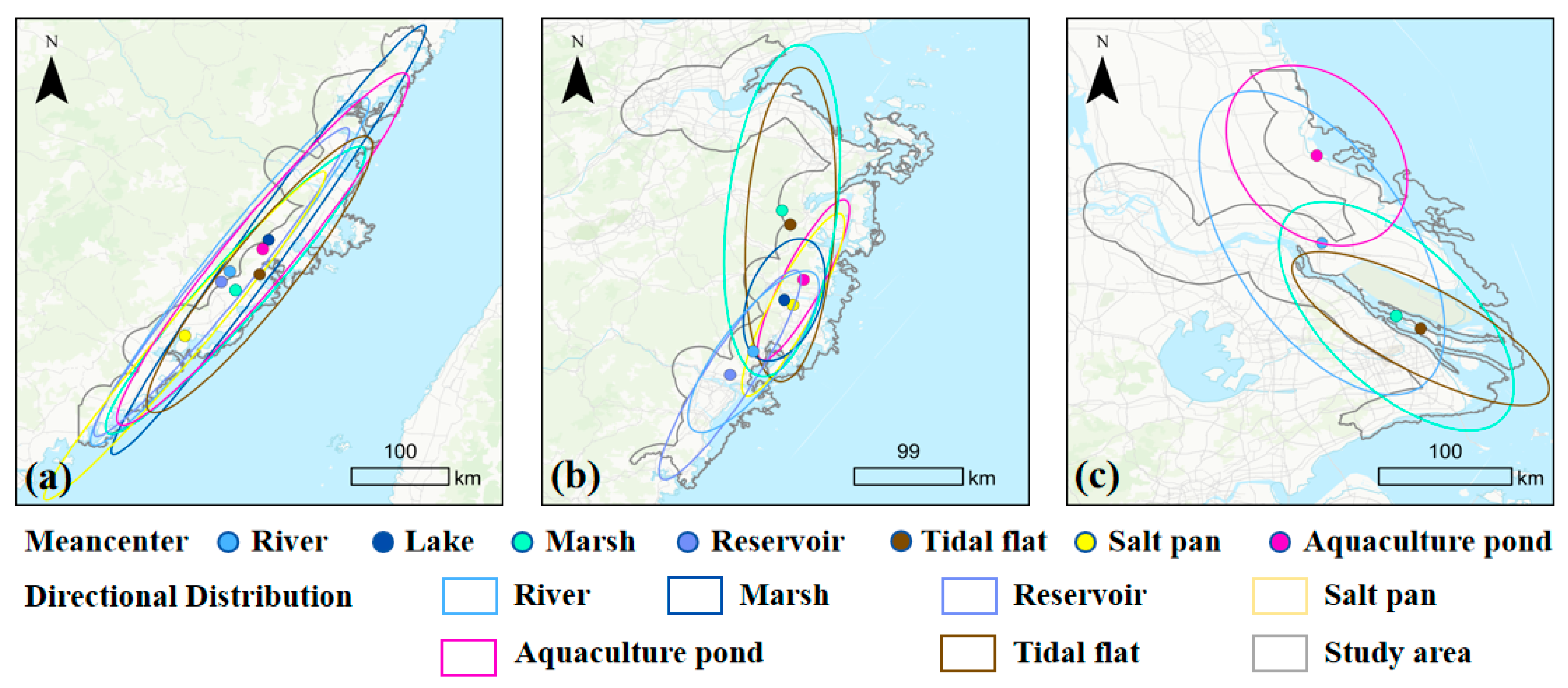
At the overall spatial level, natural and human-made wetlands showed clear spatial differentiation (
Figure 14). The centroids of natural wetland types, including lakes, rivers, tidal flats, and marshes, were mainly distributed along river corridors, low-lying plains, and land–water transition zones, reflecting the dominant control of geomorphological and hydrological processes. By contrast, the centroids of human-made wetlands, including aquaculture ponds, salt pans, and reservoirs, were shifted toward coastal lowlands and development-friendly areas, indicating strong human influence on wetland redistribution. In Fujian and Zhejiang, the centroids of aquaculture ponds and salt pans were generally located to the east or south of those of natural wetlands, suggesting that artificial development was concentrated in coastal zones and flat coastal plains. In Shanghai, the centroid of aquaculture ponds occurred at the highest latitude and was clearly separated from those of tidal flats and marshes, indicating that human-made wetlands had expanded outward from the natural estuarine wetland zone. In terms of ellipse size, rivers, tidal flats, and some marshes generally occupied broader spatial ranges, suggesting stronger control by regional-scale natural processes. Human-made wetlands showed clear regional differences: aquaculture ponds in Fujian were relatively widespread, reflecting dispersed coastal development, whereas human-made wetlands in Zhejiang and Shanghai were more spatially concentrated and contiguous. In terms of flattening, natural wetlands generally exhibited stronger directionality, especially rivers and tidal flats, whose elongated ellipses reflected linear expansion along river valleys and coastlines. Aquaculture ponds and salt pans in Fujian and Zhejiang also showed relatively high flattening values, indicating that their distributions were still constrained by shoreline configuration and coastal geomorphology. In contrast, aquaculture ponds in Shanghai had the lowest flattening values and a more clustered pattern, suggesting a stronger influence of land parceling and engineering development.
At the wetland-type level, rivers and tidal flats displayed the strongest directional characteristics, whereas lakes and some marshes were relatively compact. Rivers formed the ecological backbone of the wetland landscape in all three regions. The river ellipse in Fujian was highly elongated, indicating extension along the mountain–coast transition zone; rivers in Zhejiang were more compact but still clearly linear; and those in Shanghai showed a northwest–southeast orientation shaped by the river network of the Yangtze Estuary and estuarine shoreline. Tidal flats were mainly located in land–water transition zones and typically showed belt-shaped ellipses, highlighting their role as the most active interface of land–sea interaction. Marshes were mainly distributed in low-lying and poorly drained areas, with marshes in Shanghai showing particularly close spatial correspondence with tidal flats. Lakes generally exhibited relatively regular areal distributions, although their spatial compactness differed between regions. Among human-made wetlands, aquaculture ponds were the most representative type: they were widespread and directional in Fujian, more concentrated and regular in Zhejiang, and more contiguous and areal in Shanghai. Salt pans were generally distributed close to the coast and showed strong spatial affinity with aquaculture ponds, particularly in Zhejiang. Reservoirs, by contrast, were mainly located in inland mountainous areas or mountain–plain transition zones, and their orientations were broadly consistent with those of rivers, indicating strong dependence on natural river channels and topographic constraints.
Cross-comparison further revealed clear spatial overlap and transformation relationships between natural and human-made wetlands. The centroids of aquaculture ponds and salt pans were generally close to those of tidal flats and marshes, especially in Zhejiang and Shanghai, suggesting that many human-made wetlands were formed through the reclamation of former tidal flats, coastal lowlands, and marshes. In addition, the similar orientations of some aquaculture ponds, salt pans, and tidal flats indicate that human-made wetland development inherited the basic spatial framework of the natural coastal zone. Along the topographic gradient, the wetland types generally followed a sequence from inland reservoirs to rivers, marshes, and lakes, then to tidal flats in the coastal transition zone, and finally to aquaculture ponds and salt pans on coastal plains. This pattern suggests that the spatial organization of coastal wetlands has evolved from a system primarily controlled by natural hydrological and geomorphological processes to one increasingly reshaped by intensive human exploitation. Overall, sediment supply, tidal dynamics, and geomorphological conditions determined the original distribution of coastal wetlands, whereas reclamation history, salt production, and modern agricultural and fishery activities profoundly influenced wetland transformation and spatial reconstruction. Together, these natural and anthropogenic factors have shaped the diverse wetland patterns along the East China Sea coast.
5.4. Implications of a High-Resolution Coastal Wetland Map
This study produced a 10 m resolution wetland map for the East China Sea coastal zone, providing spatially detailed and regionally consistent information on the distribution of different wetland types. Such high-resolution mapping offers an important scientific basis for ecological monitoring, biodiversity conservation, and long-term coastal ecosystem management.
The classification results also provide practical guidance for managing specific wetland types. For instance, the accurate delineation of tidal flats and coastal marshes can support the protection of intertidal habitats that serve as key feeding and resting areas for migratory waterbirds along the East Asian–Australasian Flyway. These data help identify ecologically sensitive tidal-flat zones that may require priority protection or ecological restoration. In addition, the detailed mapping of aquaculture ponds and salt pans provides useful information for regulating coastal aquaculture activities and evaluating the ecological consequences of historical reclamation. In regions where intensive aquaculture has replaced natural wetlands, the dataset can assist coastal managers in designing spatial planning strategies that balance aquaculture production with wetland conservation. Vegetated wetlands such as coastal marshes also function as important carbon sinks in coastal ecosystems. Their accurate identification enables improved estimation of blue-carbon storage and supports regional assessments of carbon sequestration potential. Furthermore, the wetland dataset can inform environmental impact assessments for coastal infrastructure projects, including renewable energy installations, by helping identify ecologically sensitive areas that should be avoided during site selection.
The wetland dataset generated in this study can support environmentally informed coastal planning by helping identify ecologically sensitive areas that require protection or careful management.
6. Conclusions
Using Sentinel-1 SAR and Sentinel-2 MSI data processed on the Google Earth Engine platform, this study developed a hierarchical coastal wetland classification framework integrating object-based Random Forest classification, K-means clustering, and a hierarchical decision tree model. The framework generated a 10 m resolution wetland map for the East China Sea region. The final wetland map achieved an overall accuracy of 91.32% in 2023. In a controlled comparison experiment using the same sample set, training and validation split, and feature preparation procedure, the hierarchical framework outperformed a conventional single-stage Random Forest classifier. Marked improvements were observed for several spectrally similar wetland types, particularly salt pans and lakes. Among the tested feature combinations, the integration of spectral, texture, and polarization features produced the highest classification accuracy, highlighting the value of multi-source feature fusion for reducing confusion among similar wetland classes. The resulting wetland map indicates that coastal wetlands in the East China Sea cover approximately 5652.63 km2, with natural wetlands accounting for 82% of the total wetland area and human-made wetlands representing 18%. Rivers constitute the largest wetland type (58.12%), followed by tidal flats (12.85%) and aquaculture ponds (11.40%). These results demonstrate that the proposed hierarchical classification framework provides an effective approach for high-precision coastal wetland mapping and offers valuable spatial information for wetland monitoring, ecological conservation, and sustainable coastal management in the East China Sea region.
However, several factors may still influence classification accuracy. Coastal wetlands are characterized by strong spatial heterogeneity, seasonal dynamics, and transitional zones between land-cover types, which can increase classification uncertainty and limit model generalization when applied to other regions. In addition, spectral similarity among certain wetland types and redundancy in multi-source feature variables may reduce the effectiveness of feature representation. Due to the 10 m spatial resolution of Sentinel imagery, the classification of very small objects, such as small ponds and narrow canals, remains uncertain. In general, objects represented by only a few pixels are more likely to be affected by mixed pixels and boundary effects, which may lead to confusion between aquaculture ponds and salt pans. Moreover, classification in highly dynamic intertidal zones may be influenced by tidal fluctuations and seasonal variability, which increase the uncertainty of wetland boundary delineation and class discrimination.
Future research could further improve classification accuracy by incorporating multi-temporal remote sensing data to capture seasonal wetland dynamics, optimizing feature selection strategies to reduce redundancy and enhance discriminative capability, and integrating higher-resolution satellite imagery or UAV data for multi-source data fusion. These improvements may enhance the capability of hierarchical classification frameworks for more detailed wetland monitoring and large-scale coastal ecosystem management.