Evaluating the Impact of Multi-Source Digital Elevation Model Quality on Archeological Predictive Modeling: An Integrated Framework Based on Machine Learning and SHAP-Based Interpretability Analysis

 , ,
, ,
Highlights
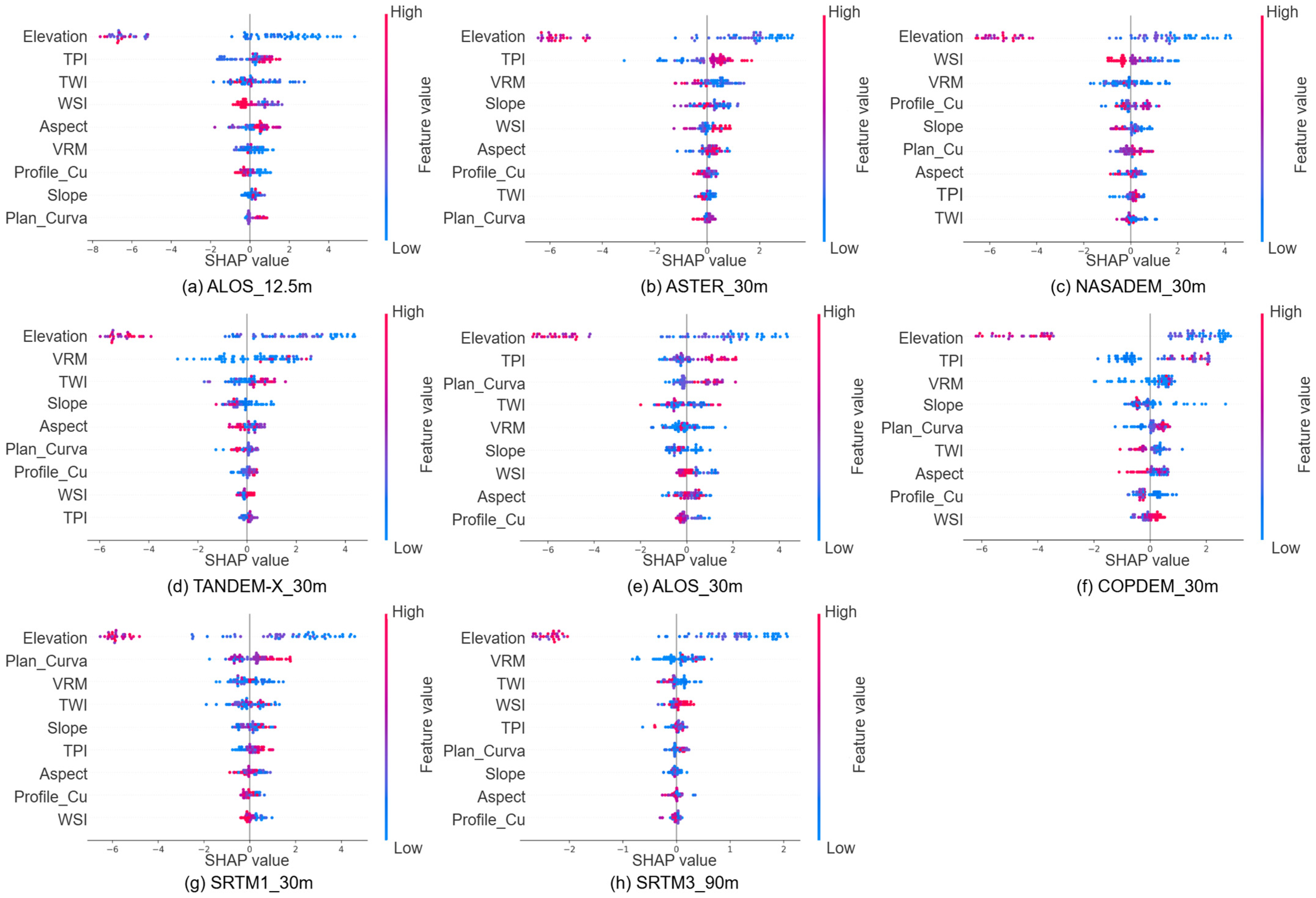
- High-quality DEMs yield more geologically plausible feature attributions in SHAP analysis, reducing data-induced interpretive bias.
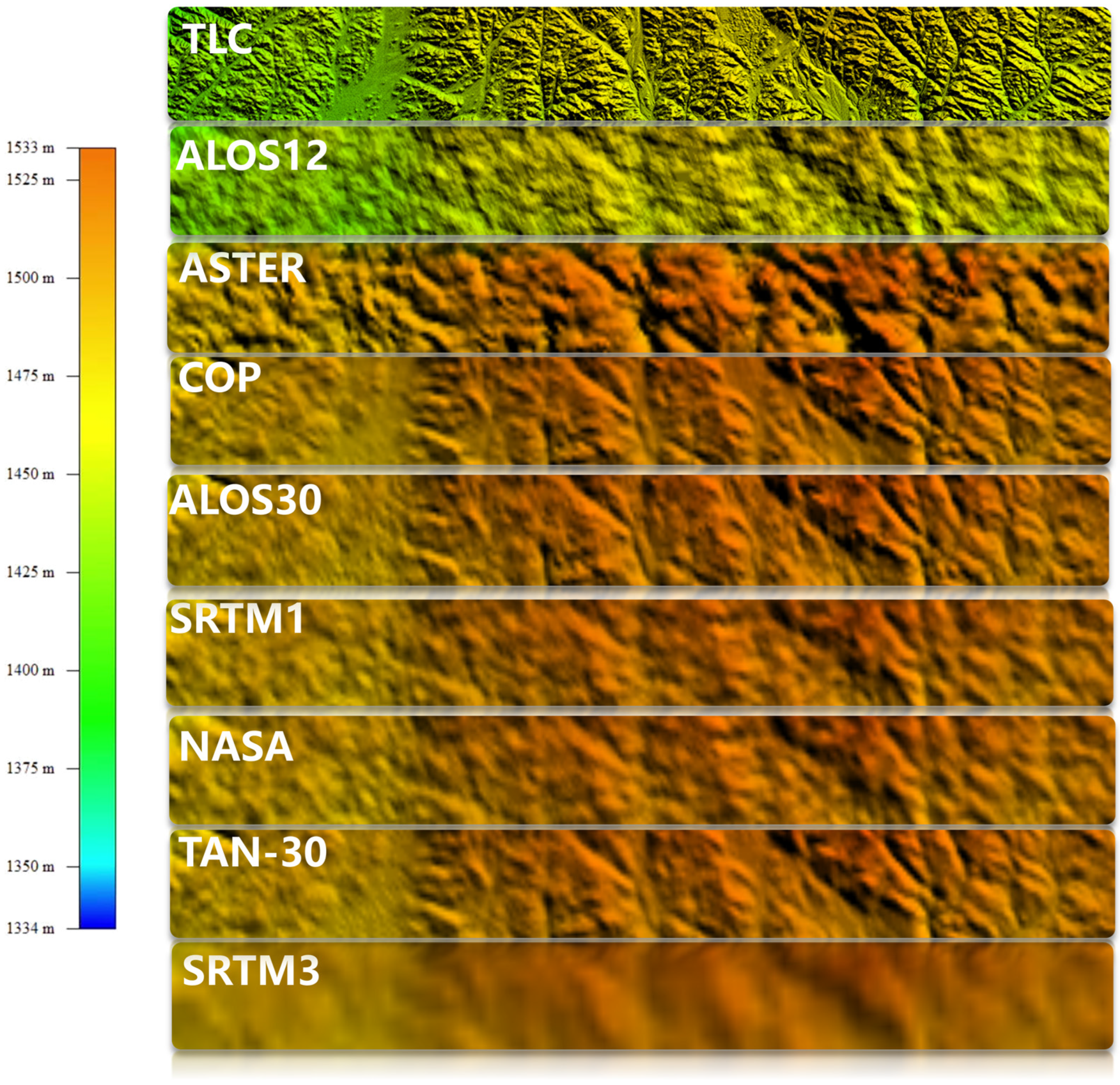
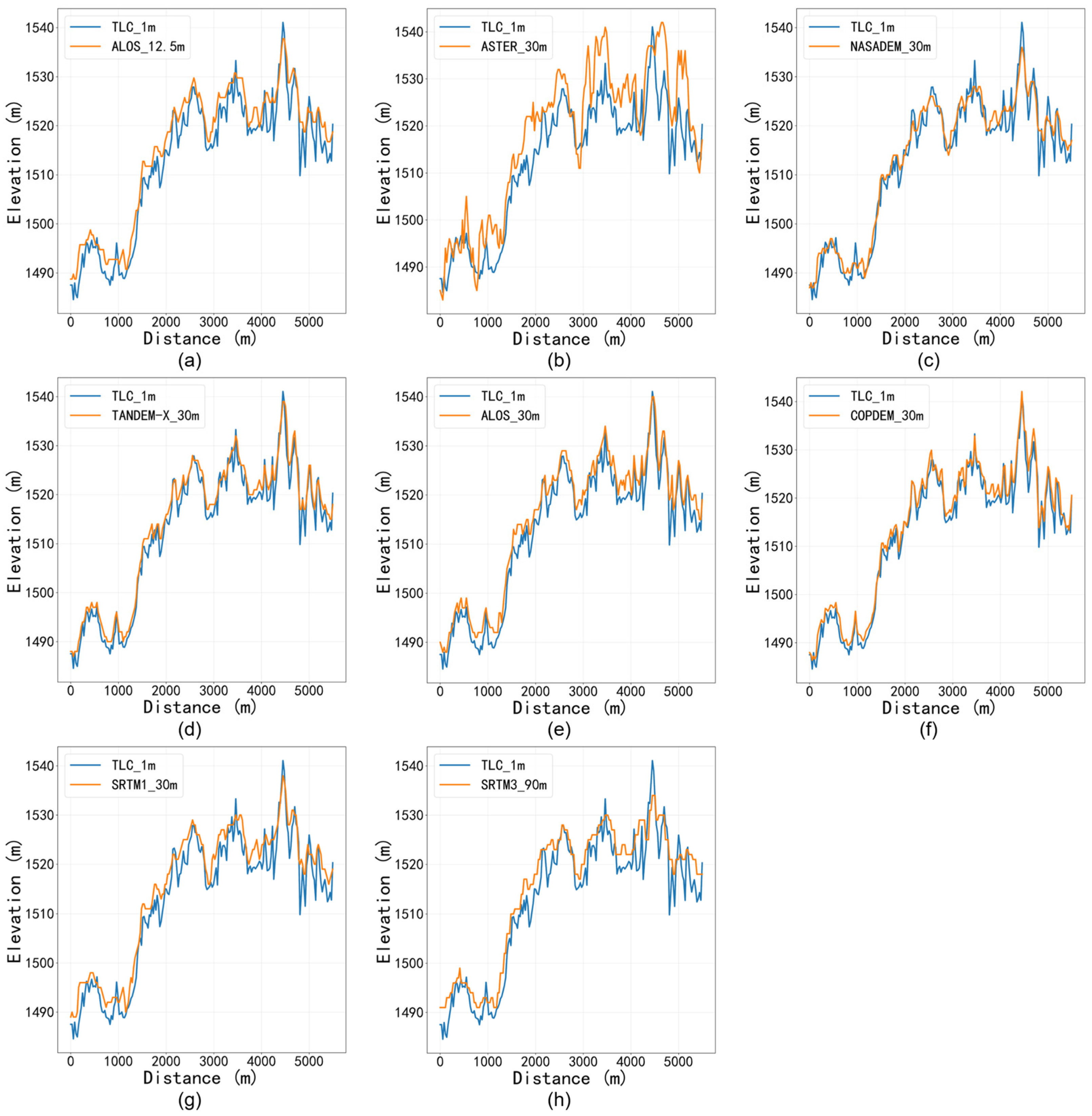
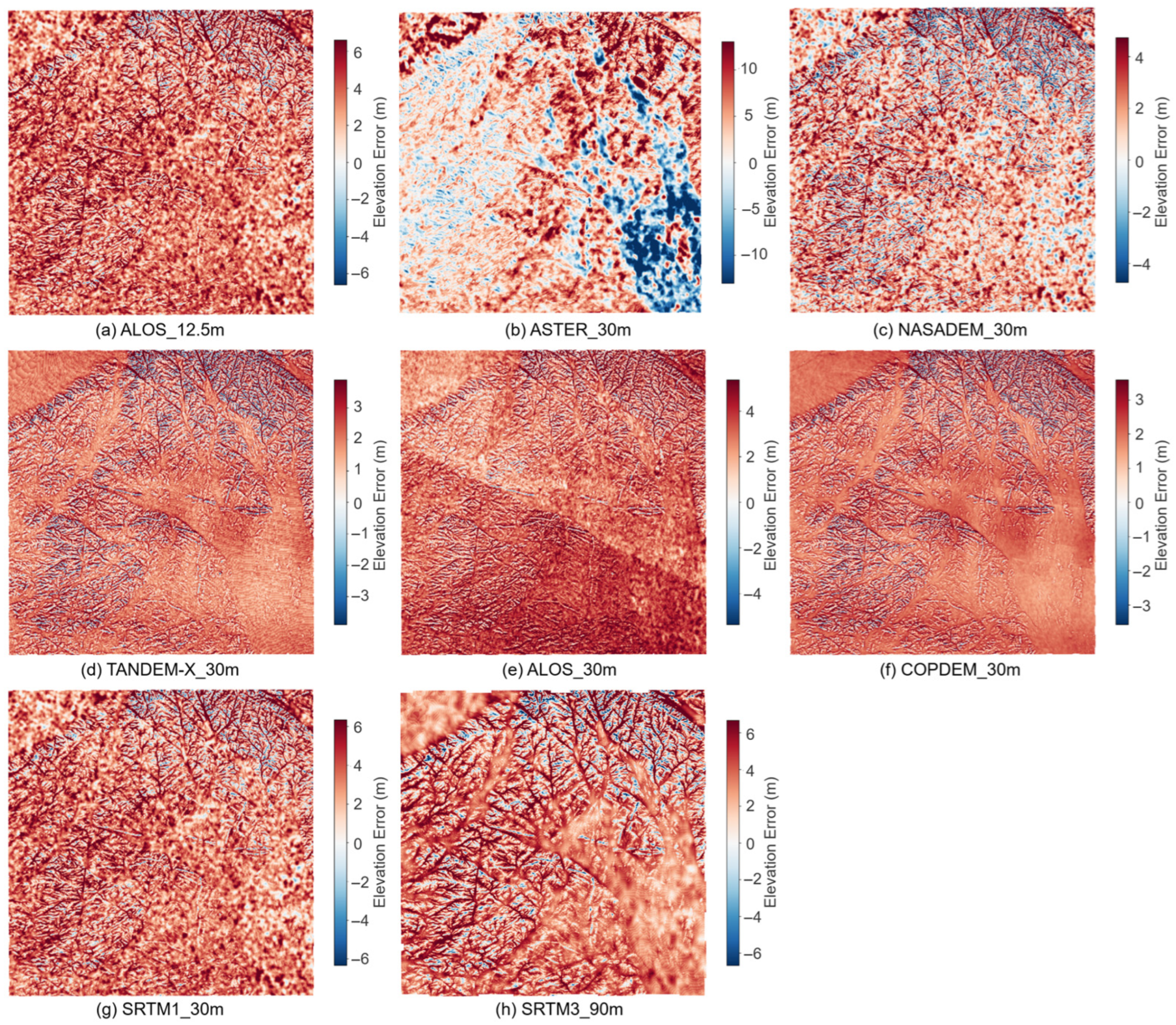
- Vertical accuracy, rather than nominal pixel size, is the primary factor controlling the reliability of archeological predictive models. Copernicus DEM, with an RMSE of 2.19 m, and TanDEM-X show the best performance, whereas ASTER and ALOS 12.5 exhibit substantial vertical errors.
- DEM selection should prioritize effective terrain realism rather than nominal spatial resolution in remote-sensing-driven archeological applications.
- Integrating explainable AI frameworks helps mitigate data-driven interpretive bias and enhances the archeological validity of predictive modeling results, while providing a reproducible framework for rational DEM selection.
Abstract
1. Introduction
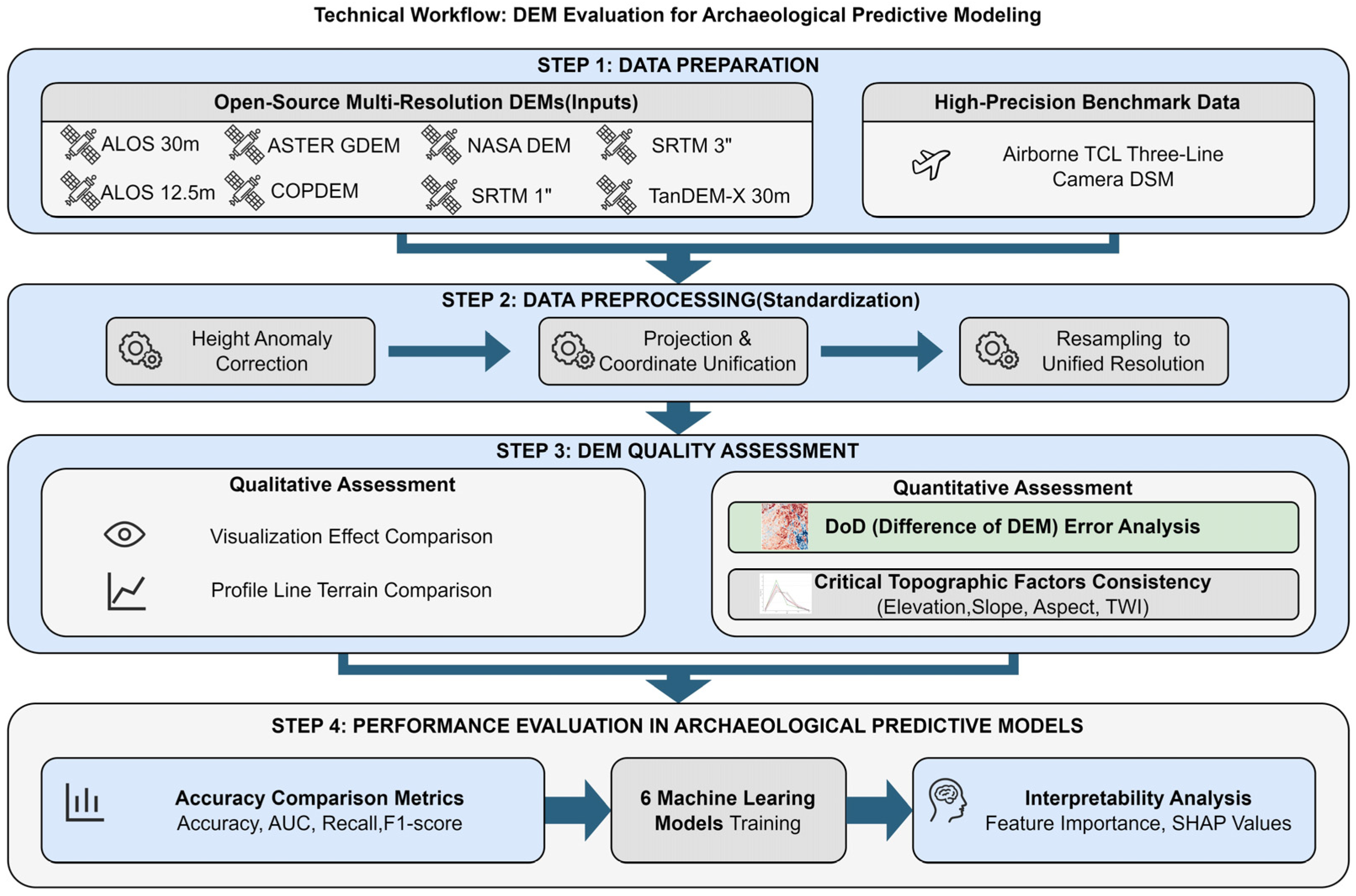
- Establishment of a high precision DEM-based evaluation system: Treeless hilly terrain is identified as an ideal experimental setting for DEM assessment. A 1 m resolution DEM generated from a tri-linear camera is adopted as the reference benchmark, enabling precise calibration of mainstream open access DEM products. A Difference of the DEM analytical framework is introduced to support full-coverage DEM evaluation.
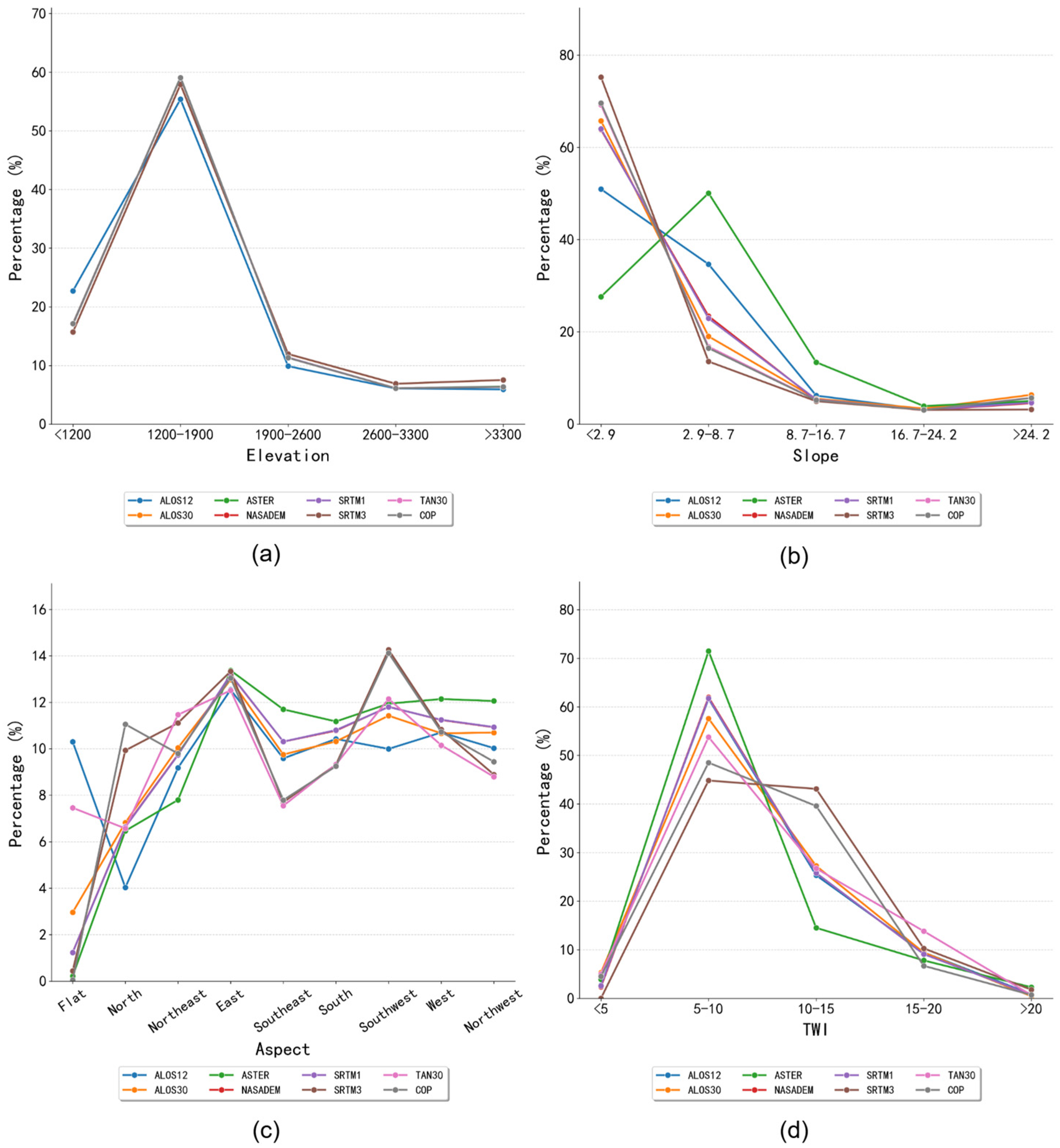
- Construction of a three-level “data–factor–model” assessment framework: Systematic analysis is conducted across three hierarchical levels—raw DEM quality, consistency of derived terrain variables, and machine learning model performance—to comprehensively evaluate DEM impacts.
- Integration of statistical diagnostics and model interpretability in archeological prediction: The influence of open access DEM products on archeological predictive model performance is assessed using SHAP-based interpretability analysis, complemented by Partial Dependence Plots to reveal nonlinear response relationships of key variables.
2. Study Area and Data
2.1. Study Area
2.2. DEM Datasets
2.3. High-Precision Reference Data
2.4. Archeological Sample Data
3. Methods
3.1. Overall Workflow
3.2. Data Preprocessing
3.2.1. Vertical Datum Correction
3.2.2. Projection and Coordinate Transformation
3.2.3. Data Resampling
3.3. DEM Quality Assessment
3.4. Archeological Predictive Modeling Framework
3.4.1. Feature Engineering
3.4.2. Machine Learning Models
3.4.3. Model Training and Validation Strategy
3.5. Evaluation Metrics for Archeological Prediction
3.5.1. Performance Metrics
3.5.2. Model Interpretability Analysis
4. Results
4.1. DEM Quality Assessment Results
4.1.1. Qualitative Comparison
4.1.2. Quantitative Error Statistics
4.1.3. Consistency of Derived Terrain Factors
4.2. Performance Comparison of Archeological Predictive Models
4.2.1. Overall Performance of Machine Learning Models
4.2.2. Sensitivity of Predictive Accuracy to DEM Source
4.3. Results of Model Interpretability Analysis
5. Discussion
5.1. Impacts of DEM Quality on Archeological Research
5.2. Model Sensitivity and Algorithm–Data Interactions
5.3. Implications for Archeological Interpretation and Decision-Making
5.4. Limitations and Prospects
6. Conclusions
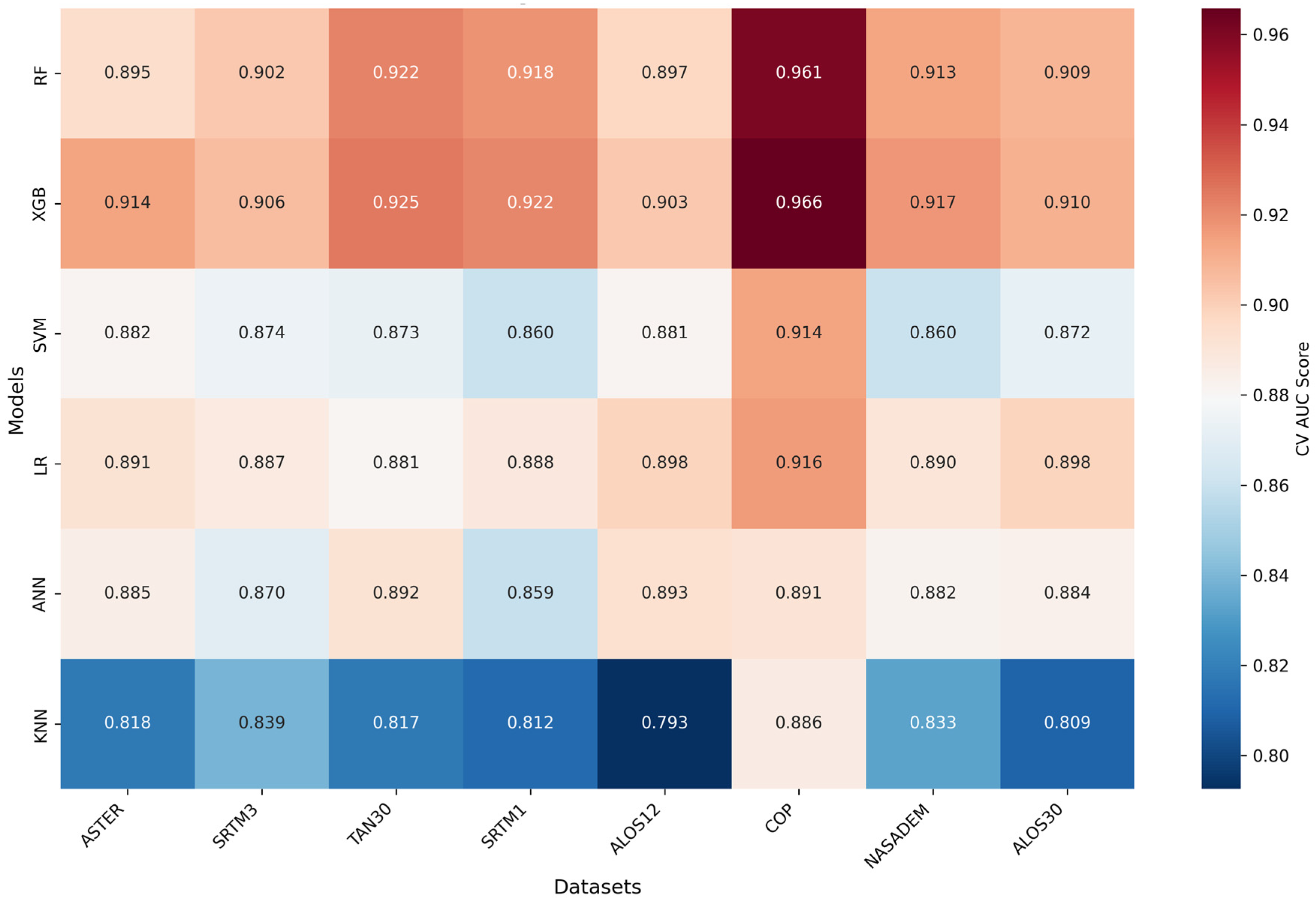
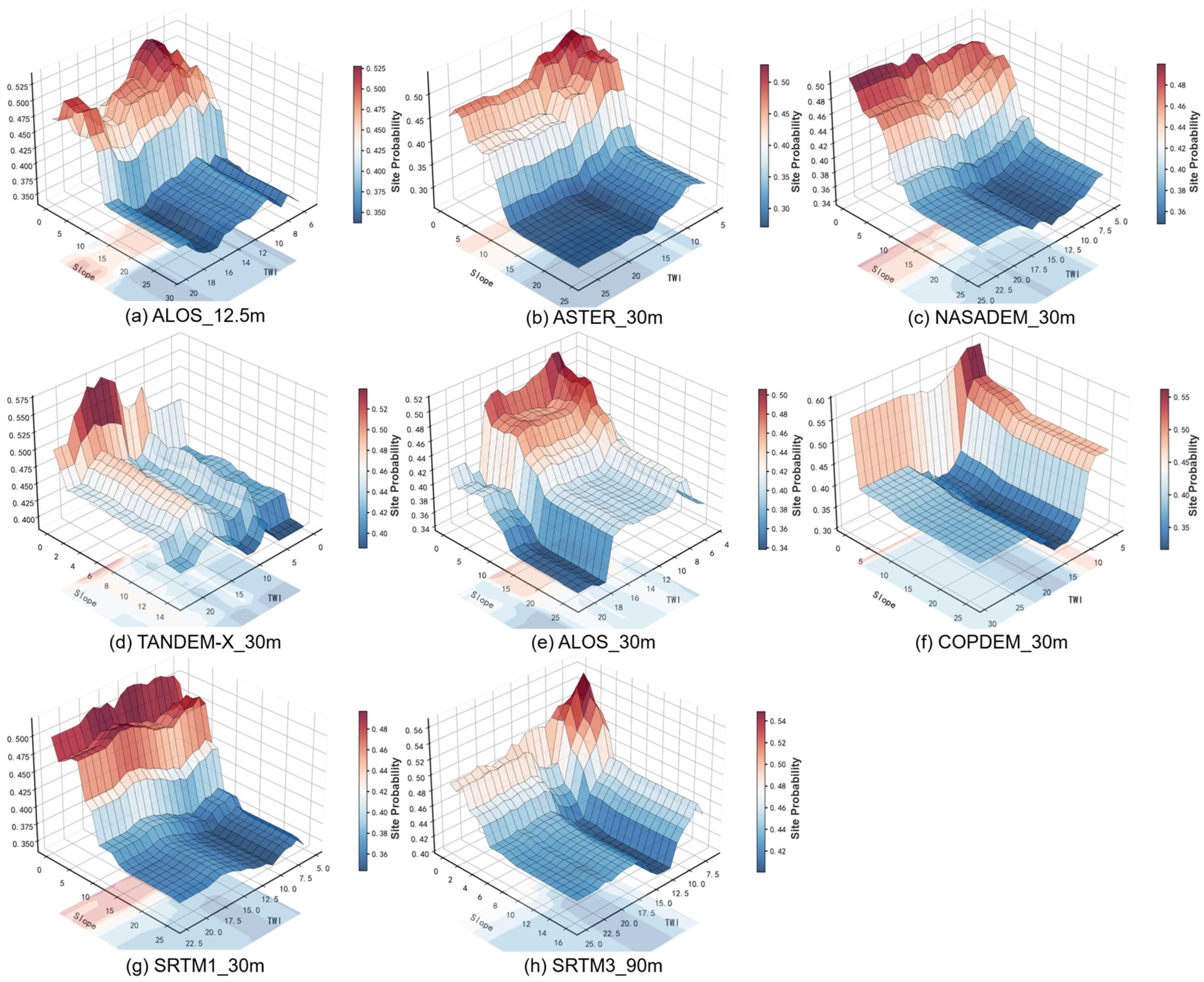
- DEM vertical accuracy is the primary driver of archeological predictive reliability, rather than nominal spatial resolution alone. Significant accuracy stratification exists among global open access DEMs in their ability to represent microtopography in arid regions. Medium-resolution products with superior vertical accuracy, represented by the Copernicus DEM with an RMSE of 2.19 m, substantially outperform nominally higher-resolution but noisier datasets like ALOS 12.5 m in capturing the key geo-archeological logic underlying beacon tower placement, including preferences for elevated terrain and strategic visibility. Simply increasing pixel density does not substantially improve model performance; instead, predictive effectiveness depends critically on the physical fidelity of the original elevation observations and the authenticity of derived terrain features.
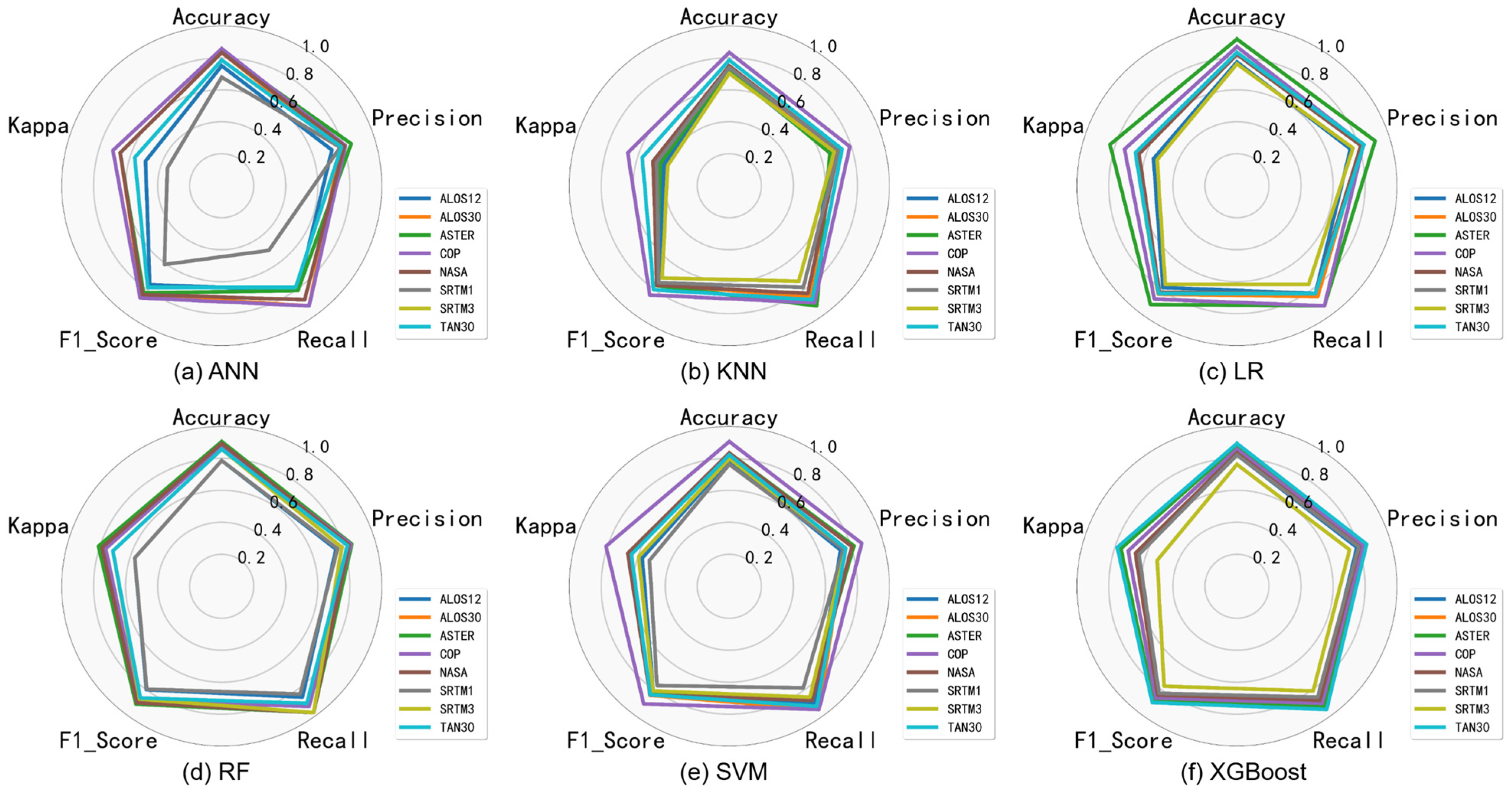
- SHAP-based interpretability analysis reveals that low-accuracy DEMs like ASTER GDEM, although capable of achieving statistically high accuracy under certain algorithms, often anchor their decision logic to data noise or terrain artifacts. In contrast, feature contributions derived from high-accuracy DEMs, Copernicus DEM, and TanDEM-X, exhibit much stronger consistency with established archeological site-selection principles, including the interactive responses of slope and elevation. This finding highlights the need for conducting large-scale spatial predictions to remain vigilant against structurally biased decision logic induced by input data errors in order to avoid misleading interpretations of cultural heritage site-selection patterns.
- The integrated evaluation framework linking “data quality–model performance–interpretability logic” overcomes the traditional “black-box” limitation of archeological predictive modeling that focuses solely on predictive accuracy. By emphasizing the role of explainable artificial intelligence in validating the geographical logic of models, this framework advances methodological transparency. The use of high-precision airborne TLC DEM as validation benchmarks, in combination with SHAP and DOD analyses, provides end-to-end reliability assurance from data screening to decision interpretation for interdisciplinary spatial archeology.
Supplementary Materials
Author Contributions
Funding
Data Availability Statement
Conflicts of Interest
Abbreviations
| TLC | Three-Line Camera |
| ALOS12 | ALOS PALSAR DEM |
| COP-DEM | Copernicus DEM |
| ALOS30 | ALOS AW3D30 |
| SRTM | Shuttle Radar Topography Mission |
| DOD | Difference of DEMs |
| APM | Archeological predictive model |
References
- Okolie, C.J.; Smit, J.L. A Systematic Review and Meta-Analysis of Digital Elevation Model (DEM) Fusion: Pre-Processing, Methods and Applications. J. Photogramm. Remote Sens. 2022, 188, 1–29. [Google Scholar] [CrossRef]
- Luo, L.; Wang, X.; Guo, H. Transitioning from Remote Sensing Archaeology to Space Archaeology: Towards a Paradigm Shift. Remote Sens. Environ. 2024, 308, 114200. [Google Scholar] [CrossRef]
- Luo, L.; Wang, X.; Guo, H.; Jia, X.; Fan, A. Earth Observation in Archaeology: A Brief Review. Int. J. Appl. Earth Obs. Geoinf. 2023, 116, 103169. [Google Scholar] [CrossRef]
- Chen, F.; Zhou, W.; Chen, C.; Ma, P. Extended D-TomoSAR Displacement Monitoring for Nanjing (China) City Built Structure Using High-Resolution TerraSAR/TanDEM-X and Cosmo SkyMed SAR Data. Remote Sens. 2019, 11, 2623. [Google Scholar] [CrossRef]
- Risbøl, O.; Bollandsås, O.M.; Nesbakken, A.; Ørka, H.O.; Næsset, E.; Gobakken, T. Interpreting Cultural Remains in Airborne Laser Scanning Generated Digital Terrain Models: Effects of Size and Shape on Detection Success Rates. J. Archaeol. Sci. 2013, 40, 4688–4700. [Google Scholar] [CrossRef]
- Gouma, M.; Van Wijngaarden, G.J.; Soetens, S. Assessing the Effects of Geomorphological Processes on Archaeological Densities: A GIS Case Study on Zakynthos Island, Greece. J. Archaeol. Sci. 2011, 38, 2714–2725. [Google Scholar] [CrossRef]
- Zhou, W.; Chen, F.; Guo, H.; Hu, M.; Li, Q.; Tang, P.; Zheng, W.; Liu, J.; Luo, R.; Yan, K.; et al. UAV Laser Scanning Technology: A Potential Cost-Effective Tool for Micro-Topography Detection over Wooded Areas for Archaeological Prospection. Int. J. Digit. Earth 2020, 13, 1279–1301. [Google Scholar] [CrossRef]
- Howland, M.D.; Jones, I.W.N.; Najjar, M.; Levy, T.E. Quantifying the Effects of Erosion on Archaeological Sites with Low-Altitude Aerial Photography, Structure from Motion, and GIS: A Case Study from Southern Jordan. J. Archaeol. Sci. 2018, 90, 62–70. [Google Scholar] [CrossRef]
- Xu, F.; Xu, Q.; Pu, C.; Wang, X.; Xu, P. Can Different Machine Learning Methods Have Consistent Interpretations of DEM-Based Factors in Shallow Landslide Susceptibility Assessments? J. Rock Mech. Geotech. Eng. 2025, 17, 7864–7881. [Google Scholar] [CrossRef]
- Hu, J.; Zhang, J.; Li, W.; Li, P.; Zhao, G.; Li, S.; Wang, L.; Li, Y.; Li, D.; Du, M. Investigating Sediment Connectivity of a Small Catchment on the Loess Plateau Using an Appropriate Index at an Optimal Spatial Resolution. J. Hydrol. 2025, 661, 133588. [Google Scholar] [CrossRef]
- Boulton, S.J.; Stokes, M. Which DEM Is Best for Analyzing Fluvial Landscape Development in Mountainous Terrains? Geomorphology 2018, 310, 168–187. [Google Scholar] [CrossRef]
- Xing, Z.; Chi, Z.; Yang, Y.; Chen, S.; Huang, H.; Cheng, X.; Hui, F. Accuracy Evaluation of Four Greenland Digital Elevation Models (DEMs) and Assessment of River Network Extraction. Remote Sens. 2020, 12, 3429. [Google Scholar] [CrossRef]
- Erasmi, S.; Rosenbauer, R.; Buchbach, R.; Busche, T.; Rutishauser, S. Evaluating the Quality and Accuracy of TanDEM-X Digital Elevation Models at Archaeological Sites in the Cilician Plain, Turkey. Remote Sens. 2014, 6, 9475–9493. [Google Scholar] [CrossRef]
- Becker, D.; De Andrés-Herrero, M.; Willmes, C.; Weniger, G.-C.; Bareth, G. Investigating the Influence of Different DEMs on GIS-Based Cost Distance Modeling for Site Catchment Analysis of Prehistoric Sites in Andalusia. ISPRS Int. J. Geo-Inf. 2017, 6, 36. [Google Scholar] [CrossRef]
- Polidori, L.; El Hage, M. Digital Elevation Model Quality Assessment Methods: A Critical Review. Remote Sens. 2020, 12, 3522. [Google Scholar] [CrossRef]
- Han, H.; Zeng, Q.; Jiao, J. Quality Assessment of TanDEM-X DEMs, SRTM and ASTER GDEM on Selected Chinese Sites. Remote Sens. 2021, 13, 1304. [Google Scholar] [CrossRef]
- Cuthbertson, P.; Ullmann, T.; Büdel, C.; Varis, A.; Namen, A.; Seltmann, R.; Reed, D.; Taimagambetov, Z.; Iovita, R. Finding Karstic Caves and Rockshelters in the Inner Asian Mountain Corridor Using Predictive Modelling and Field Survey. PLoS ONE 2021, 16, e0245170. [Google Scholar] [CrossRef]
- Li, L.; Li, Y.; Chen, X.; Sun, D. A Prediction Study on Archaeological Sites Based on Geographical Variables and Logistic Regression—A Case Study of the Neolithic Era and the Bronze Age of Xiangyang. Sustainability 2022, 14, 15675. [Google Scholar] [CrossRef]
- Nsanziyera, A.F.; Lechgar, H.; Fal, S.; Maanan, M.; Saddiqi, O.; Oujaa, A.; Rhinane, H. Remote-Sensing Data-Based Archaeological Predictive Model (APM) for Archaeological Site Mapping in Desert Area, South Morocco. Comptes Rendus Geosci. 2018, 350, 319–330. [Google Scholar] [CrossRef]
- Wang, Y.; Shi, X.; Oguchi, T. Archaeological Predictive Modeling Using Machine Learning and Statistical Methods for Japan and China. Int. J. Geo-Inf. 2023, 12, 238. [Google Scholar] [CrossRef]
- Wang, T.; Zhang, M.; Li, Z. Explainable Machine Learning Links Erosion Damage to Environmental Factors on Gansu Rammed Earth Great Wall. npj Herit. Sci. 2025, 13, 366–385. [Google Scholar] [CrossRef]
- Wu, H.; Wang, X.; Wang, X.; Zhang, L.; Dong, S. Predictive Modeling for Neolithic Settlements in the Lingnan Region, South China. J. Archaeol. Sci. Rep. 2023, 49, 103992. [Google Scholar] [CrossRef]
- Yan, L.; Lu, P.; Chen, P.; Danese, M.; Li, X.; Masini, N.; Wang, X.; Guo, L.; Zhao, D. Towards an Operative Predictive Model for the Songshan Area during the Yangshao Period. ISPRS Int. J. Geo-Inf. 2021, 10, 217. [Google Scholar] [CrossRef]
- Zhu, X.; Chen, F.; Guo, H. A Spatial Pattern Analysis of Frontier Passes in China’s Northern Silk Road Region Using a Scale Optimization BLR Archaeological Predictive Model. Heritage 2018, 1, 15–32. [Google Scholar] [CrossRef]
- Guo, Y.; Wang, L.; Huang, J. Evolution of Toponymic Cultural Landscapes in Xinjiang’s Yulongkashi River Basin. npj Herit. Sci. 2025, 13, 428. [Google Scholar] [CrossRef]
- Hazra, S. Prediction of Archaeological Potential Site in Middle and Lower Course of Mayurakshi River Basin, Eastern India Using Logistic Regression Model and GIS. Herit. J. Multidiscip. Stud. Archaeol. 2020, 8, 875–890. [Google Scholar]
- Koohpayma, J.; Makki, M.; Lentschke, J.; AlaviPanah, S.K. Predicting Potential Locations of Ancient Settlements Using GIS and Weights-of-Evidence Method (Case Study: North-East of Iran). J. Archaeol. Sci. Rep. 2021, 40, 103229. [Google Scholar] [CrossRef]
- Vaughn, S.; Crawford, T. A Predictive Model of Archaeological Potential: An Example from Northwestern Belize. Appl. Geogr. 2009, 29, 542–555. [Google Scholar] [CrossRef]
- Wang, J.; Soroush, M.; Maziar, S.; Khazraee, E. Predictive Modeling for Targeted Archaeological Survey of Arsacid Period Sites in the Iranian Borderland Region of the Araxes River Valley. J. Archaeol. Method Theory 2026, 33, 2. [Google Scholar] [CrossRef]
- Guechi, I.; Gherraz, H.; Korichi, A.; Alkama, D. Predicting Archaeological Sites Locations in Desert Areas, Using GIS-AHP-GeoTOPSIS Model: Southwestern Algeria, Bechar. Archaeologies 2023, 19, 471–499. [Google Scholar] [CrossRef]
- Jiao, M.; Li, M.; Lu, L.; Xue, X.; Dai, Z.; Wu, J. Spatiotemporal Distribution of Immovable Cultural Relics and Their Relationships with Geographic Elements in Sichuan–Chongqing Area. npj Herit. Sci. 2025, 13, 425–443. [Google Scholar] [CrossRef]
- Diwan, G.A. Gis-Based Comparative Archaeological Predictive Models: A First Application to Iron Age Sites in the Bekaa (Lebanon). Mediterr. Archaeol. Archaeom. 2020, 20, 143. [Google Scholar]
- Liu, Y.; Du, X.; Bai, Y.; Chen, Q.; Liu, D. Multiple Bayesian Models Approach to Assessing Drivers of Cultural Heritage Spatial Distribution Illustrated Lushan County in China. npj Herit. Sci. 2025, 13, 409–428. [Google Scholar] [CrossRef]
- Wachtel, I.; Zidon, R.; Garti, S.; Shelach-Lavi, G. Predictive Modeling for Archaeological Site Locations: Comparing Logistic Regression and Maximal Entropy in North Israel and North-East China. J. Archaeol. Sci. 2018, 92, 28–36. [Google Scholar] [CrossRef]
- Alwi Muttaqin, L.; Heru Murti, S.; Susilo, B. MaxEnt (Maximum Entropy) Model for Predicting Prehistoric Cave Sites in Karst Area of Gunung Sewu, Gunung Kidul, Yogyakarta. In Proceedings of the Sixth Geoinformation Science Symposium, Yogyakarta, Indonesia, 26–27 August 2019. [Google Scholar]
- Yang, J.; Luo, L.; Zhao, J.; Ji, D.; Sun, J.; Fan, J.; Fu, X.; Tu, R.; Wang, X. Explainable Artificial Intelligence with Negative Sample Optimization for Archaeological Site Prediction in Surkhandarya Uzbekistan. npj Herit. Sci. 2025, 13, 689. [Google Scholar] [CrossRef]
- Höhl, A.; Obadic, I.; Torres, M.Á.F.; Najjar, H.; Oliveira, D.; Akata, Z.; Dengel, A.; Zhu, X.X. Opening the Black-Box: A Systematic Review on Explainable AI in Remote Sensing. IEEE Geosci. Remote Sens. Mag. 2024, 12, 261–304. [Google Scholar] [CrossRef]
- Li, C.; Hong, D.; Zhang, B.; Liao, T.; Yokoya, N.; Ghamisi, P.; Chen, M.; Wang, L.; Benediktsson, J.A.; Chanussot, J. Interpretable Foundation Models as Decryptors Peering into the Earth System. Innovation 2024, 5, 100682. [Google Scholar] [CrossRef]
- Temenos, A.; Temenos, N.; Kaselimi, M.; Doulamis, A.; Doulamis, N. Interpretable Deep Learning Framework for Land Use and Land Cover Classification in Remote Sensing Using SHAP. IEEE Geosci. Remote Sens. Lett. 2023, 20, 1–5. [Google Scholar] [CrossRef]
- Lu, R.; Liu, S.; Duan, H.; Kang, W.; Zhi, Y. Combining the SHAP Method and Machine Learning Algorithm for Desert Type Extraction and Change Analysis on the Qinghai–Tibetan Plateau. Remote Sens. 2024, 16, 4414. [Google Scholar] [CrossRef]
- Rohmer, J.; Belbeze, S.; Guyonnet, D. Insights into the Prediction Uncertainty of Machine-Learning-Based Digital Soil Mapping through a Local Attribution Approach. Soil 2024, 10, 679–697. [Google Scholar] [CrossRef]
- Wu, R. Investigation and Research on the Han Dynasty Frontier Fortifications in the Hexi Corridor; Cultural Relics Press: Beijing, China, 2005; ISBN 978-7-5010-1756-0. [Google Scholar]
- Eshagh, M.; Zoghi, S. Local error calibration of EGM08 geoid using GNSS/levelling data. J. Appl. Geophys. 2016, 130, 209–217. [Google Scholar] [CrossRef]
- Belloni, V.; Fugazza, D.; Hanson, K.; Scaioni, M.; Di Rita, M. Assessing Glacier Thickness Changes with Multi-Temporal UAV-Derived DEMs: The Evolution of Forni Glacier over the Period 2014–2022. Int. J. Appl. Earth Obs. Geoinf. 2025, 140, 104547. [Google Scholar] [CrossRef]
- Li, D.; Li, P.; Hu, J.; Bai, X.; Latifi, H.; Liu, L.; Yao, W. Mapping Catchment-Scale Soil Erosion and Deposition Using an Improved DoD Method Based on Multitemporal UAV-Borne Laser Scanning. IEEE Trans. Geosci. Remote Sens. 2025, 63, 1–13. [Google Scholar] [CrossRef]
- Yu, T.-K.; Chang, I.-C.; Chen, S.-D.; Chen, H.-L.; Yu, T.-Y. Predicting Potential Soil and Groundwater Contamination Risks from Gas Stations Using Three Machine Learning Models (XGBoost, LightGBM, and Random Forest). Process Saf. Environ. Prot. 2025, 199, 107249. [Google Scholar] [CrossRef]
- Li, H.; Zhao, J.; Yan, B.; Yue, L.; Wang, L. Global DEMs Vary from One to Another: An Evaluation of Newly Released Copernicus, NASA and AW3D30 DEM on Selected Terrains of China Using ICESat-2 Altimetry Data. Int. J. Digit. Earth 2022, 15, 1149–1168. [Google Scholar] [CrossRef]
- Li, W.; Li, P.; Yan, L.; Hu, J.; Wang, L.; Li, D.; Dan, Y.; Huang, L.; Zhao, G. Impacts of Spatial Resolutions of UAV-LiDAR-Derived DEMs on Erosion Modelling in the Hilly and Gully Loess Plateau. CATENA 2025, 255, 109059. [Google Scholar] [CrossRef]
- Carter, J.R. The Effect of Data Precision on the Calculation of Slope and Aspect Using Gridded Dems. Cartographica 1992, 29, 22–34. [Google Scholar] [CrossRef]
- Zhang, X.; Guo, S.; Xia, Z.; Mu, H.; Wang, B.; Cui, B.; Fang, H.; Du, P. Integrating Multiple Terrain Features for Artefact Detection in the Newly Released TanDEM-X 30 m DEM and DCM over the Loess Plateau. Int. J. Appl. Earth Obs. Geoinf. 2025, 141, 104632. [Google Scholar] [CrossRef]
- Tan, L.; Wu, B.; Zhang, Y.; Zhao, S. GIS-Based Precise Predictive Model of Mountain Beacon Sites in Wenzhou, China. Sci. Rep. 2022, 12, 10773. [Google Scholar] [CrossRef] [PubMed]
- Yuan, L.; Li, Z.; Wang, Y.; Hao, Z.; Yu, C. Interactions between the Ming Yansui Great Wall Heritage and Geographical Environment via Monte Carlo Simulation. npj Herit. Sci. 2025, 13, 260. [Google Scholar] [CrossRef]
- Chen, F.; Zhou, W.; Xu, H.; Parcharidis, I.; Lin, H.; Fang, C. Space Technology Facilitates the Preventive Monitoring and Preservation of the Great Wall of the Ming Dynasty: A Comparative Study of the Qingtongxia and Zhangjiakou Sections in China. IEEE J. Sel. Top. Appl. Earth Obs. Remote Sens. 2020, 13, 5719–5729. [Google Scholar] [CrossRef]





| Dataset Name | Spatial Resolution | Height Type | Vertical Datum | Acquisition Sensor |
|---|---|---|---|---|
| ALOS PALSAR DEM | 12.5 m | Ellipsoidal height | WGS84 | L-band SAR (RTC/Resampled) |
| TanDEM-X | 30 m | Ellipsoidal height | WGS84 | X-band InSAR |
| Copernicus DEM | 30 m | Orthometric height | EGM2008 | X-band InSAR |
| SRTM1 | 30 m | Orthometric height | EGM96 | C-band InSAR |
| NASADEM | 30 m | Orthometric height | EGM96 | C-band InSAR |
| ASTER GDEM | 30 m | Orthometric height | EGM96 | VNIR Optical Stereo |
| ALOS AW3D30 | 30 m | Orthometric height | EGM96 | PRISM Optical Stereo |
| SRTM3 | 90 m | Orthometric height | EGM96 | C-band InSAR |
| DEM Type | RMSE (m) | MAE (m) | r | R2 |
|---|---|---|---|---|
| ALOS12.5 | 3.994 | 3.545 | 0.998563 | 0.997128 |
| ALOS30 | 3.451 | 3.149 | 0.999227 | 0.998454 |
| COP-DEM | 2.193 | 1.974 | 0.999536 | 0.999072 |
| SRTM3 | 3.986 | 3.509 | 0.998079 | 0.996162 |
| SRTM1 | 3.797 | 3.351 | 0.998578 | 0.997157 |
| NASADEM | 2.529 | 2.056 | 0.998582 | 0.997166 |
| ASTER | 6.437 | 4.943 | 0.989559 | 0.979227 |
| TANDEM-X | 2.308 | 2.04 | 0.999365 | 0.99873 |
Disclaimer/Publisher’s Note: The statements, opinions and data contained in all publications are solely those of the individual author(s) and contributor(s) and not of MDPI and/or the editor(s). MDPI and/or the editor(s) disclaim responsibility for any injury to people or property resulting from any ideas, methods, instructions or products referred to in the content. |
© 2026 by the authors. Licensee MDPI, Basel, Switzerland. This article is an open access article distributed under the terms and conditions of the Creative Commons Attribution (CC BY) license.
Share and Cite
Yang, J.; Zhao, J.; Hao, P.; Zhang, A.; Li, X.; Tu, R.; Zhang, Z. Evaluating the Impact of Multi-Source Digital Elevation Model Quality on Archeological Predictive Modeling: An Integrated Framework Based on Machine Learning and SHAP-Based Interpretability Analysis. Remote Sens. 2026, 18, 961. https://doi.org/10.3390/rs18060961
Yang J, Zhao J, Hao P, Zhang A, Li X, Tu R, Zhang Z. Evaluating the Impact of Multi-Source Digital Elevation Model Quality on Archeological Predictive Modeling: An Integrated Framework Based on Machine Learning and SHAP-Based Interpretability Analysis. Remote Sensing. 2026; 18(6):961. https://doi.org/10.3390/rs18060961
Chicago/Turabian StyleYang, Jia, Jianghong Zhao, Pengcheng Hao, Aomeng Zhang, Xiaopeng Li, Ran Tu, and Zhi Zhang. 2026. "Evaluating the Impact of Multi-Source Digital Elevation Model Quality on Archeological Predictive Modeling: An Integrated Framework Based on Machine Learning and SHAP-Based Interpretability Analysis" Remote Sensing 18, no. 6: 961. https://doi.org/10.3390/rs18060961
APA StyleYang, J., Zhao, J., Hao, P., Zhang, A., Li, X., Tu, R., & Zhang, Z. (2026). Evaluating the Impact of Multi-Source Digital Elevation Model Quality on Archeological Predictive Modeling: An Integrated Framework Based on Machine Learning and SHAP-Based Interpretability Analysis. Remote Sensing, 18(6), 961. https://doi.org/10.3390/rs18060961