1. Introduction
Geo-information technologies enabling the development of advanced techniques for capturing, storing, processing, analysing, sharing and visualising geo-information are developing rapidly and are increasingly available. These technologies enable, among other things, the creation of detailed 3D models, virtual reconstructions and interactive visualisations. Photogrammetry and laser scanning are advanced technologies that enable precise data collection and the creation of accurate 2D and 3D models. The use of modern technologies to automate survey processes allows data to be collected, analysed and shared more quickly and efficiently. With these technologies, it is possible to obtain high-quality data and therefore more accurate 3D models than before, which increases the reliability and usability of the results and the efficiency of the research. Higher data quality is revolutionising the way in which data on the geometry of historic buildings is interpreted. Innovative analysis methods, such as drone and laser scanning data processing, are introducing new possibilities for interpreting the results. In addition to increasing the quality of the models, such automation increases productivity, reducing the time needed for surveys and cutting costs. It is fundamental to acquire high-quality data in a short time while determining the exact position in space of the object being measured.
Methods such as photogrammetry and scanning are not able to economically reproduce the smallest but essential elements of the construction and furnishing of monuments, so that the 3D models created are not digital twins and cannot be used for further work. It is therefore necessary, in addition to the creation of the model itself, to design the database in an interoperable way, adapted to the acquisition of data from 2D documentation and GIS databases. In the context of KIS 10 (National Smart Specialisations), the development and integration of information, communication and geo-information technologies allow for an innovative approach to spatial data management and processing. Geoinformation technologies enable more accurate planning and minimise interference with the environment, which is in line with the principles of sustainable development.
With the development of technology at the end of the 20th century came the first commercial laser scanners, which revolutionised the way spatial data is acquired. Laser scanning (TLS) enables the rapid and precise collection of large amounts of geometric information in the form of point clouds from which 3D models, numerical terrain models (NMT) or highly detailed visualisations can be created. Thanks to the possibility of texturing point clouds with photographs taken during the survey, colour models in RGB space can be obtained, which further increases the documentary value of the acquired data [
1,
2]. In parallel, the use of photogrammetry using unmanned aerial vehicles (UAV) is becoming increasingly common. Drones allow fast, inexpensive and flexible acquisition of images from different heights and angles, which is particularly useful for hard-to-reach architectural features. With appropriate calibration, they can be used to generate high-quality point clouds and orthophotos [
3,
4,
5].
1.1. State of the Art
The literature emphasises that the choice of survey method should depend on the purpose of the study. TLS is characterised by its high consistency and suitability for modelling architectural details [
6], while UAV-photogrammetry is better suited for rapid documentation of larger areas [
7,
8,
9,
10], including robust matching for oblique imagery [
11]. The fusion of data from different sources (integration of point clouds from TLS and UAV) is also becoming crucial, resulting in more complete and representative spatial models [
12].
Recent studies further highlight the expanding role of UAV photogrammetry in cultural heritage documentation, including the use of combined nadir and oblique imagery, high-resolution multi-view reconstruction and integration with Heritage Building Information Modeling (HBIM)-oriented workflows. These works demonstrate both the maturity and diversity of UAV-based approaches in capturing complex architectural geometry and improving model completeness, as shown in several recent applications published in dedicated UAV and heritage research collections [
12,
13,
14,
15].
Integrated workflows combining TLS and UAV photogrammetry are increasingly used for heritage documentation and conservation [
13,
16,
17]. These approaches enable accurate and comprehensive 3D reconstruction of complex architectural structures, supported by advanced image matching algorithms for oblique UAV imagery [
18] and fully automated reconstruction pipelines [
19]. Furthermore, transformer-based architectures such as the Visual Geometry Grounded Transformer (VGGT) represent state-of-the-art solutions for scene and building reconstruction [
20], which we discuss as future directions for automation. Recent transformer-based advances in 3D reconstruction and point-cloud understanding [
21,
22,
23] further confirm the relevance of transformer architectures for future automation in HBIM-oriented workflows.
Comparing different photogrammetric methods and software packages is crucial for assessing their impact on model completeness and accuracy, as this defines best practices in heritage documentation workflows [
24,
25].
In addition, the adoption of HBIM and its interoperability with Geographic Information System (GIS) and Historical Geographic Information System (HGIS) environments is increasingly recognized as a key strategy for managing cultural heritage data [
13,
25]. This trend is accompanied by the formalization of Level of Detail (LOD) standards, which ensure consistency in geometric accuracy and semantic enrichment across different stages of conservation [
26,
27].
Advances in Artificial Intelligence (AI)-based segmentation and semantic enrichment of point clouds further enhance the automation of these processes [
28,
29]. State-of-the-art approaches, such as deep learning frameworks for point cloud classification and transformer-based models for scene reconstruction, are paving the way for semi-automated HBIM generation and integration with historical datasets [
30,
31].
1.2. Standards and Guidelines
In line with current trends, effective cultural heritage documentation relies on the fusion of multiple data acquisition methods, supported by specialised software. Parallel developments in technology and increasing access to precision measurement tools are making the creation of 3D models—both technical and semantic—not only more accessible, but also more cost-effective [
12,
32,
33,
34].
The object of the inventory and research in the presented article is a historic wooden building. Therefore, the digitisation of cultural heritage should follow the guidelines of the Commission Expert Group on the common European Data Space for Cultural Heritage (CEDCHE), which place great emphasis on strategic planning and proper management of digitisation processes [
35,
36]. It is important to take into account a long-term vision, including the sustainability of digital resources and their preservation and sharing.
To achieve adequate data quality according to CEDCHE, it is necessary to use standards for image quality, file formats and metadata that ensure interoperability. It is recommended to use formats such as TIFF for archiving and Europeana Data Model for metadata [
26,
27]. Safeguarding digitised data and creating backups is important [
37]. The guidelines also recommend open access to the created resources, while respecting copyright.
1.3. Workflow Overview and Future AI Integration
Another key element is the sustainability of digital assets. The guidelines impose the need to regularly migrate data to new media and formats to prevent data loss. All digitisation and preservation processes should be carefully documented.
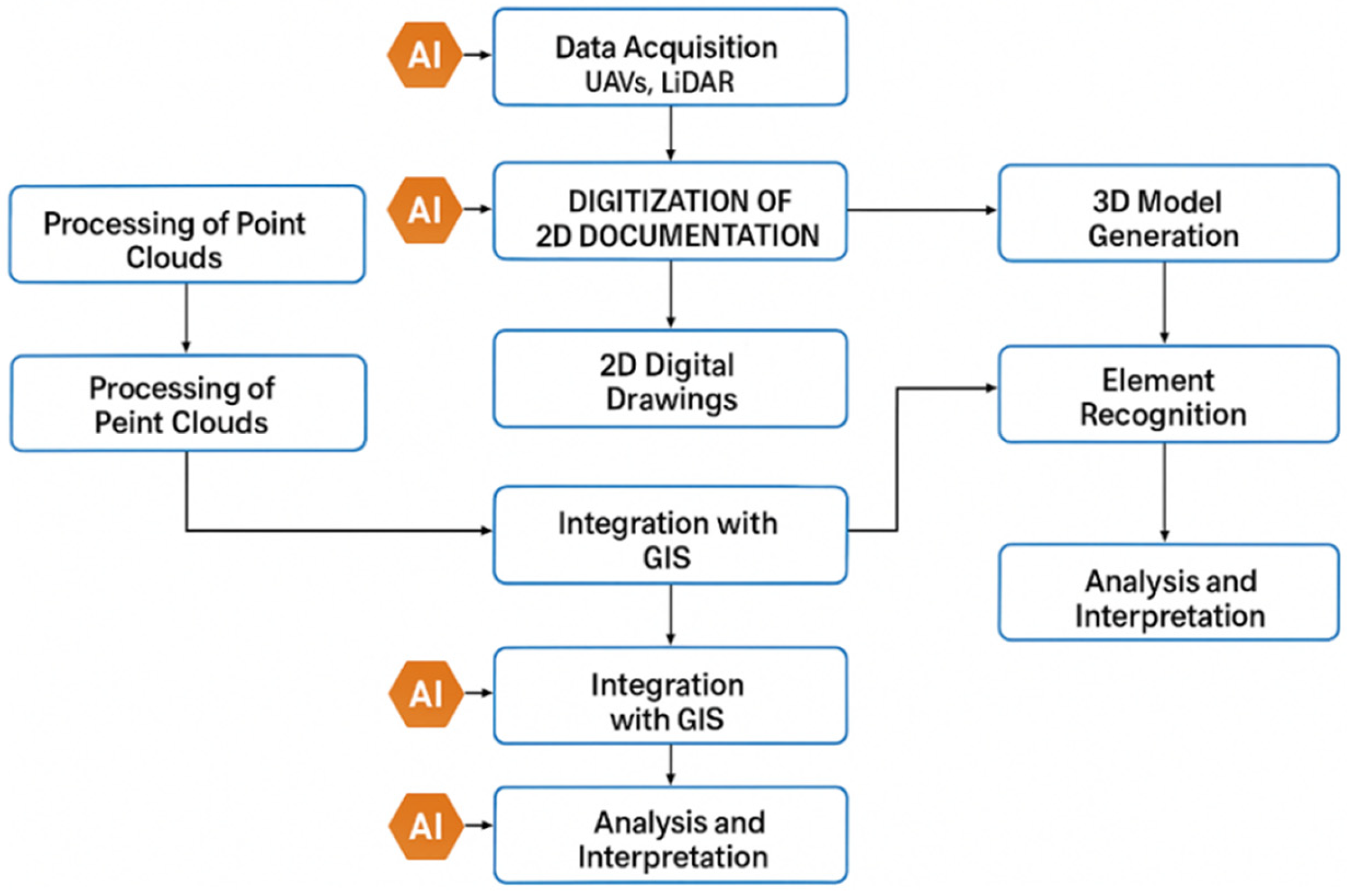
This paper outlines potential AI-based automation steps for future work, rather than presenting implemented solutions. The methods and analyses described provide a conceptual introduction to how AI could be applied for detection and segmentation, aiming to automatically extract data from documentation about solid elements.
AI steps were not implemented—they are noted as potential future research directions. Combining a simplified model with information obtained from an AI operation would require the development of algorithmic patterns capable of detecting where in the model a defined element is located [
30]. This creates the possibility, in subsequent stages, to integrate BIM with GIS and perform advanced spatial analyses and interpretation of the results (
Figure 1).
Current solutions offer automatic detection of elements limited to elements, i.e., walls, solids, based only on the development of 3D models from scanning or direct measurements. Future developments may enable identification of more complex elements and their types, which is currently not feasible with existing tools.
1.4. Research Gap, Positioning and Contributions
Reviews of image-based 3D modeling methods highlight the maturity of tools and standardized procedures [
32]. In cultural heritage documentation, TLS-UAV fusion is widely used to fill gaps and improve model completeness (e.g., [
12]). However, despite the technological maturity, there is still a lack of replicable, clearly defined workflows that guide the process from acquisition to HBIM/HGIS integration, including LOD specification and AI integration points. Existing studies often focus on algorithmic innovation or isolated case studies, leaving a practical gap in operational standardization and interoperability.
This study addresses the identified gap by introducing a comprehensive workflow that harmonizes sensor configuration and data acquisition, point cloud scaling and alignment, mesh generation and texturing, and translation into HBIM embedded in HGIS.
Unlike studies focused on algorithmic innovation, our contribution lies in standardizing the process and explicitly linking it to LOD requirements and AI-ready steps (e.g., point cloud cleaning, segmentation, and recognition of elements from 2D documentation). These AI steps are indicated as future possibilities and were not implemented in this study. This approach ensures reproducibility and facilitates reuse in conservation practice.
The main contributions of this paper include the development of a structured workflow for TLS-UAV integration leading to HBIM models within HGIS environments, the formalization of LOD100-LOD300 for heritage objects with defined accuracy requirements and data sources, and the identification of AI integration points (planned for future automation), covering classification, segmentation, and 2D-to-HBIM translation under specified quality constraints. Additionally, the study provides a comparative analysis reporting geometric differences between UAV-only and integrated models as an indicator of internal consistency, while outlining a protocol for absolute accuracy validation.
3. HBIM Model Development
A key aspect in the creation of a data infrastructure is the preparation of input for the development of a BIM model, which is intended to support all stages of the infrastructure’s life cycle, including design processes and asset management [
40].
By linking geospatial data with BIM models, it becomes possible not only to represent the object itself, but also to analyze its behavior within a broader spatial context. A crucial factor in this regard is georeferencing, which assigns the model a specific position within a GIS coordinate reference system. This allows the building to be located in relation to terrain topography, infrastructure elements, and other surrounding structures.
An integrated approach combining Heritage Building Information Modeling (HBIM) with Historical Geographic Information Systems (HGIS) can be implemented at both the data exchange and application levels. As noted in [
41], such integration enables the connection of construction-related data with the environmental and social conditions specific to a given historical period. As a result, a digital HBIM model embedded within an HGIS context becomes a powerful tool for multidimensional and diachronic analysis [
42,
43].
In practice, this means that traditional design and engineering documentation can be transformed into structured HGIS components, accessible to various stakeholders—from designers to cultural heritage managers. Digital twins created from this kind of integrated dataset support more informed and multidimensional management of heritage buildings.
In situations where standardized formats for HBIM-HGIS data exchange are not yet available, it is advisable to consider flexible integration methods. At the operational level, it is possible to combine CAD tools with a semantic approach, for example through the use of ontologies, which help preserve the semantic consistency of the data. An alternative solution with significant potential is the use of graph-based databases, which can serve as carriers of semantics and spatial relationships in complex information systems.
A general issue is the lack of standardization of input data. There is a need to develop solutions for structuring input—both in terms of the content of drawings and the organization of complete technical documentation—and to automate the digitalization process so that the data complies with BIM standards, as has been the case in countries like the United Kingdom, where BIM documentation standards have been mandatory since 2016 [
44].
It is not possible to create a universal algorithm for such a detailed task as developing a model of a heritage object (digital twin). Often, the process requires an individual approach to unique architectural elements. For LOD100-300 levels of detail, this approach appears to be sufficient.
3.1. Level of Detail in HBIM
Heritage Building Information Modeling (HBIM) extends the classical BIM (Building Information Modeling) approach to account for the specific requirements of cultural heritage. In the case of historical objects, such as the wooden church in Sobolów, it is possible to use data from terrestrial laser scanning and photogrammetry to generate dense point clouds, which serve as the basis for creating HBIM models at various levels of geometric detail.
In this study, we adopted a classification based on Levels of Development (LOD), adapted to the needs of conservation documentation and integration with spatial information systems. The developed models range from LOD100 (conceptual model), through LOD200 and LOD300 (geometric models varying in level of geometric detail and completeness). Using LOD as a classification framework allows for clear identification of the scope and intended use of modeled data, while also facilitating compatibility with other digital environments, such as Historical Geographic Information Systems (HGIS), with which HBIM models can be directly integrated.
Integrating HBIM with HGIS enables the building to be situated within its spatial and temporal context, which is particularly important for studying the urban evolution of a site and analyzing the relationship between the object and its surroundings across historical periods.
According to the proposals in [
39] regarding the integration of LOG (Level of Geometry) and GOA (Grade of Accuracy) in HBIM, it is important to emphasize the standardization of geometric levels for various purposes—from documentation to design and conservation management throughout the lifecycle of the object. HBIM models, when shared in Common Data Environments (CDE), should be enriched with technical metadata describing accuracy, level of detail, and sources of primary data. This enhances their interoperability and facilitates reuse.
In addition to the integration of LOG (Level of Geometry) and GOA (Grade of Accuracy), recent research emphasizes the importance of advanced Level of Detail (LOD) rendering techniques for realistic visualization and efficient data management in HBIM environments. State-of-the-art methods address challenges related to mesh simplification and texture alignment while preserving structural integrity across multiple levels of detail. One notable approach is the multilevel structure-keeping mesh simplification combined with fast texture alignment, which enables the creation of highly realistic 3D models without compromising geometric accuracy or visual quality. This technique significantly improves performance in large-scale heritage documentation projects and supports interactive visualization in Common Data Environments (CDE). Such solutions are discussed in “A Novel LOD Rendering Method With Multilevel Structure-Keeping Mesh Simplification and Fast Texture Alignment for Realistic 3-D Models” [
45], which represents a benchmark for future developments in HBIM and visualization.
It is also worth mentioning the solutions proposed in [
46], such as the BIMExplorer tool, which enables semantic searching and browsing of HBIM models directly in a web interface, thus supporting conservation planning based not only on geometric data, but also on historical, material, and inspection-related information.
Furthermore, the research presented in [
47] demonstrates that the effective implementation of HBIM for planned conservation requires appropriate systems for the semantic classification of technological elements, aligned with conservation practices and the logic of BIM environments. Such an approach allows for better organization of information while facilitating its ongoing updating and long-term analysis.
In addition to measurement data, the HBIM process can be supported by digitized historical sources such as old cadastral maps, architectural drawings, photographs, and engravings. Comparative analysis of these materials with contemporary data allows for the identification of transformations, stages of development, and the reconstruction of the historical appearance of the object and its surroundings.
This study links LOD classifications with source data requirements, including the specification of essential datasets, modeling tolerance thresholds (GOA) and documentation of data provenance. Furthermore, the HBIM models developed in this workflow were structured as AI-ready, incorporating standardized naming conventions, metadata on geometric fidelity and data sources, and explicit identification of non-standard families requiring recognition. Such formatting enhances the reusability of HBIM models within Common Data Environments (CDE) and facilitates their integration into Historical Geographic Information Systems (HGIS), thereby supporting interdisciplinary conservation and spatial–historical analysis.
3.2. Application of LOD Levels in the HBIM Model of the Sobolów Church
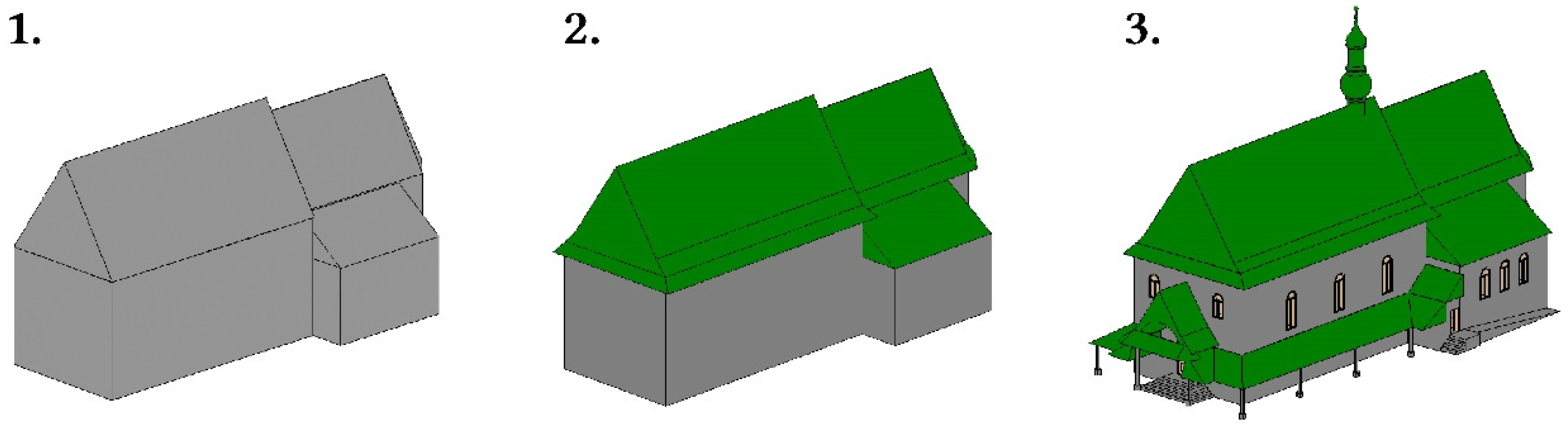
To illustrate differences in the levels of geometric detail in HBIM models, three versions of a digital model of the same object—the historic wooden church in Sobolów—were developed. Each version corresponds to a different Level of Development (LOD), in accordance with recommendations for use in documentation and conservation analysis.
Figure 12 provides an intuitive visual comparison between LOD100, LOD200, and LOD300, illustrating the progressive increase in geometric richness and semantic specification. LOD100 represents only the basic volumetric massing of the church, LOD200 introduces simplified but survey-based geometric elements, and LOD300 incorporates detailed openings, secondary architectural components, and refined proportions derived from the integrated TLS-UAV dataset. This visual differentiation clarifies both the geometric and semantic progression across LOD levels and strengthens the contribution of the LOD framework within the workflow.
The decision to develop HBIM models in LOD100, LOD200, and LOD300 variants was made to ensure their compatibility with Historical Geographic Information Systems (HGIS). Thanks to their varied levels of geometric detail, these models can be used not only for technical documentation but also for spatial–historical analysis. LOD100 and LOD200 enable the integration of geolocation, building orientation, and basic structure data with historical and cartographic datasets. LOD300, on the other hand, allows for linking with more detailed sources such as cadastral maps, archival photographs, or conservation records. In this way, the models serve as a foundation for digitally representing the transformation of the object over time and its role in urban, landscape, and social contexts.
LOD400 represents a very high level of geometric detail, suitable for capturing architectural features (e.g., cornice profiles) with modeling tolerances on the order of ±1 cm. This level is typically used for advanced conservation analysis, restoration planning, and long-term building management. Such models also include extended material parameters and records of past technical interventions. In this study, LOD400 was not required, as the focus was on integrating spatial data with HGIS rather than producing full conservation-grade documentation.
The following levels of detail were adopted:
A simplified model used in orientation and early-stage spatial analysis.
Represents the main massing of the building.
Modeling is limited to primary shapes: building footprint, roof, and walls.
No material information or interior components are included.
- −
LOD200—Geometric Model Based on Survey Data
A model reflecting real building dimensions (main volume) obtained from photogrammetry or terrestrial laser scanning.
Represents basic elements such as walls and roof as simple volumes.
No detailed architectural features are included.
Required geometric accuracy: ±10 cm.
A point cloud should be imported as a reference (e.g., RCP file).
- −
LOD300—Detailed Geometric Model Based on Survey Data
A model reflecting the building’s real dimensions obtained from photogrammetry or TLS.
Includes primary geometric elements: walls (with window and door openings), roof, and secondary volumes (e.g., annexes, shelters).
Required geometric accuracy: ±5 cm.
A point cloud should be imported as a reference (e.g., RCP file).
Custom Revit families should be created for non-standard elements.
All model versions were saved in native Revit format (.RVT) with the appropriate LOD level indicated in the filename. These models can be integrated with Common Data Environments (CDE), HGIS platforms, and semantic data exploration tools (e.g., BIMExplorer), increasing their usefulness in interdisciplinary conservation and research projects.
3.3. HBIM Implementation and IFC/HGIS Integration
Figure 13 illustrates the workflow for preparing HBIM models for export in IFC format and their integration with HGIS, addressing interoperability requirements and potential automation using AI. The process includes LOD mapping (LOD100-LOD300), family strategy for non-standard elements, which refers to the definition and management of custom parametric families for heritage components within the HBIM environment, ensuring accurate representation and compatibility with IFC export, semantic enrichment (materials and conservation attributes), IFC export (version, MVD, interoperability), metadata integration (GOA/LOG, source datasets, CDE), and georeferencing. Optional AI integration points are indicated for automatic element recognition, attribute assignment, automated classification, and AI-ready automation, which represent future research directions based on recent advances in deep learning and semantic enrichment for HBIM.
HBIM models (LOD100-300) were developed in Autodesk Revit 2024 based on the integrated point cloud. Models were exported to IFC 4.3 (alternatively IFC 2 × 3) using Model View Definitions (Coordination View 2.0/Reference View), ensuring that object GUIDs and metadata (GOA/LOG, source datasets, accuracy class) were preserved for interoperability within Common Data Environments (CDE). Georeferencing was applied using an appropriate projected coordinate system, and local HBIM coordinates were linked via a Helmert transformation to align IFC models with HGIS layers, including topography, cadastral data, and conservation zones. Geometry was not generated using AI in this study. AI integration is planned as a future enhancement for classification, element recognition, and 2D-to-HBIM attribution.
4. Discussion
4.1. Discussion of Results and Comparison with Literature
The article by Mitka B. [
48] provides information on the potential applications of terrestrial laser scanning in the documentation of heritage buildings. The author emphasizes the high quality of data obtained using this technique. Data quality is the most important factor when creating a three-dimensional model. In the model developed for this study, the point cloud acquired from the laser scanner proved essential for accurately reproducing features such as windows and pillars. However, in addition to the scanning process itself, proper data preparation for further processing is equally important. This is discussed in the work by Klapa P. [
33], which focuses on point cloud processing techniques, particularly the filtering of the cloud and the removal of measurement noise. These techniques were also significant in the context of this thesis, as they form a key step in producing a high-quality 3D model. In this case, the point cloud had to be thoroughly cleaned due to the use of mesh-based modeling.
The study in [
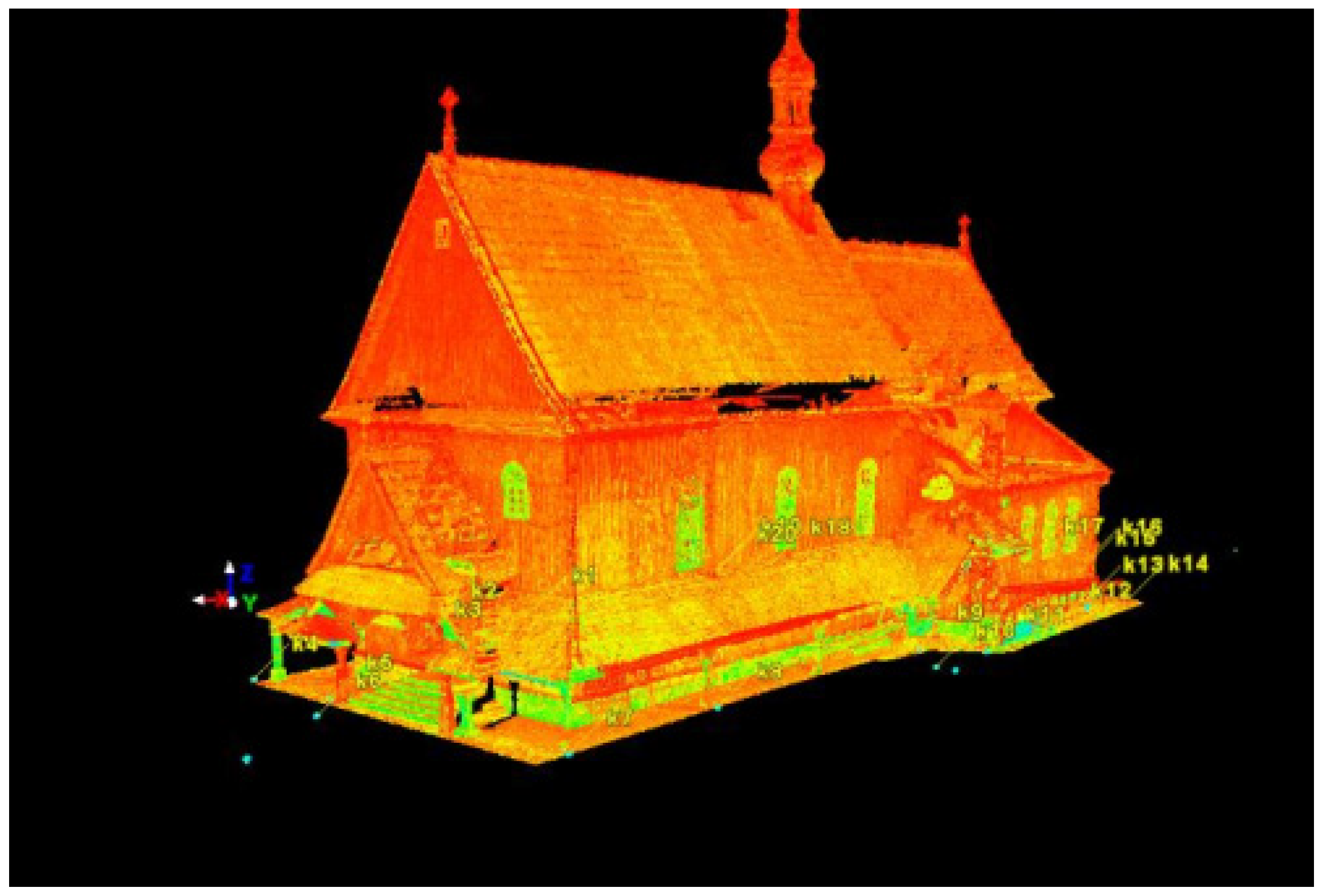
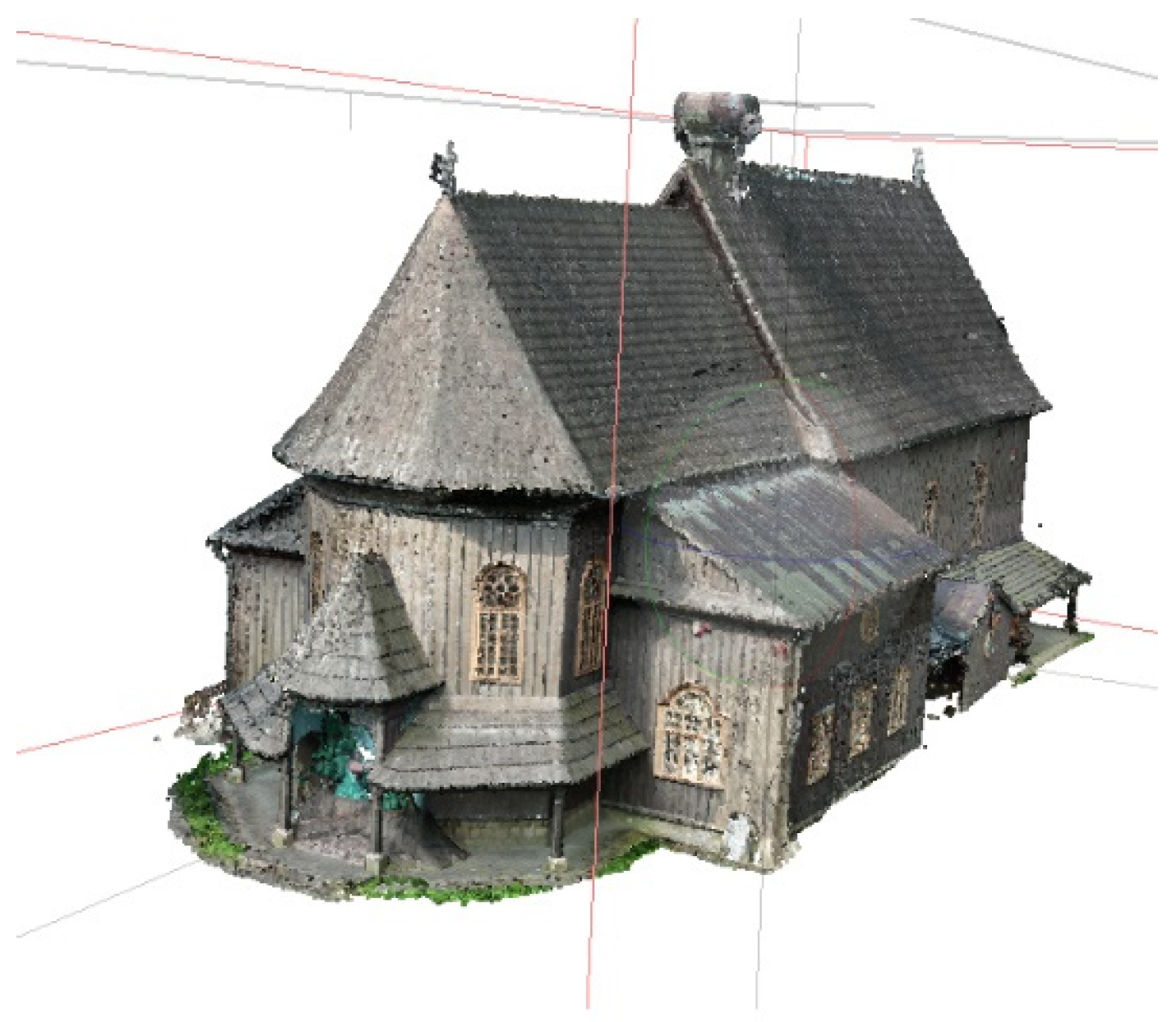
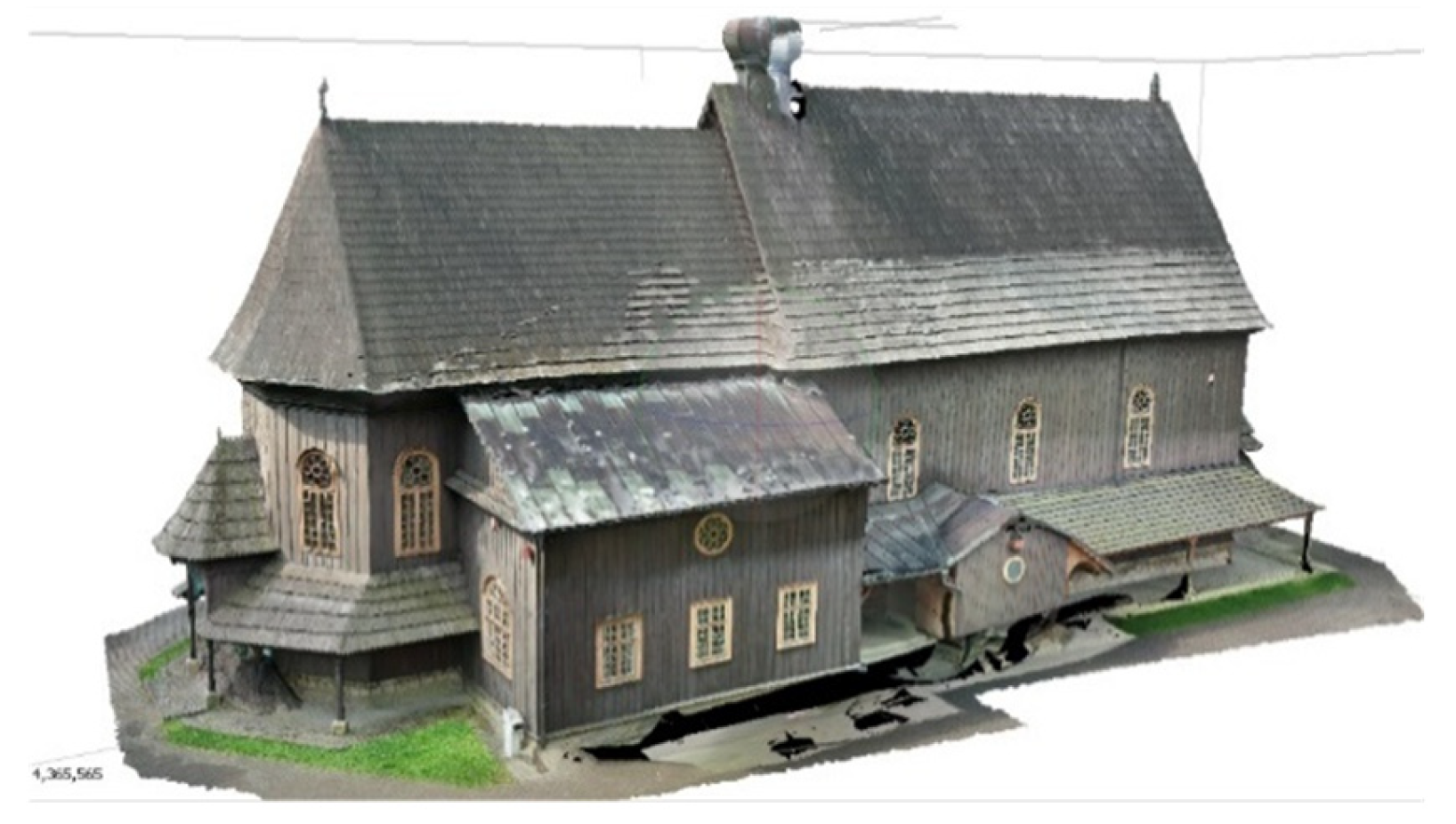
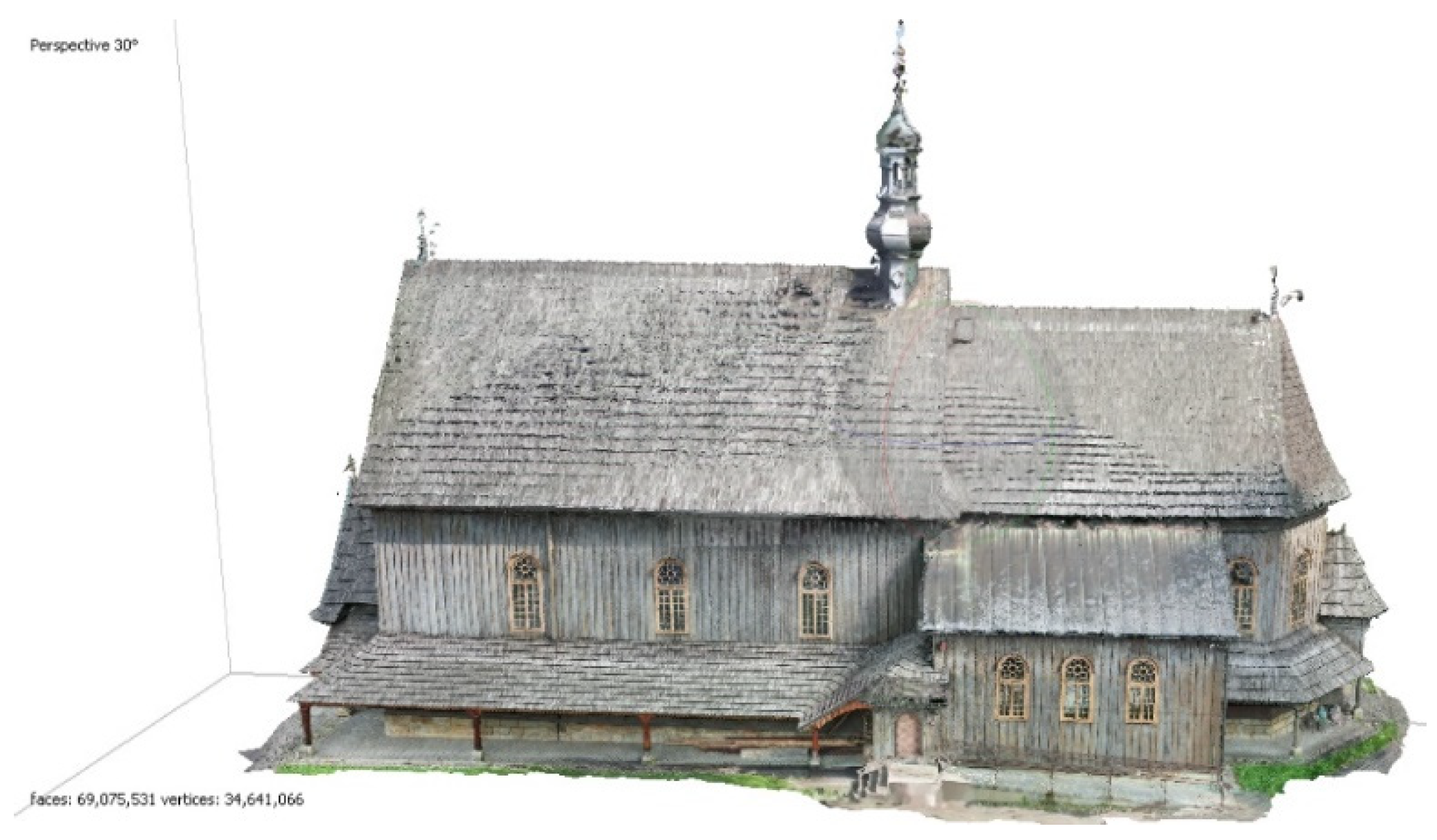
7] highlights that integrating point clouds obtained from different methods results in 3D models that are more detailed and complete. In this research, data from both a laser scanner and a UAV were integrated. The results of the analysis and comparisons confirm that the integrated data exhibited higher geometric fidelity. The combined point cloud consisted of 79,617,791 points and was more faithful in capturing the geometry of the object compared to the individual point clouds acquired from the UAV (50,680,249 points) or the laser scanner (28,937,542 points).
In [
4], the functionality of unmanned aerial vehicles (UAVs) is discussed. The author emphasizes that drones allow for rapid and relatively inexpensive data acquisition compared to other measurement methods. However, UAV-based photogrammetry has certain limitations, which result in data of slightly lower quality than, for example, laser scanning. Therefore, such data is best used as auxiliary information. The findings of this thesis confirm these assumptions: photogrammetric data proved very useful in filling in missing parts of the model, their acquisition was relatively quick, but in shaded areas, zones requiring high-detail representation, and at the contact point between the building and the ground, gaps were observed. This confirms that the accuracy of this method is limited.
The findings of this study are consistent with emerging international trends that emphasize operational standardization and interoperability in heritage documentation workflows. Recent research demonstrates the growing relevance of AI-assisted segmentation and automated HBIM generation for improving efficiency and semantic enrichment [
23]. Similarly, advances in transformer-based architectures for scene reconstruction (e.g., VGGT) and optimized LOD rendering techniques [
45] indicate a clear trajectory toward automation and high-fidelity modeling. The proposed workflow provides a structured basis for TLS-UAV integration and explicitly identifying AI-ready steps, which address the current implementation gap in heritage modeling practices. Furthermore, the integration of HBIM with Historical Geographic Information Systems (HGIS), as highlighted in recent studies [
39,
41], reinforces the importance of linking geometric accuracy with spatial and historical context, a principle embedded in the presented methodology.
4.2. Strengths of the Study
A key strength is the end-to-end operational standardization: from acquisition (target-based TLS registration and scaled UAV photogrammetry), through point-cloud fusion and mesh generation, to HBIM preparation with explicit LOD mapping and HGIS embedding. The manuscript documents a replicable configuration of widely used tools (Cyclone, Metashape, CloudCompare, Revit) and clarifies where AI-ready steps could be integrated later, without conflating such perspectives with the present experimental scope. The explicit LOD framing (100–300) and the demonstration that the integrated dataset supports richer geometry and semantics are directly actionable for conservation workflows.
4.3. Limitations, Uncertainty, and Sources of Error
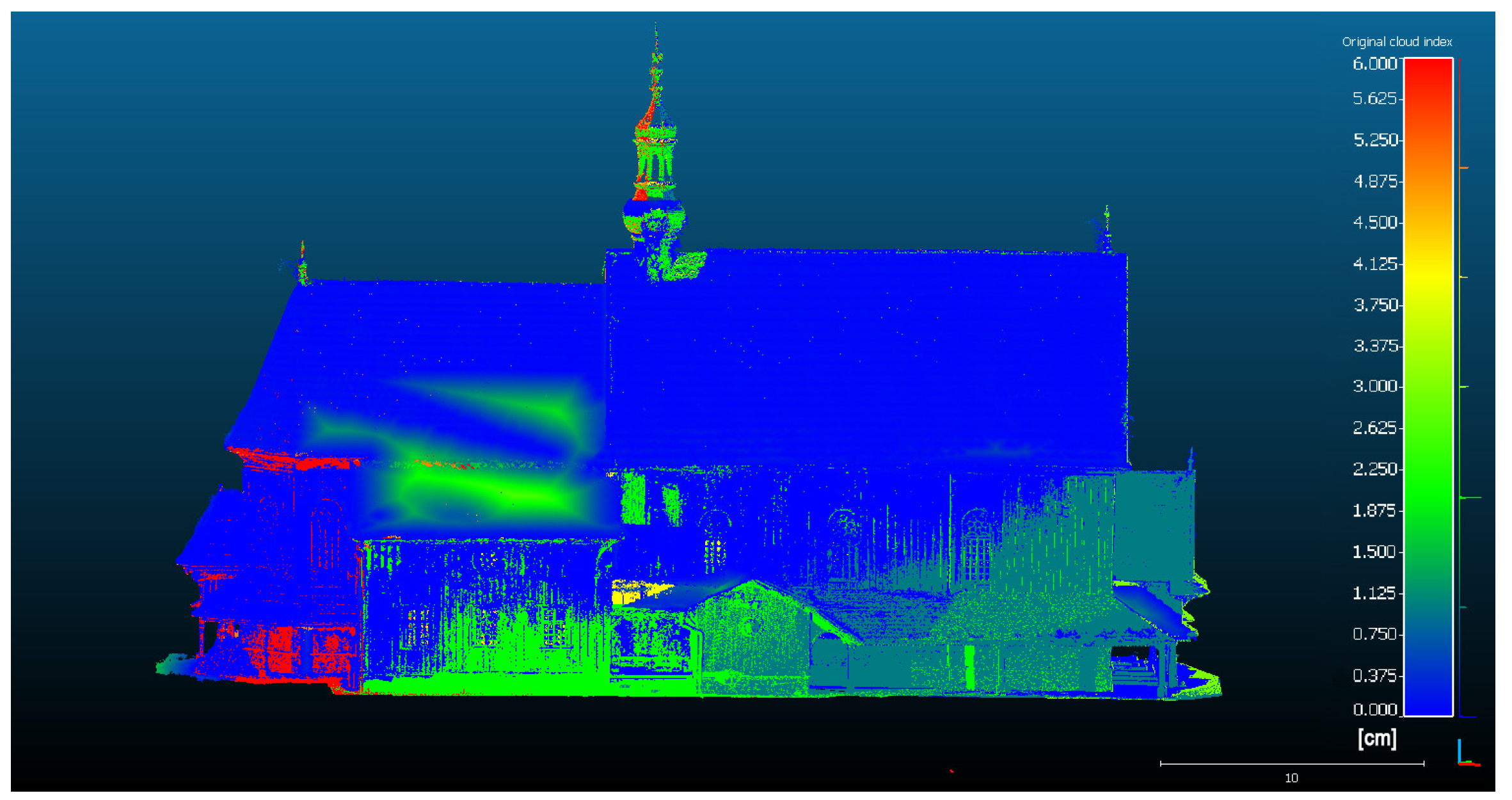
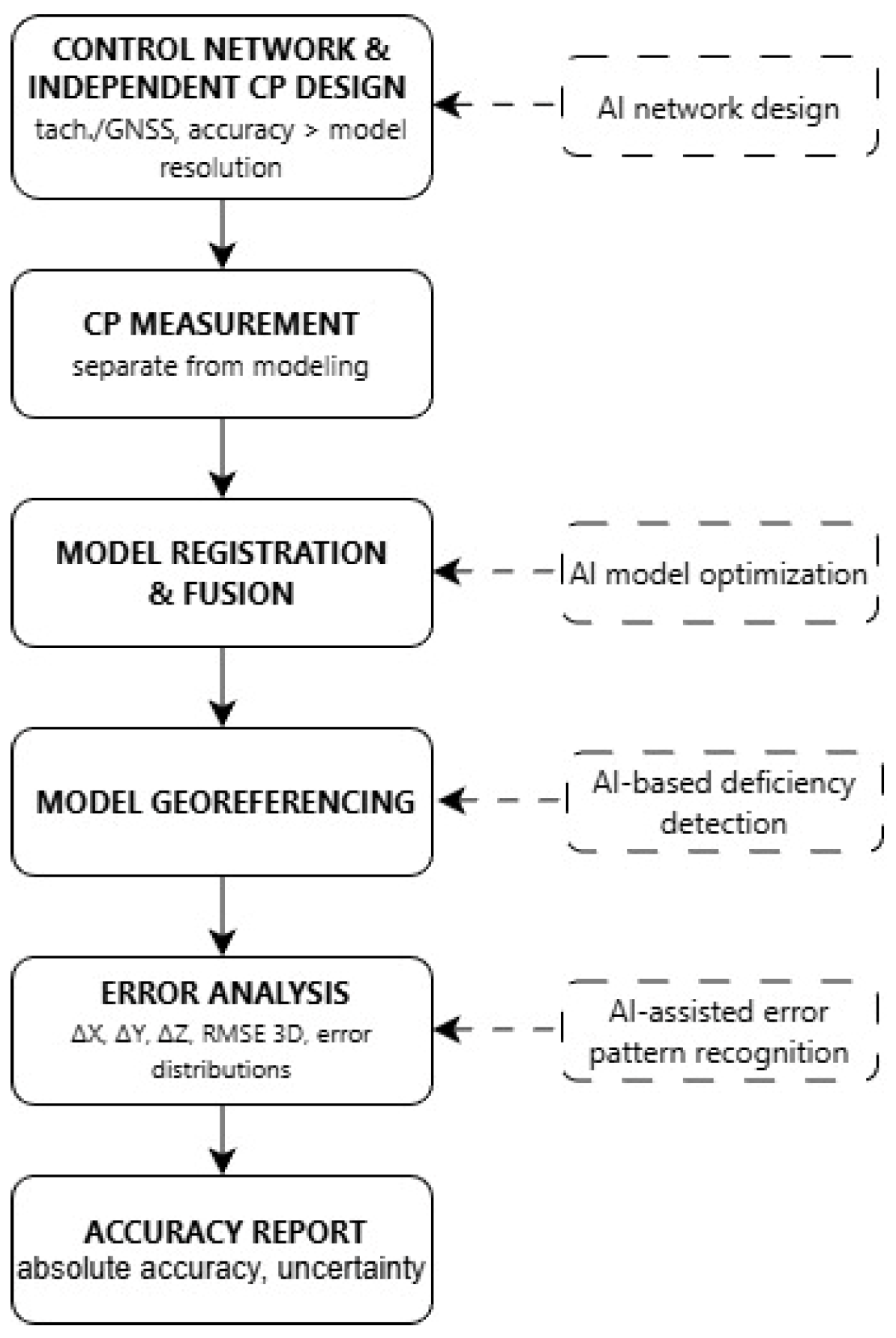
First, absolute accuracy was not evaluated because independent CPs (total station/RTK GNSS) were not collected; therefore, all claims refer to internal consistency between TLS and UAV reconstructions. Second, the Cloud-to-Cloud (C2C) analysis was used qualitatively via a deviation map; a single model-wide histogram (Mean/SD/RMSE) was not reported due to non-overlapping regions (e.g., roof turret, occluded wall–ground contact), which would bias global statistics toward non-corresponding areas. Third, the workflow relies on closed-source commercial software; consequently, certain internal routines are not transparent, which introduces limits to full methodological reproducibility. Finally, results can be sensitive to acquisition geometry and parameter choices (e.g., image overlap, TLS setup distribution, dense-cloud filtering), which may affect local completeness and the stability of mesh detail; these effects are partially visible in roof textures and at structural discontinuities.
4.4. Implications for Heritage HBIM and LOD Practice
Operationally, the findings support using integrated TLS-UAV datasets as reference geometry with demonstrated internal consistency for LOD200-LOD300 HBIM, where modeling tolerances and semantic requirements can be met by combining high-fidelity TLS detail with UAV coverage of elevated or occluded elements. Positioning the models within HGIS facilitates spatial–historical analysis and multi-campaign comparisons. Importantly, such comparative analyses may be tracked over time to support long-term condition monitoring, which is particularly relevant for risk-prone or seismically active areas.
4.5. Integration of AI in the Process of Creating 3D and HBIM Models of Heritage Objects
Artificial intelligence can streamline heritage-modeling pipelines by automating key stages of data handling and interpretation. At the acquisition and preprocessing steps, AI-based routines may classify and clean point clouds, reducing noise and measurement artifacts and accelerating preparation of inputs for subsequent modeling. During documentation processing, recognition of graphical components in 2D technical drawings can enable structured conversion into BIM/HBIM-compliant entities, limiting manual transcription. For geometric modeling, AI methods for element detection and semantic classification on spatial/photogrammetric data have been shown to support the generation of structurally coherent HBIM components [
28,
49]. In addition, AI-based analytics can contribute to condition assessment by highlighting deformations, damage, or anomalies and by facilitating time-series comparisons for long-term monitoring. Recent transformer-based pipelines, including the Visual Geometry Grounded Transformer (VGGT), indicate end-to-end scene-reconstruction capabilities with potential relevance to heritage scenarios [
20]. In the present study, such AI procedures were not implemented; they are discussed as prospective, optional extensions intended to augment a standardized TLS-UAV workflow and to enhance semantic enrichment and integration with GIS/HGIS contexts.
4.6. Future Challenges and Development Pathways
Future work will include independent CP-based validation (ΔX, ΔY, ΔZ, 3D RMSE, residual maps) to report absolute accuracy and uncertainty. The deviation analysis will be extended with region-of-overlap C2C histograms (with robust masking), and a parameter-sensitivity study will be conducted for dense-cloud and mesh reconstruction. Semi-automated steps for element recognition and data attribution (AI-ready) are considered prospective and remain outside the scope of the present experiment.
To support reproducibility, user-controlled processing parameters will be consolidated in openly accessible resources in future work, while vendor-internal routines will be explicitly acknowledged as non-transparent.
Future research may focus on matching algorithms to link components extracted from 2D project documentation with simplified photogrammetric models, enabling the generation of comprehensive 3D outputs while reducing acquisition and processing time. Such low-resolution models could serve as an intermediate step for AI-based extraction of information from CAD drawings, supporting semi-automated HBIM generation. This approach would require advances in detection and segmentation methodologies [
50] and rigorous input standardization to ensure reliable identification of volumetric components and effective integration with high-resolution TLS-UAV datasets.
Current barriers to full automation include the lack of input data standardization, varying quality of TLS and UAV point clouds, difficulties in precise alignment, and the manual conversion of 2D documentation into HBIM. In this context, the TLS-UAV integration presented here should be regarded as a necessary baseline that enables subsequent algorithmic advances in normalization, adaptive reconstruction, and AI-driven semantic enrichment. Effective HBIM implementation also depends on structured information management strategies that ensure interoperability and support long-term conservation workflows [
25].
There is a need for robust procedures to automatically normalize and align point clouds, detect data gaps, and support adaptive reconstruction of elements inaccessible to UAV or TLS; combined with AI, such procedures could enable semi-automated enrichment of HBIM models with material and structural attributes, tighter 2D-3D integration, and stable, repeatable difference analyses for conservation diagnostics over time.
5. Summary and Conclusions
The aim of this study was to analyze three-dimensional models created using data acquired through laser scanning and unmanned aerial vehicles (UAVs). The focus was on a comparative assessment of the internal geometric consistency, completeness, and methodology of these surveying techniques, as well as their integration for HBIM and spatial–historical analysis.
The project began with the design and execution of a field survey that included both terrestrial laser scanning and UAV photography. The collected data were processed using Leica Cyclone, Agisoft Metashape PRO, Microstation V8i, and CloudCompare software. The final result was a mesh-based 3D model of the church, built from an integrated point cloud. Final analyses demonstrated that using integrated data from multiple sources—such as laser scanning and UAV imagery—enables the generation of higher-quality and more complete 3D models [
51]. For example, laser scanning allows for detailed capture of architectural features, while drone images effectively supplement missing areas that are difficult to access by scanner, such as the roof or turret. Automated model generation accelerated the workflow but required careful preparation of input data, including proper filtering and thorough removal of measurement noise.
During the process, several issues were encountered. The scanner-based point cloud had gaps on the roof and in shaded areas. Additionally, a small chapel located at the rear of the church was problematic for the scanner. These deficiencies were resolved using drone images of sufficient quantity and quality, along with carefully placed markers. This made it possible to generate a complete point cloud including the roof, turrets, and the aforementioned chapel. In contrast, the drone data contained more errors near the ground and where walls joined the roof. However, combining the two datasets enabled the generation of a complete and detailed point cloud, which served as the basis for building the final 3D model. The high level of detail and large number of points negatively impacted processing time and required high computational performance.
Both technologies used in the study have their advantages and disadvantages. Photogrammetry is significantly cheaper and faster in the data acquisition phase, whereas laser scanning requires careful planning of measurement positions, making it more time-consuming. Scanning is clearly the better choice when the object is large, complex, and rich in architectural detail that must be accurately represented. Conversely, drone imagery is better suited for smaller, simpler objects with fewer features. Nonetheless, both methods can be used to create technical documentation for heritage buildings.
The integrated TLS-UAV dataset provides a detailed and consistent geometric basis that can support repeated measurements and comparative analyses in future campaigns. Importantly, such analyses can be tracked over time, supporting long-term monitoring of the building’s condition [
14,
15,
29], which is especially valuable in seismically active areas [
52]. This reinforces the applicability of the proposed workflow for heritage documentation and ongoing condition assessment, even though absolute accuracy could not be evaluated without independent check points.