1. Introduction
Volcanic monitoring is a fundamental task for assessing volcanic hazards and mitigating risks to populated areas. Traditionally, the detection of volcanic unrest relies on a multi-parametric approach. This includes geodetic techniques, such as Differential Interferometric Synthetic Aperture Radar (DInSAR) and GNSS, which are essential for modeling the deformation sources through a multi-scale analysis in complex volcanic environments [
1]. Furthermore, satellite-based thermal remote sensing (e.g., MODIS, ASTER, and Sentinel-2) is widely used to track high-temperature anomalies and infer thermal patterns through advanced data processing, such as Independent Component Analysis [
2].
While these methods provide essential large-scale data and deep structural insights, they are often limited by revisit times, cloud cover, and a spatial resolution that may be too coarse for a detailed fumarolic field analysis at the local scale. On the other hand, traditional ground-based surveys, while accurate, expose operators to significant volcanic hazards, especially during periods of increased activity. In this framework, Unmanned Aerial Systems (UASs) have emerged as a transformative solution, bridging the gap between satellite and ground observations. UAS platforms offer a “close-range” remote sensing approach that ensures operator safety while providing sub-decimetric spatial resolution, which is crucial for mapping complex hydrothermal systems like that of Vulcano Island.
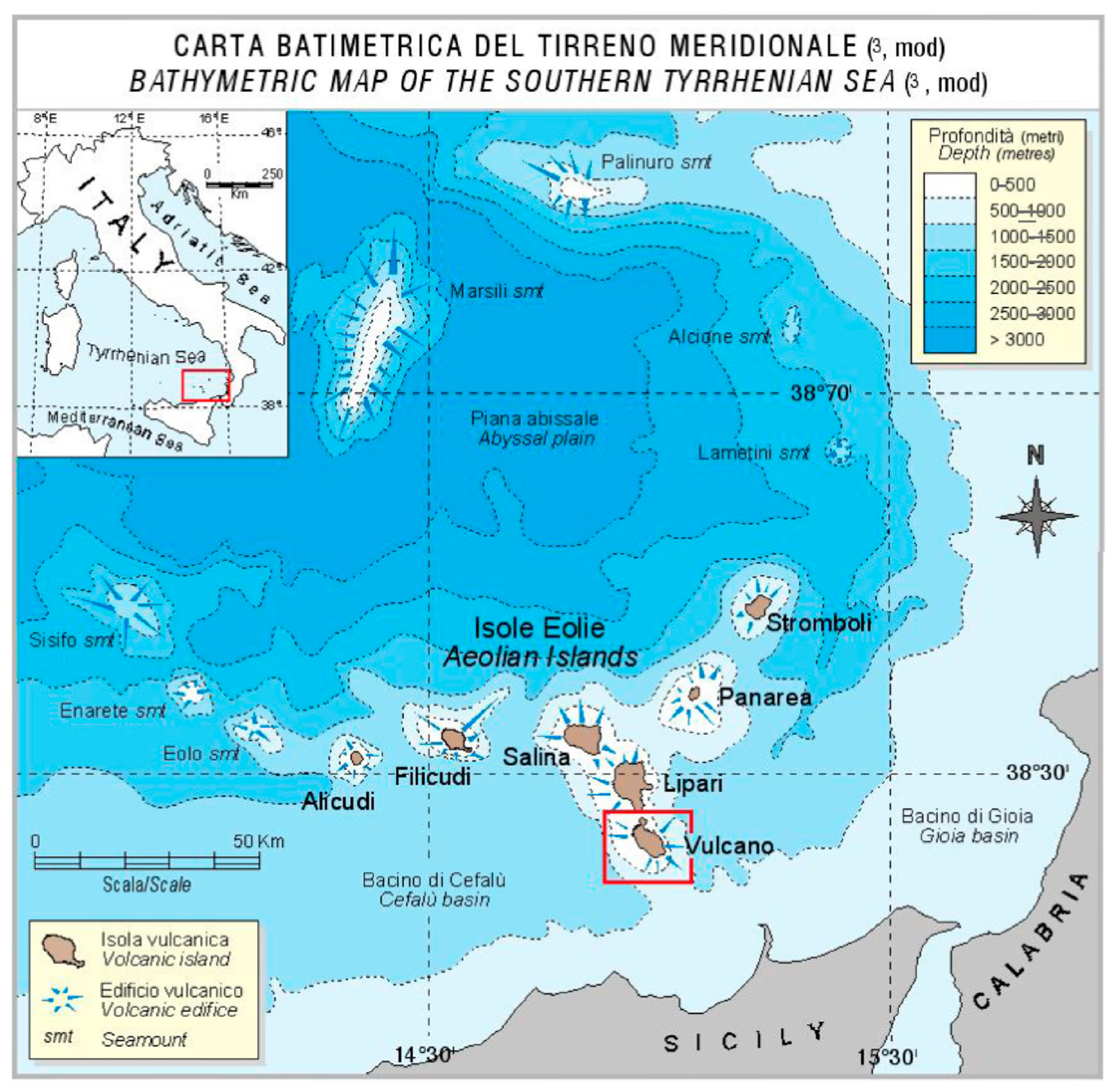
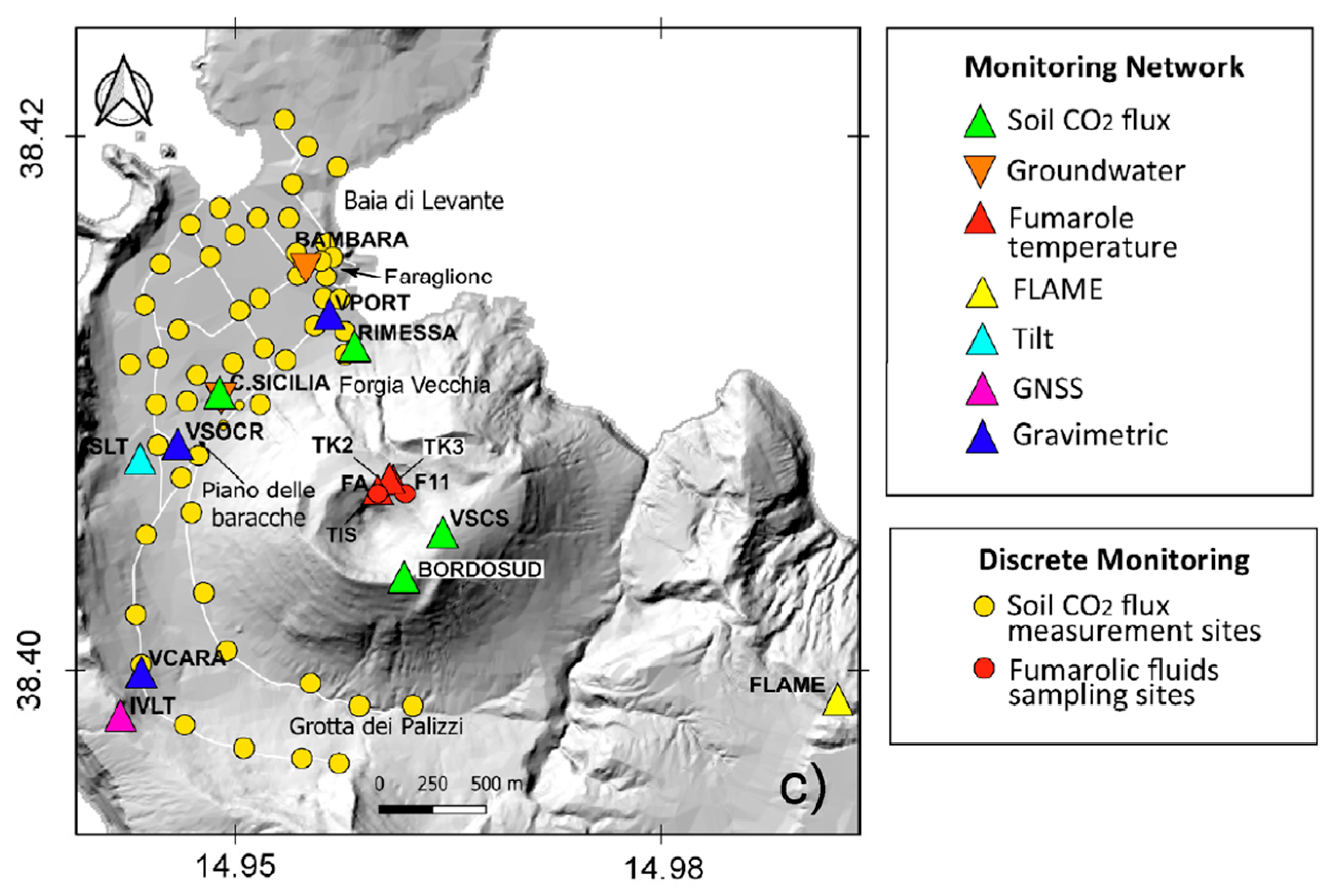
The focus of this study is Vulcano Island (Aeolian Archipelago, Italy) (
Figure 1), a high-risk volcanic system characterized by a vigorous hydrothermal system. The island’s monitoring is managed by the Istituto Nazionale di Geofisica e Vulcanologia (INGV) through a dense network of seismic, geodetic, and geochemical sensors. Monitoring activities traditionally focus on the La Fossa crater, where changes in fumarolic temperatures and gas chemistry serve as primary indicators of the volcanic state. The surveys presented in this paper were prompted by a significant geochemical unrest that began in September 2021. This phase was characterized by a sharp increase in CO
2 soil degassing and a transition toward a magmatic-dominated fumarolic system, with a marked rise in SO
2 and HCl fluxes, accompanied by an increase in local micro-seismicity and slight ground deformation [
3,
4]. These anomalies led to an increase in the alert level and necessitated high-resolution spatial mapping to track the rapid thermal and morphological evolution of the crater.
This work presents a multi-sensor payload [
5], comprising LIDAR, visible (VIS), and thermal infrared (TIR) cameras [
6], mounted on a UAS to acquire multi-temporal datasets from September 2021 to June 2024. This study builds upon the structural and thermal baseline established by Müller et al. [
7], extending the analysis to the dynamic evolution of the 2021–2024 unrest. Our high-resolution thermal maps complement the geochemical findings of Lentini et al. [
8], who conducted MultiGAS surveys during the same period, and provide a necessary validation for broader satellite-based monitoring [
9].
Through the LIDAR sensor, high-resolution Digital Terrain Models (DTMs) [
10] were extracted to monitor the stability of volcanic slopes potentially affected by increased hydrothermal emissions along fissures and fractures. Simultaneously, the TIR imagery allowed for the detection of thermal anomalies with a centimetric geometric resolution, which were validated against ground measurements to ensure radiometric reliability. By integrating these datasets, this paper demonstrates the capability of systematic UAS multiparametric surveying to contribute to the understanding of ongoing volcanic processes and the implementation of effective hazard mitigation actions in areas that had not been systematically monitored at this scale until now.
2. Materials and Methods
The UAS surveys were conducted using a DJI Matrix 300 RTK (SZ DJI Technology Co., Ltd., Shenzhen, China) (Real Time Kinematic) platform [
11]. The system is equipped with an onboard Inertial Measurement Unit (IMU) that integrates a GNSS sensor and an inertial platform for precise data georeferencing.
To understand the sensors’ performance, it is necessary to first describe the LiDAR technologies employed: mechanical scanning and Flash LIDAR. Mechanical scanning systems, such as the Genius R-FANS-16, operate by physically rotating the emitter and detector assemblies 360° around a vertical axis. In this configuration, the laser pulse is emitted, and the reflected signal is captured by a detector at each specific angular position to calculate the Time of Flight (TOF). While these systems are typically more complex and bulkier, they generally offer high accuracy and longer detection ranges.
In contrast, Flash LIDAR technology, utilized by the DJI Zenmuse L1 (SZ DJI Technology Co., Ltd., Shenzhen, China) [
12], functions similarly to a digital camera. The entire field of view is illuminated by a single, wide-angle laser pulse, allowing for single-shot acquisition. This process does not feature any moving parts, and the result is conceptually more like an instant photograph, as it provides rapid data acquisition by calculating the TOF for every individual element in the detector array simultaneously.
The DJI Matrix 300 RTK served as the primary carrier for the sensors, which were deployed during separate flight missions [
5]. The sensors used were the Genius R-FANS-16 and, subsequently, the DJI Zenmuse L1.
Both LiDAR systems enable the acquisition of high-density point clouds (approximately 200 pts/m2). The Genius R-FANS-16 (Beijing SureStar Technology Co. Ltd., Beijing, China) achieved an accuracy of 2 cm horizontally and 5 cm vertically, supported by an IMU with angular accuracies of 0.08° in heading and 0.025° in pitch and roll. The DJI Zenmuse L1 provided an accuracy of 3 cm in both horizontal and vertical components, with IMU accuracies of 0.15° in heading and 0.025° in pitch and roll.
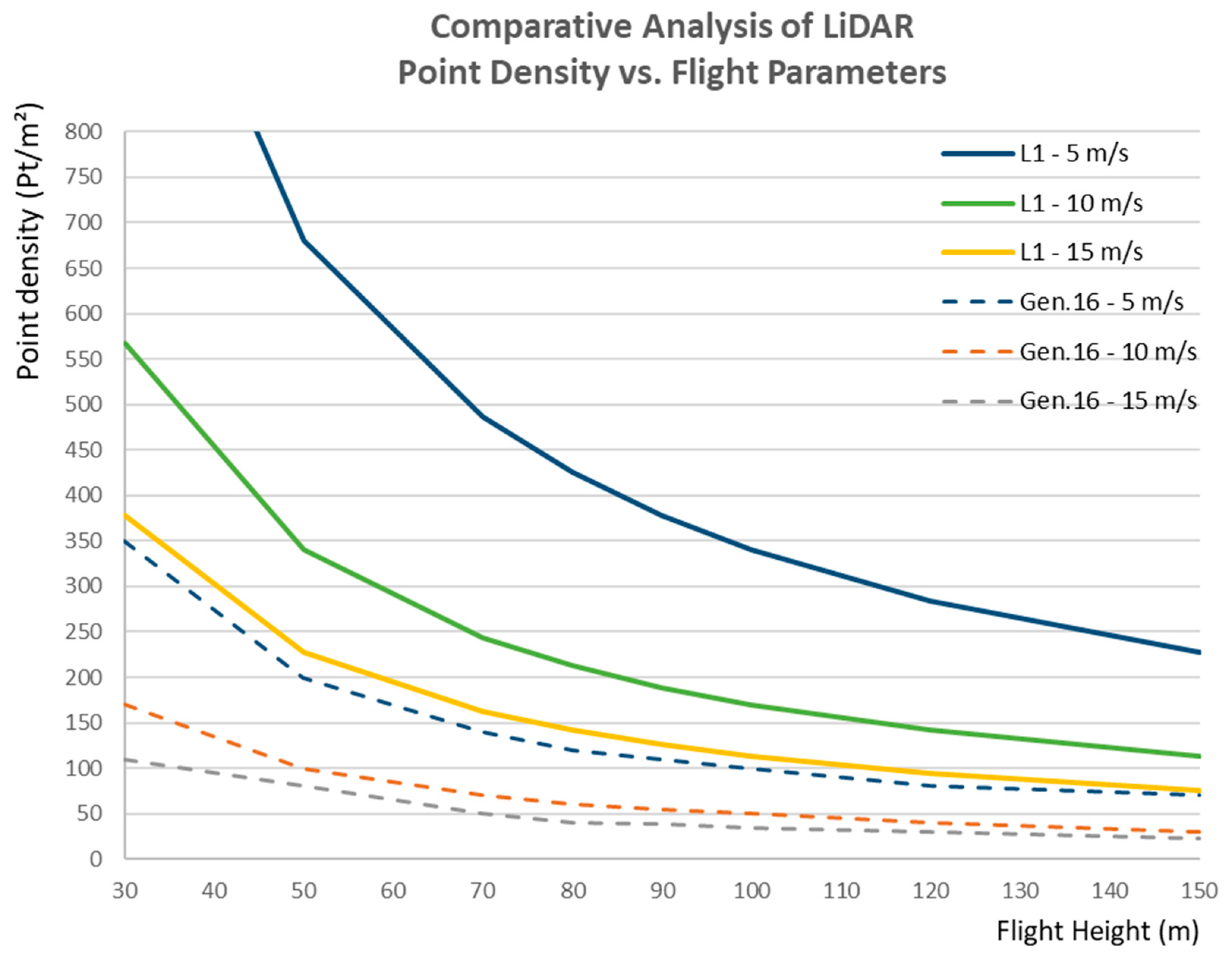
The point cloud density is directly related to the cruising speed and flight altitude. As illustrated in
Figure 2, the relationship between these parameters allows for the determination of the desired point density during the survey planning phase. For instance, the Zenmuse L1 maintains a density exceeding 100 pts/m
2 even at a cruising speed of 13 m/s and an altitude of 120 m.
Additionally, the RGB cameras integrated into the LIDAR systems provided high-resolution imagery (350 dpi), which was used to generate colored point clouds [
13], 3D meshes, Digital Surface Models (DSMs), and Digital Terrain Models (DTMs). Finally, the DJI H20T (SZ DJI Technology Co., Ltd., Shenzhen, China) camera [
14] was employed for thermal data acquisition, allowing for the integration of radiometric information with the morphological data obtained from the LiDAR surveys.
The DJI Zenmuse H20T Thermal Imaging Camera (SZ DJI Technology Co., Ltd., Shenzhen, China), engineered for specific use on DJI Enterprise drones, integrates a thermal sensor and a 1/1.7, 4k 20Mpx CMOS RGB sensor in a single camera body, stabilized by a three-axis gimbal that allows a horizontal rotation of 320° and inclinations from +30° to −90°. The thermal sensor acquires radiometric data useful for extracting thermal orthophotos in which it is possible to measure the temperature value at any point of the image.
The surveying planning by UAS requires different approaches for the type of sensor mounted on board, taking into consideration flight altitude, cruising speed, and other geometric parameters. To optimize the flight planning, it is necessary to balance the instrumental performance, namely, the dimension of the pixel, at different flight heights (function of focal length and image sensor size) with the expected accuracy of mapping products and the required ground coverage (width and length for the footprint). Missions can be planned on site or in the office, by setting take-off and home positions, by including all the strips necessary to acquire data over the area of interest, that will be performed as a result of the GNSS/INS (Inertial Navigation System) systems mounted on board and with the help of the proximity sensors that act in case of unexpected obstacles.
Before the surveys, several operations are necessary, starting from the checking of the weather conditions (wind, rain, humidity, and temperature) that should be within the tolerance ranges accepted by the UAS system, the verification of the integrity of all the structural elements, and the correctness of the sensor assemblage.
To ensure consistent spatial resolution across sensors, LIDAR surveys were conducted at an altitude of 100–120 m (70° FOV, 30–40% overlap, and 5–7 m/s speed), yielding a point density of 150 pts/m2 and a 10 cm pixel size (DSM/DTM). Thermal flights were performed at 80–100 m with 80–90% overlap, achieving a comparable ground resolution of 10–12 cm per pixel. Data were stored locally on each sensor and subsequently transferred for post-processing.
2.1. LIDAR Data Operations
The LIDAR sensor operation is based on the measurement of the time of flight of the light. LIDAR emits a short light pulse, which reflects from surfaces and is received back by the sensor. Distance to any object is estimated based on the time of flight of the light pulse emitted by the sensor. The adopted LIDAR uses a multichannel rotary core to scan the environment around the sensor. A higher level of channels gives a denser point cloud on the sensor output. The acquired dataset provided includes recordings out of over 3 h for each survey, covering an area of approximately 5.0 km2.
The LIDAR point cloud returns the shape of the object or surface being scanned. The GNSS/IMU system provides position, orientation, and absolute time to synchronize information from various sensors supporting the data georeferencing procedure through two different approaches, a Real-Time Kinematic (RTK) and post-processing differential (PPK) based on the use of a reference local or proximal reference station [
15]. RTK can be used in the context in which there is a stable internet connection such as to allow communication with the local service GNSS network. Data processing in a more expeditious way allows the transition from raw data to the end point cloud with a few simple steps to check reference station coordinates and to set the density of the point cloud.
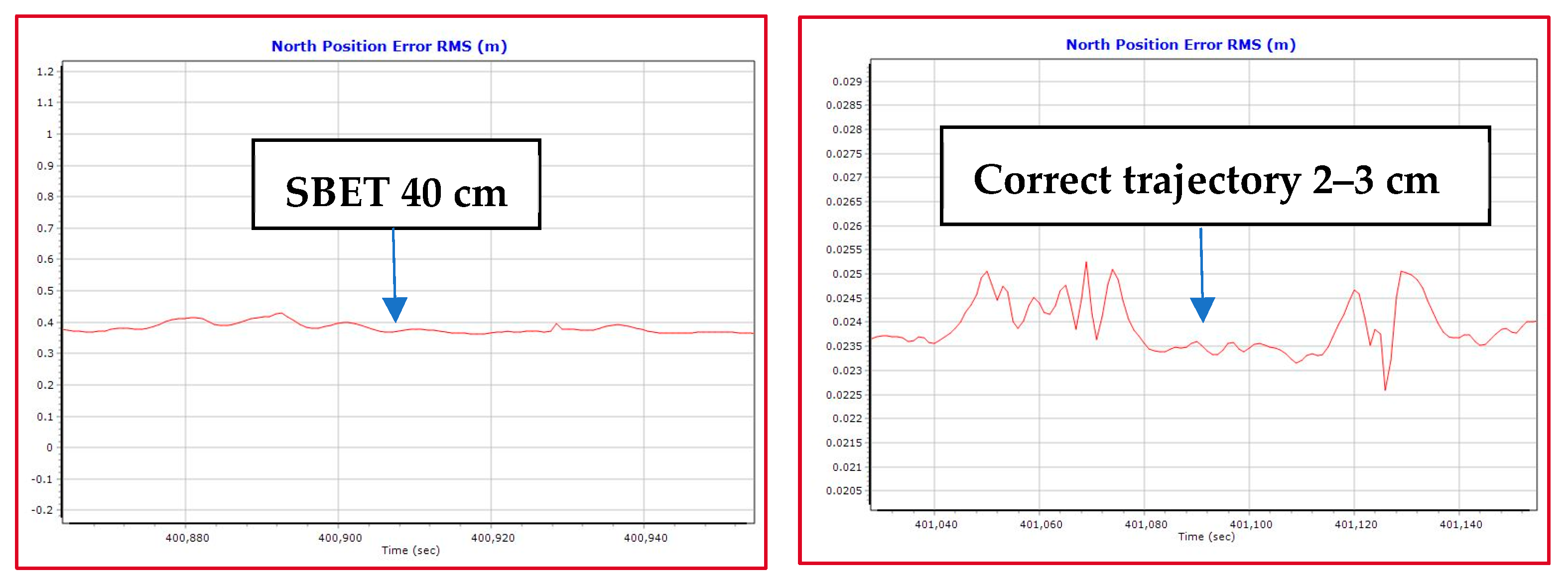
The PPK procedure corrects the raw data of the flight path with respect to a fixed GNSS base that can be installed in the field or selected from a network of reference stations. As shown in
Figure 3, the corrected Smoothed Best Estimate of Trajectory (SBET) reduces the error in the East, North, and Altimetry coordinates from about 40 cm to 2–3 cm, thus allowing the final point cloud to be processed with centimeter accuracy [
16].
The next step concerns the processing of the “raw” LIDAR data with the new correct trajectory (SBET) by setting a series of parameters for sensor calibration and data filtering to obtain a georeferenced point cloud in WGS84/UTM coordinates. For example, flying at an altitude of 120 m AGL (Above Ground Level) and at a cruising speed of 6 m/s produces a point cloud with a density of about 120 points/m2. From the extracted dense point cloud, a digital model in raster format can be interpolated first including all anthropic artifacts, such as buildings and vegetation with a mesh step of 20 cm, then filtering them out to reduce the points only to those belonging to the ground to extract the digital terrain model (DTM).
To analyze the quality of the acquired datasets, the open-source software (CloudCompare V 2.13.1) [
17,
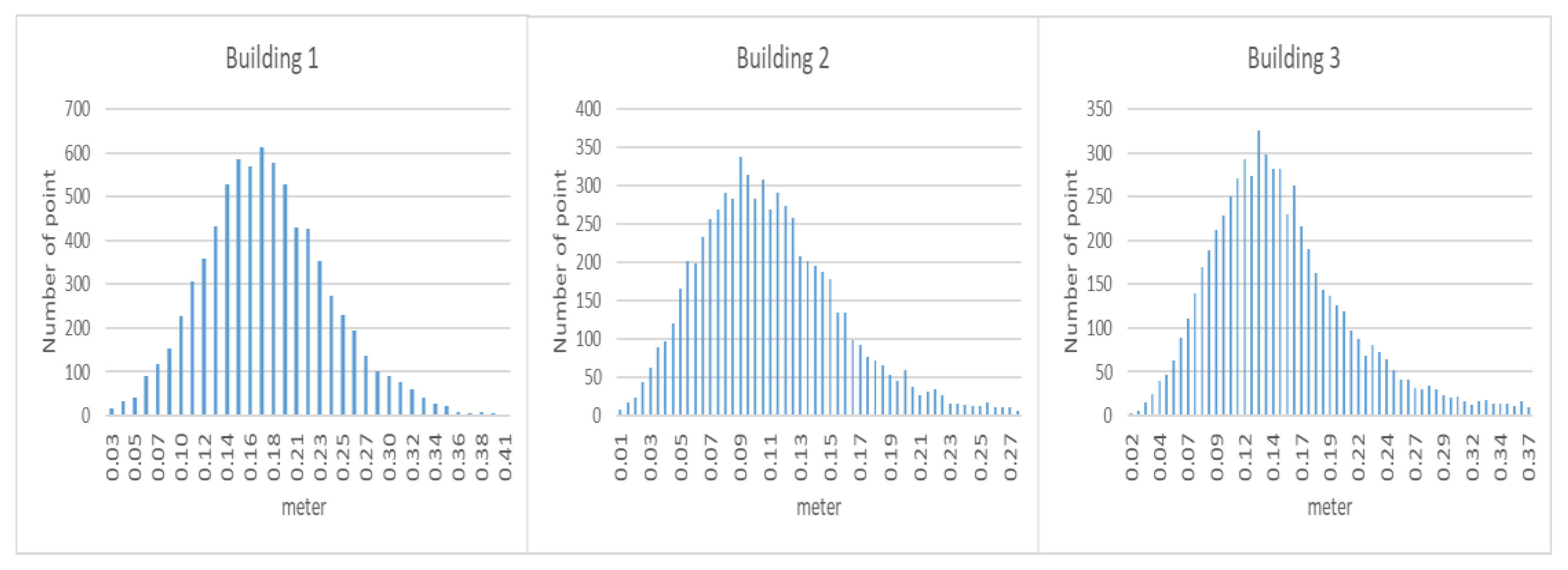
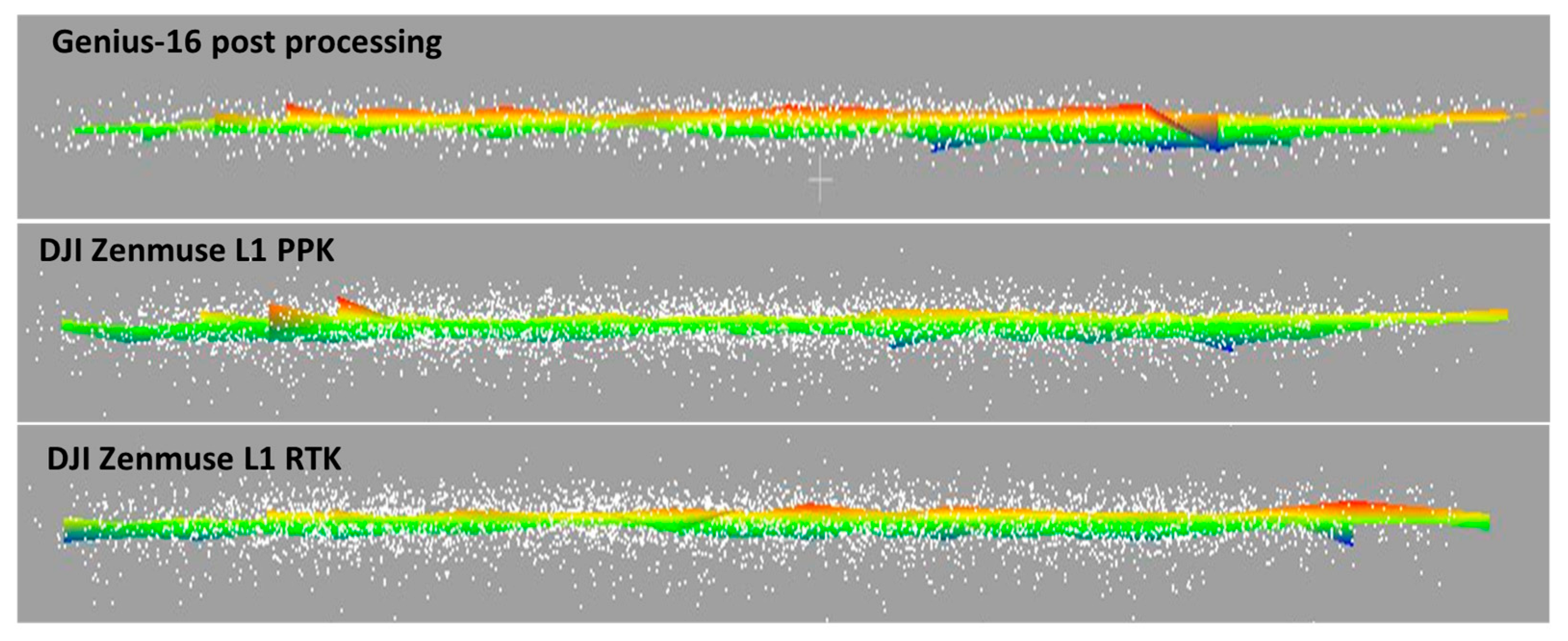
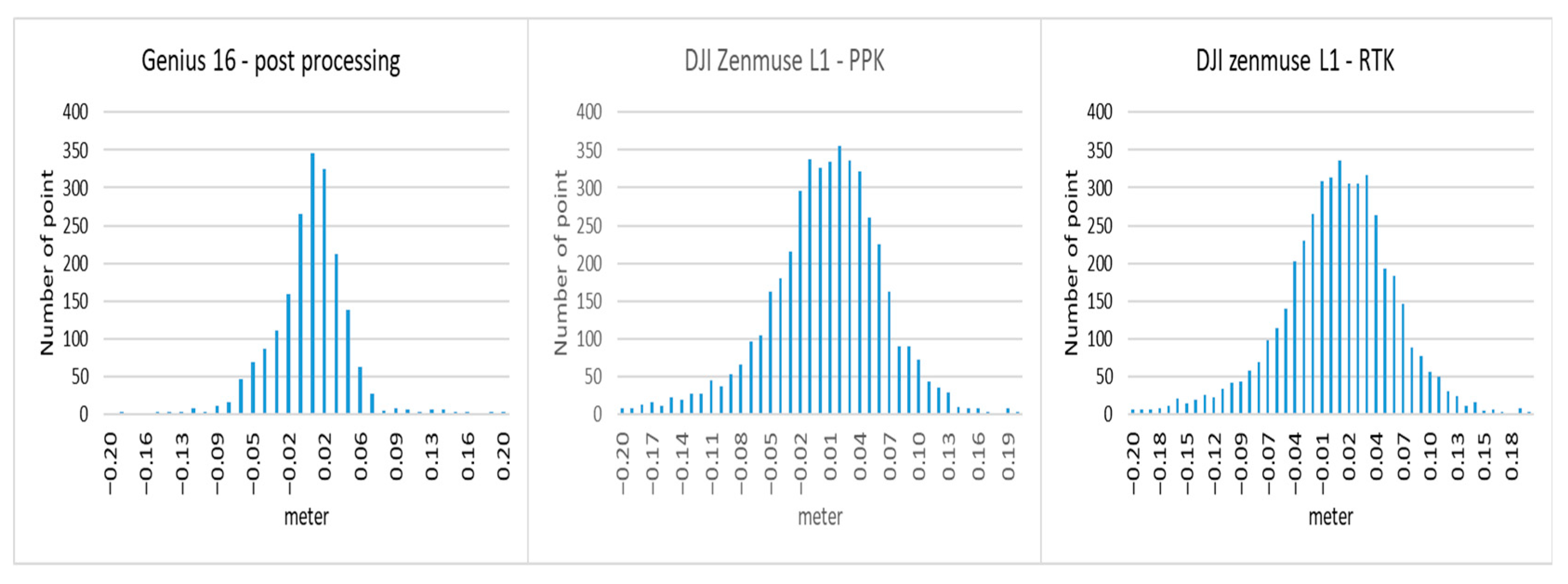
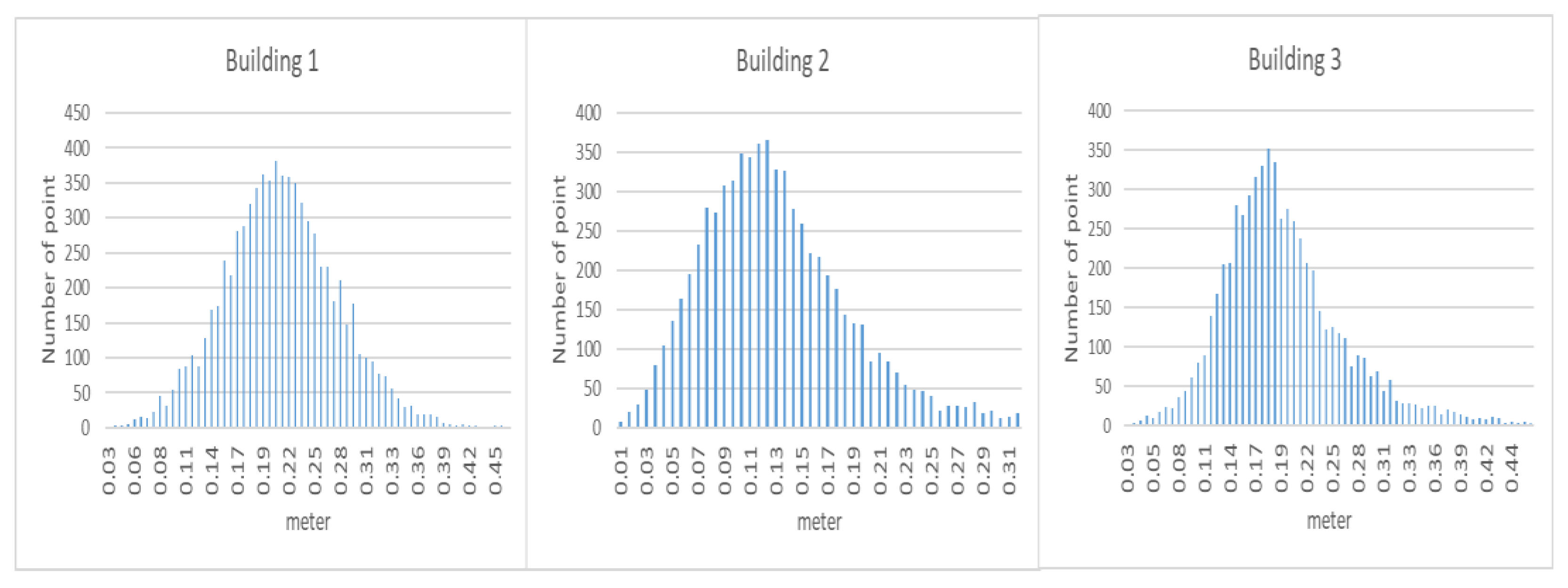
18] was adopted due to its capability of handling both 3D point clouds and meshes with a triangular-shaped mesh. To assess the intrinsic quality (noise level) of a point cloud, the Cloud-to-Mesh distance function was used to calculate the residuals of individual points from the interpolated surface. The analysis of the LIDAR data was performed in the three different point clouds, processed with the Genius-16 in post-processing, with the DJI Zenmuse L1 in PPK mode and with the DJI Zenmuse L1 in RTK mode. A cropping of the clouds in a common area over a flat surface was performed, and then the meshes corresponding to each individual zone were processed to obtain the distance between the mesh and the cloud that is graphically displayed in
Figure 4 and statically analyzed in
Table 1 and
Figure 5. Both sensors provide data characterized by a standard deviation between 3 and 4 cm despite a slightly lower dispersion associated to the Genius datasets and no significant differences are visible between the PPK and RTK positioning approaches, as for the systematic and random components.
To verify the congruence between different surveys (repeatability), it is possible to use the compute cloud-to-cloud distance function that allows the calculation of the planimetric and altimetric distance between two point clouds. To better highlight the difference between the PPK and RTK approach, the DJI Zenmuse L1 point clouds were analyzed in comparison with the Genius 16 adopted as a reference. The calculation was performed on three building roofs using the cloud-to-cloud function to compute difference both at altitude and in planimetry. The results are adopted to evaluate the associated statistics (
Table 2,
Figure 6 and
Figure 7) and displayed in a colored scale where each color is associated with a specific distance (
Figure 8).
Despite the presence of some outliers and slight systematic effects, probably due to the view angle effects, the residual distribution is characterized by an average standard deviation of about 8 cm in elevation and 4 cm for the horizontal components.
2.2. Photogrammetric Data Operations
For the photogrammetric data, an approach based on Structure from Motion (SfM) algorithm [
19] is adopted for the extraction of three-dimensional models and the production of orthophoto. The theoretical principles of collinearity, intersection of projective rays, and camera calibration are flanked by the typical algorithms of robotic vision that allow the generation of point clouds, georeferenced models, three-dimensional objects with textures, digital elevation models, and orthophotos, starting from a series of overlapped images.
The processing steps after photo insertion concern image alignment, dense cloud processing, mesh and texture generation, DSM or DTM generation, and, at last, generation of orthophotos [
20].
The alignment can be performed in a generic way, without imposing constraints on the reference system, or in georeferenced mode, using the GNSS coordinates at the time of each acquisition or through the recognition of Ground Control Point (GCP) markers on the ground even in manual mode. This process depends on the type of acquisition in the survey phase: if the data is obtained in RTK mode, the alignment of the images will be georeferenced, while, if, in the survey phase, targets have been positioned on the ground and measured by GNSS, during processing, it is necessary to identify natural markers and introduce positions. Following the creation of the point clouds, using computing time increasing with the density level, the digital elevation model (DEM) and orthophotos are extracted.
The processing of thermal data can be carried out following the workflow described above, but, to maintain the information content on temperatures, it requires a pixel-by-pixel radiometric transformation of the raster files. If the images are acquired in the RJPG format before being processed, they must necessarily be converted to TIFF by implementing a specific tool that we developed in Python. The tool enables the extraction of all raw data, for each frame, pixel by pixel, maintaining radiometric information.
3. Results
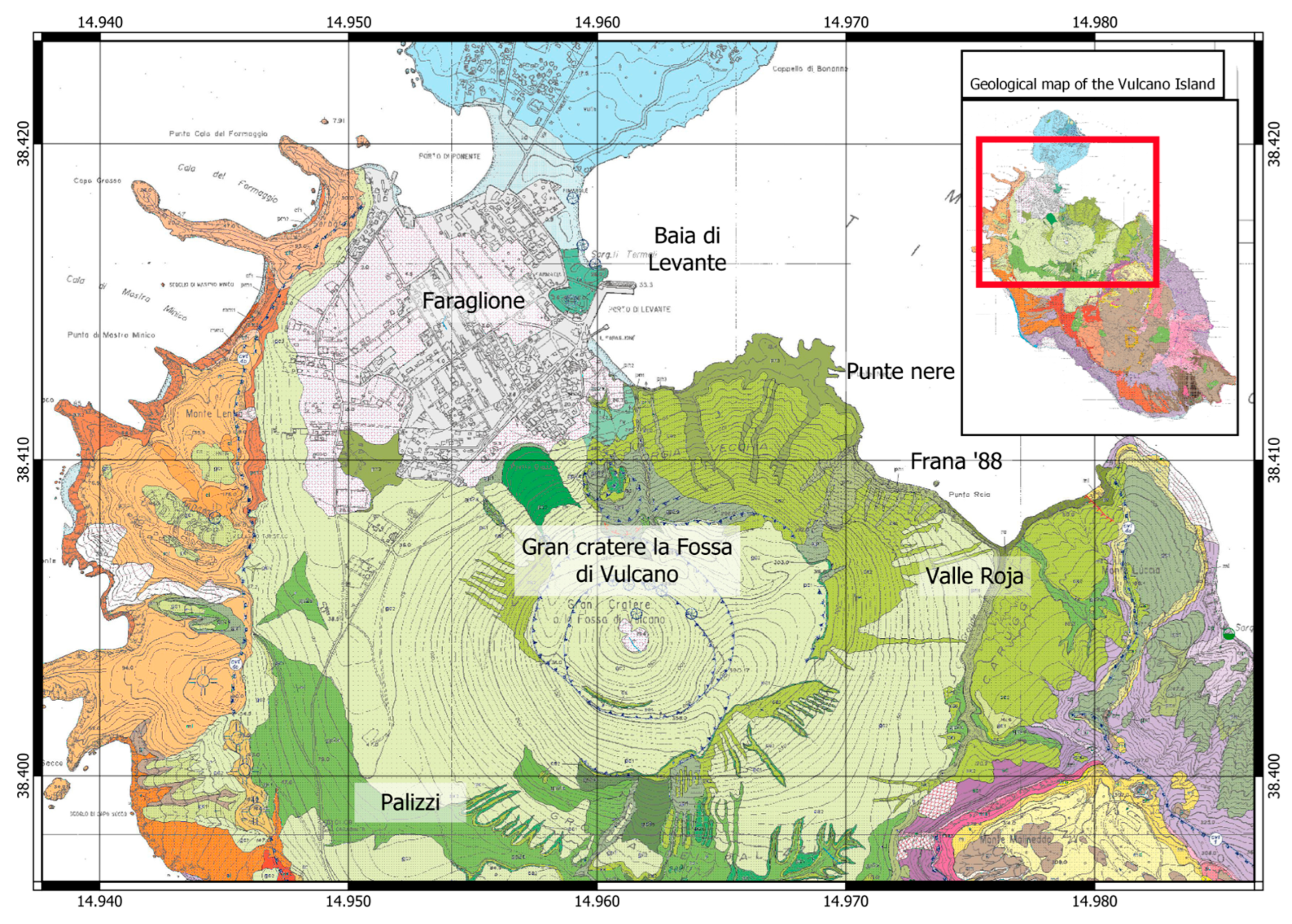
The surveys were carried out in the northern area of the island of Volcano (
Figure 8) to investigate different areas of interest for the purpose of detecting and measure thermal anomalies and morphological variations related to the volcanic activity. To this end, a multi-sensor UAS was used to acquire georeferenced morphological and thermal datasets. In addition, the risks posed by the potential increase in the activity and the difficult accessibility make the UAS surveying the most practicable one. Furthermore, the use of the very accurate LIDAR sensor allows the detection of minor fracturing systems that, activated by an increased gas emission, could mark potential slope movements, similarly to the alignments of fumaroles detected by the thermal sensors. Noticeably, there is also the capability to observe hot areas at sea along the coastline bordering the main cone and at the summit area. The surveys were carried out in the northern area of the island of Vulcano between October 2021 and June 2024 to mainly investigate the fumarole areas, concentrated in the summit area of the Gran Cratere La Fossa, encompassing an area of about 35.7 Ha (0.357 km
2),
Table 3.
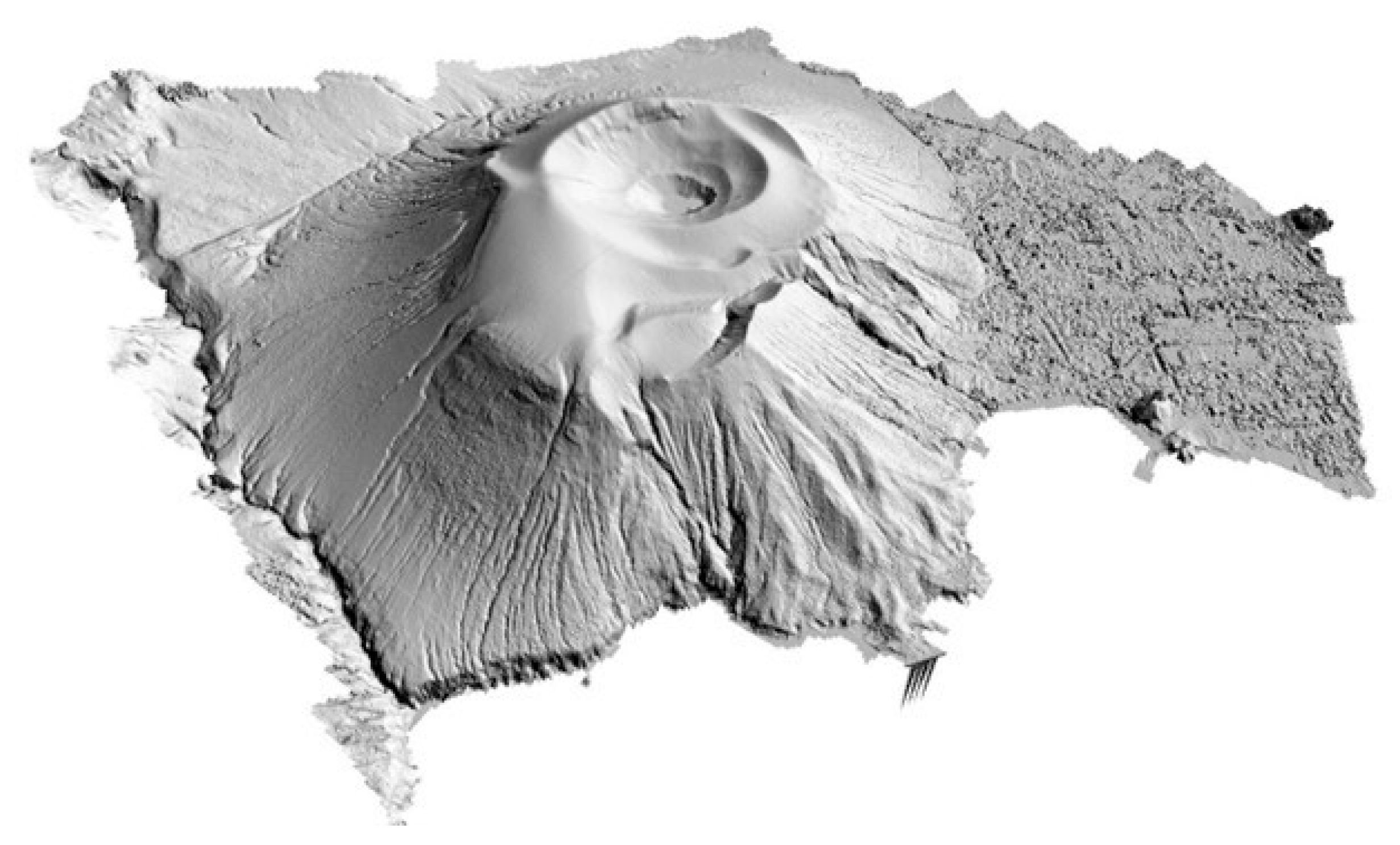
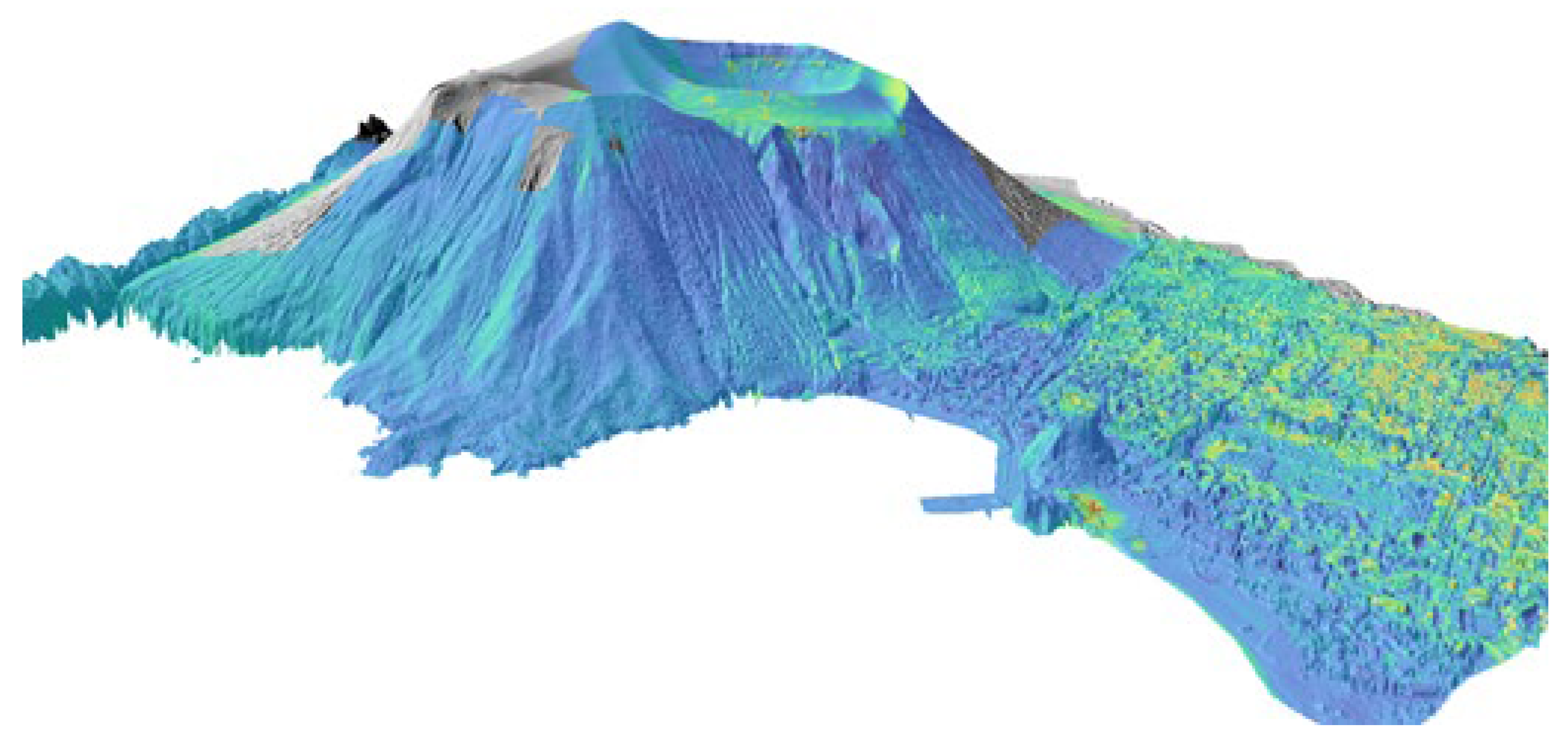
As for the LIDAR datasets, an updated digital terrain model (DTM) was extracted for the whole area of interest (
Figure 9). By comparing the map product stacks starting from reference dataset dated 2008, it was possible to analyze the evolution of the most relevant structural elements at the summit areas that may have been activated due to degradation by chemical agents that are prone to rupture and rockfall, such as the Faraglioni area (
Figure 10).
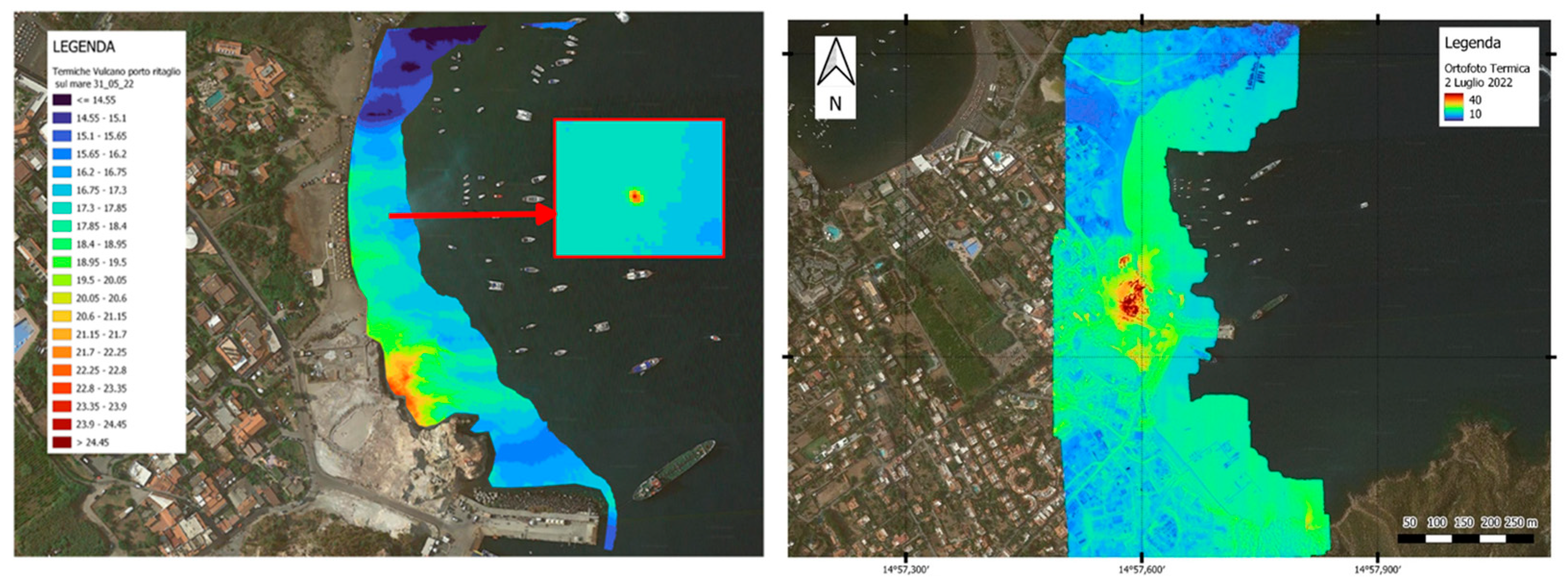
Due to the unrest in September 2021, there is an extended fumarolic field activated at the summit area. In the Levante Bay, an anomalous phenomenon with the whitening of the waters and an intensification of the emission activity of gases and hydrothermal fluids occurred in May 2022, suggesting extending the thermal and also optical UAS monitoring in the Vulcano Porto and Levante Bay areas (Baia di Levante,
Figure 8).
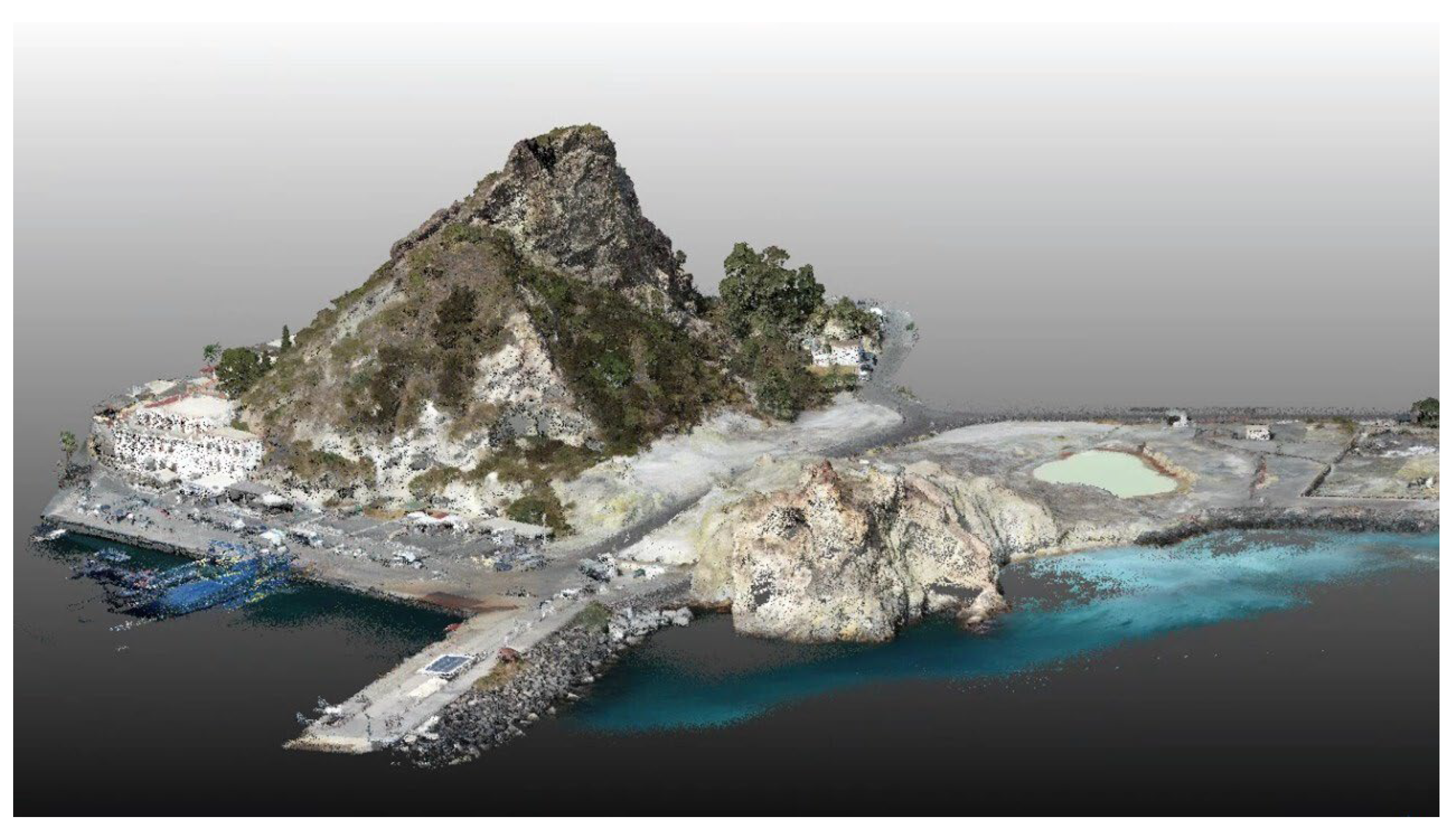
The combination of LIDAR data with other analysis techniques allows for a comprehensive and detailed view of the territory (
Figure 11).
3.1. Evolution of Fumarole Zones
From the beginning of the volcanic unrest in September 2021, part of the thermal surveys focused on the summit area of the Gran Cratere la Fossa. Throughout the entire crisis phase, six surveys were conducted using an infrared thermographic camera, mainly focused on this area. For the analysis and evaluation of temporal trends, a threshold temperature of 100 °C was chosen. This threshold was established due to the lack of condensation of vapor in the fumarolic gas exiting the vents, for temperatures above 100 °C [
21]. Surveys conducted with the infrared thermographic camera allowed the generation of georeferenced thermal orthophotos, subsequently calculating the surface areas with temperatures exceeding the selected target temperature.
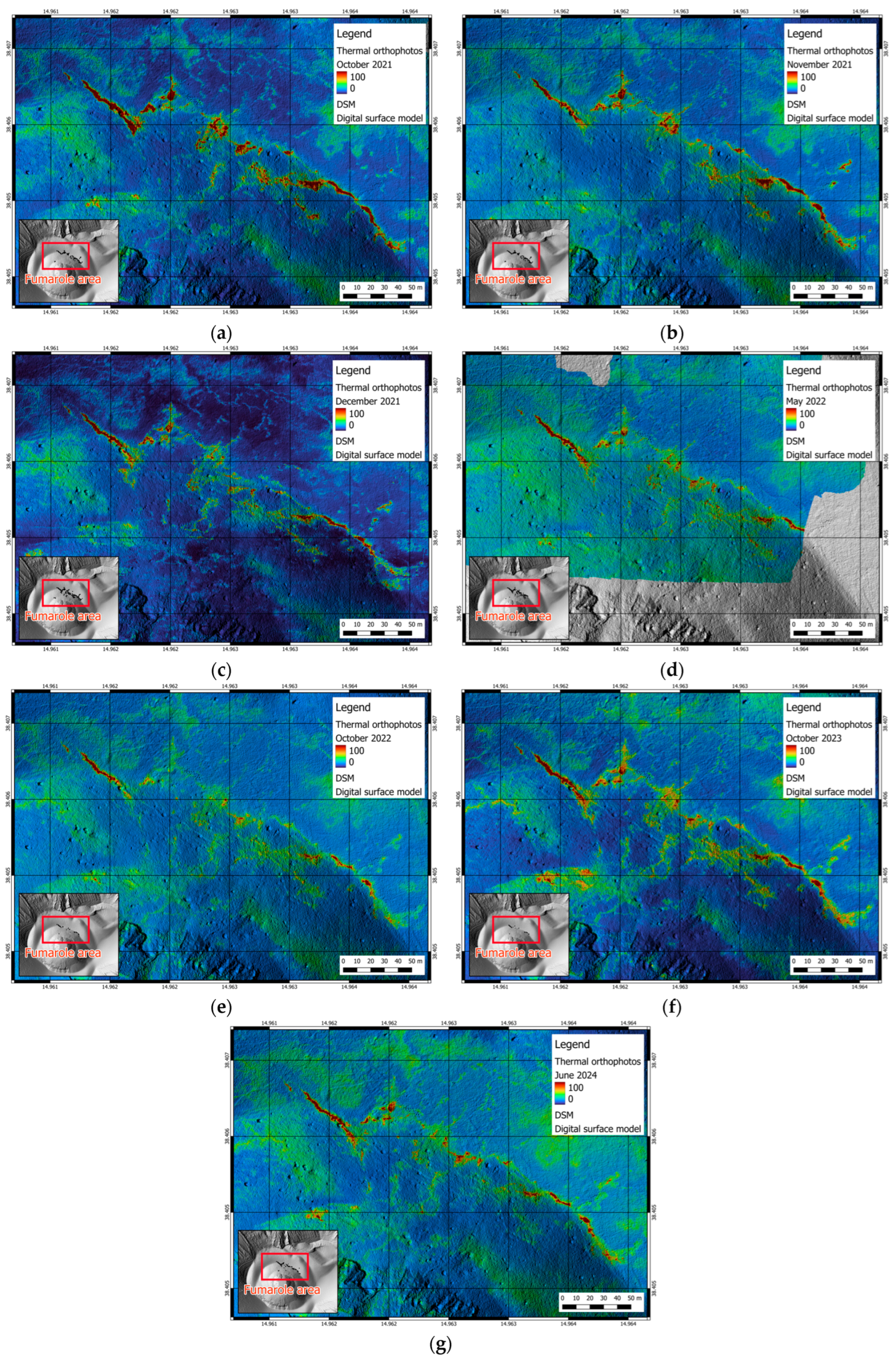
This process was possible due to the adoption of GIS advanced raster and vector management tools that allowed us to study the temporal trends in the fumarole area throughout the entire period. This analysis enabled the identification of periods of variation, with increases or decreases around fumaroles with temperatures above 100 °C. In October 2021 (
Figure 12a), at the beginning of the volcanic crisis, the areas with temperatures exceeding 100 °C covered an area of approximately 367 square meters. Over time, this surface area gradually decreased, recording a reduction of approximately 92% between the first survey in October 2021 and the survey conducted in October 2023 (
Figure 12b–f). Subsequently, the survey in June 2024 showed an increase in the areas with temperatures exceeding 100 °C (
Figure 12g).
Furthermore, the technique of surveying using a thermal sensor mounted on UASs has proven to be extremely effective and precise in the volcanic context and in the detection of fumarole zones. This surveying method is particularly advantageous during unrest situations and in contexts where in situ techniques are not feasible for safety reasons, as it allows control of the instrument from distances of tens of meters. Additionally, its application enables the continuous monitoring of the thermal conditions of the area of interest, allowing for a constant and detailed evaluation of the evolution of volcanic activity and variations in fumarole zones over time.
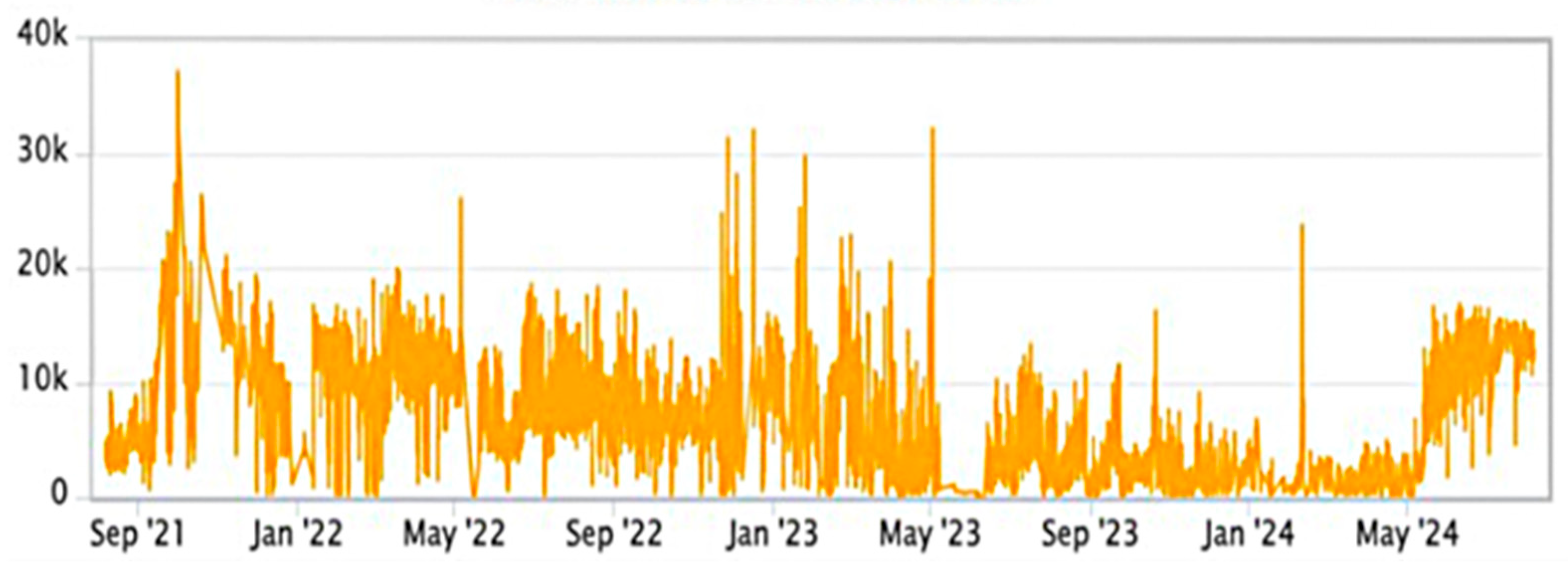
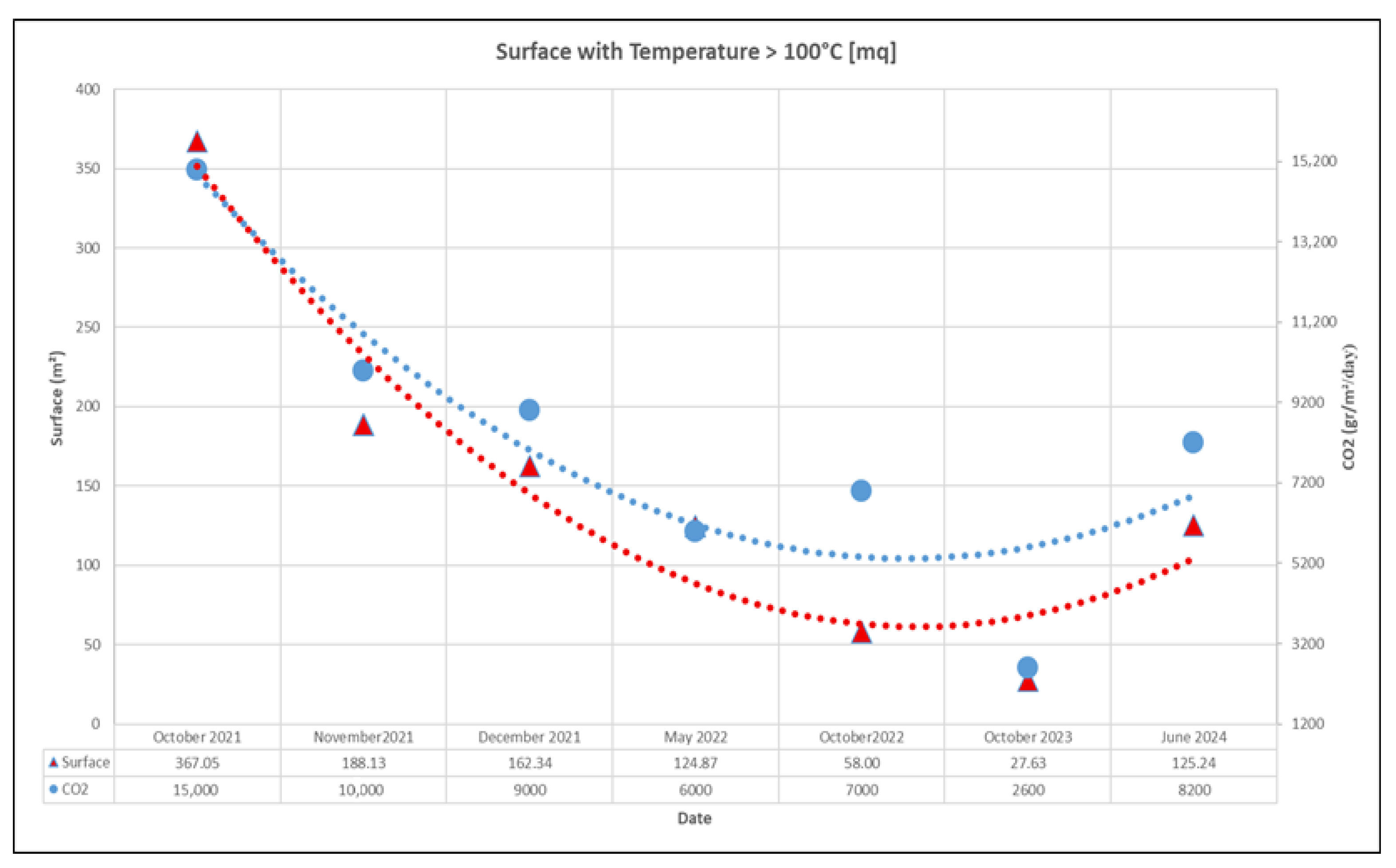
Areas with temperatures above 100 °C, measured using a thermal sensor mounted on a UAS, were compared with the areas of CO
2 emission recorded by the sensors of the diffuse CO
2 flow coming from the ground in the fumarolic area measured by the INGV instruments [
21] (
Figure 13 and
Figure 14).
In
Figure 15, the comparison between the two measurements shows a coherent trend between October 2021 and June 2024, with a major discrepancy due to unfavorable weather conditions that prevented a correct areal measurement. Indeed, the intense vertical degassing at the surface has obscured the source areas that are generally thermally mapped. This highlights the need to carry out the measurement in favorable wind direction conditions.
3.2. Evolution of Faraglione Zones
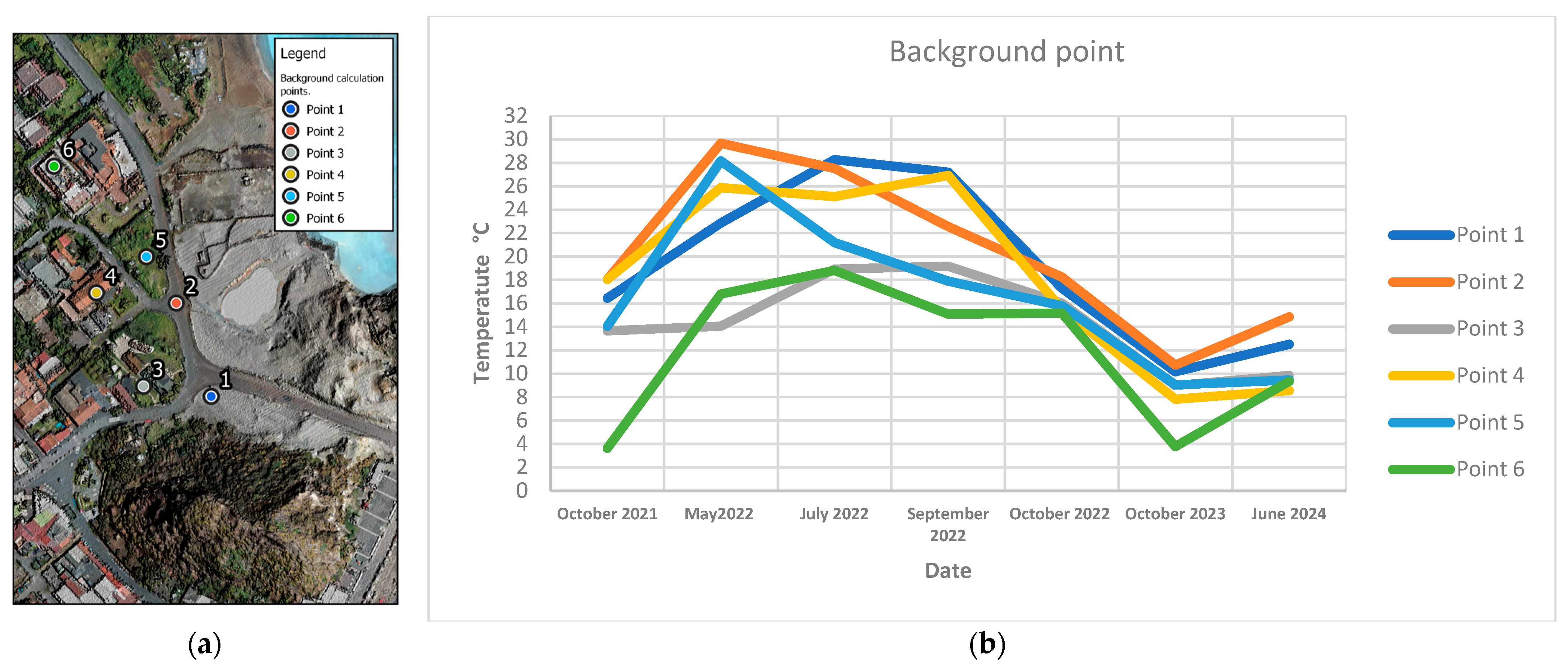
The second area where thermal surveys were focused is in the Faraglioni area. From these surveys, it was crucial to establish a background value as a reference point for thermal measurements (
Figure 16b). Different points were considered, and each measurement point was characterized by surfaces with different materials, such as loose soil, asphalt, external pavement tiles, terracotta roofing, grass, and flat roofing with white finish (
Figure 16a). After each survey, the value was calculated for each point, providing a stable reference point for analyzing temperature variations.
These data were then subjected to further analysis to exclude any outlier values, in order to obtain a more accurate estimate of the background temperature at each point. The background value thus represents an essential reference point for identifying thermal anomalies and evaluating potential areas of interest. In this context, its accuracy is crucial for a correct interpretation of thermal measurements and an accurate assessment of temperature variations in the studied environment.
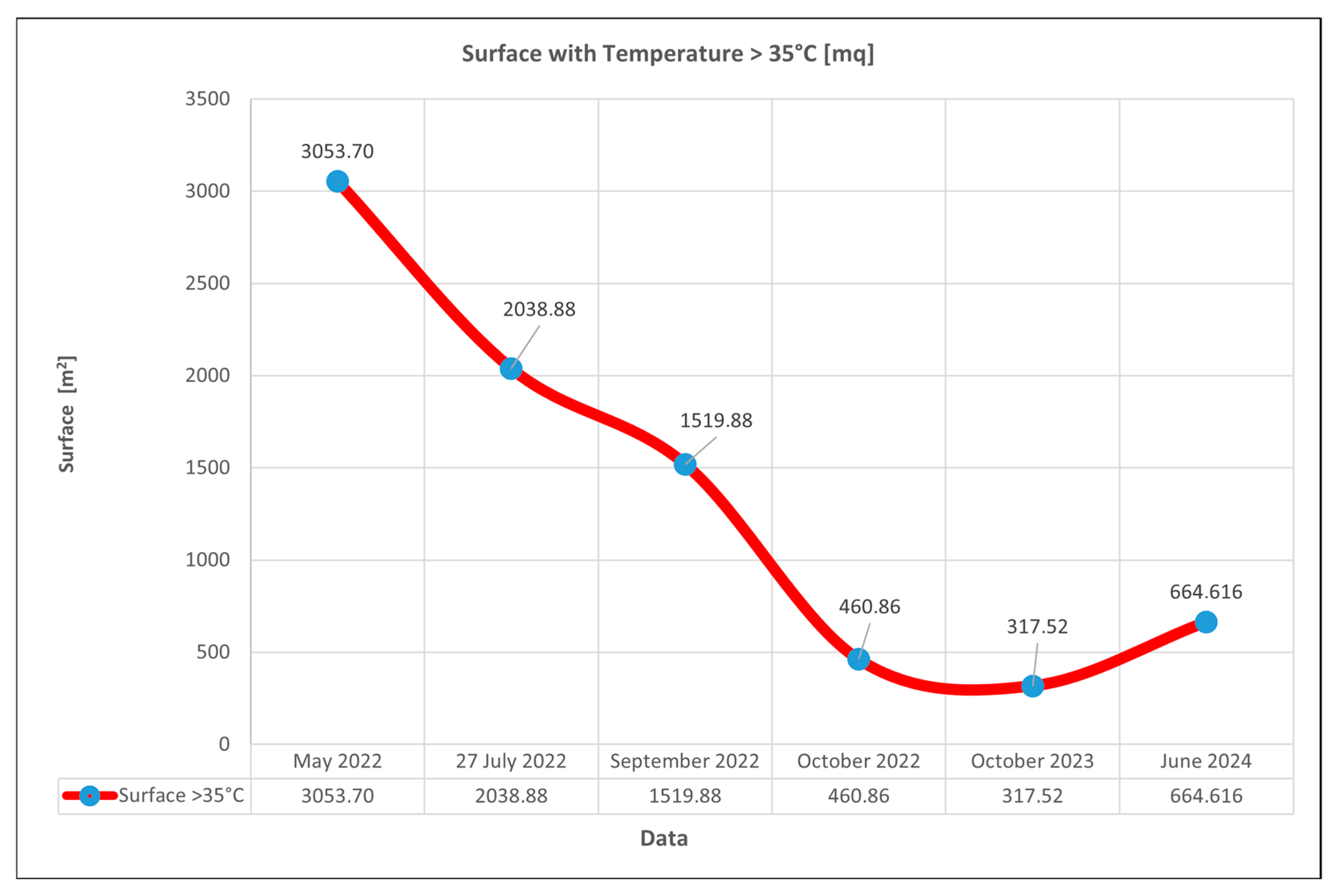
Subsequently, attention was focused on identifying anomalous areas with temperatures higher than the background value, potentially indicative of hydrothermal activity or other significant heat sources. These areas were identified using a critical threshold of 35 °C. The temperature of 35 °C could be chosen as a threshold because it represents a significant increase compared to the ambient temperature, which never exceeds 27 °C even in summer. This means that a temperature of 35 °C represents an increase of at least 8 degrees compared to the background temperature and an average of about 17 °C higher than the background temperature of all surveys.
Areas with temperatures exceeding this threshold were delineated and analyzed to understand their spatial distribution and thermal characteristics. Since the beginning of the event showing increased hydrothermal activity in May 2022, areas with temperatures higher than 35 °C were 3053.70 square meters, while, in October 2023, they decreased to 317.52 square meters, representing an 89% decrease in anomalous temperature areas (
Figure 17). The graph subsequently shows an increase in areas with temperatures exceeding 35 °C in June 2024. In fact, according to INGV instrumentation, a rise in geochemical parameters is observed [
22].
3.3. Thermal Monitoring in the Other Zones
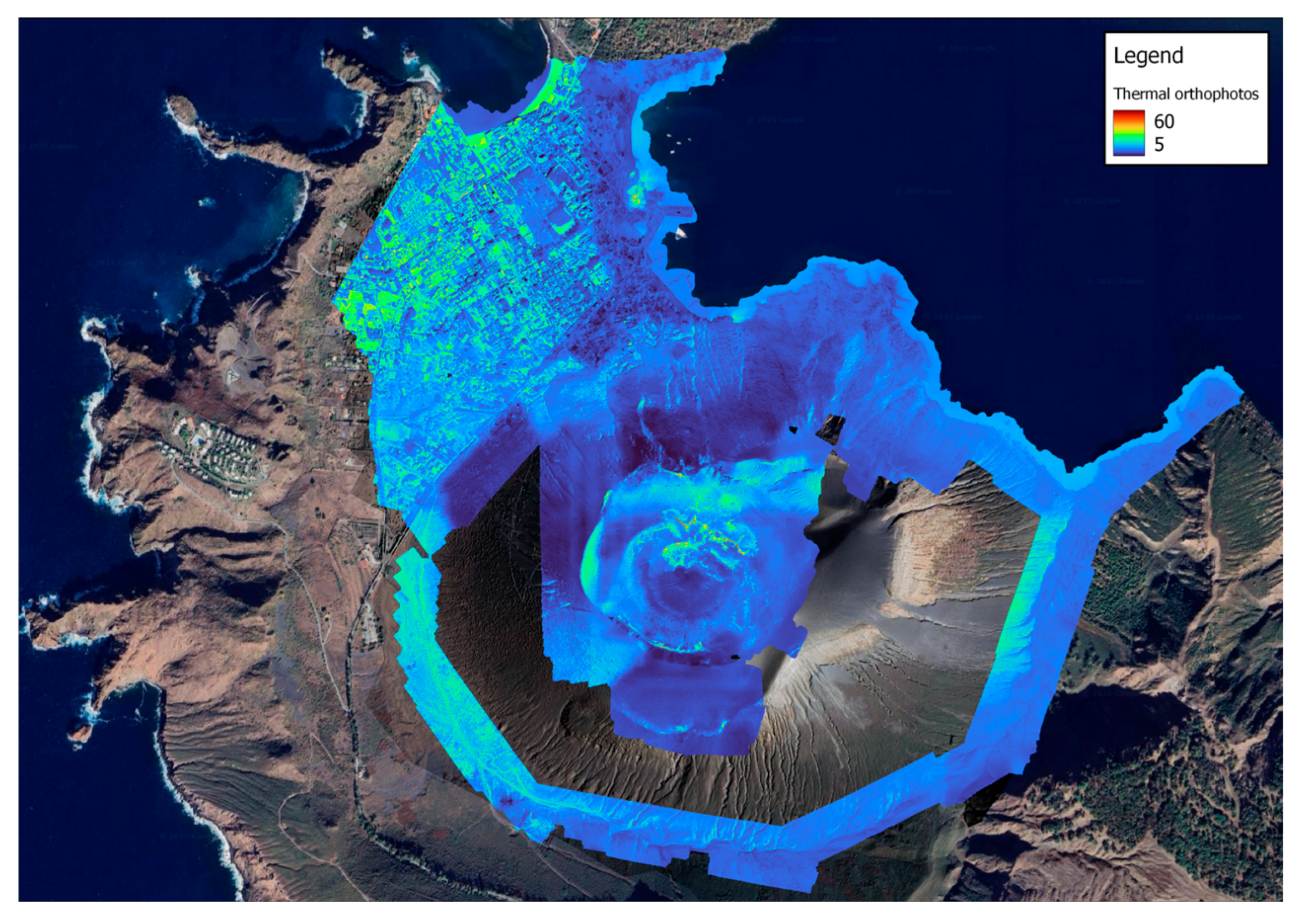
Given the effectiveness of the infrared thermal camera in detecting temperature variations even in areas adjacent to the coast, all the northern regions of the island of Vulcano, which face the sea, were investigated, as well as all the eastern, southern, and western areas located at the base of the crater (
Figure 18). This approach allowed for a comprehensive survey along the entire perimeter at the base of the crater.
The thermal mapping of Levante Bay (
Figure 19) revealed maximum apparent temperatures of approximately 24 °C in the active pool facing the beach and 22 °C near the Faraglione, where several isolated thermal springs (Polle) were identified. On the Faraglioni reliefs, temperatures reached 62 °C. All measurements have an estimated accuracy of ±2 °C.
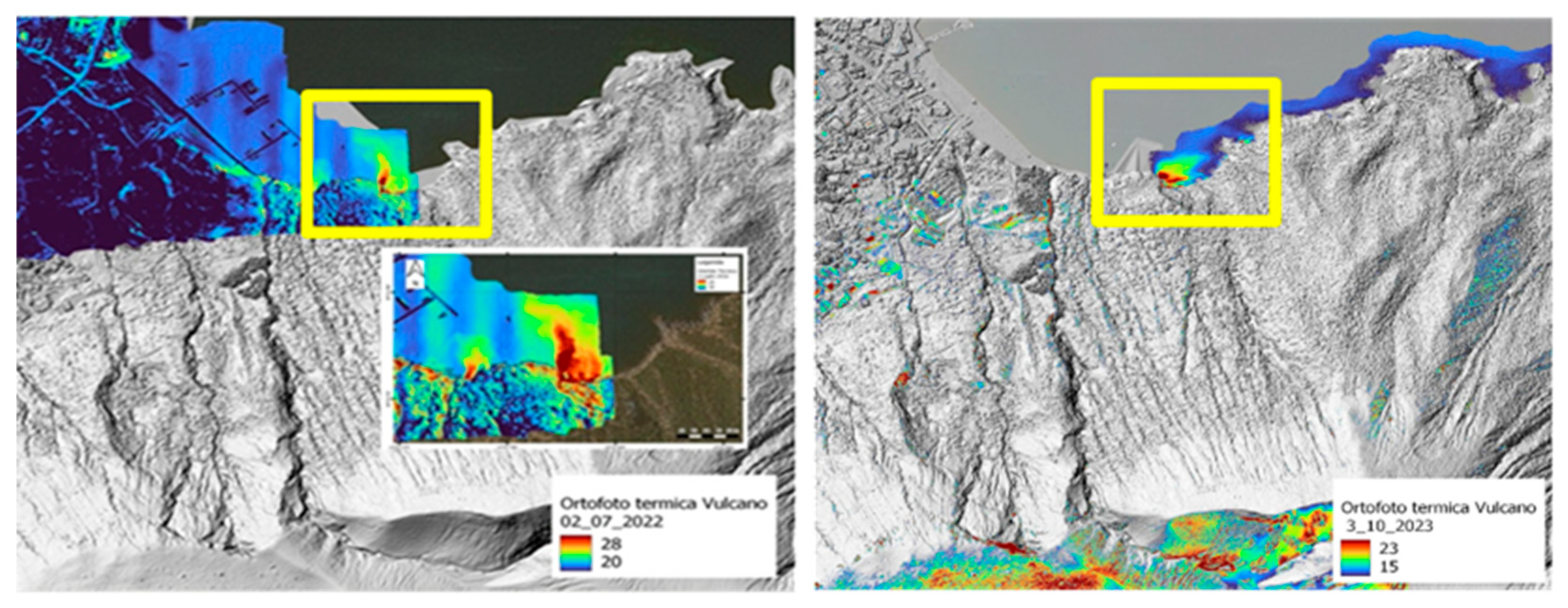
Some of the thermal imaging surveys were conducted in the hydrothermal area of the Faraglioni, with surveys carried out on various dates: May 2022, July 2022, September 2022, October 2022, October 2023, and June 2024.
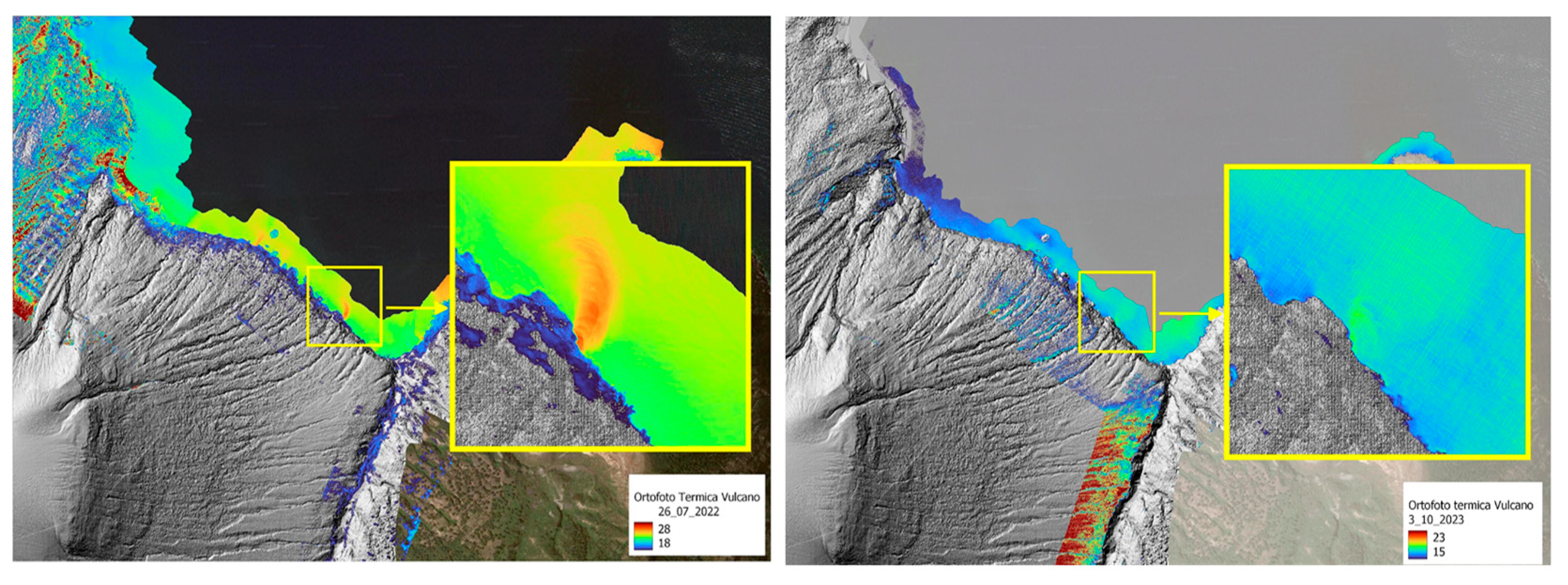
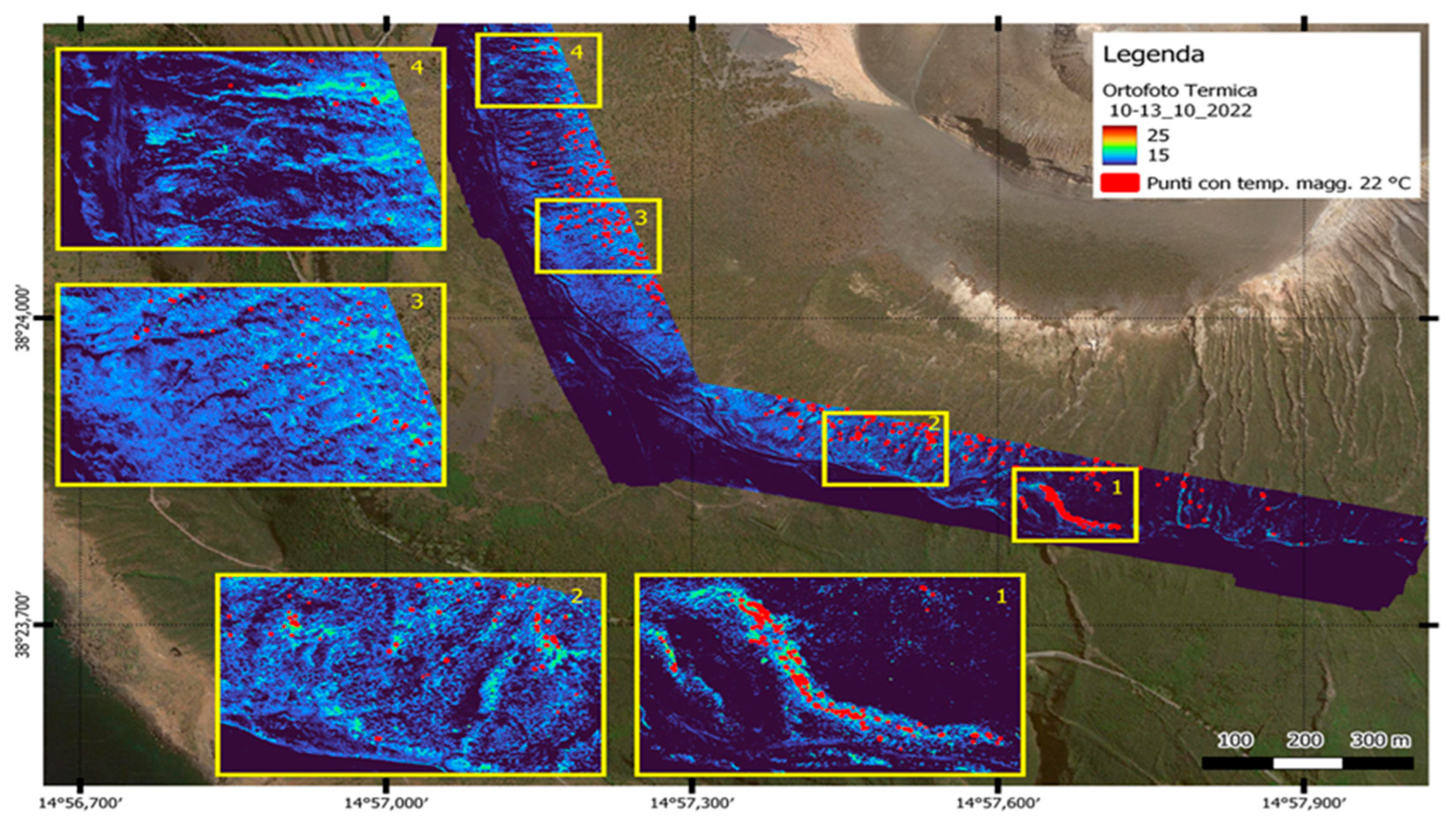
The surveys conducted using a thermal sensor mounted on board a UAS have yielded remarkable results, revealing hotspots extending from the area of Punte Nere (
Figure 20) to the ‘88 Landslide Zone and Valle Roja (
Figure 21). It has been possible to identify these hot zones at sea, as a result of the UAS system, which allows the real-time detection of remote areas that are difficult to monitor with conventional sensors [
29].
During the survey of all the other areas at the base of the crater, hotspots were also identified on land. In the Palizzi area (
Figure 22), points with thermal anomalies higher than the surrounding background were detected.
4. Discussion
The study conducted on the Island of Vulcano highlights how the use of a multi-sensor UAS system, integrating LIDAR, photogrammetry, and thermography technologies, represents an extremely effective strategy for monitoring volcanic phenomena in potential crisis situations. The use of UAS allows access to otherwise inaccessible or hazardous areas for personnel, ensuring continuous and safe data collection even under high volcanic activity conditions.
The data acquired reveals a significant correlation between the structural framework and the hydrothermal manifestations. The LIDAR-derived digital models provided a high-resolution mapping of rock fissures and fractures, which appear to act as the primary conduits for the uprising of volcanic fluids. Specifically, the thermal anomalies detected in the Faraglioni area (up to 62 °C) and the active pool in Levante Bay (24 °C) are not randomly distributed but are spatially aligned with the tectonic discontinuities identified through the morphological analysis. This integration allowed us to distinguish between geogenic thermal signals and false positives caused by solar heating, as a result of the precise overlap of 3D topography and thermal layers.
The adopted operational procedure, which includes pre-planned flights with UAS equipped with RTK systems, has demonstrated high robustness and data reliability. The optimized configuration of flight parameters (altitude, speed, and overlap) allowed for the acquisition of homogeneous, high-quality datasets, reducing positioning errors and ensuring accurate georeferencing. Compared to traditional ground-based or satellite monitoring, this approach offered a sub-decimetric spatial resolution that captured the fine-scale evolution of thermal “spots” (Polle), which would otherwise be averaged or lost in lower-resolution datasets.
Meanwhile, repeated thermal surveys over time revealed significant variations in active areas of the volcano. The detection of surfaces with temperatures exceeding 100 °C shows a trend consistent with CO
2 flux values in fumarolic zones [
30,
31], suggesting a strong coupling between the deep magmatic degassing and the surface thermal expression. The ability to quantify these temperature gradients over time provides a critical proxy for monitoring the state of unrest of the volcanic system.
However, repeated surveys have also highlighted operational limitations under adverse weather conditions. The phenomenon of vertical degassing, in particular, poses a challenge not only for flight stability but also for data accuracy due to “thermal masking.” The steam plume can attenuate the infrared signal, potentially leading to an underestimation of the actual ground temperatures. Consequently, it is recommended to conduct surveys in fumarolic areas during periods of lateral degassing or under specific atmospheric conditions to ensure the integrity of the thermal signal. In conclusion, a significant advantage of this methodology is the ability to explore remote areas that are difficult to reach with conventional instruments. The identification of thermal anomalies in different sections of the volcanic structure provides a more comprehensive view of the hydrothermal system’s dynamics, offering a robust framework for future studies and hazard management investigations.
5. Conclusions
The results of the work highlight the effectiveness of the surveys conducted using a combination of sensors mounted on UASs for the surveillance and analysis of morphological variations and thermal anomalies in a volcanic area during a phase of instability. The adopted methodology allowed for the acquisition of precise and georeferenced data over a temporal scale, enabling a detailed evaluation of the evolution of volcanic activity. The combination of LIDAR and thermal data provided a comprehensive view of volcanic dynamics, allowing for the identification of areas of potential risk and monitoring the development of activity over time. The multidisciplinary approach [
32] adopted has improved the understanding of thermal [
33] and morphological phenomena. LIDAR surveys provided high-resolution digital terrain models and were crucial for identifying terrain instabilities and experimenting with the difference between mechanical scanning LIDAR and Flash LIDAR technology. Furthermore, surveys were conducted in both RTK and PPK modes. From these surveys, it emerged that the distance between the reference mesh and the points of the cloud in the different surveys was as follows: with the Genius-16 LIDAR, on average, 0.02 m; with the DJI Zenmuse L1 LIDAR in PPK mode, on average, 0.03 m; and, with the DJI Zenmuse L1 LIDAR in RTK mode, on average, 0.03 m. Additionally, congruence between the different LIDAR surveys was calculated by measuring the distance between clouds, both in planimetry and in altimetry. The results in standard deviation led to approximately 8 cm in elevation and about 4 cm in planimetry. The use of thermal sensors mounted on UASs allowed for the continuous monitoring of extreme resolution, identifying and controlling hydrothermal activity and fumarole activity. Thermal surveys conducted from October 2021 to October 2023 monitored the entire fumarole zone on the Gran Cratere la Fossa, showing a significant decrease in areas with temperatures exceeding 100 °C, from about 367 m
2 to about 27 m
2; subsequently, the survey in June 2024 showed an increase in the areas with temperatures exceeding 100 °C. The latter were compared with areas of CO
2 constantly measured by INGV instruments installed on site, confirming the trend of thermal surveys by UASs. The use of thermal sensors also allowed for the investigation of the inhabited area with a particular focus on the Faraglioni area. From these surveys, the background value was calculated at different points, after which areas with temperatures higher than 35 °C were calculated, this temperature being considered sufficiently higher than the background to set it as the threshold temperature for thermal anomalies due to hydrothermal activity. In May 2022, when there was a manifestation of increased hydrothermal activity in the Faraglioni area, the surface with a temperature higher than 35 °C was about 3050 m
2, while, in October 2023, the areas had decreased to about 317 m
2, representing a decrease of approximately 89%. Surveys were also conducted in areas of difficult exploration, monitoring the entire coastal area of Punte Nere, Frana ‘88, and Valle Roja. Hotspots were identified throughout the coastal area, surveyed from July 2022 to June 2024. In conclusion, UAS surveys enable the remote control of instrumentation, facilitating the monitoring of areas that are difficult to reach using conventional sensors. Furthermore, during periods of increased volcanic activity, they allow for continuous and daily monitoring without adding risks to the technician in charge of the survey. In conclusion, investigations conducted using multi-sensor UASs represent an effective method for monitoring volcanic activity and contributing to the understanding of volcanic phenomena.



 ,
,