


Highlights
What are the main findings?
- This study presents a multi-year evaluation of automated water surface extraction methods by systematically comparing Sentinel-2-derived results with aerial orthophotos, Sentinel-1 SAR observations, and in situ water-level measurements.
- Automated threshold-based classification of commonly used optical water indices in Google Earth Engine produced water surface estimates highly consistent with manual delineation under cloud-free conditions, with only minor systematic differences.
What are the implications of the main findings?
- The results demonstrate that long-term monitoring of reservoir surface dynamics can be reliably conducted using freely available satellite data and cloud-based processing, substantially reducing the need for time-consuming manual mapping.
- The workflow is transferable and reproducible, making it applicable to other reservoirs and inland water bodies for hydrological analyses under varying environmental conditions.
Abstract
Remote sensing-based water body extraction is essential for monitoring hydrological dynamics, particularly in reservoirs with pronounced seasonal variability. This study evaluates automated surface water identification using multi-sensor satellite data, focusing on validation against hydrological observations. The workflow was implemented in the Google Earth Engine environment using Sentinel-2 multispectral imagery acquired between 2018 and 2023 and filtered for cloud cover below 20%. Water extent was extracted using commonly applied spectral indices, including the Normalized Difference Water Index (NDWI), Modified Normalized Difference Water Index (MNDWI), Automated Water Extraction Index (AWEI), and Water Ratio Index (WRI), and compared with water level records from the Veľká Domaša reservoir. The results show strong agreement between extracted water extent and water levels, with Spearman correlation coefficients ranging from 0.92 to 0.96 for all indices except AWEInsh, which exhibited higher variability likely due to sediment and vegetation influences. Maximum and minimum water extents (12.58 km2 and 9.04 km2) were consistent with observed hydrological trends. Validation using Sentinel-1 SAR data achieved an average Overall Accuracy of 98.6%, with VH polarization outperforming VV. Comparison with high-resolution aerial orthophotos revealed surface area differences of 0.20–1.26%. Automated thresholding produced results comparable to manual delineation, with minor and consistent deviations, confirming its reliability for repeatable water body extraction. Overall, the study demonstrates the effectiveness of spectral indices and automated approaches for long-term reservoir monitoring.
1. Introduction
Reservoirs are critical to a country’s water management system [1]. They are pivotal in hydrological cycles and environmental processes, significantly influencing ecosystems, biodiversity, agriculture, and human activities [2]. Their importance goes beyond providing drinking water and irrigation; they also serve as energy sources, offer flood protection, and support recreational activities [3,4]. In recent decades, the growing demand for water resources, combined with climate change, has heightened the need for efficient monitoring and management of these resources. Changes in the extent of surface water can serve as indicators of hydrological and climatic processes, such as droughts, floods [5], or long-term changes driven by human activities like dam construction or urbanization. Similarly, the profound impacts of climate change underscore the urgent need for accurate and effective monitoring of water bodies.
Traditional methods for monitoring water bodies, such as geodetic measurements, field surveys, or the analysis of historical records, provide high accuracy [6]. Monitoring inland waters and reservoirs in large, remote, and inaccessible regions using these approaches is costly and challenging [7]. In contrast, remote sensing tools offer an efficient alternative, enabling rapid, accurate, and cost-effective [8] monitoring of water bodies across extensive areas [9] with high temporal and spatial resolution [10]. Advancements in remote sensing technology have ushered human understanding of the Earth’s surface into a new era, facilitating dynamic monitoring of water bodies in lakes and the derivation of parameters in response to changing climatic and environmental conditions [9]. In recent decades, technological advancements in remote sensing have enabled non-contact observation of selected landscape features [11]. Among these features are surface water bodies such as lakes, rivers, and reservoirs, which are also the focus of this research [11,12]. Remote sensing methods enable the monitoring of water levels in reservoirs by estimating their surface area [13].
Modern techniques for processing remote sensing data include the use of multispectral and hyperspectral imagery, which allow analysis based on the spectral characteristics of water [14]. Various indices such as the Normalized Difference Water Index (NDWI) [2], Modified NDWI (MNDWI), Automated Water Extraction Index (AWEI), and Water Ratio Index (WRI) provide robust solutions for water extraction [15,16]. These indices exploit differences between the reflectance of water and the surrounding environment, which enables accurate identification of water bodies even in the presence of various atmospheric influences. Previous studies suggest that the choice of the appropriate index and its proper application play a decisive role in the accuracy of water body detection. For example, NDWI is widely used due to its simple computational requirements [17], while MNDWI provides higher accuracy in urbanized areas [18]. AWEI is advantageous in shadow elimination, but its performance decreases at high cloud cover values [19]. WRI, on the other hand, efficiently accounts for specific water properties in the context of the surrounding environment, making it suitable for various applications aimed at monitoring water bodies [20]. Nevertheless, each of these indices exhibits different sensitivity to sensory and environmental conditions, requiring individual binary thresholds optimization [21].
Thresholding refers to the process of classifying image pixels into “water” and “non-water” categories based on the intensity of the selected spectral index. This step represents a critical point in the processing chain, as a correctly set threshold significantly affects the resulting accuracy of the segmentation. These methods are generally histogram-based [22] and are particularly suitable for cases in which the intensity distribution exhibits a bimodal character, such as when applying the Otsu method [23]. However, in environments with heterogeneous land cover (e.g., urbanized areas, shaded banks), NDWI and other indices often generate mixed or false positive values, leading to an overestimation of water extent (so-called over-segmentation) [24]. Thresholding plays a crucial role in satellite image processing, particularly when there is a significant contrast in reflectance between water bodies and the surrounding terrain in specific spectral bands such as NIR or SWIR. In addition to the Otsu method, clustering algorithms are also applied in practice [25] (e.g., k-means, ISODATA), as well as methods based on the similarity of textural or spectral attributes [26] or adaptive and local thresholding techniques [27].
In this context, the Google Earth Engine (GEE) platform is playing an increasingly important role. Thanks to its cloud-based architecture, it enables efficient processing of large volumes of data and the development of custom algorithms [28]. GEE provides access to an extensive catalog of satellite imagery, including optical data from Sentinel-2 and Landsat, offers tools for creating advanced algorithms, and simplifies analysis thanks to its high computational power [29]. This platform enables the integration of data from multiple sources, thereby enhancing the accuracy and efficiency of analysis. Despite these advancements, challenges such as mitigating the effects of cloud cover and snow, as well as optimizing segmentation thresholds, remain important areas of research.
In water body research, Sentinel-2 satellite imagery is among the most frequently used data sources. The satellite carries a Multispectral Instrument (MSI), which captures high-resolution imagery across 13 spectral bands. Its high temporal frequency enables monitoring of both short-term and seasonal variations in water extent [9], which is particularly beneficial in regions with dynamic hydrological regimes or during extreme climatic events [30]. Therefore, these data represent a reliable and widely accessible source that, when combined with the analytical tools available on the GEE platform, provides a foundation for studying water bodies and tracking their spatiotemporal changes [31].
Radar imagery from the Sentinel-1 mission also plays a crucial role in monitoring the dynamics of water bodies. These images utilize Synthetic Aperture Radar (SAR) technology [32], which functions independently of daylight [33] and atmospheric conditions [34]. It makes SAR particularly suitable for validating results from optical sensors, especially under increased cloud cover. SAR sensors are sensitive to changes in the dielectric properties of the surface, which vary with soil and surface water content. The surface response, known as the radar backscatter coefficient (σ0), is influenced by several factors, including frequency, polarization [35], incidence angle [36], and surface characteristics such as roughness [37], structure, and moisture content [38]. Various techniques are employed to extract water bodies from SAR imagery, including manual thresholding of backscatter values [39], automated segmentation algorithms [40], clustering approaches, and both supervised and unsupervised classifications. Although Sentinel-1 SAR imagery is not the primary source for quantitative water extent analysis in the proposed extraction approach, its use to confirm the presence of water in cloudy or shadowed scenes is highly desirable. In combination with MSI imagery, SAR data provides a valuable tool for verifying and refining water masks derived from Sentinel-2 [41], especially under challenging conditions, ultimately enhancing the robustness and accuracy of the analyses.
Another key area of surface water monitoring research is the validation of water body extraction, which represents a crucial step in assessing the reliability and generalizability of the applied methods [42]. The most widely used classification accuracy metrics include Overall Accuracy (OA), Producer’s Accuracy (PA), User’s Accuracy (UA), the Kappa index, and other indicators accounting for precision and completeness. These metrics help quantify the detection performance of individual models and facilitate comparisons of their effectiveness across different environments and input data types. However, reliable validation requires high-quality reference data [43], which often comes from manually created masks, aerial orthophotos, LiDAR datasets [44], commercial satellite imagery, or other independent sources with higher spatial resolution.
In the Slovak context, a particularly relevant source of reference data includes orthophotos provided by the Geodetic and Cartographic Institute Bratislava (GKÚ) and the National Forest Centre (NLC), with distribution managed by the Geodesy, Cartography and Cadastre Authority of the Slovak Republic (ÚGKK SR). These datasets offer a spatial resolution of 0.25 m or better and undergo updates on a three-year cycle. A valuable complement is airborne laser scanning (ALS) products, which offer high positional accuracy, enabling detailed analysis of topography and water body boundaries. Together, these data provide a high-quality, openly available resource for research, particular value in assessing the extent and spatial dynamics of small or narrow water bodies [45,46].
In recent years, researchers have increasingly focused on temporal-dynamic validation, which evaluates not only the accuracy of a single image but also the stability and consistency of algorithms during extended monitoring periods. In this context, hydrological parameters such as water level, reservoir storage volume, and other in situ hydrological or geodetic measurements [47] have gained importance. Incorporating such data into the validation framework enhances the credibility of the results.
The primary objective of this study is to propose an automated approach for detecting surface water using GEE and to evaluate the effectiveness of various water indices for water body extraction. This study analyzes the extent of the water surface between 1 January 2018, and 31 December 2023. The study includes:
- Utilizing multispectral Sentinel-2 imagery to generate water bodies binary masks.
- Comparing the accuracy of water indices (NDWI, MNDWI, AWEInsh, AWEIsh, WRI) based on their resilience to atmospheric effects.
- Integration and analysis of SAR data from Sentinel-1 imagery to enhance extraction accuracy.
- Validating the results using orthophotos and quantifying discrepancies between extracted areas.
- Optimizing segmentation thresholds to enhance the accuracy and consistency of the method.
This study advances automated methodologies for surface water monitoring with direct relevance to environmental management and hydrology. Although researchers have widely applied individual water indices, threshold-based approaches, and Sentinel-2 data for surface water mapping, no study has systematically evaluated their long-term and comparative performance under varying hydrological and environmental conditions for large reservoirs in Central Europe.
The novelty of this study does not lie in proposing a new water index, but in providing a comprehensive, multi-year, multi-sensor evaluation of automated water surface extraction methods within a unified Google Earth Engine framework. By combining optical indices, Sentinel-1 SAR observations, orthophoto reference data, and in situ hydrological measurements, the study provides a comprehensive assessment of method consistency, accuracy, and operational applicability across diverse environmental and hydrological conditions. The results show that cloud-based platforms can effectively support reproducible, scalable analyses of surface water dynamics, thereby improving data accessibility and methodological transparency for research and practical applications alike. Moreover, the study emphasizes the added value of integrating multi-sensor remote sensing data with cloud computing workflows, offering a flexible and transferable framework that can be applied to other inland water bodies, regardless of their size or hydrological complexity. This approach not only strengthens confidence in automated water-surface extraction methods but also lays a foundation for future enhancements and broader applications in hydrological monitoring and water resource management.
2. Study Area
2.1. Geographical Characteristics
The Veľká Domaša reservoir is situated in Slovakia, specifically in the northern part of eastern Slovakia, in the depression of the Ondava Highlands (Figure 1). The entire area lies within the orographic unit of the Low Beskids, part of the Outer Eastern Carpathians, in the Ondava Highlands along the Ondava Valley. Administratively, it belongs to the Prešov Region, specifically to the districts of Vranov nad Topľou and Stropkov. Near the reservoir, the 49th parallel of northern latitude and the 21st meridian of eastern longitude intersect. The Veľká Domaša reservoir is the fourth-largest water body in Slovakia when compared to other water bodies in the country.
Figure 1.
Map visualization of the geographical location of the Veľká Domaša water reservoir [48].
2.2. Hydrological and Climatic Characteristics
The hydraulic structure comprises the Veľká Domaša reservoir, a hydroelectric power plant, a combined structure, and the Malá Domaša compensation reservoir. The dam of the accumulation reservoir is situated on the Ondava River at river kilometer 72.65. The Ondava River is part of the Bodrog River basin, which belongs to the Tisza River system, a left-bank tributary of the Danube River flowing into the Black Sea. The tributaries Ladomírka, Chotčianka, and Oľka are the most significant left-bank tributaries of the Ondava River [49]. The Topľa River is classified as a right-bank tributary and joins the Ondava River downstream of the reservoir. Construction of the Veľká Domaša reservoir took place between 1962 and 1967. For the construction of these waterworks to take place, six original villages were displaced: Veľká Domaša, Trepec, Petejovce, Dobrá nad Ondavou, Valkov, and Kelča. A total of 300 hectares of forest land and 1100 hectares of agricultural land were submerged [50,51]. All other reservoir parameters are listed in the table below (Table 1). The purpose of the Veľká Domaša reservoir is to collect water and increase the constant flow for the industrial plants Chemko Strážske and Drevokombinát Hencovce while also diluting wastewater flowing from these industries. It serves as a utility water reservoir and a popular spot for recreation due to its clear water and good location.
Table 1.
Hydrological conditions of Veľká Domaša water reservoir [52,53].
The Veľká Domaša reservoir is considered one of the cleanest and warmest Slovakia reservoirs. During the summer months, the average water temperature reaches 23 °C [54]. The annual average temperature in this area is approximately 7 to 8 °C. In the warmest month, average temperatures are around 23 °C, while in January, the coldest month, they drop to an average of −4 °C. February and March see the lowest precipitation levels in the region, whereas July and August record the highest. The average annual precipitation ranges between 600 and 650 mm. The entire area falls within a warm, moderately humid climatic zone characterized by cold winters. According to the Köppen climate classification, the area belongs to the humid continental climate (Dfb). These climatic conditions are influenced not only by the region’s geographic location but also by the reservoir altitude [55].
3. Materials and Methods
3.1. Materials
3.1.1. Sentinel-2 MSI Data
Regarding freely available multispectral optical data, Sentinel-2 satellite imagery from the Copernicus program represents a suitable data source, offering high temporal resolution and extensive spectral coverage [56]. However, a significant limitation of optical imagery is the presence of cloud cover in the images [57], which can severely distort analytical results [58]. For Sentinel-2 imagery, cloud cover appears in specific spectral bands, which may reduce the accuracy of data interpretation. A suitable method to address this issue is the application of cloud-masking techniques, which identify and remove cloud pixels from analyses [59,60]. This approach has proven particularly valuable in water resource monitoring, especially for flood observation [61,62] and long-term change detection [63], including changes in riverbed morphology and related phenomena [64,65]. Scenes affected by strong wind-induced surface roughness or visible sun-glint artifacts were visually inspected and, where necessary, excluded from the analysis to avoid bias in water surface extraction.
Periods characterized by increased water turbidity, particularly in shallow inflow zones of the reservoir, were also identified in the dataset. Elevated sediment concentrations are known to modify the spectral response of surface water and may reduce the contrast between water and surrounding land cover in optical imagery. These conditions were therefore considered during data selection and subsequent processing steps. The following table (Table 2) provides detailed information about the data used, including technical specifications and the criteria used to select the datasets for the analysis.
Table 2.
Technical specifications of Sentinel-2 data for research purposes [66].
The research utilized the dataset COPERNICUS/S2_SR_HARMONIZED, accessed through the Google Earth Engine platform (available at address: https://earthengine.google.com/). This dataset replaced the original version, COPERNICUS/S2_SR, starting in 2024. It represents a data catalog of Sentinel-2 imagery at product level L-2A, including ortho-rectified surface reflectance data with atmospheric correction [67]. These images have undergone additional processing to ensure better consistency across different temporal and spatial datasets, enhancing their quality and usability for long-term and complex analyses [68]. This process involves harmonization of spectral characteristics.
3.1.2. Aerial Orthophoto Images
Aerial imagery represents another valuable source for monitoring hydrological changes [69]. Its primary advantage lies in higher spatial resolution, which is beneficial for refining the obtained results [70]. For this research, aerial orthophotos were utilized and processed with the collaboration of the Geographic and Cartographic Institute Bratislava and the National Forestry Center of the Slovak Republic.
Between 2020 and 2022, the second cycle of aerial surveying was conducted in Slovakia, resulting in the highest level of aerial survey coverage. In 2022, aerial surveys were conducted over the eastern Slovak region, covering the same area as in the first cycle (2017–2019) and taking place during the growing season. The area covered by clouds and shadows cast did not exceed 0.01% of the total area. In the second cycle of orthophoto mosaic creation for Slovakia, with a spatial resolution of GSD 0.20 m, all required accuracy standards, as outlined in the Methodical Guide for Orthophoto Mosaic Quality Control, were met. The mean positional error (RMSExy) is 0.208 m, significantly below the acceptable value of twice the GSD [71].
In the orthophotos cloud cover is virtually invisible, with no visible connecting lines. All parameters of the aerial images used in this study are further specified in the table above (Table 3). The aerial survey data are freely available and provided at no charge, subject to compliance with licensing conditions of the GKÚ Bratislava (www.gku.sk)
Table 3.
Table of parameters of aerial orthophotos used in the research [71].
3.1.3. Sentinel-1 SAR Data
To compare the results of the proposed water body extraction approach, we utilized SAR data from Sentinel-1A and Sentinel-1B, which provide weather-independent and cloud-free imagery. These SAR data offer the advantage of being unaffected by cloud cover or illumination conditions. We obtained the imagery as Ground Range Detected (GRD) products, which are geometrically corrected to ground range and exclude phase information, making them suitable for analyzing radar backscatter. The acquisition took place in the Interferometric Wide Swath (IW) mode, with a swath width of approximately 250 km and a spatial resolution of 10 × 10 m per pixel. We applied VH (vertical transmit–horizontal receive) and VV (vertical transmit–vertical receive) polarizations. The C-band central frequency (5.41 GHz) enables partial vegetation penetration and ensures consistent signal acquisition under various weather conditions. We retrieved the SAR scenes from the Alaska Satellite Facility (ASF) Vertex portal (search.asf.alaska.edu) under the Copernicus programme. The following table (Table 4) presents the parameters of the SAR imagery used in this study.
Table 4.
Characteristics of Sentinel-1 SAR Imagery Used in the Study [72].
3.1.4. Hydrological Data
While this research does not focus on bathymetry or depth analysis, these data allow for exploring the correlation between water level elevation and the extraction of water surface areas from multi-sensor data. This correlation is crucial for validating the accuracy and reliability of the proposed methods for automated water detection. The data on water level elevation and volume of the reservoir from the Slovak Water Management Enterprise (SVP š. p.) will serve as the basis for this correlation, enabling a better understanding of the relationship between water level and water surface extent when using various water indices. Together, these inputs ensure a comprehensive evaluation of the proposed automatic water bodies extraction method.
3.2. Methods
The research methodology and its sequential steps are interconnected, as detailed in the following sections. These outline and define the procedures for data preprocessing and water surface extraction, as well as the methodology for evaluating the accuracy of the obtained results. The image (Figure 2) presents a flowchart that provides a clear overview of each step in the process.
Figure 2.
Workflow of water bodies extraction: From data acquisition to results interpretation, including preprocessing, spectral index application, validation, and accuracy assessment.
3.2.1. Water Body Extraction Using Multispectral Data
The process of extracting water surfaces focuses on identifying and delineating water bodies using optical remote sensing data. This process relies on applying water-specific spectral indices (Table 5) derived from mathematical models that exploit the unique reflectance properties of water across various spectral bands.
The Normalized Difference Water Index (NDWI) is a widely applied spectral index designed for detecting and delineating water bodies [73] in satellite and aerial imagery [74]. It enhances the visibility of open water features [75] by maximizing the contrast between water surfaces and surrounding land cover [76], particularly vegetation and soil [77]. NDWI leverages the differential reflectance of water in the near-infrared (NIR) and visible green spectral regions, utilizing the strong absorption of NIR radiation by water and its higher reflectance in the green band [78]. Due to its sensitivity to moisture content, NDWI is effective in detecting water bodies, monitoring temporal changes in surface water extent, assessing vegetation water content, evaluating plant health, and identifying surface water in wetlands. The key advantage of NDWI lies in its accuracy for water detection in remote sensing imagery [79]. However, its high sensitivity to built-up areas and complex land cover structures can lead to misclassification, particularly in heterogeneous environments.
Modified Normalized Difference Water Index (MNDWI) is a variant of the NDWI used for the detection of water bodies in satellite and aerial imagery. Compared to NDWI, this index is more effective as it reduces the influence of built-up areas [19,80], which often exhibit spectral characteristics like open water in other indices [81]. The MNDWI calculation uses the green and shortwave infrared (SWIR) bands [82].
Table 5.
Table of mathematical water indices used in this study, including their math formulas and sources.
The AWEIsh index is one of the water indices that can be employed to map lake areas. AWEIsh offers advantages over other water indices, such as NDWI and MNDWI, as it provides more accurate results and reduces interference from shadows and dark surfaces of buildings, effectively eliminating non-water pixels. The AWEIsh index is highly effective for monitoring water bodies in arid regions where surface water is scarce, and its conservation is crucial [85]. AWEInsh is an index capable of effectively removing non-water pixels and dark surfaces of urban structures [87].
The Water Ratio Index (WRI) estimates vegetation moisture content. This index calculates the ratio of combined spectral reflectance in the visible light range (green and red bands) to that in the shortwave and mid-infrared ranges. Previous studies have demonstrated the effectiveness of WRI in mapping moist areas and detecting water stress in crops or natural vegetation [88].
Optical indices reliably detected water depths greater than approximately 1 m, while very shallow zones below roughly 0.5 m were frequently underestimated due to bottom reflectance and mixed pixels. We classified water and non-water areas using thresholds defined separately for each index. To determine these thresholds, we tested the indices under different seasonal and hydrological conditions, considering variations in water level, turbidity, and lighting. We adjusted the thresholds for each index within a narrow range to ensure that water surfaces are consistently mapped throughout the time series. Threshold optimization was performed empirically by testing narrow threshold ranges for each index across different seasonal and hydrological conditions. For each image, threshold values were iteratively adjusted to minimize shoreline misclassification and mixed pixels in shallow zones while maintaining temporal consistency of extracted water surfaces. The final thresholds represent stable values that performed consistently across the full six-year time series rather than image-specific adaptive thresholds.
3.2.2. SAR GRD Water Extraction
Sentinel-1 SAR data were used mainly as an independent reference and to help detect water surfaces when optical images are limited, such as during cloud cover, windy conditions, or seasonal vegetation changes. To increase the reliability and independence of water surface detection, the methodology also incorporated radar imagery from Sentinel-1 satellites. The processing of Ground Range Detected (GRD) products involved several steps [89]. The workflow began with an update of orbital parameters to ensure accurate geolocation. Radiometric calibration transformed the radar signal’s amplitude values from dimensionless intensity units to physically meaningful backscatter coefficient values (σ0) [90]. The application of the Refined Lee filter reduced SAR speckle noise while preserving both edges and homogeneous areas without significant detail loss. Speckle noise was reduced using the Refined Lee filter with a 5 × 5 moving window, which adaptively preserves edges while smoothing homogeneous areas. Orthorectification, based on the SRTM 1 Arc-Second digital elevation model, eliminated geometric distortions caused by topography [91].
We separated water from non-water areas by applying empirically determined backscatter thresholds to both VV and VH polarizations. We chose the threshold ranges after analyzing how backscatter varied under different seasonal surface conditions and wind effects in the study area. This approach maintained conservative thresholds while accounting for seasonal changes in surface roughness, vegetation, and radar interactions with water.
This study analyzed GRD data both independently and jointly using VV and VH polarization configurations to increase sensitivity to water surfaces and to reduce false detections. Binary classification (water/non-water) was performed by thresholding backscatter coefficient values, with threshold ranges empirically defined according to the statistical characteristics of each image rather than a single, globally fixed value. The resulting water masks were subsequently used as an independent validation source and as complementary input for comparison with multispectral water-extraction results derived within the GEE environment.
Seasonal surface conditions and vegetation influenced our choice of VV or VH polarization. We mainly used VH during the growing season and on windy days because it reacts more to surface roughness and vegetation. VV worked better when vegetation was sparse, and the water surface was calm, which made the water stand out more clearly. We set these polarization rules before checking accuracy, and Section 4.2 shows that they worked well in practice.
3.2.3. Accuracy Assessment and Correlation Analysis
The study used correlation analysis to examine the statistical relationship between the extracted water surface area and hydrological data. Because the data distribution was uncertain and outliers could be present, the researchers selected Spearman’s rank correlation coefficient (ρ) as the appropriate method [92]. They carried out the calculations and analyses using a Python (ver. 3.13.5) script, which involved several steps, primarily merging the extracted masks with hydrological data. Next, they computed the Spearman coefficient between each tested index and the water level. Finally, the results were interpreted and visualized, including a graphical representation of the linear trend.
In addition to the correlation analysis, the study evaluated the effectiveness of the proposed approach through a quantitative accuracy assessment [93]. The evaluation directly compared the extracted masks with reference data (SAR images, aerial images). The study applied four standard accuracy metrics: Producer’s Accuracy (PA), User’s Accuracy (UA), Overall Accuracy (OA), and the Kappa coefficient, which are further detailed in the following table (Table 6).
Table 6.
Table of mathematical water indices used in this study, including their math formulas.
We assessed the consistency of manual and automated water surface extraction methods by performing a paired nonparametric statistical analysis. Because the paired water-area estimates did not meet the assumption of normality and the sample size was limited, the Wilcoxon signed-rank test was selected to assess whether there were systematic differences between the two extraction approaches. We analyzed Python, pairing water area estimates by acquisition date and water index. In addition, a Bland–Altman agreement analysis was applied to quantify the practical level of agreement between manual and automated extraction. This approach allows the identification of systematic bias and the estimation of the limits of agreement, providing insight into the operational interchangeability of the two methods.
4. Results
4.1. Results of Temporal Water Extraction
This subsection presents an analysis and results of temporal water body extraction based on spectral indices sensitive to surface water. It focuses on quantifying the extent of water bodies across different periods, with the results derived from a long-term six-year dataset encompassing various seasonal conditions. Between 2017 and 2023, 177 satellite images meeting the criterion of maximum cloud cover of 20% were generated. Subsequent filtering selected images with the lowest cloud cover and without significant influence from snow and ice cover. The final dataset consists of 49 images, representing 245 different records of water body extent (Table 7).
Table 7.
Criteria for selecting Sentinel-2 images for temporal water extraction analysis.
The analysis of the seasonal distribution of available images shows a significantly lower representation during winter months, associated with increased cloud, snow, and ice cover. For example, no image from January was suitable for processing. Conversely, most usable satellite imagery was acquired during the vegetation period, providing conditions for water body extraction. The applied water indices range from −1 to 1. For accurate surface water detection, it was necessary to establish thresholds for classifying water pixels (Figure 3). This study found that a threshold of zero was optimal for NDWI, MNDWI, AWEInsh, and AWEIsh indices. For the WRI, the threshold was 1, since its range is 0–3; values ≥ 1 indicate water bodies, as discussed in the methodological section.
Figure 3.
Graphical comparison of water indices and original images in water surface detection.
The evaluation of the data regarding the water level elevation relative to the crown of the dam and the volume of the water column in the reservoir shows that the maximum water level occurred on 5 April 2018. The water level reached a value of 161.80 m above sea level. On this day, the reservoir contained its highest volume of water, totaling 150.41 million cubic meters. In contrast, the minimum water level occurred on 8 October 2022, at 153.97 m above sea level, with the water volume in the reservoir at 68.75 million cubic meters. These findings suggest that the reservoir reached its highest levels in the spring of 2018 and its lowest in late autumn 2022 in the analyzed period (Figure 4).
Figure 4.
Annual water extent of the Veľká Domaša reservoir from 2018 to 2023 derived using 485 NDWI. Light areas indicate the maximum water levels, and dark areas indicate the minimum water levels for each year.
An analysis of water body extraction results using various spectral indices indicates the consistency of detected reservoir maxima within the observed period. Specifically, results obtained from NDWI, MNDWI, AWEIsh, and WRI indices on 5 April 2018 confirm the presence of a hydrological maximum, with recorded water surface areas ranging from 12.41 km2 to 12.58 km2. However, the AWEInsh index shows a discrepancy, with the maximum detected water extent recorded on 1 May 2023 (Table 8). This divergence may indicate a different sensitivity of AWEInsh to spectral characteristics of water under varying hydrological parameters and atmospheric conditions [94].
Table 8.
Consistency of dates for maximum and minimum water surface extent and water level based on Sentinel-2 derived indices, except for the AWEInsh index.
A similar pattern appears when identifying the minimum water surface extent. The hydrological minimum, recorded on 8 October 2022, aligns with water body extraction results using NDWI, MNDWI, AWEIsh, and WRI indices. Conversely, the AWEInsh index shows higher variability across the whole observation period, which may be due to its unique computational methodology and sensitivity to factors such as sedimentation, vegetation cover, or water pollution [95,96].
The results of the correlation analysis indicate a significant relationship between water level elevation and water indices derived from Sentinel-2 imagery. The Spearman correlation coefficient (Figure 5) for most tested indices (NDWI, MNDWI, AWEIsh, and WRI) ranged from 0.92 to 0.96, suggesting a high level of reliability in monitoring water surface changes, as corroborated by this study [97]. The stronger correlations observed at higher water levels reflect more homogeneous and continuous water surfaces, which are more accurately delineated by spectral water indices. In contrast, lower water levels expose sediment-rich, shallow nearshore areas, leading to increased spectral mixing and reduced correlation.
Figure 5.
Correlation analysis between Veľká Domaša water level data and the water surface extent.
In contrast, the AWEInsh index exhibits higher variability [98] and a lower correlation with water level elevation, indicating its distinct sensitivity to hydrological and atmospheric factors. The lower correlation of AWEInsh is primarily attributed to its sensitivity to suspended sediments and emergent vegetation in shallow near-shore zones. Increased turbidity elevates SWIR reflectance, while partially submerged vegetation alters spectral contrast, leading to over- or under-segmentation of water pixels. These effects become more pronounced during low water levels when sediment exposure increases. These findings align with previous studies that highlight the limitations of the AWEInsh index for detecting water bodies in complex environments [76]. However, AWEInsh produced competitive results under certain conditions, though its performance showed greater variability in shallow, sediment-influenced areas than NDWI and MNDWI. Regression analyses confirm a linear relationship between water surface area and water level elevation, with NDWI and MNDWI yielding the most accurate results [99,100]. These findings underscore the importance of selecting an optimal index and threshold value for precise water body extraction in specific conditions.
The analysis of the discrepancies between the various indices used for water body extraction revealed the highest deviation between the masks generated using the AWEInsh and MNDWI indices. This discrepancy reached 1.35 km2, which corresponds to a percentage variability of 10.71%. Excluding the AWEInsh index, which systematically presents more outlier values than the other tested indices, the maximum difference between the extracted water body extents would reduce to just 1.30%.
The comparison of water surface extent with data on water level elevation and reservoir volume indicates a high degree of accuracy of the generated binary masks. The consistency of results between the proposed extraction approach and reference data on water level and reservoir volume highlights the potential of using water indices as a reliable tool for monitoring water bodies, particularly in regions characterized by significant seasonal variations.
4.2. Comparison and Validation of Automatic Extraction Results with SAR Images
In this section, the authors compare the performance of the proposed automated water surface extraction approach with results from the analysis of dual-polarization SAR imagery. The goal of this comparison is to validate the accuracy and reliability of the proposed method. This analysis uses SAR images from the Sentinel-1 satellite, ensuring temporal synchronization with multispectral imagery from Sentinel-2. This dataset includes 18 Sentinel-1 SAR images with matching acquisition dates. The analysis incorporated both polarization configurations, specifically VV and VH.
The comparison relies on reference data from water surface extraction using four spectral indices: NDWI, MNDWI, AWEIsh, and WRI. The study excludes the AWEInsh index based on findings from the previous section. The analysis assesses differences between extracted water masks through a differential approach. The following differential map (Figure 6) illustrates one of the comparisons and its results.
Figure 6.
The differential analysis shows changes between the reference data and the predicted water surfaces. Blue indicates newly formed water bodies (false negatives), red marks areas where water has receded (false positives), and white represents unchanged areas. This image, from 27 March 2021, demonstrates that using the VV polarization configuration is particularly advantageous during the non-vegetation period.
The following analysis evaluates the seasonal behavior of VV and VH polarizations in relation to the selection criteria defined in Section 3.2.2. The extraction results from VH-polarized SAR images demonstrated higher reliability during the vegetation growing season (approximately May to September in eastern Slovakia) and periods of increased wind activity, as corroborated by previous studies [101]. Conversely, extraction using VV polarization showed greater accuracy in areas with higher soil moisture on the exposed reservoir bed or in regions with sparse vegetation, consistent with findings reported in [102] and with the predominance of volume scattering effects [103]. Selected images revealed areas with missing pixels within the water surface, attributable to specific characteristics of SAR signal backscattering [104] and its interaction with the water surface, influenced by wave dynamics. This phenomenon depends on prevailing meteorological conditions. Among the systematic deficiencies of water masks derived from Sentinel-1 imagery is the omission of pixels in inflow regions and along reservoir shorelines, a pattern also confirmed by other studies [105,106].
In contrast, areas with steeper shorelines exhibit an apparent increase in water extent, likely due to the local incidence angle of the radar signal for the given image, as documented in previous research [107,108]. Considering the aforementioned factors, validation of the results obtained was essential through accuracy assessment methods. This analysis was conducted based on three representative images, with the evaluation:
- Extraction of water bodies across different seasons (spring, summer, autumn),
- Variability in the reservoir’s water level, including maximum and minimum values,
- Both types of satellite orbital passes (ascending and descending),
- Quantification of the maximum percentage deviations of the extracted water surface compared to the mean automated extraction derived from Sentinel-2 images, where the observed deviations ranged between 3.13% and 6.71% for both polarization types.
Considering these criteria, the analysis utilized images from 6 June 2018, 1 November 2019, and 27 March 2021. A total of 1,458,535 pixels were processed in this analysis to compute accuracy metrics for individual experimental scenarios. The following table (Table 9) summarizes the accuracy assessment of the water surface extraction results and their validation within the context of the proposed automated approach.
Table 9.
Accuracy assessment of water body extraction for different periods and polarization types about reference masks of automated approach.
The analysis of the results shows that VH polarization generally produces slightly more accurate outcomes than VV across the observed water surfaces, especially during the vegetation period. Increased variability in VH backscatter suppresses false reflections and enhances contrast between water and vegetated land. Seasonal differences influence classification performance: VV tends to perform better outside the vegetation period, likely due to reduced volumetric scattering, whereas VH performs better under vegetated conditions. Several earlier studies [109,110] support this seasonal behavior.
The quantitative evaluation reveals that the average Overall Accuracy reached 98.60%, with Producer’s Accuracy ranging from 81.90% to 93.40%. The user’s accuracy remained comparable, indicating consistent classification. In all cases, the Kappa coefficient exceeded 0.82, indicating a high level of agreement between the extracted water bodies and the reference data. These findings align with previous research [111,112], which also emphasizes the advantage of VH polarization under vegetated conditions, reinforcing the seasonal dependence observed in this study.
4.3. Comparison and Validation of Automatic Extraction Results with Aerial Orthophotos
In the multitemporal analysis of water surface extent, orthophoto images do not provide a stable, unequivocal reference, as they depict the area’s condition at a specific acquisition date. For the Veľká Domaša reservoir, orthophoto images were obtained from the ZBGIS map client, with individual orthophotos georeferenced to the respective map sheet layout and aligned to three acquisition dates: 4 August 2022, 5 August 2022, and 27 August 2022. Aerial imaging was not uniformly consistent in terms of temporal coverage across the entire area of the Veľká Domaša reservoir, necessitating comparisons of water surfaces for specific localities based on precise acquisition timing data. The water surface comparison relied on Sentinel-2 imagery, with polygons representing the water body extent for each period. To precisely delineate the study area, the process involved using a Google Earth Engine script to analyze and visualize the acquisition locations, focusing on images from 4 and 5 August 2022. The analysis then quantified the surface water area in square kilometers. The same methodology was applied to the 27 August 2022, image, where water body extraction relied on an NDWI-based masking approach after setting a threshold. The analysis determined the water surface extent from orthophoto images for 4 August 2022 (Figure 7) and 27 August 2022.
Figure 7.
Sentinel-2 water surface extraction using NDWI. The left image displays the study area with loaded shapefiles outlining aerial image acquisition zones in GEE. The right image presents the extracted water surface, aligned with orthophoto-derived shapefiles dated 4 August 2022.
The analysis of the water surface mask from 27 August 2022, within the defined area shows that, based on Sentinel-2 images, the total area is 8.374 km2, while for orthophotos, this value is 8.358 km2 (Figure 8). The percentage difference between these values is 0.20%, equating to a difference of 1.66 ha (16,560 m2). These results suggest the high accuracy of the applied water surface extraction approach.
Figure 8.
Visual comparison of water surface extraction results for selected parts of the Veľká Domaša reservoir based on Sentinel-2 imagery and orthophoto data for 4 August and 27 August 2022. Quantitative area differences are reported for the entire reservoir.
For the image from 4 August 2022, the water surface area based on Sentinel-2 was calculated as 0.631 km2, while the orthophotos provided an estimate of 0.639 km2 (Figure 8). The percentage difference between these values is 1.26%, indicating a difference of 0.81 ha (8050 m2). Relative to the total surface area of the Veľká Domaša reservoir, the deviation for this date is slightly higher.
The higher percentage deviation for 4 August 2022, image is mainly associated with the presence of narrow tributary inflow zones and shallow marginal areas characterized by elongated and fragmented water body morphology. These zones are accurately captured by high-resolution orthophotos but are partially omitted in Sentinel-2 imagery due to mixed pixels and spatial resolution limitations. Sentinel-2 therefore underrepresents narrow shoreline features, particularly in sediment-rich near-shore environments. Another possible factor contributing to the discrepancy is the temporal mismatch between the data sources—some parts of the images correspond to 5 August 2022, but Sentinel-2 images are unavailable for this date. This temporal discrepancy could affect the resulting extracted water areas.
The quantitative assessment of accuracy between the Sentinel-2 image mask and the predicted mask derived from aerial imagery reveals that the highest indicator is Overall accuracy, reaching 99.70% for the images from 27 August 2022, while the lowest value is observed for Producer accuracy (97.30%) for the MSI images from 4 August 2022. These results confirm the high accuracy of the proposed water surface extraction method, which the analysis of aerial orthophotos also supports.
4.4. Comparison of Manual and Automated Threshold Segmentation Approaches
Based on data from a previous study conducted in 2022, which analyzed hydrological changes in the reservoir using a combination of NDWI and MNDWI water indices, these indices proved to be reliable tools for determining the extent of water surfaces. These data were derived from binary masks created through manual thresholding in the open-source SNAP (ver. 9.0.0) software environment, utilizing multispectral Sentinel-2 images of the same product level. This processed dataset provides a suitable reference framework for comparison with binary masks generated using automated methods.
The table below (Table 10) presents the extent of the water surface derived from binary masks. These masks were created by manually setting thresholds in the SNAP software environment and using automatic or semi-automatic thresholding in the Google Earth Engine environment. The comparison highlights the differences between the two approaches. The comparison highlights the differences between the two approaches. The analysis includes six selected dates from 2019 and 2021, focusing on water surface extents. The table provides data on the acquisition date, selected identifier, water surface areas (in square kilometers), and their percentage differences. The table contains data on the acquisition date, selected identifier, water surface extents in square kilometers, and their percentage differences. A histogram (Figure 9) shows the deviations more clearly.
Table 10.
Numerical comparison of reservoir water level ranges based on manual and automatic thresholding approaches and their mutual difference for three selected periods in 2019 and 2021.
Figure 9.
Visualization of water surface extents based on NDWI and MNDWI indices using manual and automated threshold segmentation approaches.
The results indicate that data extracted using automatic or semi-automatic thresholding are highly consistent with manually delineated water surfaces, which agrees with previous studies [113,114]. The maximum observed percentage deviation reached 3.73%, with an average deviation of 1.89%, confirming that both approaches provide reliable and precise water surface estimates. All deviations were positive, suggesting that manual threshold adjustments tend to slightly overestimate water, particularly along shallow areas and mixed shoreline pixels [115].
While the observed differences in water surface extent are visually minor (Figure 8 and Table 10), their statistical relevance was formally evaluated using a paired non-parametric Wilcoxon signed-rank test applied to water area estimates derived from identical acquisition dates and water indices. The test revealed statistically significant differences between the two approaches (p < 0.001), reflecting a consistent directional bias rather than substantial absolute discrepancies. Specifically, the automated method tended to yield slightly lower water-area estimates than manual delineation.
To further evaluate the practical agreement between the two extraction approaches, a Bland–Altman analysis was conducted. The results indicate a slight mean bias of 0.19 km2, with a range of −0.002 km2 to +0.385 km2. Considering the typical reservoir surface area of approximately 10–11 km2, these differences correspond to less than 2% of the total area. This narrow range of disagreements confirms a high level of consistency between manual and automated extraction and supports the operational interchangeability of both methods for long-term reservoir monitoring.
5. Discussion
This study demonstrates how spectral indices, and automated methods can be effectively applied in the GEE platform to extract surface water bodies, while specifically addressing seasonal and interannual water level dynamics. The results confirm a high level of reliability in monitoring water surface changes, as the spectral indices NDWI, MNDWI, AWEIsh, and WRI exhibited strong correlations with actual reservoir water levels. Spearman’s rank correlation coefficients fall within the range of 0.924 to 0.962, confirming the strength of these relationships. These findings significantly contribute to the effective monitoring and management of water resources, particularly in the context of shifting climate regimes and increasing demands for the sustainability of surface water supplies.
Although threshold-based automated water indices provide high accuracy and temporal consistency, their performance decreases in shallow, sediment-rich, and morphologically complex shoreline zones due to mixed pixel effects and bottom reflectance. Fixed-threshold approaches are also sensitive to seasonal variations in turbidity and vegetation cover, requiring empirical tuning. Compared to recent machine-learning and deep-learning approaches reported in the literature, index-based methods offer higher transparency and lower computational demands but lack adaptive learning capabilities for complex spectral environments.
Spatial heterogeneity within the reservoir further influenced extraction performance. The most stable and accurate water surface delineation occurred near the dam area, where open-water conditions remained spectrally homogeneous throughout the monitoring period. In contrast, the inflow zones exhibited higher variability due to shallow depths, sediment deposition, and intermittent vegetation exposure. These transitional areas were more prone to spectral mixing, resulting in locally increased discrepancies between indices and reference observations. This confirms that surface water extraction is most challenging in dynamic nearshore environments, while deeper reservoir sections provide the most reliable estimates.
Localized false positive detections were primarily observed along the southern reservoir margins in proximity to the dam structure. These areas corresponded to terrain shadowing effects caused by steep surrounding slopes during periods of low solar elevation. Comparison with Sentinel-1 SAR-derived water masks confirmed that these shadowed zones did not represent actual water surfaces but rather optical artifacts. The effect diminished during summer acquisitions with higher sun angles, supporting the interpretation that shadowing—not hydrological change—was the dominant source of these discrepancies.
A critical component of the research process involved optimizing threshold values, which strongly influence the accuracy of water extraction, as demonstrated in previous studies [116,117]. In the case of the AWEInsh index, significant variability in the detected water bodies was observed depending on the selected threshold value [118]. The image presented a few lines below (Figure 10) illustrates the importance of choosing an appropriate Otsu threshold to ensure accurate water extraction. The water mask derived from the AWEInsh index, based on a satellite image from 8 July 2023, was excluded from further processing, despite the cloud coverage on the image being below 20%. With a threshold of −0.3, the number of positive pixels representing the water surface was insufficient (left image), whereas applying a threshold value of −0.4 led to the misclassification of cloudy and shadowed areas as water bodies (right image). The same undesirable trend persisted across the entire threshold range from −0.3 to −0.4. It has resulted in the generation of so-called false-positive pixels, indicating that the AWEInsh index cannot adequately eliminate shadow effects—an essential limitation. This example demonstrates that non-automated threshold selection does not necessarily improve the accuracy of water extraction. Ultimately, the segmentation accuracy primarily depends on the quality of input data and the mathematical processing methods applied.
Figure 10.
Comparison of water masks derived from the AWEInsh index for a satellite image from 8 July 2023, using different threshold values. (Left): Water mask with a threshold value of −0.3, where the algorithm detected too few pixels representing water surfaces. (Right): Water mask with a threshold value of –0.4, where the algorithm misclassified areas with clouds and shadows as water surfaces (marked with red rectangles).
Another important finding concerns the behavior of individual indices under varying atmospheric and seasonal conditions. While the NDWI and MNDWI indices produced stable results even under increased cloud cover, the AWEInsh index showed higher sensitivity to clouds, shadows, sedimentation, and vegetation cover, as confirmed by other studies [119]. In extreme cases (e.g., winter imagery or the presence of snow), false detection of snow as water surface occurred. This false detection was most pronounced when using the MNDWI, a finding also reported by other authors [120]. On the other hand, the WRI effectively accounts for shadow effects. The results show that assessing how each index behaves across seasons is essential for effective long-term monitoring.
A significant contribution of this study was the multi-sensor validation, which demonstrated that combining optical and SAR data substantially increases the reliability of the results, particularly in cloudy environments or during the vegetation season. Validation analyses using Sentinel-1 SAR imagery, especially with VH polarization, confirmed the high accuracy (overall accuracy: 98.60%) of the proposed methodology. VH polarization achieved higher average reliability, especially during the growing season and under windy conditions, while VV polarization produced better results outside periods of intensive vegetation growth. These findings confirm the seasonal specificity of the SAR signal and emphasize the importance of multi-sensor validation when verifying results in areas frequently affected by cloud cover or shadows.
Additional validation involved the use of high-resolution aerial orthophotos. The percentage differences between the extracted areas and the reference data ranged from 0.20% to 1.26%, indicating excellent agreement and high accuracy of the automated segmentation. A slightly higher deviation observed in the image from 4 August 2022 may be attributed to hydrological changes between the acquisition times of the respective data sources and the reduced detection reliability in narrower reservoir sections (e.g., the inflow area), where the spatial resolution of Sentinel-2 may be insufficient.
A comparison between manual and automated thresholding revealed that automated methods achieved slightly higher accuracy, with an average deviation of 1.89%. The results suggest that the manual approach tends to overestimate the extent of surface water bodies [121], due to the strong influence of the operator’s visual interpretation on threshold selection. Such overclassification in manual thresholding further highlights the advantages of automated and adaptive approaches in ensuring consistent and accurate identification of water surfaces.
Despite the high reliability achieved by the proposed methodology for surface water extraction in the Veľká Domaša reservoir, several challenges remain that require further attention in future research—particularly concerning extending the approach to more complex environments and improving its performance under demanding processing conditions. Narrow and geomorphologically complex reservoirs, as well as seasonal water bodies with fluctuating water levels, present more challenging scenarios that may lead to higher extraction errors. These cases are also more frequently affected by shadows, vegetation, and a limited number of homogeneous water pixels.
Detecting shallow water areas remains particularly challenging, as they often exhibit spectral similarity with coastal substrates or vegetation. For this reason, future research will focus on the implementation and comparison of segmentation algorithms based on machine learning and deep learning, which can learn both spectral and textural differences between classes and handling heterogeneous data more effectively. Architectures such as U-Net and ResNet, along with their modifications, could significantly enhance the sensitivity of extraction to subtle structural variations.
The next step will involve expanding the input data with very high-resolution imagery from satellites such as Pléiades Neo, PlanetScope, or WorldView. These datasets can serve as a reference base for segmentation validation as well as input for training and testing advanced learning models. They will also enable monitoring of water extent in narrow channels and seasonally dynamic areas that fall below the spatial resolution of Sentinel-2. In terms of radar-based validation, it is also advisable to consider extending the SAR data portfolio with additional missions (e.g., TerraSAR-X, COSMO-SkyMed, ICEYE, and others), which offer higher resolution and different frequency bands. Such a multi-sensor approach can significantly improve the robustness of the methodology, particularly under adverse atmospheric conditions, cloud cover, or during nighttime.
From a practical perspective, it will be essential to ensure the full scalability of the methodology and make it applicable to different geographic settings. It includes optimizing computational scripts within the GEE environment, developing adaptive thresholding algorithms, implementing automated image quality control, and integrating hydrological data into the processing infrastructure.
6. Conclusions
This study presents an automated methodology for extracting and monitoring water bodies using Sentinel-2 multispectral imagery within the cloud-based Google Earth Engine environment. The approach proved highly reliable in tracking water body dynamics across different seasons and atmospheric conditions. Selected spectral indices closely matched reservoir water level changes, confirming their suitability for hydrological monitoring with remote sensing tools. Combining optical and radar data enabled robust validation across varying environmental and meteorological conditions, and independent high-resolution aerial imagery further confirmed the approach’s reliability. This phase provided valuable context for interpreting the results and demonstrated consistent detection performance across varying data sources and acquisition conditions. The results demonstrate that automated threshold-based water surface extraction implemented in Google Earth Engine can achieve accuracy and consistency comparable to manual expert delineation under cloud-free conditions. Notably, the proposed workflow remains robust across multiple water indices, seasonal variability, and changing hydrological states, as confirmed through multi-sensor and in situ validation. The proposed methodology offers a scalable, cloud-based framework for continuous, automated extraction of water bodies, thereby enabling more efficient water resource management, particularly in areas with significant seasonal hydrological variability. Rather than proposing a universally optimal index or threshold, this study highlights the importance of selecting an index, tuning thresholds, and validating them in context, depending on environmental and hydrological conditions. Future research will aim to enhance detection performance in complex terrain and challenging atmospheric conditions, employ advanced machine learning and deep learning techniques, and integrate satellite imagery with very high spatial resolution to strengthen the robustness of the methodology and broaden its applicability to diverse geographic regions.
Author Contributions
Conceptualization, Ľ.K. and K.B.; methodology, Ľ.K., K.B. and K.P.; software, Ľ.K.; validation, Ľ.K., K.B. and K.P.; formal analysis, Ľ.K.; investigation, Ľ.K. and K.B.; resources, Ľ.K.; data curation, K.P.; writing—original draft preparation, Ľ.K.; writing—review and editing, K.B.; visualization, Ľ.K.; supervision, K.B.; project administration, I.A. and K.P.; funding acquisition, I.A. and K.P. All authors have read and agreed to the published version of the manuscript.
Funding
The study is the result of Grant Projects of Ministry of Education of the Slovak Republic KEGA No. 003TUKE-4/2023 and VEGA No. 1/0231/26.
Data Availability Statement
The Sentinel-1 and Sentinel-2 satellite imagery originates from the European Space Agency (ESA) under the full, free, and open data policy of the Copernicus program. Sentinel-2 imagery is available through the Google Earth Engine (GEE) data catalog. The orthophotos were made available free of charge by the Geodetic and Cartographic Institute Bratislava (GKÚ) and the National Forestry Centre (NLC). The core scripts for automated water surface extraction and analysis are available in a demo version at https://github.com/lubomirksenak/WISE (accessed on 29 December 2025). Full functionality, parameter tuning, and further updates are part of ongoing research and can be obtained from the corresponding author upon request.
Acknowledgments
We want to thank the Slovak Water Management Enterprise (SVP š. p.) for providing data on the water level and volume of the Veľká Domaša reservoir. These data were crucial for analyzing and validating the results presented in this study.
Conflicts of Interest
Author Ibrahim Alkhalaf is a managing director of the company Embrava, s.r.o. The remaining authors declare that the research was conducted in the absence of any commercial or financial relationships that could be construed as a potential conflict of interest.
References
- Slovak Republic. Act No. 364/2004 Coll. on Waters and on Amendment of Act No. 372/1990 Coll. on Offences. In Collection of Laws of the Slovak Republic. 2004, p. 364. Available online: https://www.slov-lex.sk/ezbierky/pravne-predpisy/SK/ZZ/2004/364/20190102 (accessed on 2 April 2025).
- Bhaga, T.D.; Dube, T.; Shekede, M.D.; Shoko, C. Impacts of Climate Variability and Drought on Surface Water Resources in Sub-Saharan Africa Using Remote Sensing: A Review. Remote Sens. 2020, 12, 4184. [Google Scholar] [CrossRef] [Scilit]
- Assouline, S.; Narkis, K.; Or, D. Evaporation Suppression from Water Reservoirs: Efficiency Considerations of Partial Covers. Water Resour. Res. 2011, 47, W07506. [Google Scholar] [CrossRef] [Scilit]
- Gao, H.; Birkett, C.; Lettenmaier, D.P. Global Monitoring of Large Reservoir Storage from Satellite Remote Sensing. Water Resour. Res. 2012, 48, W09504. [Google Scholar] [CrossRef] [Scilit]
- Brunner, M.I.; Slater, L.; Tallaksen, L.M.; Clark, M. Challenges in Modeling and Predicting Floods and Droughts: A Review. Wiley Interdiscip. Rev. Water 2021, 8, e1520. [Google Scholar] [CrossRef] [Scilit]
- Scaioni, M.; Marsella, M.; Crosetto, M.; Tornatore, V.; Wang, J. Geodetic and Remote-Sensing Sensors for Dam Deformation Monitoring. Sensors 2018, 18, 3682. [Google Scholar] [CrossRef] [Scilit]
- Druce, D.; Tong, X.; Lei, X.; Guo, T.; Kittel, C.M.M.; Grogan, K.; Tottrup, C. An Optical and SAR Based Fusion Approach for Mapping Surface Water Dynamics over Mainland China. Remote Sens. 2021, 13, 1663. [Google Scholar] [CrossRef] [Scilit]
- Sagan, V.; Peterson, K.T.; Maimaitijiang, M.; Sidike, P.; Sloan, J.; Greeling, B.A.; Maalouf, S.; Adams, C. Monitoring Inland Water Quality Using Remote Sensing: Potential and Limitations of Spectral Indices, Bio-Optical Simulations, Machine Learning, and Cloud Computing. Earth-Sci. Rev. 2020, 205, 103187. [Google Scholar] [CrossRef] [Scilit]
- Huang, C.; Chen, Y.; Zhang, S.; Wu, J. Detecting, Extracting, and Monitoring Surface Water from Space Using Optical Sensors: A Review. Rev. Geophys. 2018, 56, 333–360. [Google Scholar] [CrossRef] [Scilit]
- Li, J.; Ma, R.; Cao, Z.; Xue, K.; Xiong, J.; Hu, M.; Feng, X. Satellite Detection of Surface Water Extent: A Review of Methodology. Water 2022, 14, 1148. [Google Scholar] [CrossRef] [Scilit]
- Pipitone, C.; Maltese, A.; Dardanelli, G.; Lo Brutto, M.; La Loggia, G. Monitoring Water Surface and Level of a Reservoir Using Different Remote Sensing Approaches and Comparison with Dam Displacements Evaluated via GNSS. Remote Sens. 2018, 10, 71. [Google Scholar] [CrossRef] [Scilit]
- Li, W.; Qin, Y.; Sun, Y.; Huang, H.; Ling, F.; Tian, L.; Ding, Y. Estimating the Relationship between Dam Water Level and Surface Water Area for the Danjiangkou Reservoir Using Landsat Remote Sensing Images. Remote Sens. Lett. 2015, 7, 121–130. [Google Scholar] [CrossRef] [Scilit]
- Gao, H. Satellite Remote Sensing of Large Lakes and Reservoirs: From Elevation and Area to Storage. Wiley Interdiscip. Rev. Water 2015, 2, 147–157. [Google Scholar] [CrossRef] [Scilit]
- Cao, Q.; Yu, G.; Qiao, Z. Application and Recent Progress of Inland Water Monitoring Using Remote Sensing Techniques. Environ. Monit. Assess. 2022, 195, 125. [Google Scholar] [CrossRef] [Scilit]
- El-Haddad, B.A.; Youssef, A.M. Extraction of Water Bodies Using Machine Learning and Water Body Indices in an Arid Region: Comparison and Application. In Advanced Tools for Studying Soil Erosion Processes; Elsevier: Amsterdam, The Netherlands, 2024; pp. 73–96. [Google Scholar] [CrossRef] [Scilit]
- Liu, S.; Wu, Y.; Zhang, G.; Lin, N.; Liu, Z. Comparing Water Indices for Landsat Data for Automated Surface Water Body Extraction under Complex Ground Background: A Case Study in Jilin Province. Remote Sens. 2023, 15, 1678. [Google Scholar] [CrossRef] [Scilit]
- Chen, F.; Chen, X.; Van De Voorde, T.; Roberts, D.; Jiang, H.; Xu, W. Open Water Detection in Urban Environments Using High Spatial Resolution Remote Sensing Imagery. Remote Sens. Environ. 2020, 242, 111706. [Google Scholar] [CrossRef] [Scilit]
- Chen, J.; Wang, Y.; Wang, J.; Zhang, Y.; Xu, Y.; Yang, O.; Zhang, R.; Wang, J.; Wang, Z.; Lu, F.; et al. The Performance of Landsat-8 and Landsat-9 Data for Water Body Extraction Based on Various Water Indices: A Comparative Analysis. Remote Sens. 2024, 16, 1984. [Google Scholar] [CrossRef] [Scilit]
- Laonamsai, J.; Julphunthong, P.; Saprathet, T.; Kimmany, B.; Ganchanasuragit, T.; Chomcheawchan, P.; Tomun, N. Utilizing NDWI, MNDWI, SAVI, WRI, and AWEI for Estimating Erosion and Deposition in Ping River in Thailand. Hydrology 2023, 10, 70. [Google Scholar] [CrossRef] [Scilit]
- Kareem, H.H.; Attaee, M.H.; Omran, Z.A. Estimation the Water Ratio Index (WRI) and Automated Water Extraction Index (AWEI) of Bath in the United Kingdom Using Remote Sensing Technology of the Multispectral Data of Landsat 8-OLI. Water Conserv. Manag. 2024, 8, 171–178. [Google Scholar] [CrossRef] [Scilit]
- Günen, M.A.; Atasever, U.H. Remote Sensing and Monitoring of Water Resources: A Comparative Study of Different Indices and Thresholding Methods. Sci. Total Environ. 2024, 926, 172117. [Google Scholar] [CrossRef] [Scilit] [PubMed]
- Rosenfeld, A.; De La Torre, P. Histogram Concavity Analysis as an Aid in Threshold Selection. IEEE Trans. Syst. Man Cybern. 1983, SMC-13, 231–235. [Google Scholar] [CrossRef] [Scilit]
- Otsu, N. A Threshold Selection Method from Gray-Level Histograms. IEEE Trans. Syst. Man Cybern. 1979, 9, 62–66. [Google Scholar] [CrossRef] [Scilit]
- Toure, S.; Diop, O.; Kpalma, K.; Maiga, A.S. Coastline Detection Using Fusion of Over Segmentation and Distance Regularization Level Set Evolution. ISPRS Int. Arch. Photogramm. Remote Sens. Spatial Inf. Sci. 2018, XLII-3/W4, 513–518. [Google Scholar] [CrossRef] [Scilit]
- Kittler, J.; Illingworth, J. On Threshold Selection Using Clustering Criteria. IEEE Trans. Syst. Man Cybern. 1985, SMC-15, 652–655. [Google Scholar] [CrossRef] [Scilit]
- Tsai, W.-H. Moment-Preserving Thresolding: A New Approach. Comput. Vis. Graph. Image Process. 1985, 29, 377–393. [Google Scholar] [CrossRef] [Scilit]
- Tan, J.; Tang, Y.; Liu, B.; Zhao, G.; Mu, Y.; Sun, M.; Wang, B. A Self-Adaptive Thresholding Approach for Automatic Water Extraction Using Sentinel-1 SAR Imagery Based on OTSU Algorithm and Distance Block. Remote Sens. 2023, 15, 2690. [Google Scholar] [CrossRef] [Scilit]
- Shelestov, A.; Lavreniuk, M.; Kussul, N.; Novikov, A.; Skakun, S. Exploring Google Earth Engine Platform for Big Data Processing: Classification of Multi-Temporal Satellite Imagery for Crop Mapping. Front. Earth Sci. 2017, 5, 232994. [Google Scholar] [CrossRef] [Scilit]
- Domej, G.; Pluta, K.; Ewertowski, M. CataEx: A Multi-Task Export Tool for the Google Earth Engine Data Catalog. Environ. Model. Softw. 2024, 183, 106227. [Google Scholar] [CrossRef] [Scilit]
- Filippucci, P.; Brocca, L.; Bonafoni, S.; Saltalippi, C.; Wagner, W.; Tarpanelli, A. Sentinel-2 High-Resolution Data for River Discharge Monitoring. Remote Sens. Environ. 2022, 281, 113255. [Google Scholar] [CrossRef] [Scilit]
- Wang, C.; Jia, M.; Chen, N.; Wang, W. Long-Term Surface Water Dynamics Analysis Based on Landsat Imagery and the Google Earth Engine Platform: A Case Study in the Middle Yangtze River Basin. Remote Sens. 2018, 10, 1635. [Google Scholar] [CrossRef] [Scilit]
- Amitrano, D.; Di Martino, G.; Guida, R.; Iervolino, P.; Iodice, A.; Papa, M.N.; Riccio, D.; Ruello, G. Earth Environmental Monitoring Using Multi-Temporal Synthetic Aperture Radar: A Critical Review of Selected Applications. Remote Sens. 2021, 13, 604. [Google Scholar] [CrossRef] [Scilit]
- Bakon, M.; Czikhardt, R.; Papco, J.; Barlak, J.; Rovnak, M.; Adamisin, P.; Perissin, D. remotIO: A Sentinel-1 Multi-Temporal InSAR Infrastructure Monitoring Service with Automatic Updates and Data Mining Capabilities. Remote Sens. 2020, 12, 1892. [Google Scholar] [CrossRef] [Scilit]
- Tottrup, C.; Druce, D.; Meyer, R.P.; Christensen, M.; Riffler, M.; Dulleck, B.; Rastner, P.; Jupova, K.; Sokoup, T.; Haag, A.; et al. Surface Water Dynamics from Space: A Round Robin Intercomparison of Using Optical and SAR High-Resolution Satellite Observations for Regional Surface Water Detection. Remote Sens. 2022, 14, 2410. [Google Scholar] [CrossRef] [Scilit]
- Wan, J.; Wang, J.; Zhu, M. Water Extraction from Fully Polarized SAR Based on Combined Polarization and Texture Features. Water 2021, 13, 3332. [Google Scholar] [CrossRef] [Scilit]
- Paluba, D.; Laštovička, J.; Mouratidis, A.; Štych, P. Land Cover-Specific Local Incidence Angle Correction: A Method for Time-Series Analysis of Forest Ecosystems. Remote Sens. 2021, 13, 1743. [Google Scholar] [CrossRef] [Scilit]
- Sadeh, Y.; Cohen, H.; Maman, S.; Blumberg, D.G. Evaluation of Manning’s n Roughness Coefficient in Arid Environments by Using SAR Backscatter. Remote Sens. 2018, 10, 1505. [Google Scholar] [CrossRef] [Scilit]
- Högström, E.; Bartsch, A. Impact of Backscatter Variations Over Water Bodies on Coarse-Scale Radar Retrieved Soil Moisture and the Potential of Correcting With Meteorological Data. IEEE Trans. Geosci. Remote Sens. 2016, 55, 3–13. [Google Scholar] [CrossRef]
- Chapman, B.; McDonald, K.; Shimada, M.; Rosenqvist, A.; Schroeder, R.; Hess, L. Mapping Regional Inundation with Spaceborne L-Band SAR. Remote Sens. 2015, 7, 5440–5470. [Google Scholar] [CrossRef] [Scilit]
- Pulvirenti, L.; Pierdicca, N.; Chini, M.; Guerriero, L. Monitoring Flood Evolution in Vegetated Areas Using COSMO-SkyMed Data: The Tuscany 2009 Case Study. IEEE J. Sel. Top. Appl. Earth Obs. Remote Sens. 2013, 6, 1807–1816. [Google Scholar] [CrossRef] [Scilit]
- Wieland, M.; Fichtner, F.; Martinis, S.; Groth, S.; Krullikowski, C.; Plank, S.; Motagh, M. S1S2-Water: A Global Dataset for Semantic Segmentation of Water Bodies from Sentinel- 1 and Sentinel-2 Satellite Images. IEEE J. Sel. Top. Appl. Earth Obs. Remote Sens. 2023, 17, 1084–1099. [Google Scholar] [CrossRef] [Scilit]
- Yang, L.; Driscol, J.; Sarigai, S.; Wu, Q.; Lippitt, C.D.; Morgan, M. Towards Synoptic Water Monitoring Systems: A Review of AI Methods for Automating Water Body Detection and Water Quality Monitoring Using Remote Sensing. Sensors 2022, 22, 2416. [Google Scholar] [CrossRef] [Scilit] [PubMed]
- Jakovljević, G.; Govedarica, M.; Álvarez-Taboada, F. Waterbody Mapping: A Comparison of Remotely Sensed and GIS Open Data Sources. Int. J. Remote Sens. 2018, 40, 2936–2964. [Google Scholar] [CrossRef] [Scilit]
- Štroner, M.; Urban, R.; Línková, L. A New Method for UAV Lidar Precision Testing Used for the Evaluation of an Affordable DJI ZENMUSE L1 Scanner. Remote Sens. 2021, 13, 4811. [Google Scholar] [CrossRef] [Scilit]
- Rusnák, M.; Kaňuk, J.; Kidová, A.; Lehotský, M.; Piégay, H.; Sládek, J.; Michaleje, L. Inferring Channel Incision in Gravel-bed Rivers: Integrating LiDAR Data, Historical Aerial Photographs and Drone-based SfM Topo-bathymetry. Earth Surf. Process. Landf. 2024, 49, 2475–2497. [Google Scholar] [CrossRef] [Scilit]
- Prošek, J.; Gdulová, K.; Barták, V.; Vojar, J.; Solský, M.; Rocchini, D.; Moudrý, V. Integration of Hyperspectral and LiDAR Data for Mapping Small Water Bodies. Int. J. Appl. Earth Obs. Geoinf. 2020, 92, 102181. [Google Scholar] [CrossRef] [Scilit]
- Tourian, M.J.; Elmi, O.; Shafaghi, Y.; Behnia, S.; Saemian, P.; Schlesinger, R.; Sneeuw, N. HydroSat: Geometric Quantities of the Global Water Cycle from Geodetic Satellites. Earth Syst. Sci. Data 2022, 14, 2463–2486. [Google Scholar] [CrossRef] [Scilit]
- Geodesy, Cartography and Cadastre Authority of the Slovak Republic. ZBGIS Map Client. Geodetic and Cartographic Institute Bratislava. Available online: https://zbgis.skgeodesy.sk/mapka (accessed on 9 May 2025).
- Šimo, E.; Zaťko, M. Types of Runoff Regime 1:1,000,000. In Atlas of the Slovak Socialist Republic, Vol. V. Atmosphere and Water Resources; Slovak Academy of Sciences and Central Office of Geodesy and Cartography: Bratislava, Slovakia, 1980; p. 65. (In Slovak) [Google Scholar]
- Bednárová, E. Dam Construction in Slovakia: Originalities–Milestones–Interesting Facts; Kukus: Bratislava, Slovakia, 2010. (In Slovak) [Google Scholar]
- Autokemp Tíšava. Z Histórie Vodného Diela Veľká Domaša. In The History of the Veľká Domaša Water Work. Available online: http://www.domasakemp.sk/domasa-historia/ (accessed on 17 March 2022). (In Slovak)
- Východoslovenská Vodárenská Spoločnosť a.s. Manipulačný Poriadok–Vodná Nádrž Veľká Domaša [Operating Rules–Veľká Domaša Reservoir]; Domašská prevádzková Jednotka. 2023. Available online: https://www.domasacity.sk/asset/uploads/old/content/file/manipulacny-poriadok-vs-velka-domasa.pdf (accessed on 1 July 2025). (In Slovak)
- Škvarka, J.; Bednárová, E.; Miščík, M.; Uhorščák, Ľ. The Domaša Reservoir in the Spectrum of Climate Change. Slovak J. Civ. Eng. 2021, 29, 9–15. [Google Scholar] [CrossRef] [Scilit]
- Severovýchod Slovenska. Vodná Nádrž Veľká Domaša [Veľká Domaša Reservoir]. Available online: https://www.severovychod.sk/vylet/vodna-nadrz-velka-domasa-2/ (accessed on 22 July 2025). (In Slovak)
- Lapin, M.; Ministry of Environment of the Slovak Republic Bratislava; Slovak Environmental Agency Banska Bystrica; Produced in collaboration with the AU SAV-Nitra; Aurex-Bratislava; BZ UK-Bratislava; BZ UPJS-Kosice; BU SAV-Bratislava; DZS-Bratislava; Ekospol-B.Bystrica; et al. Climatic Regions 1:1,000,000. In Landscape Atlas of the Slovak Republic: Primary Landscape Structure. Atmosphere; Ministry of Environment: Bratislava, Slovakia, 2002; p. 95. (In Slovak) [Google Scholar]
- Drusch, M.; Del Bello, U.; Carlier, S.; Colin, O.; Fernandez, V.; Gascon, F.; Hoersch, B.; Isola, C.; Laberinti, P.; Martimort, P.; et al. Sentinel-2: ESA’s Optical High-Resolution Mission for GMES Operational Services. Remote Sens. Environ. 2012, 120, 25–36. [Google Scholar] [CrossRef] [Scilit]
- Rambour, C.; Audebert, N.; Koeniguer, E.; Le Saux, B.; Crucianu, M.; Datcu, M. Flood Detection in Time Series of Optical and SAR Images. Int. Arch. Photogramm. Remote Sens. Spatial Inf. Sci. 2020, XLIII-B2, 1343–1346. [Google Scholar] [CrossRef] [Scilit]
- Sun, L.; Liu, X.; Yang, Y.; Chen, T.; Wang, Q.; Zhou, X. A Cloud Shadow Detection Method Combined with Cloud Height Iteration and Spectral Analysis for Landsat 8 OLI Data. ISPRS J. Photogramm. Remote Sens. 2018, 138, 193–207. [Google Scholar] [CrossRef] [Scilit]
- Jeppesen, J.H.; Jacobsen, R.H.; Inceoglu, F.; Toftegaard, T.S. A Cloud Detection Algorithm for Satellite Imagery Based on Deep Learning. Remote Sens. Environ. 2019, 229, 247–259. [Google Scholar] [CrossRef] [Scilit]
- Meraner, A.; Ebel, P.; Zhu, X.X.; Schmitt, M. Cloud Removal in Sentinel-2 Imagery Using a Deep Residual Neural Network and SAR-Optical Data Fusion. ISPRS J. Photogramm. Remote Sens. 2020, 166, 333–346. [Google Scholar] [CrossRef] [Scilit] [PubMed]
- Caballero, I.; Ruiz, J.; Navarro, G. Sentinel-2 Satellites Provide Near-Real Time Evaluation of Catastrophic Floods in the West Mediterranean. Water 2019, 11, 2499. [Google Scholar] [CrossRef] [Scilit]
- Tarpanelli, A.; Mondini, A.C.; Camici, S. Effectiveness of Sentinel-1 and Sentinel-2 for Flood Detection Assessment in Europe. Nat. Hazards Earth Syst. Sci. 2022, 22, 2473–2489. [Google Scholar] [CrossRef] [Scilit]
- Gergelova, M.B.; Kovanič, L.; Abd-Elhamid, H.F.; Cornak, A.; Garaj, M.; Hilbert, R. Evaluation of Spatial Landscape Changes for the Period from 1998 to 2021 Caused by Extreme Flood Events in the Hornád Basin in Eastern Slovakia. Land 2023, 12, 405. [Google Scholar] [CrossRef] [Scilit]
- Kseňak, Ľ.; Bartoš, K.; Pukanská, K.; Kyšeľa, K. Spatio-Temporal Analysis of Surface Water Extraction Methods Reliability Using COPERNICUS Satellite Data. Geodynamics 2023, 1, 5–18. [Google Scholar] [CrossRef] [Scilit]
- Li, Z.; Xu, S.; Weng, Q. Can We Reconstruct Cloud-Covered Flooding Areas in Harmonized Landsat and Sentinel-2 Image Time Series? In Proceedings of the IGARSS 2024 IEEE International Geoscience and Remote Sensing Symposium, Athens, Greece, 7–12 July 2024; pp. 3187–3189. [Google Scholar] [CrossRef] [Scilit]
- European Space Agency (ESA). Sentinel-2 User Handbook; Version 14.9; ESA: Frascati, Italy, 2023; Available online: https://sentinels.copernicus.eu/documents/247904/0/Sentinel-2-product-specifications-document-V14-9.pdf (accessed on 24 April 2025).
- Liu, Z.; Chen, G.; Tang, B.; Wen, Q.; Tan, R.; Huang, Y. Regional Scale Terrace Mapping in Fragmented Mountainous Areas Using Multi-Source Remote Sensing Data and Sample Purification Strategy. Sci. Total Environ. 2024, 925, 171366. [Google Scholar] [CrossRef] [Scilit]
- Wan, L.; Ryu, Y.; Dechant, B.; Hwang, Y.; Feng, H.; Kang, Y.; Jeong, S.; Lee, J.; Choi, C.; Bae, J. Correcting Confounding Canopy Structure, Biochemistry and Soil Background Effects Improves Leaf Area Index Estimates Across Diverse Ecosystems from Sentinel-2 Imagery. Remote Sens. Environ. 2024, 309, 114224. [Google Scholar] [CrossRef] [Scilit]
- Jacqueminet, C.; Kermadi, S.; Michel, K.; Béal, D.; Gagnage, M.; Branger, F.; Jankowfsky, S.; Braud, I. Land Cover Mapping Using Aerial and VHR Satellite Images for Distributed Hydrological Modelling of Periurban Catchments: Application to the Yzeron Catchment (Lyon, France). J. Hydrol. 2013, 485, 68–83. [Google Scholar] [CrossRef] [Scilit]
- Yang, S.; Zhou, B.; Lou, H.; Wu, Z.; Wang, S.; Zhang, Y.; Pan, Z.; Li, C. Remote Sensing Hydrological Indication: Responses of Hydrological Processes to Vegetation Cover Change in Mid-Latitude Mountainous Regions. Sci. Total Environ. 2022, 851, 158170. [Google Scholar] [CrossRef] [Scilit] [PubMed]
- Geodetic and Cartographic Institute Bratislava; National Forest Centre Zvolen. Technical Report: Ortofotomozaika Slovak Republic 2020–2022 (2nd Cycle); Register of Spatial Information: Ortofotosnímky—2. Cyklus. 2023. Available online: https://www.geoportal.sk/files/zbgis/orto/technicka_sprava_ortofotomozaika_sr_2020-2022.pdf (accessed on 18 December 2024).
- European Space Agency (ESA). Sentinel-1 Product Specification; Version 3.14.1; ESA: Frascati, Italy, 2023; Available online: https://sentiwiki.copernicus.eu/__attachments/1673968/S1-RS-MDA-52-7441%20-%20Sentinel-1%20Product%20Specification%202023%20-%203.14.1.pdf?inst-v=f5df2f4b-a6a5-478c-b843-635ba31f1bf8 (accessed on 26 April 2025).
- Guo, Q.; Pu, R.; Li, J.; Cheng, J. A Weighted Normalized Difference Water Index for Water Extraction Using Landsat Imagery. Int. J. Remote Sens. 2017, 38, 5549–5564. [Google Scholar] [CrossRef] [Scilit]
- Halder, T.; Chakraborty, D.; Pal, R.; Sarkar, S.; Mukhopadhyay, S.; Roy, N.; Karforma, S. A Hybrid Approach for Water Body Identification from Satellite Images Using NDWI Mapping and Histogram of Gradients. Innov. Syst. Softw. Eng. 2021, 20, 111–120. [Google Scholar] [CrossRef] [Scilit]
- Ghalehteimouri, N.K.J.; Ros, N.F.C.; Rambat, N.S.; Nasr, N.T. Spatial and Temporal Water Pattern Change Detection through the Normalized Difference Water Index (NDWI) for Initial Flood Assessment: A Case Study of Kuala Lumpur 1990 and 2021. J. Adv. Res. Fluid Mech. Therm. Sci. 2024, 114, 178–187. [Google Scholar] [CrossRef] [Scilit]
- Acharya, T.D.; Subedi, A.; Lee, D.H. Evaluation of Water Indices for Surface Water Extraction in a Landsat 8 Scene of Nepal. Sensors 2018, 18, 2580. [Google Scholar] [CrossRef] [Scilit]
- Das, N.; Mondal, P.; Sutradhar, S.; Ghosh, R. Assessment of Variation of Land Use/Land Cover and Its Impact on Land Surface Temperature of Asansol Subdivision. Egypt. J. Remote Sens. Space Sci. 2020, 24, 131–149. [Google Scholar] [CrossRef] [Scilit]
- Serrano, J.; Shahidian, S.; Marques da Silva, J. Evaluation of Normalized Difference Water Index as a Tool for Monitoring Pasture Seasonal and Inter-Annual Variability in a Mediterranean Agro-Silvo-Pastoral System. Water 2019, 11, 62. [Google Scholar] [CrossRef] [Scilit]
- Özelkan, E. Water Body Detection Analysis Using NDWI Indices Derived from Landsat-8 OLI. Pol. J. Environ. Stud. 2020, 29, 587–594. [Google Scholar] [CrossRef] [Scilit]
- Prasomsup, W.; Piyatadsananon, P.; Aunphoklang, W.; Boonrang, A. Extraction Technic for Built-up Area Classification in Landsat 8 Imagery. Int. J. Environ. Sci. Dev. 2020, 11, 15–20. [Google Scholar] [CrossRef] [Scilit]
- Hidayati, I.N.; Suharyadi, R.; Danoedoro, P. Developing an Extraction Method of Urban Built-Up Area Based on Remote Sensing Imagery Transformation Index. Forum Geografi 2018, 32, 96–108. [Google Scholar] [CrossRef] [Scilit]
- Sherstobitov, D.N.; Ermakov, V.V.; Bochkina, A.A.; Tupitsyna, O.V.; Bykov, D.E.; Chertes, K.L. Monitoring of the Hydrological Regime of the Saratov Reservoir Using the MNDWI Index. IOP Conf. Ser. Earth Environ. Sci. 2021, 818, 012048. [Google Scholar] [CrossRef] [Scilit]
- McFeeters, S.K. The Use of the Normalized Difference Water Index (NDWI) in the Delineation of Open Water Features. Int. J. Remote Sens. 1996, 17, 1425–1432. [Google Scholar] [CrossRef] [Scilit]
- Xu, H. Modification of normalised difference water index (NDWI) to enhance open water features in remotely sensed imagery. Int. J. Remote Sens. 2006, 27, 3025–3033. [Google Scholar] [CrossRef] [Scilit]
- Feyisa, G.L.; Meilby, H.; Fensholt, R.; Proud, S.R. Automated Water Extraction Index: A new technique for surface water mapping using Landsat imagery. Remote Sens. Enivon. 2014, 140, 23–35. [Google Scholar] [CrossRef] [Scilit]
- Shen, L.; Li, C. Water Body Extraction from Landsat ETM+ Imagery Using AdaBoost Algorithm. In Proceedings of the 18th International Conference on Geoinformatics, Beijing, China, 18–20 June 2010; pp. 1–4. [Google Scholar] [CrossRef] [Scilit]
- Yang, X.; Qin, Q.; Grussenmeyer, P.; Koehl, M. Urban Surface Water Body Detection with Suppressed Built-up Noise Based on Water Indices from Sentinel-2 MSI Imagery. Remote Sens. Environ. 2018, 219, 259–270. [Google Scholar] [CrossRef] [Scilit]
- Xie, Y.; Sha, Z.; Yu, M. Remote sensing imagery in vegetation mapping: A review. J. Plant Ecol. 2008, 1, 9–23. [Google Scholar] [CrossRef] [Scilit]
- Sebastianelli, A.; Del Rosso, M.P.; Ullo, S.L.; Gamba, P. A Speckle Filter for Sentinel-1 SAR Ground Range Detected Data Based on Residual Convolutional Neural Networks. IEEE J. Sel. Top. Appl. Earth Obs. Remote Sens. 2022, 15, 5086–5101. [Google Scholar] [CrossRef] [Scilit]
- Jiao, Y.; Zhang, F.; Huang, Q.; Liu, X.; Li, L. Analysis of Interpolation Methods in the Validation of Backscattering Coefficient Products. Sensors 2023, 23, 469. [Google Scholar] [CrossRef] [Scilit]
- Filipponi, F. Sentinel-1 GRD Preprocessing Workflow. Proceedings 2019, 18, 11. [Google Scholar] [CrossRef] [Scilit]
- Panpan, Z.; Xianke, Z. Analysis of Evolution Trend of Water Resources Based on Spearman and R/S Methods: A Case Study of Agricultural Water Source in Jinghui Irrigation Area. J. Landsc. Res. 2020, 12, 30–32. [Google Scholar] [CrossRef]
- Yao, J.; Xu, N.; Wang, M.; Liu, T.; Lu, H.; Cao, Y.; Tang, X.; Mo, F.; Chang, H.; Gong, H.; et al. SWOT Satellite for Global Hydrological Applications: Accuracy Assessment and Insights into Surface Water Dynamics. Int. J. Digit. Earth 2025, 18, 2472924. [Google Scholar] [CrossRef] [Scilit]
- Scheibel, C.H.; Nascimento, A.B.d.; Júnior, G.d.N.A.; Almeida, A.C.d.S.; Silva, T.G.F.d.; Silva, J.L.P.d.; Junior, F.B.d.S.; Farias, J.A.d.; Santos, J.P.A.d.S.; Oliveira-Júnior, J.F.d.; et al. Characterization of Water Bodies through Hydro-Physical Indices and Anthropogenic Effects in the Eastern Northeast of Brazil. Climate 2024, 12, 150. [Google Scholar] [CrossRef] [Scilit]
- Rokni, K.; Ahmad, A.; Selamat, A.; Hazini, S. Water Feature Extraction and Change Detection Using Multitemporal Landsat Imagery. Remote Sens. 2014, 6, 4173–4189. [Google Scholar] [CrossRef] [Scilit]
- Ji, L.; Zhang, L.; Wylie, B. Analysis of Dynamic Thresholds for the Normalized Difference Water Index. Photogramm. Eng. Remote Sens. 2009, 75, 1307–1317. [Google Scholar] [CrossRef] [Scilit]
- Su, Z.; Xiang, L.; Steffen, H.; Jia, L.; Deng, F.; Wang, W.; Hu, K.; Guo, J.; Nong, A.; Cui, H.; et al. A New and Robust Index for Water Body Extraction from Sentinel-2 Imagery. Remote Sens. 2024, 16, 2749. [Google Scholar] [CrossRef] [Scilit]
- Hou, S.; Tian, Y.; Sun, Y.; Gao, Y. A Hybrid Approach for Island Recognition by Synthesizing Object-Oriented Deep Learning and Pixel-Based Adaptive Thresholding: Global Experiments on Sentinel-2 Imagery. Int. J. Remote Sens. 2025, 46, 2456–2481. [Google Scholar] [CrossRef] [Scilit]
- Sun, F.; Sun, W.; Chen, J.; Gong, P. Comparison and Improvement of Methods for Identifying Waterbodies in Remotely Sensed Imagery. Int. J. Remote Sens. 2012, 33, 6854–6875. [Google Scholar] [CrossRef] [Scilit]
- Du, Y.; Zhang, Y.; Ling, F.; Wang, Q.; Li, W.; Li, X. Water Bodies’ Mapping from Sentinel-2 Imagery with Modified Normalized Difference Water Index at 10-m Spatial Resolution Produced by Sharpening the SWIR Band. Remote Sens. 2016, 8, 354. [Google Scholar] [CrossRef] [Scilit]
- Clement, M.A.; Kilsby, C.G.; Moore, P. Multi-temporal synthetic aperture radar flood mapping using change detection. J. Flood Risk Manag. 2018, 11, 152–168. [Google Scholar] [CrossRef] [Scilit]
- Twele, A.; Cao, W.; Plank, S.; Martinis, S. Sentinel-1-Based Flood Mapping: A Fully Automated Processing Chain. Int. J. Remote Sens. 2016, 37, 2990–3004. [Google Scholar] [CrossRef] [Scilit]
- Richards, J.A. Remote Sensing with Imaging Radar; Springer: Berlin/Heidelberg, Germany, 2009. [Google Scholar] [CrossRef] [Scilit]
- Schlaffer, S.; Chini, M.; Dorigo, W.; Plank, S. Monitoring surface water dynamics in the Prairie Pothole Region of North Dakota using dual-polarised Sentinel-1 synthetic aperture radar (SAR) time series. Hydrol. Earth Syst. Sci. 2022, 26, 841–860. [Google Scholar] [CrossRef] [Scilit]
- Mason, D.C.; Speck, R.; Devereux, B.; Schumann, G.P.; Neal, J.C.; Bates, P.D. Flood detection in urban areas using TerraSAR-X. IEEE Trans. Geosci. Remote Sens. 2010, 48, 882–894. [Google Scholar] [CrossRef] [Scilit]
- Martinis, S.; Twele, A.; Voigt, S. Towards operational near real-time flood detection using a split-based automatic thresholding procedure on high resolution TerraSAR-X data. Nat. Hazards Earth Syst. Sci. 2009, 9, 303–314. [Google Scholar] [CrossRef] [Scilit]
- Solbø, S.; Malnes, E.; Guneriussen, T.; Solheim, I.; Eltoft, T. Mapping surface-water with Radarsat at arbitrary incidence angles. In Proceedings of the IGARSS 2003—IEEE International Geoscience and Remote Sensing Symposium, Toulouse, France, 21–25 July 2003; pp. 4321–4325. [Google Scholar] [CrossRef] [Scilit]
- Bauer-Marschallinger, B.; Cao, S.; Tupas, M.E.; Roth, F.; Navacchi, C.; Melzer, T.; Freeman, V.; Wagner, W. Satellite-Based Flood Mapping through Bayesian Inference from a Sentinel-1 SAR Datacube. Remote Sens. 2022, 14, 3673. [Google Scholar] [CrossRef] [Scilit]
- Hoshikawa, K.; Phontusang, P.; Katawatin, R. Synthetic Aperture Radar Polarised Backscattering Behaviour in Partially Inundated Agricultural Fields. Eur. J. Remote Sens. 2023, 56, 2269305. [Google Scholar] [CrossRef] [Scilit]
- Forkuor, G.; Ullmann, T.; Griesbeck, M. Mapping and Monitoring Small-Scale Mining Activities in Ghana using Sentinel-1 Time Series (2015–2019). Remote Sens. 2020, 12, 911. [Google Scholar] [CrossRef] [Scilit]
- Kirby, K.; Rennie, C.D.; Poot, R.; Ferguson, S.; Cousineau, J.; Nistor, I. Accuracy of Surface Water Maps Derived from Radar Satellite Imagery Compared to Multispectral Satellite Imagery. Can. J. Remote Sens. 2024, 50, 2433591. [Google Scholar] [CrossRef] [Scilit]
- Hardy, A.; Ettritch, G.; Cross, D.E.; Bunting, P.; Liywalii, F.; Sakala, J.; Silumesii, A.; Singini, D.; Smith, M.; Willis, T.; et al. Automatic Detection of Open and Vegetated Water Bodies Using Sentinel 1 to Map African Malaria Vector Mosquito Breeding Habitats. Remote Sens. 2019, 11, 593. [Google Scholar] [CrossRef] [Scilit]
- Li, C.; Shao, Z.; Zhang, L.; Huang, X.; Zhang, M. A Comparative Analysis of Index-Based Methods for Impervious Surface Mapping Using Multiseasonal Sentinel-2 Satellite Data. IEEE J. Sel. Top. Appl. Earth Obs. Remote Sens. 2021, 14, 3682–3694. [Google Scholar] [CrossRef] [Scilit]
- Zhang, F.; Li, J.; Zhang, B.; Shen, Q.; Ye, H.; Wang, S.; Lu, Z. A Simple Automated Dynamic Threshold Extraction Method for the Classification of Large Water Bodies from Landsat-8 OLI Water Index Images. Int. J. Remote Sens. 2018, 39, 3429–3451. [Google Scholar] [CrossRef] [Scilit]
- Cordeiro, M.C.R.; Martinez, J.-M.; Peña-Luque, S. Automatic Water Detection from Multidimensional Hierarchical Clustering for Sentinel-2 Images and a Comparison with Level 2A Processors. Remote Sens. Environ. 2020, 253, 112209. [Google Scholar] [CrossRef] [Scilit]
- Manjusree, P.; Kumar, L.P.; Bhatt, C.M.; Rao, G.S.; Bhanumurthy, V. Optimization of Threshold Ranges for Rapid Flood Inundation Mapping by Evaluating Backscatter Profiles of High Incidence Angle SAR Images. Int. J. Disaster Risk Sci. 2012, 3, 113–122. [Google Scholar] [CrossRef] [Scilit]
- Kumar, B.; Ranjan, R.K.; Husain, A. A Multi-Objective Enhanced Fruit Fly Optimization (MO-EFOA) Framework for Despeckling SAR Images Using DTCWT Based Local Adaptive Thresholding. Int. J. Remote Sens. 2021, 42, 5493–5514. [Google Scholar] [CrossRef] [Scilit]
- Colak, T.I.; Senel, G.; Goksel, C. Coastline Zone Extraction Using Landsat-8 OLI Imagery, Case Study: Bodrum Peninsula, Turkey. Int. Arch. Photogramm. Remote Sens. Spatial Inf. Sci. 2019, XLII-4/W12, 101–104. [Google Scholar] [CrossRef] [Scilit]
- Che, L.; Li, S.; Liu, X. Improved Surface Water Mapping Using Satellite Remote Sensing Imagery Based on Optimization of the Otsu Threshold and Effective Selection of Remote-Sensing Water Index. J. Hydrol. 2025, 654, 132771. [Google Scholar] [CrossRef] [Scilit]
- Wang, Z.; Liu, J.; Li, J.; Zhang, D.D. Multi-Spectral Water Index (MuWI): A Native 10-m Multi-Spectral Water Index for Accurate Water Mapping on Sentinel-2. Remote Sens. 2018, 10, 1643. [Google Scholar] [CrossRef] [Scilit]
- Yang, X.; Chen, L. Evaluation of Automated Urban Surface Water Extraction from Sentinel-2A Imagery Using Different Water Indices. J. Appl. Remote Sens. 2017, 11, 026016. [Google Scholar] [CrossRef] [Scilit]
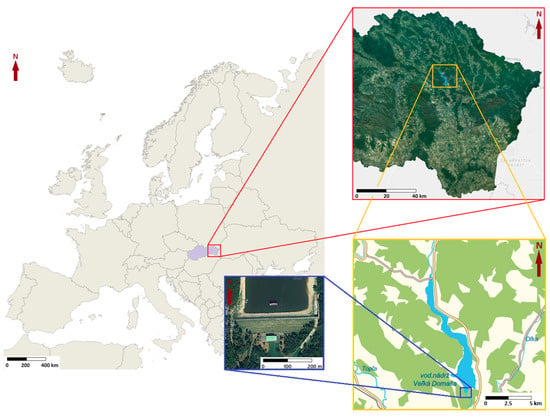
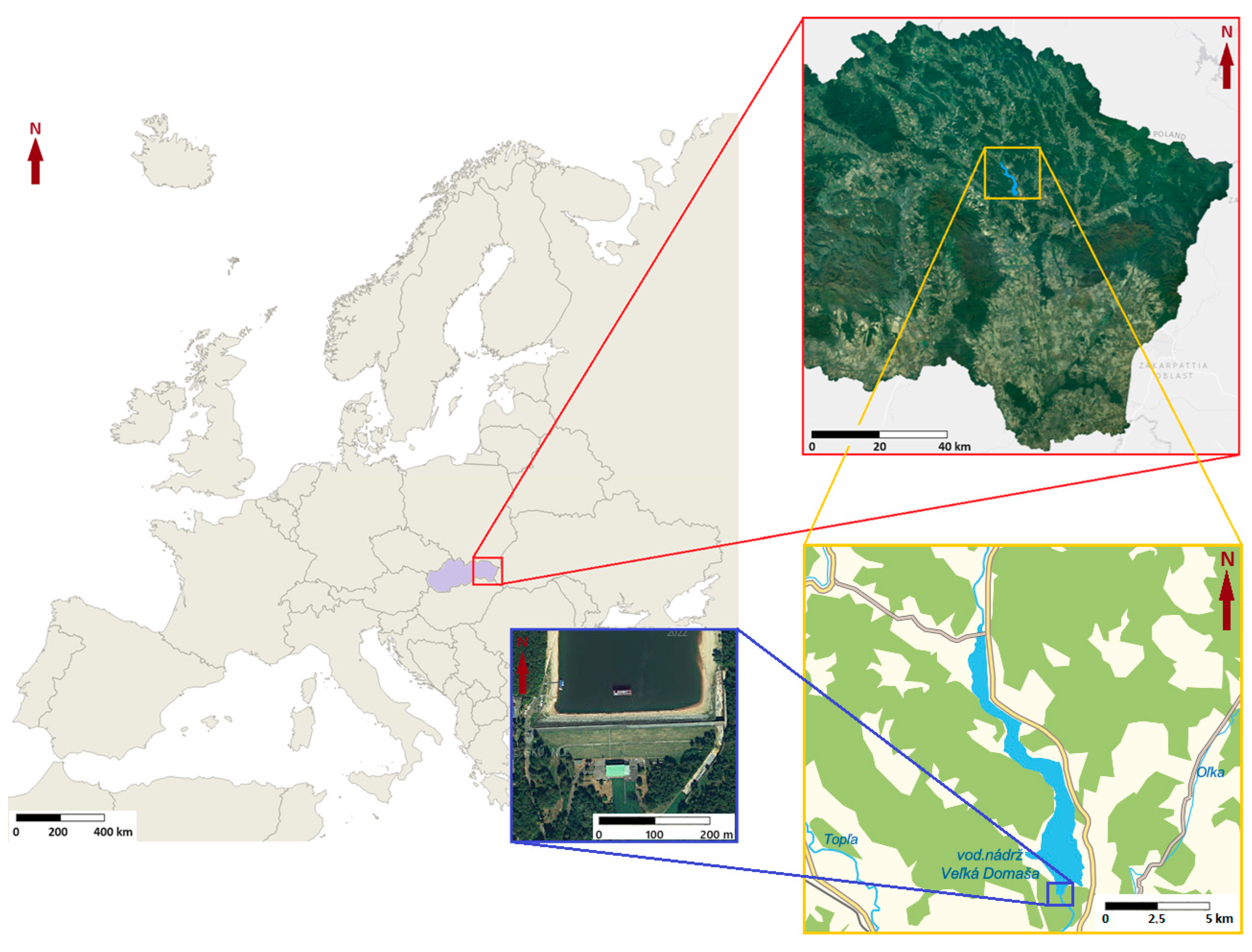
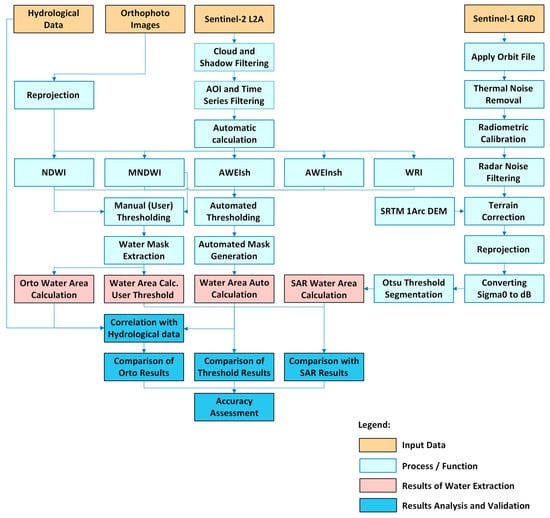
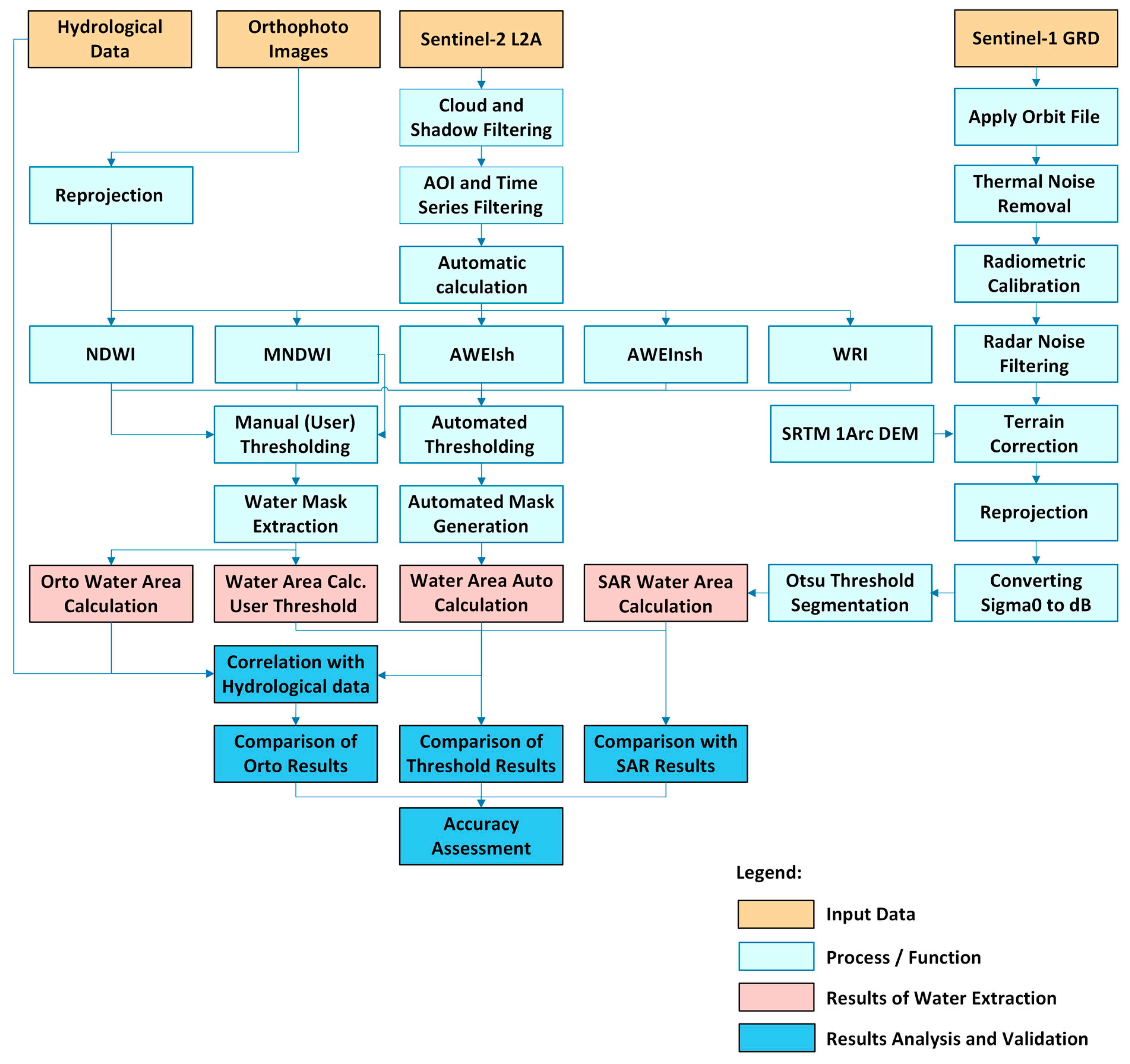
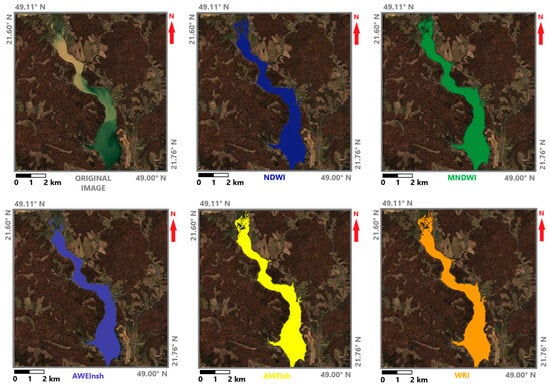
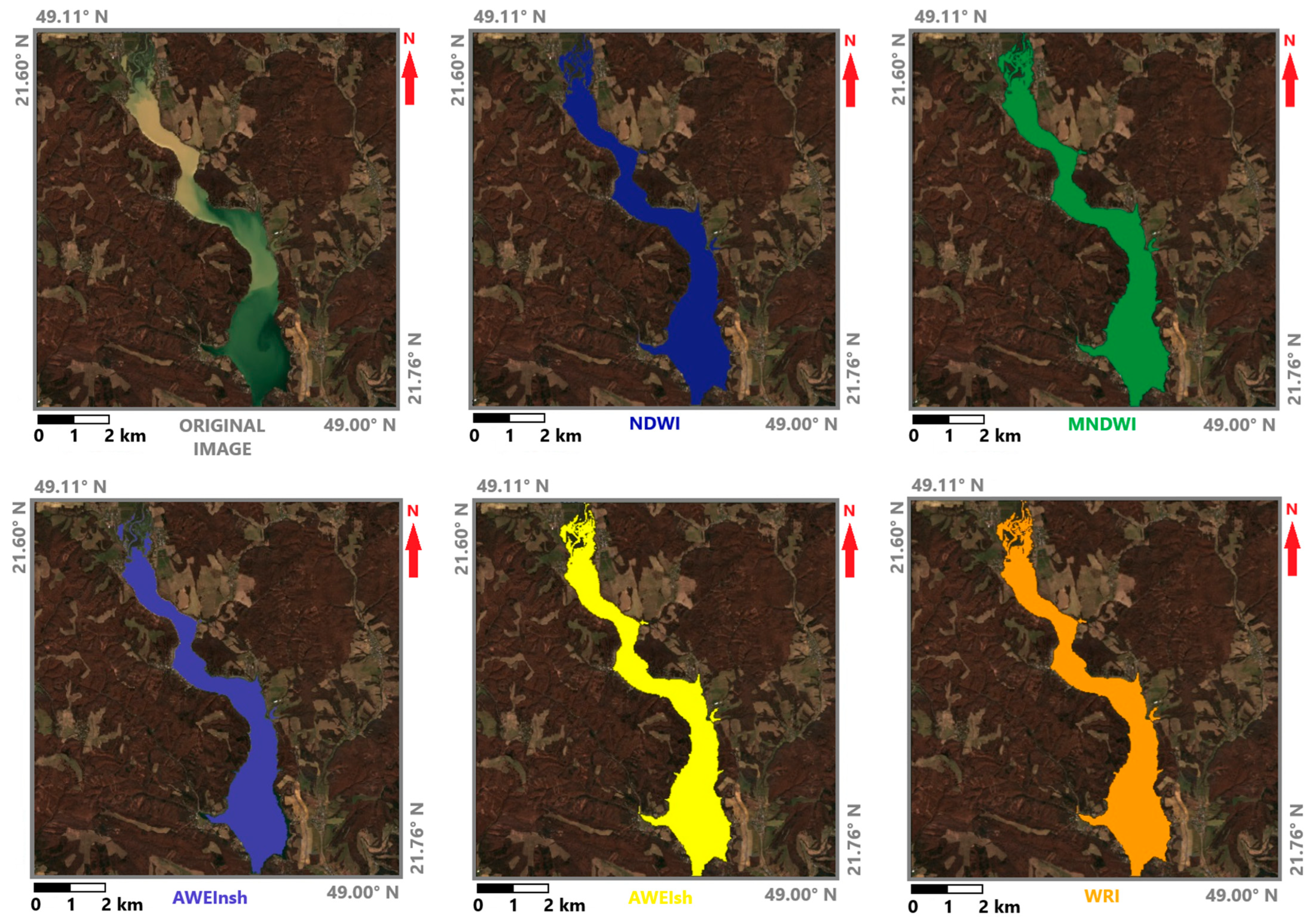
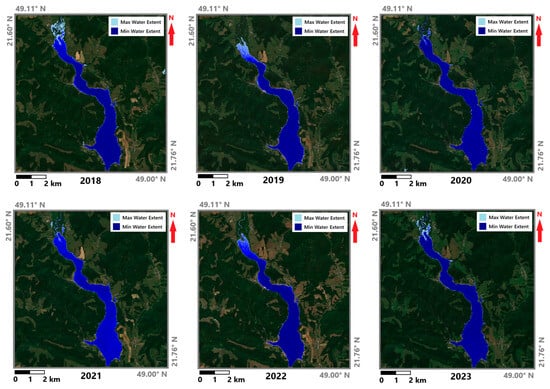
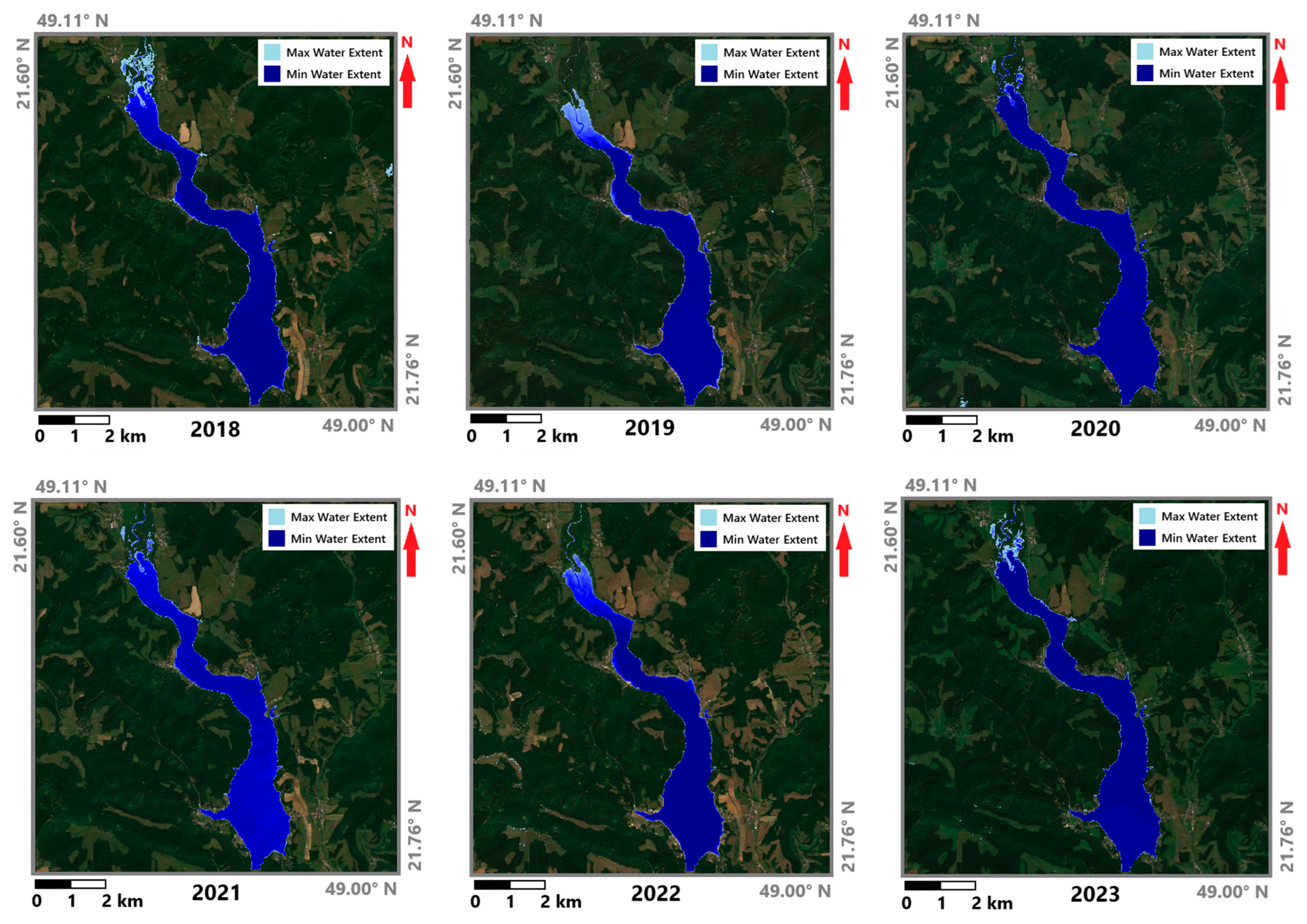
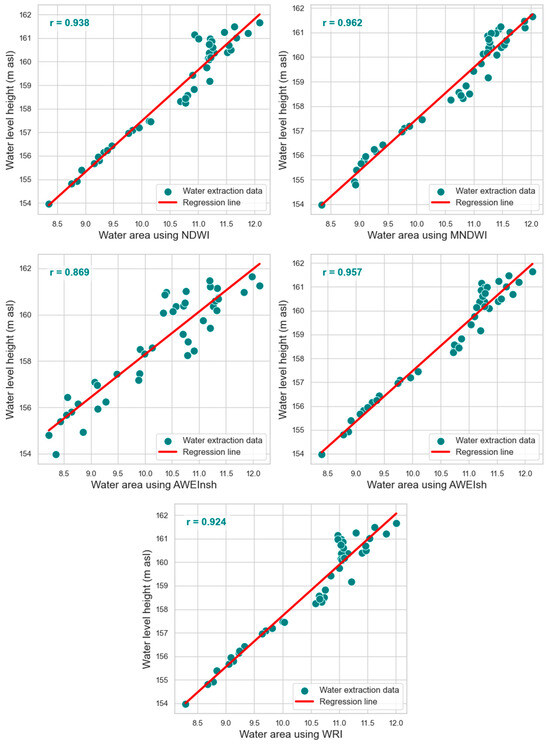
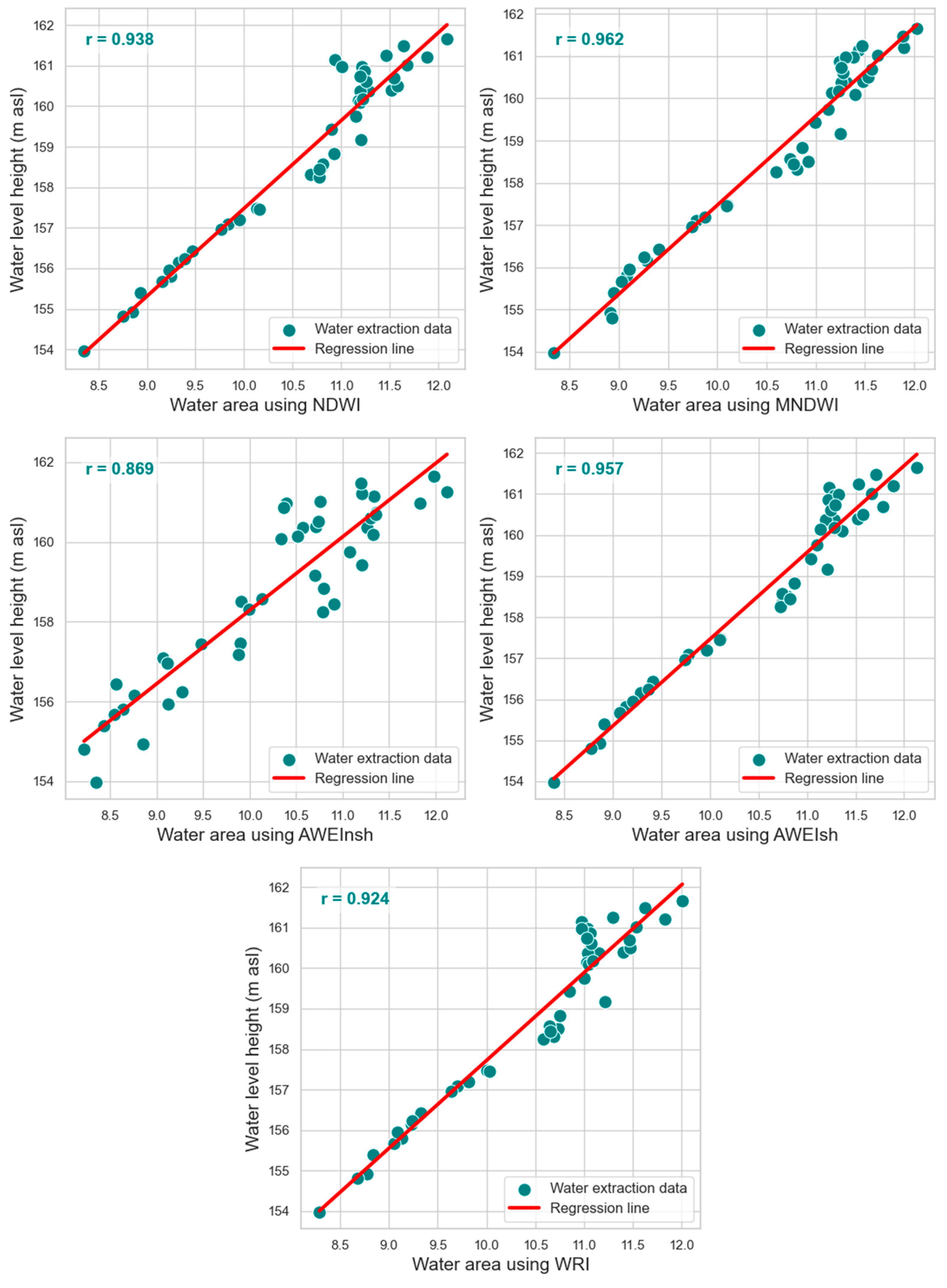
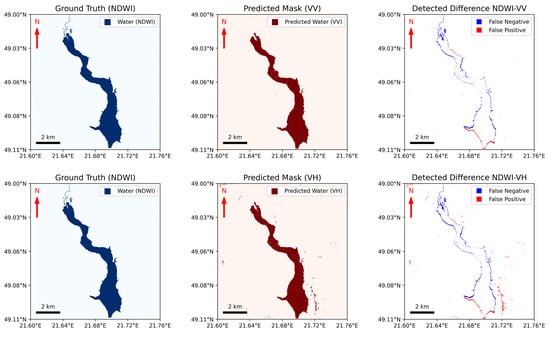
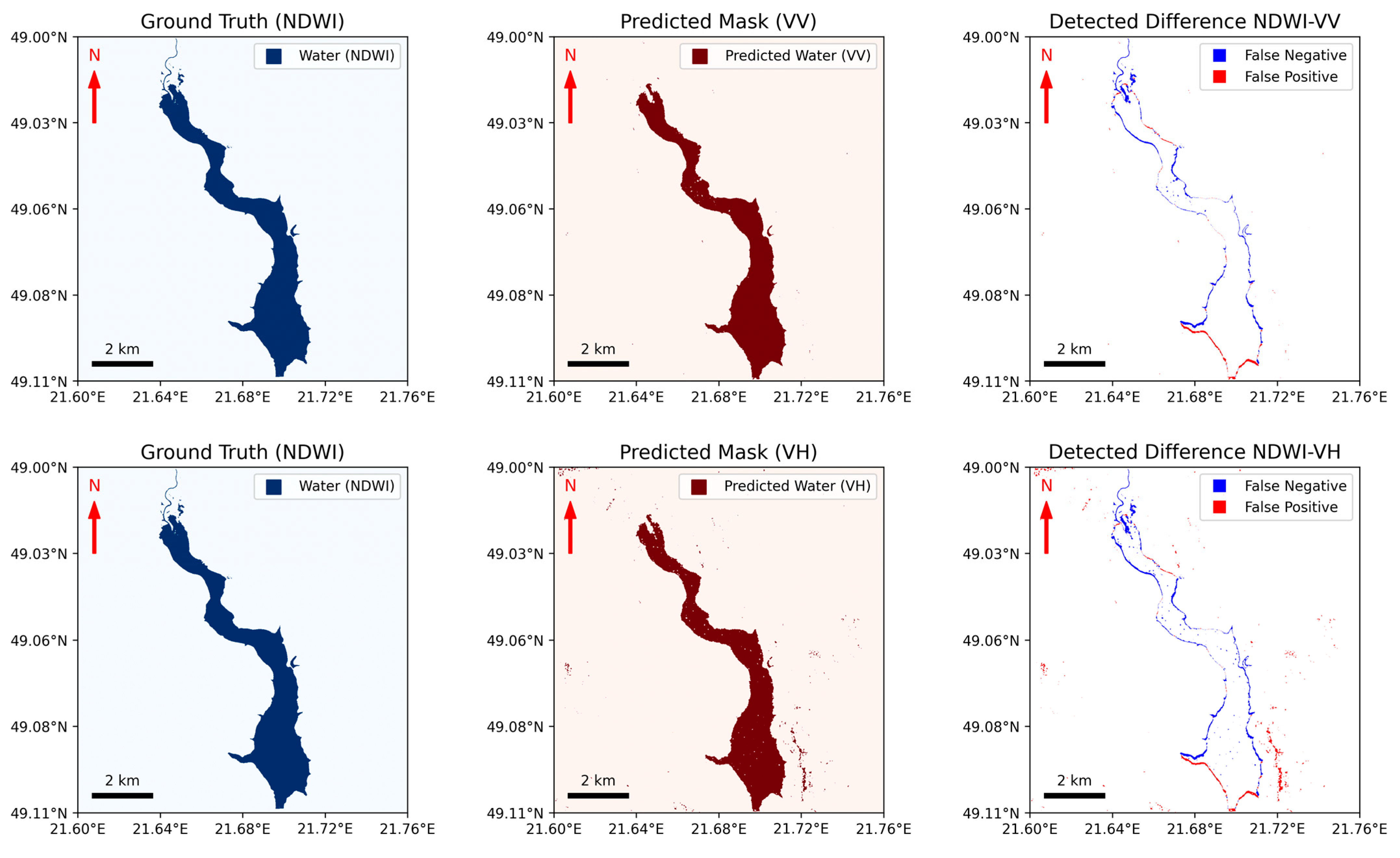
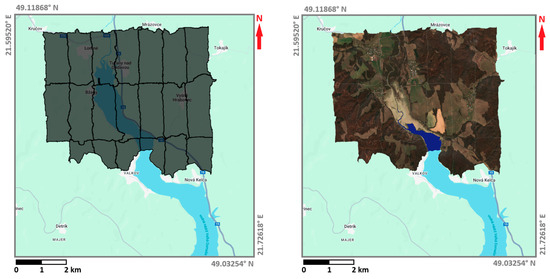
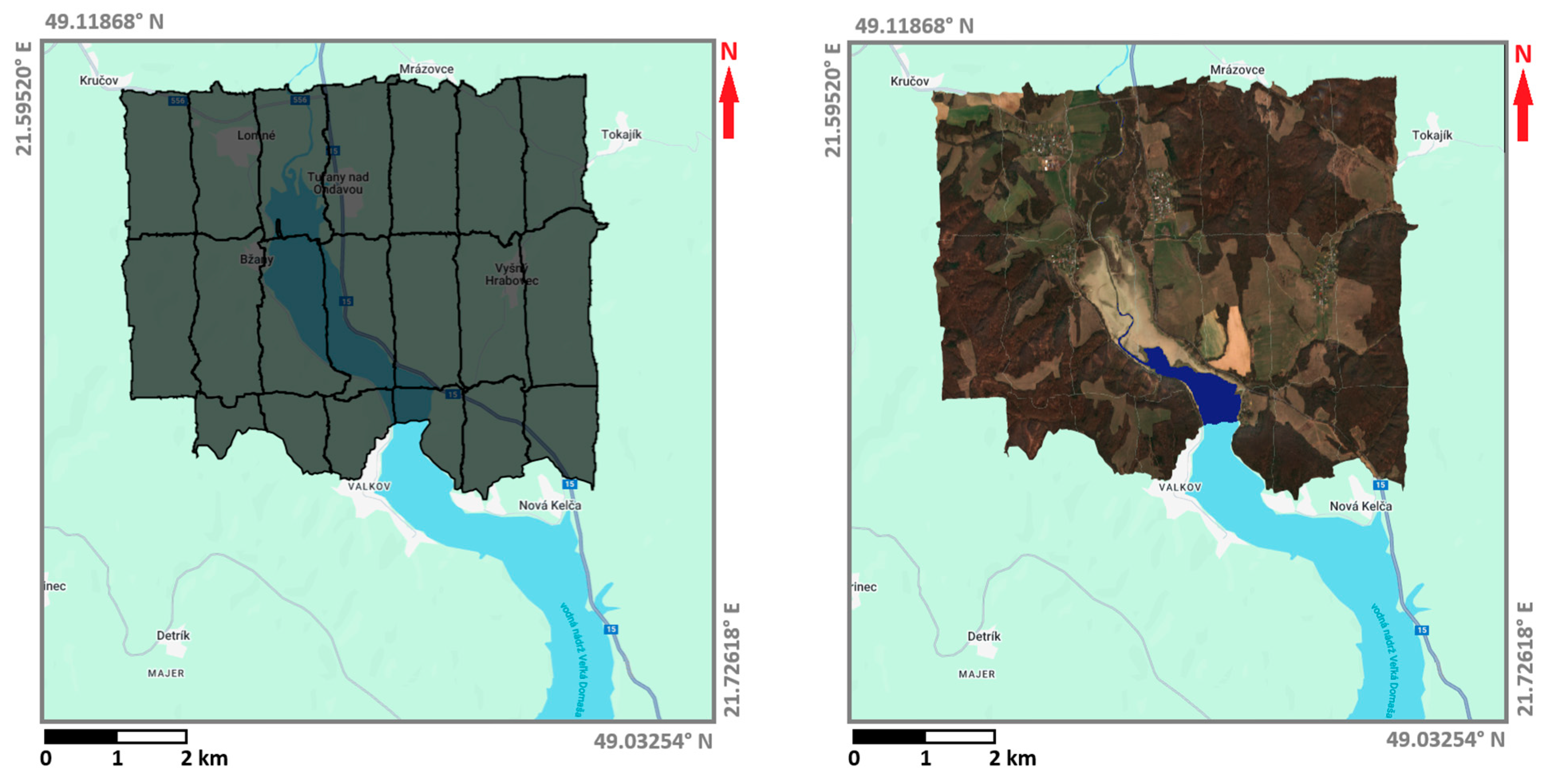
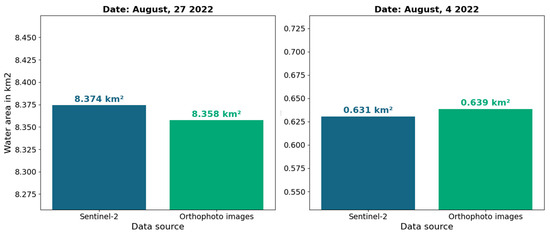
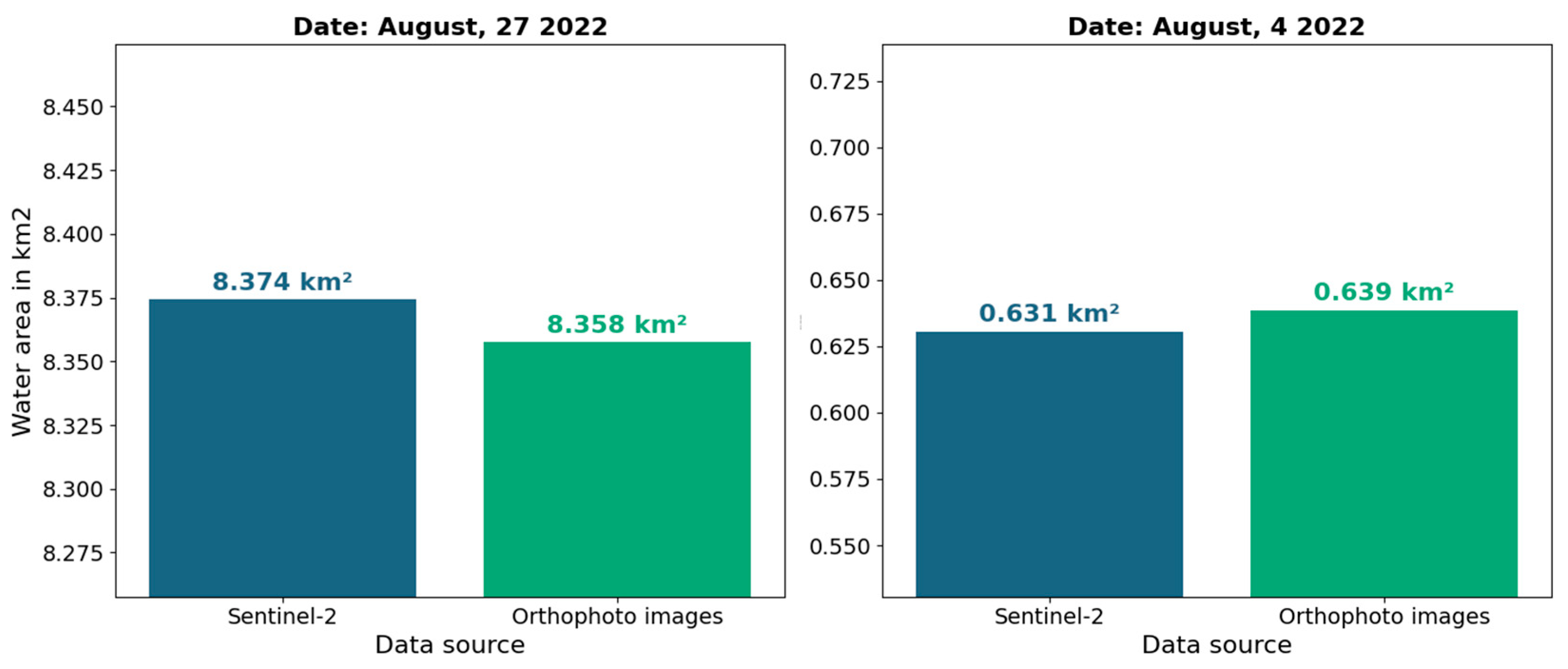
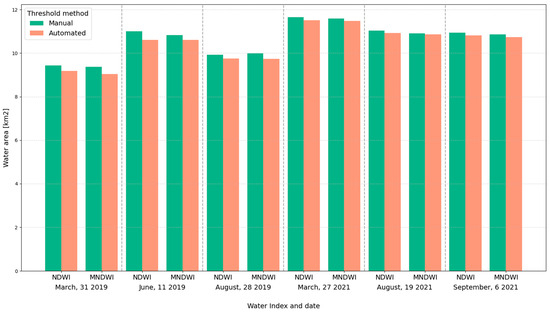
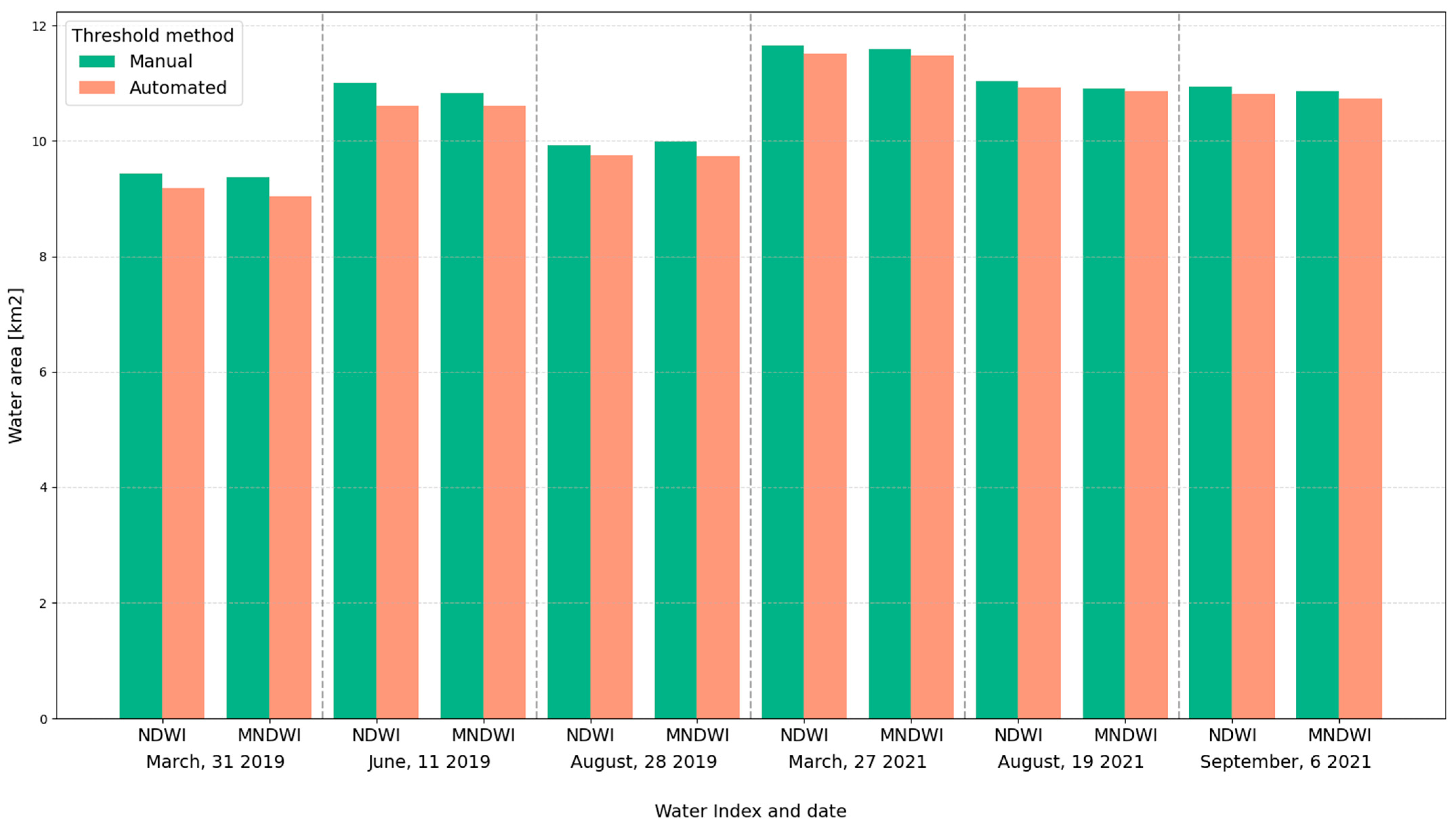
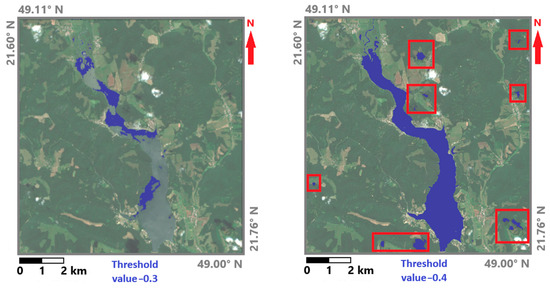
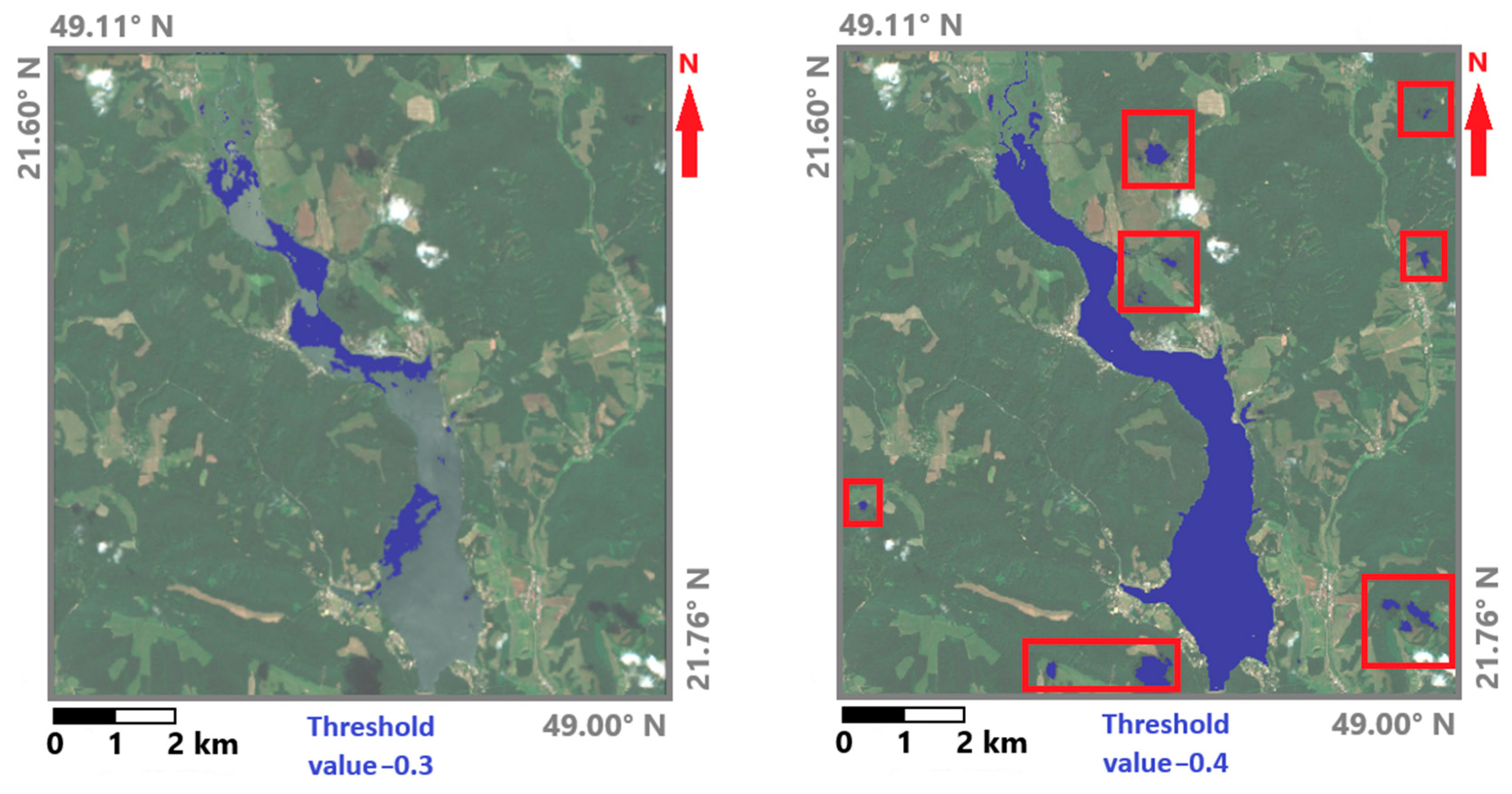

Disclaimer/Publisher’s Note: The statements, opinions and data contained in all publications are solely those of the individual author(s) and contributor(s) and not of MDPI and/or the editor(s). MDPI and/or the editor(s) disclaim responsibility for any injury to people or property resulting from any ideas, methods, instructions or products referred to in the content. |
© 2026 by the authors. Licensee MDPI, Basel, Switzerland. This article is an open access article distributed under the terms and conditions of the Creative Commons Attribution (CC BY) license.