Article

RFM-UNet: Hybrid Frequency–Mamba UNet for Remote-Sensing Road Extraction

1
Big Data Institution of Natural Hazards Monitoring for Digital Fujian, Xiamen University of Technology, Xiamen 361024, China
2
Key Laboratory of Southeast Coast Marine Information Intelligent Perception and Application, Ministry of Natural Resources, Zhangzhou 363005, China
3
Xiamen Key Laboratory of Green and Smart Coastal Engineering, College of Harbour and Coastal Engineering, Jimei University, Xiamen 361021, China
4
Shanghai Investigation, Design and Research Institute, Shanghai 200125, China
5
Key Laboratory of Spatial Data Mining and Information Sharing of Ministry of Education, The Academy of Digital China, Fuzhou University, Fuzhou 350108, China
*
Author to whom correspondence should be addressed.
Remote Sens. 2026, 18(15), 2546; https://doi.org/10.3390/rs18152546
Submission received: 4 June 2026 / Revised: 10 July 2026 / Accepted: 22 July 2026 / Published: 3 August 2026

Abstract

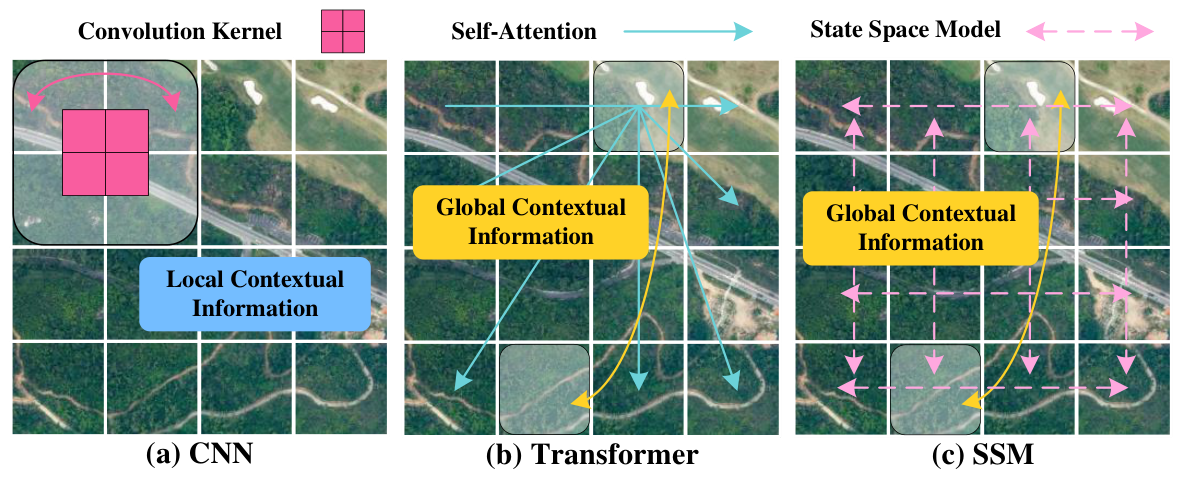
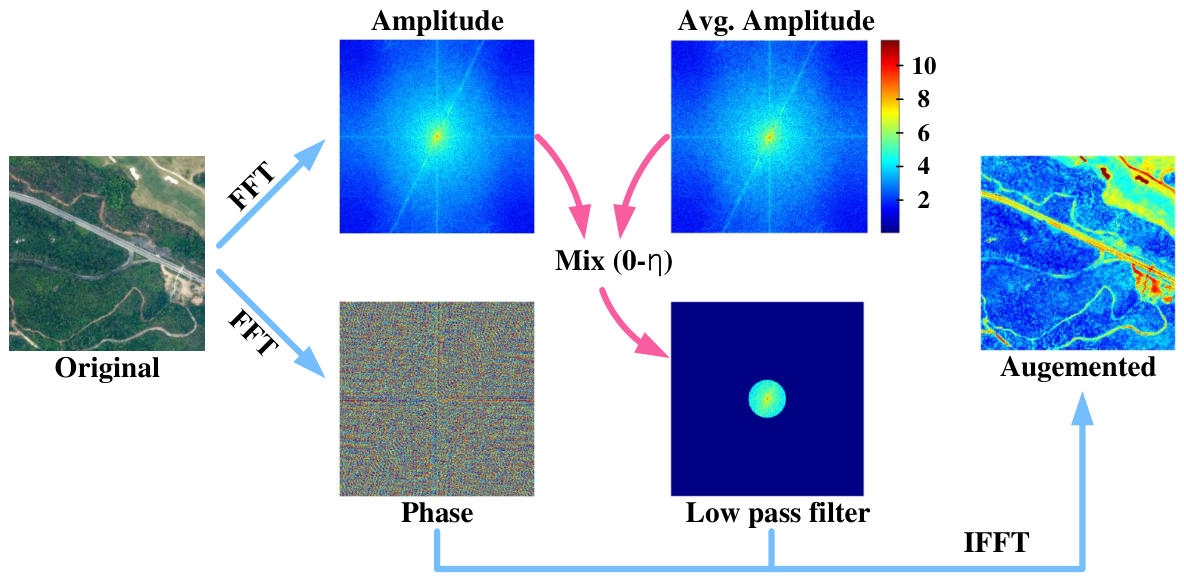
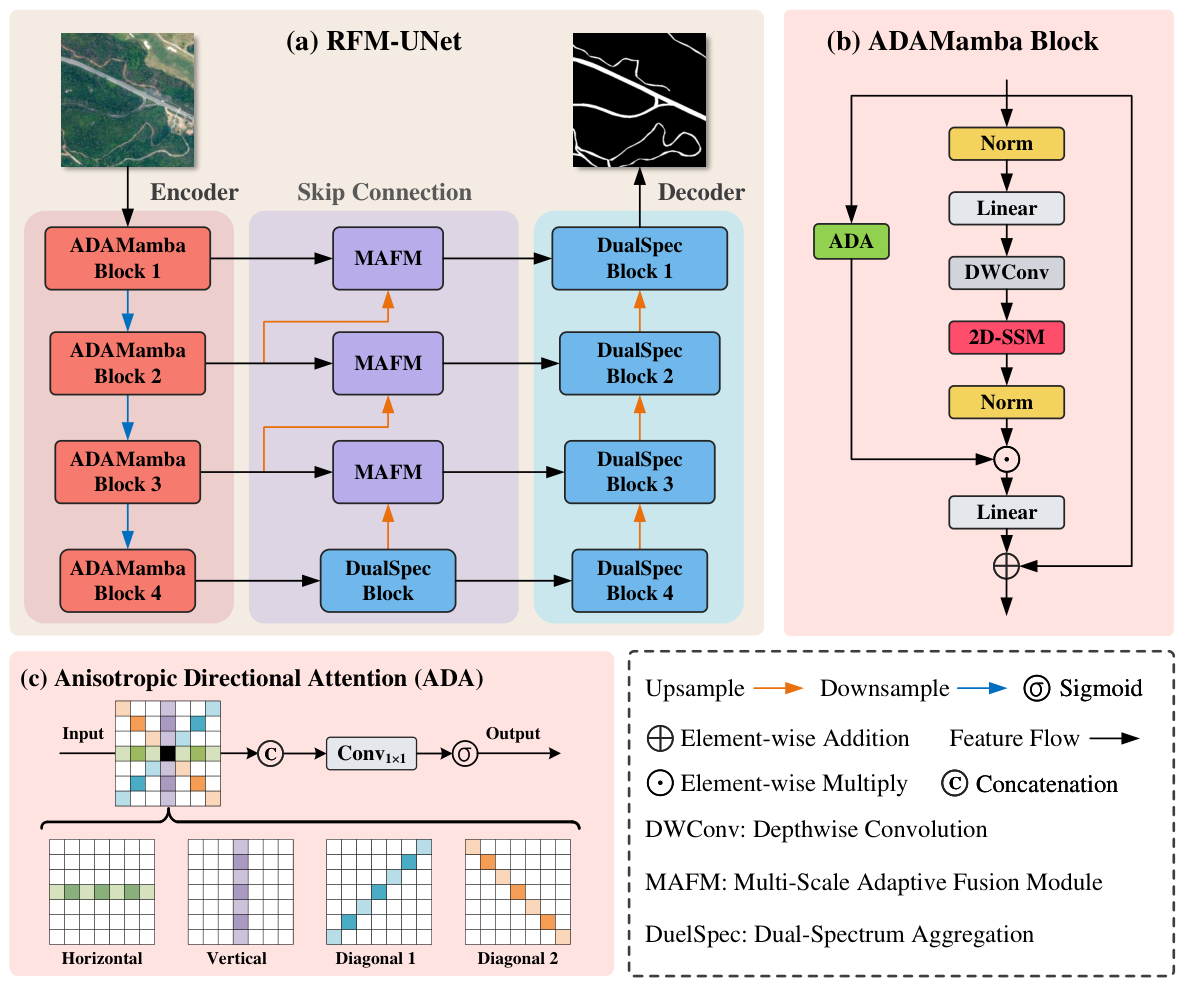
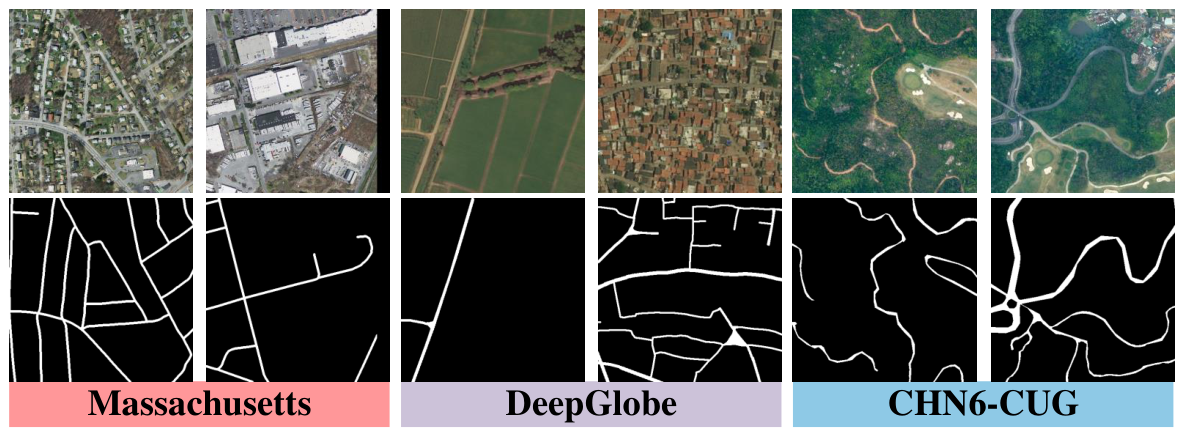
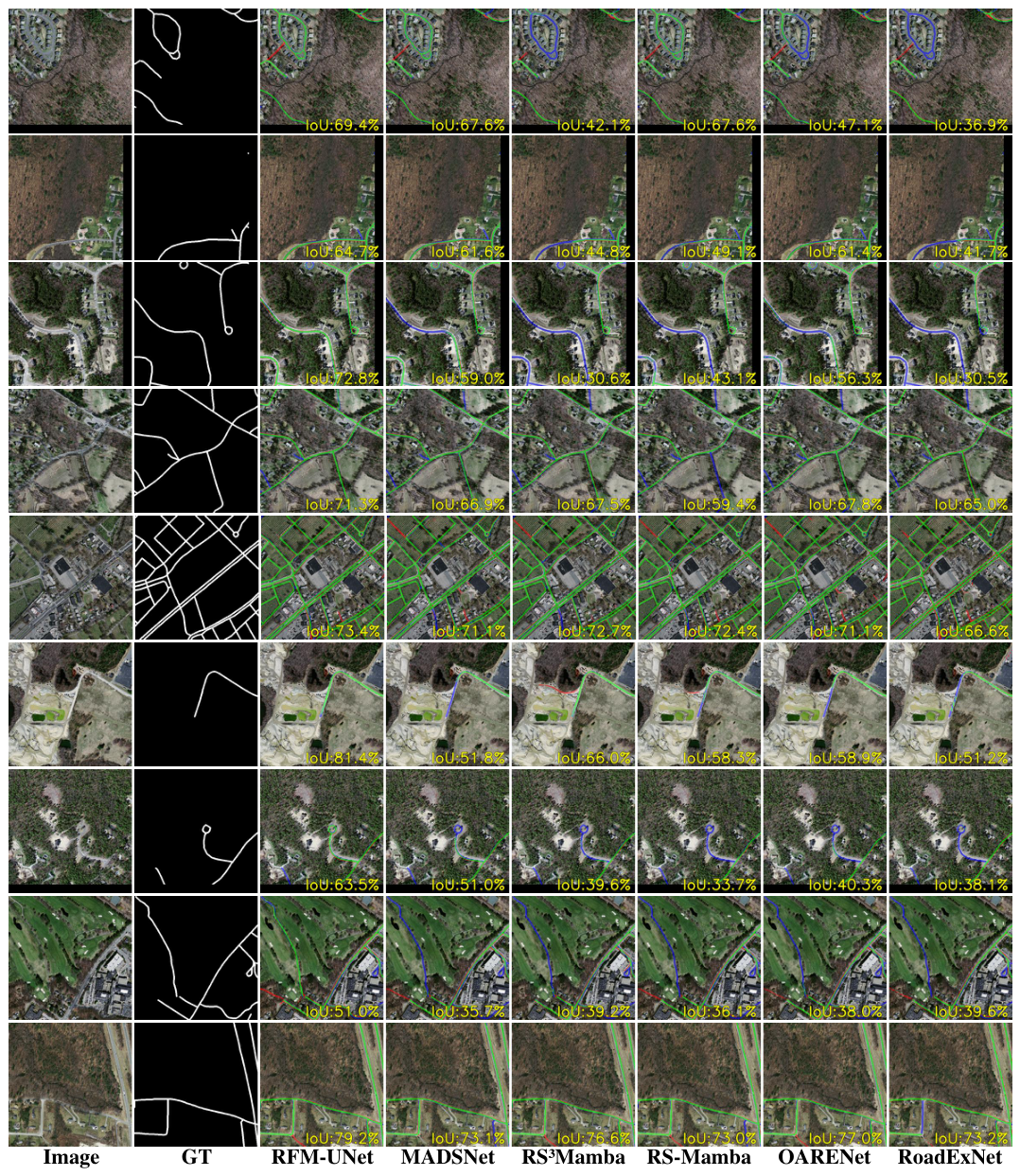
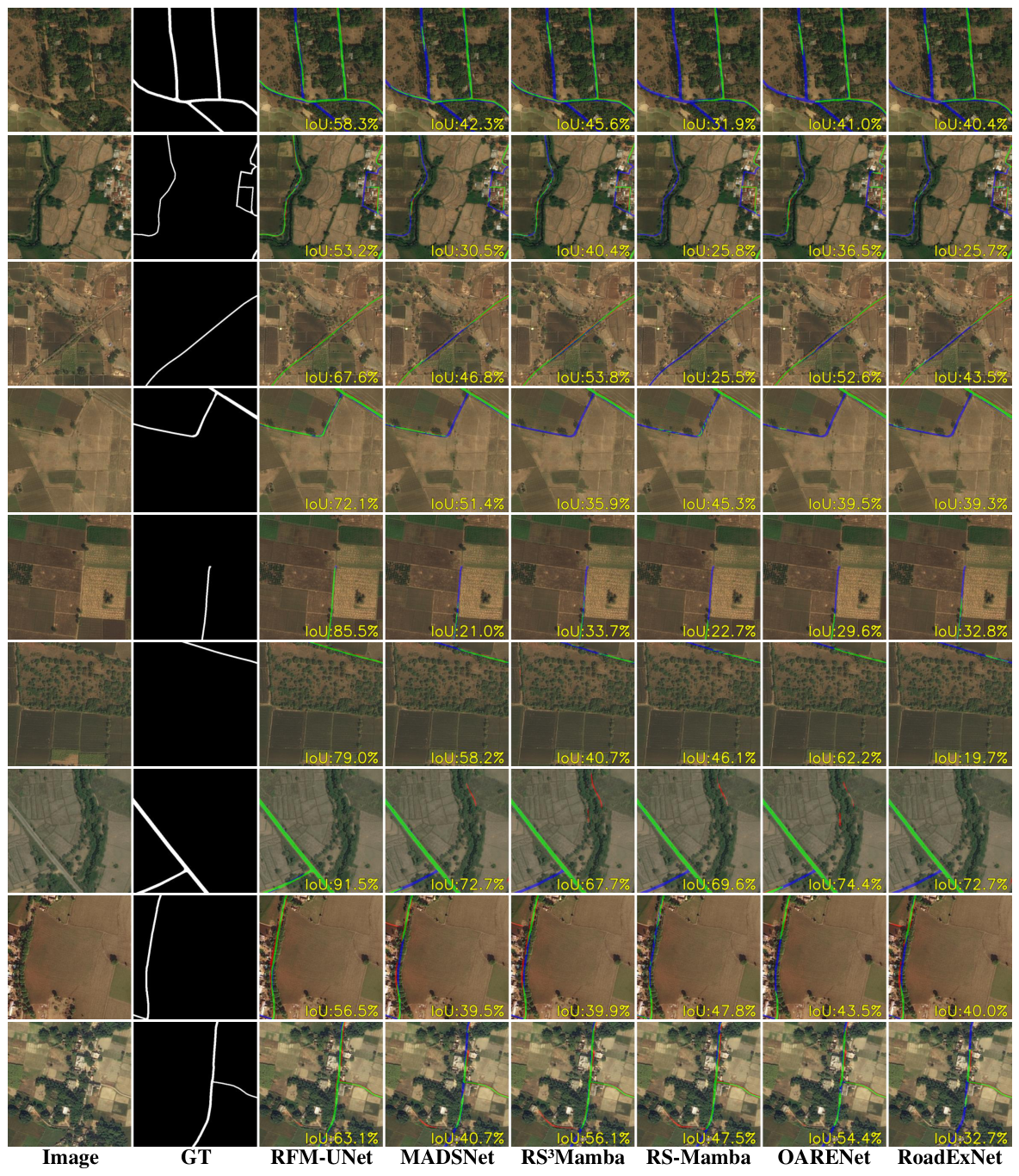
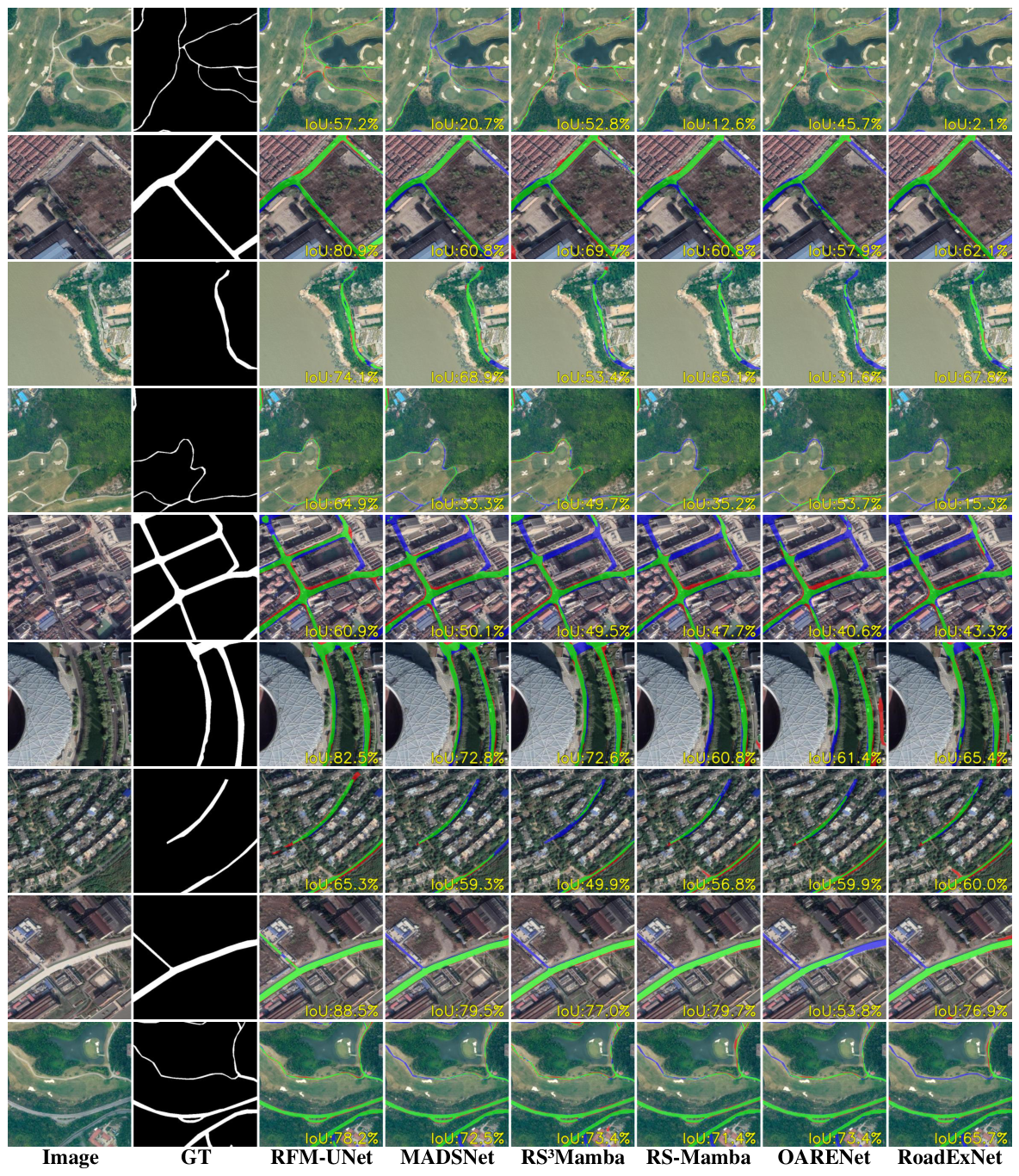
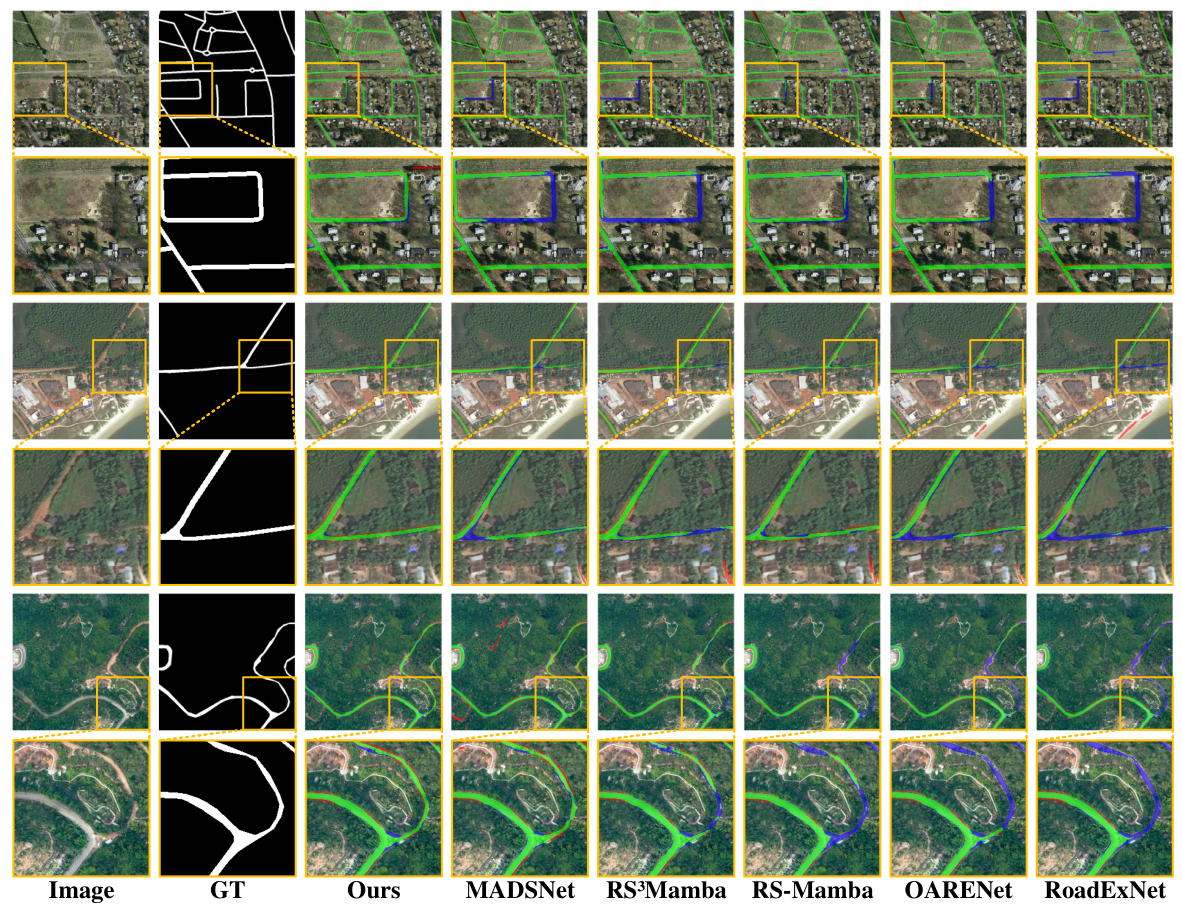
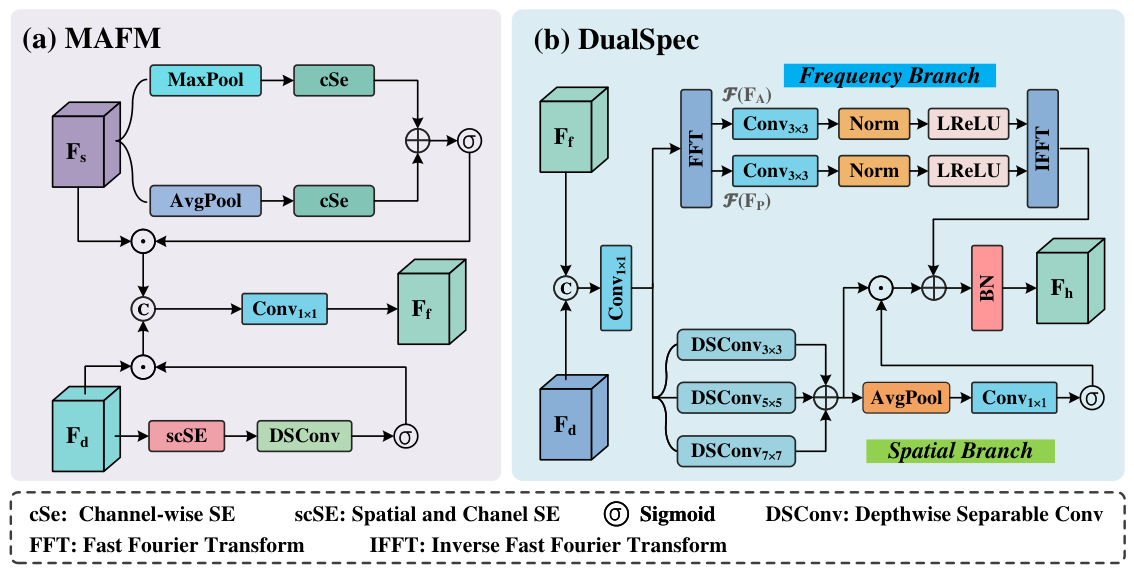
Road-network extraction from very high-resolution (VHR) remote-sensing imagery remains a challenging task owing to the structural sparsity, topological complexity, and severe occlusions of road networks. Conventional graph-based approaches preserve topological consistency yet incur considerable computational overhead, whereas prevailing convolutional neural network (CNN) and Transformer architectures struggle to reconcile long-range contextual modeling with computational efficiency. To address these limitations, this study proposes RFM-UNet, a hybrid frequency and state–space network designed for road-network segmentation. Specifically, the encoder integrates Mamba blocks with an Anisotropic Directional Attention (ADA) module to jointly capture local geometric cues and global dependencies at linear computational complexity. In addition, a Multi-Scale Adaptive Fusion Module (MAFM) is introduced to dynamically recalibrate multi-stage features, thereby suppressing cross-scale interference and preserving the connectivity of narrow roads. To enhance robustness against shadow-induced occlusions, a Dual-Spectrum Aggregation Module (DualSpec) decouples the phase and amplitude spectra in the frequency domain and fuses them with spatial features, effectively mitigating spurious responses and background noise characterized by similar textures. Quantitative and qualitative experiments on three public datasets demonstrate that RFM-UNet consistently outperforms current state-of-the-art methods.
Keywords: road extraction; remote sensing; Mamba; frequency-domain; feature fusion road extraction; remote sensing; Mamba; frequency-domain; feature fusion