Article

DFELD-YOLO: A Decoupled Lightweight Detection Model for UAV-Based Wind Turbine Blade Damage Inspection

School of Computer Science, Jiangsu University of Science and Technology, Zhenjiang 212003, China
*
Author to whom correspondence should be addressed.
Remote Sens. 2026, 18(14), 2422; https://doi.org/10.3390/rs18142422
Submission received: 28 April 2026 / Revised: 11 July 2026 / Accepted: 17 July 2026 / Published: 21 July 2026

Abstract

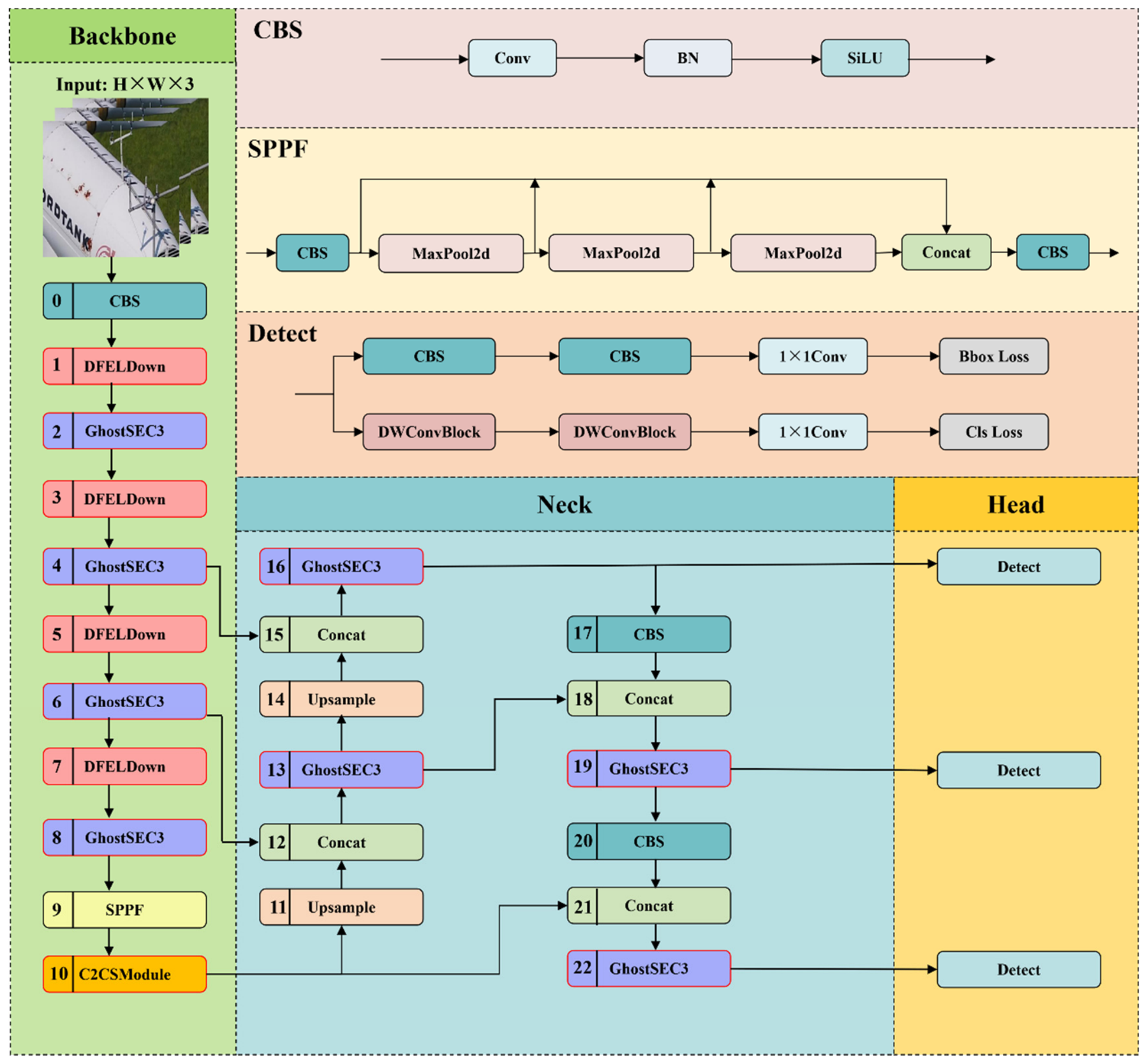
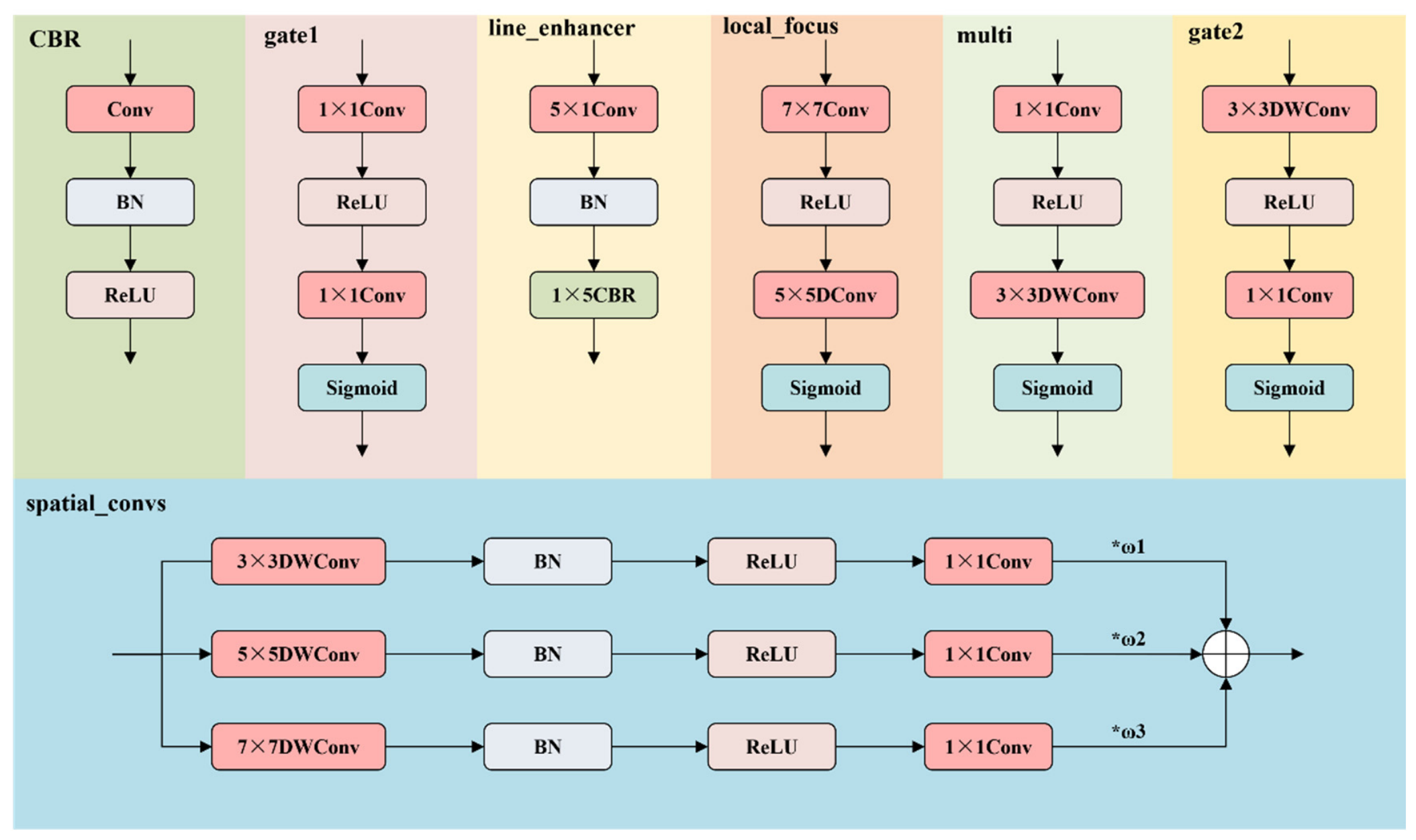
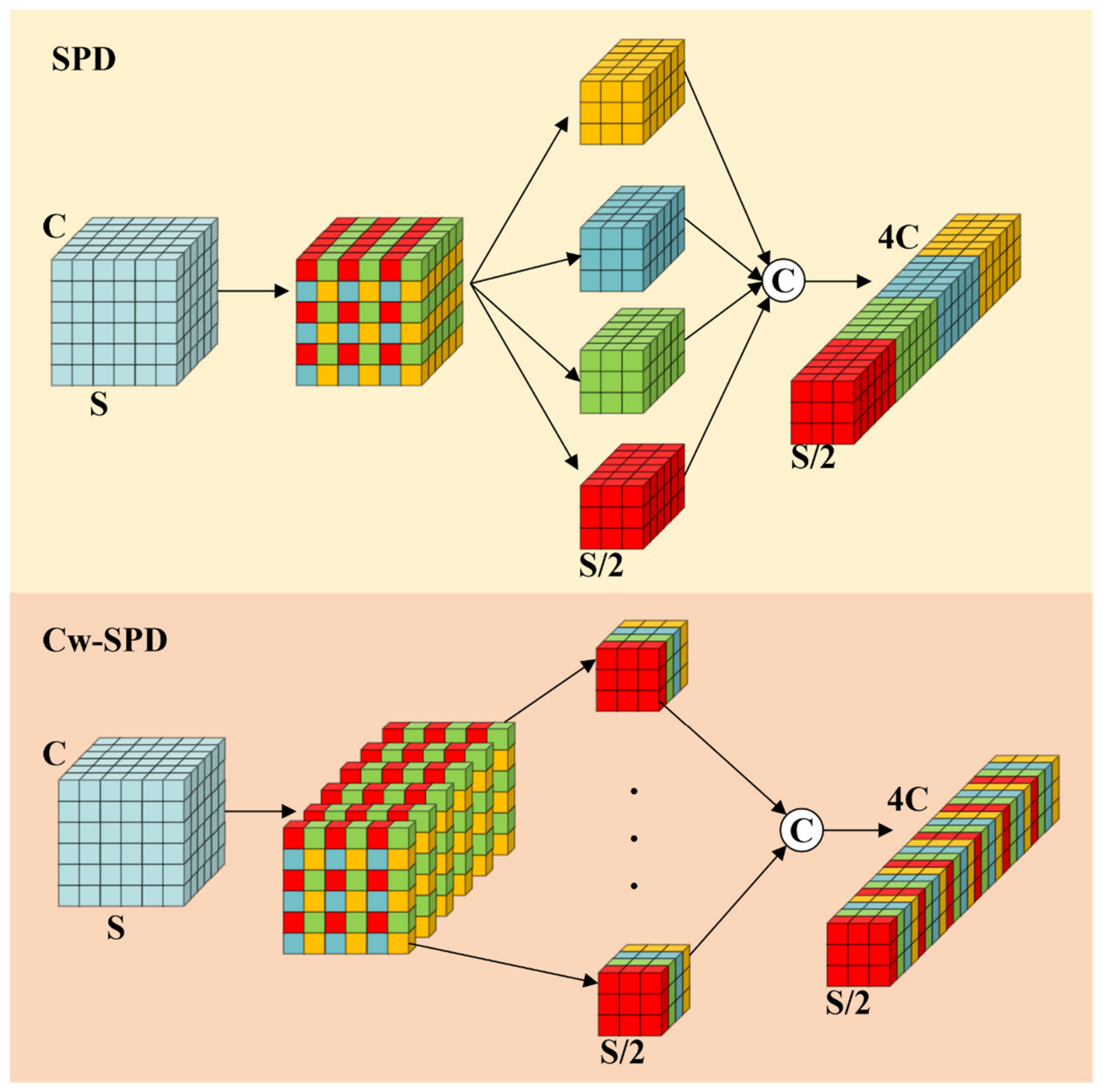
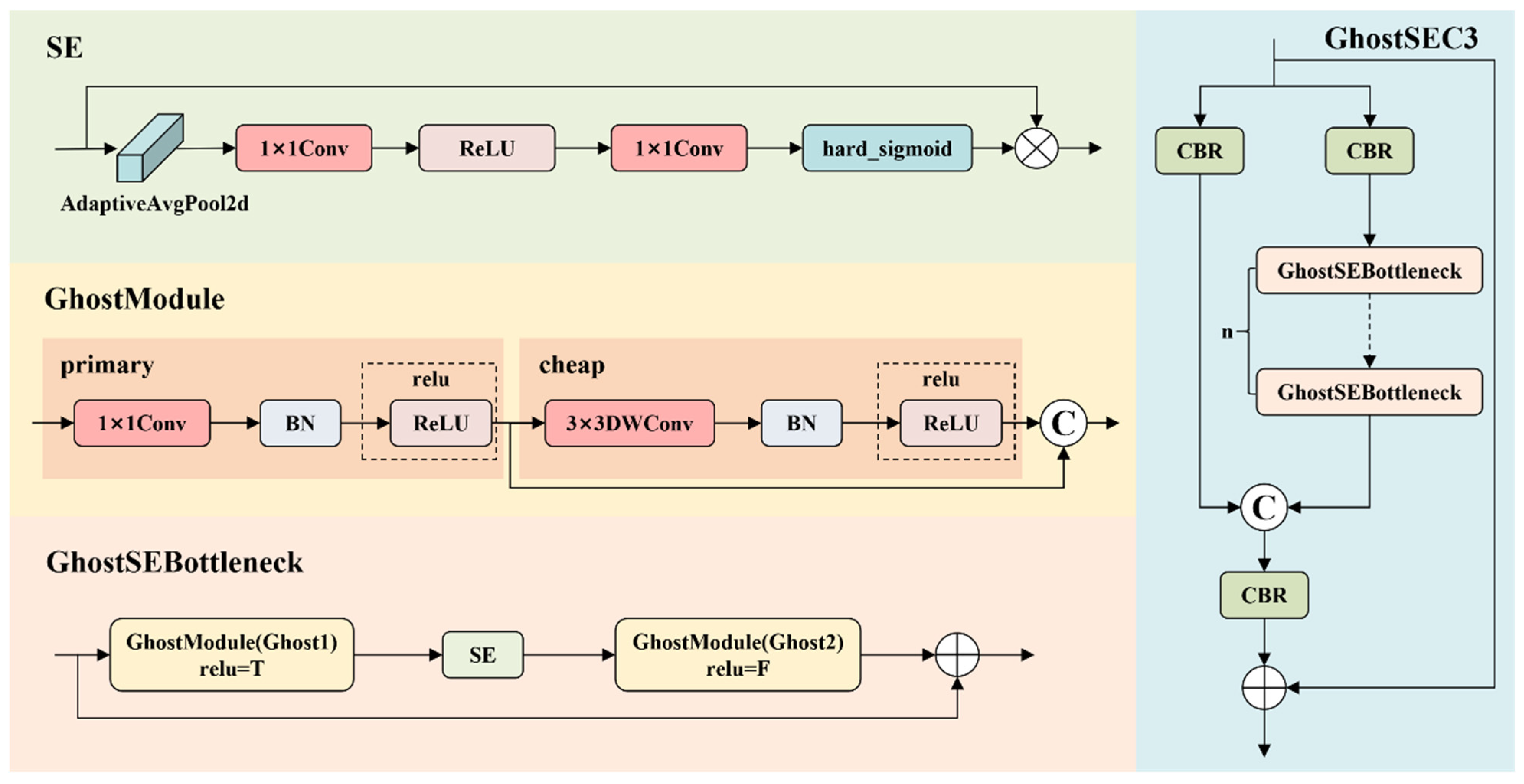
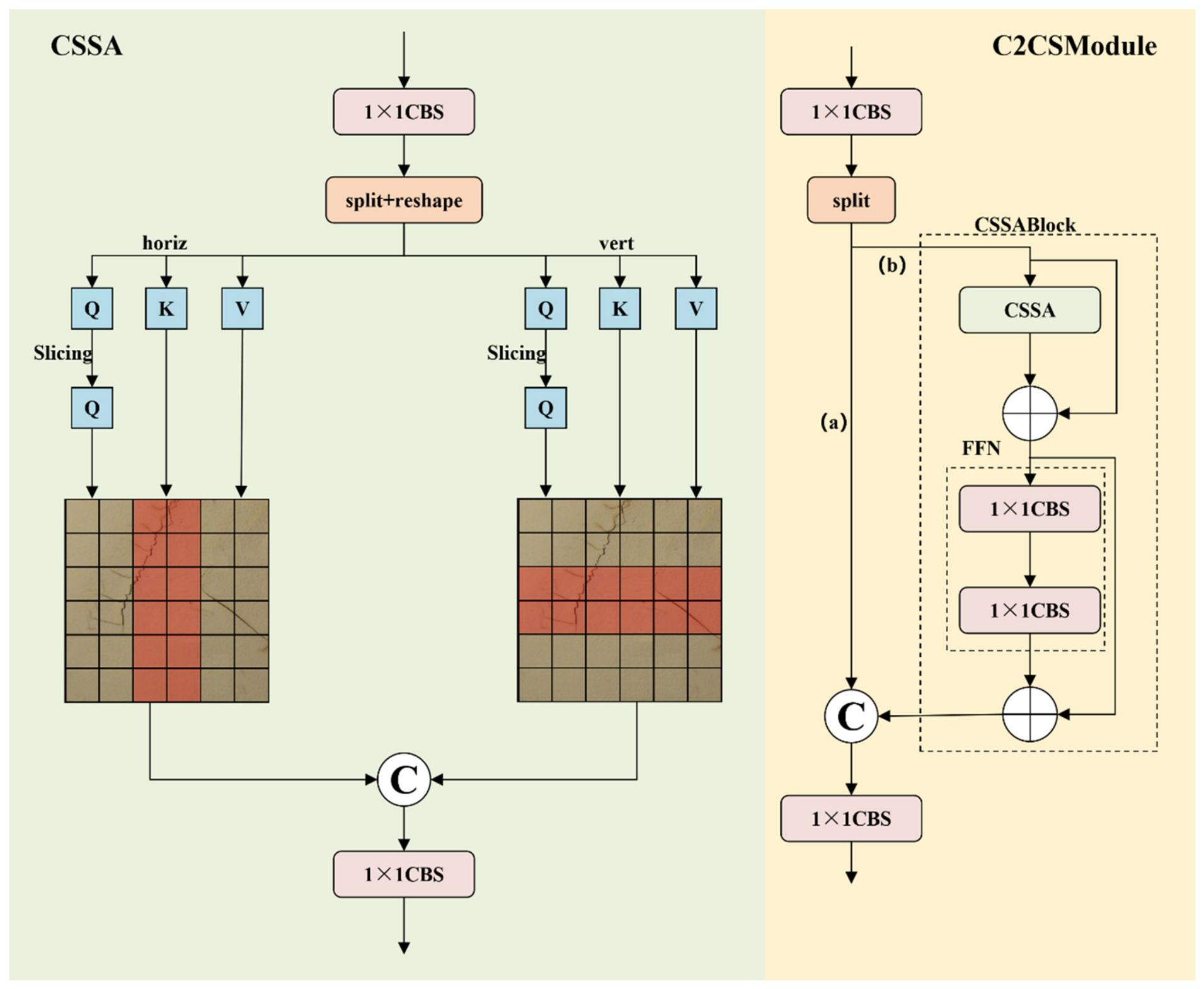
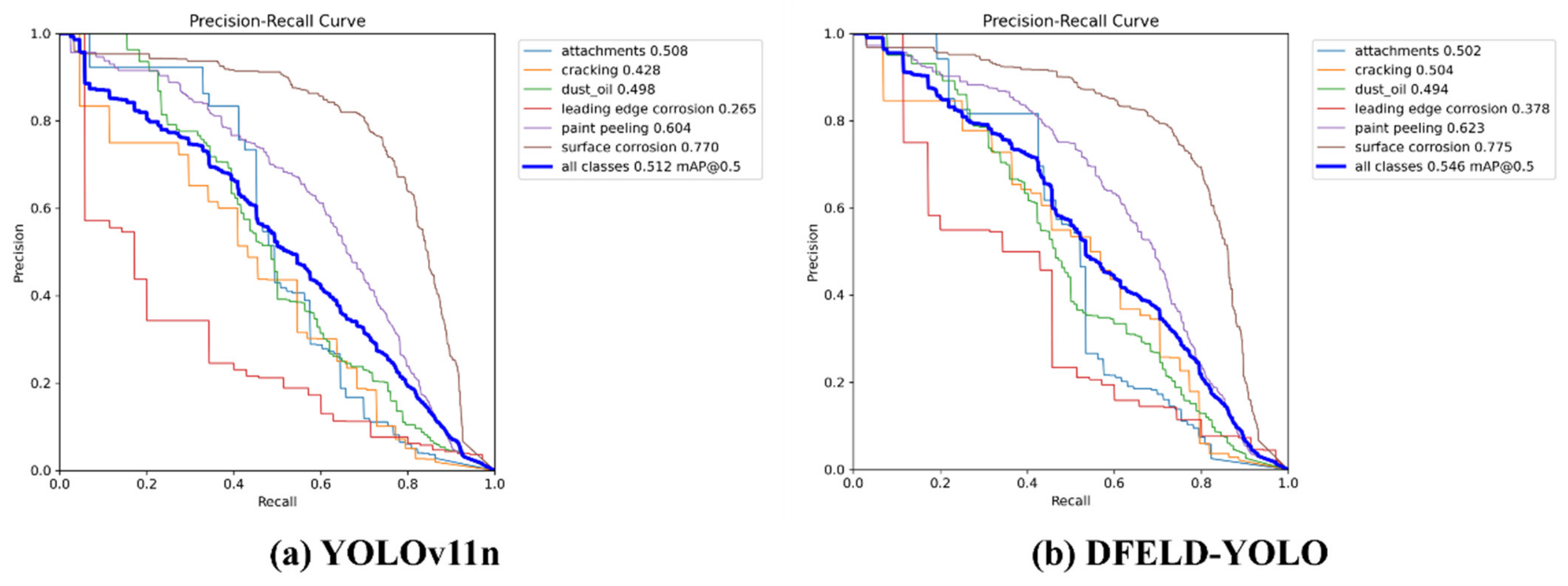
Accurate and efficient detection of surface damage on wind turbine blades is important for ensuring the safe operation and maintenance of wind farms. Existing models have problems of irreversible loss of micro-damage features, insufficient modeling of long cracks, and weak anti-interference ability. To address these issues, we propose a Decoupled Feature Enhancement and Pixel-preserving Downsampling YOLO model (DFELD-YOLO). The model features the following three innovations: (1) Feature extraction and downsampling are innovatively decoupled to construct DFELDown, which completes feature extraction via an attention mechanism and achieves pixel-preserving downsampling through a Cw-SPD transformation, effectively solving the problem of micro-damage feature loss. (2) We built a lightweight anti-interference GhostSEC3 module, which reduces parameters and computations while adaptively suppressing background interference. (3) We designed a Cross-Shaped Stripe Attention Module (C2CSModule), which achieves a global receptive field with linear complexity, while accurately capturing continuous features of long cracks. Extensive experiments on the UAV-based wind turbine blade damage dataset show that DFELD-YOLO has 2.05 M parameters and 5.9 GFLOPs, with 20.8% and 7.8% reductions compared with the baseline YOLOv11, respectively. The lightweight properties make it suitable for deployment on edge devices, including UAVs. Meanwhile, it achieves a 3.4% improvement in mAP@0.5.
Keywords: UAV images; wind turbine blades; defect detection; YOLO; attention mechanism; lightweight network UAV images; wind turbine blades; defect detection; YOLO; attention mechanism; lightweight network