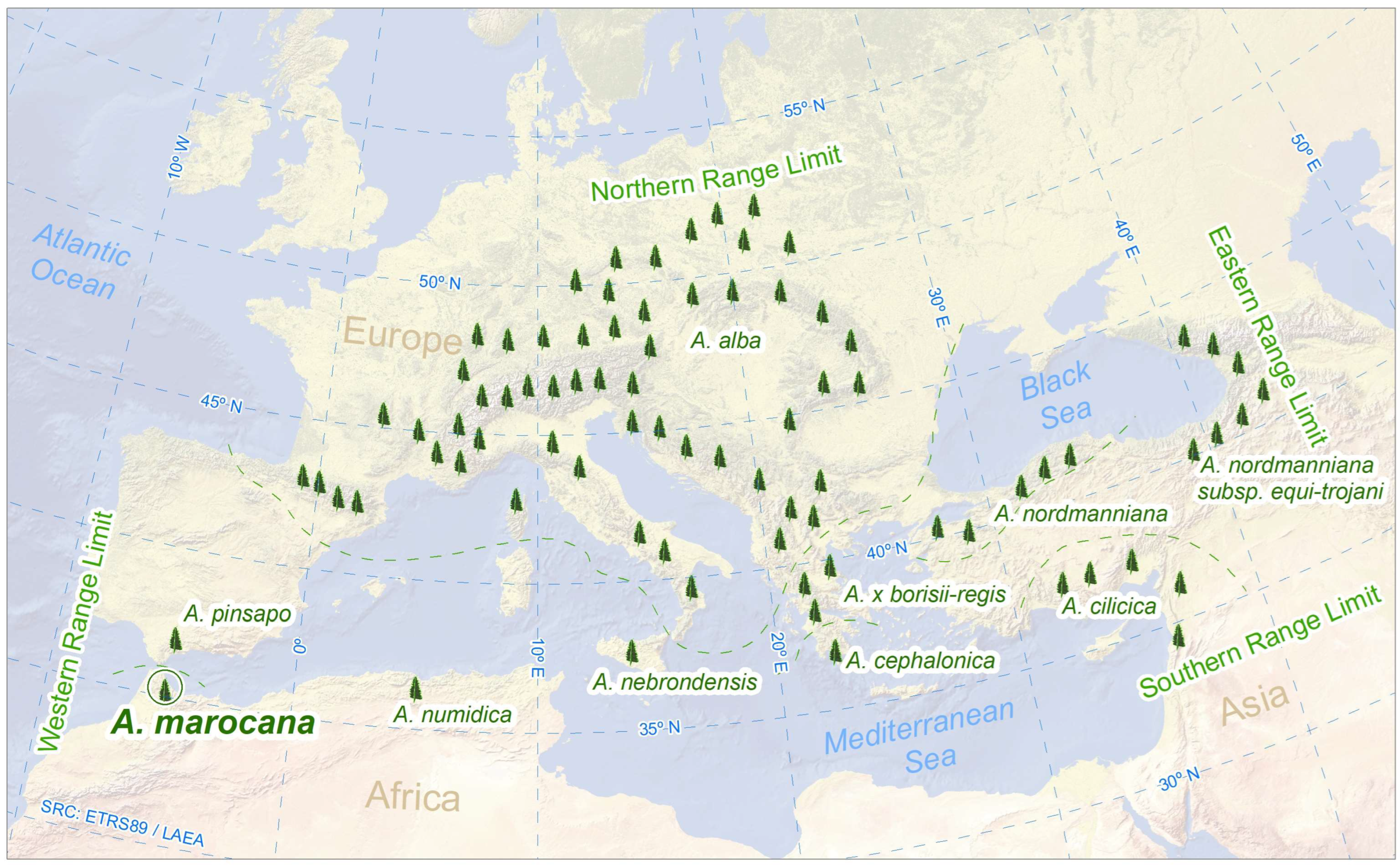
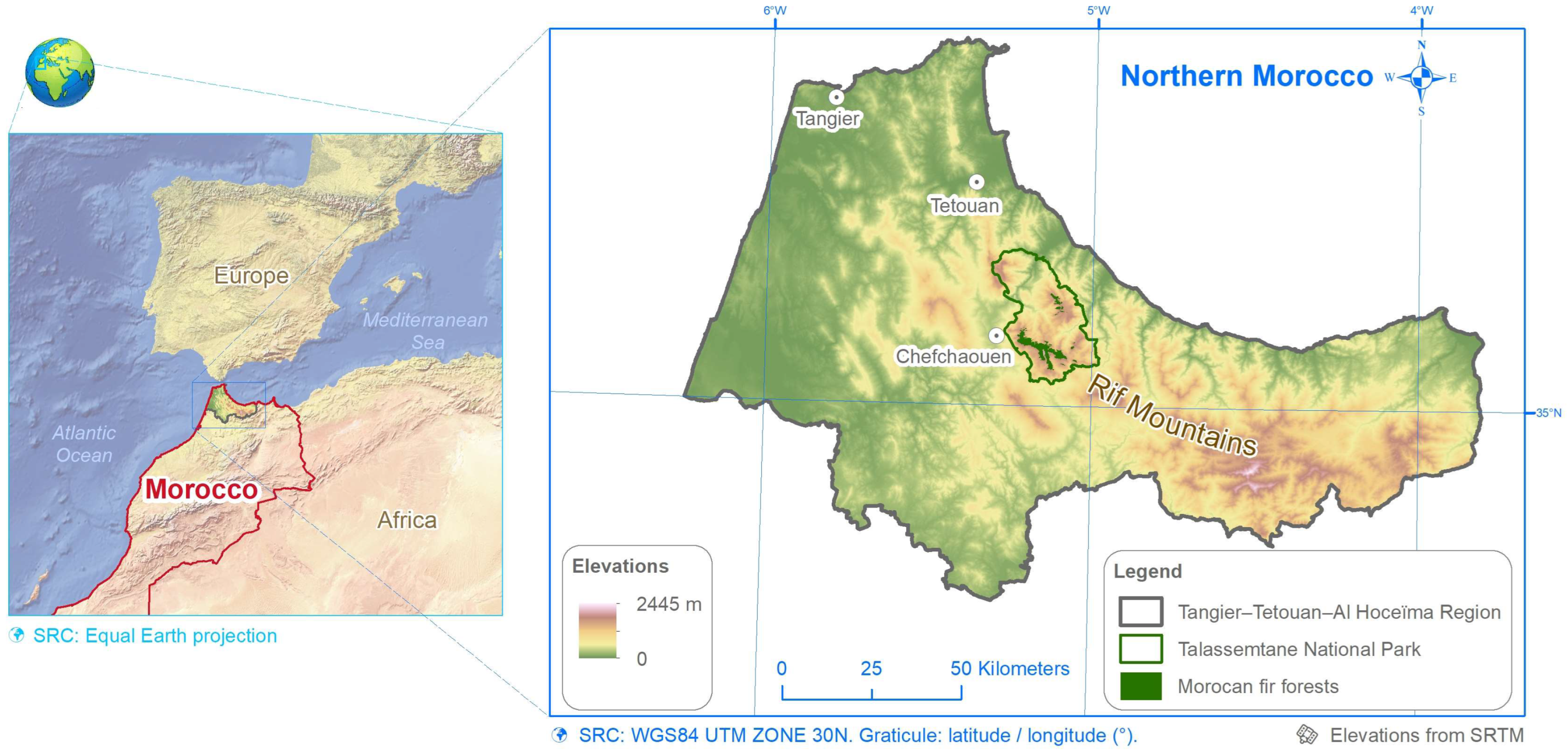
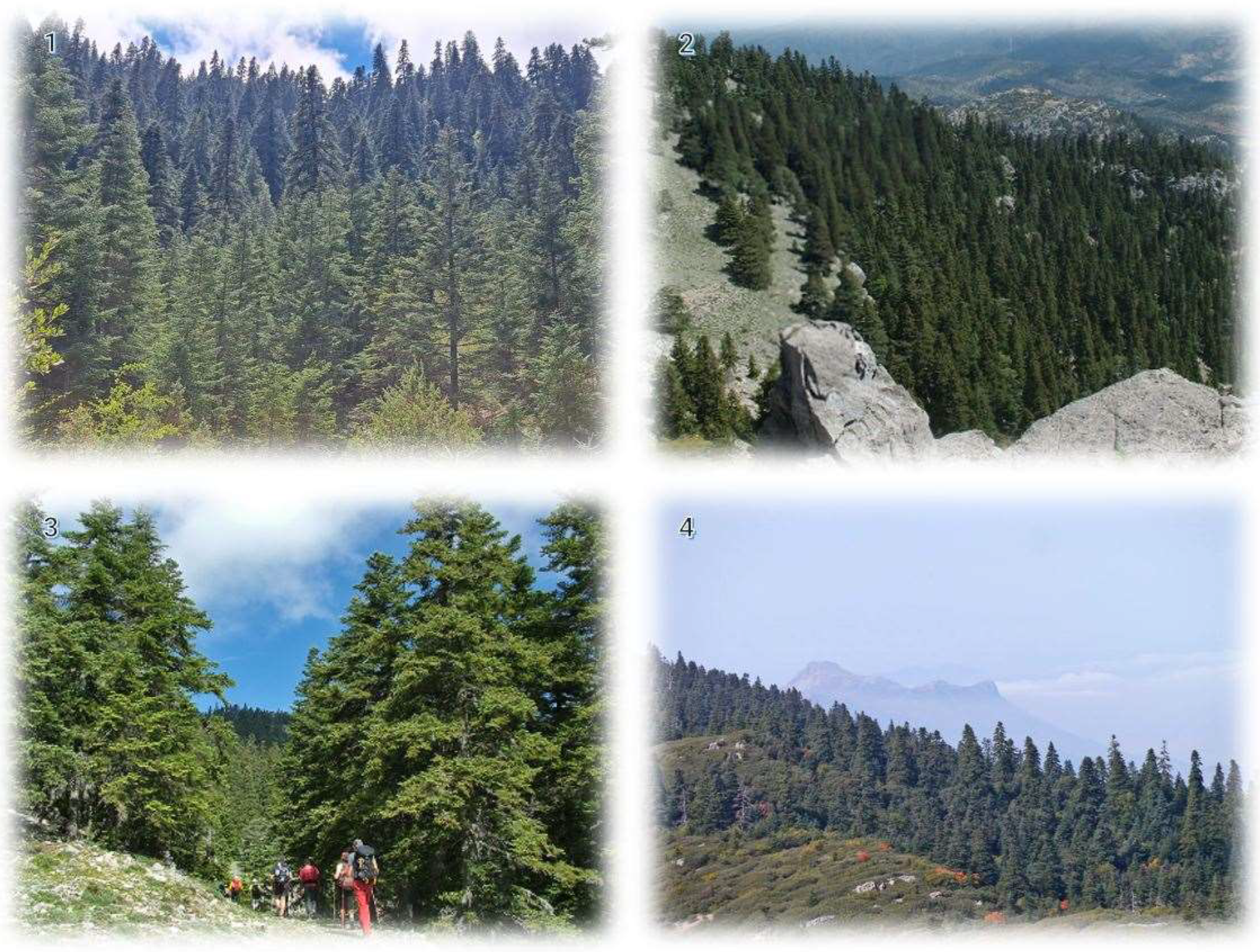
Intensified and Extended Growing Seasons in Abies marocana Forests (2000–2024): A Robust Seasonal Trend Analysis Using 16-Day MODIS EVI Time Series


Highlights
- We developed Robust Seasonal Trend Analysis (RSTA), an inferential extension of Seasonal Trend Analysis (STA) that reduces the risk of false positives arising from serial correlation, spatial autocorrelation, and multiple testing in spatiotemporal analyses of seasonal trends.
- We applied RSTA to Abies marocana forest cover for the first time, demonstrating that inferential filtering reduced significant trend detections from 86.4% to 79.2% while preserving strong evidence of widespread greening and growing-season extension, and removing marginal browning trends identified by STA.
- RSTA provides a robust framework for analysing seasonal trends in land surface phenology, balancing statistical power and false-positive control while reducing spurious trend detection in spatiotemporal analyses.
- Under ongoing climate warming, the observed extension and intensification of vegetation activity may increase ecosystem water demand, potentially exacerbating drought stress and wildfire vulnerability in Mediterranean forest ecosystems subjected to severe summer drought.
Abstract
1. Introduction
1.1. The Moroccan Fir: The South-Westernmost Circum-Mediterranean Fir
1.2. Vegetation Dynamics Under Climate Change: Modelling Seasonality and Trend Detection Using Remote Sensing
1.3. Research Gaps and Objectives
2. Materials and Methods
2.1. Study Area
2.2. Remote Sensing Data and GIS Processing
2.3. Robust Seasonal Trend Analysis (RSTA)
- 1.
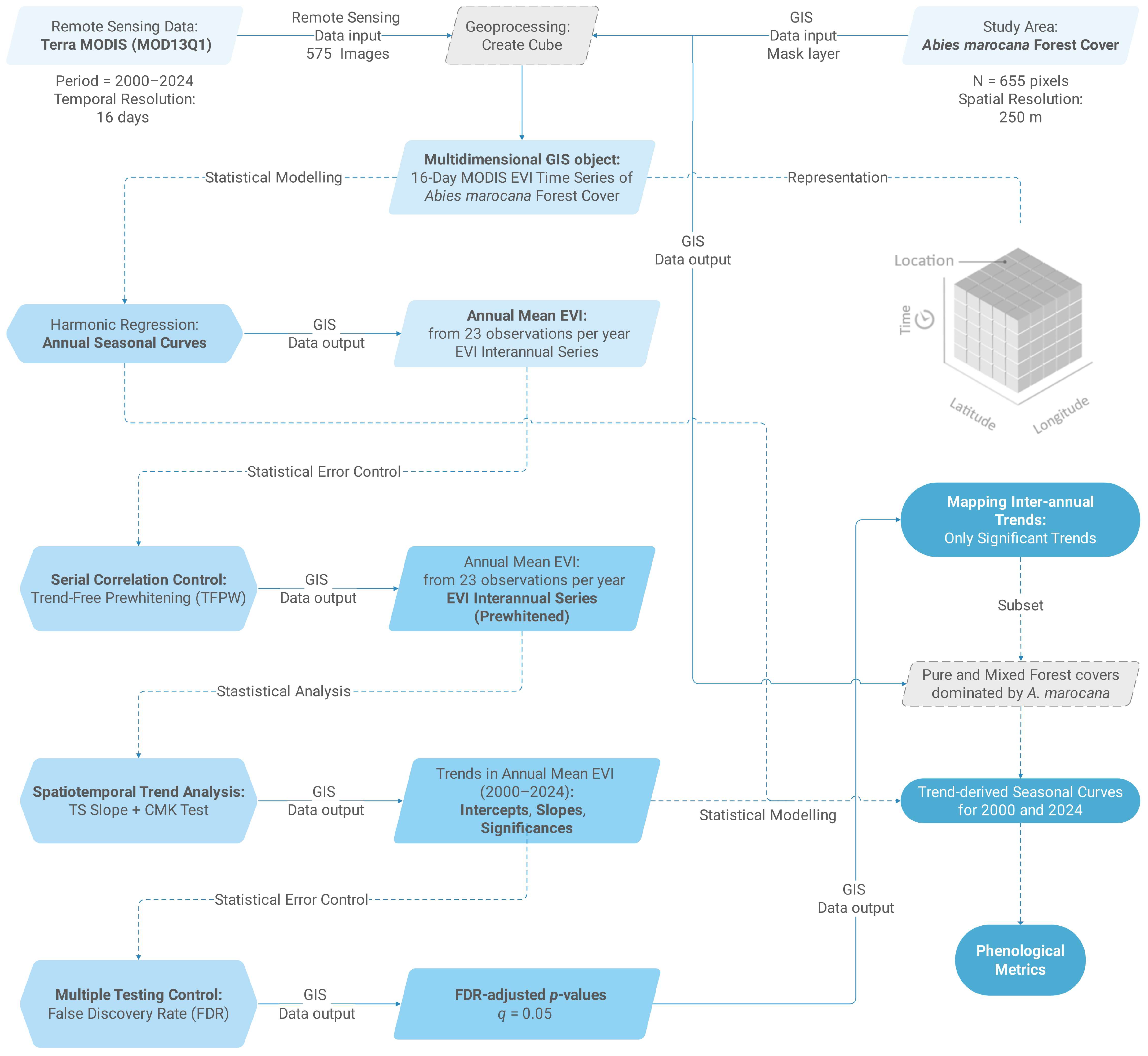
- Harmonic regression was applied to multi-year intra-annual time series, ensuring that the fitted seasonal parameters for each pixel integrated information from all years and captured the dominant annual and semi-annual components of vegetation seasonality.
- 2.1.
- Harmonic parameter time series exhibiting significant serial autocorrelation were corrected using an iterative trend-preserving prewhitening procedure prior to trend estimation and significance testing.
- 2.2.
- Temporal trends in the harmonic parameters were quantified using the Theil–Sen (TS) estimator, while statistical significance was assessed using a contextual Mann–Kendall (CMK) test accounting for spatial dependence among neighbouring pixels, followed by false discovery rate (FDR) correction to control for multiple testing across pixels.
- 3.
- Seasonal curves representing the beginning and end of the study period were reconstructed from the median slope and intercept values of the harmonic parameters. Phenological metrics were subsequently derived from these fitted curves and visualised only for pixels exhibiting statistically significant trends and corresponding to areas with pure or dominant presence of A. marocana.
2.4. Phenological Metrics
3. Results
3.1. Evidence of Widespread Significant Greening Across Moroccan Fir Forest Cover
3.2. Intensification and Extension of the Growing Season
4. Discussion
5. Conclusions
Supplementary Materials
Author Contributions
Funding
Data Availability Statement
Acknowledgments
Conflicts of Interest
References
- Trabut, L. Sur La Présence d’un Abies Nouveau Au Maroc (Abies marocana). Bull. De La Société Bot. De Fr. 1906, 53, 154–155. [Google Scholar] [CrossRef]
- Trabut, L. Le Sapin Du Maroc. Abies Marocana Trab. (Soc. Bot. Fr., 1906). Bull. De La Société Bot. De Fr. 1928, 75, 897–902. [Google Scholar] [CrossRef]
- Linares, J.C. Biogeography and Evolution of Abies (Pinaceae) in the Mediterranean Basin: The Roles of Long-Term Climatic Change and Glacial Refugia. J. Biogeogr. 2011, 38, 619–630. [Google Scholar] [CrossRef]
- Ben-Said, M.; El Aich, N.; Berrad, F.; Ghallab, A. Knowledge Status of the Endemic Moroccan Fir Forest (Abies marocana Trab.): Achievements, Gaps, and New Research Axes. Bull. De L’institut Sci. Rabat Sect. Sci. De La Vie 2024, 46, 1–16. Available online: https://portal.issn.org/resource/ISSN/2458-7184 (accessed on 19 May 2026). [CrossRef]
- Aussenac, G. Ecology and Ecophysiology of Circum-Mediterranean Firs in the Context of Climate Change. Ann. For. Sci. 2002, 59, 823–832. [Google Scholar] [CrossRef]
- Caudullo, G.; Tinner, W. Abies–Circum-Mediterranean Firs in Europe: Distribution, Habitat, Usage and Threats. In European Atlas of Forest Tree Species; European Commission: Brussels, Belgium, 2016; p. e01e1b6+. Available online: https://forest.jrc.ec.europa.eu/media/atlas/Abies_spp.pdf (accessed on 19 May 2026).
- Ben-Said, M. The Taxonomy of Moroccan Fir Abies marocana Trab. (Pinaceae): Conceptual Clarifications from Phylogenetic Studies. Mediterr. Bot. 2022, 43, e71201. [Google Scholar] [CrossRef]
- Dering, M.; Sekiewicz, K.; Boratyńska, K.; Litkowiec, M.; Iszkuło, G.; Romo, A.; Boratyński, A. Genetic Diversity and Inter-Specific Relations of Western Mediterranean Relic Abies Taxa as Compared to the Iberian A. Alba. Flora Morphol. Distrib. Funct. Ecol. Plants 2014, 209, 367–374. [Google Scholar] [CrossRef]
- Ben-Said, M.; Ghallab, A.; Lamrhari, H.; Carreira, J.A.; Linares, J.C.; Taïqui, L. Characterizing Spatial Structure of Abies marocana Forest through Point Pattern Analysis. For. Syst. 2020, 29, e014. [Google Scholar] [CrossRef]
- Benabid, A. Flore et Écosystèmes Du Maroc. Évaluation et Préservation de La Biodiversité; Éditions Ibis Press: Paris, France, 2000. [Google Scholar]
- Alaoui, A.; Laaribya, S.; Ayan, S.; Ghallab, A.; López-Tirado, J. Modelling Spatial Distribution of Endemic Moroccan Fir (Abies marocana Trabut) in Talassemtane National Park, Morocco. Austrian J. For. Sci. 2021, 138, 73–94. Available online: https://www.forestscience.at/artikel/2021/02/modelling-spatial-distribution-of-endemic-moroccan-fir.html (accessed on 19 May 2026).
- Ben-Said, M.; Sakar, E.H. A Systematic Review on the Endemic Moroccan Fir (Abies marocana Trab.) and Its Implications for Conservation and Future Research Perspectives. Folia Geobot. 2023, 58, 31–53. [Google Scholar] [CrossRef]
- Hatzilazarou, S.; El Haissoufi, M.; Pipinis, E.; Kostas, S.; Libiad, M.; Khabbach, A.; Lamchouri, F.; Bourgou, S.; Megdiche-Ksouri, W.; Ghrabi-Gammar, Z.; et al. GIS-Facilitated Seed Germination and Multifaceted Evaluation of the Endangered Abies marocana Trab. (Pinaceae) Enabling Conservation and Sustainable Exploitation. Plants 2021, 10, 2606. [Google Scholar] [CrossRef] [PubMed]
- Eamus, D.; Huete, A.; Yu, Q. Vegetation Dynamics. A Synthesis of Plant Ecophysiology, Remote Sensing and Modelling; Cambridge University Press: Cambridge, UK, 2016. [Google Scholar]
- Pettorelli, N.; Vik, J.O.; Mysterud, A.; Gaillard, J.M.; Tucker, C.J.; Stenseth, N.C. Using the Satellite-Derived NDVI to Assess Ecological Responses to Environmental Change. Trends Ecol. Evol. 2005, 20, 503–510. [Google Scholar] [CrossRef] [PubMed]
- Clarivate Analytics. Research Fronts 2020; Clarivate Analytics: London, UK, 2021; Available online: https://discover.clarivate.com/ResearchFronts2020_EN (accessed on 19 May 2026).
- Kuenzer, C.; Dech, S.; Wagner, W. (Eds.) Remote Sensing Time Series; Springer International Publishing: Cham, Switzerland, 2015; Volume 22. [Google Scholar] [CrossRef]
- Schwartz, M.D. (Ed.) Phenology: An Integrative Environmental Science; Springer: Dordrecht, The Netherlands, 2013. [Google Scholar]
- Helman, D. Land Surface Phenology: What Do We Really ‘See’ from Space? Sci. Total Environ. 2018, 618, 665–673. [Google Scholar] [CrossRef] [PubMed]
- Roerink, G.J.; Menenti, M.; Soepboer, W.; Su, Z. Assessment of Climate Impact on Vegetation Dynamics by Using Remote Sensing. Phys. Chem. Earth 2003, 28, 103–109. [Google Scholar] [CrossRef]
- Park, J.S.; Post, E. Seasonal Timing on a Cyclical Earth: Towards a Theoretical Framework for the Evolution of Phenology. PLoS Biol. 2022, 20, e3001952. [Google Scholar] [CrossRef] [PubMed]
- Urdiales-Flores, D.; Zittis, G.; Hadjinicolaou, P.; Osipov, S.; Klingmüller, K.; Mihalopoulos, N.; Kanakidou, M.; Economou, T.; Lelieveld, J. Drivers of Accelerated Warming in Mediterranean Climate-Type Regions. npj Clim. Atmos. Sci. 2023, 6, 97. [Google Scholar] [CrossRef]
- Qadem, Z.; Tayfur, G. In-Depth Exploration of Temperature Trends in Morocco: Combining Traditional Methods of Mann Kendall with Innovative ITA and IPTA Approaches. Pure Appl. Geophys. 2024, 181, 2717–2739. [Google Scholar] [CrossRef]
- Cuttelod, A.; García, N.; Abdul Malak, D.; Temple, H.; Katariya, V. The Mediterranean: A Biodiversity Hotspot under Threat. In The 2008 Review of The IUCN Red List of Threatened Species; IUCN: Gland, Switzerland, 2008; Available online: https://iucn.org/sites/default/files/import/downloads/the_mediterranean_a_biodiversity_hotspot_under_threat.pdf (accessed on 19 May 2026).
- Aurelle, D.; Thomas, S.; Albert, C.; Bally, M.; Bondeau, A.; Boudouresque, C.; Cahill, A.E.; Carlotti, F.; Chenuil, A.; Cramer, W.; et al. Biodiversity, Climate Change, and Adaptation in the Mediterranean. Ecosphere 2022, 13, e3915. [Google Scholar] [CrossRef]
- Vogel, J.; Paton, E.; Aich, V. Seasonal Ecosystem Vulnerability to Climatic Anomalies in the Mediterranean. Biogeosciences 2021, 18, 5903–5927. [Google Scholar] [CrossRef]
- Peñuelas, J.; Sardans, J.; Filella, I.; Estiarte, M.; Llusià, J.; Ogaya, R.; Carnicer, J.; Bartrons, M.; Rivas-Ubach, A.; Grau, O.; et al. Impacts of Global Change on Mediterranean Forests and Their Services. Forests 2017, 8, 463. [Google Scholar] [CrossRef]
- García-Ruiz, J.M.; Arnáez, J.; Lasanta, T.; Nadal-Romero, E.; López-Moreno, J.I. Mountain Environments: Changes and Impacts; Springer Nature: Cham, Switzerland, 2024. [Google Scholar] [CrossRef]
- Reed, B.C.; Schwartz, M.D.; Xiao, X. Remote Sensing Phenology. In Phenology of Ecosystem Processes; Springer: New York, NY, USA, 2009; pp. 231–246. [Google Scholar] [CrossRef]
- Caparros-Santiago, J.A.; Rodríguez-Galiano, V.; Dash, J. Land Surface Phenology as Indicator of Global Terrestrial Ecosystem Dynamics: A Systematic Review. ISPRS J. Photogramm. Remote Sens. 2021, 171, 330–347. [Google Scholar] [CrossRef]
- Jones, H.G.; Vaughan, R.A. Remote Sensing of Vegetation: Principles, Techniques, and Applications; OUP Oxford: New York, UK, 2010. [Google Scholar]
- Zhou, L.; Zhou, W.; Chen, J.; Xu, X.; Wang, Y.; Zhuang, J.; Chi, Y. Land Surface Phenology Detections from Multi-Source Remote Sensing Indices Capturing Canopy Photosynthesis Phenology across Major Land Cover Types in the Northern Hemisphere. Ecol. Indic. 2022, 135, 108579. [Google Scholar] [CrossRef]
- Gutiérrez-Hernández, O.; García, L.V. Robust Trend Analysis in Environmental Remote Sensing: A Case Study of Cork Oak Forest Decline. Remote Sens. 2024, 16, 3886. [Google Scholar] [CrossRef]
- Yue, S.; Wang, C.Y. Applicability of Prewhitening to Eliminate the Influence of Serial Correlation on the Mann-Kendall Test. Water Resour. Res. 2002, 38, 4-1–4-7. [Google Scholar] [CrossRef]
- Gutiérrez-Hernández, O.; García, L.V. Trends in Vegetation Seasonality in the Iberian Peninsula: Spatiotemporal Analysis Using AVHRR-NDVI Data (1982–2023). Sustainability 2024, 16, 9389. [Google Scholar] [CrossRef]
- Gutiérrez-Hernández, O.; García, L.V. The Ghost of Selective Inference in Spatiotemporal Trend Analysis. Sci. Total Environ. 2025, 958, 177832. [Google Scholar] [CrossRef] [PubMed]
- Heumann, B.W. The Multiple Comparison Problem in Empirical Remote Sensing. Photogramm. Eng. Remote Sens. 2015, 81, 921–926. [Google Scholar] [CrossRef]
- Clements, N.; Sarkar, S.K.; Zhao, Z.; Kim, D.-Y. Applying Multiple Testing Procedures to Detect Change in East African Vegetation. Ann. Appl. Stat. 2014, 8, 286–308. [Google Scholar] [CrossRef]
- Gutiérrez-Hernández, O.; García, L.V. Multiple Testing in Remote Sensing: Addressing the Elephant in the Room. 2024. Available online: https://papers.ssrn.com/sol3/papers.cfm?abstract_id=4891512 (accessed on 19 May 2026). [CrossRef]
- Ulbrich, U.; May, W.; Li, L.; Lionello, P.; Pinto, J.G.; Somot, S. The Mediterranean Climate Change Under Global Warming; Elsevier: Amsterdam, The Netherlands, 2006. [Google Scholar] [CrossRef]
- Underwood, E.C.; Viers, J.H.; Klausmeyer, K.R.; Cox, R.L.; Shaw, M.R. Threats and Biodiversity in the Mediterranean Biome. Divers. Distrib. 2009, 15, 188–197. [Google Scholar] [CrossRef]
- Ben-Said, M. Upward Shifts of Species Range in Mediterranean High-Mountain Forests Under Current Climate Change: A Review. Biol. Environ. Proc. R. Ir. Acad. 2022, 122B, 39–52. [Google Scholar] [CrossRef]
- Peñuelas, J.; Rutishauser, T.; Filella, I. Phenology Feedbacks on Climate Change. Science (1979) 2009, 324, 887–888. [Google Scholar] [CrossRef] [PubMed]
- Gutiérrez-Hernández, O.; Cámara-Artigas, R.; García, L.V. Regeneration Dynamics of the Baetic Spanish Fir Forests. Inter-Annual and Seasonal Trends Analysis of NDVI. Pirin. Rev. Ecol. Montaña 2018, 173, e035. [Google Scholar] [CrossRef]
- Kottek, M.; Grieser, J.; Beck, C.; Rudolf, B.; Rubel, F. World Map of Köppen−Geiger Climate Classification. Meteorol. Z. 2006, 15, 259–263. [Google Scholar] [CrossRef] [PubMed]
- Navarro-Cerrillo, R.M.; Manzanedo, R.D.; Rodríguez-Vallejo, C.; Gazol, A.; Palacios-Rodríguez, G.; Camarero, J.J. Competition Modulates the Response of Growth to Climate in Pure and Mixed Abies Pinsapo Subsp. Maroccana Forests in Northern Morocco. For. Ecol. Manag. 2020, 459, 117847. [Google Scholar] [CrossRef]
- Gutiérrez-Hernández, O. A Short Note on the Distribution and Tree Cover of the Moroccan Fir (Abies marocana Trab.) in Talassemtane National Park (Western Rif). Pirineos, accepted for publication. 2026. [CrossRef] [PubMed]
- Gutiérrez-Hernández, O. Mapping the Distribution of Abies marocana: Geospatial Reference Data for Biogeographical Research and Conservation. In Proceedings of the 2025 EUROGEO Annual Meeting and Conference; EUROGEO: Skopje, North Macedonia, 2025. [Google Scholar] [CrossRef]
- Chergui, B.; Fahd, S.; Santos, X.; Pausas, J.G. Moroccan Cannabis Farms Threaten Biodiversity. Science (1979) 2024, 385, 941. [Google Scholar] [CrossRef]
- Castro, I.; Stan, A.B.; Taïqui, L.; Schiefer, E.; Ghallab, A.; Derak, M.; Fulé, P.Z. Detecting Fire-Caused Forest Loss in a Moroccan Protected Area. Fire 2022, 5, 51. [Google Scholar] [CrossRef]
- Huete, A.; Didan, K.; Miura, T.; Rodríguez, E.P.; Gao, X.; Ferreira, L.G. Overview of the Radiometric and Biophysical Performance of the MODIS Vegetation Indices. Remote Sens. Environ. 2002, 83, 195–213. [Google Scholar] [CrossRef]
- Rouse, J.; Haas, R.; Schell, J. Monitoring the Vernal Advancement and Retrogradation (Greenwave Effect) of Natural Vegetation; Texas A & M University: College Station, TX, USA, 1974; pp. 1–8. Available online: https://ntrs.nasa.gov/citations/19740022555 (accessed on 19 May 2026).
- Huete, A.R.; Didan, K.; Shimabukuro, Y.E.; Ratana, P.; Saleska, S.R.; Hutyra, L.R.; Yang, W.; Nemani, R.R.; Myneni, R. Amazon Rainforests Green-up with Sunlight in Dry Season. Geophys. Res. Lett. 2006, 33. [Google Scholar] [CrossRef]
- Kaufman, Y.J.; Tanre, D. Atmospherically Resistant Vegetation Index (ARVI) for EOS-MODIS. IEEE Trans. Geosci. Remote Sens. 1992, 30, 261–270. [Google Scholar] [CrossRef]
- Didan, K. MODIS/Terra Vegetation Indices 16-Day L3 Global 250m SIN Grid V061 [Data Set]. 2021. Available online: https://www.earthdata.nasa.gov/data/catalog/lpcloud-mod13q1-061 (accessed on 23 February 2026).
- Roerink, G.J.; Menenti, M.; Verhoef, W. Reconstructing Cloudfree NDVI Composites Using Fourier Analysis of Time Series. Int. J. Remote Sens. 2000, 21, 1911–1917. [Google Scholar] [CrossRef]
- Eastman, J. Earth Trends Modeler; Version 20 (liberaGIS); Clark Center for Geospatial Analytics (ClarkCGA), Clark University: Worcester, MA, USA, 2025; Available online: https://www.clarku.edu/geospatial-analytics/ (accessed on 25 May 2026).
- Gutiérrez-Hernández, O. The Baetic-Rifan Firs (Abies Pinsapo and Abies marocana): Geospatial Reference Data for Comparative Analysis and Conservation of the Westernmost Circum-Mediterranean Firs. In Proceedings of the 7th International Congress on Biodiversity and Nature Conservation (Conserbio 2025); Conserbio: Seville, Spain, 2025. [Google Scholar] [CrossRef]
- Gutiérrez-Hernández, O. Distribution and Tree Cover of the Moroccan Fir (Abies marocana Trab.) in Talassemtane National Park (Western Rif, Northern Morocco) [Dataset]. 2025. Available online: https://riuma.uma.es/entities/publication/f193eb82-68bc-4354-8269-b2fb674ef4e0 (accessed on 25 May 2026). [CrossRef]
- Hijmans, R.J. terra: Spatial Data Analysis, R Rackage Version 1.9-27; 2025. Available online: https://CRAN.R-project.org/package=terra (accessed on 25 May 2026).
- Eastman, J.R.; Clark Labs. TerrSet: Geospatial Monitoring and Modeling Software; Version 20; Clark University: Worcester, MA, USA, 2024. [Google Scholar]
- Eastman, J.R.; Sangermano, F.; Ghimire, B.; Zhu, H.; Chen, H.; Neeti, N.; Cai, Y.; Machado, E.A.; Crema, S.C. Seasonal Trend Analysis of Image Time Series. Int. J. Remote Sens. 2009, 30, 2721–2726. [Google Scholar] [CrossRef]
- Eastman, J.R.; Sangermano, F.; Machado, E.A.; Rogan, J.; Anyamba, A. Global Trends in Seasonality of Normalized Difference Vegetation Index (NDVI), 1982–2011. Remote Sens. 2013, 5, 4799–4818. [Google Scholar] [CrossRef]
- Wang, X.L.; Swail, V.R. Changes of Extreme Wave Heights in Northern Hemisphere Oceans and Related Atmospheric Circulation Regimes. J. Clim. 2001, 14, 2204–2221. [Google Scholar] [CrossRef]
- Durbin, J.; Watson, G.S. Testing for Serial Correlation in Least Squares Regression: I. Biometrika 1950, 37, 409–428. [Google Scholar] [CrossRef]
- Durbin, J.; Watson, G.S. Testing for Serial Correlation in Least Squares Regression: II. Biometrika 1951, 38, 159–178. [Google Scholar] [CrossRef]
- Neeti, N.; Eastman, J.R. A Contextual Mann-Kendall Approach for the Assessment of Trend Significance in Image Time Series. Trans. GIS 2011, 15, 599–611. [Google Scholar] [CrossRef]
- Benjamini, Y. Discovering the False Discovery Rate. J. R. Stat. Soc. Ser. B Stat. Methodol. 2010, 72, 405–416. [Google Scholar] [CrossRef]
- Benjamini, Y.; Hochberg, Y. Controlling the False Discovery Rate: A Practical and Powerful Approach to Multiple Testing. J. R. Stat. Soc. Ser. B (Methodol.) 1995, 57, 289–300. [Google Scholar] [CrossRef]
- Gutiérrez-Hernández, O.; García, L.V. False Discovery Rate Estimation and Control in Remote Sensing: Reliable Statistical Significance in Spatially Dependent Gridded Data. Remote Sens. Lett. 2025, 16, 537–548. [Google Scholar] [CrossRef]
- Eklundh, L.; Jönsson, P. TIMESAT: A Software Package for Time-Series Processing and Assessment of Vegetation Dynamics. In Remote Sensing Time Series; Springer: Berlin/Heidelberg, Germany, 2015; pp. 141–158. [Google Scholar] [CrossRef]
- Zhang, X.; Friedl, M.A.; Schaaf, C.B.; Strahler, A.H.; Hodges, J.C.F.; Gao, F.; Reed, B.C.; Huete, A. Monitoring Vegetation Phenology Using MODIS. Remote Sens. Environ. 2003, 84, 471–475. [Google Scholar] [CrossRef]
- Zeng, L.; Wardlow, B.D.; Xiang, D.; Hu, S.; Li, D. A Review of Vegetation Phenological Metrics Extraction Using Time-Series, Multispectral Satellite Data. Remote Sens. Environ. 2020, 237, 111511. [Google Scholar] [CrossRef]
- Reed, B.C. Trend Analysis of Time-Series Phenology of North America Derived from Satellite Data. GIsci. Remote Sens. 2006, 43, 24–38. [Google Scholar] [CrossRef]
- Gonsamo, A.; Chen, J.M.; Ooi, Y.W. Peak Season Plant Activity Shift towards Spring Is Reflected by Increasing Carbon Uptake by Extratropical Ecosystems. Glob. Change Biol. 2018, 24, 2117–2128. [Google Scholar] [CrossRef]
- Myneni, R.B.; Keeling, C.D.; Tucker, C.J.; Asrar, G.; Nemani, R.R. Increased Plant Growth in the Northern High Latitudes from 1981 to 1991. Nature 1997, 386, 698–702. [Google Scholar] [CrossRef]
- Peñuelas, J.; Filella, I.; Comas, P. Changed Plant and Animal Life Cycles from 1952 to 2000 in the Mediterranean Region. Glob. Change Biol. 2002, 8, 531–544. [Google Scholar] [CrossRef]
- Piao, S.; Friedlingstein, P.; Ciais, P.; de Noblet-Ducoudré, N.; Labat, D.; Zaehle, S. Changes in Climate and Land Use Have a Larger Direct Impact than Rising CO2 on Global River Runoff Trends. Proc. Natl. Acad. Sci. USA 2007, 104, 15242–15247. [Google Scholar] [CrossRef] [PubMed]
- Richardson, A.D.; Keenan, T.F.; Migliavacca, M.; Ryu, Y.; Sonnentag, O.; Toomey, M. Climate Change, Phenology, and Phenological Control of Vegetation Feedbacks to the Climate System. Agric. For. Meteorol. 2013, 169, 156–173. [Google Scholar] [CrossRef]
- Gao, M.; Piao, S.; Chen, A.; Yang, H.; Liu, Q.; Fu, Y.H.; Janssens, I.A. Divergent Changes in the Elevational Gradient of Vegetation Activities over the Last 30 Years. Nat. Commun. 2019, 10, 2970. [Google Scholar] [CrossRef] [PubMed]
- Guyon, D.; Guillot, M.; Vitasse, Y.; Cardot, H.; Hagolle, O.; Delzon, S.; Wigneron, J.-P. Monitoring Elevation Variations in Leaf Phenology of Deciduous Broadleaf Forests from SPOT/VEGETATION Time-Series. Remote Sens. Environ. 2011, 115, 615–627. [Google Scholar] [CrossRef]
- Ma, S.; Pitman, A.J.; Lorenz, R.; Kala, J.; Srbinovsky, J. Earlier Green-up Amplifies Spring Warming over Europe. Geophys. Res. Lett. 2016, 46, 582–589. [Google Scholar] [CrossRef]
- Buitenwerf, R.; Rose, L.; Higgins, S.I. Three Decades of Multi-Dimensional Change in Global Leaf Phenology. Nat. Clim. Change 2015, 5, 364–368. [Google Scholar] [CrossRef]
- Jönsson, P.; Eklundh, L. Seasonality Extraction by Function Fitting to Time-Series of Satellite Sensor Data. IEEE Trans. Geosci. Remote Sens. 2002, 40, 1824–1832. [Google Scholar] [CrossRef]
- White, M.A.; Thornton, P.E.; Running, S.W. A Continental Phenology Model for Monitoring Vegetation Responses to Interannual Climatic Variability. Glob. Biogeochem. Cycles 1997, 11, 217–234. [Google Scholar] [CrossRef]
- Jönsson, P.; Eklundh, L. TIMESAT—A Program for Analyzing Time-Series of Satellite Sensor Data. Comput. Geosci. 2004, 30, 833–845. [Google Scholar] [CrossRef]
- Körner, C. Alpine Treelines; Springer: Basel, Switzerland, 2012. [Google Scholar]
- Mountain Research Initiative EDW Working Group. Elevation-Dependent Warming in Mountain Regions of the World. Nat. Clim. Change 2015, 5, 424–430. [Google Scholar] [CrossRef]
- Nemani, R.R.; Keeling, C.D.; Hashimoto, H.; Jolly, W.M.; Piper, S.C.; Tucker, C.J.; Myneni, R.B.; Running, S.W. Climate-Driven Increases in Global Terrestrial Net Primary Production from 1982 to 1999. Science (1979) 2003, 300, 1560–1563. [Google Scholar] [CrossRef] [PubMed]
- Gutiérrez-Hernández, O. Tendencias Recientes Del NDVI En Andalucía: Los Límites Del Reverdecimiento. Boletín De La Asoc. De Geógrafos Españoles 2022, 94, 1–36. [Google Scholar] [CrossRef]
- Vicente-Serrano, S.M.; Domínguez-Castro, F.; Murphy, C.; Peña-Angulo, D.; Tomas-Burguera, M.; Noguera, I.; López-Moreno, J.I.; Juez, C.; Grainger, S.; Eklundh, L.; et al. Increased Vegetation in Mountainous Headwaters Amplifies Water Stress During Dry Periods. Geophys. Res. Lett. 2021, 48, e2021GL094672. [Google Scholar] [CrossRef]
- Gutiérrez-Hernández, O.; García, L.V. Uncovering True Significant Trends in Global Greening. Remote Sens. Appl. 2025, 37, 101377. [Google Scholar] [CrossRef]
- Westerling, A.L.; Hidalgo, H.G.; Cayan, D.R.; Swetnam, T.W. Warming and Earlier Spring Increase Western U.S. Forest Wildfire Activity. Science (1979) 2006, 313, 940–943. [Google Scholar] [CrossRef] [PubMed]
- Gutiérrez-Hernández, O.; García, L.V. Implementing the Linear Adaptive False Discovery Rate Procedure for Spatiotemporal Trend Testing. Mathematics 2025, 13, 3630. [Google Scholar] [CrossRef]
- Glenn, E.P.; Huete, A.R.; Nagler, P.L.; Nelson, S.G. Relationship Between Remotely-Sensed Vegetation Indices, Canopy Attributes and Plant Physiological Processes: What Vegetation Indices Can and Cannot Tell Us About the Landscape. Sensors 2008, 8, 2136–2160. [Google Scholar] [CrossRef] [PubMed]
- Huemmrich, K.F.; Vargas Zesati, S.; Campbell, P.; Tweedie, C. Canopy Reflectance Models Illustrate Varying NDVI Responses to Change in High Latitude Ecosystems. Ecol. Appl. 2021, 31, e02435. [Google Scholar] [CrossRef] [PubMed]
- Wang, H.; Muller, J.D.; Tatarinov, F.; Yakir, D.; Rotenberg, E. Disentangling Soil, Shade, and Tree Canopy Contributions to Mixed Satellite Vegetation Indices in a Sparse Dry Forest. Remote Sens. 2022, 14, 3681. [Google Scholar] [CrossRef]
- Ma, X.; Zhu, X.; Xie, Q.; Jin, J.; Zhou, Y.; Luo, Y.; Liu, Y.; Tian, J.; Zhao, Y. Monitoring Nature’s Calendar from Space: Emerging Topics in Land Surface Phenology and Associated Opportunities for Science Applications. Glob. Change Biol. 2022, 28, 7186–7204. [Google Scholar] [CrossRef] [PubMed]
- Lu, X.; Liu, Z.; Zhou, Y.; Liu, Y.; An, S.; Tang, J. Comparison of Phenology Estimated from Reflectance-Based Indices and Solar-Induced Chlorophyll Fluorescence (SIF) Observations in a Temperate Forest Using GPP-Based Phenology as the Standard. Remote Sens. 2018, 10, 932. [Google Scholar] [CrossRef]
- Li, M.; Cao, S.; Zhu, Z.; Wang, Z.; Myneni, R.B.; Piao, S. Spatiotemporally Consistent Global Dataset of the GIMMS Normalized Difference Vegetation Index (PKU GIMMS NDVI) from 1982 to 2022. Earth Syst. Sci. Data 2023, 15, 4181–4203. [Google Scholar] [CrossRef]
- Dronova, I.; Taddeo, S. Remote Sensing of Phenology: Towards the Comprehensive Indicators of Plant Community Dynamics from Species to Regional Scales. J. Ecol. 2022, 110, 1460–1484. [Google Scholar] [CrossRef]
- Wulder, M.A.; Roy, D.P.; Radeloff, V.C.; Loveland, T.R.; Anderson, M.C.; Johnson, D.M.; Healey, S.; Zhu, Z.; Scambos, T.A.; Pahlevan, N.; et al. Fifty Years of Landsat Science and Impacts. Remote Sens. Environ. 2022, 280, 113195. [Google Scholar] [CrossRef]
- Girardello, M.; Checcherini, G.; Duveiller, G.; Migliavacca, M.; Cescatti, A. Patterns and Trends in the Spatial Heterogeneity of Land Surface Phenology of Global Forests. Environ. Res. Commun. 2024, 6, 041004. [Google Scholar] [CrossRef]
- Chen, R.; Yin, G.; Liu, G.; Li, J.; Verger, A. Evaluation and Normalization of Topographic Effects on Vegetation Indices. Remote Sens. 2020, 12, 2290. [Google Scholar] [CrossRef]
- Peñuelas, J.; Sardans, J. Global Change and Forest Disturbances in the Mediterranean Basin: Breakthroughs, Knowledge Gaps, and Recommendations. Forests 2021, 12, 603. [Google Scholar] [CrossRef]


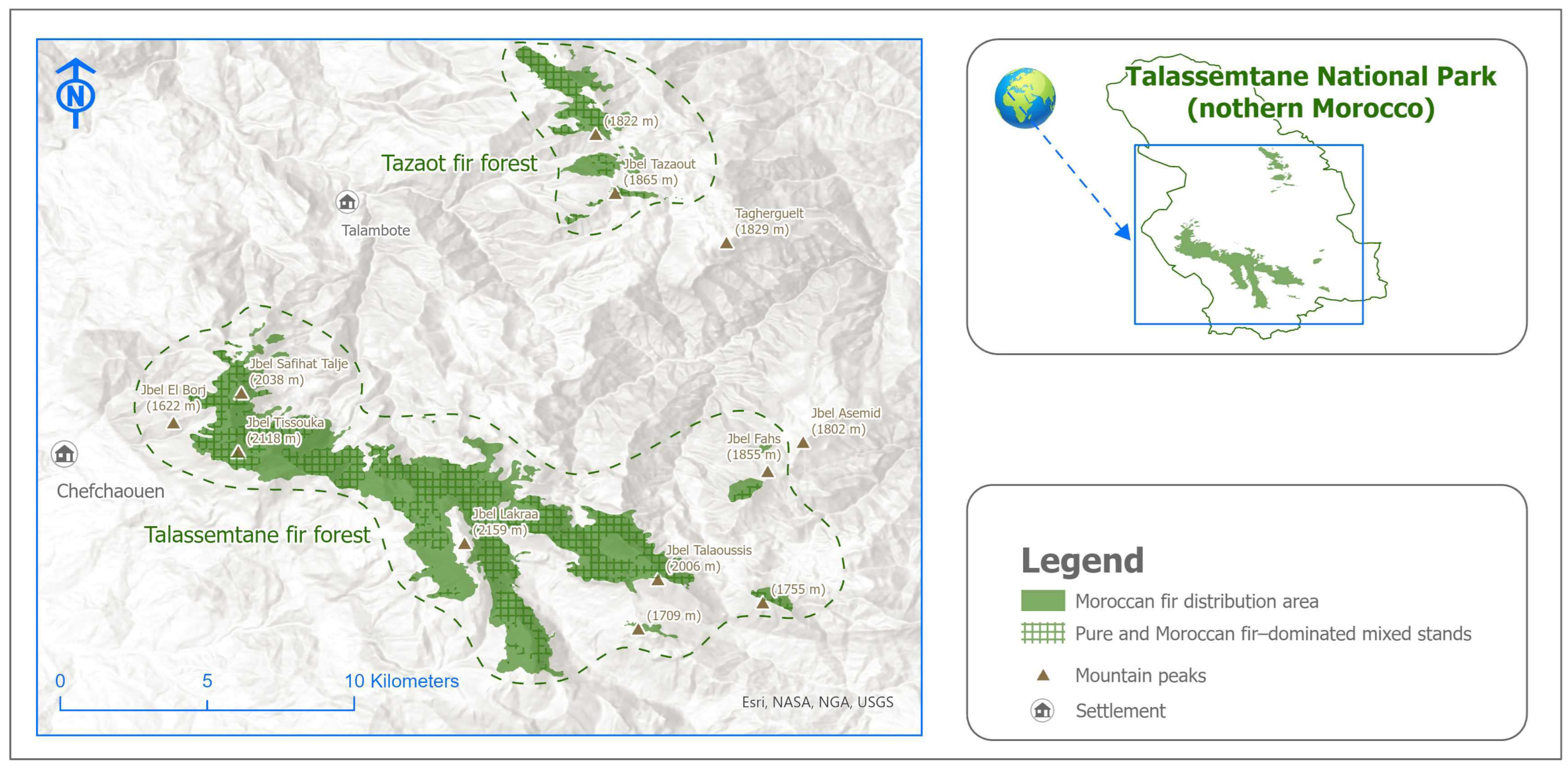

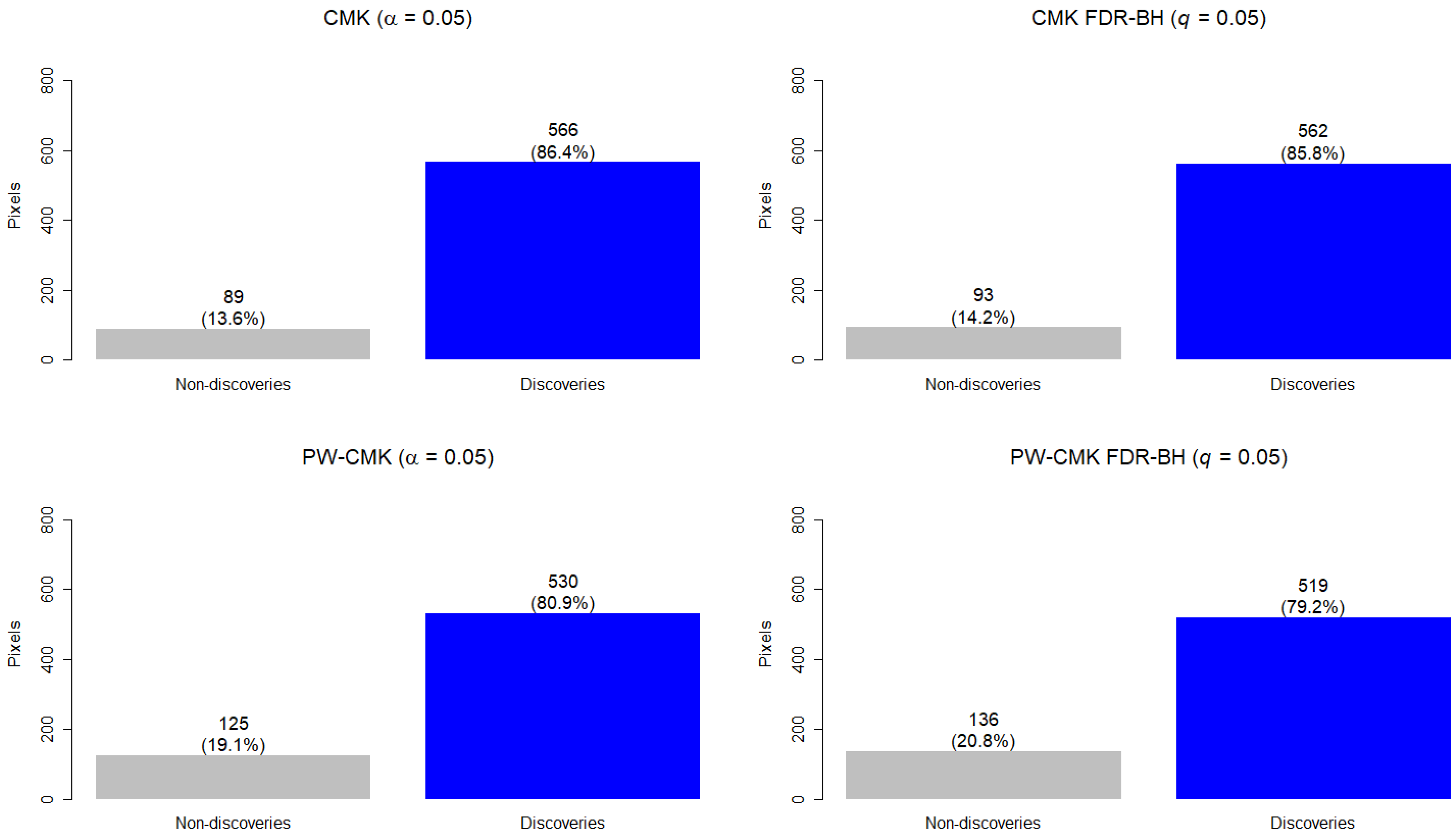
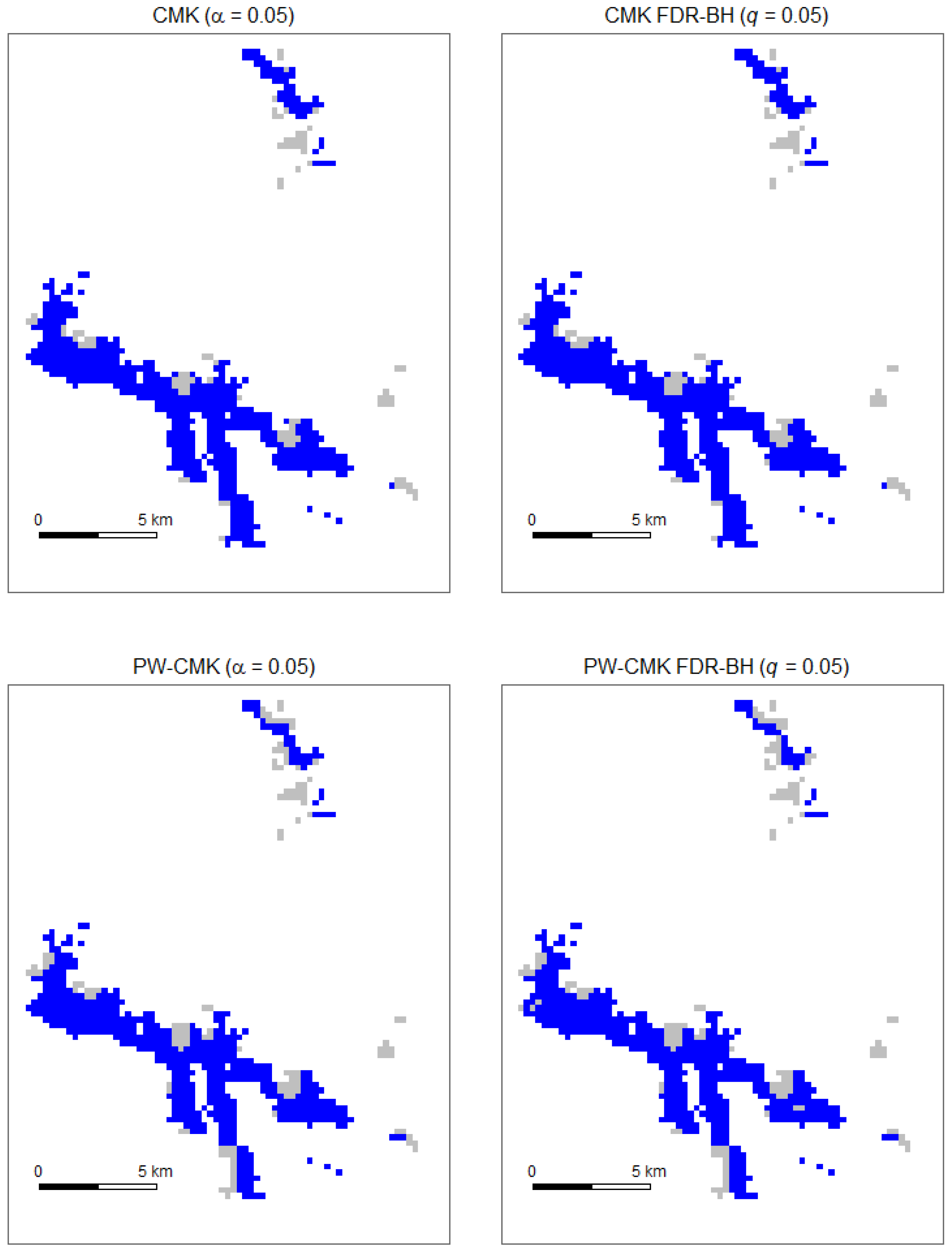
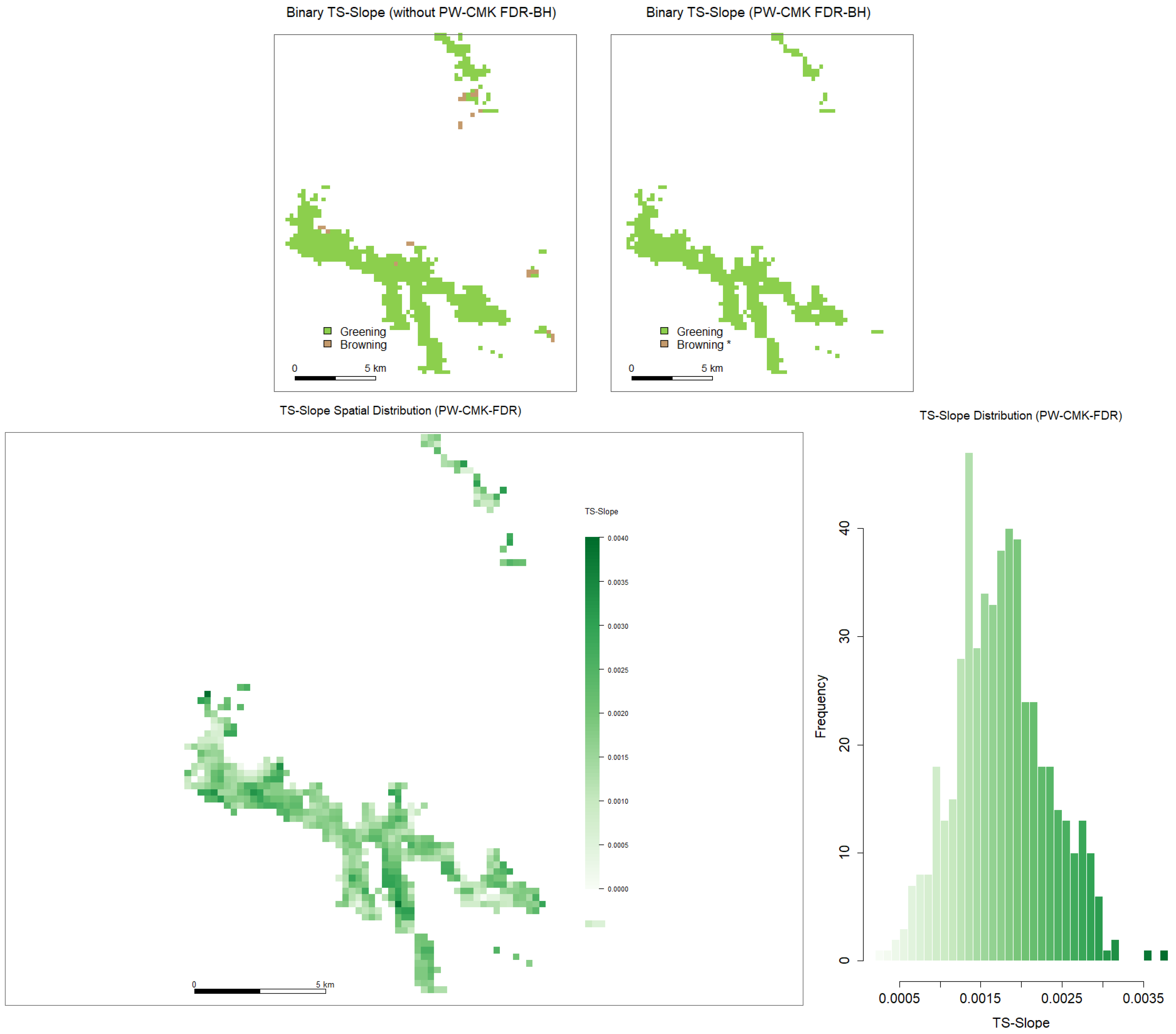

| Metric | Description |
|---|---|
| Mean seasonal EVI | Average value of the fitted EVI curve for each fitted seasonal curve. This metric reflects overall vegetation productivity and mean canopy greenness. |
| Peak EVI | Maximum value of the fitted seasonal EVI curve, together with its corresponding day of year (DOY). This metric represents the highest level of canopy development and photosynthetic activity during the growing season. |
| Seasonal amplitude | Difference between the maximum and minimum values of the fitted seasonal EVI curve. This metric quantifies the intensity of seasonal vegetation dynamics and the contrast between dormant and peak conditions. |
| AUC | Area under the fitted seasonal EVI curve (AUC). This metric represents cumulative vegetation activity and integrates both seasonal duration and productivity. |
| Centroid of seasonal activity | The centroid of seasonal activity is the DOY representing the centre of mass of the fitted seasonal EVI curve. It indicates when cumulative vegetation activity is temporally centred within the annual cycle. |
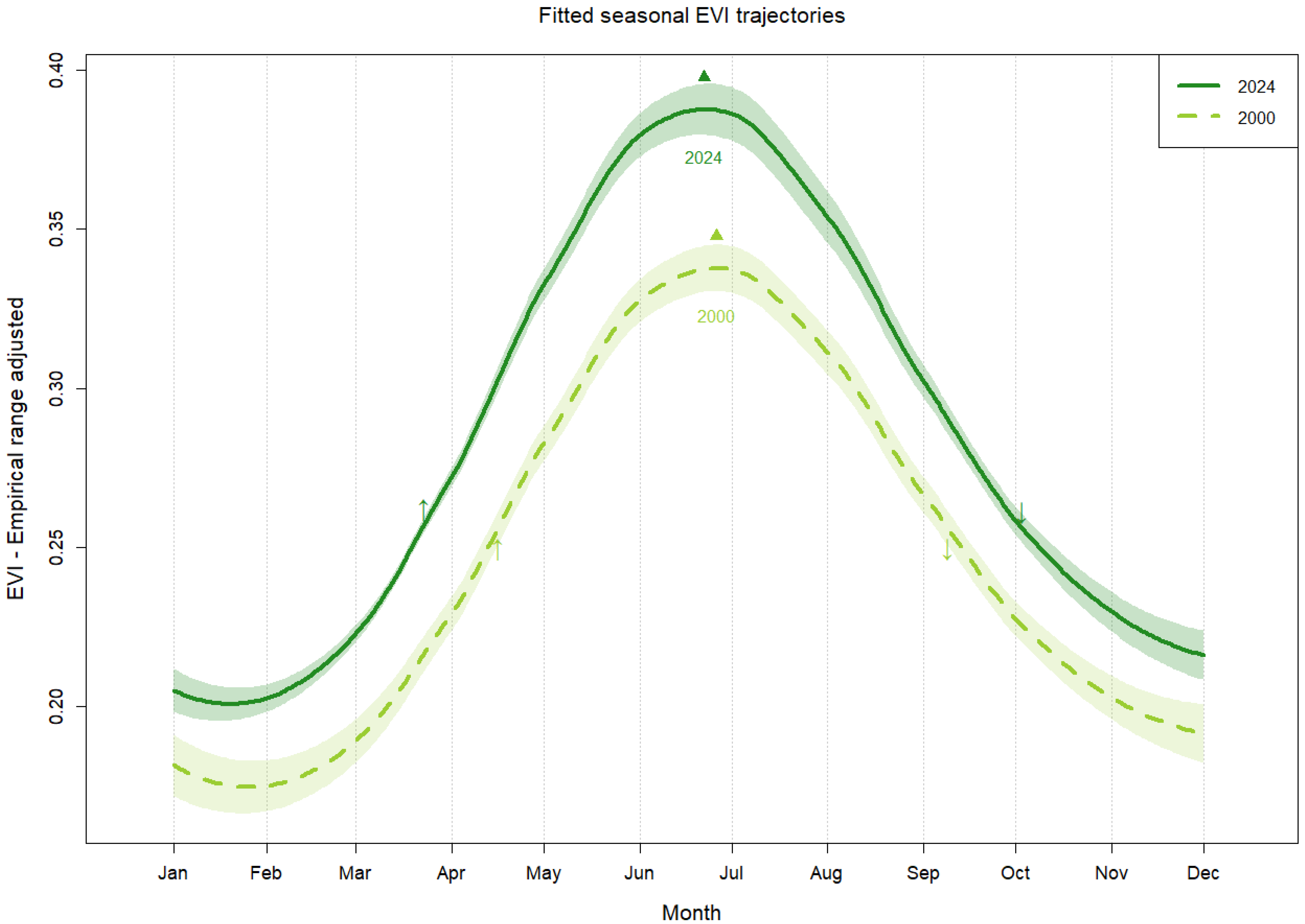
| Green-up | Day of year (DOY) when the fitted seasonal curve reaches 50% of the maximum EVI value of the baseline year (2000) during the ascending phase. This baseline-referenced threshold ensures consistent identification of seasonal onset. |
| Green-down | Day of year (DOY) when the fitted seasonal curve reaches 50% of the maximum EVI value of the baseline year (2000) during the descending phase. This baseline-referenced threshold ensures consistent identification of seasonal decline. |
| Growing season length | Number of days between green-up and green-down. This metric represents the duration of active vegetation growth derived from the fitted seasonal trajectory. |
| Seasonal asymmetry | Seasonal asymmetry measures the imbalance between the ascending and descending phases of the seasonal curve. It reflects whether green-up or senescence dominates the shape of the cycle. |
| Maximum slope of seasonal increase | The maximum slope of seasonal increase is the steepest rate of rise in fitted EVI during green-up. It indicates how rapidly vegetation accelerates growth at the start of the season. |
| Metric | 2000 | 2024 | Change |
|---|---|---|---|
| Mean EVI | 0.245 | 0.286 | +0.041 |
| Peak EVI | 0.337 | 0.387 | +0.050 |
| Seasonal amplitude | 0.163 | 0.186 | +0.023 |
| AUC | 83.22 | 95.82 | +12.60 |
| Green-up (DOY) | 120 | 96 | −24 days |
| Green-down (DOY) | 266 | 290 | +24 days |
| Growing season length (days) | 146 | 194 | +48 days |
Disclaimer/Publisher’s Note: The statements, opinions and data contained in all publications are solely those of the individual author(s) and contributor(s) and not of MDPI and/or the editor(s). MDPI and/or the editor(s) disclaim responsibility for any injury to people or property resulting from any ideas, methods, instructions or products referred to in the content. |
© 2026 by the authors. Licensee MDPI, Basel, Switzerland. This article is an open access article distributed under the terms and conditions of the Creative Commons Attribution (CC BY) license.
Share and Cite
Gutiérrez-Hernández, O.; García, L.V. Intensified and Extended Growing Seasons in Abies marocana Forests (2000–2024): A Robust Seasonal Trend Analysis Using 16-Day MODIS EVI Time Series. Remote Sens. 2026, 18, 2052. https://doi.org/10.3390/rs18122052
Gutiérrez-Hernández O, García LV. Intensified and Extended Growing Seasons in Abies marocana Forests (2000–2024): A Robust Seasonal Trend Analysis Using 16-Day MODIS EVI Time Series. Remote Sensing. 2026; 18(12):2052. https://doi.org/10.3390/rs18122052
Chicago/Turabian StyleGutiérrez-Hernández, Oliver, and Luis V. García. 2026. "Intensified and Extended Growing Seasons in Abies marocana Forests (2000–2024): A Robust Seasonal Trend Analysis Using 16-Day MODIS EVI Time Series" Remote Sensing 18, no. 12: 2052. https://doi.org/10.3390/rs18122052
APA StyleGutiérrez-Hernández, O., & García, L. V. (2026). Intensified and Extended Growing Seasons in Abies marocana Forests (2000–2024): A Robust Seasonal Trend Analysis Using 16-Day MODIS EVI Time Series. Remote Sensing, 18(12), 2052. https://doi.org/10.3390/rs18122052