4.1. LAI Determination Under Different Canopy Distribution Clumping
Since GEDI is a large-footprint lidar dataset with a footprint diameter of 25 m, its coverage is relatively wide. Although the measurement of LAI using on-site methods, such as the leaf collection method, has relatively high accuracy, it is limited by human and material resources, and it is difficult to conduct large-scale measurements. Although using optical leaf area index products for reference can cover a wide area and save a lot of manpower and material resources, problems such as insufficient accuracy and low resolution will cause great limitations [
28,
31]. Therefore, obtaining more accurate LAI using GEDI data is of great significance for forest management and operation.
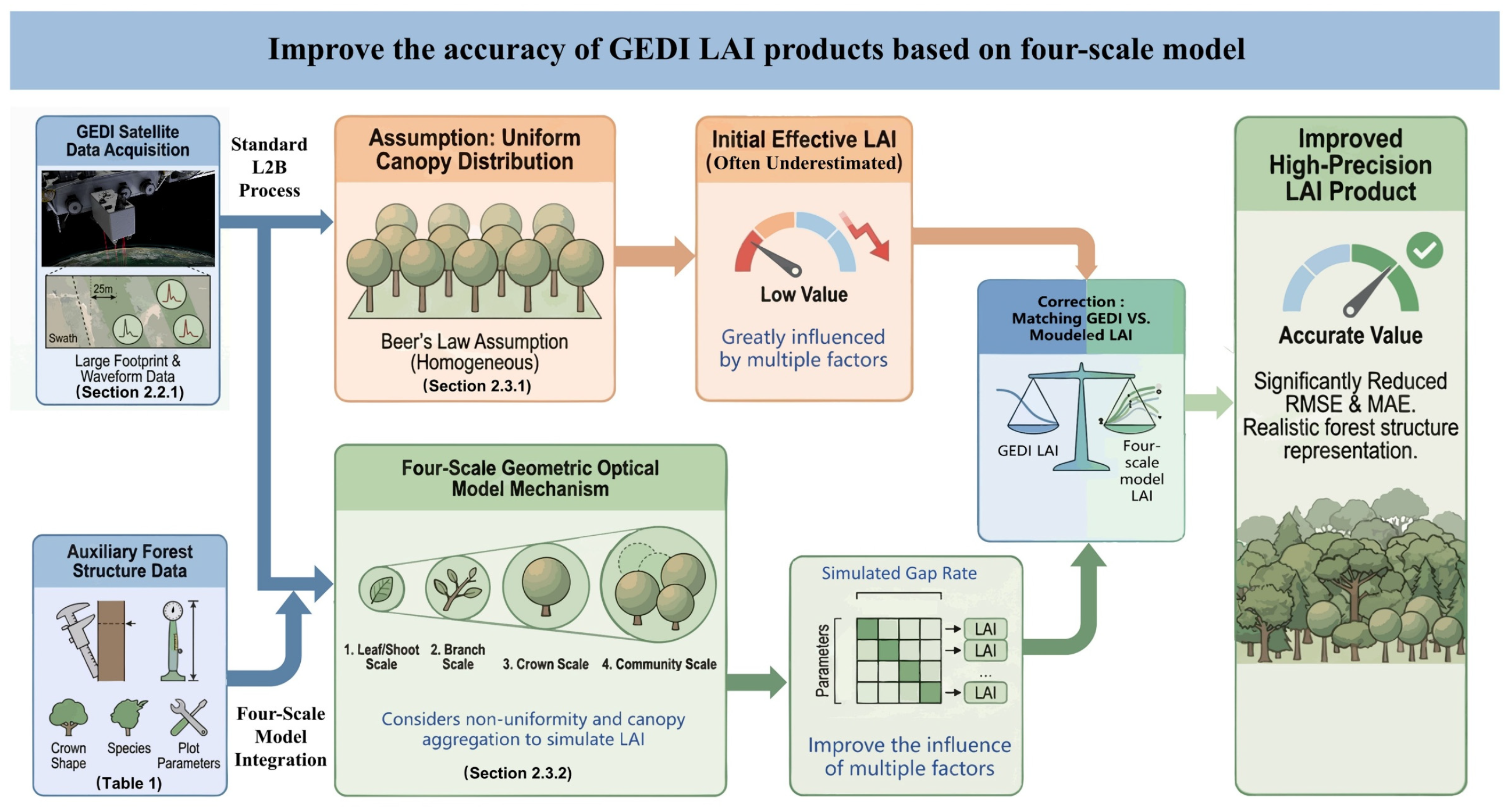
The product data of GEDI L2B is calculated based on the GORT model through the change in energy transmission to obtain the gap rate, and then the effective LAI at the footprint scale is derived based on Beer’s Law. Beer’s Law assumes that the forest canopy is uniformly distributed horizontally and that the leaves within the footprint are randomly distributed. Under this clumping, the results obtained using the measured data reveal that the LAI observation accuracy of the product data is not very high, and it is difficult to meet the requirements of high-precision operations. Considering the relatively complex structure of forests, the canopy is not uniformly distributed, and the leaves are mostly clustered. Therefore, using Beer’s Law to estimate LAI will cause significant errors [
54,
55,
56].
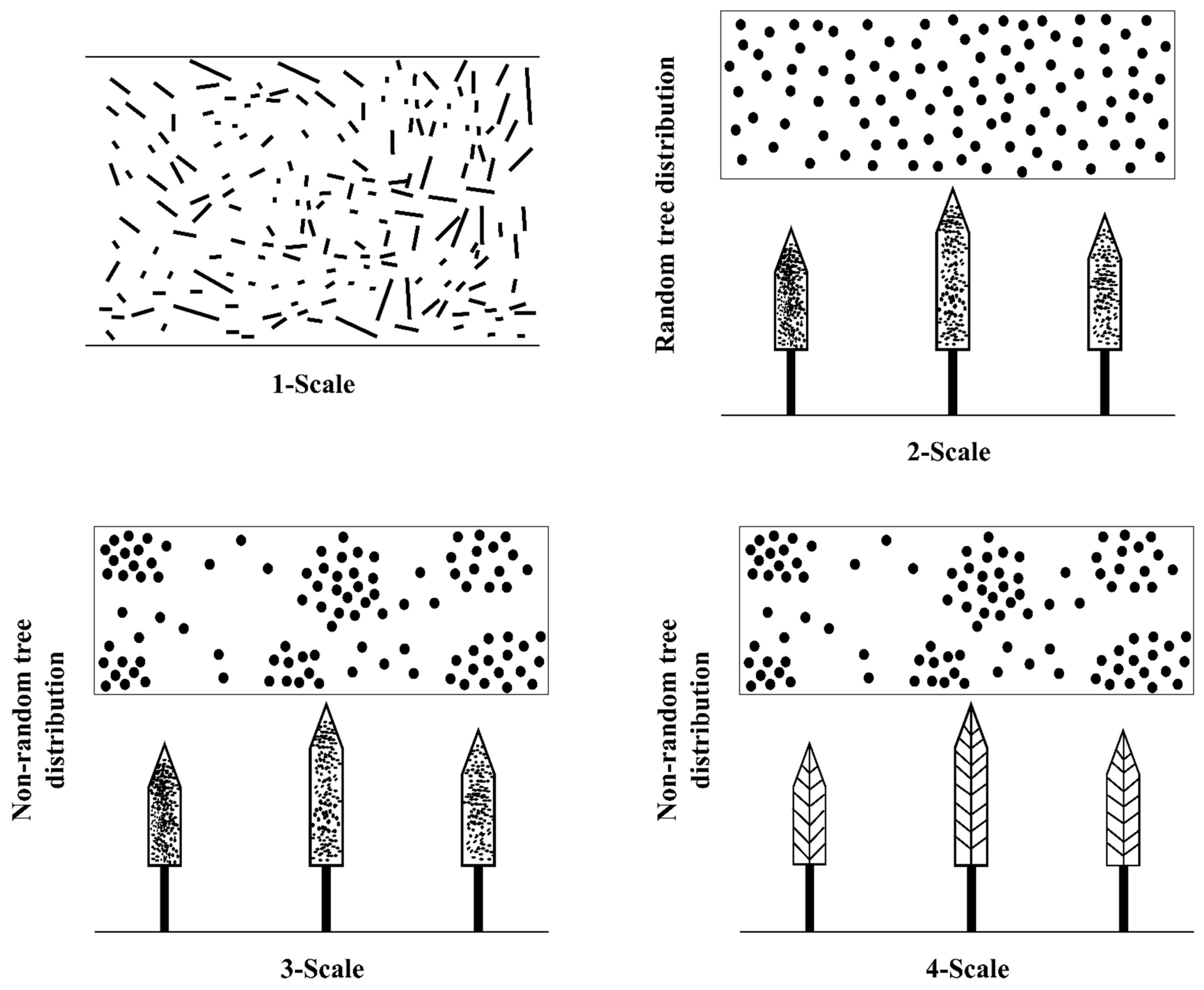
The actual internal structure of the forest is intricate and complex. The four-scale model estimates parameters under the assumption that the forest canopy is non-uniformly distributed. Therefore, after obtaining the gap rate through the GORT model, the four-scale model is used to replace Beer’s Law in calculating LAI [
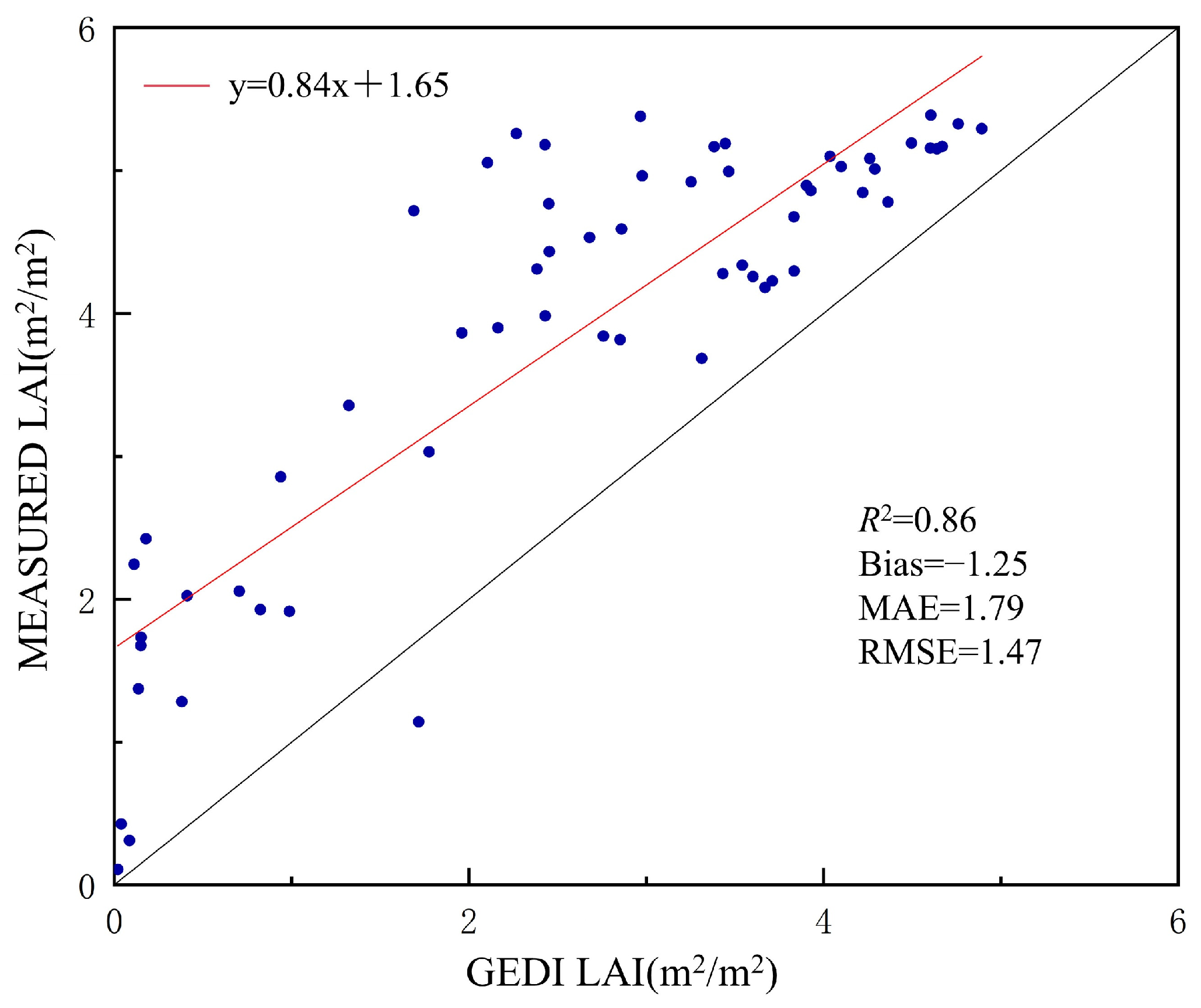
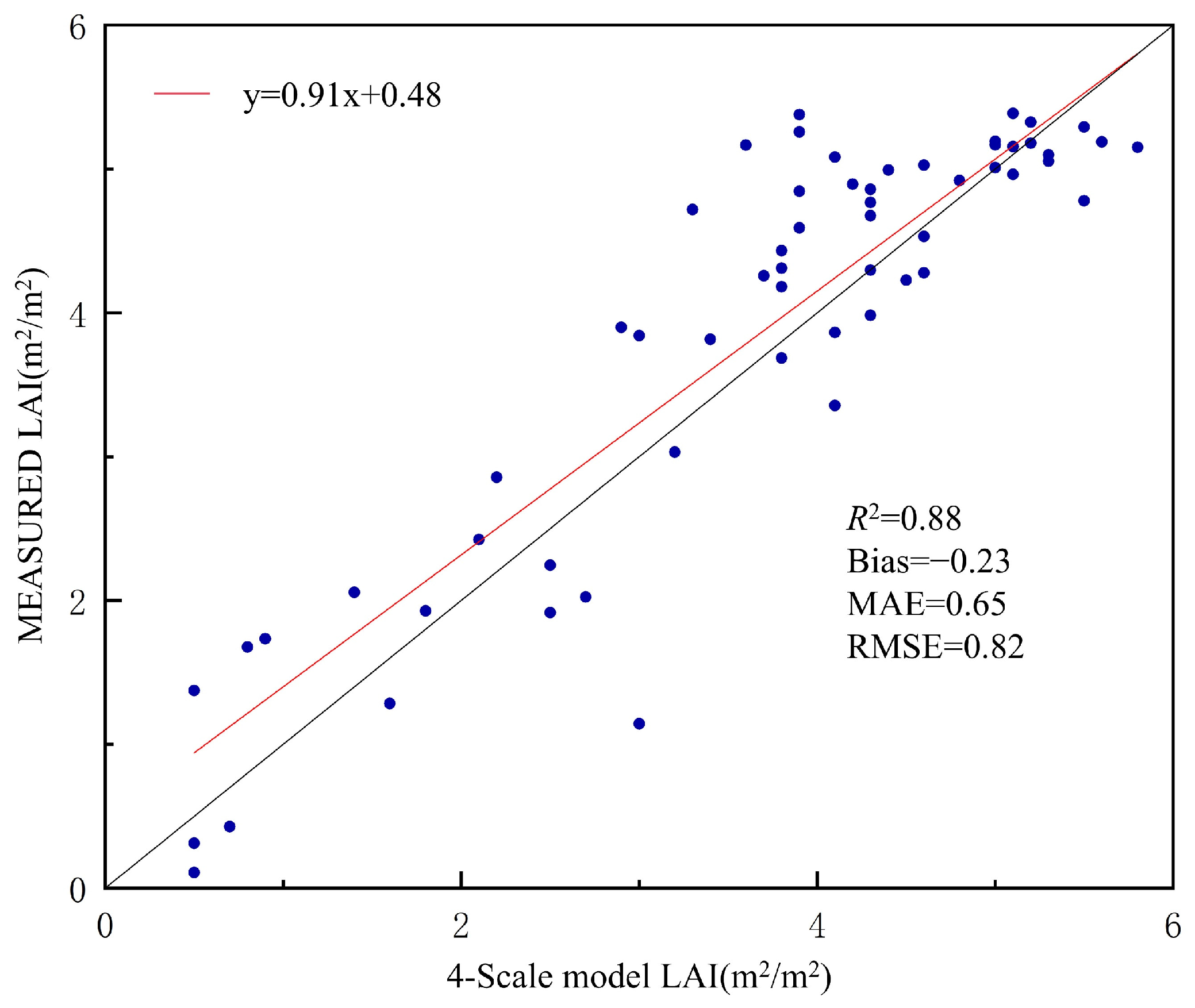
37]. This method is more in line with the actual situation inside the forest. The four-scale model regards the forest as a series of discrete geometric objects rather than a uniform turbid medium. By taking into account the overlap of tree canopies and the distribution of leaf clusters in sunny and shady areas, this model successfully decomposes the gap rate into components representing the complexity of the structure between tree canopies and within tree canopies. Therefore, compared to Beer’s law, it better conforms to the distribution conditions of forests in real situations, and the results obtained have been significantly improved. The overall retrieval accuracy improved significantly, with the total RMSE dropping from 1.47 m
2/m
2 to 0.82 m
2/m
2 (
Figure 5 and
Figure 6). This result is of great significance for LAI estimation of the large footprint data of GEDI, significantly enhancing its application in the field of LAI estimation. It proves the feasibility of using this method to correct GEDI data and can also be promoted in the acquisition of other parameters in the future.
The four-scale model has significantly improved the estimation accuracy of the leaf area index, but it still has some inherent limitations in practical applications. The main issue lies in its high-dimensional parameter space. Although these structural parameters can be physically defined, obtaining the individual values of each parameter for a large number of GEDI footprints is overly complex in practical operation. Therefore, it is usually necessary to adopt the method of setting fixed values for multiple parameters based on forest types that are being calculated. Although this simplification improves the computational efficiency, it inevitably introduces systematic uncertainty due to the neglect of structural heterogeneity. Finding the optimal balance between model complexity and operational scalability remains a key focus of future research.
4.2. The Clumping Index
In fact, the canopy and leaves in the forest are not uniformly distributed. To improve the estimation of canopy structure and solar radiation, scholars have introduced the clumping index (
). It is defined to quantitatively characterize the deviation degree between the true spatial distribution of canopy leaves and the random distribution, in order to quantitatively measure the degree of canopy deviation from the random distribution and correct the estimated leaf area index results. The leaves in the forest are mostly clustered, and the clustering index is mostly not 1 [
57,
58]. When the GEDI sensor estimates the LAI within the footprint using Beer’s Law, the leaves are regarded as randomly distributed. Directly setting the clustering index as 1 will cause certain errors [
37,
59,
60,
61]. Therefore, during calibration, the interior of the forest within the footprint is regarded as clustered and distributed. Introduce the parameter of the clumping degree index between blades.
The existence of the clumping index will directly affect the gap rate. In experiments, the clumping index is generally related to the forest type. Based on experience, the clumping index of broad-leaved forests is generally set at 0.8, and that of coniferous forests is set at 0.6 [
43,
58,
62]. In addition to the clumping effect existing within the tree canopy, there is also a clumping effect between the tree canopies. Therefore, when GEDI’s L2B product estimates LAI using Beer’s Law, it neither considers the clumping distribution of leaves within the footprint nor the clumping effect between the tree canopies. As a result, there will be a large error. After correction using the four-scale model, the clumping effect at these two scales was solved, and the result will be more accurate [
63].
Although applying the clumping index of tree species types to Beer’s law can improve the results through empirical means, the four-scale model provides a more profound physical explanation for this improvement. By modifying the clumping of uniform distribution of the canopy layer, the four-scale model can more accurately reflect the way laser pulses interact with the hierarchical structure of trees, including not only the clumping effect within a single tree but also the gaps between different canopy layers and the clumping phenomena within them.
Due to the different actual conditions in each study area, to ensure accuracy, it would be more effective to measure the concentration index on-site using instruments such as Trac in the study area to obtain the true concentration index. However, similar methods all consume a lot of manpower and material resources, and many study areas are rather complex and not suitable for entry; and there are certain requirements regarding the weather [
64,
65]. It is difficult to achieve large-scale measurement. Therefore, the following research can start from a detailed study of the clumping index to find a more effective method for measuring the accurate clumping index of the study area, so as to further improve the correction accuracy.
4.3. Analysis of the Influence of Different Factors on LAI Determination
The GEDI data is the full-waveform data of a large footprint. When determining LAI, it will be affected by multiple factors. This study analyzed the influence of different factors on the GEDI L2B product itself and the corrected results from various perspectives. It can be seen that the specific situations are as follows.
The overall determination of LAI by the GEDI L2B product is relatively low, and the same situation occurred in the past determination of forest canopy height by GEDI [
40]. Considering that the reason is the systematic error of the spaceborne lidar itself, the spaceborne lidar GEDI underestimates when observing tree height and LAI. The bias value of LAI measurement was −1.25 m
2/m
2. However, after correction using the four-scale model, underestimation has been significantly reduced, and its bias value was −0.23 m
2/m
2, which also demonstrated the applicability of this correction method. The overall low measurement effect can still be corrected by the statistical model method, but correcting only at the mathematical level makes it difficult to achieve more persuasive results. Although the four-scale model method can improve the problem of the overall low measurement results, if this problem is to be completely solved, it should start from the principle of GEDI footprint observation and correct from the system problems of the laser itself. It can reduce the problem of low results caused by systematic errors to a greater extent.
The research results of strong and weak beams show that the effect of the GEDI L2B product in determining LAI with strong beams is significantly better than that with weak beams. Compared to the weak beam, the strong beam has greater penetrating power. It can be seen from the results that the error of weak beams is larger, and its RMSE is close to 2 m
2/m
2 (
Table 4). After correction using the four-scale model, the RMSE of the strong beam decreased to below 1 m
2/m
2, and the RMSE of the weak beam also decreased significantly, with an RMSE of 1.09 m
2/m
2. This result is even better than that of the strong beam before correction. Therefore, when screening data for high-precision operations, the strong beam should be chosen as much as possible. However, the weak beam after correction still yields good results. If a denser and larger amount of footprint data is needed, using the data without distinguishing the beam type after correction can also achieve highly accurate results.
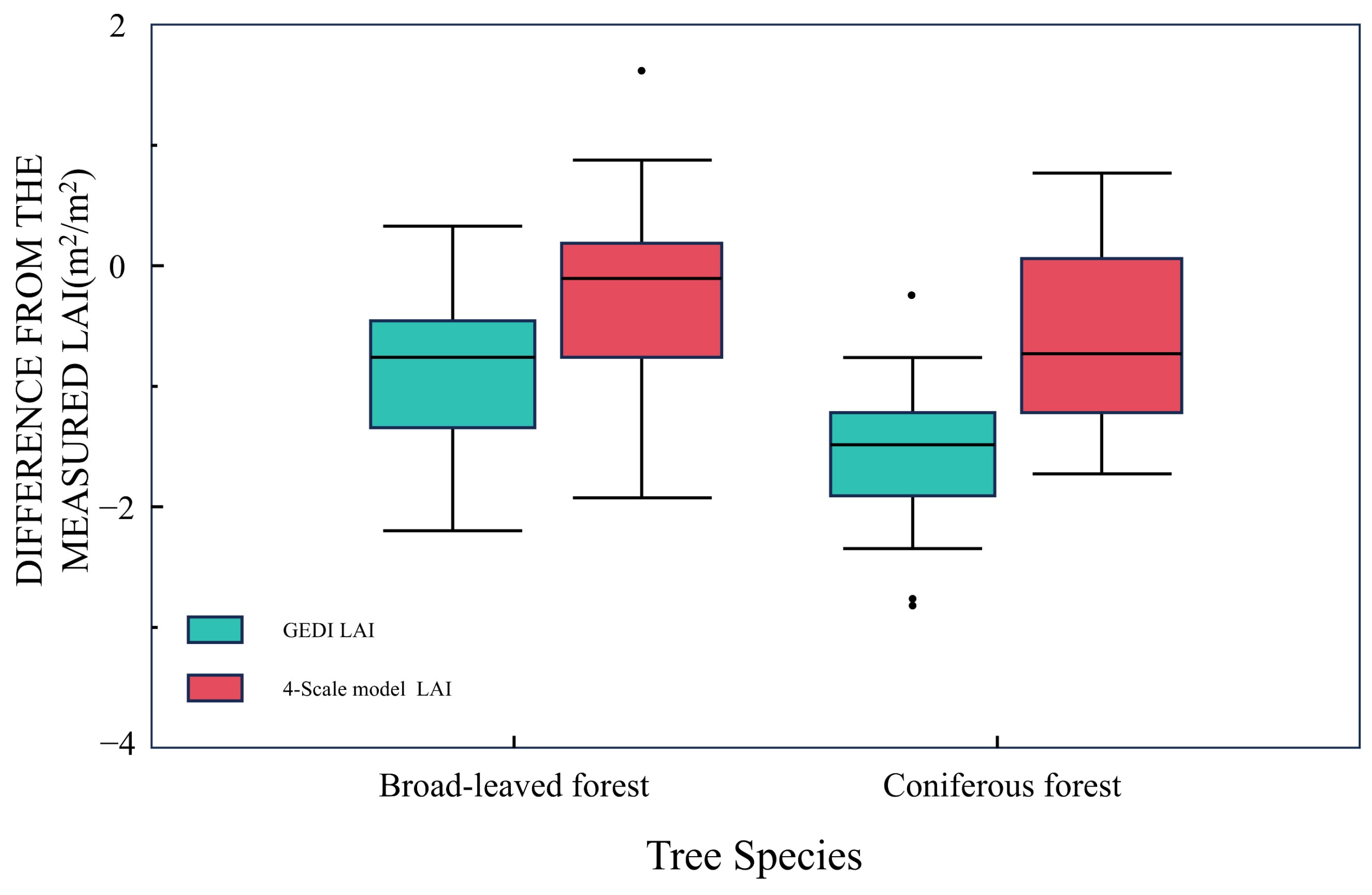
In the experiment, the tree species types within the footprint were distinguished and divided into coniferous tree species and broad-leaved tree species for comparative experiments. It can be seen that GEDI data is more accurate than coniferous tree species in determining the area index of deciduous tree species. The reason is that the LAI of coniferous tree species is relatively low and there may be more outliers. After correction, the RMSE of the two types of data was below 1 m2/m2, and the results were closer. Since both types of tree species have their own distribution situations, unifying their clumping degree indices will cause significant errors. The four-scale model takes into account the leaf clumping degrees and the clumping degrees between the crowns of the two types of tree species, respectively. To make the determination results of each type of tree species closer to the actual situation, whether in coniferous forests or broad-leaved forests, the data all have good effects.
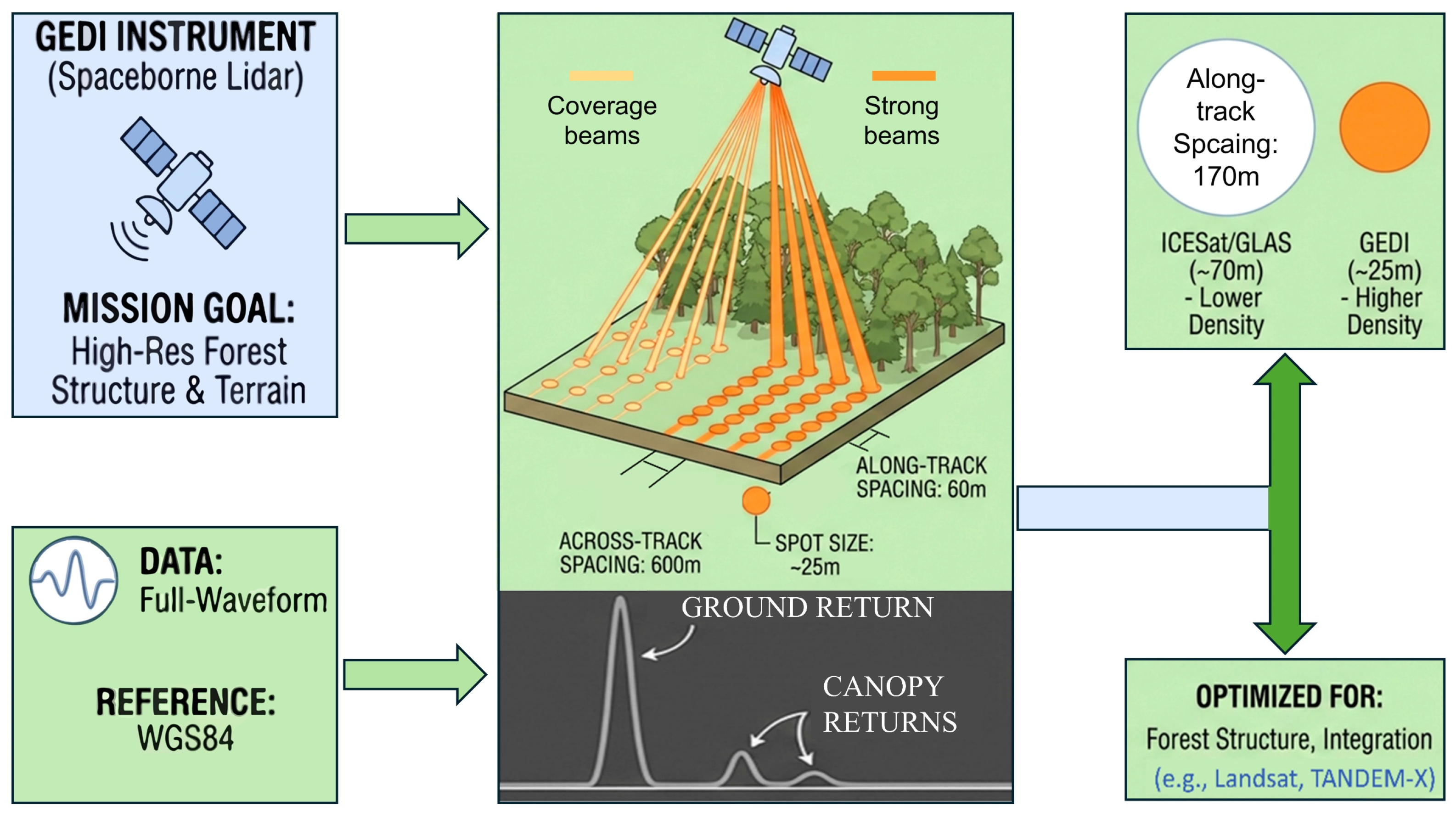
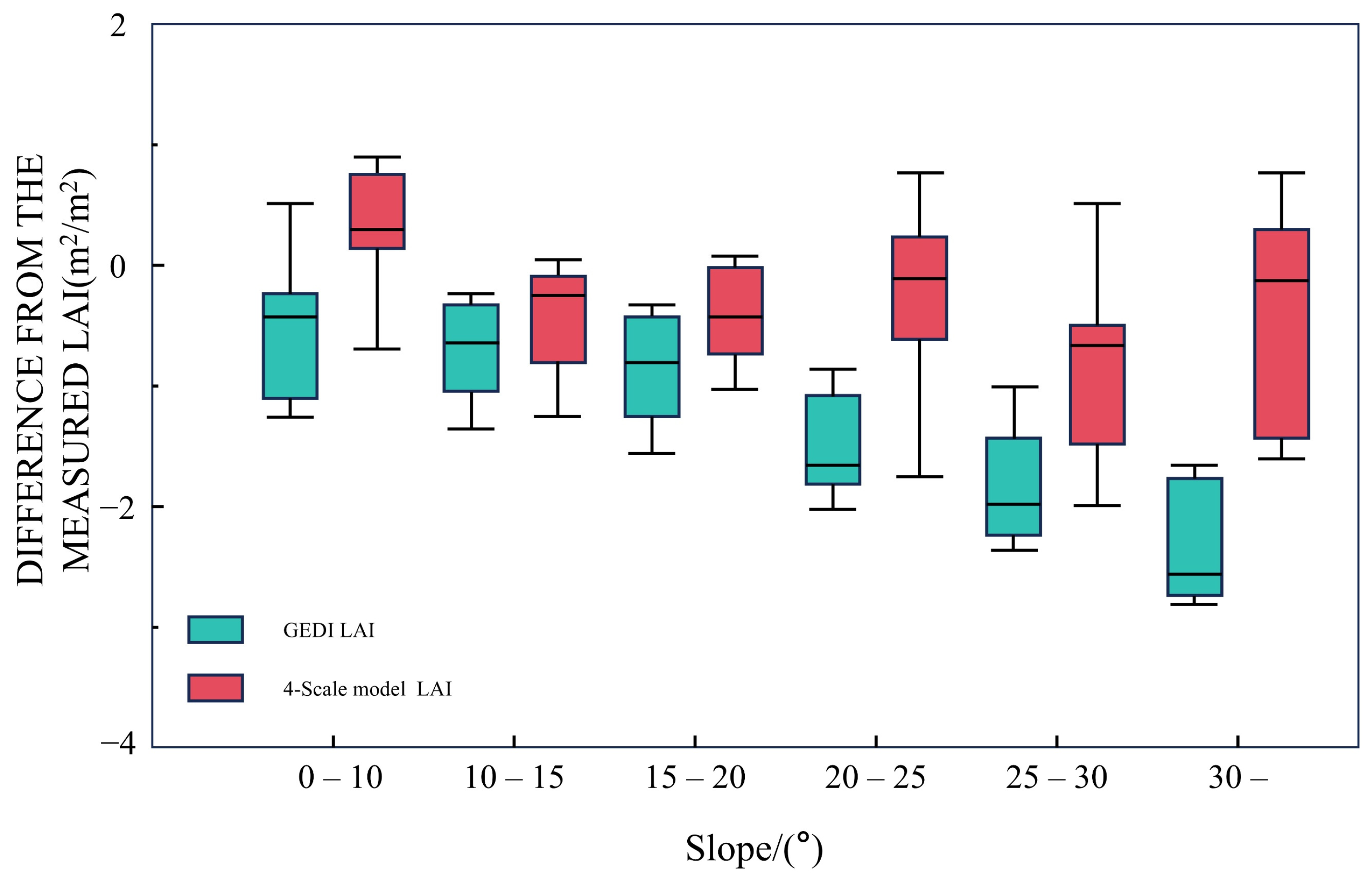
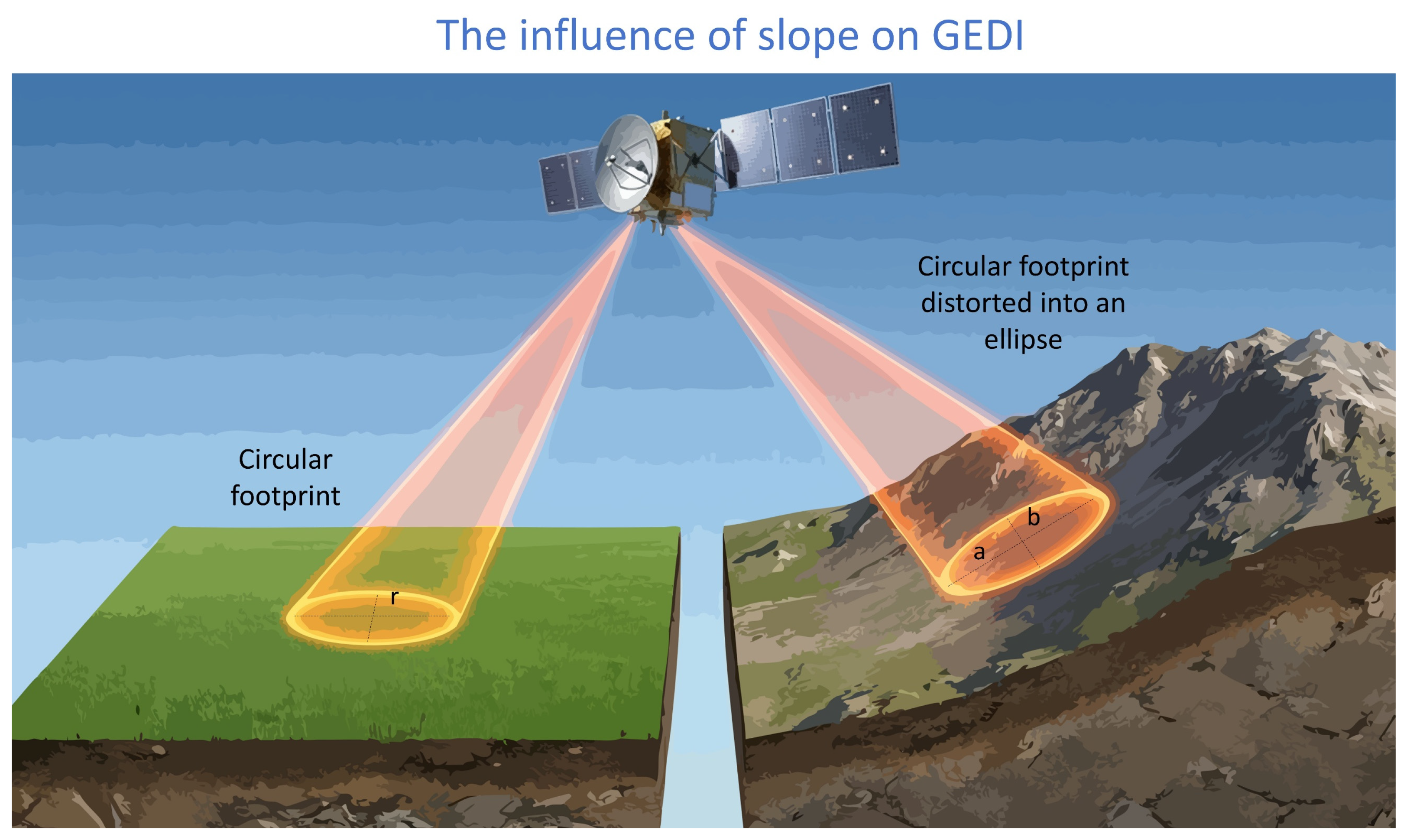
Slope has a significant impact on large footprint data. GEDI emits laser pulses from the satellite to the ground (
Figure 10). After reaching the ground, a circular footprint with a diameter of 25 m is formed. If the ground is not flat and has a certain slope, it will cause the footprint to deform, resulting in confusion between ground echoes and vegetation echoes, thereby causing a large measurement error [
53].
Therefore, the study grouped the slopes into gentle slopes, low slopes, medium slopes, and high slopes to investigate the effect of GEDI in determining LAI. The results were similar to those of the GEDI L2A height product, both showing that the product accuracy decreased with the increase in the slope. After the GEDI L2B product data was corrected by the four-scale model, when the slope was less than 20°, the accuracy of measuring LAI performed well. When the slope was higher than 20°, the effect of measuring LAI decreased significantly, with RMSE changing from less than 1 m2/m2 to more than 1.65 m2/m2. On the steep slope with a slope greater than 30°, its RMSE is even higher than 2.50 m2/m2. Compared with the results in a gentle terrain environment, the error of this result is too large, and the GEDI L2B product cannot be used directly on steep slopes. Under the correction of GEDI data, the model takes into account the terrain factor and corrects the errors caused by the slope. Specifically, the gap rate calculated during the correction of the four-scale model is the gap rate of the GEDI footprint after deformation on the slope, rather than the gap rate of the circular footprint on the flat ground. Therefore, the errors caused by the slope problem can be solved. From the results, it can be seen that the footprint on the steep slope still has a relatively high accuracy. The correction method has better solved the accuracy error caused by the slope problem.
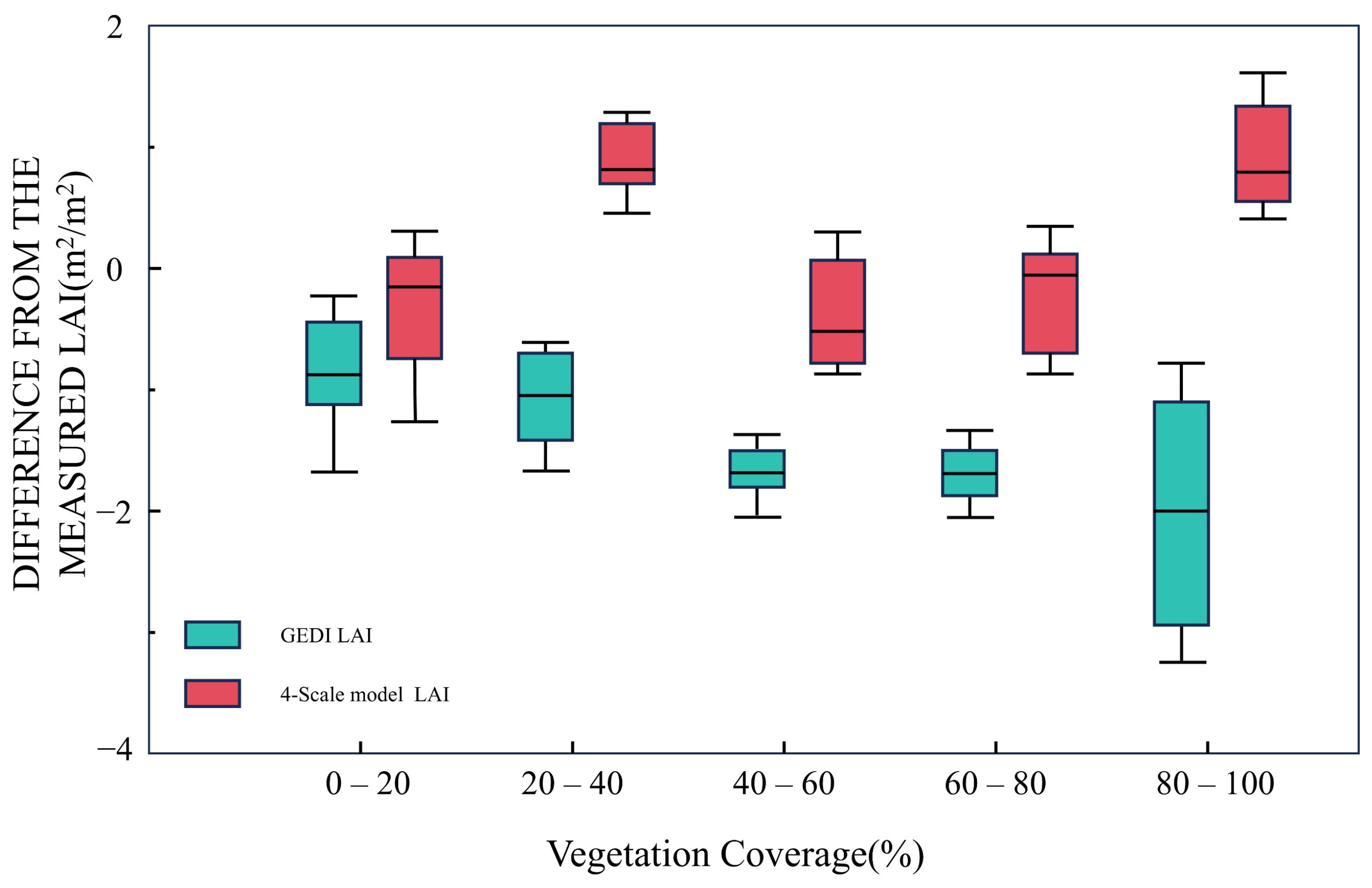
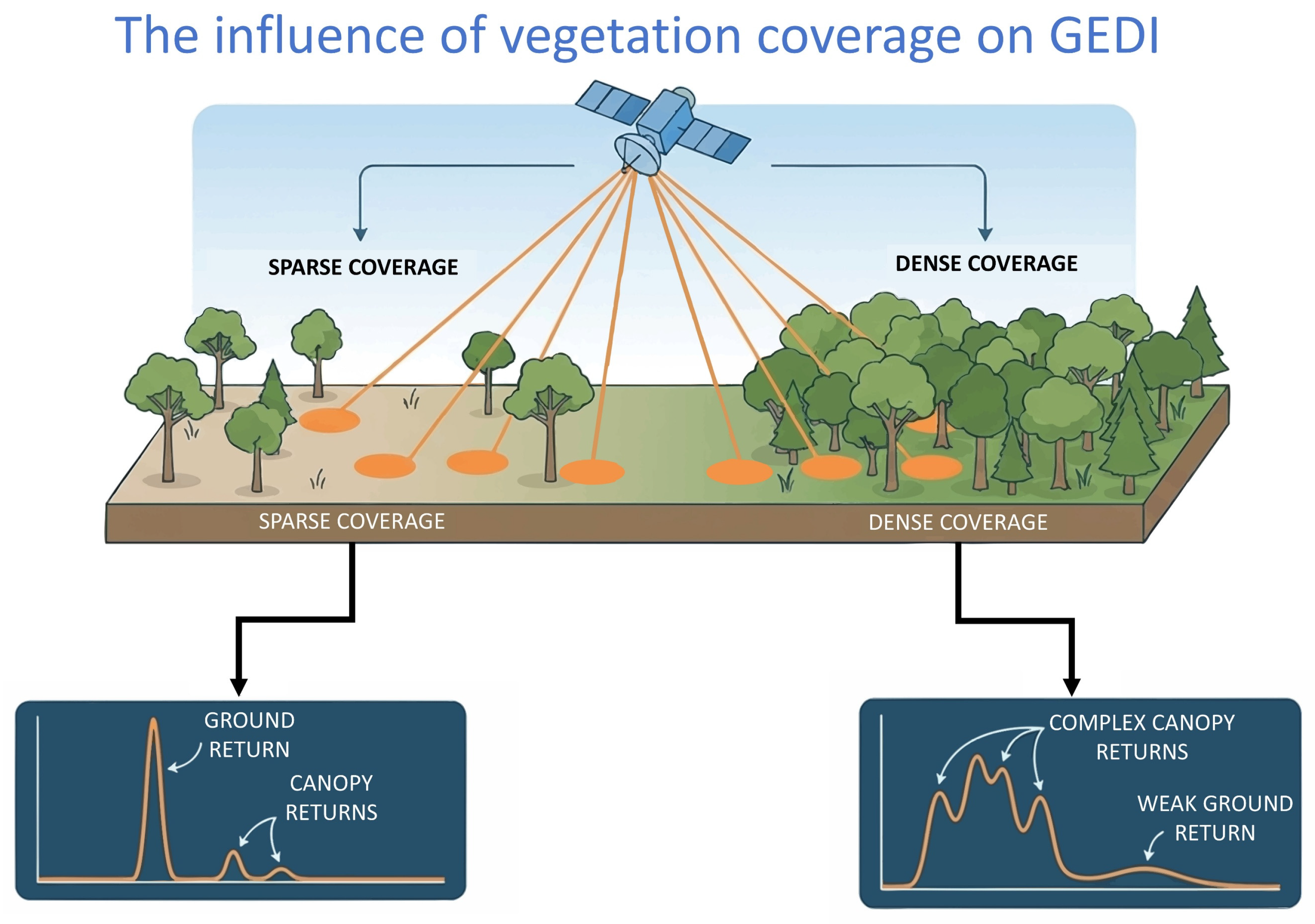
It can be known from the research on the height product of GEDI L2A trees that the vegetation coverage will have a certain impact on the footprint data. Therefore, in this experiment, footprints were divided into five groups (low, medium-low, medium, medium-high, and high) for the experiment (
Figure 11). The final result is that with the increase in vegetation coverage, the effect of the GEDI L2B product on determining LAI gradually decreases. In areas with high vegetation coverage, its RMSE is greater than 2 m
2/m
2. This result has a large error. If the data is used directly, it is extremely inaccurate. It is considered that as the vegetation coverage increases, the types and quantities of objects in large footprints gradually increase, and the distribution of the crown becomes more complex. The distribution between canopies will be denser. The product itself assumes that the canopy is uniformly distributed horizontally. The clumping effect between the canopies was not considered, and thus the calculated LAI would also have greater errors.
After the correction of the four-scale model, the estimation accuracy under all vegetation coverage conditions has been improved. Among them, the improvement is most significant in areas with dense vegetation. By explicitly considering the clumping effects at the leaf level and the canopy level, this model can achieve good results regardless of the density of the sample plots. Compared to the original product, it has higher accuracy. Moreover, this structural parameterization has particular advantages in multi-layer forests because the understory vegetation usually accounts for a certain proportion of the total LAI. Due to the four-scale model’s explicit consideration of the geometric shadows and gaps between discrete canopies [
46], it effectively captures the vertical complexity of the forest stand, which is the main reason for the overall improvement in accuracy compared to the standard GEDI L2B product.
Although the introduction of the four-component geometric optical model significantly improved the estimation accuracy of the GEDI LAI product, there are still certain limitations in its applicability in complex scenarios. Firstly, in areas with extremely steep slopes, the laser pulses emitted by GEDI will cause significant waveform broadening and superposition between the ground and canopy echoes. This phenomenon will lead to errors in the estimation of gap rates. Future research should introduce terrain correction models or utilize the high-density photon data from ICESat-2 for auxiliary verification to reduce the interference of terrain effects on the accuracy of large-spot waveforms. Secondly, in forests with extremely high LAI and a canopy closure approaching 1.0, although the four-scale model takes into account the clumping effect, in dense forest stands where the multiple scattering effect is significant, a single geometric optical clumping may have limitations. There should be subsequent research attempts to couple multiple physical mechanisms using a radiative transfer model to enhance the robustness of the signal saturation area. Thirdly, in fragmented vegetation areas, the GEDI footprint with a diameter of approximately 25 m often contains multiple types of land features or is located at the edge of the forest. In such discontinuous canopies, traditional clumping index characterization may not be able to fully capture the heterogeneity within the pixels. To address this issue, future work will integrate high-spatial-resolution Sentinel-2 or multi-spectral unmanned aerial vehicle data to refine the correction of the clumping index through sub-pixel-scale structural information.