SBAS-InSAR-Based Monitoring and Hierarchical Spatiotemporal Deep Learning for Subsidence Monitoring and Prediction in Active Mining Areas: A Case Study of the Dexing Copper Mine


Highlights
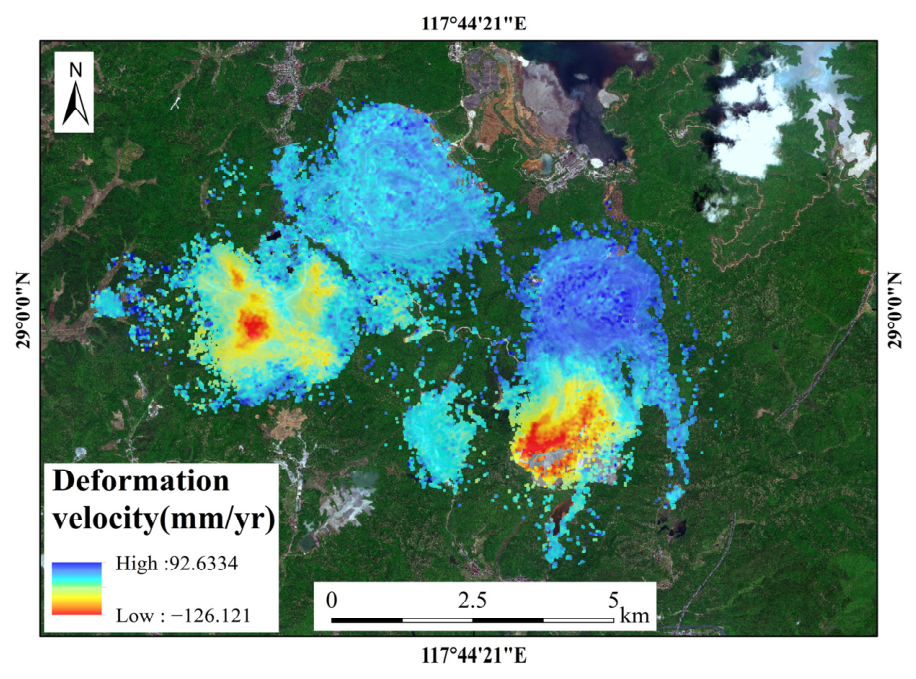
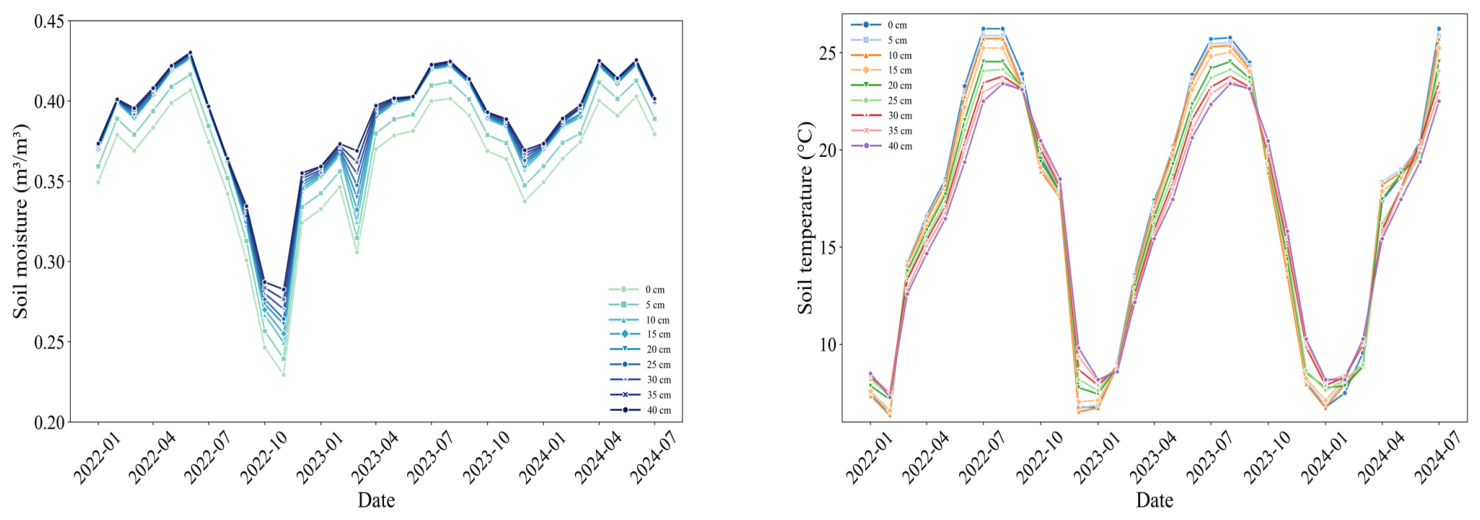
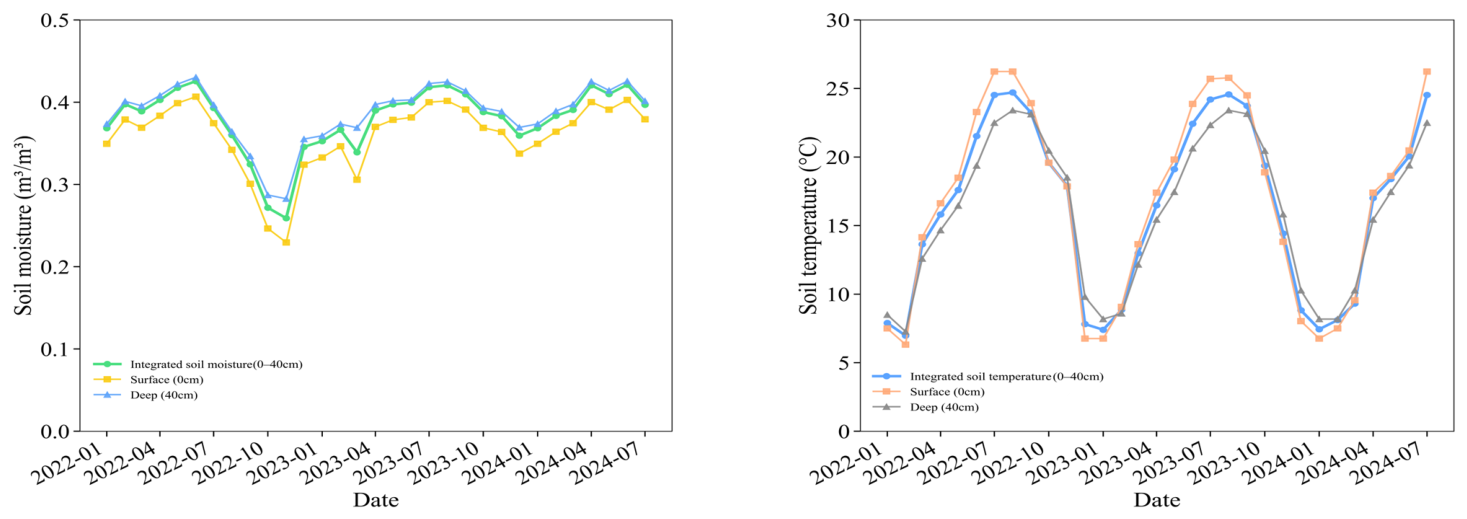
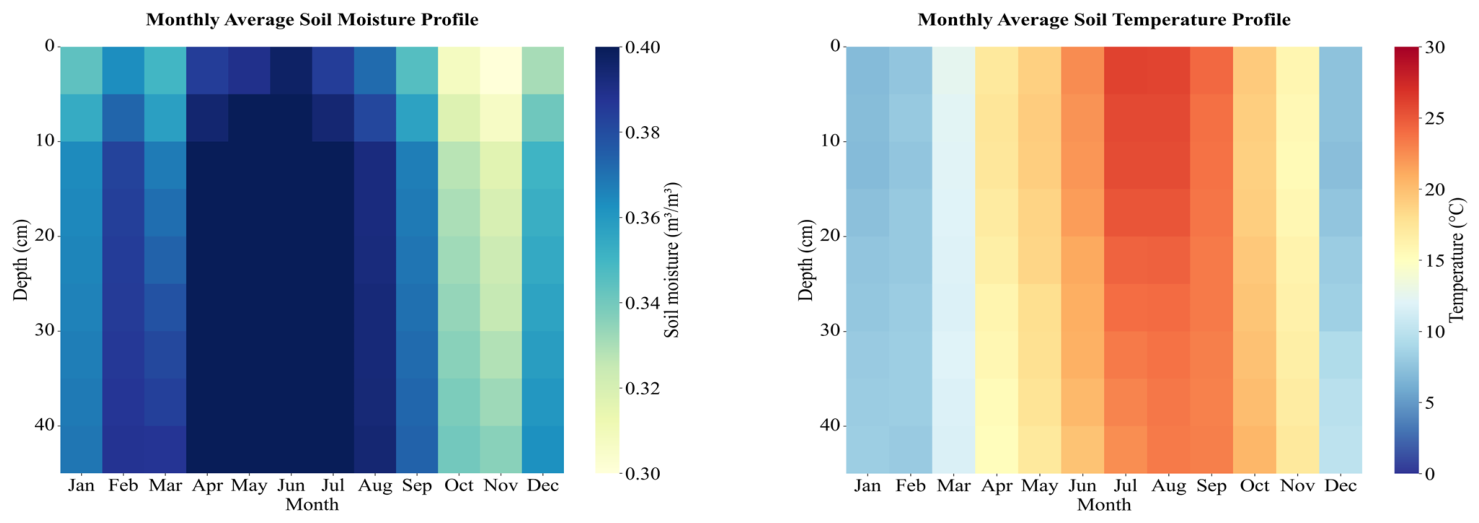
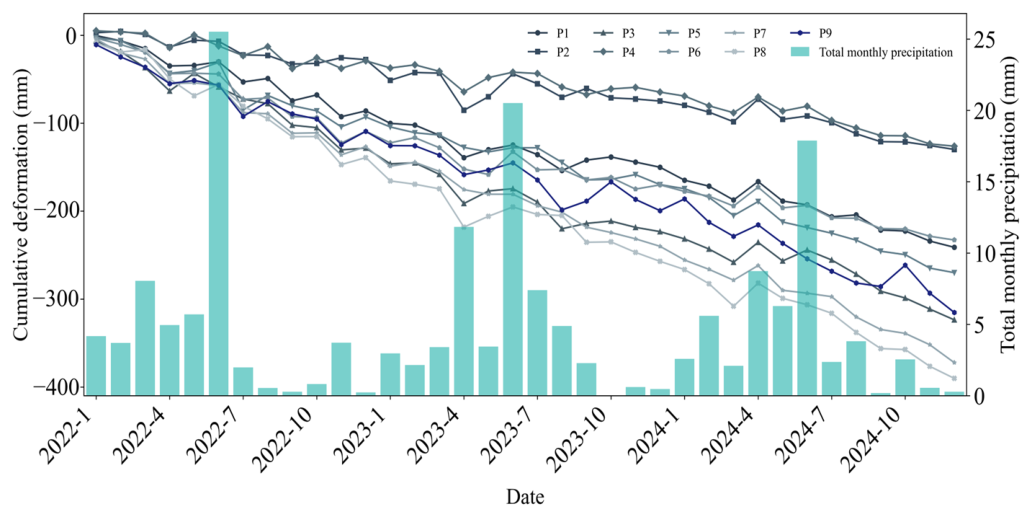
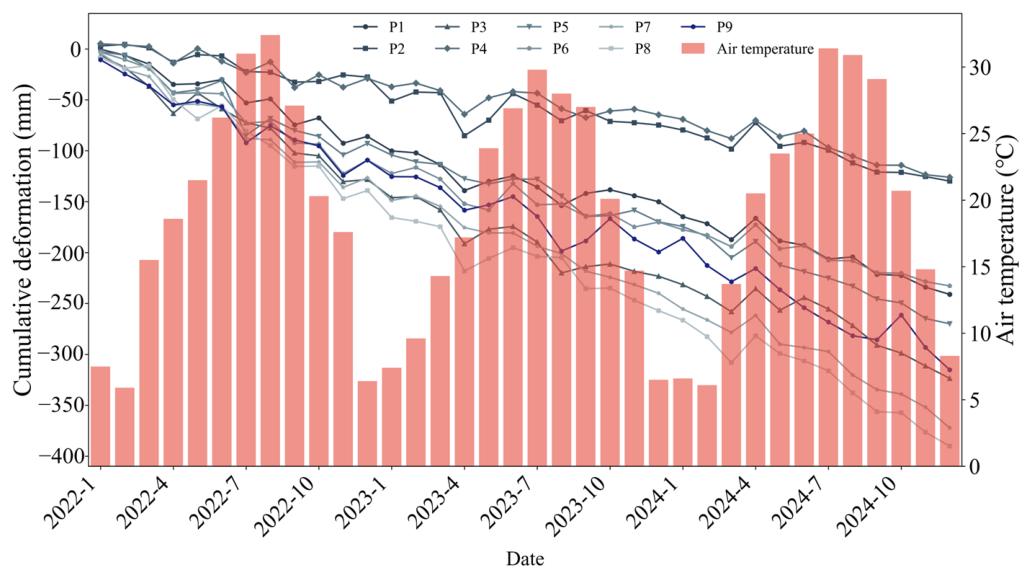
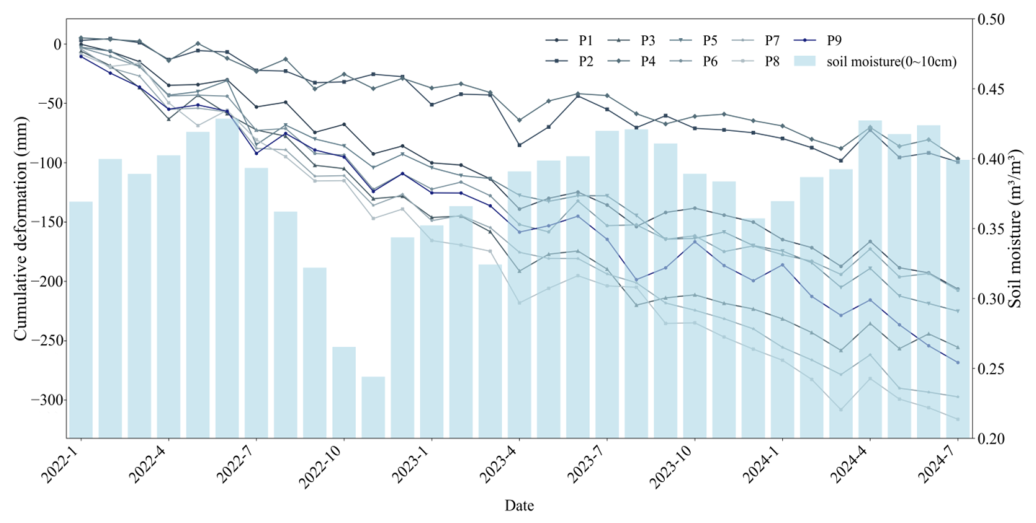
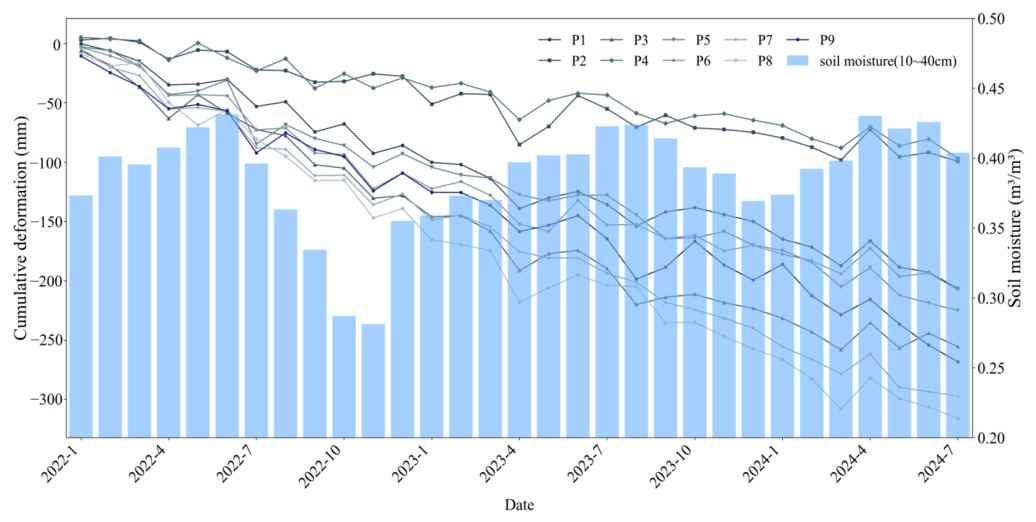
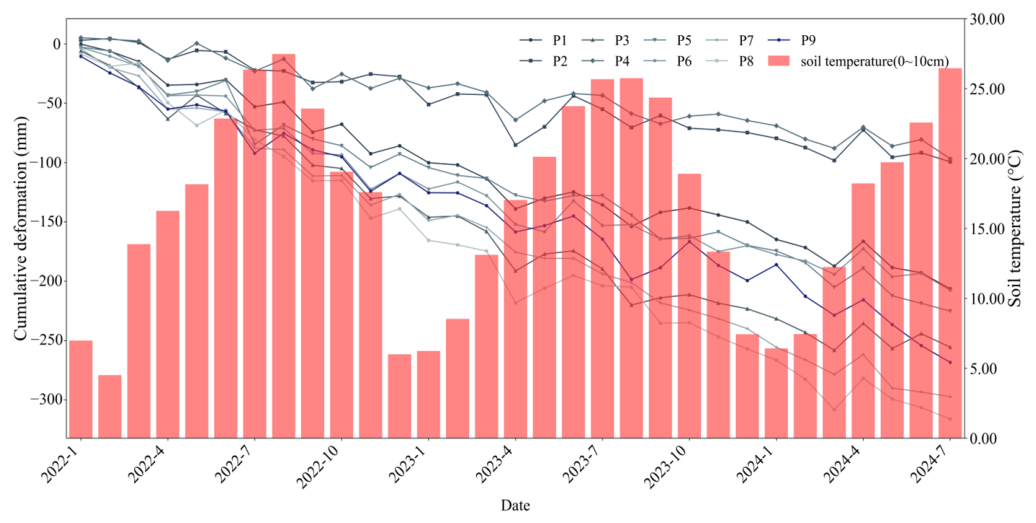
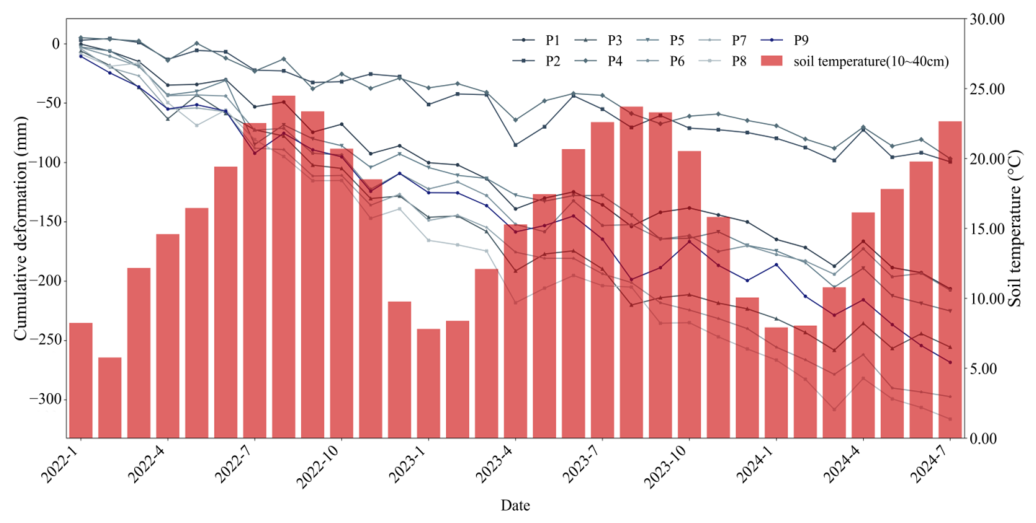
- Surface subsidence exhibits marked spatial heterogeneity and pronounced temporal nonlinearity, with the most severe deformation localized within active open-pit mining zones and waste rock dumps, with the maximum subsidence rate reaching −126.121 mm/yr. Precipitation and soil moisture serve as the dominant driving factors—exhibiting statistically significant lagged effects, whereas temperature acts mainly as a modulating variable.
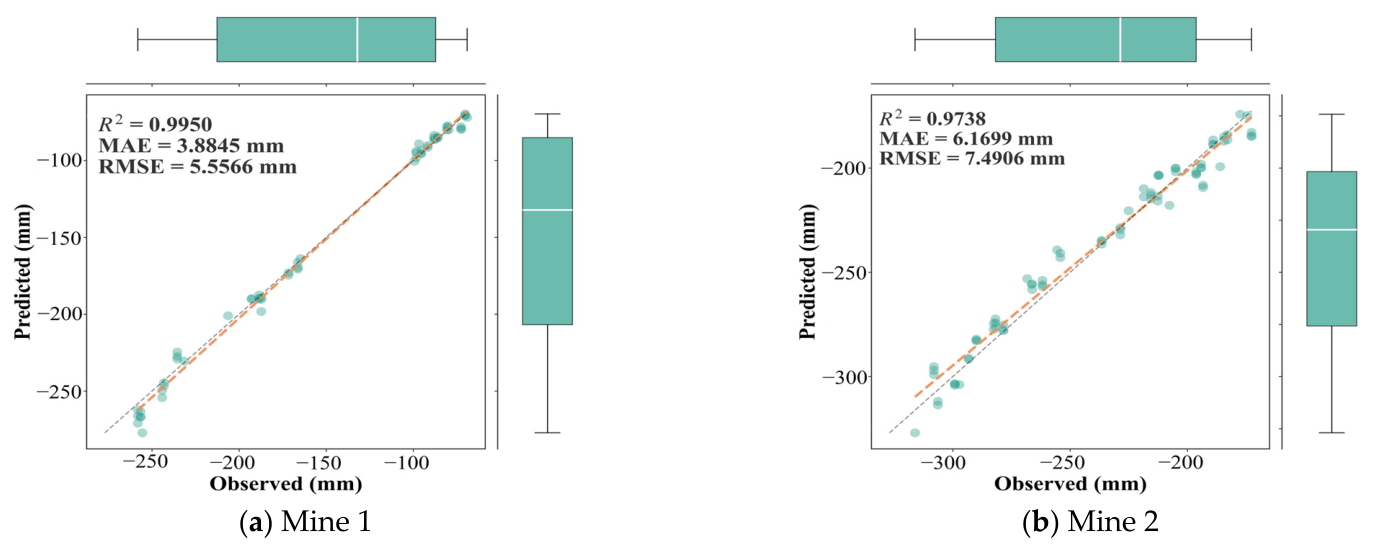
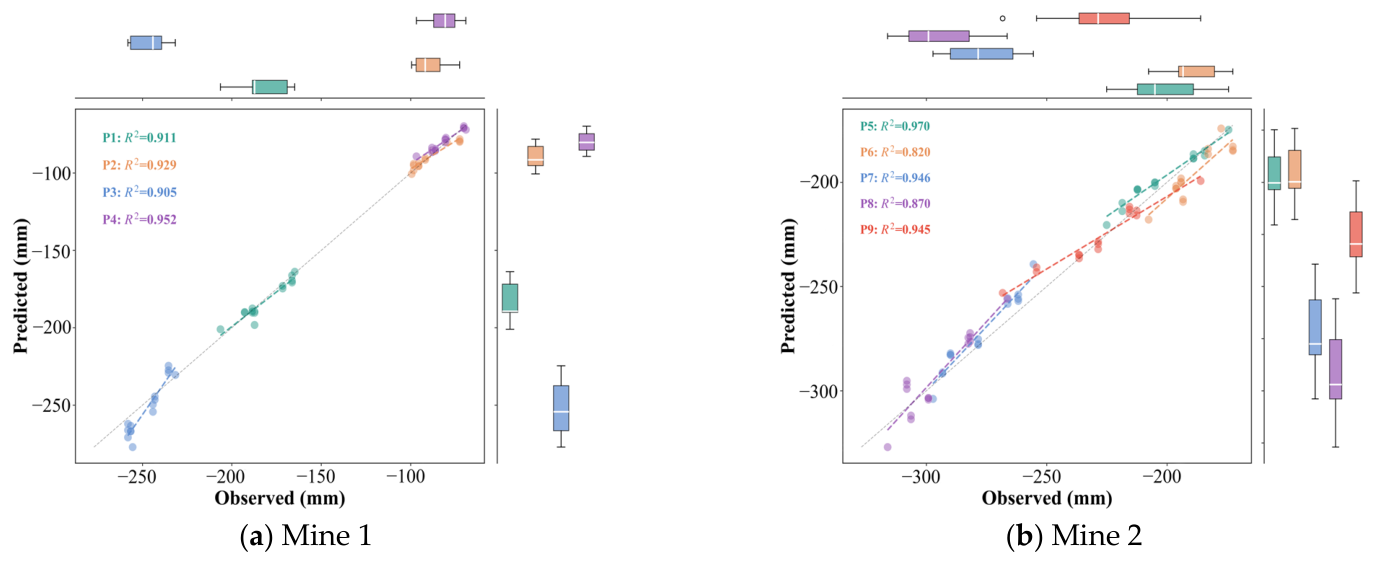
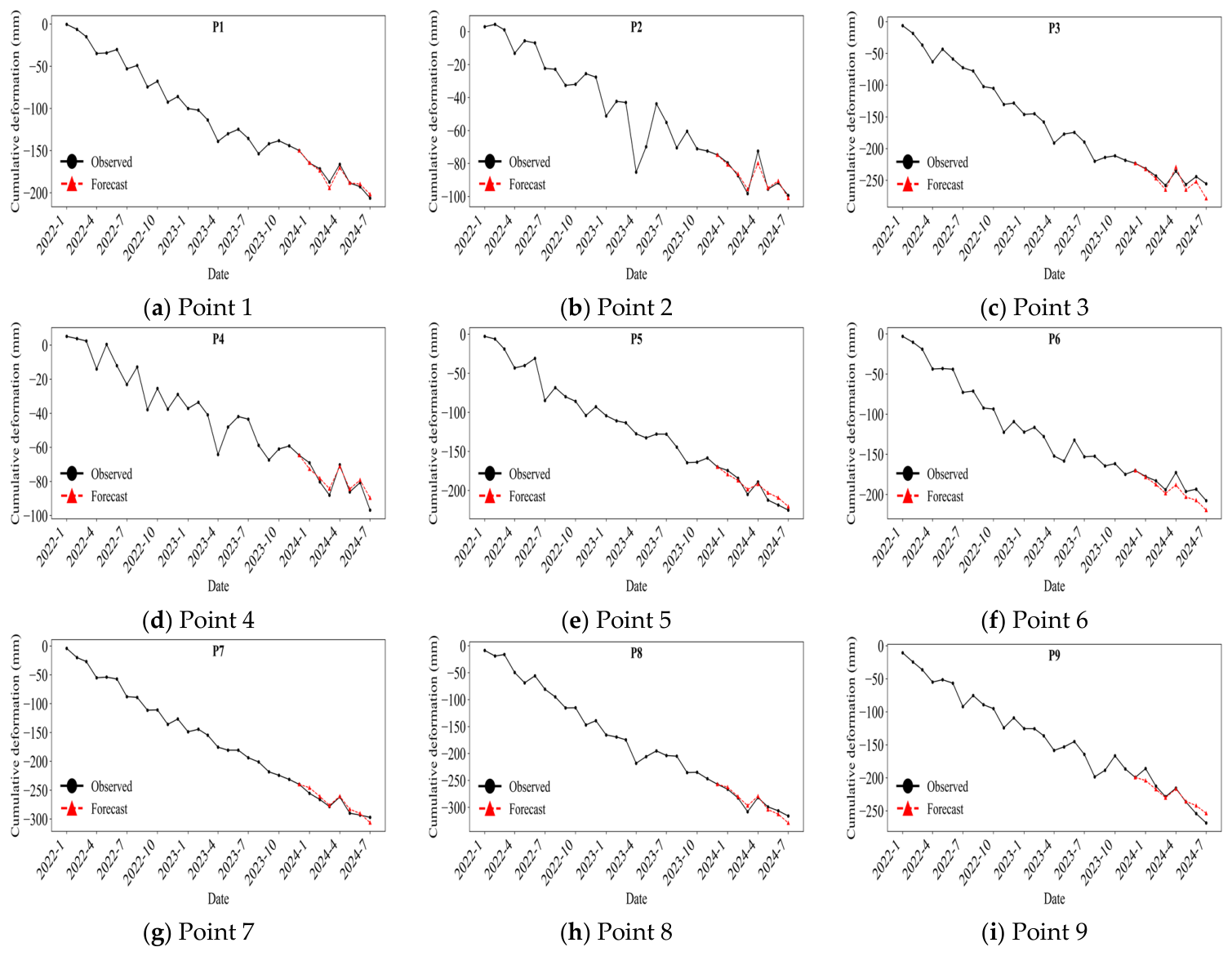
- The integrated framework, combining SBAS-InSAR-derived surface displacement time series with the hierarchical spatiotemporal dependency graph neural network (HSDGNN), achieves millimeter-level predictive accuracy, evidenced by a maximum R2 of 0.995.
- The integration of SBAS-InSAR-derived displacement time series with the hierarchical spatiotemporal dependency graph neural network (HSDGNN) establishes a scalable, high-precision framework for large-area subsidence monitoring and forecasting in complex mining environments, thereby substantially enhancing spatiotemporal modeling fidelity under heterogeneous geological and hydrological conditions.
- By explicitly quantifying the dominant influence of hydrological drivers (precipitation and soil moisture) and delivering robust short-to-medium-term forecasts, the framework enables data-informed risk assessment and proactive early warning for mining-induced ground instability. Its methodological architecture is also transferable to other geomechanical hazards.
Abstract
1. Introduction
2. Materials and Methods
2.1. Study Area
2.2. Data Sources and Processing
2.2.1. Sentinel-1 Data
2.2.2. Precise Orbit Data
2.2.3. DEM Data
2.2.4. Multi-Source Environmental Factor Data
3. Research Methods
3.1. SBAS-InSAR Technique
3.2. XGBoost Model
3.3. HSDGNN Model
4. Results
4.1. InSAR-Derived Deformation Results
4.2. Accuracy Validation
4.3. XGBoost-Based Data Interpolation
4.4. Analysis of Influencing Factors on Mining Subsidence
4.4.1. Impact of Precipitation on Mining Subsidence
4.4.2. Impact of Air Temperature on Mining Subsidence
4.4.3. Impact of Soil Moisture on Mining Subsidence
4.4.4. Impact of Soil Temperature on Mining Subsidence
4.5. Prediction of Mining-Induced Subsidence
4.5.1. Mine Subsidence Prediction Based on HSDGNN
4.5.2. Comparison of Subsidence Prediction Models
5. Discussion
5.1. Multi-Factor Driving Mechanism of Mining Subsidence
5.2. Reconstruction of Multi-Source Environmental Driving Factors Based on XGBoost
5.3. Improvement of Subsidence Prediction Accuracy
5.4. Limitations and Future Work
6. Conclusions
Author Contributions
Funding
Data Availability Statement
Conflicts of Interest
References
- Cai, Y.; Jin, Y.; Wang, Z.; Chen, T.; Wang, Y.; Kong, W.; Xiao, W.; Li, X.; Lian, X.; Hu, H. A review of monitoring, calculation, and simulation methods for ground subsidence induced by coal mining. Int. J. Coal Sci. Technol. 2023, 10, 32. [Google Scholar] [CrossRef]
- Fadhillah, M.F.; Hakim, W.L.; Lee, S.-K.; Lee, K.-J.; Lee, S.-J.; Chae, S.-H.; Lee, H.; Lee, C.-W. Multitemporal analysis of land subsidence induced by open-pit mining activity using improved combined scatterer interferometry with deep learning algorithm optimization. Sci. Rep. 2024, 14, 6311. [Google Scholar] [CrossRef]
- Xu, C.; Zhou, K.; Xiong, X.; Gao, F.; Lu, Y. Prediction of mining induced subsidence by sparrow search algorithm with extreme gradient boosting and TOPSIS method. Acta Geotech. 2023, 18, 4993–5009. [Google Scholar] [CrossRef]
- Nandi, A.; Shakoor, A. A GIS-based landslide susceptibility evaluation using bivariate and multivariate statistical analyses. Eng. Geol. 2010, 110, 11–20. [Google Scholar] [CrossRef]
- Wang, Y.; Cui, X.; Che, Y.; Zhao, Y.; Li, P.; Kang, X.; Jiang, Y. Near Real-Time Monitoring of Large Gradient Nonlinear Subsidence in Mining Areas: A Hybrid SBAS-InSAR Method Integrating Robust Sequential Adjustment and Deep Learning. Remote Sens. 2024, 16, 1664. [Google Scholar] [CrossRef]
- Wang, Y.; Pyörälä, J.; Liang, X.; Lehtomäki, M.; Kukko, A.; Yu, X.; Kaartinen, H.; Hyyppä, J. In situ biomass estimation at tree and plot levels: What did data record and what did algorithms derive from terrestrial and aerial point clouds in boreal forest. Remote Sens. Environ. 2019, 232, 111309. [Google Scholar] [CrossRef]
- Salmon, B.P.; Olivier, J.C.; Kleynhans, W.; Wessels, K.J.; van den Bergh, F.; Steenkamp, K.C. The use of a Multilayer Perceptron for detecting new human settlements from a time series of MODIS images. Int. J. Appl. Earth Obs. Geoinf. 2011, 13, 873–883. [Google Scholar] [CrossRef]
- Hu, Q.; Hou, R.; Kou, Y.; Wang, P.; Liu, Z.; Li, H.; Liu, W.; Wang, X.; Yi, S.; Zhang, F.; et al. Investigating Mining-Induced Surface Subsidence in Mountainous Areas Using Integrated InSAR and GNSS Monitoring. Sensors 2026, 26, 1222. [Google Scholar]
- Balasubramanian, G.; Suresh, S.; Goswami, S.; Swaminathan, B.; Pereira, G.F. Delineation of sensitive coastal zone of northern Ramanathapuram coast, Tamilnadu, India, using a GIS approach. Geod. Geodyn. 2022, 13, 456–463. [Google Scholar] [CrossRef]
- Hardy, A.; Oakes, G.; Ettritch, G. Tropical Wetland (TropWet) Mapping Tool: The Automatic Detection of Open and Vegetated Waterbodies in Google Earth Engine for Tropical Wetlands. Remote Sens. 2020, 12, 1182. [Google Scholar] [CrossRef]
- Luo, D.; Wang, H. Surface deformation monitoring of mining areas based on the fusion of D-InSAR and SBAS-InSAR using the sigmoid function: A case study of a mining area in jilin province, China. Geocarto Int. 2026, 41, 2614212. [Google Scholar] [CrossRef]
- Berardino, P.; Fornaro, G.; Lanari, R.; Sansosti, E. A new algorithm for surface deformation monitoring based on small baseline differential SAR interferograms. IEEE Trans. Geosci. Remote Sens. 2002, 40, 2375–2383. [Google Scholar] [CrossRef]
- Hooper, A.; Zebker, H.; Segall, P.; Kampes, B. A new method for measuring deformation on volcanoes and other natural terrains using InSAR persistent scatterers. Geophys. Res. Lett. 2004, 31, L23611. [Google Scholar] [CrossRef]
- Hou, J.; Xu, B.; Li, Z.; Zhu, Y.; Feng, G. Block PS-InSAR ground deformation estimation for large-scale areas based on network adjustment. J. Geod. 2021, 95, 111. [Google Scholar] [CrossRef]
- Hu, A.; Zhang, K. Using Bidirectional Long Short-Term Memory Method for the Height of F2 Peak Forecasting from Ionosonde Measurements in the Australian Region. Remote Sens. 2018, 10, 1658. [Google Scholar] [CrossRef]
- Sun, T.; Zhang, G.; Perrie, W.; Zhang, B.; Guan, C.; Khurshid, S.; Warner, K.; Sun, J. Ocean Wind Retrieval Models for RADARSAT Constellation Mission Compact Polarimetry SAR. Remote Sens. 2018, 10, 1938. [Google Scholar] [CrossRef]
- Casu, F.; Manzo, M.; Lanari, R. A quantitative assessment of the SBAS algorithm performance for surface deformation retrieval from DInSAR data. Remote Sens. Environ. 2006, 102, 195–210. [Google Scholar] [CrossRef]
- Behera, A.; Singh Rawat, K. A brief review paper on mining subsidence and its geo-environmental impact. Mater. Today Proc. 2023. [Google Scholar] [CrossRef]
- Crosetto, M.; Monserrat, O.; Cuevas-González, M.; Devanthéry, N.; Crippa, B. Persistent Scatterer Interferometry: A review. ISPRS J. Photogramm. Remote Sens. 2016, 115, 78–89. [Google Scholar] [CrossRef]
- Mao, Y.; Ji, H.; Yang, Z. Monitoring deformation of seasonally frozen Yellow River bank soil: A synergetic application of the SBAS InSAR approach. PLoS ONE 2025, 20, e0339366. [Google Scholar] [CrossRef] [PubMed]
- Li, S.; Xu, W.; Li, Z. Review of the SBAS InSAR Time-series algorithms, applications, and challenges. Geod. Geodyn. 2022, 13, 114–126. [Google Scholar] [CrossRef]
- Ahmed, A.A.M.; Sharma, E.; Jui, S.J.; Deo, R.C.; Nguyen-Huy, T.; Ali, M. Kernel Ridge Regression Hybrid Method for Wheat Yield Prediction with Satellite-Derived Predictors. Remote Sens. 2022, 14, 1136. [Google Scholar] [CrossRef]
- Arif, A.; Zhang, C.; Feng, M.; Sajib, M.H.; Habibullah, M.; Hasan, S.; Rana, M.S.; Mohammadamini, K.; Alip, M.; Zhang, Y. Mining-Induced Subsidence Predicting and Monitoring: A Comprehensive Review of Methods and Technologies. Geotech. Geol. Eng. 2025, 43, 314. [Google Scholar] [CrossRef]
- Soni, R.; Alam, M.S.; Vishwakarma, G.K. Prediction of InSAR deformation time-series using improved LSTM deep learning model. Sci. Rep. 2025, 15, 5333. [Google Scholar] [CrossRef] [PubMed]
- Zhang, Z.; Qian, G.; Qian, L.; Du, S.; Sun, Y.; Xu, W. Automated Production of Medium Spatial Resolution Soil Moisture Remote Sensing Products Based on Google Earth Engine. IEEE J. Sel. Top. Appl. Earth Obs. Remote Sens. 2025, 18, 7615–7624. [Google Scholar] [CrossRef]
- Głowacki, T.; Bortnowski, P. Long-term prediction of post-mining land deformation with XGBoost, Bayesian optimization, and time series feature engineering. Measurement 2026, 259, 119630. [Google Scholar] [CrossRef]
- Niazkar, M.; Menapace, A.; Brentan, B.; Piraei, R.; Jimenez, D.; Dhawan, P.; Righetti, M. Applications of XGBoost in water resources engineering: A systematic literature review (Dec 2018–May 2023). Environ. Model. Softw. 2024, 174, 105971. [Google Scholar] [CrossRef]
- Jia, Y.; Jin, S.; Savi, P.; Gao, Y.; Tang, J.; Chen, Y.; Li, W. GNSS-R Soil Moisture Retrieval Based on a XGboost Machine Learning Aided Method: Performance and Validation. Remote Sens. 2019, 11, 1655. [Google Scholar] [CrossRef]
- Farías, C.A.; Lenardón Sánchez, M.; Bonì, R.; Cigna, F. Statistical and Independent Component Analysis of Sentinel-1 InSAR Time Series to Assess Land Subsidence Trends. Remote Sens. 2024, 16, 4066. [Google Scholar] [CrossRef]
- Zhou, B.; Yan, Y.; Dai, H.; Kang, J.; Xie, X.; Pei, Z. Mining Subsidence Prediction Model and Parameters Inversion in Mountainous Areas. Sustainability 2022, 14, 9445. [Google Scholar] [CrossRef]
- Zhang, J.; Gao, J.; Gao, F. Time series land subsidence monitoring and prediction based on SBAS-InSAR and GeoTemporal transformer model. Earth Sci. Inform. 2024, 17, 5899–5911. [Google Scholar] [CrossRef]
- Zhang, Z.; Du, S.; Qian, L.; Qian, G.; Shi, Z.; Yan, C. Analysis of spatial and temporal characteristics and influence mechanisms of blue-green spaces in China’s, 2000–2020. Ecol. Indic. 2025, 178, 113903. [Google Scholar] [CrossRef]
- Zhang, Z.; Li, X.; Du, S.; Shi, C.; Shi, Z.; Sun, Y. Land use and carbon stock changes in China: Spatiotemporal evolution and forecasting analysis. Gondwana Res. 2026, 152, 195–211. [Google Scholar] [CrossRef]
- Ibrahem Ahmed Osman, A.; Najah Ahmed, A.; Chow, M.F.; Feng Huang, Y.; El-Shafie, A. Extreme gradient boosting (Xgboost) model to predict the groundwater levels in Selangor Malaysia. Ain Shams Eng. J. 2021, 12, 1545–1556. [Google Scholar] [CrossRef]
- Zhou, Z.; Basker, R.; Yeung, D.-Y. Graph Neural Networks for multivariate time-series forecasting via learning hierarchical spatiotemporal dependencies. Eng. Appl. Artif. Intell. 2025, 147, 110304. [Google Scholar] [CrossRef]
- Zhang, Z.; Qian, L.; Qiu, Y.; Shi, Z.; Sun, Y.; Xu, W. An Automated Method for Regional-Scale Agricultural Soil Moisture Retrieval Using ISMN Measurements and Sentinel Data in Google Earth Engine. IEEE J. Sel. Top. Appl. Earth Obs. Remote Sens. 2026, 19, 1856–1871. [Google Scholar] [CrossRef]
- Zhang, Z.; Li, X.; Qiu, Y.; Shi, Z.; Gao, Z.; Jia, Y. A Spatial Downscaling Method for Solar-Induced Chlorophyll Fluorescence Product Using Random Forest Regression and Drought Monitoring in Henan Province. Remote Sens. 2024, 16, 963. [Google Scholar] [CrossRef]
- Khosravi, Y.; Ouarda, T.B.M.J. A geographically weighted XGBoost framework for Pixel-Level modeling of vegetation responses using Multi-Source Earth Observation data. ISPRS J. Photogramm. Remote Sens. 2026, 235, 105–132. [Google Scholar] [CrossRef]
- Xiao, Y.; Tao, Q.; Hu, L.; Liu, R.; Li, X. A deep learning-based combination method of spatio-temporal prediction for regional mining surface subsidence. Sci. Rep. 2024, 14, 19139. [Google Scholar] [CrossRef] [PubMed]
- Tang, J.; Zhu, R.; Wu, F.; He, X.; Huang, J.; Zhou, X.; Sun, Y. Deep spatio-temporal dependent convolutional LSTM network for traffic flow prediction. Sci. Rep. 2025, 15, 11743. [Google Scholar] [CrossRef] [PubMed]
- Zhang, Y. Dynamic prediction model for coal mine roof disasters based on spatiotemporal graph neural network. J. Eng. Appl. Sci. 2026, 73, 111. [Google Scholar] [CrossRef]



| Parameter | Value |
|---|---|
| Radar band | C-band |
| Acquisition period | 6 January 2022–21 December 2024 |
| Orbit direction | Ascending |
| Revisit cycle | 12 days |
| Spatial resolution | 5 × 20 m |
| Polarization | VV |
| Imaging mode | Interferometric Wide Swath (IW) |
| Number of images | 100 |
| Temporal baseline threshold | 180 d |
| Point ID | Location | |
|---|---|---|
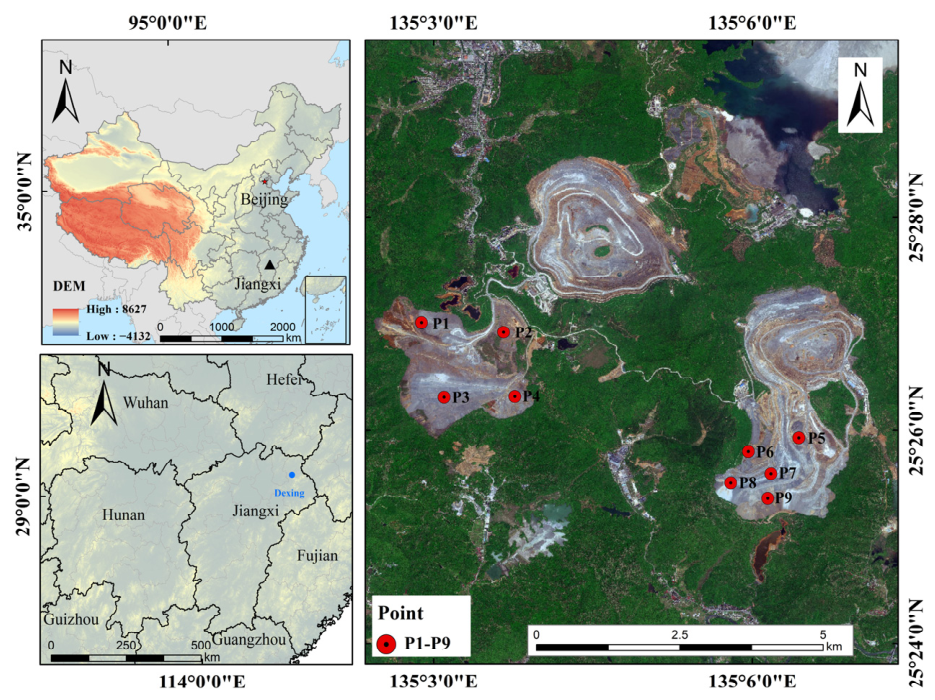
| P1 | 117°42′6.624″E | 29°0′16.432″N |
| P2 | 117°42′50.899″E | 29°0′10.245″N |
| P3 | 117°42′14.484″E | 28°59′52.602″N |
| P4 | 117°42′55.876″E | 28°59′36.792″N |
| P5 | 117°45′28.61″E | 28°59′15.939″N |
| P6 | 117°45′1.626″E | 28°59′5.168″N |
| P7 | 117°45′11.843″E | 28°58′55.085″N |
| P8 | 117°44′54.553″E | 28°58′51.876″N |
| P9 | 117°45′10.796″E | 28°58′41.792″N |
| Depth Layer | RMSE (m3/m3) | MAE (m3/m3) | R2 |
|---|---|---|---|
| 0 cm | 0.00380 | 0.00276 | 0.9631 |
| 5 cm | 0.00347 | 0.00276 | 0.9693 |
| 10 cm | 0.00347 | 0.00276 | 0.9693 |
| 15 cm | 0.00306 | 0.00291 | 0.9652 |
| 20 cm | 0.00355 | 0.00280 | 0.9669 |
| 25 cm | 0.00334 | 0.00268 | 0.9699 |
| 30 cm | 0.00335 | 0.00265 | 0.9697 |
| 35 cm | 0.00345 | 0.00264 | 0.9671 |
| 40 cm | 0.00344 | 0.00266 | 0.9668 |
| Average | 0.00350 | 0.00273 | 0.9675 |
| Depth Layer | RMSE (°C) | MAE (°C) | R2 |
|---|---|---|---|
| 0 cm | 1.6885 | 1.2790 | 0.9430 |
| 5 cm | 1.6038 | 1.1705 | 0.9486 |
| 10 cm | 1.6038 | 1.1705 | 0.9486 |
| 15 cm | 1.5224 | 1.1063 | 0.9498 |
| 20 cm | 1.3622 | 0.9956 | 0.9564 |
| 25 cm | 1.2725 | 0.9942 | 0.9585 |
| 30 cm | 0.7461 | 0.6708 | 0.9844 |
| 35 cm | 0.6180 | 0.5094 | 0.9883 |
| 40 cm | 0.4104 | 0.3429 | 0.9943 |
| Average | 1.2031 | 0.9155 | 0.9635 |
| Parameter Name | Notation | Value | Description |
|---|---|---|---|
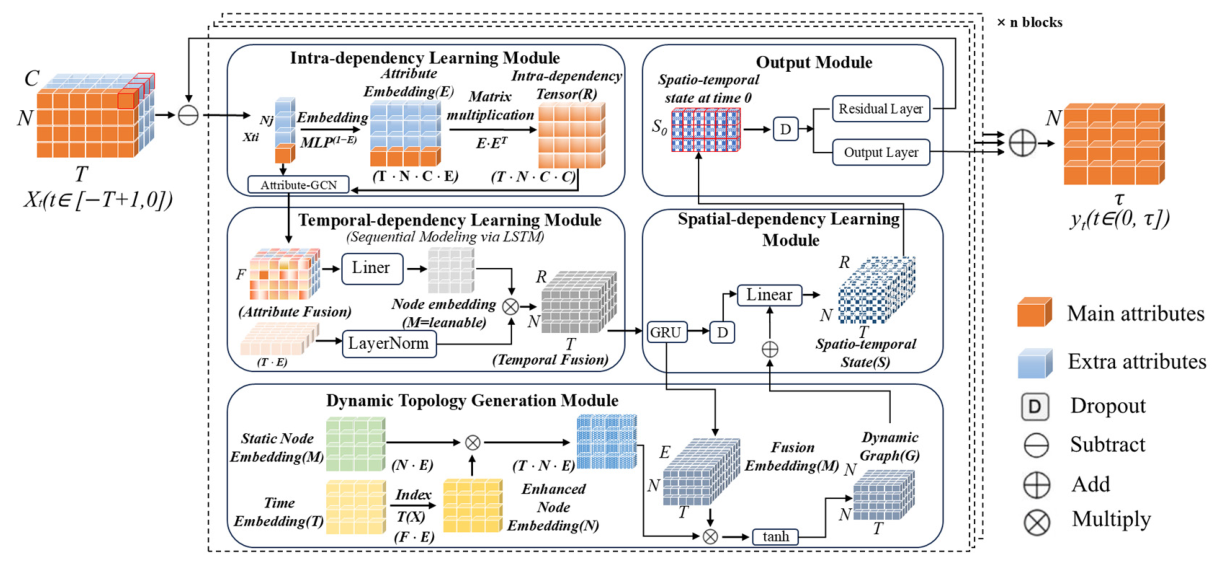
| Input length | T | 6 months | - |
| Prediction horizon | τ | 3 months | - |
| Number of nodes | N | 9 | - |
| Diffusion convolution order | K | 2 | - |
| GRU hidden size | M | 128 | - |
| Training epochs | E | 200 | With early stopping based on validation loss |
| Learning rate | R | 0.001 | With scheduler decay to 0.0005 after 50 epochs |
| Batch size | S | 32 | |
| Embedding dimension | D | 64 | For both node and temporal features |
| RMSE | MAE | R2 | |
|---|---|---|---|
| RF (Mine 1) | 11.5754 | 8.8655 | 0.7582 |
| RF (Mine 2) | 14.1846 | 9.9792 | 0.6895 |
| LSTM (Mine 1) | 9.2181 | 7.5549 | 0.8495 |
| LSTM (Mine 2) | 10.7294 | 7.9145 | 0.7728 |
| HSDGNN (Mine 1) | 5.5566 | 3.8845 | 0.9950 |
| HSDGNN (Mine 2) | 7.4906 | 6.1699 | 0.9738 |
Disclaimer/Publisher’s Note: The statements, opinions and data contained in all publications are solely those of the individual author(s) and contributor(s) and not of MDPI and/or the editor(s). MDPI and/or the editor(s) disclaim responsibility for any injury to people or property resulting from any ideas, methods, instructions or products referred to in the content. |
© 2026 by the authors. Licensee MDPI, Basel, Switzerland. This article is an open access article distributed under the terms and conditions of the Creative Commons Attribution (CC BY) license.
Share and Cite
Zhang, Z.; Qian, L.; Wu, Y.; Chen, Y.; Sun, Y.; Wan, D. SBAS-InSAR-Based Monitoring and Hierarchical Spatiotemporal Deep Learning for Subsidence Monitoring and Prediction in Active Mining Areas: A Case Study of the Dexing Copper Mine. Remote Sens. 2026, 18, 1810. https://doi.org/10.3390/rs18111810
Zhang Z, Qian L, Wu Y, Chen Y, Sun Y, Wan D. SBAS-InSAR-Based Monitoring and Hierarchical Spatiotemporal Deep Learning for Subsidence Monitoring and Prediction in Active Mining Areas: A Case Study of the Dexing Copper Mine. Remote Sensing. 2026; 18(11):1810. https://doi.org/10.3390/rs18111810
Chicago/Turabian StyleZhang, Zhaoxu, Lei Qian, Yahan Wu, Yujia Chen, Yuanheng Sun, and Dan Wan. 2026. "SBAS-InSAR-Based Monitoring and Hierarchical Spatiotemporal Deep Learning for Subsidence Monitoring and Prediction in Active Mining Areas: A Case Study of the Dexing Copper Mine" Remote Sensing 18, no. 11: 1810. https://doi.org/10.3390/rs18111810
APA StyleZhang, Z., Qian, L., Wu, Y., Chen, Y., Sun, Y., & Wan, D. (2026). SBAS-InSAR-Based Monitoring and Hierarchical Spatiotemporal Deep Learning for Subsidence Monitoring and Prediction in Active Mining Areas: A Case Study of the Dexing Copper Mine. Remote Sensing, 18(11), 1810. https://doi.org/10.3390/rs18111810