Article

Multi-Factor Coupling Mechanism of Small Water Body Area Dynamics Under Different Scenarios in the Chaohu Lake Basin, China


1
Key Laboratory of Drinking Water Source Protection of the Ministry of Ecology and Environment, Chinese Research Academy of Environmental Sciences, Beijing 100012, China
2
School of Geographic Information and Tourism, Chuzhou University, Chuzhou 239000, China
3
College of Electrical Engineering and Control Science, Nanjing Tech University, Nanjing 211816, China
4
School of Geography, Nanjing Normal University, Nanjing 210023, China
*
Author to whom correspondence should be addressed.
Remote Sens. 2026, 18(11), 1771; https://doi.org/10.3390/rs18111771
Submission received: 12 February 2026 / Revised: 19 April 2026 / Accepted: 18 May 2026 / Published: 1 June 2026

Highlights

What are the main findings?
  • LUCC and evaporation are the dominant factors driving small water body area evolution.
  • The modified LSTM–Transformer model enhanced the accuracy of small water body area simulations under different scenarios by 4–17% compared with baseline models.
What are the implications of the main findings?
  • Scenario simulation results provide targeted decision and technical support for the ecological management and sustainable water resource utilization of small water bodies.

Abstract

Small water bodies serve as fundamental units and key conduits for material cycling and hydrological processes at the watershed scale. However, quantitatively identifying the mechanisms driving their area evolution under multi-factor coupling in different scenario simulations remains challenging. This study focused on the small water bodies in the Chaohu Lake Basin. An Otsu algorithm was applied to establish a basin-scale database of small water bodies, while the GeoDetector model was integrated to reveal the spatiotemporal driving mechanisms of multi-factor coupling behind their evolution. Furthermore, a Long Short-Term Memory (LSTM)–Transformer model was modified to simulate future scenarios of small water body area dynamics. The results indicated that, from 1995 to 2024, the area of small water bodies in the Chaohu Lake Basin exhibited a fluctuating decreasing trend (wet season: 186–269 km2; dry season: 110–253 km2). In terms of spatial distribution, the small water bodies exhibited an unbalanced distribution pattern characterized by wide dispersion alongside regional clustering. Results from the GeoDetector model revealed that land use type (q = 0.711) and evapotranspiration (q = 0.526) were the dominant drivers of variations in small water body areas. LSTM–Transformer simulations (R2 = 0.92, p < 0.01) suggested that, under temperature, precipitation, and land use change scenarios, the small water body areas in the Chaohu Lake Basin will exhibit distinct seasonal variation characteristics, with scenario-dependent differences in fluctuation amplitude and peak–trough timing. These results offer theoretical support for the protection of small water bodies and integrated water resource management in the Chaohu Lake Basin.

1. Introduction

Small water bodies [1], often referred to as the “capillaries of the Earth”, are widely distributed yet small in area and highly sensitive to human activities, functioning as fundamental units and critical carriers of regional material cycling [2] and hydrological processes. Nevertheless, fine-scale identification and the evolutionary mechanisms of small water bodies at the watershed scale remain poorly understood due to the scarcity of high-resolution remote sensing data and limitations in fine-scale extraction methods [3], underscoring the need for quantitative investigations. At present, research on the mechanisms driving the areal evolution of watershed-scale small water bodies, as well as their scenario-based simulations, is constrained by three key unresolved issues that require further investigation:
(I) The limitations of low-resolution remote sensing-based water body interpretation algorithms lead to insufficient accuracy in the fine-scale extraction of small water body areas [4]. Previous research indicates that the Normalized Difference Water Index (NDWI) effectively suppresses soil and vegetation background noise, strengthens water body signals, and facilitates standardized water body extraction [5]. Nevertheless, NDWI has deficiencies in mixed-spectrum discrimination, which can lead to the misclassification of urban built-up surfaces as water bodies. By contrast, MNDWI enhances the spectral separability between water bodies and surrounding land cover, leading to substantial improvements in the boundary identification and extraction accuracy of small water bodies [6]. Moreover, high-resolution remote sensing data are characterized by large data volumes, making extraction efficiency on conventional computers limited. In contrast, the Google Earth Engine (GEE) platform provides massive remote sensing data archives and parallel computing capabilities, which greatly improve research efficiency [7]. Accordingly, this study employed the GEE platform integrated with the Otsu algorithm to identify and finely extract small water bodies in the Chaohu Lake Basin during the period 1995–2024 [8].
(II) The identification of multi-factor coupling effects remains limited, resulting in an unclear understanding of the dynamic evolution mechanisms of small water bodies. The dynamics of small water body areas are driven by the coupled effects of natural and socio-economic factors [9]. In recent years, scholars have progressively moved from single-factor analyses toward elucidating multi-factor coupling effects through mathematical and statistical approaches [10]. Nevertheless, certain statistical models rely on linear assumptions in multi-factor coupling analyses, limiting their ability to capture nonlinear or bilinear enhancement effects among factors, while also exhibiting sensitivity to prior parameterization and vulnerability to data sparsity [11]. In contrast, the GeoDetector model can quantify the contribution of individual factors to the evolution of small water bodies through the factor detector and reveal synergistic or antagonistic interactions among factors through the interaction detector [12]. This allows for a clear understanding of the coupling mechanisms between natural and anthropogenic factors, enabling the elucidation of spatiotemporal dynamic evolution mechanisms under multi-factor coupling.
(III) The development of multi-scenario prediction models remains limited, resulting in uncertainty about the future evolution of small water bodies. Clarifying the future evolution of small water bodies is a prerequisite for watershed-scale water resource conservation and efficient utilization [13]. Accordingly, designing different scenarios to simulate the future evolution of small water bodies at the watershed scale is of great significance. Previous studies have used random forest models to predict the future evolution of water bodies [14]. Although these models can integrate and characterize multiple influencing factors, they depend on manually defined feature windows. This limitation makes it difficult to quantify dynamic multi-factor coupling effects, capture long-term cumulative influences in time series, or detect subtle changes in water bodies [15]. Accordingly, this study aimed to construct a Long Short-Term Memory (LSTM)–Transformer model [16] that leverages gating mechanisms to autonomously learn nonlinear patterns and capture long-term temporal effects, thereby enabling fine-scale simulations of the evolution of small water bodies under multiple scenarios.
Over the past four decades, the Chaohu Lake Basin, home to China’s fifth-largest freshwater lake, has borne the dual pressures of economic development and ecological conservation, making it a key and challenging area for regional aquatic ecological environment management. Accordingly, this study focused on the Chaohu Lake Basin and used the GEE platform in conjunction with the Otsu algorithm to extract small water body areas during the period 1995–2024. The GeoDetector model was then applied to quantify the driving mechanisms of multi-factor coupling underlying dynamic changes in the area of small water bodies [17], and an LSTM–Transformer model was further used to construct and simulate future scenarios of small water body area changes for 2030 and 2040. This study provides new perspectives on water body area evolution in the Chaohu Lake Basin and proposes new methods for water environmental governance and efficient water resource utilization.

2. Materials and Methods

2.1. Study Area

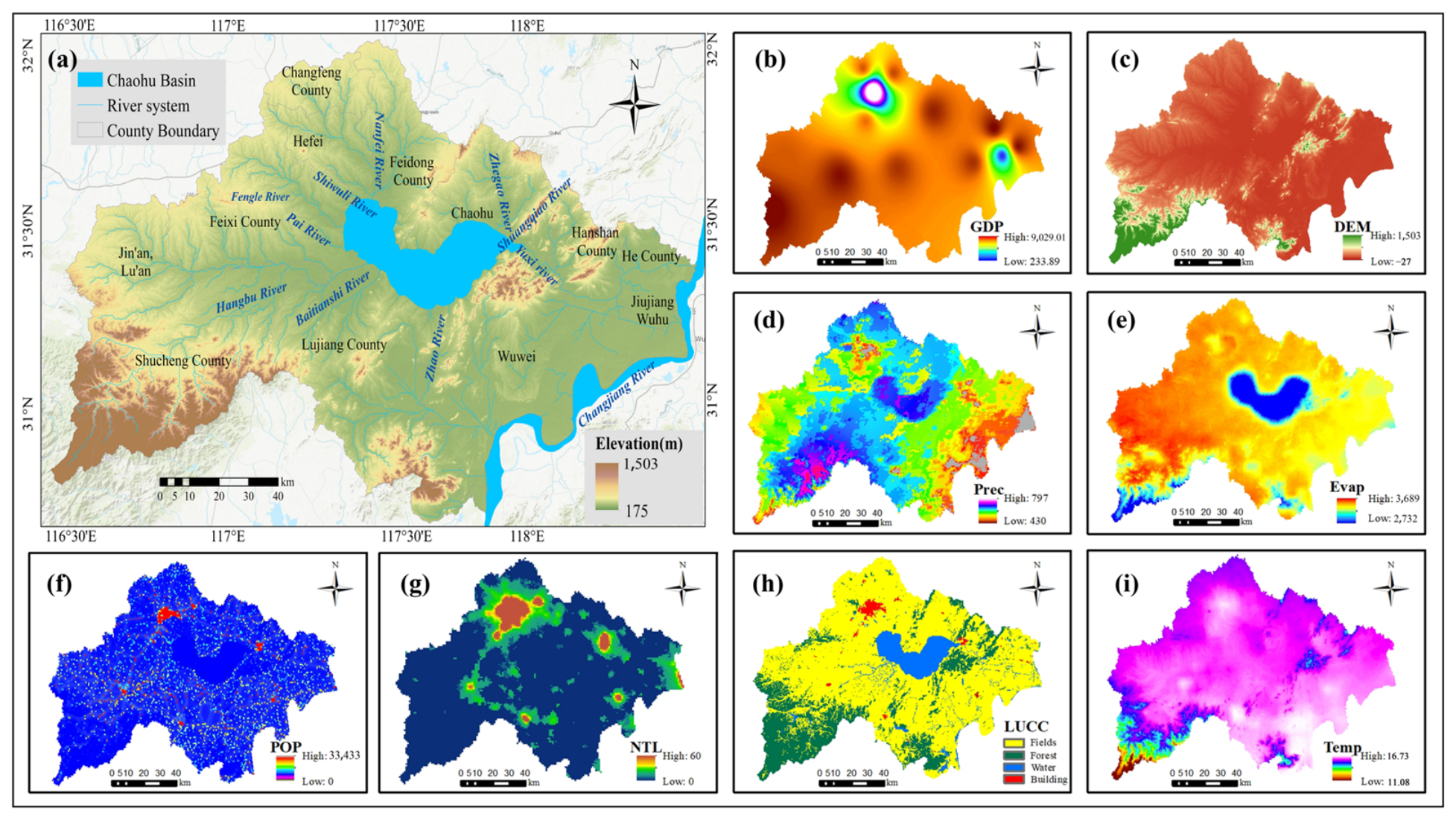
Chaohu Lake, one of China’s five major freshwater lakes, has a drainage area of 13,544.7 km2, spanning 17 counties and districts within five cities, including Hefei and Wuhu. The basin contains 39 in-flowing rivers, of which three major rivers, including the Hangbu River, account for more than 75% of the total inflow to the lake. According to the Anhui Provincial Ecological Environment Status Bulletin (https://sthjt.ah.gov.cn, accessed on 20 May 2026), the overall water quality of Chaohu Lake, as well as that of its eastern and western sections, has consistently remained at Class IV, indicating a mildly eutrophic state. Small water bodies, which are distributed across urban and rural areas, are characterized by small surface areas and limited pollutant assimilation capacity, making them highly susceptible to eutrophication [18,19]. Therefore, this study focused on the mechanisms of small water body area evolution under multi-factor coupling in the Chaohu Lake Basin, as well as the simulation of water body areas under different scenarios. Figure 1 illustrates the study area of the Chaohu Lake Basin.

2.2. Research Methods

2.2.1. Otsu Algorithm

The Otsu algorithm, also known as the maximum between-class variance method, is a thresholding method for image binarization and is considered a preferred approach for determining image segmentation thresholds [20]. In this study, a water body extraction method based on the Otsu algorithm applied to MNDWI data was employed. First, for each year, cloud-minimized images of the Chaohu Lake Basin from the wet and dry seasons were processed through band calculations to generate annual MNDWI datasets. Subsequently, the Otsu algorithm was used to calculate an adaptive intensity threshold (T) for the MNDWI data. Water bodies were then extracted using the criterion MNDWI > T for two periods per year from 1995 to 2024, yielding a total of 48 water body datasets [21]. The formula is as follows [22]:
g = w 0 w 1 ( u 0 u 1 ) 2
w 0 = N 0 M ;     w 1 = N 1 M ;   u 0 = i = 1 N 0 u 0 i N 0 ;       u 1 = i = 1 N 1 u 1 i N 1
where w0 denotes the proportion of pixels corresponding to water bodies relative to the total number of pixels in the image; w1 represents the proportion of non-water pixels relative to the total number of pixels; μ0 is the mean gray value of the foreground, i.e., water bodies, in the image; μ0i denotes the gray value of the i-th pixel within the water body class; μ1 is the mean gray value of the background, namely non-water features other than water bodies; μ1i represents the gray value of the i-th pixel within the non-water class; N0 and N1 are the numbers of water and non-water pixels, respectively; and M is the total number of pixels in the selected image.

2.2.2. GeoDetector Model

The GeoDetector model quantifies the contribution of independent variables to dependent variables by analyzing the overall differences among spatial strata and has been widely applied in ecosystem analysis in recent years. This study used the optimal multivariate geographical detector (OMGD) model to perform single-factor detection and analyze the interactions among driving factors [23], as well as to determine the five strata used in the natural breaks method as the discretization approach. Significance testing was performed using Monte Carlo permutation tests with 1000 permutations at a significance level of α = 0.05.
(1) Factor detector: The factor detector is used to identify driving factors responsible for spatial differentiation and to quantify their explanatory power on the dependent variable. The formula is expressed as follows [24]:
q = 1 1 N x 2 h = 1 L N h h 2 X
where q represents the influence, i.e., the explanatory power, of a factor on the dependent variable; h = 1, 2, 3, …; L denotes the stratification or classification of the dependent variable and different independent variables; Nh and N are the numbers of samples in stratum h and in the entire study area, respectively; and Nx2 and h 2 X represent the variance of the dependent variable within stratum h and across the entire region, respectively. A larger q-value indicates a stronger influence of the factor on the dependent variable [25].
(2) Interactive detection: Interactive detection can be used to identify the interactions of different influencing factors on the dependent variable, specifically assessing whether the joint effects of these factors enhance or reduce their explanatory power regarding the dependent variable. The interactions among factors include nonlinear attenuation, nonlinear enhancement, single-factor nonlinear attenuation, mutual enhancement, nonlinear enhancement, and independent enhancement.

2.2.3. LSTM–Transformer Model

The LSTM–Transformer model is a hybrid architecture that integrates LSTM networks with the Transformer framework [26], combining the sequence modeling capability of LSTM with the Transformer’s self-attention mechanism for capturing long-range dependencies. The model input consists of a numerical feature matrix including the target variable (water body area) and environmental factors such as temperature, humidity, and evapotranspiration. A 3-year sliding time window was used to construct the time-series samples, and the dataset was divided into training and validation sets at a ratio of 8:2. The model architecture includes two LSTM layers with 32 and 16 neurons, respectively, followed by a fully connected layer with eight neurons, with a dropout rate of 0.2. The Adam optimizer (with a learning rate of 0.001) was used for training over 100 epochs with a batch size of four. Early stopping based on validation loss (patience = 20 epochs), together with dropout and data augmentation, was applied to improve model stability and reduce overfitting. The LSTM–Transformer model achieved the highest simulation accuracy, with an R2 of 0.91, outperforming LSTM (0.87), XGBoost (0.82), and RF (0.74). These results indicate that the LSTM–Transformer model provides the best predictive performance for simulating changes in small water body areas. In this study, the model was trained using data from the Chaohu Lake Basin (1995–2024) to simulate and predict changes in small water body areas for 2025–2040 under scenarios considering climatic factors, water resource utilization, and urbanization development [27].
h e a d = A t t e n t i o n Q , K , V = s o f t m a x Q K T d k V
where dk denotes the dimensionality of the three matrices, and d is the scaling factor.
m u t i l h e a d Q , K , V = C o n c a t h e a d 1 , h e a d 2 , , h e a d h W
where W is a trainable parameter. To improve computational efficiency and enable the model to process information from multiple perspectives simultaneously, the input matrix X is subjected to multiple linear projections to obtain multiple sets of query (Q), key (K), and value (V) matrices. The resulting attention outputs are concatenated to enhance the overall model performance.
Simulations under three scenarios were set up in this study [28]: ① Precipitation change scenario setting: Based on monthly precipitation observations from 1995 to 2023, a time series decomposition method was used to separate the trend and fluctuation components. The series was then simulated using an ARIMA model, and a 3-month moving average was applied to smooth fluctuations and ensure data continuity. The processed precipitation data were combined with temperature, evapotranspiration, and water use indicators as joint inputs to the LSTM–Transformer model to develop a precipitation change-specific simulation scenario. ② Land use scenario setting: Based on annual land use data from 1995 to 2023, the Patch-generating Land Use Simulation Model (PLUS) was used to extract the yearly transition probabilities of major land use types such as cropland, built-up areas, and water bodies. Combining these with driving factors, including slope, elevation, and road network density, annual dynamic land use evolution was simulated. The resulting data were converted into underlying surface influence coefficients and, together with hydrometeorological variables and water use data, used as joint inputs to the LSTM–Transformer model to construct the land use scenario simulation. ③ Temperature change scenario setting: Based on the IPCC 2016 report (SSP2 (Middle-of-the-Road Scenario) RCP4.5 (Moderate Emission Scenario)), which sets a target of limiting global warming to within 1.5 °C for 2016–2030, historical temperature data from 1995 to 2023 were first used as a baseline. Temperature sequences for 2025–2030 were then simulated through trend fitting under boundary constraints. The resulting series were spatiotemporally aligned and integrated with preprocessed precipitation, evapotranspiration, and water use data and subsequently fed into the LSTM–Transformer model for simulation and prediction.

2.3. Data Types and Sources

The data used in this study were extracted through the GEE platform [29]. Landsat-5 imagery was used to extract water body data from 1995 to 2010, Landsat-7 for 2011–2013, and Landsat-8 for 2014–2025. Additionally, water body data from 1995 to 2020 were obtained from the JRC Monthly Water History dataset. Temperature and precipitation data were downloaded from the National Earth System Science Data Center (http://www.geodata.cn, accessed on 20 May 2026). Land use data, DEM data, and river network data for the Chaohu Lake Basin were obtained from the Resource and Environment Science and Data Center (http://www.resdc.cn, accessed on 20 May 2026) (Supplementary Materials, Table S1).

3. Results

3.1. Accuracy Assessment of Water Body Extraction in the Chaohu Lake Basin

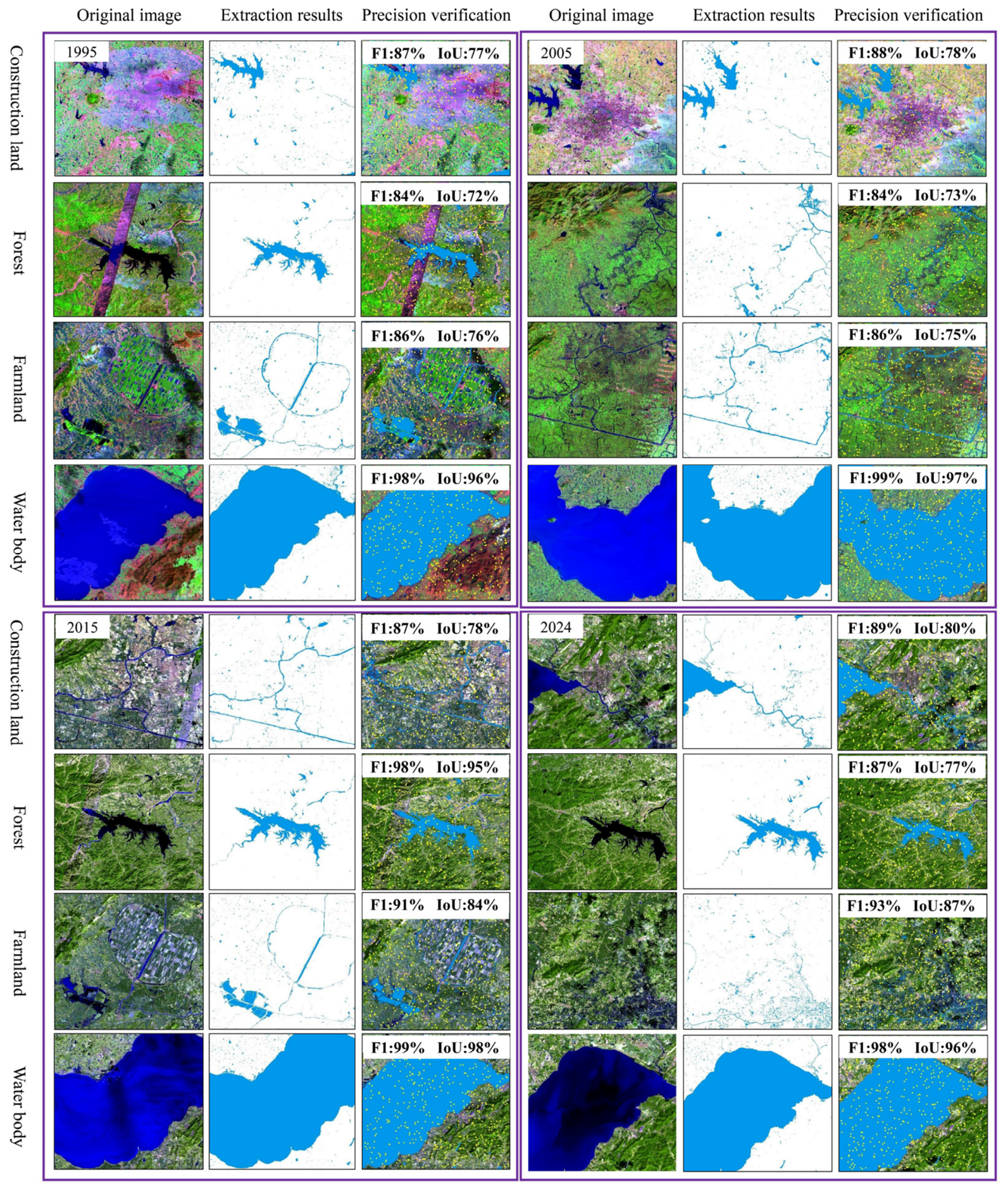
In this study, four typical land use types, e.g., built-up, forest, cropland, and water bodies were selected, and 500 random points per type per year were generated in Python, v3.14. Using high-resolution satellite imagery, the accuracy of small water body extraction over the past 30 years was assessed based on six metrics—F1 score, IoU, producer accuracy (PA), user accuracy (UA), overall accuracy (OA), and the Kappa coefficient (K) (Figure 2). Results indicate that, across different years and land use types, the average F1 score, IoU, OA, and Kappa coefficient for water body extraction reach 91%, 84%, 91.38%, and 83.69%, respectively (Table S2). The average OA and K values across land use types and years were 91.38% and 83.69%, respectively. The accuracy of water body area extraction across all land use types increased with higher satellite image resolution, with average OA and K values rising from 88.50% and 79.25% in 1995 to 92.25% and 84.25% in 2024, respectively. Overall, the Otsu algorithm achieved high accuracy in extracting small water body areas across different periods and land use types in the Chaohu Lake Basin, providing high-quality data to support subsequent analyses of area evolution mechanisms and scenario simulations.

3.2. Spatiotemporal Variations in Small Water Body Areas in the Chaohu Lake Basin

3.2.1. Temporal Variations in Water Body Areas in the Chaohu Lake Basin

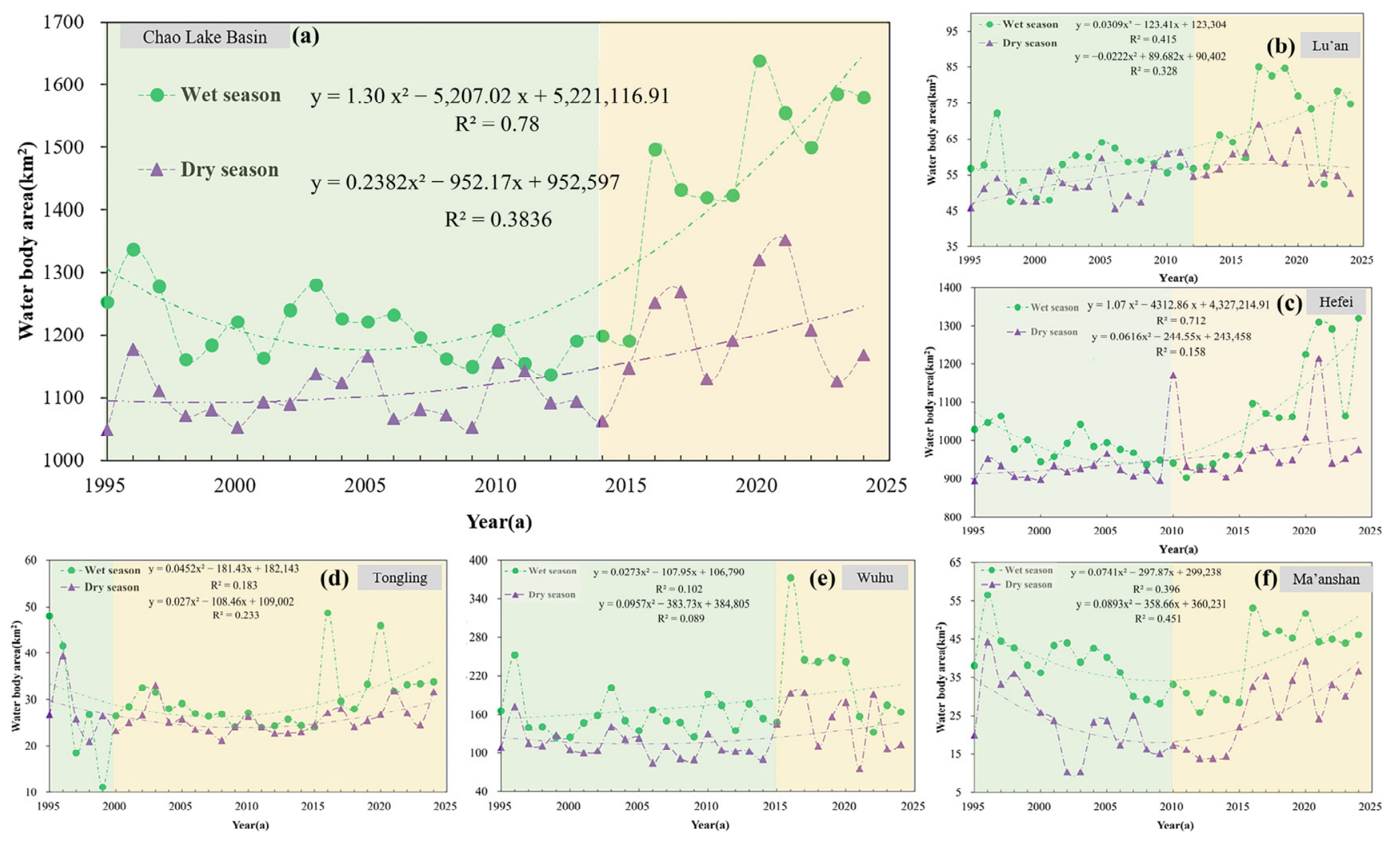
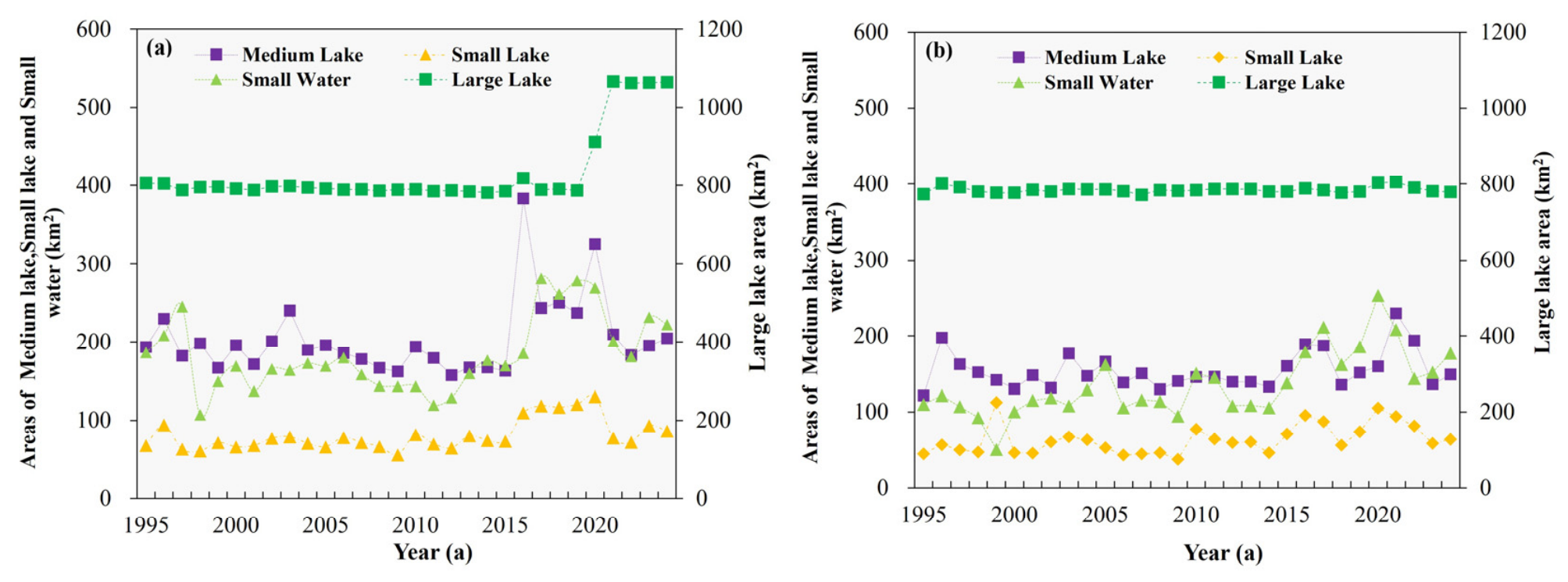
Based on water body area changes in the Chaohu Lake Basin from 1995 to 2024, the temporal pattern shown in Figure 3 indicates clear seasonal variations, with an overall increasing trend [30]. In this study, water bodies in the Chaohu Lake Basin were classified by area into five categories: large lakes (100–1000 km2), medium lakes (1–100 km2), small lakes (0.1–1 km2), and small water bodies (0–0.1 km2) [31].
The water surface area of the Chaohu Lake Basin in the wet season has exhibited a fluctuating increase since 1995. After 2015, the area increased markedly, reflecting an expansion of water bodies during the wet season. In the dry season, the water body area exhibited larger fluctuations, resulting in a lower goodness-of-fit for the area change model. Overall, the dry-season water body area also trended upward but with a smaller amplitude and a slower growth rate than those of the wet-season water body area. Significant differences were observed in water body area trends among cities within the basin. In Tongling and Wuhu, the overall fluctuations in water body area were relatively mild. In Ma’anshan, the water body area in both wet and dry seasons exhibited a clear decline–increase pattern. In Hefei, the wet-season water body area showed a significant upward trend, while the dry-season area remained largely unchanged. In Lu’an, the water body area during both the wet and dry seasons increased with fluctuations before 2017 and subsequently showed a decreasing trend.
The area changes trends of different types of water bodies in the Chaohu Lake Basin tended to be consistent (Figure 4), with the wet-season water body area exhibiting greater fluctuations than the dry-season water body area. Overall, the area ranking of water bodies in the Chaohu Lake Basin is as follows: larger lake (0–337 km2) > small water body (0–139) > small lake (0–70 km2) > medium lake (0–61 km2). In terms of area variation, smaller water bodies exhibit more pronounced differences between wet and dry seasons as well as greater interannual variability. Specifically, medium and small lakes remained relatively stable from 1995 to 2020, with minor fluctuations. Small water bodies had the third largest areas in this study area, exhibiting a trend of first increasing and then decreasing, with obvious peak and trough characteristics.

3.2.2. Spatial Distribution of Water Body Areas in the Chaohu Lake Basin

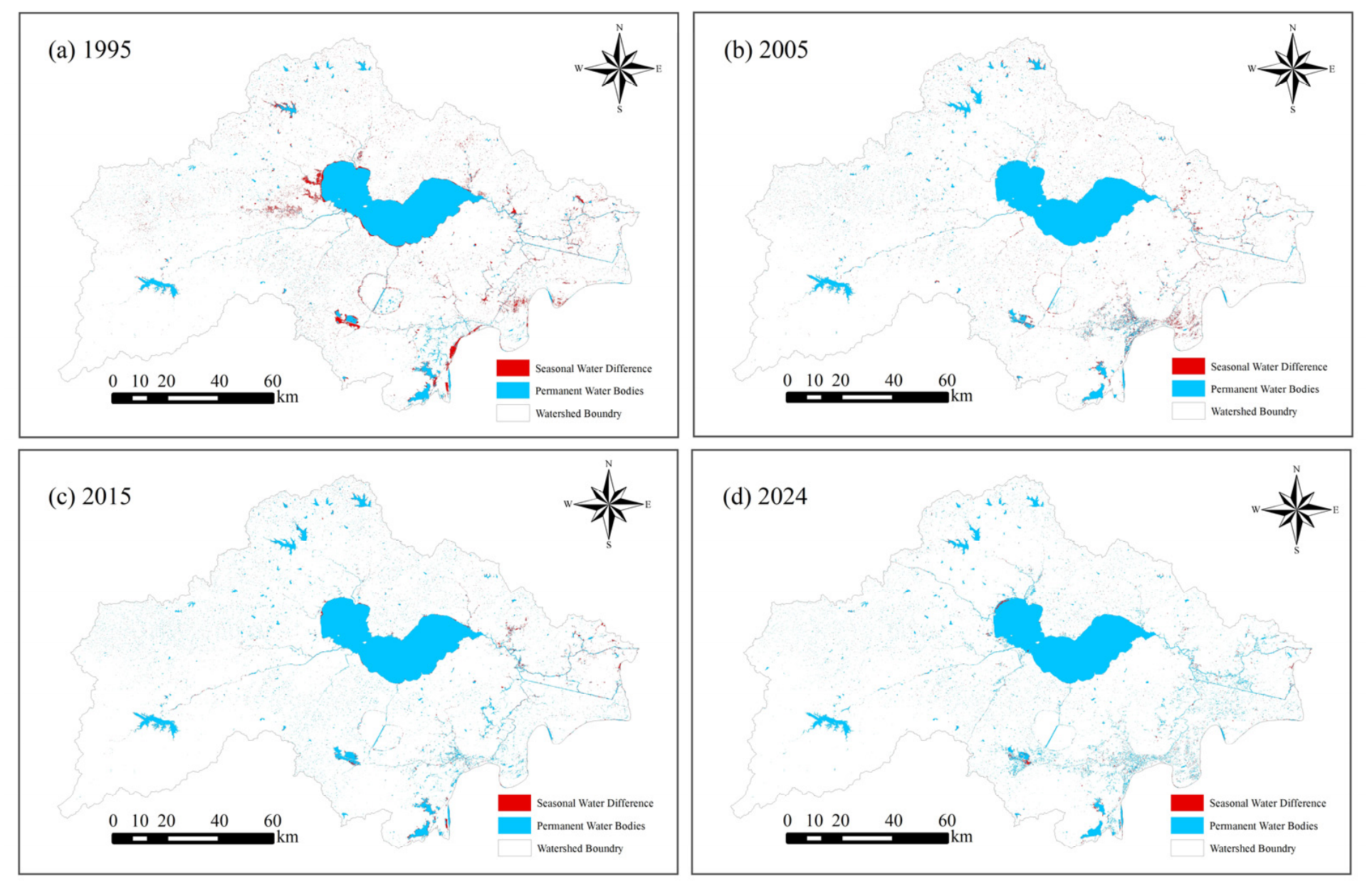
Based on the spatial variations in water body areas during the wet and dry seasons in the Chaohu Lake Basin (Figure 5), different types of water bodies exhibit a distinct spatial pattern characterized by “high dispersion with local clustering”. Overall, water bodies are mainly concentrated in the central and southeastern parts of the basin. At the basin scale, water bodies in the Chaohu Lake Basin exhibit a centripetal convergence pattern, with different types of water bodies mainly extending along the main river network. In particular, the water body areas of various types are more densely distributed in the southern part of the basin, near the Yangtze River system. At the sub-basin scale, the different water body types are distributed in bead-like and linear patterns along the sub-basin river networks, a feature that is especially pronounced during the dry season. Both wet-season and dry-season water bodies are centered in the Chaohu Lake Basin and exhibit a spatial pattern characterized by central aggregation and peripheral dispersion. During the wet season, the different water body types are well connected, exhibiting strong hydrological connectivity. During the dry season, the water bodies are distributed in a fragmented manner, resulting in weakened hydrological connectivity. In addition, the area differences in water body between the wet and dry seasons in 1995, 2005, 2015, and 2024 were 358, 197, 203, and 238 km2, respectively. Overall, the seasonal variation in water area has a general decreasing trend. The most significant decline occurred between 1995 and 2005, while from 2005 to 2024, the seasonal differences stabilized. This pattern is closely related to the improvement of water conservancy infrastructure in the Chaohu Lake basin [32]. The construction and operation of reservoirs, sluices, dams, and river regulation projects have mitigated the impact of seasonal precipitation differences on water area fluctuations, leading to a more stable variation between wet and dry seasons.
In the temporal dimension, the water surface area of the Chaohu Lake Basin showed a shrinking trend from 1995 to 2024, regardless of whether it was the wet season or the dry season. During the wet season, water bodies were widely distributed in 1995, while scattered peripheral water bodies gradually decreased in subsequent years. During the dry season, the surrounding water bodies continuously dried up, and water resource shortages intensified, reflecting a declining trend of water resources in the basin over time. In terms of spatial dimension, the water bodies in both the wet and dry seasons are centered around the main basin of Chaohu Lake. During the early wet season, numerous scattered water bodies are distributed across the surrounding areas, but they later contract and become concentrated mainly within the main basin. In contrast, the dry season is characterized by relatively few surrounding water bodies, which continue to diminish over time, reflecting a progressive spatial shrinkage of water resources around the main lake basin.

3.3. Correlation Analysis of Small Water Body Area Changes in the Chaohu Lake Basin

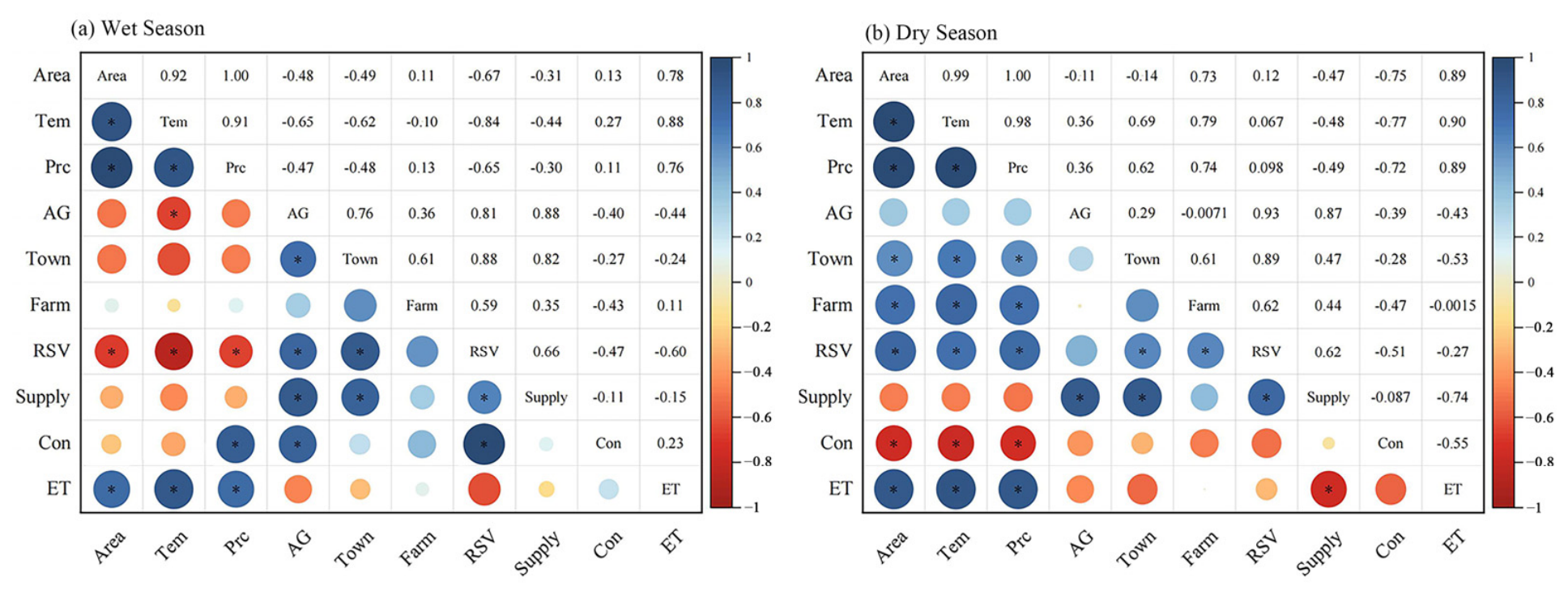
The results of the correlation analysis (Figure 6) indicated that the significance of each factor in relation to the dry-season water area changes was higher than that for the wet season. During the wet season, correlations among factors were generally weak, suggesting limited synergistic effects. In contrast, during the dry season, correlations among factors were generally stronger, indicating the possible presence of significant synergistic interactions. Among these factors, temperature (Tem), precipitation (Pre), relative surface velocity (RSV), and evapotranspiration (ET) were significantly correlated with water area changes in both the wet and dry seasons. During the wet season, the water area was significantly positively correlated with temperature, precipitation, and evapotranspiration and significantly negatively correlated with RSV, indicating that multiple factors, rather than a single factor, drive the expansion of small water bodies in the wet season. In the dry season, the water area was significantly positively correlated with temperature, precipitation, evapotranspiration, and various water supply factors and significantly negatively correlated with different types of water consumption, indicating that the dry-season water area is strongly influenced by the combined effects of water resource “supply” and “demand” factors. Overall, the correlation analysis suggests that precipitation may be a common dominant factor affecting water area in both the wet and dry seasons, while water supply and consumption may represent another important set of factors influencing dry-season water area. During the wet season, natural factors are the primary drivers of water area changes, whereas the combined influence of natural and social factors is stronger in the dry season than in the wet season.

3.4. Analysis of Driving Forces Behind Small Water Body Area Changes in the Chaohu Lake Basin

This study used the single-factor and two-factor modules of the GeoDetector model to simulate the spatiotemporal driving forces behind small water body area changes in the study area. The results indicated that, from 1995 to 2024, land use type (q = 0.711) and evapotranspiration (q = 0.526) were the key factors driving the dynamic changes in small water body areas in the Chaohu Lake Basin. The q-value of land use type remained high over the years, ranking first in both the wet and dry seasons, indicating a significant and stable influence on the basin’s ecological and hydrological processes. Changes in land use patterns had a substantial effect. Evapotranspiration, with q-values increasing from 0.47 to 0.54 during the wet season and ranging from 0.51 to 0.58 in the dry season, was the most critical factor after land use. It strongly affected basin water balance and other hydrological processes, with its influence showing an increasing trend during the wet season (Table S3).
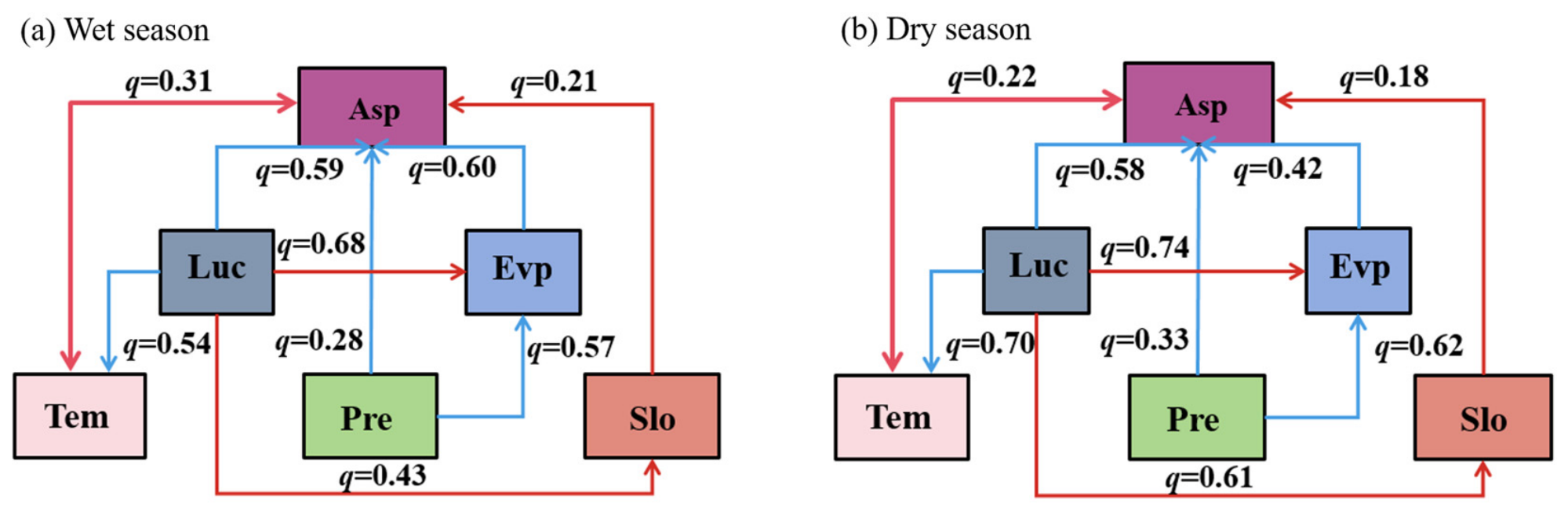
The two-factor analysis (Figure 7) indicated that, from 1995 to 2024, land use type and evapotranspiration were the core drivers of water area changes in both the wet and dry seasons in the Chaohu Lake Basin. The wet-season water area was jointly influenced by urban development and climate change during the same period; however, their explanatory power fluctuated significantly over time, whereas such temporal fluctuations were less pronounced during the dry season. Other meteorological factors (temperature and precipitation) and socio-economic factors (population, GDP, and nighttime light index) had relatively weak and unstable overall effects.

4. Discussion

4.1. Driving Effects of Climate Change on the Evolution of Small Water Body Areas

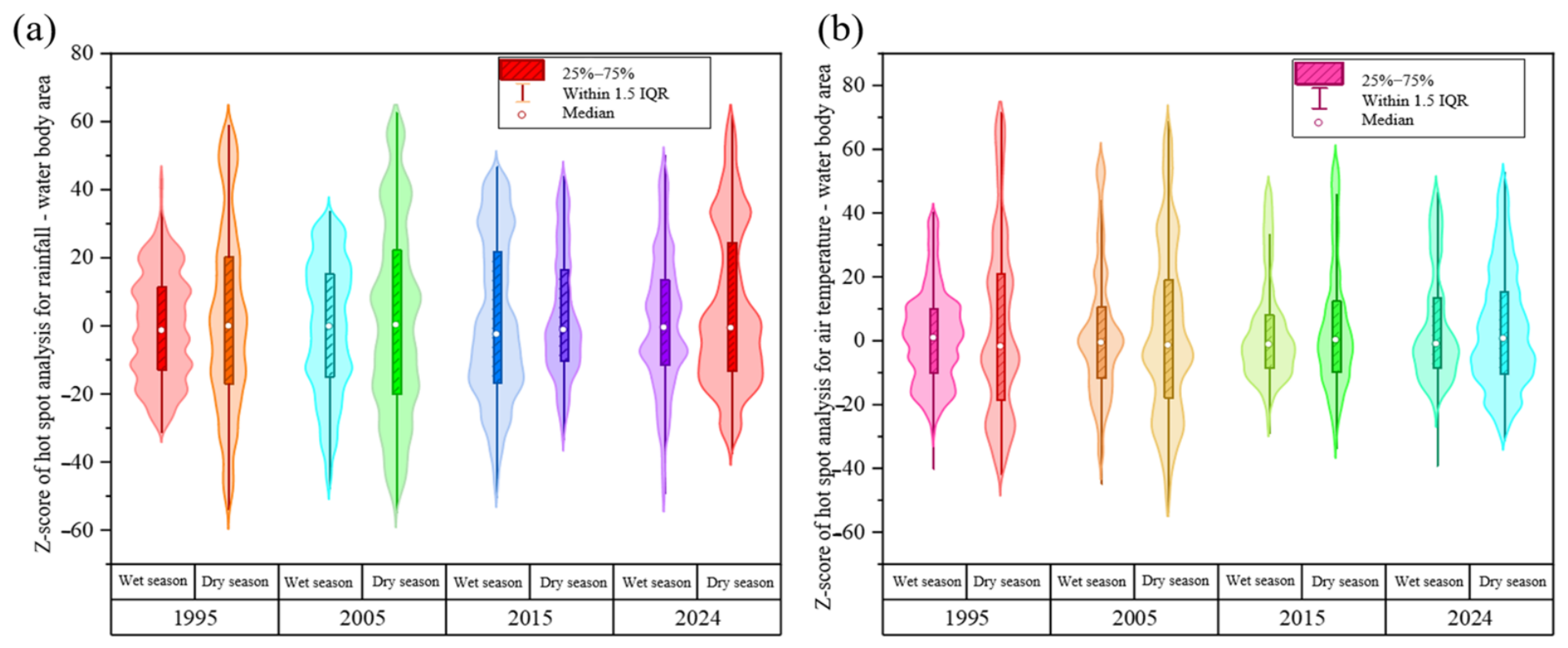
This study used spatial autocorrelation models to explore the driving effects of precipitation and temperature on the spatial distribution of small water body areas in the study area. The results (Figure 8) showed that, during the period 1995–2024, the effects of precipitation and temperature changes on the spatial distribution of small water body areas in the Chaohu Lake Basin were relatively consistent. The distributional dynamics of the Z-scores from the model’s hotspot analysis indicated a clear spatial consistency between temperature and precipitation factors and the distribution of small water body areas in the study area. This indicates that the spatial and temporal variation patterns of precipitation and temperature are important factors shaping the spatial distribution of small water body areas in the Chaohu Lake Basin [32]. Overall, the spatial distribution of temperature and precipitation contributed more to the spatial patterns of small water body areas during the dry season than during the wet season, which is largely consistent with the conclusions presented in Section 3.3. In terms of spatial characteristics, a “north-to-south” increasing trend was observed, with high-value areas mostly distributed in the southern part of the Chaohu Lake Basin and low-value areas primarily in the northern part.
The temperature factor exhibited noticeable fluctuations in driving the spatial clustering of water body area in the study area, with greater variability during the dry season than the wet season. The spatial distribution of temperature primarily affects the actual and potential evapotranspiration in the southern and northern regions of the Chaohu Lake Basin. Located on the boundary between the Yangtze River Basin and the Huai River Basin, the study area primarily belongs to the subtropical monsoon climate [32]. Summers are hot and rainy, resulting in high potential and actual evapotranspiration. However, in summer, the northern part of the Chaohu Lake Basin is farther from the solar zenith and receives less solar radiation than the southern region. This effect is partly offset by longer daytime sunlight duration in the north, resulting in relatively small differences in surface temperature between the northern and southern parts of the basin [33]. In winter, the northern part of the study area experiences shorter daytime sunlight and remains farther from the solar zenith, causing pronounced surface temperature differences between the southern and northern areas, which results in dry-season Z-scores being significantly higher than wet-season Z-scores.
The precipitation factor exhibited a relatively stable influence on the spatial clustering of small water body areas. During the period 1995–2024, Z-scores were generally concentrated with low dispersion. The differences in Z-scores between the wet and dry seasons were statistically significant, while the temporal variation trend remained relatively gentle. The median Z-scores of precipitation–water area during the wet season were generally consistent with those in the dry season (Z < 0), but the extreme value range in the dry season was wider, making it more prone to the formation of statistically significant high–low value hotspots (clusters of high precipitation–high water surface area and low precipitation–low water surface area). Whether during the wet or dry season, the Z-score distribution was closer to the high–high hotspot range (40 < Z < 70). However, the range of Z-scores gradually narrowed over time, shifting from high–high and low–low clustering patterns toward high–low and low–high clustering patterns. This indicates that the contribution of precipitation to the spatial distribution of small water body areas in the Chaohu Lake Basin has generally decreased [34], while the combined effects of other factors, such as water consumption, land use change, and population, have begun to emerge (Table S3). In the future, effective management of small water body areas and water resources in the Chaohu Lake Basin will require greater attention to the spatial distribution and interactions of social factors [35].

4.2. Driving Effects of Land Use Changes on the Variations in the Small Water Body Areas

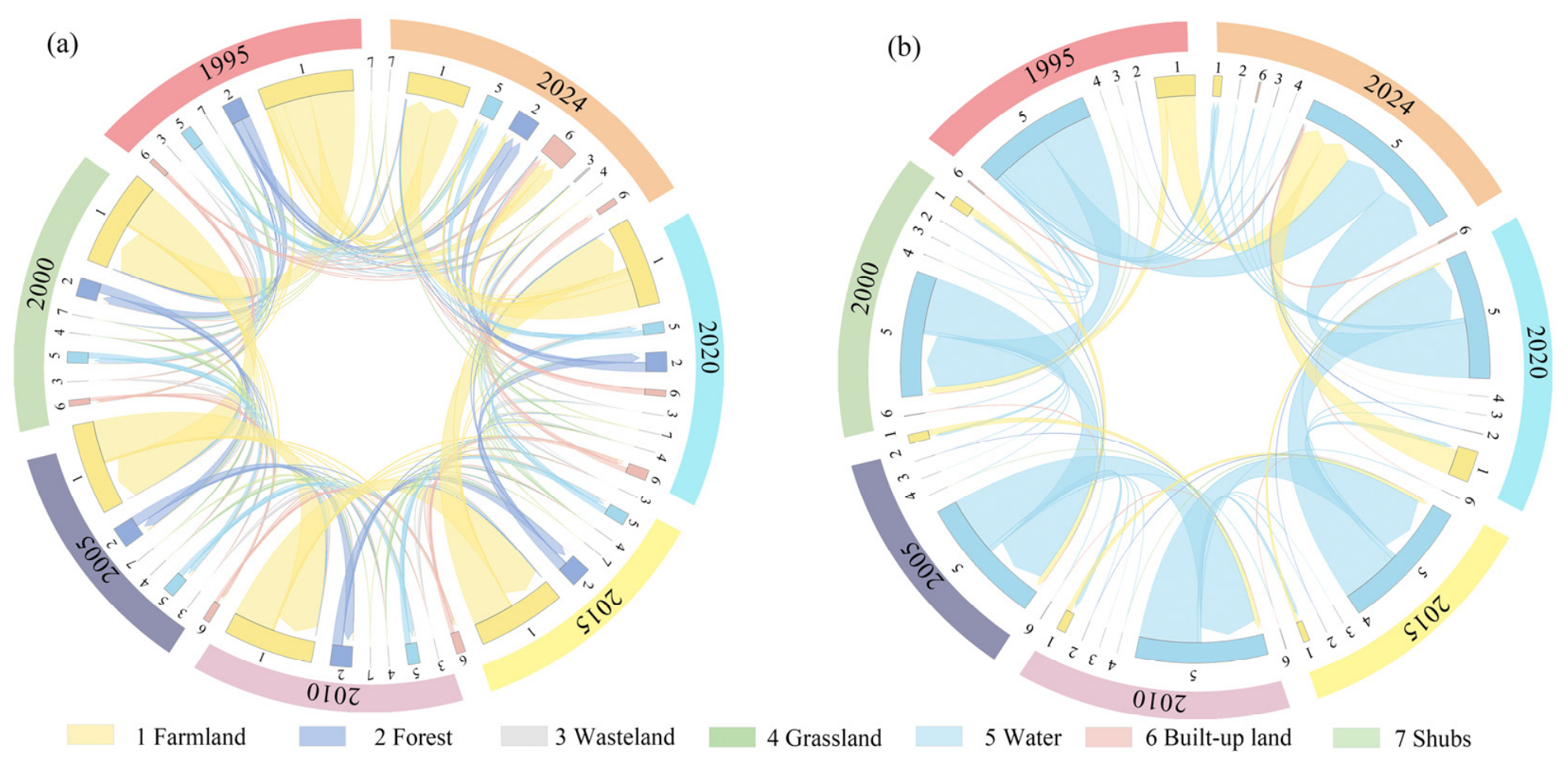
Land use conversion is one of the key drivers of the dynamic evolution of small water body areas in the study area. Figure 9 shows the changes and transitions among different land use types in the study area: From 1995 to 2024, land use types in the Chaohu Lake Basin changed significantly, with distinct phase differences. Red areas represent a decrease in water body area (Figure S2), while blue areas indicate an increase. Overall, the basin is dominated by cropland. The total water area shows a fluctuating increasing trend, with a total increase of 215.2 km2, while the area of small water bodies in the Chaohu Lake Basin exhibited a fluctuating de-creasing trend. The transition matrix (Figure 9a and Figure S2) results indicated that the increase in the total and small water body areas was primarily due to the abandonment of cropland and wetland restoration projects. For example, in recent years, residential and other construction land has been gradually demolished during wetland ecological restoration to restore wetland areas in the Chaohu Lake Basin (http://lyj.ah.gov.cn/, accessed on 20 May 2026), thereby increasing small water body areas. In contrast, the decrease in the small water area (Figure 9b) was mainly caused by the reclaim land from lake activities and encroachment from built-up land [36].

4.3. Analysis of Small Water Body Area Changes Under Different Scenarios

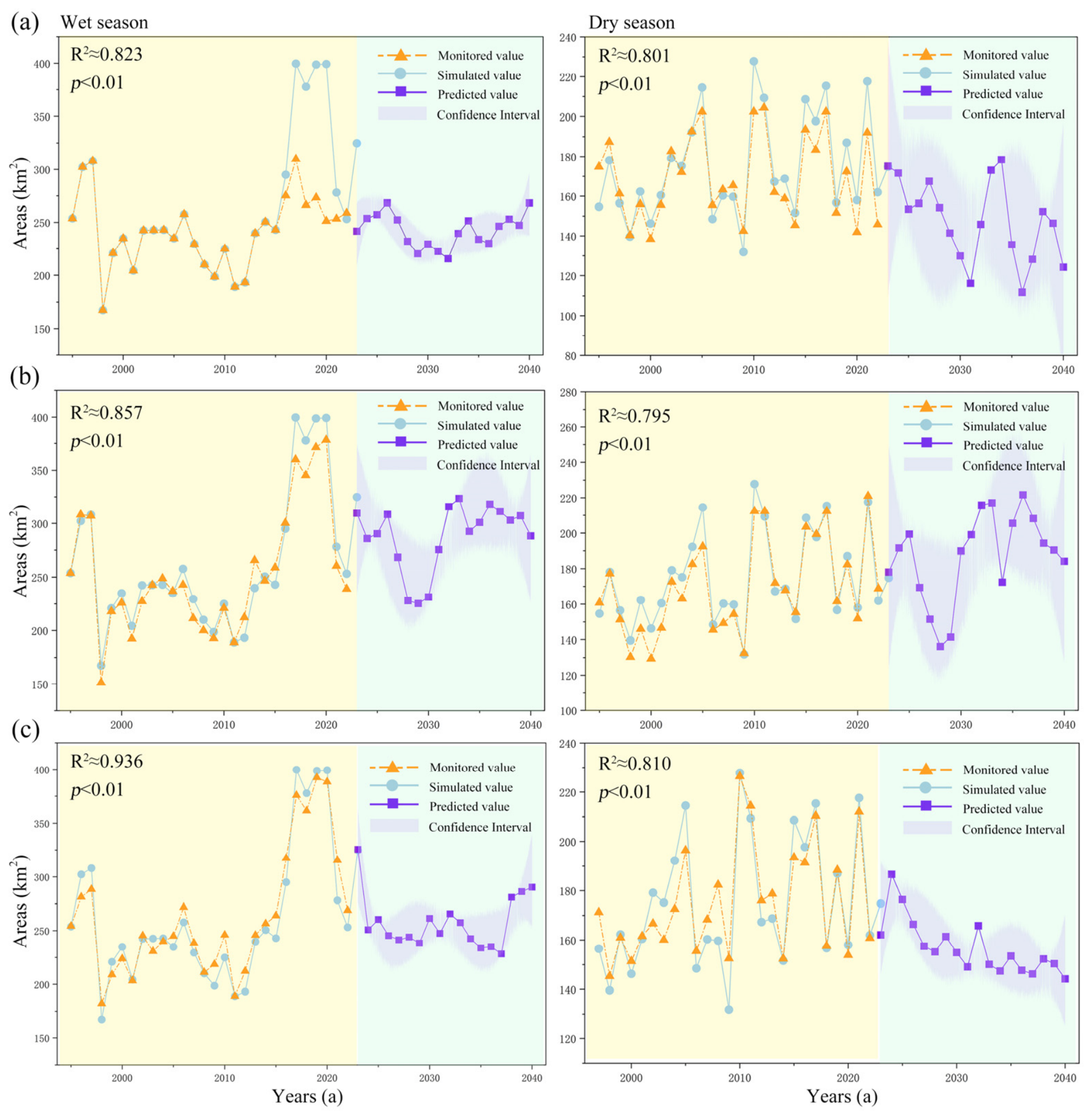
In the precipitation change scenario analysis (Figure 10a), monthly precipitation was first simulated using time series decomposition and trend extrapolation methods. The simulated monthly data were then temporally integrated, and random fluctuations were smoothed using a moving average method. Finally, the processed precipitation data, together with temperature, evapotranspiration, and water use indicators, were input into the LSTM–Transformer model for training and simulation. The results showed that, during the wet season, water area fluctuations were relatively mild, exhibiting a decline–increase trend (R2 = 0.823). In contrast, during the dry season, water area changes were more pronounced (R2 = 0.801), showing a periodic decreasing trend [37]. Based on the driving factor analyses in Section 3.2 and Section 3.3, changes in small water body areas in the Chaohu Lake Basin during the dry season are influenced by both precipitation and water consumption [38]. With the region’s socio-economic development and urbanization, population size and density have generally increased, leading to higher water demand during the dry season [39]. Under this scenario, the increased instability of dry-season precipitation results in greater variability in water body areas, potentially posing challenges to the seasonal assurance of regional water supply.
Under the land use scenario (Figure 10b), this study used land use data from 1995 to 2024 to extract annual transition probability matrices for each land use type. Combined with natural driving factors (e.g., slope and elevation) and anthropogenic driving factors (e.g., road density and GDP density), land use change was simulated using the PLUS model. It was calculated that approximately 0.04 km2 of water area was converted to built-up land each year from 1995 to 2024. These dynamic data were used as a controlling factor and, together with meteorological and water use data, input into the LSTM–Transformer model. The results indicated that the water area in both the wet and dry seasons exhibited a decline–increase–decline pattern, showing a clear periodic variation. The prediction results indicated that around 2030, the area of small water bodies in the Chaohu Lake Basin will reach a low point, approaching levels observed around 2010, suggesting the possible occurrence of minor hydrological drought events during this period [40]. By around 2035, water areas are predicted to return to higher levels. Subsequently, wet-season water areas will remain relatively stable, while dry-season water areas will show a gradual decreasing trend. Changes in land use patterns represent the tangible manifestation of urbanization and economic development [41]. Located in the central region of China’s economic development, the Chaohu Lake Basin serves as a key link between industrial transfer from the eastern region and the development of the western region. With the implementation of China’s “Central Rise” economic development strategy (https://www.gov.cn, accessed on 20 May 2026), the intensity of future economic development in this area is expected to increase, resulting in an expansion of built-up land at the expense of water bodies, cropland, and forest land, directly reducing the water area. Furthermore, rapid economic growth in the region will attract more incoming population, increasing water demand for urban living, industrial activities, and services, which will indirectly contribute to further reduction in the area of the water bodies. Therefore, it is recommended that managers delineate ecological protection redlines in key wetland areas of the Chaohu Lake Basin or along the lakeshore zone of Lake Chaohu while simultaneously strengthening wetland conservation to maintain or increase the area of small water bodies in the context of land-use planning.
Regarding the temperature change scenario (Figure 10c), this study refers to the core goal in the IPCC report of “limiting climate warming to within 1.5 °C to 2.0 °C from 2016 to 2030” (https://www.ipcc.ch/report/ar6/syr/, accessed on 20 May 2026). The temperature factor within the LSTM–Transformer model is set to achieve 2 °C warming by 2030 compared with the temperature in 1995. Water area simulations were conducted under this scenario. The results show that both wet- and dry-season water areas exhibit fluctuating change trends, with pronounced fluctuations occurring in the future. However, there are clear differences in the magnitude, stability, and stage-specific responses of wet- and dry-season water areas, indicating the asymmetric impact of rising air temperature on different hydrological seasons. During the period 2025–2037, water areas in both seasons display a degree of synchronous evolution. During this stage, the rate of temperature increase is relatively moderate, and the regional hydrological system retains a buffering capacity, resulting in coherent fluctuations and relatively stable water areas. In contrast, during 2037–2040, the rate of temperature rise accelerates, intensifying climate system instability and rapidly amplifying disparities between dry and wet-season water areas. Wet-season water bodies respond more strongly to extreme precipitation events, whereas dry-season water bodies are jointly affected by enhanced evapotranspiration under higher temperatures and an uneven spatiotemporal distribution of precipitation, resulting in significant water area contraction. Consequently, a differentiated pattern characterized by wet-season flooding and dry-season drought emerges [42]. To mitigate these seasonal fluctuations, artificial canal systems should be constructed in agricultural areas to enhance hydrological connectivity, and the Yangtze-to-Huaihe Water Diversion Project should be used for ecological water replenishment and agricultural irrigation during the dry season.

5. Conclusions

In this study, the Otsu algorithm, GeoDetector model and modified LSTM–Transformer model were used to identify the driving factors and simulate future evolution scenarios of small water body areas in the Chaohu Lake Basin. The details are as follows:
Based on the Otsu algorithm with the GEE platform, a spatiotemporal database of small water body areas in the Chaohu Lake Basin from 1995 to 2024 was constructed. Accuracy validation was performed using randomly generated points across typical land cover types, resulting in an overall classification accuracy of 91.38% and a Kappa coefficient of 83.69%, an average F1 score of 91%, and an average IoU of 84%.
Results from the GeoDetector model indicated that land use type (q = 0.71) and evapotranspiration (q = 0.53) were the dominant factors driving changes in small water body areas from 1995 to 2024. Overall, under the coupled effects of natural and social factors, the spatial distribution pattern of “wide dispersion alongside regional clustering” of small water bodies in the Chaohu Lake Basin was jointly shaped.
Simulation results from the modified LSTM–Transformer model indicated that between 2025 and 2040, under rainfall variations and land use change, the area of small water bodies will generally exhibit a trend of first decreasing, then increasing, and then decreasing again. Meanwhile, under the temperature scenario, a significant difference was observed between wet and dry seasons from 2037 to 2040. However, under different scenarios, the amplitude of area fluctuations and the timing of peak and trough values varied.

Supplementary Materials

The following supporting information can be downloaded at: https://www.mdpi.com/article/10.3390/rs18111771/s1, Figure S1. Spatial difference of water body areas in the Chaohu Lake Basin during the wet season (a) and dry season (b). Figure S2. Spatial distribution of water area changes (a), and ratios of water area input (b) and output (c). Table S1. Types and sources of research data. Table S2. Accuracy validation of small water body area extraction. Table S3. Single-factor detection of water area changes from 1995 to 2024.

Author Contributions

Conceptualization, C.L.; Methodology, C.L. and X.C.; Software, Y.W. (Yuxuan Wu) and J.Z.; Validation, W.C., Y.W. (Yanhua Wang) and Y.Z.; Formal analysis, W.C. and H.Z.; Investigation, Y.W. (Yanhua Wang) and H.Z.; Resources, C.Y. and X.C.; Data curation, Y.W. (Yuxuan Wu) and J.Z.; Writing—original draft, C.L. and W.C.; Writing—review and editing, C.Y., X.C. and Y.W. (Yanhua Wang); Visualization, J.Z. and Y.Z.; Supervision, C.Y. and X.C.; Project administration, C.Y.; Funding acquisition, C.Y. and X.C. All authors have read and agreed to the published version of the manuscript.

Funding

This research was supported by the Open Research Fund of the Key Laboratory of Drinking Water Source Protection of the Ministry of Ecology and Environment, Chinese Research Academy of Environmental Sciences (2024YYSYKFYB06); the Fundamental Research Funds for the Central Public-interest Scientific Institution (2024YSKY-02); the National Natural Science Foundation (No. 42407093); the Excellent Scientific Research and Innovation Team of Universities in Anhui Province (No. 2023AH010071); the Key Projects of Natural Science Research Projects in Colleges and Universities of Anhui Province (No. 2025AHGXZK20198) and Chuzhou Science and Technology Plan Project (No. 2025ZD004).

Data Availability Statement

Data are available from the corresponding authors upon request.

Acknowledgments

The authors would like to thank the anonymous reviewers for their constructive comments and suggestions.

Conflicts of Interest

The authors declare that they have no conflicts of interest.

References

  1. Shen, W.Z.; Zhang, L.; Ury, E.A.; Li, S.S.; Xia, B.; Basu, N.B. Restoring small water bodies to improve lake and river water quality in China. Nat. Commun. 2025, 16, 294. [Google Scholar] [CrossRef]
  2. Aben, R.C.H.; Velthuis, M.; Kazanjian, G.; Frenken, T.; Peeters, E.T.H.M.; van de Waal, D.B.; Hilt, S.; de Senerpont Domis, L.; Lamers, L.P.M.; Kosten, S. Temperature response of aquatic greenhouse gas emissions differs between dominant plant types. Water Res. 2022, 226, 119251. [Google Scholar] [CrossRef] [PubMed]
  3. Wu, Q.S.; Wang, M.X.; Shen, Q.; Yao, Y.; Li, J.; Zhang, F.; Zhou, Y. Small water body extraction method based on Sentinel-2 satellite multi-spectral remote sensing image. J. Remote Sens. 2022, 26, 781–794. [Google Scholar]
  4. Mahmood, M.R.; Abrahem, B.I.; Jumaah, H.J.; Alatwan, H.A.; Mohammed, M.M. Drought monitoring of large lakes in Iraq using remote sensing images and normalized difference water index (NDWI). Results Eng. 2025, 25, 103854. [Google Scholar] [CrossRef]
  5. Wang, S.; Qin, B.; Wen, B.; Huang, C. Climate change influences on algal bloom intensity in lakes in the Yangtze River Basin, China from 1985 to 2022. J. Hazard. Mater. 2025, 495, 139027. [Google Scholar] [CrossRef]
  6. Cavallo, C.; Sarno, L.; Papa, M.N.; Negro, G.; Vezza, P.; Ruello, G.; Gargiulo, M. Estimating dry bed periods in non-perennial rivers using Sentinel-2 satellite data. J. Hydrol. 2025, 660, 133416. [Google Scholar] [CrossRef]
  7. Wang, Y.; Foody, G.M.; Zhou, P.; Li, Y.; Li, X.; Zhang, Y.; Du, Y.; Li, X. Dynamic surface water fraction (DSWF): Global surface water fraction mapping at 10-m spatial resolution with Sentinel-2 imagery in Google Earth Engine. Int. J. Appl. Earth Obs. Geoinf. 2025, 143, 104813. [Google Scholar] [CrossRef]
  8. LeCun, Y.; Bengio, Y.; Hinton, G. Deep learning. Nature 2015, 521, 436–444. [Google Scholar] [CrossRef]
  9. Wang, Q.H.; Li, Y.; Liu, L.; Cui, S.; Liu, X.; Chen, F.; Jeppesen, E. Human impact on current environmental state in Chinese lakes. J. Environ. Sci. 2023, 126, 297–307. [Google Scholar] [CrossRef] [PubMed]
  10. Zhu, L.J.; Meng, J.J.; Zhu, L.K. Applying GeoDetector to disentangle the contributions of natural and anthropogenic factors to NDVI variations in the middle reaches of the Heihe River Basin. Ecol. Indic. 2020, 117, 106545. [Google Scholar] [CrossRef]
  11. Wang, J.F.; Xu, C.D. Geodetector: Principle and prospective. Acta Geogr. Sin. 2017, 72, 116–134. [Google Scholar]
  12. Zhang, J.; Chu, L.; Zhang, Z.; Zhu, B.; Liu, X.; Yang, Q. Evolution of Small and Micro Wetlands and Their Driving Factors in the Yangtze River Delta—A Case Study of Wuxi Area. Remote Sens. 2023, 15, 1152. [Google Scholar] [CrossRef]
  13. Liu, W.; Li, S.; Shen, W.; Zhuang, Y.; Li, X.; Ling, F.; Zhang, L. Small water bodies influence river water quality in agricultural watersheds. Agric. Water Manag. 2024, 304, 108432. [Google Scholar] [CrossRef]
  14. Wang, Z.; Huang, Y.; Jia, X.; Hao, Z.; Li, S.; Zhang, L.; Du, Y.; Ling, F. Mapping long-term surface water dynamics by integrating fine resolution binary maps and medium resolution fraction series. J. Hydrol. 2025, 661, 133555. [Google Scholar] [CrossRef]
  15. Reager, J.T.; Gardner, A.S.; Famiglietti, J.S.; Wiese, D.N.; Eicker, A.; Lo, M.H. A decade of sea level rise slowed by climate-driven hydrology. Science 2016, 351, 699–703. [Google Scholar] [CrossRef]
  16. Greff, K.; Srivastava, R.K.; Koutník, J.; Steunebrink, B.R.; Schmidhuber, J. LSTM: A search space odyssey. IEEE Trans. Neural Netw. Learn. Syst. 2016, 28, 2222–2232. [Google Scholar] [CrossRef] [PubMed]
  17. Yang, X.; Cui, H.; Liu, X.; Wu, Q.; Zhang, H. Water pollution characteristics and analysis of Chaohu Lake basin using different assessment methods. Environ. Sci. Pollut. Res. 2020, 27, 18168–18181. [Google Scholar] [CrossRef]
  18. Shang, G.P.; Shang, J.C. Spatial and temporal variations of eutrophication in western Chaohu Lake, China. Environ. Monit. Assess. 2007, 130, 99–109. [Google Scholar] [CrossRef]
  19. Ji, Y.; Huang, J.; Zhu, Q.; Feng, S.; Zhang, S.; Lei, S.; Xiao, Q.; Shi, W.; Gao, J. Small ponds as carbon emission and burial hotspots in lowland agricultural landscape. Earth’s Future 2025, 13, e2024EF005441. [Google Scholar] [CrossRef]
  20. Che, L.; Li, S.; Liu, X. Improved surface water mapping using satellite remote sensing imagery based on optimization of the Otsu threshold and effective selection of water index. J. Hydrol. 2025, 654, 132771. [Google Scholar] [CrossRef]
  21. Dong, Z.; Wang, G.; Amankwah, S.O.Y.; Wei, X.; Hu, Y.; Feng, A. Monitoring summer flooding in the Poyang Lake area of China using Sentinel-1 data and convolutional neural networks. Int. J. Appl. Earth Obs. Geoinf. 2021, 102, 102400. [Google Scholar]
  22. Sun, H.; Zhao, Z.; Ruan, X.; Chu, Y.; Fan, C. Large-scale evaluation of beach morphodynamic evolution and environmental drivers along China’s eastern coast. Earth’s Future 2025, 13, e2025EF006058. [Google Scholar] [CrossRef]
  23. Guo, Y.F.; Wu, Z.F.; Zheng, Z.H.; Li, X.H. An optimal multivariate-stratification geographical detector model for revealing the impact of multi-factor combinations on the dependent variable. GISci. Remote Sens. 2024, 61, 2422941. [Google Scholar] [CrossRef]
  24. Su, Y.; Li, T.X.; Cheng, S.K.; Zhang, L.; Wang, H. Spatial distribution and driving factors of soil salinization based on GeoDetector models. Ecol. Eng. 2020, 156, 105961. [Google Scholar] [CrossRef]
  25. Xu, K.; Tian, Y.; Bin, L.; Xu, H.; Xue, X.; Lian, J. Analysis of urban flooding driving factors based on water tracer method and optimal parameters-based geographical detector. Int. J. Disaster Risk Sci. 2025, 16, 276–290. [Google Scholar] [CrossRef]
  26. Wang, X.; Ma, B.W.; Li, D.; Chen, K.L.; Yao, H.S. Multi-scenario simulation and prediction of ecological space based on FLUS model. J. Nat. Resour. 2020, 35, 230–242. [Google Scholar]
  27. Pi, X.H.; Luo, Q.; Feng, L.; Xu, Y.; Tang, J.; Liang, X.; Ma, E.; Cheng, R.; Fensholt, R.; Brandt, M.; et al. Mapping global lake dynamics reveals the emerging roles of small lakes. Nat. Commun. 2022, 13, 5777. [Google Scholar] [CrossRef] [PubMed]
  28. Guan, Q.; Shi, K.; Woolway, R.I.; Qin, B.Q.; Zhang, Y.L.; Ran, L.S. Declining predictions of net ecosystem production in U.S. rivers and streams throughout the 21st century. Environ. Sci. Technol. 2025, 59, 27800–27810. [Google Scholar] [CrossRef]
  29. Oliphant, A.J.; Thenkabail, P.S.; Teluguntla, P.; Xiong, J.; Gumma, M.K.; Congalton, R.G.; Yadav, K. Mapping cropland extent of Southeast and Northeast Asia using Landsat time series in Google Earth Engine. Int. J. Appl. Earth Obs. Geoinf. 2019, 81, 110–124. [Google Scholar]
  30. Wu, C.X.; Tian, B.Q.; Gao, P.; Mu, X.M.; Zhao, G.J.; Yin, D.S. Characteristics and driving factors of water area change of Poyang Lake during dry season in recent 40 years (Chinese). J. Soil Water Conserv. 2021, 35, 177–184. [Google Scholar] [CrossRef]
  31. Li, S.; Yang, H.; Liu, G.; Zhang, Q.; Wang, J. Small lakes, big improvements: Multi-decadal impacts of policy and climate on chlorophyll-a in China. Sci. Bull. 2025, 70, 3691–3694. [Google Scholar] [CrossRef]
  32. Cao, Y.; Xu, W.; Guan, X.; Yang, J.; Feng, Y.; Li, L.; Zhang, M. Integrated modeling of blue and green water evolution in a Chaohu Lake headwater region. Ecol. Indic. 2025, 182, 114356. [Google Scholar]
  33. Zeng, J.; Xue, D.; Huang, D. Characteristics and mechanisms of independent and compound heatwaves over the Yangtze–Huaihe River Basin. J. Geophys. Res. Atmos. 2025, 130, e2024JD042683. [Google Scholar] [CrossRef]
  34. Yu, C.; Xu, D.; Peng, Y.; Zhou, S.; Lu, D. Land surface temperature drivers and marginal effects in the Yangtze River Delta urban agglomeration. Ecol. Indic. 2025, 178, 114123. [Google Scholar] [CrossRef]
  35. Wang, C.; Jiang, W.; Deng, Y.; Ling, Z.; Deng, Y. Long-term surface water extent analysis for SDG 6.6.1 using Google Earth Engine. IEEE J. Sel. Top. Appl. Earth Obs. Remote Sens. 2022, 15, 490–503. [Google Scholar] [CrossRef]
  36. Shen, W.Z.; Qiang, Z.; Li, S.S.; Zhuang, Y.H.; Du, Y.; Zhang, L. Redistribution of water bodies in China: Gain, loss, and challenges. J. Hydrol. 2026, 665, 134655. [Google Scholar] [CrossRef]
  37. Han, X.X.; Chen, X.L.; Lian, F. Four decades of winter wetland changes in Poyang Lake based on Landsat observations. Remote Sens. Environ. 2015, 156, 426–437. [Google Scholar] [CrossRef]
  38. Naeem, M.; Zhang, Y.Q.; Nourani, V.; Tian, X.; Miao, P. Climate and anthropogenic impacts on recent lake area change in the Erdos Plateau. J. Environ. Manag. 2025, 373, 123443. [Google Scholar]
  39. He, C.; Liu, Z.; Wu, J.; Pan, X.; Fang, Z.; Li, J.; Bryan, B.A. Future global urban water scarcity and potential solutions. Nat. Commun. 2021, 12, 4667. [Google Scholar] [CrossRef]
  40. Wang, T.; Shi, R.; Yang, D.; Yang, S.; Fang, B. Future changes in annual runoff and hydroclimatic extremes in the upper Yangtze River Basin. J. Hydrol. 2022, 615, 128738. [Google Scholar] [CrossRef]
  41. Jin, T.L.; Zhang, P.X.; Liu, S.A.; Zhou, N.; Guo, H.J.; Zhu, A.J. A novel integrated modelling framework to uncover spatial and temporal evolutionary patterns and influence mechanisms of land use conflicts. J. Environ. Manag. 2025, 391, 126574. [Google Scholar] [CrossRef]
  42. Gu, B.; Zhou, S.; Yu, B.; Findell, K.L.; Lintner, B.R. Multifaceted changes in water availability under a warmer climate. npj Clim. Atmos. Sci. 2025, 8, 31. [Google Scholar] [CrossRef]
Figure 1. Study area of the Chaohu Lake Basin (a). Notes: (b) GDP, (c) DEM, (d) Precipitation (Prec), (e) Evaporation (Evap), (f) Population (POP), (g) Nighttime light (NTL), (h) Land use (LUCC), and (i) Temperature (Temp).
Remotesensing 18 01771 g001
Figure 2. Accuracy of water body area interpretation in the Chaohu Lake Basin.
Remotesensing 18 01771 g002
Figure 3. Variation in water body areas in the Chaohu Lake Basin (a) and its sub-regions (b) Lu’an, (c) Hefei, (d) Tongling, (e) Wuhu, (f) Ma’anshan during wet and dry seasons from 1995 to 2024.
Remotesensing 18 01771 g003
Figure 4. Variation in water body areas among the different types in the Chaohu Lake Basin during the wet season (a) and dry season (b).
Remotesensing 18 01771 g004
Figure 5. Spatial distribution of water bodies in the Chaohu Lake Basin in (a) 1995, (b) 2005, (c) 2015, and (d) 2024. Note: Red indicates seasonal water differences, while blue represents permanent water bodies.
Remotesensing 18 01771 g005
Figure 6. Correlation analysis of each factor affecting water body areas with driving factors, including Area (water body area), Tem (temperature), Prc (precipitation), AG (agricultural land), Town (urban built-up land), Farm (farmland), RSV (reservoir volume), Supply (water supply), Con (water consumption), and ET (evapotranspiration): (a) Wet Season; (b) Dry Season. Asterisk (*) denotes statistically significant correlation coefficients (p < 0.05).
Remotesensing 18 01771 g006
Figure 7. Dual-factor detection of driving factors affecting water area changes in the Chaohu Lake Basin during the wet season (a) and dry season (b) from 1995 to 2024, including Asp (aspect), Luc (land-use change), Evp (evapotranspiration), Tem (temperature), Pre (precipitation), and Slo (slope). Note: The q values represent the explanatory power of each factor and their interactions.
Remotesensing 18 01771 g007
Figure 8. Spatial autocorrelation analysis between water body area and rainfall (a) and temperature (b) from 1995 to 2024.
Remotesensing 18 01771 g008
Figure 9. Land use type transitions of each land use types (a) and water (b) from 1995 to 2024.
Remotesensing 18 01771 g009
Figure 10. Predicted changes small water body areas under different scenarios. Note: (a) precipitation change scenarios, (b) land use scenarios, and (c) temperature change scenarios.
Remotesensing 18 01771 g010
Disclaimer/Publisher’s Note: The statements, opinions and data contained in all publications are solely those of the individual author(s) and contributor(s) and not of MDPI and/or the editor(s). MDPI and/or the editor(s) disclaim responsibility for any injury to people or property resulting from any ideas, methods, instructions or products referred to in the content.