1. Introduction
The accelerated warming of urban environments relative to their rural peripheries, driven by fundamental shifts in land-cover, surface emissivity, and geometry, reflects a significant alteration of the surface energy balance. This Surface Urban Heat Island (SUHI) intensity is more than a climatological signal; it represents a critical socio-environmental stressor where even marginal temperature reductions can yield substantial public health dividends during extreme heat events [
1]. While spaceborne thermal infrared sensing remains the standard approach for characterizing intra-urban thermal heterogeneity, capturing nuances often invisible to sparse in situ networks, its application necessitates a more nuanced methodology [
2,
3]. Emerging evidence suggests that SUHI trajectories are highly contingent upon regional climate and city-scale morphology, which precludes the efficacy of universal mitigation strategies [
4]. To advance the field, it is essential to move beyond isolated case studies toward harmonized, multi-city assessments capable of isolating robust, generalizable land-cover drivers [
5].
The scientific literature underscores that urban thermal regimes are not merely a function of land-cover composition, such as the ratio of permeable to impervious surfaces, but are profoundly shaped by their spatial configuration [
6]. Parameters including fragmentation, edge density, and patch geometry have been shown to modulate Land Surface Temperature (LST) even when the overall composition remains invariant [
7,
8]. These relationships exhibit significant scale-dependency; the directionality and magnitude of correlations typically fluctuate with the unit of analysis, implying that thermal mitigation benefits are often localized at specific neighborhood scales [
9,
10].
Despite increasing recognition that urban heat patterns depend not only on land-cover composition but also on the spatial arrangement and mixing of surface types, several methodological gaps remain. Many studies still rely on hard land-cover classifications or on single compositional indicators, such as vegetation or built-up fraction, which are not well suited to mixed urban transition zones where thermally relevant surfaces are strongly interwoven. Although the scale dependence of landscape–temperature relationships is widely acknowledged, it has only rarely been examined in a harmonized multi-city framework using probabilistic land-cover information. At the same time, uncertainty in urban–rural delineation is known to affect SUHI estimates, yet it is seldom evaluated jointly with the heterogeneity metric used to explain thermal variation. As a result, it remains unclear whether a probability-based indicator of urban surface heterogeneity can provide a robust and transferable signal of pointwise SUHI intensity across cities analyzed under comparable methodological conditions.
This gap is particularly relevant in the Romanian context. Romania’s diverse physiographic settings, ranging from coastal plains to mountain-influenced basins, offer a robust “natural laboratory” for examining urban heat hazards [
11]. While national-scale assessments have started to acknowledge the role of urban structure [
12], the existing body of research remains methodologically fragmented [
13]. Previous studies in Bucuresti [
14,
15,
16,
17], Cluj-Napoca [
18,
19], and other regional hubs (Iasi, Bacău, Suceava) [
20,
21,
22] have yielded vital local insights, yet their broader comparability is hindered by inconsistent sensor choices, meteorological noise in single-scene analyses [
23], and disparate definitions of urban extent, a factor known to introduce significant bias in SUHI estimation [
24,
25]. Consequently, the Romanian literature still lacks a common analytical framework through which the role of urban surface heterogeneity can be compared systematically across cities.
To move beyond the limitations of discrete, hard classification systems, this study employs Shannon entropy as an integrative summary metric of Dynamic World class-probability diversity. In this framework, entropy is treated as a descriptive indicator of local surface mixture and transition intensity, rather than as a direct mechanistic variable or a composition-independent measure of heterogeneity. By leveraging probabilistic land-cover data, entropy provides an integrated characterization of the compositional diversity and physical complexity inherent in urban transition zones, realities often obscured by categorical mapping [
26,
27]. The advent of the Dynamic World (DW) dataset, which offers near-real-time 10 m class probabilities from Sentinel-2, provides a unique opportunity to compute uncertainty-aware entropy metrics [
28,
29,
30]. Such an approach facilitates a more granular assessment of how land-cover diversity influences thermal regulation across complex urban-to-rural gradients. To our knowledge, no previous study has jointly evaluated probability-based surface heterogeneity, explicit multi-scale aggregation, and urban–rural delineation sensitivity within a harmonized multi-city SUHI framework.
Using Google Earth Engine (GEE) [
31,
32], Landsat 8/9 summer (JJA) thermal observations were synthesized into multi-year median composites to derive robust spatial estimates of daytime LST, while DW probabilities were used to quantify urban surface heterogeneity through Shannon entropy. The main objective was to assess how strongly and in what form entropy-based heterogeneity is associated with pointwise SUHI intensity and how this relationship depends on urban–rural delineation choices and the spatial aggregation scale of entropy (90–600 m). Rather than assuming universal transferability, we propose a city-adaptive framework for identifying scale-dependent SUHI–entropy relationships relevant to urban planning. In this framework, Shannon entropy is interpreted as an integrative indicator of local probabilistic surface heterogeneity and mixture, not as a direct thermal driver. Unlike single compositional indicators, entropy is intended to summarize the local probabilistic mixture and structural complexity of urban surfaces in an integrated form, making it particularly suitable for transitional settings where built, vegetated, and open surfaces are strongly interwoven. Beyond confirming that heterogeneity matters, the study aims to identify the spatial support at which this relationship is most informative and to evaluate whether probability-based entropy can function as a transferable screening descriptor of thermally relevant urban complexity for comparative urban climate analysis and heat-risk-sensitive planning.
2. Materials and Methods
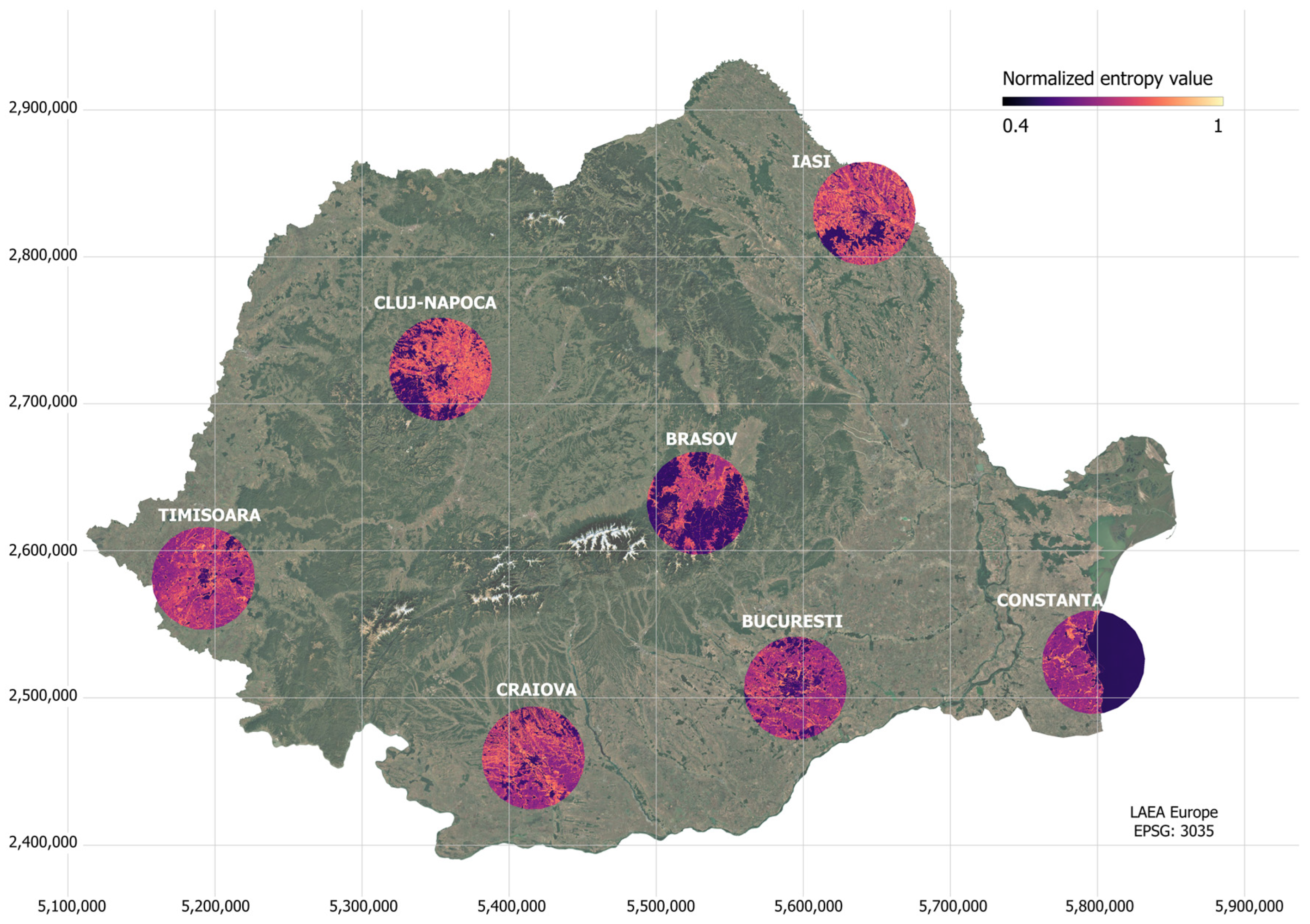
The analytical framework of this study is built upon a hybrid computational pipeline that integrates the cloud-based processing power of GEE with custom-developed R scripts for detailed statistical analysis. We focused on seven major Romanian cities: Bucuresti, Cluj-Napoca, Iasi, Constanta, Timisoara, Brasov, and Craiova, selected to represent a diverse spectrum of climatic and physiographic conditions. Major cities were chosen because their larger and more heterogeneous built-up areas provide more robust support for urban–rural comparison and multi-scale entropy-based SUHI analysis. Although the methodological framework could also be applied to smaller cities, these were not included in the present study. For each urban center, the analysis was conducted within a 35 km radius initial Area of Interest (AOI), capturing the summer months (June, July, August—JJA) from 2021 through 2025 to monitor the most recent intensification of thermal hazards.
This research relies on three primary data streams. LST records were synthesized from Landsat 8 and Landsat 9 Collection 2 archives, incorporating both Level-2 Surface Temperature (ST_B10) and Level-1 Top-of-Atmosphere (TOA) products. The analysis focuses on daytime overpasses (consistently occurring between 11:00 and 12:00 local time—EEST) to capture the surface thermal signature during peak solar heating. We employed median compositing across the five-year window to establish a robust baseline, effectively filtering out transient cloud contamination and short-term meteorological noise. These thermal data are complemented by the DW V1 dataset, a near-real-time 10 m resolution product derived from Sentinel-2 imagery. Moving beyond traditional discrete classification maps, we utilized DW’s class probability bands to capture the nuanced physical realities and heterogeneity of urban-to-rural transition zones. To control for topographic influences on rural reference temperatures—which might otherwise bias the SUHI estimates—a 30 m resolution Digital Terrain Model [
33] was integrated.
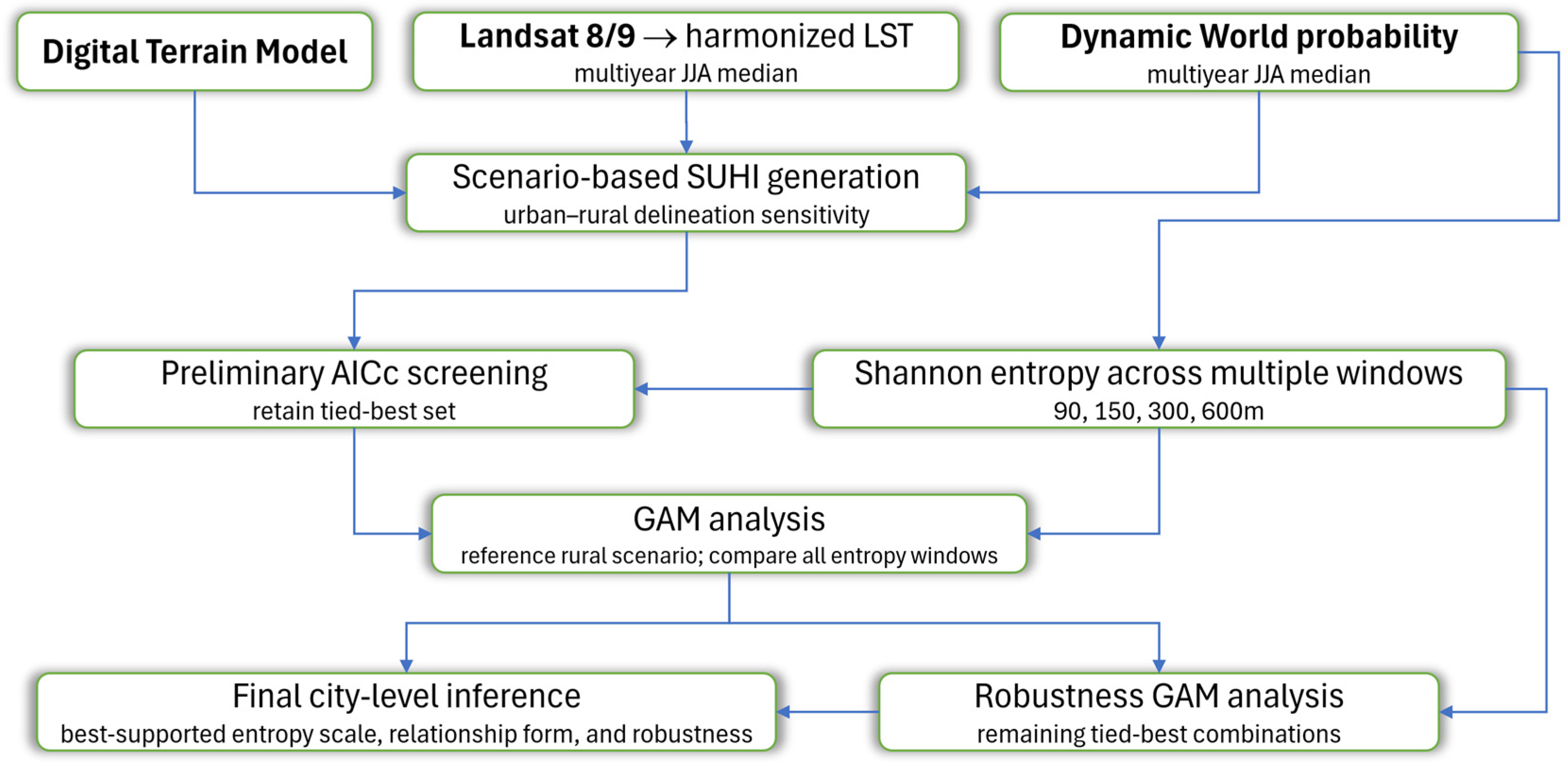
Figure 1 illustrates the complete workflow, ranging from multi-source satellite data acquisition to scale-dependent spatial modeling. The subsequent subsections provide a detailed account of the methodological procedures implemented during each phase of the analysis.
2.1. LST Retrieval and Harmonization
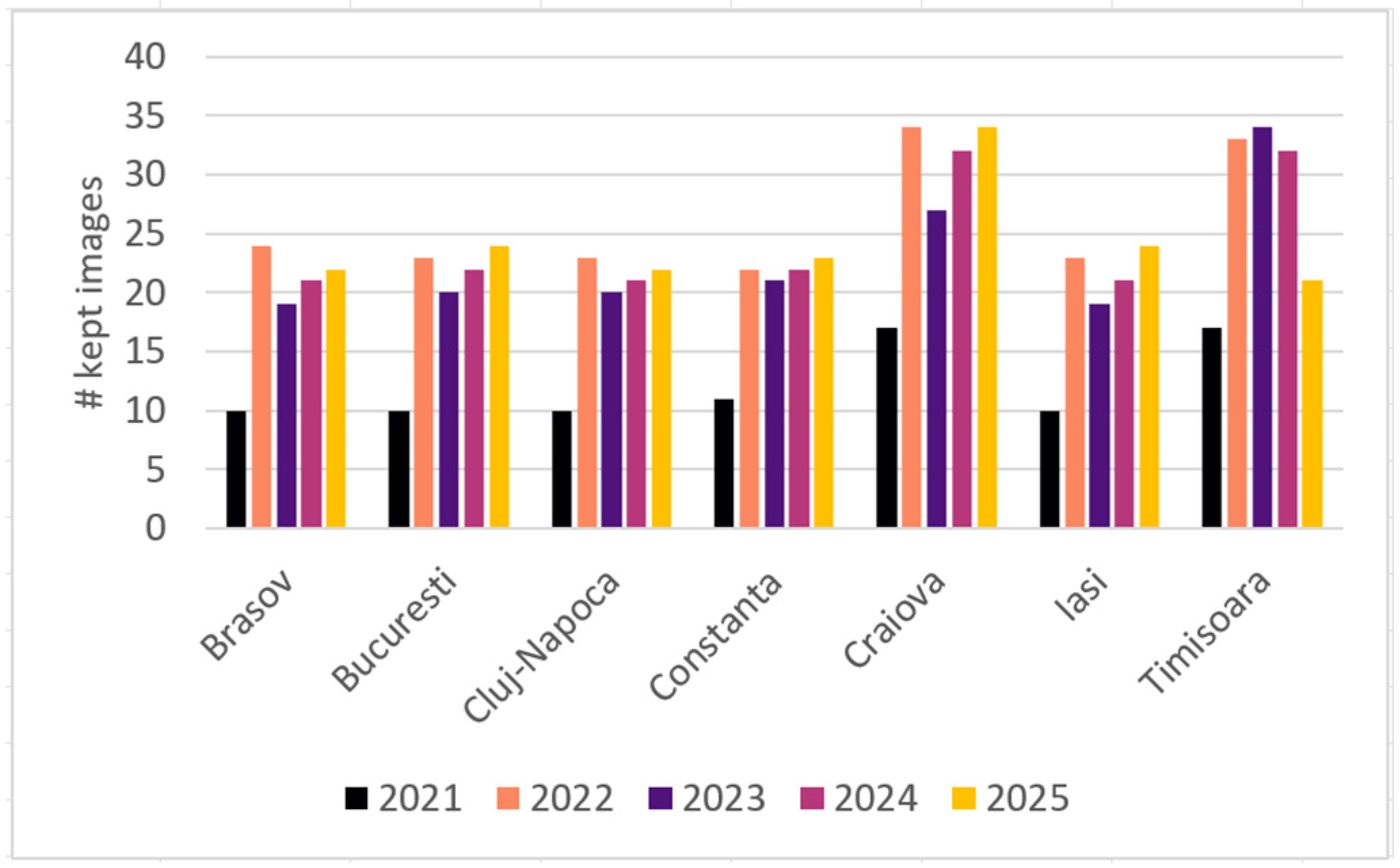
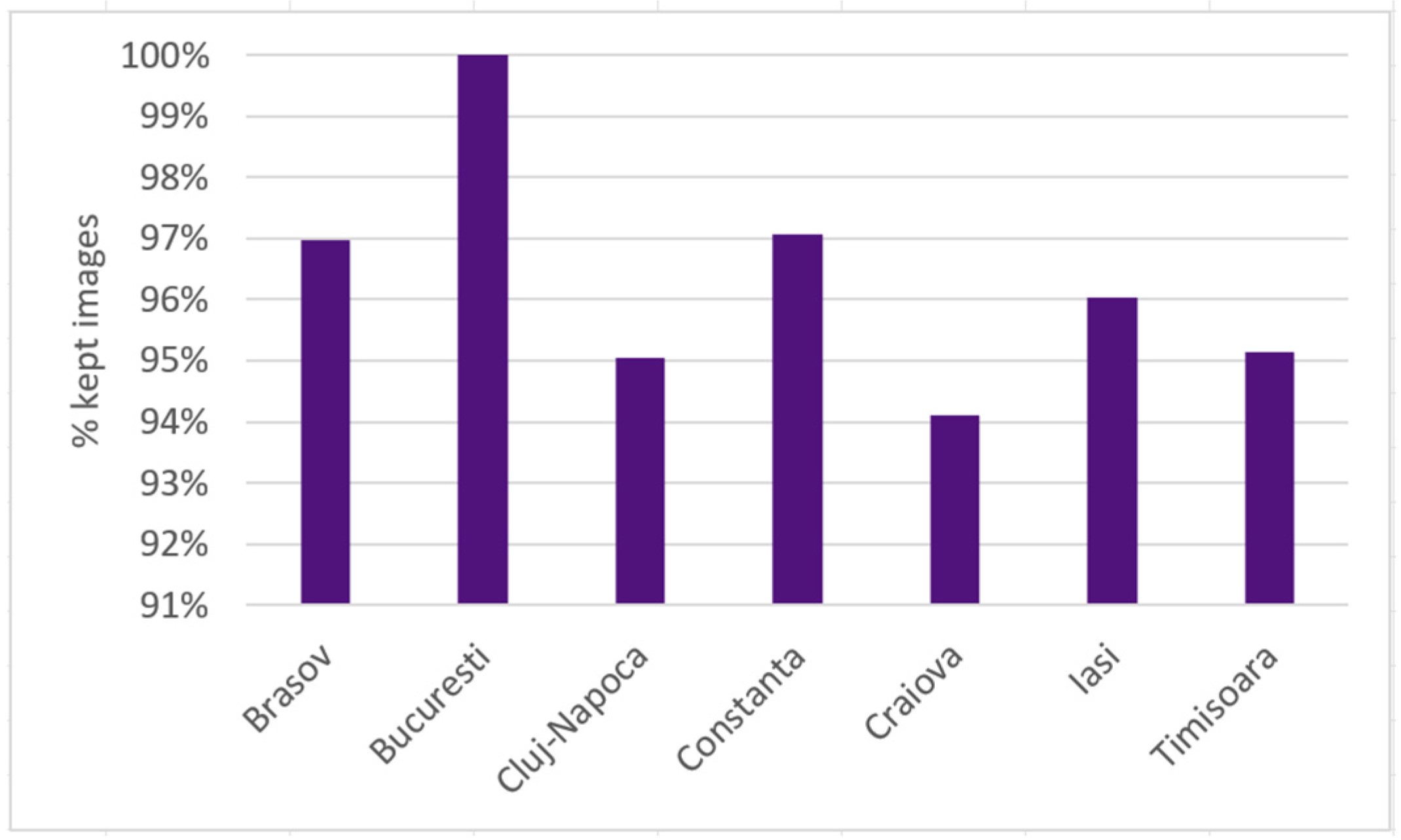
To ensure spatial continuity and radiometric consistency across the study areas, we implemented a custom harmonization and gap-filling workflow within the GEE environment. Our preprocessing protocol prioritized high data fidelity by enforcing strict cloud-masking via the Landsat QA_PIXEL bitmask, specifically excluding pixels flagged as cloud (bit 3) or fill (bit 0). Beyond pixel-level screening, we applied a rigorous scene-level filter, retaining only those acquisitions where cloud cover within the AOI remained under 10%. Daily mosaics were further vetted by calculating the fraction of valid observations and the residual cloud presence within the footprint, ensuring that the daily thermal snapshots utilized for subsequent analysis were not compromised by atmospheric contamination.
Addressing the technical challenges of limited missing data, often caused by retrieval failures in the Level-2 Surface Temperature product or aggressive quality masking, we employed a linear regression approach to harmonize Level-2 (L2) and Level-1 TOA brightness temperatures. For each valid acquisition, we dynamically fitted a linear model (Equation (1)) only on pixels where both L2 and
TOA values were simultaneously available.
The role of this procedure was deliberately narrow. It was not intended to reconstruct all-weather or under-cloud temperature fields, nor to imply that TOA brightness temperature can generally replace LST. Instead, it served as a constrained within-scene harmonization step used only to recover a limited subset of clear-sky pixels where the L2 product was missing but the underlying TOA observation remained available after QA screening. In this sense, the procedure was designed to improve spatial completeness prior to multi-year median compositing while remaining within the clear-sky observational domain.
To characterize the agreement between the scene-specific regression predictions and the original Level-2 product within the calibration domain, we calculated the Mean Absolute Error (
MAE), Root Mean Square Error (
RMSE), bias, and Pearson correlation using pixels for which both Level-2 and TOA-based values were available under clear-sky conditions. In Equations (2) and (3),
n represents the number of valid clear-sky pixels included in these agreement diagnostics,
LSTL2,i is the original Level-2 surface temperature, and
LSTpred,i is the temperature predicted by the regression model. These statistics are therefore interpreted here as calibration-domain agreement diagnostics rather than as an independent external validation of predictive gap-filling skill.
To synthesize these daily observations into a stable representation of typical summer thermal conditions, we aggregated the harmonized images into a multi-year median composite for the 2021–2025 period. Choosing the median statistic over the mean provided a robust baseline that effectively mitigated the influence of short-lived synoptic anomalies, transient weather events, and residual sensor noise. All subsequent SUHI intensity calculations and rural reference derivations were performed on this consolidated 2021–2025 JJA median composite, representing a characteristic daytime thermal signature for each city. Because this preprocessing step only affected a limited subset of clear-sky pixels, its practical purpose was not to alter the thermal interpretation of the dataset but to prevent sparse retrieval-related gaps from propagating into the multi-year composite used in the subsequent SUHI analysis.
2.2. DW Retrieval and Entropy Calculation
Rather than relying on discrete classification labels that often oversimplify the complex transitions of urban environments, we quantified land-cover heterogeneity through the application of Shannon entropy (
). This metric was derived from the DW class probability vectors, providing a more nuanced representation of landscape diversity. For any given location, entropy is defined by Equation (4), where
represents the probability of land-cover class
.
To align the entropy calculation with the thermal observation window, we generated a multi-year median composite of DW probabilities for the summer months of 2021 through 2025. Since the temporal aggregation of these probabilities based on the median statistic does not inherently preserve a unit sum, we re-normalized the probability vectors at the pixel level prior to any calculation to ensure numerical stability and physical validity. For consistent comparability across the diverse physiographic settings of the selected Romanian cities, the resulting entropy values were exported in a normalized form relative to the total number of available classes (), yielding a range from 0 to 1, where higher values denote maximum landscape heterogeneity.
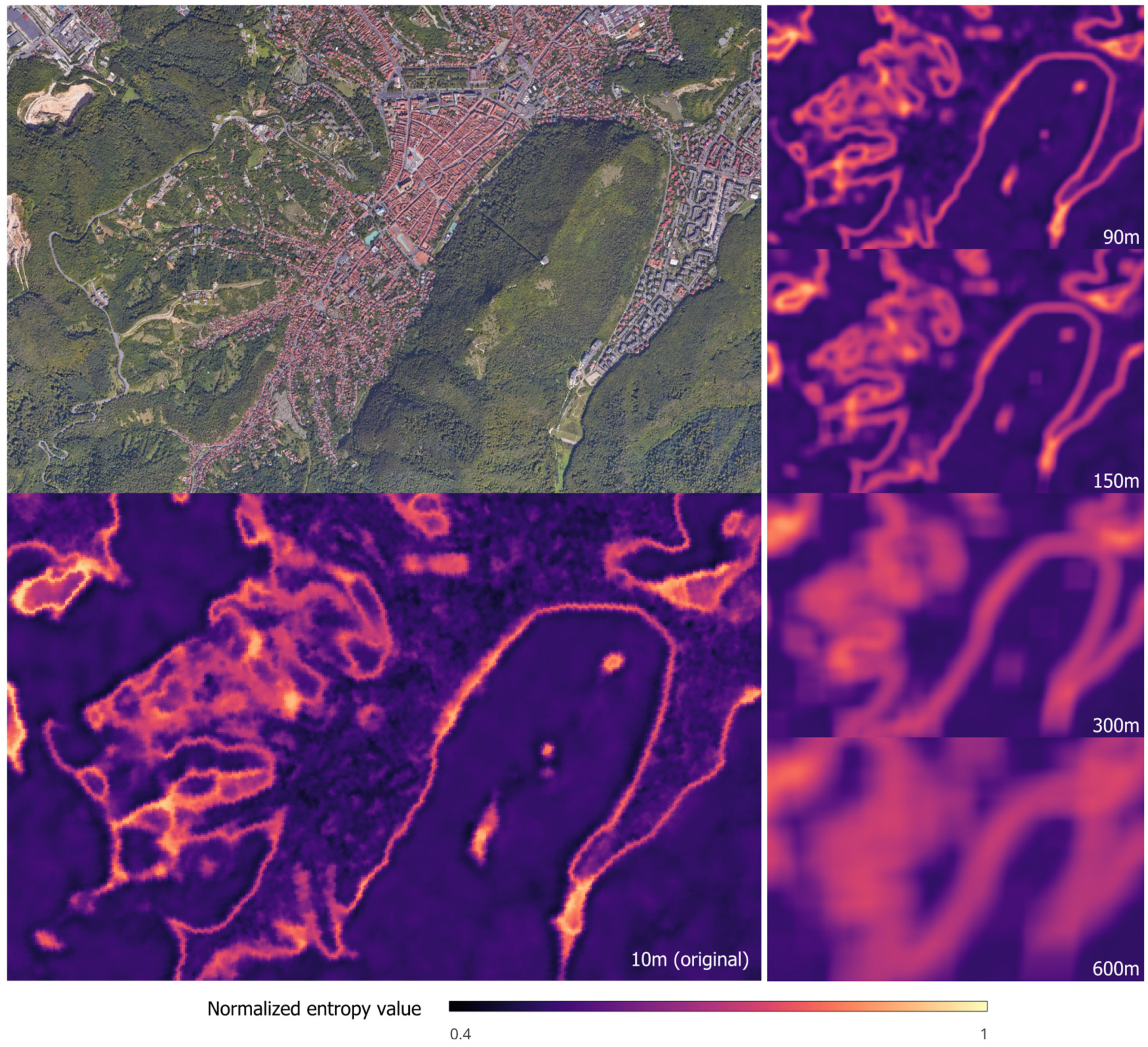
To investigate the scale-dependency of the relationship between landscape structure and heat, we generated spatially aggregated entropy metrics using moving windows with radii of 90 m, 150 m, 300 m, and 600 m. These scales were selected to span the transition of heterogeneity from the immediate city-block level to the broader neighborhood context. This multi-scale approach allows the identification of the spatial support at which land-cover diversity is most strongly associated with surface thermal regulation.
We treated Shannon entropy as an integrative, probability-based metric of local surface mixture, moving beyond its conventional use as a composition-independent measure of heterogeneity. Higher entropy scores here reflect more than just class intermixing; they reflect a shift away from built-surface dominance toward more complex vegetation–built transitions. Consequently, our analysis targets the statistical correlation with SUHI rather than framing entropy as an underlying physical driver.
2.3. SUHI Calculation
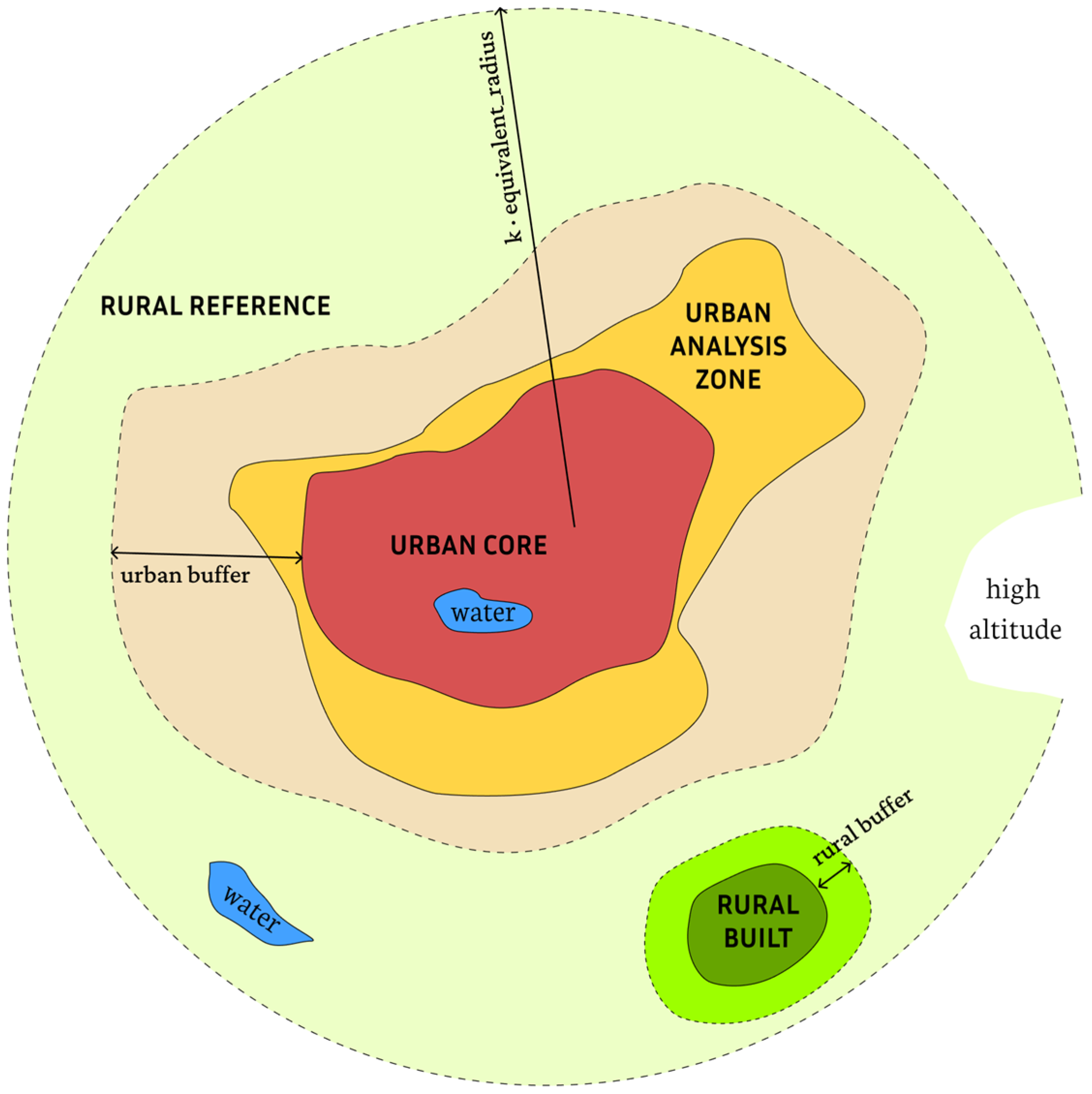
To facilitate a cross-city comparison, we implemented an automated spatial partitioning scheme to define consistent urban and rural domains for each study area. The Urban Core (UC) was delineated as the largest contiguous cluster of pixels possessing a multi-year median for DW built probability of at least 0.6, identified through 8-neighborhood connectivity while strictly excluding water bodies. To prevent thermal contamination from neighboring towns, any high-built clusters within the AOI that were not part of the primary core were classified as secondary settlements. Rural reference pixels located within a 500 m exclusion buffer of these secondary clusters were systematically removed to ensure the reference temperature remained representative of the true rural background (
Figure 2).
The Urban Analysis Zone (AUZ) was defined by a buffer extending from the core, encompassing pixels with a DW built probability of at least 0.2. Conversely, the Rural Reference (RR) mask was established as a dynamic annular ring, extending from the urban buffer to an outer limit based on the equivalent radius (
) of the urban core. This radius is calculated considering the area (
A) of the UC (Equation (5)).
To ensure the environmental integrity of RR, we enforced a multi-criteria filter: built probability, water fraction, and a topographic constraint limiting elevation to the urban core’s mean elevation. This altitudinal filtering is particularly important in the diverse Romanian landscape to prevent cold-air drainage from introducing a significant downward bias into the reference temperature.
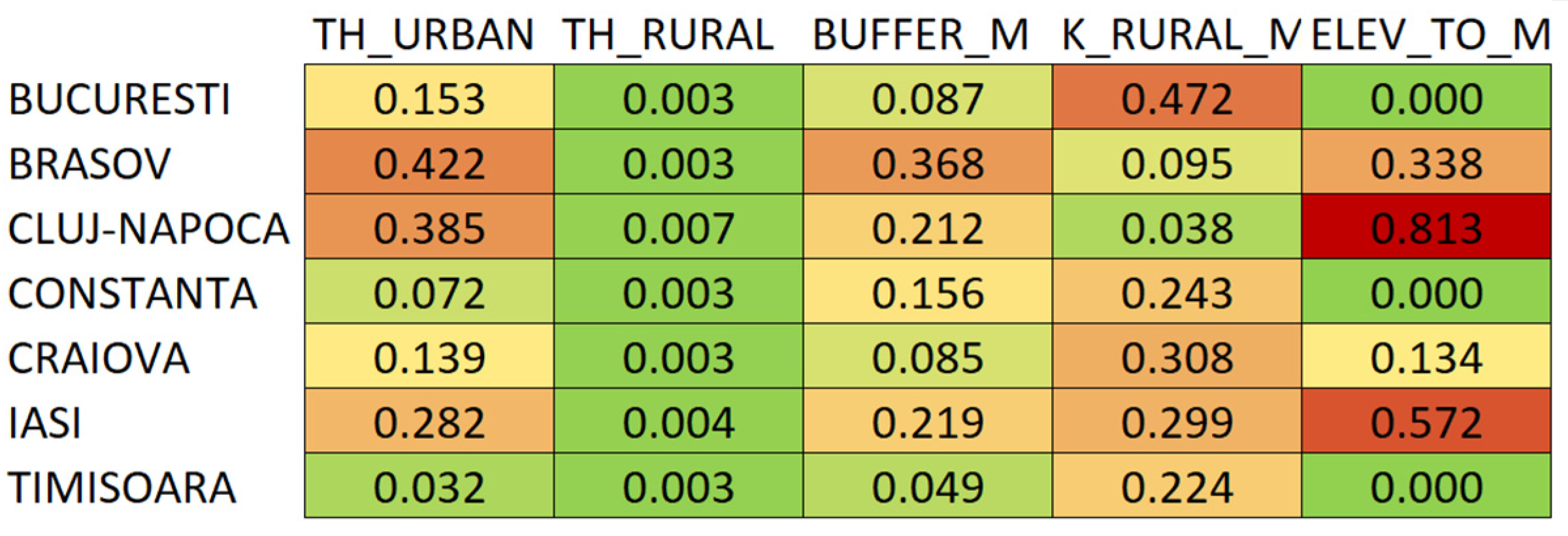
The spatial partitioning parameters were finalized through a multi-dimensional sensitivity analysis. To maintain interpretability, we varied only those parameters that directly control the urban analysis zone and the rural reference definition. This aligns with the broader SUHI literature, which emphasizes that heat island intensity is fundamentally a contrast metric whose value fluctuates substantially based on the choice of rural reference and delineation criteria [
34,
35].
Several auxiliary parameters were intentionally kept fixed to act as anchoring rules rather than tuning knobs. The urban-core threshold (0.6) was treated as a conservative geometric anchor; varying this would alter the reference geometry itself, confounding uncertainty in the anchor definition with uncertainty in the urban/rural contrast. Standardization efforts in urban climate studies similarly stress the importance of consistent reference categories [
36]. Water masking was also kept fixed with a threshold of 0.5 because water bodies exhibit distinct thermodynamic behavior and can systematically bias SUHI estimates [
37,
38]. Furthermore, DW provides per-class probabilities explicitly intended for such flexible, rule-based separation of built and water pixels [
28]. Excluding “other settlements” near the target city and retaining only urban components connected to the core were applied as conservative quality control to prevent contamination of the rural reference by nearby built-up patches and to avoid fragmented “urban” masks that would represent a different conceptual definition of the city.
SUHI intensity was subsequently calculated for every valid urban pixel as the temperature deviation from the median LST of the rural reference mask (Equation (6)).
While Landsat-derived thermal products were maintained at their native 30 m resolution, the 10 m DW-derived entropy layers were resampled to the SUHI grid using bilinear interpolation to ensure pixel-wise alignment. In contrast, binary urban and rural masks were resampled using a nearest-neighbor approach to preserve the integrity of categorical boundaries.
2.4. Modeling the SUHI–Entropy Relationship
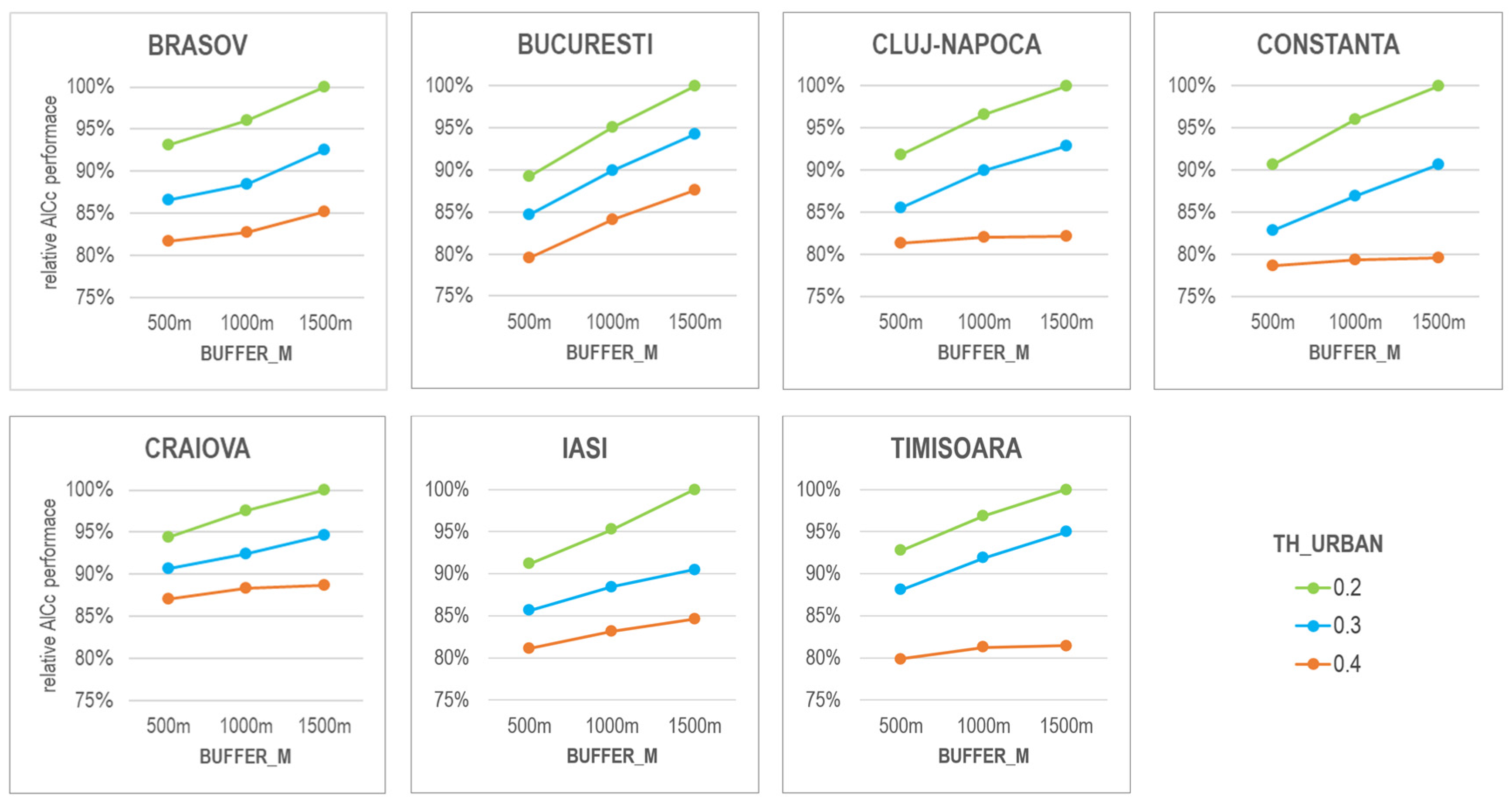
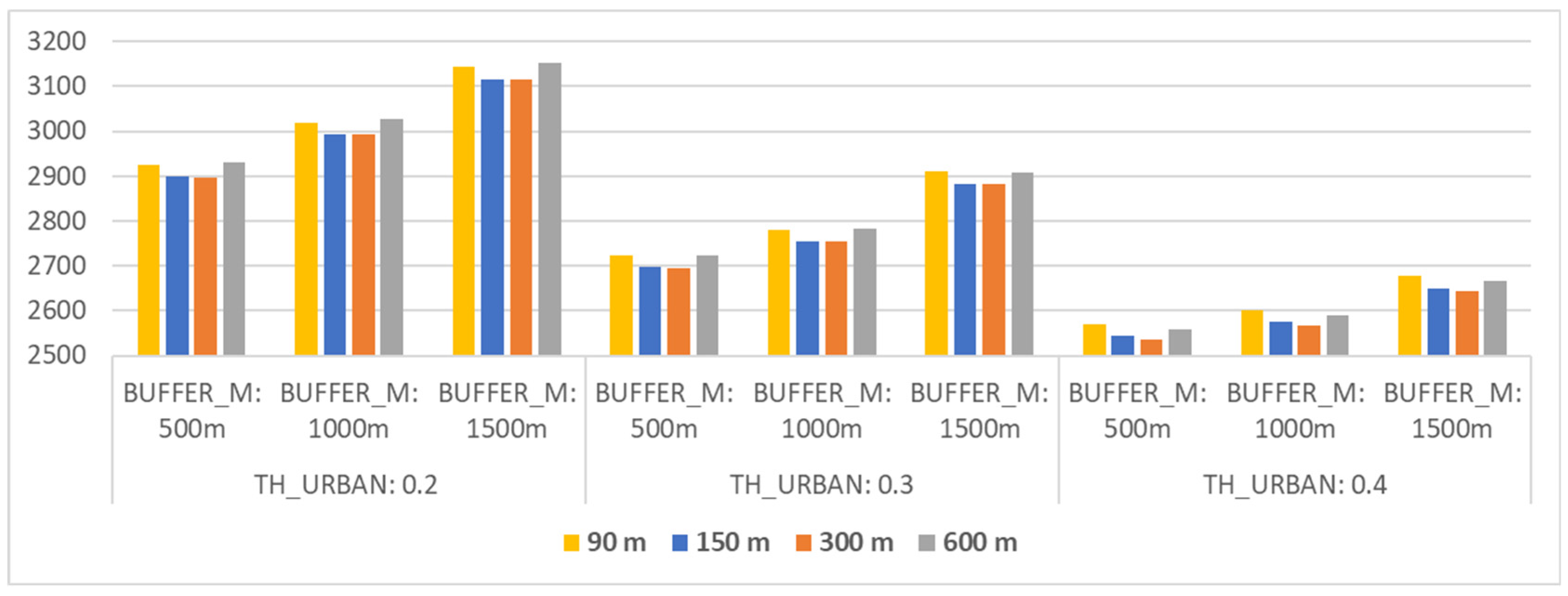
The modeling strategy followed a two-stage approach. First, delineation scenarios were screened separately for each city to identify urban–rural parameter combinations that were consistently supported across entropy windows. Because alternative delineations changed not only the rural reference temperature but also the size and spatial composition of the analyzed urban sample, this initial AICc-based comparison was used as a screening device to identify stable scenario structures rather than as a strict final model-selection exercise across identical datasets. In this sense, the screening stage was intended to detect robust parameter combinations that repeatedly yielded well-supported SUHI–entropy models while avoiding overinterpretation of small AICc differences across changing sample definitions.
All tested entropy windows were carried forward to the GAM stage. For the main comparison across spatial scales, a single reference rural parameterization was selected from the tied-best rural set. All candidate entropy windows were evaluated under identical urban-side delineation and rural reference settings. To ensure fair comparison, GAMs were fitted on a consistent spatially thinned urban point set, including only locations with valid SUHI and entropy values across all tested windows. Analysis points were generated from a 300 m grid covering the urban domain, with within-cell jittering applied using a fixed random seed to minimize sampling bias.
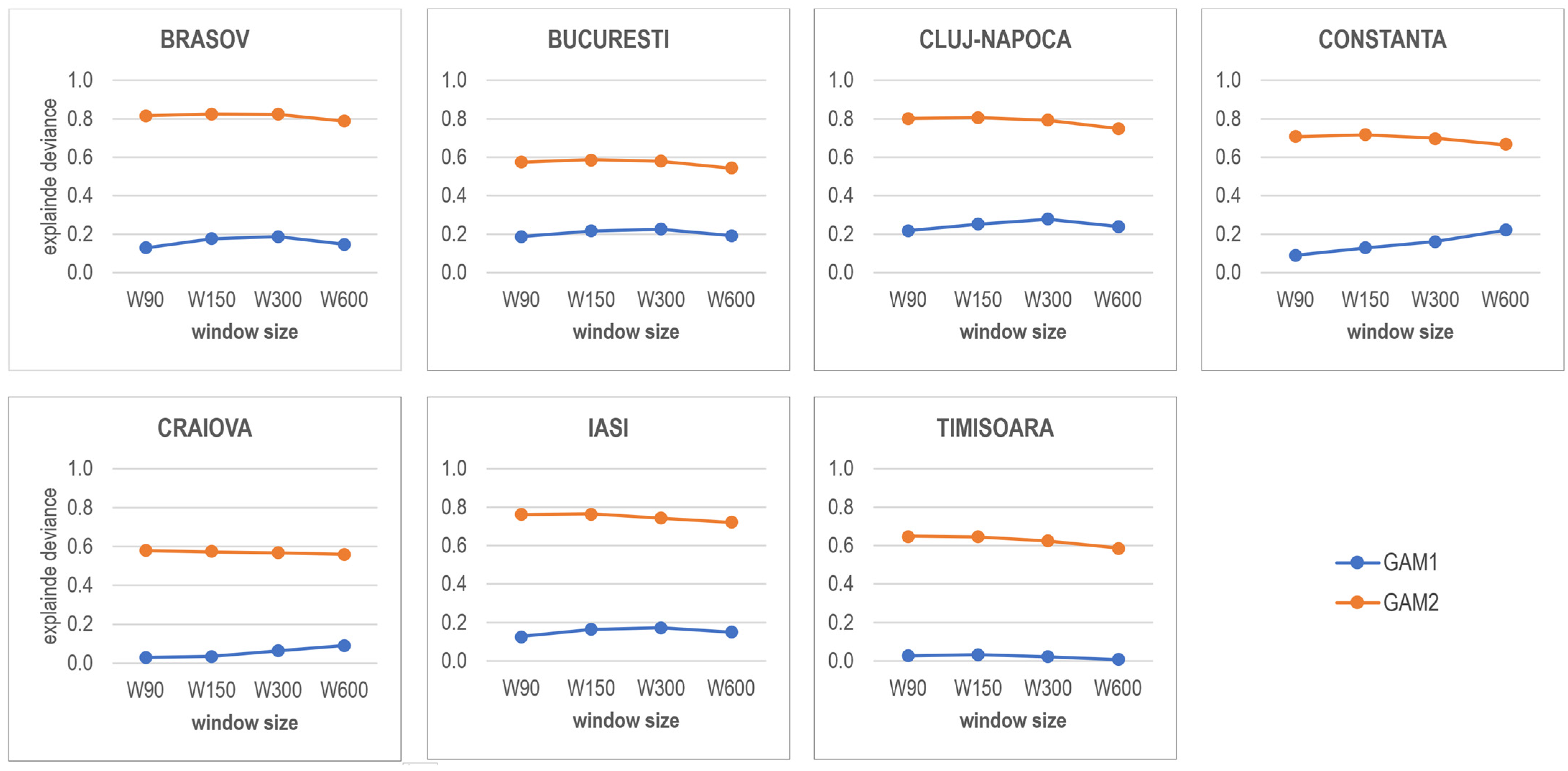
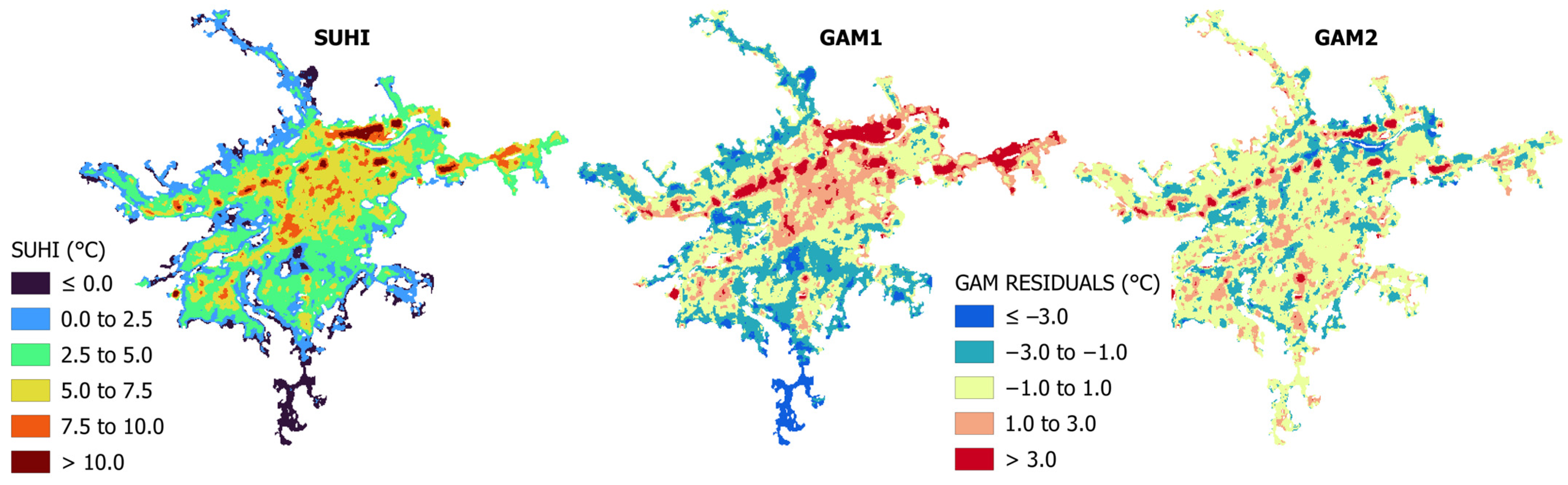
For each city and entropy window, we quantified the entropy–SUHI relationship using Spearman’s rank correlation coefficient and Pearson’s correlation coefficient. Subsequently, we fitted two generalized additive models (GAM) with restricted maximum likelihood (REML). The first model (GAM1) included only a smooth term for entropy: SUHI~s(entropy). The second model (GAM2) additionally accounted for residual spatial structure through a two-dimensional smooth of the sampled point coordinates: SUHI~s(entropy) + s(x, y). GAM1 describes the gross relationship between heterogeneity and heat, while GAM2 accounts for residual spatial structure through a two-dimensional smooth of coordinates. The comparison between these models was designed to test whether the entropy–SUHI association persists after accounting for residual spatial autocorrelation and broad coordinate-based spatial structure through the two-dimensional smooth. Therefore, GAM2 was not interpreted as a mechanistic model of urban heat but as a more spatially adjusted formulation used to evaluate whether the entropy signal remains detectable beyond broad background structure. It does not test whether entropy is independent of land-cover composition per se, because explicit compositional covariates were not included in the model. The basis dimension for the entropy smooth was fixed, while the spatial smooth’s basis size was either manually specified per city or adaptively determined by sample size.
Model performance was evaluated using the Corrected Akaike Information Criterion (AICc) as the primary ranking criterion (Equation (7)). AICc was preferred over AIC because the fitted GAMs included penalized smooth terms, for which effective model complexity may be non-negligible relative to sample size. Within the common-point comparison stage,
AICc served as the main ranking metric across entropy windows because all candidate models were fitted to the same urban sample within each city. In the earlier delineation-screening stage, however,
AICc was interpreted more cautiously as an operational criterion for identifying repeatedly supported scenario structures, rather than as a strict likelihood-based comparison across fully identical datasets.
where
L—maximized likelihood of the fitted model;
k—number of estimated parameters;
n—number of observations.
Additional diagnostics included deviance explained, adjusted R2, effective degrees of freedom, and basis-dimension checks. Finally, the remaining tied-best rural parameterizations were re-evaluated as robustness tests to ensure that observed differences were attributable to delineation uncertainty rather than sampling inconsistencies.
4. Discussion
The moderate explanatory power of entropy is consistent with the multifactorial nature of SUHI, where no single metric can account for the entire thermal signal. SUHI intensity emerges from the combined influence of land-cover composition, vegetation, built-up density, topographic setting, and spatially structured background conditions. Consequently, no single metric is likely to account for the full thermal signal. Against this complex backdrop, the persistent negative relationship between entropy and SUHI is particularly revealing. It indicates that higher entropy values are systematically associated with lower summer thermal excess, even if the strength of this association varies between cities. Because entropy aggregates class-probability diversity and may co-vary with vegetation presence, built-surface dominance, and transition intensity, this pattern should not be interpreted as proof that heterogeneity alone reduces SUHI. That this effect remains evident after spatial smoothing further supports the idea that entropy captures a meaningful component of thermally relevant urban complexity. Consequently, entropy is interpreted here as an integrative indicator of thermally relevant surface heterogeneity and as a valuable diagnostic metric that complements, rather than replaces, traditional drivers of urban heat variability, without being treated as a causal driver of SUHI formation.
The added value of entropy should also be interpreted relative to more conventional indicators. Variables such as NDVI or vegetation fraction are highly informative about greenness-related cooling, while built-up or impervious fraction directly captures the dominance of thermally active urban surfaces. Patch-based metrics, in turn, describe categorical landscape configuration, including fragmentation, edge density, or patch geometry. Shannon entropy does not replace these measures. Its specific contribution is that it summarizes the full local class-probability mixture in a single scale-sensitive metric, without relying exclusively on hard class assignments. In this sense, entropy is especially useful for characterizing transitional and compositionally mixed urban environments, where thermally relevant surfaces are not sharply bounded and where a single compositional indicator may miss the structural complexity of the local mosaic.
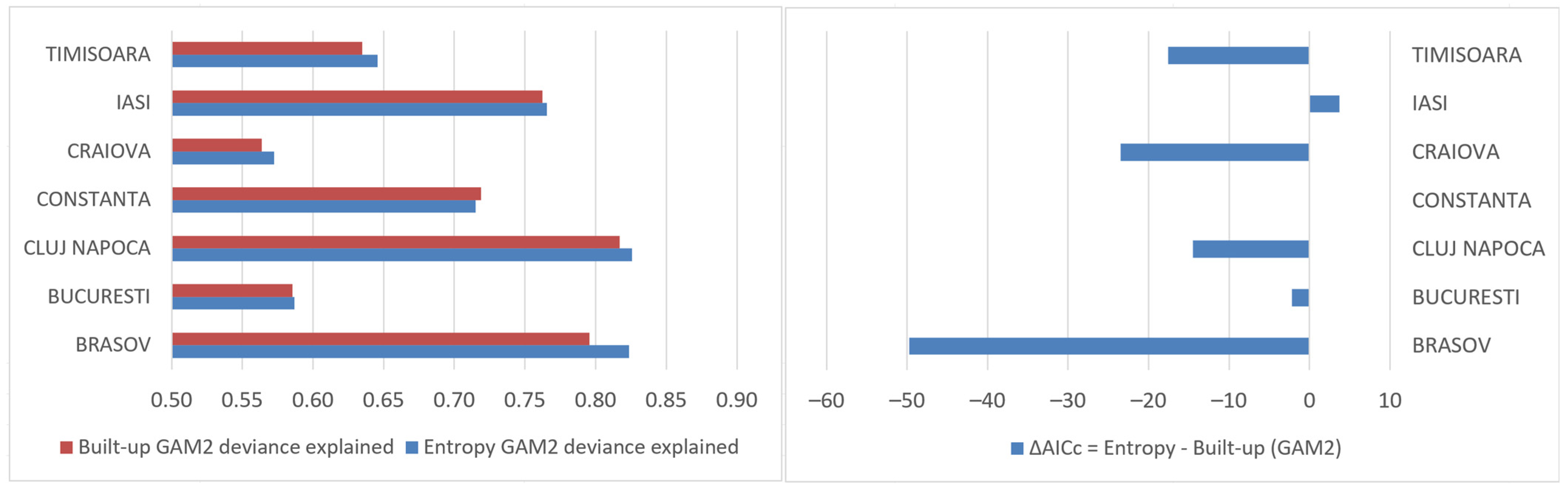
The direct benchmark against a simpler compositional predictor helps clarify the specific role of entropy in the present framework. A probability-based built-up fraction proxy proved clearly informative and, in the simpler unadjusted GAM1 comparison, often showed slightly stronger performance than entropy. Entropy, therefore, should not be interpreted as a universally superior predictor. However, after spatial adjustment, entropy was generally better supported across the city-specific best-window comparison, with lower GAM2 AICc in six of the seven cities and slightly higher GAM2 deviance explained in six of the seven cities. This suggests that the main added value of entropy lies not in replacing built-up fraction but in capturing aspects of local probabilistic surface mixture and transitional structural complexity that are not fully represented by built-surface dominance alone. In this sense, the benchmark reinforces the interpretation of entropy as a complementary, scale-sensitive indicator rather than as a universally dominant compositional predictor.
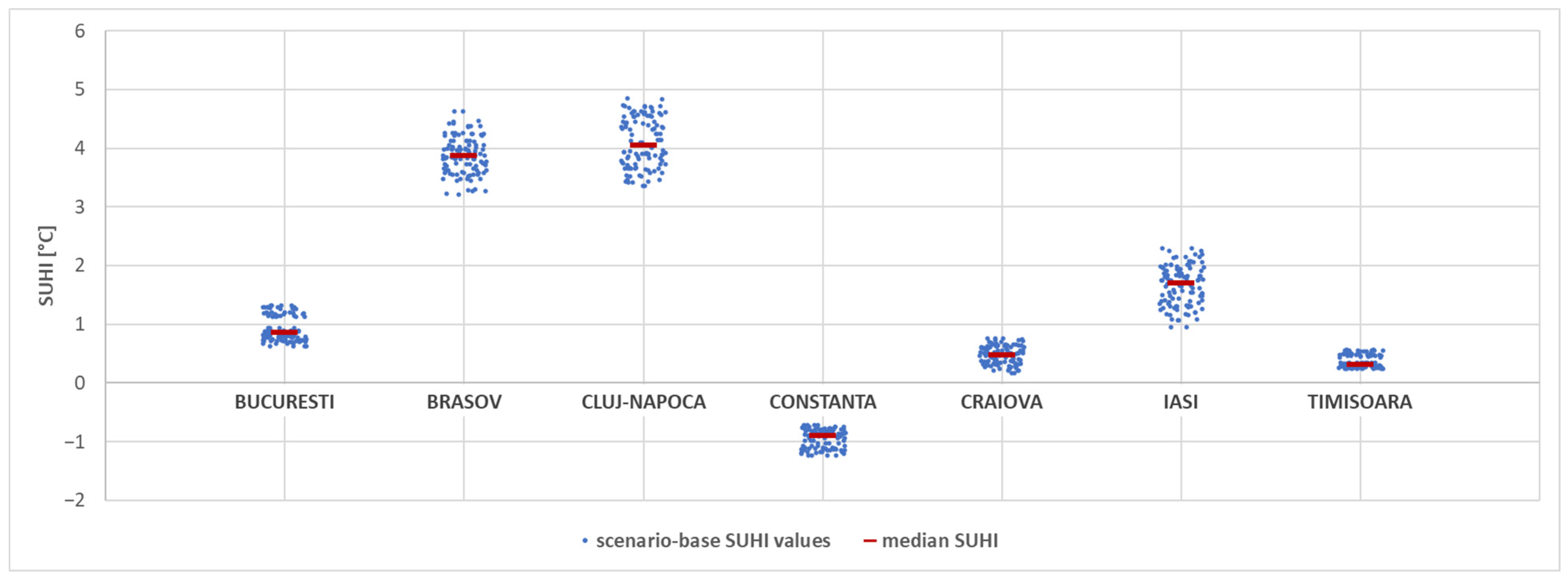
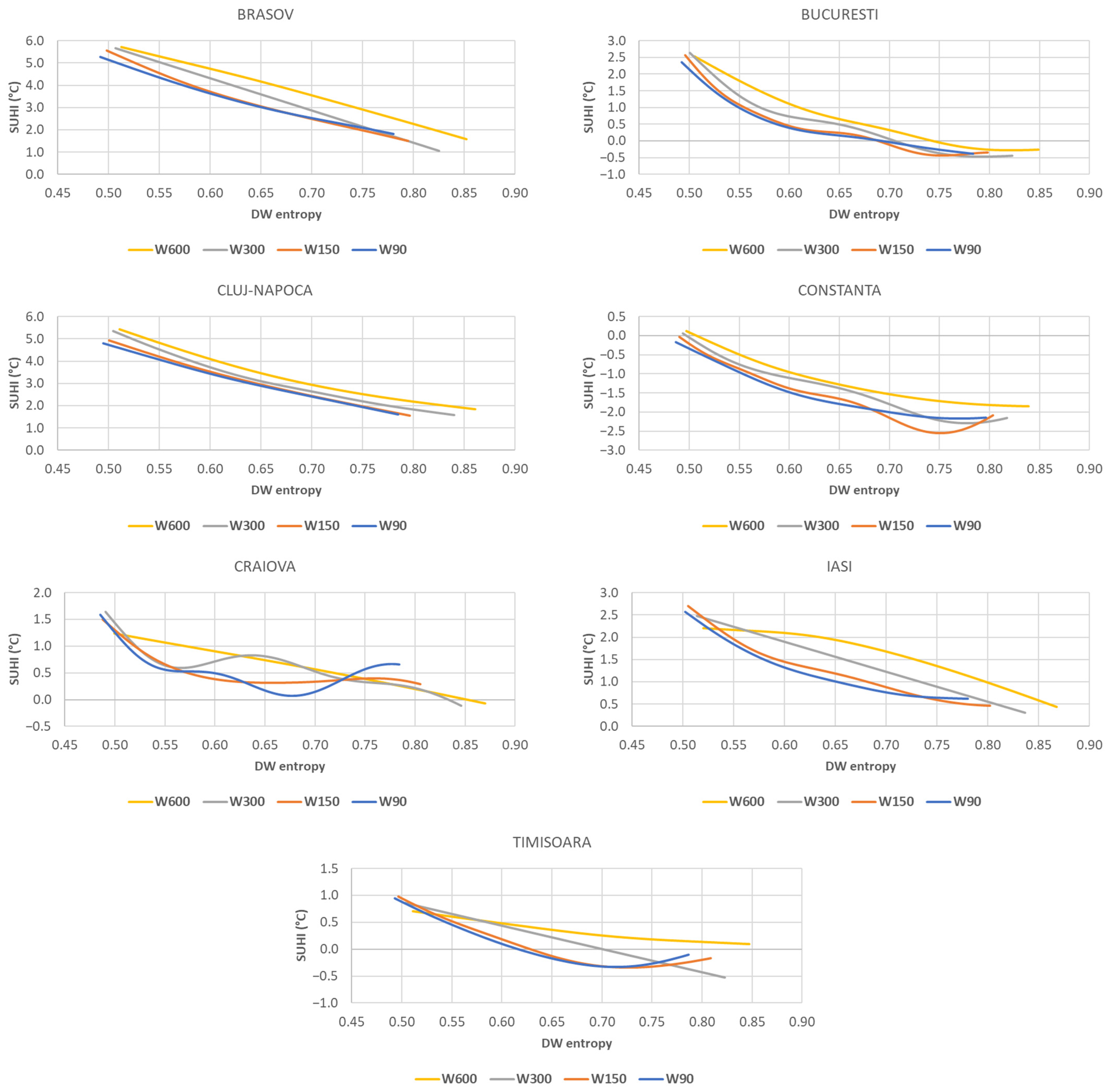
Our findings show that DW Shannon entropy provides a reliable and interpretable link between urban surface heterogeneity and intra-urban thermal patterns. Across all studied cities, the entropy–SUHI relationship was consistently negative, meaning that diverse urban mosaics tend to be associated with lower pointwise SUHI. Notably, this pattern holds not only in high-SUHI cities like Brasov and Cluj-Napoca but also in weaker-SUHI settings like Craiova and Timisoara, and even in Constanta, where the median SUHI was negative relative to the rural reference. This indicates that probability-based entropy is consistently associated with a recurring aspect of urban thermal organization rather than reflecting a city-specific anomaly.
A key strength of this approach is that entropy was derived from DW class probabilities instead of a “hard” land-cover classification. This probabilistic framework is better suited to urban environments, where thermally relevant surfaces are often transitional and mixed rather than sharply bounded. In physical terms, higher entropy values in this context usually indicate a lower local dominance of a single built surface type and a greater mixture of built, vegetated, and open surfaces. Such environments are more likely to include vegetation–built transitions, small-scale shading contrasts, differences in moisture availability, and more heterogeneous surface–atmosphere energy exchange. The observed negative entropy–SUHI relationship is therefore consistent with the interpretation that more compositionally mixed neighborhood mosaics tend to exhibit lower local thermal excess than more homogeneous urban fabrics. At the same time, because entropy aggregates multiple aspects of local surface mixture, the result should be interpreted as a robust statistical signal of thermally relevant complexity rather than as direct proof of a single causal cooling mechanism. This interpretation is also consistent with the neighborhood-scale character of the identified relationship. In urban environments, thermally relevant contrasts often emerge not only from the absolute amount of built-up land but also from how built, vegetated, and open surfaces are locally interwoven. Areas with higher entropy are therefore more likely to represent transitional mosaics in which no single surface type fully dominates the local energy balance. By contrast, low-entropy areas more often correspond to thermally uniform settings, such as compact built-up fabrics or homogeneous non-urban surfaces, where local surface conditions are less mixed, and the thermal response is correspondingly more uniform.
The results also demonstrate that the thermal relevance of entropy is scale-sensitive. Although the negative relationship remained stable across all tested windows, the best-supported models typically emerged at 150 m, or more broadly within the 150–300 m range. This suggests that the neighborhood scale is the most informative spatial support for the observed SUHI association. At very fine scales, entropy is more sensitive to highly local pixel-level variation and narrow boundary effects, which may be too detailed relative to the effective spatial support of pointwise summer LST. At very coarse scales, aggregation smooths the urban mosaic into broader structural gradients and can dilute the local mixture most relevant for thermal contrasts. The 150–300 m range appears to provide an intermediate support at which the local composition and configuration of built, vegetated, and open surfaces are still preserved while being aggregated enough to match the neighborhood-scale organization of surface heating. We therefore interpret this range not as a universal optimum but as a reproducible neighborhood-scale support emerging from the present analytical framework.
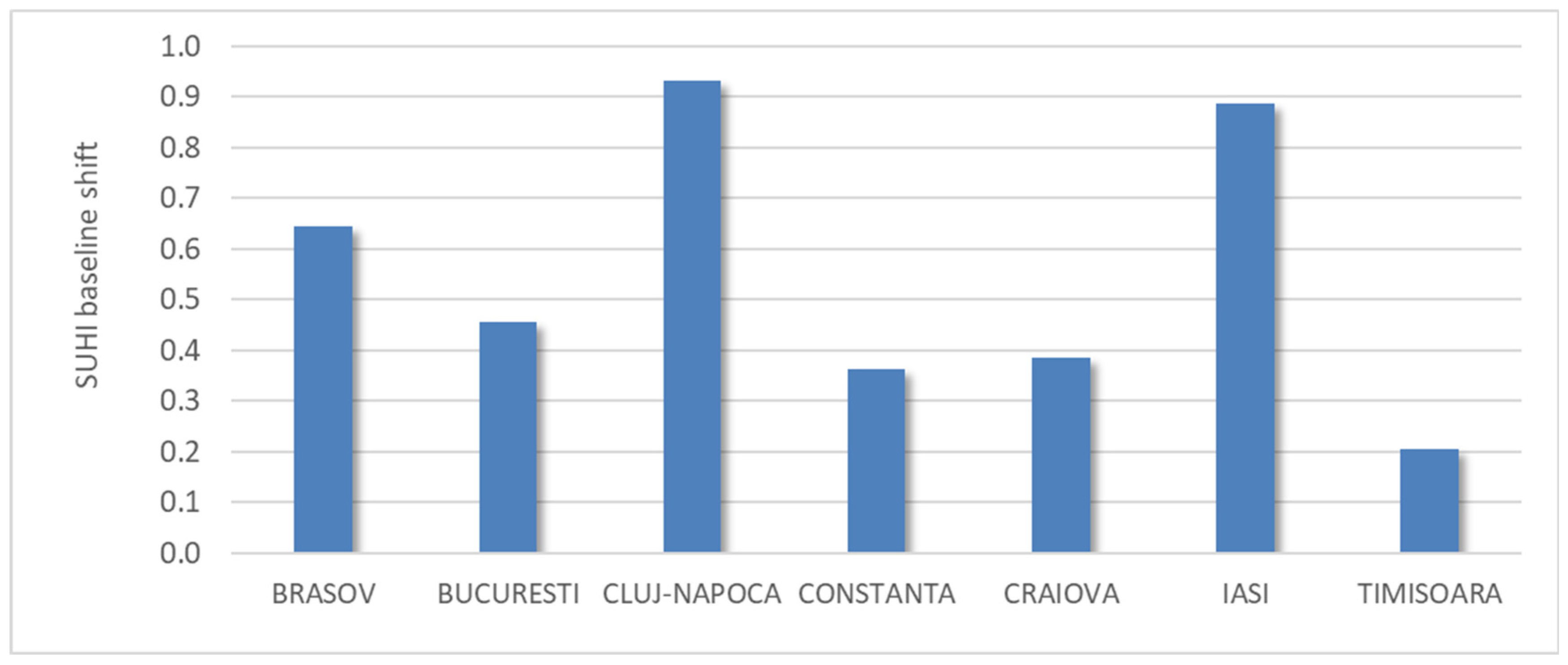
Beyond confirming a generic association between urban heterogeneity and SUHI, the present results provide important specific insights. The probability-based entropy signal was directionally consistent across all seven cities despite marked differences in physiographic setting and baseline SUHI magnitude. The relationship was most informative at the neighborhood scale, with the strongest support concentrated in the 150–300 m range. The fitted entropy response remained highly stable across tied-best rural delineations, indicating that delineation uncertainty primarily shifts the absolute SUHI baseline rather than the functional entropy response itself. Overall, these findings position Dynamic World-based Shannon entropy as a transferable screening indicator for comparative urban climate analysis rather than as a city-specific or case-dependent metric.
The comparison between GAM1 and GAM2 should be interpreted carefully. The purpose of this comparison was not simply to show that adding another model component improves fit, which is expected, but to test whether the entropy–SUHI association remains detectable after accounting for broad residual spatial structure. In this sense, GAM1 represents the gross entropy–SUHI relationship, whereas GAM2 evaluates whether that relationship persists once spatially organized background variation is absorbed by a coordinate-based smooth. The stronger performance of GAM2, therefore, should not be read as evidence that spatial location is itself an explanatory mechanism, nor as proof that entropy alone is sufficient to explain urban heat patterns. Rather, it indicates that pointwise SUHI is shaped by multiple interacting controls, some of which were not explicitly included in the model, and that entropy captures a stable but incomplete component of this broader thermal structure. The strong contribution of the spatial smooth also suggests that important controls of intra-urban SUHI remain outside the entropy-only formulation, including broader urban-form gradients, topographic setting, vegetation arrangement, and other spatially structured background influences. In this respect, GAM2 should be understood less as a competing explanation to entropy than as a way of separating the entropy-related signal from additional spatial organization that is not explicitly parameterized in the present design. This comparison was intended to assess the robustness of the entropy-related signal after spatial adjustment, not to claim that the added spatial component yields a complete or inherently superior explanation of SUHI processes.
City-specific differences are equally informative. Stronger entropy–SUHI associations in Brasov, Cluj-Napoca, and Iasi suggest that in cities with more pronounced thermal contrasts, the statistical signal linked to local surface heterogeneity is more clearly expressed. By contrast, the weaker relationships in Craiova and Timisoara show that entropy remains relevant even where the overall SUHI signal is modest. Constanta is particularly striking, as it shows that the entropy signal is retained even under a negative urban–rural thermal contrast. This confirms that entropy is linked to local relative heat intensity within the urban fabric, regardless of the city-wide SUHI sign.
Another important methodological finding concerns the role of rural-reference uncertainty. Across the tied-best rural parameterizations, the fitted entropy response remained effectively invariant, whereas the absolute SUHI level shifted by city-specific amounts. This outcome is consistent with the screening results, which showed that the rural-side parameters acted mainly as baseline-setting controls rather than as drivers of changes in the urban ranking itself. In practical terms, this means that rural delineation remains important when the focus is on the absolute magnitude of the urban–rural contrast, but it is less critical for identifying the direction, relative strength, and scale dependence of the entropy–SUHI relationship within the urban domain.
Despite the consistency of these patterns, some limitations remain. While multi-year summer daytime composites effectively highlight persistent spatial patterns, they necessarily overlook event-specific thermal dynamics and nocturnal variations. Additionally, although Shannon entropy provides a useful summary of local heterogeneity, it does not isolate the individual impacts of vegetation, building density, or surface materials; these factors are only indirectly captured through the entropy signal and residual spatial structure. Therefore, the results should be interpreted as showing a stable indicator-based association rather than direct evidence that entropy itself drives SUHI variation. Finally, while our sample includes diverse Romanian cities, the 150–300 m scale preference should be treated as a reproducible observation within this specific framework rather than a universal rule. Its broader applicability remains to be tested across different climates, city sizes, and seasonal conditions.
Taken together, the results suggest that probability-based entropy is most informative where urban surfaces form mixed neighborhood mosaics rather than homogeneous blocks. In this context, higher entropy should not be interpreted as a direct causal cooling mechanism; rather, it acts as an integrative indicator of local mixtures of built, vegetated, and open surfaces that are more likely to support heterogeneous shading, moisture availability, and surface–atmosphere exchange, and therefore lower pointwise thermal excess. The fact that the negative entropy–SUHI relationship is strongest and most stable at 150–300 m indicates that the thermally relevant support scale is neither the pixel scale alone, where micro-variability and classification noise can dominate, nor the coarse urban scale, where contrasting surfaces are averaged together. Instead, the neighborhood scale appears to be the level at which composition and configuration are jointly expressed in a way that most clearly relates to daytime thermal patterns. This interpretation also explains why entropy complements rather than replaces simpler compositional indicators: while built fraction or vegetation fraction quantifies how much of a given cover type is present, entropy summarizes how multiple cover types coexist within the same local support, thereby capturing a distinct aspect of thermally relevant urban structure.
The comparison between GAM1 and GAM2 further supports this interpretation. As expected, the inclusion of a spatial smooth substantially increases explained deviance, indicating that broad spatial structure captures an important share of SUHI variability. However, the persistence of the entropy term after spatial adjustment shows that entropy retains explanatory value beyond large-scale geographic patterning. Accordingly, entropy should be viewed as a compact, transferable descriptor of local urban complexity whose value lies in complementing, rather than substituting for, more explicit physical or compositional predictors.
From an applied perspective, these results suggest that probability-based entropy can serve as a screening indicator for identifying homogeneous urban areas more prone to elevated local heat intensity and for highlighting neighborhood-scale zones where mixed surface composition may contribute to lower thermal excess. This may support the first-pass prioritization of SUHI-mitigation interventions, help identify the spatial scale at which local surface composition is most relevant for planning decisions, and provide a complementary heterogeneity descriptor for environmental models of intra-urban thermal variation. At the same time, the metric is not intended to replace simpler indicators such as vegetation or built-up fraction. Its practical value lies in summarizing the full local class-probability mixture and transitional structural complexity of urban surfaces in a single scale-sensitive variable. However, the strong spatial smooths in GAM2 also remind us that entropy should not be used in isolation. Urban thermal conditions are shaped by multiple interacting factors, including urban form, vegetation structure, topography, and coastal effects. Accordingly, entropy is best used as a meaningful and scalable descriptor of thermally relevant heterogeneity rather than a complete explanatory model.
In summary, the studied cases support DW Shannon entropy as a robust, scale-sensitive descriptor associated with pointwise SUHI variation across cities, scales, and rural delineations.