Article

Application of LiDAR-Based Technology to Construction Material Volume Estimation

1
Department of Civil Engineering, National Taipei University of Technology, Taipei 106344, Taiwan
2
Department of Electronic Engineering, National Taipei University of Technology, Taipei 106344, Taiwan
*
Author to whom correspondence should be addressed.
Remote Sens. 2026, 18(10), 1649; https://doi.org/10.3390/rs18101649
Submission received: 4 April 2026 / Revised: 8 May 2026 / Accepted: 18 May 2026 / Published: 20 May 2026
(This article belongs to the Section Engineering Remote Sensing)

Highlights

What are the main findings?
  • Developed and validated a LiDAR-based workflow for 3D stockpile volume estimation on irregular construction materials.
  • Three experiments (controlled, verification, and field) demonstrate stable LiDAR-based volume estimation, with relative errors of about 1–3% in tests and about 4–8% in field use.
  • LiDAR-based technology provides at least 50% reduction on time and labor compared to Traditional volume estimation measurement methods.
What are the implications of the main finding?
  • The proposed system enables faster, safer, one-person stockpile surveys, significantly reducing measurement time and labor compared with traditional methods.
  • It provides accurate, high-frequency volume data to support routine material inventory, construction planning, and quantitative site management on construction sites.

Abstract

Accurate stockpile volume estimation is crucial for material quantification and inventory management in civil engineering, directly affecting cost assessment and on-site decision-making. Traditional manual methods suffer from subjective bias and limitations in handling irregular geometries, resulting in reduced accuracy and efficiency. This study presents a Light Detection and Ranging (LiDAR)-based workflow integrated with Robot Operating System (ROS) for point cloud processing, enabling accurate volume estimation of irregular stockpiles. The core innovation lies in the integration of multi-station scanning, point cloud registration, boundary extraction, layered slicing, and numerical integration using the trapezoidal rule, thereby enabling geometrically precise volume estimation of irregular stockpiles. The proposed system was validated through three experimental scenarios: (1) controlled experiments, showing strong agreement with theoretical volumes; (2) verification experiments, demonstrating high stability and consistency; and (3) field experiments, yielding a volume of 124.93 m3 compared to 130–135 m3 obtained by manual measurement. The results indicate that the proposed approach reduces processing time by over 80% while significantly decreasing labor requirements and improving operational safety. Overall, the proposed method provides a reliable and efficient solution for volume estimation in practical engineering applications.

1. Introduction

Accurate estimation of stockpile volume in civil engineering is fundamental to quantity calculation, on-site inventory, and construction management, and its accuracy directly affects material control, operational decision-making, and subsequent construction planning. As construction sites increasingly require higher measurement efficiency, better data quality, and more quantitative management, conventional volume estimation methods have gradually shown clear limitations, thereby increasing interest in the application of emerging digital measurement technologies to engineering material management.
Civil engineering projects depend on the stable supply of key materials such as asphalt, aggregates, and concrete, and effective supply–demand management directly influences project progress and cost control [1]. The estimation of stockpile volume is therefore of substantial importance in engineering practice [2], serving not only as a basis for construction scheduling, quantity calculation, and acceptance settlement, but also directly affecting on-site inventory, work planning, and material management decisions. For bulk stockpiled materials such as asphalt mixtures, aggregates, and concrete, failure to accurately determine volumetric information may disrupt construction coordination, material dispatching, equipment scheduling, and subsequent operational control [3,4]. Moreover, stockpile volume estimation is an important component of engineering measurement and monitoring, and its results provide a quantitative basis for site management, construction planning, and subsequent operational decision-making [5].
In practice, the estimation of stockpiled material volume at construction sites has long relied on conventional surveying methods, including the average end-area method, the conical volume formula, visual estimation, and weighbridge-based weight inference [6]. The average end-area method originates from earthwork quantity calculation and estimates volume from adjacent cross-sectional information; although suitable for relatively regular stockpile geometries, its accuracy is limited for irregular surfaces [7]. Likewise, the conical volume formula assumes an ideal cone and neglects actual surface variation and edge irregularity. Although visual estimation and weighbridge-based inference are easy to apply, the former depends heavily on experience and judgment, whereas the latter assumes uniform material density; consequently, neither method can accurately represent the actual geometry of stockpiled materials in the field [8]. These conventional methods have significant limitations. First, manual measurement is prone to substantial error, particularly at stockpile edges and on sloped surfaces, where systematic deviations are likely to occur [9]. Second, irregular stockpile shapes are difficult to quantify accurately using simplified geometric models, and the uneven, undulating surfaces of actual stockpiles often lead to volume estimation errors [10]. Third, field measurement is often time-consuming and labor-intensive, reducing operational efficiency on construction sites [11]. Most importantly, conventional methods cannot provide real-time inventory updates, forcing engineers to rely on periodic stocktaking and limiting timely tracking of material inflow, outflow, and remaining storage capacity [12].
LiDAR technology enables the non-contact, high-precision acquisition of three-dimensional point cloud data through laser pulse emission and echo reception [13]. With high-precision distance measurement and high-density scanning capability, LiDAR systems can comprehensively capture irregular stockpile geometries and provide a reliable data basis for volume reconstruction; compared with conventional contact-based measurement, they can also improve data quality and enhance on-site operational safety [14]. In recent years, the use of LiDAR in civil engineering surveying and monitoring has expanded rapidly, ranging from bridge deformation detection to terrain modeling, while advances in solid-state LiDAR have reduced equipment costs and improved field deployment convenience [15]. In construction material inventory management in particular, LiDAR scanning can continuously reflect changes in stockpile conditions, improve the timeliness and frequency of inventory checks, and increasingly serve as an important complement to conventional measurement methods, demonstrating strong integrated potential in both accuracy and operational efficiency [16]. Compared with traditional methods, LiDAR offers engineering advantages such as high operational efficiency, strong data completeness, and reduced operational risk; moreover, complete point cloud coverage can effectively reduce errors caused by geometric assumptions and achieve an engineering-acceptable level of volume estimation accuracy [17]. Overall, LiDAR technology shows strong potential for construction material volume estimation and inventory management and therefore warrants further investigation and validation in practical engineering applications.
Based on the limitations of conventional measurement methods and the application potential of LiDAR technology, this study develops a LiDAR-based measurement tool for construction material volume estimation to support on-site material inventory and management [18]. The primary objective of this study is to propose a LiDAR-based volume estimation tool applicable to irregular stockpiles and to verify its engineering performance. To validate the measurement capability and engineering applicability of the proposed system, this study is organized into three parts, namely controlled experiments, relative validation and verification, and field application, which are used to establish baseline conditions, examine result consistency, and evaluate field performance, respectively [19]. In addition, this study aims to achieve an engineering-acceptable level of volume estimation accuracy and thereby assess the practical value of LiDAR in engineering applications [20].

2. Materials and Methods

This section describes the overall architecture and operational workflow of the LiDAR-based volume estimation system, including data acquisition, data processing, and experimental design. Validation procedures and field tests were further conducted to evaluate the accuracy, stability, and practical applicability of the proposed method.

2.1. Study Flow

This study established a LiDAR-centered volume estimation workflow covering field measurement, data import, point cloud processing, and volume calculation, as illustrated in Figure 1. Initially, following data acquisition, the system sequentially performed point cloud preprocessing, target stockpile selection, and volume calculation. Point cloud preprocessing mainly included noise removal and background exclusion to improve data quality for subsequent analysis. After the target stockpile had been selected, the system sliced the stockpile point cloud into layers and extracted boundary information from each slice to establish the geometric basis required for subsequent area calculation. Finally, the cross-sectional area of each slice was calculated and accumulated along the Z-axis to obtain the total stockpile volume.
This study employed the Livox Mid-70 solid-state LiDAR (Livox Technology Co., Ltd., Shenzhen, China) as the primary measurement device and used ROS (ROS Noetic, Open Source Robotics Foundation, San Jose, CA, USA) on Ubuntu 20.04 LTS. as the underlying system framework for point cloud data reception, integration, and subsequent computation. The main technical specifications are listed in Table 1. The sensor provides high-density point cloud output and measurement accuracy suitable for engineering field applications, thereby supporting multi-station deployment and subsequent volume estimation tasks.
In terms of measurement implementation, multi-station deployment was carried out around the material pile, and in practice a three-station surrounding configuration was generally adopted to improve coverage completeness over the pile surface and boundaries. After registration and coordinate unification, the raw point clouds acquired at each station were integrated into high-resolution point cloud data with spatial consistency for subsequent volume estimation.

2.2. Volume Estimation System

The LiDAR-based volume estimation system developed in this study integrates solid-state LiDAR equipment (DJI Livox Mid-70) with four core modules built on the ROS framework: (1) Data Acquisition Module; (2) Data Processing Module; (3) Volume Estimation Module; and (4) Validation Module. Together, these modules form an automated volume estimation workflow suitable for engineering field applications. The system was designed to enable a single operator to complete field inventory tasks while maintaining volume estimation error within an engineering-acceptable range, thereby meeting the demand for high-frequency and high-precision measurement in material storage yards.
The overall system architecture and module functions are shown in Figure 1. The system adopts a modular design in which the four core modules are connected through the ROS framework to establish an automated processing chain from raw point cloud input to point cloud processing, volume estimation, result verification, and report output. The overall data flow can be summarized as follows: raw point clouds are first acquired through multi-station scanning; the data are then received and automatically registered through ROS to generate point cloud data under a unified coordinate system; preprocessing and clustering procedures are subsequently applied to extract stockpile point clouds and boundaries; slicing-based area calculation and Z-axis integration are then performed for volume estimation; finally, the validation module examines the results and produces the output report.
(1)
Data Acquisition Module
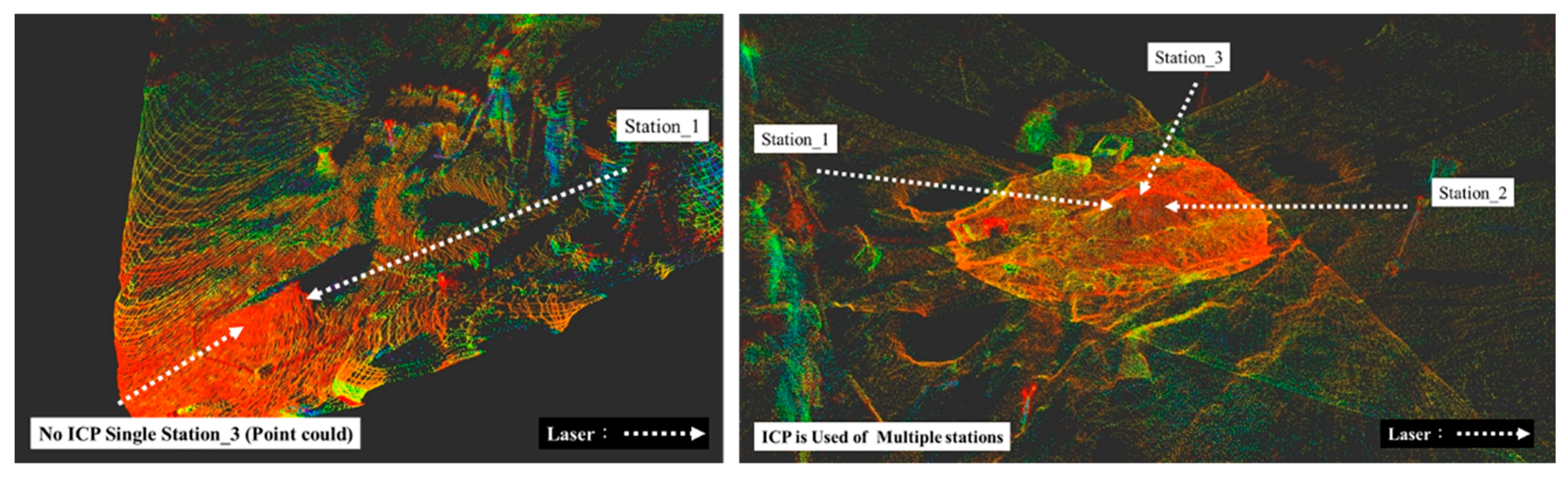
The Data Acquisition Module is mainly responsible for multi-station LiDAR scanning, data import, and point cloud registration. A three-station surrounding configuration was adopted to improve observational completeness and overlap over the stockpile surface, and the registration result is shown in Figure 2. After the raw point cloud data were received within the ROS framework, the ICP (Iterative Closest Point) algorithm was used to automatically register multi-station data and generate a high-density point cloud under a unified coordinate system as the input for subsequent point cloud processing and volume estimation. Under the settings adopted in this study, a single scan required approximately 1 min, which was sufficient to obtain the point cloud density and boundary information required for engineering applications.
(2)
Data Processing Module
The Data Processing Module is centered on denoising, segmentation, and boundary reconstruction. Raw point cloud data were first processed using voxel filtering with a representative grid size of 0.01 m to reduce redundant points and random noise, and intensity-difference filtering was then applied to remove background interference. Thereafter, Density-Based Spatial Clustering of Applications with Noise (DBSCAN) was used to automatically identify the main stockpile body, where ϵ could be set to 0.04–0.06 m and M i n P t s = 1500 , with adjustment according to target characteristics. During the boundary reconstruction stage, the system employed the A l p h a   S h a p e method to extract non-convex and irregular stockpile contours, thereby reducing estimation bias caused by conventional geometric assumptions.
The selection of these parameters was based on the characteristics of LiDAR point cloud density and empirical evaluation on representative datasets. Rather than performing a full sensitivity analysis, this study aimed to provide practical parameter-setting principles that support stable stockpile extraction and volume estimation under the tested conditions. The voxel size of 0.01 m was chosen to regularize non-uniform point spacing caused by varying sensing distances while preserving sufficient geometric detail. For DBSCAN, the neighborhood radius and minimum points were defined to support stable extraction of the main stockpile cluster while suppressing noise-induced fragments. In practical use, these parameters may still require adjustment according to local point density, stockpile shape, and environmental interference.
(3)
Volume Estimation Module
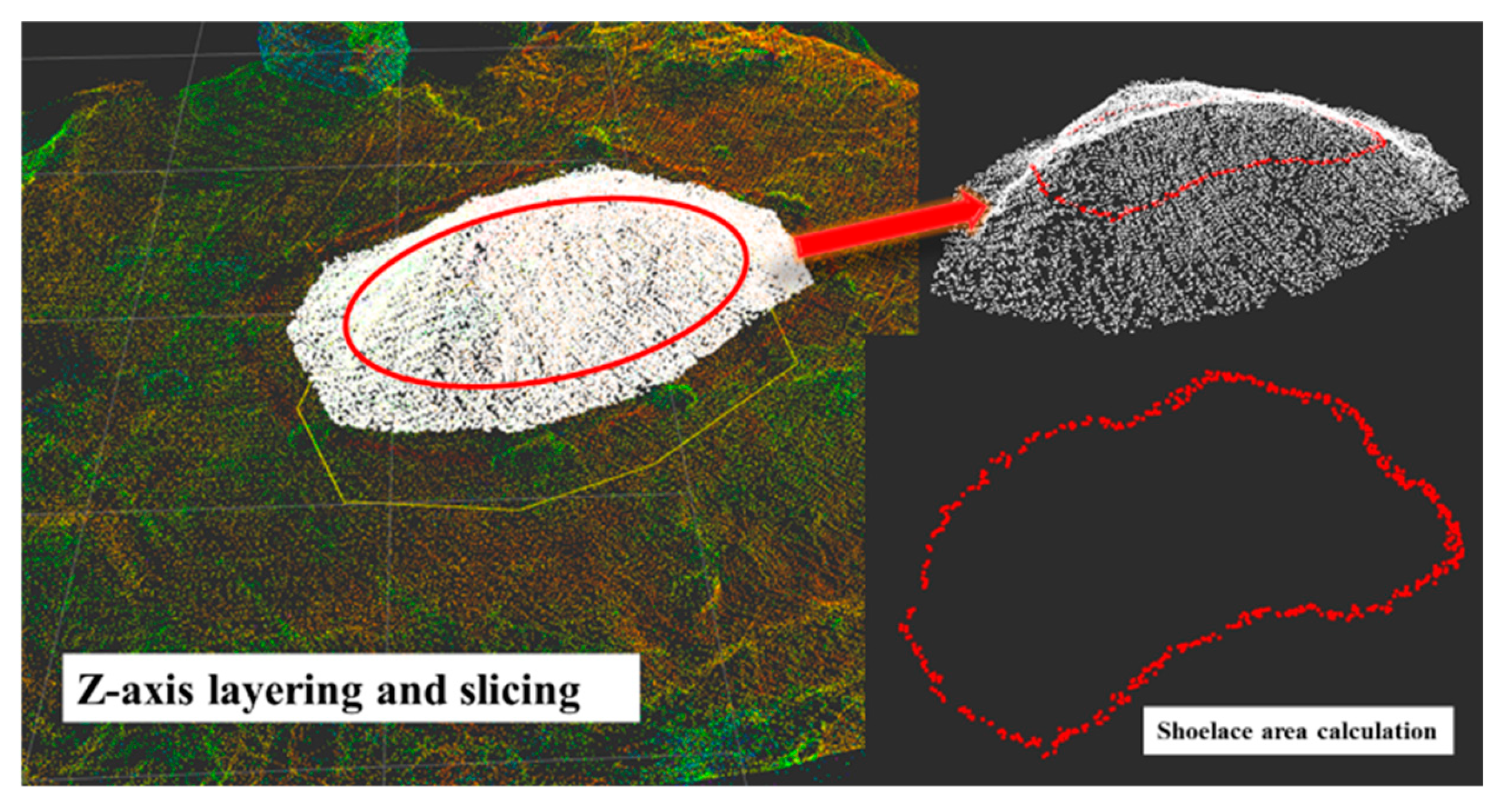
The Volume Estimation Module is based on layered slicing and numerical integration. The stockpile point cloud is divided into horizontal slices along the Z-axis, and the cross-sectional area A i of each slice is computed using the S h o e l a c e   f o r m u l a . The total volume is then obtained by Riemann integration as expressed in Equation (1), where Δ h denotes the slice thickness. In the controlled validation, Δ h was set to 0.01 m according to the vertical resolution and point density of the LiDAR data, providing a balance between numerical accuracy and computational efficiency. A smaller Δ h improves geometric approximation but increases computational cost and sensitivity to noise, whereas a larger Δ h reduces computation time at the expense of accuracy. In field applications, Δ h can be adjusted based on data density and processing requirements. The processing time per dataset was typically within several tens of seconds to several minutes on the test platform, which is sufficient for rapid inventory applications. A schematic of slicing and area computation is shown in Figure 3.
V i = 1 n A i · h
(4)
Validation Module
The Validation Module is mainly responsible for reasonableness checking and stability evaluation of measurement results and serves as part of the system reliability analysis. In this module, the concept of Additive Volume Consistency (AVC) was introduced to examine the internal consistency of volume results under different measurement conditions. The basic relationship can be expressed as Equation (2), where V S denotes the initial stockpile volume, V P denotes the added material volume, and V T denotes the total volume. If further quantification of consistency deviation is required, a relative error index may also be used for evaluation; the detailed definition and validation procedure will be further described in the following section.
V T V S + V P
The volume estimation system developed in this study is centered on ROS and integrates modules for point cloud acquisition, data processing, geometric reconstruction, volume calculation, and result verification, thereby providing the technical basis for subsequent experiments and field applications.

2.3. Experimental Design

To systematically evaluate the measurement performance and engineering applicability of the LiDAR-based volume estimation system, the experimental design was divided into three parts: controlled experiments, relative validation and verification, and field application. The controlled experiments were intended to establish baseline measurement conditions and verify the volume estimation capability of the system under known conditions. Relative validation and verification were used to examine the reasonableness, consistency, and repeatability of the measurement results. The field application was further used to assess the deployment feasibility and application performance of the system when dealing with large-scale and irregular stockpiles in actual engineering environments.
  • Experiment 1: Controlled Experiment
The controlled experiment was conducted in a controllable environment with the aim of establishing baseline validation conditions for LiDAR-based volume estimation. In this study, a 13 L standard container with known volume was used as the reference to conduct absolute accuracy validation under controlled conditions, thereby confirming the volume estimation capability of the system under ideal conditions and providing a reference for subsequent relative validation and field application.
  • Experiment 2: Verification Experiment
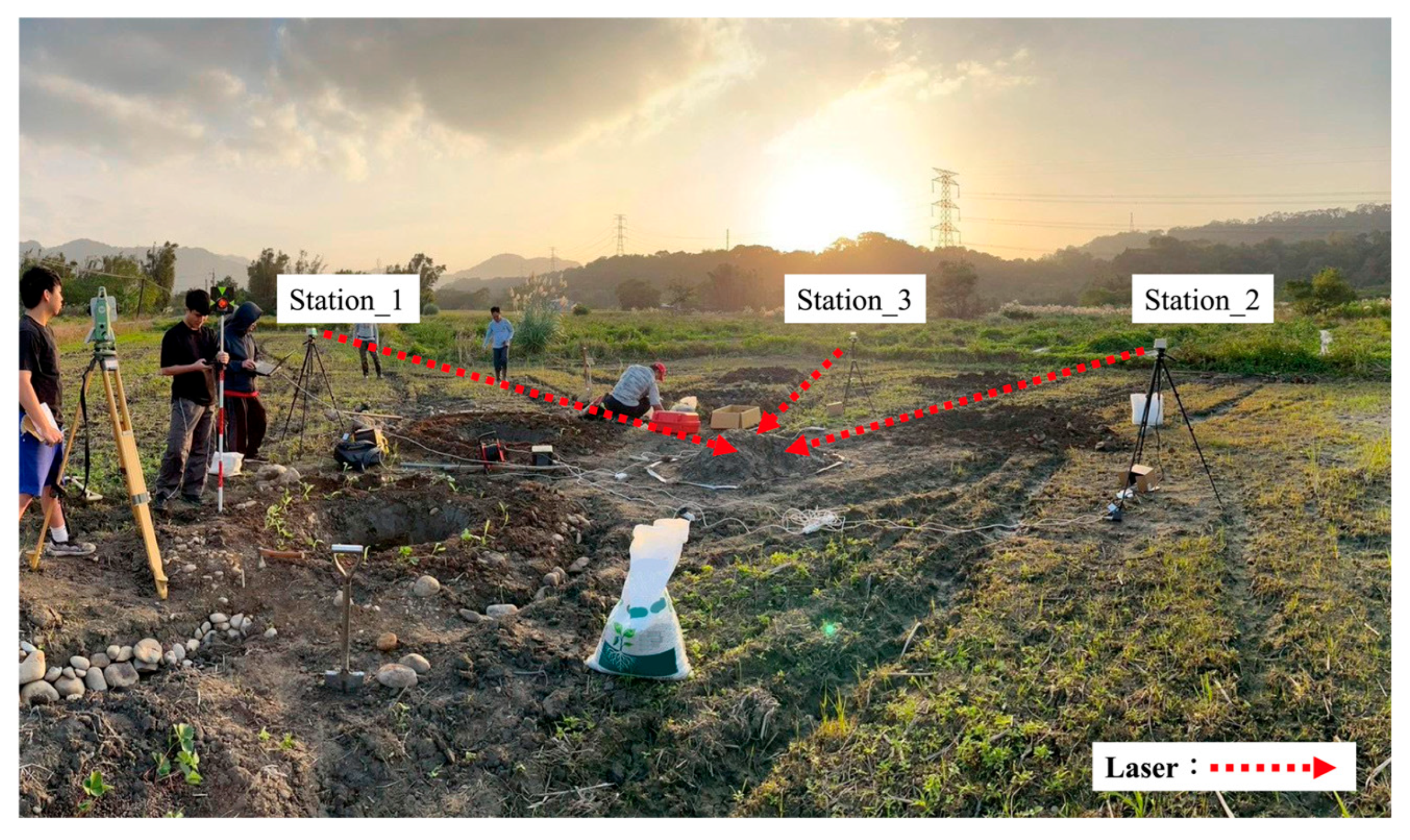
To simulate an actual measurement scenario, the subsequent experiment was carried out in an agricultural field test site under field engineering conditions using a LiDAR scanner. The scanning system adopted a three-station equilateral-triangle arrangement with an included angle of approximately 120° between stations, and the distance from each station to the target stockpile was approximately 5–7 m, as illustrated in Figure 4. During the experiment, a conical soil pile with a base diameter of approximately 1.5 m and a height of approximately 0.5 m was constructed as the test target.
At this stage, AVC was adopted as the main method for result verification to evaluate the internal consistency and overall reasonableness of the LiDAR-based volume estimation workflow under field engineering conditions. The measurement procedure consisted of three stages. First, the initial single conical stockpile was scanned to measure its volume V S . Second, another conical stockpile was added at an adjacent location and a second scan was performed to obtain the added volume V P . Finally, a third scan was conducted after the two stockpiles had been combined to measure the total volume V T . The scanning time for each measurement was fixed at 1 min, and multi-station point cloud integration was performed during post-processing to ensure that all measurements could be compared under a consistent spatial reference.
By examining the degree to which the additive relationship V T V S + V P was satisfied, this study carried out relative validation and verification and further evaluated the repeatability of the same LiDAR scanning and volume estimation workflow. To reduce the influence of incidental errors in single measurements, three groups of experiments were repeated. In addition, conventional total station measurements were conducted simultaneously as a reference based on commonly used engineering practice. Nevertheless, considering that total station measurement is still affected by the number of sampled points, boundary determination, and surface undulation, the focus of this study remained on analyzing AVC validity, repeatability, and result reasonableness under the LiDAR workflow.
  • Experiment 3: Field Experiment
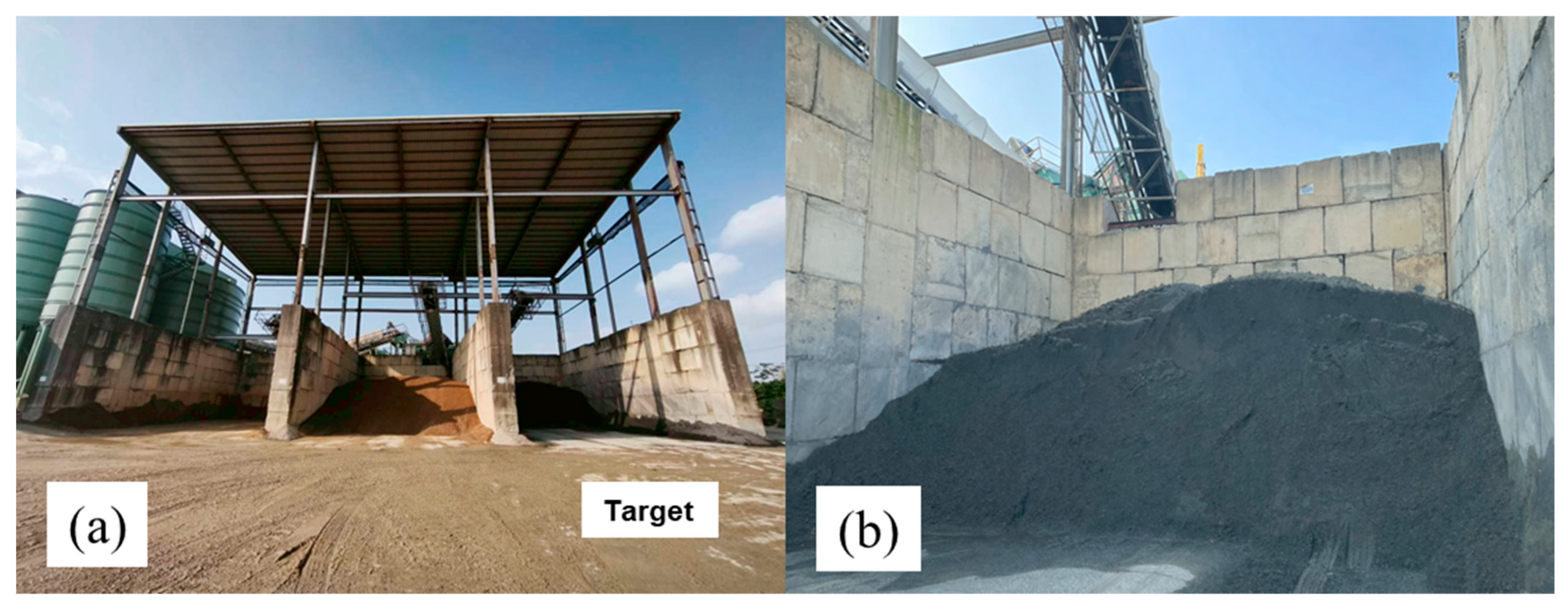
The field test was conducted at an engineering material storage yard consisting of a long trough-shaped storage area enclosed by multiple concrete blocks, where bulk materials were stockpiled within an individual storage bin. The storage structure had approximate dimensions of 6 m in height, 9 m in width, and 15 m in length, as shown in Figure 5. On the day of testing, the weather was sunny with good daylight, the ground was dry, and the overall terrain roughness was relatively flat. Although strong gusts were present, the overall environmental conditions can be regarded as representative of a typical operating scenario in an engineering material yard.
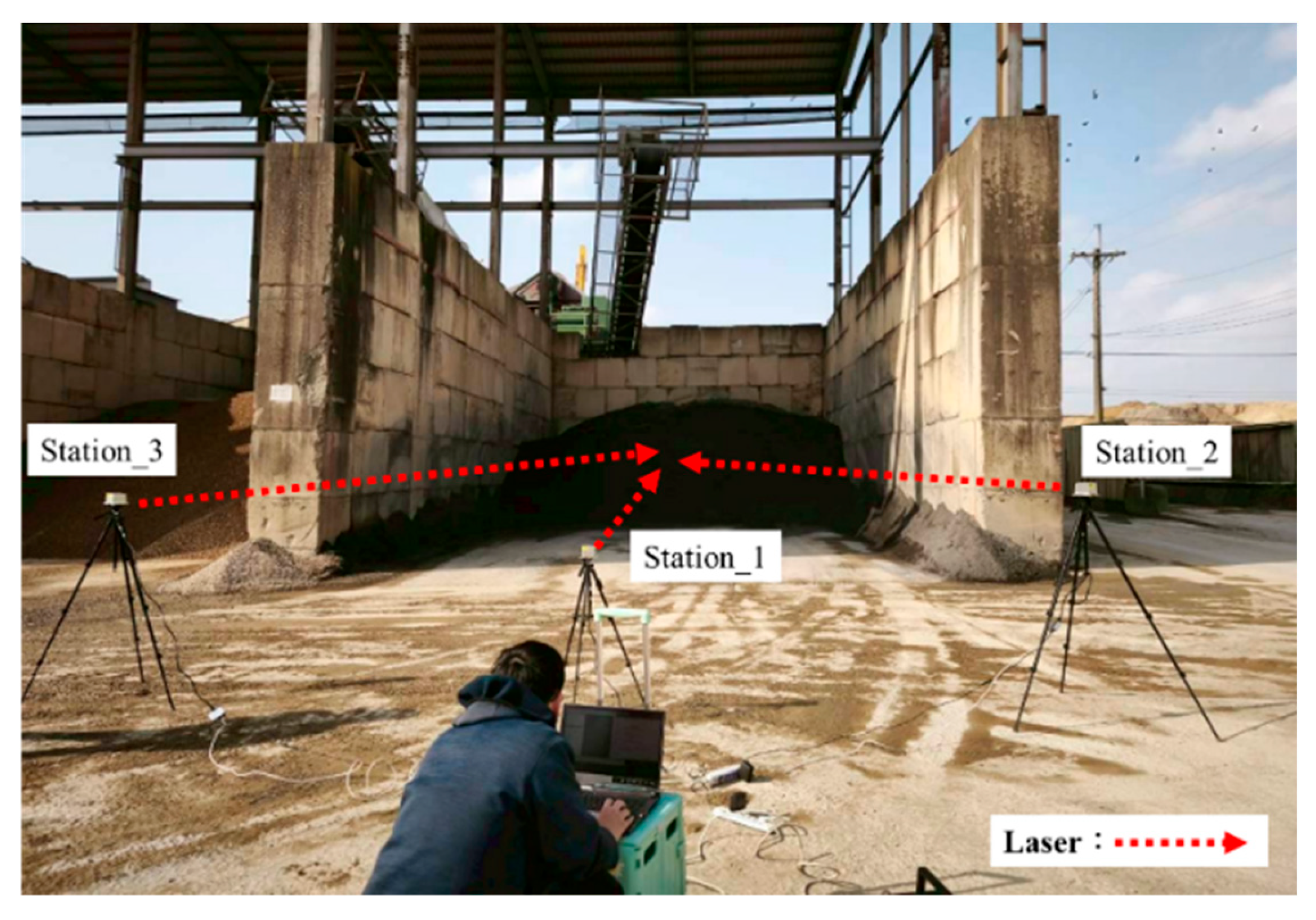
The LiDAR system adopted an object-oriented deployment method in which three scanning stations were arranged in front of the storage bin to form an observation geometry enclosing the measurement area and covering the principal viewing angles of the elongated stockpile, as shown in Figure 6. Each scan lasted approximately 1 min, and three scans were conducted as part of data completeness and field stability quality control to reduce occasional point cloud loss caused by obstruction or environmental interference. The field results presented in this study are illustrated and analyzed using one representative scan, and no statistical repeatability analysis was performed. During field measurement, no vehicles entered the site and no personnel approached the storage bin; therefore, the measurements may be regarded as baseline measurements obtained under conditions without dynamic disturbance.

3. Results

This section analyzes the accuracy, result consistency, repeatability, and engineering performance of the LiDAR-based volume estimation system based on the measurement results obtained at different stages. Since traceable absolute ground truth is difficult to obtain in real field environments, this study adopted a staged validation framework that combined controlled experiments, additive consistency verification, repeatability assessment, and field comparison analysis to evaluate the reliability and practical feasibility of the proposed system.

3.1. Results of Experiment 1: Controlled Experiment

To verify the measurement capability of the proposed LiDAR-based volume estimation workflow under conditions of low environmental interference, a 13 L standard container with a clearly defined capacity was used as the target in the controlled experiment, and its theoretical volume was adopted as the comparison benchmark. By comparing the LiDAR-based volume estimation result with the geometric capacity of the container and the volume inferred from the material’s physical properties, the basic accuracy of the system under ideal conditions could be assessed and used as a reference for subsequent analysis.
The standard bucket used in this experiment had a nominal capacity of 13 L and contained approximately 21 kg of coarse aggregate. Based on a bulk density of 1.65 g/cm3, the corresponding material volume was estimated to be approximately 0.0127 m3, while the geometric capacity of the bucket, 0.013 m3, was used as the theoretical ground truth. The LiDAR scan of the coarse aggregate inside the bucket was then processed through the automated measurement workflow, yielding an estimated volume of 0.0129 m3, as summarized in Table 2.
The results indicate that the differences between the LiDAR-estimated volume, the geometric capacity of the standard bucket, and the volume inferred from weight were all very small, with absolute deviations of approximately 0.0001–0.0003 m3 and relative errors of about 0.77–2.31%. Compared with the commonly accepted engineering tolerance range of 3–5% for bulk material inventory, the performance of the proposed system under ideal conditions was better than the level typically required in engineering practice.
These differences mainly arose from the angular surface characteristics of the coarse aggregate, local microscopic irregularities, and point cloud discretization effects, rather than from systematic measurement bias. Overall, the verification results demonstrate strong agreement between the LiDAR measurement and the theoretical volume, providing a useful accuracy reference for subsequent analyses.

3.2. Results of Experiment 2: Verification Experiment

For relative validation and verification, the proposed LiDAR-based volume estimation workflow was evaluated from three perspectives: repeated measurements, comparison with conventional measurement results, and AVC verification. Because absolute ground truth for actual stockpiles is difficult to obtain directly, this section does not use absolute error as the primary criterion; instead, it focuses on repeatability, the source of boundary differences, and the validity of the additive volume relationship.
Based on the three repeated scans, the average values of the initial volume V S , the incremental volume V P , and the final total volume V T were approximately 0.203 m3, 0.017 m3, and 0.224 m3, respectively. The corresponding standard deviations were approximately 0.002 m3, 0.000 m3, and 0.004 m3, and the coefficient of variation (CV) ranged from 0.58 to 1.92, as shown in Table 3. These results suggest that the proposed LiDAR-based volume estimation workflow showed relatively good repeatability under the same stockpile condition and measurement settings. However, because the analysis was based on only three repeated measurements, the statistical reliability of the standard deviation and CV is limited; therefore, these values should be interpreted as a preliminary assessment of repeatability rather than a definitive evaluation of measurement uncertainty. In particular, the low CV of the incremental volume V P suggests that the system was able to detect small volume changes under this limited test condition. This finding further suggests that, after excluding external disturbances, the LiDAR measurements showed good internal consistency.
In terms of differences from conventional measurement, although the conventional survey results and the LiDAR point cloud results were first transformed into the same coordinate system to establish a consistent comparison basis, clear differences still remained in the way the boundaries were defined. Let X denote a boundary point obtained from conventional measurement; after transformation into the LiDAR coordinate system, it can be expressed as Equation (3).
X = R X + t
Here, R is the rotation matrix and t is the translation vector. This transformation includes only rotation and translation, without scale transformation, in order to preserve the geometric shape and scale relationship between the two datasets. After coordinate alignment, the planar boundary regions corresponding to conventional measurement and LiDAR measurement can be expressed as Equations (4) and (5), respectively, where A T denotes the boundary region defined by conventional measurement and A L denotes the boundary region reconstructed from the LiDAR point cloud.
A T = B o u n d a r y   r e g i o n   d e f i n e d   b y   t r a d i t i o n a l   s u r v e y
A L = B o u n d a r y   r e g i o n   d e f i n e d   b y   L i D A R   p o i n t   c l o u d
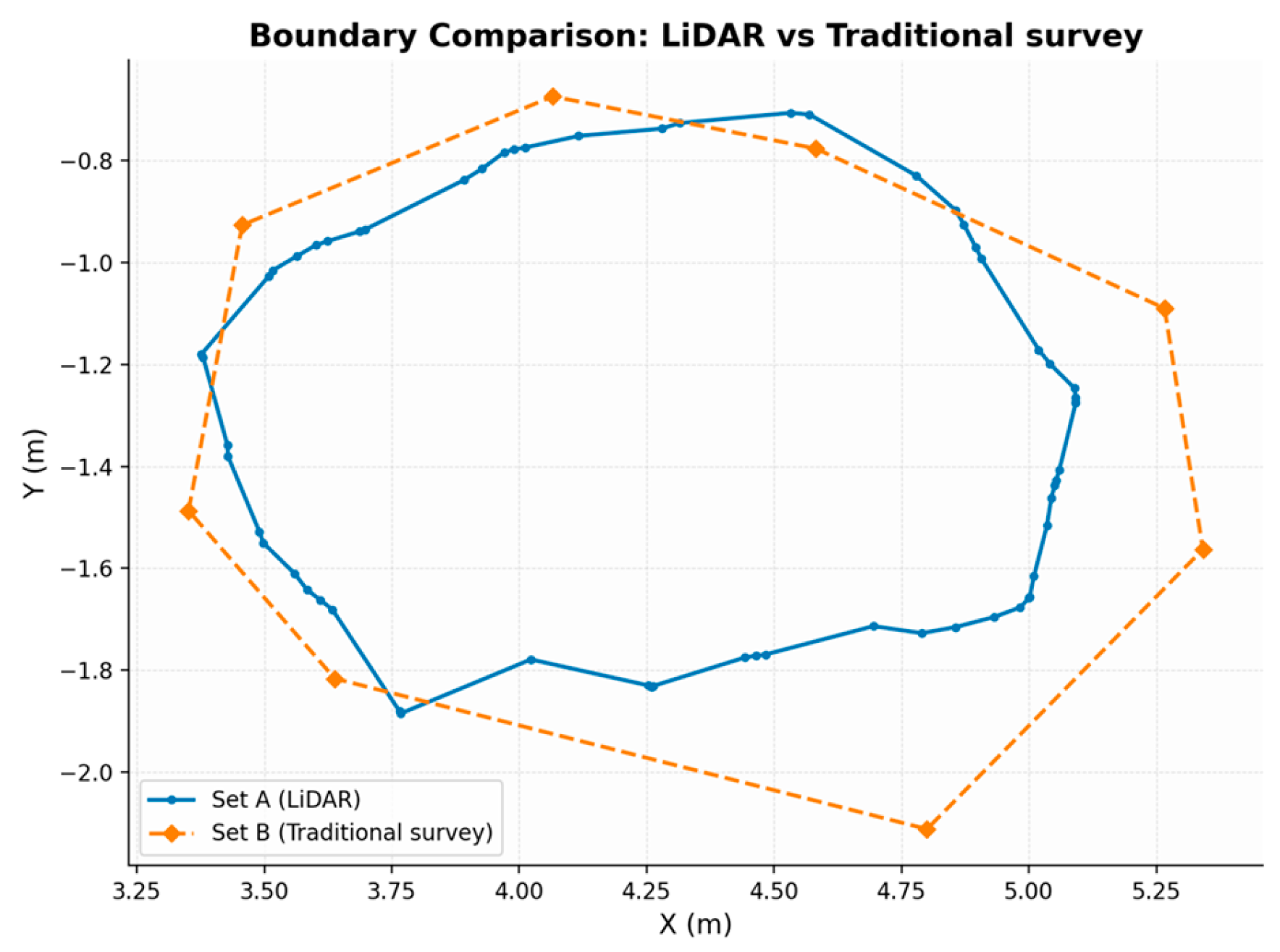
In this study, both measurement results were projected onto the same horizontal plane, Z = 0 , to define closed regions, thereby enabling comparison of base area and volume estimation differences. As shown in Figure 7, even after coordinate alignment, clear discrepancies can still be observed between the boundary extents defined by the two methods, indicating that the base-boundary sets derived from conventional measurement and LiDAR are not identical. In this comparison, Set A (blue solid line) represents the boundary derived from LiDAR scanning, in which the reference plane was fitted using the lowest elevation in the point cloud, whereas Set B (orange dashed line) represents the boundary obtained from total station measurement, in which the base was determined by manually selected points and then projected. As shown in Figure 7, although boundary determination introduced systematic differences in absolute volume, with the conventional measurement yielding higher values than the LiDAR estimate, the primary reason lies in the inherent differences in the definition of the reference plane and the pile toe. The conventional measurements gave V s = 0.366   m 3 and V T = 0.381   m 3 . Nevertheless, the incremental volume V P estimated by both methods remained consistently within the range of 0.015–0.017 m3, demonstrating strong agreement. This result suggests that relative incremental calculation can effectively reduce the influence of fixed bias caused by differences in reference-plane definition.
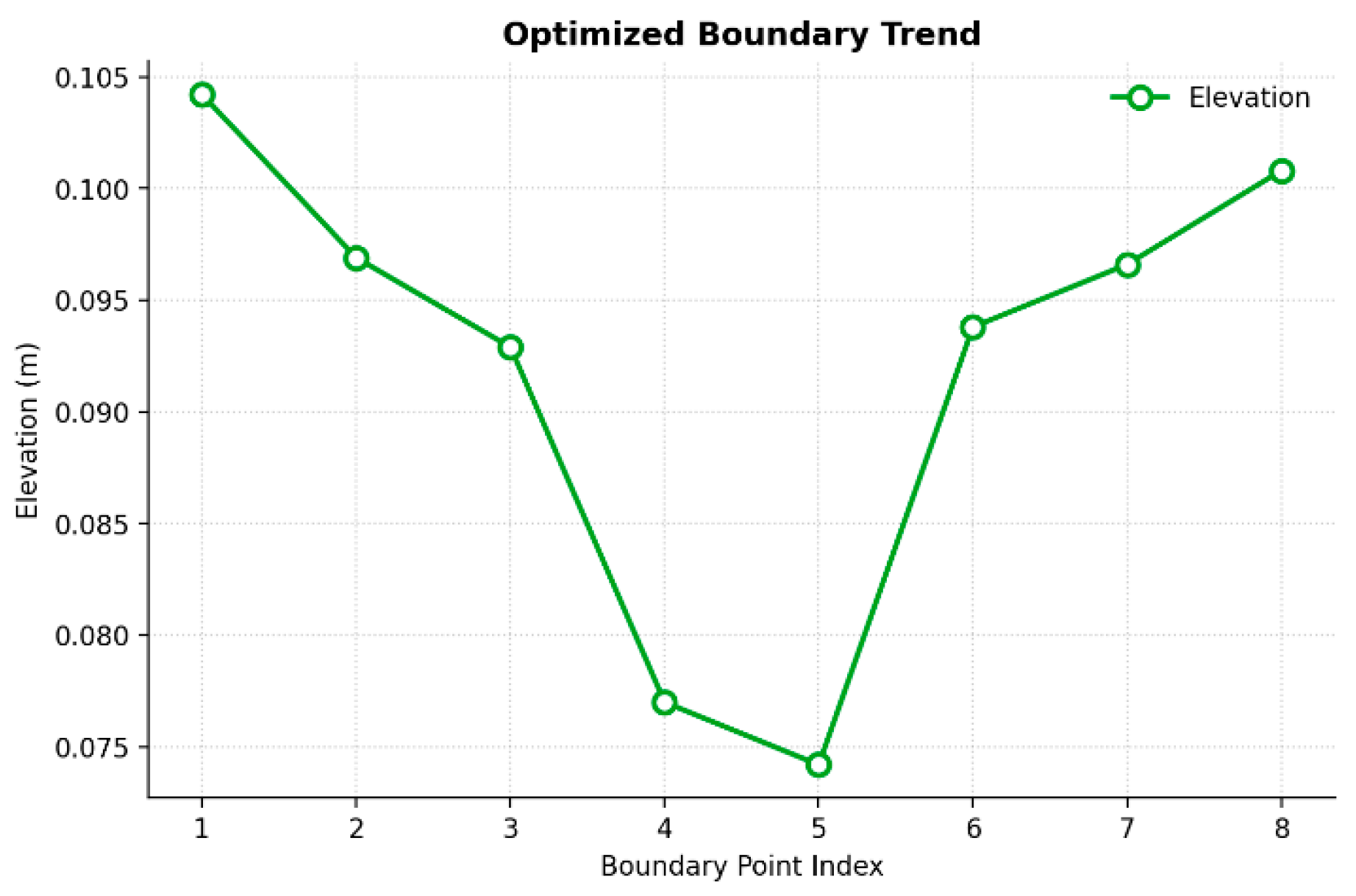
To further clarify the source of the boundary-definition difference, this study analyzed the elevation distribution of the boundary points selected in the conventional survey. As shown in Figure 8, the elevations of the eight boundary points ranged from approximately 0.074 m to 0.104 m. The lowest value 0.074 m corresponded to a local depression along the stockpile boundary, indicating that the selected boundary points were not strictly coplanar. Although minor measurement error may be involved, this elevation difference mainly reflects the actual unevenness of the stockpile boundary. However, in conventional volume calculation, such non-coplanar boundaries are usually projected onto a simplified horizontal plane, which enlarges the enclosed base area and leads to volume overestimation. By contrast, LiDAR measurement can directly establish a unified reference plane at the point cloud level and extract the actual stockpile footprint using high-density geometric information, thereby better reflecting the true boundary morphology of irregular stockpiles. Accordingly, the difference in absolute volume mainly resulted from boundary definition and reference-plane setting, rather than from instability of the LiDAR system itself under the tested conditions.
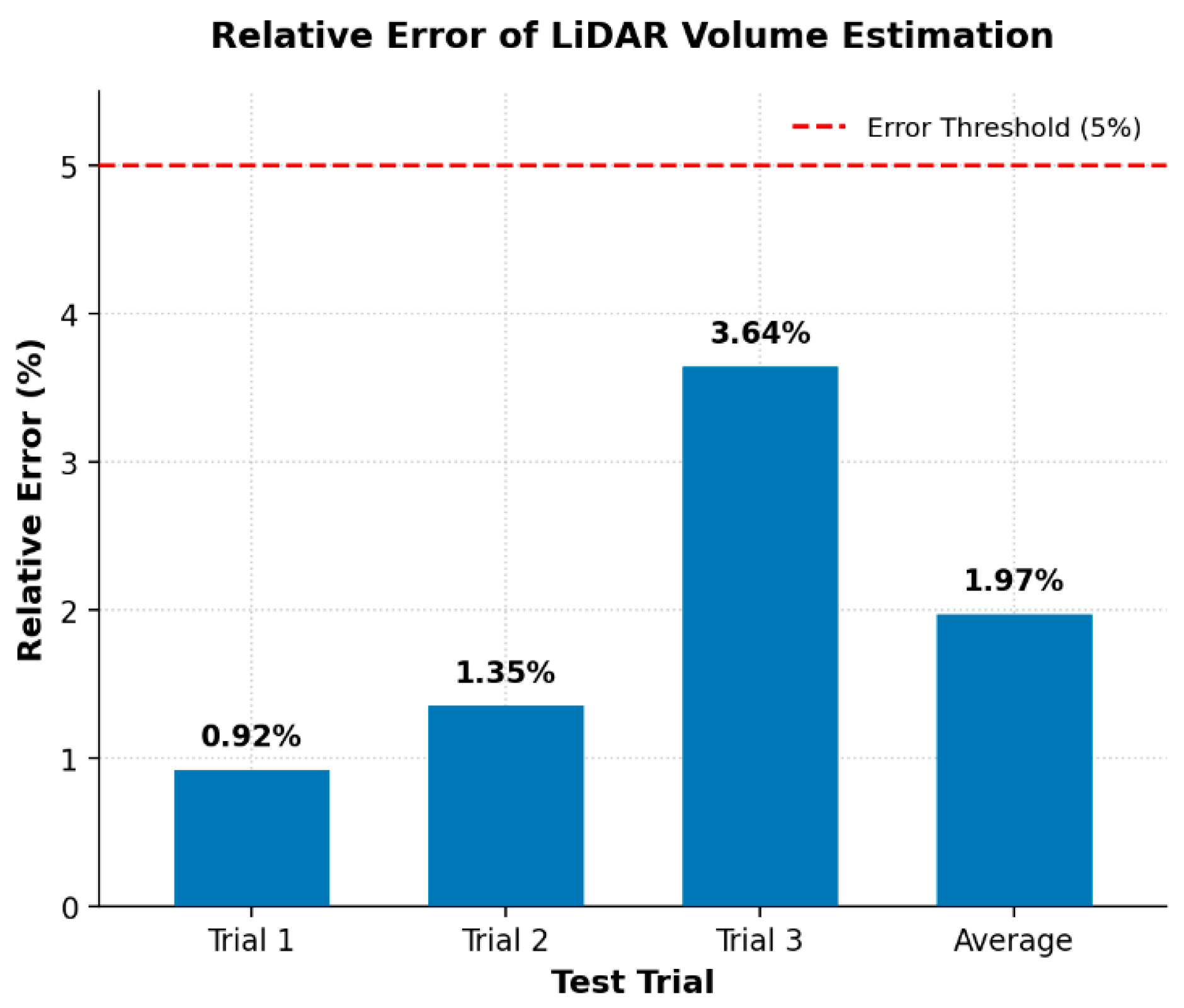
In addition to differences from conventional measurement, this study further examined the internal rationality of the proposed LiDAR-based volume estimation workflow through AVC verification. The basic concept is to compare whether the sum of the initial volume V S and the incremental volume V P agrees with the total volume V T after the increment, thereby confirming whether the measurement workflow maintains logical consistency across different stockpile stages. The results of the three repeated tests show that the residual between V S + V P and V T ranged from approximately 0.002 to 0.008 m3, corresponding to relative errors of about 0.92–3.64%, with an average relative error of 1.97%, as listed in Table 4. Figure 9 further shows that the error in every trial remained below the 5% engineering tolerance threshold, with the maximum value being 3.64%. These results indicate that the proposed LiDAR-based measurement workflow performs well in incremental estimation, self-consistency verification, and result repeatability.
Overall, the results of this section indicate that the differences between LiDAR-based volume estimation and conventional methods in the outdoor controlled test environment mainly arise from differences in boundary definition and reference-plane setting rather than from instability in the measurement workflow itself. In the repeatability analysis, the system exhibited low variability and good reproducibility, as shown in Table 3. In the analysis of differences from conventional measurement, Figure 7 and Figure 8 confirm that the main sources of discrepancy are related to manual boundary selection and reference-plane simplification. In terms of consistency verification, Table 4 and Figure 9 further demonstrate that the LiDAR measurements exhibit good additive logical consistency and internal reliability. Therefore, the proposed LiDAR-based volume estimation workflow provides a sound quantitative basis for the field application analysis presented in the Section 3.3.

3.3. Results of Experiment 3: Field Experiment

In the field application at an engineering material storage yard, this study further examined the reconstruction quality of the LiDAR point cloud, the volume estimation result, and its difference from manual on-site estimation in order to evaluate the operational feasibility and practical value of the proposed system in a real engineering environment. Through the presentation and analysis of representative measurement results, this section demonstrates the geometric reconstruction capability and quantitative inventory potential of the LiDAR-based volume estimation workflow for large-scale and irregular stockpiles.
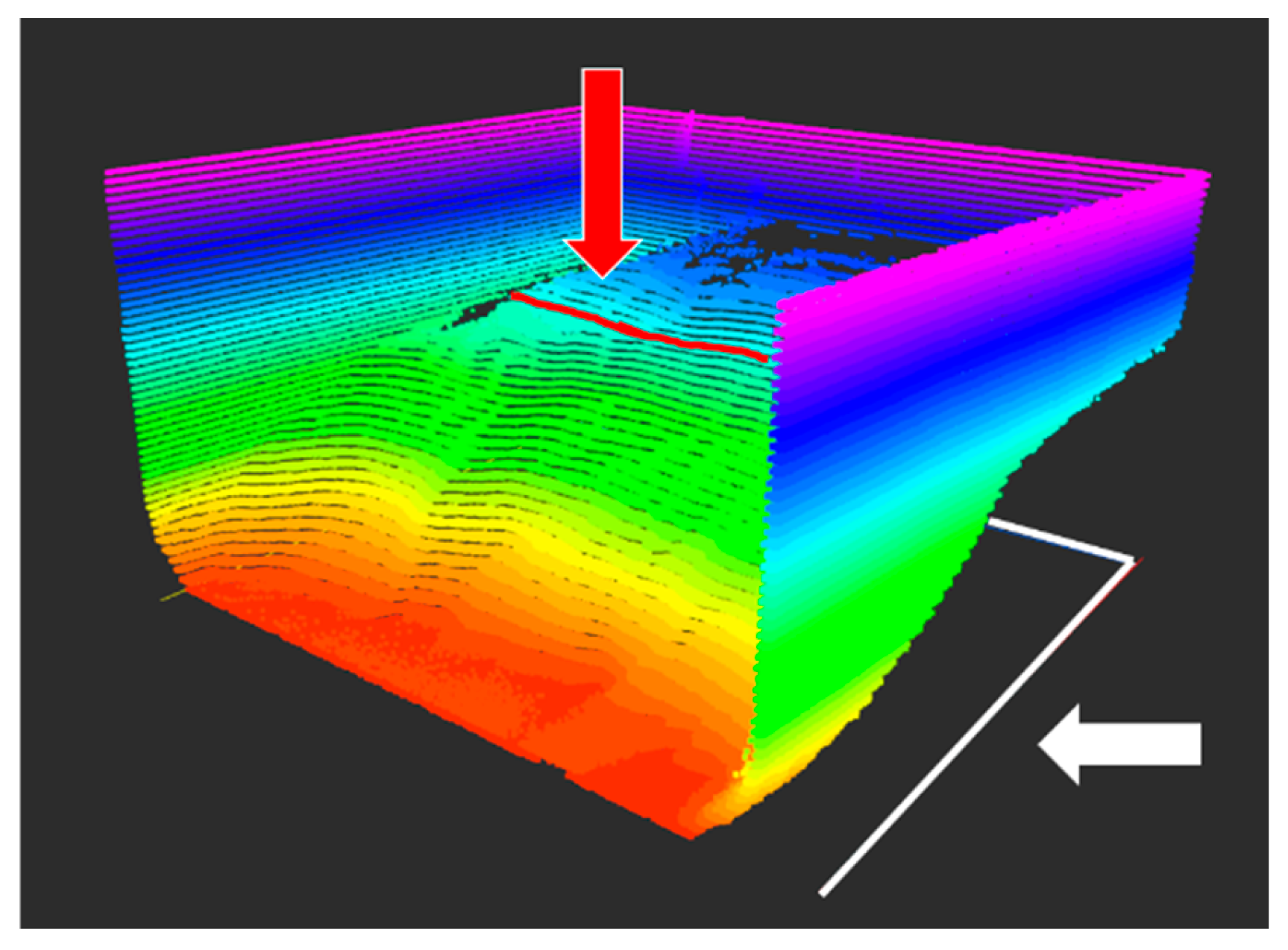
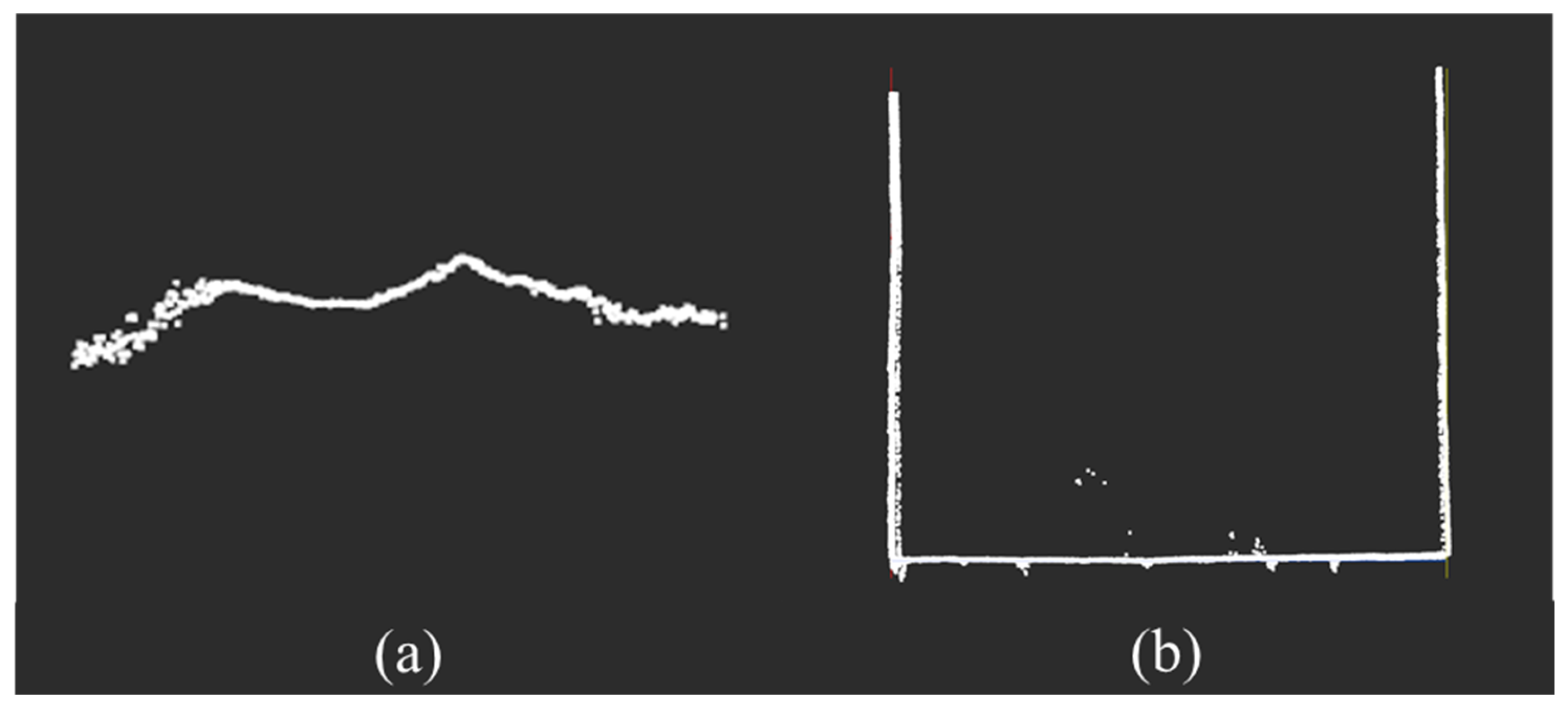
The LiDAR point cloud acquired during field measurement successfully covered the entire aggregate stockpile and was converted into multiple horizontal slices for volume calculation. As shown in Figure 10, each slice retained approximately 1000–1800 sample points that were evenly distributed across the stockpile surface and boundary areas, and this spatial sampling density was sufficient to support stable two-dimensional polygon reconstruction. In the boundary-extraction workflow, the system first identified the wall profiles of the storage bin to define the valid range and then applied the Alpha-shape algorithm to the free-surface point cloud in order to extract boundary features. The resulting boundary lines showed high continuity with no obvious gaps or truncation, as illustrated in Figure 11. A slice interval of 0.05 m was adopted in this study, and the polygon area of each slice was calculated using the Shoelace formula. Geometric comparison between the three-dimensional stockpile model and the two-dimensional slices confirmed that the LiDAR-reconstructed geometry agreed well with the actual storage-bin shape and surface undulation. In addition, the high-density point cloud effectively captured local surface details and boundary irregularities, thereby providing a stable basis for subsequent volume estimation.
Based on the reconstructed three-dimensional point cloud of the stockpile, layered area calculation was conducted using horizontal slices at 0.05 m intervals, and the total volume was obtained by numerical integration. After full integration, the estimated stockpile volume was 124.93 m3, and this value was used as the basis for subsequent analysis. To compare the proposed method with the existing on-site estimation approach, this study also compiled the manual estimates provided by field personnel. In practice, the field estimate was usually based on the concrete blocks surrounding the storage area as reference dimensions, together with visual assessment of pile height and material inflow/outflow records, and a conservative strategy was often adopted in which any partial block smaller than 1 m3 was counted as a full 1 m3 block. In addition, for regions near the storage-bin edge, wall corner, or slope toe, the irregular pile geometry and locally ambiguous boundaries make manual estimation highly dependent on subjective judgment by different personnel, thereby resulting in differences in the recognized effective stockpile extent. Accordingly, the manual estimate ranged from approximately 130 to 135 m3.
When the manual estimate of 130 m3 was compared with the slicing-integration result of 124.93 m3 obtained in this study, the difference was 5.07 m3, corresponding to a relative difference of approximately 4.1%. When the more conservative upper estimate of 135 m3 was used, the difference increased to 10.07 m3, with a maximum relative difference of about 8.1%. This bias mainly arises because the manual method approximates the stockpile using regular cubic units and therefore cannot precisely capture boundary irregularities, local slope undulation, or the geometric features of wall-adjacent and edge-depression regions, resulting in a tendency toward overestimation. By contrast, the proposed approach is based on high-density point cloud data and three-dimensional geometric integration, allowing a more complete representation of the actual stockpile shape and providing a more consistent quantitative basis. Overall, even when the conservative upper manual estimate of 135 m3 is used as the comparison benchmark, the difference remains clearly quantifiable and supports the practical value of the LiDAR-based three-dimensional point cloud slicing method for field inventory assessment. The results also indicate that the proposed method provides a more geometry-based and internally consistent quantitative description of irregular stockpiles under field conditions.

4. Discussion

The results of this study, including the controlled experiment, verification experiment, and field experiment, demonstrate that the proposed LiDAR-based workflow can achieve reliable and efficient volume estimation under different experimental conditions. Based on these three experimental scenarios, this section further discusses the key factors influencing the performance of the proposed method, including LiDAR sensor characteristics, material properties, and stockpile morphology, as well as provides an integrated analysis and comparative evaluation of the experimental results. In addition, the advantages and limitations of the method in practical engineering applications are analyzed to clarify its applicability and potential constraints.

4.1. Influence of LiDAR Sensor Characteristics

LiDAR sensor characteristics influence point cloud acquisition and consequently affect volume estimation performance; however, their impact should be interpreted through the resulting point cloud representation rather than sensor specifications alone. In this study, a single LiDAR system was employed, and therefore no comparative analysis among different LiDAR models is conducted. Instead, the discussion focuses on point cloud characteristics, particularly point density and spatial resolution, which are the dominant factors affecting boundary extraction and geometric reconstruction. Previous studies have shown that LiDAR return intensity is influenced not only by target reflectivity and incidence angle, but also by range and scanner-specific system configuration. Accordingly, the practical influence of a LiDAR system on volume estimation should be interpreted not only through nominal specifications, but also through its effects on point cloud representation and geometric reconstruction stability [21].
To ensure consistent data acquisition, the scanning strategy described in Section 2 provides sufficient spatial coverage from multiple viewpoints, supporting stable point cloud representation across all experiments. Rather than defining point cloud quality through an absolute metric, this study evaluates data adequacy based on the consistent extractability of boundary contours at each slicing layer. In addition, point cloud resolution influences the selection of slicing thickness: lower density requires larger slice intervals to ensure sufficient points per layer, whereas higher density allows finer slicing for improved geometric detail. This reflects the direct relationship between spatial resolution and the stability of layered volume integration.
While different LiDAR systems may introduce variations in sampling density and measurement accuracy, their influence is generally secondary compared to point cloud resolution. Many commercial LiDAR systems can provide performance adequate for engineering-scale applications; however, insufficient point density may still lead to incomplete boundary representation and increased estimation error.

4.2. Influence of Material Type and Stockpile Morphology

Material properties and stockpile configurations influence LiDAR-based volume estimation through their effects on point cloud representation, which in turn affect the stability and completeness of geometric reconstruction.
In this study, the experiments mainly involved construction-related granular materials, including aggregate- and soil-based stockpiles commonly encountered in engineering environments, which generally provide relatively stable LiDAR responses. In contrast, materials with highly reflective or absorptive characteristics, such as metal or certain wood surfaces, may introduce measurement uncertainty due to unstable laser scattering and reduced point consistency [22].
In addition to material-related effects, stockpile morphology also affects the applicability of the proposed method. The controlled and verification experiments considered typical mound-shaped stockpiles formed under natural accumulation conditions, while the field experiment involved a semi-enclosed configuration constrained by surrounding walls, resulting in directional material accumulation. For more complex geometries, such as stockpiles containing internal voids or discontinuities, the boundary extraction and cross-sectional area computation may require adaptation, where each slice can be subdivided into multiple regions and aggregated after independent area computation. Although this increases computational complexity, it extends the applicability of the method to more irregular practical scenarios. In addition, irregular shape distributions may lead to non-uniform LiDAR sampling due to occlusion or varying incident angles, which can influence local point density and boundary completeness, and consequently affect volume estimation accuracy.

4.3. Integrated Analysis and Comparative Evaluation

The overall experimental results, including the controlled, verification, and field tests, indicate that the proposed LiDAR-based workflow maintains stable performance under different operational conditions. In terms of accuracy evaluation (Section 3.1), the LiDAR-derived volumes show small deviations when compared with geometric and weight-based references, with all errors remaining within acceptable engineering tolerances. This confirms the reliability of the proposed method under controlled measurement conditions. Regarding internal consistency, the AVC analysis (Section 3.2) demonstrates that the incremental and total volume estimations remain numerically consistent, indicating stable performance of the slicing and integration procedure across different stages.
A brief comparison with conventional manual estimation (Section 3.3) suggests that the proposed method shows acceptable practical agreement with field-based manual estimation, while providing a more systematic and geometry-based representation of the stockpile. However, it should be noted that no high-precision surveying reference was available in the field environment; therefore, the comparison in this study is based on experienced manual estimation as a practical engineering reference. This reflects common operational practice in real-world stockpile inventory tasks.

4.4. Advantages and Limitations of LiDAR in Engineering Applications

By integrating the results of the controlled experiment, relative validation and verification, and field application, it can be concluded that the proposed LiDAR-based volume estimation workflow has strong potential for engineering applications. Compared with conventional measurement methods, LiDAR not only provides more complete three-dimensional geometric information, but also exhibits clear advantages in operational efficiency, manpower requirements, and risk control. While deep learning-based point cloud segmentation methods have demonstrated strong performance in recent studies, their application in field-based stockpile measurement may be constrained by the requirement for large-scale annotated datasets and greater computational resources for model training and deployment. In contrast, the present study adopted DBSCAN as a practical unsupervised clustering method for stockpile extraction within a ROS-based workflow, because it can separate the main stockpile body from surrounding points without prior training. Therefore, the emphasis of this study is on deployment feasibility in engineering field conditions rather than on direct performance comparison with deep learning approaches. In particular, for irregular stockpile measurement, high-density point cloud data and an automated processing workflow under a unified coordinate system help reduce bias caused by manual boundary interpretation and differences in reference-plane definition. According to the operational records of Experiment (2), the comparison of work efficiency between the LiDAR system and conventional measurement methods is summarized in Table 5.
As shown in Table 5, under the measurement scenario of this study, the complete LiDAR workflow could be completed within approximately 5–10 min, with a personnel requirement of one to two operators; under the minimum configuration, both data acquisition and subsequent processing could be completed by a single operator, provided that the operator is a trained and qualified professional. By contrast, conventional methods required longer field operation time and greater manpower input, making them less advantageous for routine inventory tasks and applications requiring frequent updates. In addition, LiDAR is a non-contact measurement technique and enables point cloud integration, boundary extraction, and volume calculation within a unified coordinate system, thereby reducing the operational risks associated with approaching the stockpile, repeatedly interpreting boundaries, and remaining on site for extended periods.
However, several limitations remain in this study. The quality of LiDAR point cloud data may still be affected by occlusion, strong light, wind, background noise, and changing site conditions, which may reduce the completeness of local surface reconstruction and boundary identification. In addition, scanning-station arrangement, slice thickness, filtering conditions, and clustering parameters still need to be adjusted according to different stockpile geometries and measurement environments, indicating that cross-site application still depends to some extent on operator experience and parameter-setting ability. Furthermore, the number of field validation cases in this study remains limited and does not yet cover a wider range of material types, stockpile geometries, or highly dynamic disturbance conditions. Therefore, the general applicability and long-term robustness of the proposed system still require further verification.
Future research may further strengthen automated quality control and environmental compensation mechanisms while establishing a more complete parameter-standardization procedure in order to improve point cloud stability, boundary-identification reliability, and system deployment efficiency under different site conditions. Subsequent studies may also expand cross-site validation to different material types, stockpile geometries, and more complex engineering environments and integrate other digital measurement information for cross-comparison, thereby enhancing the long-term applicability and dissemination potential of the proposed system in engineering practice.

5. Conclusions

This study developed a LiDAR-based volume estimation workflow for irregular stockpiles of construction materials benefit to practical measurement needs in engineering applications. By integrating multi-station scanning, point cloud registration, boundary extraction, layered slicing, and numerical integration, the study established a volume estimation approach. The contribution of this work lies not only in proposing a measurement tool, but also in systematically evaluating its measurement accuracy, result consistency, repeatability, and practical applicability for material inventory assessment.
In the controlled experiment, a standard container with a clearly defined capacity was used as the benchmark, and the results demonstrated strong agreement between the LiDAR-based volume estimation and the theoretical volume. This finding indicates that the proposed method possesses good basic measurement capability under conditions of low environmental interference. In the relative validation and verification stage, repeated measurements showed good stability of the workflow, while AVC verification further confirmed the internal logical consistency of the volume estimates obtained at different stages. In addition, the comparison between conventional measurement and LiDAR system showed that the main discrepancies arose from differences in boundary definition and reference-plane setting rather than from instability in the LiDAR measurement workflow itself.
Overall, the proposed system not only ensures accuracy and consistency in volume estimation but also significantly improves operational efficiency, reducing total processing time by over 80% and measurement time by approximately 70–80%, while lowering labor requirements and enhancing measurement safety. These advantages demonstrate its strong potential for practical deployment in real-world engineering applications.
In the field application at a material storage yard, LiDAR point clouds can effectively reconstruct the surface and boundary geometry of stockpiles and can be used to estimate the volume of irregular stockpiles through slicing-based integration. Compared with manual on-site estimation, the LiDAR-based results provide a more geometrically grounded and consistent quantitative basis while clearly revealing the range of differences among estimation approaches. According to the operational records of this study, the overall measurement workflow can be completed by a single operator within a relatively short time, indicating that the method offers not only measurement capability but also practical value in terms of operational efficiency, labor reduction, and site safety management.

Author Contributions

Conceptualization, Y.-W.C., C.-F.C., L.-J.K. and J.-Y.L.; methodology, Y.-W.C.; software, Y.-W.C. and L.-J.K.; validation, Y.-W.C.; investigation, Y.-W.C. and C.-F.C.; writing—original draft preparation, Y.-W.C. and C.-F.C.; writing—review and editing, Y.-W.C. and C.-F.C.; visualization, Y.-W.C., C.-F.C. and J.-Y.L.; supervision, C.-F.C. and J.-Y.L. All authors have read and agreed to the published version of the manuscript.

Funding

This research received no external funding.

Data Availability Statement

Data is unavailable due to privacy or ethical restrictions.

Acknowledgments

The authors would like to express their sincere gratitude to Hsiu-Fen Wu of Hsin Chun Ting Industrial Co., Ltd. for providing the field testing site and support. The authors also extend their special thanks to Jen-Chih Huang, Wei-Tzu Hung, Yao-De Wang, Shih-Sis Wang, Jhen-Jhong Cao, and Chin-Hsiang Chen for their valuable assistance during the field surveying and data collection process.

Conflicts of Interest

The authors declare no conflicts of interest.

Abbreviations

The following abbreviations are used in this manuscript:
LiDARLight Detection and Ranging
ROSRobot Operating System
DBSCANDensity-Based Spatial Clustering of Applications with Noise
ICPIterative Closest Point
AVCAdditive Volume Consistency
CVCoefficient of Variation

References

  1. Safa, M.; Shahi, A.; Haas, C.T.; Hipel, K.W. Supplier selection process in an integrated construction materials management model. Autom. Constr. 2014, 48, 64–73. [Google Scholar] [CrossRef]
  2. Dardouri, S.; BuHamdan, S.; Al Balkhy, W.; Dakhli, Z.; Danel, T.; Lafhaj, Z. RFID platform for construction materials management. Int. J. Constr. Manag. 2022, 23, 2509–2519. [Google Scholar] [CrossRef]
  3. SGS. Stockpile Measurement Services. Available online: https://www.sgs.com/en (accessed on 15 July 2025).
  4. Alsayed, A.; Nabawy, M.R.A. Stockpile Volume Estimation in Open and Confined Environments: A Review. Drones 2023, 7, 537. [Google Scholar] [CrossRef]
  5. Raeva, P.L.; Filipova, S.L.; Filipov, D.G. Volume Computation of a Stockpile—A Study Case Comparing GPS and UAV Measurements in an Open Pit Quarry. ISPRS Arch. 2016, XLI-B1, 999–1004. [Google Scholar]
  6. Vacca, G. UAV Photogrammetry for Volume Calculations. A Case Study of an Open Sand Quarry. In Computational Science and Its Applications—ICCSA 2022 Workshops; Springer: Cham, Switzerland, 2022; pp. 505–518. [Google Scholar]
  7. Mello, C.C.S.; Salim, D.H.C.; Simões, G.F. UAV-based landfill operation monitoring: A year of volume and topographic measurements. Waste Manag. 2022, 137, 253–263. [Google Scholar] [CrossRef] [PubMed]
  8. Jafari, F.; Dorafshan, S. Vision based stockpile inventory measurement using uncrewed aerial systems. Ain Shams Eng. J. 2025, 16, 103251. [Google Scholar] [CrossRef]
  9. Koirala, M.; Ellingsen, P.G.; Woldaregay, A.Z. Validation of dry bulk pile volume estimation algorithm based on angle of repose using experimental images. Results Earth Sci. 2025, 3, 100137. [Google Scholar] [CrossRef]
  10. Gejdoš, M.; Výbošt’ok, J.; Chudá, J.; Tomčík, D.; Lieskovský, M.; Skladan, M.; Masný, M.; Gergel’, T. Assessment of New Techniques for Measuring Volume in Large Wood Chip Piles. Forests 2024, 15, 1747. [Google Scholar] [CrossRef]
  11. Peruda, S.R.; Yong, E.D.; Samaniego, L.; Dadoy, R.P.; Gubatan, V.D.P.; Marinda, H.J.O. Low-Cost Stockpile Scanner and Volume Calculator using Light Detection and Ranging Device. In 2021 IEEE 11th International Conference on System Engineering and Technology (ICSET); IEEE: Piscataway, NJ, USA, 2021; pp. 50–54. [Google Scholar]
  12. Manish, R.; Hasheminasab, S.M.; Liu, J.; Koshan, Y.; Mahlberg, J.A.; Lin, Y.-C.; Ravi, R.; Zhou, T.; McGuffey, J.; Wells, T.; et al. Image-Aided LiDAR Mapping Platform and Data Processing Strategy for Stockpile Volume Estimation. Remote Sens. 2022, 14, 231. [Google Scholar] [CrossRef]
  13. Alsayed, A.; Yunusa-Kaltungo, A.; Quinn, M.K.; Arvin, F.; Nabawy, M.R.A. Drone-Assisted Confined Space Inspection and Stockpile Volume Estimation. Remote Sens. 2021, 13, 3356. [Google Scholar] [CrossRef]
  14. Alsayed, A.; Nabawy, M.R.A. Indoor Stockpile Reconstruction Using Drone-Borne Actuated Single-Point LiDARs. Drones 2022, 6, 386. [Google Scholar] [CrossRef]
  15. Zhou, J.; Xu, H.; Zhao, Z.; Ji, X. Omnidirectional and Variable Density Point Cloud Acquisition Based on Turntable Solid-state LiDAR. In 2022 IEEE 2nd International Conference on Data Science and Computer Application (ICDSCA); IEEE: Piscataway, NJ, USA, 2022; pp. 201–205. [Google Scholar]
  16. Ko, C.; Lee, J.; Kim, D.; Kang, J. The Application of Terrestrial Light Detection and Ranging to Forest Resource Inventories for Timber Yield and Carbon Sink Estimation. Forests 2022, 13, 2087. [Google Scholar] [CrossRef]
  17. Matinnia, B.; Parsakhoo, A.; Mohamadi, J.; Shataee Jouibary, S. Study of the LiDAR accuracy in mapping forest road alignments and estimating the earthwork volume. J. For. Sci. 2018, 64, 469–477. [Google Scholar] [CrossRef]
  18. Mullins, C.C.; Esau, T.J.; Zaman, Q.U.; Al-Mallahi, A.A.; Farooque, A.A.; MacEachern, C.B. Time-of-flight-based advanced surface reconstruction methods for real-time volume estimation of bulk harvested wild blueberries. Smart Agric. Technol. 2025, 11, 101050. [Google Scholar] [CrossRef]
  19. Song, L.; Lin, D.; Peng, X.; Li, Z. Two-stage point cloud registration for 3D measurement of large workpieces. In 2021 16th International Conference on Computer Science & Education (ICCSE); IEEE: Piscataway, NJ, USA, 2021; pp. 500–505. [Google Scholar]
  20. Lima, J.V.N.; Soares, Á.A.V.; Pacheco, M.S.; Martins, G.D. Cálculo de Volume Madeireiro de Eucalyptus sp. a Partir de Varredura a Laser. Rev. Bras. Cartogr. 2025, 77, e75286. [Google Scholar] [CrossRef]
  21. Pfeifer, N.; Höfle, B.; Briese, C.; Rutzinger, M.; Haring, A. Analysis of the Backscattered Energy in Terrestrial Laser Scanning Data. Int. Arch. Photogramm. Remote Sens. Spat. Inf. Sci. 2008, 37, 1045–1051. [Google Scholar]
  22. Słomiany, M.; Dybała, J.; Gawdzik, G.; Macia’s, M.; Orłowski, A. Material Identification of Scanned Objects Based on the Classification of the Laser Reflection Intensity Profile. Sensors 2026, 26, 1666. [Google Scholar] [CrossRef] [PubMed]
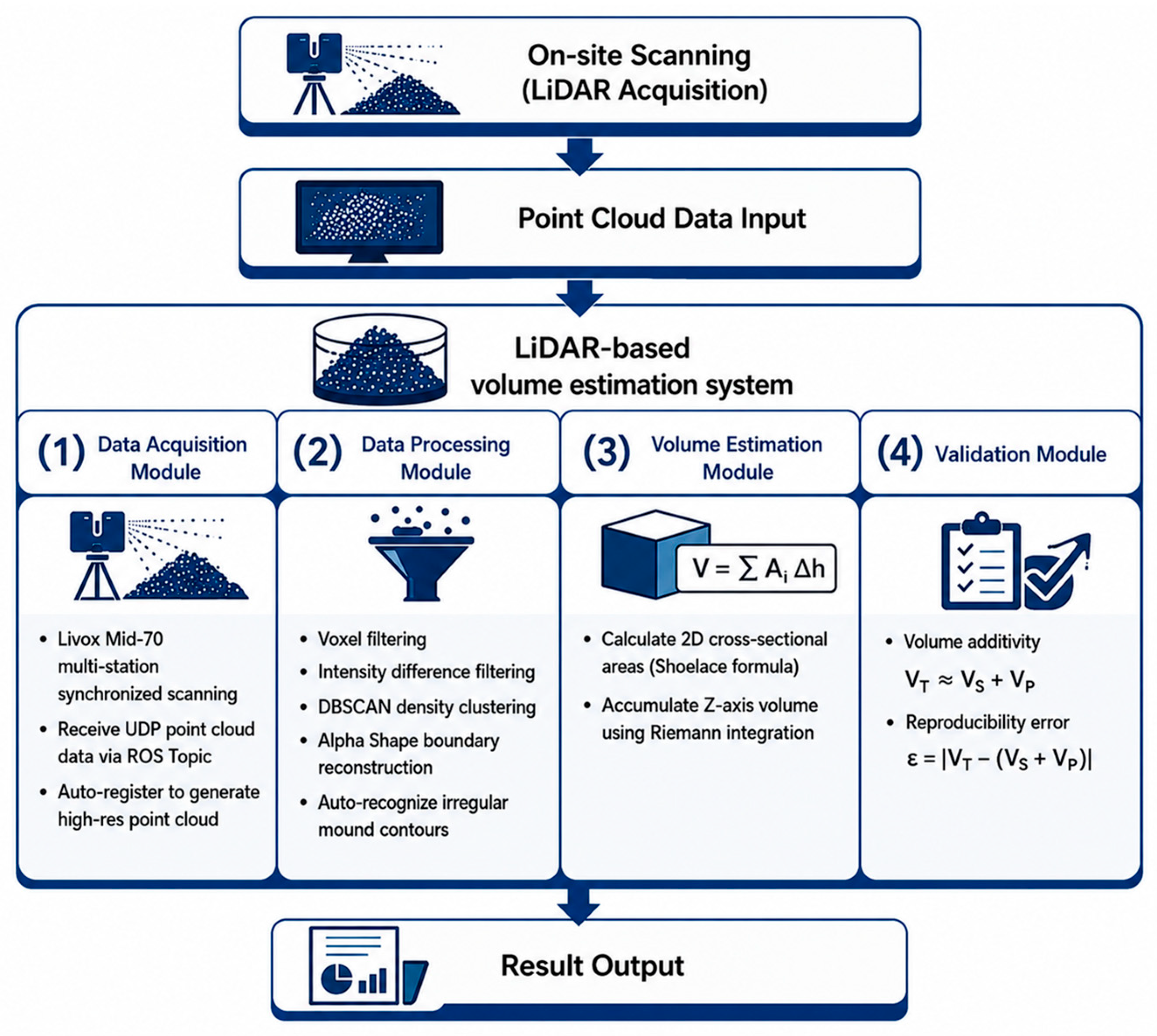
Figure 1. Study flow and system architecture of the LiDAR-based volume estimation system. The process of (1)–(4) are described in Section 2.2.
Remotesensing 18 01649 g001
Figure 2. Comparison of point cloud registration before and after ICP alignment.
Remotesensing 18 01649 g002
Figure 3. Schematic of Z-axis slicing and cross-sectional area calculation via shoelace. The yellow line indicates the selected boundary region for volume calculation. The red dashed circle highlights one representative horizontal slice layer along the Z-axis. The red arrow points to the clustered stockpile after segmentation. The bottom-right panel shows the actual cross-sectional contour of a single slice used for shoelace area computation.
Remotesensing 18 01649 g003
Figure 4. Layout of the outdoor site for verification experiment with three scanning stations (Stations_1, 2, and 3).
Remotesensing 18 01649 g004
Figure 5. Photo of field site experiment site. (a) bin panorama (15 m bulk stockpile); (b) partial view of the materials.
Remotesensing 18 01649 g005
Figure 6. Field test setup and scanning stations (Stations 1, 2, and 3).
Remotesensing 18 01649 g006
Figure 7. Traditional survey vs. LiDAR boundary comparison.
Remotesensing 18 01649 g007
Figure 8. Boundary elevation variation (0.074–0.104 m).
Remotesensing 18 01649 g008
Figure 9. Histogram of relative errors for the triple additive verification in controlled experiments (the red line indicates the 5% engineering tolerance threshold).
Remotesensing 18 01649 g009
Figure 10. Overview of the stratified point cloud slices with color-coded elevation information. Red arrows mark the stockpile boundary lines, and white arrows mark the wireframes of the projected wall profiles of the storage bin; these highlighted features are further examined in detail in Figure 11a,b, respectively.
Remotesensing 18 01649 g010
Figure 11. (a) Detailed view of the stockpile boundary lines, highlighting the continuity and integrity of the free-surface boundaries extracted using the Alpha-shape algorithm, corresponding to the red arrows in Figure 10; (b) 2D point-cloud profiles of the storage bin, showing the identified wall-boundary features in a single slice, corresponding to the white dashed boxes in Figure 10.
Remotesensing 18 01649 g011
Table 1. Specification of the Livox Mid-70 LiDAR sensor. (Livox Technology Co., Ltd., Shenzhen, China).
ParameterLivox Mid-70
Field of View (FOV)70.4° (Circular)
Point Cloud Output Rate100,000 pts/s (Dual-return: 200,000 pts/s)
Detection Range0.05 m to 260 m
Distance Precision±2 cm (@20 m, 30% reflectivity)
IP RatingIP67
Technical FeatureNon-repetitive scanning, high-density point cloud
Operating Temperature−20 °C to 65 °C
WeightApprox. 580 g
Table 2. Results of the estimated volume of controlled experiment.
Estimated MethodAcquisition MethodVolume (m3)Description
Geometric Capacity13 L standard container0.0130Theoretical ground truth
Weight/Density21 (kg)/1.65 (g/cm3)0.0127Physical property estimation
LiDARPoint cloud estimation0.0129Proposed method
Table 3. Stability and repeatability analysis of LiDAR volume estimation.
Stockpile CategoryMean Volume (m3)Std. Deviation (m3)CV (%)
Initial   Stock   ( V S ) 0.2030.0021.09%
Incremental   Volume   ( V P ) 0.0170.0000.58%
Total   Volume   ( V T ) 0.2240.0041.92%
Note: The repeatability indicators in this table were derived from only three repeated scans. Although the calculations are mathematically valid, the small sample size limits the statistical robustness of the standard deviation and CV estimates.
Table 4. Consistency analysis of volume estimation via additive verification.
Trial V S (m3) V P (m3) V S + V P (m3) V T Residual (m3)Relative Error (%)
10.2010.0160.2170.2190.0020.92%
20.2060.0160.2220.2250.0031.35%
30.2030.0170.2200.2280.0083.64%
Avg.0.2030.0170.2200.2240.0041.97%
Table 5. Comparison of LiDAR system and traditional methods (based on Experiment 2).
Evaluation MetricLiDAR SystemTraditional MethodsBenefit
Setup/Preparation3–5 minN/A (Dependent on site prep)N/A
Measurement Time3 min (Total for 3 scans)10–15 min (Site dependent)~70–80% Reduction
Total Process Time5–10 min~1 h>80% Reduction
Labor Required1 or 2 Persons≥2 Persons≥50% Reduction
Safety and RiskLow riskHigh riskSignificantly Improved
Disclaimer/Publisher’s Note: The statements, opinions and data contained in all publications are solely those of the individual author(s) and contributor(s) and not of MDPI and/or the editor(s). MDPI and/or the editor(s) disclaim responsibility for any injury to people or property resulting from any ideas, methods, instructions or products referred to in the content.