1. Introduction
Synthetic aperture radar (SAR) plays an important role in the field of remote sensing and Earth observation since it can provide high-resolution remote sensing images under all weather conditions [
1,
2,
3,
4]. With the development of electronic components and system integration techniques, high-resolution imaging has become a typical feature of modern SARs. SAR’s high-resolution imaging capability enables the detailed visualization of ground features with exceptional clarity. These advantages not only facilitate precise target identification in military reconnaissance [
5], but also drive transformative advancements in civilian sectors. Key applications include precise surface deformation monitoring at the millimeter scale for early warning systems [
6], accurate assessment of crop growth conditions [
7], and rapid generation of high-precision damage maps in post-disaster scenarios [
8]. Such capacity for capturing intricate spatial details addresses the critical demand for all-weather, day-and-night acquisition of accurate geographic information [
9], which is essential for domains ranging from national security and emergency response to resource management and planning.
Commonly, SAR transmits a linear frequency modulation (LFM) signal to achieve a large time-bandwidth product [
10], which is essential for obtaining a high-resolution range. However, due to the inherent nonlinear characteristics of analog devices—such as signal modulation circuits, power amplifiers in the radio frequency (RF) unit, and band-pass filters—the LFM signal inevitably suffers from both amplitude and phase distortions during transmission and reception [
11,
12,
13]. These distortions degrade the ideal signal properties, leading to broadening of the main lobe width, elevation of the peak side lobe ratio (PSLR), and deterioration of the integral side lobe ratio (ISLR) [
14,
15]. For high-resolution SAR systems, which require extremely large bandwidth to achieve finer range resolution, the adverse effects of amplitude and phase distortions become significantly more pronounced. As bandwidth increases, the non-ideal frequency response of analog components—such as amplitude ripple and nonlinear phase deviations—introduces more severe distortions across the wider frequency span. This exacerbates the mismatch in the matched filtering process, further broadening the main lobe and raising side lobe levels, thereby degrading image contrast and geometric fidelity [
16]. Consequently, maintaining precise amplitude and phase linearity over a broad bandwidth is critical for high-resolution SAR, placing stringent demands on component design, calibration, and compensation techniques to preserve image quality [
17].
To address the issue of nonlinear time-frequency relationships in SAR signals throughout the entire transceiver loop, traditional approaches primarily employ pre-distortion compensation [
18]. This method records a set of signals that have passed through the complete transceiver loop and compares them with ideal linear frequency-modulation signals to obtain the amplitude and phase to be compensated. These compensation values are then written into the baseband signal generator to ensure that the transmitted signal maintains a near-ideal time-frequency relationship upon reception. Various improvements and optimizations to this method have also been proposed in the literature. To address the issue of nonlinear frequency-sweep errors in wideband linear frequency modulation sources, Kim et al. designed a hardware extraction scheme based on a physical delay-line mixer and a zero-crossing detector [
19], achieving low-cost open-loop pre-distortion compensation by solving for the quadratic phase coefficient. To overcome the excessive complexity of measuring amplitude and phase distortions in ultra-wideband radar, Hu et al. employed a digital oscilloscope to capture the transmitted waveform and proposed a pre-distortion strategy based on direct time-domain subtraction between the ideal signal and the measured signal, thereby circumventing the complex modeling of the transfer function [
20]. To further improve compensation accuracy in noisy environments, Wang et al. introduced multi-pulse coherent averaging to suppress background noise and achieved refined calibration of nonlinear frequency-modulated signals through deconvolution in the frequency domain [
21]. To address the severe amplitude and phase distortions caused by RF components on 800 MHz ultra-wideband signals, Jiang et al. proposed an inverse compensation scheme based on direct digital waveform synthesis, enabling point-by-point pre-correction of wideband signals by fitting the instantaneous amplitude and phase errors using a power series [
22]. Kim et al. developed a piecewise second-order polynomial regression algorithm based on inflection-point identification, effectively eliminating phase discontinuities caused by full-band fitting [
23]. To resolve the trade-off between high-precision fitting and real-time computational complexity on FPGAs in airborne SAR systems, Chen et al. adopted a 14th-order high-order polynomial to fit complex distortion curves and optimized the parallel computing efficiency of FPGAs using a piecewise linear approximation algorithm, achieving real-time adaptive generation of pre-distortion for airborne SAR [
24]. Han and Ding et al. employed the GLS method to perform a data-based compensation for errors with a sinusoidal form, which can reduce sidelobes of point targets [
25,
26].
Although the pre-distortion compensation method based on calibration signals can effectively mitigate sidelobe elevation and main lobe broadening caused by signal distortion, it has notable limitations. First, the extraction of error coefficients strictly depends on the high signal-to-noise ratio (SNR) environment provided by laboratory anechoic chambers or internal closed-loop calibrators. During actual SAR system operation, factors such as ambient temperature drift, component aging, and space radiation often cause pre-calibrated parameters to drift non-negligibly [
27,
28], leading to system performance degradation over time, and the compensation effect may deteriorate or even fail. Additionally, some simple airborne SAR systems may not incorporate an internal calibration loop, such as low-cost UAV-borne SAR payloads. Moreover, the delay lines, circulators, and other components in the calibration signal path do not fully represent the actual operating path [
29,
30]. Furthermore, calibration signals cannot capture signal distortions caused by factors such as the atmosphere [
31]. If the reliance on the calibration link can be eliminated and error parameters can be estimated and compensated directly using SAR images, this would offer significant engineering application value [
32]. Therefore, it is necessary to investigate distortion-compensation methods based on SAR image data to address the above issues.
There are currently few studies on signal distortion compensation methods based on SAR images. This paper presents an in-depth investigation into this issue and proposes a compensation method that leverages SAR image data. The approach identifies strong scatterers in the image and applies a series of signal processing techniques to accurately estimate the error phase. A least-squares method is then employed to fit the error phase using a finite-order polynomial, thereby enhancing its generalization capability for compensation. The fitted phase is further processed by removing linear components to prevent any image shift caused by the compensation phase. This allows the nonlinear frequency components of the signal to be extracted without the need for calibration signals, enabling effective distortion compensation and yielding well-focused SAR images. To validate the effectiveness of the proposed method, experiments were conducted using SAR image data acquired from both manned and unmanned aerial vehicles. The experimental results demonstrate that the proposed method effectively compensates for SAR signal distortion, reducing sidelobes and achieving main lobe resolution closer to the theoretical value.
The remainder of this paper is organized as follows.
Section 2 introduces the signal model for the proposed image-based distortion compensation method.
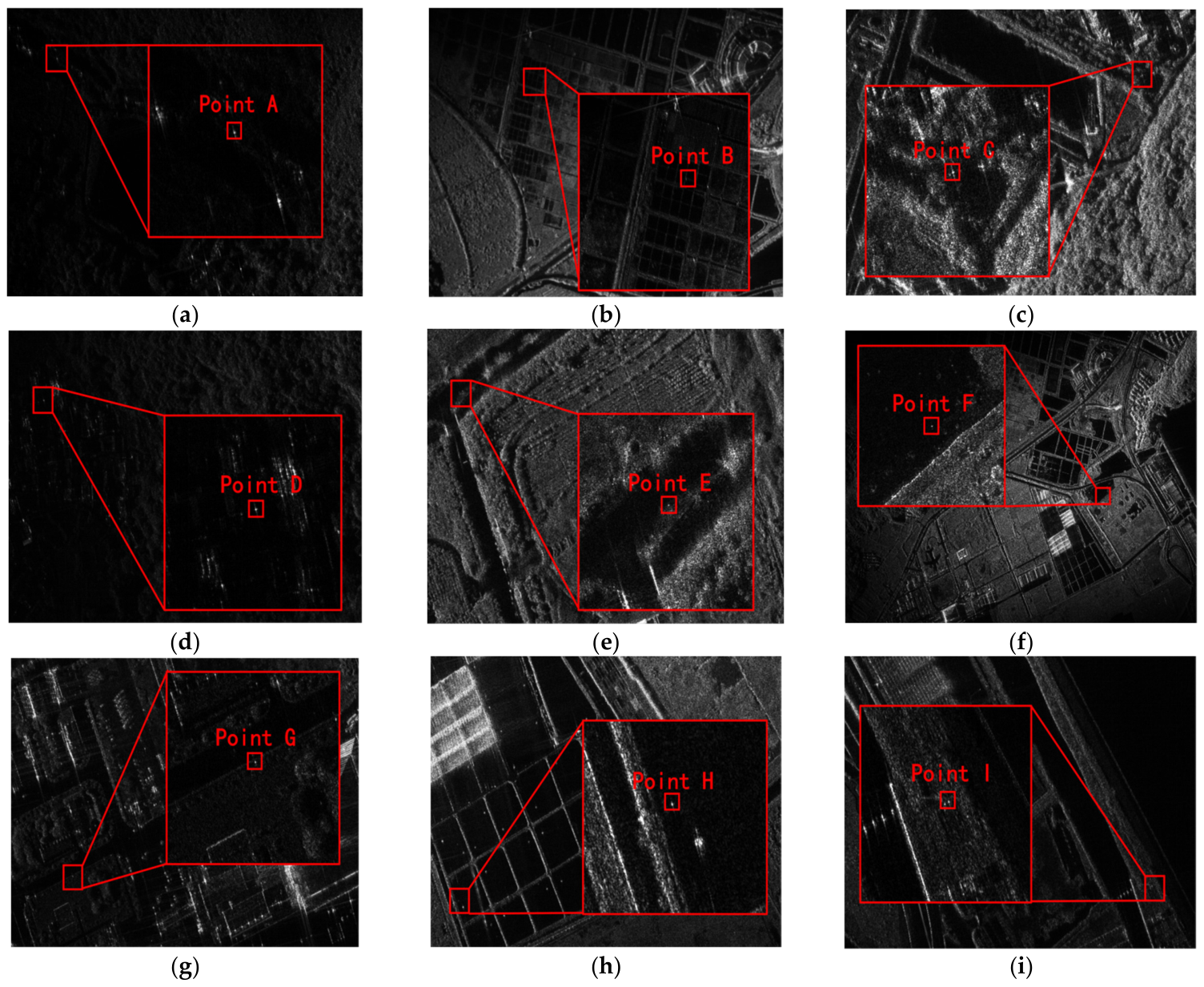
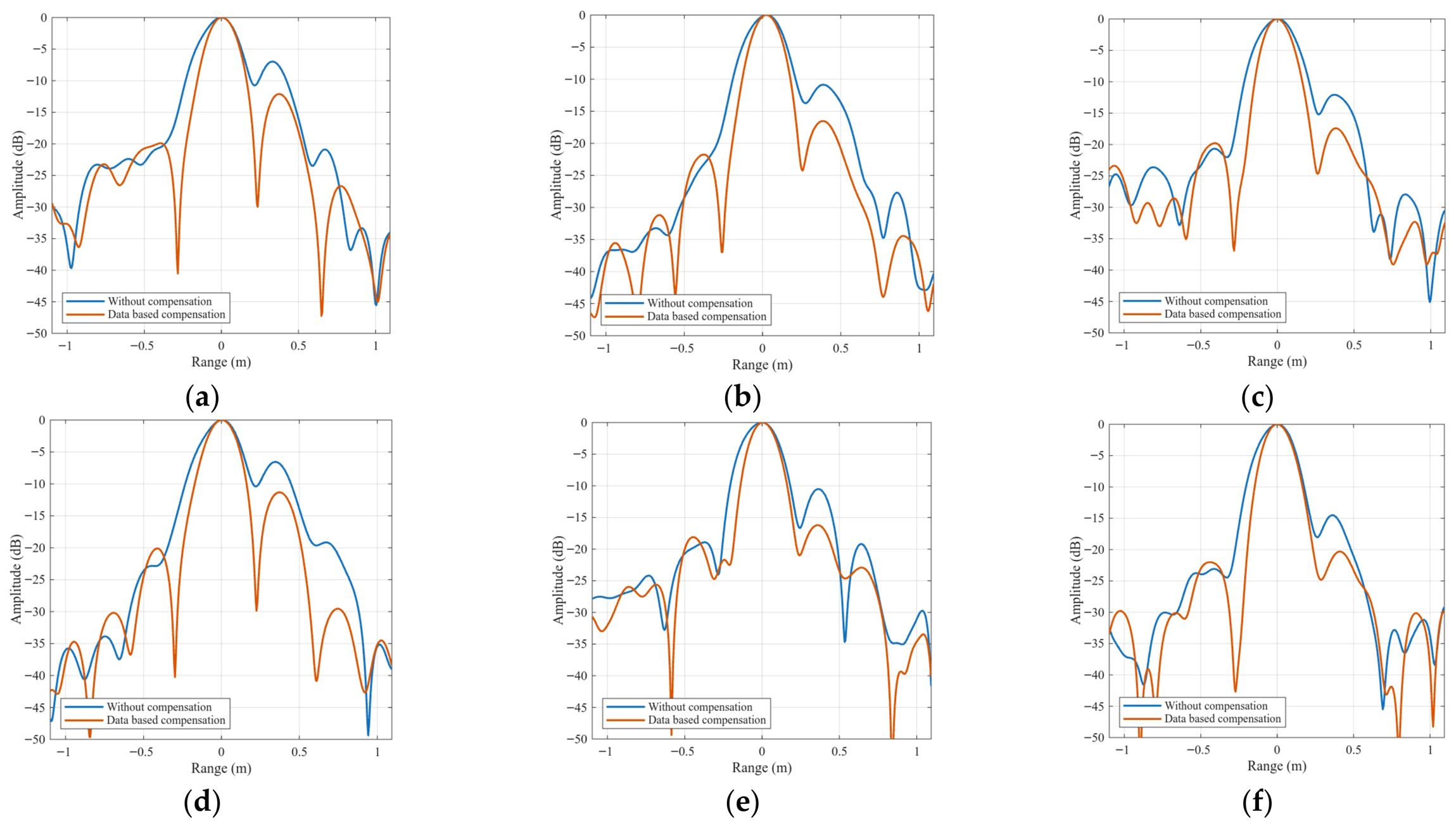
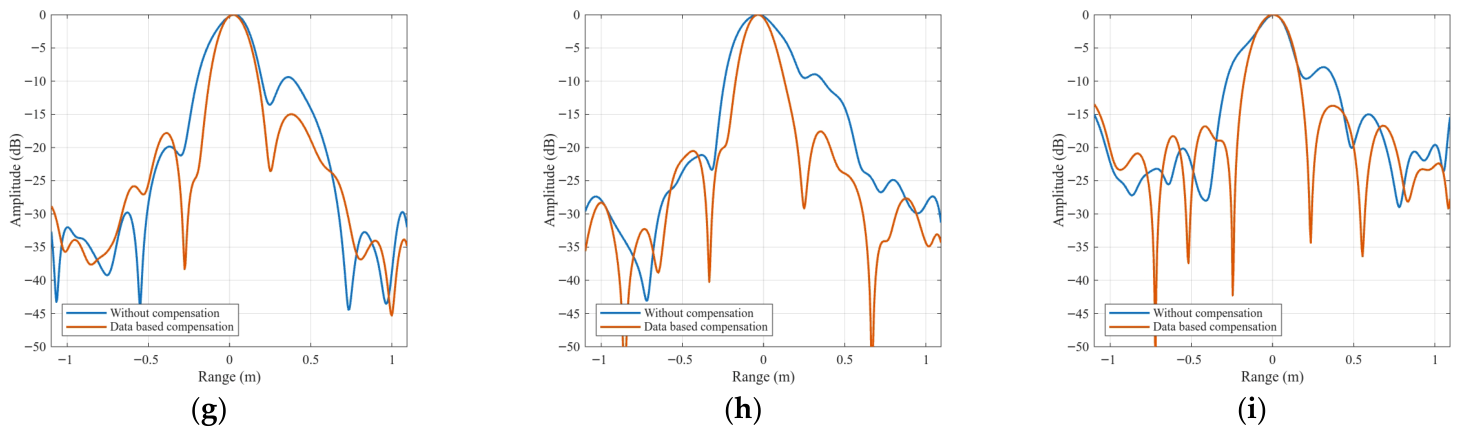
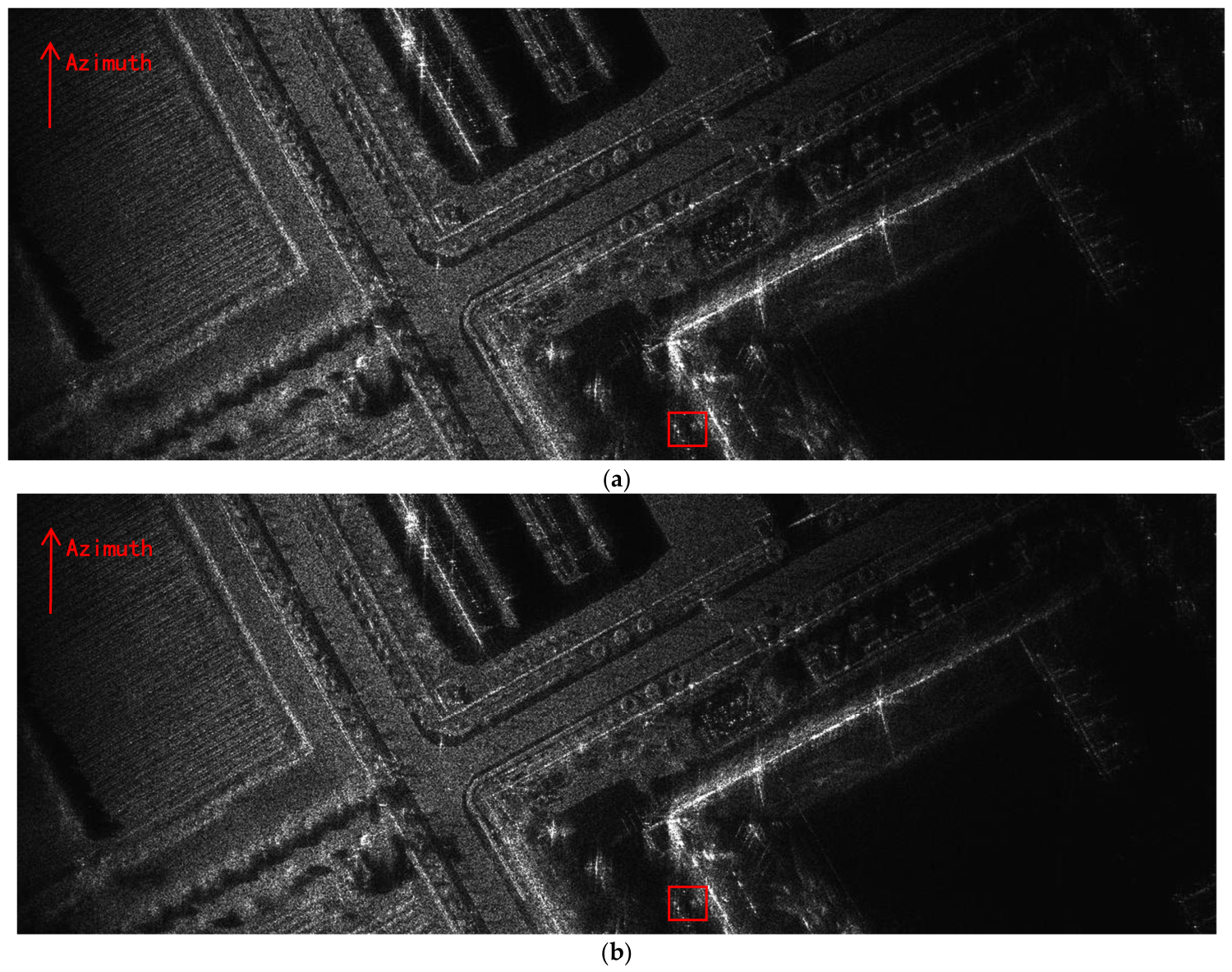
Section 3 presents the experimental results obtained from an airborne X-band high-resolution SAR and an Unmanned Aerial Vehicle (UAV) based Ka-band SAR, along with an analysis of the observed signal improvements.
Section 4 discusses the experimental results.
Section 5 concludes the paper with a summary of the key findings.
2. Image-Based Distortion Compensation Method
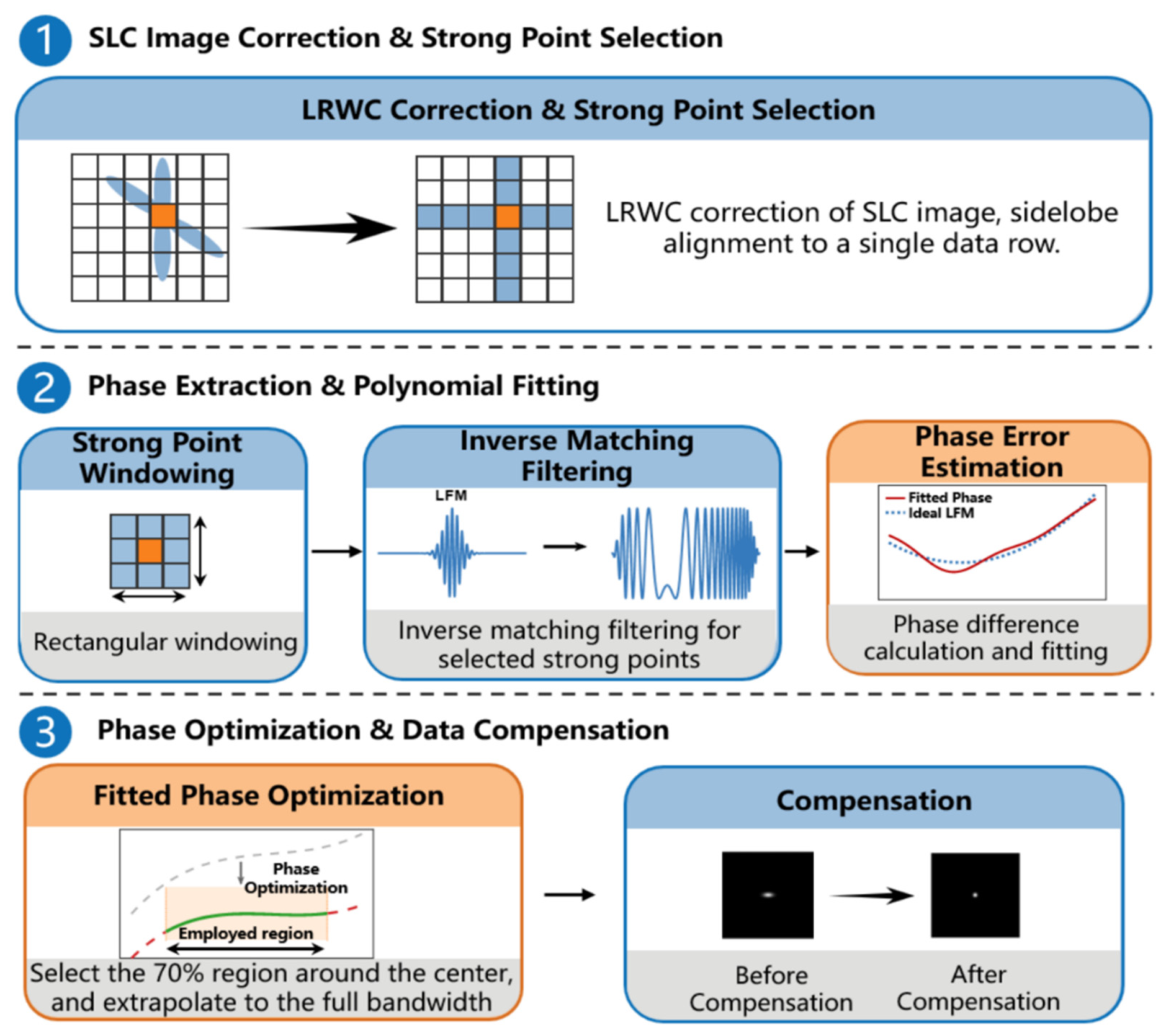
To suppress the phase errors introduced by non-ideal system characteristics, this paper proposes an image-based linear frequency-modulation signal distortion-compensation method, which is shown in
Figure 1. By extracting the phase history of strong-point targets in the image domain and constructing a phase-error model, accurate compensation of residual phase errors is achieved. The proposed method is described as follows.
Firstly, for squinted single-look complex (SLC) images, if the data are not imaged under zero-Doppler conditions, a linear range walk correction should first be applied to align the range sidelobes within the same row of the data grid [
33]. This makes the subsequent phase error extraction more convenient. Secondly, the strongest point in the image is selected based on the maximum energy criterion, and its coordinates are determined. To mitigate interference from neighboring points, a rectangular window of approximately eight pixels is suggested to be applied to the strongest point for windowing.
Assume the windowed strong point signal is
, where
is the range fast time. Subsequently, inverse LFM matched filtering is performed in the range direction to recover the original phase history.
where
denotes the range frequency,
denotes the chirp rate of the LFM signal.
and
represents for the forward and inverse Fourier Transform, respectively.
Extract the phase and accumulate it along the range direction to obtain the estimated phase curve
. Then subtract the phase of the ideal LFM signal from this phase to obtain the differential phase curve.
To ensure the generalization capability of the compensation, we fit the differential phase
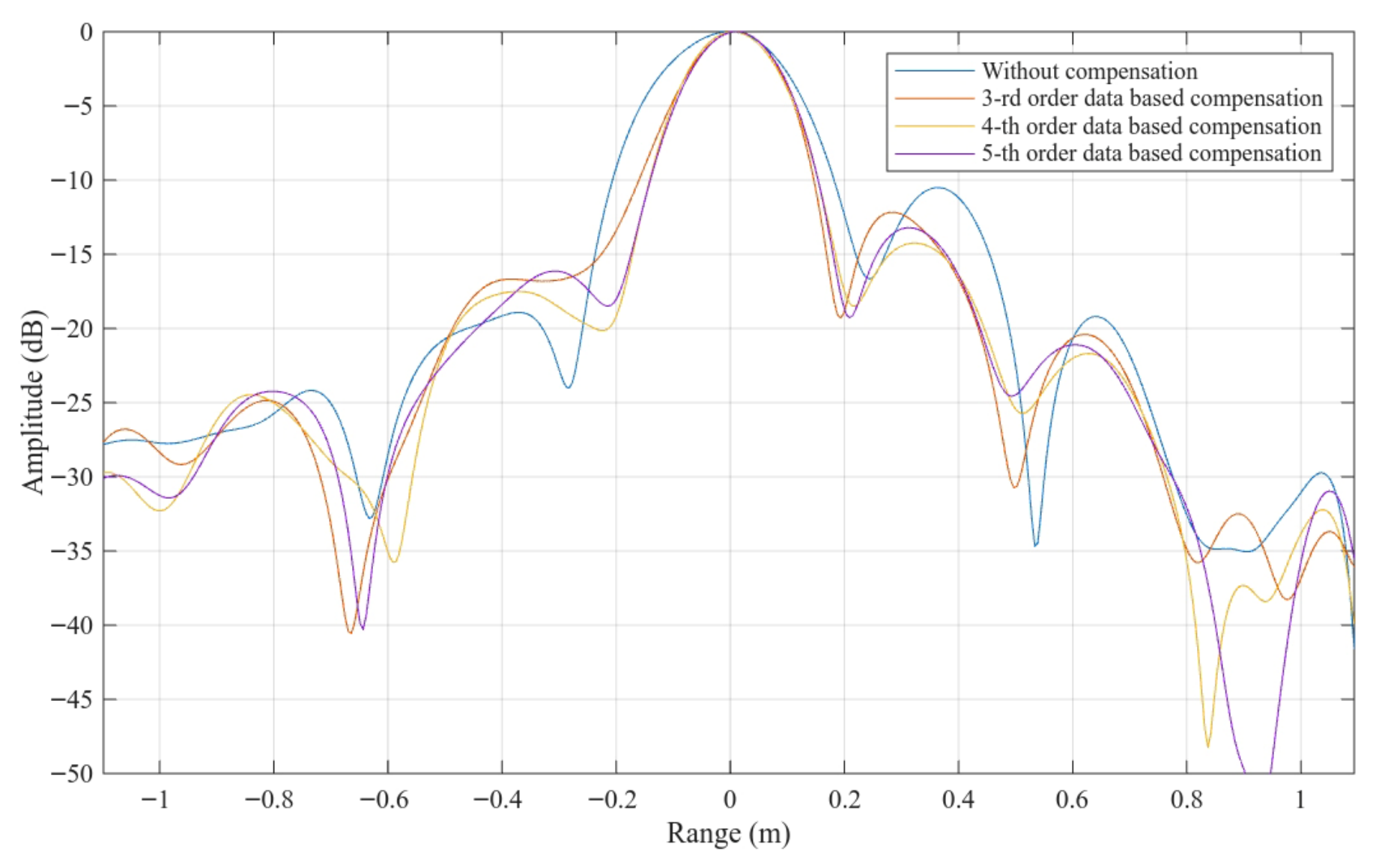
using a fourth-order polynomial for all SAR systems. The fitted phase polynomial can be expressed as follows.
To achieve the optimal fitting performance, the least squares method is adopted here to minimize the sum of squared errors [
34]. Accordingly, we formulate the following objective function.
where
denotes the coefficient array
,
represents for the phase array
,
denotes the number of range sampling; T is the fast-time matrix, which can be expressed as follows.
When the gradient is zero, the objective function
is minimized, and the resulting optimal solution
is expressed as follows.
After obtaining the five optimal coefficients, the constant term is removed to prevent any overall phase shift in the data. The fitted differential phase
is then constructed using the remaining polynomial coefficients, and a linear detrending operation is applied to the differential phase to ensure no time shift occurs after compensation [
35].
Since the edges of the signal spectrum typically exhibit certain oscillations, to reduce their impact on phase estimation, we select a time-domain region corresponding to 70% of the duration around the center of the strong point as the support domain. Based on the range chirp rate, the differential phase after linear detrending is extrapolated to obtain the corresponding differential phase in the frequency domain, which is then used to perform phase compensation in the frequency domain of the image data. Finally, range matched filtering is applied to the image data, yielding an SLC image with accurate compensation.
4. Discussion
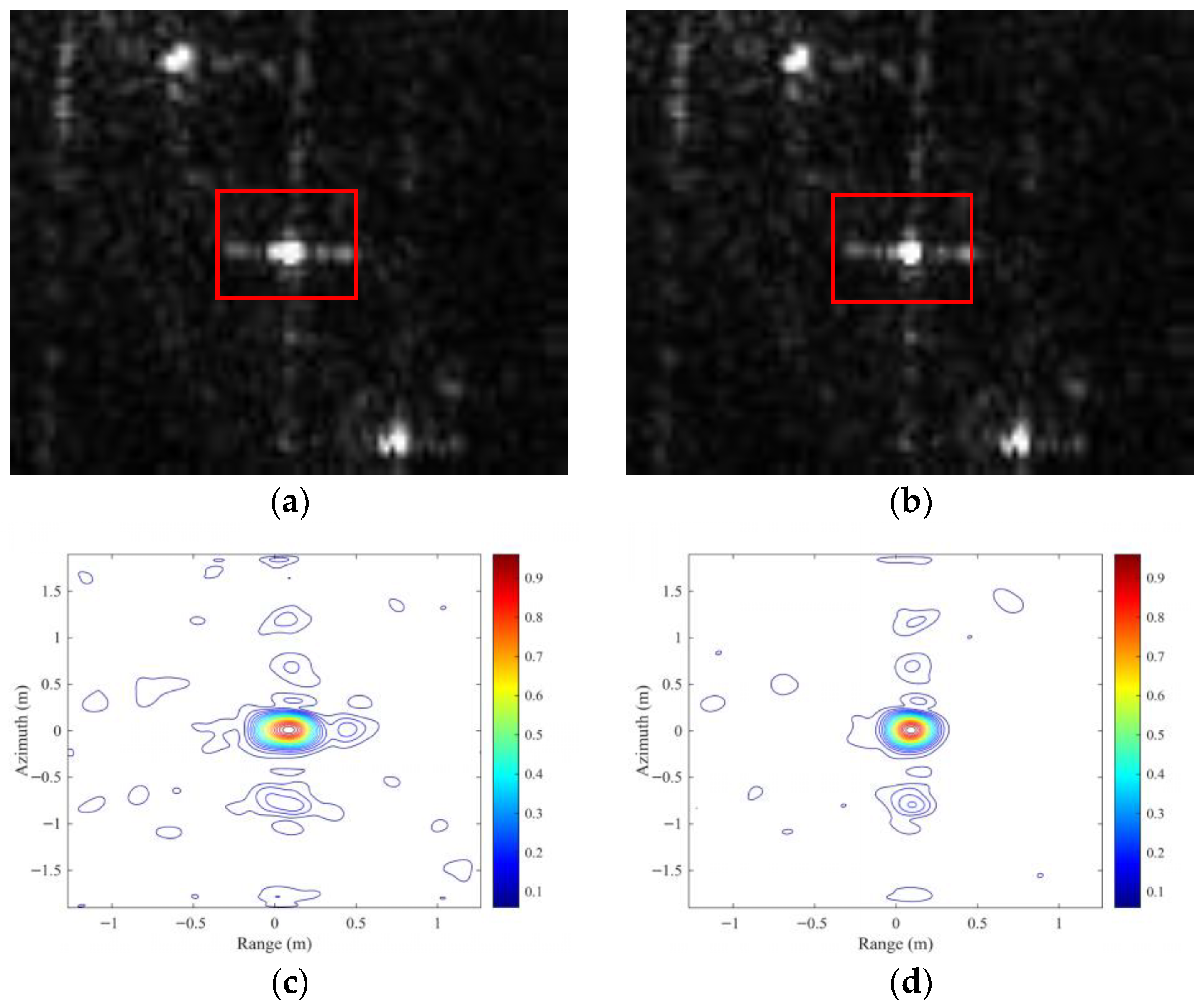
In this study, we proposed an image-based distortion-compensation method that directly estimates and compensates for phase errors from SLC SAR images without relying on calibration files. Experimental results from both manned airborne X-band high-resolution SAR and UAV-borne Ka-band SAR data demonstrate the effectiveness of the proposed approach in improving focusing performance, particularly in terms of sidelobe suppression and main-lobe sharpening.
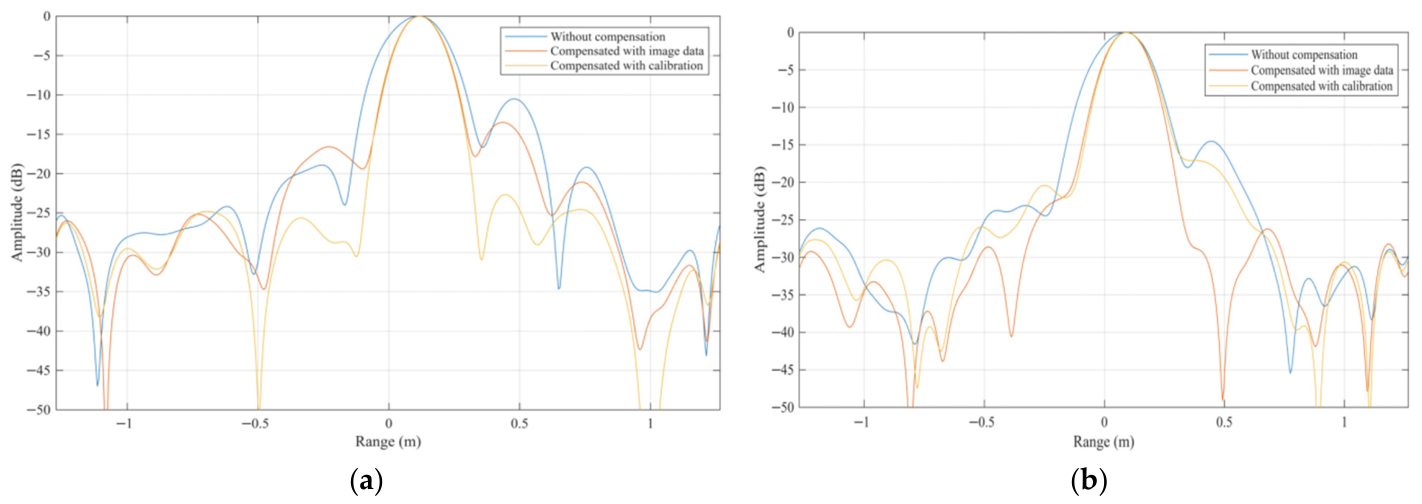
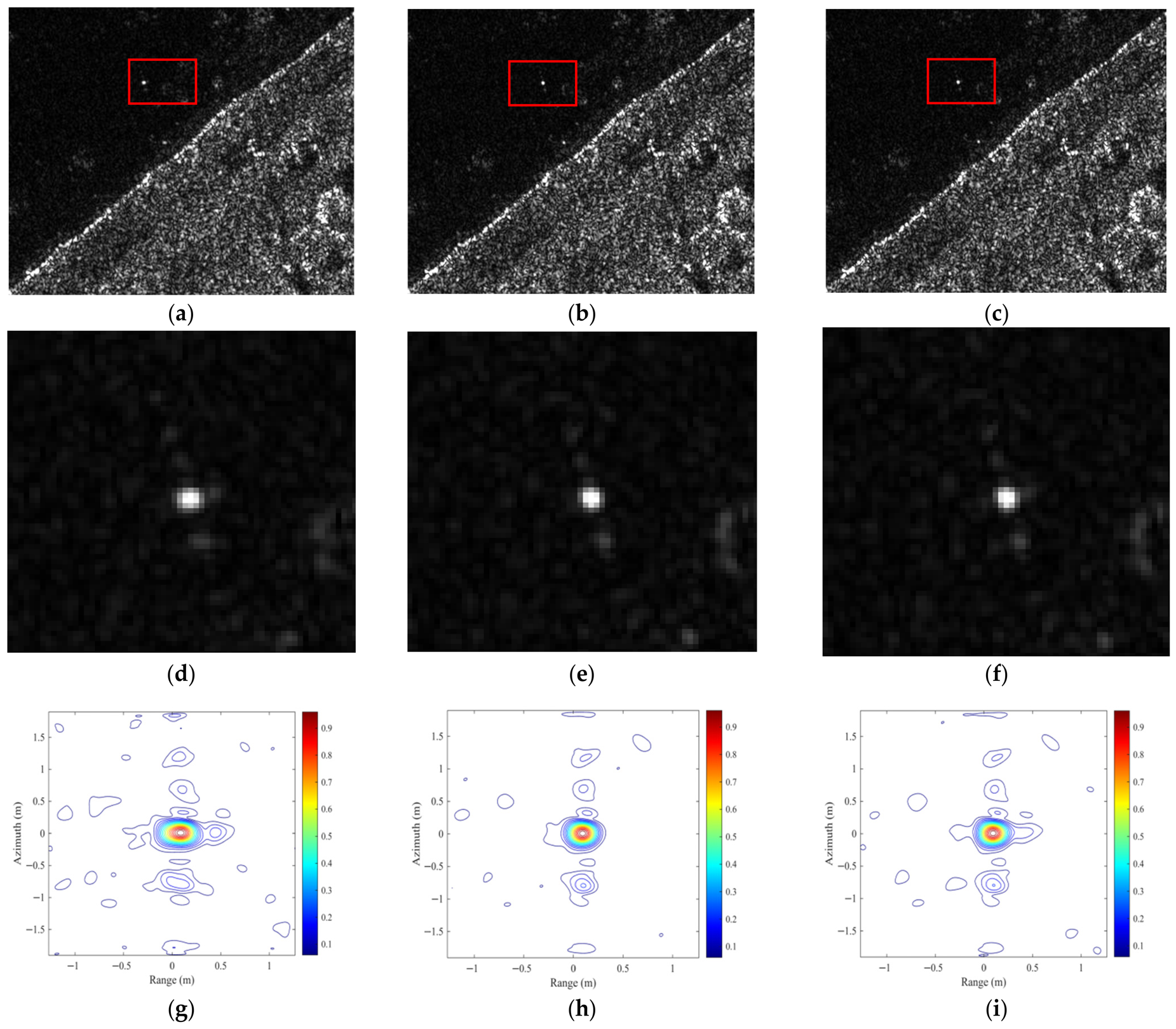
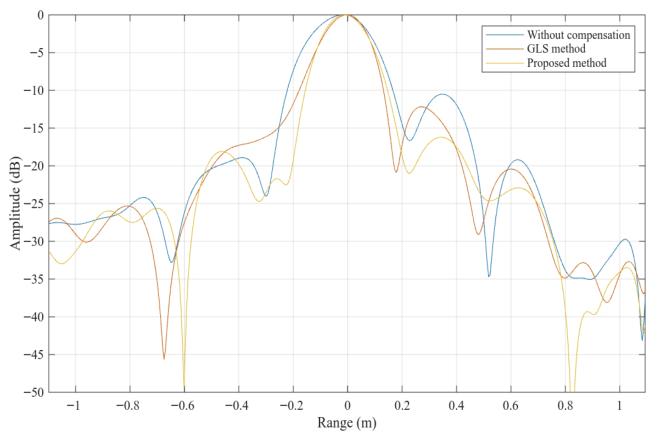
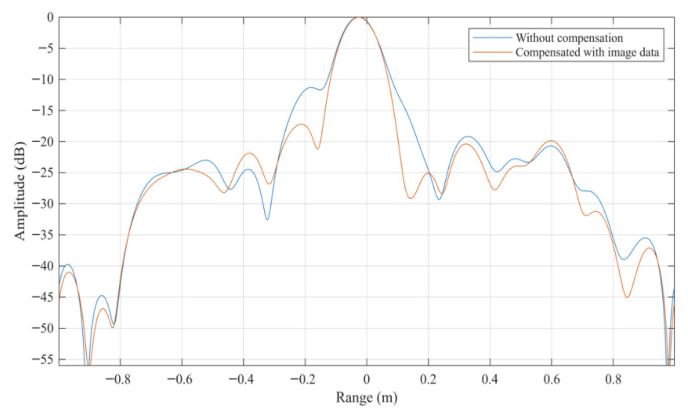
The results from the X-band manned airborne SAR experiment show that the proposed method achieves focusing performance comparable to that of the traditional calibration-file-based approach, especially in the vicinity of the main lobe. However, as illustrated in
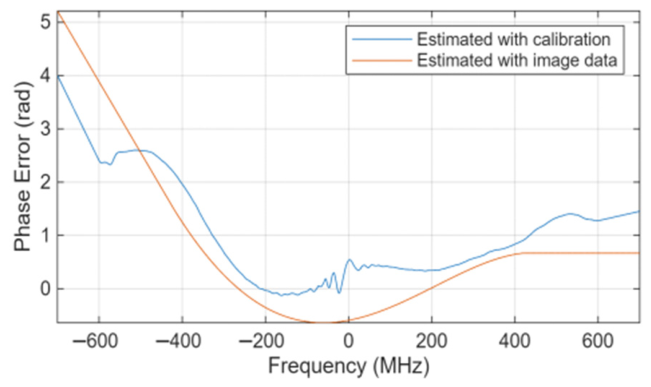
Table 2, the calibration-file-based method yields superior sidelobe suppression further away from the main lobe, which can be attributed to the higher SNR and richer phase detail contained in the calibration signal. Nevertheless, the consistency in the trend of the phase error curves between the two methods confirms the feasibility of extracting distortion information from image data, albeit with a trade-off in detail richness.
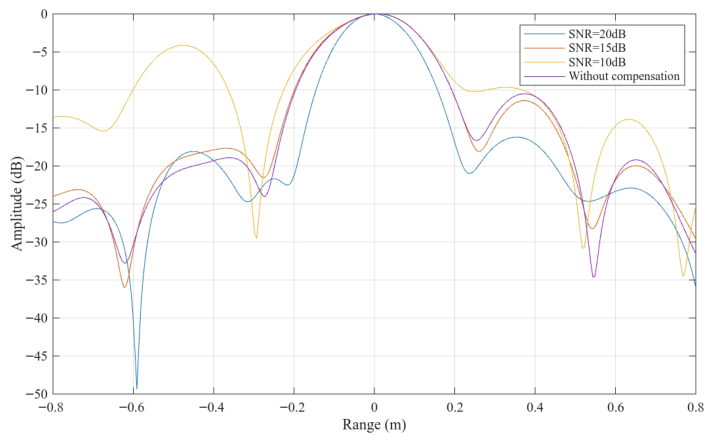
From the underlying principle and experimental results, it is evident that, owing to the effective data of the windowed strong point being confined to a limited number of pixels, the phase error curve provided by the image-based compensation method cannot match that obtained from the calibration file. Additionally, to ensure robustness in phase estimation, the proposed method employs a low-order polynomial for phase fitting. Therefore, in principle, its application effect cannot be entirely consistent with that of the calibration-file-based method. If the system has a higher SNR and the strong point reveals more sidelobe details, the polynomial order can be appropriately increased to capture finer details in the phase estimation, thereby achieving better compensation performance. For images with poor SNR, a larger number of strong points can be selected, and when estimating the phase error, the phase can be weighted according to the intensity of each point to enhance the robustness of phase estimation. Nevertheless, in terms of the main lobe and its surrounding sidelobes, the performance of the proposed method remains very close to that achieved with calibration-file-based compensation. Future work could explore higher-order models or adaptive filtering techniques to extend the compensation range, as well as investigate the integration of multiple scatterers to improve estimation robustness.
A key advantage of the proposed method lies in its independence from calibration hardware and its adaptability to varying system states. It is particularly valuable for SAR systems that lack internal calibration loops or operate under unstable environmental conditions, where pre-calibrated parameters may become outdated. Furthermore, the improvement in image quality benefits the entire image rather than being confined to local regions. By leveraging inherently present strong point scatterers in the scene, the method provides a practical and cost-effective solution for post-acquisition focusing enhancement.
In terms of algorithmic efficiency, since the phase estimation is confined to the echo where the strong point resides, the estimation itself is efficient. The main additional overhead lies in the range pulse compression and decompression, both of which are also efficient when implemented using fast Fourier transform (FFT)-based frequency-domain operations. Therefore, the method proposed in this paper does not exhibit excessively slow efficiency performance.
Overall, the proposed method offers a promising alternative for SAR focusing enhancement, with strong generalizability across different SAR platforms and operating conditions. Its image-driven nature makes it especially suitable for operational scenarios where real-time calibration signals are unavailable or impractical.