Combining Ground Penetrating Radar and a Terrestrial Laser Scanner to Constrain EM Velocity: A Novel Approach for Masonry Wall Characterization in Cultural Heritage Applications

 ,
,  , , , and
Highlights
- Ground-Penetrating Radar (GPR) is a key method for cultural heritage investigation. Nevertheless, the absence of additional geophysical information can lead to severe uncertainties. The implementation of a methodology encompassing a geomatic approach has proven to be extremely suitable for GPR data processing.
- In cultural heritage, if both façades of a surveyed wall are accessible, a Terrestrial Laser Scanner (TLS) becomes extremely helpful to accurately estimate the wall’s thickness to be included in a customized GPR workflow.
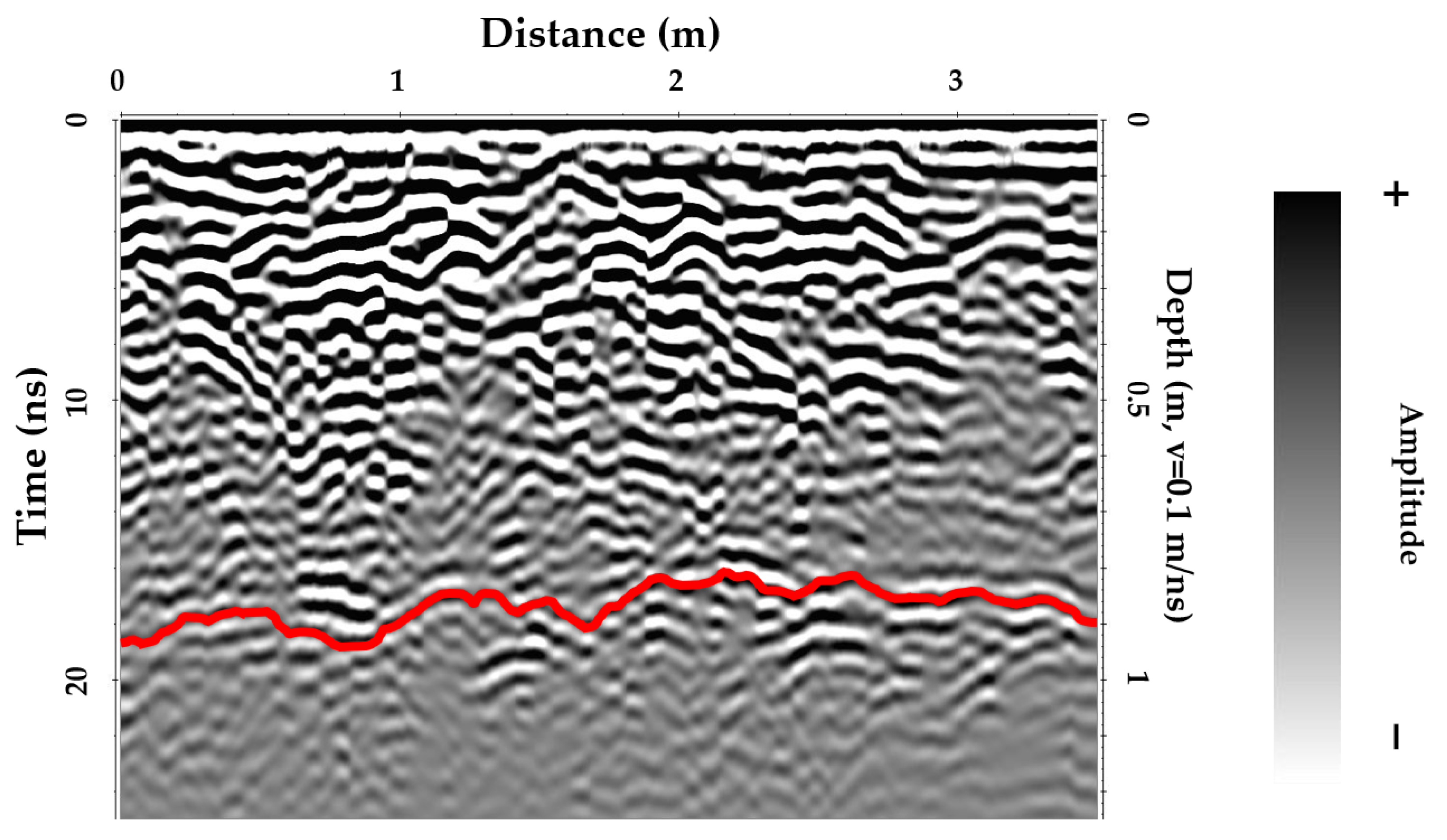
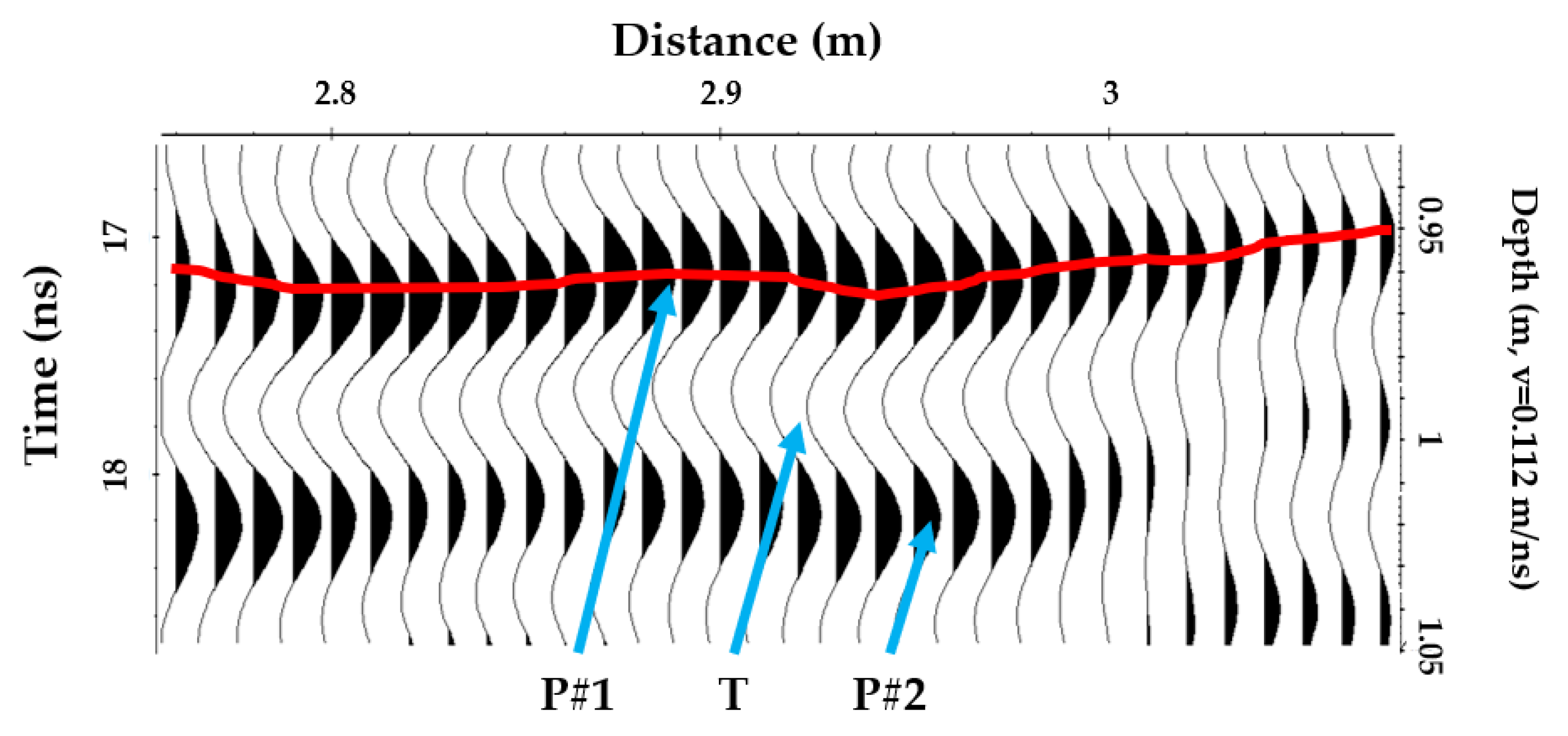
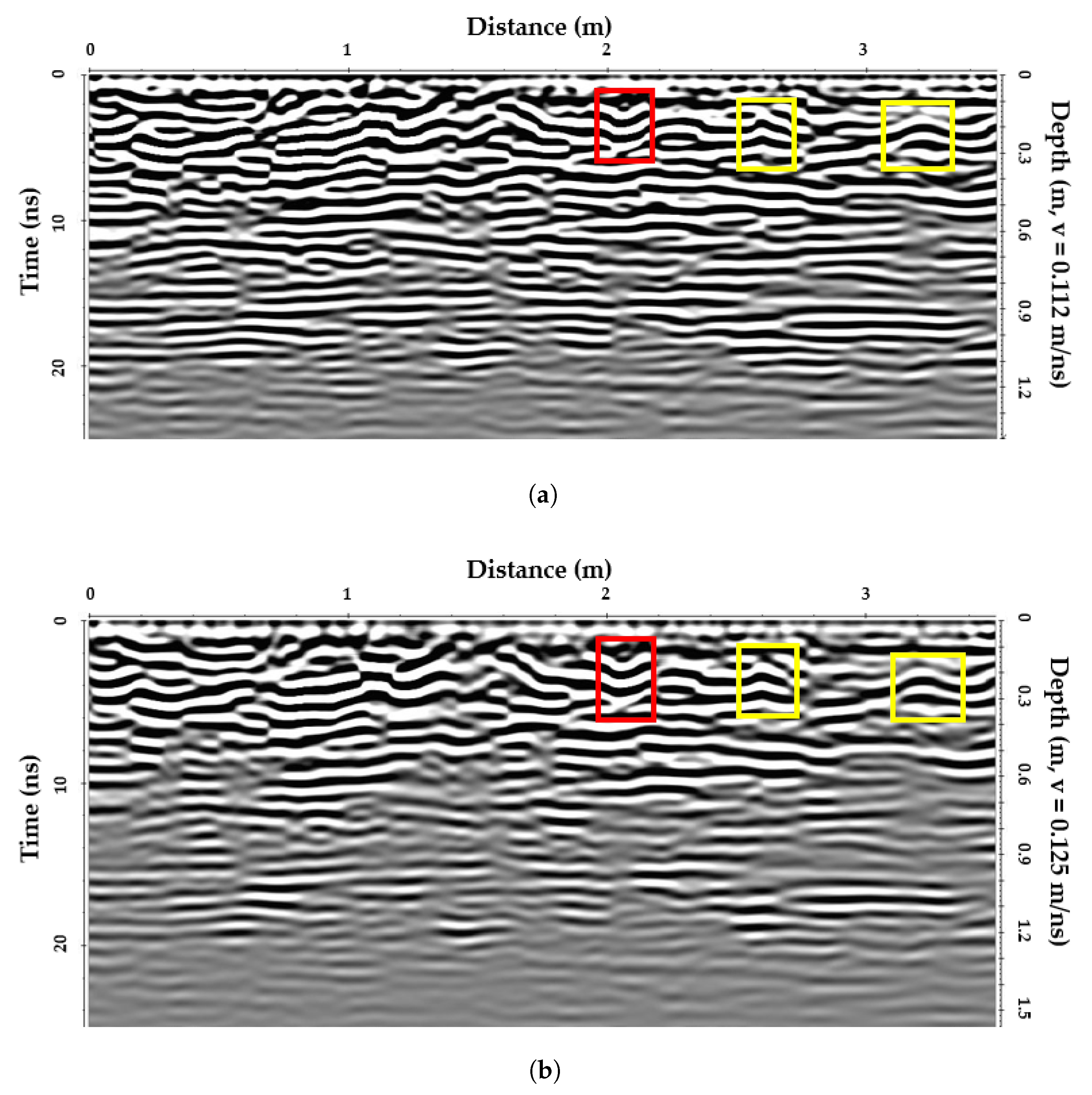
- Thanks to the TLS, constraining the wall’s geometry allows a first-order estimation of 1D electromagnetic (EM) velocity to be used for a time-to-depth conversion of GPR data, once an interpretation of rear façade reflection is provided.
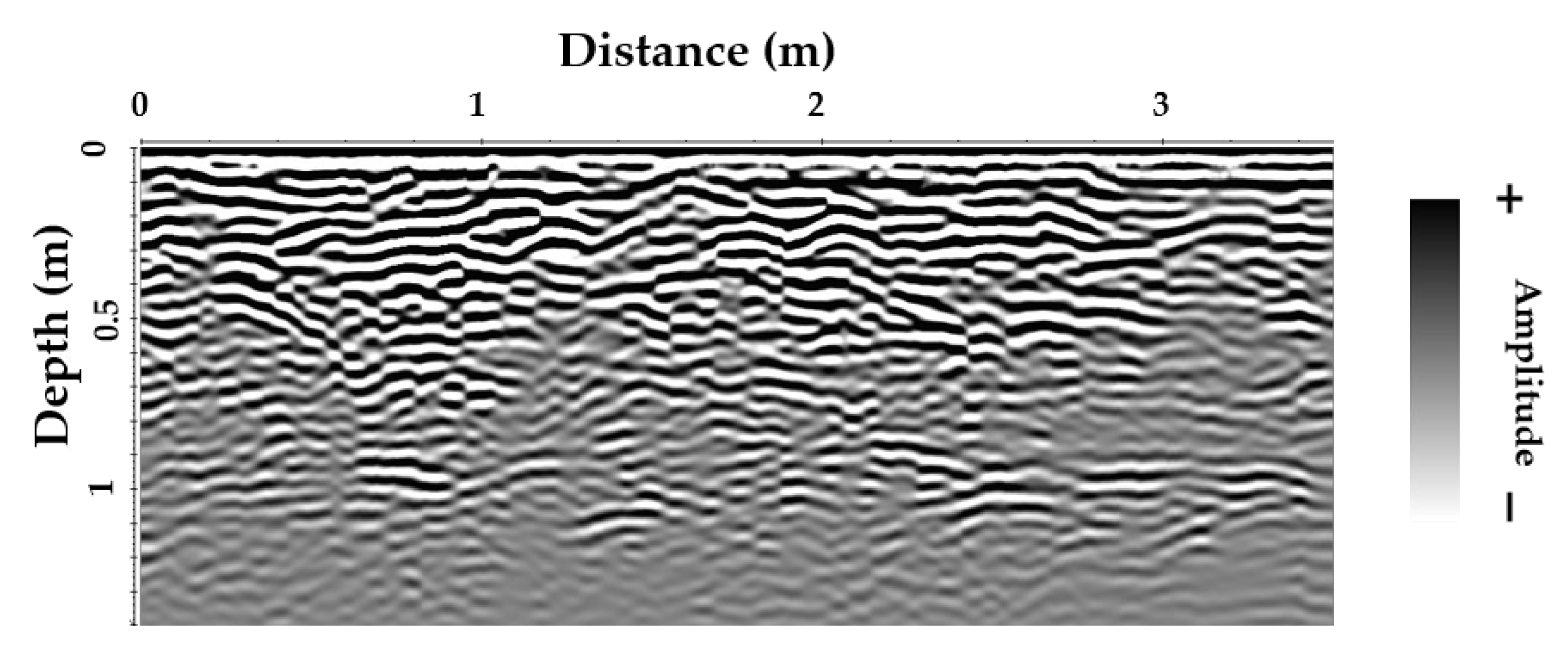
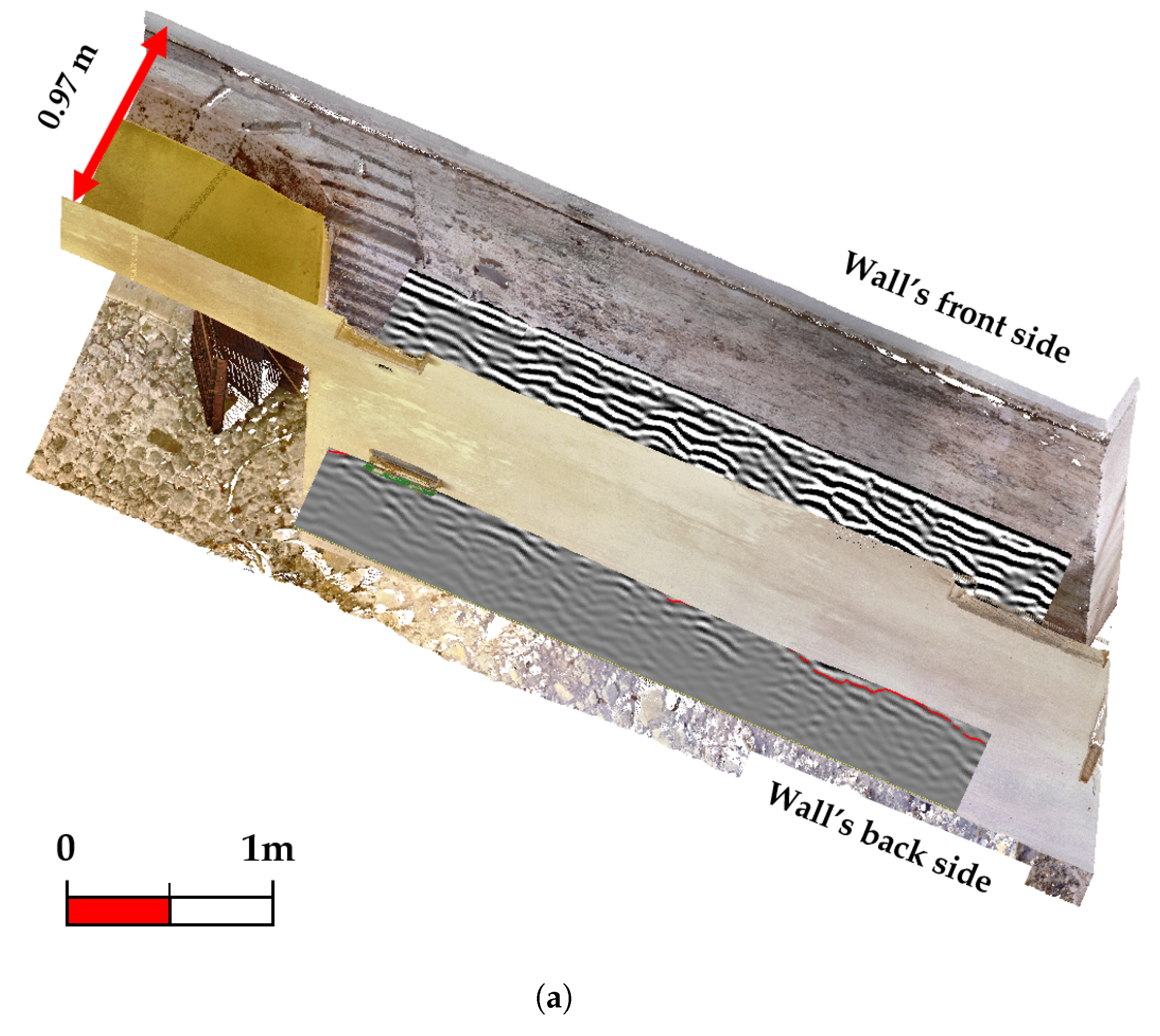
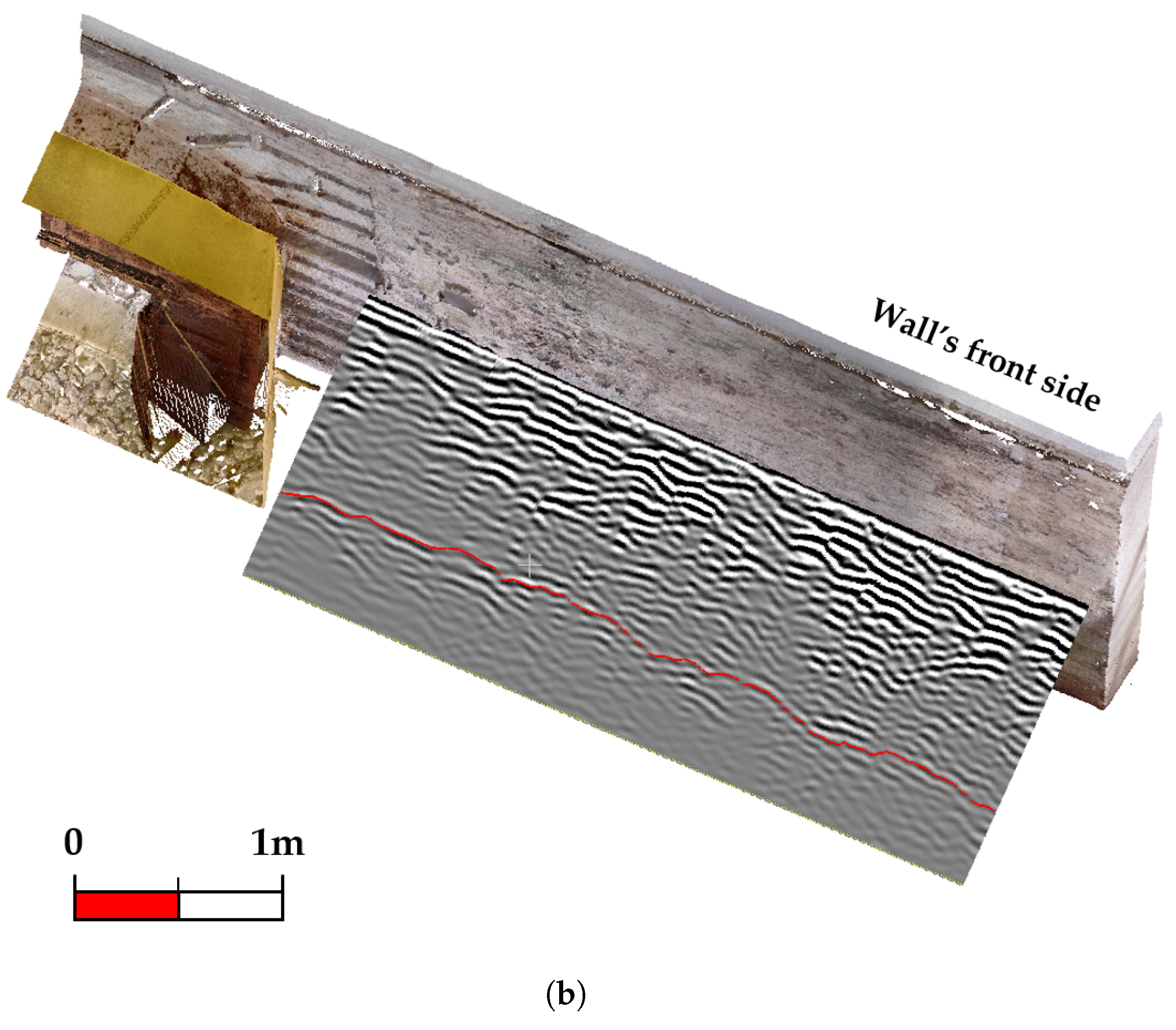
- Thanks to a well-constrained time-to-depth conversion, GPR’s radargram and the TLS’s point cloud were plotted together in the same workspace, facilitating straightforward visualization, interpretation, and comprehension for GPR non-experts as well.
Abstract
1. Introduction
- A high-resolution 3D visualization of the TLS’s surfaces, supporting a better understanding of the historical building’s geometry, irregularities, and structural characteristics;
- A more accurate reconstruction of the walls’ thickness, supporting the analysis and processing of GPR profiles by accurately constraining the EM velocity model and its local variations;
- An integrated 3D rendering of the building, setting up a workflow combining GPR profiles and TLS point clouds in the same platform;
- An accurate velocity model, demonstrating a strong correlation between velocity variations and the walls’ internal geometry and conservation state (e.g., voids and moisture content).
2. Materials and Methods
2.1. Laser Scanner Survey
2.2. GPR Survey
2.3. GPR Data Processing
2.4. GPR-TLS Data Integration
3. Results
3.1. EM Velocity Modeling—Synthetic Scenario

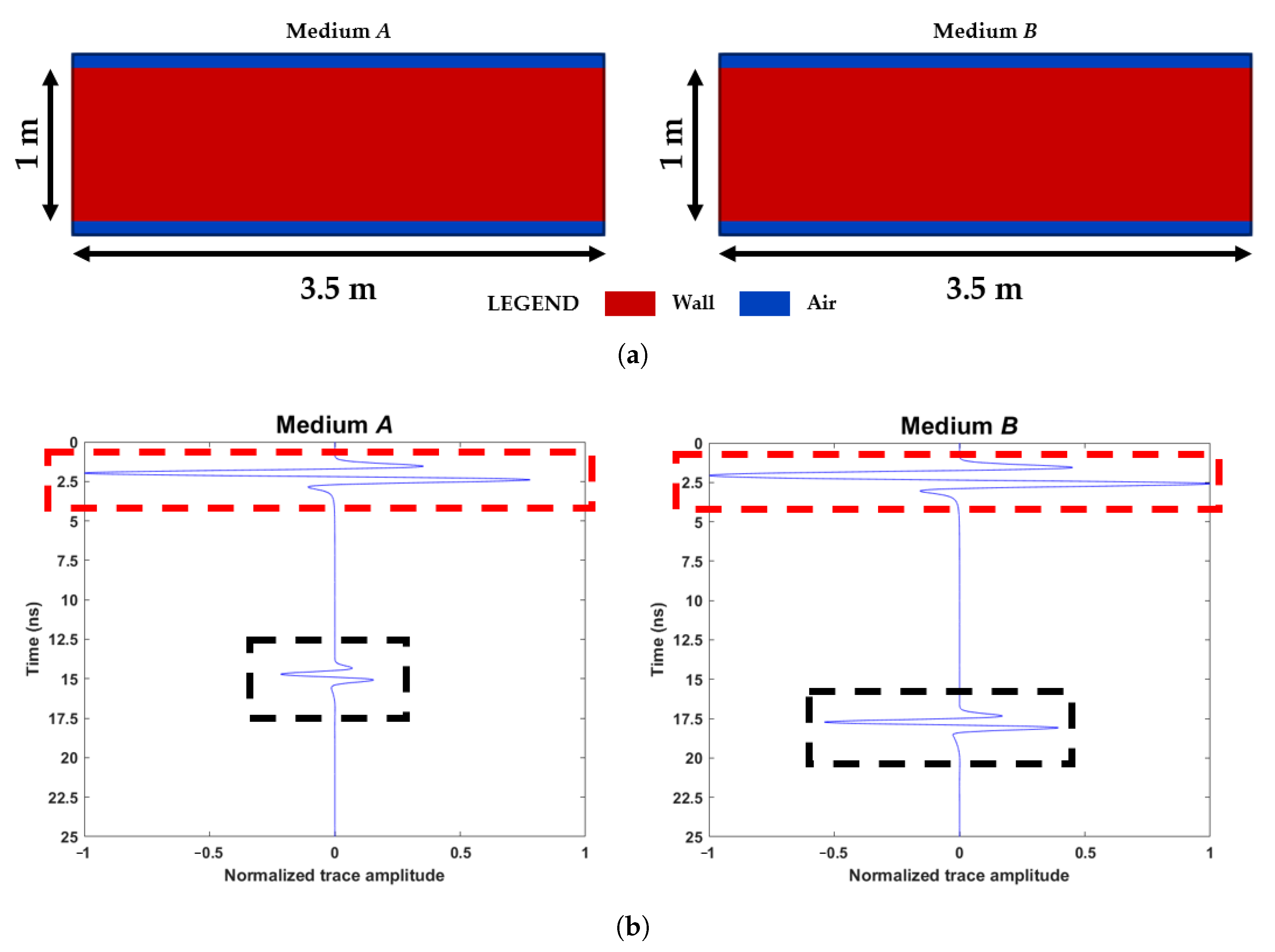
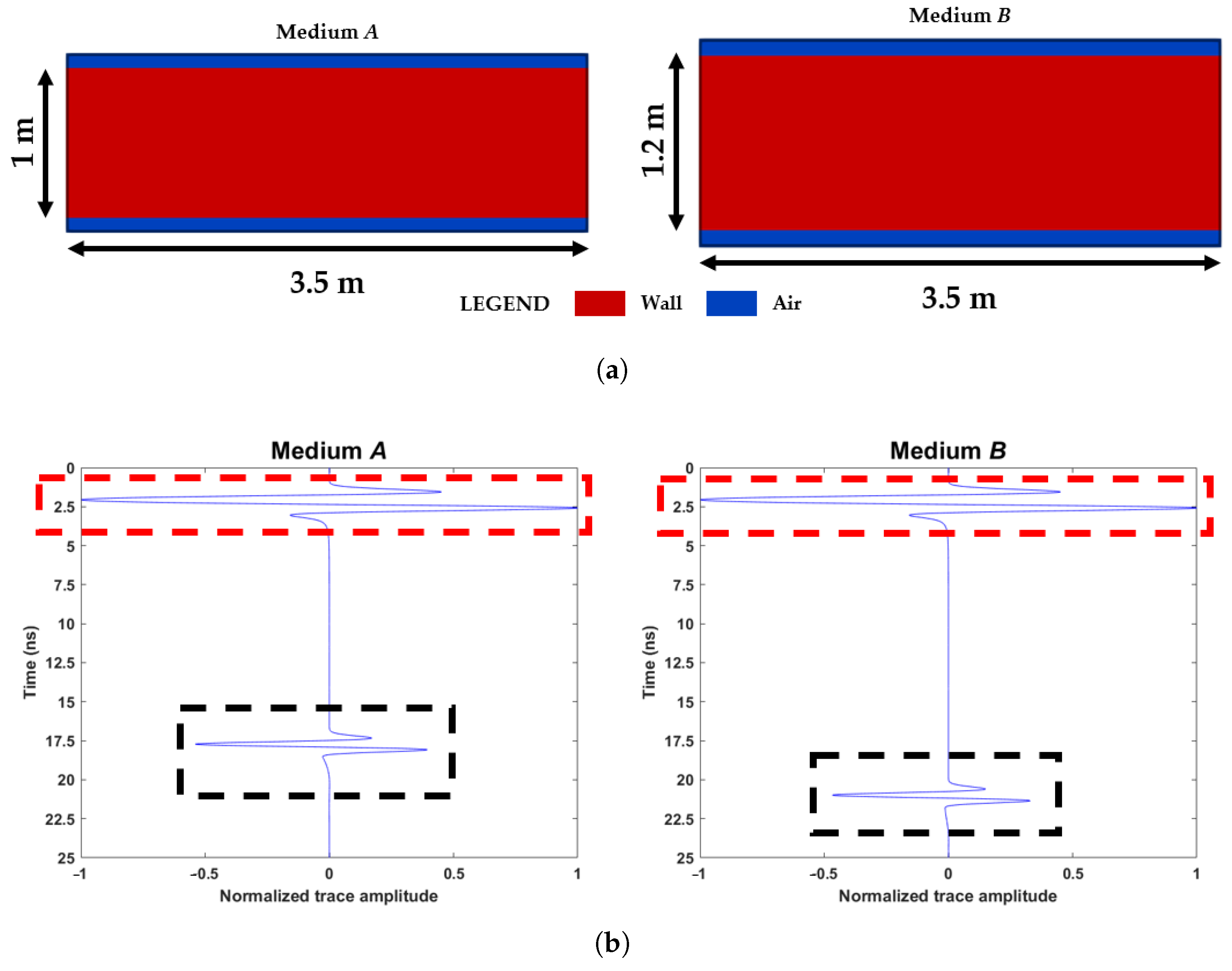
| Survey Parameters | Numerical Paramaters | |
|---|---|---|
| Medium A | Medium B | |
| Thickness (m) | 1 | 1 |
| Length (m) | 3.5 | 3.5 |
| Relative permittivity | 4 | 6 |
| Electrical conductivity (S/m) | 0 | 0 |
| Simulation Parameters | Numerical Parameters |
|---|---|
| Domain (m) | 3.5 × 1.2 × 0.002 |
| Spatial discretization (m) | 0.002 |
| Time window (ns) | 50 |
| Waveform | Ricker |
| Source | Hertzian Dipole |
| Nominal frequency (GHz) | 1 |
| Tx-Rx offset (m) | 0.13 |

| Survey Parameters | Numerical Paramaters | |
|---|---|---|
| Medium A | Medium B | |
| Thickness (m) | 1 | 1.2 |
| Length (m) | 3.5 | 3.5 |
| Relative permittivity | 6 | 6 |
| Electrical conductivity (S/m) | 0 | 0 |
| Survey Parameters | Numerical Paramaters | |
|---|---|---|
| Medium A | Medium B | |
| Domain (m) | 3.5 × 1.2 × 0.002 | 3.5 × 1.4 × 0.002 |
| Spatial discretization (m) | 0.002 | |
| Time window (ns) | 50 | |
| Waveform | Ricker | |
| Source | Hertzian Dipole | |
| Nominal frequency (GHz) | 1 | |
| Tx-Rx offset (m) | 0.13 | |

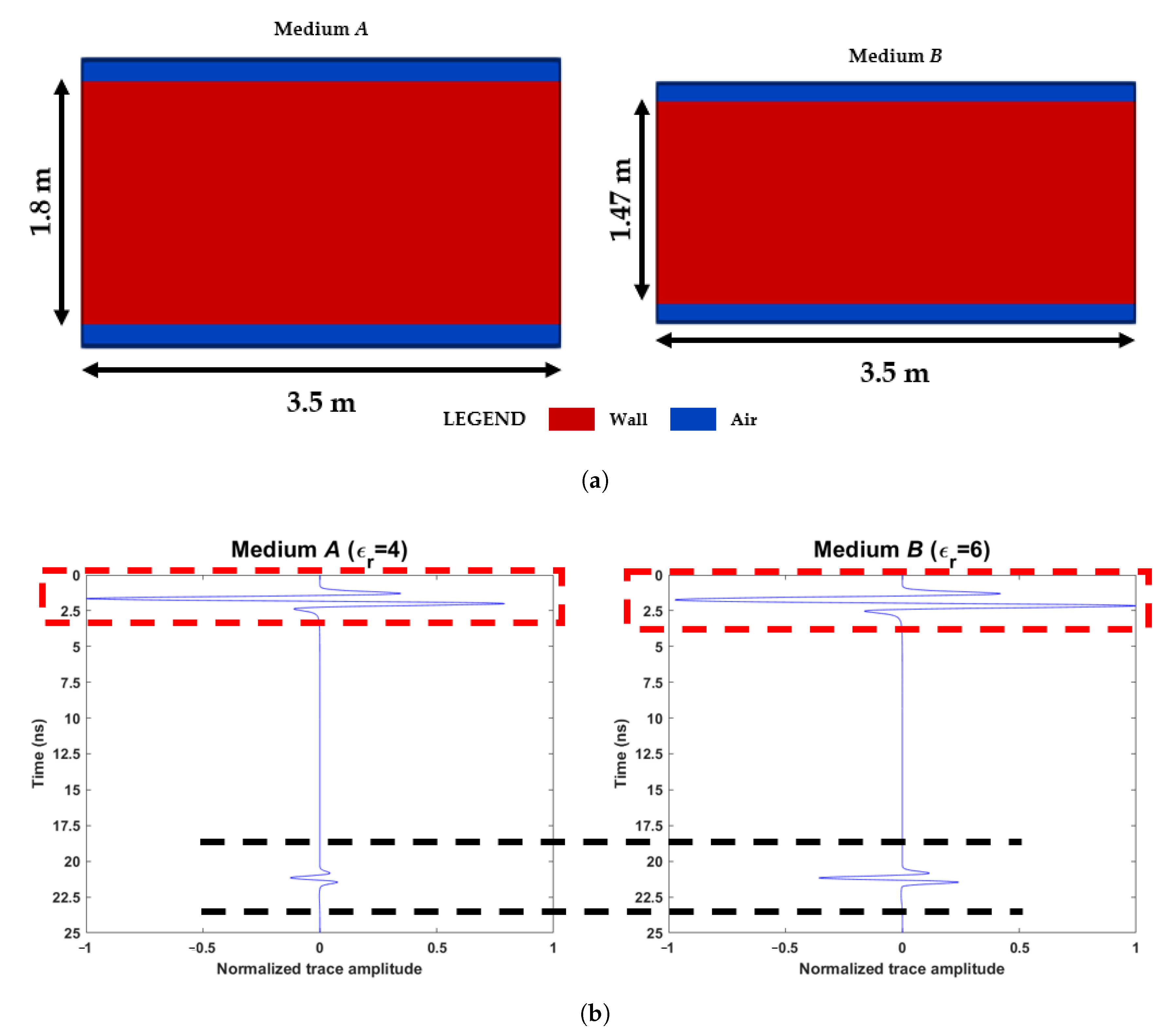
| Survey Parameters | Numerical Paramaters | |
|---|---|---|
| Medium A | Medium B | |
| Thickness (m) | 1.8 | 1.47 |
| Length (m) | 3.5 | 3.5 |
| Relative permittivity | 4 | 6 |
| Electrical conductivity (S/m) | 0 | 0 |
| Survey Parameters | Numerical Paramaters | |
|---|---|---|
| Medium A | Medium B | |
| Domain (m) | 3.5 × 2 × 0.002 | 3.5 × 1.67 × 0.002 |
| Spatial discretization (m) | 0.002 | |
| Time window (ns) | 50 | |
| Waveform | Ricker | |
| Source | Hertzian Dipole | |
| Nominal frequency (GHz) | 1 | |
| Tx-Rx offset (m) | 0.13 | |

3.2. Constraining Thickness
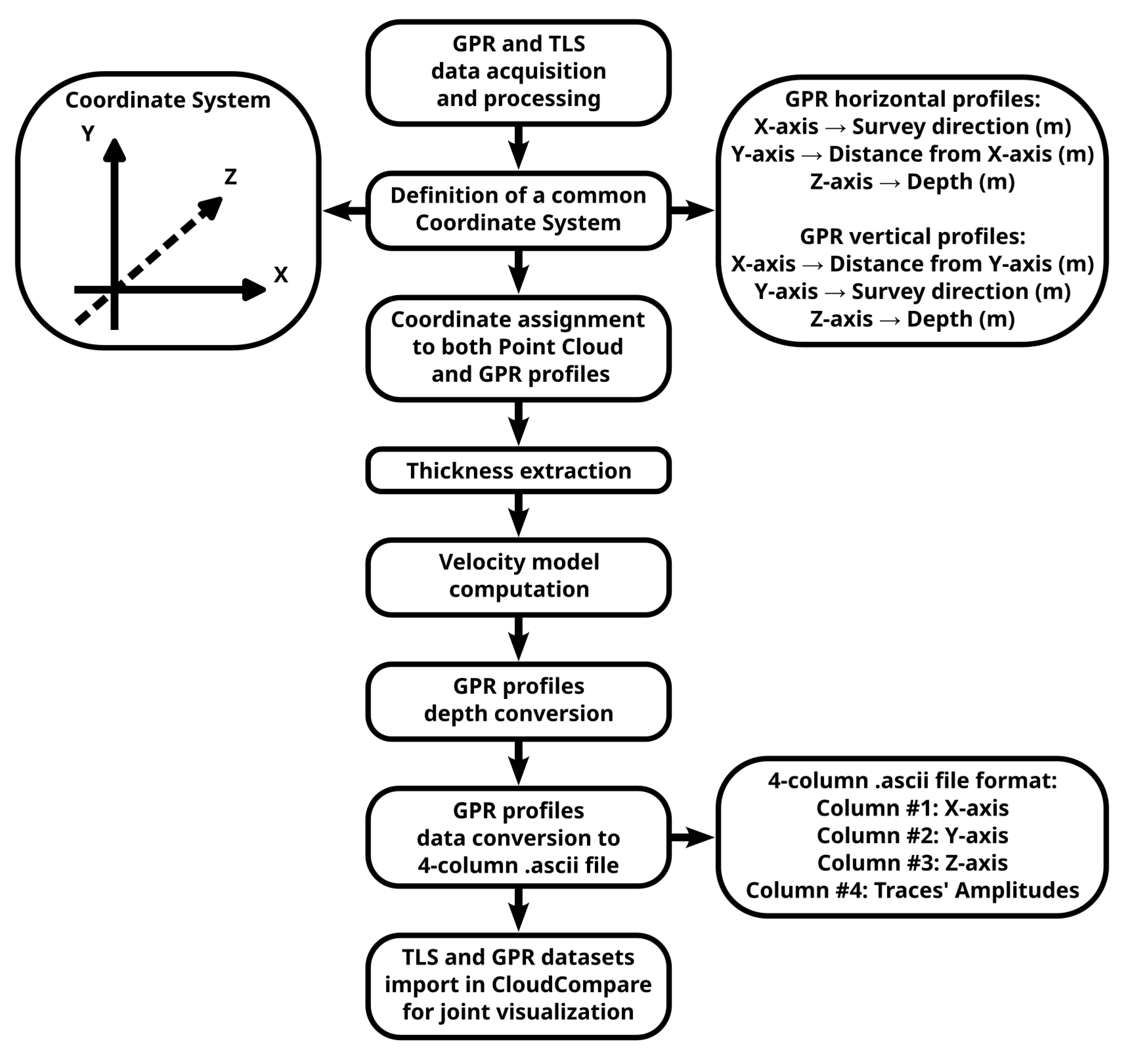
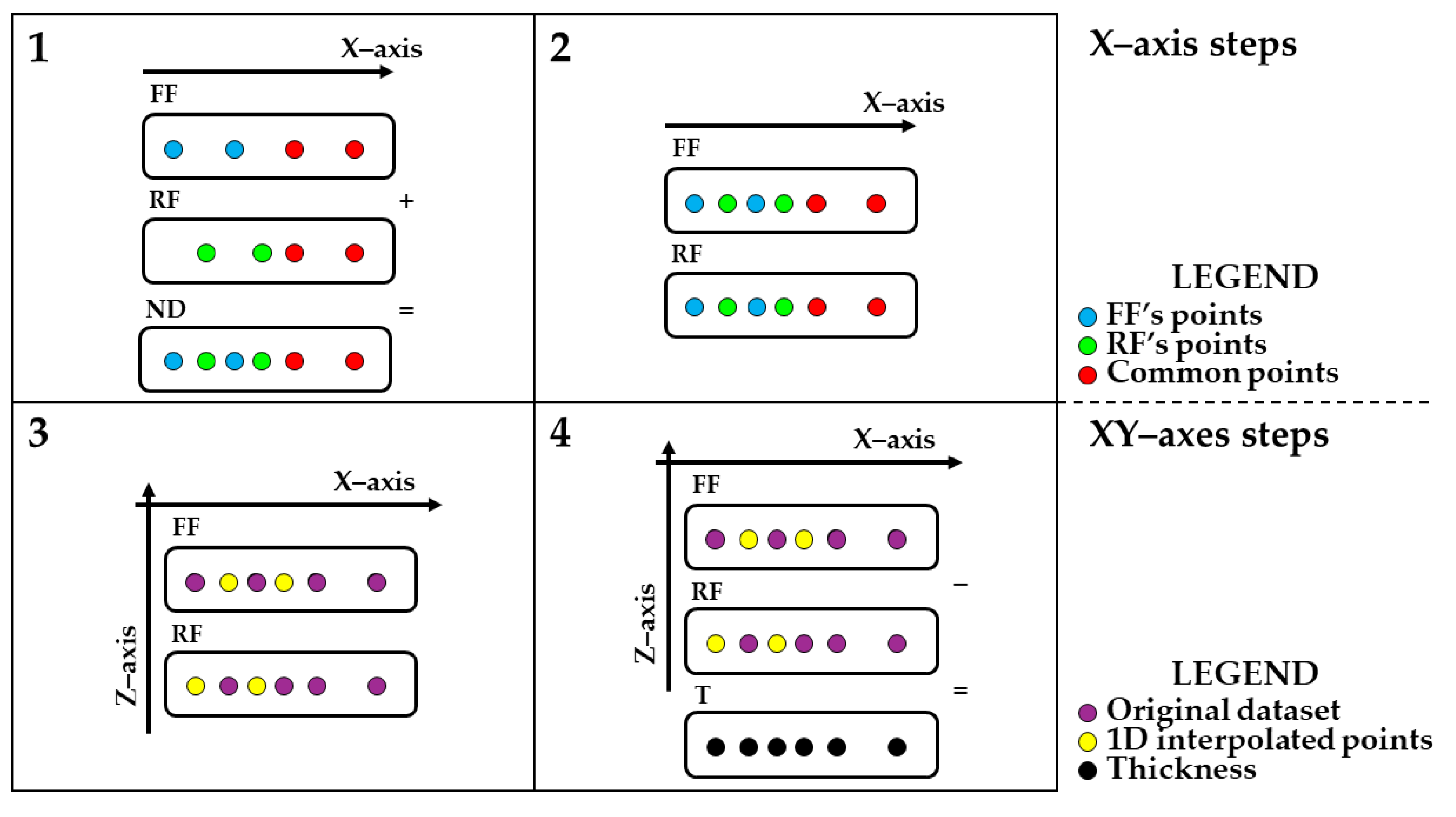
- A univocal X coordinate dataset is defined by merging together the X coordinates of the two datasets (FF and RF) and removing duplicated points so that each X coordinate is present only once in the final dataset;
- FF’s and RF’s X coordinates are replaced with the new dataset (ND) defined in the previous step;
- Since the ND is bigger than the previous datasets in terms of X coordinates, several points of this dataset have no Z coordinates. To account for this, missing Z coordinates were computed via 1D linear interpolation;
- Thickness estimation (T) was performed by subtracting, for each X-coordinate, the corresponding Z-coordinate for the entire set of points.
3.3. GPR-TLS Joint Visualization

3.4. Two-Dimensional EM Velocity Modeling—Experimental Scenario
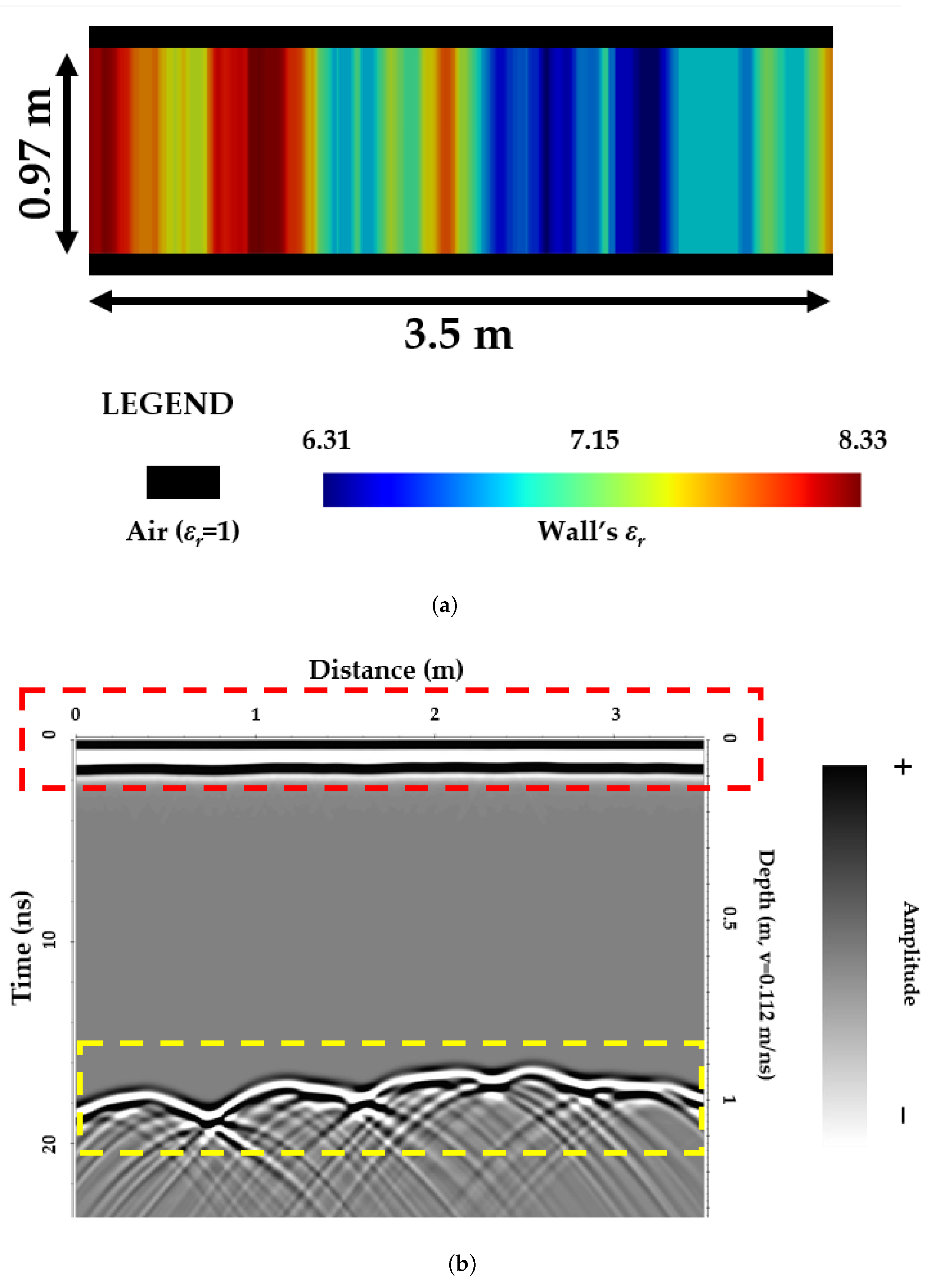
- Conversion from velocity to relative permittivity, with the latter being the input required by the software;
| Simulation Parameters | Numerical Parameters |
|---|---|
| Domain (m) | 3.5 × 1.17 × 0.002 |
| Spatial discretization (m) | 0.002 |
| Time window (ns) | 25 |
| Waveform | Ricker |
| Source | Hertzian Dipole |
| Nominal frequency (GHz) | 1 |
| Tx-Rx offset (m) | 0.13 |
| Number of traces | 351 |
| Survey Parameters | Numerical Paramaters |
|---|---|
| Thickness (m) | 0.97 |
| Length (m) | 3.5 |
| Relative permittivity | 1 for Air, [6.31, 8.33] for Wall |
| Electrical conductivity (S/m) | 0 |


4. Discussions
- Significantly refine conventional measures obtained with the meter tape, thereby eliminating—or, at least, strongly reducing—any potential inaccuracy introduced by field operations;
- Use this information as a geometric constraint to define EM velocity models, after providing an interpretation of the backside wall reflection.
5. Conclusions
Author Contributions
Funding
Data Availability Statement
Acknowledgments
Conflicts of Interest
References
- Jol, H. Ground Penetrating Radar Theory and Applications; Elsevier: Amsterdam, The Netherlands, 2008. [Google Scholar]
- Ercoli, M.; Cirillo, D.; Pauselli, C.; Jol, H.; Brozzetti, F. Ground-Penetrating Radar Signature of Quaternary Faulting: A Study from the Mt. Pollino Region, Southern Apennines, Italy. Solid Earth 2021, 12, 2573–2596. [Google Scholar] [CrossRef]
- Ribolini, A.; Forte, E.; Khajuria, V.; Colucci, R.; Paro, L.; Guglielmin, M. Scratching beneath the Surface: Using Ground-Penetrating Radar to Disentangle Pronival Ramparts, Embryonic Rock Glaciers and Moraines (Gardetta Plateau, Southwestern Alps). Geomorphology 2025, 474, 109647. [Google Scholar] [CrossRef]
- Liu, B.; Sarhosis, V.; Booth, A.; Gilbert, M. The 3D Response of a Large-Scale Masonry Arch Bridge—Part II: Performance at Failure. Eng. Struct. 2024, 313, 118308. [Google Scholar] [CrossRef]
- Ercoli, M.; Brigante, R.; Radicioni, F.; Pauselli, C.; Mazzocca, M.; Centi, G.; Stoppini, A. Inside the Polygonal Walls of Amelia (Central Italy): A Multidisciplinary Data Integration, Encompassing Geodetic Monitoring and Geophysical Prospections. J. Appl. Geophys. 2016, 127, 31–44. [Google Scholar] [CrossRef]
- Martorana, R.; Capizzi, P. Joint Investigation with Ground Penetrating Radar and Infrared Thermography as a Diagnostic Support for the Restoration of Two Wall Mosaics in the Church of St. Mary of the Admiral in Palermo, Italy. Heritage 2022, 5, 2298–2314. [Google Scholar] [CrossRef]
- Solla, M.; Mate-Gonzalez, M.A.; Blazquez, C.S.; Lagüela-López, S.; Nieto, I.M. Analysis of structural integrity through the combination of non-destructive testing techniques in heritage inspections: The study case of San Segundo’s Hermitage (Ávila, Spain). J. Build. Eng. 2024, 89, 109295. [Google Scholar] [CrossRef]
- Leucci, G.; Persico, R.; Soldovieri, F. Detection of Fractures from GPR Data: The Case History of the Cathedral of Otranto. J. Geophys. Eng. 2007, 4, 452–461. [Google Scholar] [CrossRef]
- Rucka, M.; Wojtczak, E.; Zielińska, M. Integrated Application of GPR and Ultrasonic Testing in the Diagnostics of a Historical Floor. Materials 2020, 13, 2547. [Google Scholar] [CrossRef]
- Hussein, R.; Etete, B.; Mahdi, H.; Al-Shukri, H. Detection and Delineation of Cracks and Voids in Concrete Structures Using the Ground Penetrating Radar Technique. J. Appl. Geophys. 2024, 226, 105379. [Google Scholar] [CrossRef]
- Johnston, B.; Ruffell, A.; McKinley, J.; Warke, P. Detecting Voids within a Historical Building Façade: A Comparative Study of Three High Frequency GPR Antenna. J. Cult. Herit. 2018, 32, 117–123. [Google Scholar] [CrossRef]
- Persico, R.; Morelli, G. Combined Migrations and Time-Depth Conversions in GPR Prospecting: Application to Reinforced Concrete. Remote Sens. 2020, 12, 2778. [Google Scholar] [CrossRef]
- Booth, A.; Clark, R.; Murray, T. Semblance Response to a Ground-penetrating Radar Wavelet and Resulting Errors in Velocity Analysis. Surf. Geophys. 2010, 8, 235–246. [Google Scholar] [CrossRef]
- Forte, E.; Dossi, M.; Pipan, M.; Colucci, R. Velocity Analysis from Common Offset GPR Data Inversion: Theory and Application to Synthetic and Real Data. Geophys. J. Int. 2014, 197, 1471–1483. [Google Scholar] [CrossRef]
- Forte, E.; Pipan, M. Review of Multi-Offset GPR Applications: Data Acquisition, Processing and Analysis. Signal Process. 2017, 132, 210–220. [Google Scholar] [CrossRef]
- Herráez, J.; Navarro, P.; Denia, J.; Martín, M.; Rodríguez, J. Modeling the Thickness of Vaults in the Church of Santa Maria de Magdalena (Valencia, Spain) with Laser Scanning Techniques. J. Cult. Herit. 2014, 15, 679–686. [Google Scholar] [CrossRef]
- Conejo-Martín, M.; Herrero-Tejedor, T.; Lapazaran, J.; Perez-Martin, E.; Otero, J.; Prieto, J.; Velasco, J. Characterization of Cavities Using the GPR, LIDAR and GNSS Techniques. Pure Appl. Geophys. 2015, 172, 3123–3137. [Google Scholar] [CrossRef]
- Teixidó, T.; Peña, J.; Fernández, G.; Burillo, F.; Mostaza, T.; Zancajo, J. Ultradense Topographic Correction by 3D-Laser Scanning in Pseudo-3D Ground-Penetrating Radar Data: Application to the Constructive Pattern of the Monumental Platform at the Segeda I Site (Spain). Archaeol. Prospect. 2014, 21, 113–123. [Google Scholar] [CrossRef]
- Zhang, D.; Zhong, R.; Li, J.; Zeng, F. Topographic Correction of GPR Profiles Based on Laser Data. IOP Conf. Ser. Earth Environ. Sci. 2014, 17, 012251. [Google Scholar] [CrossRef]
- Bubeck, A.; Wilkinson, M.; Roberts, G.; Cowie, P.; McCaffrey, K.; Phillips, R.; Sammonds, P. The Tectonic Geomorphology of Bedrock Scarps on Active Normal Faults in the Italian Apennines Mapped Using Combined Ground Penetrating Radar and Terrestrial Laser Scanning. Geomorphology 2015, 237, 38–51. [Google Scholar] [CrossRef]
- Colucci, E.; Xing, X.; Kokla, M.; Mostafavi, M.; Noardo, F.; Spanò, A. Ontology-Based Semantic Conceptualisation of Historical Built Heritage to Generate Parametric Structured Models from Point Clouds. Appl. Sci. 2021, 11, 2813. [Google Scholar] [CrossRef]
- Galli, P.; Messina, P.; Peronace, E.; Galderisi, A.; Ilardo, I.; Polpetta, F. Paleoseismic Evidence of Five Magnitude 7 Earthquakes on the Norcia Fault System in the Past 8,000 Years (Central Italy). Front. Earth Sci. 2023, 11, 1188602. [Google Scholar] [CrossRef]
- Ercoli, M.; Cavalagli, N.; Rinaldo Barchi, M.; Pauselli, C.; Porreca, M.; Santanicchia, M.; Lupi, R. GPR Prospecting on Masonry Walls in a High Seismic Hazard Region: The Resilient Castellina Museum of Norcia. In Proceedings of the EGU General Assembly 2024, Vienna, Austria, 14–19 April 2024; p. 19050. [Google Scholar]
- Team, Q.D. QGIS Geographic Information System, 2009. Version: 3.28 (2022), Open Source Geospatial Foundation. Available online: https://qgis.org/ (accessed on 9 November 2025).
- TLS Faro Focus 3D. 2023. Available online: https://www.faro.com/zh-CN/Products/Hardware/Focus-Laser-Scanners (accessed on 9 November 2025).
- Faro Scene Software. 2023. Available online: https://www.faro.com/ja-JP/Products/Software/SCENE-Software (accessed on 9 November 2025).
- Leica Geosystem. 2023. Available online: http://www.leica-geosystems.com (accessed on 9 November 2025).
- CloudCompare 2.13.2. 2016. Available online: https://www.cloudcompare.org/release/notes/20240708/ (accessed on 9 November 2025).
- Sandmeier. Sandmeier Software Reflex WTM, 2015. Available online: https://www.sandmeier-geo.de/reflexw.html (accessed on 9 November 2025).
- Zimbardo, M.; Nocilla, A.; Scotto Di Santolo, A. The Laser Scanner Technique: A Tool for Determining Shear Strength Parameters of Rock Mass Discontinuities. Appl. Sci. 2024, 14, 5793. [Google Scholar] [CrossRef]
- Wyjadłowski, M.; Muszyński, Z.; Kujawa, P. Application of Laser Scanning to Assess the Roughness of the Diaphragm Wall for the Estimation of Earth Pressure. Sensors 2021, 21, 7275. [Google Scholar] [CrossRef]
- Guo, Z.; Qi, Q.; Zhang, S.; Chen, W.; Wu, C.; Wu, H. Study on the Characterization of Differential Weathering Feature Based on Surface Roughness Theory and 3D Laser Scanning: A Case Study of the Suoyang Ancient City. J. Cult. Herit. 2023, 62, 449–459. [Google Scholar] [CrossRef]
- Alani, A.; Tosti, F.; Banks, K.; Bianchini Ciampoli, L.; Benedetto, A. Non-destructive assessment of a historic masonry arch bridge using ground penetrating radar and 3D laser scanner. In Proceedings of the MetroArcheo, Bergamo, Italy, 23–25 October 2017. [Google Scholar]
- Cozzolino, M.; Di Meo, A.; Gentile, V. The Contribution of Indirect Topographic Surveys (Photogrammetry and Laser Scanner) and GPR Investigations in the Study of the Vulnerability of the Abbey of Santa Maria a Mare, Tremiti Islands (Italy). Ann. Geophys. 2019, 61. [Google Scholar] [CrossRef]
- Barrile, V.; Bernardo, E.; Fotia, A.; Bilotta, G. Integration of Laser Scanner, Ground-Penetrating Radar, 3D Models and Mixed Reality for Artistic, Archaeological and Cultural Heritage Dissemination. Heritage 2022, 5, 1529–1550. [Google Scholar] [CrossRef]
- Teixeira, F.L.; Sarris, C.; Zhang, Y.; Na, D.Y.; Berenger, J.P.; Su, Y.; Simpson, J.J. Finite-difference time-domain methods. Nat. Rev. Methods Prim. 2023, 3, 75. [Google Scholar] [CrossRef]
- Diamanti, N.; Giannopoulos, A.; Forde, M.C. Numerical Modelling and Experimental Verification of GPR to Investigate Ring Separation in Brick Masonry Arch Bridges. NDT E Int. 2008, 41, 354–363. [Google Scholar] [CrossRef]
- Giannopoulos, A. Modelling Ground Penetrating Radar by GprMax. Constr. Build. Mater. 2005, 19, 755–762. [Google Scholar] [CrossRef]
- Koyan, P.; Tronicke, J. 3D modeling of ground-penetrating radar data across a realistic sedimentary model. Comput. Geosci. 2020, 137, 104422. [Google Scholar] [CrossRef]
- Ercoli, M.; Bizzarri, R.; Baldanza, A.; Bertinelli, A.; Mercantili, D.; Pauselli, C. GPR detection of fossil structures in conductive media supported by FDTD modelling and attributes analysis: An example from early pleistocene marine clay at bargiano site (Central Italy). Geosciences 2021, 11, 386. [Google Scholar] [CrossRef]
- Bricheva, S.S.; Dubrovin, I.O.; Lunina, O.V.; Denisenko, I.A.; Matasov, V.M.; Turova, I.V.; Entin, A.L.; Panin, A.V.; Deev, E.V. Numerical simulation of ground-penetrating radar data for studying the geometry of fault zone. Surf. Geophys. 2021, 19, 261–277. [Google Scholar] [CrossRef]
- Campo, D. Finite difference time domain modelling as support to ground penetrating radar surveys of precast concrete units. Surf. Geophys. 2019, 17, 277–289. [Google Scholar] [CrossRef]
- Campo, D. High-frequency wide-angle reflection and refraction method for structural engineering ground-penetrating radar surveys. Surf. Geophys. 2024, 22, 265–278. [Google Scholar] [CrossRef]
- Solla, M.; Lorenzo, H.; Rial, F.; Novo, A. GPR evaluation of the Roman masonry arch bridge of Lugo (Spain). NDT E Int. 2011, 44, 8–12. [Google Scholar] [CrossRef]
- Solla, M.; Lorenzo, H.; Novo, A.; Caamaño, J. Structural analysis of the Roman Bibei bridge (Spain) based on GPR data and numerical modelling. Autom. Constr. 2012, 22, 334–339. [Google Scholar] [CrossRef]
- Warren, C.; Giannopoulos, A.; Giannakis, I. gprMax: Open Source Software to Simulate Electromagnetic Wave Propagation for Ground Penetrating Radar. Comput. Phys. Commun. 2016, 209, 163–170. [Google Scholar] [CrossRef]
- Scales, J.A.; Snieder, R. The anatomy of inverse problems. Geophysics 2000, 65, 1708–1710. [Google Scholar] [CrossRef]
- Ahrens, J.; Geveci, B.; Law, C. ParaView: An End-User Tool for Large Data Visualization; Elsevier: Amsterdam, The Netherlands, 2005. [Google Scholar]
- MathWorks. Matlab. 2024. Available online: https://jp.mathworks.com/products/matlab.html (accessed on 9 November 2025).
- Campo, D. On GPR signal polarity reversal. In Proceedings of the 2021 11th International Workshop on Advanced Ground Penetrating Radar (IWAGPR), Valletta, Malta, 1–4 December 2021; IEEE: Valletta, Malta, 2021; pp. 1–6. [Google Scholar]
- Tillard, S.; Dubois, J.C. Analysis of GPR data: Wave propagation velocity determination. J. Appl. Geophys. 1995, 33, 77–91. [Google Scholar] [CrossRef]
- Özdemir, C.; Demirci, Ş.; Yiğit, E.; Yilmaz, B. A review on migration methods in B-Scan ground penetrating radar imaging. Math. Probl. Eng. 2014, 2014, 280738. [Google Scholar] [CrossRef]
- Kruse, S.; Grasmueck, M.; Weiss, M.; Viggiano, D. Sinkhole structure imaging in covered karst terrain. Geophys. Res. Lett. 2006, 33. [Google Scholar] [CrossRef]
- Ribolini, A.; Bini, M.; Isola, I.; Coschino, F.; Baroni, C.; Salvatore, M.C.; Zanchetta, G.; Fornaciari, A. GPR versus geoarchaeological findings in a complex archaeological site (Badia Pozzeveri, Italy). Archaeol. Prospect. 2017, 24, 141–156. [Google Scholar] [CrossRef]
- Bradford, J.H.; Privette, J.; Wilkins, D.; Ford, R. Reverse-time migration from rugged topography to image ground-penetrating radar data in complex environments. Engineering 2018, 4, 661–666. [Google Scholar] [CrossRef]
- Lantini, L.; Tosti, F.; Giannakis, I.; Zou, L.; Benedetto, A.; Alani, A.M. An enhanced data processing framework for mapping tree root systems using ground penetrating radar. Remote Sens. 2020, 12, 3417. [Google Scholar] [CrossRef]
- Cresta, S.; Monechi, S.; Parigi, G.; Baldanza, A.; Reale, V. Stratigrafia del Mesozoico e Cenozoico nell’area umbro-marchigiana: Itinerari geologici sull’Appennino umbro-marchigiano (Italia). Periodici Tec. Mem. Descr. Della Carta Geol. D’Italia 1989, 39, 185. [Google Scholar]
- Porreca, M.; Minelli, G.; Ercoli, M.; Brobia, A.; Mancinelli, P.; Cruciani, F.; Giorgetti, C.; Carboni, F.; Mirabella, F.; Cavinato, G.; et al. Seismic reflection profiles and subsurface geology of the area interested by the 2016–2017 earthquake sequence (Central Italy). Tectonics 2018, 37, 1116–1137. [Google Scholar] [CrossRef]
- Rial, F.I.; Lorenzo, H.; Novo, A.; Pereira, M. Checking the signal stability in GPR systems and antennas. IEEE J. Sel. Top. Appl. Earth Obs. Remote Sens. 2011, 4, 785–790. [Google Scholar] [CrossRef]
- De Chiara, F.; Fontul, S.; Fortunato, E. GPR laboratory tests for railways materials dielectric properties assessment. Remote Sens. 2014, 6, 9712–9728. [Google Scholar] [CrossRef]
- Benedetto, F.; Tosti, F. A signal processing methodology for assessing the performance of ASTM standard test methods for GPR systems. Signal Process. 2017, 132, 327–337. [Google Scholar] [CrossRef]
- Ercoli, M.; Di Matteo, L.; Pauselli, C.; Mancinelli, P.; Frapiccini, S.; Talegalli, L.; Cannata, A. Integrated GPR and laboratory water content measures of sandy soils: From laboratory to field scale. Constr. Build. Mater. 2018, 159, 734–744. [Google Scholar] [CrossRef]


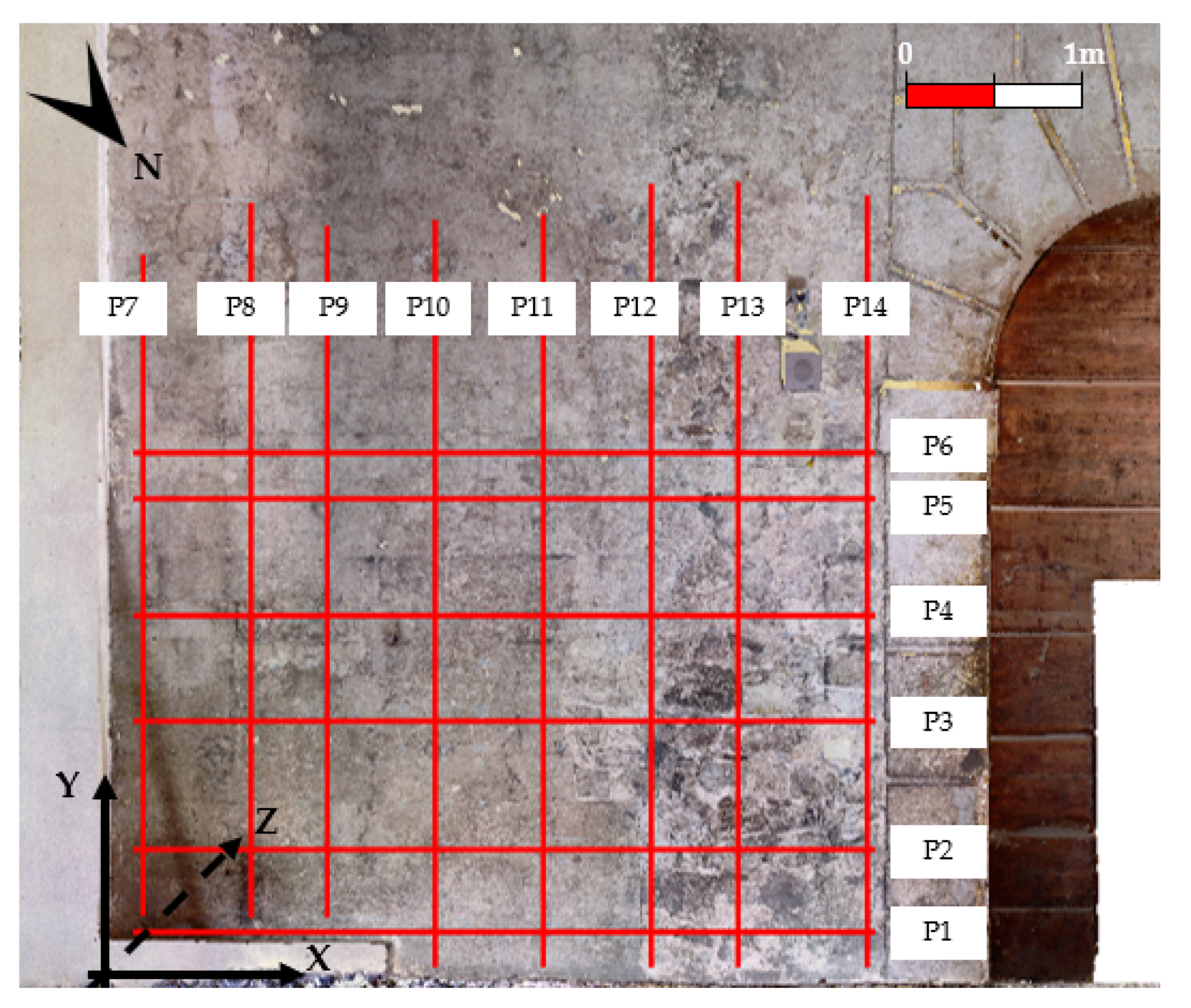
| Profile Name | Length (m) | Distance (m) |
|---|---|---|
| P1 | 4.22 | 0.25 |
| P2 | 4.05 | 0.6 |
| P3 | 4.05 | 1.15 |
| P4 | 4.12 | 1.6 |
| P5 | 4.02 | 2.1 |
| P6 | 4.22 | 2.3 |
| P7 | 2.84 | 0.15 |
| P8 | 3.07 | 0.65 |
| P9 | 2.97 | 1 |
| P10 | 3.2 | 1.5 |
| P11 | 3.23 | 2 |
| P12 | 3.36 | 2.5 |
| P13 | 3.37 | 2.9 |
| P14 | 3.31 | 3.5 |
| Survey Parameters | Numerical Parameters |
|---|---|
| Antenna Central Frequency (GHz) | 1.5 |
| Source–Receiver offset (m) | 0.13 |
| Samples per traces | 1024 |
| Time window (ns) | 50 |
| Sampling frequency (GHz) | 10 |
| Trace inter-distance (m) | 0.01 |
| Survey Parameters | Numerical Parameters |
|---|---|
| Static correction | - |
| Trace editing | - |
| Dewow filter | Window: 1.15 ns |
| Background removal | Trace window: 0.3–25 ns |
| Averaging filter | Number of samples: 3 Number of traces: 3 |
| Butterworth bandpass filter (MHz) | Cutoff frequencies: 400–1350 |
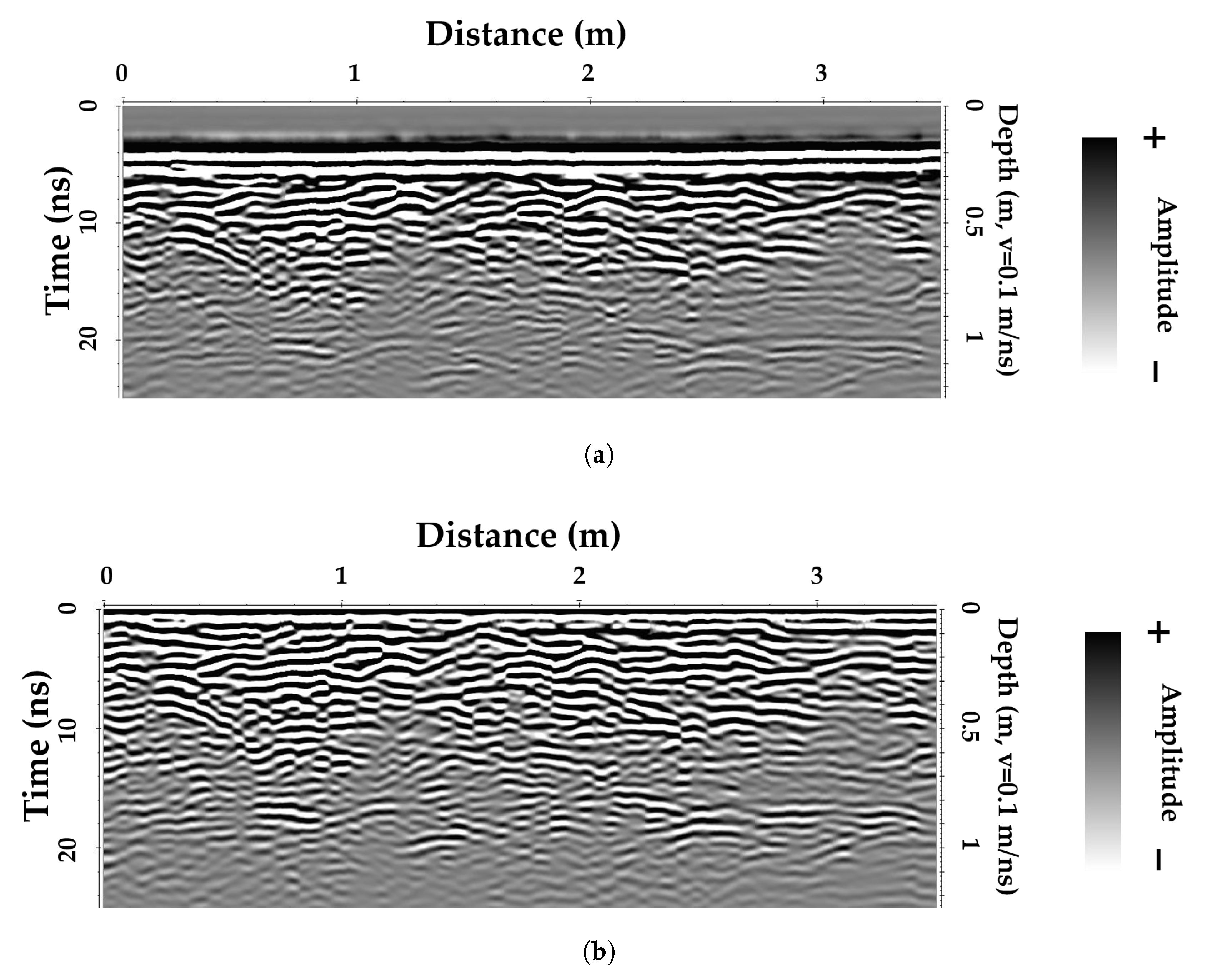
| Amplitude recovery | Time window (ns): 0.3–25 Linear gain: 0.05 Exponential gain: 1.2 Maximum gain: 1000 |
Disclaimer/Publisher’s Note: The statements, opinions and data contained in all publications are solely those of the individual author(s) and contributor(s) and not of MDPI and/or the editor(s). MDPI and/or the editor(s) disclaim responsibility for any injury to people or property resulting from any ideas, methods, instructions or products referred to in the content. |
© 2025 by the authors. Licensee MDPI, Basel, Switzerland. This article is an open access article distributed under the terms and conditions of the Creative Commons Attribution (CC BY) license.
Share and Cite
Alaia, G.; Ercoli, M.; Brigante, R.; Marconi, L.; Cavalagli, N.; Radicioni, F. Combining Ground Penetrating Radar and a Terrestrial Laser Scanner to Constrain EM Velocity: A Novel Approach for Masonry Wall Characterization in Cultural Heritage Applications. Remote Sens. 2026, 18, 15. https://doi.org/10.3390/rs18010015
Alaia G, Ercoli M, Brigante R, Marconi L, Cavalagli N, Radicioni F. Combining Ground Penetrating Radar and a Terrestrial Laser Scanner to Constrain EM Velocity: A Novel Approach for Masonry Wall Characterization in Cultural Heritage Applications. Remote Sensing. 2026; 18(1):15. https://doi.org/10.3390/rs18010015
Chicago/Turabian StyleAlaia, Giorgio, Maurizio Ercoli, Raffaella Brigante, Laura Marconi, Nicola Cavalagli, and Fabio Radicioni. 2026. "Combining Ground Penetrating Radar and a Terrestrial Laser Scanner to Constrain EM Velocity: A Novel Approach for Masonry Wall Characterization in Cultural Heritage Applications" Remote Sensing 18, no. 1: 15. https://doi.org/10.3390/rs18010015
APA StyleAlaia, G., Ercoli, M., Brigante, R., Marconi, L., Cavalagli, N., & Radicioni, F. (2026). Combining Ground Penetrating Radar and a Terrestrial Laser Scanner to Constrain EM Velocity: A Novel Approach for Masonry Wall Characterization in Cultural Heritage Applications. Remote Sensing, 18(1), 15. https://doi.org/10.3390/rs18010015