Article

Assessing the Use of the Standardized GRACE Satellite Groundwater Storage Change Index for Quantifying Groundwater Drought in the Mu Us Sandy Land


1
College of Civil Engineering and Architecture, Yan’an University, Yan’an 716000, China
2
College of Mathematics and Computer Science, Yan’an University, Yan’an 716000, China
3
College of Resources and Environment, Northwest A&F University, Xi’an 710000, China
*
Author to whom correspondence should be addressed.
Remote Sens. 2025, 17(24), 4015; https://doi.org/10.3390/rs17244015
Submission received: 16 July 2025 / Revised: 11 November 2025 / Accepted: 21 November 2025 / Published: 12 December 2025
(This article belongs to the Section Remote Sensing in Geology, Geomorphology and Hydrology)

Highlights

What are the main findings?
  • Based on GRACE-derived groundwater storage anomaly data, the Anderson–Darling test revealed that the Pearson III distribution function provides the best fit for calculating the standardized groundwater index (GRACE_SGI) across different time scales, significantly improving accuracy.
  • Cross-correlation analysis between the GRACE_SGI and the standardized precipitation index (SPI) demonstrated a notable time lag effect, with lag times of up to 12 months being observed at longer time scales, indicating a delayed response of groundwater levels to precipitation changes.
What are the implications of the main findings?
  • The identification of the optimal probability density function for GRACE_SGI calculation enhances the reliability of groundwater drought monitoring, particularly in data-scarce regions, providing a robust scientific foundation for quantitative assessments.
  • Understanding the time lag effect between precipitation and groundwater recharge aids in more accurately predicting groundwater drought events, facilitating proactive water resource management and drought preparedness strategies.

Abstract

The increasingly severe phenomenon of groundwater drought poses a dual threat to the development and construction of a region, as well as its ecological environment. Traditional groundwater drought monitoring methods rely on observation wells, which makes it difficult to obtain dynamic drought information in areas with limited measurement data. Based on Gravity Recovery and Climate Experiment (GRACE) satellite technology and data, the suitability of the standardized groundwater index (GRACE_SGI) was explored for drought characterization in the Mu Us Sandy Land. Multiscale and seasonal trend changes in groundwater drought in the study area from 2002 to 2021 were comprehensively identified. Subsequently, the characteristics of hysteresis time between the GRACE_SGI and the standardized precipitation index (SPI) were clarified. The results show that (1) different fitting functions impact the parameterized GRACE_SGI fitting results. The Anderson–Darling method was used to find the best-fitting function for groundwater data in the study area: the Pearson III distribution. (2) The gain and loss characteristics of the GRACE_SGI are similar, showing downward trends at different time scales, including seasonal scales. (3) The absolute values based on the maximum correlation coefficients between the SPI and the GRACE_SGI at different time scales were 0.1296, 0.2483, 0.2427, and 0.5224, with time lags of 0, 0, 12, and 11 months, respectively. The vulnerability of semiarid ecosystems to hydroclimatic changes is highlighted by these findings, and a satellite-based framework for monitoring groundwater drought in data-scarce regions is provided.

1. Introduction

Groundwater is an essential component of the water cycle and directly impacts the material and energy cycle in the global ecosystem [1,2]. In recent years, human factors such as excessive pumping have led to changes in the hydrological cycle [3,4], which are reflected in the sharp decline in annual groundwater reserves in different regions of the world. Although groundwater supply in China only accounted for 13.8% of the total water supply in 2022, groundwater provided 50% of water for agricultural production and drinking water sources for more than 60% of the cities in China [5]. With the increasing demand for groundwater resources, the problem of groundwater depletion is gradually becoming more severe and showing different degrees of aggravation in different regions.
Furthermore, the impact of climate change on groundwater resources is not just limited to hydrology, biology, and ecosystems [6,7], especially through warming and humidification, affecting regional hydrological processes [8]. The warming and humidification of northwest China are undeniable [9], but regional water resources, especially groundwater resources, may be negatively affected [10]. Compared with other humid areas, the increase in meteorological elements, such as precipitation and temperature in arid and semiarid regions, is usually compensated or overcompensated for by increased evapotranspiration caused by warming. Therefore, warming and humidification do not always lead to increased availability of water resources. Understanding groundwater resources under changing environmental conditions is crucial to water resource utilization and ecological environment protection.
There is a growing expectation [11,12] that the reduction in groundwater recharge and storage due to human and natural factors may lead to groundwater drought, with potential adverse effects on residential water use and agricultural irrigation, and this could even affect surface water and ecosystems that rely on groundwater recharge. Unlike other types of hydrological drought [13,14], due to the role of groundwater aquifers in modifying hydrological signals, groundwater drought may exhibit high-precision, sustained, slow, and complex hydrological processes. Groundwater drought is not easily detected in the early stages and only attracts widespread attention when it has lasted for a long time and caused losses [15]. Therefore, detecting, identifying, and predicting groundwater drought is necessary.
Compared with surface water, the dynamic changes in groundwater are difficult to directly observe and monitor, making it difficult to evaluate groundwater drought quantitatively. Using a groundwater drought index to quantify groundwater drought events is emerging as a feasible approach [16,17,18]. For instance, the standardized groundwater level index (SGI) [19], which is constructed based on the calculation method of the standardized precipitation index (SPI), has been widely employed to evaluate the spatial–temporal characteristics of groundwater drought. Sudipa Halder et al. [20] used the SGI to assess the drought status of regional groundwater. They believed that the research findings contribute to the sustainable management of water resources. Although there are many research studies on the identification of drought characteristics using the SGI, there is an argument for its use in quantifying groundwater droughts [21]. This is because the SPI uses a Gamma distribution to fit cumulative monthly precipitation time series to quantify meteorological drought, which has the characteristics of simple calculation, strong adaptability, and sensitivity to drought changes [22]. But groundwater is easily affected by human activities, has higher seasonality, and tends to present non-stationary properties, so it is not necessarily completely applicable to construct the SGI by using parameterization methods. Therefore, it is essential to select a suitable probability density function to fit the observation data for utilizing the SPI (or SPI-like indices) approach to detect groundwater drought. Based on different probability density functions (i.e., Gamma, Normal, Lognormal, Extreme Value, and Weibull), the SGI was modified for assessing groundwater drought across the United States [23]. Based on the results, drought classification and the drought index were expanded. However, there is an inevitable impact on the research results by the uneven spatial distribution of the observation wells.
Given the limitations associated with ground-based observation wells, such as the uneven spatial distribution that affects research accuracy, alternative approaches for large-scale groundwater drought monitoring become imperative. Due to the vast territory, sparse population, and consequently sparse groundwater level observation stations with poor continuity in some regions, satellite remote sensing data offer a promising solution for evaluating changes in global or regional groundwater storage [24,25]. For example, Wang et al. [26] adopted the GRACE-based groundwater drought index (GGDI) to evaluate the drought status of regional groundwater, echoing the sentiment that such research results can significantly contribute to the sustainable management of water resources, similar to the findings of Sudipa Halder et al. Satish Kumar Kuruva et al. [27] further analyzed and assessed drought characteristics utilizing the GGDI over four major river basins in India from 2003 to 2016. Their study indicated that the GRACE’s quantitative results were consistent and robust for drought assessment, which is in line with the pursuit of reliable groundwater drought quantification methods. Yet, despite these advances, there remains a significant hurdle. The current application of this index is limited by its single time scale, which restricts its comprehensive use. Incorporating groundwater drought into a broader drought assessment framework is still in the exploratory stage and presents a considerable challenge that needs to be addressed to enhance our understanding and management of groundwater resources in the face of drought.
The Mu Us Sandy Land, characterized by its semiarid climate, climate-sensitive nature, and fragile ecological environment [28], stands as a pivotal region for constructing ecological security barriers in China. Water resources, particularly groundwater, play a critical role in regulating regional ecosystems. However, the impacts of climate change and human activities have imposed varying constraints on the regional water cycle and water resource service functions [29,30]. Given the region’s expansive territory and sparse population distribution, traditional groundwater monitoring methods face significant challenges in acquiring accurate data, leading to a lack of comprehensive understanding regarding the dynamics of regional groundwater resources. Previous studies in the Mu Us Sandy Land and similar semiarid regions have primarily focused on groundwater level monitoring using limited ground-based observation wells, which often suffer from spatial representativeness issues due to the sparse well distribution [31]. Some research has also explored the application of remote sensing techniques for hydrological studies [32,33], yet the integration of GRACE satellite data for groundwater drought assessment remains under explored in this specific context. These gaps highlight the need for innovative approaches to enhance our understanding of groundwater variability and drought characteristics in such ecologically vulnerable areas. This study innovatively employs GRACE satellite data to invert groundwater storage anomalies and proposes a modified GRACE_SGI for regional groundwater drought description, crucial to understanding hydrological processes amid climate change. Specifically, the study aims to (1) assess the applicability of four probability density functions for optimal GRACE_SGI estimation, (2) analyze its temporal distinctions across time scales for deeper insights into groundwater drought evolution, and (3) clarify the hysteresis time between the GRACE_SGI and the SPI to reveal the lagged response of groundwater to precipitation changes, thereby supporting sustainable groundwater use and robust drought monitoring.

2. Materials and Methods

2.1. Study Area

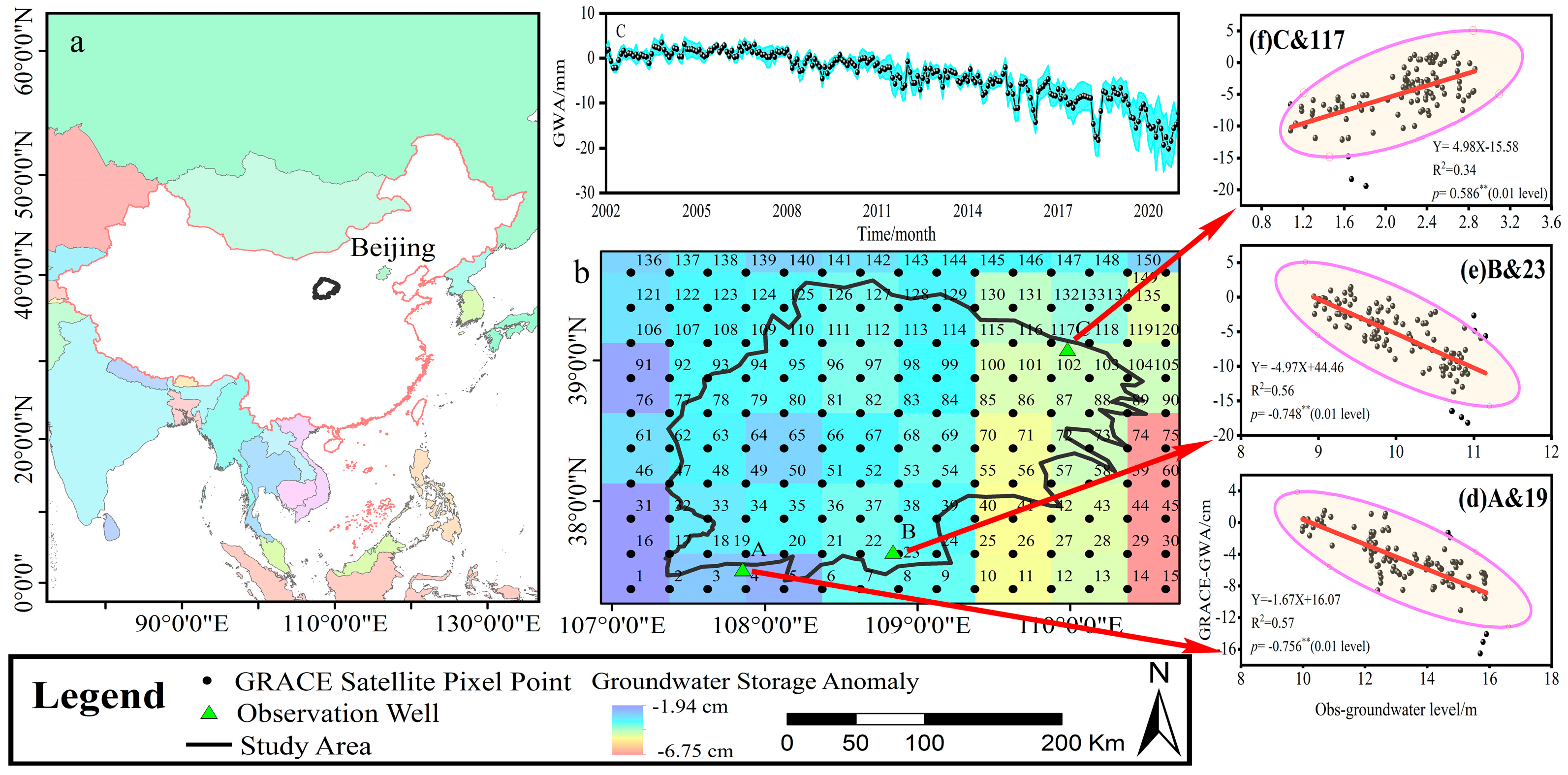
This study was conducted in the Mu Us Sandy Land (37°30′–39°22.5′N, 107°20′–110°30′E), which is a transitional area from the Ordos Plateau to the Loess Plateau in northern Shaanxi; the area was approximately 4 × 10⁴ km2, as shown in Figure 1a. It is located in the mid-latitude westerly zone in the northern hemisphere, which is the eastern sand area greatly influenced by the East Asian summer wind among the four major sand areas in China. Its elevation gradient ranges from −8 m to 2738 m (Figure 1b). The average temperature of the region in many years is 6.0~8.5 °C, and the yearly average precipitation decreases from the southeast (440 mm) to the northwest (250 mm), while the annual evaporation is as high as 2000 mm. More than 70% of the precipitation in the region is brought by the summer wind from June to September.
In addition, due to its triple attributes of being a semiarid climate zone in terms of climate, a transitional zone from grassland to desertification in terms of vegetation, and a transitional zone between agriculture and animal husbandry in terms of agriculture, the Mu Us Sandy Land is an essential functional ecological area in the northwest region. The ecological environment in this area is fragile and sensitive to global climate change. It has been recognized as one of the world’s nine environmentally sensitive areas and is crucial to China’s ecological security barrier building. Thus, studying groundwater drought in the Mu Us Sandy Land is of great significance and practical value.

2.2. Data

2.2.1. GRACE Data

Since 2002, as a new method for monitoring global total water storage anomalies (TWSAs), the GRACE (Gravity Recovery and Climate Experiment) has extensively promoted the development of multiple fields in Earth science [6,34]. Due to effectively correcting leakage errors and improving spatial resolution, the GRACE RL06 mascon of the Centre for Space Research (CSR) of the University of Texas was used, with a spatial resolution of 0.25° × 0.25° and a time resolution of 1 month (https://csr.utexas.edu/grace/RL06_mascons.html (accessed on 11 May 2023)). In this study, the average monthly gravity field (between January 2004 and December 2009) was taken as the baseline of the monthly gravity field time series (from April 2002 to April 2021); i.e., we converted the change in total water storage reserves to the height of the water column in the hypothetical plane.
The study period is from April 2002 to April 2021, totaling 228 months. Since the original data were missing, the missing data during the gap period (July 2017 to May 2018) were compensated for with the published TWSA data, which are provided by the National Tibetan Plateau/Third Pole Environment Data Centre (http://data.tpdc.ac.cn (accessed on 10 November 2024)) [35], while others were filled in by linear interpolation [36].

2.2.2. GLDAS Data

The Global Land Data Assimilation System (GLDAS) datasets, provided by NASA’s Goddard Space Flight Centre and the National Centre for Environmental Prediction in the United States, comprise four land surface models: Noah, CLM, Mosaic, and VIC [37]. These models offer a range of land surface field information in gridded data format, which has been demonstrated to possess high accuracy across numerous regions [6,15]. Consequently, to align with the spatial–temporal scale of the GRACE RL06 CSR mascon solutions, this study employs the GLDAS Noah 0.25° monthly v2.1 dataset (accessible at https://hydro1.gesdisc.eosdis.nasa.gov/data/GLDAS/GLDAS_NOAH025_M.2.1 (accessed on 20 May 2023)) from April 2002 to April 2021 for GRACE verification. The dataset includes four layers of soil moisture (SM) at depths of 0–10 cm, 10–40 cm, 40–100 cm, and 100–200 cm, with spatial and temporal resolutions of 0.25° and monthly, respectively.

2.2.3. Climate Data

Daily precipitation data (cumulative precipitation during the specific time window from 20:00 daily to 20:00 the next day, measured in internationally recognized millimeters) from 8 stations around the Mu Us Sandy Land were obtained from 2002 to 2021 from the Resource and Environmental Science and Data Centre of the Chinese Academy of Sciences (https://www.resdc.cn (accessed on 8 October 2023)). Additionally, the daily precipitation data from each meteorological station are compiled monthly to determine the monthly precipitation totals. Time-series averaging is then conducted to derive representative monthly precipitation data, which are used to calculate the SPI values for the region.

2.2.4. In Situ Groundwater

The variation characteristics of the inversion results (GWAs) from the GRACE and the GLDAS can be effectively compared and verified with the groundwater level data of in situ monitoring wells. From 2010 to 2018, monthly in situ groundwater level changes were collected from three observation wells (deep monitoring wells) around the Mu Us Sandy Land provided by the Hydrological Bureau and recorded in the China Geological Environmental Monitoring Groundwater Level Yearbook. Due to various objective limitations (e.g., constrained research time and resources), this study employed only three observation wells (each representing point-scale measurements) to verify GRACE-derived groundwater estimates across an area of approximately 40,000 square kilometers, a choice that, while highlighting a significant spatial scale mismatch, still offers preliminary insights into the consistency between localized groundwater dynamics and regional trends captured by the GRACE.

2.2.5. Other Data

Land Use/Cover Change data (LUCC) for 1980, 1990, 1995, 2000, 2005, 2010, 2015, and 2020 were provided by the Data Centre for Resources and Environmental Sciences, Chinese Academy of Sciences (RESDC) (http://www.resdc.cn (accessed on 8 October 2023)), with six first-level land use types, including cultivated land, grassland, and forestland. From 2002 to 2022, changes in the cultivated area in the Yulin area were collected from the Yulin Statistical Yearbook.

2.3. Method

2.3.1. Groundwater Change

The study area is in a semiarid region with little surface runoff and mostly desert land, so vegetation and snow cover have limited impacts on regional water resources. Thus, surface water (e.g., rivers and lakes) and canopy water storage were excluded [38], with soil moisture as the sole surface component in the mass balance approach. This simplification assumes that these excluded elements have negligible effects on the water balance. Yet, rare events like heavy rain or vegetation growth could introduce uncertainty, and future climate or land use changes may alter their significance, which we will consider in future research. To determine groundwater storage anomalies (GWA), another component of the TWSAs, i.e., soil moisture anomalies (SMAs), was removed from the TWSAs [39]. GWA data have been proven to systematically and accurately reflect the trend of groundwater resource changes in northwest China, achieving results [40,41]. Thus, GWAs can be calculated as a residual from the water balance equation:
GWA = TWSA − SMA
Figure 1b and c show the spatial and temporal characteristics of the Mu Us Sandy Land GWAs from 2002 to 2021, respectively. The GWAs in the basin show a significant downward trend in the time series. At the same time, there is a downward trend from west to east in space.
The process of validating the GWAs against in situ observations in the watershed is crucial to evaluating its accuracy. It is indeed challenging to make a direct comparison at the watershed scale due to the limited number of observation wells available.
In this study, the applicability of the GRACE was validated using linear regression between the groundwater level of the observation wells and the satellite data pixel values of the GRACE-derived GWAs (Figure 1d–f), which is a practical way to evaluate the accuracy of the GWAs in these specific areas. There was a strong correlation between them according to the determination coefficient (R2), with values of 0.57, 0.56, and 0.34, respectively, indicating that the groundwater sequence obtained from GRACE satellite data has reasonable accuracy. A positive correlation was found for the three locations at a 99% significance level, reaching 0.756, 0.748, and 0.586, respectively, indicating a reasonable accuracy of the groundwater sequences isolated from GRACE satellite data.

2.3.2. Fitting Calculations of the Drought Index

Monthly precipitation data usually do not follow a Normal distribution, and the amplitude of changes at different spatial–temporal scales is significant, making it difficult to compare values with each other at different spatial and temporal scales. Thus, the Gamma probability distribution of precipitation data is normalized normally and used to calculate SPI value in drought analysis [16,42]. The calculation of the SPI on a certain time scale is based on long-term precipitation record data of ideal cycles, and the calculation formula is as follows [38]:
f x = 1 β γ Γ γ 0 x x γ 1 e x β dx ,   x > 0
Γ γ = 0 x γ 1 e x dx
SPI = S t c 2 t + c 1 t + c 0 d 3 t + d 2 t + d 1 t + 1.0 ,   t = ln 1 f x 2
where X is the time series of precipitation. β and γ are the scale parameter and shape parameter, respectively. f(x) is the precipitation probability distribution in the Γ function, and S denotes positive and negative coefficients; when f(x) > 0.5, then S = 1; otherwise, S = −1. c0, c1, c2, d1, d2, and d3 are calculated parameters; their values are displayed as follows: c0 = 2.515517, c1 = 0.802853, c2 = 0.010328, d1 = 1.432788, d2 = 0.189269, and d3 = 0.001308. If the SPI is positive, it indicates that it is greater than the median precipitation, while negative values indicate that it is lower than the median precipitation.
According to Equation (5), we preprocessed the original GWA data x1i inverted from remote sensing satellite data (translation and square root) to obtain a new sequence x2i suitable for subsequent distribution fitting:
x 2 i = x 1 i   min x 1 i
where x1i represents the i-th observed value in the original groundwater storage anomaly (GWA) sequence derived from GRACE satellite data, reflecting dynamic changes in groundwater reserves. x2i denotes the transformed value in the new data sequence obtained by applying a shift (subtracting the minimum value) and a square root operation to x1i, aimed at enhancing subsequent distribution fitting and improving the accuracy of index calculations.
Due to the difference in spatial and temporal characteristics between groundwater and precipitation data, selecting an appropriate probability density function to fit the observed data was crucial to utilizing the exponential GRACE_SGI (SPI-like index) to identify drought. Considering the actual trend of data variations within the study area and drawing upon a synthesis of commonly employed probability distributions documented in the existing literature [43,44], we selected four probability density functions (Gamma, Normal, Beta, and Pearson III) to conduct a more in-depth assessment of the performance of different distributions and to fit sequence x2i.
The Anderson–Darling test [45] is commonly used, especially in detecting deviations from normality in small sample sizes. Therefore, based on the relevant literature [23] and data features in this study, the Anderson–Darling method was used to evaluate the performance of different probability distributions to determine whether the probability distribution fitted the given data well.
For a given sample dataset xi {x1 < x2<…< xn}, the Anderson–Darling statistic A2 is defined as
A 2 = n i = 1 n 2 i 1 n ln F x i + ln 1 F x n + 1 i
where n is the number of observations in the sample dataset and F(x) is the cumulative distribution function. A smaller value of A2 indicates a better fit of the distribution to the data. The significance level of the test statistic A2 can be determined from tabulated values derived from theoretical distributions. If A2 is greater than the tabulated values from a specified distribution, the null hypothesis that the sample data come from the distribution is rejected at the given significance level.
Due to SPI’s ability to evaluate the degree of drought at different time scales, four different time scales were used for analysis in this study. The 1-month scale effectively captures the swift and sensitive monthly fluctuations in drought conditions, yet it exhibits considerable inaccuracy when applied to the analysis of long-term trends. In contrast, the 3-month scale provides insights into the patterns of seasonal drought. Finally, the 6-month and 12-month scales are tailored to illustrate the prolonged drought dynamics, enabling a comprehensive reflection of drought evolution over extended periods.

2.3.3. Correlation Analysis

To explore the corresponding relationship between the SGI and the SPI, the correlation calculation formula is as follows:
R xy = i = 1 n ( x i x ¯ ) ( y i y ¯ ) i = 1 n ( x i x ¯ ) 2 i = 1 n ( y i y ¯ ) 2
where Rxy is the correlation between the changing trends of two variables, and Xi and Yi are the SPI and SGI values in the i-th year.
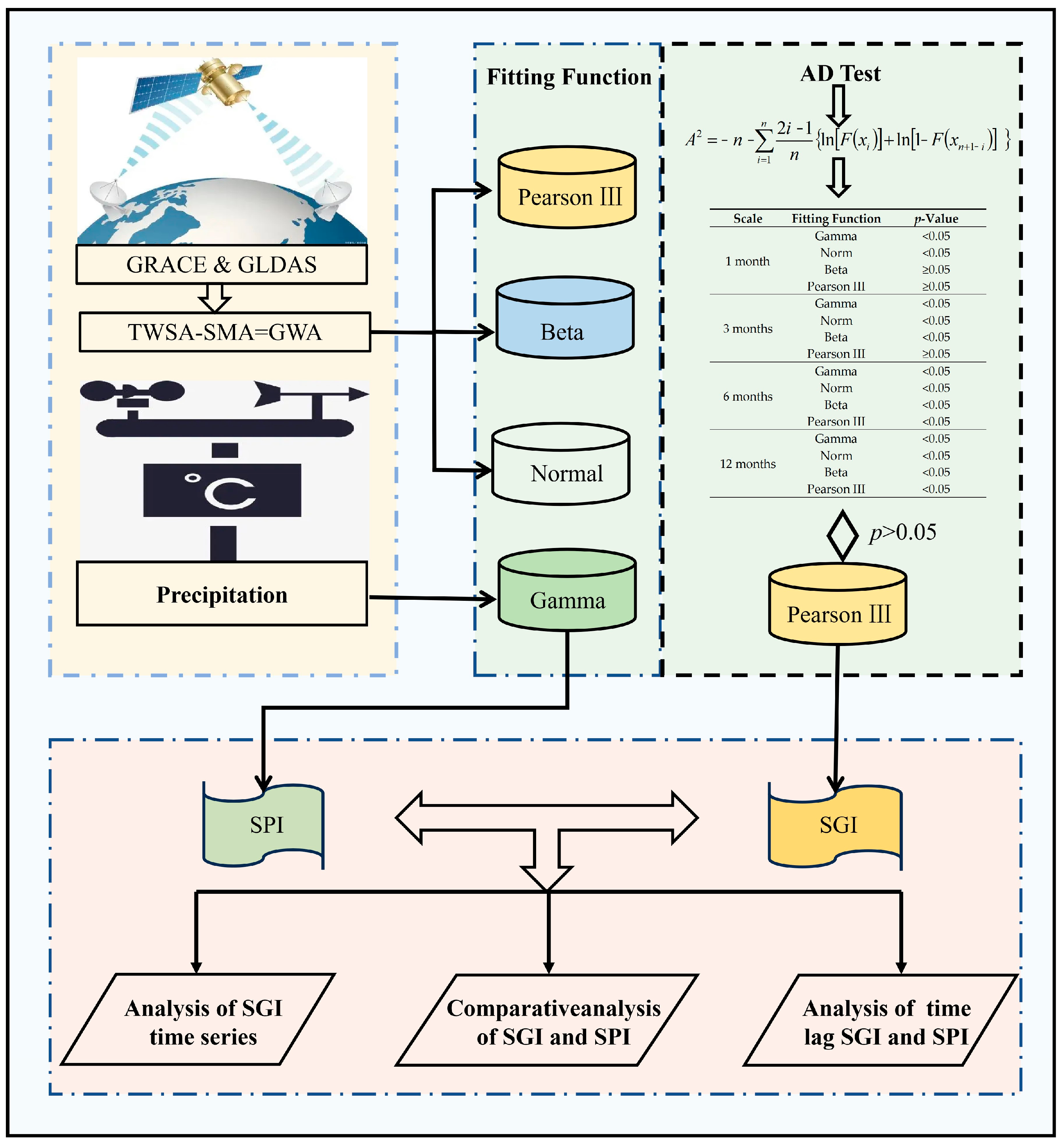
In addition, the flowchart of the application of the GRACE-based standardized groundwater index for drought characterization in the Mu Us Sandy Land is shown in Figure 2.

3. Results

3.1. Selection of the Best-Fitting Function for GRACE_SGI

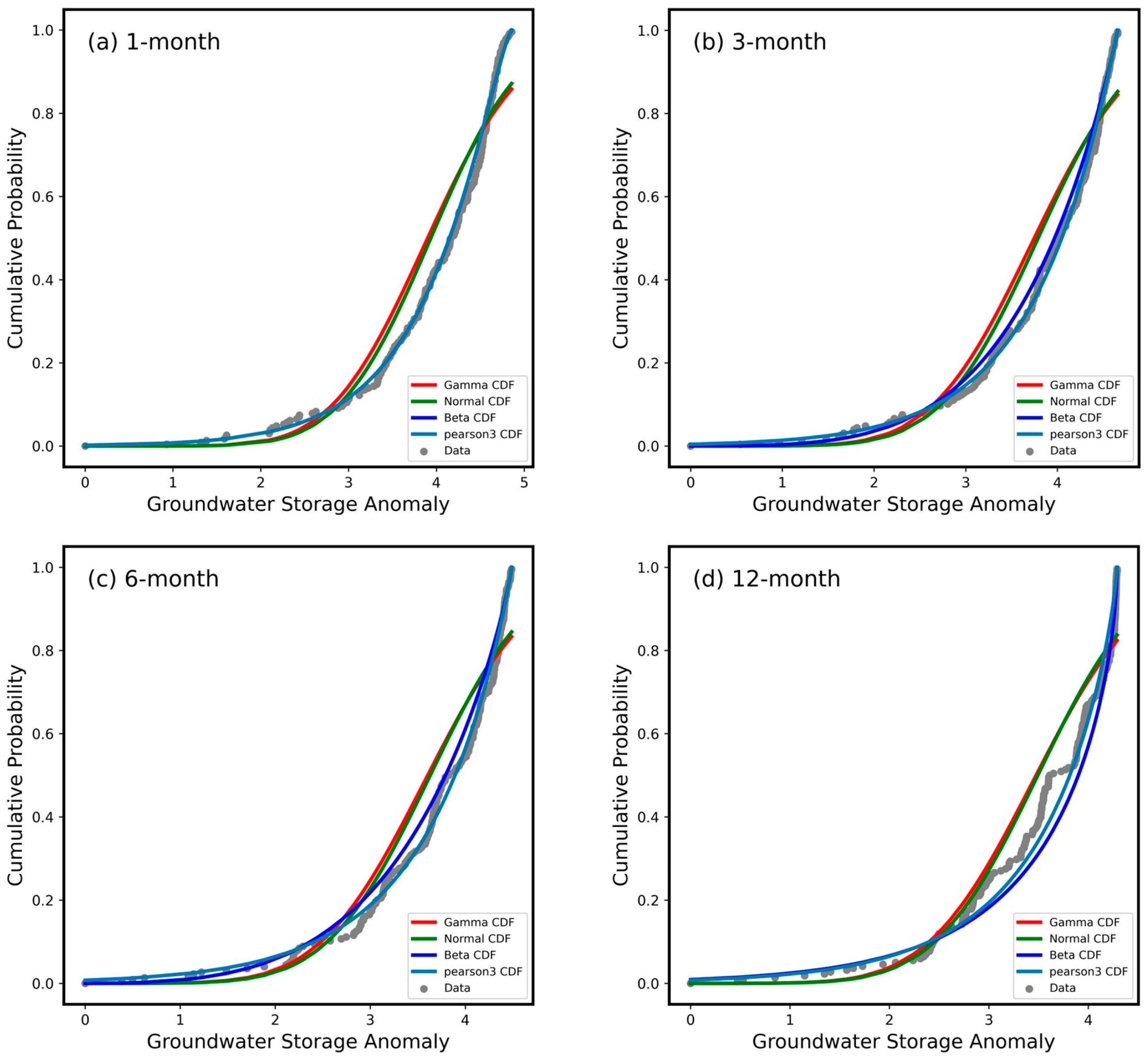
We used four fitting functions (Gamma, Normal, Beta, and Pearson III) for calculating the cumulative distribution functions (CDFs) of GWAs at the time scales of 1 month, 3 months, 6 months, and 12 months, as shown in Figure 3. In the process of fitting the groundwater storage anomaly (GWA) value data with diverse CDFs, there were distinct degrees of fitting errors. Specifically, these errors quantify the extent to which the theoretical CDF curves, generated by each distribution, diverge from the actual observed GWA data values. Considering the different fitting conditions of the four different time scales, the data were well fitted under the Beta and Pearson III distribution functions. Although there was almost no difference in the fitting effect between them at the 1-month scale, with the increase in the time scale, we can obviously find that the fitting effect of Pearson III was better than that of Beta.
In order to determine the optimal fitting function, the performance of different CDFs was appraised through the Anderson–Darling (AD) test. According to the GWA data retrieved by the satellite from April 2002 to April 2021, the AD test values of the four selected fitting functions are shown in Table 1.
Although the p-values under the Pearson III distribution function decreased as the time scale increased, they remained higher than those obtained from other fitting functions, specifically reaching 0.1189 (indicating non-significance at the α = 0.05 level, as p ≥ 0.05), 0.3302 (also non-significant at the α = 0.05 level, since p ≥ 0.05), 0.0295, and 1.9969 × 10⁻⁹. Although Beta demonstrated statistical significance (it passed the test) at the 1-month time scale, it is noteworthy that the Pearson III distribution not only achieved statistical significance at the 1-month time scale but also maintained this significance at the 3-month time scale. This broader applicability across multiple time scales provides a more robust basis for our selection. Therefore, in this paper, GRACE_SGI values at four different time scales were estimated by the Pearson III distribution function with the monthly GWA data.

3.2. Temporal Trends in SGI

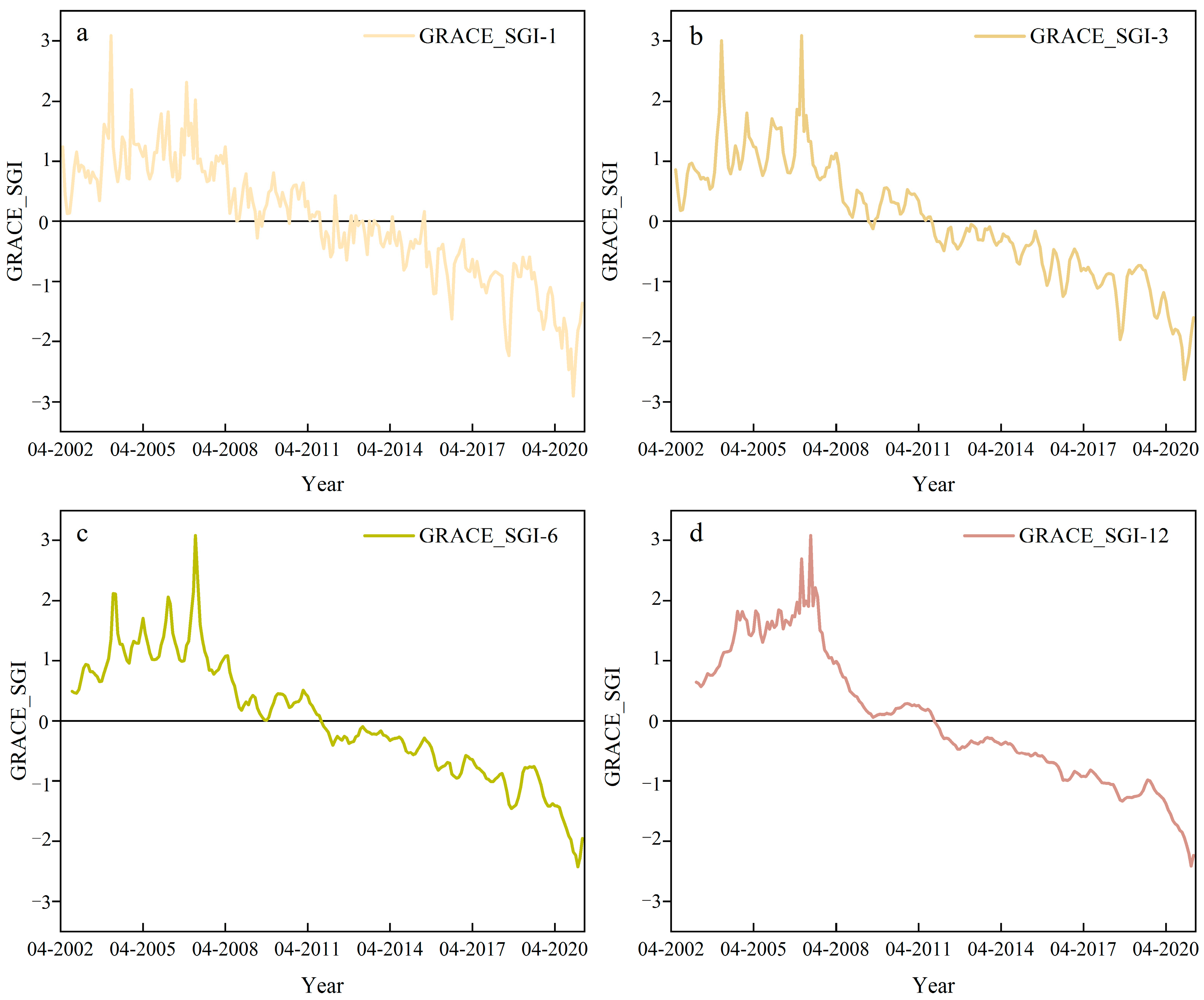
The gains and losses of regional GWAs can be characterized by the GRACE_SGI. Different types of droughts in the Mu Us Sandy Land of the Yellow River Basin in northern Shaanxi, China, were reflected by the GRACE_SGI change curves at 1-month, 3-month, 6-month, and 12-month scales, as shown in Figure 4.
The fluctuation in the GRACE_SGI at the four time scales showed an apparent downward trend, indicating that GWAs changed from surplus to deficit and the trend of groundwater drought intensified.
The fluctuation in GRACE_SGI–1 was noticeable, indicating high sensitivity and periodicity (Figure 4a), with a linear slope of −0.4 × 10⁻³ cm/month (R2 = 0.79). The GRACE_SGI showed a negative value for the first time in 2008 and completely entered a drought state after 2015. Compared with the 1-month SGI, although the linear slope of the 3-month SGI was the same, its fluctuation amplitude and frequency decreased. The 3-month SGI shows relatively stable fluctuations, reflecting that the regional groundwater drought was significantly affected by seasonality (Figure 4b).
The 6-month and 12-month GRACE_SGIs can accurately describe the features of regional groundwater drought in long time series (Figure 4c,d). The oscillation degree of the 12-month GRACE_SGI was further lower than that of the 6-month GRACE_SGI, but there was still the same linear slope as in the 6-month SGI, with the value of −0.5 × 10⁻³ cm/month.

3.3. Seasonal Variation Trends in SGI

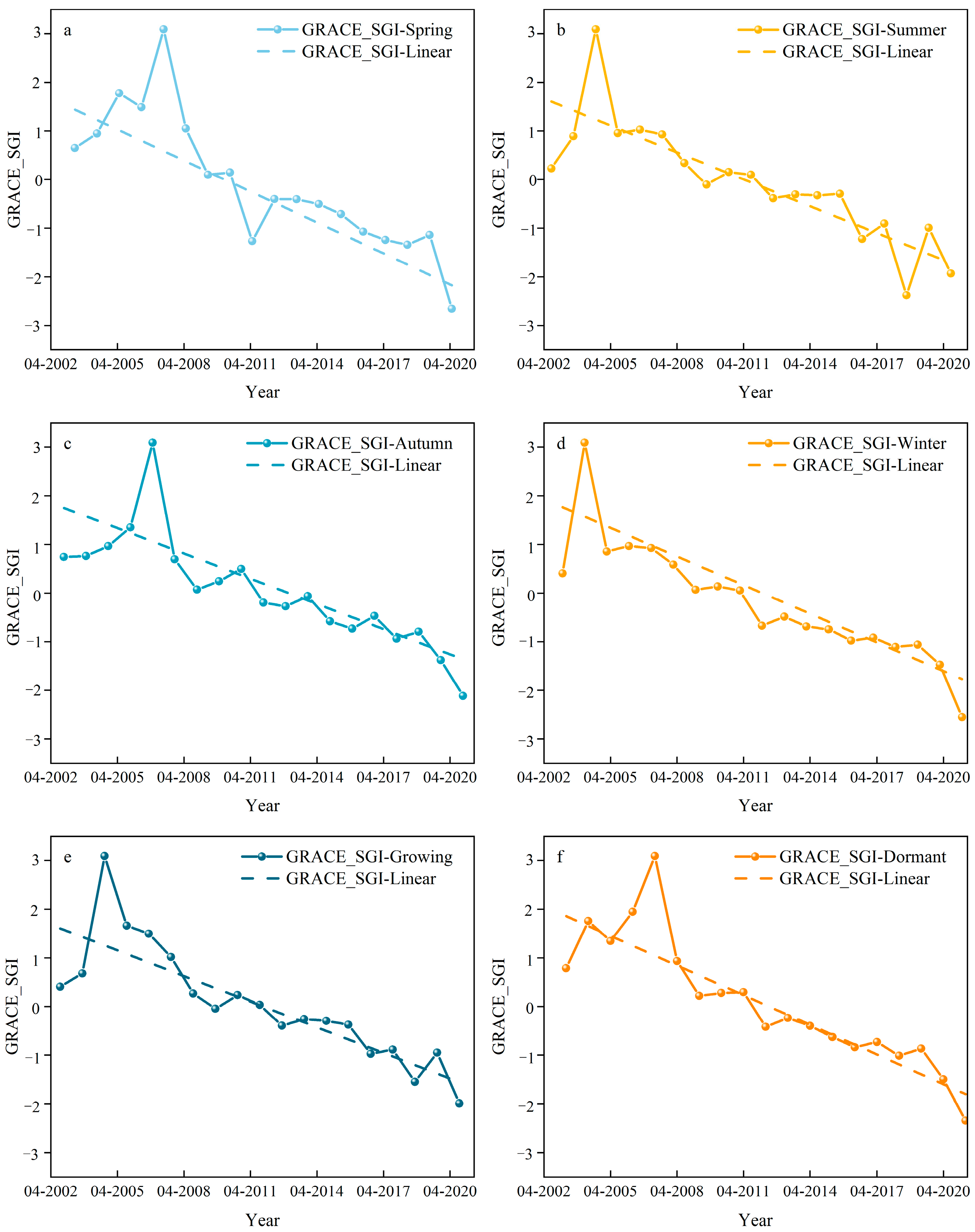
Figure 5 presents a comprehensive portrayal of the seasonal variations in the SGI within the Mu Us Sandy Land. The SGI values corresponding to different time scales, specifically those for March to May, June to August, September to November, December to February of the following year, May to September, and October to April of the following year, are associated with spring, summer, autumn, winter, growing season, and non-growing season, respectively.
A remarkable and consistent pattern is discernible across all seasons, as shown in Figure 5. The seasonal variation trends in the SGI predominantly manifest as a linear downward trajectory. Over the approximately 19-year study period, each season experienced 10 drought years, which underscores the pervasiveness of groundwater drought in the region.
Upon closer examination of each season, the spring season (Figure 5a) exhibits an overall linear decline in the SGI. The average peak of the SGI occurred in May 2007, whereas the average trough was recorded in May 2020. Significantly, since 2011, the SGI values have persistently remained negative, indicating a continuous and deteriorating drought condition. The summer SGI variation curve (Figure 5b) also conforms to the linear downward trend. Although the SGI values in summer are characterized by frequent fluctuations, the duration of drought periods is relatively short. The average peak was observed in August 2004, and the average trough in August 2018. In the autumn season (Figure 5c), a notable linear decline in the SGI is evident. Negative SGI values have been present since 2011, suggesting a persistent groundwater shortage. In comparison with the spring season, the intensity of the drought situation in autumn is relatively alleviated, with the peak occurring in November 2020. The winter SGI values (Figure 5d) display a pronounced and unidirectional downward trend, with the average trough occurring in February 2021. This further emphasizes the exacerbation of groundwater drought conditions during the winter months. Likewise, the GRACE_SGI variation curves during the growing season (Figure 5e) and the dormant (non-growing) season (Figure 5f) exhibit the same linear downward trend. This indicates an increasingly severe groundwater drought situation throughout both the active and dormant vegetation periods. Specifically, drought years were identified in 2020 during the growing season and in 2021 during the non-growing season.
In conclusion, the linear downward trend in the SGI across all seasons and periods in the Mu Us Sandy Land provides compelling evidence of a general and escalating tendency of groundwater drought. This finding holds significant implications for water resource management and ecological conservation in the region.

3.4. Correlation and Lag Between SPI and SGI

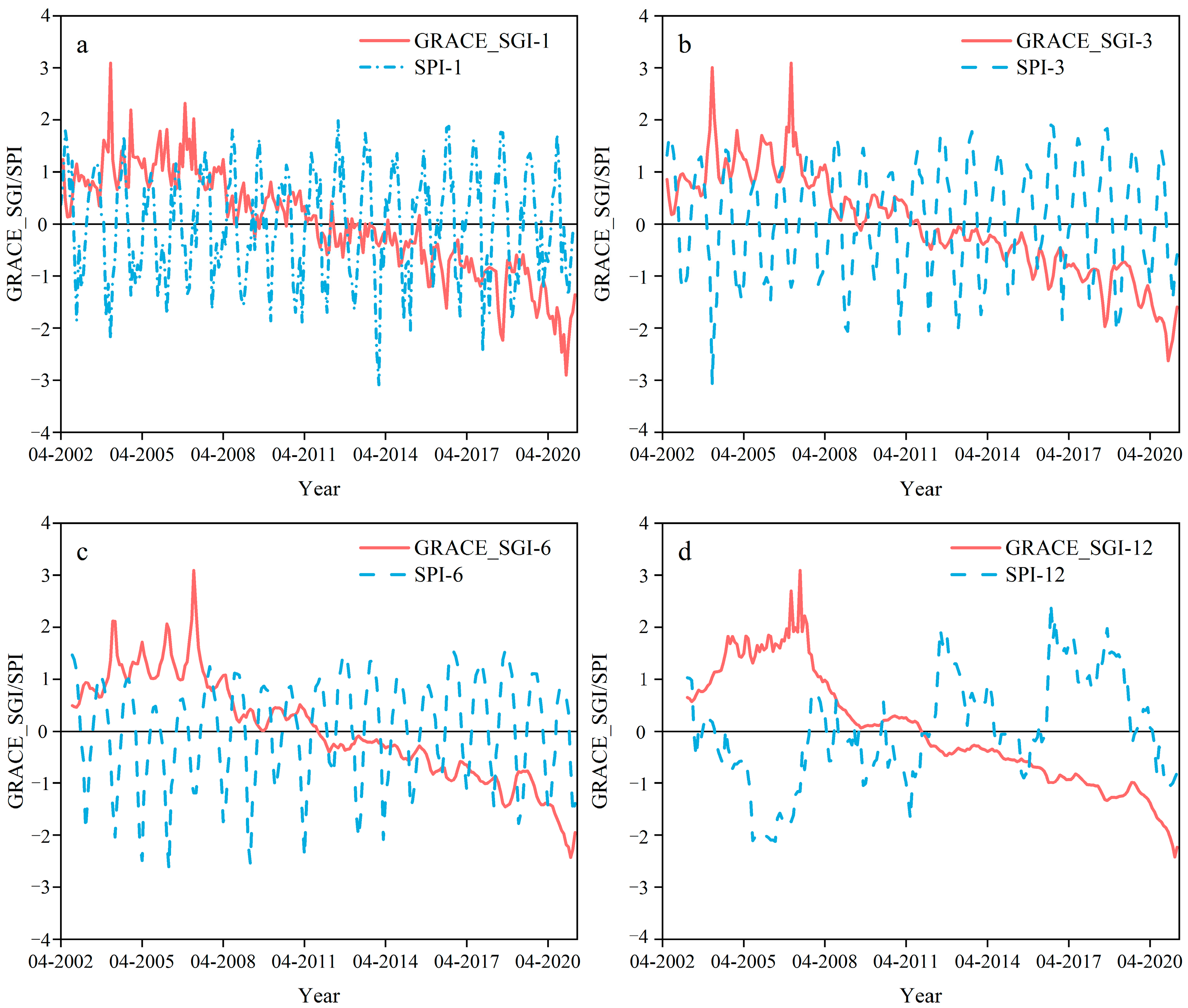
The temporal variation characteristics of the GRACE_SGI (red solid line) and the SPI (blue dashed line) in the Mu Us Sandy Land at the time scales of 1 month, 3 months, 6 months, and 12 months are shown in Figure 6. At short-term time scales (1 month and 3 months), the two curves exhibit high-frequency fluctuations and scattered peak values, indicating a rapid but non-persistent correlation between the response of meteorological drought (SPI) and hydrological drought (GRACE_SGI) in the short term (Figure 6a,b). As the time scale extends to 6 and 12 months, the fluctuation amplitude of the curves significantly decreases, and the trend of the two curves at the 12-month scale shows a high degree of synchronization, reflecting the enhanced correlation between the two at the inter-annual scale (Figure 6c,d). However, due to precipitation being the primary source of regional groundwater recharge, the changes in the GRACE_SGI and the SPI at the four time scales are asynchronous, indicating the presence of lag effects [46]. The changes in a certain factor during hydrological processes are not immediately reflected in the response of the hydrological system, but there is a time lag; that is, the propagation of different types of drought has a lag. This study mainly focuses on lag time, including the lag time between different time periods or stages (e.g., occurrence, development, continuation, peak, and end) between meteorological droughts and agricultural and hydrological droughts [47]. Lag time can be derived from the correlation of different types of drought representations on various time scales, such as the sequence of meteorological and hydrological variables or related drought indices. Correlation analysis is widely used in drought propagation lag and propagation time [48]. In their study on the propagation of meteorological drought to groundwater drought in the United States, Guo et al. [23] calculated the Pearson correlation coefficients between the SPI and the SGI at 1, 3, 6, 12, and 24 month scales with the values of 0.586, 0.630, 0.743, 0.787, and 0.814. They used the times when the correlation between SPI–i and SGI–i were the strongest as the corresponding lag times of 0, 2, 2, 3, and 4 months. In this section, the lag time at different time scales in the study area between the SGI and the SPI were calculated using the principle of correlation analysis.
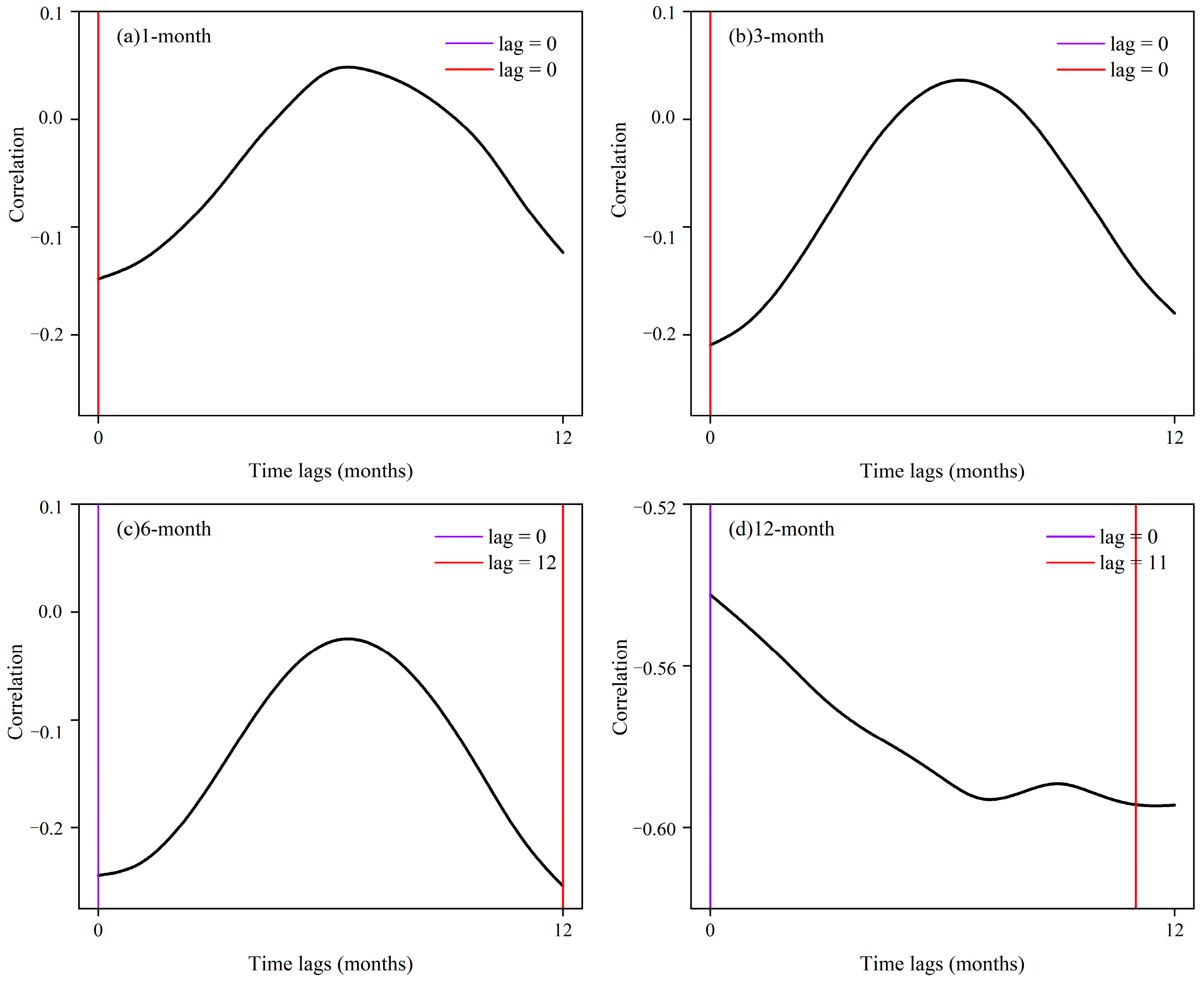
Based on the principle of correlation analysis, the correlation coefficient and lag time between the GRACE_SGI and the SPI at different time scales in the Mu Us Sandy Land were calculated, as shown in Figure 7.
Regarding the correlation coefficients, the results showed that the GRACE_SGI and the SPI were negatively correlated at different scales. The absolute values based on the maximum correlation coefficients were 0.1296, 0.2483, 0.2427, and 0.5224, indicating that there were time lags of 0, 0, 12, and 11 months, respectively. At short-term scales (such as 1-month and 3-month scales), there was no lag between the GRACE_SGI and the SPI (Figure 7a,b), indicating that there is a good supply relationship between them. However, at long-term scales (such as 6-month and 12-month scales), lags of approximately 12 months were observed, which clearly reflects the presence of temporal disconnects (Figure 7c,d).

4. Discussion

4.1. Fitting Test and SGI Evolution Process at Different Time Scales

Groundwater drought, as a key factor in drought propagation, exhibits complex characteristics due to the combined effects of natural factors and human activities [38]. However, the current understanding of the mechanism of groundwater drought is not sufficient, and the sparse distribution of groundwater level observation stations and severe data loss pose challenges to the quantitative assessment of its complexity. In addition, there is currently no universally accepted, relatively simple, and unified groundwater drought index that can be applied to different observation stations and groundwater reservoirs, compared with other hydro-meteorological drought indices. Therefore, groundwater drought is included in a broader drought assessment and is still in the exploratory stage. The groundwater drought index based on the SPI model is an essential tool for exploring groundwater drought [49]. In our paper, the cumulative distribution functions of GWAs at the 1-month, 3-month, 6-month, and 12-month time scales were calculated using different fitting functions (Gamma, Normal, Beta, and Pearson III). Based on the outcomes of the Anderson–Darling test (Table 1), although the Beta distribution demonstrated compliance with the test at the 1-month scale, the Pearson III distribution met the test criteria at the 1-month and 3-month scales. Consequently, the Pearson III distribution function was utilized to estimate GRACE_SGI values across four distinct time scales in this study.
It can be found that as a derivative of the SPI, the GRACE_SGI has similar advantages and disadvantages, but there are differences between the two indices because of the characteristics of regional groundwater storage changes. The GRACE_SGI is influenced by the fitted distribution function, and the selection of fitting functions is more diverse. This conclusion is similar to that of the studies on the groundwater level drought index conducted by Pandey, V. et al. [43] and Li, M. et al. [44].
In addition, the difference in observation frequency in the region (Mu Us Sandy Land) with a short observation period (19 years) was studied. There were differences in gain and loss characteristics at different time scales, which may have been caused by various factors, such as climate and hydrology [16,50]. The fluctuation in the GRACE_SGI at four different time scales showed a significant downward trend, indicating that GWAs changed from surplus to deficit and the trend of groundwater drought intensified. The fluctuation in the 1-month GRACE_SGI was noticeable, suggesting that it had high sensitivity and periodicity. The 3-month SGI showed relatively stable fluctuations, reflecting that the regional groundwater drought was significantly affected by seasonality. The 6-month and 12-month GRACE_SGIs accurately reflected the characteristics of regional groundwater drought in the long time series. Therefore, it is necessary to choose appropriate SGI indicators based on different situations. In addition, there were similar extreme values near the same time at each time scale, indicating that extreme values have a profound impact both in the short and long term.
High-risk and highly vulnerable Mu Us Sandy Land areas are characterized by frequent drought, high intensity, water scarcity, and severe soil erosion [51]. Based on the impact of climate change during the research period, the arid nature of the Mu Us Sandy Land may lead to more groundwater droughts in the coming decades. The drought severity in the study area increases with the increase in duration, similar to the results of Athukoralalage, D. et al. [52] and Li, M. et al. [44]. They also came to the same conclusion in related studies. This was attributed to the possible influence of the La Niña event [53]. An early drought warning is necessary due to the increase in drought under global warming [16], in line with the conclusion of Zhang Y. et al. [54].

4.2. Seasonal Analysis of SGI

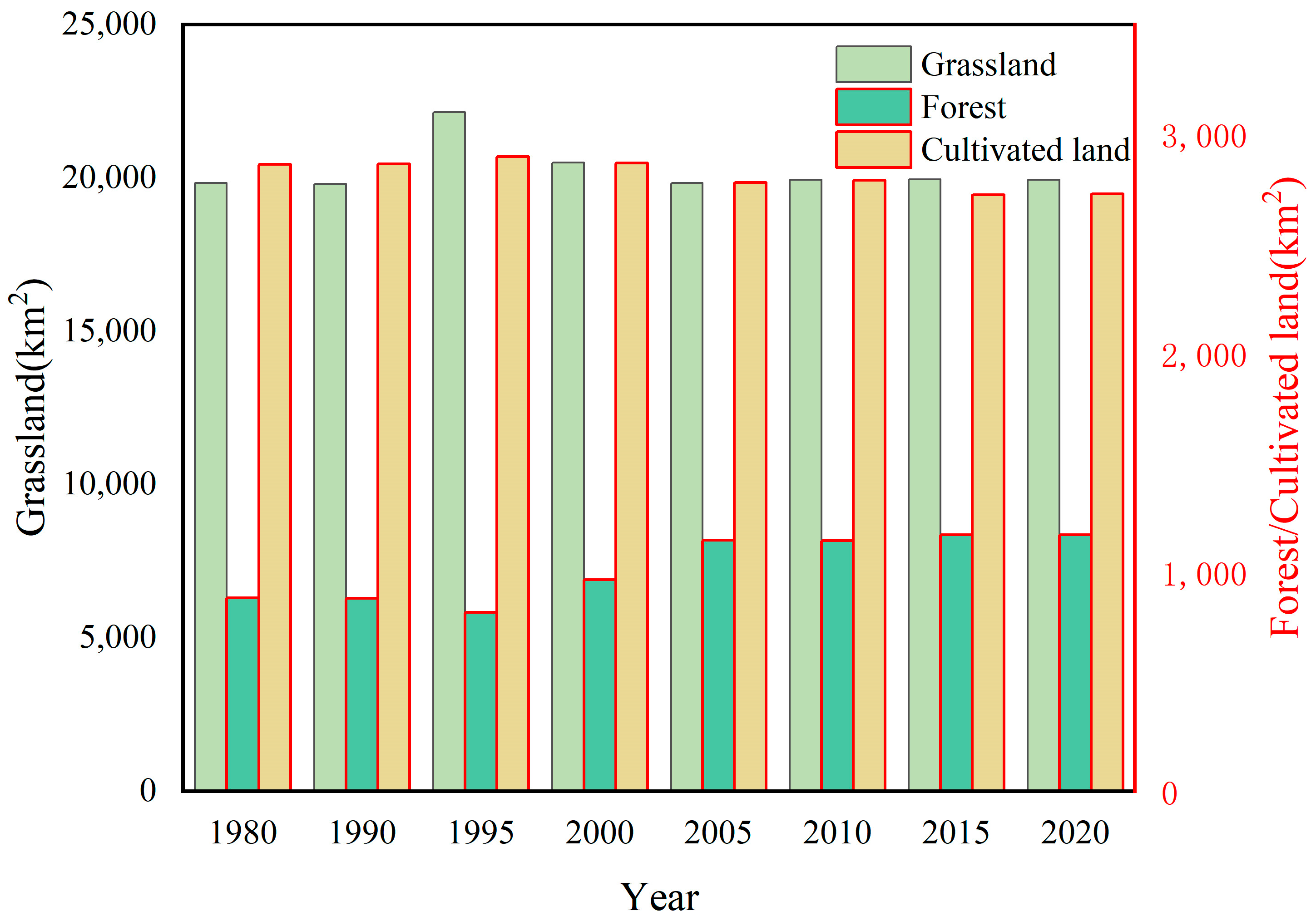
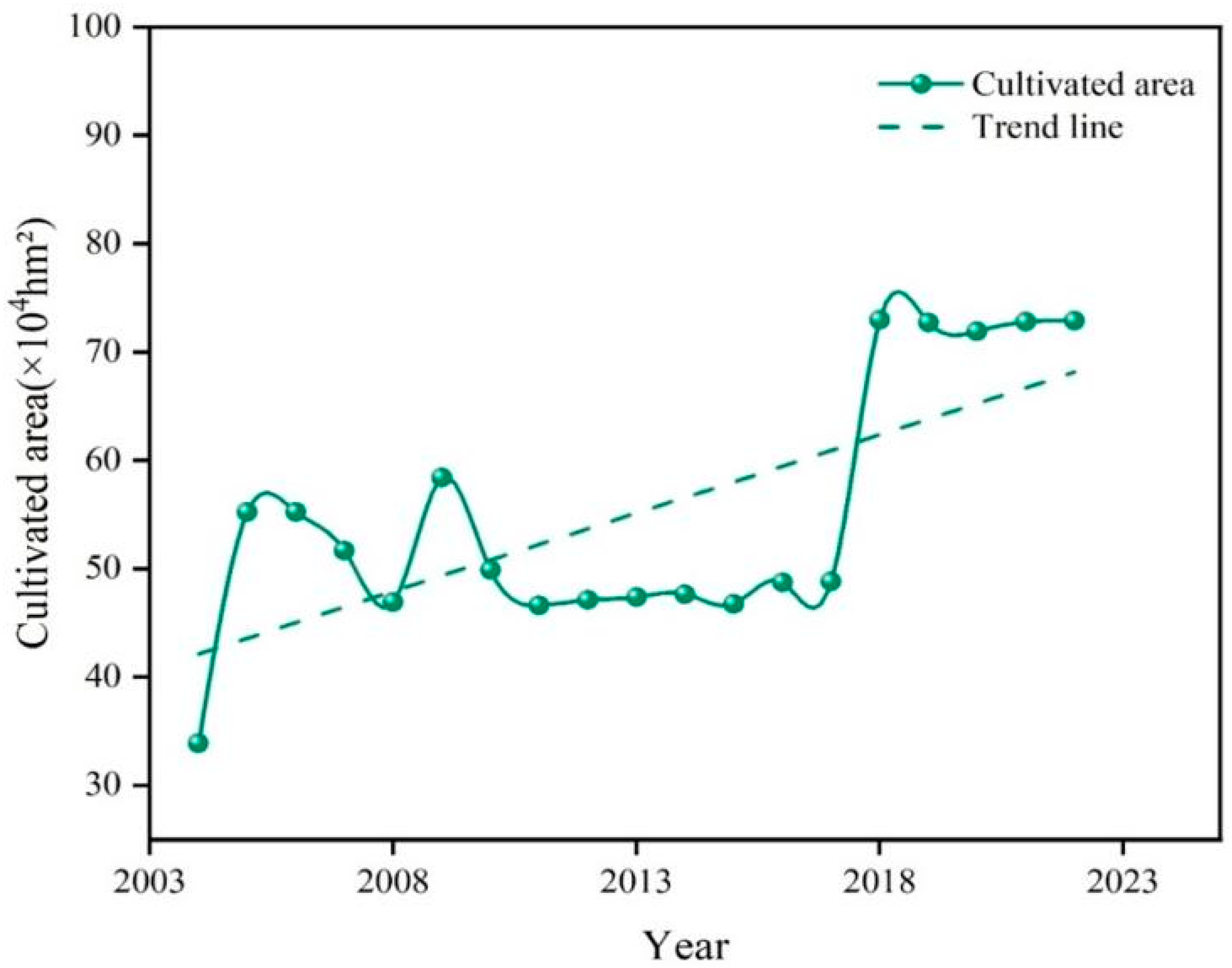
The spring SGI variation curve in the Mu Us Sandy Land demonstrates a declining trend, which may be influenced by human activities, such as coal mining, leading to a significant increase in water consumption. There is research [55] confirming that the land water storage (TWS) and groundwater storage (GWS) in the study area are decreasing at rates of 0.85 and 0.95 cm/yr, respectively. Specifically, 79.23% of the TWS decrease and 90.45% of the GWS decrease can be attributed to human activities, mainly driven by the increase in agricultural and industrial water consumption, such as coal mining operations. In the summer season of the Mu Us Sandy Land from 1959 to 2019, a notable increasing trend in temperatures was observed [56], with the maximum temperature rising at a rate of 0.10 °C/10 yr and the minimum temperature increasing at a rate of 0.58 °C/10 yr, which resulted in excessive evaporation, drier soil conditions, higher water demand for vegetation growth, and a lack of groundwater replenishment, thereby showing a downward trend in the SGI. During autumn, the season of crop harvesting, irrigation decreases, and according to Liu et al. [57], there is a dramatic increase in the number of areas and total area of farmland, reaching 2149 and approximately 340.72 km2, respectively, in 2018 within the Mu Us Sandy Land, further contributing to the pronounced downward trend in the SGI. Winter in the Mu Us Sandy Land is cold and dry, with the SGI variation curve showing a declining trend, possibly due to scarce precipitation and snow melt, coupled with soil freezing, making groundwater recharge difficult. Furthermore, the SGI seasonal variation curves exhibit the same declining trend during both the growing and non-growing seasons. Regarding the growing season, satellite retrieval and yearbook data indicate a slight overall decrease in cultivated land area in the Mu Us Sandy Land since 1999, as depicted in Figure 8. However, as seen in Figure 9, the cultivated land area in the Yulin region is increasing, with a linear upward trend in grain production. According to Sun et al. [58], there is an increasing trend in the NDVI during the growing season, indicating an improvement in vegetation coverage. Additionally, measures such as returning farmland to forests have led to a significant increase in forested areas in recent years, thereby expanding the water demand of vegetation during the growing season [59]. With groundwater replenishment being difficult, a downward trend is observed. During the non-growing season, reduced irrigation and precipitation contribute to the difficulty in groundwater replenishment.

4.3. Correlation Coefficient and Hysteresis Analysis of SPI and SGI

The correlation coefficients of the SPI and the SGI show negative correlation at four time scales. There should be a certain degree of positive correlation between the SGI and the SPI, but there is a negative correlation trend at the four time scales. The main reasons for this phenomenon are human activities and agricultural irrigation. In an analysis of the Mu Us Sandy Land, Gao [60] mentioned that the excessive exploitation of land by human beings has gradually affected the surrounding rivers and other ecological environments, making land desertification more serious and reducing groundwater storage. In addition, to ensure the normal growth of plants, the Yulin area uses deep well irrigation to carry out land desertification transformation, which also leads to the decline in the groundwater level.
There is no lag phenomenon between the SPI and the SGI at short time scales (1-month and 3-month scales), indicating that groundwater is timely replenished from precipitation, which is consistent with Hussain’s [61] research results. The rise in the groundwater level is linearly related to each rainfall event. But there is a significant lag phenomenon between them at long-term scales (6-month and 12-month scales), with a lag time of almost one year for both time scales. Our study suggests that this lag may be caused by insufficient precipitation and extreme precipitation. Atmospheric precipitation is the primary source of groundwater recharge and affects groundwater reserves [62]. Maria Rosaria Alfio et al. [63] point out that due to the influence of geology and local water flow conditions, the groundwater level exhibits a lag in response to precipitation. The drought and flood water level classification based on the SPI [64], combined with the analysis of the SPI in the study area, showed that the probability of drought and extreme rainstorm events in the study area reached 32.31%. Maria Rosaria Alfio et al. [63] argue that the lag caused by rainfall in groundwater systems depends on the time it takes for adequate precipitation to seep into the ground. From the perspective of drought, sustained precipitation deficit hinders sufficient groundwater replenishment and runoff [65], which may be one of the reasons for this lag.
In addition, Zheng et al. [66] proposed that rainfall intensity plays an essential role in the changes in groundwater recharge due to runoff processes. This study found that on a 12-month scale (Figure 7d), the SPI reached a regional peak of 2.4715 in August 2016, corresponding to an SGI value of −0.9844 (the lowest point in the region was −0.9915). After this, the SGI showed an overall downward trend, reaching a historical low of −2.4184 in March 2021. In the case of extreme rainfall, surface runoff occurs and increases, and the surface infiltration rate is low. Most of the water flows along the surface, so groundwater cannot be replenished promptly, leading to a lag between the two phenomena [67].

5. Conclusions

It has been proved that using satellite remote sensing data to construct a groundwater drought index is an effective alternative to detect groundwater drought, especially in the case of insufficient groundwater measurement data. Based on GRACE gravity satellite technology and data, the GRACE_SGI was utilized for drought characterization in the Mu Us Sandy Land. The different time scales and seasonal trend changes in groundwater drought in the study area from 2002 to 2021 were comprehensively identified. Subsequently, the characteristic of hysteresis time between the GRACE_SGI and the SPI were clarified. From the results, major conclusions are given as follows.
Based on the comparative analysis results, the Pearson III function is the optimal probability density function at the different time scales of 1 month, 3 months, 6 months, and 12 months in the study area from 2002 to 2021.
There are some gains and losses characteristics of GWAs at various time scales. The GRACE_SGI shows a downward trend at different time scales.
Due to insufficient adequate precipitation and other factors, the absolute values based on the maximum correlation coefficients between the SPI and the GRACE_SGI at different time scales were 0.1296, 0.2483, 0.2427, and 0.5224, indicating that there were time lags of 0, 0, 12, and 11 months, respectively.
As a derivative of the SPI, the GRACE_SGI shares similar advantages and disadvantages with the SPI; however, due to the inherent characteristics of GWAs, there are differences between them. The value of the GRACE_SGI is influenced by the fitting distribution function, and the selection of fitting functions is more diverse. Different fitting functions can alter drought classification.
Further research could evaluate the adaptability of the GRACE_SGI in other regions. Unlike hydrological sequences such as precipitation and runoff, GWA sequences and their derived GRACE_SGI sequences are not only driven by meteorological factors but are also affected by specific local supply and discharge. Therefore, when using the GRACE_SGI for spatial analysis of groundwater drought, it is necessary to consider the local hydrogeological conditions.
In summary, this study highlights the vulnerability of semiarid ecosystems to hydroclimatic changes and provides a satellite-based framework for monitoring groundwater drought in data-scarce regions.

Author Contributions

Q.Z., H.Y. and Y.Z. designed and created the figures; L.Z., J.L., Y.C. and X.W. edited the text and organized formatting; Y.Z., Z.H., J.Z. and B.X. discussed the results and wrote the paper. All authors have read and agreed to the published version of the manuscript.

Funding

This research study was funded by the Shaanxi Provincial Department of Science and Technology (2023JCYB449), Yan’an Science and Technology Bureau’s List System Project (2023SLJBZ002), Shaanxi Province College Student Innovation and Entrepreneurship Training Program Project (S202310719123), and Yan’an University Project (YDBK2019-35).

Data Availability Statement

The datasets used and/or analyzed during the current study are available from the corresponding author upon reasonable request.

Conflicts of Interest

The authors declare no competing interests.

References

  1. Wang, W.; Chen, Y.; Wang, W.; Zhu, C.; Chen, Y.; Liu, X.; Zhang, T. Water Quality and Interaction between Groundwater and Surface Water Impacted by Agricultural Activities in an Oasis-Desert Region. J. Hydrol. 2023, 617, 128937. [Google Scholar] [CrossRef]
  2. Ndikubwimana, I.; Mao, X.; Niyonsenga, J.D.; Zhu, D.; Mwizerwa, S. Water-Rock Interaction, Formation and Circulation Mechanism of Highly Bicarbonate Groundwater in the Northwestern Geothermal Prospects of Rwanda. Episodes 2022, 45, 73–86. [Google Scholar] [CrossRef] [PubMed]
  3. Wang, L.; Jia, B.; Xie, Z.; Wang, B.; Liu, S.; Li, R.; Liu, B.; Wang, Y.; Chen, S. Impact of Groundwater Extraction on Hydrological Process over the Beijing-Tianjin-Hebei Region, China. J. Hydrol. 2022, 609, 127689. [Google Scholar] [CrossRef]
  4. Zhang, Q.; Miao, C.; Guo, X.; Gou, J.; Su, T. Human Activities Impact the Propagation from Meteorological to Hydrological Drought in the Yellow River Basin, China. J. Hydrol. 2023, 623, 129752. [Google Scholar] [CrossRef]
  5. Ministry of Water Resources of the People’s Republic of China. China Water Resources Bulletin; China Water Resources and Hydropower Press: Beijing, China, 2022.
  6. World Meteorological Organization. State of the Global Climate 2024. 2024. Available online: https://wmo.int/publication-series/state-of-global-climate-2024 (accessed on 10 August 2025).
  7. IPCC. Climate Change 2024: Mitigation of Climate Change (Working Group III, Summary for Policymakers); IPCC: Geneva, Switzerland, 2024. [Google Scholar]
  8. Zhu, Y.; Luo, P.; Zhang, S.; Sun, B. Spatiotemporal Analysis of Hydrological Variations and Their Impacts on Vegetation in Semiarid Areas from Multiple Satellite Data. Remote Sens. 2020, 12, 4177. [Google Scholar] [CrossRef]
  9. Zhang, Q.; Zhu, B.; Yang, J.; Ma, P.; Liu, X.; Lu, G.; Wang, Y.; Yu, H.; Liu, W. New characteristics of climatic humidification trend in northwest China. Chin. Sci. Bull. 2021, 66, 3757–3771. [Google Scholar] [CrossRef]
  10. Guan, Y.; Gu, X.; Slater, L.J.; Li, X.; Li, J.; Wang, L.; Tang, X.; Kong, D.; Zhang, X. Human-Induced Intensification of Terrestrial Water Cycle in Dry Regions of the Globe. npj Clim. Atmos. Sci. 2024, 7, 45. [Google Scholar] [CrossRef]
  11. Zhou, Z.; Lu, B.; Jiang, Z.; Zhao, Y. Quantifying Water Storage Changes and Groundwater Drought in the Huaihe River Basin of China Based on GRACE Data. Sustainability 2024, 16, 8437. [Google Scholar] [CrossRef]
  12. Marchant, B.P.; Cuba, D.; Brauns, B.; Bloomfield, J.P. Temporal Interpolation of Groundwater Level Hydrographs for Regional Drought Analysis Using Mixed Models. Hydrogeol. J. 2022, 30, 1801–1817. [Google Scholar] [CrossRef]
  13. Mishra, A.K.; Singh, V.P. A Review of Drought Concepts. J. Hydrol. 2010, 391, 202–216. [Google Scholar] [CrossRef]
  14. Zhang, T.; Su, X.; Zhang, G.; Wu, H.; Wang, G.; Chu, J. Evaluation of the Impacts of Human Activities on Propagation from Meteorological Drought to Hydrological Drought in the Weihe River Basin, China. Sci. Total Environ. 2022, 819, 153030. [Google Scholar] [CrossRef] [PubMed]
  15. Han, Z.; Huang, S.; Huang, Q.; Leng, G.; Wang, H.; Bai, Q.; Zhao, J.; Ma, L.; Wang, L.; Du, M. Propagation Dynamics from Meteorological to Groundwater Drought and Their Possible Influence Factors. J. Hydrol. 2019, 578, 124102. [Google Scholar] [CrossRef]
  16. Zavareh, M.M.J.; Mahjouri, N.; Rahimzadegan, M.; Rahimpour, M. A drought index based on groundwater quantity and quality: Application of multivariate copula analysis. J. Clean. Prod. 2023, 417, 137959. [Google Scholar] [CrossRef]
  17. Secci, D.; Tanda, M.G.; D’Oria, M.; Todaro, V.; Fagandini, C. Impacts of Climate Change on Groundwater Droughts by Means of Standardized Indices and Regional Climate Models. J. Hydrol. 2021, 603, 127154. [Google Scholar] [CrossRef]
  18. Liu, Q.; Zhang, X.; Xu, Y.; Li, C.; Zhang, X.; Wang, X. Characteristics of groundwater drought and its correlation with meteorological and agricultural drought over the North China Plain based on GRACE. Ecol. Indic. 2024, 161, 111925. [Google Scholar] [CrossRef]
  19. Rabeea, A.K.K.; Asha, J.; Thendiyath, R.; Josephina, P.; Sheeja, P.S. Characterization of spatio-temporal groundwater drought in Kalpathypuzha watershed, India. Sustain. Water Resour. Manag. 2025, 11, 79. [Google Scholar] [CrossRef]
  20. Halder, S.; Roy, M.B.; Roy, P.K. Analysis of Groundwater Level Trend and Groundwater Drought Using Standard Groundwater Level Index: A Case Study of an Eastern River Basin of West Bengal, India. SN Appl. Sci. 2020, 2, 507. [Google Scholar] [CrossRef]
  21. Uddameri, V.; Singaraju, S.; Hernandez, E.A. Is Standardized Precipitation Index (SPI) a Useful Indicator to Forecast Groundwater Droughts?—Insights from a Karst Aquifer. J. Am. Water Resour. Assoc. 2019, 55, 70–88. [Google Scholar] [CrossRef]
  22. Mckee, T.B.; Doesken, N.J.; Kleist, J. The Relationship of Drought Frequency and Duration to Time Scales. In Proceedings of the 8th Conference on Applied Climatology, Anaheim, CA, USA, 17–22 January 1993. [Google Scholar]
  23. Guo, M.; Yue, W.; Wang, T.; Zheng, N.; Wu, L. Assessing the Use of Standardized Groundwater Index for Quantifying Groundwater Drought over the Conterminous US. J. Hydrol. 2021, 598, 126227. [Google Scholar] [CrossRef]
  24. Hu, Y.; Chao, N.; Yang, Y.; Wang, J.; Yin, W.; Xie, J.; Duan, G.; Zhang, M.; Wan, X.; Li, F.; et al. Integrating GRACE/GRACE Follow-On and Wells Data to Detect Groundwater Storage Recovery at a Small-Scale in Beijing Using Deep Learning. Remote Sens. 2023, 15, 5692. [Google Scholar] [CrossRef]
  25. Khorrami, M.; Shirzaei, M.; Ghobadi-Far, K.; Werth, S.; Carlson, G.; Zhai, G. Groundwater Volume Loss in Mexico City Constrained by InSAR and GRACE Observations and Mechanical Models. Geophys. Res. Lett. 2023, 50, e2022GL101962. [Google Scholar] [CrossRef]
  26. Wang, F.; Wang, Z.; Yang, H.; Di, D.; Zhao, Y.; Liang, Q. utilising GRACE-Based Groundwater Drought Index for Drought Characterization and Teleconnection Factors Analysis in the North China Plain. J. Hydrol. 2020, 585, 124849. [Google Scholar] [CrossRef]
  27. Satish Kumar, K.; AnandRaj, P.; Sreelatha, K.; Bisht, D.S.; Sridhar, V. Monthly and Seasonal Drought Characterization Using GRACE-Based Groundwater Drought Index and Its Link to Teleconnections across South Indian River Basins. Climate 2021, 9, 56. [Google Scholar] [CrossRef]
  28. Lin, M.; Hou, L.; Qi, Z.; Wan, L. Impacts of Climate Change and Human Activities on Vegetation NDVI in China’s Mu Us Sandy Land during 2000–2019. Ecol. Indic. 2022, 142, 109164. [Google Scholar] [CrossRef]
  29. Pei, Y.; Huang, L.; Shao, M.; Wang, J.; Zhang, Y. Patterns and Drivers of Seasonal Water Sources for Artificial Sand-Fixing Plants in the Northeastern Mu Us Sandy Land, Northwest China. Pedosphere 2024, 34, 63–77. [Google Scholar] [CrossRef]
  30. Huang, Y.; Yu, X.; Li, E.; Chen, H.; Li, L.; Wu, X.; Li, X. A Process-Based Water Balance Model for Semi-Arid Ecosystems: A Case Study of Psammophytic Ecosystems in Mu Us Sandland, Inner Mongolia, China. Ecol. Model. 2017, 353, 77–85. [Google Scholar] [CrossRef]
  31. Yang, Z.Y.; Wang, K.; Yuan, Y.; Huang, J.; Chen, Z.J.; Li, C. Non-Negligible Lag of Groundwater Infiltration Recharge: A Case in Mu Us Sandy Land, China. Water 2019, 11, 561. [Google Scholar] [CrossRef]
  32. Luo, P.; Yan, P.; Wang, X.; Wu, Y.; Lyu, J.; He, B.; Duan, W.; Wang, S.; Zha, X. Historical and comparative overview of sponge campus construction and future challenges. Sci. Total Environ. 2024, 907, 167477. [Google Scholar] [CrossRef]
  33. Shen, X.; Niu, L.; Jia, X.; Yang, T.; Hu, W.; Wu, C.; Shao, M. Disentangling Ecological Restoration’s Impact on Terrestrial Water Storage. Geophys. Res. Lett. 2025, 52, e2024GL111669. [Google Scholar] [CrossRef]
  34. Wu, R.; Zhang, C.; Li, Y.; Zhu, C.; Lu, L.; Cui, C.; Zhang, Z.; Wang, S.; Chu, J.; Li, Y. Assessment of Variability and Attribution of Drought Based on GRACE in China from Three Perspectives: Water Storage Component, Climate Change, Water Balance. Remote Sens. 2023, 15, 4426. [Google Scholar] [CrossRef]
  35. Zhang, X.; Ren, C.; Wang, Z.; Li, X.; Zhang, Y. Gap-filling GRACE and GRACE-FO data with a climate adjustment scheme using Singular Spectrum analysis. J. Hydrol. 2025, 653, 132782. [Google Scholar] [CrossRef]
  36. Long, D.; Yang, Y.; Wada, Y.; Hong, Y.; Liang, W.; Chen, Y.; Yong, B.; Hou, A.; Wei, J.; Chen, L. Deriving Scaling Factors Using a Global Hydrological Model to Restore GRACE Total Water Storage Changes for China’s Yangtze River Basin. Remote Sens. Environ. 2015, 168, 177–193. [Google Scholar] [CrossRef]
  37. Seyyedi, H.; Anagnostou, E.N.; Beighley, E.; McCollum, J. Hydrologic Evaluation of Satellite and Reanalysis Precipitation Datasets over a Mid-Latitude Basin. Atmos. Res. 2015, 164–165, 37–48. [Google Scholar] [CrossRef]
  38. Han, Z.; Huang, S.; Huang, Q.; Leng, G.; Liu, Y.; Bai, Q.; Shi, W. GRACE-based high-resolution propagation threshold from meteorological to groundwater drought. Agric. For. Meteorol. 2021, 307, 108476. [Google Scholar] [CrossRef]
  39. Rodell, M.; Velicogna, I.; Famiglietti, J.S. Satellite-Based Estimates of Groundwater Depletion in India. Nature 2009, 460, 999–1002. [Google Scholar] [CrossRef]
  40. Xue, D.; Gui, D.; Ci, M.; Liu, Q.; Wei, G.; Liu, Y. Spatial and Temporal Downscaling Schemes to Reconstruct High-Resolution GRACE Data: A Case Study in the Tarim River Basin, Northwest China. Sci. Total Environ. 2024, 907, 167908. [Google Scholar] [CrossRef]
  41. Liu, X.; Hu, L.; Sun, K.; Yang, Z.; Sun, J.; Yin, W. Improved Understanding of Groundwater Storage Changes under the Influence of River Basin Governance in Northwestern China Using GRACE Data. Remote Sens. 2021, 13, 2672. [Google Scholar] [CrossRef]
  42. Lorenzo, M.N.; Pereira, H.; Alvarez, I.; Dias, J.M. Standardized Precipitation Index (SPI) Evolution over the Iberian Peninsula during the 21st Century. Atmos. Res. 2024, 297, 107132. [Google Scholar] [CrossRef]
  43. Pandey, V.; Pandey, P.K.; Lalrammawii, H.P. Characterization and Return Period Analysis of Meteorological Drought under the Humid Subtropical Climate of Manipur, Northeast India. Nat. Hazards Res. 2023, 3, 546–555. [Google Scholar] [CrossRef]
  44. Li, M.; Wang, G.; Zong, S.; Chai, X. Copula-Based Assessment and Regionalization of Drought Risk in China. Int. J. Environ. Res. Public Health 2023, 20, 4074. [Google Scholar] [CrossRef]
  45. Anderson, T.W.; Darling, D.A. Asymptotic theory of certain “goodness of fit” criteria based on stochastic processes. Ann. Math. Stat. 1952, 23, 193–212. [Google Scholar] [CrossRef]
  46. Yuan, M.; Gan, G.; Bu, J.; Su, Y.; Ma, H.; Liu, X.; Gao, Y. A new multivariate composite drought index considering the lag time and the cumulative effects of drought. J. Hydrol. 2025, 653, 132757. [Google Scholar] [CrossRef]
  47. Wu, J.; Chen, X.; Yuan, X.; Yao, H.; Zhao, Y.; AghaKouchak, A. The interactions between hydrological drought evolution and precipitation-streamflow relationship. J. Hydrol. 2021, 597, 126210. [Google Scholar] [CrossRef]
  48. Liu, Y.; Shan, F.; Yue, H.; Wang, X.; Fan, Y. Global analysis of the correlation and propagation among meteorological, agricultural, surface water, and groundwater droughts. J. Environ. Manag. 2023, 333, 117460. [Google Scholar] [CrossRef]
  49. Babre, A.; Kalvāns, A.; Avotniece, Z.; Retiķe, I.; Bikše, J.; Popovs, K.; Jemeljanova, M.; Zelenkevičs, A.; Dēliņa, A. The Use of Predefined Drought Indices for the Assessment of Groundwater Drought Episodes in the Baltic States over the Period 1989–2018. J. Hydrol. Reg. Stud. 2022, 40, 101049. [Google Scholar] [CrossRef]
  50. Wang, L.; Guo, S.; Wang, J.; Chen, Y.; Qiu, H.; Zhang, J.; Wei, X. A Novel Multi-Scale Standardized Index Analyzing Monthly to Sub-Seasonal Drought-Flood Abrupt Alternation Events in the Yangtze River Basin. J. Hydrol. 2024, 633, 130999. [Google Scholar] [CrossRef]
  51. He, B.; Wu, J.; Lü, A.; Cui, X.; Zhou, L.; Liu, M.; Zhao, L. Quantitative Assessment and Spatial Characteristic Analysis of Agricultural Drought Risk in China. Nat. Hazards 2013, 66, 155–166. [Google Scholar] [CrossRef]
  52. Athukoralalage, D.; Brookes, J.; McDowell, R.W.; Mosley, L.M. Impact of Hydrological Drought Occurrence, Duration, and Severity on Murray-Darling Basin Water Quality. Water Res. 2024, 252, 121201. [Google Scholar] [CrossRef]
  53. Zhong, Y.; Zhong, M.; Feng, W.; Zhang, Z.; Shen, Y.; Wu, D. Groundwater Depletion in the West Liaohe River Basin, China and Its Implications Revealed by GRACE and In Situ Measurements. Remote Sens. 2018, 10, 493. [Google Scholar] [CrossRef]
  54. Zhang, Y.; Liu, X.; Jiao, W.; Zhao, L.; Zeng, X.; Xing, X.; Zhang, L.; Hong, Y.; Lu, Q. A New Multi-Variable Integrated Framework for Identifying Flash Drought in the Loess Plateau and Qinling Mountains Regions of China. Agric. Water Manag. 2022, 265, 107544. [Google Scholar] [CrossRef]
  55. Gao, N.; Liang, W.; Gou, F.; Liu, Y.; Fu, B.; Lü, Y. Assessing the Impact of Agriculture, Coal Mining, and Ecological Restoration on Water Sustainability in the Mu Us Sandyland. Sci. Total Environ. 2024, 929, 172513. [Google Scholar] [CrossRef]
  56. Liang, L.; Chao, Y.; Wang, X.; Li, J.; Ma, P. Seasonal climate change characteristics of the Mu Us Sandy Land based on long time scale. Environ. Monit. Assess. 2025, 197, 771. [Google Scholar] [CrossRef] [PubMed]
  57. Liu, X.; Dong, Z.; Ding, Y.; Lu, R.; Liu, L.; Ding, Z.; Li, Y. Development of Centre pivot irrigation farmlands from 2009 to 2018 in the Mu Us dune field, China: Implication for land use planning. J. Geogr. Sci. 2022, 32, 1956–1968. [Google Scholar] [CrossRef]
  58. Sun, Z.; Mao, Z.; Yang, L.; Liu, Z.; Han, J.; Wang, H.; He, W. Impacts of Climate Change and Afforestation on Vegetation Dynamic in the Mu Us Desert, China. Ecol. Indic. 2021, 129, 108020. [Google Scholar] [CrossRef]
  59. Feng, X.; Fu, B.; Piao, S.; Wang, S.; Ciais, P.; Zeng, Z.; Lü, Y.; Zeng, Y.; Li, Y.; Jiang, X.; et al. Revegetation in China’s Loess Plateau Is Approaching Sustainable Water Resource Limits. Nat. Clim. Change 2016, 6, 1019–1022. [Google Scholar] [CrossRef]
  60. Gao, X. Mu Us Sandy Land ecological management status and future high-quality agricultural development countermeasures. Agric. Disaster Res. 2023, 13, 248–250. (In Chinese) [Google Scholar]
  61. Hussain, F.; Wu, R.-S.; Shih, D.-S. Water Table Response to Rainfall and Groundwater Simulation Using Physics-Based Numerical Model: WASH123D. J. Hydrol. Reg. Stud. 2022, 39, 100988. [Google Scholar] [CrossRef]
  62. Left, Q.D.; Li, L.; Liu, X.; Zhou, X. Study on lag between precipitation and shallow groundwater recharge. Groundwater 2016, 38, 7–9. [Google Scholar]
  63. Alfio, M.R.; Pisinaras, V.; Panagopoulos, A.; Balacco, G. Groundwater Level Response to Precipitation at the Hydrological Observatory of Pinios (Central Greece). Groundw. Sustain. Dev. 2024, 24, 101081. [Google Scholar] [CrossRef]
  64. Han, Z.; Zhang, H.; Fu, J.; Wang, Z.; Duan, L.; Zhang, W.; Li, Z. Dynamic assessment of the impact of compound dry-hot conditions on global terrestrial water storage. Remote Sens. Environ. 2024, 315, 114428. [Google Scholar] [CrossRef]
  65. Karunakalage, A.; Lee, J.-Y.; Daqiq, M.T.; Cha, J.; Jang, J.; Kannaujiya, S. Characterization of Groundwater Drought and Understanding of Climatic Impact on Groundwater Resources in Korea. J. Hydrol. 2024, 634, 131014. [Google Scholar] [CrossRef]
  66. Zheng, W.; Wang, S.; Tan, K.; Shen, Y.; Yang, L. Rainfall Intensity Affects the Recharge Mechanisms of Groundwater in a Headwater Basin of the North China Plain. Appl. Geochem. 2023, 155, 105742. [Google Scholar] [CrossRef]
  67. Han, Z.; Huang, S.; Zhao, J.; Leng, G.; Huang, Q.; Zhang, H.; Li, Z. Long-chain propagation pathways from meteorological to hydrological, agricultural and groundwater drought and their dynamics in China. J. Hydrol. 2023, 625, 130131. [Google Scholar] [CrossRef]
Figure 1. (a) The location (Mu Us Sandy Land, red boundary). (b) Groundwater storage anomaly (the observation wells are shown as triangles, and GRACE satellite data pixels are shown as circles) of the Mu Us Sandy Land. (c) The time series of GWAs from the GRACE and the GLDAS (the shadows show the uncertainties in GWSAs). (df) Comparison of the groundwater levels of observation wells and the satellite data pixel values of GRACE-derived GWAs. (A & 19, B & 23 and C & 117, respectively. The shadows represent 95% confidence ellipses. **. Correlation is significant at the 0.01 level (2-tailed)).
Remotesensing 17 04015 g001
Figure 2. Flowchart of identification of groundwater drought characteristics.
Remotesensing 17 04015 g002
Figure 3. Different CDF curves at (a) 1-month, (b) 3-month, (c) 6-month, and (d) 12-month scales.
Remotesensing 17 04015 g003
Figure 4. Temporal variation in GRACE _SGI at (a) 1-month, (b) 3-month, (c) 6-month, and (d) 12-month scales.
Remotesensing 17 04015 g004
Figure 5. Changes in the SGI in (a) spring, (b) summer, (c) autumn, (d) winter, and (e) growing and (f) dormant seasons.
Remotesensing 17 04015 g005
Figure 6. Comparison of the SPI and GRACE_SGI in the Mu Us Sandy Land at the (a) 1-month, (b) 3-month, (c) 6-month, and (d) 12-month scales.
Remotesensing 17 04015 g006
Figure 7. Hysteresis time of the SPI and SGI in the Mu Us Sandy Land at the (a) 1-month, (b) 3-month, (c) 6-month, and (d) 12-month scales.
Remotesensing 17 04015 g007
Figure 8. Main land use types in the Mu Us Sandy Land.
Remotesensing 17 04015 g008
Figure 9. Changes in the cultivated area in the Yulin area.
Remotesensing 17 04015 g009
Table 1. The characteristics of four fitting functions of GWAs according to AD test.
ScaleFitting FunctionA ValueZ Valuep-Value
1 monthGamma11.29311.330<0.05
Norm9.4029.433<0.05
Beta0.5940.594≥0.05
Pearson III0.5950.597≥0.05
3 monthsGamma11.52111.559<0.05
Norm9.6029.634<0.05
Beta1.3261.330<0.05
Pearson III0.4160.417≥0.05
6 monthsGamma10.65610.692<0.05
Norm9.3429.374<0.05
Beta2.2862.294<0.05
Pearson III0.8430.846<0.05
12 monthsGamma8.8598.890<0.05
Norm8.0928.121<0.05
Beta4.2694.284<0.05
Pearson III3.7693.782<0.05
Disclaimer/Publisher’s Note: The statements, opinions and data contained in all publications are solely those of the individual author(s) and contributor(s) and not of MDPI and/or the editor(s). MDPI and/or the editor(s) disclaim responsibility for any injury to people or property resulting from any ideas, methods, instructions or products referred to in the content.