

Article

Remote Sensing Inversion and Spatiotemporal Dynamics of Multi-Depth Soil Salinity in a Typical Arid Wetland: A Case Study of Ebinur Wetland Reserve, Xinjiang

College of Geography and Remote Sensing Science, Xinjiang University, Urumqi 830049, China
*
Author to whom correspondence should be addressed.
Remote Sens. 2025, 17(24), 3958; https://doi.org/10.3390/rs17243958 (registering DOI)
Submission received: 21 September 2025 / Revised: 4 December 2025 / Accepted: 4 December 2025 / Published: 7 December 2025

Highlights

What are the main findings?
  • The study developed a multi-depth (0–100 cm) soil salinity inversion framework based on the CNN combined with RFLA, effectively capturing spatial heterogeneity of salinization in arid regions.
  • The CNN model demonstrated superior accuracy compared with RF and LSTM models, highlighting its advantage in spatial feature extraction for multi-depth salinity mapping.
What is the implication of the main finding?
  • The proposed framework provides a practical and scalable approach for high-accuracy salinity monitoring in arid and semi-arid regions, supporting sustainable agricultural and ecological management.
  • The multi-depth inversion results reveal vertical migration patterns of soil salinity, offering new insights into subsurface salt accumulation processes and long-term salinization dynamics.

Abstract

Soil salinization in arid regions threatens ecological security and sustainable agriculture. The Ebinur Lake wetland in Xinjiang, situated in an arid climate and subject to human disturbance, suffers from severe salt accumulation and ecological degradation. To overcome the lack of soil depth information and limited spatiotemporal monitoring, this study integrates multi-year field samples and Landsat imagery (1996–2024) to construct a six-layer (0–100 cm) soil salinity inversion framework. Multi-source spectral features were optimized using the Random Frog Leaping Algorithm (RFLA), and models based on Convolutional Neural Network (CNN), Long Short-Term Memory Network (LSTM), and Random Forest (RF) were compared. The results (1) demonstrated that RFLA effectively identified high-contribution features, enhancing efficiency and reducing redundancy; (2) showed that CNN outperformed LSTM and RF in capturing spatial salinity, with R2 values of 0.75, 0.59, 0.63, 0.69, 0.57, and 0.56 for the six layers; and (3) revealed salinity migration: surface enrichment, mid-layer buffering, and deep-layer accumulation. In oases, surface salinity declined while deep layers accumulated; in deserts, surface salinity increased. The proposed framework enhances the accuracy of multi-depth salinity retrieval and provides technical support for salinization monitoring, irrigation management, ecological assessment, and control of land degradation in arid regions.

1. Introduction

Soil salinization is a major issue affecting global terrestrial systems, severely impacting ecosystem health and human living conditions [1,2]. Globally, 932 million hectares of soil are affected by salinization, with continental distributions of 38.4% in Australia, 33.9% in Asia, 15.8% in the Americas, 8.6% in Africa, and 3.3% in Europe [3]. Soil salinization causes irreversible impacts on climate change, hydrological cycles, soil physicochemical properties, and ecological environments [4]. In China, soil salinization is primarily found in the arid regions of the northwest and the coastal areas of the east, including Xinjiang, Qinghai, Ningxia, Inner Mongolia, Northeast China, and the Yellow River Delta. Ebinur Lake is the largest saline lake in Xinjiang, and its surrounding wetland is a vital ecological conservation area in both Xinjiang and Northwest China. Since the 1940s, the lake area has continuously shrunk, and salts have accumulated on the surface as water evaporates, gradually transforming the lakebed into saline soil. Coupled with the region’s arid climate and ongoing anthropogenic disturbances, salinized soils have become one of the most pressing environmental issues in the area. With the implementation of the national “Belt and Road” initiative, Xinjiang has become a central hub of the Silk Road Economic Belt [5]. The Ebinur Lake region has thus become a key gateway along the Silk Road, playing a vital role in the future economic development of Xinjiang and China. Therefore, to clarify the mechanisms and translocation processes of regional salinization and to implement monitoring, prevention, and remediation strategies, it is essential to accurately determine the spatiotemporal distribution of soil salinity. This is crucial for the sustainable development of Xinjiang’s ecological environment and economy.
Traditional soil salinity monitoring relies on in situ sampling and laboratory analysis, which are time-consuming and labor-intensive, and often require expensive instrumentation for measurement, making it unsuitable for large-scale, long-term monitoring of salinized soils. Although handheld proximal sensors can accurately monitor soil salinity at the field scale, their application at regional scales remains inefficient and labor-intensive [6]. Remote sensing technologies have advanced rapidly and are widely applied in surface monitoring. The application of remote sensing for dynamic salinization monitoring has drawn increasing scientific attention. Studies have shown that remote sensing can of-fer long-term, large-scale, and high-precision monitoring of soil salinization [7]. In this context, cost-effective and easily accessible multispectral satellite imagery with high spatial resolution has become a preferred choice for soil salinity monitoring [8]. In recent years, the availability of high-resolution multispectral satellites has increased steadily, making high-resolution image acquisition more convenient and efficient [9]. Common high-temporal-resolution multispectral satellites include MODIS and the Landsat series, while high-spatial-resolution satellites mainly include Sentinel, PlanetScope, and the Gaofen series. Remote sensing enables the precise acquisition of spatial distribution data on soil salinization and has become an effective method for time-series monitoring and trend analysis of salinity evolution [10]. The extent of salinized soils is geographically extensive, and when conducting precise monitoring across different regions and spatial scales, it is crucial to select appropriate imagery sources. As early as 1976, Hunt and Salisbury [11] investigated the effects of soil salt ions on spectral properties using measured soil spectra. In 1984, Clark and Roush [12] explored the relationship between spectral reflectance and material properties through empirical and scattering models, laying the groundwork for applying satellite remote sensing to soil salinity studies. In 1992, Dwivedi [13] demonstrated that standard false color composites and visual interpretation of Landsat MSS and TM data could effectively delineate salinized soils. This demonstrates that the application of remote sensing imagery in identifying salinized soils has taken an important step from theoretical validation to practical implementation. Verma et al. [14] used multi-temporal TM imagery for FCC to investigate the relationship between spectral reflectance and salinized soils, and classified salinized soils into five severity levels. This demonstrates the potential of multi-temporal remote sensing for monitoring the spatiotemporal dynamics of soil salinity. Panah et al. [15] improved classification accuracy by incorporating the thermal infrared band of Land-sat TM into bands 3, 4, and 5, which significantly enhanced classification performance and proved essential for distinguishing between saline and non-saline soils. In summary, the high spatial and temporal resolution characteristics of multispectral remote sensing imagery make it an effective tool for large-scale, long-term monitoring of soil salinization and provide data support for precision management.
With the continuous development of remote sensing technology and machine learning, as well as the increasing depth of academic research, remote sensing can now be used not only for qualitative but also for quantitative analysis of soil salinity. To accurately model the relationship between soil salinity and spectral indices, nonlinear machine learning regression models are commonly employed. Commonly used machine learning models include RF, Extreme Learning Machine (ELM), and Support Vector Machine (SVM). Wang et al. [16] evaluated the performance of combining apparent electrical conductivity (ECa) and RF for regional-scale mapping of soil salinity in typical arid zones. Chen et al. [17] developed several models, including RF, BPNN, ELM, and SVM, to estimate soil salinity, and found that RF yielded the highest inversion accuracy. Ge et al. [18] compared four machine learning algorithms for salinity inversion in the Ebinur Lake basin and found that the GBRT model achieved the best overall performance. However, traditional machine learning models often rely on manually designed features when dealing with high-dimensional and complex remote sensing data, which limits their ability to fully capture deep information and spatiotemporal patterns within the data. In contrast, deep learning models possess strong automatic feature extraction capabilities and end-to-end learning advantages, enabling more effective mining of hidden in-formation from multi-source data and improving the accuracy and robustness of salinity inversion. Zhang et al. [19] successfully monitored soil salinity in croplands of northern Xinjiang using multi-source satellite data combined with Kolmogorov–Arnold Networks (KAN). Aihaiti et al. [20] compared RF, XGBoost, and Multi-Layer Perceptron (MLP) in predicting soil salinity in the Yutian oasis, and found that MLP outperformed other models, demonstrating su-perior generalization capability. Zhang et al. [21] extracted feature variables from Landsat-8 imagery and developed salinization inversion models using RF, CNN, and LSTM. They successfully mapped soil salinity in the Wei-Ku Oasis of Xinjiang. By further optimizing network architectures, deep learning is expected to play an increasingly significant role in the dynamic monitoring and precise mapping of soil salinity, thereby providing more reliable technical support for ecological restoration and sustainable agricultural development in arid regions.
The integration of remote sensing technologies with machine learning models has opened new avenues for large-scale monitoring of soil salinization, particularly in arid and ecologically sensitive regions. However, current studies on multi-depth soil salinity inversion remain limited, with a notable lack of systematic characterization and dynamic analysis of vertical salinity distribution patterns. To address this research gap, this study focuses on the Ebinur Lake wetland in Xinjiang, utilizing Landsat series re-mote sensing imagery in conjunction with ground-truth observations. The main objectives are (1) to apply the RFLA to select key spectral features and construct multi-depth (0–10, 10–20, 20–40, 40–60, 60–80, and 80–100 cm) soil salinity inversion models based on RF, LSTM, and CNN using multi-year field samples, and subsequently apply the trained models to systematically invert soil salinity across all study years for performance; (2) to generate long-term spatial distribution maps of soil salinity at different depths from 1996 to 2024 based on the optimal model, enabling multi-depth digital mapping over time; and (3) to analyze the spatiotemporal evolution of soil salinity across depths, and to explore its variation patterns in both vertical and horizontal dimensions. This study aims to provide scientific and technical support for the dynamic monitoring, precision management, and ecological restoration of soil salinization in arid regions.

2. Materials and Methods

2.1. Overview of the Study Area

The Ebinur Wetland Nature Reserve [22] (Figure 1) is located at the westernmost end of Xinjiang, China, in the northern section of the Tianshan Mountains, west of the Junggar Basin (82°36′ E–83°50′ E, 44°30′ N–45°09′ N). The study area is situated in the mid-latitude region of the Eurasian continent, over 2500 km from the sea, characterized by an extremely arid climate typical of the northern temperate continental arid zone. Annual precipitation ranges from 90.9 to 163.9 mm, with uneven spatiotemporal distribution and low total amount, while annual evaporation exceeds 2500 mm. The parent materials of soil formation in this region mainly consist of alluvial deposits, lacustrine sediments, and sandy aeolian deposits; dominant soil types include gray desert soil, gray-brown desert soil, and aeolian sandy soil. Due to the inherently dry climatic conditions, combined with the expansion of oasis areas and the water demands of agriculture and industry, the water body area of Ebinur Lake has shrunk, causing salt to concentrate on the surface with accumulating moisture; the dried riverbeds have become accumulation zones for soil salinity, aggravating the degree of salinization.

2.2. Data

2.2.1. Field Sampling and Data Acquisition

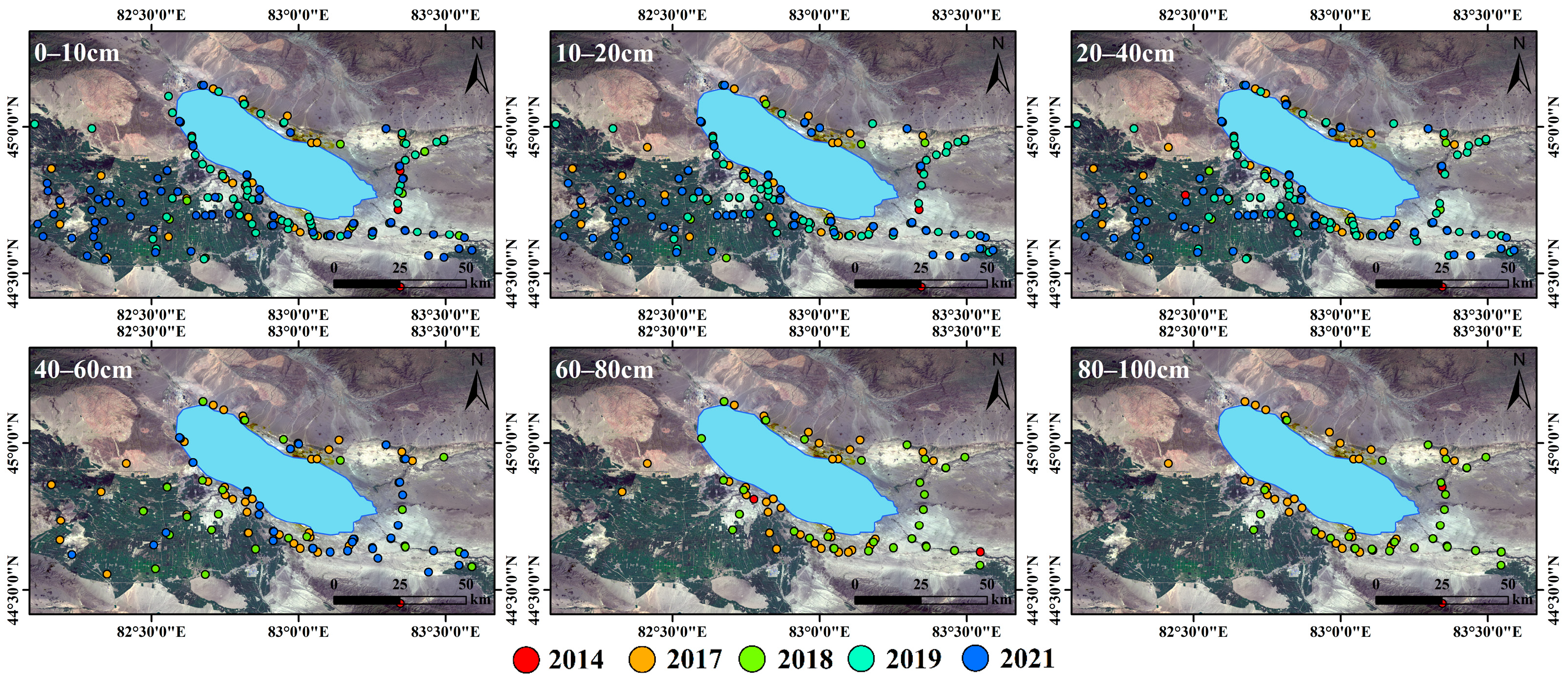
Our research team conducted field sampling in the Ebinur Wetland Reserve from May to August in the years 2014, 2017, 2018, 2019, and 2021 (Figure 2). By conducting field surveys and based on the study area’s topography and land cover, combined with soil texture and previous research findings, sampling was performed in regions with varying soil salinity levels, with sampling points prearranged in advance. Sampling points were primarily distributed around the periphery of Ebinur Lake and along the rivers flowing into the lake to capture variations in soil salinity in the surrounding areas. In the oasis areas, sampling points were selected in cotton fields and forested lands with varying degrees of salinization to gather information on the distribution of salinity in both agricultural and ecological areas. During sampling, a portable GPS device (Garmin GPS 72, accuracy < 10 m, Garmin Ltd., Olathe, KS, USA) was used to determine and record the precise location of each sampling point. While locating the points, the “plum blossom sampling method,” also known as the “five-point sampling method,” was applied. Based on the recorded point, with the sampling point as the center, four points equidistant from it were selected for sampling. Approximately 250 g of soil was collected at each depth for each sampling point. The soil samples from the center and the surrounding four points were mixed and sealed in labeled bags for preservation. Samples were brought back to the laboratory, where impurities were removed. The soil samples were then air-dried under dry conditions, ground, and sieved through a mesh with a pore size of ≤2 mm. The sieved soil was divided into 20 g samples and stored in the dark. Soil samples were placed into reagent bottles containing 100 mL of distilled water, and the solutions were thoroughly mixed to prepare a 1:5 soil-to-water extraction solution. This solution was then left to stand for 8 h. The resulting solution was measured for soil EC1:5 using a digital multiparameter instrument equipped with a composite electrode solution (Multi 3420 Set B, WTW GmbH, Weilheim in Oberbayern, Germany). The study by Cai et al. [23] demonstrated that, in salinized regions of Xinjiang, the relationship between electrical conductivity and soil salt content can be characterized by the regression equation y = 0.101 + 0.234x (where x denotes EC1:5, r = 0.999 ***, n = 14). According to the classification criteria for soil salinization presented in Soil Agrochemical Analysis by Bao et al. [24], saline soils can be categorized into five classes: non-salinized (<1 g/kg), mildly salinized (1–3 g/kg), moderately salinized (3–5 g/kg), severely salinized (5–10 g/kg), and saline (>10 g/kg). After removing outliers, the effective soil salinity samples at various depths are shown in Table 1.

2.2.2. Landsat Series Remote Sensing Image Data

The Landsat series [25] is jointly managed by the National Aeronautics and Space Administration (NASA) and the United States Geological Survey (USGS). The satellites operate in near-polar, sun-synchronous orbits, allowing for the effective extraction of surface data. Remote sensing data have been applied across various professional fields, providing continuous and high-quality data globally. Based on the temporal scope of the study, image datasets from Landsat 5, Landsat 7, Landsat 8, and Landsat 9 satellites covering May to August from 1996 to 2024 were selected via the GEE platform. After cloud removal, mean compositing was performed to generate annual summer images.

2.3. Methods

2.3.1. Selection of Spectral Indices

Remote sensing imagery primarily provides various soil information, such as mineral composition, soil moisture, surface vegetation, and soil texture, corresponding to different spectral bands and band combinations. By utilizing these spectral indices, modeling and inversion of soil salinity distribution within the study area can be conducted. Based on previous research [2], this study selected several spectral indices, including original bands, vegetation indices, salinity indices, soil indices, intensity indices, brightness indices, and moisture indices (Table 2). These were used for further screening of environmental covariates.

2.3.2. Random Frog Leaping Algorithm (RFLA)

RFLA [47] is an intelligent optimization algorithm inspired by the foraging behavior of frog swarms in nature. Its core concept is to simulate random jumps and cooperative search mechanisms of frog groups in discrete space, achieving efficient exploration of high-dimensional feature spaces and optimal feature subset selection. RFLA combines the global search ability of swarm intelligence with the local optimization characteristic of random perturbations, exhibiting strong robustness and convergence efficiency in feature selection problems. The advantage of RFLA lies in its balance between exploration and exploitation: the random jumping mechanism ensures diverse searches within the solution space. At the same time, the grouped cooperative strategy accelerates fine-tuning in local regions. Compared to traditional genetic algorithms or particle swarm optimization algorithms, RFLA maintains relatively low computational complexity even in high-dimensional feature spaces, making it especially suitable for high-dimensional data dimensionality reduction tasks in machine learning. In this study, RFLA uses remote sensing feature variables as inputs to iteratively select key variables that strongly explain multi-depth soil salinity (0–10 cm, 10–20 cm, 20–40 cm, 40–60 cm, 60–80 cm, 80–100 cm), providing a high-quality feature foundation for subsequent RF, LSTM, and CNN model construction

2.3.3. Selection of Soil Salinity Inversion Models

(1)
Random Forest (RF)
RF [48] is a non-parametric machine learning method based on ensemble learning, featuring strong adaptability to high-dimensional data, robustness, and resistance to overfitting, and is widely applied in complex modeling scenarios, such as environmental remote sensing and agricultural monitoring. RF constructs a forest composed of multiple decision trees, employing Bootstrap sampling during training to generate multiple sample subsets, and introduces random feature selection at each tree node split to enhance model generalization. The final model prediction is obtained by averaging the regression results of all decision trees. This method can effectively handle nonlinear and multi-source heterogeneity issues in remote sensing data. It can be used to analyze the explanatory power of each input variable in relation to the distribution of soil salinity.
(2)
Convolutional Neural Network (CNN)
CNN [49] is a type of deep learning model characterized by local receptive fields, parameter sharing, and hierarchical feature extraction capabilities. Initially widely applied in image recognition and processing tasks, it has recently expanded into remote sensing, geoscience information extraction, agricultural monitoring, and other fields involving multi-source unstructured data modeling, particularly suited for high-dimensional, highly nonlinear, and complex modeling problems. CNN extracts local spatial features through multiple convolutional layers, introduces nonlinearity via activation functions (e.g., ReLU) to enhance model expressiveness, and performs dimensionality reduction and feature compression in pooling layers to reduce the risk of overfitting. Finally, the model fuses high-level semantic features through fully connected layers and performs regression prediction to achieve a precise estimation of surface soil salinity content. Compared to traditional statistical methods, CNN does not require manual feature selection and combination, enabling more thorough mining of deep information in remote sensing data, significantly improving model fitting ability and generalization performance, and demonstrating strong stability and prediction accuracy in complex environmental contexts.
(3)
Long Short-Term Memory Network (LSTM)
LSTM [50] is a special type of recurrent neural network (RNN) architecture designed to address the vanishing and exploding gradient problems commonly encountered by traditional RNNs when processing long sequence data. In traditional RNNs, memory of long-distance information rapidly diminishes as the number of time steps increases during training, causing the model to struggle with capturing long-range dependencies. LSTM introduces a set of refined gating mechanisms, including an input gate, forget gate, and output gate, which effectively regulate the writing, retention, and output of information, enabling the network to maintain key information over extended periods. This structure endows LSTM with the ability to model long-term dependencies, making it particularly suitable for handling sequences with large length variations, data exhibiting lag effects, or situations where current predictions heavily rely on historical states. LSTM is widely applied in speech recognition, natural language processing, financial time series analysis, and remote sensing image change detection.

2.3.4. Accuracy Validation

To evaluate the accuracy of soil salinity prediction models at different depths, the dataset was divided into training and testing sets in a 7:3 ratio. The model performance was assessed using the coefficient of determination (R2), mean absolute error (MAE), and root mean square error (RMSE). The formulas for these metrics are as follows:
R 2   =   1     i y ^ i     y i 2 i y ¯ i     y i 2
M A E = 1 m i = 1 m y ^ i y i
R M S E = 1 m i = 1 m ( y i y ^ i ) 2
where y i is the measured soil EC value; y ^ i is the predicted soil EC value; y ¯ i is the mean of the measured soil EC values; and m is the number of sampling points.

2.3.5. Sen’s Slope and Mann–Kendall (MK) Trend Analysis

To quantitatively analyze the temporal trends in soil salinity in the Ebinur Wetland Reserve across different years, this study employed a non-parametric trend analysis method combining Sen’s slope estimator with the MK test [51]. Sen’s slope estimator measures the rate of change in a variable over time, is insensitive to outliers, and is suitable for time series data with non-normal distributions and missing values. The MK test is a widely used non-parametric significance test that detects whether a time series exhibits a significant monotonic trend. It does not require the data to follow a normal distribution and is suitable for analyzing long-term trends in natural environmental data, such as soil salinity.

3. Results

3.1. Descriptive Statistics of Soil Salinity

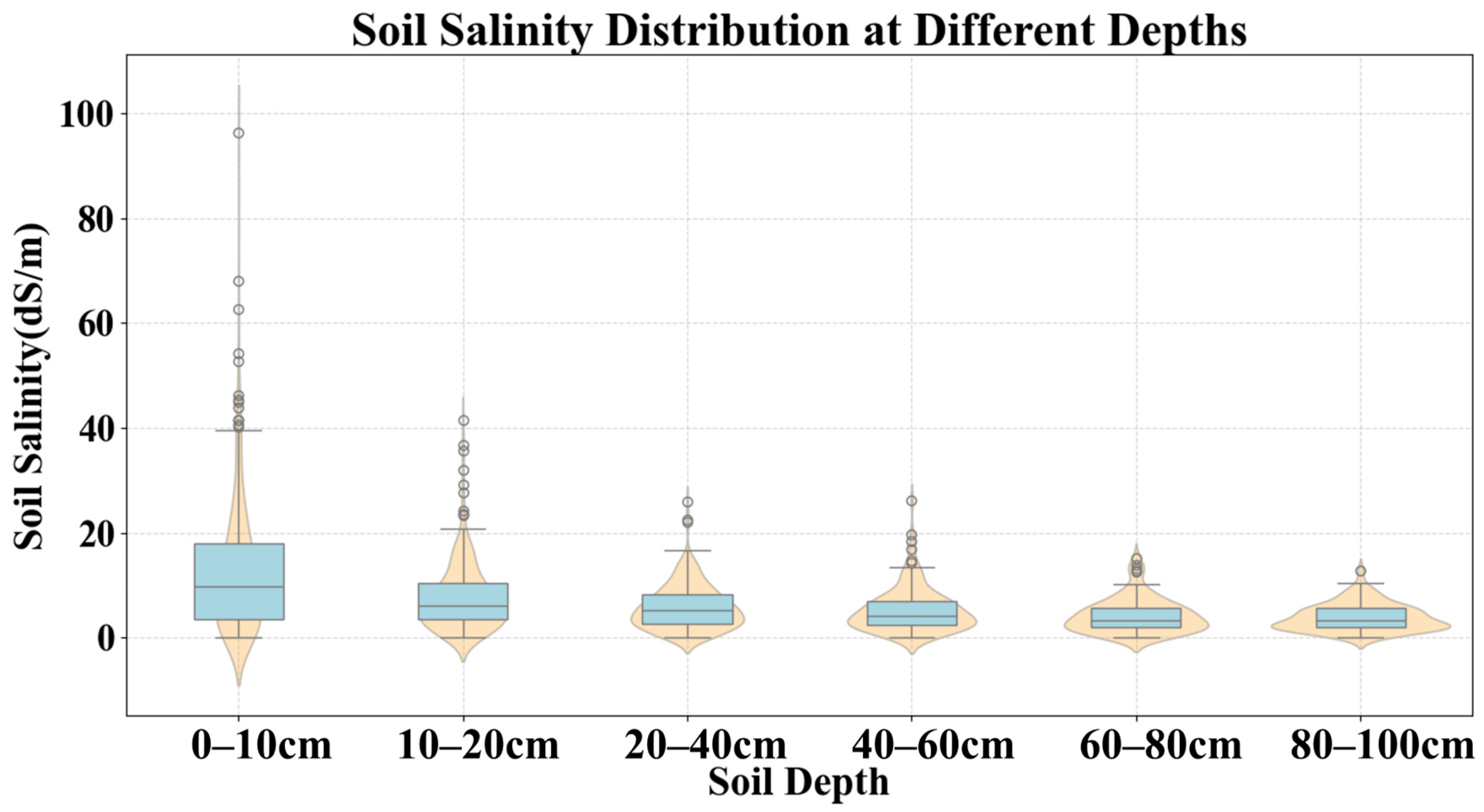
Table 3 and Figure 3 shows that soil salinity at the 0–10 cm depth range varies from 0.003 to 96.4 dS/m, with an average of 13.386 dS/m. At the 10–20 cm depth, salinity values range from 0.002 to 41.4 dS/m, averaging 7.813 dS/m. At the 20–40 cm depth, salinity values range from 0.002 to 25.9 dS/m, averaging 5.799 dS/m. At 40–60 cm, salinity values range from 0.125 to 26.1 dS/m, with an average of 5.345 dS/m. At 60–80 cm, salinity values range from 0.095 to 13.82 dS/m, with an average of 4.059 dS/m. At 80–100 cm, the soil salinity ranges from 0.066 to 12.88 dS/m, with an average value of 3.904 dS/m. The coefficients of variation for soil salinity at different depths range from 0.6653 to 1.0114, indicating moderate to strong variability and reflecting pronounced spatial heterogeneity in the distribution of soil salinity within the Ebinur Wetland Reserve [52].

3.2. Selection of Characteristic Variables for Soil Salinity

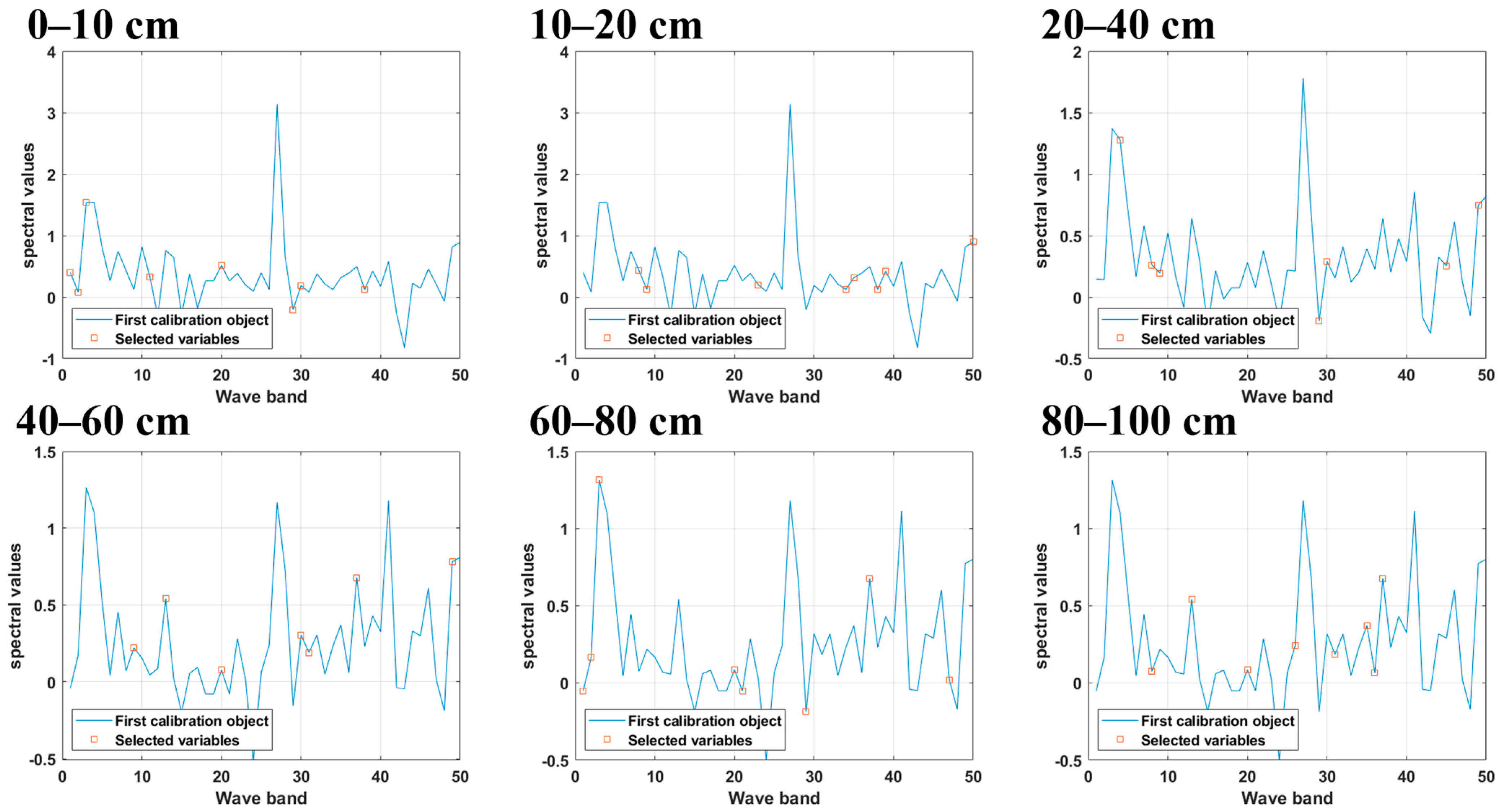
To reduce redundancy in high-dimensional spectral data and extract effective feature bands, this study employed the RFLA to select environmental covariates. Within the PLS modeling framework, the RFLA iteratively searched for feature bands with the number of latent variables set to 6. The data were mean-centered, the number of iterations was 1000, and the step size was set to 5 to thoroughly explore the spectral space. In each iteration, the algorithm randomly selected a subset of bands, evaluated their importance using PLS regression, calculated the selection probability for each band, and filtered high-importance bands based on a probability threshold. The top 8 spectral indices with the highest selection probabilities at each soil depth were ultimately chosen as modeling features, providing a reliable input foundation for subsequent soil parameter prediction models. According to the selection results (Figure 4), the blue band is primarily influenced by surface soil salinity and organic matter content and is sensitive to reflectance changes caused by salinity. The green band can reflect the photosynthetic activity and coverage of vegetation leaves, indirectly indicating the inhibitory effect of soil salinity on plant growth. Vegetation indices (e.g., NDVI), which integrate information from the red and near-infrared bands, effectively reflect vegetation cover and growth health, thereby indirectly capturing the impact of salinity stress on crops. Salinity indices, by utilizing specific band combinations, enhance the spectral response to soil salinity and directly reflect the spatial variation in soil salinity. In summary, these bands and indices were preferentially retained during feature selection, ensuring that the inversion model can simultaneously capture the direct spectral signals of soil salinity and its indirect effects on vegetation, thereby improving model prediction accuracy and physical interpretability. The specific variable names are listed in Table 4.

3.3. Comparison of Soil Salinity Inversion Models

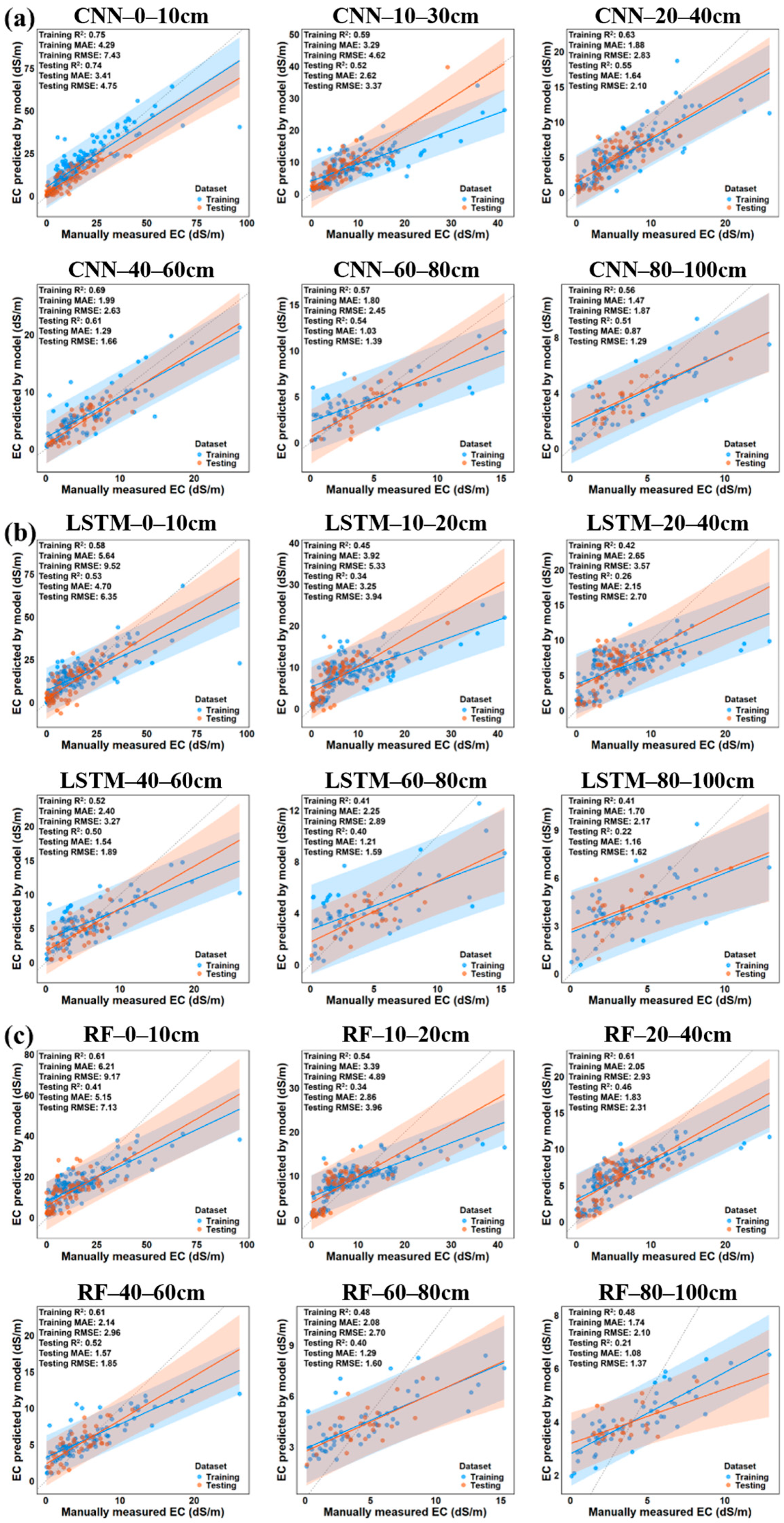
Using the selected feature variables for soil salinity modeling at different depths, we constructed CNN, LSTM, and RF models for soil salinity at various depths. The CNN model consists of two one-dimensional convolutional layers (Conv1d) and two max-pooling layers (MaxPool1d), designed to extract sequential features and perform dimensionality reduction. The first convolutional layer maps the single input channel to 16 feature channels, using a kernel size of 3, a stride of 1, and padding to maintain the output length. This is followed by a max-pooling layer (kernel size 2) that reduces the sequence length by half. The second convolutional layer increases the number of channels from 16 to 32, followed by another pooling layer that further compresses the temporal sequence length. Subsequently, the feature maps were flattened and passed through three fully connected layers, with the first two layers containing 120 and 84 neurons, respectively, both of which were activated by the ReLU function. The final layer consisted of a single neuron serving as the output layer to predict soil salinity values. During model training, the Adam optimization algorithm was employed with a learning rate of 0.0006 to minimize the error between the predicted and observed values. The LSTM model comprises a single-layer long short-term memory network and a fully connected layer (Linear), used to extract sequential features and complete the final regression output. The input feature dimension of the LSTM layer is 8, with a time step of 1 and 256 hidden units, effectively capturing long-term dependencies among input features. During the model training process, MSE was selected as the loss function, and the Adam optimizer was employed with a learning rate of 0.0009. The batch size was set to 100, and the maximum number of training epochs was 2500. During training, the model continuously updated its parameters through the backpropagation algorithm to minimize the error between predicted and measured values, thereby achieving nonlinear regression prediction of soil salinity. The Random Forest model integrates the predictions of multiple decision trees to reduce model variance and enhance generalization ability, making it suitable for handling soil environmental data with strong nonlinear feature relationships. The number of trees (n_estimators) in the model was set to 300 to ensure sufficient stability and robustness. The maximum depth of each decision tree (max_depth) was set to 5 to prevent overfitting. The minimum number of samples required to split an internal node (min_samples_split) was set to 5, and the minimum number of samples per leaf node (min_samples_leaf) was set to 2, to control model complexity and enhance generalization capability. Overall, the CNN model performed best across soil layers, with test set R2 values generally higher than those of the LSTM and RF models, all exceeding 0.5, indicating that the CNN is more suitable for capturing the spatial distribution features of soil salinity (Figure 5). CNN showed strong fitting ability at the 0–10 cm and 40–60 cm layers, with test set R2 values of 0.74 and 0.61, respectively. In comparison, the RF model exhibited some predictive ability between 20 and 60 cm but performed poorly in the surface and deep layers. The LSTM model overall performed relatively weakly in this study, with test set R2 ranging from 0.22 to 0.53, reflecting insufficient learning of the spatial distribution features of salinity, and its advantage in time series modeling was not fully realized. The 40–60 cm depth interval was where models performed best in predicting deep soil salinity among the different soil layers. This phenomenon may be due to the relatively low external disturbance and stable variation in mid-layer soil salinity, which better reflects the long-term cumulative effects of environmental fac-tors such as vegetation, soil texture, and topography, thereby improving model learning and prediction. However, in deeper soils (>60 cm), the signal gradually attenuates, and less remote sensing or surface variable information is available, limiting the inversion capability of the models.
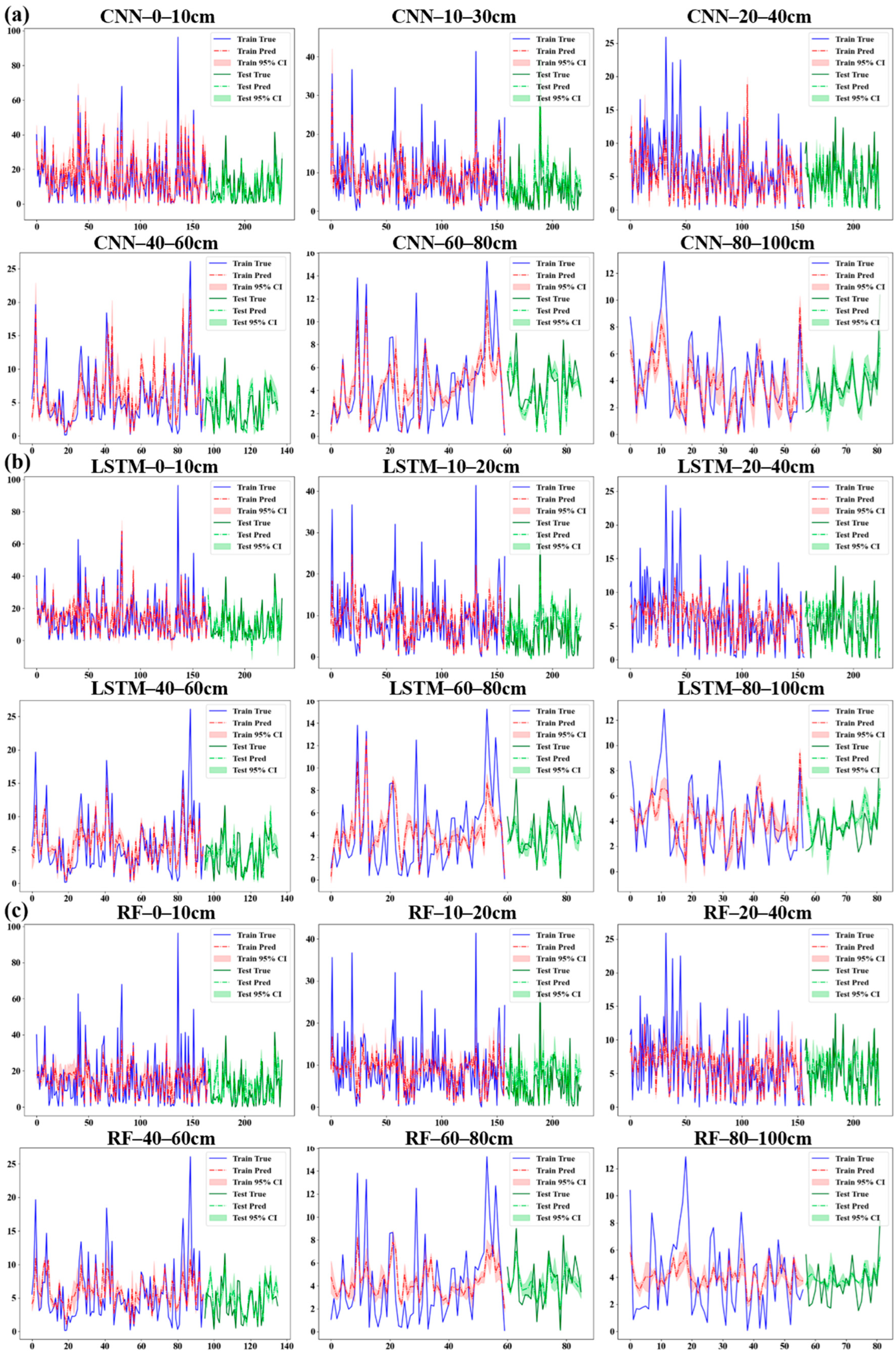
To assess the stability, reliability, and transparency of the models, following Wu et al. [53], Gaussian noise was introduced into the training data to simulate data uncertainty. The standard deviation of the predictions before and after noise perturbation was then calculated to quantify the models’ sensitivity to input disturbances. The results (Figure 6) indicate a high overall agreement between the observed and predicted values, with the CNN model outperforming the LSTM and RF models in terms of predictive accuracy. The 95% confidence intervals clearly delineate the range of prediction deviations. At the same time, the variability in uncertainty reflects the models’ sensitivity in regions where certain features are less informative or data quality is lower. These findings not only demonstrate the robustness of the CNN model but also provide a reference for future model optimization and improvement.

3.4. Spatiotemporal Variation Characteristics of Soil Salinity in the Ebinur Wetland Reserve

3.4.1. Mapping of Soil Salinity at Multiple Depths in the Ebinur Wetland Reserve

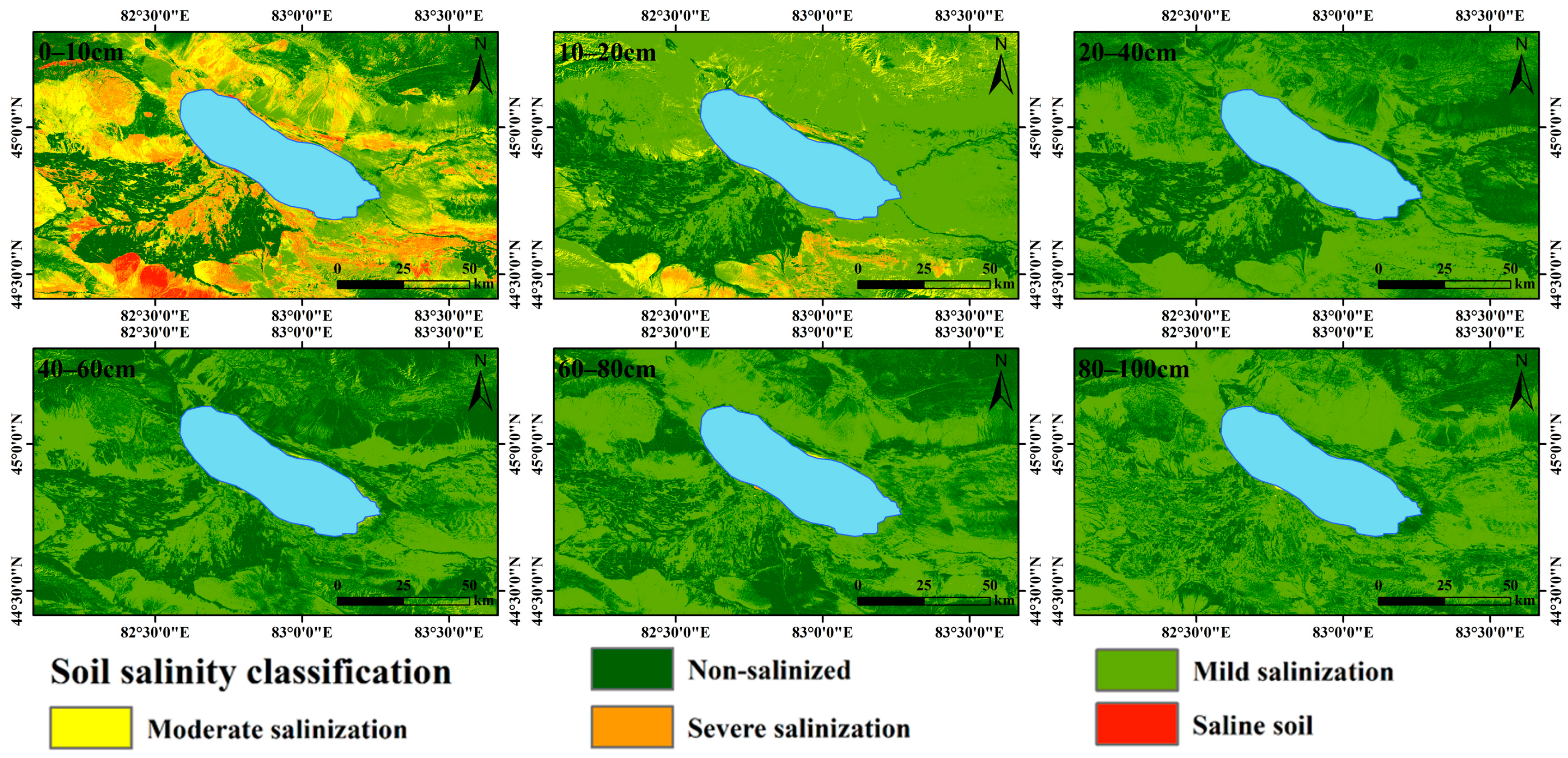
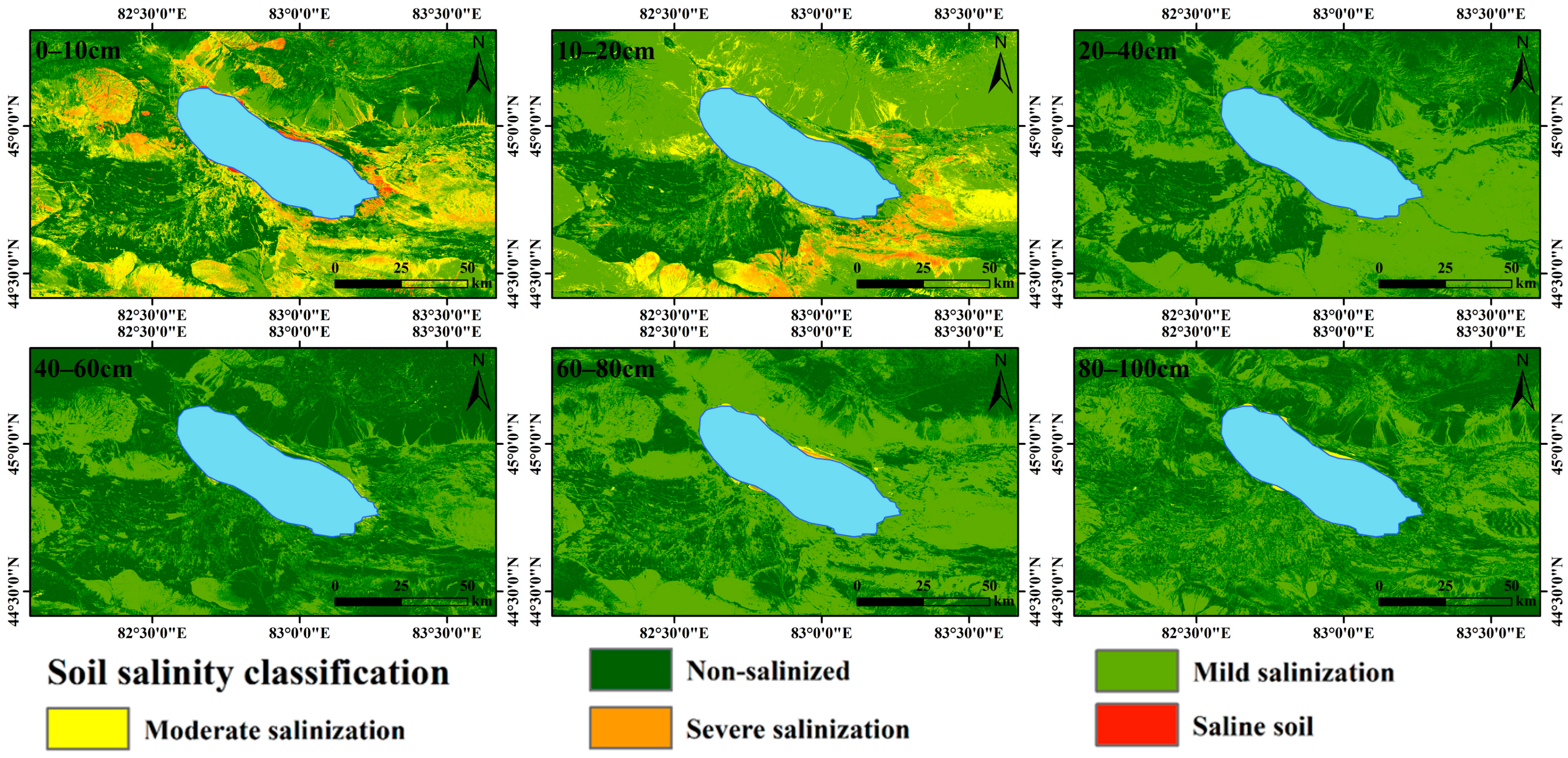
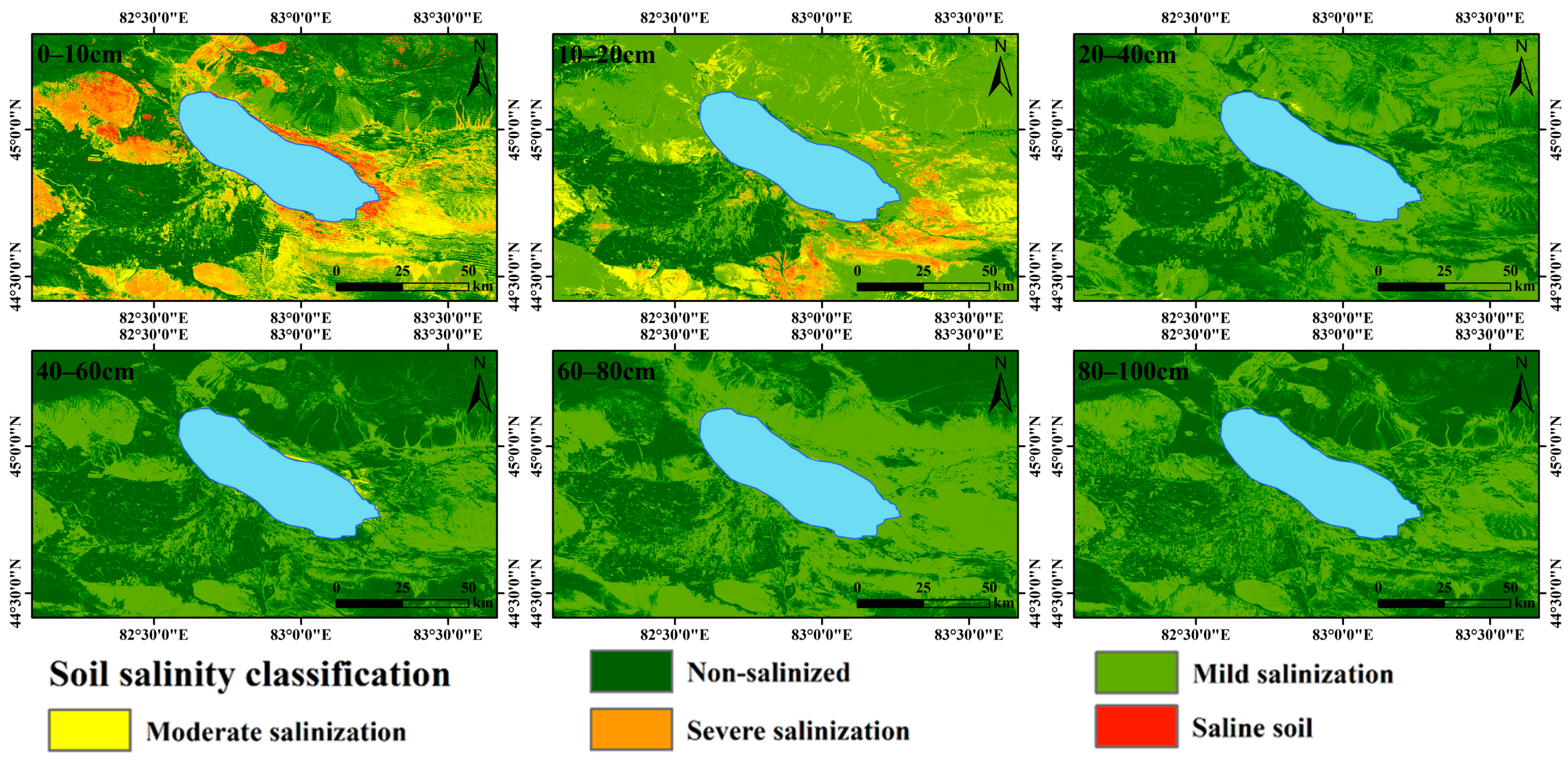
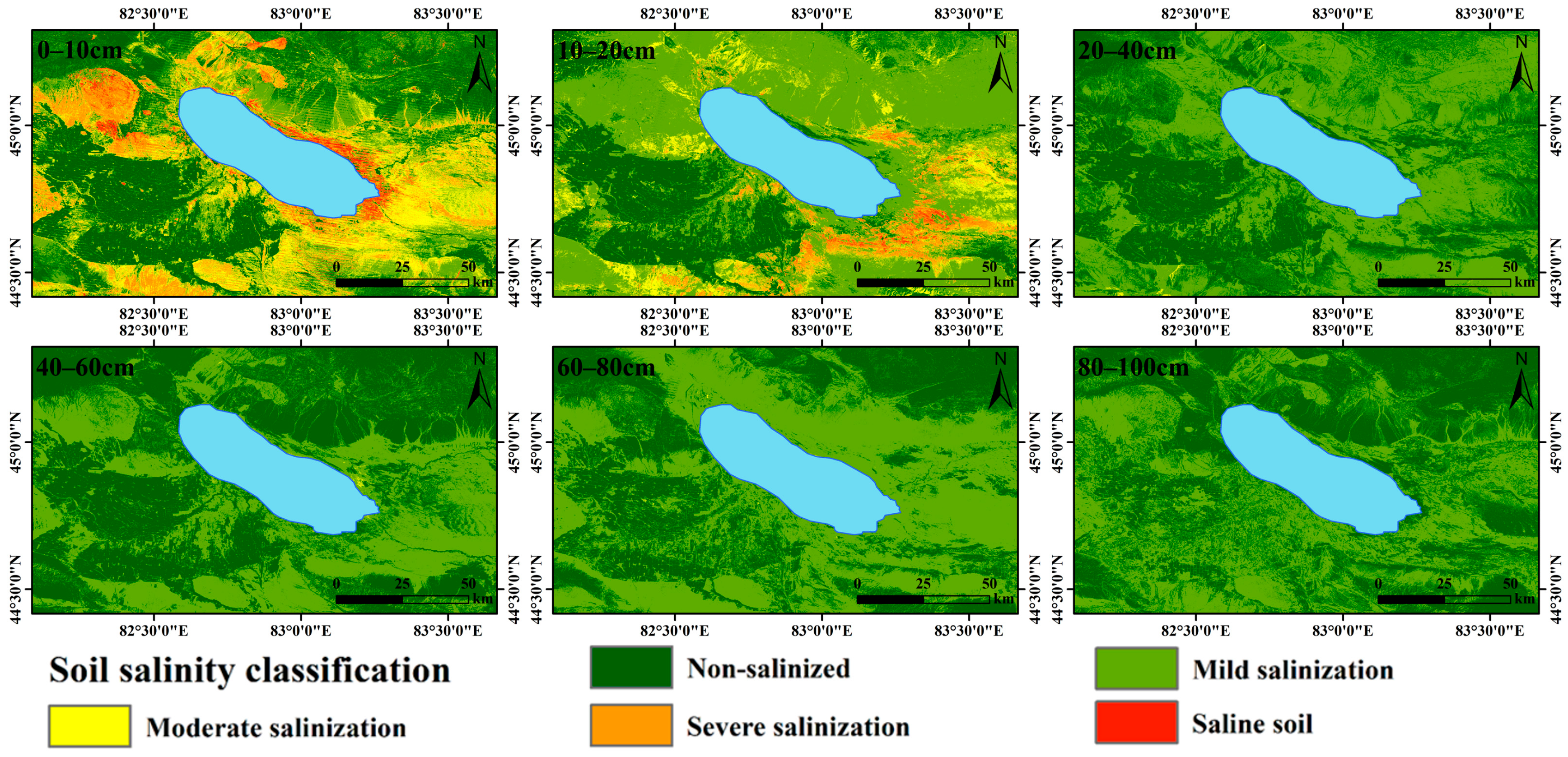
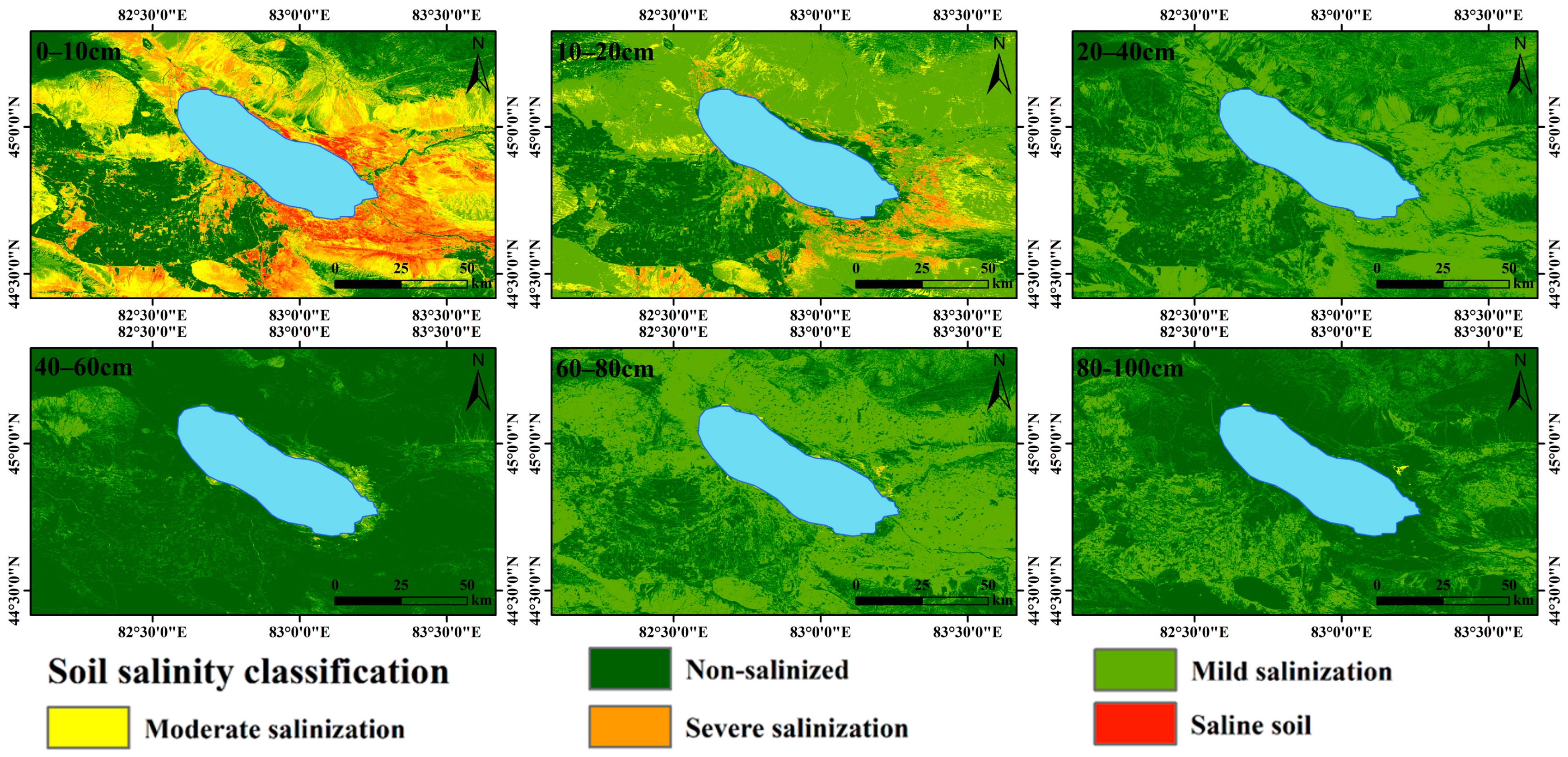
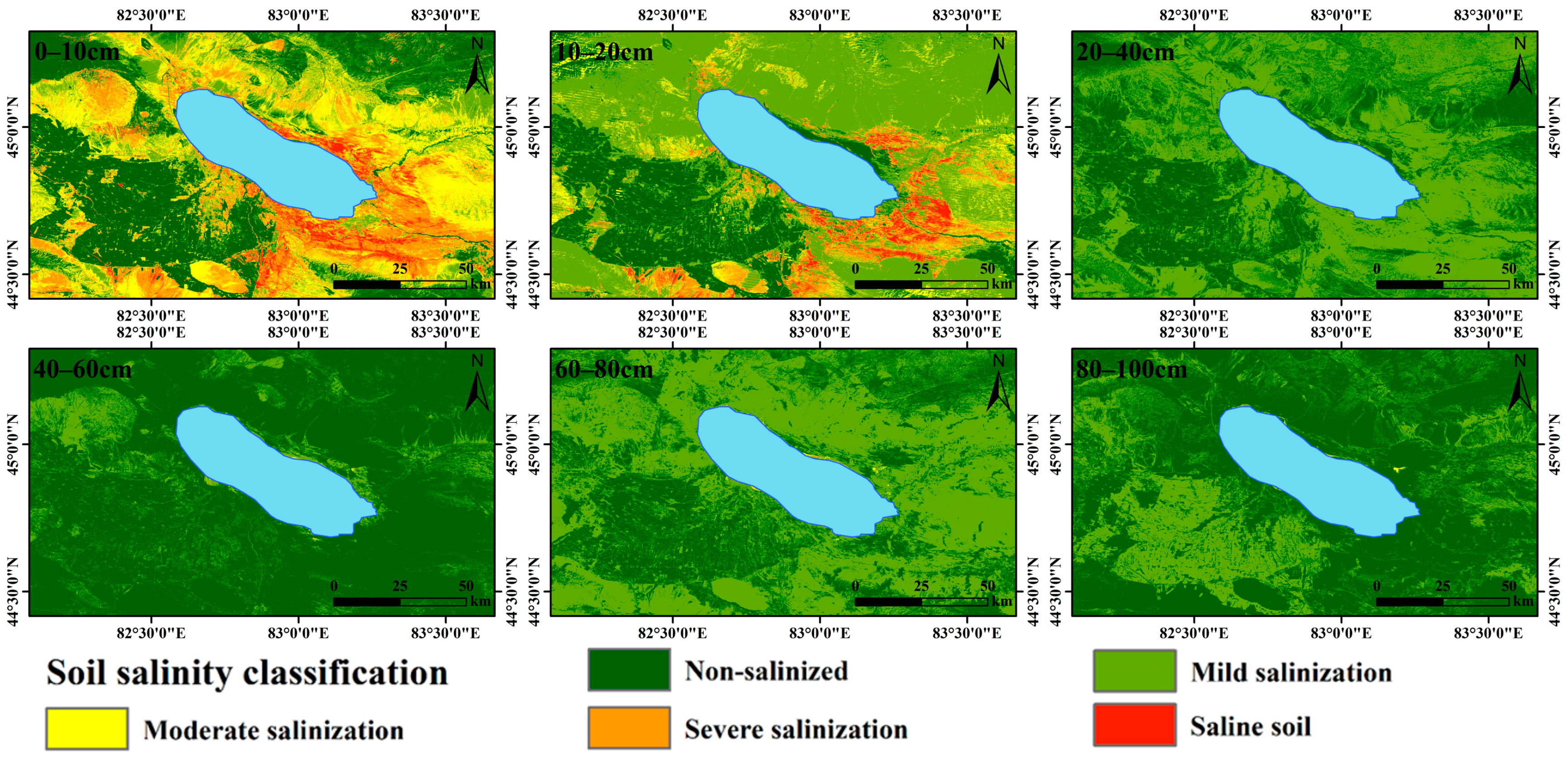
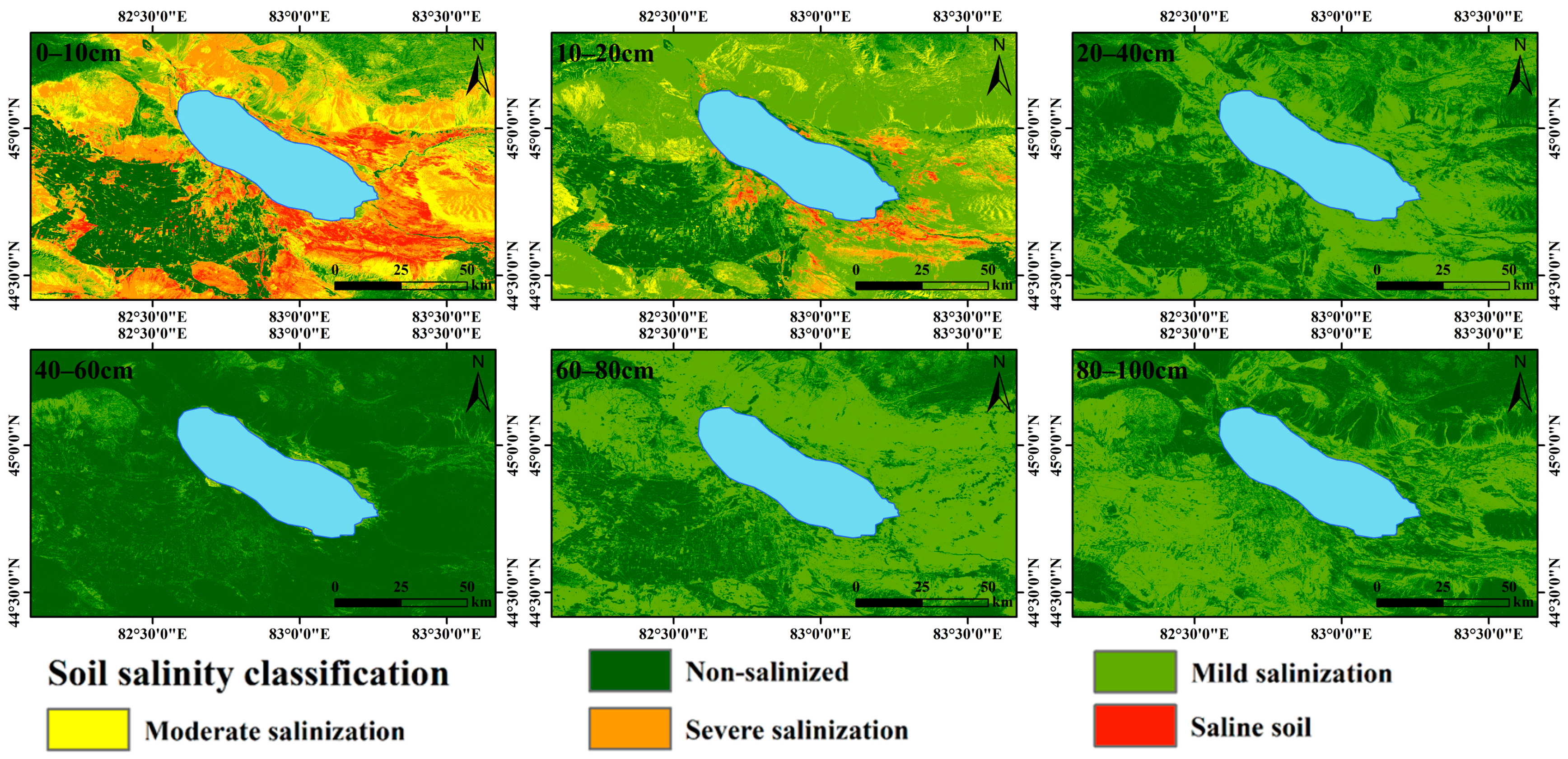
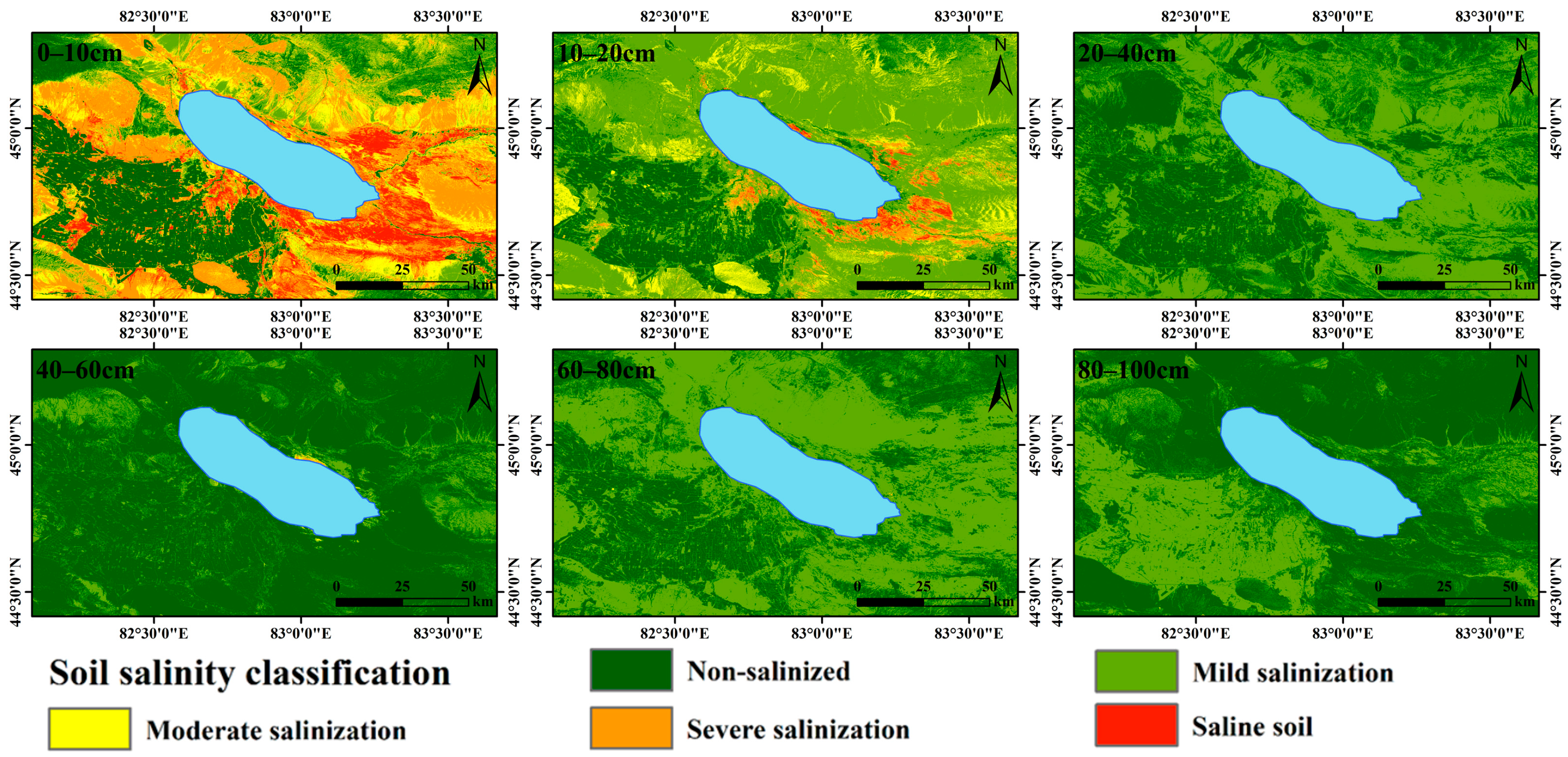
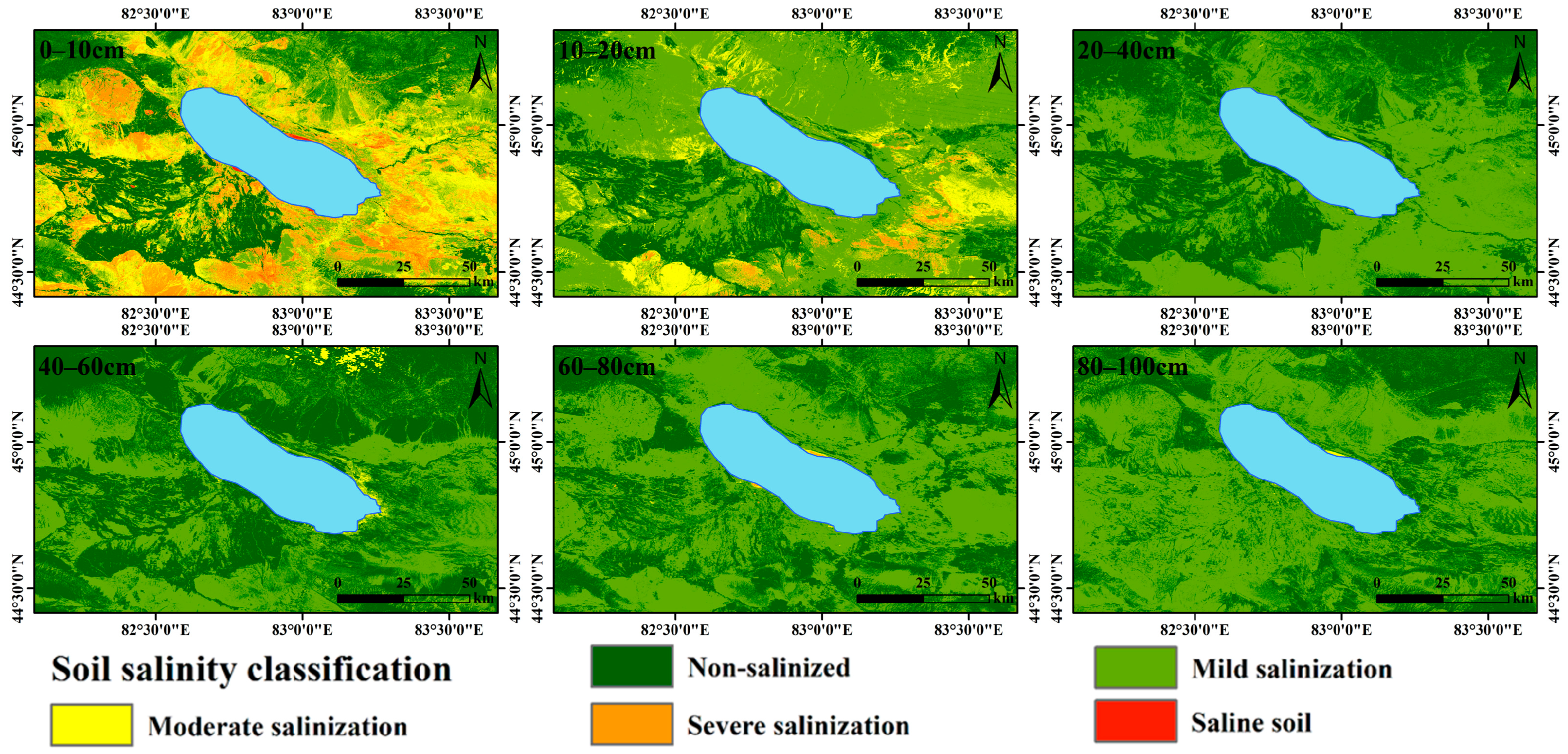
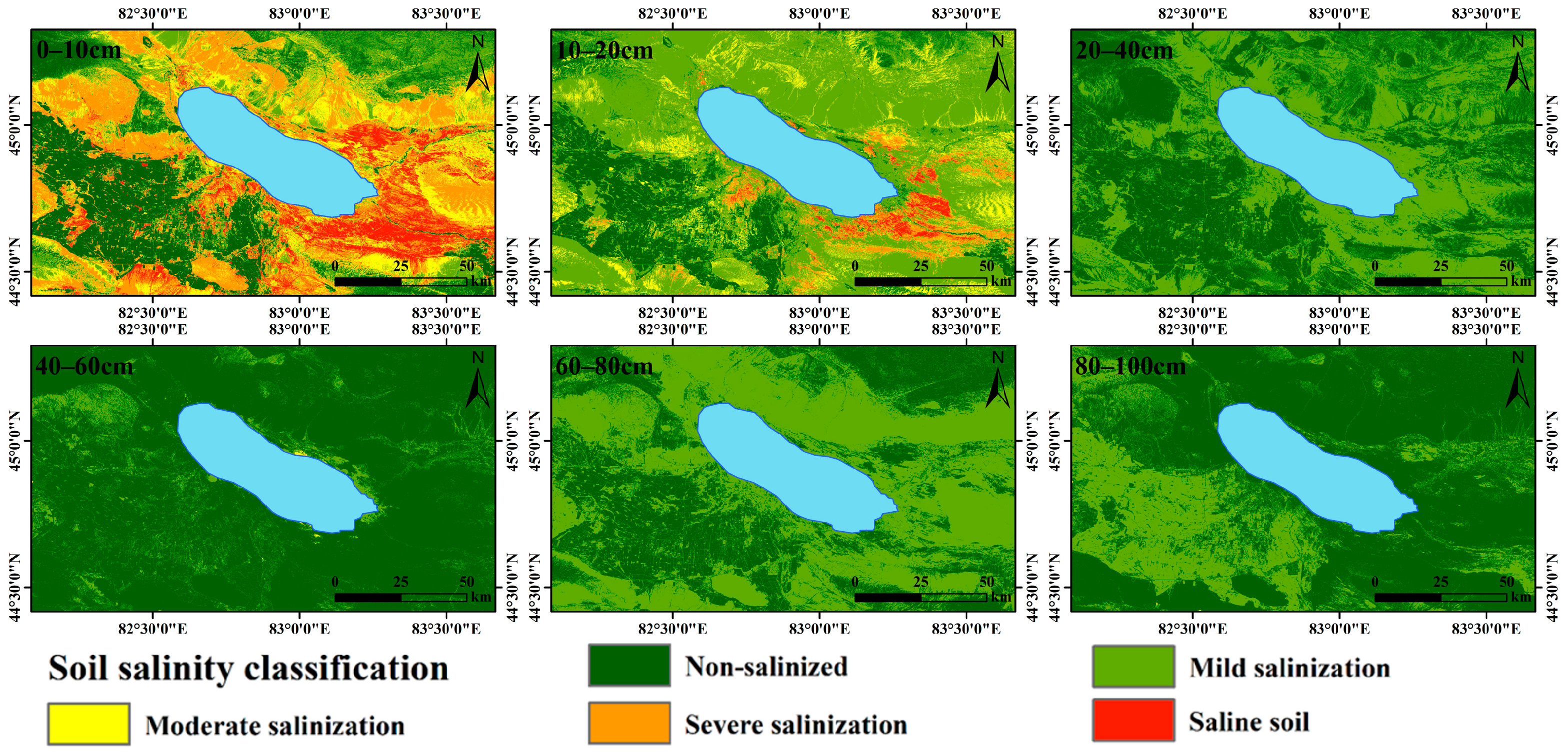
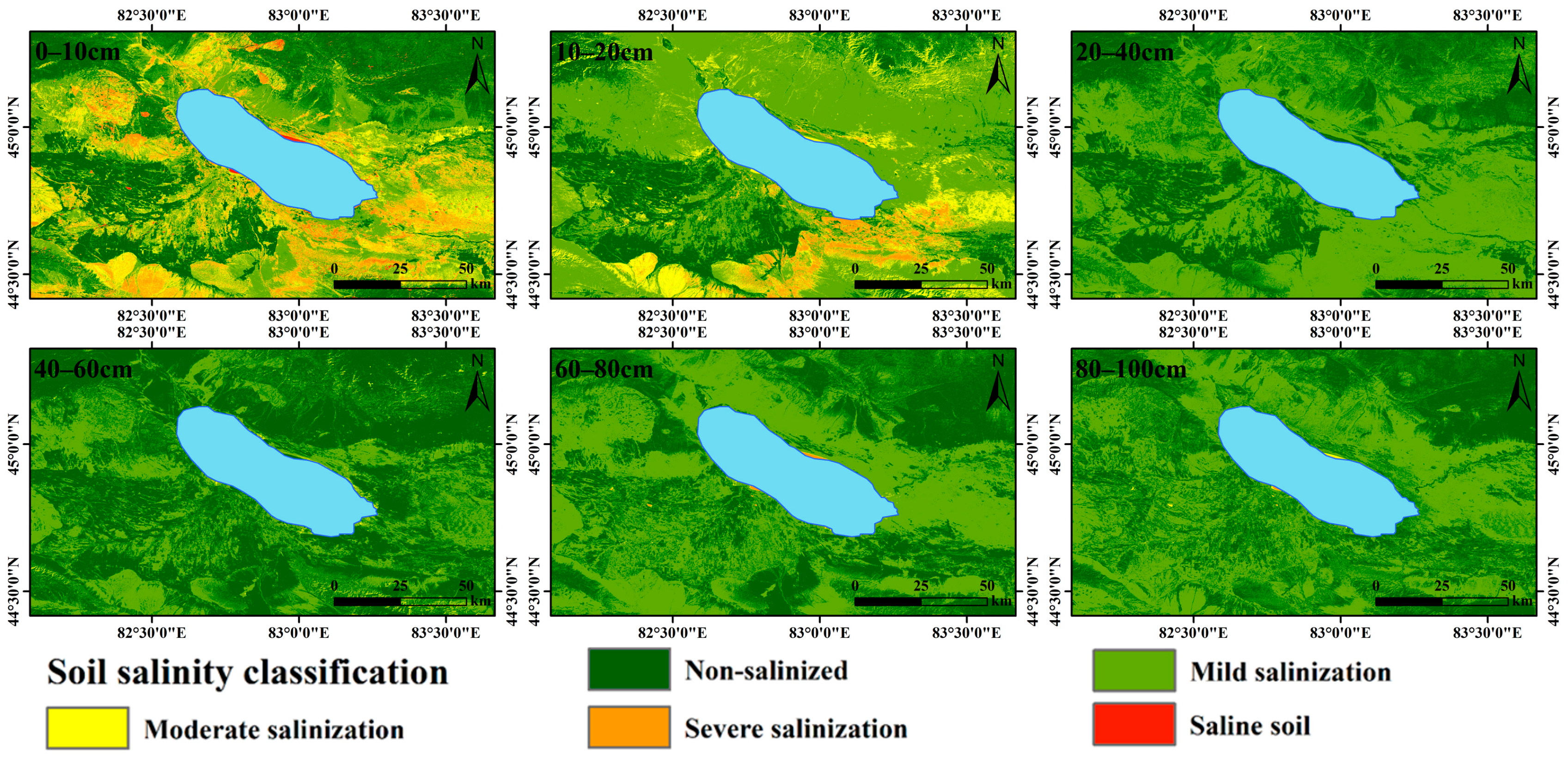
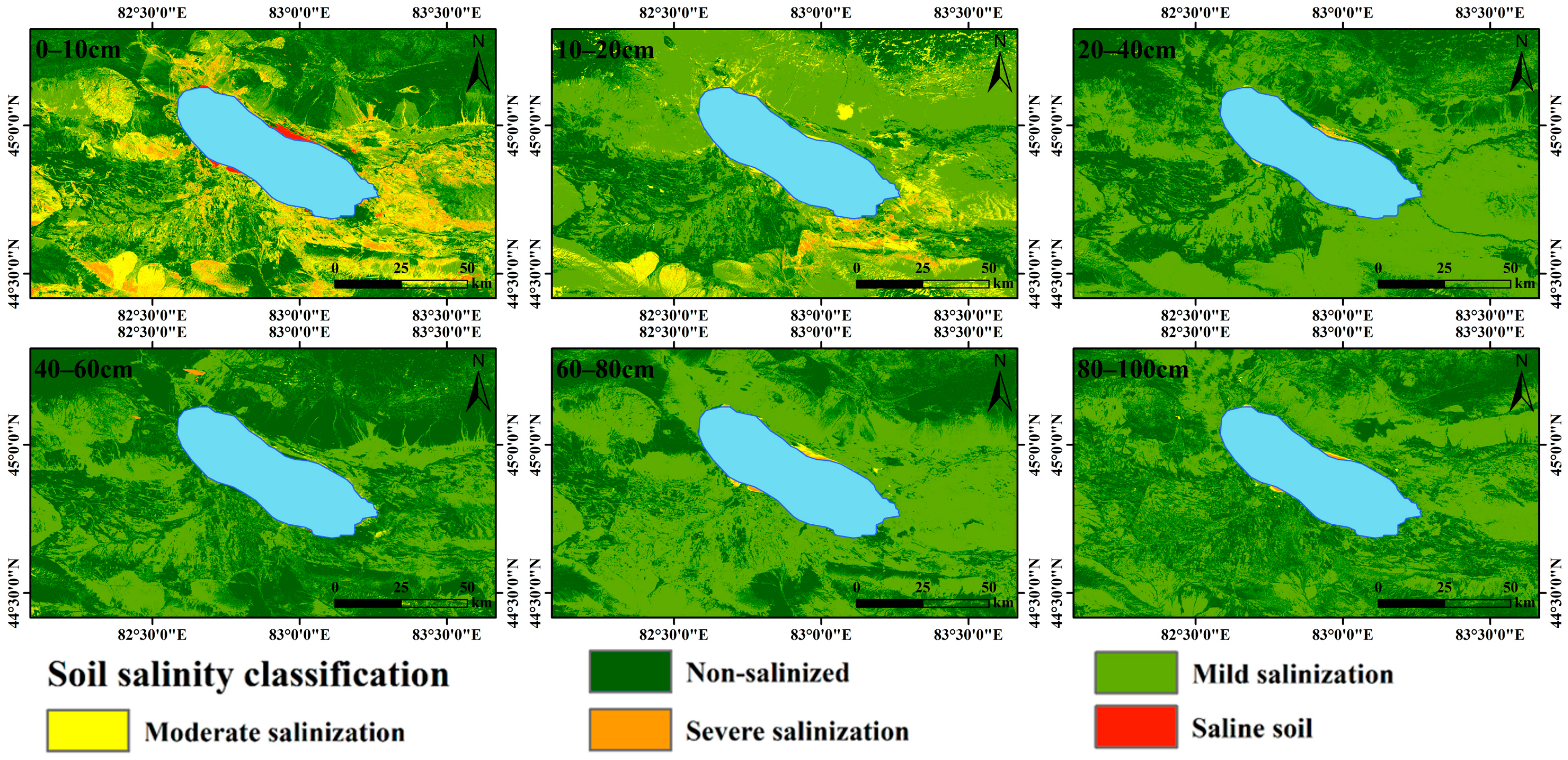
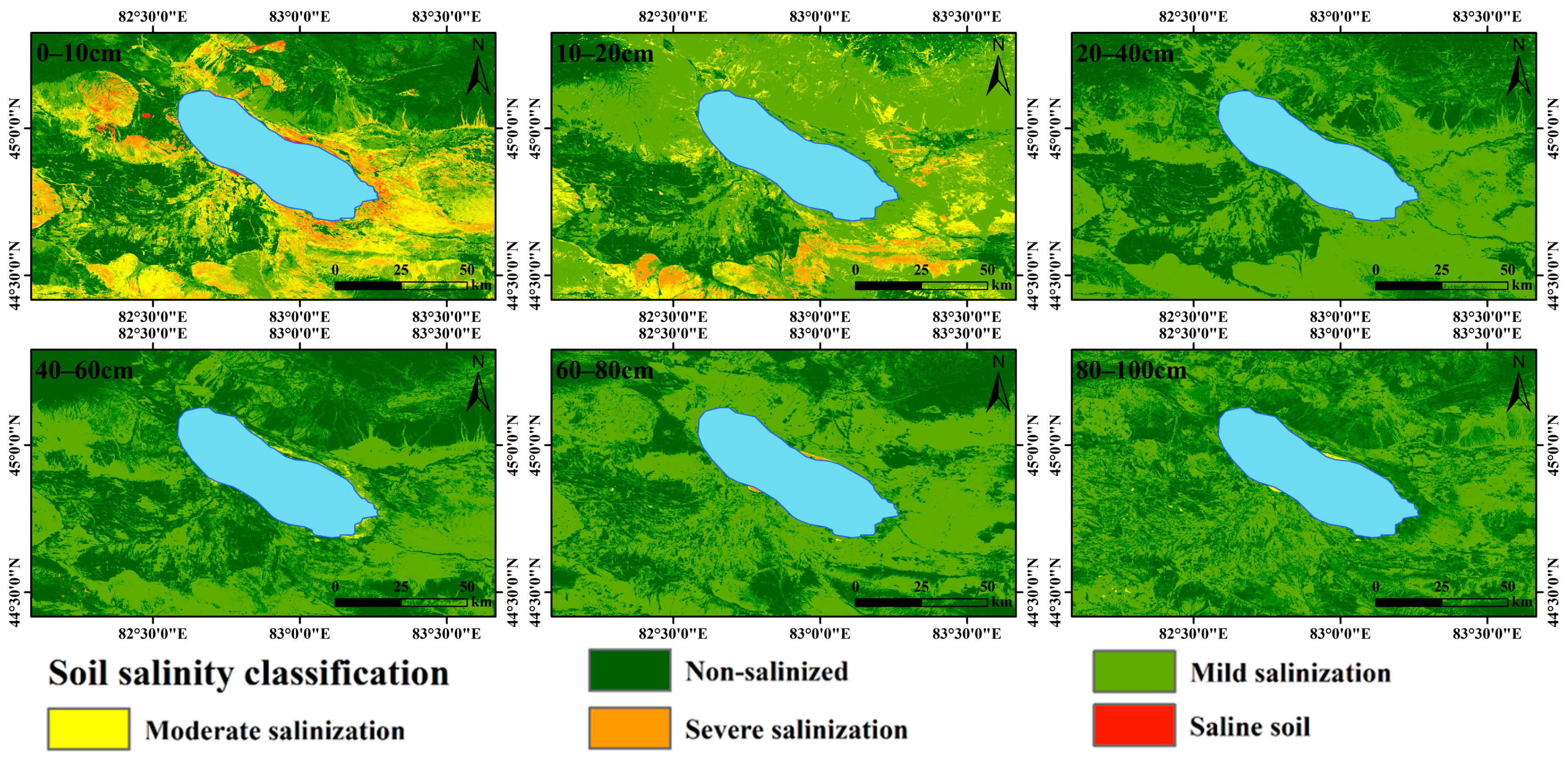
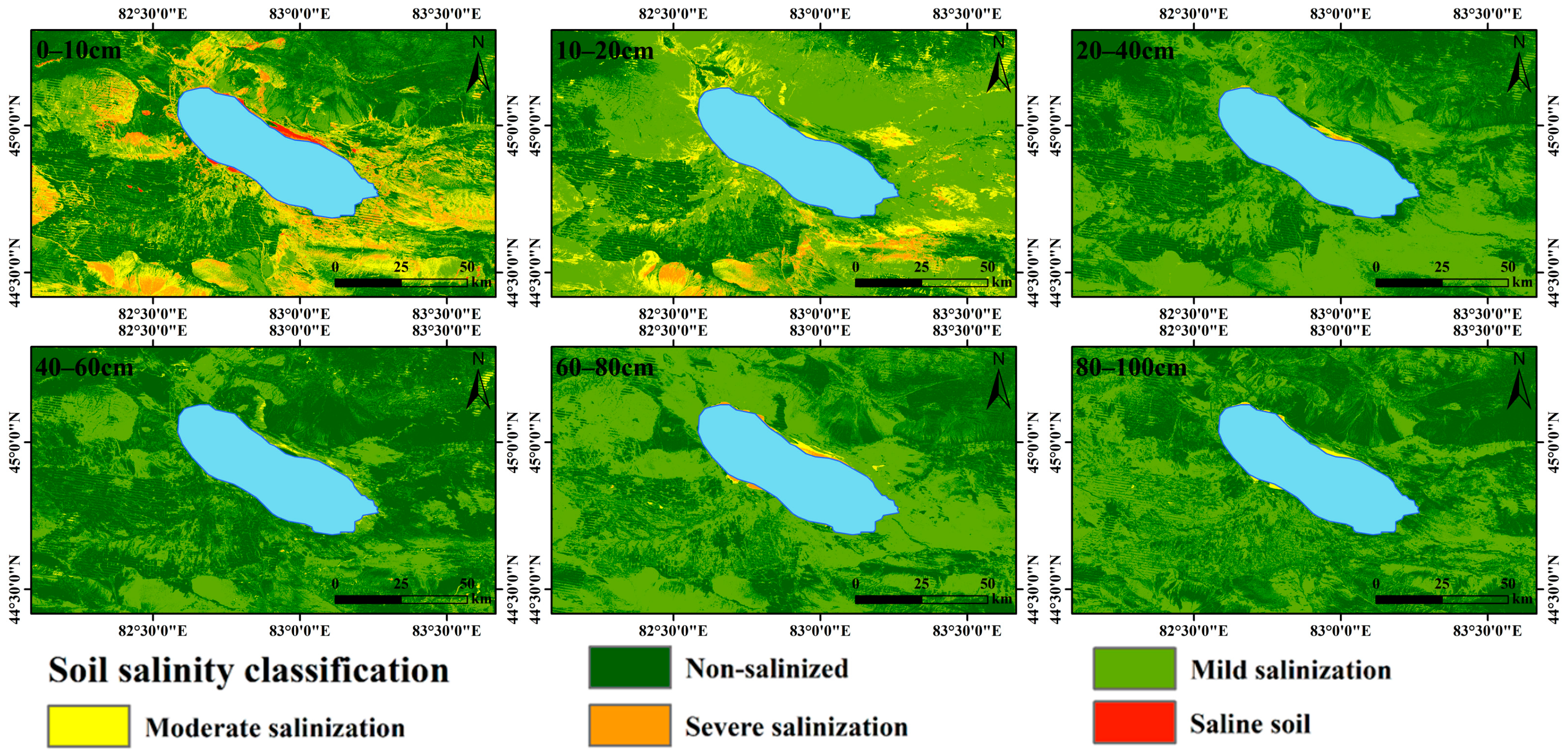
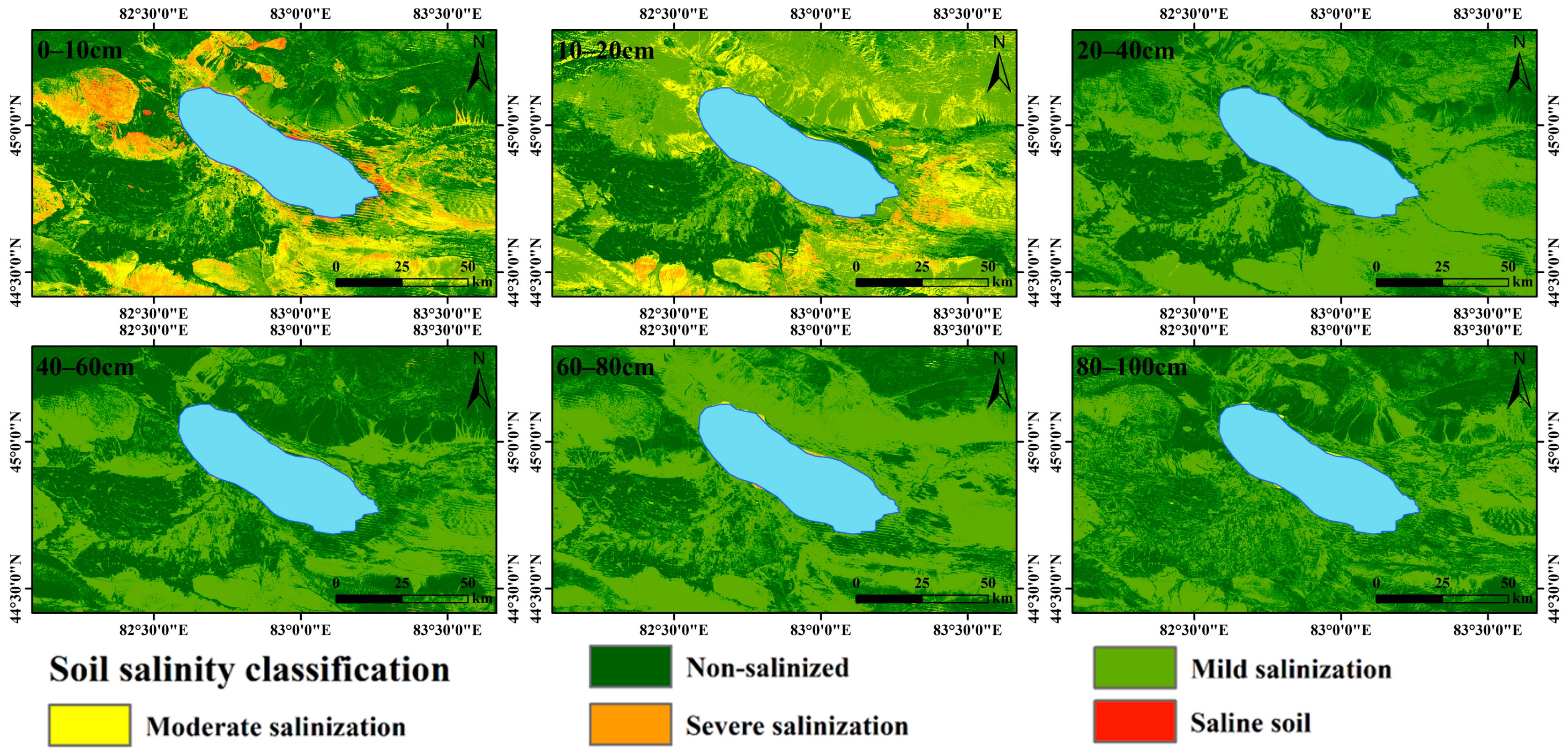
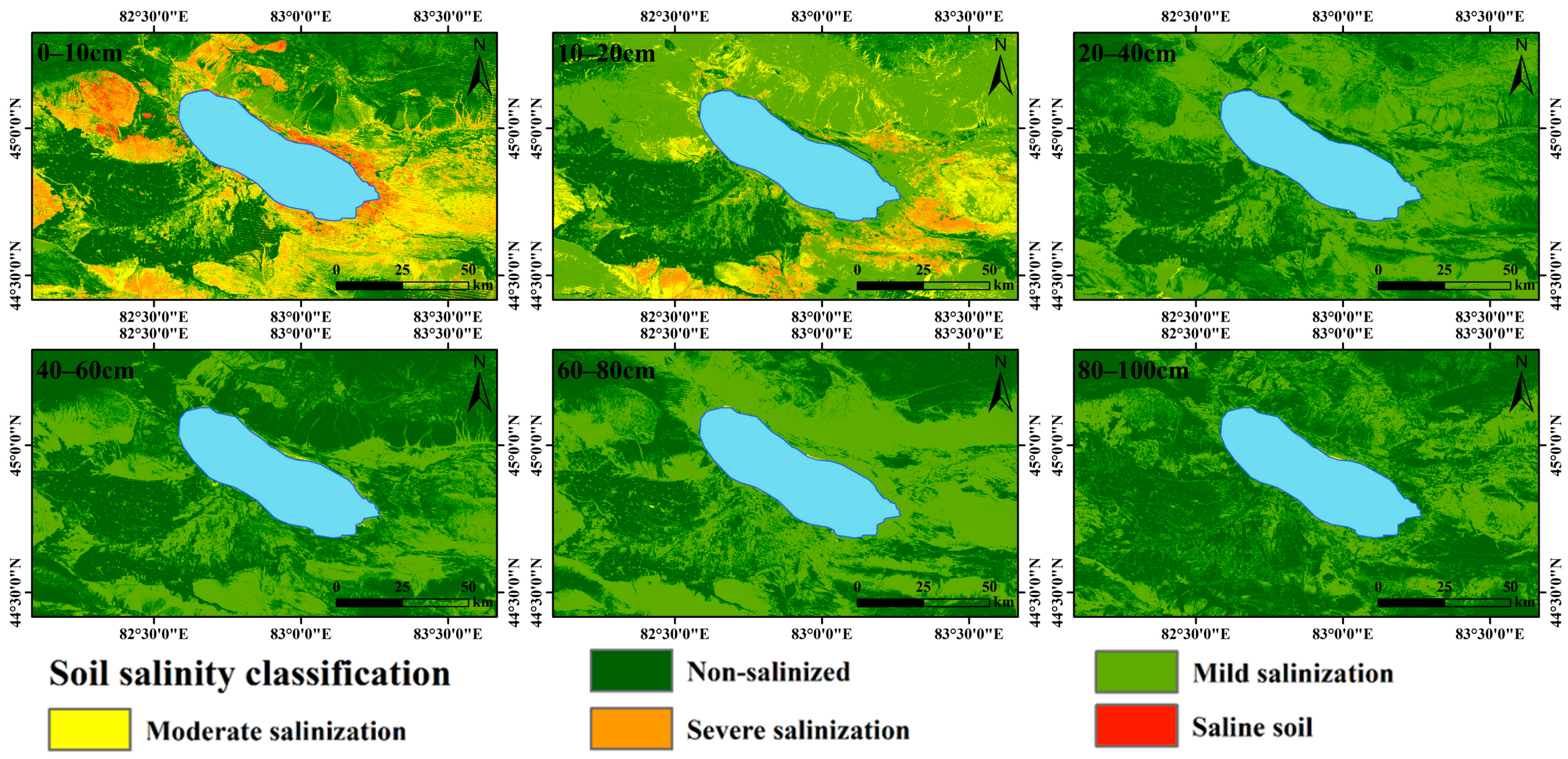
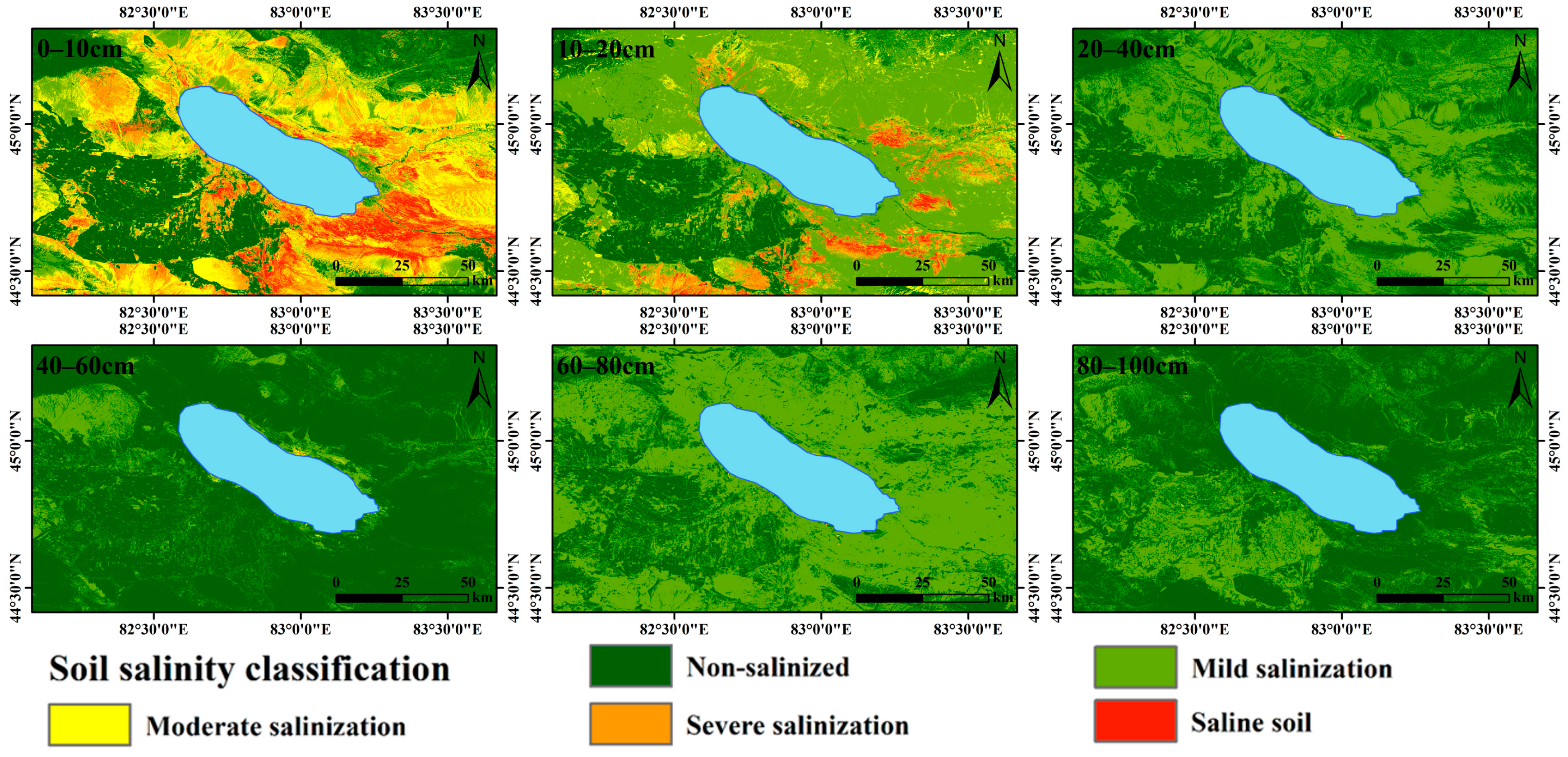
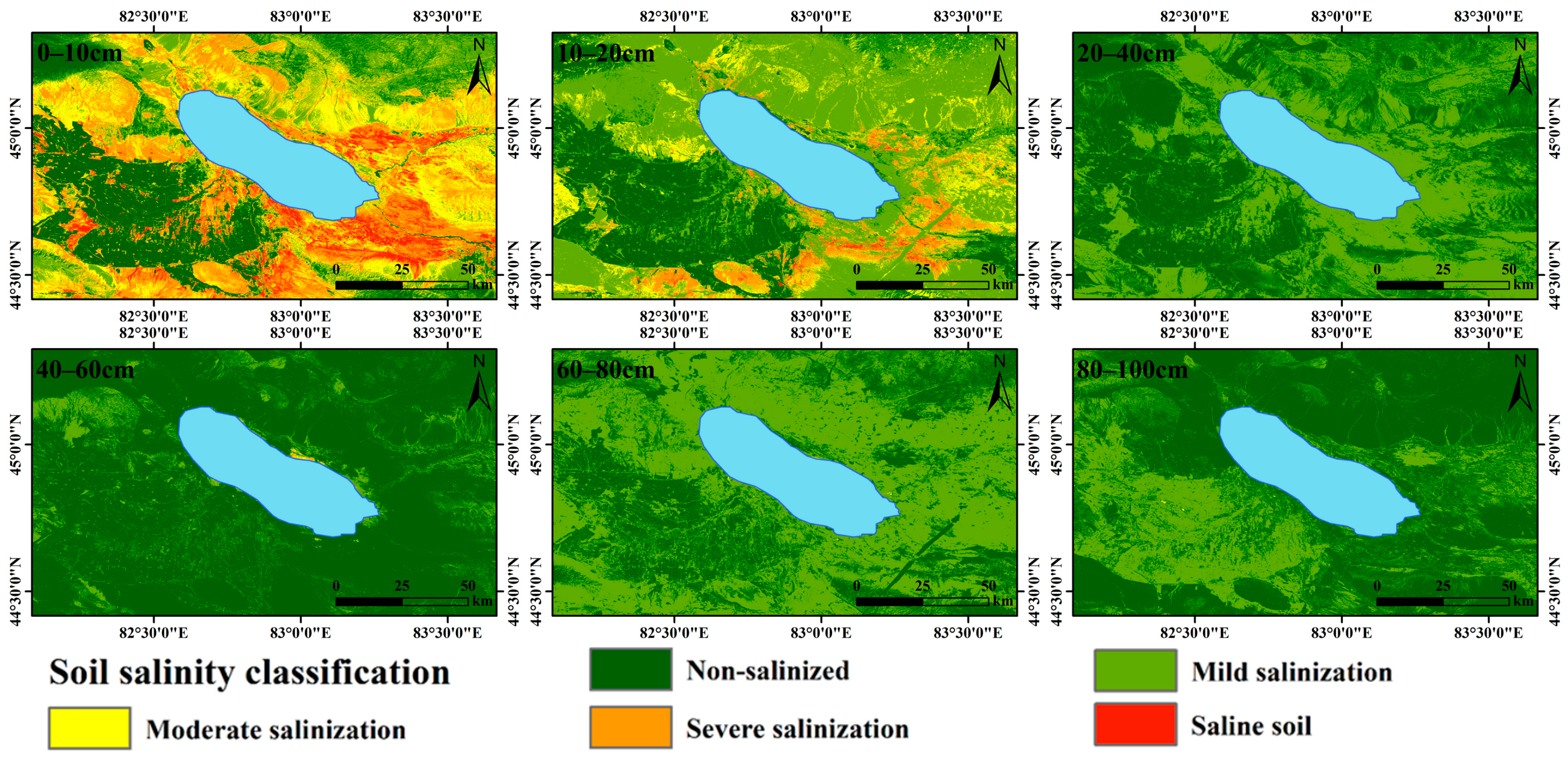
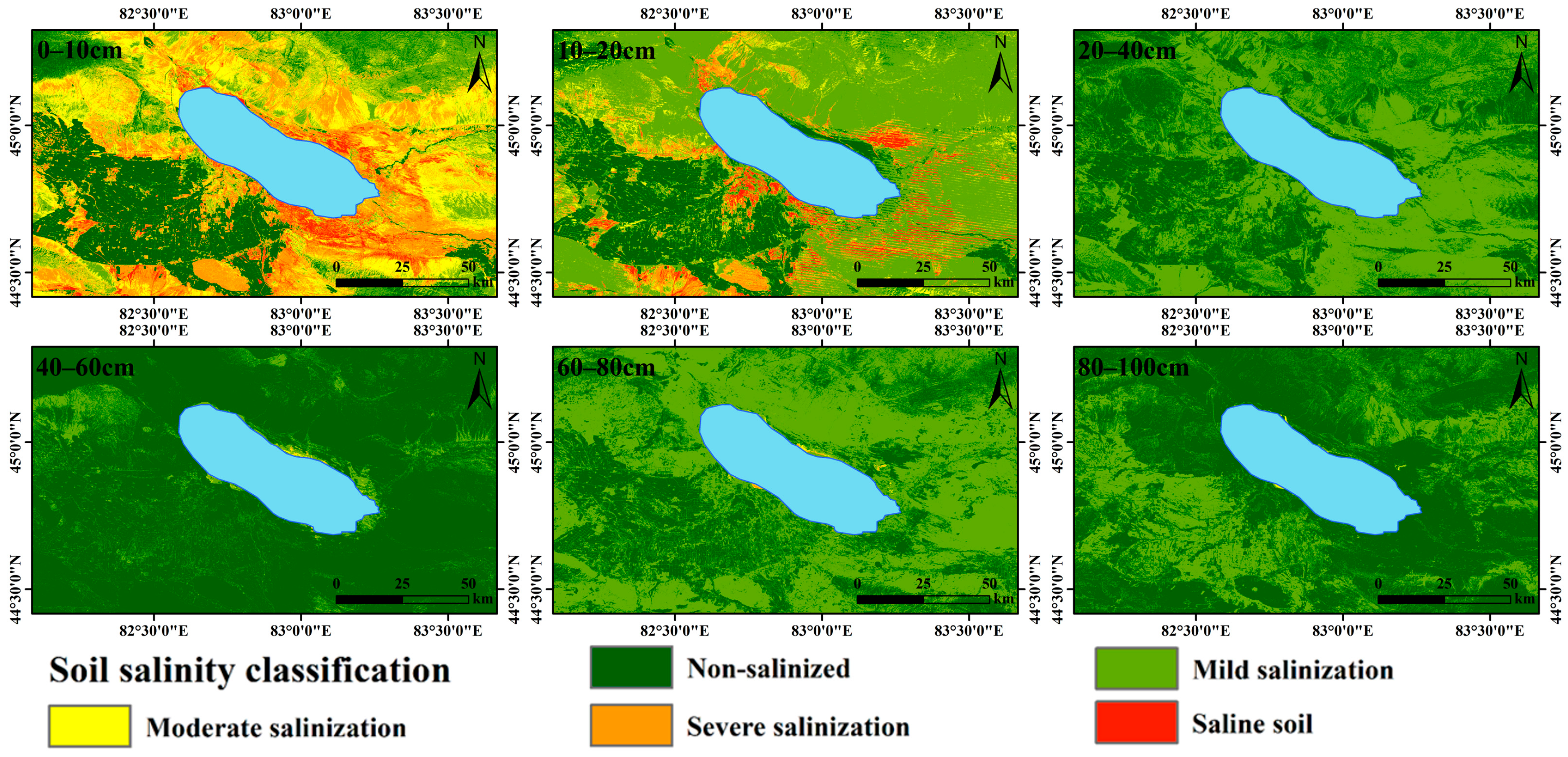
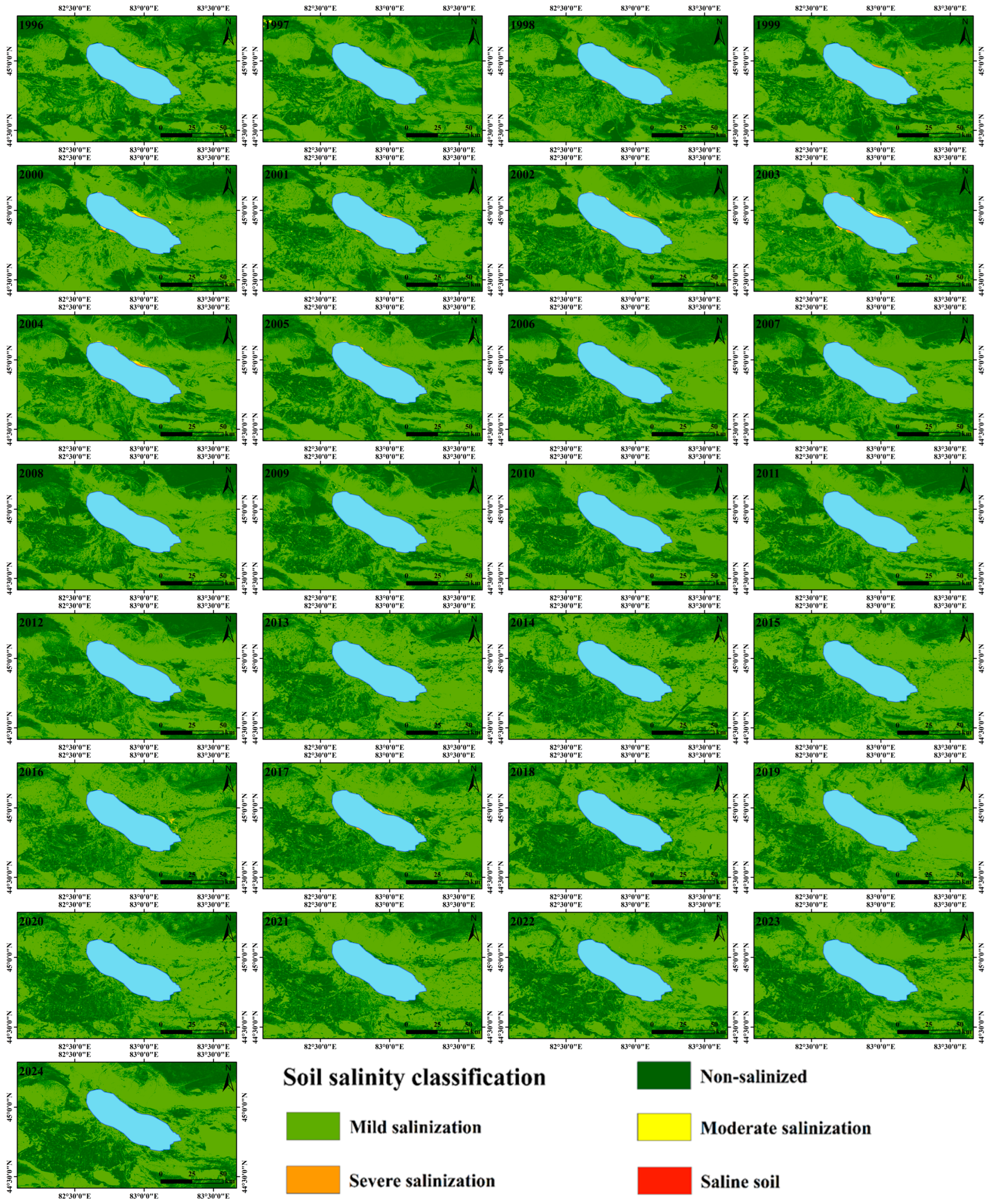
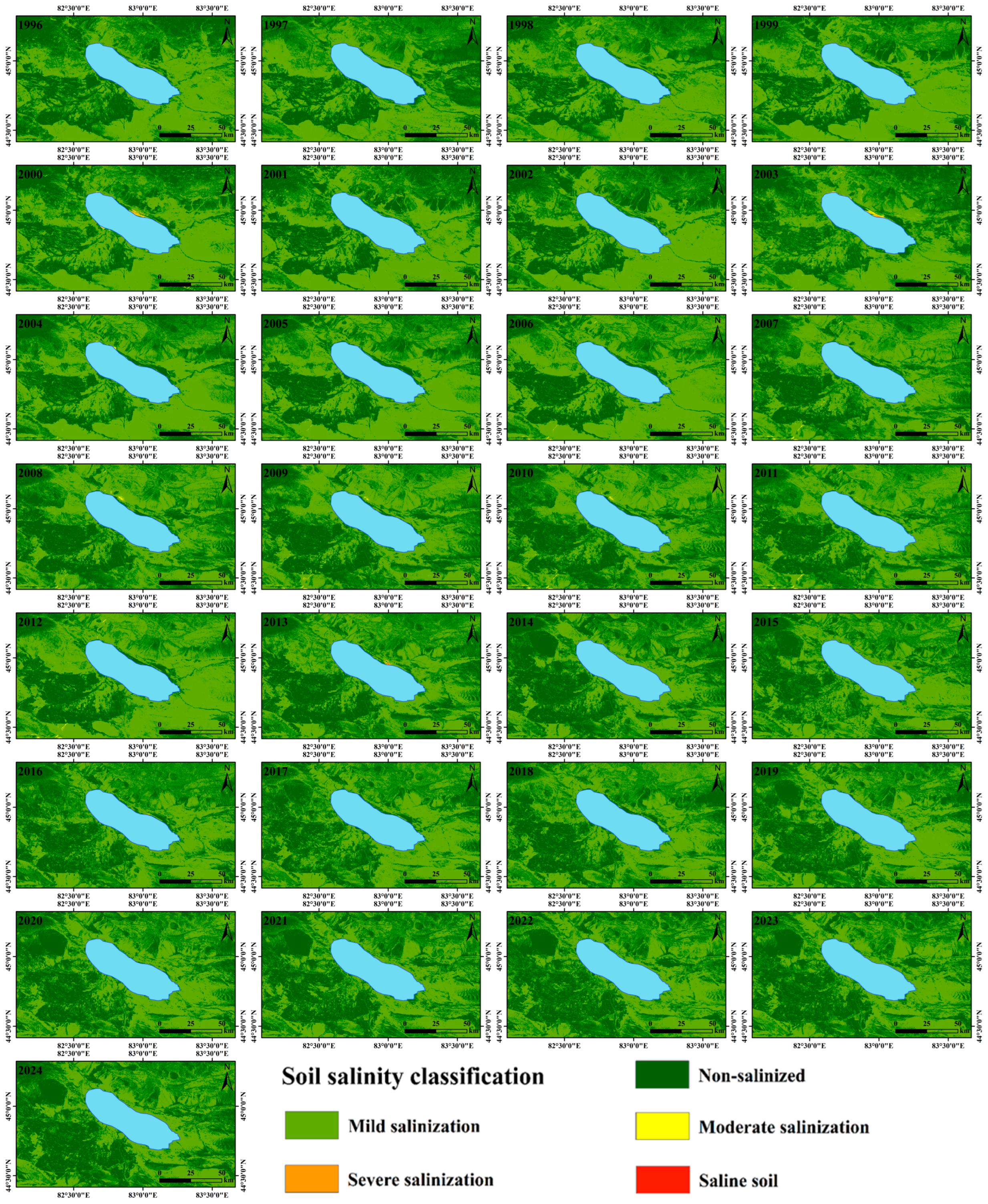
Spatial distribution maps of soil salinity at various depths in the Ebinur Wetland Reserve from 1996 to 2024 were generated using the CNN model, with 1996 (Figure 7) and 2024 (Figure 8) shown as examples (additional maps are provided in the Appendix A). Across different years, the spatial distribution of soil salinity in the Ebinur Wetland Reserve showed a degree of consistency. In the 0–10 cm soil layer, saline soils are widely distributed and radiate outward. Compared with 1996, the area of saline soils in 2024 has increased, although the degree of salinization in oasis regions has somewhat alleviated. In the 10–20 cm soil layer, severely salinized areas are primarily located in the southeastern part of the lake. In the 20–40 cm soil layer, this trend is somewhat alleviated, possibly because surface evaporation and runoff heavily affect the upper soil, leading to increased salt accumulation. In the 40–100 cm soil layer, non-salinized and mildly salinized areas dominate. Compared with 1996, the coverage of these areas is broader in 2024, indicating that salinity at this depth is relatively stable, which aligns with the model’s optimal performance. Moreover, the degree of salinization in the 60–80 cm and 80–100 cm soil layers shows a certain rebound. This may be attributed to rising or replenished groundwater levels, resulting in salt accumulation in deeper desert soils. Although drip irrigation effectively suppresses surface salt accumulation and evaporation in oasis areas, its limited infiltration capacity may gradually facilitate salt migration and accumulation in mid-to-deep soil layers over time, particularly in regions with shallow groundwater and poor leaching, resulting in mild salinization at 80–100 cm. Overall, salinity gradually decreases from the surface to the middle soil layers, but due to long-term downward migration and accumulation, deeper layers exhibit partial salinity rebound.

3.4.2. Multi-Year Mapping of Soil Salinity in the Ebinur Wetland Reserve

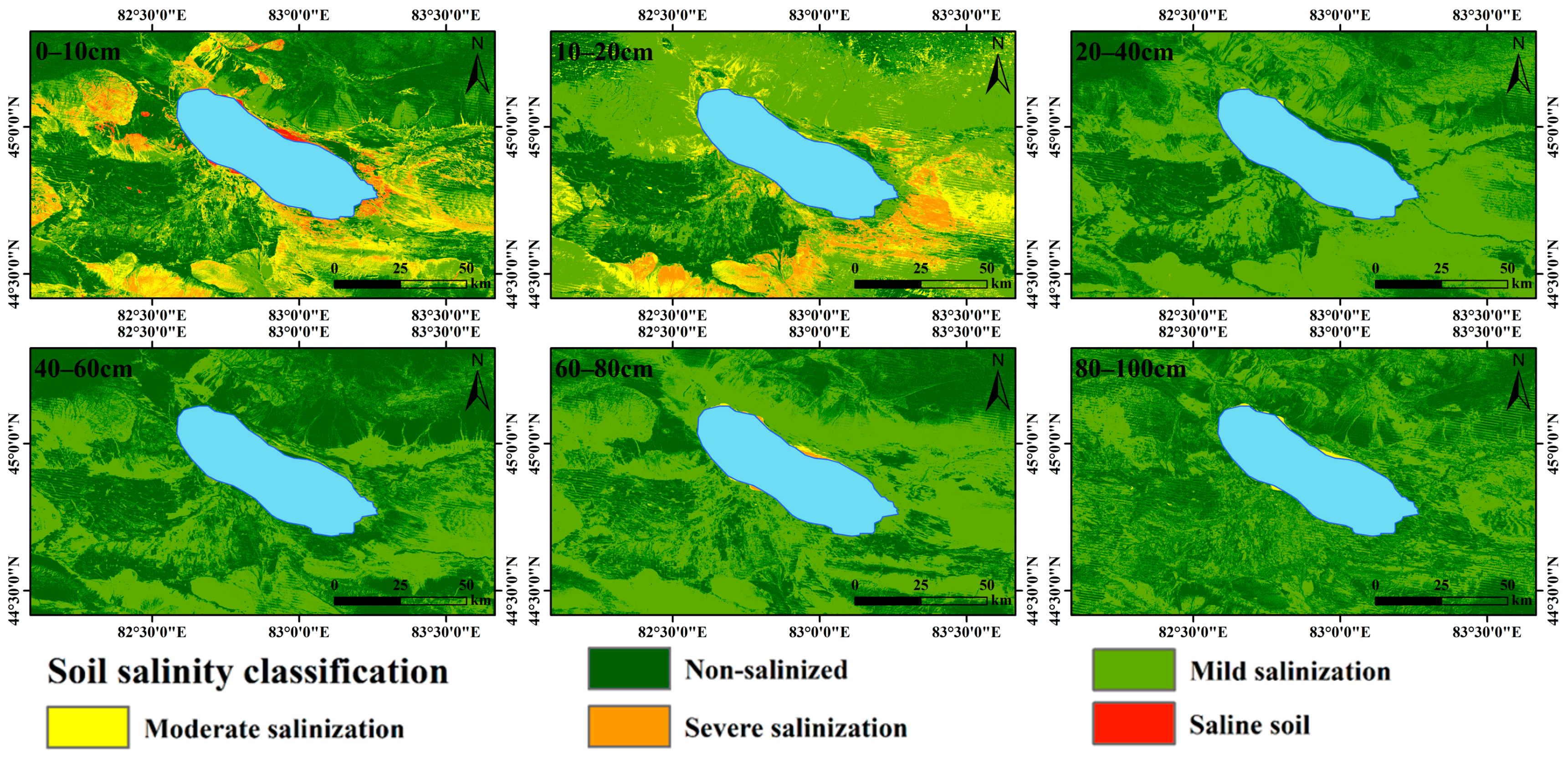
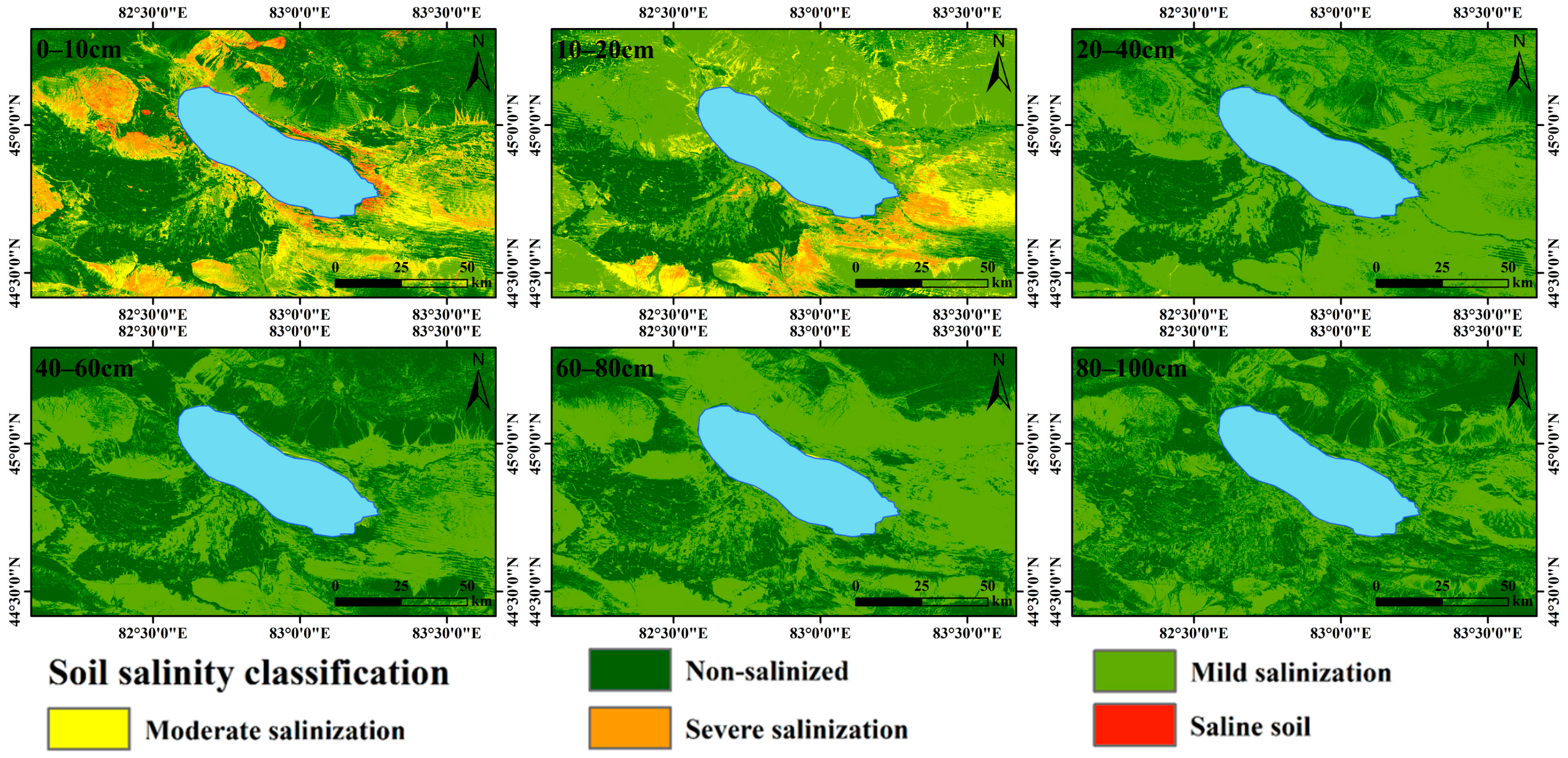
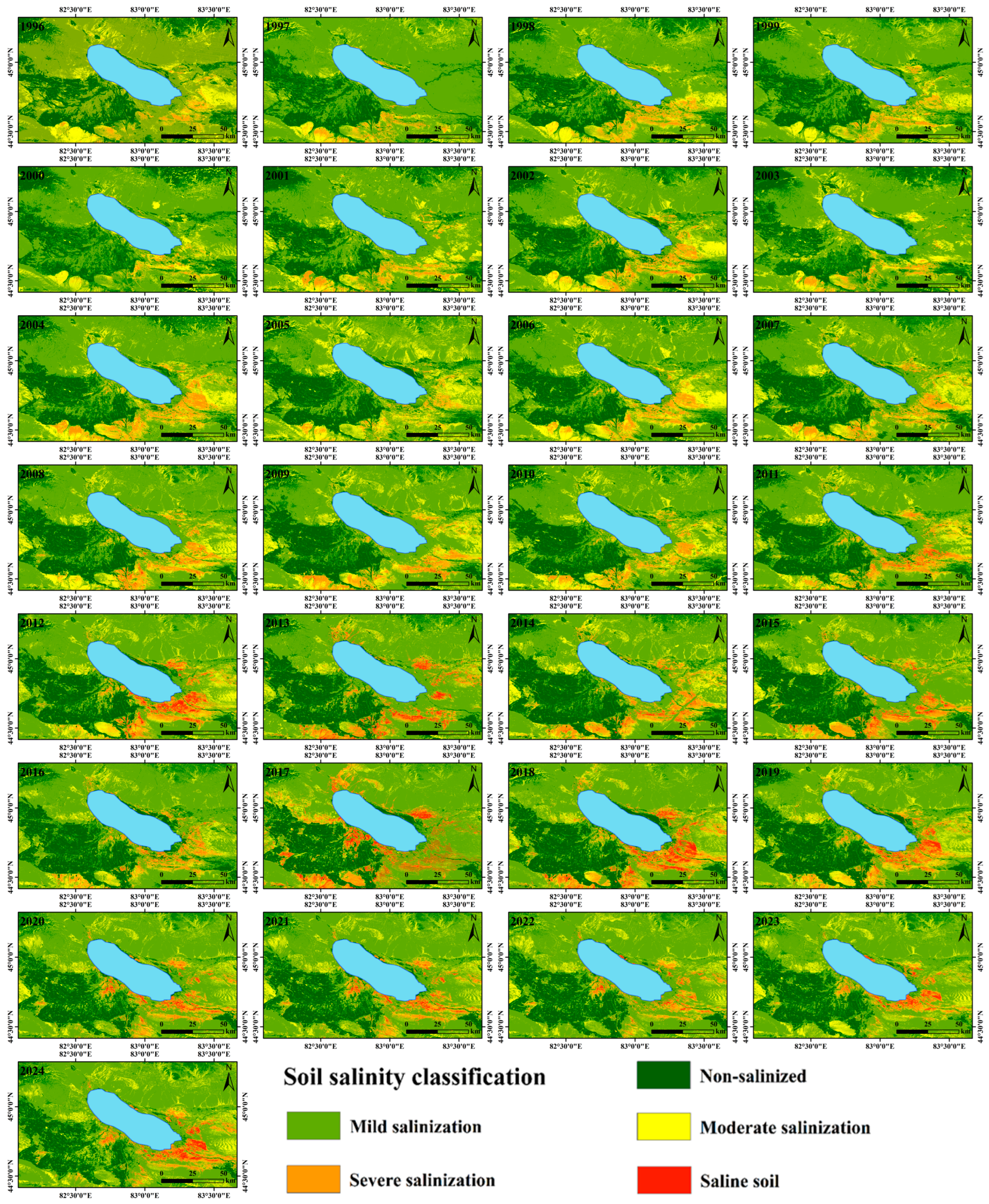
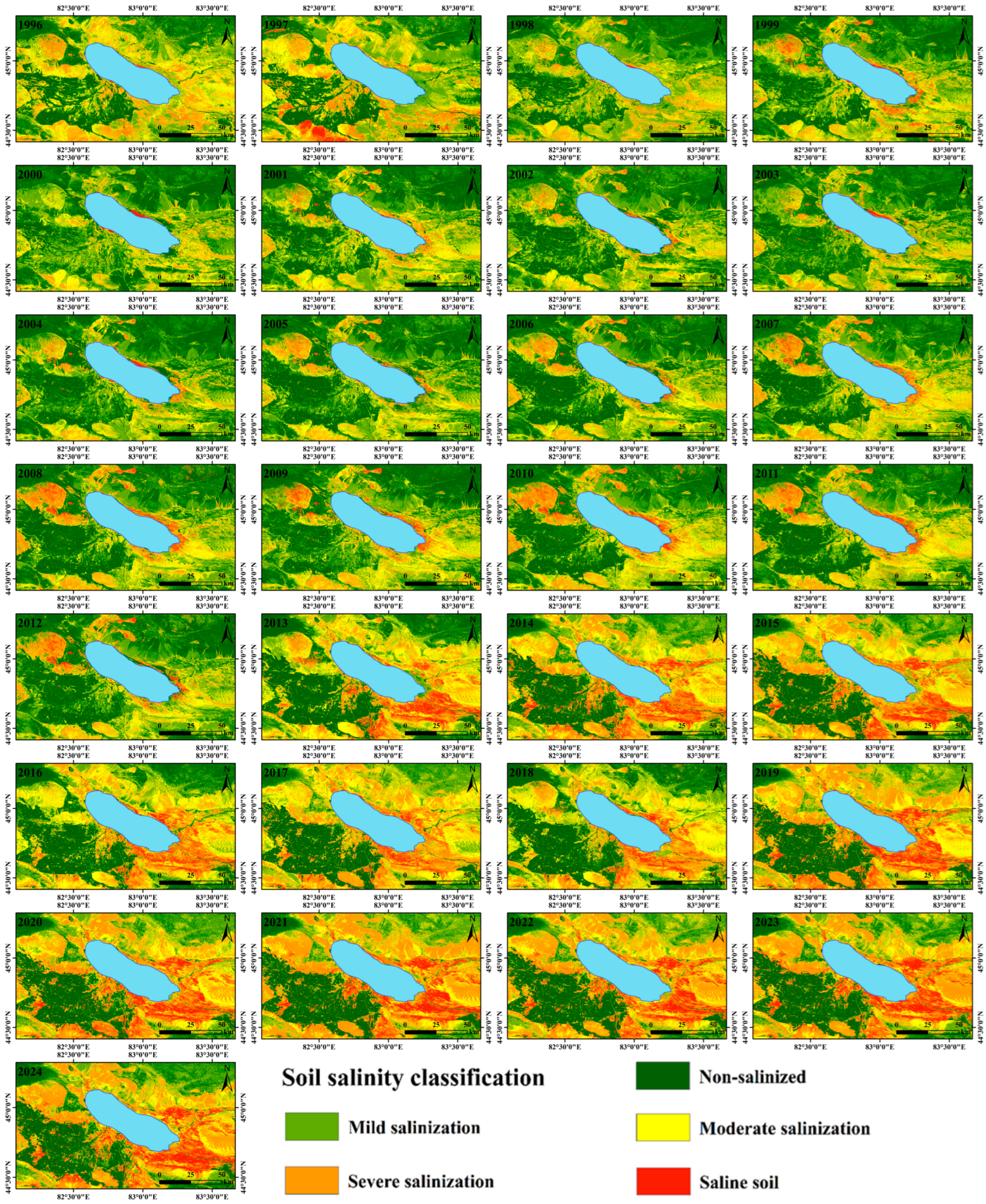
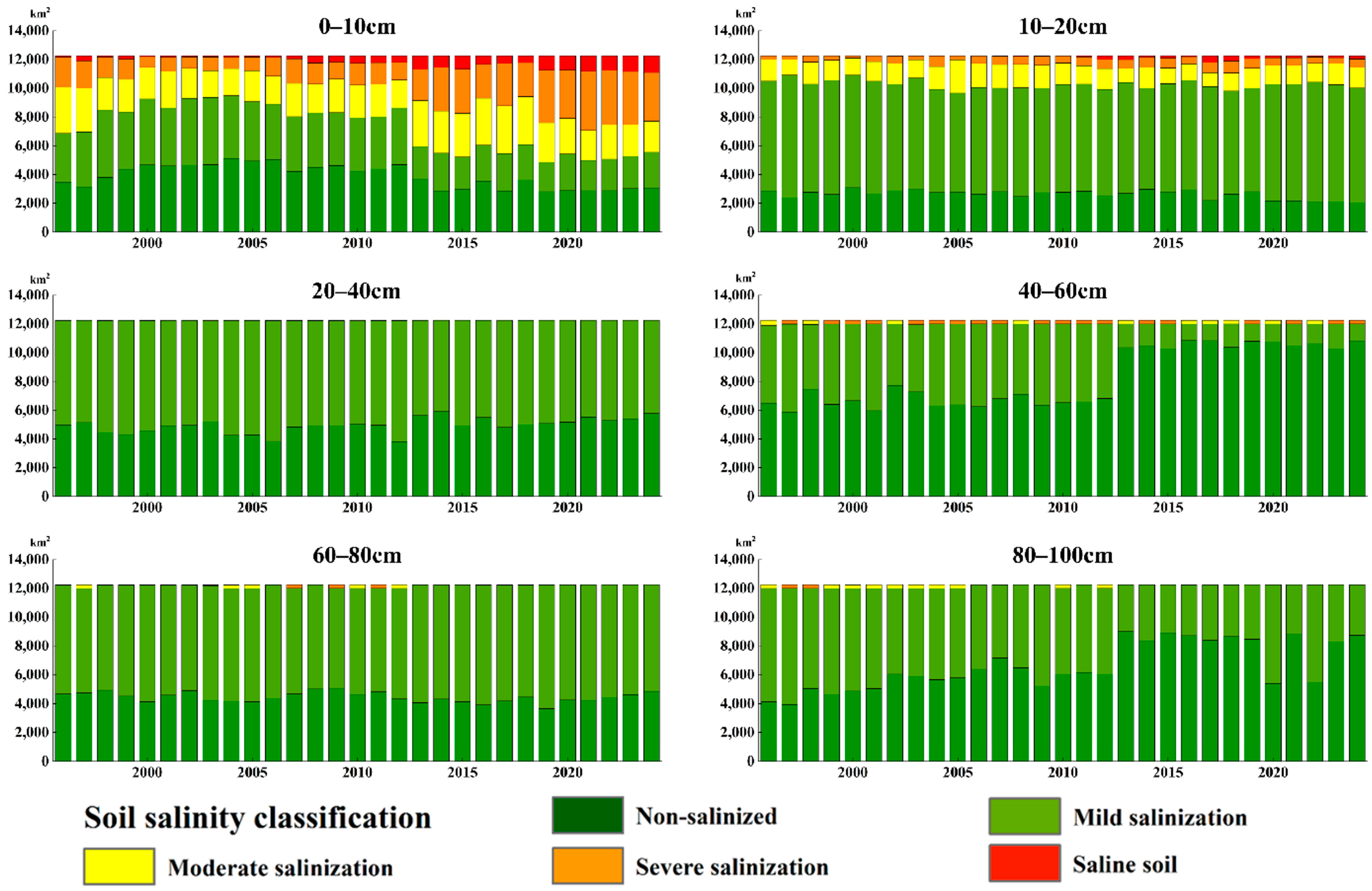
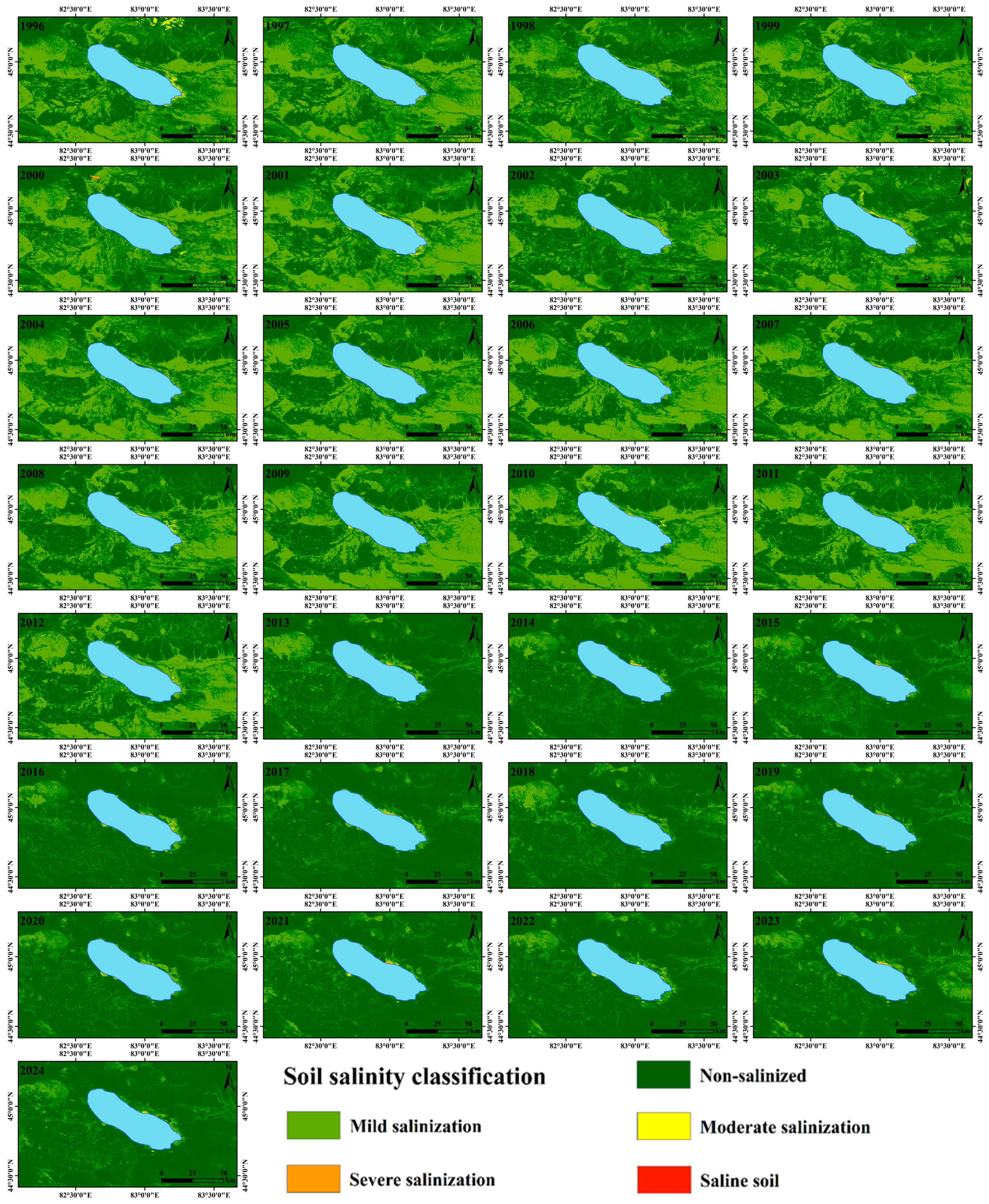
Figure 9 illustrates the spatial distribution of 0–10 cm soil salinity in the Ebinur Wetland Reserve (see Appendix A for other depths). Between 1996 and 2024, the oasis region experienced a significant decline in soil salinity, accompanied by an increase in non-salinized and slightly salinized areas, primarily due to the expansion of cropland and improvements in irrigation infrastructure. In the desert area, soil salinity showed some alleviation from 1996 to 2012; however, after 2013, the saline soil area around Ebinur Lake increased, primarily due to the expansion of moderately and severely salinized zones. Overall, soil salinity in the oasis areas shows a declining trend, whereas in the desert areas it first decreases and then increases. According to the results in Figure 10, in the 10–20 cm soil layer, although high-salinity areas have substantially decreased, interannual variations are not significant, and they are mainly concentrated in the southeastern part of Ebinur Lake (see Appendix A). The salinity classification in the 20–40 cm soil layer is relatively stable, dominated by non-salinized and slightly salinized soils. The Appendix A further shows that high-salinity areas are scattered around the lake. The 40–60 cm non-salinized soil layer exhibits a fluctuating upward trend, indicating some downward migration and leaching of salts. In the 60–80 cm soil layer, non-salinized and slightly salinized soils also dominate. Notably, in the 80–100 cm soil layer, the Appendix A shows a slight increase in salinity in the oasis areas, predominantly in lightly salinized soils. This indicates that over the past 30 years, subsoil salinization in the oasis regions has worsened.
3.4.3. Trends in Soil Salinity Changes in the Ebinur Wetland Reserve

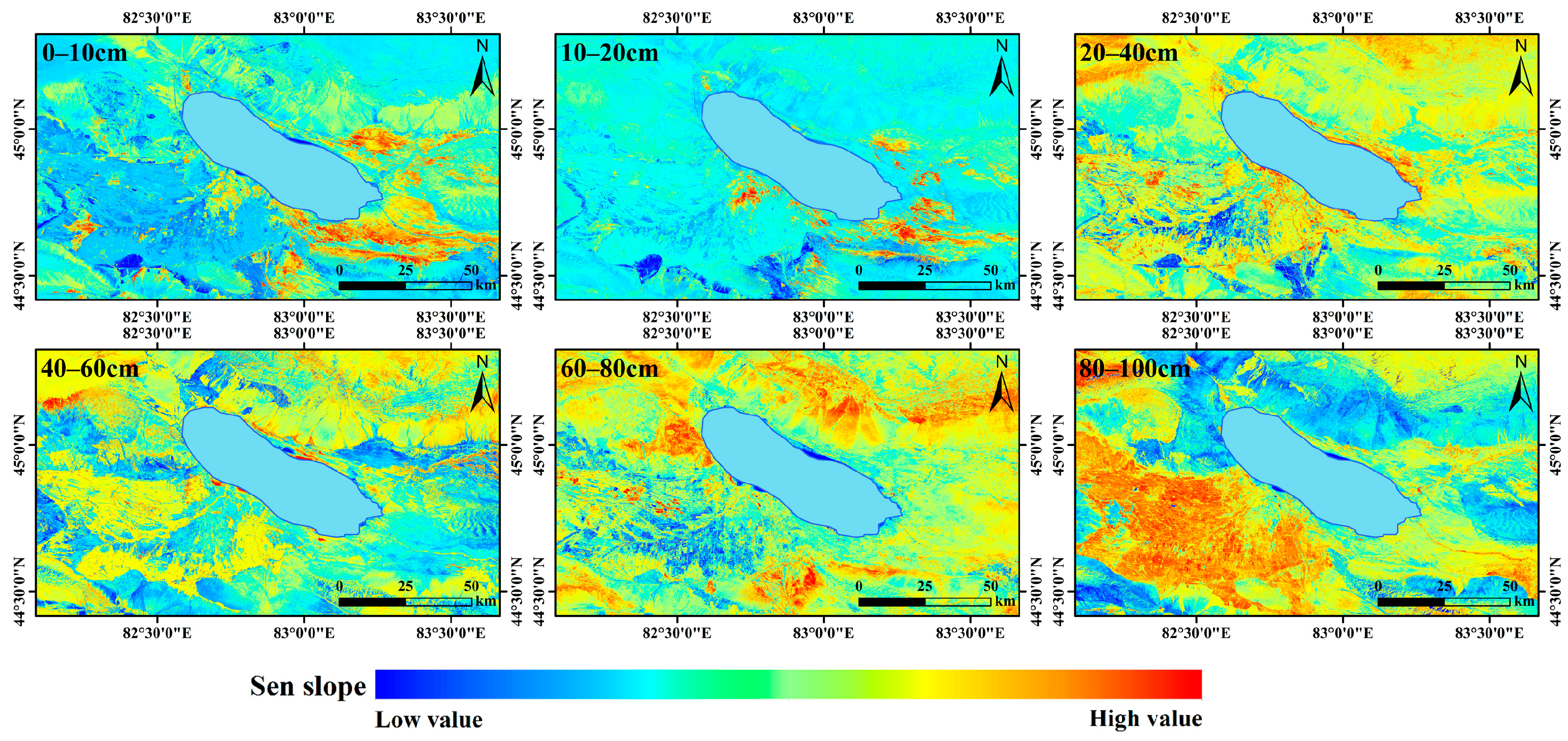
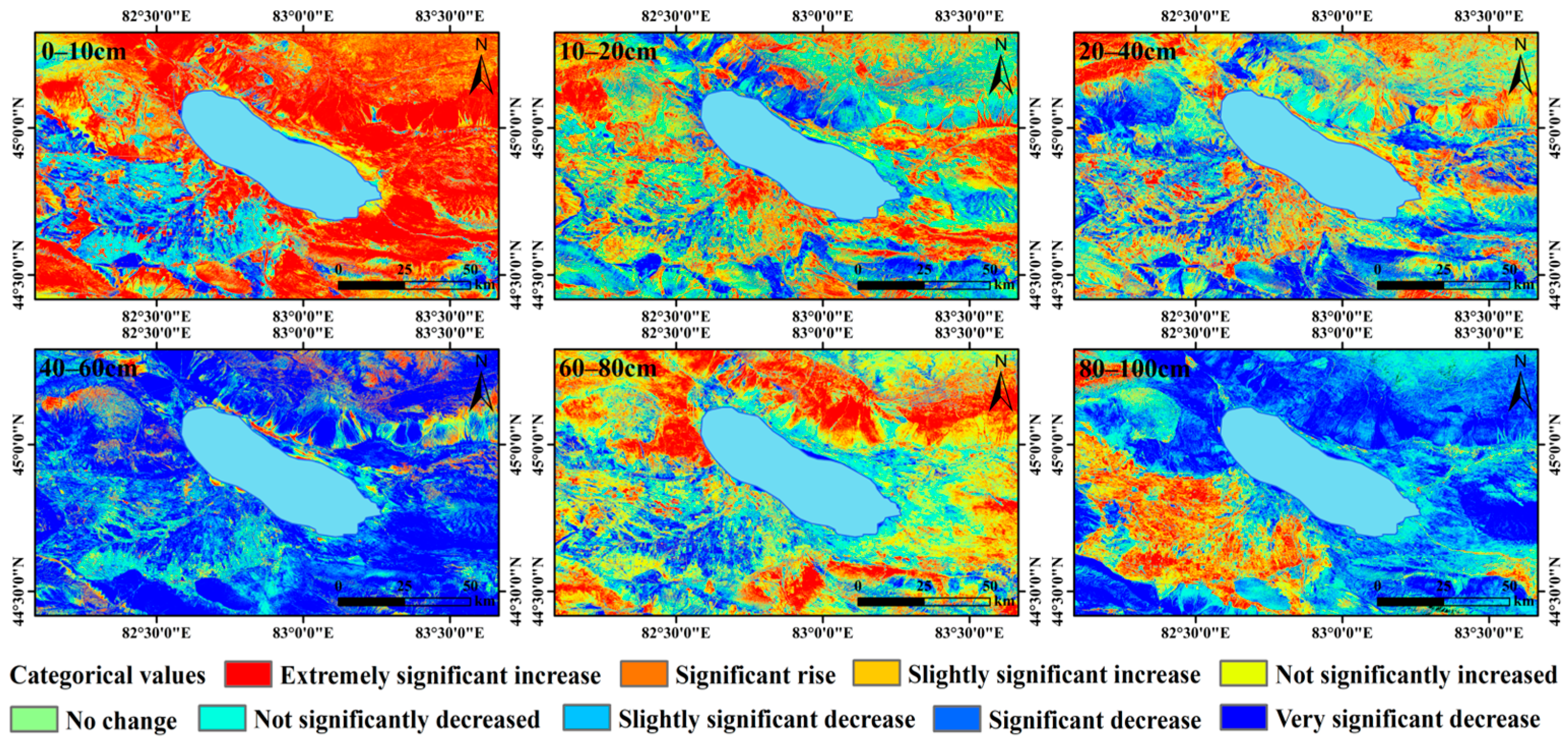
To reveal the temporal trends in soil salinity across different soil layers in the Ebinur Wetland Reserve, this study applied Sen’s slope estimator and Mann–Kendall (MK) test to the multi-year soil salinity remote sensing inversion results for six depth intervals from 0 to 100 cm. The Sen’s slope map (Figure 11) illustrates the rate of soil salinity change over time, where positive slopes indicate an increasing trend and negative slopes a decreasing trend; the color gradient from blue (significant decrease) to red (significant increase) reflects the magnitude and direction of change. The MK significance test map (Figure 12) further reveals the statistical significance of these trends, categorized into nine levels, thereby providing confidence levels for the observed changes.
The Sen’s slope map reveals a clear increasing trend in soil salinity in the 0–10 cm and 10–20 cm layers in the southeastern part of Ebinur Lake. In the oasis areas, negative Sen’s slope values indicate a decrease in soil salinity, which may be related to improved irrigation practices, land management, or soil amelioration. With increasing depth, the salinity trends in the 20–40 cm and 40–60 cm layers become more moderate, with generally low Sen’s slope values, indicating relative stability of mid-layer soil salinity. In the 60–80 cm soil layer, certain areas in the desert region exhibit accumulation of soil salinity. At a depth of 80–100 cm, soil salinity in the oasis area exhibits a rapid increase, consistent with previous findings, suggesting that salinity may accumulate in deeper layers due to irrigation leakage and gravitational migration. Specifically, based on field surveys, we found that the majority of crops cultivated in the oasis areas are cotton. In the Xinjiang oasis, irrigation methods have gradually shifted from traditional flood irrigation to water-saving drip irrigation since 1996 [54]. With the expansion of cotton fields and the prolonged use of drip irrigation, topsoil salinity has been continuously decreasing [55]. However, over time, the salts introduced into the soil through irrigation tend to accumulate in deeper soil layers [56]. Furthermore, the MK significance test results largely correspond with the spatial distribution of Sen’s slopes, further confirming the statistical significance of soil salinity changes across different regions. Soil layers of 0–20 cm in the desert region exhibit highly significant or significant increasing trends, especially in non-cultivated areas and wetland margins. The 40–60 cm layer generally significantly decreases soil salinity. Although the rate of change in the 60–100 cm soil layer is less dramatic than in the surface layers, significant increasing trends in the 60–80 cm desert region and 80–100 cm oasis boundary area warrant attention.

4. Discussion

4.1. Feature Selection and Model Comparison

Based on the RFLA, the feature variables used for modeling soil salinity at various depths include original bands, vegetation indices, salinity indices, soil indices, and other spectral indices, forming diverse combinations of features. The reflectance characteristics of soil salinity can directly reflect the spatial variation in surface salinity [57]. Specifically, visible bands (blue, green, and red) effectively identify surface salt crust and salt efflorescence features. Near-infrared bands are sensitive to changes in vegetation cover and can indirectly indicate salinization levels. Shortwave infrared bands uniquely respond to soil moisture and salt minerals. Salinity indices directly characterize the accumulation of salt on the soil surface. In contrast, deep soil salinity migrates toward the surface via moisture evaporation, forming salt crusts or subsurface salt enrichment, which correlates with surface spectral features [58]. Normal vegetation exhibits high spectral reflectance in the near-infrared region, whereas stressed or abnormal vegetation shows low reflectance in this spectral region [59]. Vegetation spectral indices influenced by soil salinity stress can serve as indirect indicators for assessing regional salinity status. Particularly in remote sensing inversion model construction, these indices effectively reveal the coupling relationship between soil salinity and physiological responses of vegetation [60]. Soil indices capture spectral signals related to salinization within soil spectra, enabling quantitative characterization of surface soil salinity content [61]. Moreover, water indices and tasseled cap transformation-derived spectral indices can indirectly represent the spatial distribution of soil salinity. The RFLA was selected for feature variable screening. Compared to traditional methods (e.g., LASSO, ReliefF, Random Forest feature importance), RFLA achieves global optimal search via a reversible jump Markov Chain Monte Carlo (RJMCMC) strategy [62,63], effectively avoiding VIP’s insensitivity to nonlinear relations, SPA’s tendency to local optima, and CARS’s dependence on preset variable numbers. RFLA’s adaptive probability weighting mechanism automatically optimizes feature subset size. It exhibits strong robustness against redundant features in high-dimensional data (e.g., multispectral/hyperspectral imagery), making it suitable for high-dimensional small-sample datasets [64]. A comparison of CNN, LSTM, and RF models in salinity inversion revealed that the CNN outperformed the other models in terms of accuracy. The underlying reason is that CNN’s unique weight-sharing mechanism effectively compresses network parameters during feature extraction, simplifying model complexity and significantly enhancing system robustness [65]. The convolutional kernels capture spatial local features in remote sensing images (e.g., textures, patchy salinization patterns), enabling effective identification of spatial heterogeneity in soil salinity. Compared to CNN, LSTM excels in temporal sequence modeling through its cell state’s long-term memory function, enabling the persistent storage of sequential features. However, in this study’s multi-layer soil salinity spatial inversion task, with limited temporal information and a focus on spatial mapping, LSTM’s temporal modeling capacity was not fully utilized. CNN outperformed LSTM due to its powerful spatial feature extraction, flexible multi-source data fusion, and high-resolution output advantages [66]. Although RF can handle high-dimensional features, it lacks explicit modeling of spatial dependencies among pixels, which can potentially result in the loss of local detail. Limited sample sizes may lead to overfitting due to the creation of redundant decision trees, thereby reducing the generalization ability [67]. Compared to the multi-depth (0–60 cm) soil salinity prediction model for the Yellow River Delta developed by Zhang et al. [68] using RF, the CNN model employed in this study not only achieved higher prediction accuracy in the shallow layers (0–60 cm) but also demonstrated relatively stable predictive performance in the mid-deep (60–80 cm) and deep layers (80–100 cm), fully highlighting its advantages in multi-depth soil salinity inversion.

4.2. Spatial Distribution Characteristics and Causal Analysis of Salinization in the Ebinur Lake Wetland

The Ebinur Lake Nature Reserve is a typical inland saline marsh wetland in arid regions, located at the lowest point and catchment center of the Junggar Basin. It is the largest sodium sulfate-type saline lake in Xinjiang [69]. Its salinization is jointly influenced by climate change and anthropogenic activities, exhibiting marked interannual variability and spatial heterogeneity [70]. In recent years, the combined effects of reduced precipitation, intensified evaporation, and excessive water resource exploitation have led to a pronounced decline in the size of Ebinur Lake, exacerbating salinization and desertification. In the Bortala River Basin, salinity increases markedly from west to east, with the most severe salinization occurring in the eastern Ebinur Lake wetland, indicating the impact of irrigation on salt accumulation and redistribution [22]. The study area exhibits pronounced spatial heterogeneity in soil salinity. Higher salt concentrations are found in the east, northeast, and southeast, particularly in the lakeshore zone, which is mainly composed of unused land and desert. Field sampling reveals that the eastern and northeastern regions are topographically low-lying with poor drainage and strong evaporation, making them highly susceptible to salinization. The presence of red salt ponds in the northwest further aggravates localized salt accumulation. Conversely, the southwest region, with better vegetation cover, has relatively lower soil salinity, consistent with the findings of Cao et al. [70]. Mainly due to its proximity to the Alashankou wind corridor, the northwestern region experiences persistent wind erosion and strong evaporation, leading to the upward migration and surface accumulation of soluble salts from deep soil and groundwater. The southeastern region, situated along the main Alashankou wind path, has experienced continuous salt dust deposition, gradually transforming the original wetland landscape into a salt desert, characterized by persistently high salinity across the entire soil profile in the desiccated lakebed and surrounding areas [71,72]. Additionally, high groundwater mineralization from the Aqikesu River and nearby salt fields in the southeast, combined with intense evaporation, has resulted in severe soil surface salinization. Moreover, the riparian zones in the lower reaches of the Bortala and Jing Rivers exhibit pronounced salinization hotspots, which may be linked to lateral river seepage and fluctuations in the groundwater table. In the southwest, seasonal rivers such as the Jing and Bortala contribute to soil improvement through artificial water diversion and aquaculture projects at the lake inlet, enhancing water retention and reducing soil salinity [71]. Across the 0–100 cm soil profile, salinity exhibits a typical “surface enrichment–middle transition–deep accumulation” pattern, reflecting key processes of salt migration in arid zones. In the 0–20 cm layer, surface salt enrichment is highly pronounced, often forming salt crusts or efflorescence [73], with electrical conductivity reaching 3–8 times that of deeper layers. Although precipitation provides some leaching of surface salts, the limited rainfall and intense evaporation cause salts to migrate downward briefly before reaccumulating at the surface, maintaining persistently high salinity in this layer. The 20–60 cm layer functions as a transitional zone for salt movement, with complex salinity dynamics influenced by root water uptake, seasonal infiltration, and capillary rise. In the deep 60–100 cm soil, salt content increases again, primarily due to long-term irrigation and fluctuations in the groundwater table. Notably, in cultivated areas, drip irrigation has led to salt accumulation at this depth, which may pose risks to root zone development [74]. To address the current salinization, a multi-scale, integrated management approach is recommended, including water transfer projects and the restoration of historical lakeside vegetation systems (forests, shrubs, and grasses) to suppress salt accumulation and rehabilitate ecosystems. In heavily salinized areas, constructing open ditches or installing subsurface drainage systems can effectively remove salts from croplands or ecologically sensitive zones [75,76]. In agricultural areas, irrigation practices should be optimized and shelterbelts established to reduce wind speed and evaporation, thereby minimizing upward salt migration. A comprehensive prevention and control framework should be implemented, promoting efficient irrigation strategies [74] alongside soil amendments such as organic matter application and appropriate tillage [77]. This multifaceted approach can effectively reduce wind velocity and evaporation in farmland, thereby restraining salt migration into the root zone.

4.3. Limitations and Future Prospects

This study has certain limitations in terms of data timeliness and seasonality, as the inversion model is currently constructed solely based on soil salinity and remote sensing data from the summer season, thus failing to capture the year-round dynamics of salinity. To investigate the changes in soil salinity over the past three decades, we employed only the original spectral bands and constructed spectral indices from multispectral imagery for modeling, which inevitably compromised the accuracy of deep-layer soil salinity inversion. Considering the seasonal differences in soil salinity, future work could incorporate multi-temporal data from the spring snowmelt period and the autumn drought period, thereby increasing sample size and spatial coverage to ensure excellent representation across all land use types. This would better reveal the seasonal spatiotemporal variations in the relationship between salinity and spectral response. In addition, the number of sampling sites should be increased, particularly in key areas such as lake-edge transition zones and farmland margins, with a focus on densifying sample coverage in ecotones and regions with frequent human activity. To address the limitation of multispectral imagery in penetrating the soil, future efforts could integrate microwave remote sensing (e.g., SAR) and thermal infrared data to enhance model sensitivity to surface structure, soil moisture dynamics, and salinity accumulation. In areas with dense vegetation or frequent cloud cover, microwave data can provide valuable compensation. In arid regions, microtopography (e.g., depressions, slight elevations) plays a crucial role in salt redistribution; however, current remote sensing data often lack the spatial resolution necessary to capture these fine-scale features. UAV surveys and high-resolution satellite imagery may be employed in the future to improve the accuracy of microtopographic characterization. Moreover, current modeling approaches primarily focus on static salinity prediction, with limited exploration of temporal evolution patterns and their driving mechanisms. Future research could aim to develop multi-depth, spatiotemporal, coupled models that integrate long-term remote sensing time series, ground observations, and factors such as meteorology, hydrology, soil texture, and anthropogenic drivers. By quantitatively analyzing the interactions between natural processes and human interventions, a deeper understanding of salinization mechanisms can be achieved, providing a scientific basis and data support for salinization risk warning and precision management.

5. Conclusions

This study focused on the Ebinur Lake wetland in Xinjiang as a representative area, integrating field samples, Landsat imagery, the RFLA feature selection algorithm, and deep learning models to establish a multi-depth soil salinity inversion and dynamic monitoring framework covering the 0–100 cm soil layer. The vertical characteristics, spatial heterogeneity, and temporal evolution of salinization in this region were systematically analyzed, providing a reference for theoretical research and management practices in arid-region salinization. The key conclusions are as follows:
  • The RFLA can effectively extract key features closely associated with soil salinity from high-dimensional spectral data, including vegetation indices, salinity indices, and soil indices. These features, used as inputs for the multi-depth model, not only enhance its predictive capability but also improve the physical interpretability of the inversion results, providing a reference approach for intelligent processing of high-dimensional spectral data.
  • The constructed multi-depth CNN model exhibited excellent performance across all soil layers (with test set R2 values generally exceeding 0.5), reaching 0.74 and 0.61 in the 0–10 cm and 40–60 cm layers, significantly outperforming the LSTM and RF models. This indicates that CNN has a notable advantage in capturing spatial features and local nonlinear relationships, making it suitable for high-precision soil salinity inversion and spatial mapping, and providing a reliable technical means for salinization monitoring in arid regions.
  • Multi-temporal remote sensing mapping and Sen-MK trend analysis revealed a vertical migration pattern in the study area characterized by declining surface salinity, stable mid-layer salinity, and accumulating deep-layer salinity. The decrease in surface salinity in the oasis area reflects the positive effects of irrigation and land management. In contrast, the significant increase in salinity at depths of 80–100 cm indicates a potential risk of deep-layer salt accumulation. These findings underscore the need for future salinization management to focus on deep-layer salinity and its potential impacts on crop root zones and ecosystem stability.

Author Contributions

Conceptualization, J.W.; methodology, J.W. and J.Z.; software, J.W., Z.Z.; validation, J.W. and Z.Z.; formal analysis, J.W. and Z.Z.; investigation, J.W. and J.Z.; resources, J.W.; data curation, J.W., J.Z. and Z.Z.; writing—original draft preparation, J.W. All authors have read and agreed to the published version of the manuscript.

Funding

This research was funded by the Third comprehensive scientific Expedition to Xinjiang (2022xjkk1405), the Youth Top Talent Project of Xinjiang Uygur Autonomous Region (No. 2024TSYCCX0024), and the Technology Innovation Team (Tianshan Innovation Team), Innovative Team for Efficient Utilization of Water Resources in Arid Regions (NO.2022TSYCTD0001).

Data Availability Statement

The data are available on request to the first author.

Conflicts of Interest

The authors declare no conflicts of interest.

Abbreviations

The following abbreviations are used in this manuscript:
CNNConvolutional neural net-works
LSTMLong short-term memory networks
RFRandom forest
RFLARandom frog leaping algorithm

Appendix A
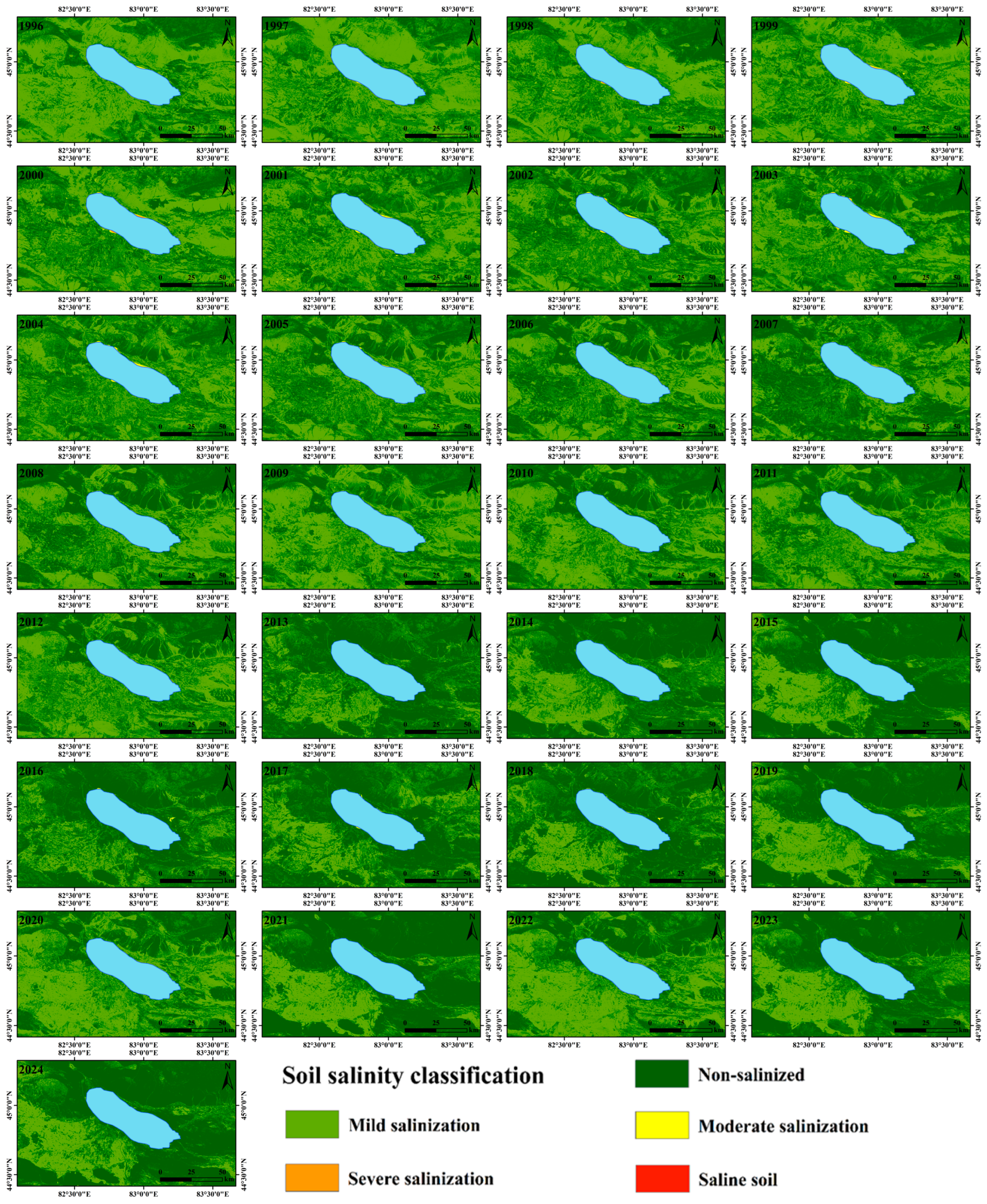
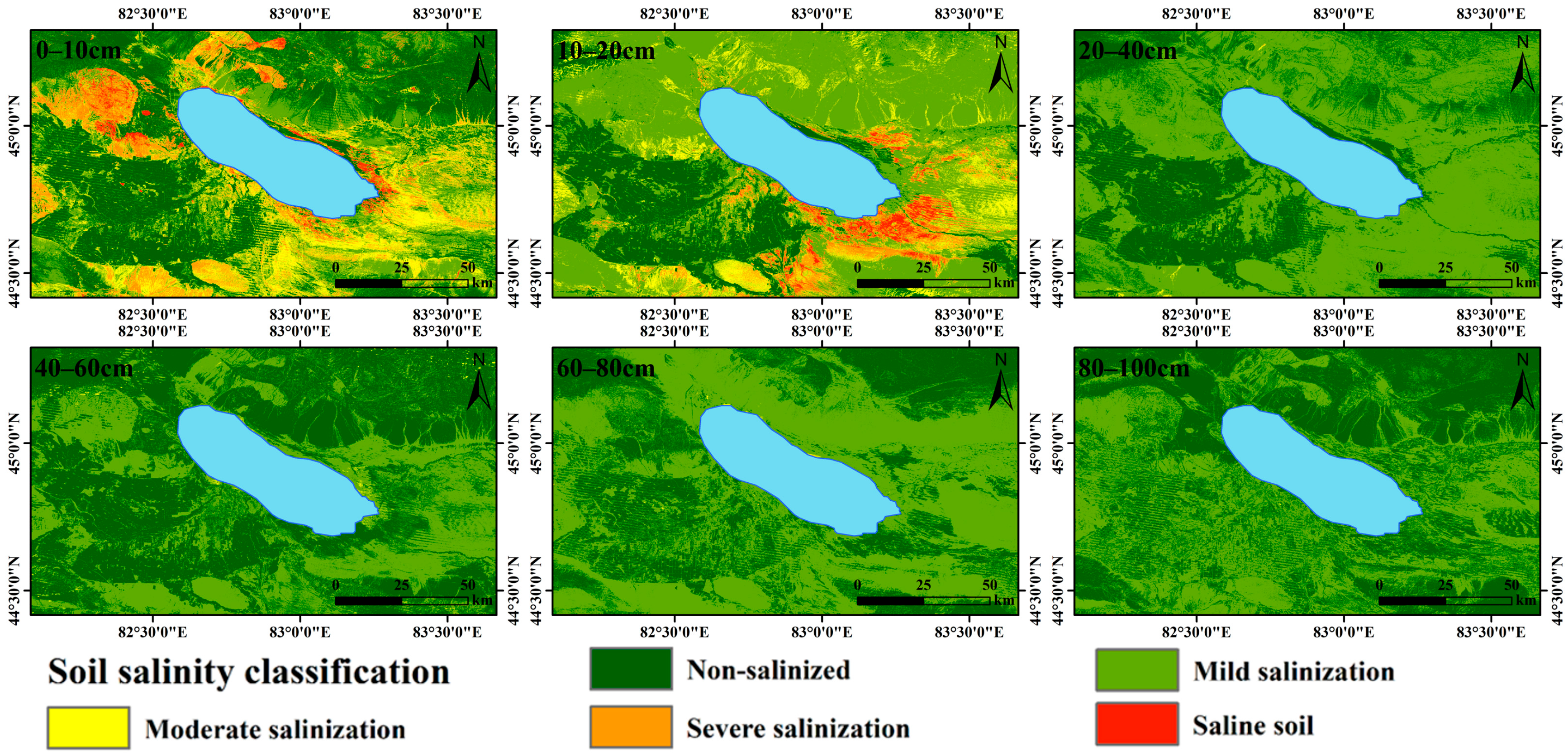
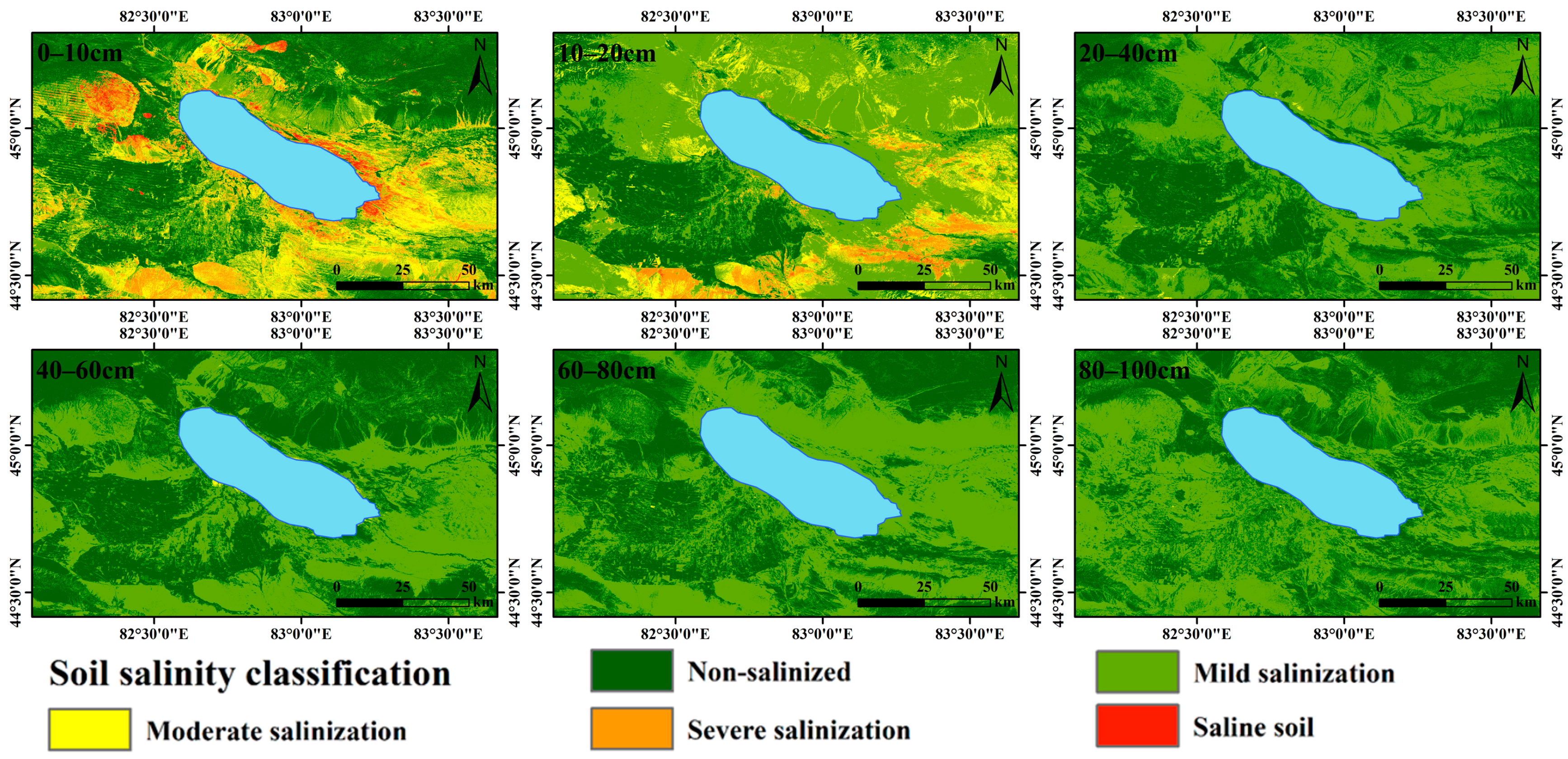
Figure A1. Spatial distribution map of soil salinity at different depths in the Ebinur Wetland Reserve in 1997.
Remotesensing 17 03958 g0a1
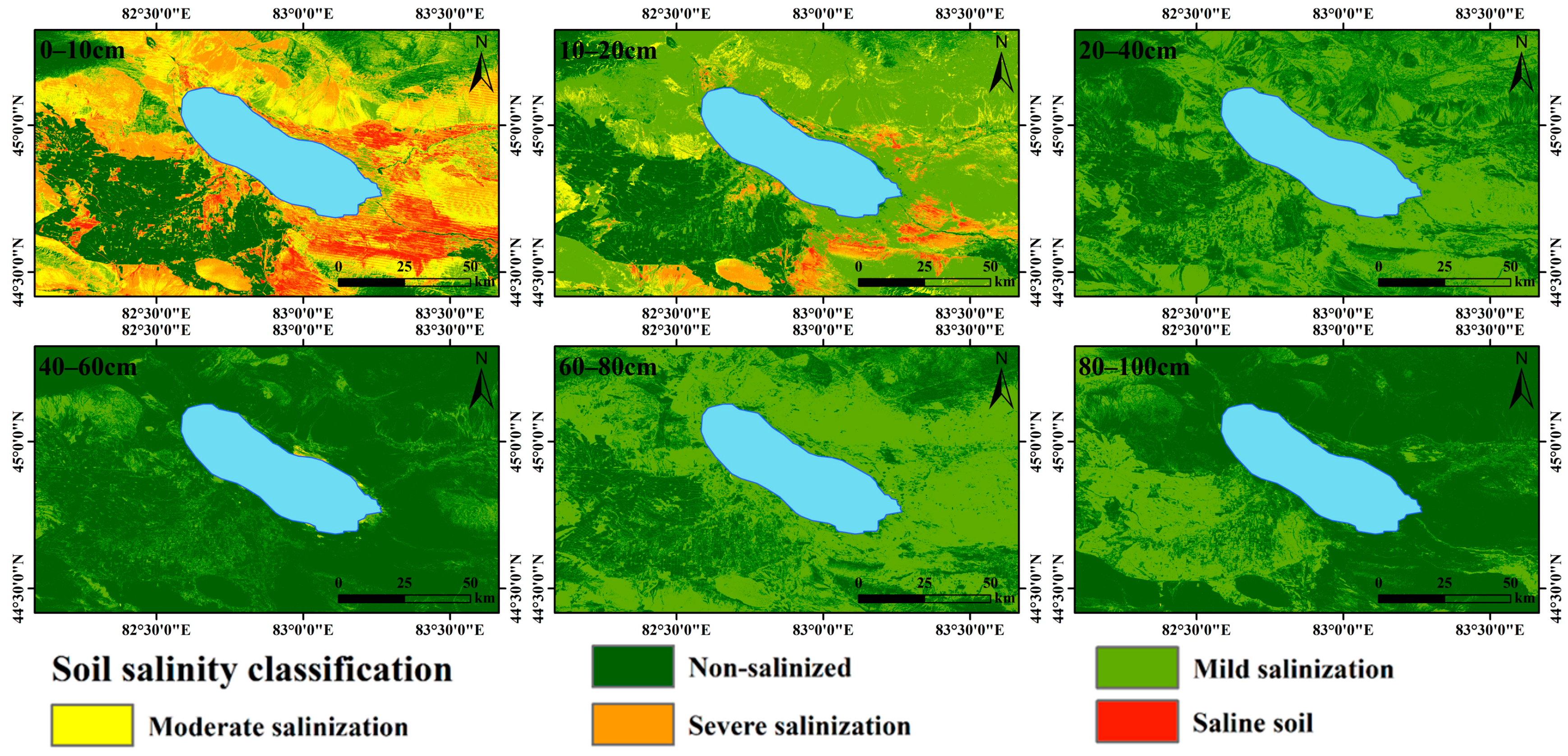
Figure A2. Spatial distribution map of soil salinity at different depths in the Ebinur Wetland Reserve in 1998.
Remotesensing 17 03958 g0a2
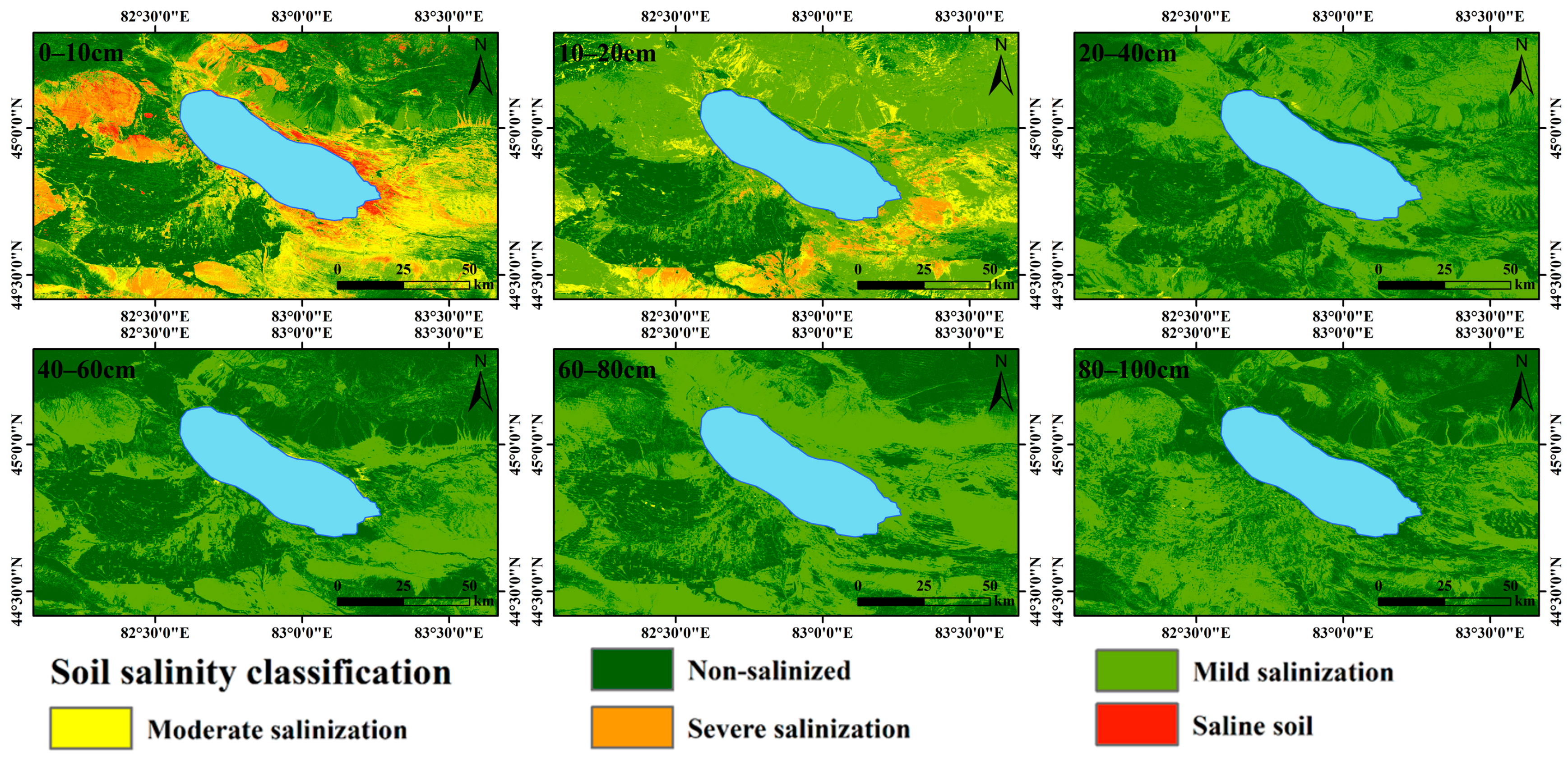
Figure A3. Spatial distribution map of soil salinity at different depths in the Ebinur Wetland Reserve in 1999.
Remotesensing 17 03958 g0a3
Figure A4. Spatial distribution map of soil salinity at different depths in the Ebinur Wetland Reserve in 2000.
Remotesensing 17 03958 g0a4
Figure A5. Spatial distribution map of soil salinity at different depths in the Ebinur Wetland Reserve in 2001.
Remotesensing 17 03958 g0a5
Figure A6. Spatial distribution map of soil salinity at different depths in the Ebinur Wetland Reserve in 2002.
Remotesensing 17 03958 g0a6
Figure A7. Spatial distribution map of soil salinity at different depths in the Ebinur Wetland Reserve in 2003.
Remotesensing 17 03958 g0a7
Figure A8. Spatial distribution map of soil salinity at different depths in the Ebinur Wetland Reserve in 2004.
Remotesensing 17 03958 g0a8
Figure A9. Spatial distribution map of soil salinity at different depths in the Ebinur Wetland Reserve in 2005.
Remotesensing 17 03958 g0a9
Figure A10. Spatial distribution map of soil salinity at different depths in the Ebinur Wetland Reserve in 2006.
Remotesensing 17 03958 g0a10
Figure A11. Spatial distribution map of soil salinity at different depths in the Ebinur Wetland Reserve in 2007.
Remotesensing 17 03958 g0a11
Figure A12. Spatial distribution map of soil salinity at different depths in the Ebinur Wetland Reserve in 2008.
Remotesensing 17 03958 g0a12
Figure A13. Spatial distribution map of soil salinity at different depths in the Ebinur Wetland Reserve in 2009.
Remotesensing 17 03958 g0a13
Figure A14. Spatial distribution map of soil salinity at different depths in the Ebinur Wetland Reserve in 2010.
Remotesensing 17 03958 g0a14
Figure A15. Spatial distribution map of soil salinity at different depths in the Ebinur Wetland Reserve in 2011.
Remotesensing 17 03958 g0a15
Figure A16. Spatial distribution map of soil salinity at different depths in the Ebinur Wetland Reserve in 2012.
Remotesensing 17 03958 g0a16
Figure A17. Spatial distribution map of soil salinity at different depths in the Ebinur Wetland Reserve in 2013.
Remotesensing 17 03958 g0a17
Figure A18. Spatial distribution map of soil salinity at different depths in the Ebinur Wetland Reserve in 2014.
Remotesensing 17 03958 g0a18
Figure A19. Spatial distribution map of soil salinity at different depths in the Ebinur Wetland Reserve in 2015.
Remotesensing 17 03958 g0a19
Figure A20. Spatial distribution map of soil salinity at different depths in the Ebinur Wetland Reserve in 2016.
Remotesensing 17 03958 g0a20
Figure A21. Spatial distribution map of soil salinity at different depths in the Ebinur Wetland Reserve in 2017.
Remotesensing 17 03958 g0a21
Figure A22. Spatial distribution map of soil salinity at different depths in the Ebinur Wetland Reserve in 2018.
Remotesensing 17 03958 g0a22
Figure A23. Spatial distribution map of soil salinity at different depths in the Ebinur Wetland Reserve in 2019.
Remotesensing 17 03958 g0a23
Figure A24. Spatial distribution map of soil salinity at different depths in the Ebinur Wetland Reserve in 2020.
Remotesensing 17 03958 g0a24
Figure A25. Spatial distribution map of soil salinity at different depths in the Ebinur Wetland Reserve in 2021.
Remotesensing 17 03958 g0a25
Figure A26. Spatial distribution map of soil salinity at different depths in the Ebinur Wetland Reserve in 2022.
Remotesensing 17 03958 g0a26
Figure A27. Spatial distribution map of soil salinity at different depths in the Ebinur Wetland Reserve in 2023.
Remotesensing 17 03958 g0a27
Figure A28. Soil Salinity Mapping for 10–20 cm Depth in the Ebinur Wetland Reserve from 1996 to 2024.
Remotesensing 17 03958 g0a28
Figure A29. Soil Salinity Mapping for 20–40 cm Depth in the Ebinur Wetland Reserve from 1996 to 2024.
Remotesensing 17 03958 g0a29
Figure A30. Soil Salinity Mapping for 40–60 cm Depth in the Ebinur Wetland Reserve from 1996 to 2024.
Remotesensing 17 03958 g0a30
Figure A31. Soil Salinity Mapping for 60–80 cm Depth in the Ebinur Wetland Reserve from 1996 to 2024.
Remotesensing 17 03958 g0a31
Figure A32. Soil Salinity Mapping for 80–100 cm Depth in the Ebinur Wetland Reserve from 1996 to 2024.
Remotesensing 17 03958 g0a32

References

  1. Li, J.; Pu, L.; Han, M.; Zhu, M.; Zhang, R.; Xiang, Y. Soil salinization research in China: Advances and prospects. J. Geogr. Sci. 2014, 24, 943–960. [Google Scholar] [CrossRef]
  2. Zhang, J.; Ding, J.; Zhang, Z.; Wang, J.; Zeng, X.; Ge, X. Study on the inversion and spatiotemporal variation mechanism of soil salinization at multiple depths in typical oases in arid areas: A case study of Wei-Ku Oasis. Agric. Water Manag. 2025, 315, 109542. [Google Scholar] [CrossRef]
  3. Zinck, J.A.; Metternicht, G. Soil salinity and salinization hazard. In Remote Sensing of Soil Salinizationnization: Impact on Land Management; CRC Press: Boca Raton, FL, USA, 2009; pp. 3–18. [Google Scholar]
  4. Rozema, J.; Flowers, T. Crops for a salinized world. Science 2008, 322, 1478–1480. [Google Scholar] [CrossRef] [PubMed]
  5. Wang, R. Plant functional types and their ecological responses to salinization in saline grasslands, Northeastern China. Photosynthetica 2004, 42, 511–519. [Google Scholar] [CrossRef]
  6. Rossel, R.V.; Adamchuk, V.; Sudduth, K.; McKenzie, N.; Lobsey, C. Proximal soil sensing: An effective approach for soil measurements in space and time. Adv. Agron. 2011, 113, 243–291. [Google Scholar]
  7. Vermeulen, D.; Van Niekerk, A. Machine learning performance for predicting soil salinity using different combinations of geomorphometric covariates. Geoderma 2017, 299, 1–12. [Google Scholar] [CrossRef]
  8. Dehaan, R.; Taylor, G. Field-derived spectra of salinized soils and vegetation as indicators of irrigation-induced soil salinization. Remote Sens. Environ. 2002, 80, 406–417. [Google Scholar] [CrossRef]
  9. Metternicht, G.I.; Zinck, J. Remote sensing of soil salinity: Potentials and constraints. Remote Sens. Environ. 2003, 85, 1–20. [Google Scholar] [CrossRef]
  10. Farifteh, J.; Van Der Meer, F.; Carranza, E. Similarity measures for spectral discrimination of salt-affected soils. Int. J. Remote Sens. 2007, 28, 5273–5293. [Google Scholar] [CrossRef]
  11. Hunt, G.R. Visible and near-infrared spectra of minerals and rocks: II carbonates. Mod. Geol. 1971, 2, 23–30. [Google Scholar]
  12. Clark, R.N.; Roush, T.L. Reflectance spectroscopy: Quantitative analysis techniques for remote sensing applications. J. Geophys. Res. Solid. Earth 1984, 89, 6329–6340. [Google Scholar] [CrossRef]
  13. Dwivedi, R. Monitoring and the study of the effects of image scale on delineation of salt-affected soils in the Indo-Gangetic plains. Int. J. Remote Sens. 1992, 13, 1527–1536. [Google Scholar] [CrossRef]
  14. Verma, K.; Saxena, R.; Barthwal, A.; Deshmukh, S. Remote sensing technique for mapping salt affected soils. Int. J. Remote Sens. 1994, 15, 1901–1914. [Google Scholar] [CrossRef]
  15. Panah, S.; Goossens, R.; De Dapper, M. Study of soil salinity in the Ardakan area, Iran, based upon field observations and remote sensing. In Operational Remote Sensing for Sustainable Development, Proceedings of the 18th EARSeL Symposium on Operational Remote Sensing for Sustainable Development, Enschede,The Netherlands, 11–14 May 1998; CRC Press: Boca Raton, FL, USA, 1999; pp. 419–426. [Google Scholar]
  16. Wang, F.; Yang, S.; Wei, Y.; Shi, Q.; Ding, J. Characterizing soil salinity at multiple depth using electromagnetic induction and remote sensing data with random forests: A case study in Tarim River Basin of southern Xinjiang, China. Sci. Total Environ. 2021, 754, 142030. [Google Scholar] [CrossRef]
  17. Chen, Y.; Qiu, Y.; Zhang, Z.; Zhang, J.; Chen, C.; Han, J.; Liu, D. Estimating salt content of vegetated soil at different depths with Sentinel-2 data. PeerJ 2020, 8, e10585. [Google Scholar] [CrossRef]
  18. Ge, X.; Ding, J.; Teng, D.; Wang, J.; Huo, T.; Jin, X.; Wang, J.; He, B.; Han, L. Updated soil salinity with fine spatial resolution and high accuracy: The synergy of Sentinel-2 MSI, environmental covariates and hybrid machine learning approaches. Catena 2022, 212, 106054. [Google Scholar] [CrossRef]
  19. Zhang, M.; Fan, X.; Gao, P.; Guo, L.; Huang, X.; Gao, X.; Pang, J.; Tan, F. Monitoring Soil Salinity in Arid Areas of Northern Xinjiang Using Multi-Source Satellite Data: A Trusted Deep Learning Framework. Land 2025, 14, 110. [Google Scholar] [CrossRef]
  20. Aihaiti, A.; Nurmemet, I.; Yu, X.; Aili, Y.; Li, S.; Lv, X.; Qin, Y. An enhanced soil salinity estimation method for arid regions using multisource remote sensing data and advanced feature selection. Catena 2025, 256, 109116. [Google Scholar] [CrossRef]
  21. Zhang, J.; Ding, J.; Wang, J.; Zhang, Z.; Tan, J.; Ge, X. Spatial heterogeneity response of soil salinization inversion cotton field expansion based on deep learning. Front. Plant Sci. 2024, 15, 1437390. [Google Scholar] [CrossRef]
  22. Wen, D.; Wang, J.; Ding, J.; Zhang, Z. Distribution Characteristics and Relationship Between Soil Salinity and Soil Particle Size in Ebinur Lake Wetland, Xinjiang. Land 2025, 14, 297. [Google Scholar] [CrossRef]
  23. Cai, A.; Chen, Z.; Jiang, Z.; Song, R. The relationship between soil salinity and electrical conductivity across different salinized regions in China. Soil 1997, 29, 54–57. (In Chinese) [Google Scholar]
  24. Bao, S. Soil Agrochemical Analysis; China Agricultural Press: Beijing, China, 2000. (In Chinese) [Google Scholar]
  25. Wulder, M.A.; Roy, D.P.; Radeloff, V.C.; Loveland, T.R.; Anderson, M.C.; Johnson, D.M.; Healey, S.; Zhu, Z.; Scambos, T.A.; Pahlevan, N. Fifty years of Landsat science and impacts. Remote Sens. Environ. 2022, 280, 113195. [Google Scholar] [CrossRef]
  26. Zhao, W.; Zhou, C.; Zhou, C.; Ma, H.; Wang, Z. Soil salinity inversion model of oasis in arid area based on UAV multispectral remote sensing. Remote Sens. 2022, 14, 1804. [Google Scholar] [CrossRef]
  27. Zhang, J.; Xiao, J.; Tong, X.; Zhang, J.; Meng, P.; Li, J.; Liu, P.; Yu, P. NIRv and SIF better estimate phenology than NDVI and EVI: Effects of spring and autumn phenology on ecosystem production of planted forests. Agric. For. Meteorol. 2022, 315, 108819. [Google Scholar] [CrossRef]
  28. Wu, W. The generalized difference vegetation index (GDVI) for dryland characterization. Remote Sens. 2014, 6, 1211–1233. [Google Scholar] [CrossRef]
  29. Myneni, R.B.; Hall, F.G.; Sellers, P.J.; Marshak, A.L. The interpretation of spectral vegetation indexes. IEEE Trans. Geosci. Remote Sens. 1995, 33, 481–486. [Google Scholar] [CrossRef]
  30. Huete, A.; Didan, K.; Miura, T.; Rodriguez, E.P.; Gao, X.; Ferreira, L.G. Overview of the radiometric and biophysical performance of the MODIS vegetation indices. Remote Sens. Environ. 2002, 83, 195–213. [Google Scholar] [CrossRef]
  31. Li, Y.; Chang, C.; Wang, Z.; Zhao, G. Upscaling remote sensing inversion and dynamic monitoring of soil salinization in the Yellow River Delta, China. Ecol. Indic. 2023, 148, 110087. [Google Scholar] [CrossRef]
  32. Xu, M.; Guo, B.; Zhang, R. A Novel Approach to Detecting the Salinization of the Yellow River Delta Using a Kernel Normalized Difference Vegetation Index and a Feature Space Model. Sustainability 2024, 16, 2560. [Google Scholar] [CrossRef]
  33. Li, S.; Yang, G.; Chang, C.; Wang, H.; Zhang, H.; Zhang, N.; Peng, Z.; Song, Y. Remote Sensing Inversion of Salinization Degree Distribution and Analysis of Its Influencing Factors in an Arid Irrigated District. Land 2024, 13, 422. [Google Scholar] [CrossRef]
  34. Silleos, N.G.; Alexandridis, T.K.; Gitas, I.Z.; Perakis, K. Vegetation indices: Advances made in biomass estimation and vegetation monitoring in the last 30 years. Geocarto Int. 2006, 21, 21–28. [Google Scholar] [CrossRef]
  35. Zhang, N.; Hong, Y.; Qin, Q.; Liu, L. VSDI: A visible and shortwave infrared drought index for monitoring soil and vegetation moisture based on optical remote sensing. Int. J. Remote Sens. 2013, 34, 4585–4609. [Google Scholar] [CrossRef]
  36. Ceccato, P.; Flasse, S.; Gregoire, J.-M. Designing a spectral index to estimate vegetation water content from remote sensing data: Part 2. Validation and applications. Remote Sens. Environ. 2002, 82, 198–207. [Google Scholar] [CrossRef]
  37. Bannari, A.; Guedon, A.; El-Harti, A.; Cherkaoui, F.; El-Ghmari, A. Characterization of slightly and moderately saline and sodic soils in irrigated agricultural land using simulated data of advanced land imaging (EO-1) sensor. Commun. Soil. Sci. Plant Anal. 2008, 39, 2795–2811. [Google Scholar] [CrossRef]
  38. Douaoui, A.E.K.; Nicolas, H.; Walter, C. Detecting salinity hazards within a semiarid context by means of combining soil and remote-sensing data. Geoderma 2017, 134, 217–230. [Google Scholar] [CrossRef]
  39. Khan, N.M.; Rastoskuev, V.V.; Sato, Y.; Shiozawa, S. Assessment of hydrosaline land degradation by using a simple approach of remote sensing indicators. Agric. Water Manag. 2005, 77, 96–109. [Google Scholar] [CrossRef]
  40. Liu, Y.; Meng, Q.; Zhang, L.; Wu, C. NDBSI: A normalized difference bare soil index for remote sensing to improve bare soil mapping accuracy in urban and rural areas. Catena 2022, 214, 106265. [Google Scholar] [CrossRef]
  41. Scudiero, E.; Skaggs, T.H.; Corwin, D.L. Regional-scale soil salinity assessment using Landsat ETM+ canopy reflectance. Remote Sens. Environ. 2015, 169, 335–343. [Google Scholar] [CrossRef]
  42. Prout, J.M.; Shepherd, K.D.; McGrath, S.P.; Kirk, G.J.; Haefele, S.M. What is a good level of soil organic matter? An index based on organic carbon to clay ratio. Eur. J. Soil. Sci. 2021, 72, 2493–2503. [Google Scholar] [CrossRef]
  43. Taghizadeh-Mehrjardi, R.; Minasny, B.; Sarmadian, F.; Malone, B. Digital mapping of soil salinity in Ardakan region, central Iran. Geoderma 2014, 213, 15–28. [Google Scholar] [CrossRef]
  44. Zhu, X.; Wang, X.; Yan, D.; Liu, Z.; Zhou, Y. Analysis of remotely-sensed ecological indexes’ influence on urban thermal environment dynamic using an integrated ecological index: A case study of Xi’an, China. Int. J. Remote Sens. 2019, 40, 3421–3447. [Google Scholar] [CrossRef]
  45. Xu, H. Modification of normalised difference water index (NDWI) to enhance open water features in remotely sensed imagery. Int. J. Remote Sens. 2006, 27, 3025–3033. [Google Scholar] [CrossRef]
  46. Cohen, W.B.; Yang, Z.; Healey, S.P.; Kennedy, R.E.; Gorelick, N. A LandTrendr multispectral ensemble for forest disturbance detection. Remote Sens. Environ. 2018, 205, 131–140. [Google Scholar] [CrossRef]
  47. Sarkheyli, A.; Zain, A.M.; Sharif, S. The role of basic, modified and hybrid shuffled frog leaping algorithm on optimization problems: A review. Soft Comput. 2015, 19, 2011–2038. [Google Scholar] [CrossRef]
  48. Breiman, L. Random forests. Mach. Learn. 2001, 45, 5–32. [Google Scholar] [CrossRef]
  49. Alzubaidi, L.; Zhang, J.; Humaidi, A.J.; Al-Dujaili, A.; Duan, Y.; Al-Shamma, O.; Santamaría, J.; Fadhel, M.A.; Al-Amidie, M.; Farhan, L. Review of deep learning: Concepts, CNN architectures, challenges, applications, future directions. J. Big Data 2021, 8, 53. [Google Scholar] [CrossRef]
  50. Sherstinsky, A. Fundamentals of recurrent neural network (RNN) and long short-term memory (LSTM) network. Phys. D Nonlinear Phenom. 2020, 404, 132306. [Google Scholar] [CrossRef]
  51. Yue, S.; Pilon, P. A comparison of the power of the t test, Mann-Kendall and bootstrap tests for trend detection/Une comparaison de la puissance des tests t de Student, de Mann-Kendall et du bootstrap pour la détection de tendance. Hydrol. Sci. J. 2004, 49, 21–37. [Google Scholar] [CrossRef]
  52. Hu, Z.; Miao, Q.; Shi, H.; Feng, W.; Hou, C.; Yu, C.; Mu, Y. Spatial Variations and Distribution Patterns of Soil Salinity at the Canal Scale in the Hetao Irrigation District. Water 2023, 15, 3342. [Google Scholar] [CrossRef]
  53. Wu, C.; Du, X.; Meng, B.; Guo, H. Characteristics and mechanisms of soil salinization in humid climate areas. J. Hydrol. Reg. Stud. 2025, 60, 102607. [Google Scholar] [CrossRef]
  54. Yang, Y.; Zhou, X.; Gao, Y.; Li, D.; Wang, X.; Li, Z. Factors influencing usage of subsurface drainage to improve soil desalination and cotton yield in the Tarim Basin oasis in China. Irrig. Sci. 2022, 40, 857–871. [Google Scholar] [CrossRef]
  55. Huang, T.; Wang, Z.; Guo, L.; Li, H.; Tan, M.; Zou, J.; Zong, R.; Dhital, Y.P. The impact of long-term mulched drip irrigation on soil particle composition and salinity in arid northwest China. Agronomy 2024, 14, 599. [Google Scholar] [CrossRef]
  56. Li, W.; Wang, Z.; Zhang, J.; Liu, N. Variations of soil salinity and cotton growth under six-years mulched drip irrigation. Agronomy 2021, 11, 1127. [Google Scholar] [CrossRef]
  57. Al-Ali, Z.M.; Bannari, A.; El-Battay, A.; Hameid, N. Potionential of spectral indices for halophyte vegetation cover detection in arid and salt-affected landscape. In Proceedings of the 2021 IEEE International Geoscience and Remote Sensing Symposium IGARSS, Brussels, Belgium, 11–16 July 2021; pp. 4632–4635. [Google Scholar]
  58. Abuelgasim, A.; Ammad, R. Mapping soil salinity in arid and semi-arid regions using Landsat 8 OLI satellite data. Remote Sens. Appl. Soc. Environ. 2019, 13, 415–425. [Google Scholar] [CrossRef]
  59. Honarbakhsh, A.; Mahmoudabadi, E.; Afzali, S.F.; Khajehzadeh, M. Spatial Prediction of Soil Salinity by Using Remote Sensing and Data Mining Algorithms at Watershed Scale, Northwest Iran. J. Indian. Soc. Remote Sens. 2024, 52, 1777–1785. [Google Scholar] [CrossRef]
  60. Hu, R.; Zhu, B.; Sun, J. Comparative Study on Different Index Methods in Remote Sensing Monitoring of Drought. J. Anhui Agric. Sci. 2009, 37, 8289–8291. [Google Scholar]
  61. Salem, O.H.; Jia, Z. Evaluation of different soil salinity indices using remote sensing techniques in siwa oasis, Egypt. Agronomy 2024, 14, 723. [Google Scholar] [CrossRef]
  62. Sa, J.; Jiang, H.; Xie, K.; Gu, H.; Luo, Y.; Zhang, Z. Characteristic Wavelength Optimization Based on Random Frog Algorithm. Acta Opt. Sin. 2021, 41, 235–243. [Google Scholar] [CrossRef]
  63. Li, H.-D.; Xu, Q.-S.; Liang, Y.-Z. Random frog: An efficient reversible jump Markov Chain Monte Carlo-like approach for variable selection with applications to gene selection and disease classification. Anal. Chim. Acta 2012, 740, 20–26. [Google Scholar] [CrossRef]
  64. Chen, L.; Zhao, Y. Measurement of water content in biodiesel using visible and near infrared spectroscopy combined with Random-Frog algorithm. Trans. Chin. Soc. Agric. Eng. 2014, 30, 168–173. [Google Scholar]
  65. Garajeh, M.K.; Malakyar, F.; Weng, Q.; Feizizadeh, B.; Blaschke, T.; Lakes, T. An automated deep learning convolutional neural network algorithm applied for soil salinity distribution mapping in Lake Urmia, Iran. Sci. Total Environ. 2021, 778, 146253. [Google Scholar] [CrossRef] [PubMed]
  66. Wang, P.; Zhang, J.; Wan, J.; Wu, S. A fault diagnosis method for small pressurized water reactors based on long short-term memory networks. Energy 2022, 239, 122298. [Google Scholar] [CrossRef]
  67. Belgiu, M.; Drăguţ, L. Random forest in remote sensing: A review of applications and future directions. ISPRS J. Photogramm. Remote Sens. 2016, 114, 24–31. [Google Scholar] [CrossRef]
  68. Zhang, H.; Fu, X.; Zhang, Y.; Qi, Z.; Zhang, H.; Xu, Z. Mapping multi-depth soil salinity using remote sensing-enabled machine learning in the yellow river delta, China. Remote Sens. 2023, 15, 5640. [Google Scholar] [CrossRef]
  69. Abulimiti, A.; Wang, Y.-h. Soil organic matter, salinity, and water content in the Aibi Lake Wetland. J. Northeast. For. Univ. 2020, 48, 34–40. [Google Scholar]
  70. Cao, J.-R.; Chen, S.-J.; Fan, H.-J.; Chen, M.-Y.; Jia, X.; Huang, T.-C.; Miao, R. Response of soil salinity to change of water area in crisscross between foreshore vegetation and zonal vegetation in Aibi Lake. Southwest China J. Agric. Sci. 2021, 34, 862–871. [Google Scholar]
  71. Mingliang, Z.; Yanhong, L.; Fadong, L.; China, P. Analysis of the spatial variability of soil moisture and salinity in Ebinur Lake wetlands, Xinjiang. J. Lake Sci. 2016, 28, 1328–1337. [Google Scholar] [CrossRef]
  72. Abuduwaili, J.; Jun-rong, X.; Gui-jin, M.; Man, X.; Gabchenko, M. Effect of soil dust from Ebinur Lake on soil salts and landscape of surrounding regions. J. Glaciol. Geocryol. 2007, 29, 928–939. [Google Scholar]
  73. Jones, C.P.; Grossl, P.R.; Amacher, M.C.; Boettinger, J.L.; Jacobson, A.R.; Lawley, J.R. Selenium and salt mobilization in wetland and arid upland soils of Pariette Draw, Utah (USA). Geoderma 2017, 305, 363–373. [Google Scholar] [CrossRef]
  74. Lin, D.; Bi, W.; He, Y.; Ge, Y.; Mao, X. Optimizing irrigation amount and salinity level for sustainable cotton production and soil health. Agric. Water Manag. 2025, 316, 109581. [Google Scholar] [CrossRef]
  75. Guo, H.; Wang, G.; Song, Z.; Xu, P.; Li, X.; Ma, L. Optimization of Subsurface Drainage Parameters in Saline–Alkali Soils to Improve Salt Leaching Efficiency in Farmland in Southern Xinjiang. Agronomy 2025, 15, 1222. [Google Scholar] [CrossRef]
  76. Wang, G.; Guo, H.; Zhu, Q.; An, D.; Song, Z.; Ma, L. Optimizing Subsurface Drainage Pipe Layout Parameters in Southern Xinjiang’s Saline–Alkali Soils: Impacts on Soil Salinity Dynamics and Oil Sunflower Growth Performance. Sustainability 2025, 17, 4797. [Google Scholar] [CrossRef]
  77. Koriyev, M.; Mirzahmedov, I.; Boymirzaev, K.; Juraev, Z. Effects of mulching, terracing, and efficient irrigation on soil salinity reduction in Uzbekistan’s Fergana Valley. Cogent Food Agric. 2025, 11, 2449201. [Google Scholar] [CrossRef]
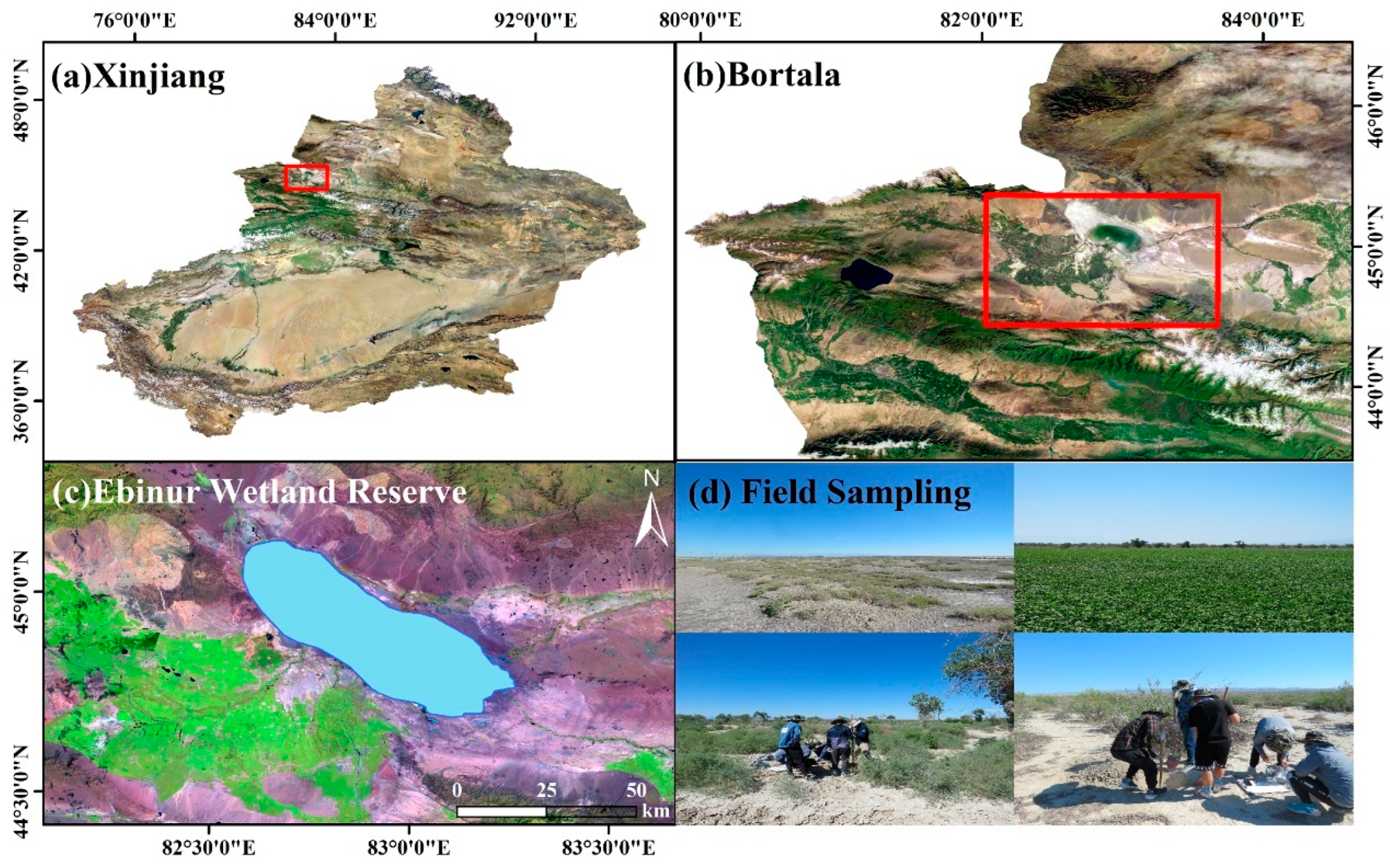
Figure 1. Overview of the study area (a): geographic location of Xinjiang; (b): geo-graphic location of Bortala; (c): geographic location of Ebinur Wetland Reserve; and (d): field landscape survey and sampling.
Remotesensing 17 03958 g001
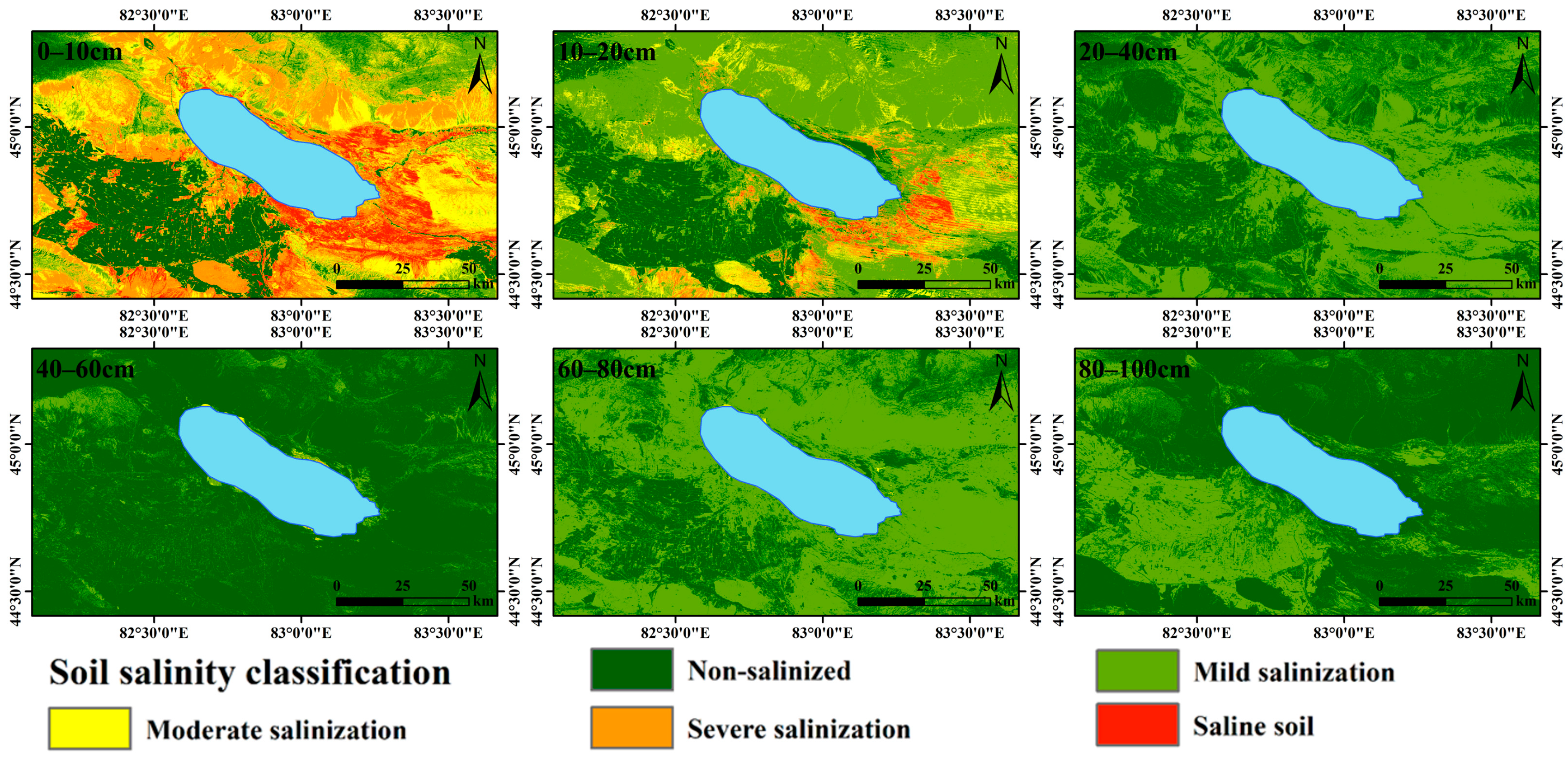
Figure 2. Distribution of sampling points in different years.
Remotesensing 17 03958 g002
Figure 3. Boxplots and violin plots of soil salinity at different depths.
Remotesensing 17 03958 g003
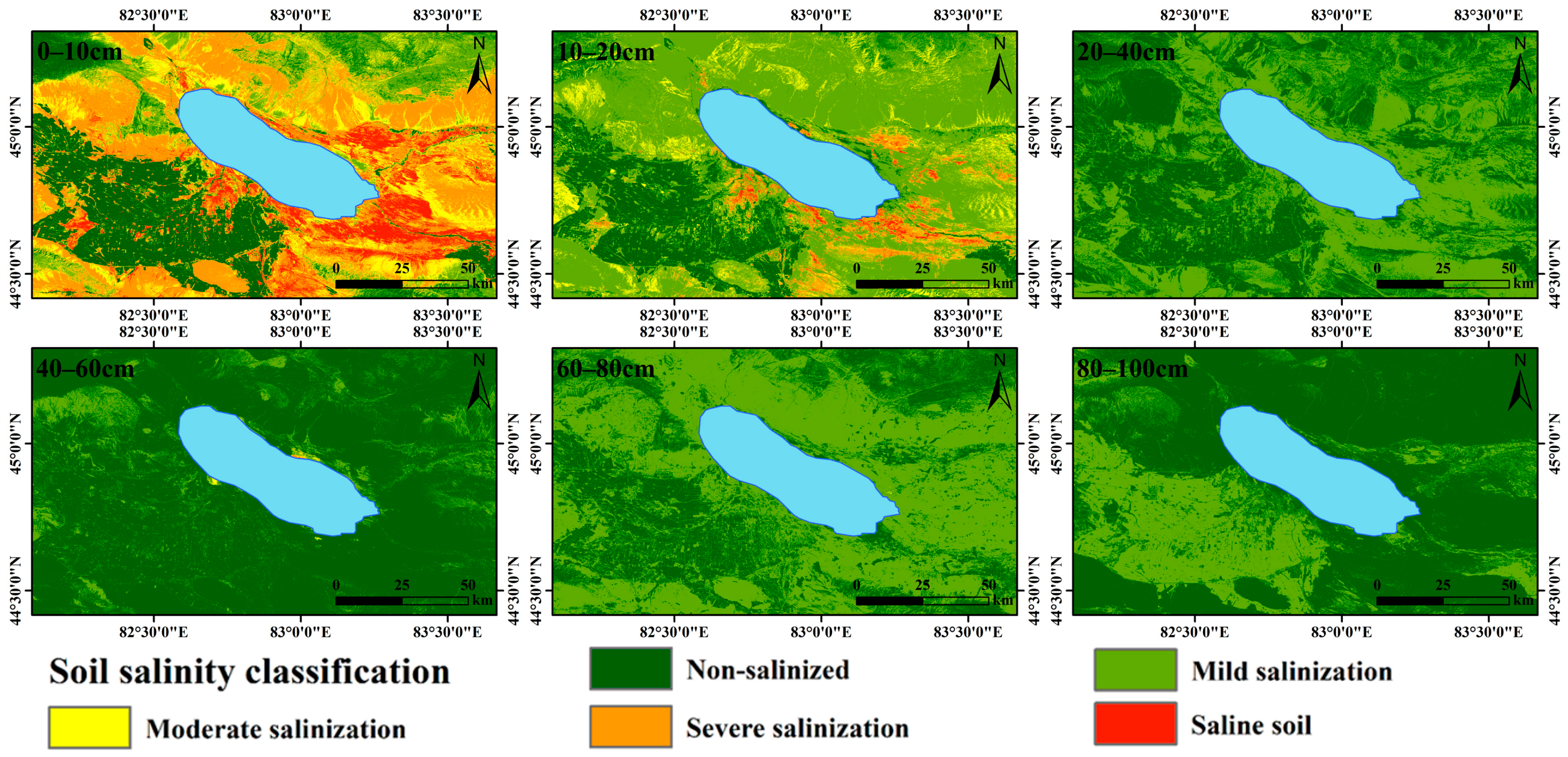
Figure 4. Feature selection of soil salinity at different depths.
Remotesensing 17 03958 g004
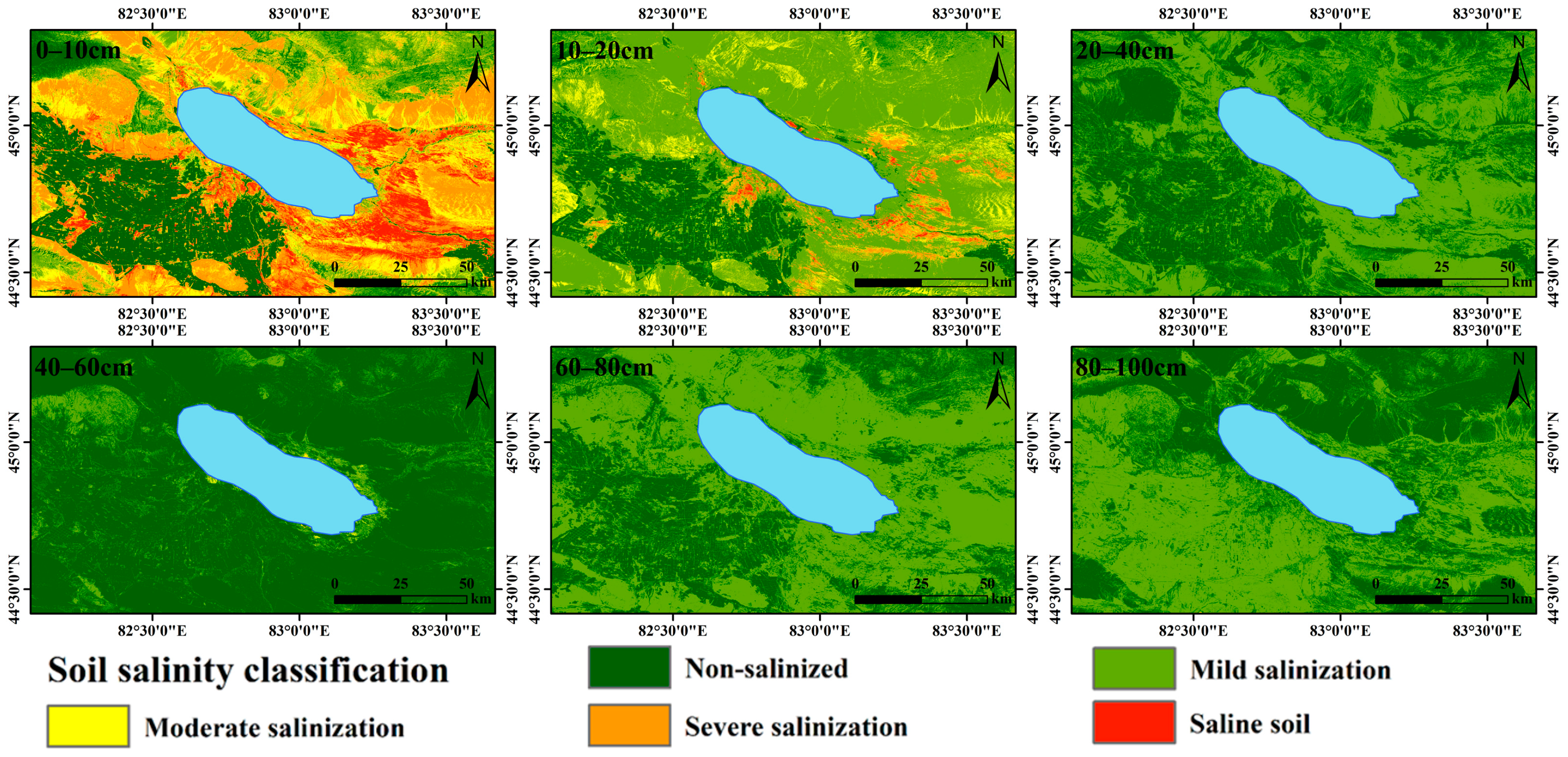
Figure 5. Scatter plots of soil salinity inversion models at different depths. (a) Accuracy of the CNN model; (b) Accuracy of the LSTM model; (c) Accuracy of the RF model. The shaded area represents the confidence interval, and the dashed line indicates the 1:1 line.
Remotesensing 17 03958 g005
Figure 6. Comparison of model predictions and their confidence intervals. (a) Uncertainty quantification of the CNN model; (b) Uncertainty quantification of the LSTM model; (c) Uncertainty quantification of the RF model.
Remotesensing 17 03958 g006
Figure 7. Spatial distribution of soil salinity at different depths in the Ebinur Wetland Reserve in 1996.
Remotesensing 17 03958 g007
Figure 8. Spatial distribution of soil salinity at different depths in the Ebinur Wetland Reserve in 2024.
Remotesensing 17 03958 g008
Figure 9. Spatial distribution of soil salinity at the 0–10 cm depth in the Ebinur Wetland Reserve.
Remotesensing 17 03958 g009
Figure 10. Temporal variations in soil salinity at different depths in the Ebinur Wetland Reserve.
Remotesensing 17 03958 g010
Figure 11. Sen’s slope of soil salinity at different depths in the Ebinur Wetland Reserve.
Remotesensing 17 03958 g011
Figure 12. MK test of soil salinity at different depths in the Ebinur Wetland Reserve.
Remotesensing 17 03958 g012
Table 1. Number of soil samples at different depths.
Soil Depth0–10 cm10–20 cm20–40 cm40–60 cm60–80 cm80–100 cm
Sampling Points2382282261378783
Table 2. Selection of environmental covariates.
Environmental CovariatesFormulaReferences
Original Band B   G   R   N I R   S W I R 1   S W I R 2 [26]
NIRv N D V I × N I R [27]
Normalized Difference Vegetation Index (NDVI) ( N I R R ) / ( N I R + R ) [26]
Enhanced Vegetation Index (EVI) 2.5 [ ( N I R R ) ( N I R + 6 × R 7.5 × B + 1 ) ] [26]
Difference Vegetation Index (DVI) N I R R [26]
Generalized Difference Vegetation Index (GDVI) ( N I R 2 R 2 ) / ( N I R 2 + R 2 ) [28]
Modified Soil-Adjusted Vegetation Index (MSAVI) 2 N I R + 1 2 N I R + 1 2 8 N I R R 0.5 / 2 [29]
Non-linear Vegetation Index (NLI) ( N I R 2 R ) / ( N I R 2 + R ) [30]
Ratio Vegetation Index (RVI) N I R / R [31]
Optimized Soil-Adjusted Vegetation Index (OSAVI) ( N I R R ) / ( N I R + R + 0.16 ) [26]
Kernel Normalized Difference Vegetation Index (KNDVI) K x N I R , x N I R K x R , x R K x N I R , x N I R + K x R , x R [32]
Enhanced Normalized Difference Vegetation Index (ENDVI) ( N I R + S W I R 1 R ) / ( N I R + S W I R 2 + R ) [33]
Infrared Percentage Vegetation Index (IPVI) N I R / ( N I R + R ) [34]
Atmospherically Resistant Vegetation Index (ARVI) N I R ( 2 R B ) N I R + ( 2 R B ) [31]
VSDI1 1 [ ( S W I R 1 B ) + ( R B ) ] [35]
VSDI2 1 [ ( S W I R 2 B ) + ( R B ) ] [35]
Soil Adjusted Vegetation Index (SAVI) 1 + L N I R R N I R + R + L , L = 0.5 [31]
Global Vegetation Moisture Index (GVMI) N I R + 0.1 S W I R 1 + 0.02 / N I R + 0.1 + S W I R 1 + 0.02 [36]
Salinity Index (S1) B / R [26]
Salinity Index (S2) ( B R ) / ( B + R ) [26]
Salinity Index (S3) G × R / B [26]
Salinity Index (S5) B × R / G [26]
Salinity Index (S6) R × N I R / G [26]
Salinity Index (S7) ( S W I R 1 S W I R 2 ) / ( S W I R 1 + S W I R 2 ) [37]
Salinity Index (S8) ( G + R ) / 2 [38]
Salinity Index (S9) ( G + R + N I R ) / 2 [38]
Salinity Index (SI) ( G + R ) 0.5 [39]
Salinity Index (SI1) ( G × R ) 0.5 [26]
Salinity Index (SI2) ( G 2 + R 2 + N I R 2 ) 0.5 [26]
Salinity Index (SI3) ( G 2 + R 2 ) 0.5 [26]
Salinity Index (SI4) S W I R 1 / N I R [31]
Salinity Index (SIT) R N I R   ×   100[26]
Salinity Index (SSSI1) R N I R [37]
Salinity Index (SSSI2) ( R × N I R N I R × N I R ) / R [37]
Normalized Difference Bare Soil Index (NDBSI) N I R R N I R + R + S I / 2 [40]
Normalized Difference Salinity Index (NDSI) N I R S W I R 1 / ( N I R + S W I R 1 ) [26]
Canopy Response Salinity Index (CRSI) [ N I R × R G × B N I R × R + G × B ] 0.5 [41]
Clay Index (CLEX) S W I R 1 / S W I R 2[42]
Gypsum Index (GYEX) ( S W I R 1     N I R ) / ( N I R   +   S W I R 2 ) [43]
Carbonate Exponent Index (CAEX) G / B [43]
Normalized Difference Built-up Index (NDBI) ( S W I R 1 N I R ) / ( S W I R 1 + N I R ) [44]
Normalized Difference Water Index (NDWI) ( G N I R ) / ( G + N I R ) [45]
Modified Normalized Difference Water Index (MNDWI) ( B S W I R 1 ) / ( B + S W I R 1 ) [45]
Normalized Difference Moisture Index (NDMI) ( N I R S W I R ) / ( N I R +   S W I R ) [44]
TCB 0.3029 B + 0.2786 G + 0.4733 R + 0.5599 N I R + 0.508 S W I R 1 + 0.1872 S W I R 2 [46]
TCG 0.2941 B 0.243 G 0.5424 R + 0.7276 N I R + 0.0713 S W I R 1 0.1608 S W I R 2 [46]
TCW 0.1511 B + 0.1973 G + 0.3283 R + 0.3407 N I R 0.7117 S W I R 1 0.4559 S W I R 2 [46]
Note: B represents the blue band; G represents the green band; R represents the red band; NIR represents the near-infrared band; SWIR1 represents the shortwave infrared band 1; SWIR2 represents the shortwave infrared band 2.
Table 3. Descriptive statistics of soil salinity at different depths.
Soil DepthMax
(dS/m)
Min
(dS/m)
Mean
(dS/m)
Standard DeviationKurtosisSkewnessCoefficient of Variation
0–10 cm96.40000.003213.386413.53936.95442.11361.0114
10–20 cm41.40000.00247.81286.77114.98281.88620.8667
20–40 cm25.90000.00225.79894.31172.61801.26950.7435
40–60 cm26.10000.12545.34464.27504.23781.72160.7999
60–80 cm13.82000.09524.05913.15261.24821.18500.7767
80–100 cm12.88000.06573.90362.59710.69960.91860.6653
Table 4. Feature selection results of soil salinity at different depths.
Soil DepthSelected Features
0–10 cm B , A R V I , N D V I , C A E X , G V M I , S 2 , S 3 , S I 1
10–20 cm G , N I R v , E V I , S 8 , S 9 , S I 1 , S I 2 , V S D I 2
20–40 cm G , S W I R 2 , E V I , C L E X , M N D W I , S 2 , S 3 , V S D I 2
40–60 cm G , I P V I , N D V I , M N D W I , S 3 , S 5 , S I , V S D I 1
60–80 cm B , A R V I , N D V I , C A E X , N D W I , S 2 , S I , T C G
80–100 cm R , I P V I , E V I , N D V I , S 5 , S 9 , S A V I , S I
Disclaimer/Publisher’s Note: The statements, opinions and data contained in all publications are solely those of the individual author(s) and contributor(s) and not of MDPI and/or the editor(s). MDPI and/or the editor(s) disclaim responsibility for any injury to people or property resulting from any ideas, methods, instructions or products referred to in the content.