Article

Predictability of Landfalling Typhoon Tracks in East China Based on Ensemble Sensitivity Analysis

1
Shanghai Typhoon Institute, China Meteorological Administration, Shanghai 200030, China
2
Nanjing Innovation Institute for Atmospheric Sciences, Chinese Academy of Meteorological Sciences–Jiangsu Meteorological Service, Nanjing 210041, China
3
Key Laboratory of Transportation Meteorology of CMA/Jiangsu Key Laboratory of Severe Storm Disaster Risk, Nanjing 210041, China
*
Author to whom correspondence should be addressed.
Remote Sens. 2025, 17(24), 3944; https://doi.org/10.3390/rs17243944
Submission received: 21 October 2025 / Revised: 1 December 2025 / Accepted: 4 December 2025 / Published: 5 December 2025

Highlights

What are the main findings?
  • Ensemble-based Sensitivity Analysis (ESA) consistently identifies the western flank of the subtropical high and nearby low-pressure systems as key regions governing typhoon track uncertainty in the Western North Pacific, primarily through fluctuations in the zonal steering flow.
  • Binary interactions between typhoons and adjacent cyclonic systems are critical dynamic mechanisms that introduce significant forecast divergences.
What are the implication of the main findings?
  • The study validates ESA as a practical operational tool for diagnosing sources of forecast error and for guiding targeted observations to improve forecast accuracy.
  • By linking forecast uncertainty to specific physical mechanisms, ESA enhances the interpretability of ensemble forecasts and supports the development of more adaptive regional forecasting systems.

Abstract
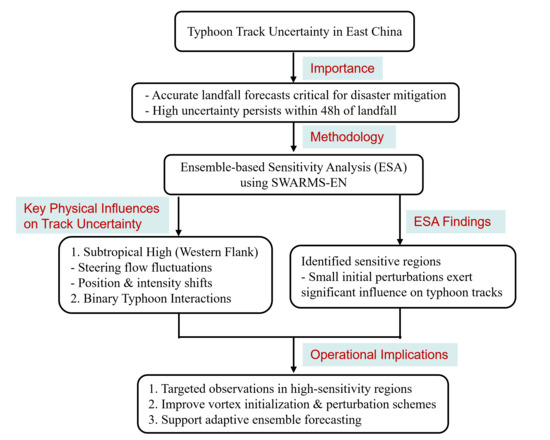
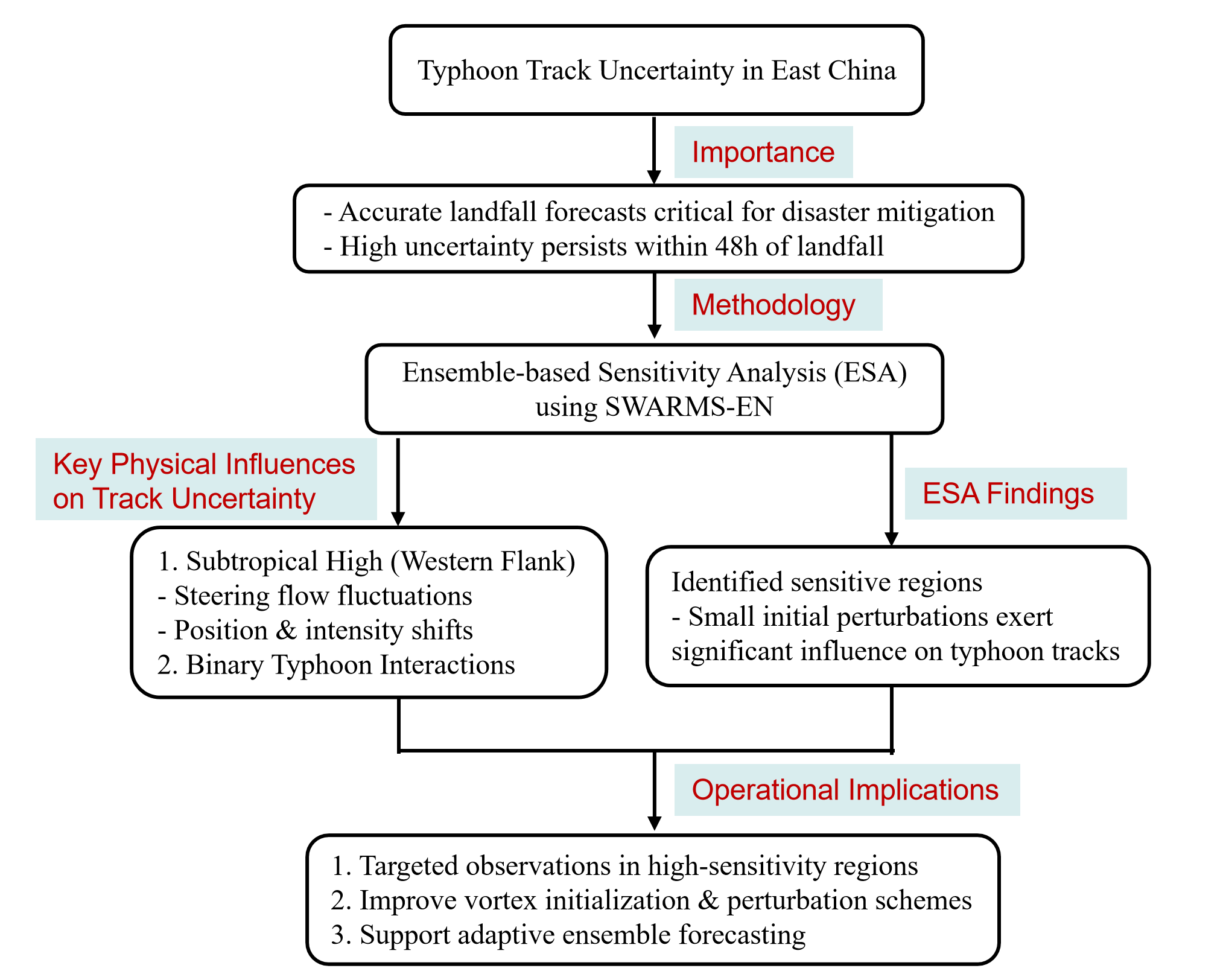
Accurate typhoon track forecasting is vital for disaster mitigation in East China, a region frequently impacted by landfalling typhoons. Despite advances in numerical weather prediction, uncertainties remain high, especially within 48 h of landfall, due to complex interactions among tropical cyclones, the subtropical high, and mesoscale systems. This study applies Ensemble-based Sensitivity Analysis (ESA) within a high-resolution regional ensemble prediction system (Shanghai Weather And Risk Model System-Ensemble Prediction System, SWARMS-EN) to investigate forecast uncertainties of three representative typhoons—Gaemi, Bebinca, and Kong-rey—that made landfall in East China in 2024. Our results reveal consistent sensitivity patterns across diverse large-scale environments, particularly around the western flank of the subtropical high and in proximity to nearby low-pressure systems. Track uncertainty was closely tied to fluctuations in the steering flow, notably its zonal component. Moreover, binary typhoon interactions emerged as key drivers of forecast divergence. ESA effectively identified sensitive regions where small initial perturbations exert significant downstream influence on typhoon tracks. This study demonstrates the operational value of ESA for diagnosing forecast error sources and guiding targeted observations. By linking forecast uncertainty to physical mechanisms, this research enhances our understanding of typhoon predictability and supports the development of more adaptive and accurate regional forecasting systems.

Graphical Abstract

1. Introduction

Typhoon is a warm-core cyclonic vortex system that forms over tropical oceans. It is typically accompanied by extreme weather phenomena such as strong winds, heavy rainfall, and storm surges, posing significant threats to human activities and economic development. As one of the most economically developed and densely populated regions in China, East China is also a high-frequency landfall zone for typhoons. Given that even slight deviations in a typhoon’s trajectory can result in substantial changes in landfall locations and impact areas, improving the accuracy of typhoon track forecasts in East China is of vital importance for disaster prevention and mitigation, as well as for ensuring stable socioeconomic development.
In recent years, advances in numerical weather prediction models and satellite remote sensing technologies have greatly enhanced the accuracy of typhoon track forecasts in East China. However, the complex interactions between typhoon systems and multi-scale environmental fields continue to present significant challenges, particularly in predicting anomalous typhoon trajectories. Specifically, factors such as variations in the intensity of the southwest monsoon [1,2,3], meridional adjustments of the westerly trough [4], morphological evolution of the subtropical high [5], and boundary layer processes including land surface friction and land–sea thermal contrast [6], collectively formed a multi-scale dynamic system that influenced the typhoon’s path. These nonlinear interactions significantly increase the uncertainty in track forecasts within 24–48 h prior to landfall, underscoring current limitations in the understanding and prediction of typhoons, particularly with respect to their multi-scale dynamic and thermodynamic processes [7].
In recent years, to overcome the inherent limitations of traditional deterministic numerical forecasting methods, ensemble forecasting techniques have been systematically adopted by major operational meteorological centers worldwide for typhoon prediction [8,9,10]. As an effective approach to representing forecast uncertainty, ensemble forecasting constructs multiple forecast members by perturbing initial conditions. This allows not only for a quantitative assessment of forecast errors but also provides multi-dimensional references for operational warning and decision-making processes [11]. Today, ensemble forecasting has become a core framework supporting typhoon track prediction and has shown significant value in research on track predictability mechanisms [12].
Within this context, Ensemble-based Sensitivity Analysis (ESA), derived from ensemble prediction systems, is emerging as a key technique for investigating typhoon track predictability (e.g., [13,14]). Initially proposed by Torn and Hakim [15], the central mechanism of ESA involves analyzing the impact of small perturbations in the initial state on forecast uncertainty to identify the regions where initial errors exert the greatest influence on typhoon track forecasts. ESA computes the lagged ensemble covariance between forecast target variables (e.g., the typhoon center location at a given time) and earlier forecast fields—this covariance acts as a sensitivity metric that effectively identifies critical atmospheric state variables or weather systems and their sensitive regions impacting the typhoon track.
A series of studies have shown that ESA is a highly efficient and practical method for sensitivity analysis. It effectively reveals the dynamical features influencing forecast targets and deepens understanding of the sources and propagation mechanisms of forecast errors. As a result, ESA has been widely applied in studies of typhoon track predictability [16,17]. For example, Ito and Wu [18] used ESA to investigate the forecast uncertainty of Typhoons Shanshan and Dolphin, identifying key initial sensitivity regions primarily in the mid-troposphere. They also explored the influence of equatorial disturbances on the genesis of Super Typhoon Haiyan (1330) through horizontal dipole patterns of vorticity surrounding the typhoon center. Recently, Ren et al. [19] employed ESA to examine initial conditions favoring rapid intensification (RI), focusing on six RI cases from five western North Pacific Typhoons during 2016.
Furthermore, numerous studies emphasize the critical role of ESA in identifying sensitive regions and guiding targeted observations. Hakim and Torn [20] pointed out that ESA quantifies the influence of initial conditions on forecast outcomes by evaluating sensitivities among ensemble members, thereby identifying key sensitive areas and assessing the impact of different physical processes on typhoon tracks. Studies have shown that dropsondes are recommended over sensitive oceanic regions, radiosonde frequency should be enhanced at upstream stations where sensitivity patterns extend over land, and buoys in key typhoon regions can effectively reduce forecast errors [21,22].
Although the ESA method demonstrates significant advantages in rapidly diagnosing the sources of uncertainty in typhoon track forecasts, current research is largely confined to individual case studies or analyses of specific regions (e.g., [17,23]). As a result, the identified sensitive areas and influencing factors often exhibit case-specific characteristics. The general applicability of ESA in forecasting landfalling typhoons in East China, particularly under varying large-scale conditions, has yet to receive adequate attention. Moreover, most existing studies rely on global models, which, due to their relatively coarse resolution, struggle to capture the finer-scale features of typhoon systems. Therefore, the key scientific value of ESA application lies in its ability to quantitatively evaluate how initial condition uncertainties in specific sensitive regions modulate typhoon track forecasts, providing crucial insights for targeted observation strategies.
In light of this, the present study applies ESA to a selection of representative landfalling typhoon cases in East China. Through comparative analysis across multiple cases, the research aims to identify the most influential sensitive regions and variables affecting typhoon track forecasts. Additionally, the study evaluates the consistency and reliability of these sensitive regions within a high-resolution regional ensemble prediction system (Shanghai Weather And Risk Model System-Ensemble Prediction System, SWARMS-EN; [24,25]), thereby providing new technical support for the rapid identification of forecast error sources and operational risk assessment.
Subsequently, dynamic diagnostic methods are employed to investigate the propagation mechanisms of track forecast uncertainty during the prediction process, with particular attention given to the role of multi-scale temporal and spatial interactions in shaping uncertainty evolution. Based on these findings, the study proposes potential optimization strategies for the operational use of SWARMS-EN, including improvements to initial perturbation generation methods, rational configuration of ensemble member size, and dynamic adjustment of uncertainty propagation.
This study systematically addresses the aforementioned scientific challenges with two primary objectives:
(1) To identify common forecast-sensitive regions for landfalling typhoons in East China and to uncover the critical initial condition features that influence their track forecasts;
(2) To elucidate the physical mechanisms linking key variables in the initial conditions to abrupt changes in typhoon trajectories, thereby providing potential theoretical support for optimizing the operational application of the SWARMS-EN ensemble forecasting system.
The remaining of the manuscript was structured as follows: Section 2 introduces the basic information of the SWARMS-EN and methodology of the ESA. Section 3 gives the description of the selected TC cases. The results including the ensemble forecast performance of individual TC cases and the mechanisms analyzed by the ESA approach are elaborated in detail in Section 4. Section 5 provides the conclusions and discussion.

2. Model and Methodology

2.1. East China Regional Operational Ensemble Forecasting System

The ensemble forecasting data utilized in this study are derived from the Shanghai Weather And Risk Model System-Ensemble Prediction System (SWARMS-EN), developed by the Shanghai Typhoon Institute of the China Meteorological Administration [25]. This high-resolution regional ensemble forecasting system is built upon the Gridpoint Statistical Interpolation (GSI) hybrid data assimilation scheme and the Weather Research and Forecasting (WRF) model. The data assimilation (DA) component adopts the hybrid 3D Variational (3DVar) scheme. Specifically, the control analysis is derived using the hybrid 3DVar scheme, in which a group of short-range ensemble forecasts are used to estimate the flow-dependent background error covariance matrix. These ensembles are updated using the ensemble Kalman filter (EnKF) and then centered at the control analysis for successive DA cycles. It consists of 21 ensemble members, including one control forecast and 20 perturbed members. The assimilated observations include the conventional types such as the radiosonde and in situ station observations, as well as remote-sensing observations such as the microwave sounder onboard AMSU-A and ATMS. A key focus is on initial condition uncertainty, which is constrained by employing multi-source observation fusion (including satellite radiances, Doppler radar, and ground-based observations) to generate the ensemble’s initial conditions.
For improving the TC vortex initialization, the TC vital file is also assimilated which includes the TC basic information including the position, intensity, etc. The model operates at a horizontal resolution of 9 km, with the model top set at 10 hPa and 56 vertical layers in the η-coordinate system. The cumulus scheme is used as the 9 km resolution does not directly resolve convections.
In addition to the initial condition derived through the cycled DA system, the lateral boundary conditions for ensemble forecasting are generated by dynamically downscaling the initial and forecast fields from the Global Ensemble Forecast System (GEFS; [26]), interpolated to the resolution and domain of the regional model. To represent model uncertainty, the system incorporates a multi-physics stochastic perturbation scheme known as Stochastically Perturbed Parameterization Tendencies (SPPT; [27]).
SWARMS-EN operates on a dual-cycle initialization schedule (08:00 and 20:00 Beijing Time) and provides medium-range forecasts extending up to 120 h. In terms of forecast outputs, SWARMS-EN delivers high-resolution typhoon-related products including track, intensity, landfall probability, precipitation, and wind probability forecasts. It also generates a suite of probabilistic forecast visualizations such as boxplots, plume diagrams, spaghetti plots, and postage stamp charts. Thanks to its high temporal and spatial resolution and advanced ensemble prediction techniques, the system effectively captures the genesis, development, and movement of typhoons over the Northwest Pacific and South China Sea, offering robust technical support for regional typhoon forecasting and early warning [25].
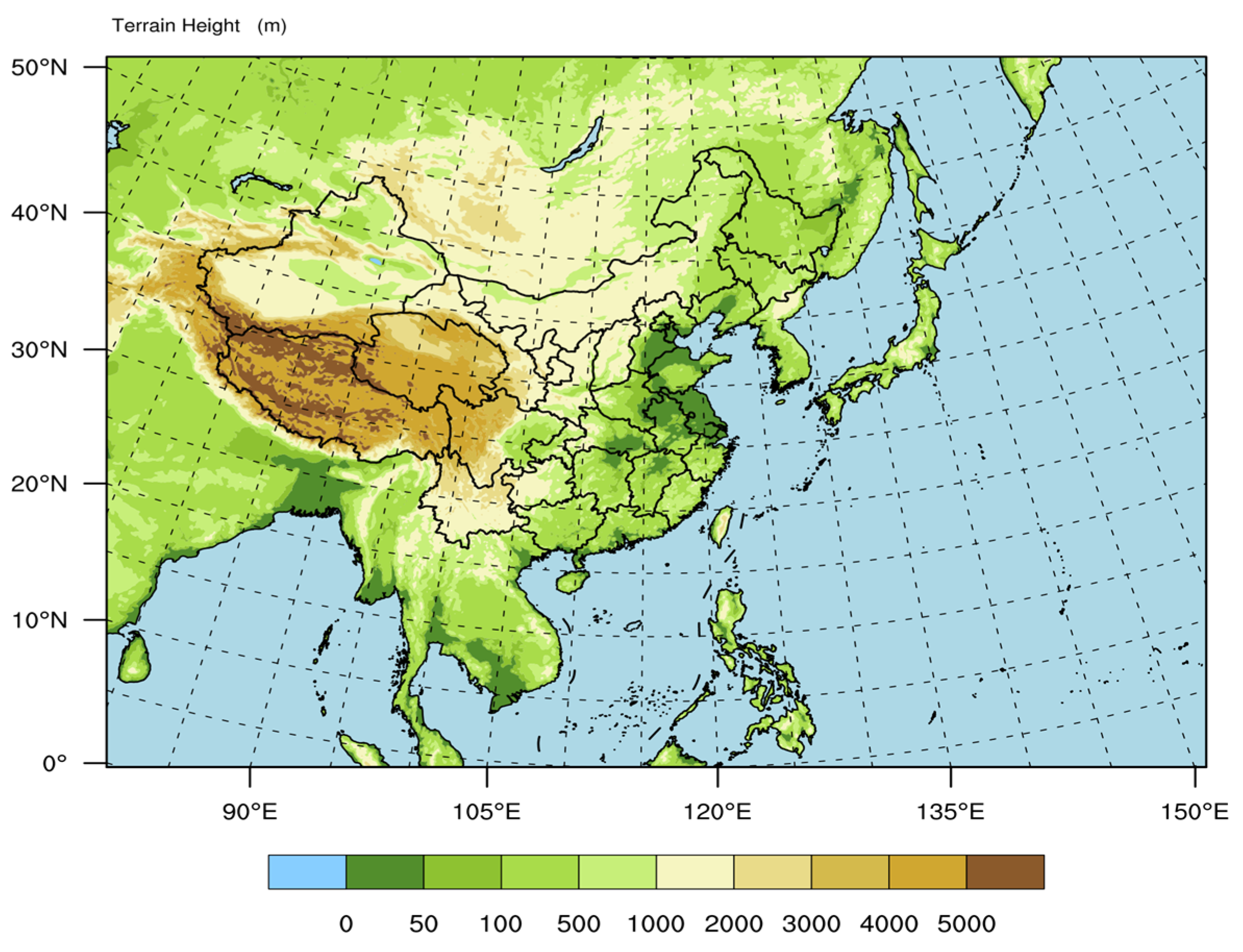
As illustrated in Figure 1, the SWARMS-EN forecast domain spans from 81.3°E to 150.7°E and from 0.3°S to 50.7°N, encompassing key regions including East Asia, Southeast Asia, parts of Northern Asia, the Northwest Pacific, and the South China Sea. The establishment of this system represents a significant advancement in China’s regional numerical weather prediction capabilities, particularly enhancing its operational capacity in typhoon forecasting.

2.2. ESA Method

ESA is a critical technique for evaluating the influence of initial conditions on forecast outcomes within an ensemble prediction framework. By leveraging the spread among ensemble members, ESA quantifies the statistical relationship between forecast variables at the target time and ensemble perturbations at an earlier time. This enables the identification of key regions or variables in the conditions at earlier lead times that exert significant influence on forecast uncertainty. The standard form of the ESA equation following previous studies (e.g., [15]) is expressed by:
r ( J t , x i , t δ t ) = J t x i , t δ t = c o v ( J t , x i , t δ t ) v a r ( x i , t δ t ) .
Here, J t x i , t δ t is the sensitivity coefficient, which measures the impact of a unit change in the state variable x i , t δ t on the forecast target J t at time t. A larger absolute value indicates a stronger influence of the preceding factor on the forecast outcome. The term c o v ( J t , x i , t δ t ) represents the covariance between the forecast target and the preceding variable. A positive covariance implies a positive correlation—i.e., an increase in x i , t δ t leads to an increase in J t ; a negative covariance indicates the opposite.
In our practical application, for the convenience of comparing the ESA results from different TC cases, we employed a standardized ESA (denoted by “sr”) as used in Liu et al. [23]:
s r ( J t , x i , t δ t ) = c o v ( J t , x i , t δ t ) v a r J t · v a r ( x i , t δ t ) = k = 1 N ( J t , k J t ¯ ) ( x i , t δ t , k x ¯ i , t δ t ) k = 1 N ( J t , k J t ¯ ) 2 k = 1 N ( x i , t δ t , k x ¯ i , t δ t ) 2 .
The terms v a r J t and v a r ( x i , t δ t ) are the standard deviations of the forecast target J t and the preceding state variable x i , t δ t , respectively. J t ¯ and x ¯ i , t δ t represent their ensemble means. The standardization ensures comparability across variables with different physical units and statistical properties, thereby preserving both dimensional consistency and physical interpretability.
In summary, this formulation uses normalized covariance to quantify the influence and spatial variation of preceding variables x i , t δ t on a given forecast target J t . ESA is highly effective for identifying sensitive regions and understanding forecast uncertainty. It has been widely applied in typhoon prediction, extreme weather forecasting, and model improvement efforts (e.g., [28,29,30]).

3. Selection of Representative Typhoon Cases

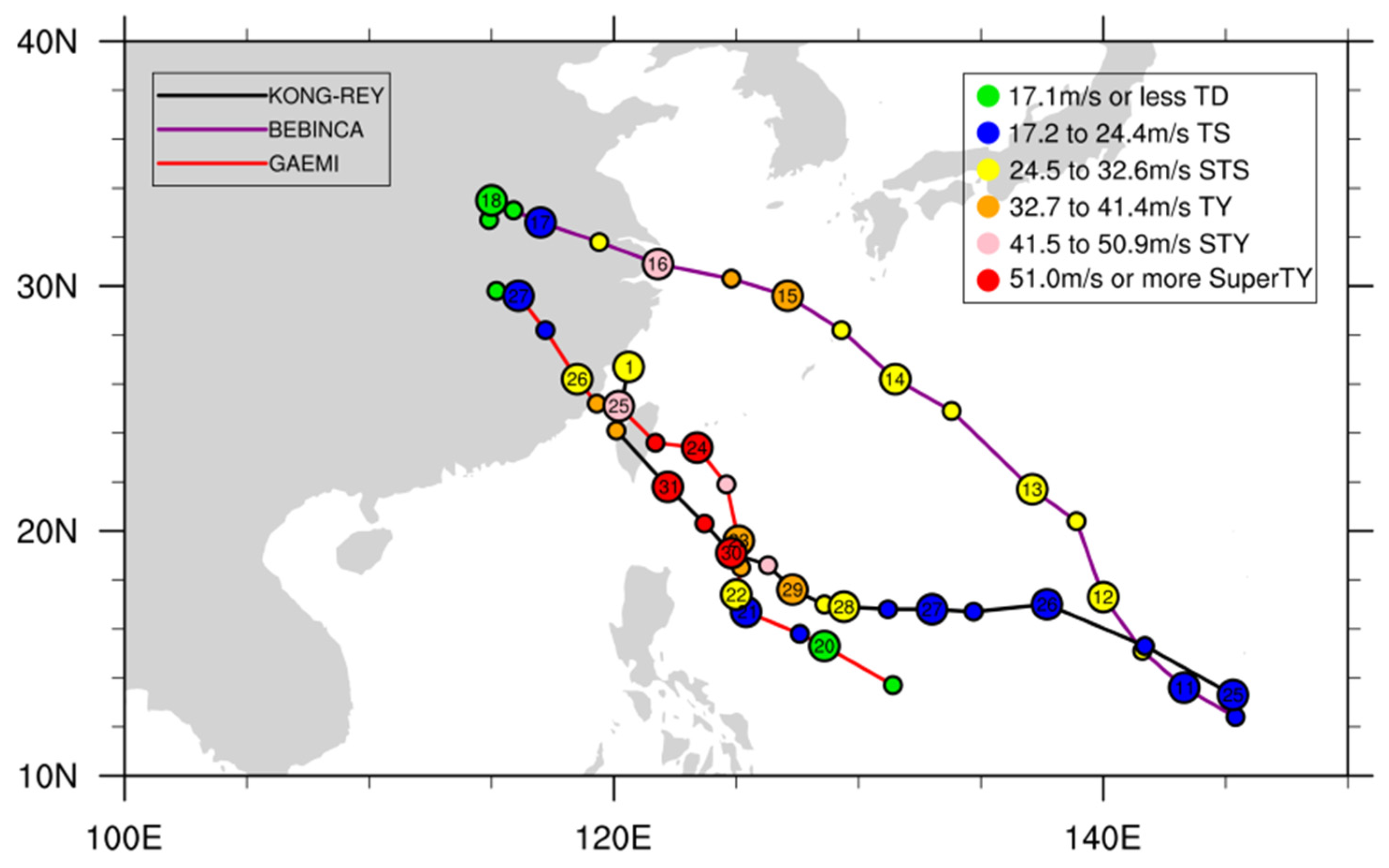
This study selects three representative typhoons that made landfall in East China in 2024 as the primary research cases (see Table 1 for details). As illustrated in Figure 2, these super typhoons exhibit several common characteristics in their movement patterns: (1) all originated either in the ocean east of the Philippines or in the northeastern South China Sea—typical genesis regions for monsoon trough typhoons; (2) guided by the southeasterly flow on the western flank of the subtropical high, all three typhoons followed a stable northwestward trajectory, approaching the coastal regions of East or South China; (3) upon reaching the western boundary of the subtropical high (approximately near 20°N), each typhoon experienced a degree of track deflection, which increased the uncertainty of landfall location and posed challenges for accurate forecasting.
These characteristic movement patterns of Northwest Pacific typhoons suggest that such systems not only exert direct impacts on the southeastern coastal areas of China but, as they continue to move northward, their influence extends progressively inland. This greatly complicates disaster prevention and mitigation efforts.
For this study, the forecast initialization times were selected based on when each typhoon first reached tropical storm strength (approximately 17.2 m/s wind speed). Specifically, forecasts were initiated at 00:00 UTC on 20 July for Typhoon Gaemi, 12:00 UTC on 11 September for Typhoon Bebinca, and 00:00 UTC on 26 October for Typhoon Kong-rey. Forecast lead times of 24, 48, and 72 h were used, and ESA was conducted to diagnose the key early-stage factors contributing to uncertainties in the landfall location and evolution of each typhoon.

4. Case Studies

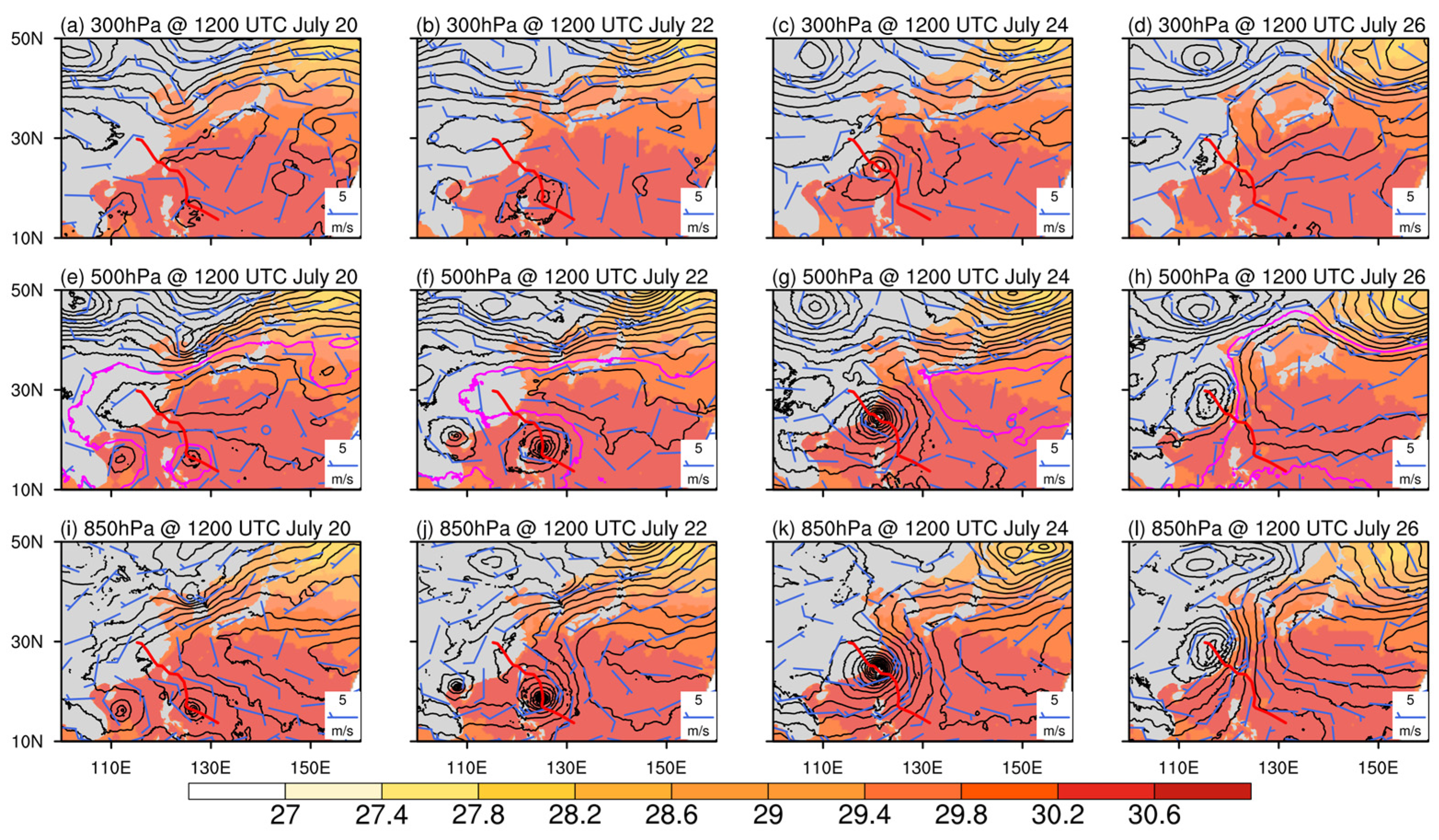
Before analyzing the ensemble forecast results of the three typhoons, their observed evolution and track characteristics are first reviewed. As shown in Figure 3, Typhoon Gaemi reached tropical storm intensity (~18 m/s) around 14 UTC on 20 July over the ocean east of the Philippines and subsequently began moving northwestward. This movement was primarily influenced by the steering flow on the eastern and northeastern flanks of the monsoon trough at approximately 850 hPa. In addition, the mid-level (500 hPa) and upper-level (300 hPa) westerly and northwesterly circulations were conducive to the northwestward progression of the system.
By 12 UTC on 22 July, as the subtropical high intensified, the enhanced southerly flow on its western flank caused Typhoon Gaemi to deflect northward, reducing the likelihood of landfall in South China. Meanwhile, on 21 July, Typhoon Prapiroon (the fourth named storm of the season) formed over the central South China Sea. Its presence may have contributed to Gaemi’s northward deflection by acting as a blocking system.
By 12 UTC on 23 July, due to the evolution of the subtropical high and the southward extension of an upper-level continental high, Typhoon Gaemi resumed its northwestward movement. As the typhoon continued to intensify, it became increasingly influenced by large-scale environmental steering flows. Over the following two days, Gaemi maintained a steady northwestward trajectory and eventually made landfall in Yilan County, Taiwan Province, at 16 UTC on 24 July.
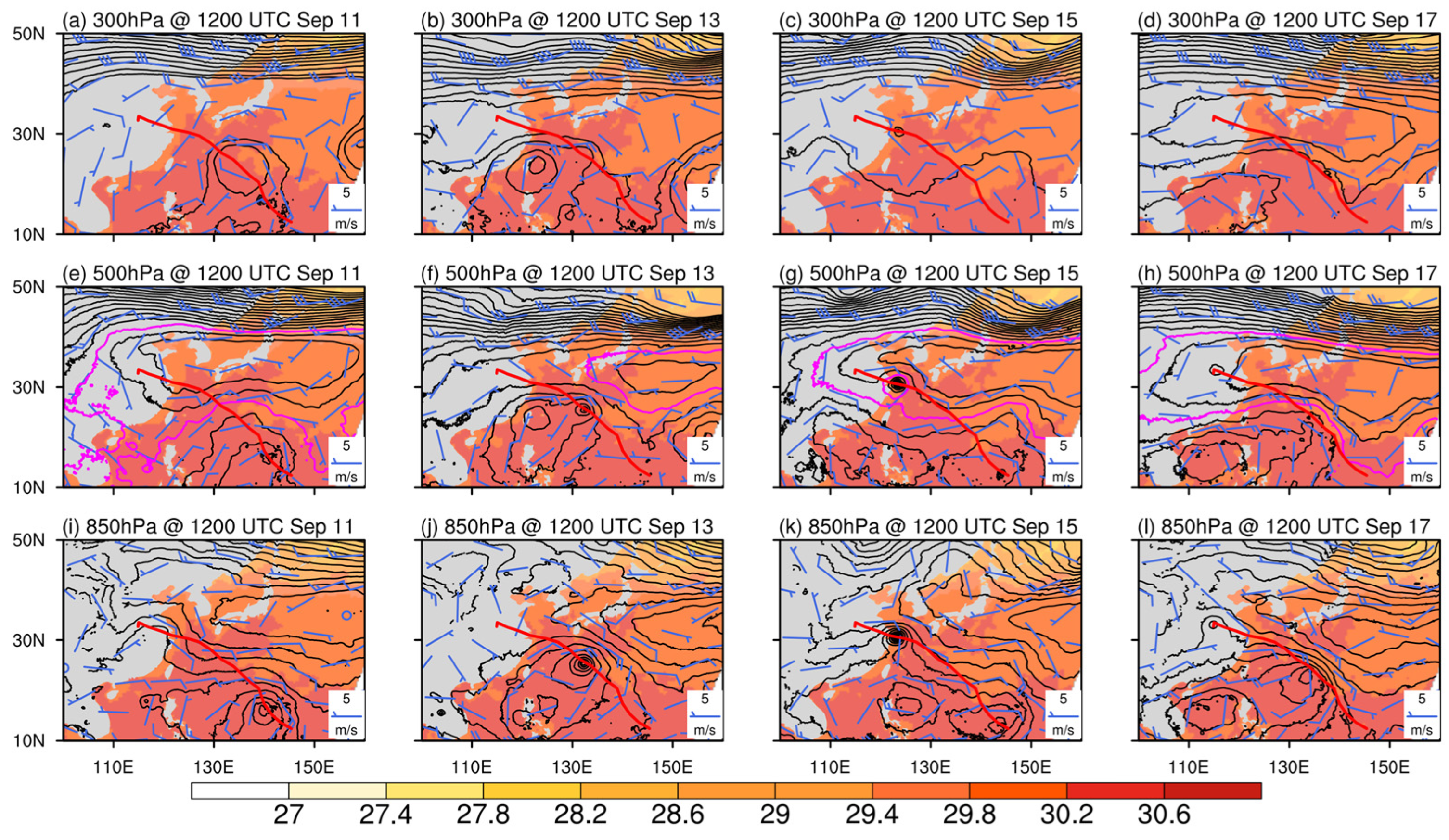
As shown in Figure 4, Typhoon Bebinca developed significantly farther east than Typhoon Gaemi, forming over the ocean east of 140°E. In its early stages, the typhoon was situated on the southern flank of a strong subtropical high and primarily moved westward with a slight northward component.
By 12 UTC on 11 September, due to the eastward retreat of the subtropical high and the influence of a mesoscale tropical low-pressure system to its west, Bebinca’s track shifted noticeably northward, transitioning to a predominantly northwestward movement. By 12 UTC on 13 September, the monsoon trough to the south of Bebinca extended eastward and intensified, further reinforcing the typhoon’s northwestward path.
During this sustained and steady movement, Bebinca continuously drew energy and moisture from the ocean, leading to a gradual intensification of the system. Ultimately, the typhoon made landfall near Shanghai at approximately 23 UTC on 15 September, with an intensity reaching that of a strong typhoon (~42 m/s).
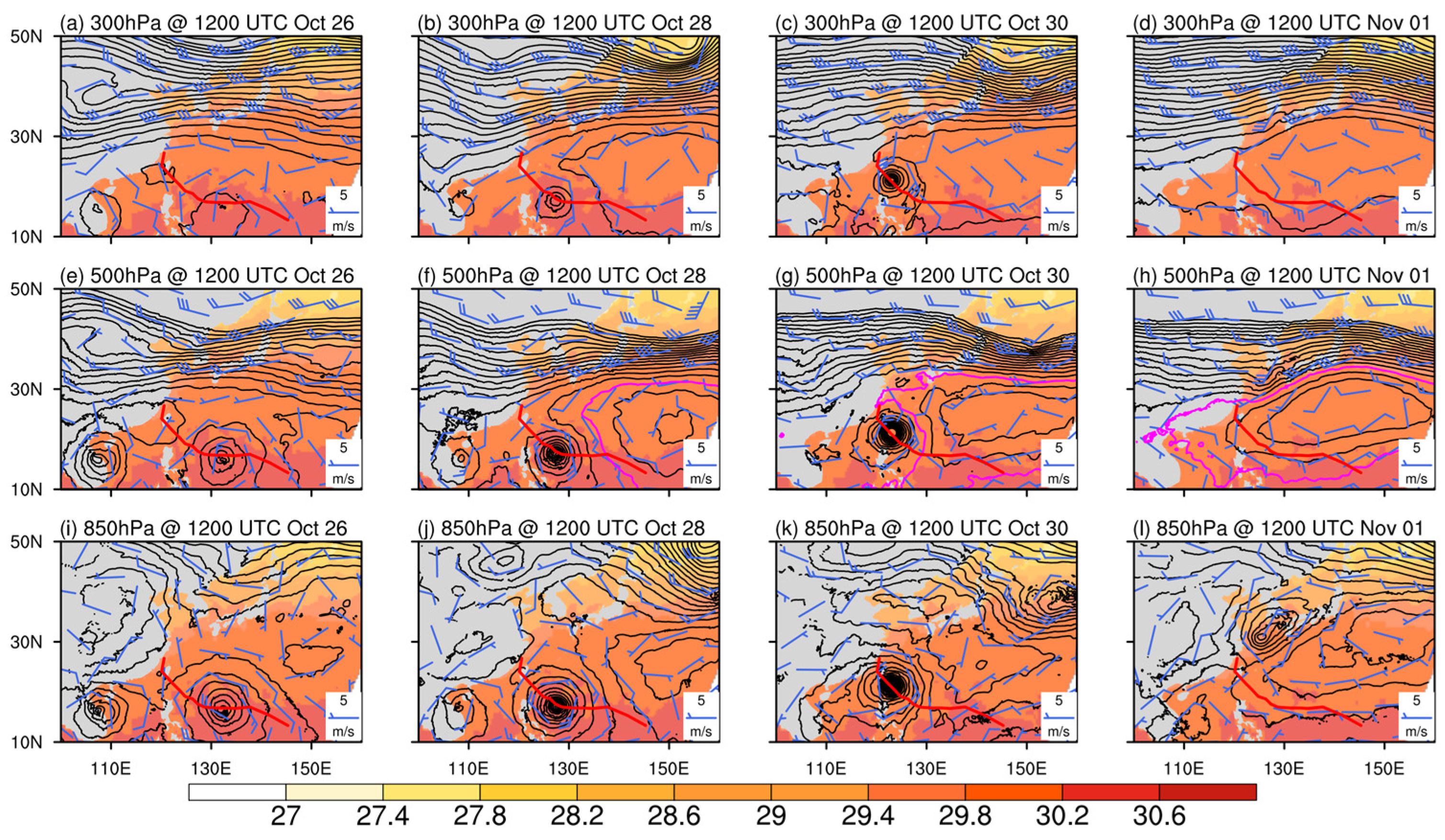
Similarly to the previous two cases, Typhoon Kong-rey, shown in Figure 5, was influenced by a combination of the subtropical high, the monsoon trough, and a mesoscale low vortex to its west. As a result, the typhoon followed a generally westward track with a slight northward component. The key difference, however, lies in the presence of a much stronger mid-latitude westerly jet to the north, compared to the earlier cases. This feature constrained Kong-rey’s overall movement to the south of 20°N throughout its development. Ultimately, at 06 UTC on 31 October, Typhoon Kong-rey (classified as a strong typhoon) made landfall along the coast of Taitung County, Taiwan Province.
From the observational analysis of these three typhoons, it is evident that their evolution was shaped by the combined influence of multiple large-scale systems. Although all three typhoons eventually followed a predominantly westward to northwestward trajectory and made landfall along the East China coast, the factors contributing to the uncertainty in their tracks varied over time. Understanding the commonalities and differences in how these systems affect track uncertainty—particularly the relative influence and temporal evolution of these factors—is a central focus of this study.

5. Results

5.1. Ensemble Forecasts of Typhoon Tracks

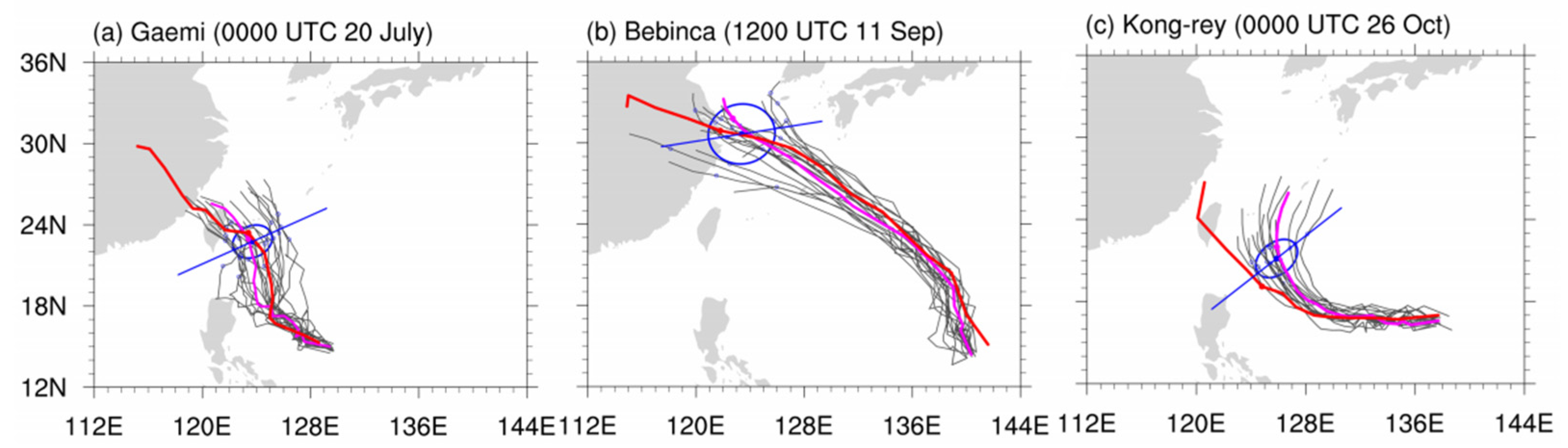
Before conducting the ESA of typhoon track uncertainty, we first analyze the ensemble track forecasts for the selected typhoon cases. Figure 6 presents the 96 h track forecasts from the SWARMS-EN model for Typhoon Gaemi (initialized at 00 UTC on 20 July), Bebinca (initialized at 12 UTC on 11 September), and Kong-rey (initialized at 00 UTC on 26 October). The gray lines represent the ensemble forecast tracks, while the pink lines denote the control forecasts.
To diagnose the direction of maximum uncertainty in forecasted typhoon positions, we apply the bivariate normal distribution method proposed by Hamill et al. [31]. The blue ellipses in the figure depict the fitted spread of typhoon positions at 96 h, with the major axes (solid blue lines) indicating the directions of greatest positional uncertainty.
The results show that although all three typhoons exhibit a generally consistent northwestward movement across the ensemble forecasts, there remains an average track uncertainty of approximately 100 km throughout the forecast period—reflected in the ensemble spread. The forecasted tracks of all three typhoons are generally located to the east and north of Taiwan, suggesting that the uncertainty in track forecasts may be related to the interaction with Taiwan and the nearby East China coast.
For all three typhoons, the direction of maximum position uncertainty at 96 h aligns roughly along the northeast–southwest axis, indicating considerable uncertainty regarding landfall occurrence and landfall location. Despite the notable track uncertainties in individual cases, the ensemble track spread effectively encompasses the observed typhoon tracks in all three cases. The control forecasts for Typhoons Gaemi and Bebinca closely match their observed paths. However, the ensemble forecasts for Typhoon Kong-rey show a consistent northeastward bias relative to observations beginning at 72 h. This deviation may be attributed to an intensified westerly steering flow among ensemble members during the 72–120 h forecast period (as illustrated in Figure 5g).
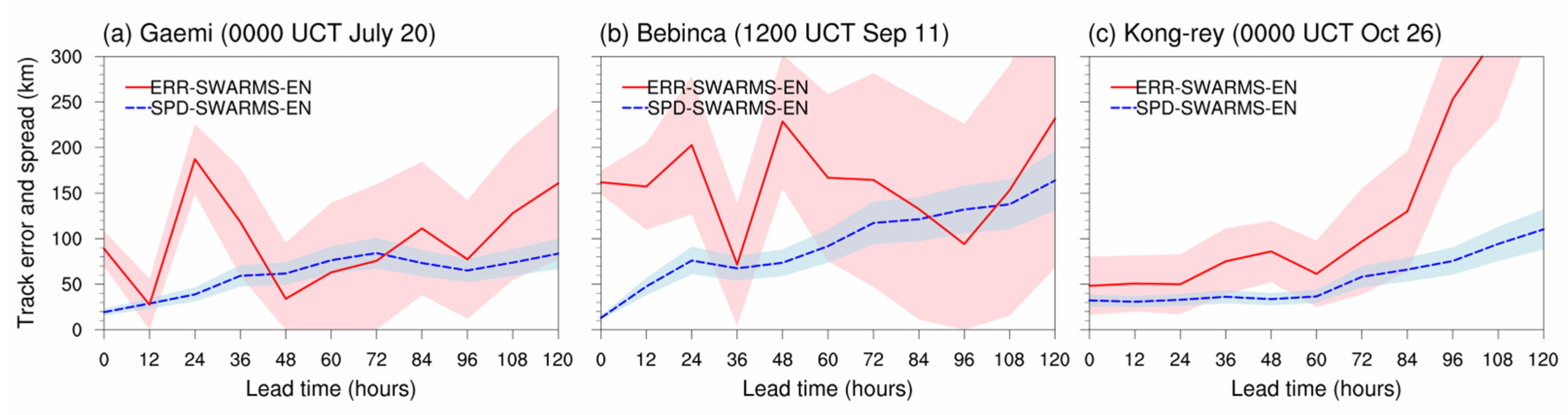
Figure 7 illustrates the ensemble mean track forecast errors (solid red lines) and ensemble spread (dashed blue lines) for Typhoons Gaemi, Bebinca, and Kong-rey. As shown in the figure, the ensemble mean track forecast error, which is initially large, exhibits considerable variability throughout the forecast period. While the ensemble spread for all three typhoons grows steadily over time.
Our analysis suggests that the relatively high initial error is likely due to insufficient assimilation of observations in the typhoon core, limiting the effectiveness of vortex initialization [32]. The subsequent variability in forecast errors can be partly explained by the stochastic model perturbation schemes within the ensemble forecasting system. Collectively, these results underscore potential for enhancement in both the vortex initialization and stochastic perturbation methods employed in the SWARMS-EN model.
The track forecast spread for all three typhoons increases as the forecast time rises, and its growth trend closely matches that of the ensemble mean error. Our updated analysis (Figure 7) reveals that the system generally produced sufficient dispersion, as indicated by the positive correlation between mean error and ensemble spread. Although the initial spread appears slightly under-dispersive—a common feature in operational ensembles—the overall adequate spread confirms that the ESA results, which rely on the ensemble’s covariance structures, are robust and meaningful.
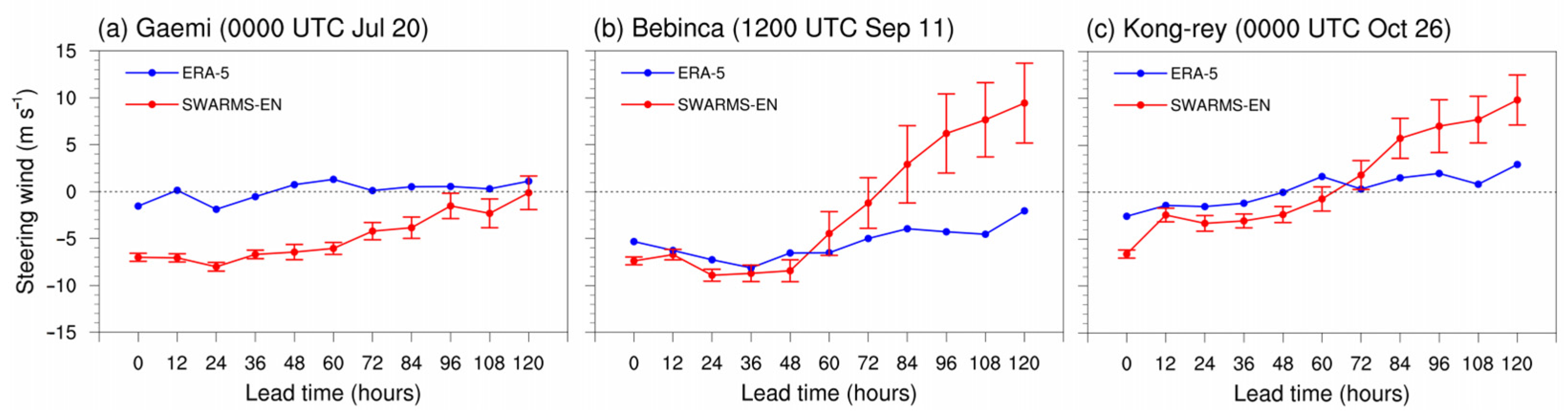
To further investigate the performance differences in the SWARMS-EN system across different typhoon track forecasts, we compared the forecasted and observed steering flows associated with typhoon movement. The steering flow was calculated following the method proposed by Chan and Gray [33] and further refined by Akter and Tsuboki [34], which involves averaging the wind field within a 1000 × 1000 km2 box centered on the typhoon and vertically over the 850 hPa to 300 hPa layer.
Given that typhoon position uncertainty primarily manifests along the east–west direction, only the zonal (east–west) component of the steering flow is analyzed here. Negative values indicate easterly flow, while positive values indicate westerly flow. Figure 8 presents the 0–120 h forecast results for the ensemble mean zonal steering flow from SWARMS-EN for Typhoons Gaemi, Bebinca, and Kong-rey. The red line represents the ensemble mean, and the red vertical bars show the ensemble spread. For reference, the zonal steering flow derived from the ERA5 reanalysis dataset is shown as a blue line. ERA5, a high-resolution multi-source observation fusion product provided by the European Centre for Medium-Range Weather Forecasts (ECMWF), is fundamentally reliant on the assimilation of diverse satellite remote sensing data. It integrates observations from microwave and infrared sounders, GPS radio occultation, and scatterometers to construct a physically consistent, four-dimensional representation of the global climate system.
The results reveal that for Typhoon Gaemi, the observed zonal steering flow is close to zero (Figure 8a), indicating minimal zonal displacement and a predominantly northward movement—consistent with the results in Figure 6a. In the ensemble forecast, Gaemi’s zonal steering flow is approximately −5 m/s during the first three days, gradually approaching zero thereafter. This suggests that the forecast track was generally westward-biased compared to observations, with the forecast error narrowing after 96 h, again aligning with Figure 6a.
For Typhoon Bebinca, the forecasted and observed zonal steering flows are highly consistent during the first two days. However, in the later forecast period, the predicted zonal flow becomes noticeably more positive—shifting to westerly—compared to the observed easterly flow. This indicates an eastward bias in the forecast track relative to the actual path. Consequently, although the forecasted landfall location was close to the observed, there was a significant error in landfall timing.
For Typhoon Kong-rey, a similar pattern is observed. In the latter half of the forecast period, the ensemble predicts a pronounced westerly steering flow, stronger than that seen in the reanalysis. This results in the typhoon turning northward earlier—around 72 h—and subsequently producing an eastward position error relative to the actual track.

5.2. ESA Findings

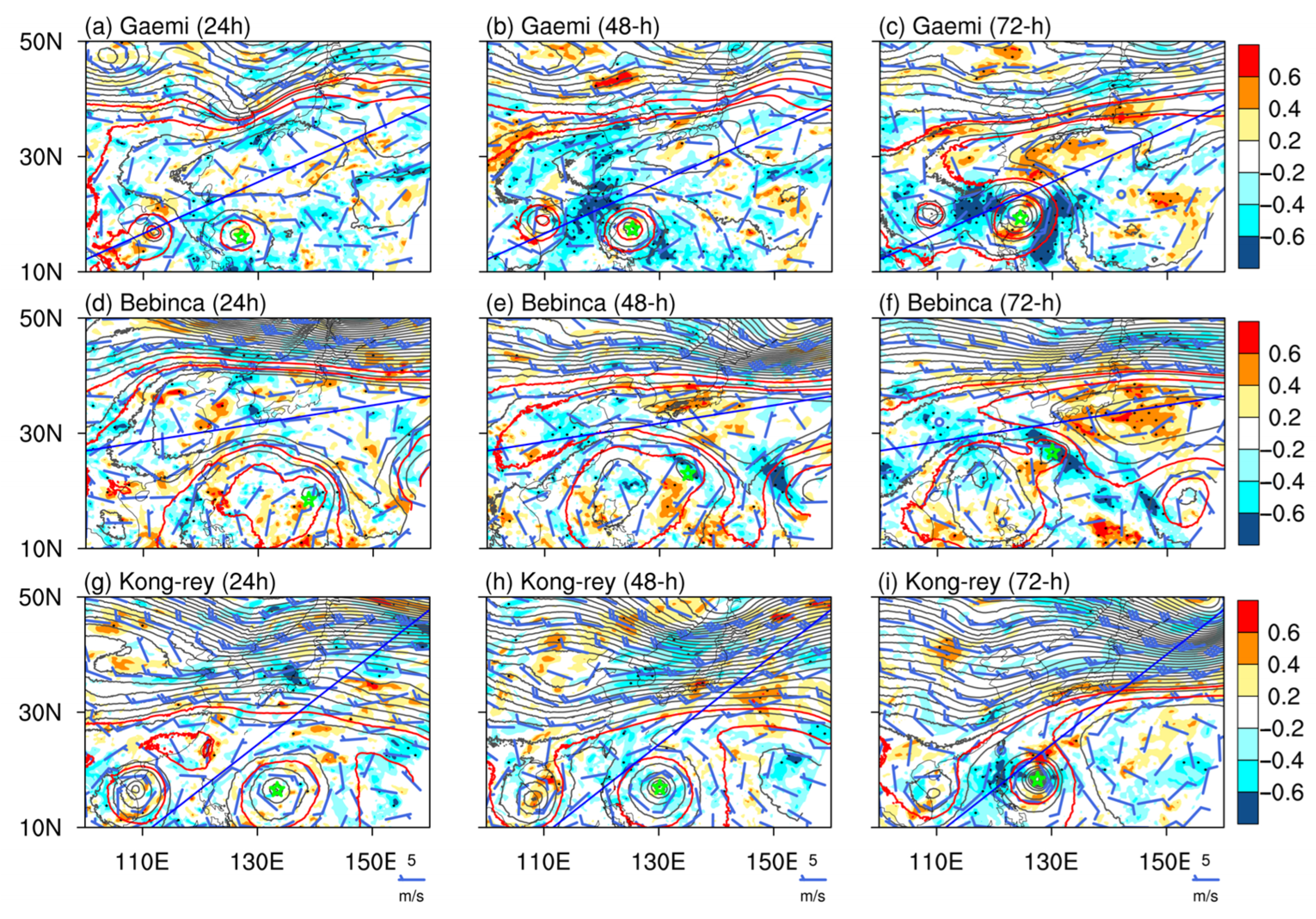
Following the analysis of the large-scale environments and ensemble forecasting performance for the three typhoon cases, Figure 9 presents the 96 h typhoon position uncertainty alongside the standardized ESA (as defined in Equation (2)) of the zonal component of environmental wind at earlier forecast times (i.e., 24, 48, and 72 h). Given that the greatest track uncertainty at 96 h lies along the principal axis, both the 96 h typhoon position and the earlier environmental wind forecasts are projected onto this axis (defined by the blue line in Figure 6). In this setup, eastward environmental wind and westward typhoon displacement are defined as positive.
Overall, the 24 h environmental wind for all three typhoons exhibits weak and spatially scattered correlations with the 96 h typhoon position uncertainty, suggesting that early-stage large-scale systems have limited linear influence on track uncertainty three days later. However, from 48 to 72 h, the correlation patterns between early environmental wind and later typhoon positions become more spatially coherent and progressively stronger, indicating physically meaningful relationships. As the forecast lead time shortens, the strength of these linear relationships increases.
Figure 9 shows the standard ensemble sensitivity [i.e., sr in Equation (2)] of the TC center position at the 96 h forecast lead time to the 500-hPa environmental wind in the forecasts at 24, 48, and 72 h lead times for the three cases. The TC center position and the environmental wind in the ensembles are all projected onto the major axis at 96 h (blue straight lines in Figure 6), along which the ensemble TC positions have the largest spread.
Specifically, for Typhoon Gaemi (Figure 9a–c), the dominant influencing systems include the monsoon trough and the subtropical high [2,35]. At 48 h, the typhoon is embedded in the monsoon trough, and a region of negative correlation appears to its south. This indicates that stronger westerly winds to the south would slow the westward movement of the typhoon, resulting in an eastward positional shift. By 72 h, this negative correlation intensifies and extends northward, corresponding with Gaemi’s transition from being on the southwestern flank to the western flank of the subtropical high.
Interestingly, a negative correlation also appears to the west of Gaemi, primarily due to another low-pressure vortex approximately 1500 km away. The southwesterly flow on the eastern side of that vortex likely impedes Gaemi’s westward progression. At 48 h, a narrow band of negative correlation also emerges along the northern edge of the subtropical high near 30°N, reflecting the slowing influence of the pre-trough flow associated with a weak mid-latitude trough. Prior studies have shown that when typhoons approach the front of a mid-latitude trough, they often recurve northeastward [36]. However, this negative correlation weakens by 72 h, likely due to the westward expansion and strengthening of the subtropical high, which suppresses the trough’s influence. Consequently, Gaemi’s track shifts westward near 20°N before making landfall (see Figure 6a). Notably, at 72 h, a region of positive correlation appears in the northwestern part of the subtropical high (point A). This may reflect increased positional uncertainty in the subtropical high itself (see Figure 10c). When the subtropical high ridge extends farther west, easterly winds at point A weaken, causing the typhoon’s track to shift farther west.
Typhoon Bebinca, similar to Gaemi, is influenced by the subtropical high and a low-pressure vortex to its west (Figure 9e). At 48 h, a band of negative correlation appears along the southwestern edge of the subtropical high (east of the typhoon), and this pattern strengthens by 72 h (Figure 9f). This is related to southeasterly to northwesterly environmental wind in that region—stronger winds promote northwestward typhoon movement. Positive correlations on the west side of Bebinca likely reflect the influence of the adjacent low-pressure vortex. Also similar to Gaemi, the center of the subtropical high exhibits significant positive correlation by 72 h, indicating that uncertainty in the position of the high significantly affects the typhoon’s track.
Typhoon Kong-rey, like Gaemi, is centered around 15°N and is accompanied by another tropical low-pressure system to its west over the South China Sea (Figure 9h). Under this twin-typhoon dynamic, a region of negative correlation appears to the west of Kong-rey, suggesting that the nearby system hinders Kong-rey’s westward progression (Figure 9h,i). The steering effect from the western flank of the subtropical high gradually induces a northward turn. However, this influence is not as clearly reflected in the correlation structure. Unlike Gaemi and Bebinca, the subtropical high’s influence on Kong-rey’s track does not produce a strong ensemble sensitivity signal in terms of zonal wind. This may be due to pronounced east–west positional uncertainty of the subtropical high (as shown in Figure 10), where variations are primarily in the meridinal wind component.
In summary, the ensemble sensitivity analysis of the three typhoons suggests that variations in the intensity and position of the subtropical high, along with the interactions between binary typhoon systems, are likely key factors contributing to track forecast uncertainty for this type of typhoon.
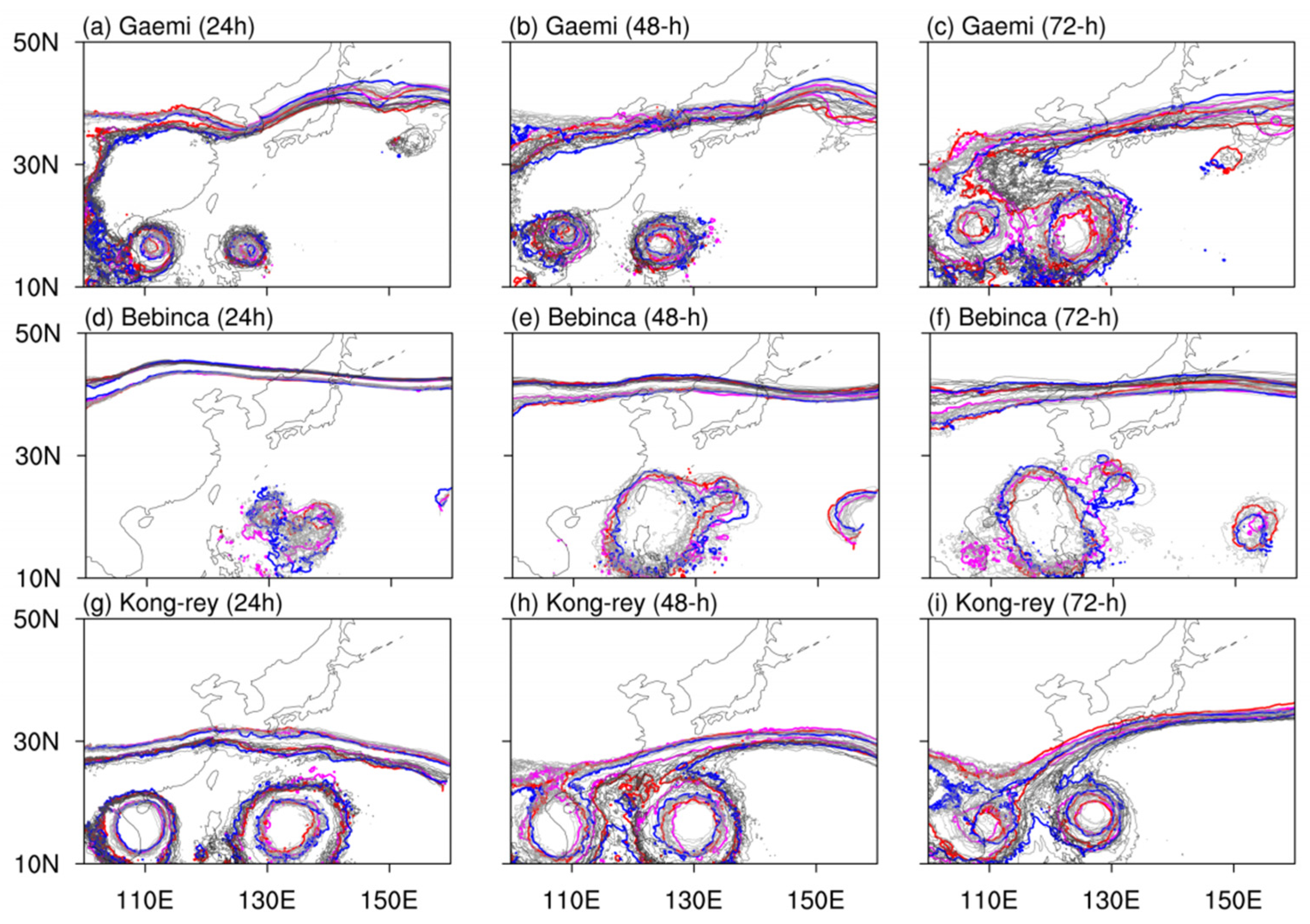
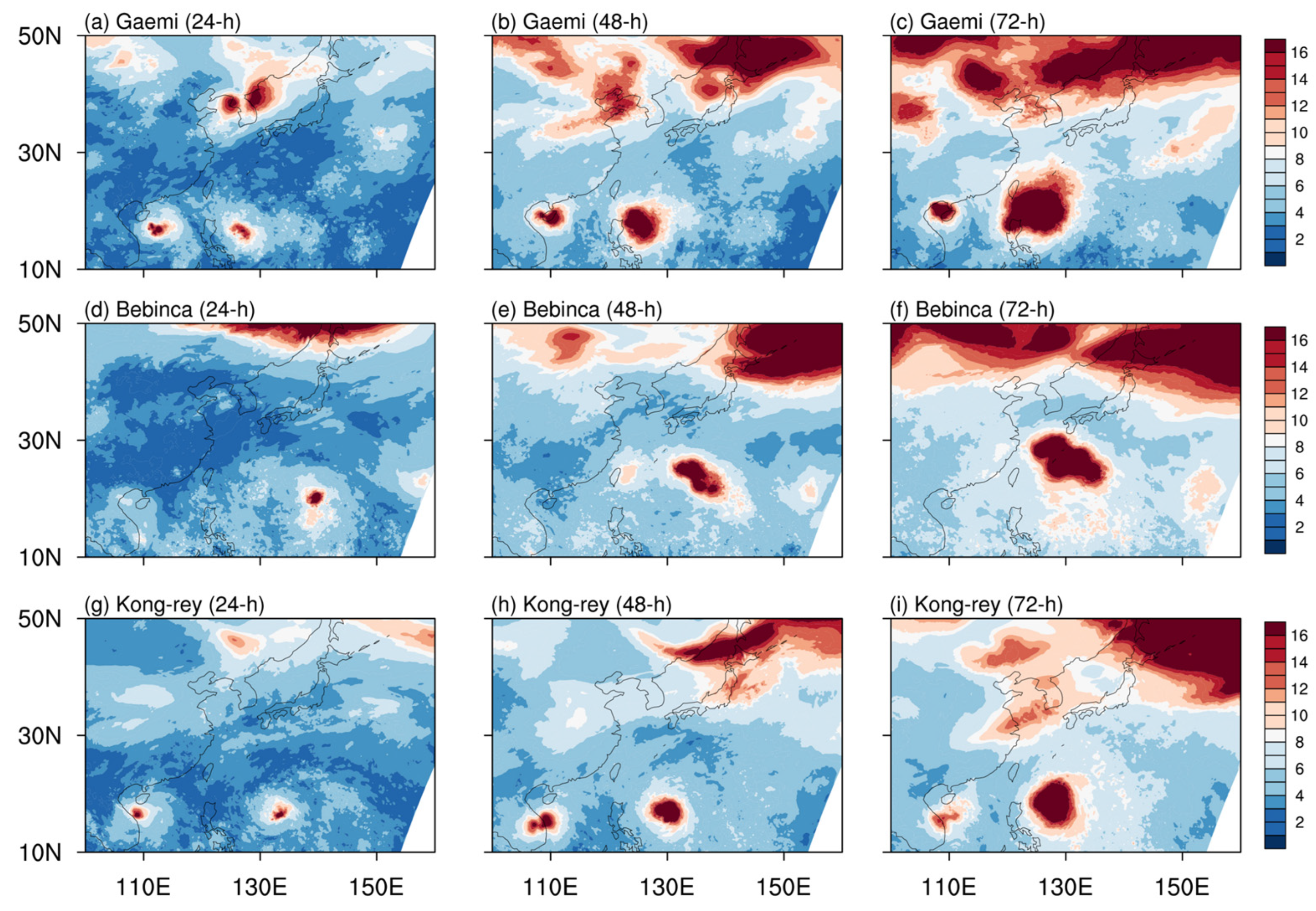
To further elucidate the ensemble sensitivity features presented in Figure 9, Figure 10 displays the spaghetti plots of the 500 hPa geopotential height from ensemble members of the SWARMS-EN system at 24, 48, and 72 h for Typhoons Gaemi, Bebinca, and Kong-rey. Figure 11 shows the corresponding spatial distribution of ensemble spread. Overall, the ensemble spread increases with forecast lead time for all three typhoons.
Notably, all three typhoons exhibit relatively large ensemble spread in the vicinity of their vortices, reflecting uncertainty in both typhoon intensity and position across ensemble members. In contrast, the central region of the subtropical high—typically located to the east of the typhoon—shows consistently low spread, indicating that the structural characteristics of the subtropical high are relatively stable across ensemble members. This suggests that it may not be the position of the subtropical high’s core, but rather the magnitude of wind along its western periphery—the side exerting the strongest steering influence—that plays a more critical role in typhoon movement. This interpretation aligns with the negative ensemble sensitivity observed along the western edge of the subtropical high in Figure 9c,f,i.
Importantly, the strength of the steering flow is determined by the pressure gradient along the western flank of the subtropical high. Therefore, in addition to considering changes in the shape and extent of the high, attention must also be paid to the intensity of the steering winds along its edge.
On the other hand, all three typhoons also show substantial ensemble spread along the northern boundary of the subtropical high, particularly around 30–35°N. This reflects significant uncertainty in the large-scale pattern in that region, largely due to variability in the location of the northern boundary of the subtropical high. These uncertainties, as also seen in Figure 10c,f,i, may exert secondary influences on typhoon motion. As such, accurate typhoon track forecasts require careful consideration of mid- to high-latitude systems and their interactions with the subtropical high, especially regarding the uncertainty in the high’s position and structure.
Notably, all three typhoon cases exhibit signs of large-scale remote interaction with cyclonic vortices or tropical storms located approximately 1000–2000 km to their west—a spatial scale that distinguishes these phenomena from the classical Fujiwhara effect. These remote cyclonic systems also display considerable position uncertainty, as evident from both the spaghetti plots in Figure 10 and the ensemble spread maps in Figure 11. Through ensemble sensitivity analysis, we further demonstrate that position uncertainties of these remote systems can substantially influence the track uncertainty of the primary typhoon, likely through modifications of large-scale environmental steering flows rather than direct vortex interactions.
This highlights that in binary typhoon scenarios, the mutual interaction between systems can significantly affect track forecasts. The ensemble sensitivity analysis in Figure 9 provides early physical indicators of such interactions, demonstrating its great value for improving the accuracy of typhoon track prediction. Among the factors influencing binary TC interaction uncertainty, our analysis reveals that relative position plays a critical role in producing the forecast spread in these cases. The azimuthal configuration of the interacting systems relative to the environmental flow field proves most critical, as it directly modulates steering patterns. This hierarchy aligns with the sensitivity patterns evident in Figure 10 and Figure 11.

6. Conclusions and Discussion

This study presents a systematic investigation into the predictability of landfalling typhoon tracks in East China using ESA within a high-resolution regional ensemble forecasting system (SWARMS-EN). By analyzing three representative typhoons from 2024—Gaemi, Bebinca, and Kong-rey—we have demonstrated the diagnostic power of ESA in revealing the dynamic sensitivities and uncertainties that influence typhoon track forecasts under complex large-scale conditions.
The results highlight several key findings:
(1)
Consistent Sensitivity Patterns across Diverse Typhoon Cases
Despite differing large-scale backgrounds, all three typhoons exhibit similar sensitivity structures concentrated around the western flank of the subtropical high and nearby low-pressure systems. This suggests that track uncertainty is closely tied to fluctuations in the steering flow—particularly the zonal component—and to mesoscale systems within 1000–2000 km of the typhoon core. Notably, ensemble sensitivity signals intensified with decreasing lead time, underscoring the increasing linear predictability closer to landfall.
(2)
The Role of the Subtropical High and Binary Interactions
Our analysis reveals that while the core of the subtropical high remains relatively stable, its western periphery exerts a pronounced and variable influence on typhoon motion. Moreover, interactions with adjacent cyclonic systems—such as tropical lows or companion typhoons—further complicate forecast accuracy. These binary interactions introduce an additional layer of forecast uncertainty, which can now be effectively diagnosed using ESA, even at relatively early stages.
(3)
Operational Value of ESA in Regional Forecasting Systems
By projecting the ensemble sensitivity onto forecast uncertainty directions and correlating with observed large-scale features, this study validates ESA as a practical and efficient tool for operational risk assessment. The ability to pinpoint sensitive regions within high-resolution regional models not only enhances the interpretability of ensemble forecasts but also provides scientific guidance for targeted observations and adaptive data assimilation strategies.
The above diagnostic results also underscore areas where forecast accuracy may be improved. For instance, uncertainties arising from poorly initialized vortex structures and stochastic model perturbations point to the need for enhanced vortex initialization and refined perturbation schemes within SWARMS-EN. Additionally, adaptive ensemble configurations based on evolving sensitivity patterns may further optimize resource allocation in both modeling and observation.
When considering the operational implementation of targeted observations guided by ESA results, several practical aspects require careful evaluation. The deployment of additional observing resources, such as reconnaissance aircraft or enhanced dropsonde coverage, entails significant operational costs and logistical coordination. However, for high-impact weather events like landfalling typhoons, the potential benefits of improved track forecasts—including more precise early warnings and optimized evacuation planning—may justify such investments. The cost-effectiveness of these targeted observing strategies should be assessed through follow-up Observing System Simulation Experiments (OSSEs) to quantify their potential impact on forecast skill.
In conclusion, this study not only reaffirms the practical utility of ESA in diagnosing typhoon track uncertainty but also provides a theoretical and methodological framework for advancing the forecast capabilities of regional ensemble systems. By uncovering the multi-scale dynamical linkages that govern typhoon track evolution, particularly in the final 2–3 days before landfall, our findings offer actionable insights for improving early warning systems and disaster preparedness in East China.
Looking ahead, future work should expand the scope of analysis to include more typhoon events across multiple years and explore the integration of ESA with machine learning approaches for real-time sensitivity monitoring. In parallel, efforts should be made to enhance observational networks in identified sensitive regions, thereby forming a synergistic loop between sensitivity diagnostics, targeted observations, and model refinement.

Author Contributions

Conceptualization, J.Z.; methodology, J.Z.; software, J.Z. and C.C.; validation, J.Z. and S.Z.; formal analysis, J.Z. and S.Z.; investigation, J.Z. and S.Z.; resources, J.Z. and Y.T.; data curation, J.Z. and Y.T.; writing—original draft preparation, J.Z.; writing—review and editing, S.Z.; visualization, J.Z. and S.Z.; supervision, S.Z.; project administration, J.Z. and S.Z.; funding acquisition, J.Z., S.Z. and C.C. All authors have read and agreed to the published version of the manuscript.

Funding

This study was supported by the National Natural Science Foundation of China (42305060), the Guidance Project for Science and Technology Plan of Fujian Province (2024Y0076), and the Key Special Project for Innovative Development of China Meteorological Administration (CXFZ2025J022).

Data Availability Statement

The raw data from the SWARMS-EN model that support the findings of this study are available from the authors upon reasonable request. The reanalysis data used in this study is the ERA5 reanalysis dataset, developed by ECMWF as its fifth-generation global atmospheric reanalysis product, providing comprehensive climate and weather data spanning the past 8 decades (available from 1940 onward). The data can be accessed at: https://cds.climate.copernicus.eu/datasets/reanalysis-era5-pressure-levels (accessed on 12 September 2025). The best track data are issued by the CMA Tropical Cyclone Data Center (https://tcdata.typhoon.org.cn/zjljsjj.html (accessed on 15 October 2025)).

Conflicts of Interest

The authors declare no conflicts of interest.

References

  1. Wu, L.; Liang, J.; Wu, C.-C. Monsoonal Influence on Typhoon Morakot (2009). Part I: Observational Analysis. J. Atmos. Sci. 2011, 68, 2208–2221. [Google Scholar] [CrossRef]
  2. Wu, L.; Wen, Z.; Huang, R.; Wu, R. Possible Linkage between the Monsoon Trough Variability and the Tropical Cyclone Activity over the Western North Pacific. Mon. Weather Rev. 2012, 140, 140–150. [Google Scholar] [CrossRef]
  3. Wang, B.; Xiang, B.; Lee, J.-Y. Subtropical High predictability establishes a promising way for monsoon and tropical storm predictions. Proc. Natl. Acad. Sci. USA 2013, 110, 2718–2722. [Google Scholar] [CrossRef] [PubMed]
  4. Li, R.C.Y.; Zhou, W. Modulation of Western North Pacific Tropical Cyclone Activity by the ISO. Part I: Genesis and Intensity. J. Clim. 2013, 26, 2904–2918. [Google Scholar] [CrossRef]
  5. Song, J.; Wu, R.; Quan, W.; Yang, C. Impact of the subtropical high on the extratropical transition of tropical cyclones over the western North Pacific. Acta Meteorol. Sin. 2013, 27, 476–485. [Google Scholar] [CrossRef]
  6. Yang, M.-J.; Braun, S.A.; Chen, D.-S. Water Budget of Typhoon Nari (2001). Mon. Weather Rev. 2011, 139, 3809–3828. [Google Scholar] [CrossRef]
  7. Tan, Z.-M.; Lei, L.; Wang, Y.; Xu, Y.; Zhang, Y. Typhoon Track, Intensity, and Structure: From Theory to Prediction. Adv. Atmos. Sci. 2022, 39, 1789–1799. [Google Scholar] [CrossRef]
  8. Yamaguchi, M.; Nakazawa, T.; Hoshino, S. On the relative benefits of a multi-centre grand ensemble for tropical cyclone track prediction in the western North Pacific. Q. J. R. Meteorol. Soc. 2012, 138, 2019–2029. [Google Scholar] [CrossRef]
  9. Feng, J.; Zhang, J.; Toth, Z.; Peña, M.; Ravela, S. A New Measure of Ensemble Central Tendency. Weather Forecast. 2020, 35, 879–889. [Google Scholar] [CrossRef]
  10. Zhang, J.; Feng, J.; Li, H.; Zhu, Y.; Zhi, X.; Zhang, F. Unified Ensemble Mean Forecasting of Tropical Cyclones Based on the Feature-Oriented Mean Method. Weather Forecast. 2021, 36, 1945–1959. [Google Scholar] [CrossRef]
  11. Zhang, X.; Yu, H. A Probabilistic Tropical Cyclone Track Forecast Scheme Based on the Selective Consensus of Ensemble Prediction Systems. Weather Forecast. 2017, 32, 2143–2157. [Google Scholar] [CrossRef]
  12. Feng, J.; Judt, F.; Zhang, J.; Wang, X. Influence of region-dependent error growth on the predictability of track and intensity of Typhoon Chan-hom (2020) in high-resolution HWRF ensembles. Atmos. Res. 2024, 308, 107536. [Google Scholar] [CrossRef]
  13. Torn, R.D.; Elless, T.J.; Papin, P.P.; Davis, C.A. Tropical Cyclone Track Sensitivity in Deformation Steering Flow. Mon. Weather Rev. 2018, 146, 3183–3201. [Google Scholar] [CrossRef]
  14. Nakano, M.; Chen, Y.-W.; Satoh, M. Analysis of the Factors that Led to Uncertainty of Track Forecast of Typhoon Krosa (2019) by 101-Member Ensemble Forecast Experiments Using NICAM. J. Meteorol. Soc. Jpn. Ser. II 2023, 101, 191–207. [Google Scholar] [CrossRef]
  15. Torn, R.D.; Hakim, G.J. Ensemble-Based Sensitivity Analysis. Mon. Weather Rev. 2008, 136, 663–677. [Google Scholar] [CrossRef]
  16. Ashcroft, J.; Schwendike, J.; Griffiths, S.D.; Ross, A.N.; Short, C.J. The impact of weak environmental steering flow on tropical cyclone track predictability. Q. J. R. Meteorol. Soc. 2021, 147, 4122–4142. [Google Scholar] [CrossRef]
  17. Hazelton, A.; Alaka, G.J.; Fischer, M.S.; Torn, R.; Gopalakrishnan, S. Factors Influencing the Track of Hurricane Dorian (2019) in the West Atlantic: Analysis of a HAFS Ensemble. Mon. Weather Rev. 2023, 151, 175–192. [Google Scholar] [CrossRef]
  18. Ito, K.; Wu, C.-C. Typhoon-Position-Oriented Sensitivity Analysis. Part I: Theory and Verification. J. Atmos. Sci. 2013, 70, 2525–2546. [Google Scholar] [CrossRef]
  19. Ren, Y.; Lei, L.; Gu, J.-F.; Tan, Z.-M.; Zhang, Y. Understanding the initial conditions contributing to the rapid intensification of typhoons through ensemble sensitivity analysis. Atmos. Ocean. Sci. Lett. 2025, 18, 100552. [Google Scholar] [CrossRef]
  20. Hakim, G.J.; Torn, R.D. Ensemble Synoptic Analysis. Meteorol. Monogr. 2008, 33, 147–162. [Google Scholar] [CrossRef]
  21. Feng, J.; Qin, X.; Wu, C.; Zhang, P.; Yang, L.; Shen, X.; Han, W.; Liu, Y. Improving typhoon predictions by assimilating the retrieval of atmospheric temperature profiles from the FengYun-4A’s Geostationary Interferometric Infrared Sounder (GIIRS). Atmos. Res. 2022, 280, 106391. [Google Scholar] [CrossRef]
  22. Qin, X.; Duan, W.; Chan, P.-W.; Chen, B.; Huang, K.-N. Effects of Dropsonde Data in Field Campaigns on Forecasts of Tropical Cyclones over the Western North Pacific in 2020 and the Role of CNOP Sensitivity. Adv. Atmos. Sci. 2023, 40, 791–803. [Google Scholar] [CrossRef]
  23. Liu, L.; Feng, J.; Ma, L.; Yang, Y.; Wu, X.; Wang, C. Ensemble-based sensitivity analysis of track forecasts of typhoon In-fa (2021) without and with model errors in the ECMWF, NCEP, and CMA ensemble prediction systems. Atmos. Res. 2024, 309, 107596. [Google Scholar] [CrossRef]
  24. Tan, Y.; Huang, W.; Zhang, X. Assessment and Ensemble-Based Analysis of the Landfalling Typhoon Muifa (2022). Atmosphere 2024, 15, 343. [Google Scholar] [CrossRef]
  25. Zhan, R.; Feng, J. Causes and predictability of the “explosive” intensification of Super Typhoon Yagi after entering the South China Sea in 2024. Sci. China Earth Sci. 2025, 68, 1298–1302. [Google Scholar] [CrossRef]
  26. Buckingham, C.; Marchok, T.; Ginis, I.; Rothstein, L.; Rowe, D. Short- and Medium-Range Prediction of Tropical and Transitioning Cyclone Tracks within the NCEP Global Ensemble Forecasting System. Weather Forecast. 2010, 25, 1736–1754. [Google Scholar] [CrossRef]
  27. Buizza, R.; Milleer, M.; Palmer, T.N. Stochastic representation of model uncertainties in the ECMWF ensemble prediction system. Q. J. R. Meteorol. Soc. 1999, 125, 2887–2908. [Google Scholar] [CrossRef]
  28. Zheng, M.; Chang, E.K.M.; Colle, B.A. Ensemble Sensitivity Tools for Assessing Extratropical Cyclone Intensity and Track Predictability. Weather Forecast. 2013, 28, 1133–1156. [Google Scholar] [CrossRef]
  29. Chang, E.K.M.; Zheng, M.; Raeder, K. Medium-Range Ensemble Sensitivity Analysis of Two Extreme Pacific Extratropical Cyclones. Mon. Weather Rev. 2013, 141, 211–231. [Google Scholar] [CrossRef]
  30. Ancell, B.C.; Coleman, A.A. New Perspectives on Ensemble Sensitivity Analysis with Applications to a Climatology of Severe Convection. Bull. Am. Meteorol. Soc. 2022, 103, E511–E530. [Google Scholar] [CrossRef]
  31. Hamill, T.M.; Whitaker, J.S.; Fiorino, M.; Benjamin, S.G. Global Ensemble Predictions of 2009’s Tropical Cyclones Initialized with an Ensemble Kalman Filter. Mon. Weather Rev. 2011, 139, 668–688. [Google Scholar] [CrossRef]
  32. Feng, J.; Wang, X. Impact of Increasing Horizontal and Vertical Resolution during the HWRF Hybrid EnVar Data Assimilation on the Analysis and Prediction of Hurricane Patricia (2015). Mon. Weather Rev. 2021, 149, 419–441. [Google Scholar] [CrossRef]
  33. Chan, J.C.L.; Gray, W.M. Tropical Cyclone Movement and Surrounding Flow Relationships. Mon. Weather Rev. 1982, 110, 1354–1374. [Google Scholar] [CrossRef]
  34. Akter, N.; Tsuboki, K. Recurvature and movement processes of tropical cyclones over the Bay of Bengal. Q. J. R. Meteorol. Soc. 2021, 147, 3681–3702. [Google Scholar] [CrossRef]
  35. Harr, P.A.; Elsberry, R.L. Large-scale circulation variability over the tropical western North Pacific. Part I: Spatial patterns and tropical cyclone characteristics. Mon. Weather Rev. 1995, 123, 1225–1246. [Google Scholar] [CrossRef]
  36. Hirano, S.; Ito, K.; Yamada, H. Tropical Cyclone Track Modified by a Front Located to the Northeast. SOLA 2023, 19, 109–115. [Google Scholar] [CrossRef]
Figure 1. Forecast region of SWARMS-EN.
Remotesensing 17 03944 g001
Figure 2. Observed track and intensity of three typhoons that made landfall in East China in 2024, with dots and numbers indicating the 12 h interval and date, respectively.
Remotesensing 17 03944 g002
Figure 3. Evolution of the synoptic weather pattern of Typhoon Gaemi in analysis data of SWARMS-EN from 20 to 26 July 2024 (at 48 h intervals): (ad) 300 hPa, (eh) 500 hPa, and (il) 850 hPa geopotential height fields. The black contour lines and blue wind barbs represent geopotential height (unit: gpm) and environmental wind field (unit: m/s), respectively. The red lines show the track of Typhoon Gaemi based on best track data. In panels (eh), pink contour lines mark the 5880 gpm characteristic line of the Western Pacific subtropical high.
Remotesensing 17 03944 g003
Figure 4. Evolution of the synoptic weather pattern of Typhoon Bebinca in analysis data of SWARMS-EN from 11 to 17 September 2024 (at 48 h intervals): (ad) 300 hPa, (eh) 500 hPa, and (il) 850 hPa geopotential height fields. The black contour lines and blue wind barbs represent geopotential height (unit: gpm) and environmental wind field (unit: m/s), respectively. The red lines show the track of Typhoon Gaemi based on best track data. In panels (eh), pink contour lines mark the 5880 gpm characteristic line of the Western Pacific subtropical high.
Remotesensing 17 03944 g004
Figure 5. Evolution of the synoptic weather pattern of Typhoon Kong-rey in analysis data of SWARMS-EN from 26 October to 1 November 2024 (at 48 h intervals): (ad) 300 hPa, (eh) 500 hPa, and (il) 850 hPa geopotential height fields. The black contour lines and blue wind barbs represent geopotential height (unit: gpm) and environmental wind field (unit: m/s), respectively. The red lines show the track of Typhoon Gaemi based on best track data. In panels (eh), pink contour lines mark the 5880 gpm characteristic line of the Western Pacific subtropical high.
Remotesensing 17 03944 g005
Figure 6. SWARMS-EN model forecast tracks for (a) Typhoon Gaemi, (b) Typhoon Bebinca, and (c) Typhoon Kong-rey. The figure shows ensemble forecast tracks (gray lines), control forecast (pink line), and best track (red line). Blue hollow dots indicate the 96 h forecast positions of TC from ensemble members. The ellipses represent a bivariate normal fit to these positions, and the blue lines indicate the direction of maximum uncertainty in the ensemble positions at that time. Colored solid dots represent the 96 h TC positions from best track (red), control forecast (pink), and ensemble mean forecast (blue).
Remotesensing 17 03944 g006
Figure 7. SWARMS-EN model forecast errors and ensemble spread for (a) Typhoon Gaemi, (b) Typhoon Bebinca, and (c) Typhoon Kong-rey. The solid lines represent the ensemble mean track forecast errors, and the dashed lines represent the ensemble spread. The shaded areas (blue, red) represent the max-min range.
Remotesensing 17 03944 g007
Figure 8. SWARMS-EN model forecast of the 500 hPa ensemble mean zonal component of steering flow near (a) Typhoon Gaemi, (b) Typhoon Bebinca, and (c) Typhoon Kong-rey. The red curves represent the ensemble mean steering flow from the SWARMS-EN forecast, the blue curves represent the ERA5 reference field, and the colored vertical bars denote the ensemble spread.
Remotesensing 17 03944 g008
Figure 9. Ensemble sensitivity of the 96 h forecast position of (ac) Typhoon Gaemi, (df) Typhoon Bebinca, and (gi) Typhoon Kong-rey to the zonal component of environmental wind at 24, 48, and 72 h, projected on the 96 h major axis (blue lines) (shown in color shading). Dotted regions have passed the 95% confidence level test. Blue wind barbs and black contour lines represent the 500 hPa wind field and geopotential height field, respectively. Red lines highlight the 5880 gpm and 5860 gpm geopotential height contours, and the green stars indicate the ensemble mean forecast position of the typhoon.
Remotesensing 17 03944 g009
Figure 10. SWARMS-EN model ensemble spaghetti plots of the 500 hPa geopotential height contours (5880 gpm and 5860 gpm; grey contours) at 24, 48, and 72 h for (ac) Typhoon Gaemi, (df) Typhoon Bebinca, and (gi) Typhoon Kong-rey. Colored contour lines highlight the geopotential height contours of three selected ensemble members.
Remotesensing 17 03944 g010
Figure 11. Ensemble spread of the 500 hPa geopotential height at 24, 48, and 72 h in the SWARMS-EN model forecast for (ac) Typhoon Gaemi, (df) Typhoon Bebinca, and (gi) Typhoon Kong-rey.
Remotesensing 17 03944 g011
Table 1. Information on Three Typhoons Making Landfall in East China in 2024. (Excerpted from: Tropical Cyclone Yearbook 2024).
International No.NameDate (MM.DD)IntensityLandfall in ChinaTimeMax Wind Force (Scale)Wind Speed (m/s)Central Pressure (hPa)
2403GAEMI7.19–7.28Super TyphoonYilan, Taiwan25 July, 00:001548945
Xiuyu, Fujian25 July, 18:401233972
2413BEBINCA9.9–9.18Super TyphoonPudong, Shanghai16 September, 07:501442965
2421KONG-REY10.25–11.2Super TyphoonTaitung, Taiwan31 October, 14:001548945
Disclaimer/Publisher’s Note: The statements, opinions and data contained in all publications are solely those of the individual author(s) and contributor(s) and not of MDPI and/or the editor(s). MDPI and/or the editor(s) disclaim responsibility for any injury to people or property resulting from any ideas, methods, instructions or products referred to in the content.