Physics-Driven Machine-Learning Retrieval and Uncertainty Quantification of Crop Leaf Area Index

Highlights
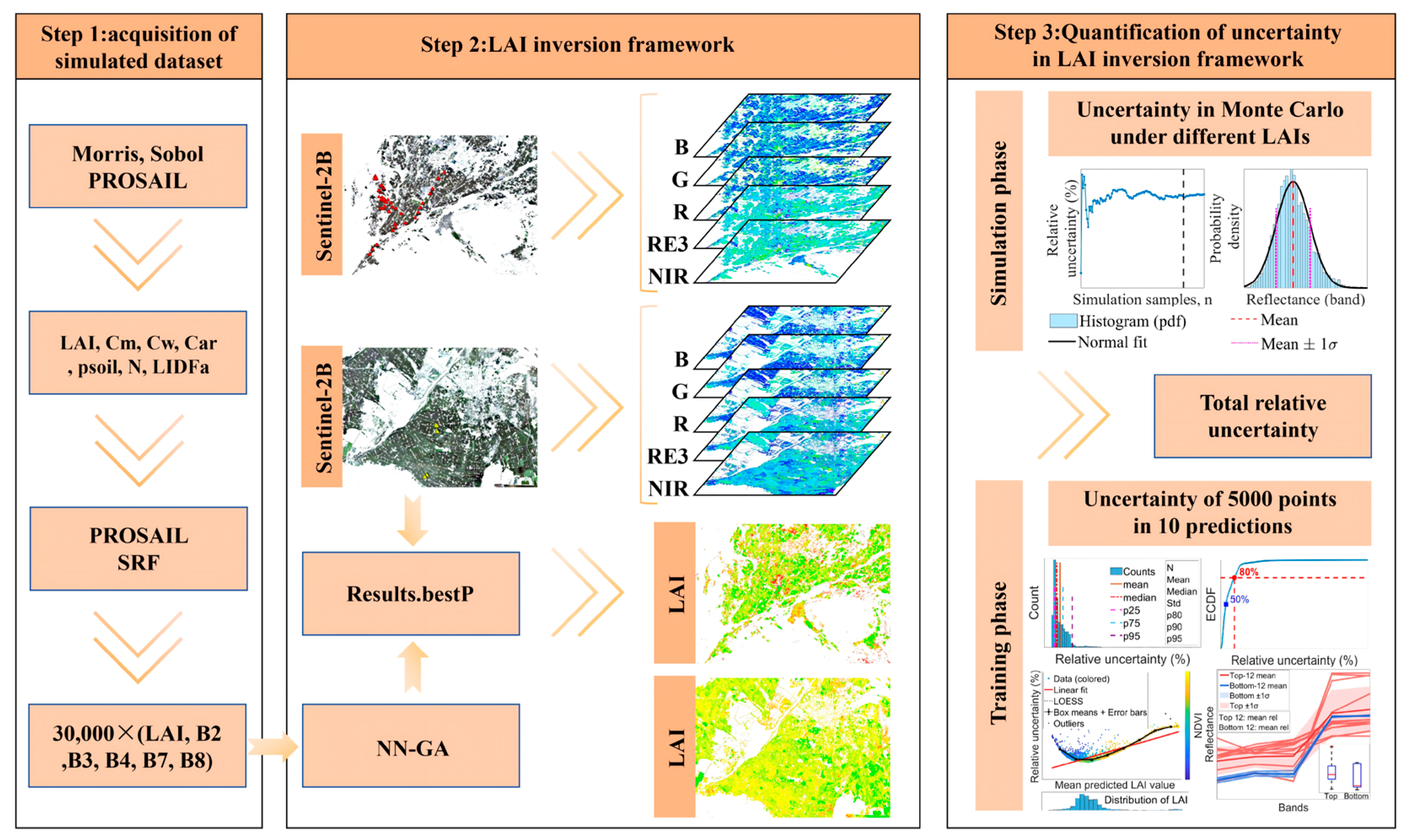
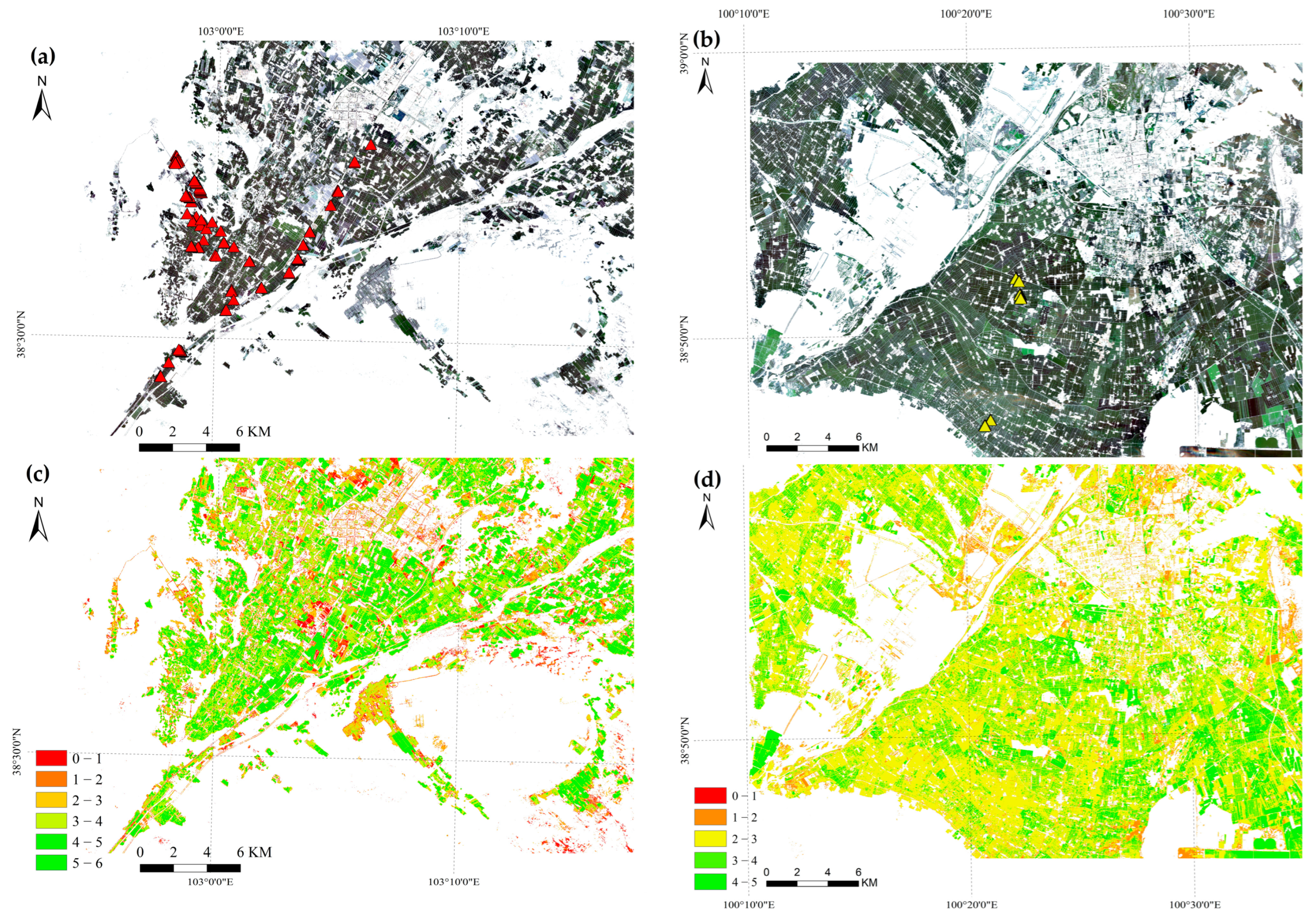
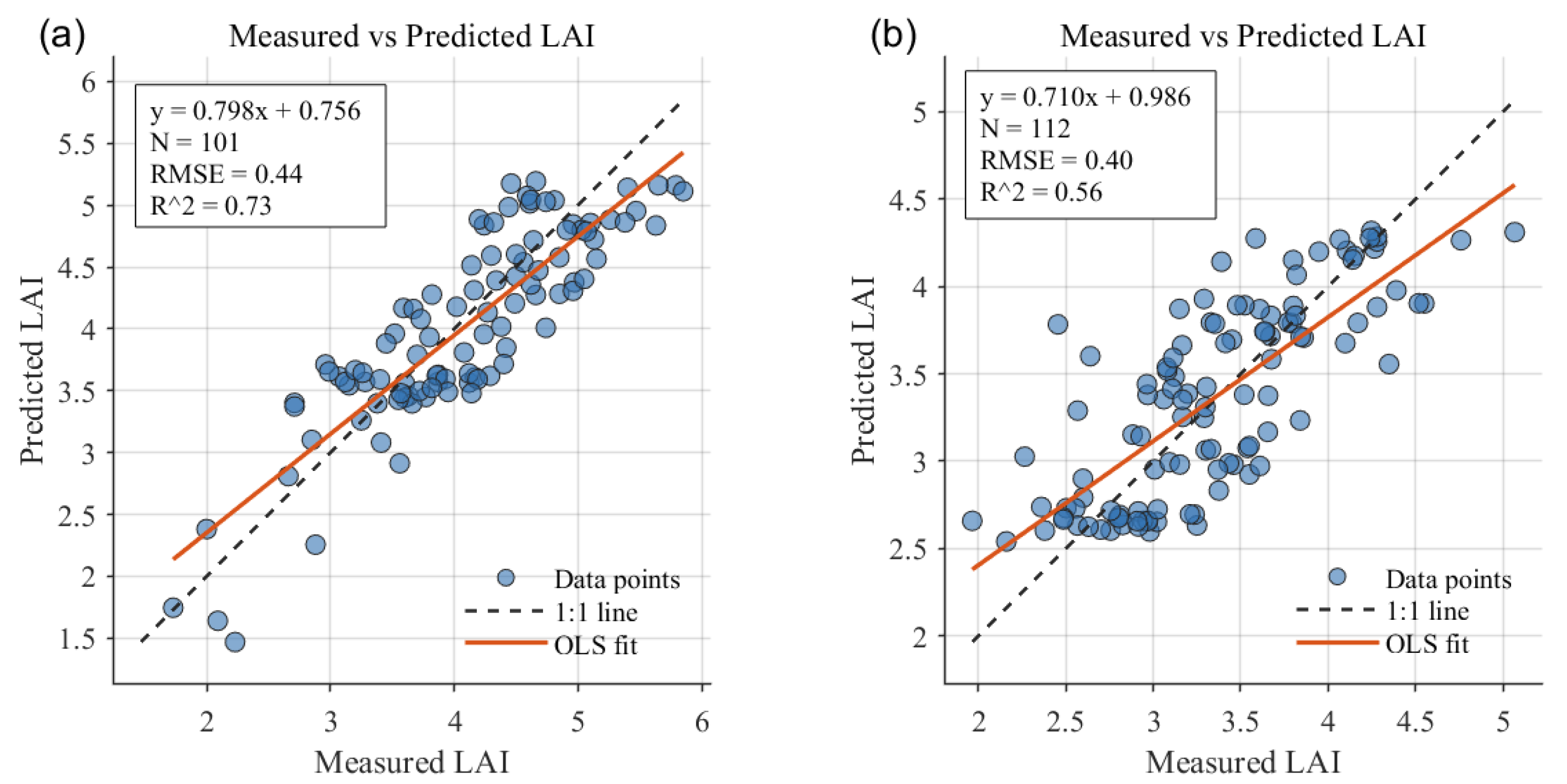
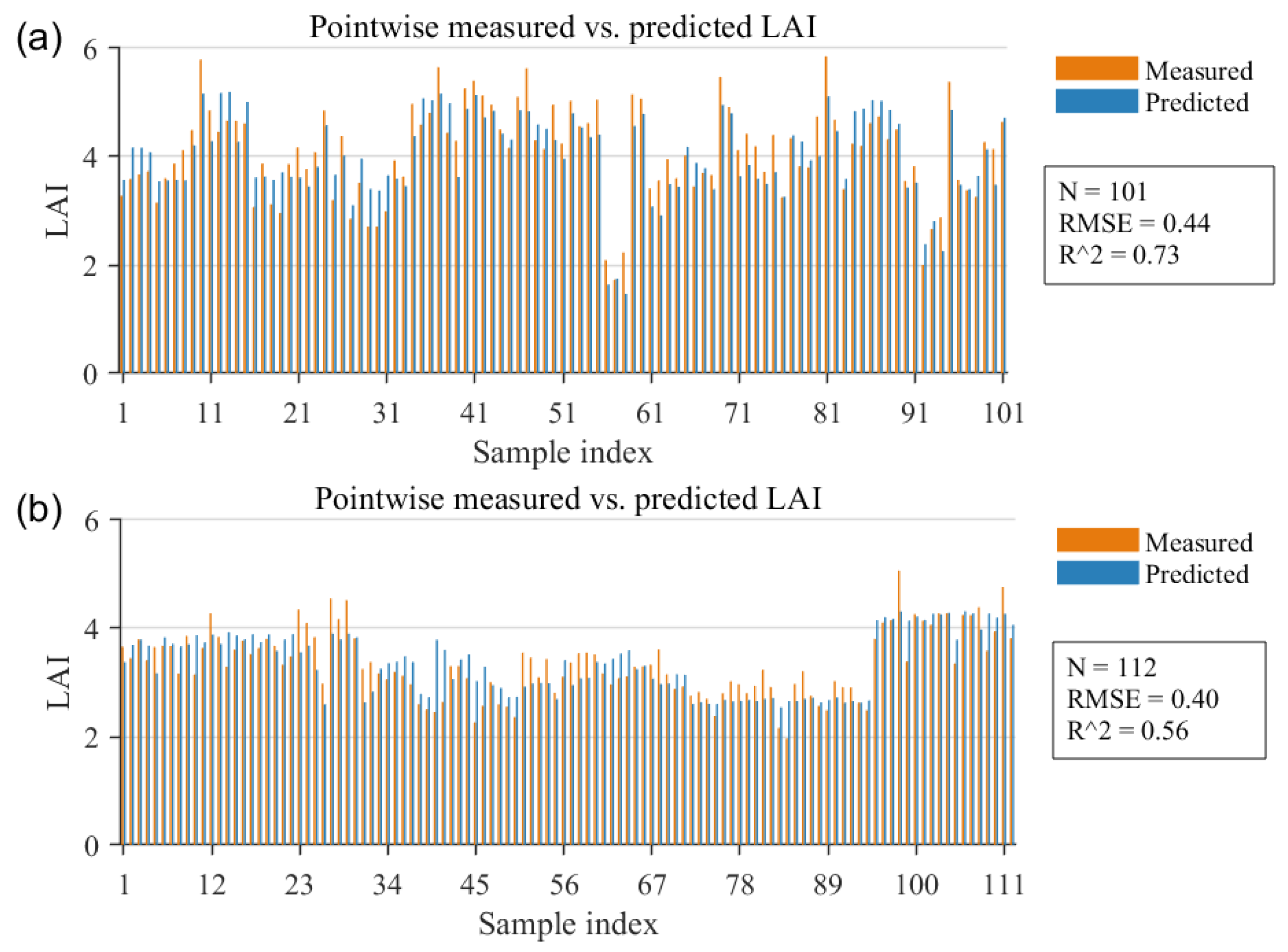
- A PROSAIL-driven, GA-optimised MLP (NN–GA) reliably retrieves crop LAI from Sentinel-2B at 10 m, achieving RMSE/R2 = 0.44/0.73 (Minqin) and 0.40/0.56 (Zhangye), outperforming the SNAP/SL2P benchmark.
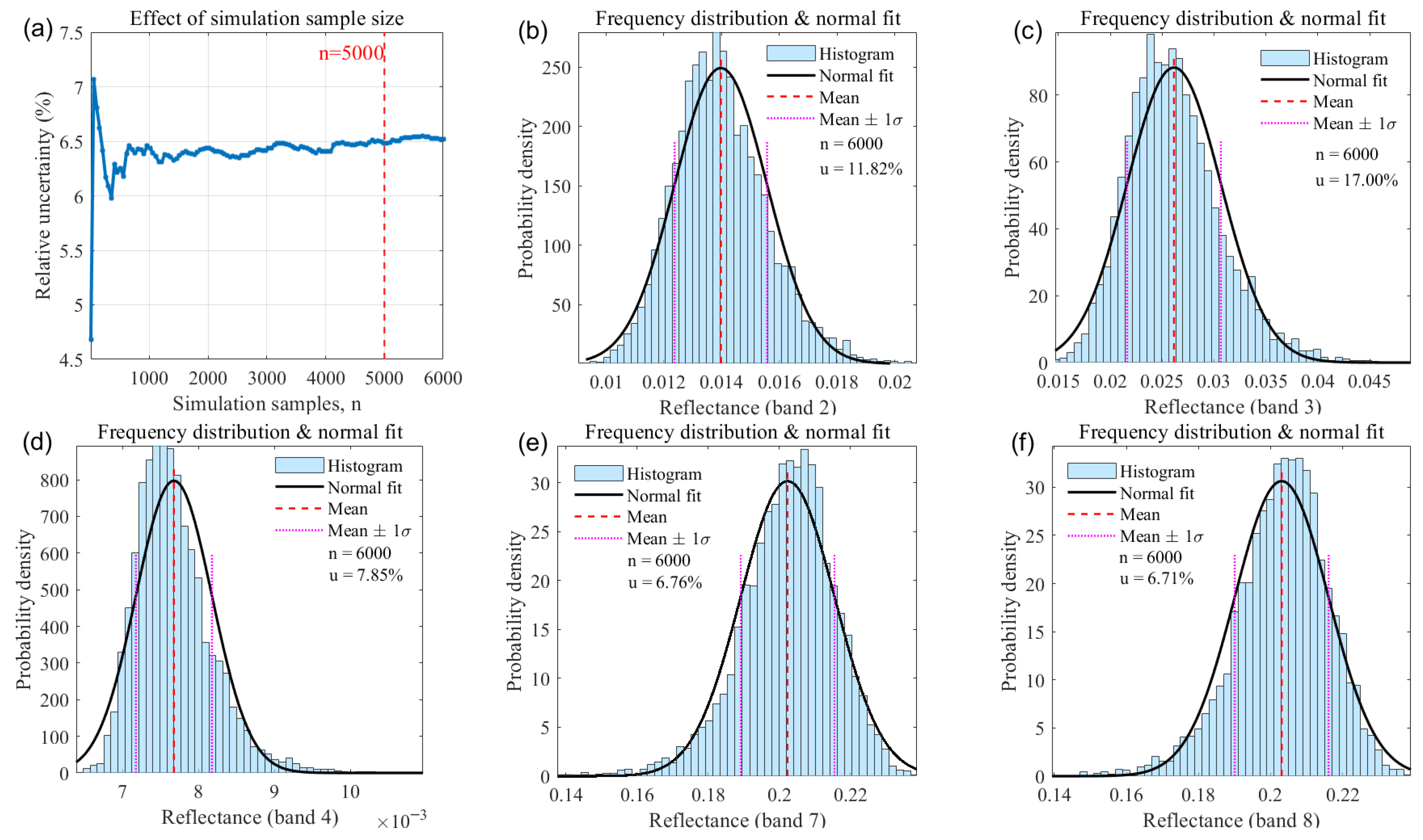
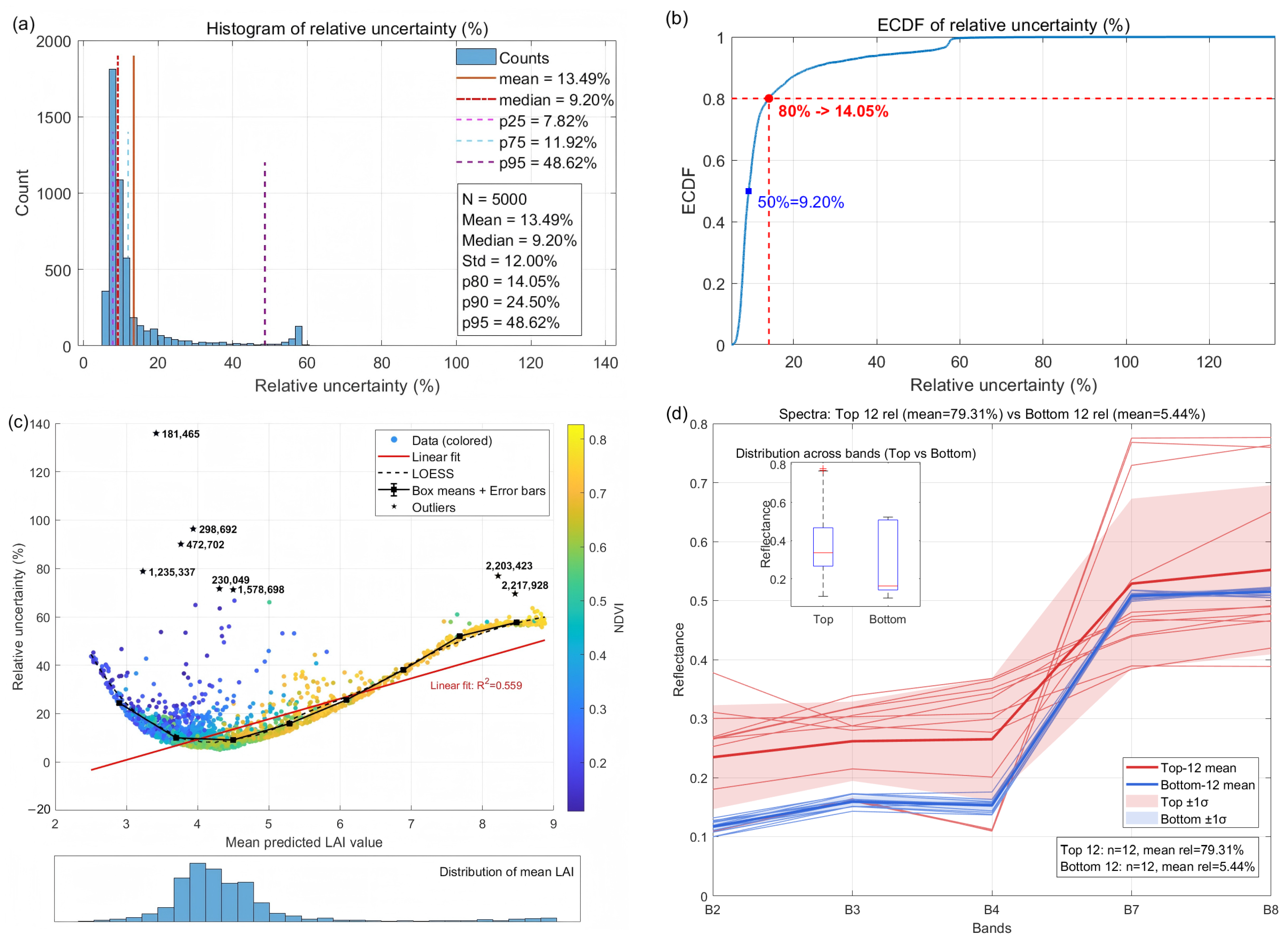
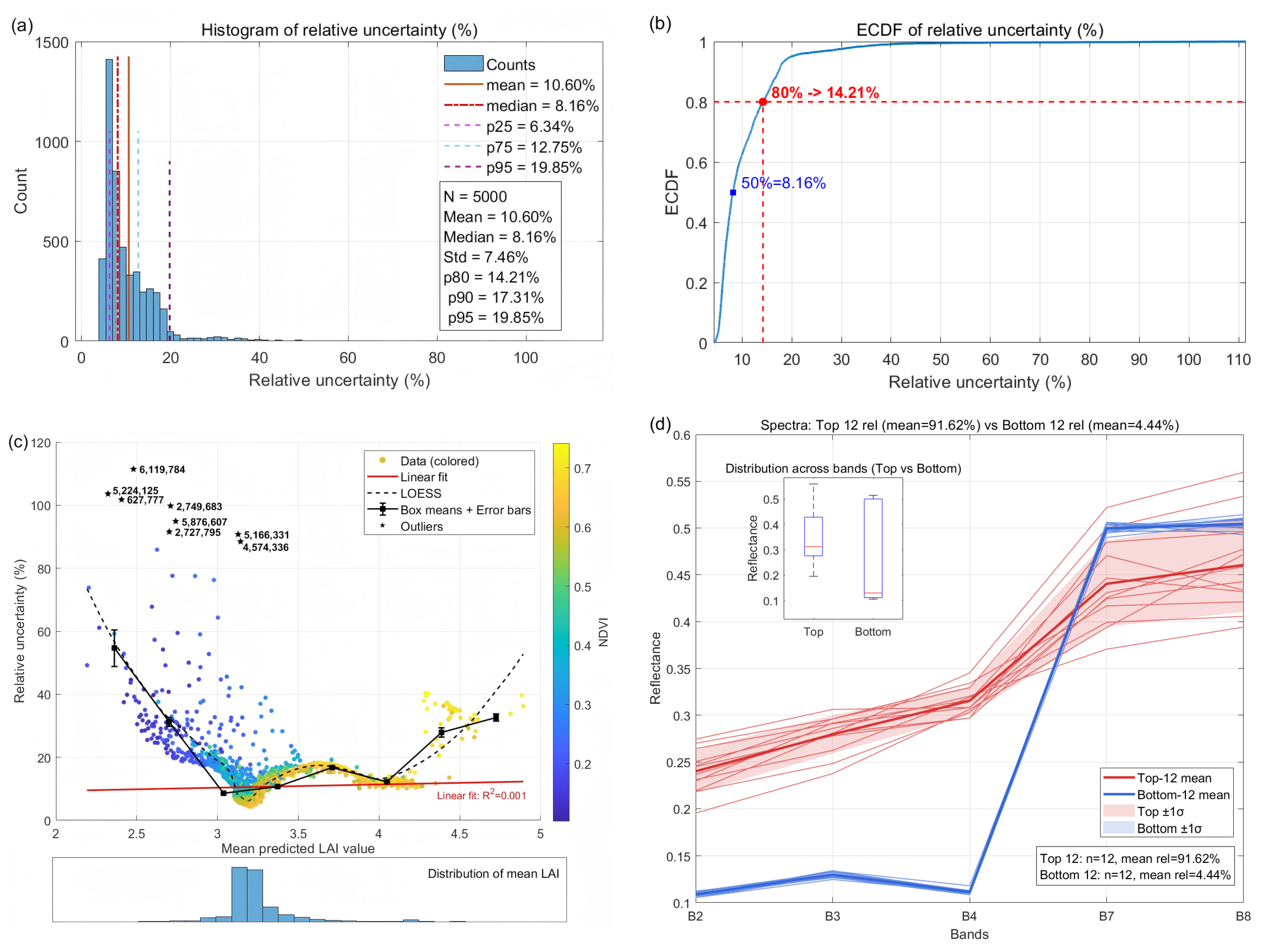
- A staged uncertainty quantification (UQ) workflow separates physical-driver and machine-learning contributions and synthesises them to report retrieval relative uncertainties (Minqin 21.37%, Zhangye 17.31%).
- The framework improves 10 m LAI retrieval accuracy and delivers a reproducible, end-to-end uncertainty decomposition to support confidence-aware agronomic applications.
- The results prioritise reductions in machine-learning stage stochasticity and recommend including uncertainty as a routine product layer to increase LAI product reliability.
Abstract
1. Introduction
2. Materials and Methods
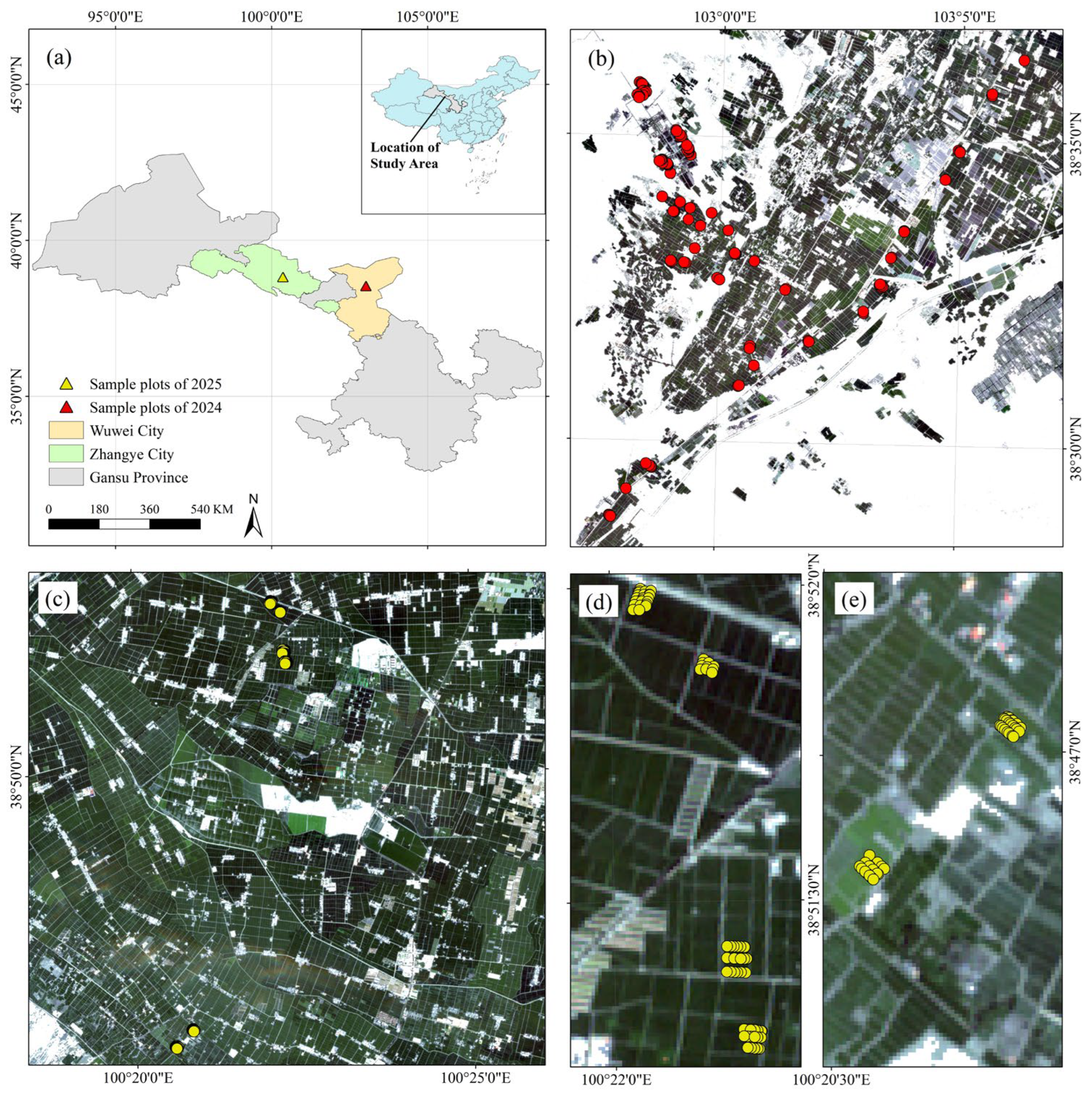
2.1. Overview of the Research Area and Data Collection
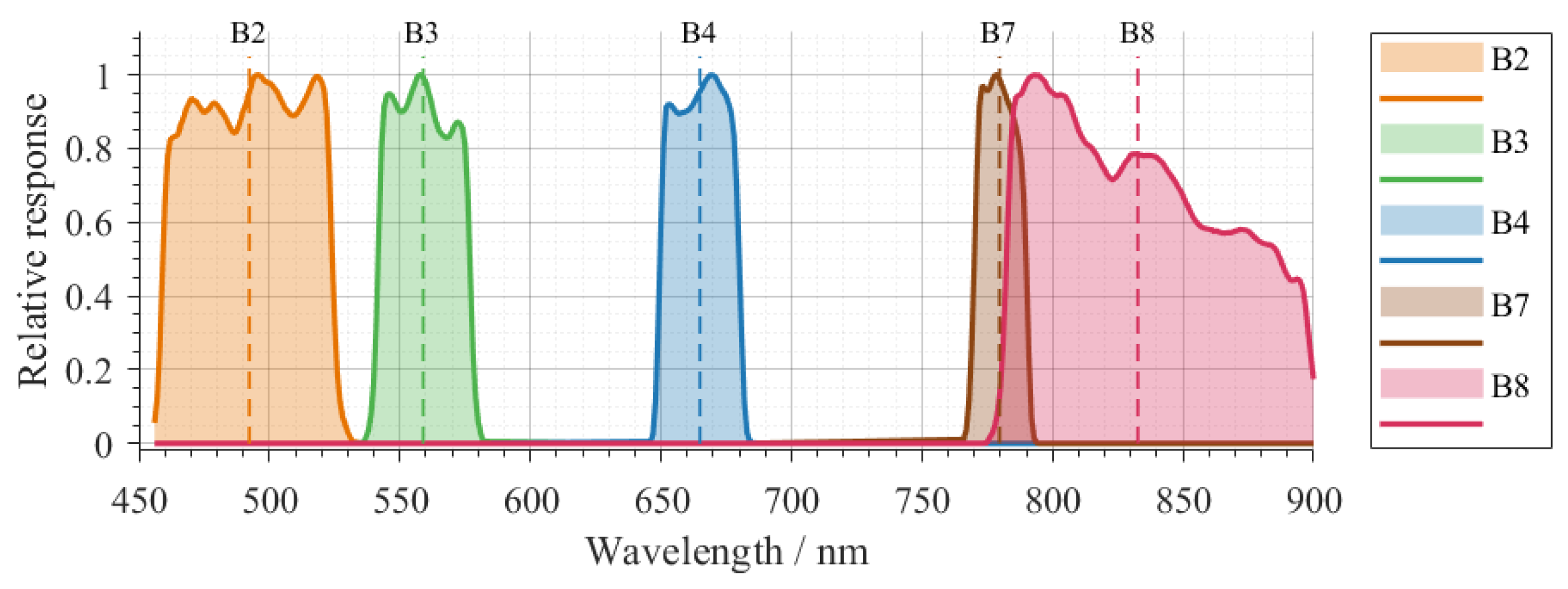
2.2. Satellite Imagery Acquisition and Processing
2.3. PROSAIL Radiative Transfer Modelling
2.3.1. Sensitivity Analysis
2.3.2. Synthetic Sample Generation
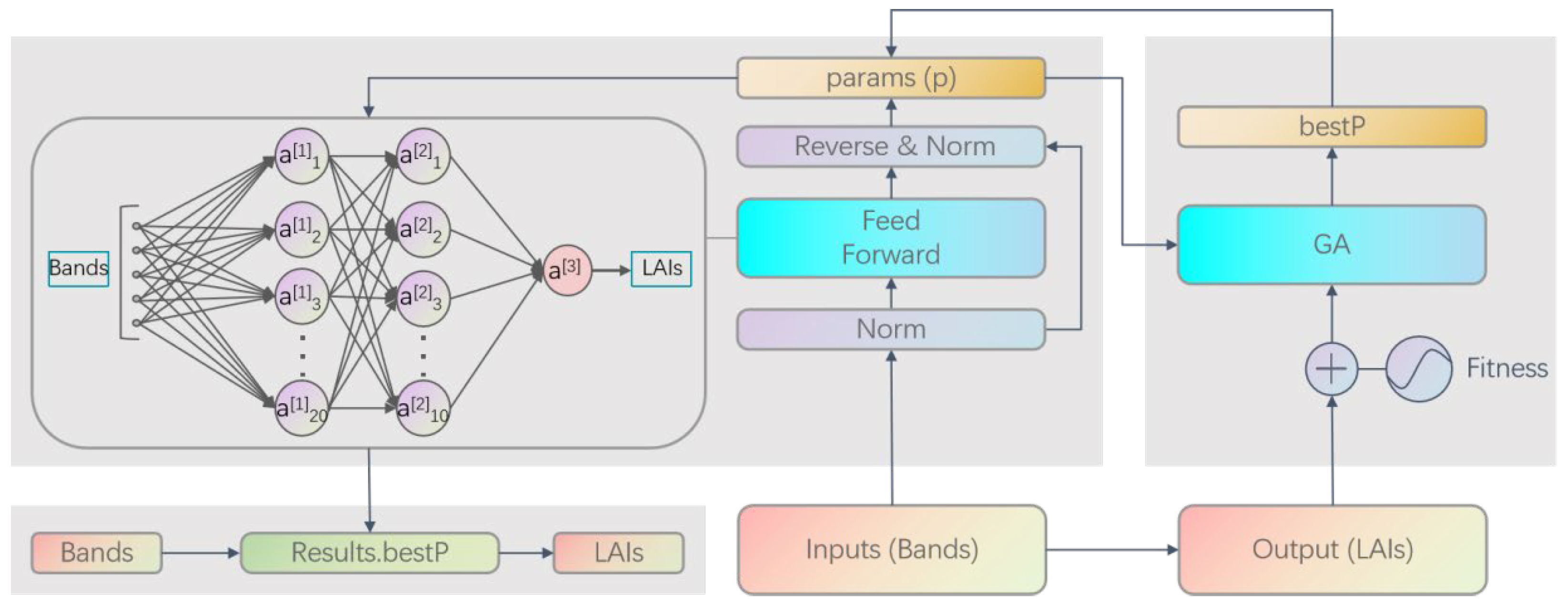
2.4. NN–GA Coupled Inversion Framework
2.5. Accuracy Assessment
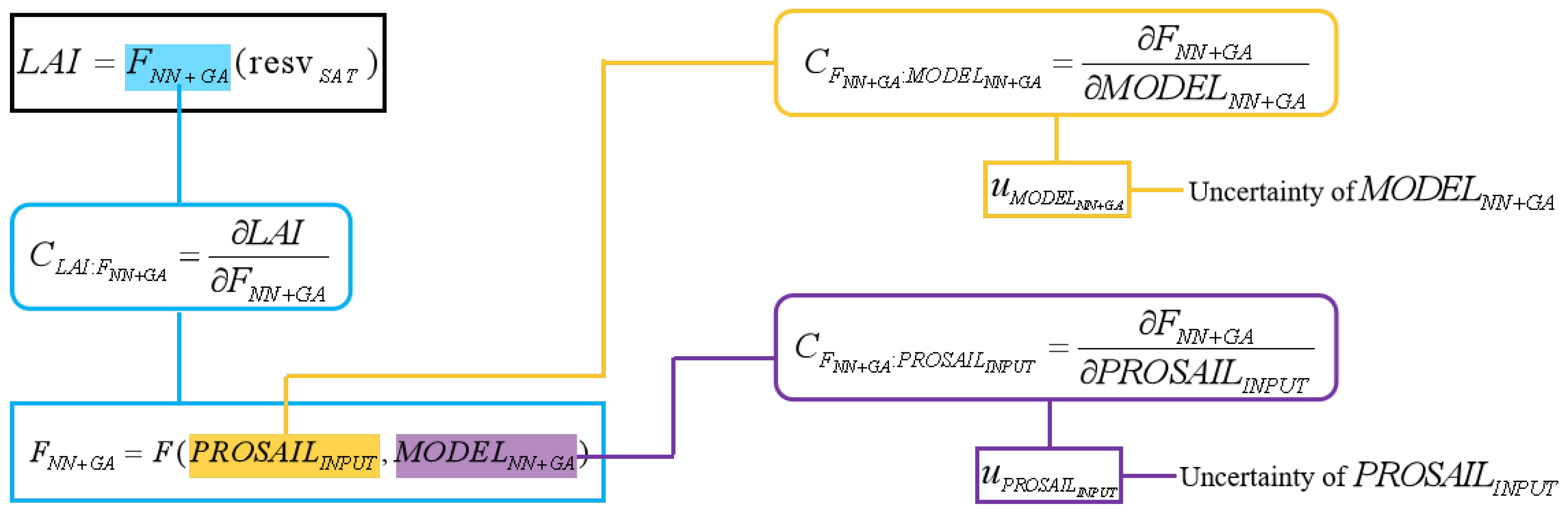
2.6. Uncertainty Quantification (UQ) Method
2.6.1. Physics-Driven-Stage Uncertainty
2.6.2. Machine-Learning-Stage Uncertainty
2.6.3. Uncertainty Combination
2.7. Workflow Summary
3. Results
3.1. Parameter Sensitivity Analysis and Sample Generation Based on the PROSAIL Model
3.2. Crop LAI Retrieval and Accuracy Analysis Based on NN–GA
3.2.1. Crop LAI Retrieval
3.2.2. Accuracy Assessment of LAI Retrieval
3.3. Quantification of LAI Retrieval Uncertainty via a Coupled Physics-Driven and Machine-Learning Approach
4. Discussion
4.1. Method Performance and Comparison
4.2. Analysis of Uncertainty Sources
5. Conclusions
Author Contributions
Funding
Data Availability Statement
Acknowledgments
Conflicts of Interest
References
- Chen, J.M.; Black, T.A. Defining leaf area index for non-flat leaves. Plant Cell Environ. 1992, 15, 421–429. [Google Scholar] [CrossRef]
- Belward, A.; Bourassa, M.; Dowell, M.; Briggs, S.; Dolman, H.A.J.; Holmlund, K.; Husband, R.; Quegan, S.; Simmons, A.; Sloyan, B.; et al. The Global Observing System for Climate: Implementation Needs; WMO: Geneva, Switzerland, 2016. [Google Scholar]
- Wei, S.; Yin, T.; Dissegna, M.A.; Whittle, A.J.; Ow, G.L.F.; Yusof, M.L.M.; Lauret, N.; Gastellu-Etchegorry, J. An assessment study of three indirect methods for estimating leaf area density and leaf area index of individual trees. Agric. For. Meteorol. 2020, 292, 108101. [Google Scholar] [CrossRef]
- Yin, G.; Verger, A.; Qu, Y.; Zhao, W.; Xu, B.; Zeng, Y.; Liu, K.; Li, J.; Liu, Q. Retrieval of High Spatiotemporal Resolution Leaf Area Index with Gaussian Processes, Wireless Sensor Network, and Satellite Data Fusion. Remote Sens. 2019, 11, 244. [Google Scholar] [CrossRef]
- Jacquemoud, S.; Verhoef, W.; Baret, F.; Bacour, C.; Zarco-Tejada, P.J.; Asner, G.P.; François, C.; Ustin, S.L. PROSPECT + SAIL models: A review of use for vegetation characterization. Remote Sens. Environ. 2009, 113, S56–S66. [Google Scholar] [CrossRef]
- Colombo, R.; Bellingeri, D.; Fasolini, D.; Marino, C.M. Retrieval of leaf area index in different vegetation types using high resolution satellite data. Remote Sens. Environ. 2003, 86, 120–131. [Google Scholar] [CrossRef]
- Fang, H.; Liang, S.; Kuusk, A. Retrieving leaf area index using a genetic algorithm with a canopy radiative transfer model. Remote Sens. Environ. 2003, 85, 257–270. [Google Scholar] [CrossRef]
- Campos-Taberner, M.; Moreno-Martínez, Á.; García-Haro, F.J.; Camps-Valls, G.; Robinson, N.P.; Kattge, J.; Running, S.W. Global Estimation of Biophysical Variables from Google Earth Engine Platform. Remote Sens. 2018, 10, 1167. [Google Scholar] [CrossRef]
- Fernández-Guisuraga, J.M.; Verrelst, J.; Calvo, L.; Suárez-Seoane, S. Hybrid inversion of radiative transfer models based on high spatial resolution satellite reflectance data improves fractional vegetation cover retrieval in heterogeneous ecological systems after fire. Remote Sens. Environ. 2021, 255, 112304. [Google Scholar] [CrossRef]
- Berger, K.; Atzberger, C.; Danner, M.; D Urso, G.; Mauser, W.; Vuolo, F.; Hank, T. Evaluation of the PROSAIL Model Capabilities for Future Hyperspectral Model Environments: A Review Study. Remote Sens. 2018, 10, 85. [Google Scholar] [CrossRef]
- Cao, Z.; Jiang, L.; Yue, P.; Gong, J.; Hu, X.; Liu, S.; Tan, H.; Liu, C.; Shangguan, B.; Yu, D. A large scale training sample database system for intelligent interpretation of remote sensing imagery. Geo-Spat. Inf. Sci. 2024, 27, 1489–1508. [Google Scholar] [CrossRef]
- Rocha, M.; Cortez, P.; Neves, J. Evolutionary Neural Network Learning. In Progress in Artificial Intelligence; Pires, F.M., Abreu, S., Eds.; Springer: Berlin/Heidelberg, Germany, 2003; pp. 24–28. [Google Scholar]
- Fusco, P.; Amato, A.; Venticinque, S. Cloud-based analysis of aerial imagery for unveiling ancient archaeological patterns. J. Cloud Comput. 2025, 14, 22. [Google Scholar] [CrossRef]
- Myneni, R.B.; Park, Y. MODIS Collection 6 (C6) LAI/FPAR Product User’s Guide; NASA EOSDIS Land Processes DAAC (LP DAAC); USGS EROS Center: Sioux Falls, SD, USA, 2020.
- Fang, H.; Wei, S.; Liang, S. Validation of MODIS and CYCLOPES LAI products using global field measurement data. Remote Sens. Environ. 2012, 119, 43–54. [Google Scholar] [CrossRef]
- Yan, K.; Wang, J.; Peng, R.; Yang, K.; Chen, X.; Yin, G.; Dong, J.; Weiss, M.; Pu, J.; Myneni, R.B. HiQ-LAI: A high-quality reprocessed MODIS leaf area index dataset with better spatiotemporal consistency from 2000 to 2022. Earth Syst. Sci. Data. 2024, 16, 1601–1622. [Google Scholar] [CrossRef]
- Gawlikowski, J.; Tassi, C.R.N.; Ali, M.; Lee, J.; Humt, M.; Feng, J.; Kruspe, A.M.; Triebel, R.; Jung, P.; Roscher, R.; et al. A survey of uncertainty in deep neural networks. Artif. Intell. Rev. 2021, 56, 1513–1589. [Google Scholar] [CrossRef]
- Yan, P.; Zhou, P.; Chen, H.; Lei, S.; Tan, Z.; Huang, J.; Guo, Y. Process-Based Remote Sensing Analysis of Vegetation–Soil Differentiation and Ecological Degradation Mechanisms in the Red-Bed Region of the Nanxiong Basin, South China. Remote Sens. 2025, 17, 3462. [Google Scholar] [CrossRef]
- Morris, M.D. Factorial sampling plans for preliminary computational experiments. Technometrics 1991, 33, 161–174. [Google Scholar] [CrossRef]
- Sobol, I.M. Global sensitivity indices for nonlinear mathematical models and their Monte Carlo estimates. Math. Comput. Simul. 2001, 55, 271–280. [Google Scholar] [CrossRef]
- Campolongo, F.; Cariboni, J.; Saltelli, A. An effective screening design for sensitivity analysis of large models. Environ. Modell. Softw. 2007, 22, 1509–1518. [Google Scholar] [CrossRef]
- Saltelli, A.; Annoni, P.; Azzini, I.; Campolongo, F.; Ratto, M.; Tarantola, S. Variance based sensitivity analysis of model output. Design and estimator for the total sensitivity index. Comput. Phys. Commun. 2010, 181, 259–270. [Google Scholar] [CrossRef]
- Goldberg, D.E. Genetic Algorithms in Search, Optimization, and Machine Learning; Addison-Wesley: Boston, MA, USA, 1989. [Google Scholar]
- Conn, A.R.; Gould, N.I.; Toint, P. A globally convergent augmented Lagrangian algorithm for optimization with general constraints and simple bounds. Siam J. Numer. Anal. 1991, 28, 545–572. [Google Scholar] [CrossRef]
- Conn, A.; Gould, N.; Toint, P. A globally convergent Lagrangian barrier algorithm for optimization with general inequality constraints and simple bounds. Math. Comput. 1997, 66, 261–288. [Google Scholar] [CrossRef]
- Joint, C.F.G.I. Evaluation of Measurement Data—Guide to the Expression of Uncertainty in Measurement; Bureau International des Poids et Mesures: Sèvres, France, 2008. [Google Scholar]
- Cox, M.; Siebert, B. The use of a Monte Carlo method for evaluating uncertainty and expanded uncertainty. Metrologia 2006, 43, S178. [Google Scholar] [CrossRef]
- Gorroño, J.; Guanter, L.; Graf, L.V.; Gascon, F. A Framework for the Estimation of Uncertainties and Spectral Error Correlation in Sentinel-2 Level-2A Data Products. IEEE Trans. Geosci. Remote Sens. 2024, 62, 5634613. [Google Scholar] [CrossRef]
- Woolliams, E.; Hueni, A.; Gorroño, J. Intermediate Uncertainty Analysis for Earth Observation (Instrument Calibration Module): Training Course Textbook; National Physical Laboratory: Teddington, UK, 2015; pp. 14–28. Available online: https://www.meteoc.org/wp-content/uploads/sites/35/2017/11/uaeo-int-trg-course-v2.pdf (accessed on 3 January 2025).
- Leveque, R. Finite Difference Methods for Ordinary and Partial Differential Equations: Steady-State and Time-Dependent Problems; Society for Industrial and Applied Mathematics: Philadelphia, PA, USA, 2007. [Google Scholar]
- Jiang, Y.; Cheng, Z.; Yang, G.; Zhao, D.; Zhang, C.; Xu, B.; Feng, H.; Feng, Z.; Ren, L.; Zhang, Y.; et al. Fine-Scale Quantification of the Effect of Maize Tassel on Canopy Reflectance with 3D Radiative Transfer Modeling. Remote Sens. 2024, 16, 2721. [Google Scholar] [CrossRef]
- Yan, L.; Liu, X.; Jing, X.; Geng, L.; Che, T.; Liu, L. Enhancing Leaf Area Index Estimation for Maize with Tower-Based Multi-Angular Spectral Observations. Sensors 2023, 23, 9121. [Google Scholar] [CrossRef]
- Weiss, M.; Baret, F.; Jay, S. S2ToolBox Level 2 products: LAI, FAPAR, FCOVER; Version 2.1; INRAE: Avignon, France, 2020; p. 59. [Google Scholar]
- Najib, D.; Fernandes, R.; Sun, L.; Canisius, F.; Hong, G. Python Version of Simplified Level 2 Prototype Processor for Retrieving Canopy Biophysical Variables from Sentinel 2 Multispectral Instrument Data. 2024. Available online: https://zenodo.org/records/10654520 (accessed on 5 December 2024).
- Djamai, N.; Zhong, D.; Fernandes, R.; Zhou, F. Evaluation of Vegetation Biophysical Variables Time Series Derived from Synthetic Sentinel-2 Images. Remote Sens. 2019, 11, 1547. [Google Scholar] [CrossRef]



| Band | Description | Centre Wavelength | Resolution |
|---|---|---|---|
| B2 | Blue | 492.3 nm | 10 m |
| B3 | Green | 558.9 nm | 10 m |
| B4 | Red | 664.9 nm | 10 m |
| B7 | Red-edge | 779.7 nm | 20 m (resampled to 10 m) |
| B8 | Near-infrared | 832.9 nm | 10 m |
| Radiative Transfer Model | Parameter | Symbol | Unit | Ranges |
|---|---|---|---|---|
| PROSPECT-D | Leaf structure index | N | unitless | 1.0–2.0 |
| Chlorophyll a + b content | Cab | µg cm−2 | 30–70 | |
| Leaf mass per area | Cm | g cm−2 | 0.004–0.007 | |
| Equivalent water thickness | Cw | g cm−2 | 0.005–0.030 | |
| SAIL | Leaf area index | LAI | m2 m−2 | 0.2–8.0 |
| Soil reflectance | psoil | unitless | 0–1.0 | |
| Average leaf inclination angle | ALA | degrees | 10–70 | |
| Solar zenith angle | tts | degrees | Fixed * | |
| Sensor zenith angle | tto | degrees | Fixed * | |
| Relative azimuth angle | psi | degrees | Fixed * |
| LAI | B2 (%) | B3 (%) | B4 (%) | B7 (%) | B8 (%) | Input-Parameter Uncertainty (%) | Combined Standard Uncertainty (%) |
|---|---|---|---|---|---|---|---|
| 1 | 15.17 | 15.26 | 20.78 | 10.96 | 10.96 | 14.35 | 11.42 |
| 2 | 9.97 | 15.22 | 9.75 | 8.05 | 8.00 | 10.09 | |
| 3 | 11.82 | 17.00 | 7.85 | 6.76 | 6.71 | 10.39 | |
| 4 | 12.91 | 17.68 | 11.42 | 5.99 | 5.95 | 11.00 | |
| 5 | 13.31 | 17.91 | 11.69 | 5.51 | 5.49 | 11.20 | |
| 6 | 13.46 | 18.00 | 12.03 | 5.23 | 5.22 | 11.25 | |
| 7 | 13.53 | 18.03 | 12.16 | 5.06 | 5.05 | 11.27 | |
| 8 | 13.57 | 18.06 | 12.21 | 4.97 | 4.96 | 11.28 |
| LAI | B2 (%) | B3 (%) | B4 (%) | B7 (%) | B8 (%) | Input-Parameter Uncertainty (%) | Combined Standard Uncertainty (%) |
|---|---|---|---|---|---|---|---|
| 1 | 15.33 | 15.33 | 21.37 | 11.15 | 11.13 | 14.50 | 11.48 |
| 2 | 9.93 | 15.19 | 10.14 | 8.30 | 8.24 | 10.21 | |
| 3 | 11.74 | 17.02 | 7.41 | 7.01 | 6.96 | 10.41 | |
| 4 | 12.91 | 17.76 | 10.27 | 6.22 | 6.18 | 11.03 | |
| 5 | 13.34 | 18.01 | 11.47 | 5.72 | 5.69 | 11.25 | |
| 6 | 13.49 | 18.09 | 11.86 | 5.40 | 5.39 | 11.30 | |
| 7 | 13.55 | 18.12 | 11.98 | 5.22 | 5.21 | 11.30 | |
| 8 | 13.57 | 18.13 | 12.01 | 5.11 | 5.10 | 11.29 |
| Study Area | Component | Relative Uncertainty (%) | Combined Standard Relative Uncertainty (%) |
|---|---|---|---|
| Minqin | 11.42 | 21.37 | |
| 18.06 | |||
| Zhangye | 11.48 | 17.31 | |
| 12.96 |
Disclaimer/Publisher’s Note: The statements, opinions and data contained in all publications are solely those of the individual author(s) and contributor(s) and not of MDPI and/or the editor(s). MDPI and/or the editor(s) disclaim responsibility for any injury to people or property resulting from any ideas, methods, instructions or products referred to in the content. |
© 2025 by the authors. Licensee MDPI, Basel, Switzerland. This article is an open access article distributed under the terms and conditions of the Creative Commons Attribution (CC BY) license (https://creativecommons.org/licenses/by/4.0/).
Share and Cite
Liu, W.; Zhu, X.; Yang, S.; Gao, Z. Physics-Driven Machine-Learning Retrieval and Uncertainty Quantification of Crop Leaf Area Index. Remote Sens. 2025, 17, 3924. https://doi.org/10.3390/rs17233924
Liu W, Zhu X, Yang S, Gao Z. Physics-Driven Machine-Learning Retrieval and Uncertainty Quantification of Crop Leaf Area Index. Remote Sensing. 2025; 17(23):3924. https://doi.org/10.3390/rs17233924
Chicago/Turabian StyleLiu, Wei, Xiaohua Zhu, Suyi Yang, and Zhihai Gao. 2025. "Physics-Driven Machine-Learning Retrieval and Uncertainty Quantification of Crop Leaf Area Index" Remote Sensing 17, no. 23: 3924. https://doi.org/10.3390/rs17233924
APA StyleLiu, W., Zhu, X., Yang, S., & Gao, Z. (2025). Physics-Driven Machine-Learning Retrieval and Uncertainty Quantification of Crop Leaf Area Index. Remote Sensing, 17(23), 3924. https://doi.org/10.3390/rs17233924