Article

Investigation of Thermal Effects of Lakes on Their Adjacent Lands Across Tibetan Plateau Using Satellite Observation During 2000 to 2022


1
College of Geoscience and Surveying Engineering, China University of Mining and Technology (Beijing), Beijing 100083, China
2
International Research Center of Big Data for Sustainable Development Goals, Beijing 100094, China
3
Key Laboratory of Digital Earth Science, Aerospace Information Research Institute, Chinese Academy of Sciences, Beijing 100094, China
4
State Key Laboratory of Lake and Watershed Science for Water Security, Nanjing Institute of Geography and Limnology, Chinese Academy of Sciences, Nanjing 211135, China
*
Author to whom correspondence should be addressed.
Remote Sens. 2025, 17(19), 3314; https://doi.org/10.3390/rs17193314
Submission received: 17 July 2025 / Revised: 23 September 2025 / Accepted: 24 September 2025 / Published: 27 September 2025

Abstract

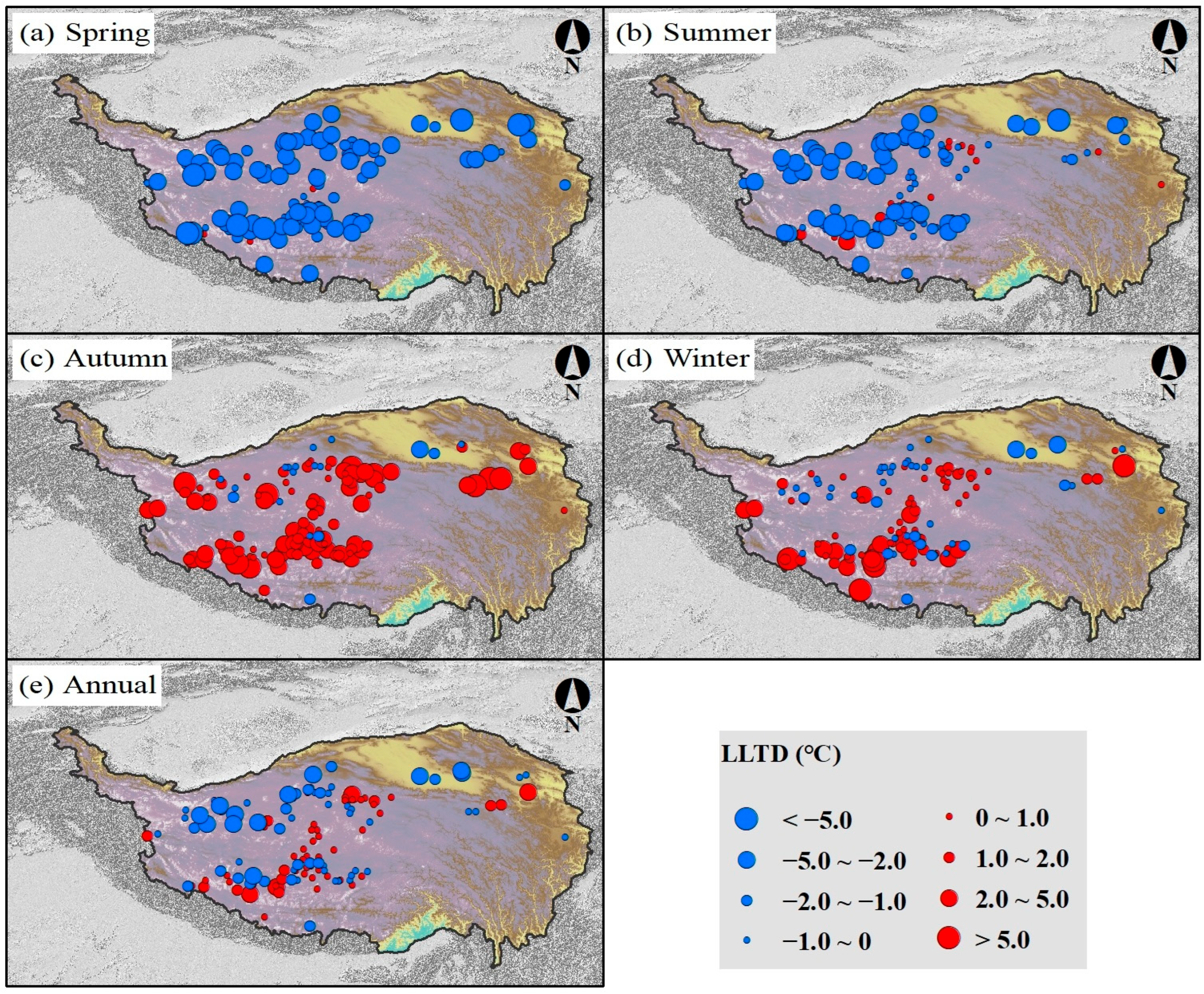
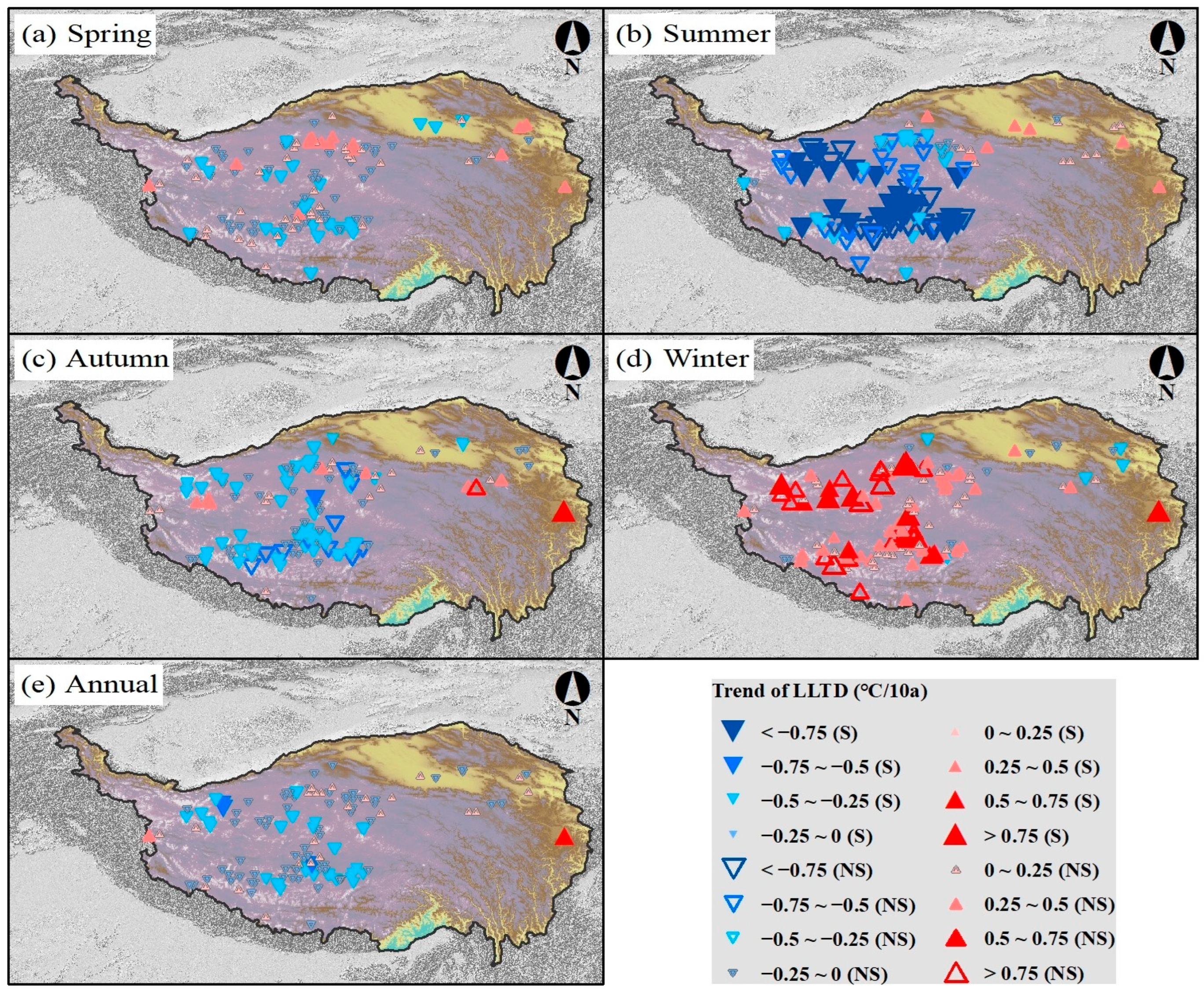
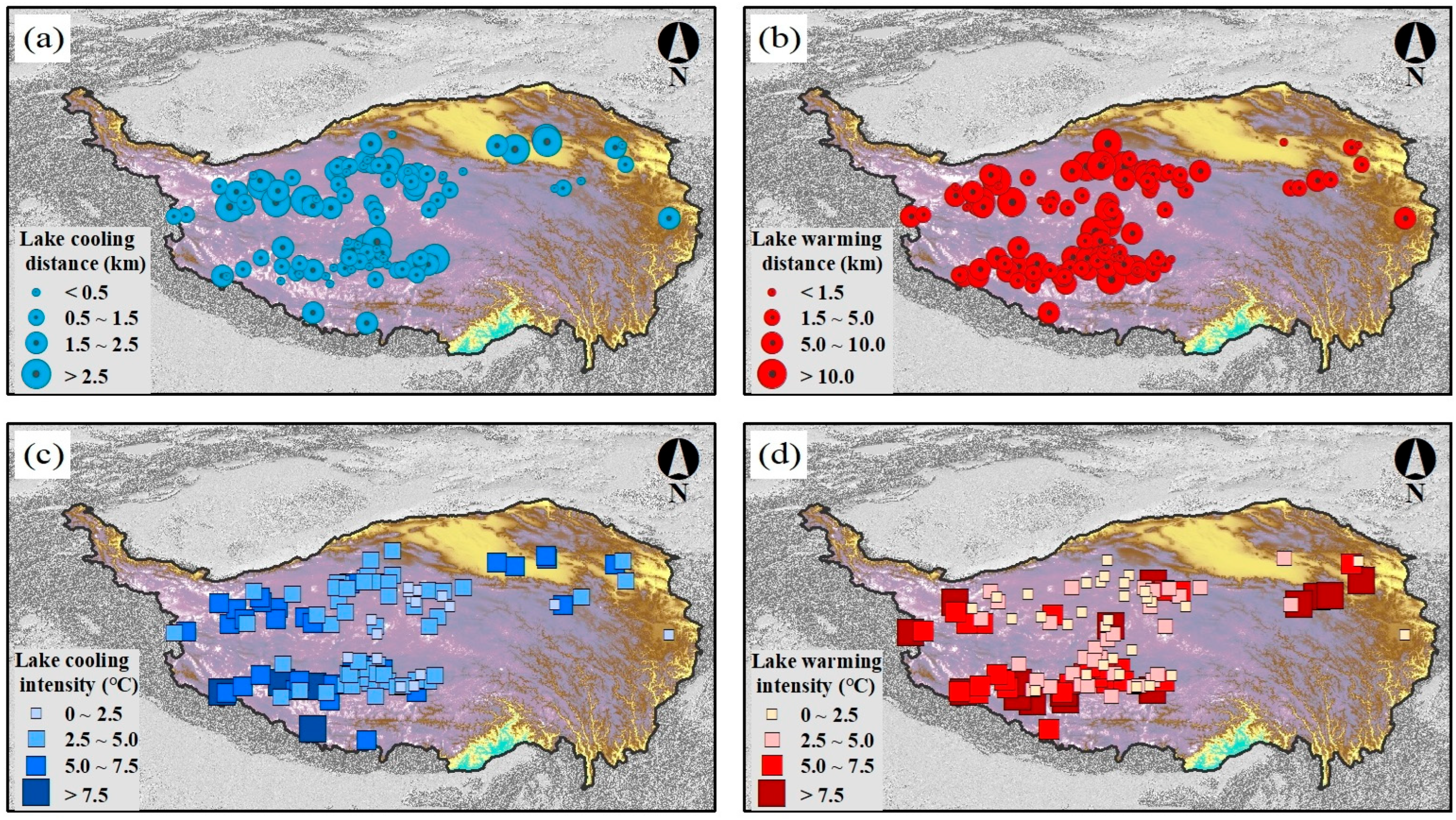
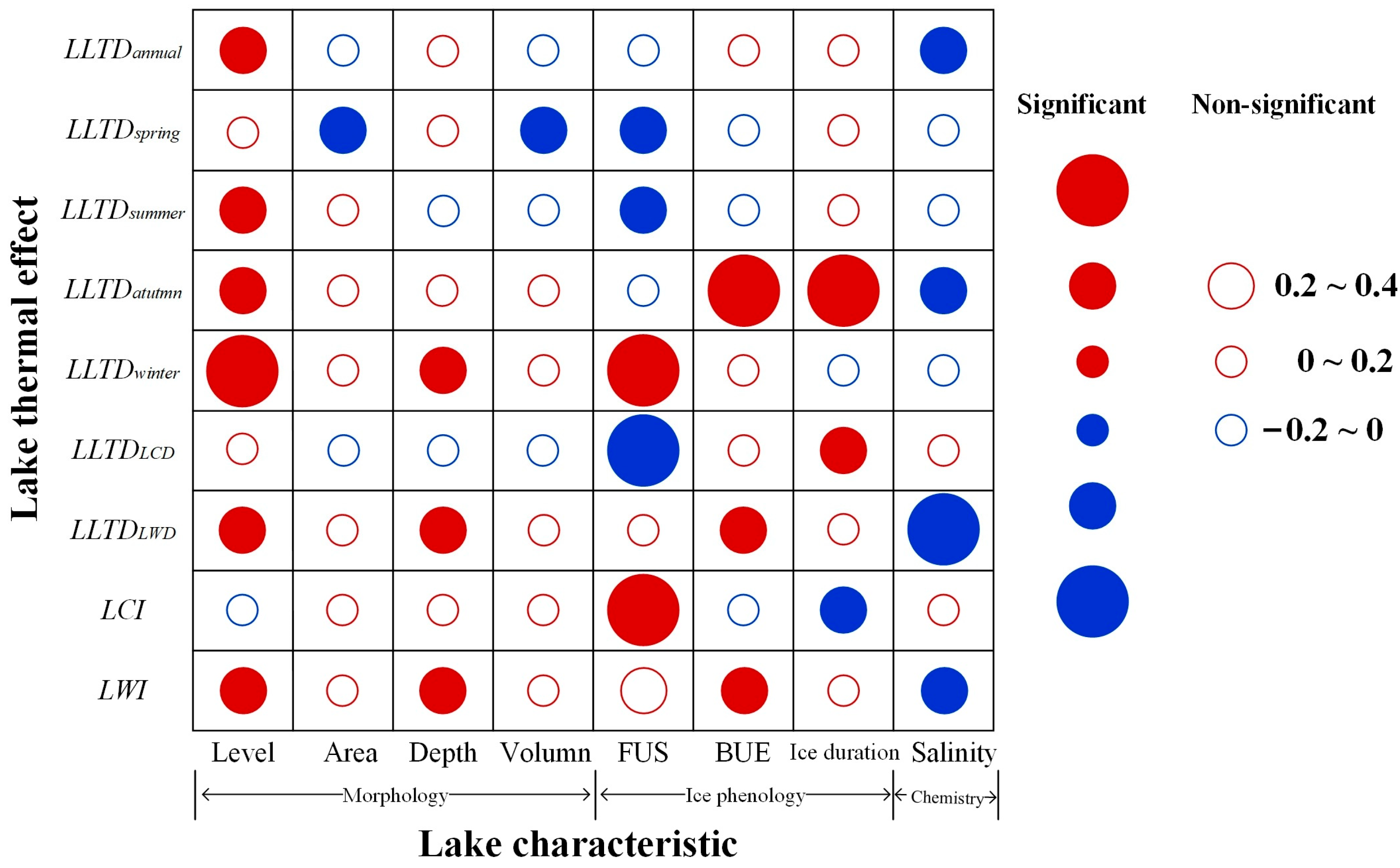
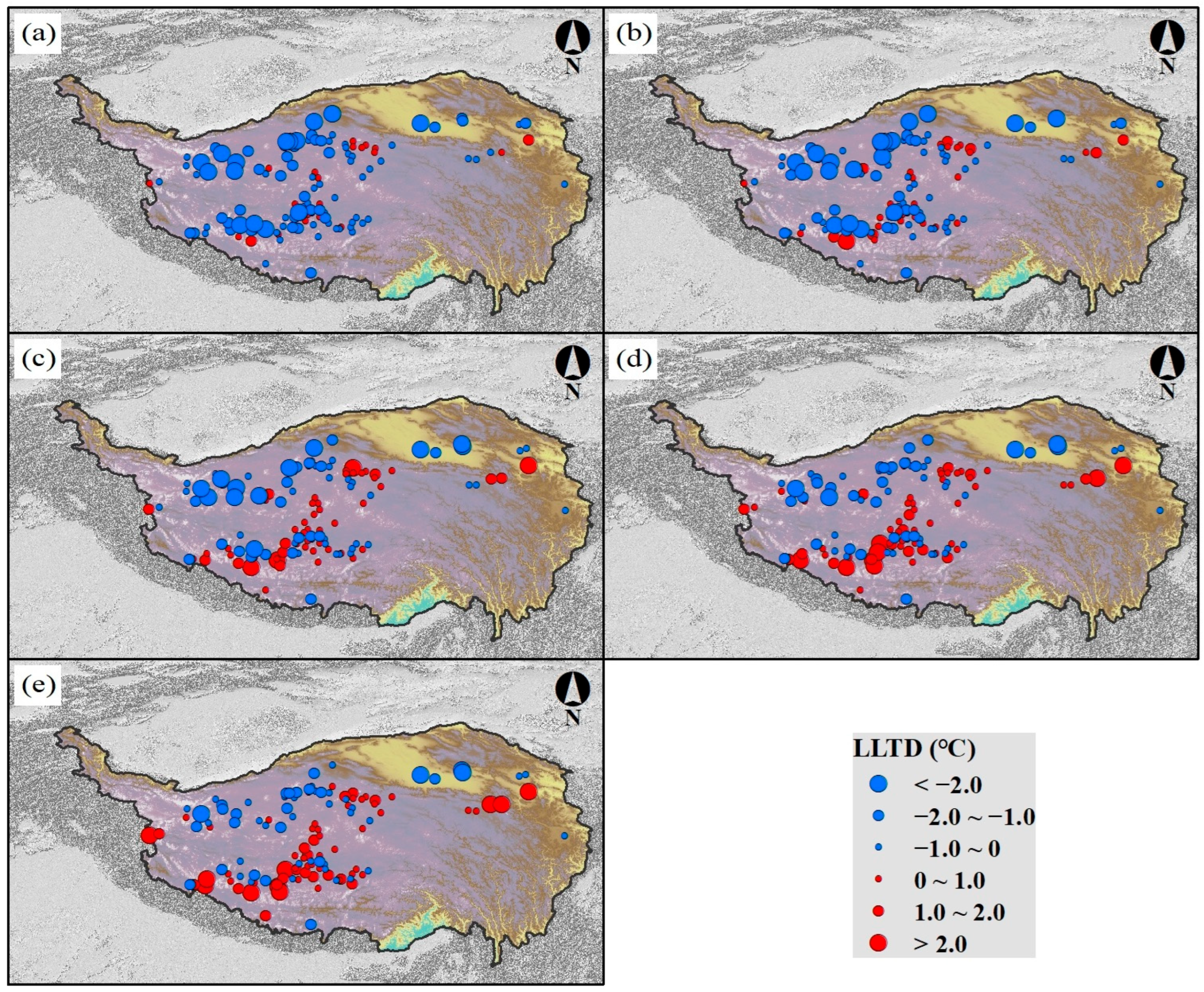
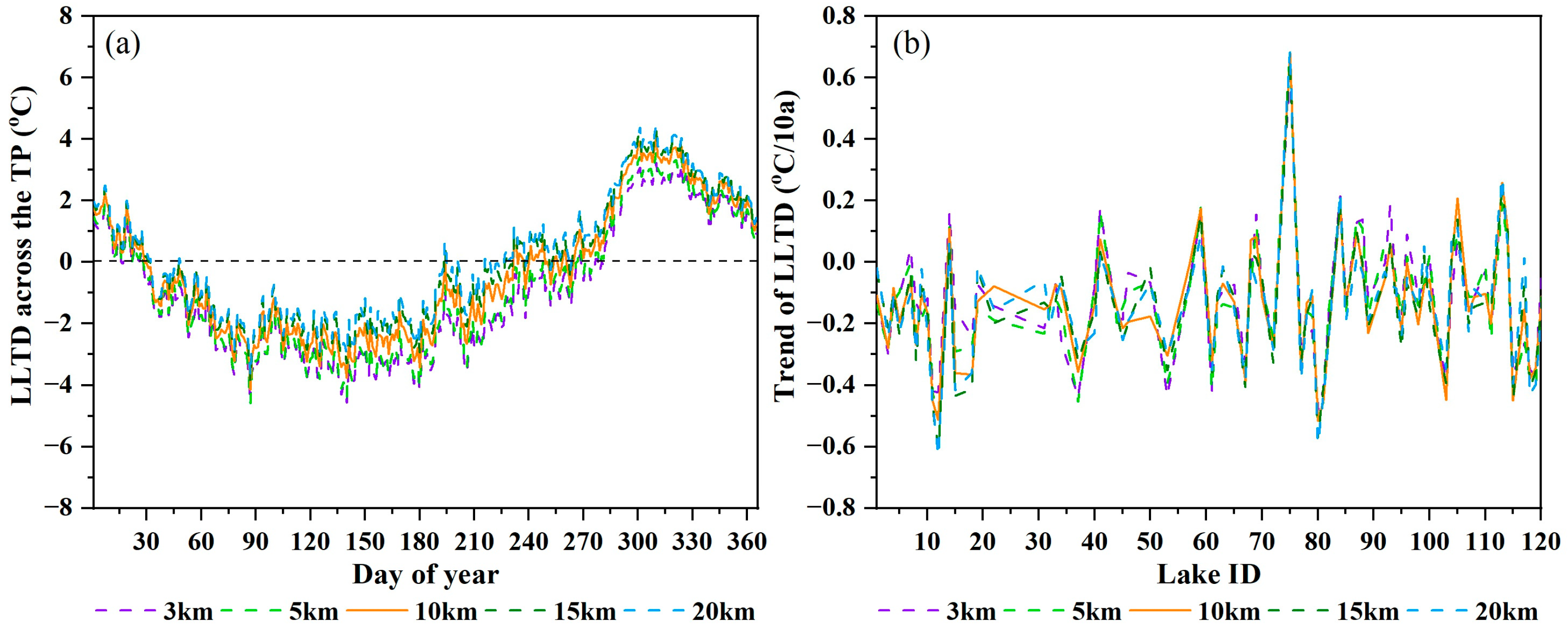
Understanding the regulatory effects of lakes on land surface temperature is critical for assessing regional climatological and ecological dynamics on the Tibetan Plateau (TP). This study investigates the spatiotemporal variability in the thermal effect of lakes across the TP from 2000 to 2022 using the MODIS land surface temperature product and a model-based lake surface water temperature product. Our results show that the lake–land temperature difference (LLTD) within 10 km buffer zones surrounding lakes ranges from −2.8 °C to 3.4 °C. A declining trend in 79.2% of the lakes is detected during 2000–2022, with summer contributing most significantly to this decrease at a rate of −0.56 °C per decade. Assessments of the spatial extent of lake thermal effects show that the “warm island” effect in autumn (5.5 km) influences a larger area compared to the “cold island” effect in summer (1.3 km). Furthermore, southwestern lakes exhibit stronger warming intensities, while northwestern lakes show more pronounced cooling intensities. Correlation analyses indicate that lake thermal effects are significantly related to lake depth, freeze-up start date, and salinity. These findings highlight the importance of lake thermal regulation in heat balance changes and provide a foundation for further research into its climatic and ecological implications on the Tibetan Plateau.
Keywords: lake thermal effect; lake effect distance; Tibetan Plateau; lake–land temperature difference lake thermal effect; lake effect distance; Tibetan Plateau; lake–land temperature difference