Article

An Evaluation of Radiation Parameterizations in a Meso-Scale Weather Prediction Model Using Satellite Flux Observations

1
BK21 Weather Extremes Education & Research Team, Department of Atmospheric Sciences, Kyungpook National University, Daegu 41566, Republic of Korea
2
Center for Atmospheric REmote sensing (CARE), Kyungpook National University, Daegu 41566, Republic of Korea
3
KNU G-LAMP Project Group, Kyungpook National University, Daegu 41566, Republic of Korea
4
Korea Institute of Atmospheric Prediction Systems (KIAPS), Seoul 07071, Republic of Korea
*
Author to whom correspondence should be addressed.
These authors contributed equally to this work.
Remote Sens. 2025, 17(19), 3312; https://doi.org/10.3390/rs17193312
Submission received: 21 August 2025 / Revised: 23 September 2025 / Accepted: 24 September 2025 / Published: 26 September 2025

Abstract

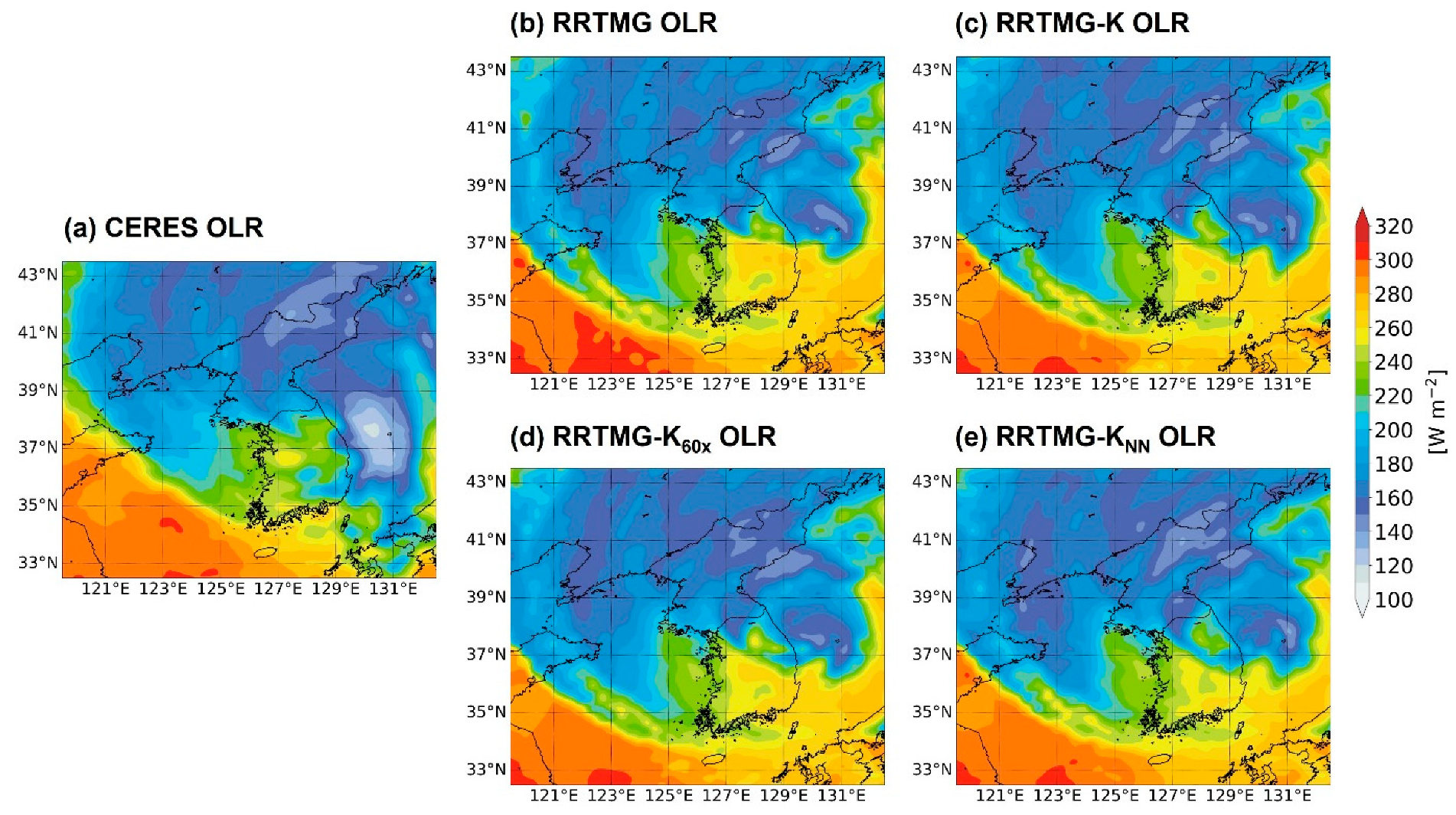
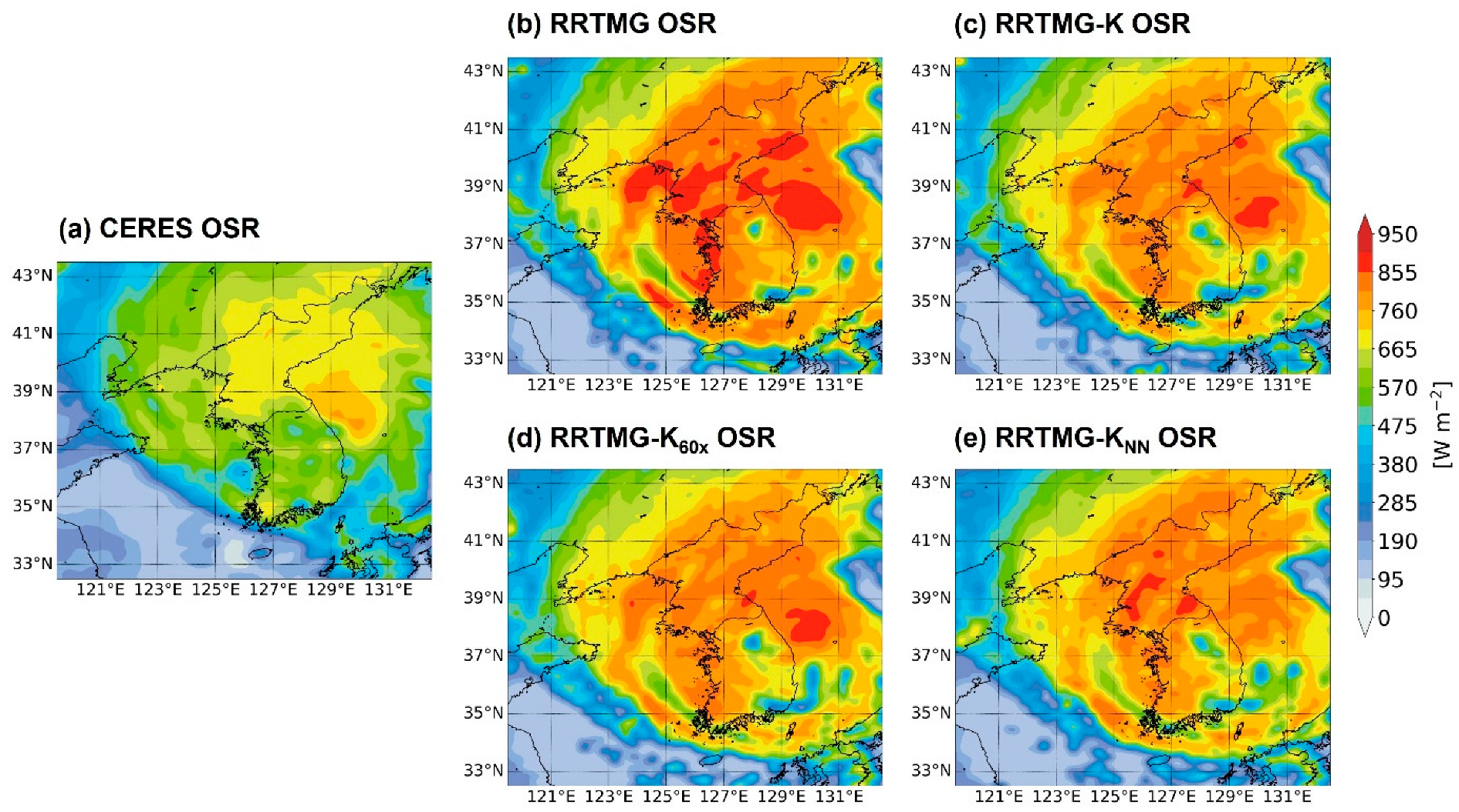
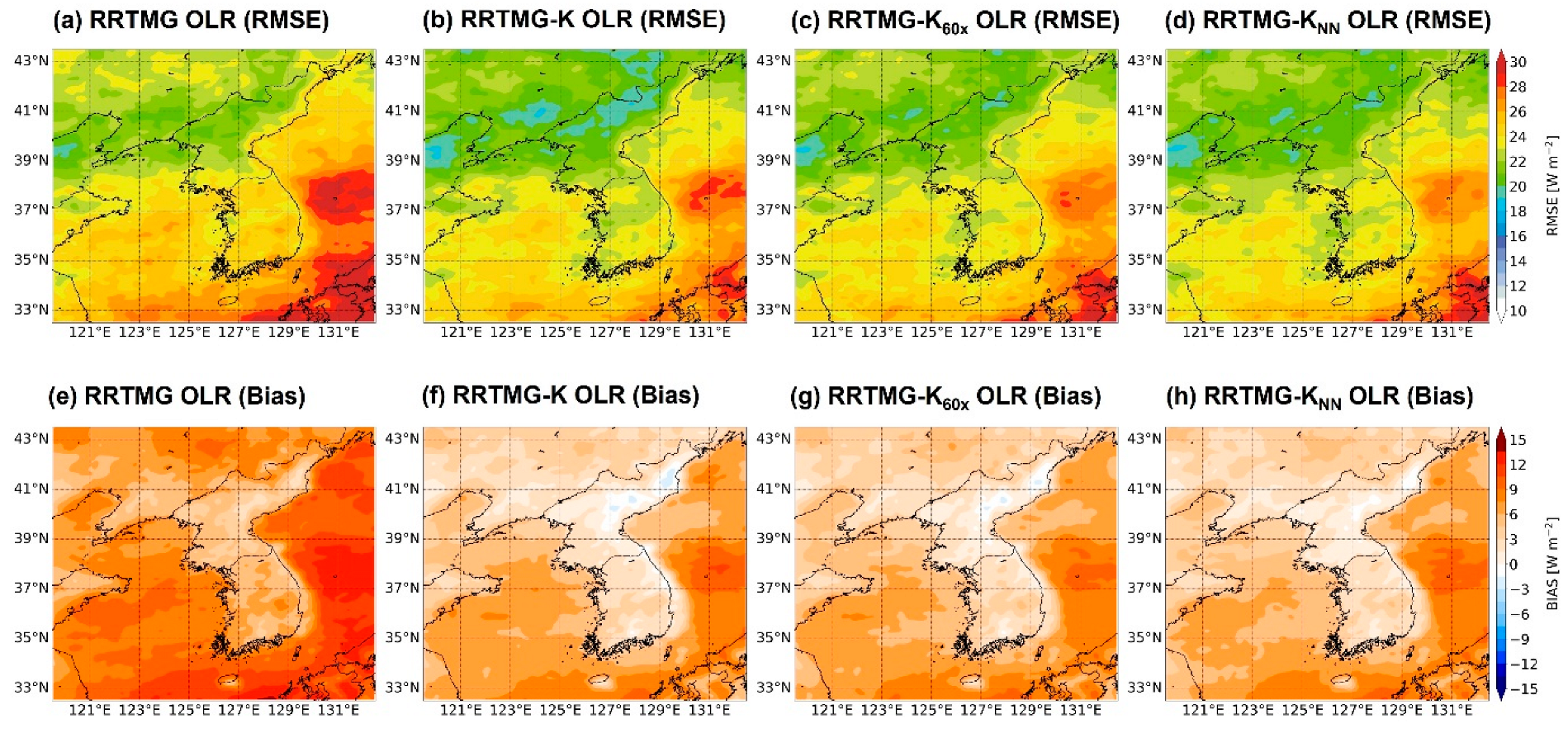
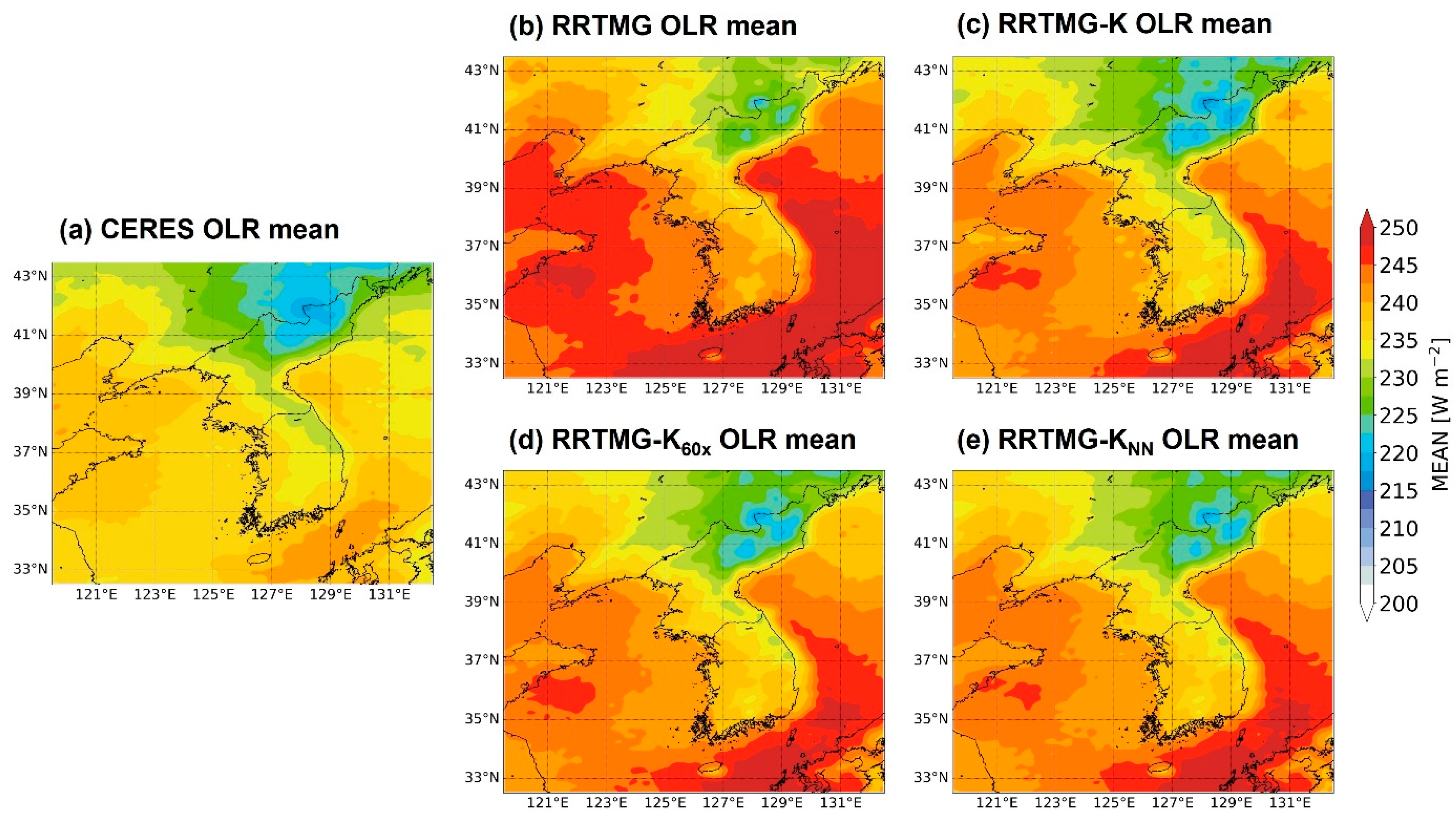
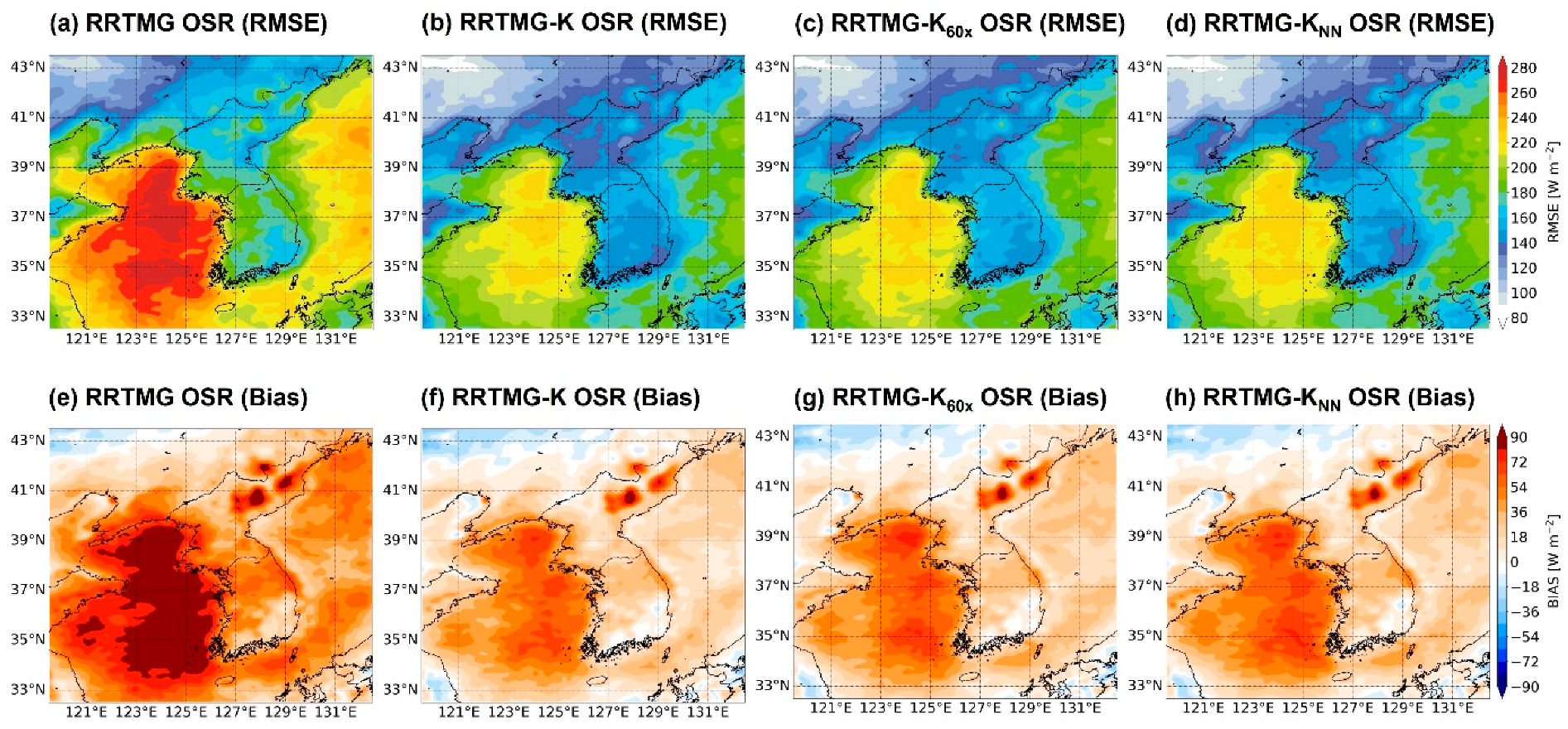
This study evaluates the forecast performance of four radiation parameterization schemes—the Rapid Radiative Transfer Model for General Circulation Models (RRTMG), its improved version RRTMG-K, the infrequently applied variant, RRTMG-K60x, and the neural network emulator, RRTMG-KNN, within a high-resolution numerical weather prediction (NWP) model. The evaluation uses satellite-derived observations of Outgoing Longwave Radiation (OLR) and Outgoing Shortwave Radiation (OSR) from the Clouds and the Earth’s Radiant Energy System (CERES) over the Korean Peninsula during 2020, including an extreme case study of Typhoon Haishen. Results show that RRTMG-K reduces RMSEs by 4.8% for OLR and 17.5% for OSR relative to RRTMG, primarily due to substantial bias reduction (42.3% for OLR, 60.4% for OSR). The RRTMG-KNN scheme achieves approximately 60-fold computational speedup while maintaining similar or slightly better accuracy than RRTMG-K; specifically, it reduces OLR errors by 1.2% and OSR errors by 1.6% compared to the infrequently applied RRTMG-K60x. In contrast, the infrequent application of RRTMG-K (RRTMG-K60x) slightly increases errors, underscoring the trade-off between computational efficiency and accuracy. These findings demonstrate the value of integrating advanced satellite flux observations and machine learning techniques into the evaluation and optimization of radiation schemes, providing a robust framework for improving cloud–radiation interaction representation in NWP models.
Keywords: RRTMG; RRTMG-K; radiation parameterization; WRF; CERES RRTMG; RRTMG-K; radiation parameterization; WRF; CERES