Article

ZR Relationships for Different Precipitation Types and Events from Parsivel Disdrometer Data in Warsaw, Poland

by
Mariusz Paweł Barszcz
* and
Ewa Kaznowska
Institute of Environmental Engineering, Warsaw University of Life Sciences, Nowoursynowska St. 159, 02-776 Warsaw, Poland
*
Author to whom correspondence should be addressed.
Remote Sens. 2025, 17(13), 2271; https://doi.org/10.3390/rs17132271
Submission received: 3 June 2025 / Revised: 30 June 2025 / Accepted: 1 July 2025 / Published: 2 July 2025

Abstract

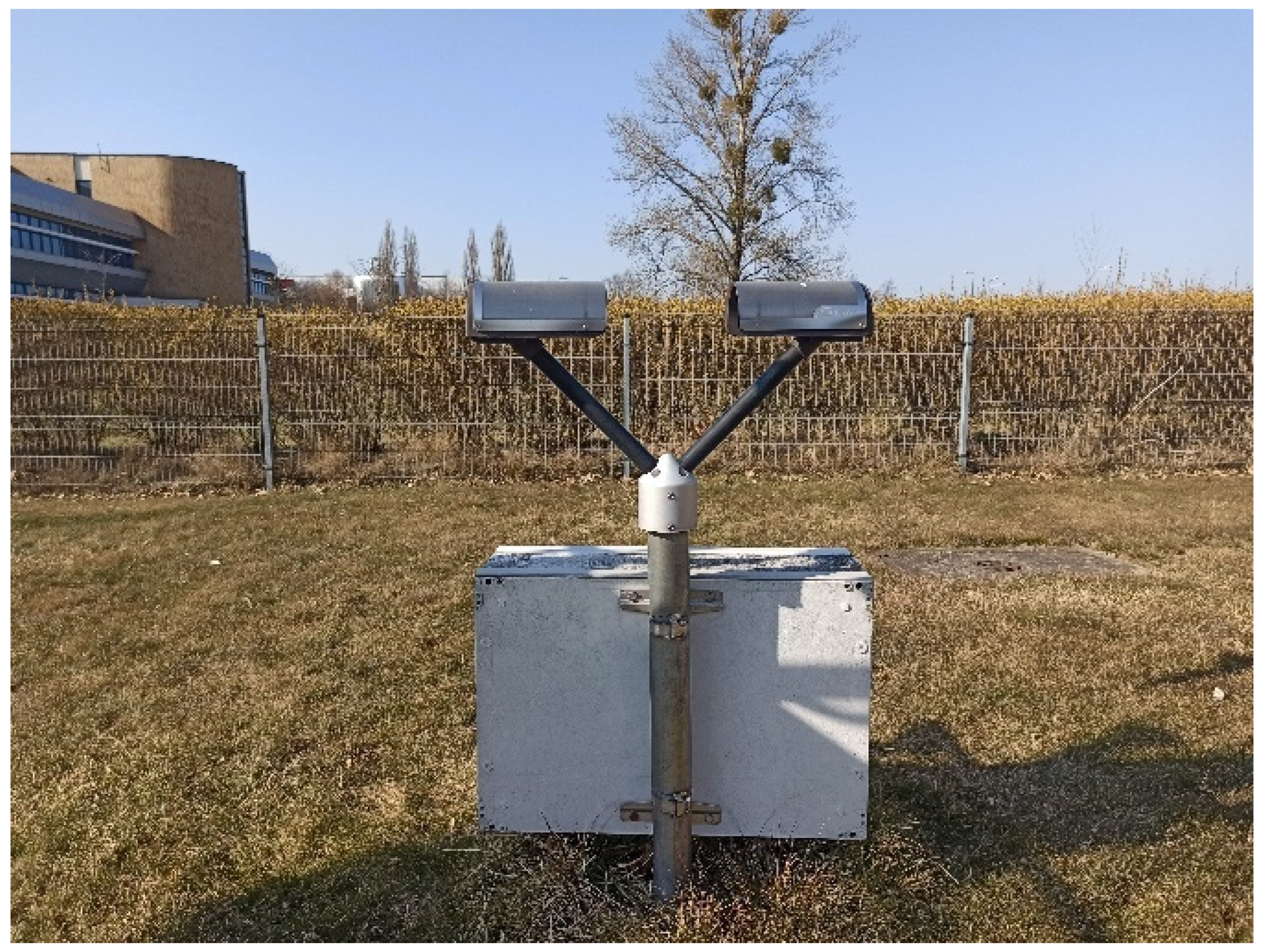
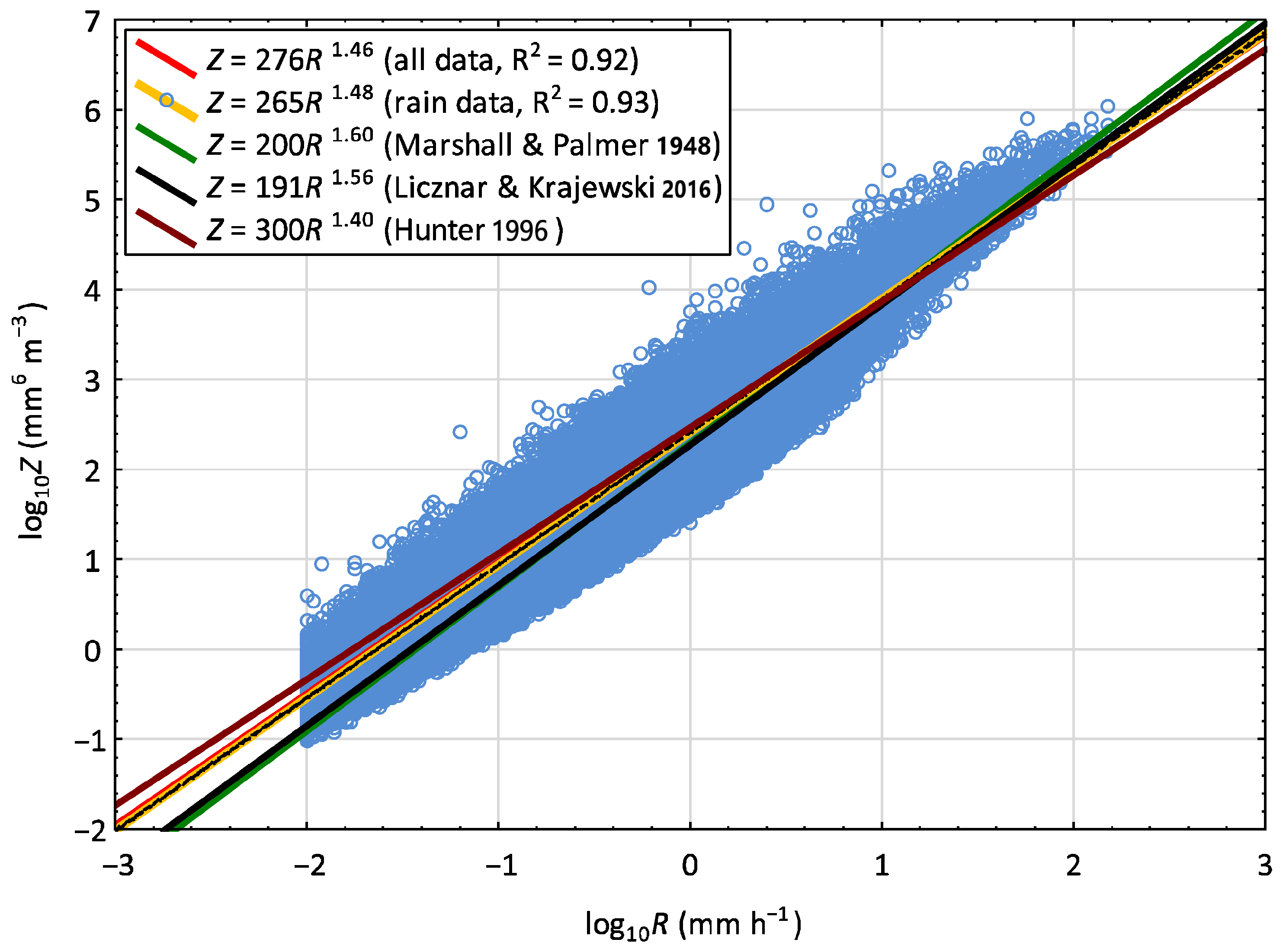
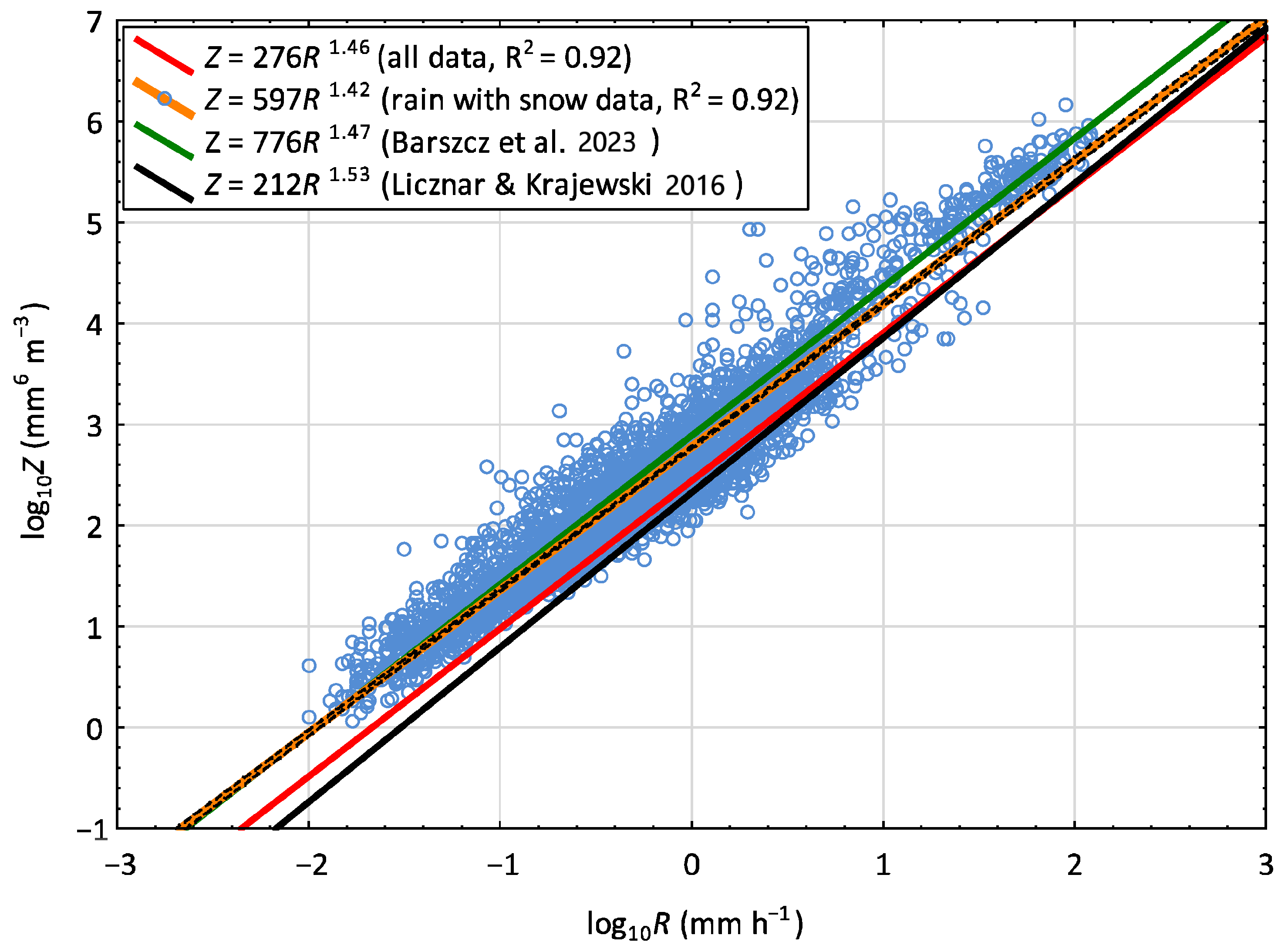
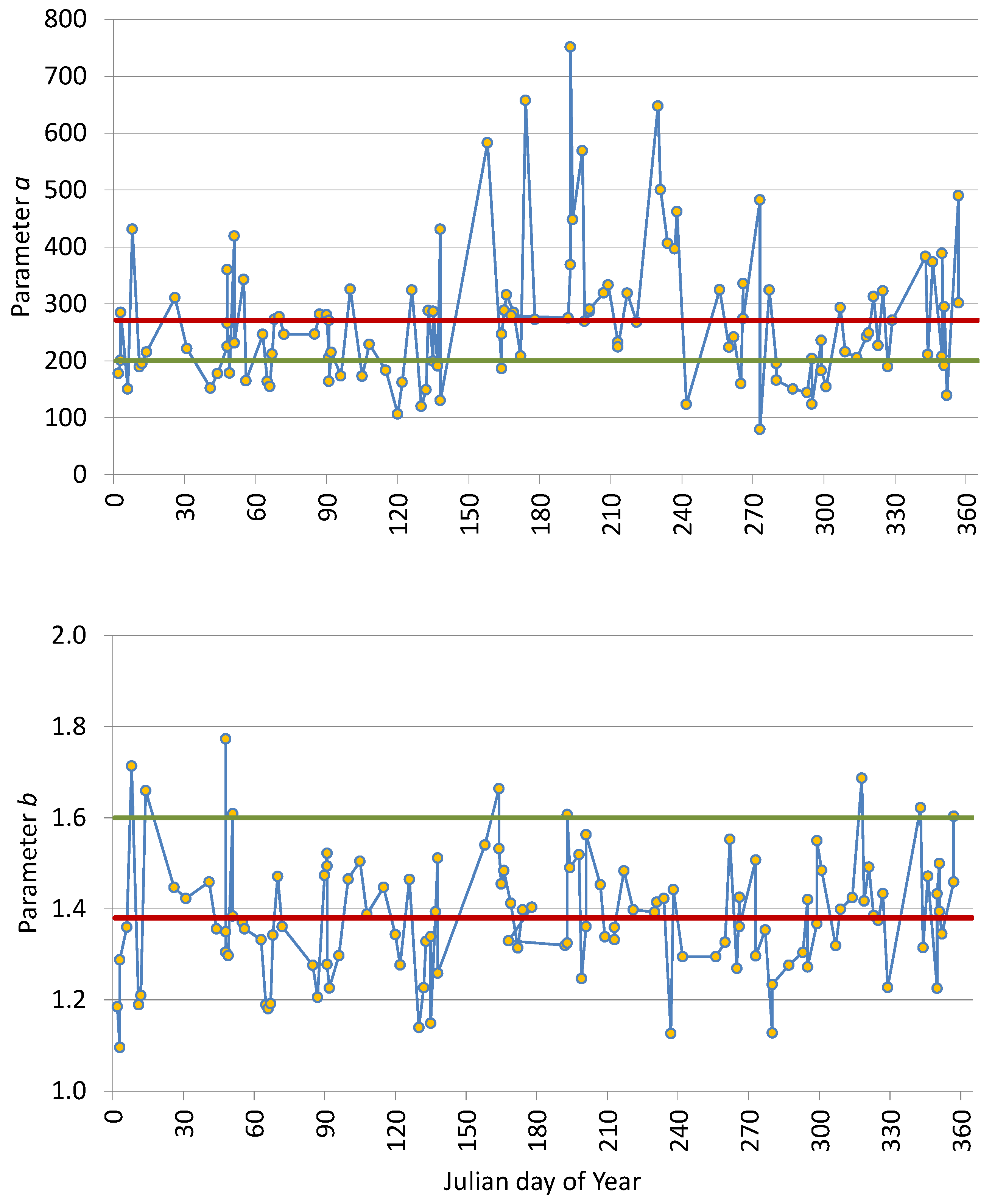
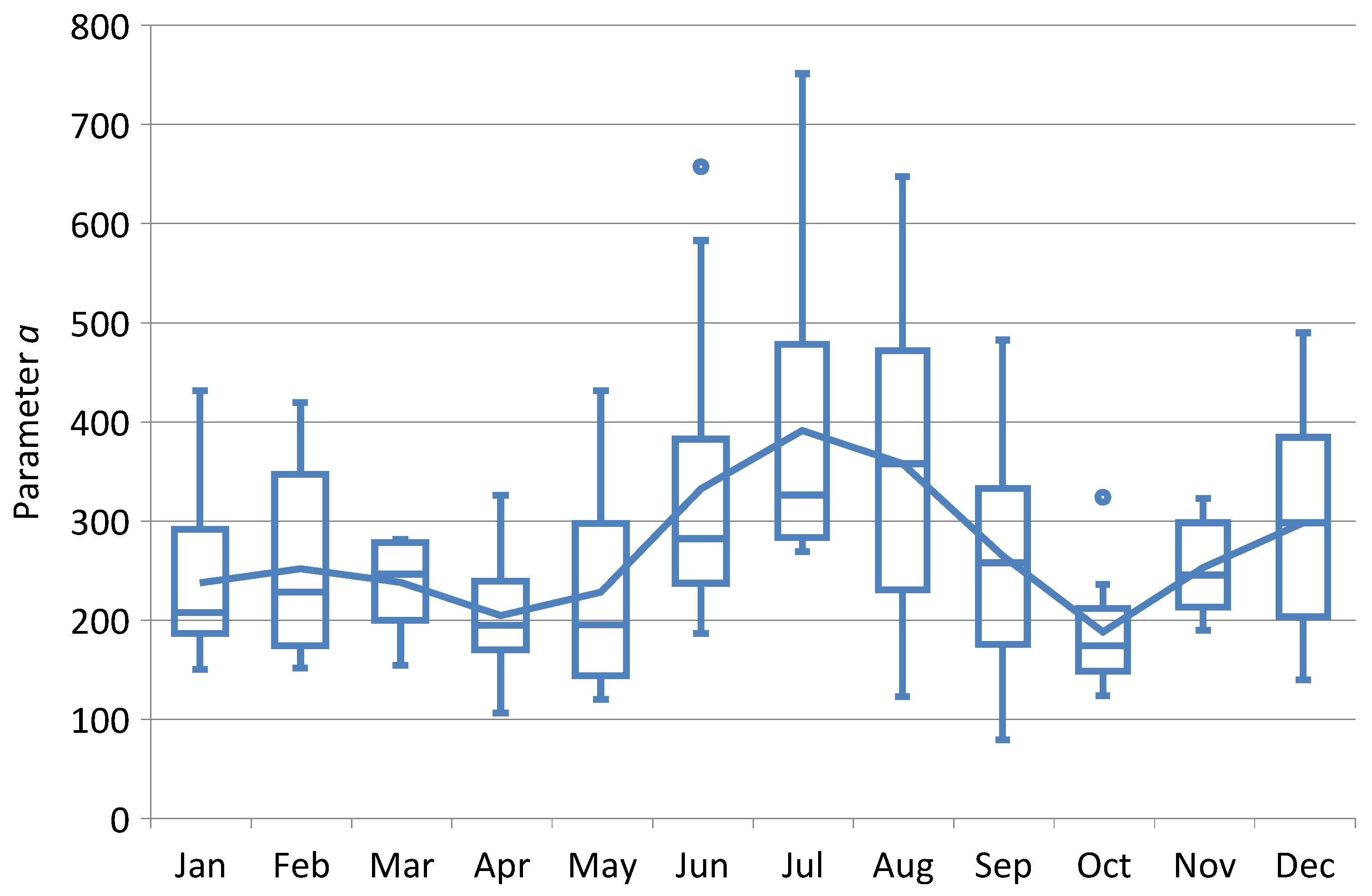
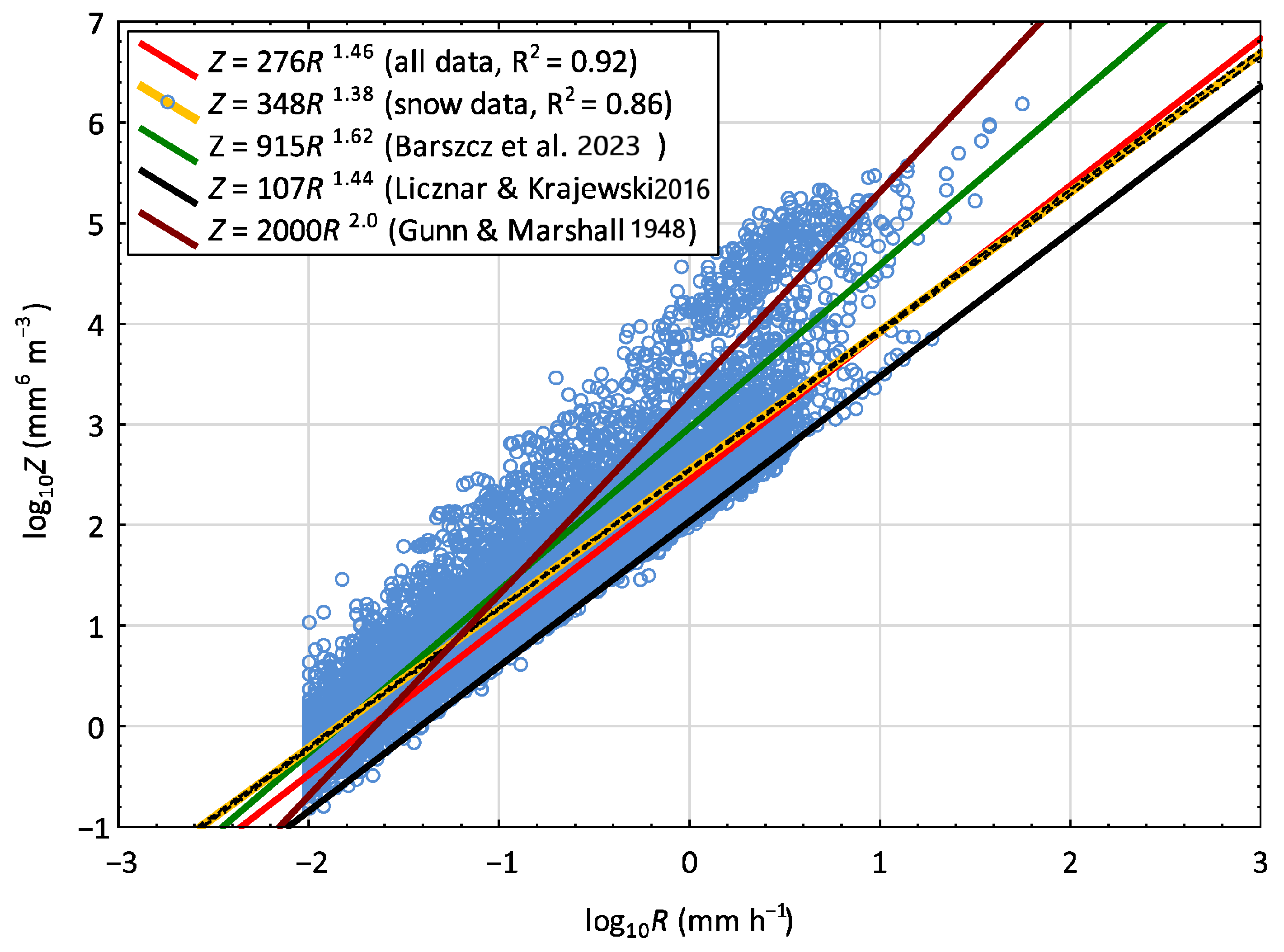
In this study, the relationship between radar reflectivity and rain rate (Z–R) was investigated. The analysis was conducted using data collected by the OTT Parsivel1 disdrometer during the periods 2012–2014 and 2019–2025 in Warsaw, Poland. As a first step, the parameters a and b of the power-law Z–R relationship were estimated separately for three precipitation types: rain, sleet (rain with snow), and snow. Subsequently, observational data from all 12 months of the annual cycle were used to derive Z–R relationships for 118 individual precipitation events. To date, only a few studies of this kind have been conducted in Poland. In the analysis limited to rain events, the estimated parameters (a = 265, b = 1.48) showed relatively minor deviations from the classical Z–R function for convective rainfall, Z = 300R1.4. However, the parameter a deviated more noticeably from the Z = 200R1.6 relationship proposed by Marshall and Palmer, which is commonly used to convert radar reflectivity into rainfall estimates, including in the Polish POLRAD radar system. The dataset used in this study included rainfall events of varying types, both stratiform and convective, which contributed to the averaging of Z–R parameters. The values for the parameter a in the Z–R relationship estimated for the other two categories of precipitation types, sleet and snow, were significantly higher than those determined for rain events alone. The a values calculated for individual events demonstrated considerable variability, ranging from 80 to 751, while the b values presented a more predictable range, from 1.10 to 1.77. The highest parameter a values were observed during the summer months: June, July, and August. The variability in the Z–R relationship for individual events assessed in this study indicates the need for further research under diverse meteorological conditions, particularly for stratiform and convective precipitation.
Keywords: Parsivel disdrometer; radar reflectivity; precipitation intensity; Z–R relationship; weather radar Parsivel disdrometer; radar reflectivity; precipitation intensity; Z–R relationship; weather radar