Article

Online Sparse Reconstruction for Real Aperture Radar by Beam Recursive-Sliding Updating Framework

1
School of Information and Communication Engineering, University of Electronic Science and Technology of China, Chengdu 611731, China
2
Tianfu Jiangxi Laboratory, Chengdu 641419, China
3
The 29th Research Institute of China Electronics Technology Group Corporation, Chengdu 610036, China
*
Author to whom correspondence should be addressed.
Current address: No. 2006, Xiyuan Ave, West Hi-Tech Zone, Chengdu 611731, China.
Remote Sens. 2025, 17(11), 1887; https://doi.org/10.3390/rs17111887
Submission received: 27 March 2025 / Revised: 21 May 2025 / Accepted: 23 May 2025 / Published: 29 May 2025

Abstract

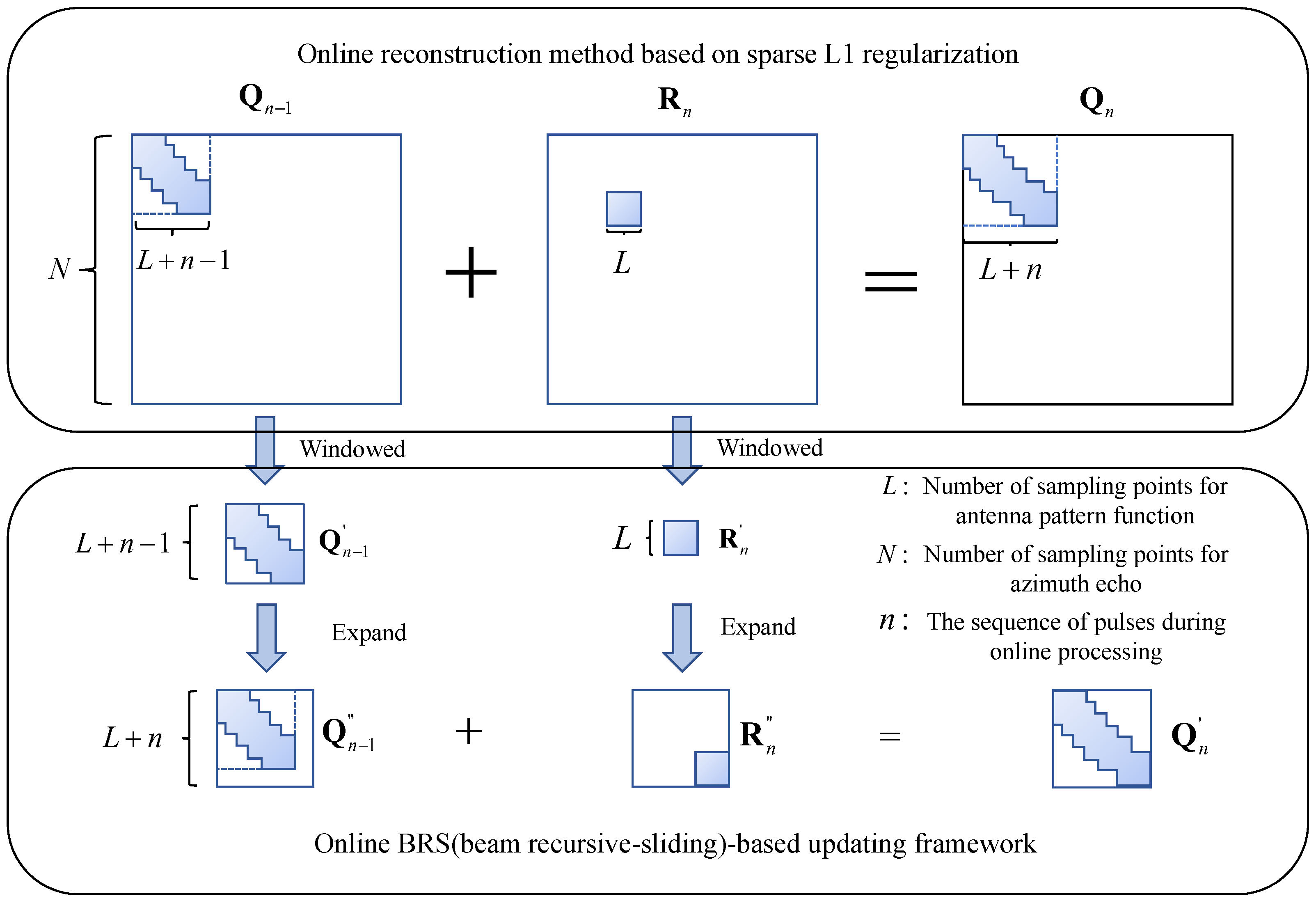
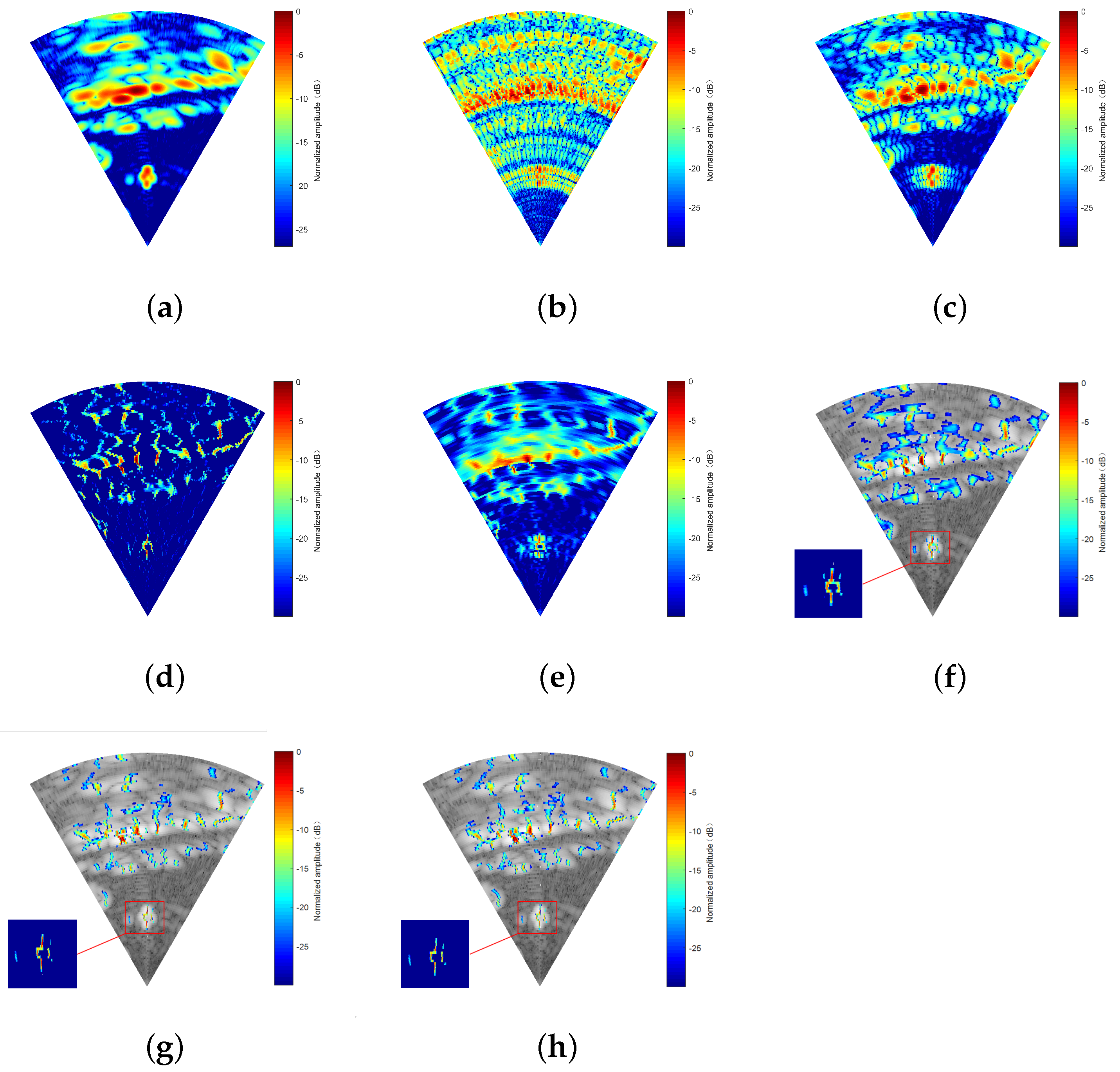
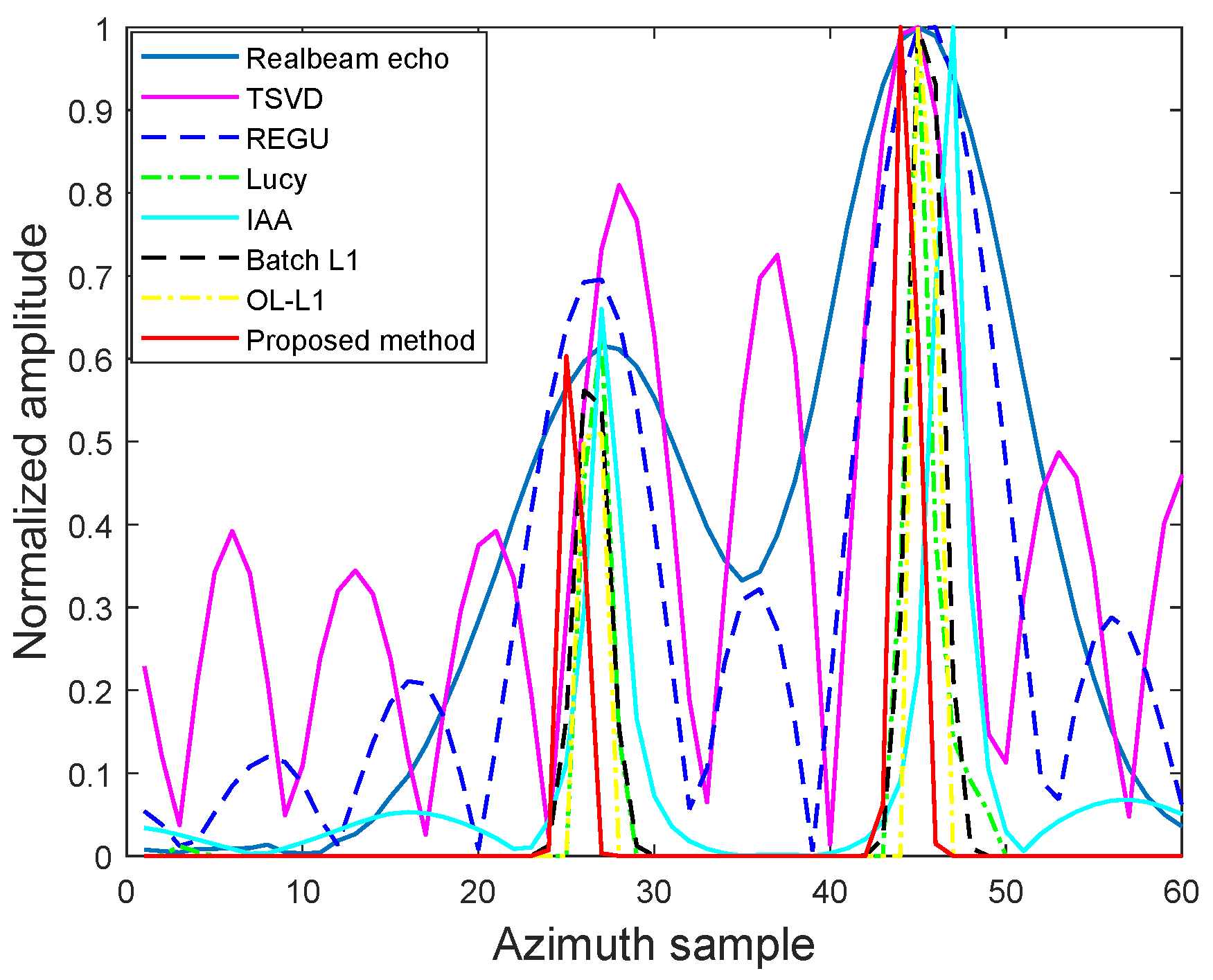
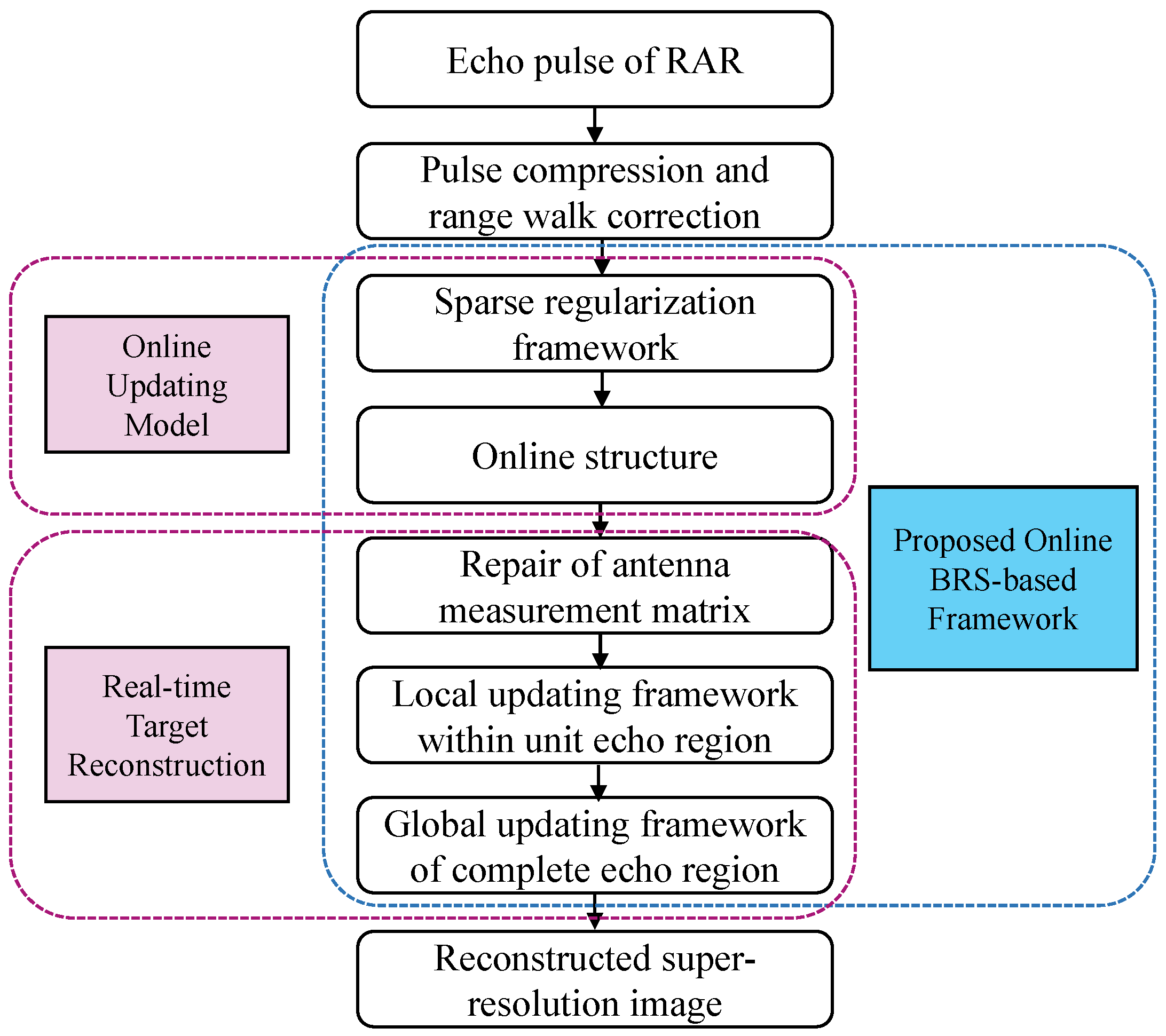
Real aperture radar (RAR) can acquire the forward-looking target scene of interest continuously in scanning mode by arbitrary imaging geometry; however, the achievable angular resolution is predominantly governed by the physical dimensions of the antenna’s aperture. In contemporary radar imaging methodologies, the reconstruction of sparsely distributed targets can be effectively formulated as an L1-regularized optimization framework through the exploitation of a priori sparsity constraints, thereby enabling the generation of enhanced-resolution forward-looking radar imagery. Nevertheless, traditional target reconstruction methods based on the sparse regularization framework are implemented after batch data collection, which comes at the cost of significant operational complexity and storage space. To address this challenge, an online sparse reconstruction method based on a beam recursive-sliding (BRS) updating framework is proposed to achieve fast target reconstruction. First, the antenna measurement matrix is repaired to reduce the imaging edge information error. Then, due to the independence of the echo data within two beamwidths, a beam recursive updating method is proposed for each two beamwidths echo data by the structural properties of the repaired antenna measurement matrix. Finally, based on the proposed beam recursive updating method, a sliding updating approach is proposed for the whole imaging region to reduce the computational redundancy and storage requirement. Simulation and experimental data demonstrate the effectiveness of the proposed BRS updating framework.
Keywords: super-resolution imaging; beam recursive-sliding (BRS) updating framework; sparse regularization; real aperture radar; online reconstruction super-resolution imaging; beam recursive-sliding (BRS) updating framework; sparse regularization; real aperture radar; online reconstruction