Article

Impact of Channel Selection with Different Bandwidths on Retrieval at 50–60 GHz

1
Key Laboratory of Microwave Remote Sensing, National Space Science Center, Chinese Academy of Sciences, Beijing 100190, China
2
University of Chinese Academy of Sciences, Beijing 100049, China
3
Center for Earth System Modeling and Prediction of CMA, Beijing 100081, China
4
Key Laboratory of Earth System Modeling and Prediction, China Meteorological Administration, Beijing 100081, China
5
State Key Laboratory of Severe Weather (LaSW), Chinese Academy of Meteorological Sciences, China Meteorological Administration, Beijing 100081, China
*
Author to whom correspondence should be addressed.
Remote Sens. 2024, 16(8), 1323; https://doi.org/10.3390/rs16081323
Submission received: 2 February 2024 / Revised: 2 April 2024 / Accepted: 7 April 2024 / Published: 9 April 2024
(This article belongs to the Section Atmospheric Remote Sensing)

Abstract

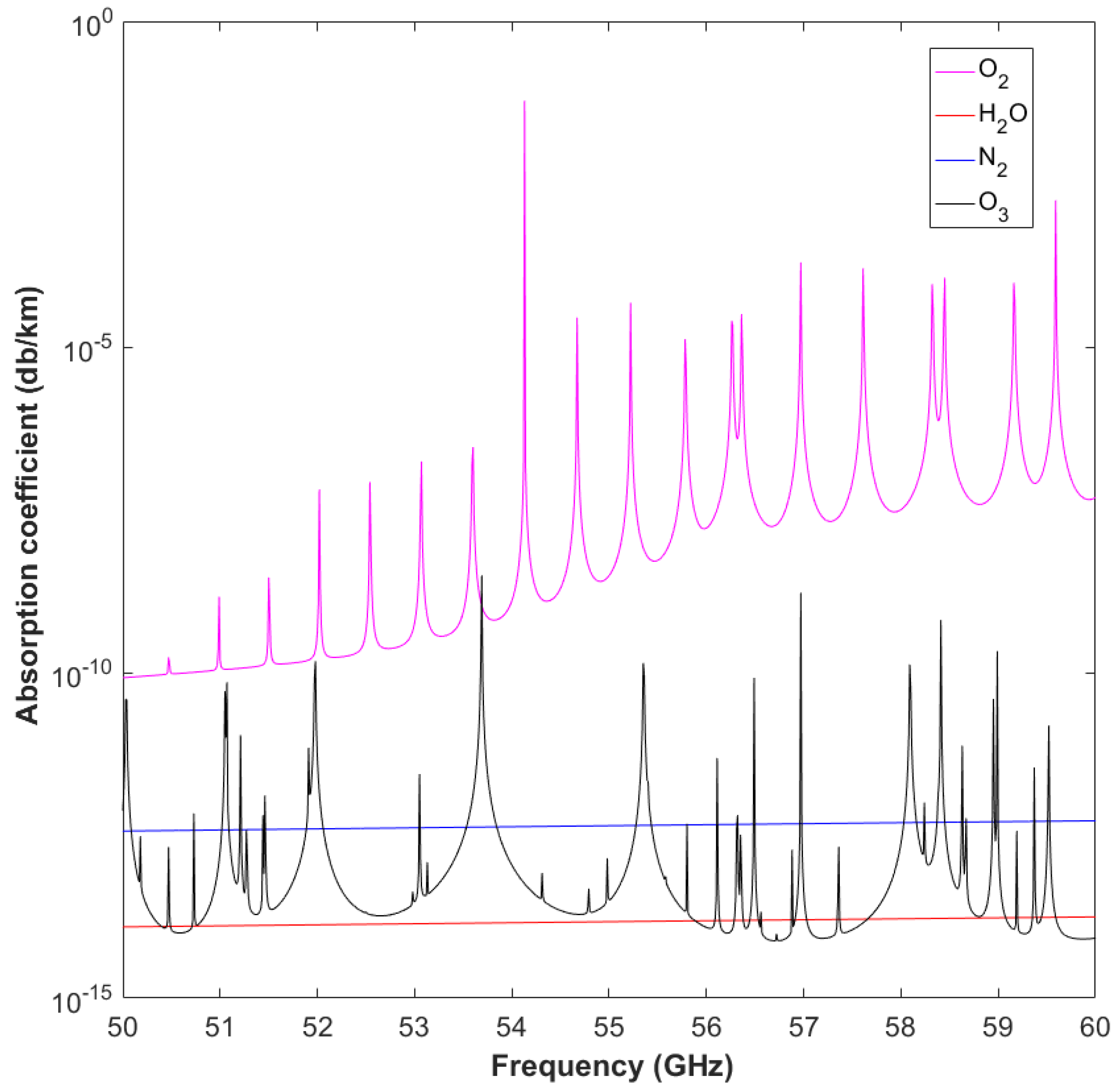
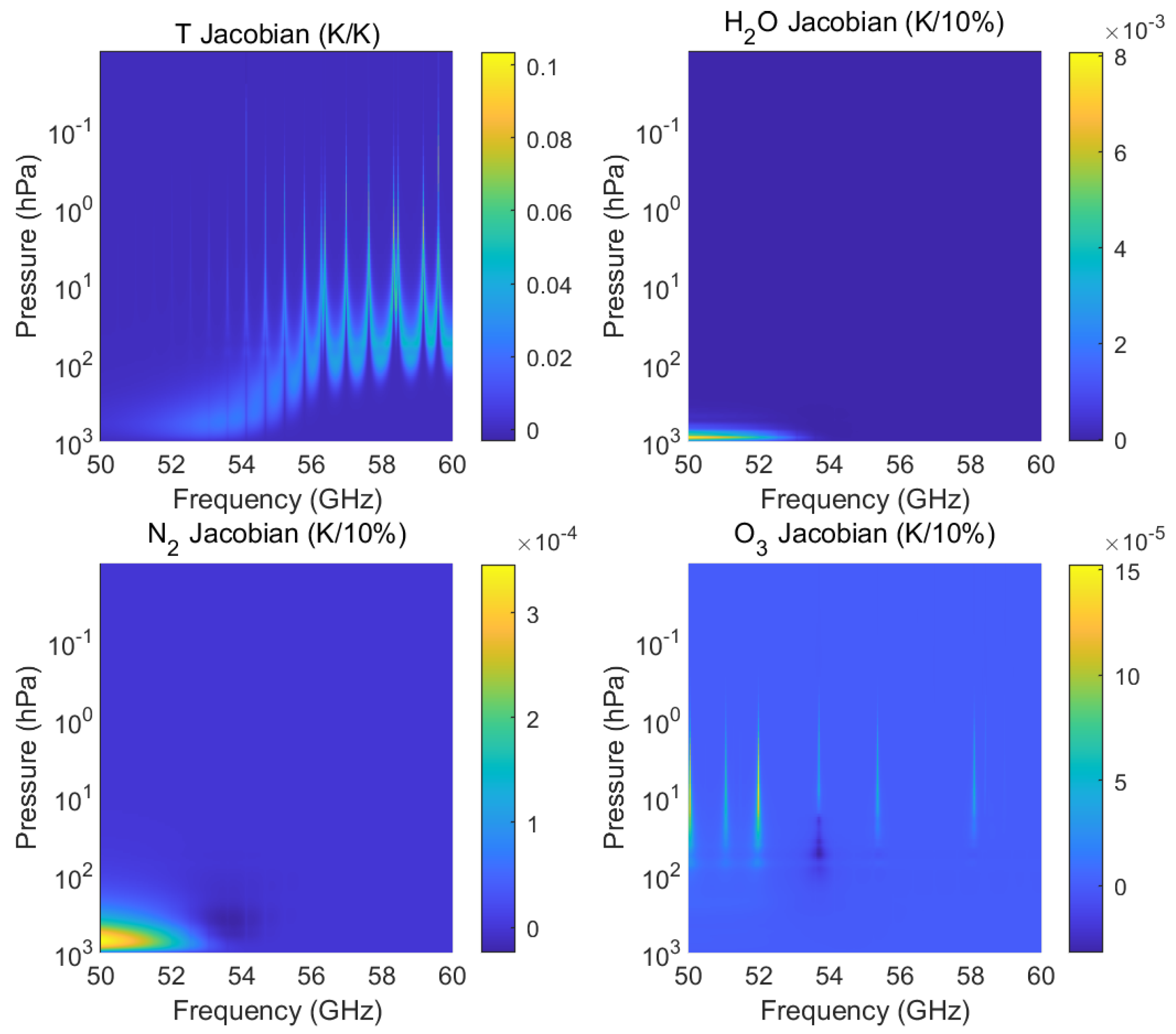
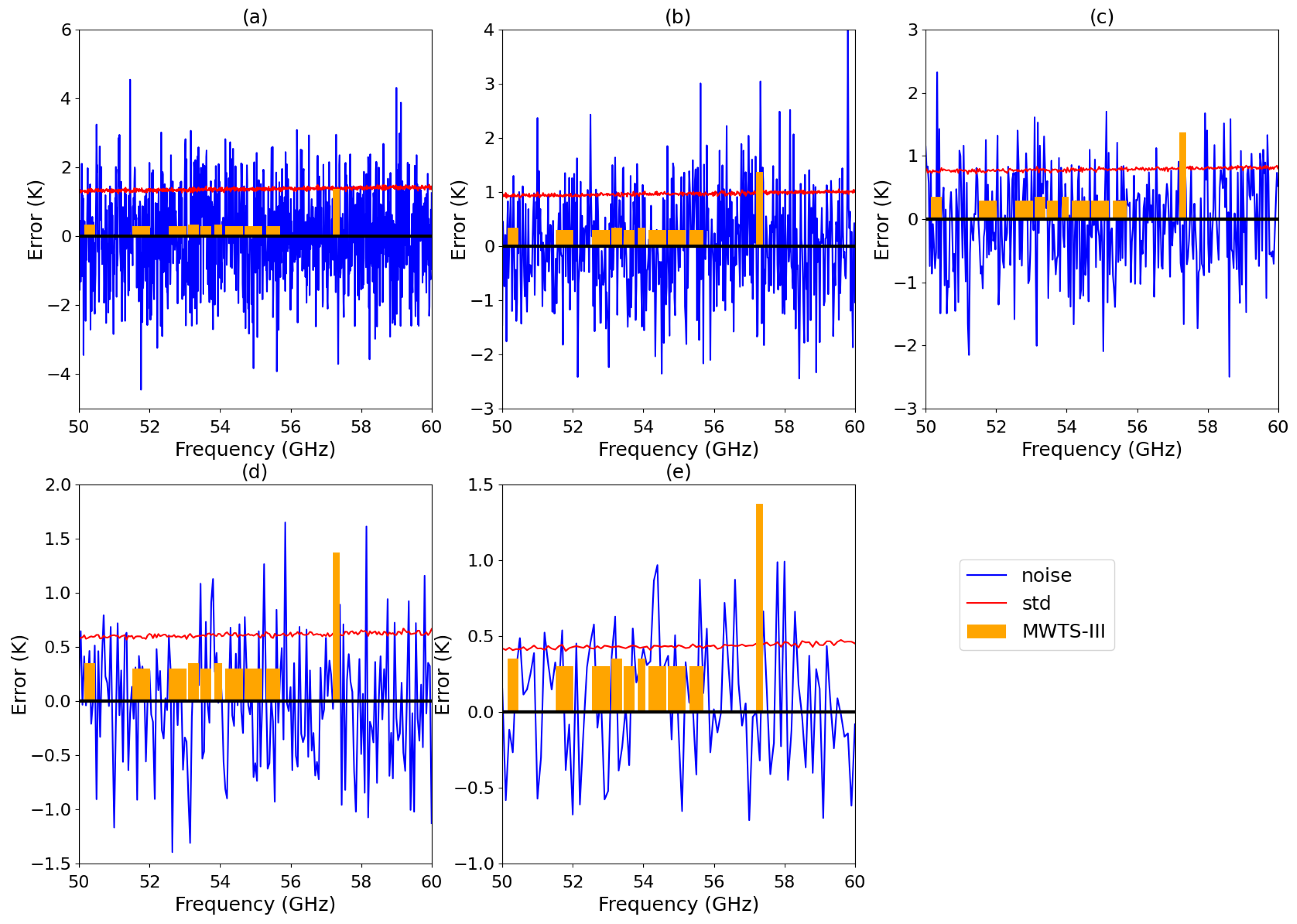
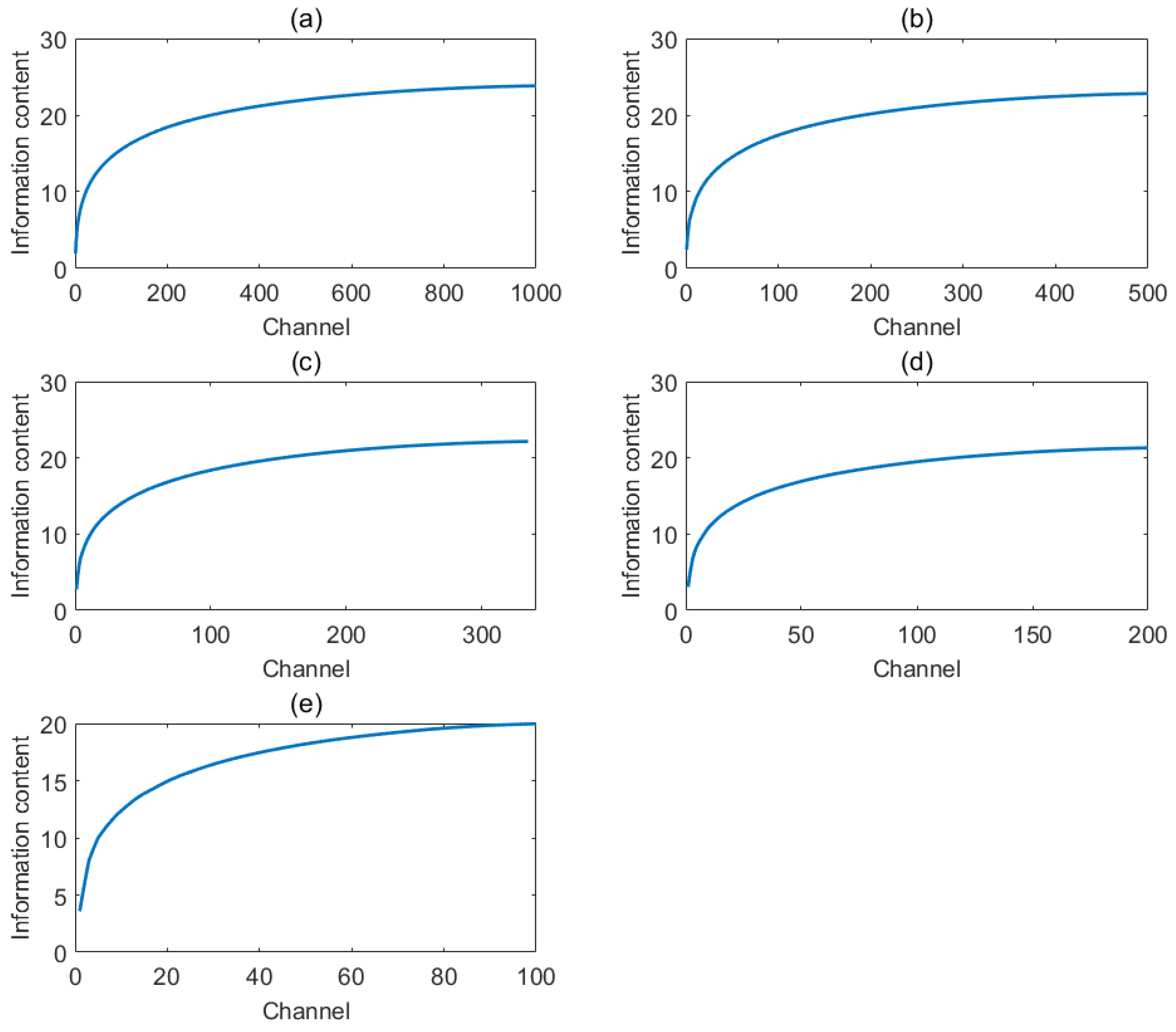
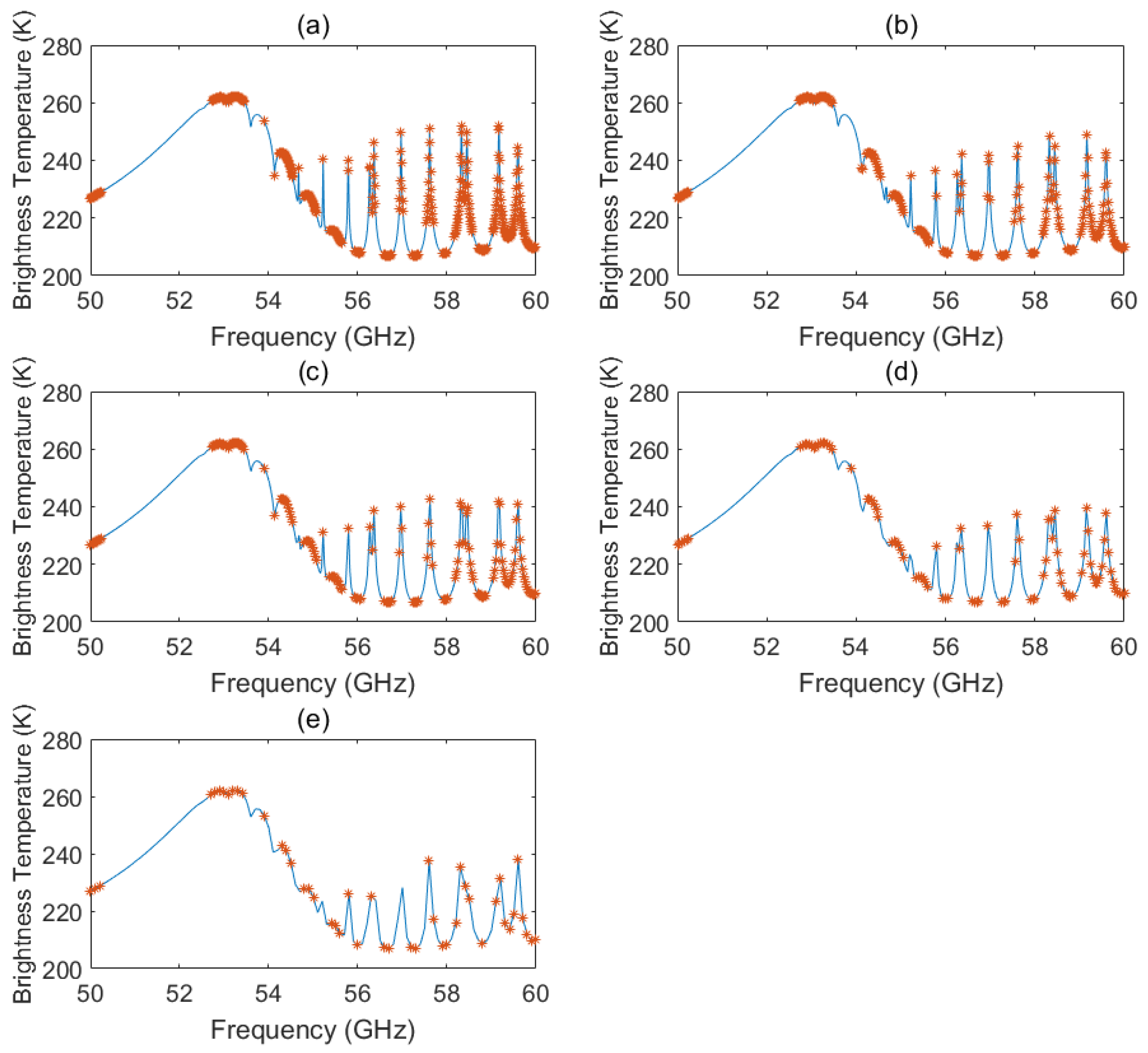
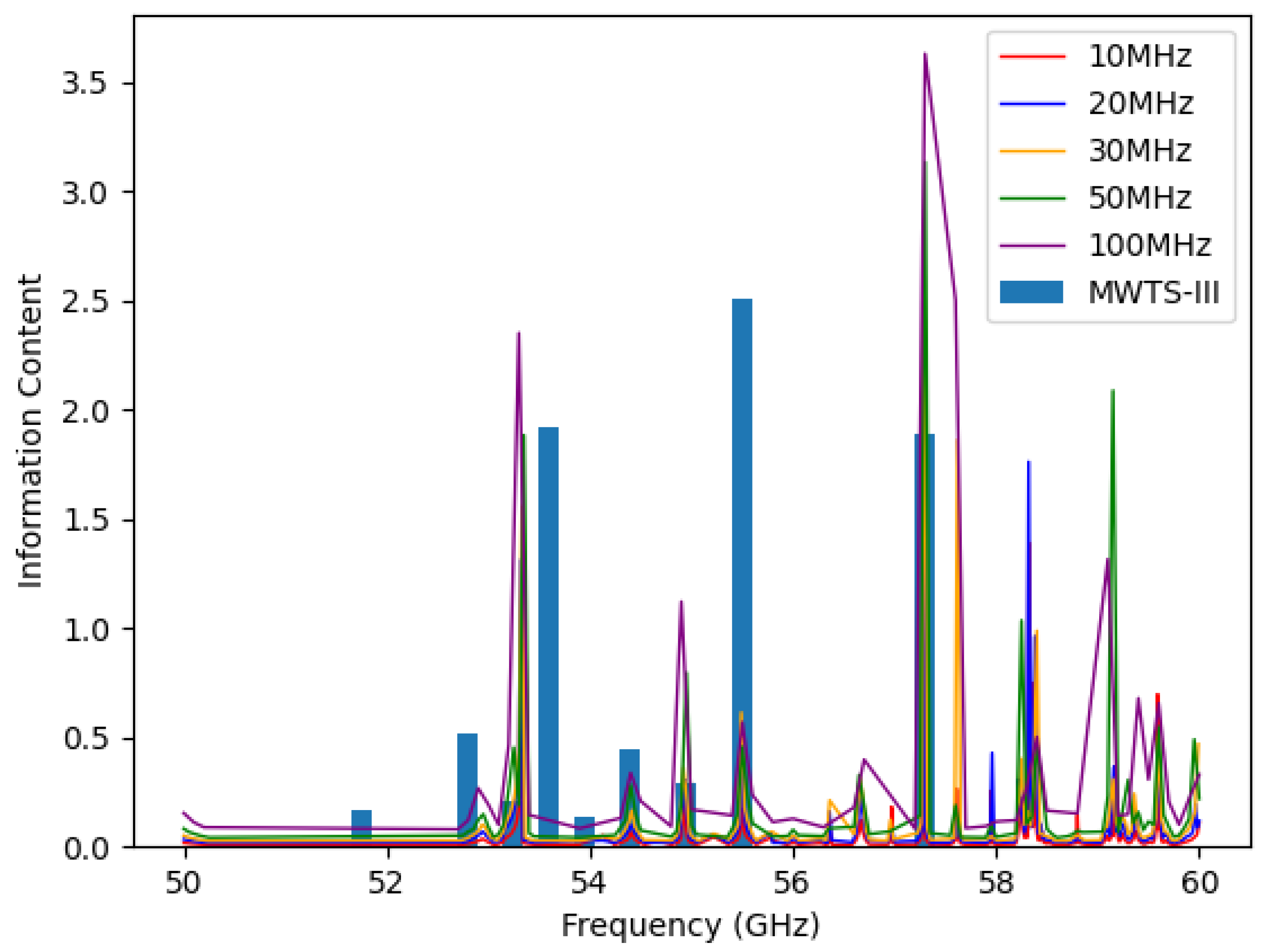
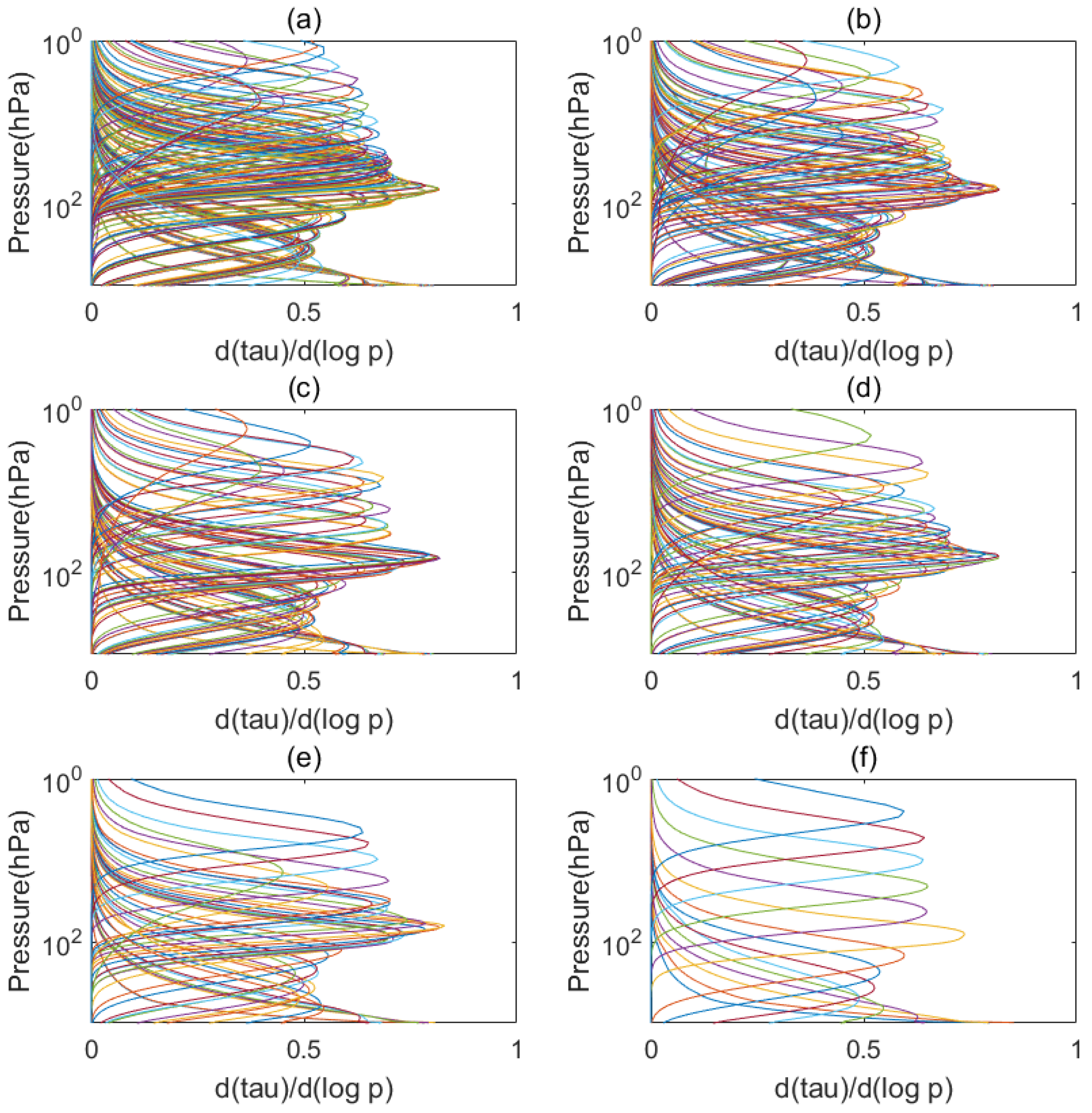
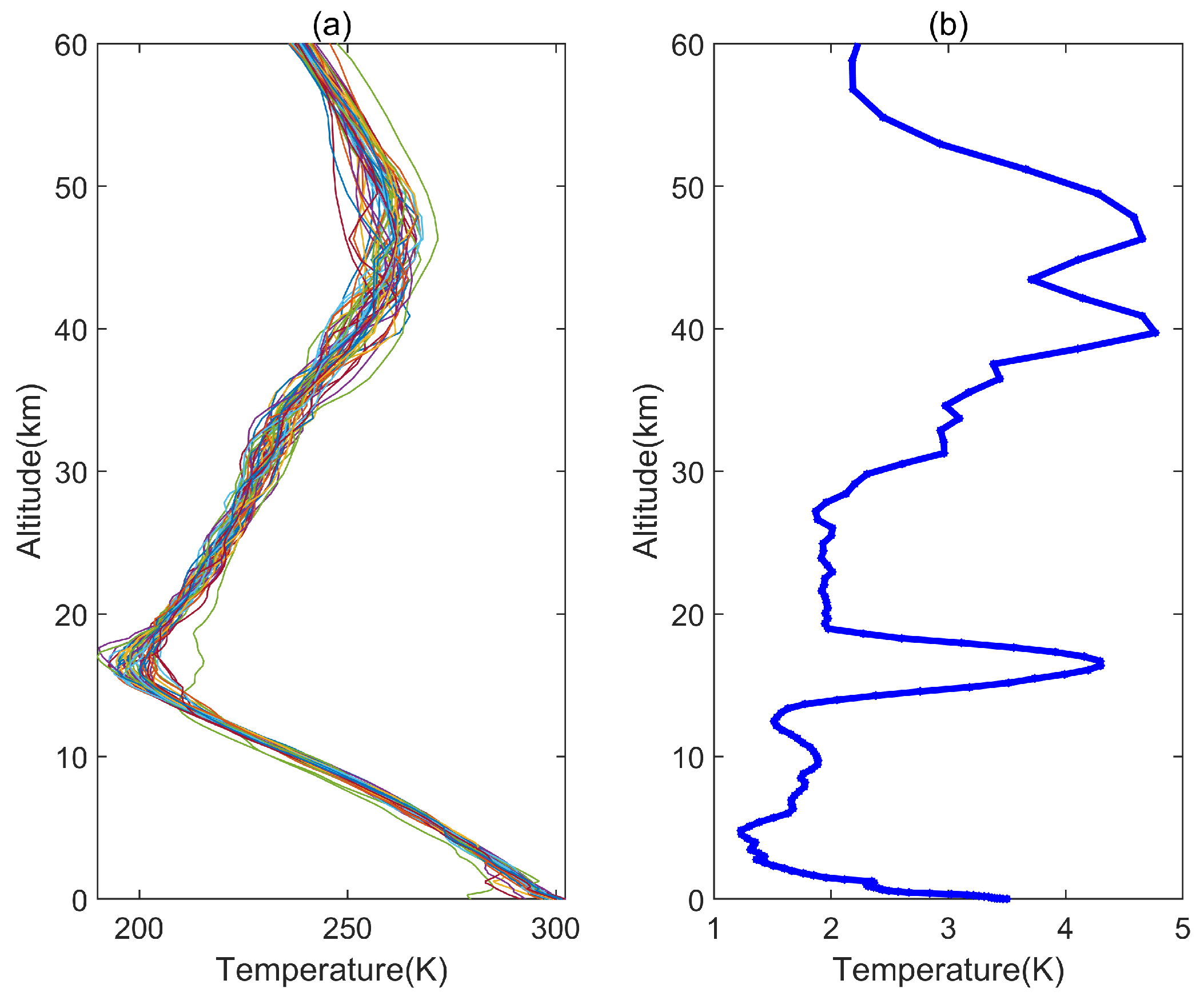
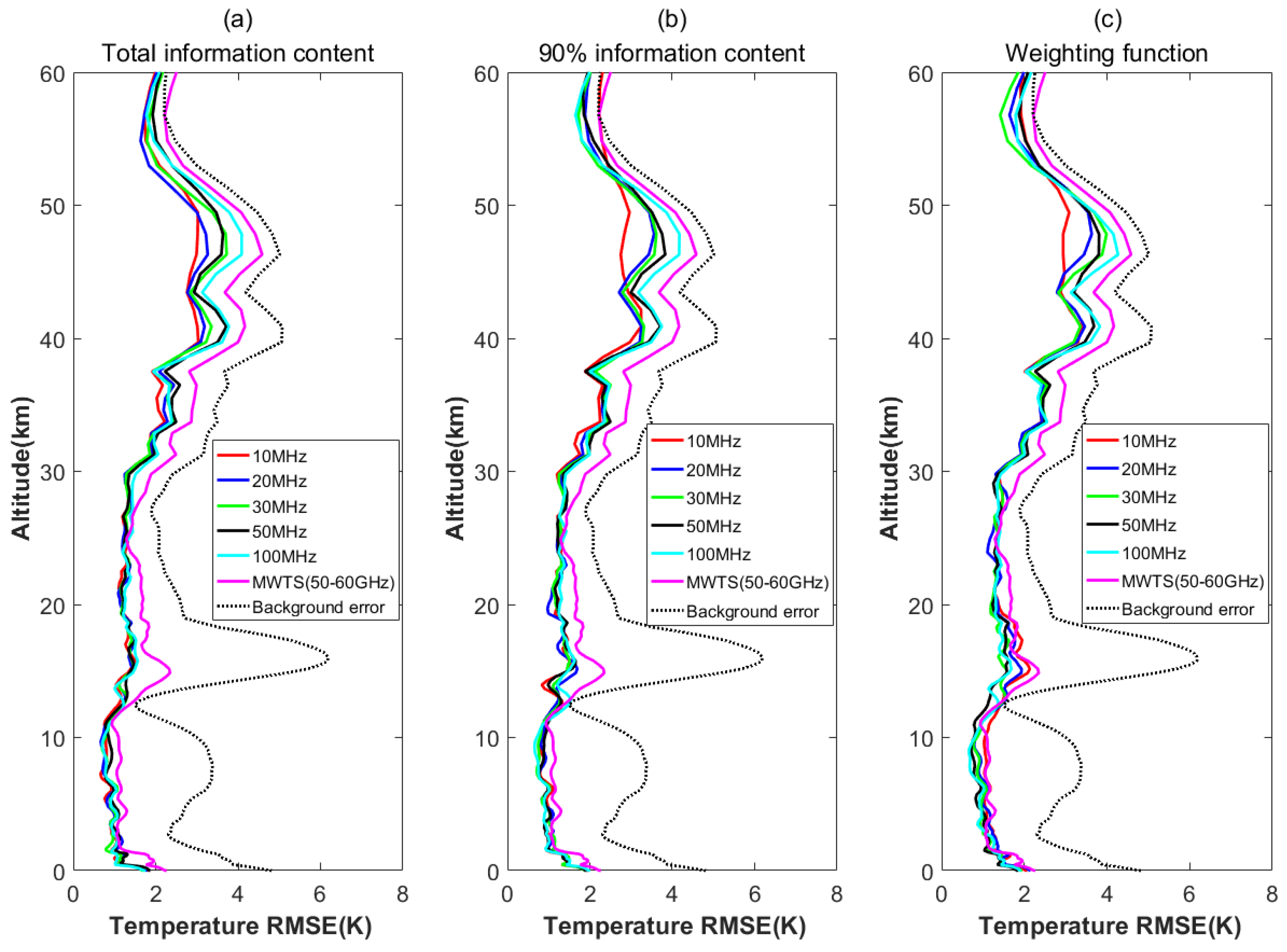
Microwave hyperspectral instruments represent one of the main atmospheric sounders of China’s next-generation Fengyun meteorological satellites. In order to better apply microwave hyperspectral observations in the fields of atmospheric parameter retrieval and data assimilation, this paper analyzes the sensitivity of trace gases to five selected bandwidth channels using a radiative transfer model based on the simulated data of microwave hyperspectral radiances at 50–60 GHz. This method uses information entropy and a weighting function to select channels and analyze the impact of this on the retrieval accuracy of atmospheric profiles before and after channel selection. The experimental results show that channel selection can reduce the number of channels by approximately 74.05% while maintaining a large amount of information content, and this retrieval effect is significantly better than that of MWTS-III. After channel selection, the 10 MHz, 30 MHz, and 50 MHz bandwidths have the best retrieval results in the stratosphere, whole atmosphere, and troposphere, respectively. When considering the number of channels, computational scale, and retrieval results comprehensively, the channel selection method is effective.
Keywords: microwave hyperspectral; 50–60 GHz; channel selection; retrieval microwave hyperspectral; 50–60 GHz; channel selection; retrieval