Article

Suitability Index for the Placement of Solar Plants Based on Inequality Measurements and on Satellite Images


by
Estrella Trincado
1,* and
Jose María Vindel
2
1
Department of Applied Economics, Structure and History, Faculty of Economics and Business, Campus de Somosaguas, University Complutense of Madrid, 28223 Madrid, Spain
2
Ministry of Labour and Social Economy, 28046 Madrid, Spain
*
Author to whom correspondence should be addressed.
Remote Sens. 2024, 16(6), 1039; https://doi.org/10.3390/rs16061039
Submission received: 2 February 2024 / Revised: 5 March 2024 / Accepted: 12 March 2024 / Published: 15 March 2024

Abstract

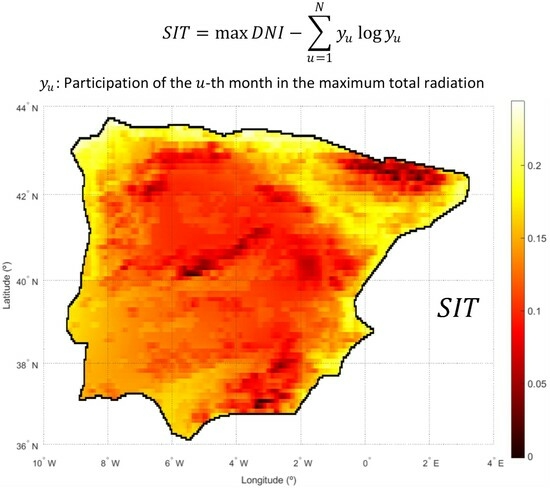
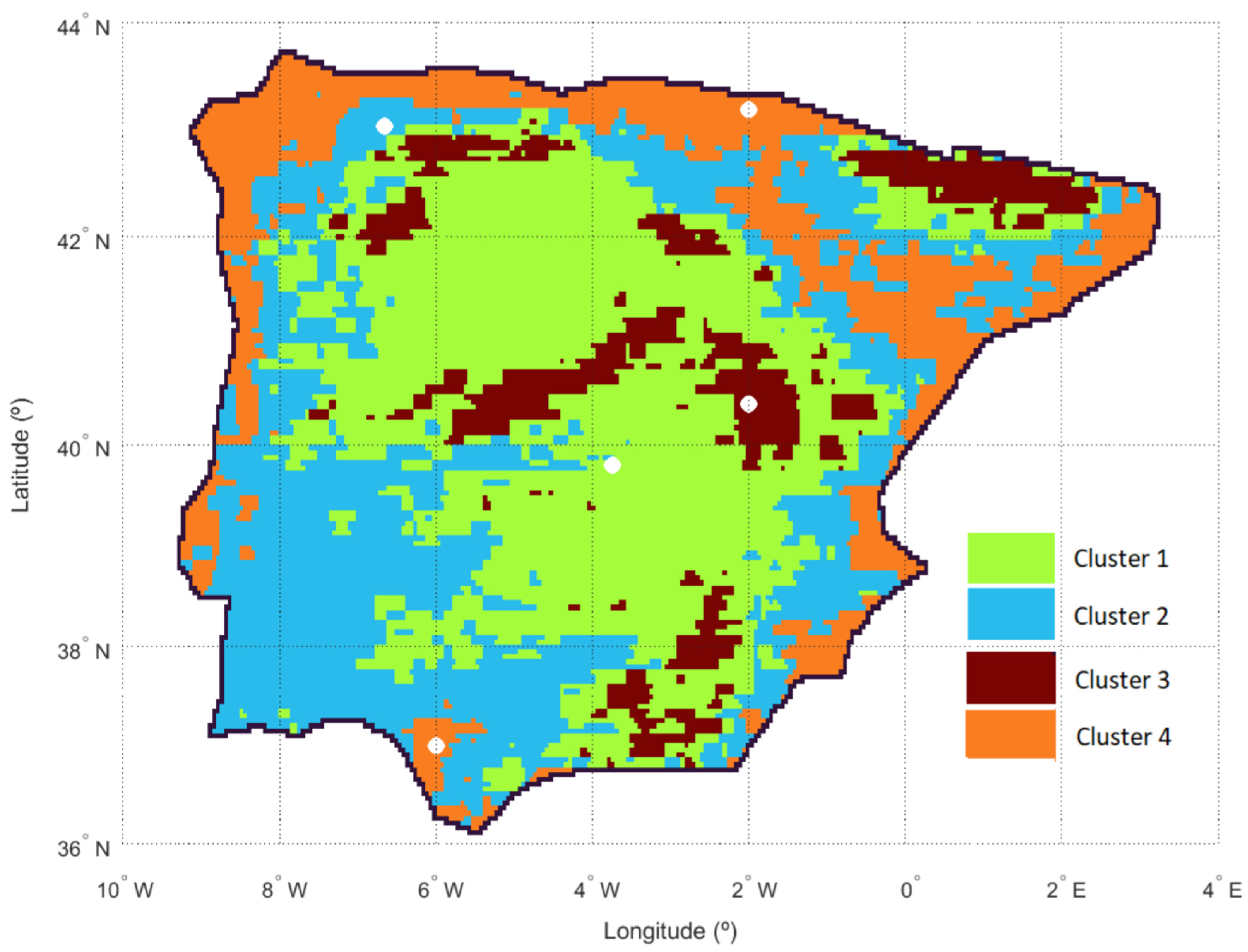
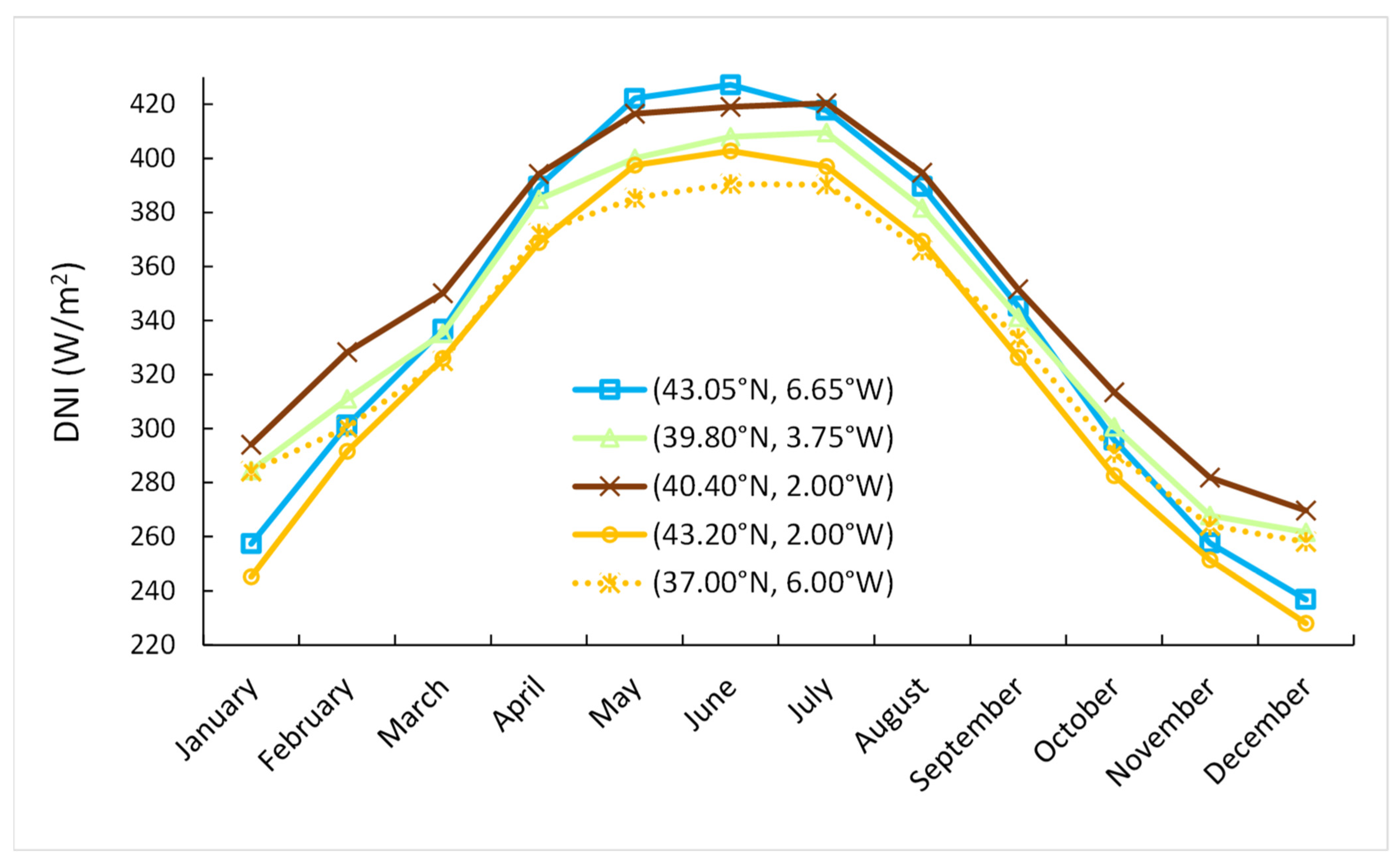
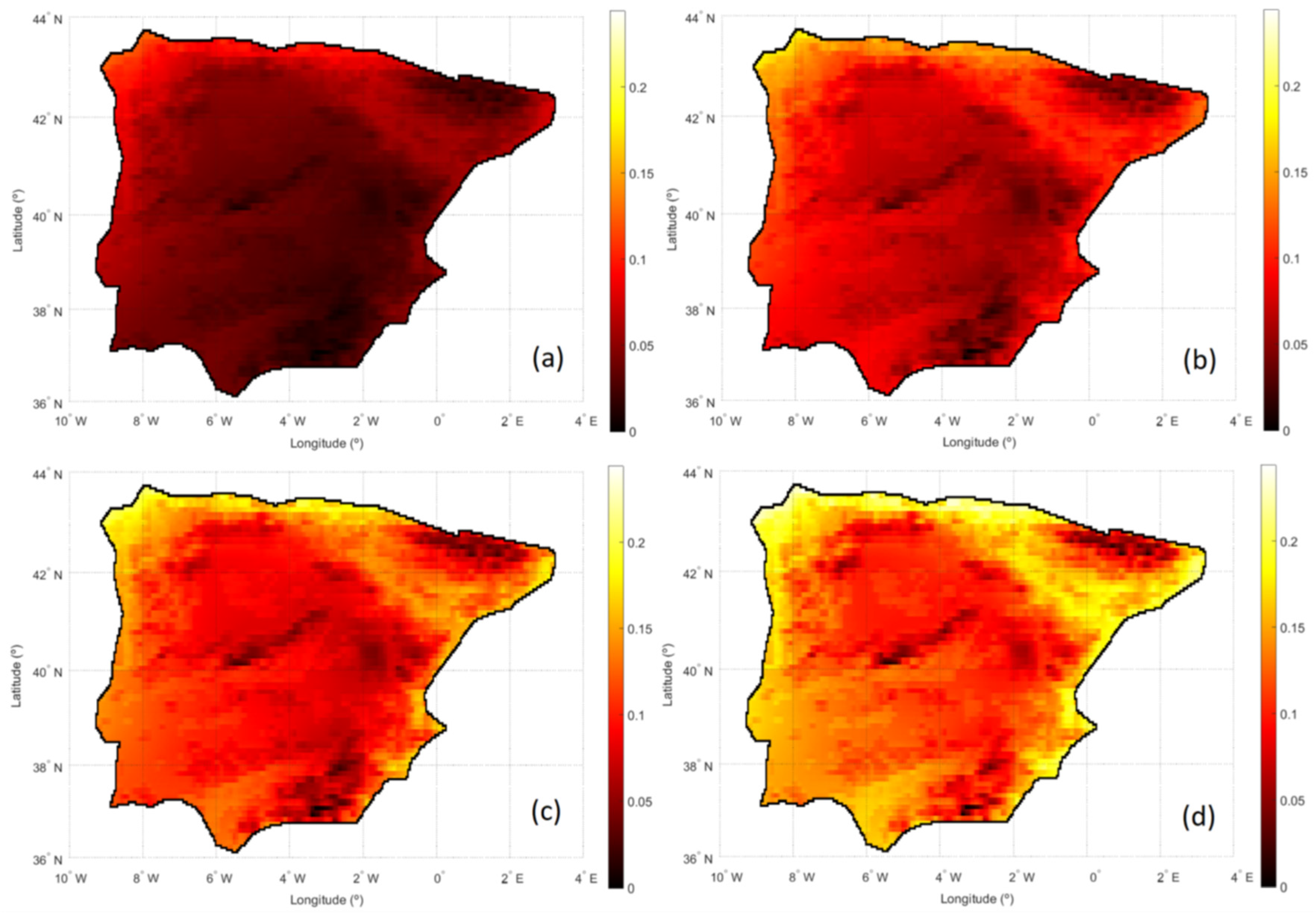
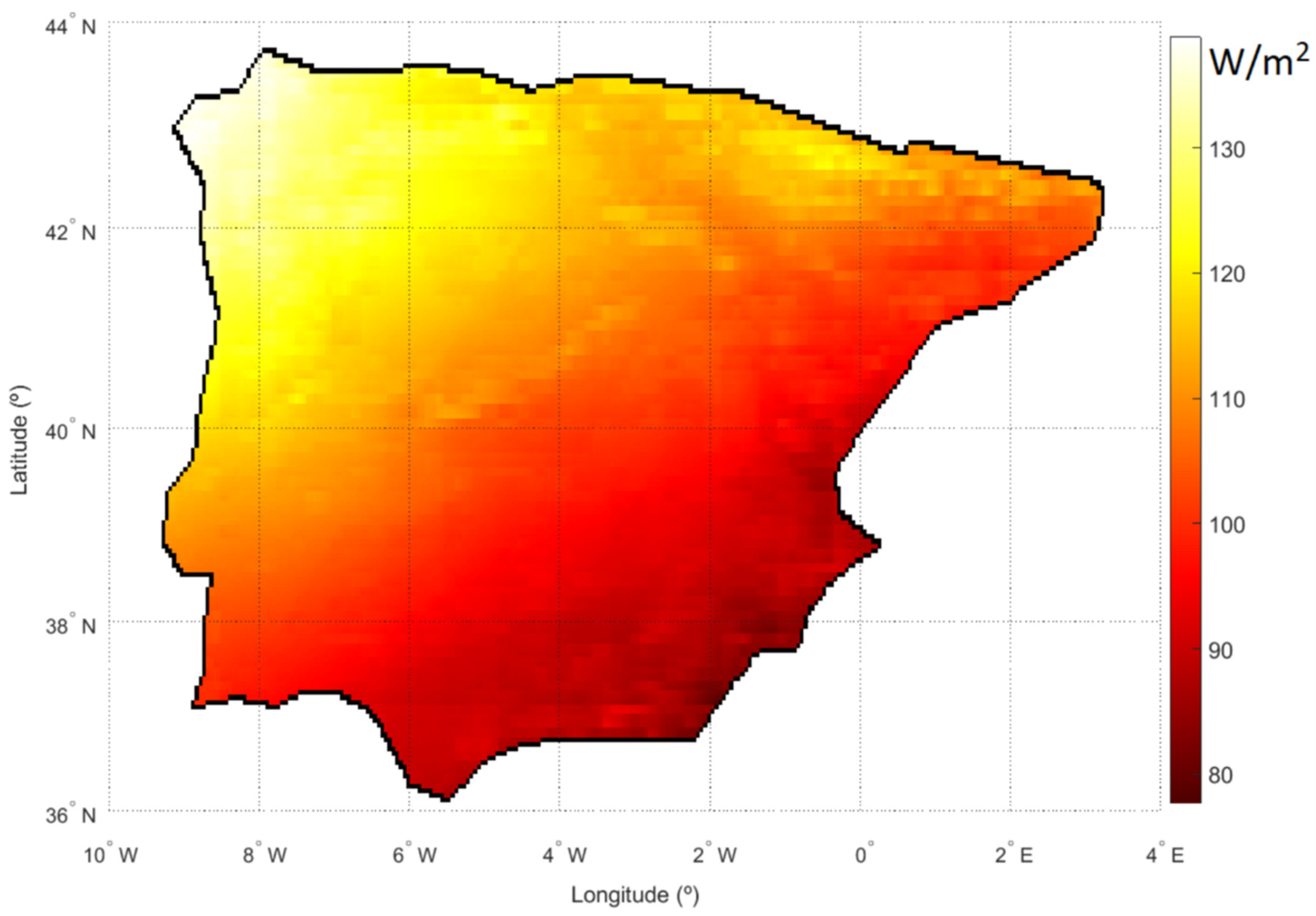
The selection of a certain location for the placement of a solar facility depends on the solar resource availability, which is generally assessed though exceedance probabilities. However, the choice of the specific exceedance probability is arbitrary and the assessment will be different depending on the choice taken. Furthermore, exceedance probabilities do not reflect seasonal variability, which affects radiation availability. Therefore, in this work we present a new index, the suitability index based on Theil (SIT), which allows us to assess with a single value the degree of suitability of a site for installing a solar plant. Obtained from the Theil index, it considers the availability of the resource and its seasonal variability, based as it is on the proportion of the given radiation in each month. As we will see, the new index is clearly more sensitive to the amount of radiation expressed in terms of the 50th percentile than to the variability, as given by the interquartile range. This is a quality to be pondered since scarcity of radiation will always be a greater disadvantage for a solar installation than high variability. The results obtained in the study, grounded in the application of satellite images, show that the index adequately reflects the radiation characteristics in the study area. The territory is broken into areas associated with such characteristics through a cluster analysis, so that geographical and economic elements can be considered when choosing the final location for a solar installation. Furthermore, the new index may include the effects of energy storage during the months in which a certain demand is exceeded.
Keywords: suitability index based on Theil (SIT); entropy; direct normal irradiance (DNI); average value of solar radiation; variability of the solar radiation suitability index based on Theil (SIT); entropy; direct normal irradiance (DNI); average value of solar radiation; variability of the solar radiation
Graphical Abstract