Article

Research on Monitoring the Speed of Glacier Terminus Movement Based on the Time-Series Interferometry of a Ground-Based Radar System


1
Key Lab of Microwave Remote Sensing, National Space Science Center, Chinese Academy of Sciences, Beijing 100190, China
2
School of Electronic, Electrical and Communication Engineering, University of Chinese Academy of Sciences, Beijing 100048, China
3
State Key Laboratory Tibetan Plateau Earth System, Environment and Resources (TPESER), Institute of Tibetan Plateau Research, Chinese Academy of Sciences, Beijing 100101, China
4
Institute of Geographic Sciences and Natural Resources Research, Chinese Academy of Sciences, Beijing 100101, China
*
Author to whom correspondence should be addressed.
Remote Sens. 2024, 16(21), 3928; https://doi.org/10.3390/rs16213928
Submission received: 29 July 2024 / Revised: 1 September 2024 / Accepted: 19 October 2024 / Published: 22 October 2024

Abstract

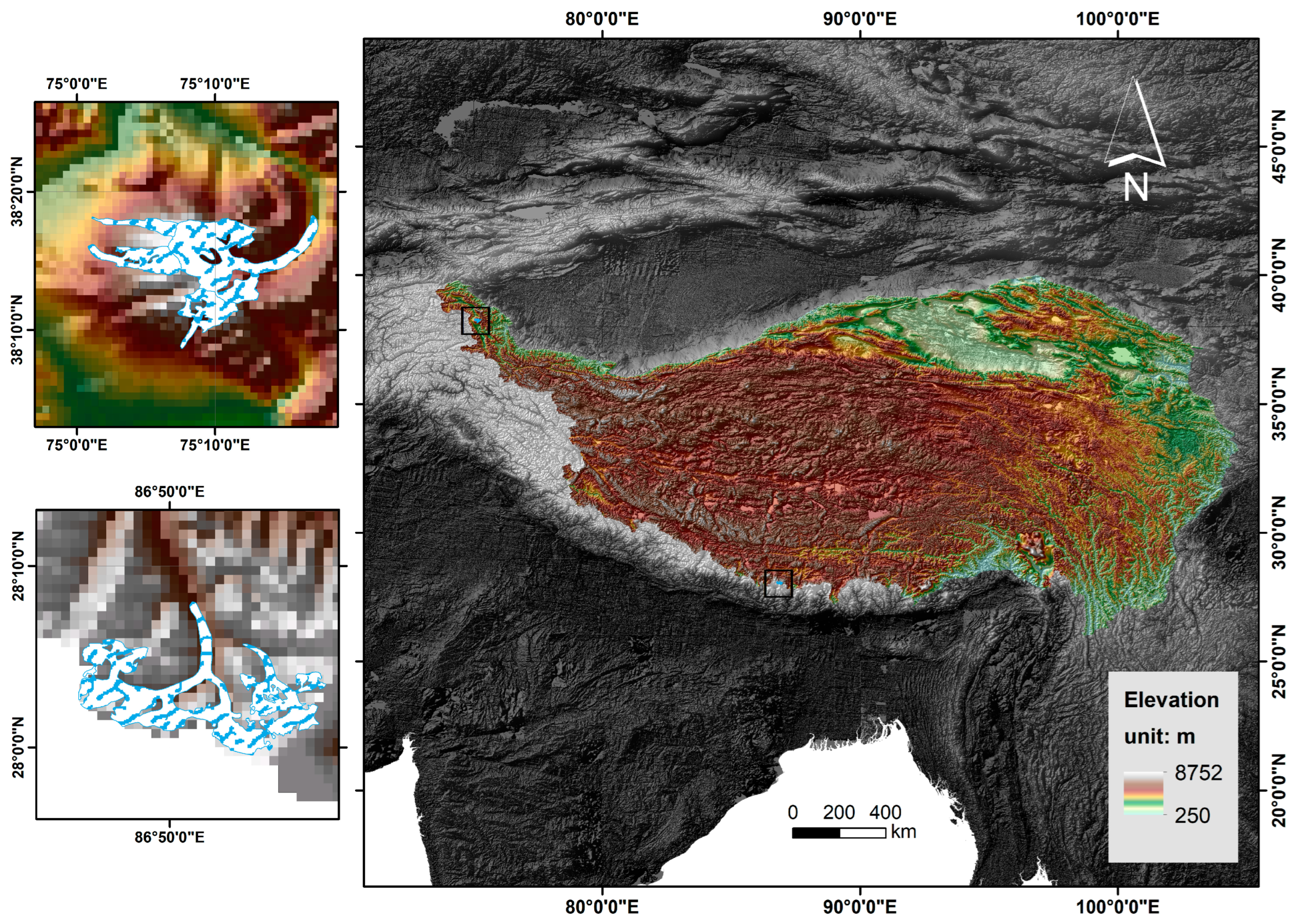
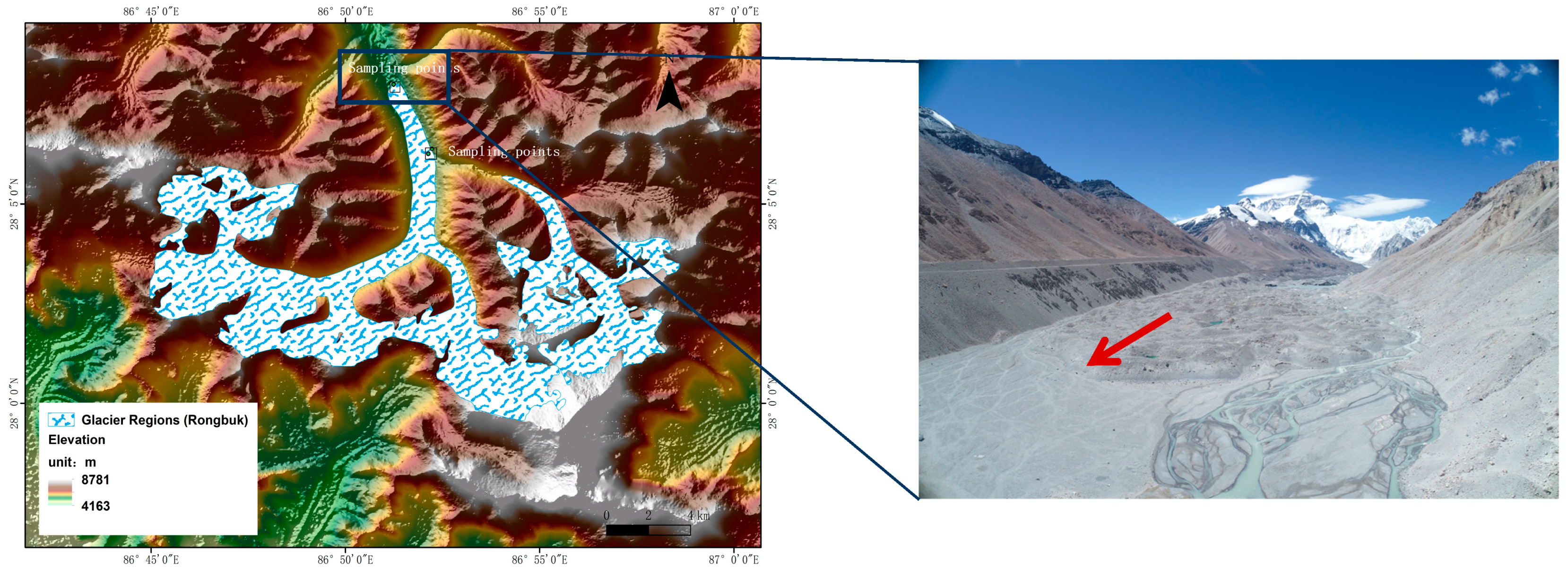
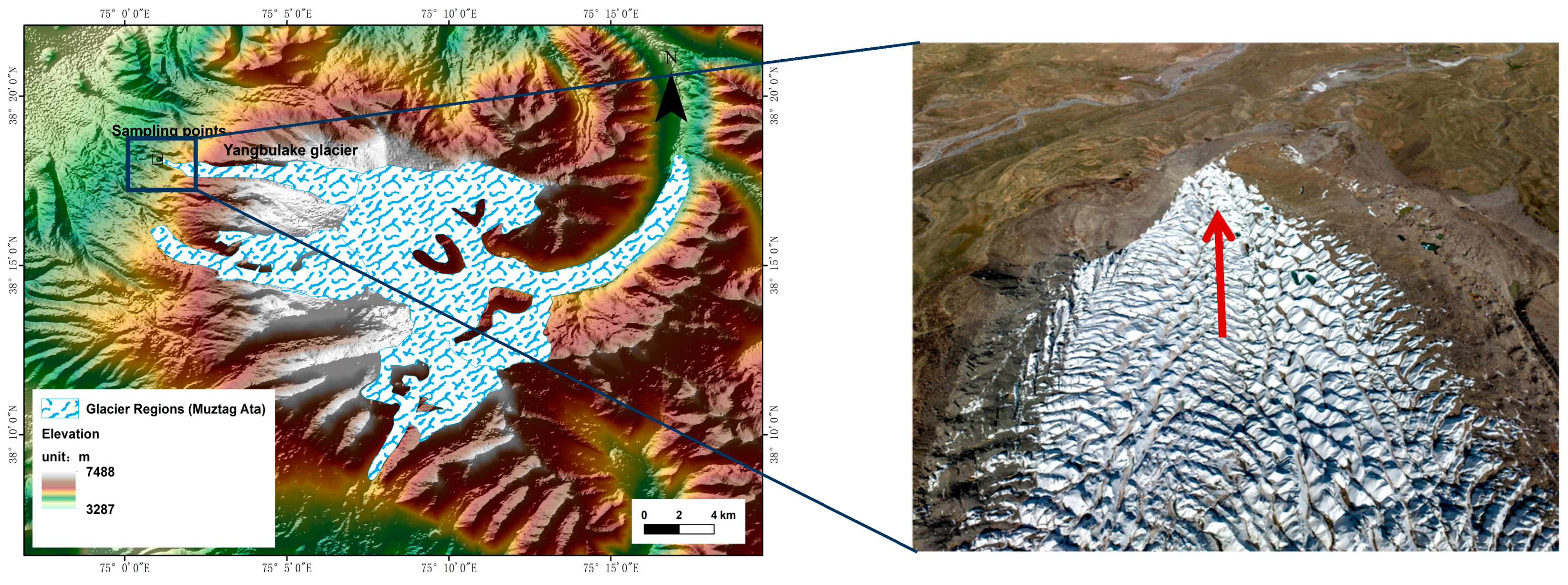
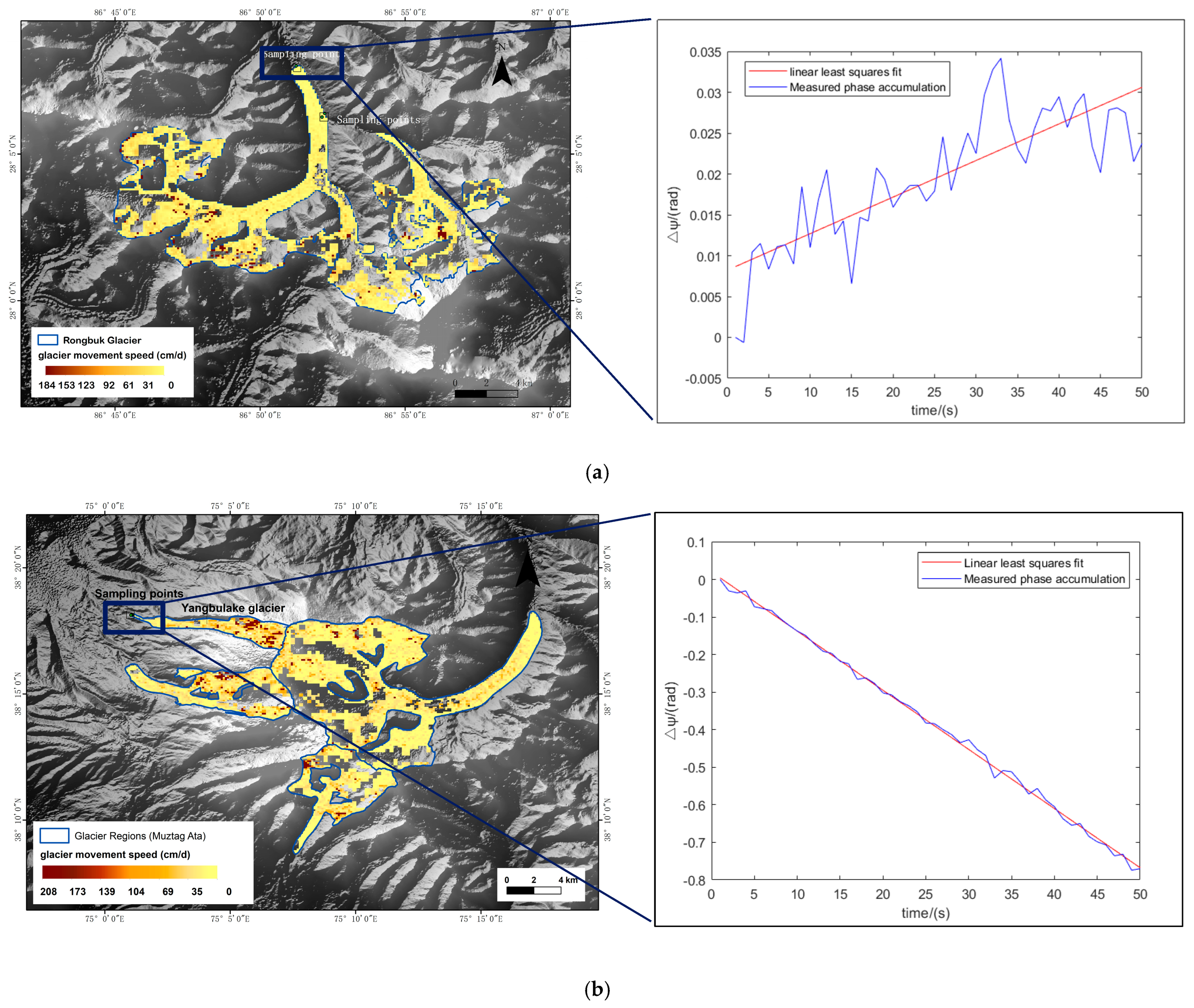
The Tibetan Plateau (TP) is the largest glacier reserve outside the Antarctic and Arctic regions. Climate warming has affected the reserve of freshwater resources and led to frequent glacier disasters. However, due to its extreme environment of hypoxia and low pressure, it is extremely difficult to obtain data. Compared with other traditional monitoring methods such as makers and satellite remote sensing technology, Ground-Based (GB) radar systems have the advantages of convenient carrying and installation, sub-second level sampling, and sub-millimeter measurement accuracy. They can be used as an effective way to study the short-term rapid movement changes in glaciers. Based on a self-built GB radar system, monitoring experiments were conducted on two glacier termini on the TP. The movement speed of the Rongbuk glacier terminus on Mount Qomolangma was obtained through time-series interferometric measurement as 4.10 cm/day. When the altitude was about 5200 m, the glacier movement speed was 7.74 cm/day, indicating the spatial differences with altitude changes. And in another region, the movement speed of the Yangbulake glacier terminus on Mount Muztag Ata was 198.96 cm/day, indicating significant changes in glacier movement. The cross-validation of Sentinel-1 data during the same period proved the effectiveness of GB radar system interferometry in measuring glacier movement speed and also provided field validation data for remote sensing inversion.
Keywords: GB radar; time-series interferometry; TP; movement at glacier terminus; signal process GB radar; time-series interferometry; TP; movement at glacier terminus; signal process