Article

Thinned and Sparse Beamforming for Semicircular FDAs in the Transmit–Receive Domain

1
Xi’an Key Laboratory of Network Convergence Communication, College of Communication and Information Engineering, Xi’an University of Science and Technology, Xi’an 710054, China
2
School of Physics, Xidian University, Xi’an 710071, China
*
Author to whom correspondence should be addressed.
Remote Sens. 2024, 16(17), 3262; https://doi.org/10.3390/rs16173262
Submission received: 4 July 2024 / Revised: 26 August 2024 / Accepted: 28 August 2024 / Published: 3 September 2024

Abstract

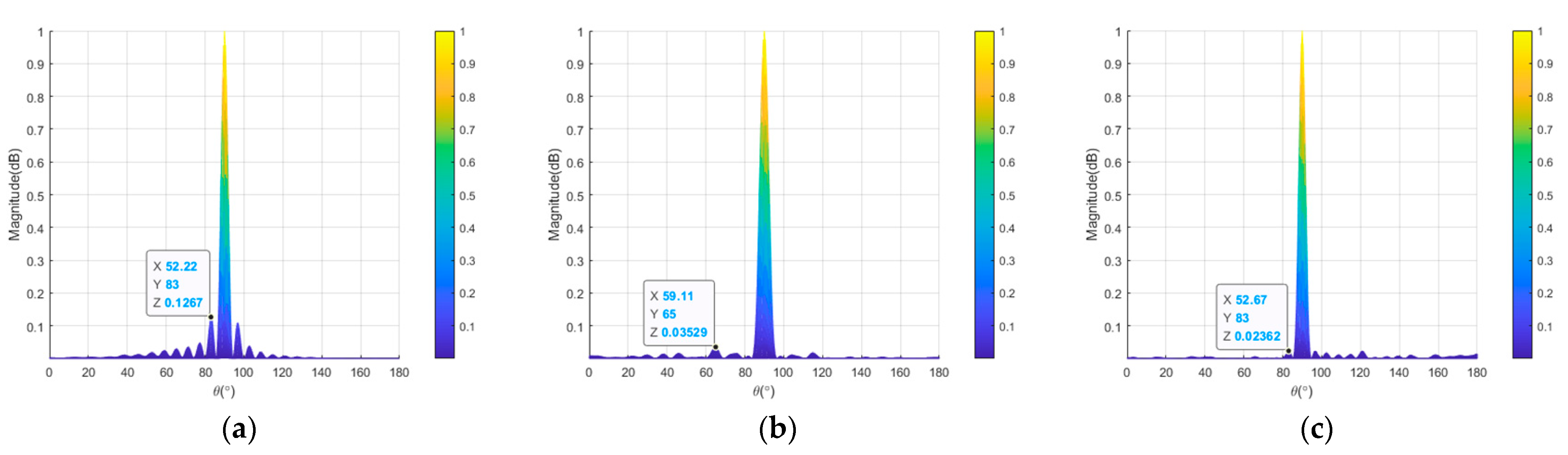
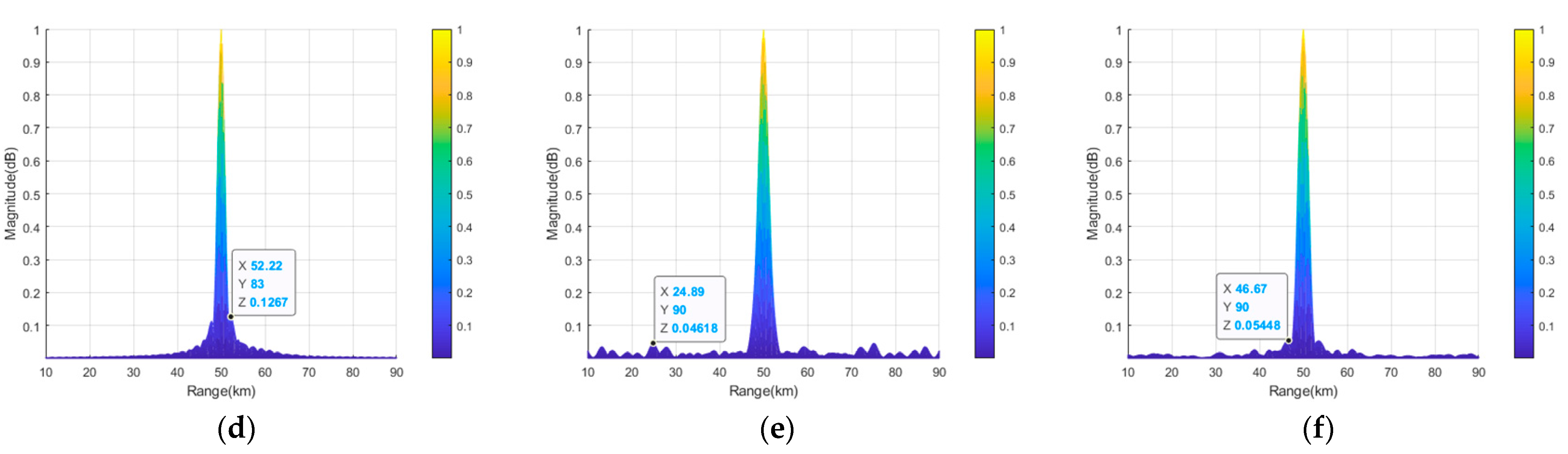
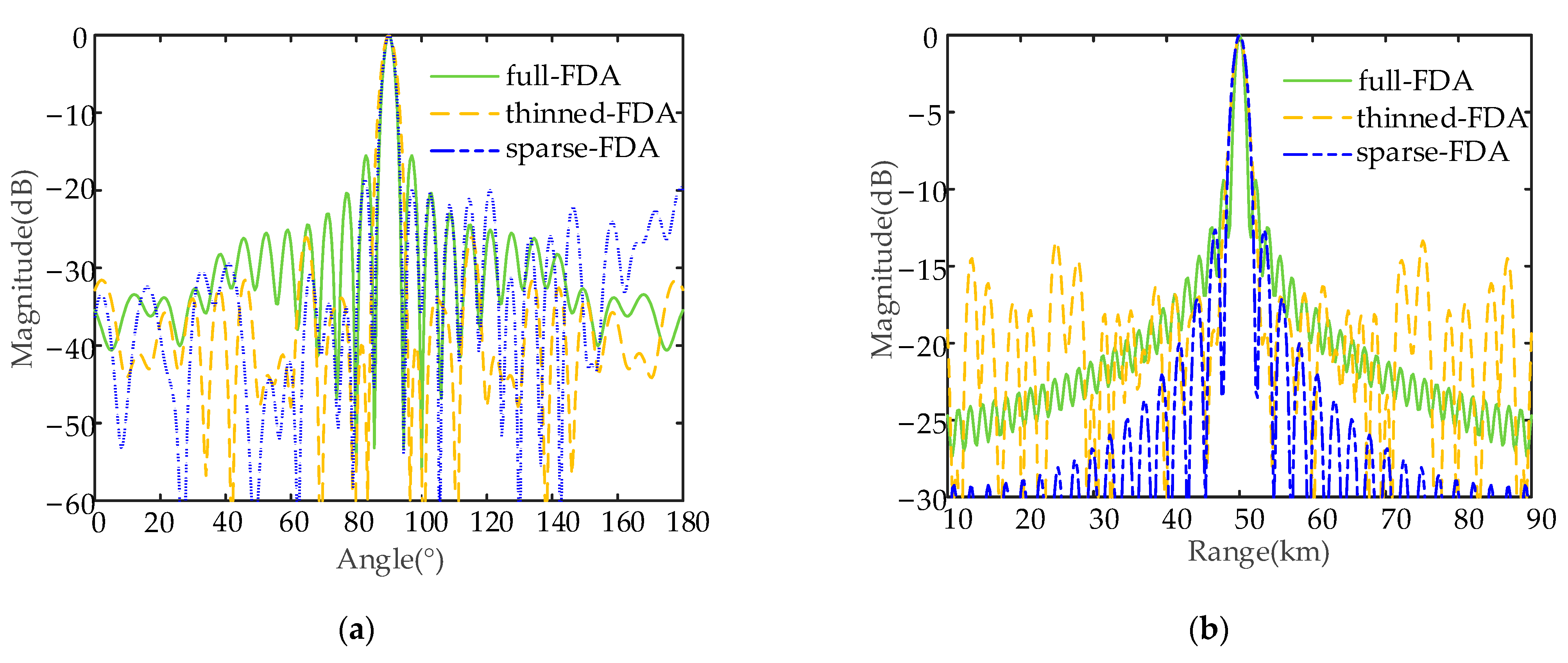
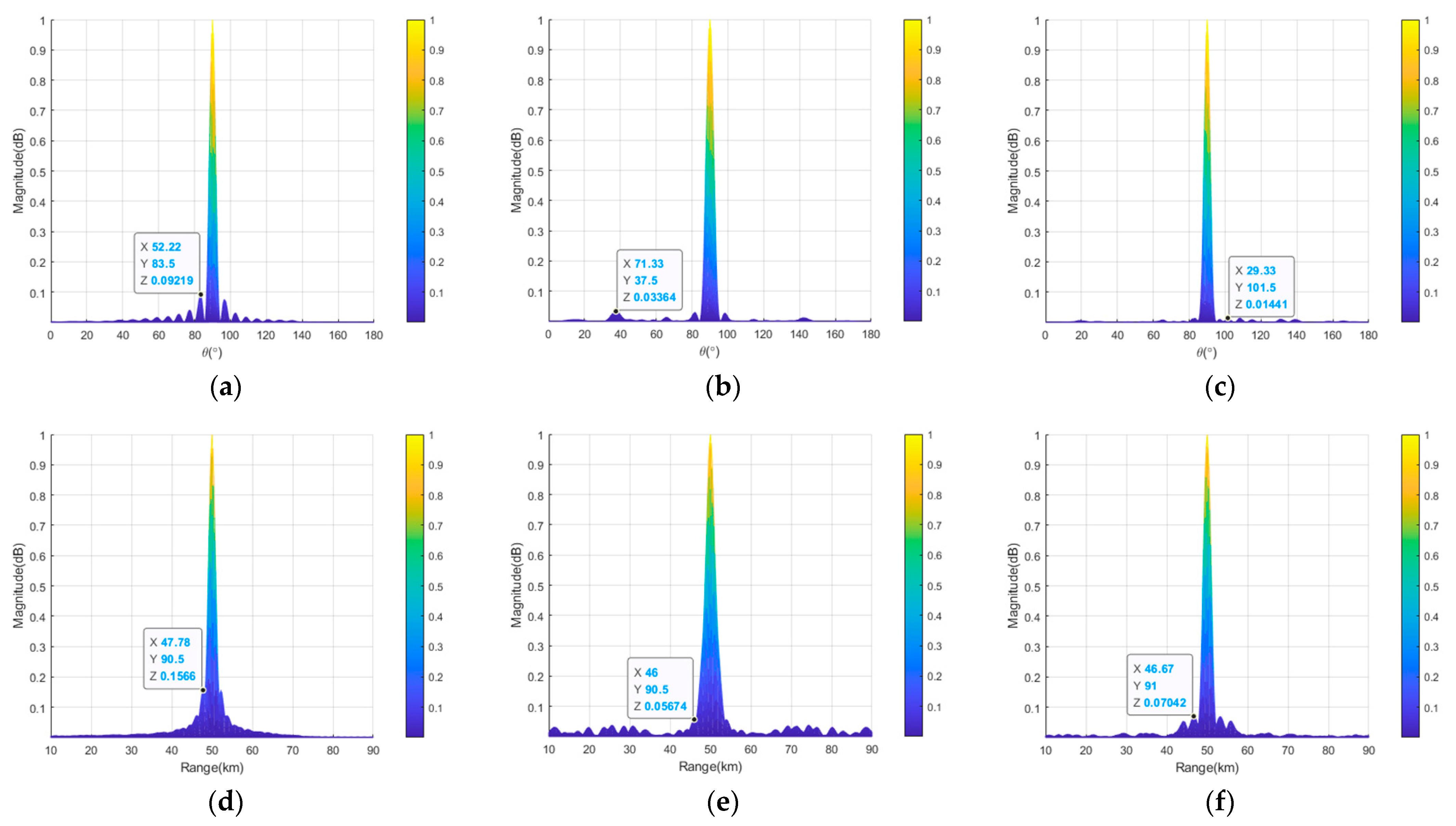
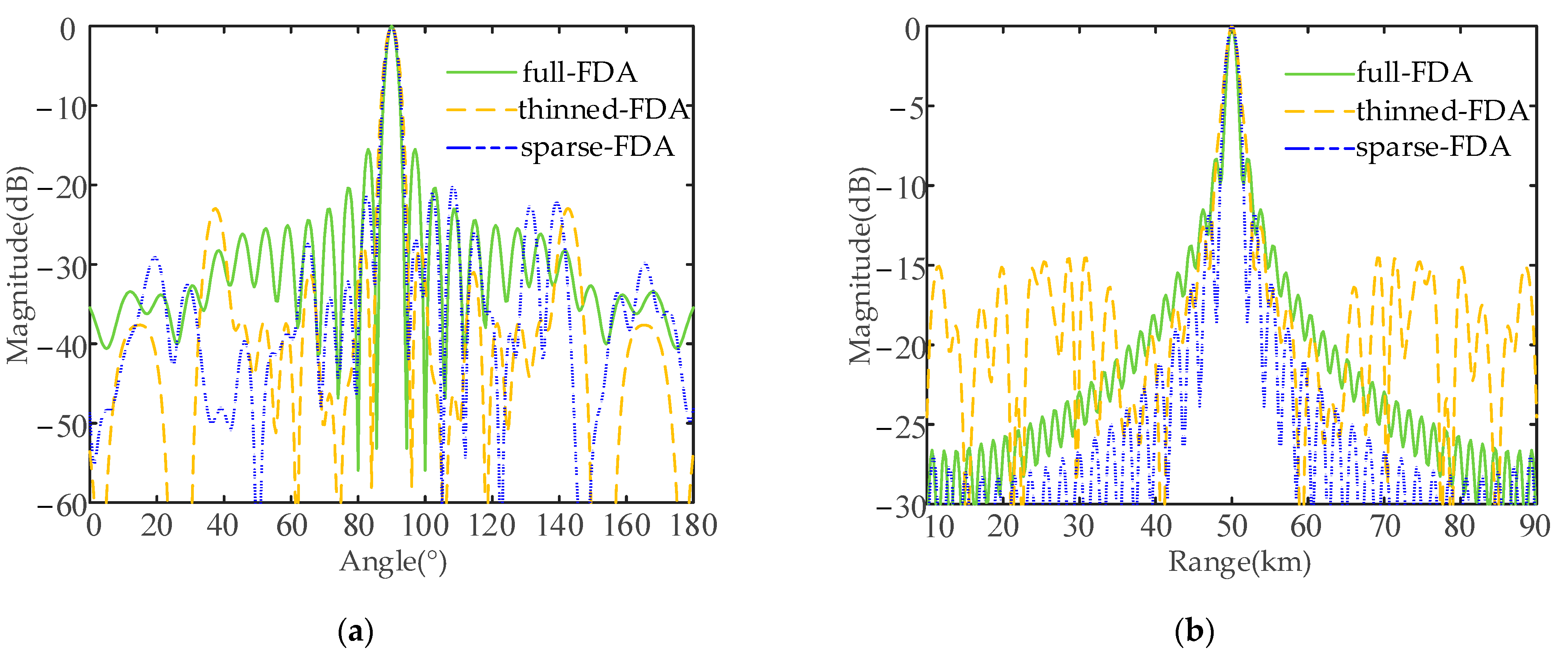
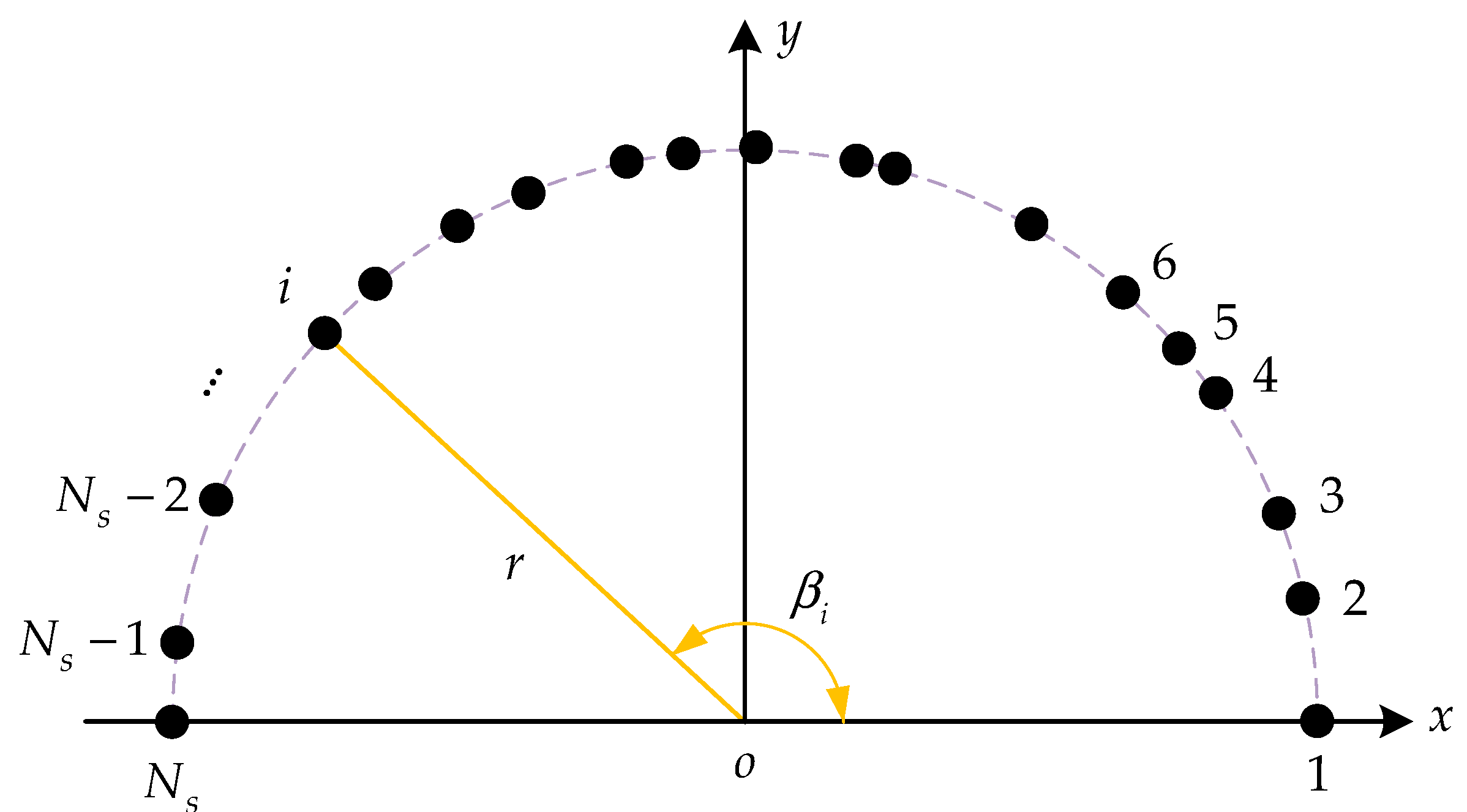
The thinned and sparse beamforming for semicircular FDAs were investigated, where the excitation amplitudes were also considered in thinned semicircular FDAs, and only the elements’ positions were incorporated into the sparse semicircular FDA. Firstly, the transmit–receive model was introduced to handle the inherent time-varying issue of FDA, followed by the thinned and sparse implementations successively. Note that three types of non-linearly varying frequency offsets (FO), i.e., log-FO, sin-FO, and tanh-FO, were adopted during the investigations. Under the same assumption that 50% of the elements should be saved, the sidelobe levels (SLLs) of the thinned semicircular -FDAs were reduced by 5.8 dB, 4.4 dB, and 4.4 dB, and the widths of the mainlobes were all widened by 3° in their angle dimension. Compared with the thinned semicircular FDAs, the phenomenon of mainlobe widening was alleviated in the sparse semicircular FDAs where the SLLs were reduced by 2.2 dB, 3.7 dB and 3.5 dB, and the mainlobes’ widths in the angle dimension were widened by 1°, 0° and 1°, respectively. It should be highlighted that the sparse semicircular FDA with sin-FO did not broaden the mainlobe in the angle dimension. Therefore, it can be concluded that a sparse semicircular FDA is superior over a thinned semicircular FDA, since it can reduce the same cost with a higher array resolution.
Keywords: semicircular array configuration; frequency diverse array; thinned and sparse array antenna; transmit–receive beamforming semicircular array configuration; frequency diverse array; thinned and sparse array antenna; transmit–receive beamforming