Article

Watermarking Algorithm for Remote Sensing Images Based on Ring-Shaped Template Watermark and Multiscale LCM


by
Qifei Zhou
1,
Hua Sun
2,3,
Xinyan Pang
4,5,6,
Chi Ai
2,3,
Xiaoye Zhu
2,3,
Changqing Zhu
4,5,6 and
Na Ren
2,4,5,6,*
1
School of Geoscience and Technology, Zhengzhou University, Zhengzhou 450001, China
2
Hunan Engineering Research Center of Geographic Information Security and Application, Changsha 410007, China
3
The Third Surveying and Mapping Institute of Hunan Province, Changsha 410018, China
4
Key Laboratory of Virtual Geographic Environment, Nanjing Normal University, Ministry of Education, Nanjing 210023, China
5
State Key Laboratory Cultivation Base of Geographical Environment Evolution of Jiangsu Province, Nanjing 210023, China
6
Jiangsu Center for Collaborative Innovation in Geographical Information Resource Development and Application, Nanjing 210023, China
*
Author to whom correspondence should be addressed.
Remote Sens. 2024, 16(14), 2535; https://doi.org/10.3390/rs16142535
Submission received: 31 May 2024 / Revised: 30 June 2024 / Accepted: 9 July 2024 / Published: 10 July 2024
(This article belongs to the Section Remote Sensing Image Processing)

Abstract

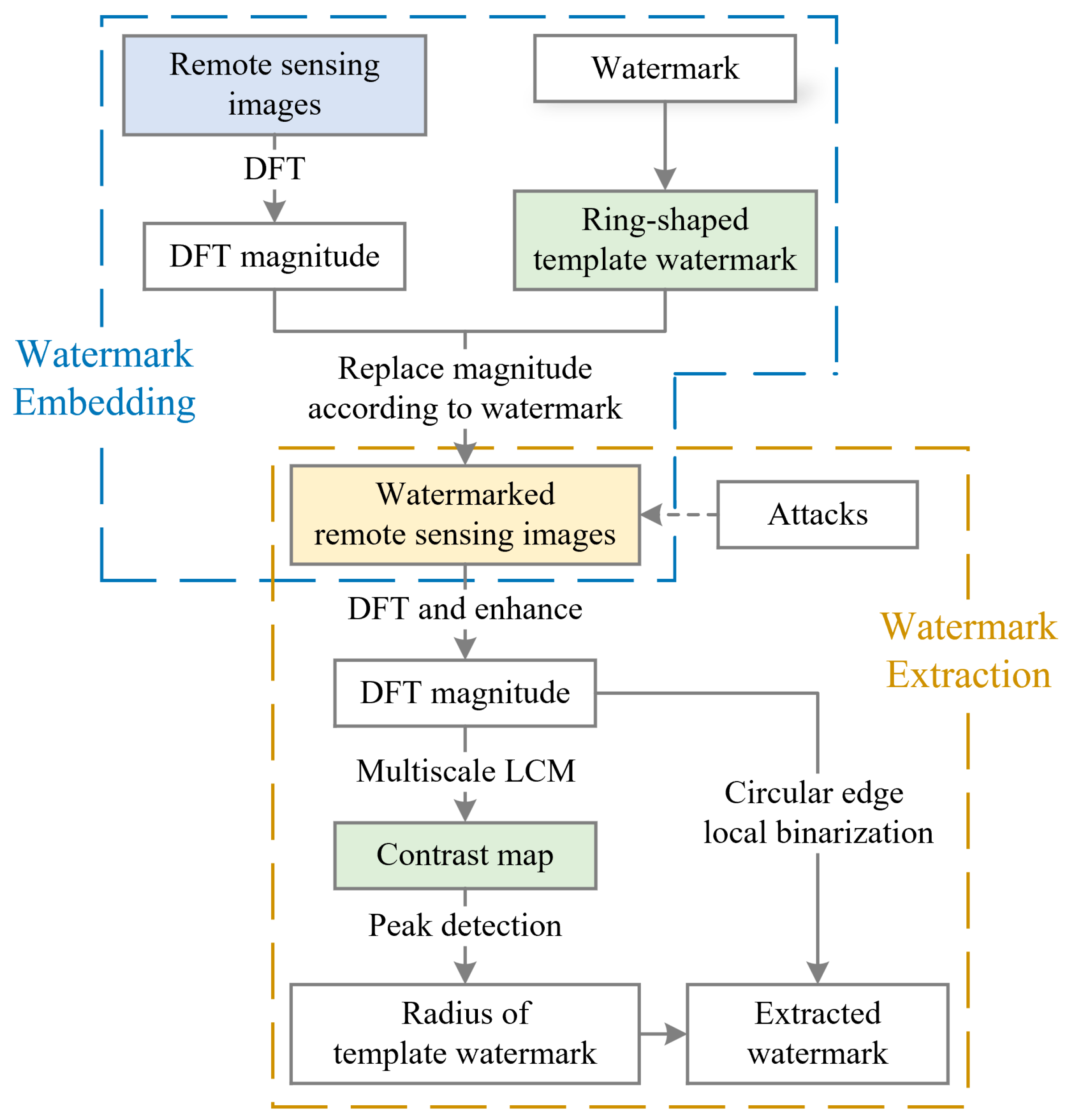
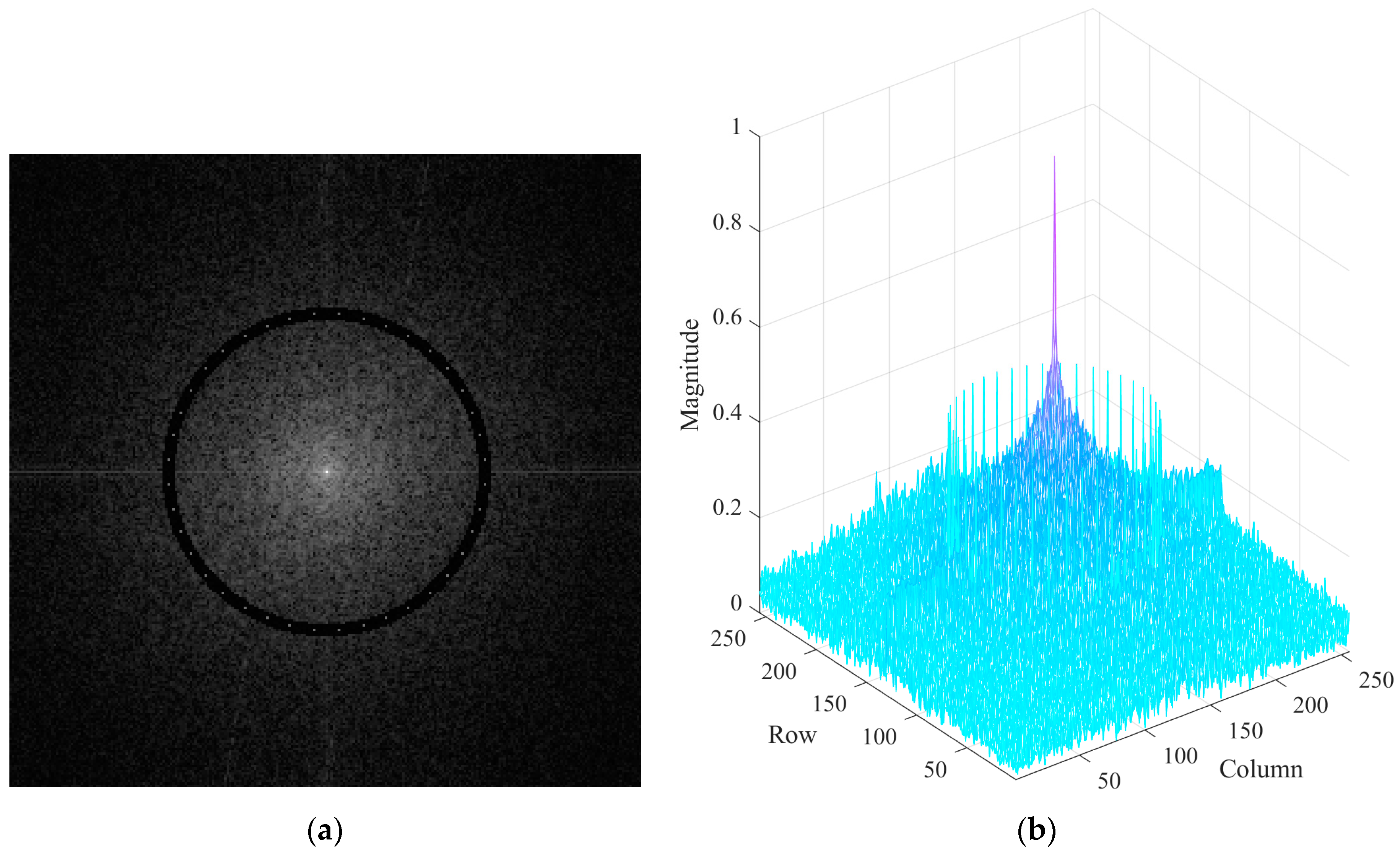
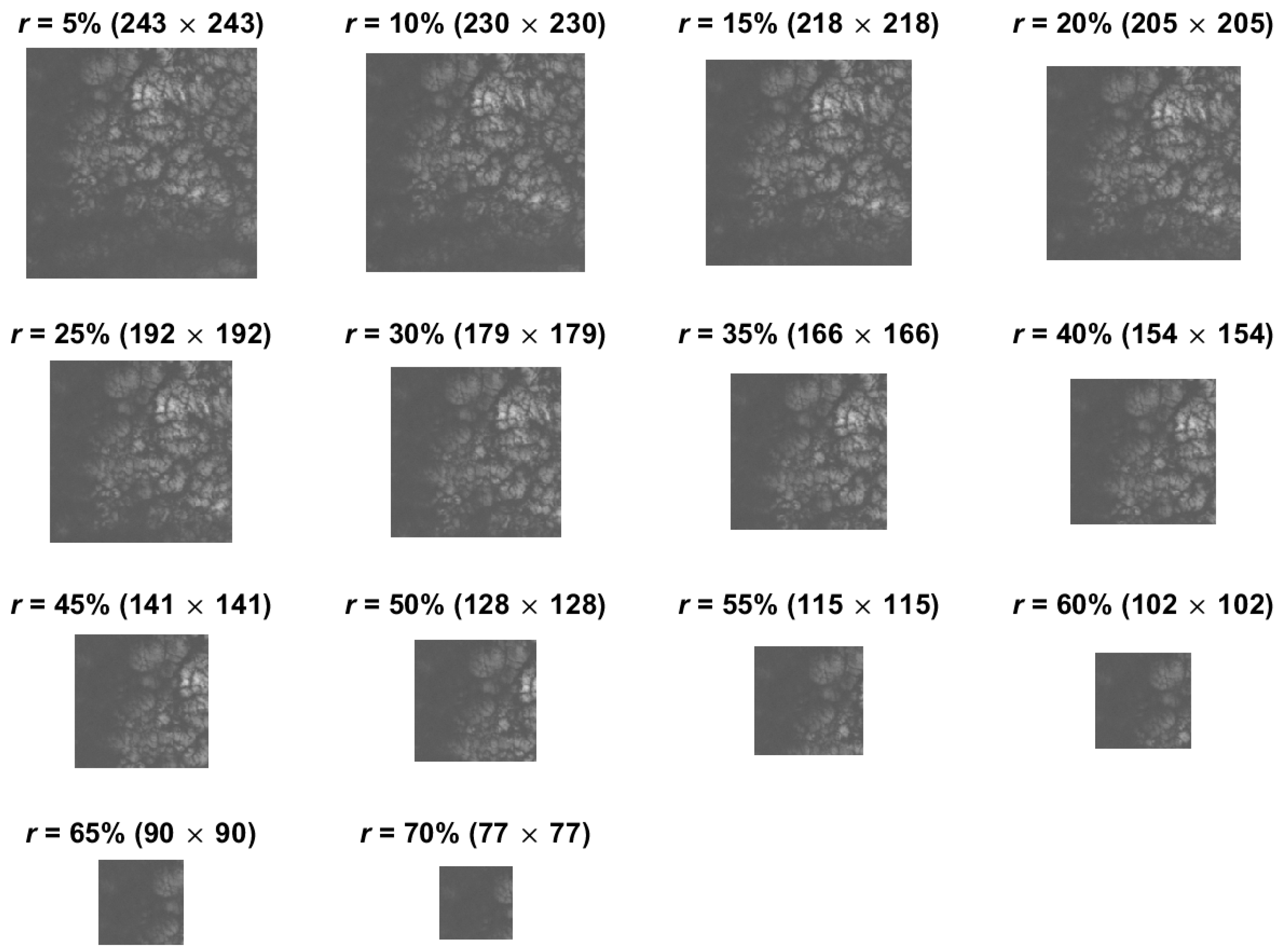
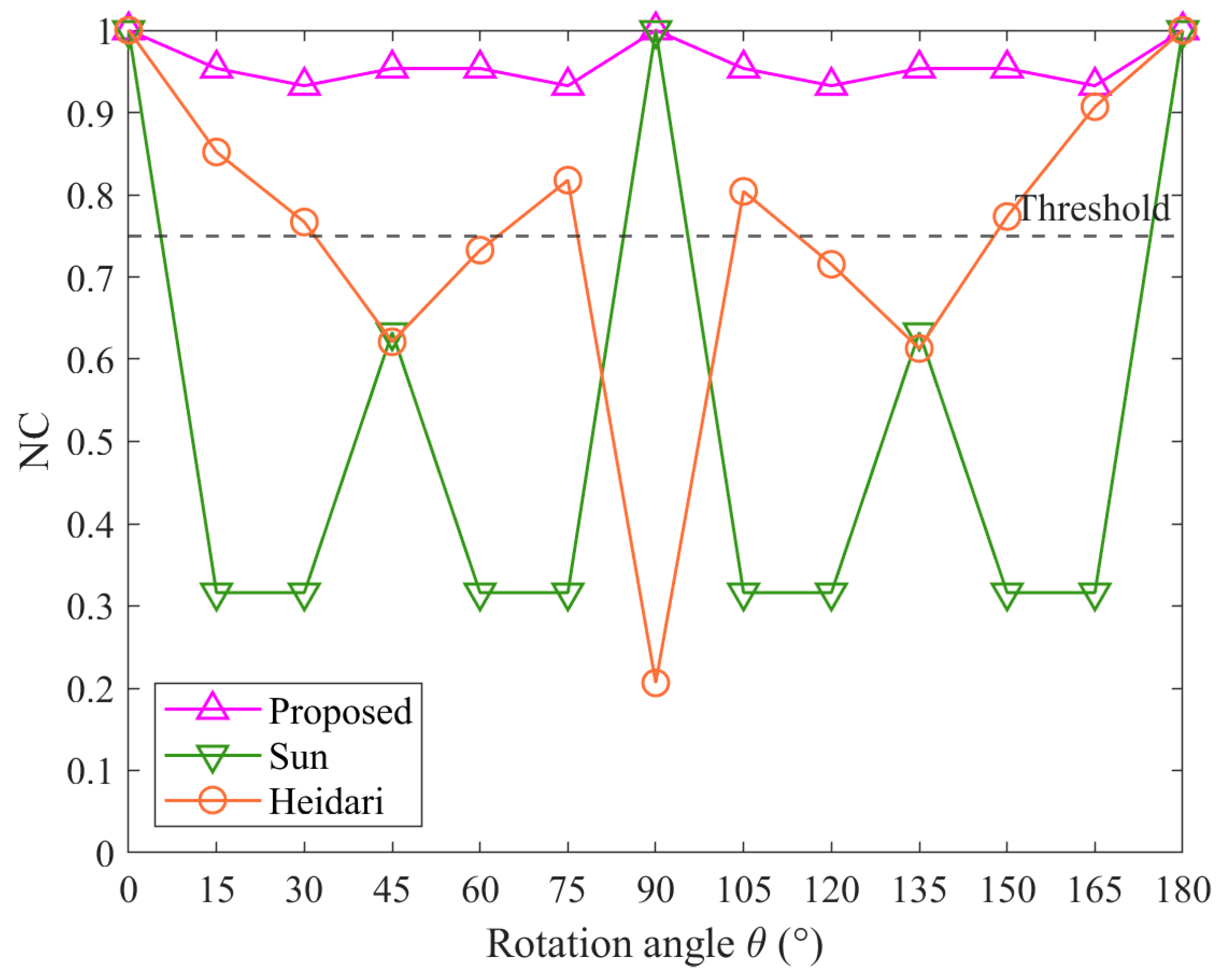
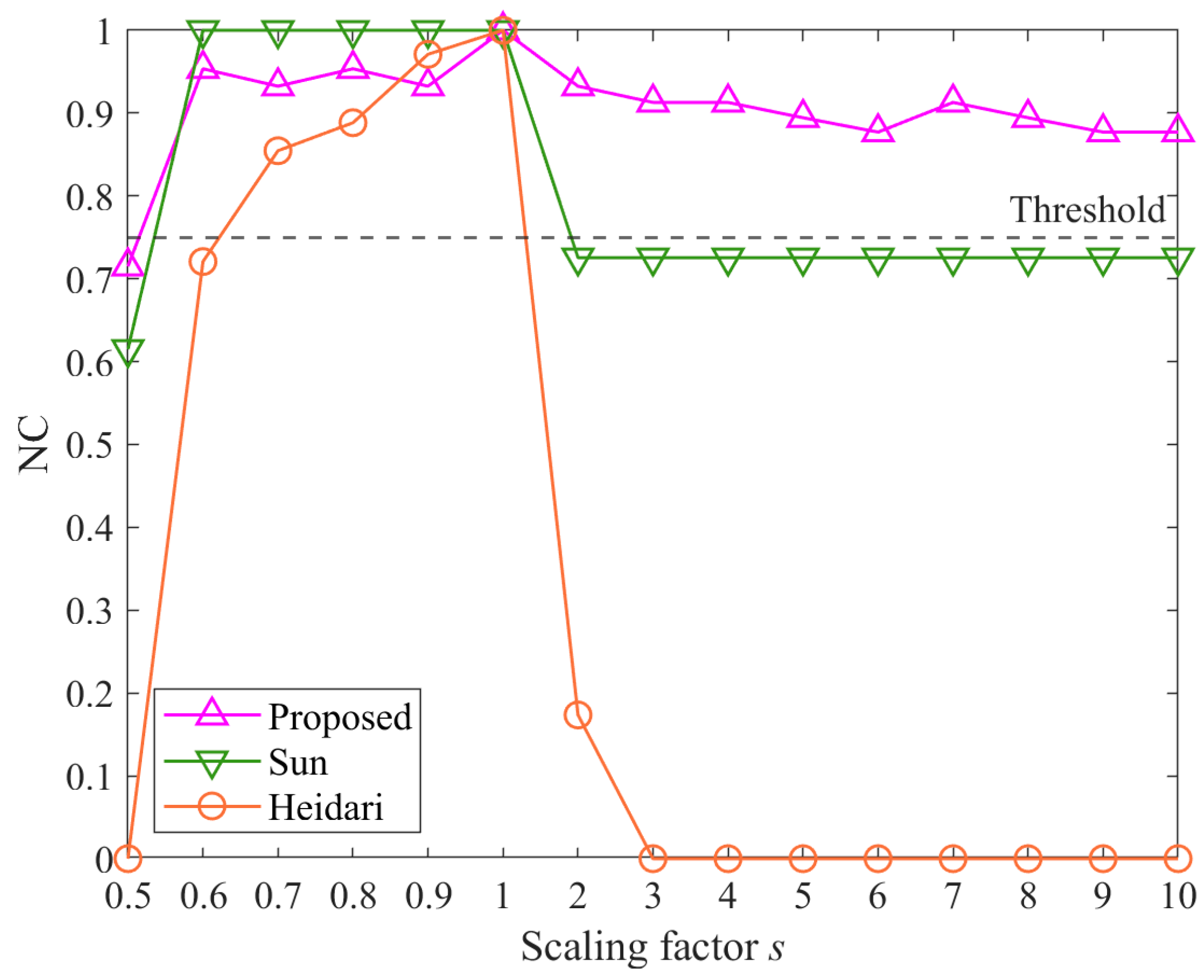
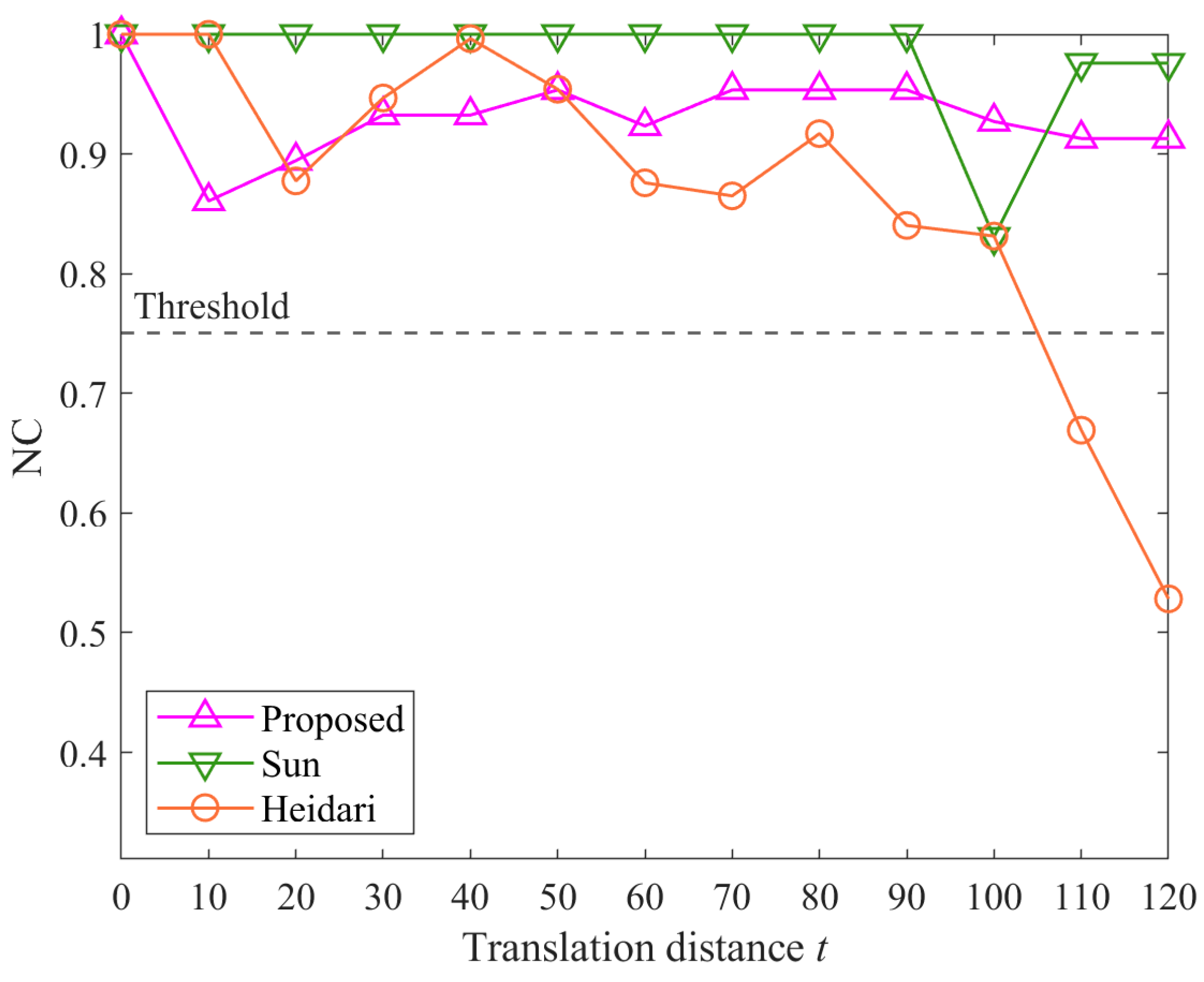
Identifying template watermarks under severe geometric distortions is a significant scientific problem in the current watermarking research for remote sensing images. We propose a novel watermarking algorithm that integrates the ring-shaped template watermark with the multiscale local contrast measure (LCM) method. In the embedding stage, the ring-shaped template watermark is embedded into the discrete Fourier transform (DFT) magnitude coefficients, converting the watermark into small targets in the DFT domain. During the detection stage, the multiscale LCM, a classic infrared small target detection method, enhances these small targets and generates a contrast map. Peak detection is then performed on the contrast map to determine the radius of the template watermark. Finally, circular edge local binarization is applied to extract the watermark information. The proposed method enables synchronization recovery of watermarks under blind conditions. The experimental results demonstrate that the method possesses strong robustness against various geometric attacks such as rotation, scaling, translation, and cropping. It outperforms comparative algorithms in terms of robustness and also exhibits good imperceptibility.
Keywords: watermarking; DFT; template watermark; local contrast measure; robustness; remote sensing images watermarking; DFT; template watermark; local contrast measure; robustness; remote sensing images