Article

Precise Adverse Weather Characterization by Deep-Learning-Based Noise Processing in Automotive LiDAR Sensors

by
Marcel Kettelgerdes
1,2,*,
Nicolas Sarmiento
2,
Hüseyin Erdogan
3,
Bernhard Wunderle
4 and
Gordon Elger
1,2
1
Institute of Innovative Mobility (IIMo), University of Applied Sciences Ingolstadt, Esplanade 10, 85049 Ingolstadt, Germany
2
Institute for Transportation and Infrastructure Systems (IVI), Fraunhofer Society, Stauffenbergstraße 2, 85051 Ingolstadt, Germany
3
Autonomous Mobility Division, Conti Temic Microelectronic GmbH, Ringlerstraße 17, 85057 Ingolstadt, Germany
4
Faculty of Electrical Engineering and Information Technology, Chemnitz University of Technology, Reichenhainer Str. 70, 09126 Chemnitz, Germany
*
Author to whom correspondence should be addressed.
Remote Sens. 2024, 16(13), 2407; https://doi.org/10.3390/rs16132407
Submission received: 24 May 2024 / Revised: 24 June 2024 / Accepted: 28 June 2024 / Published: 30 June 2024

Abstract

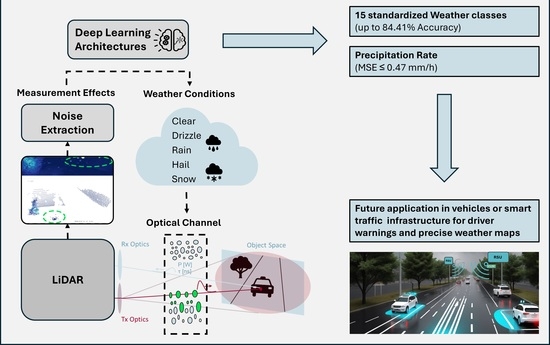
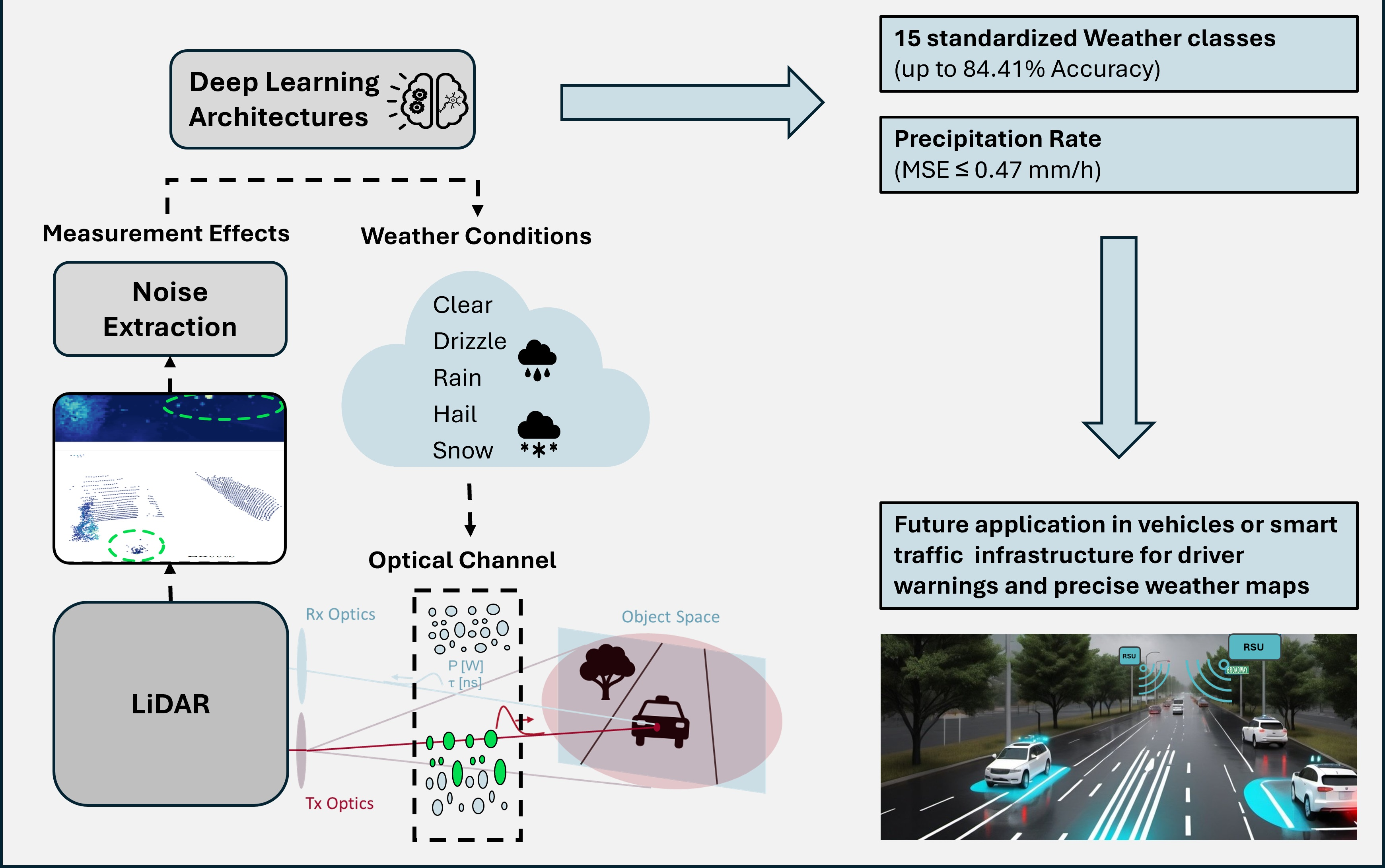
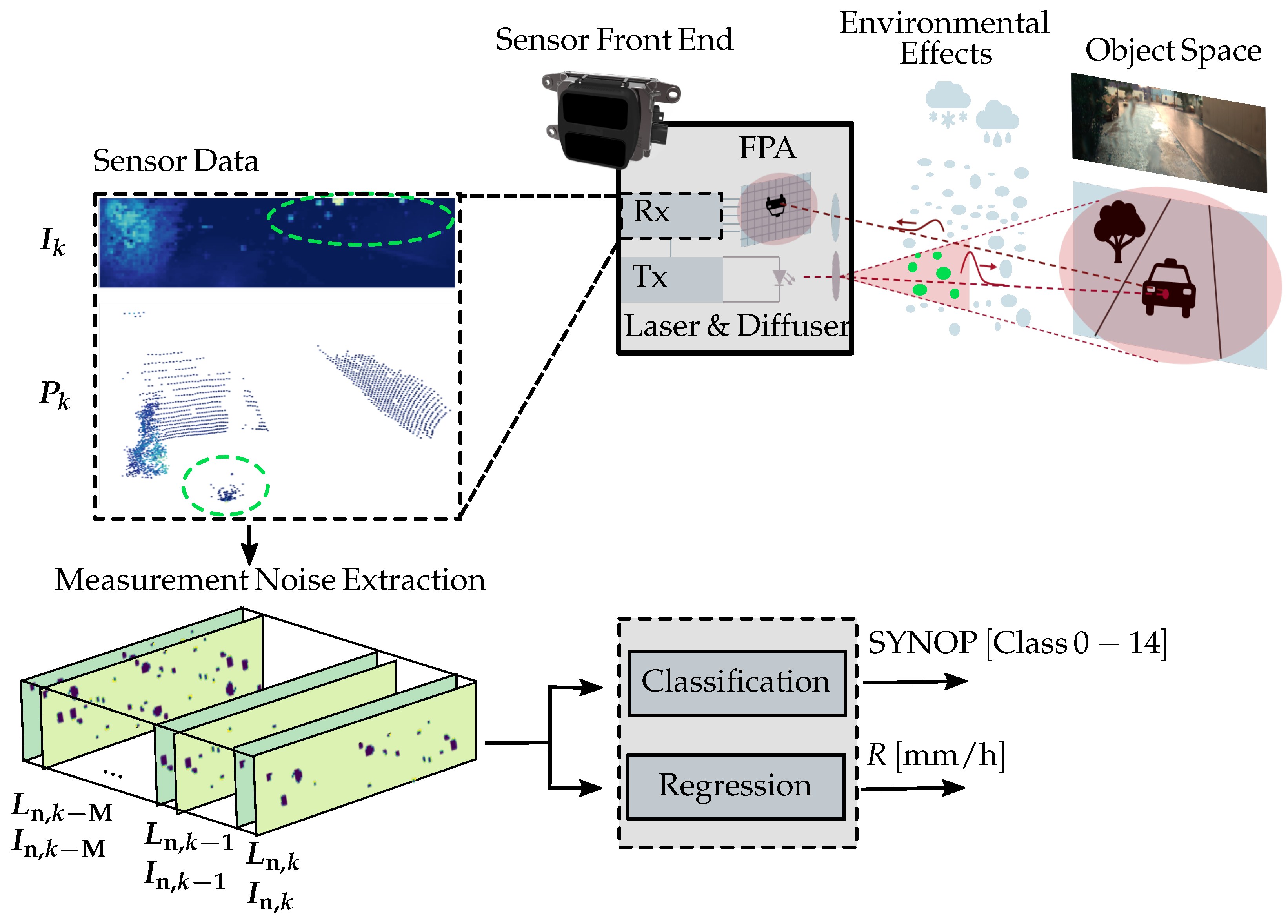
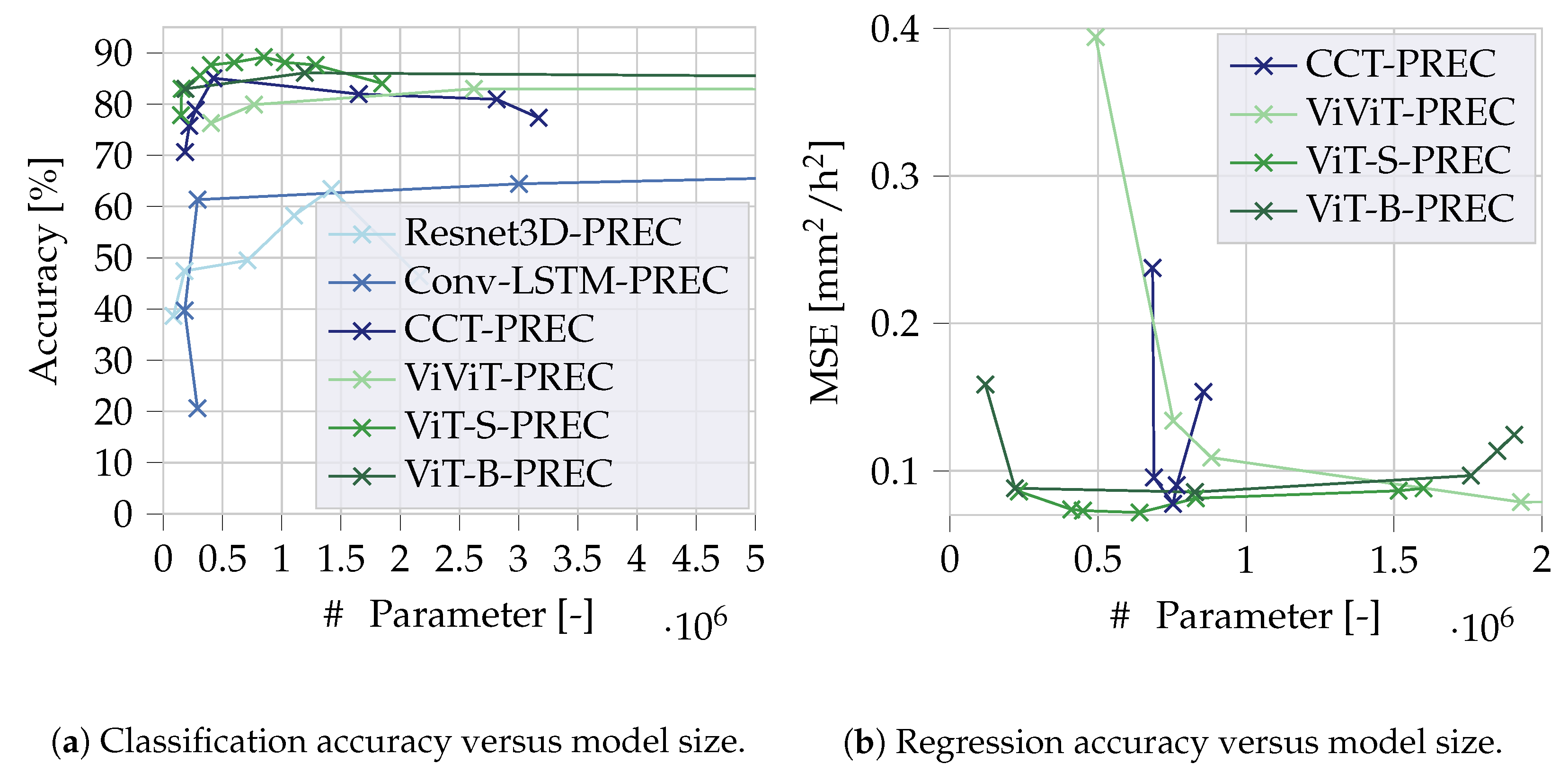
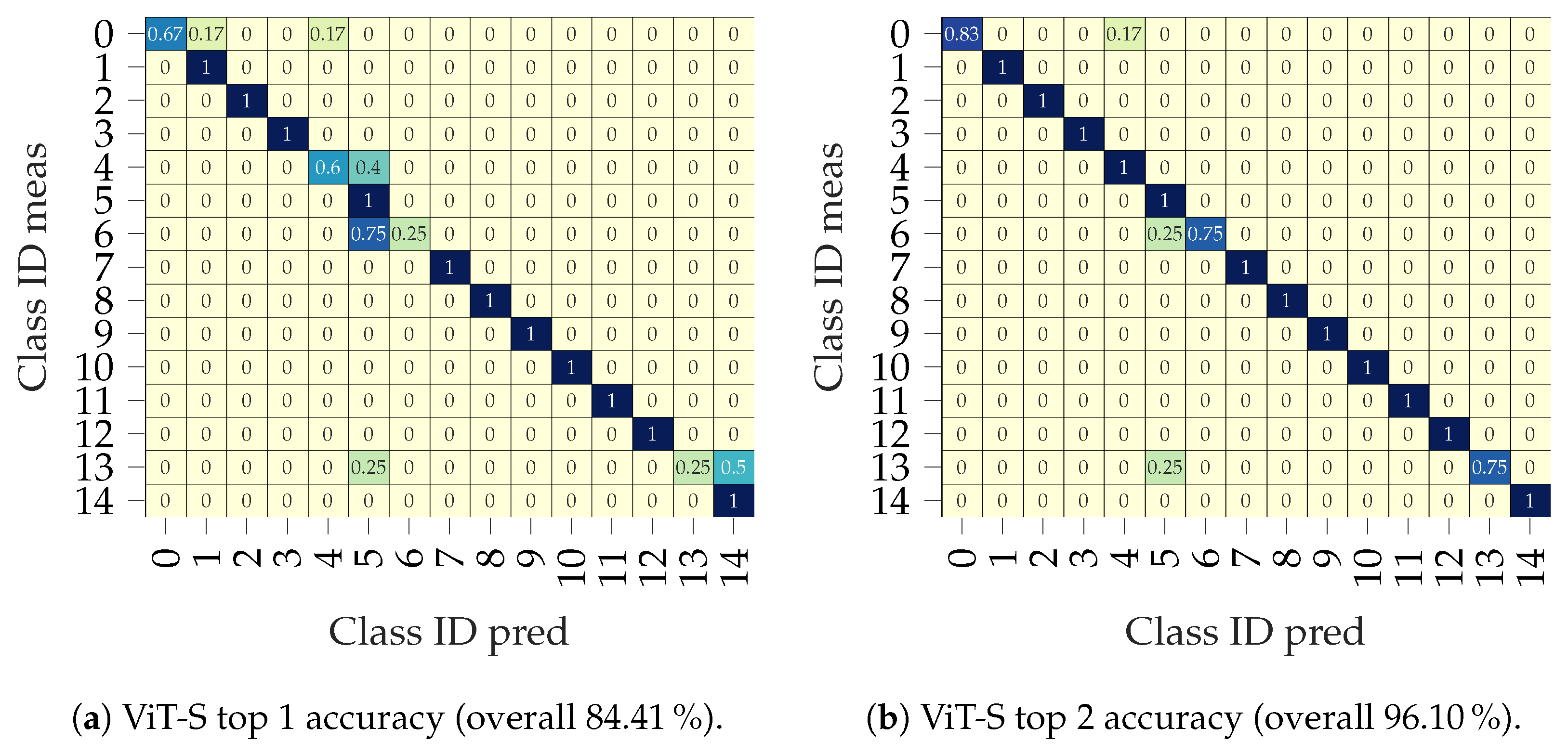
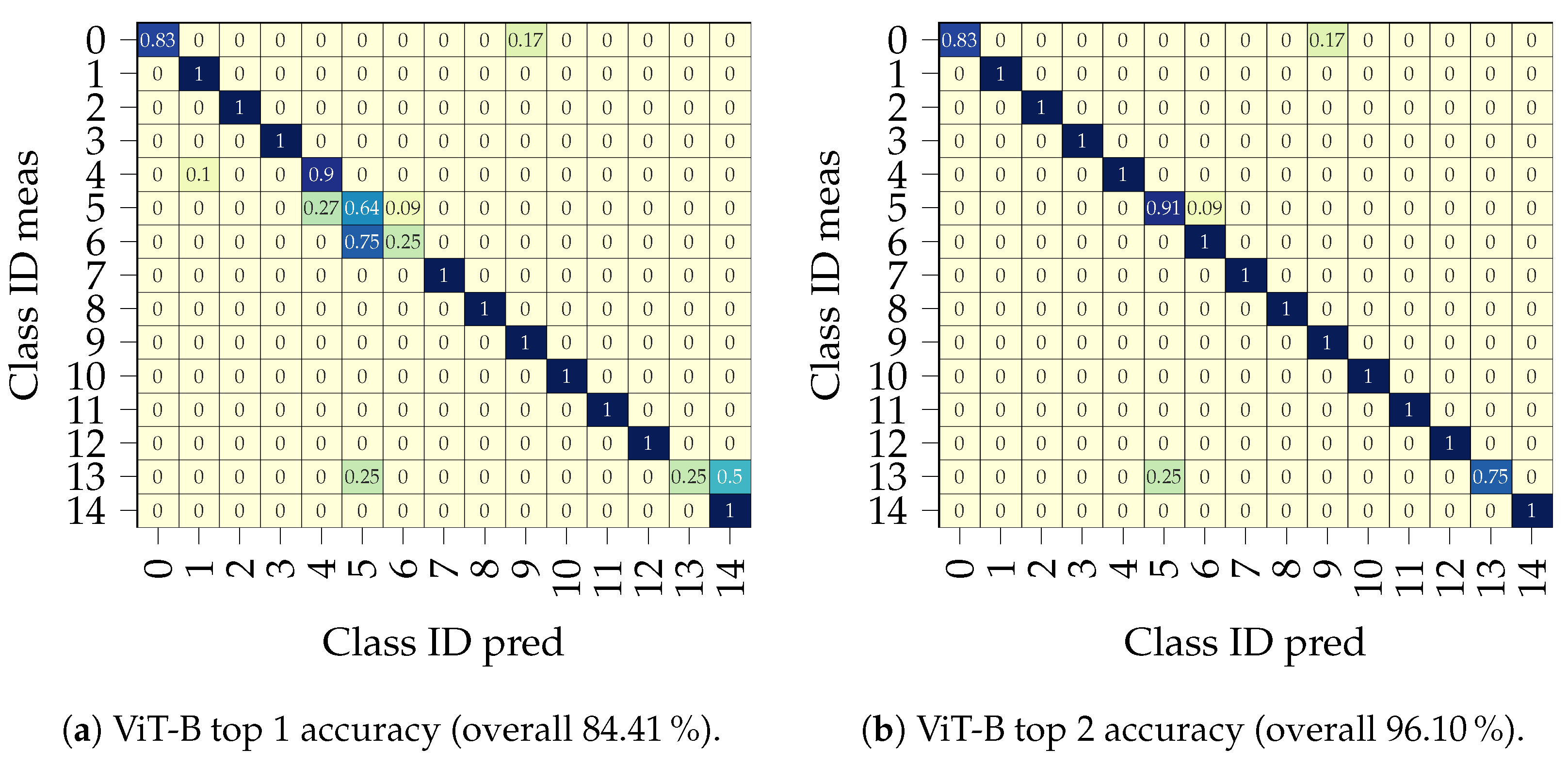
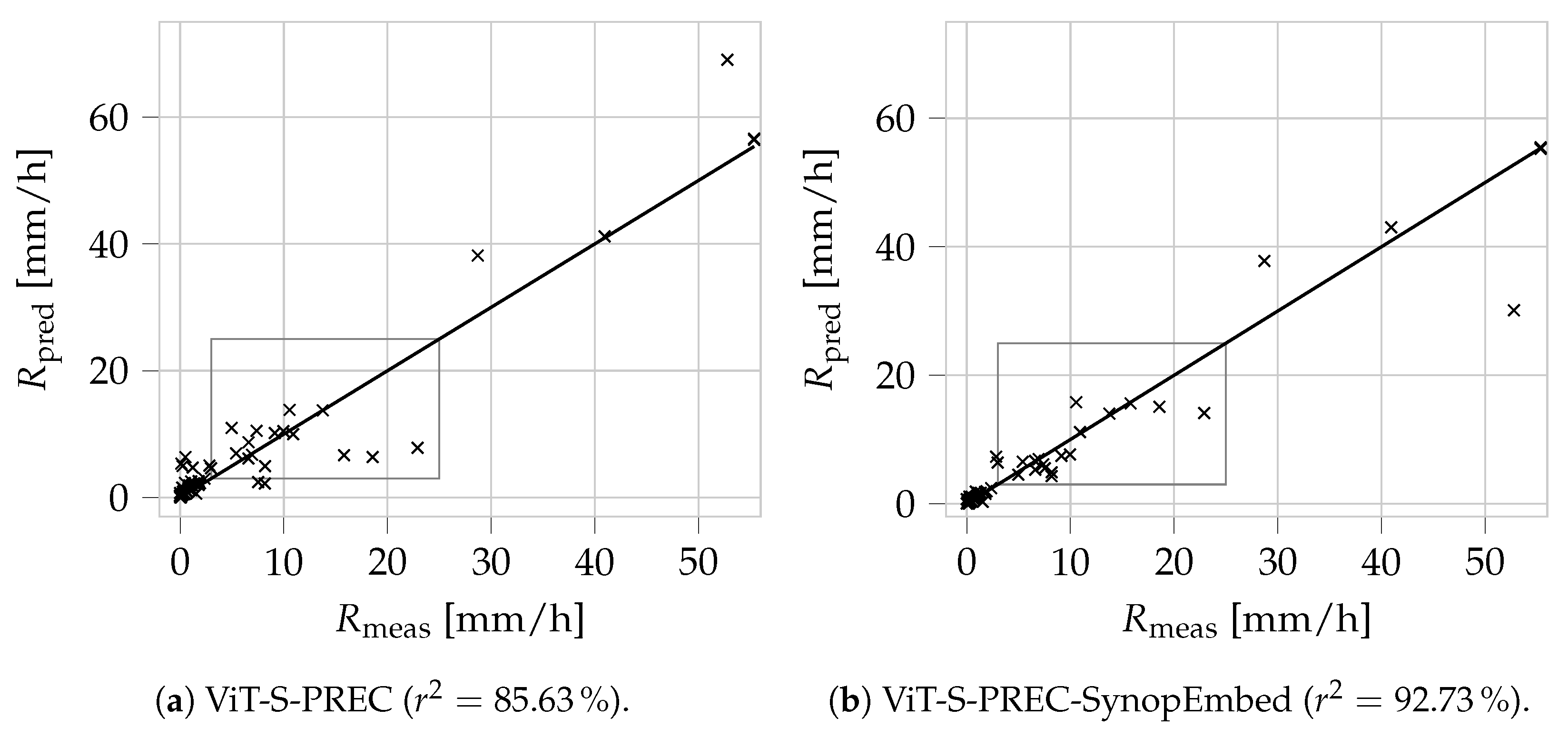
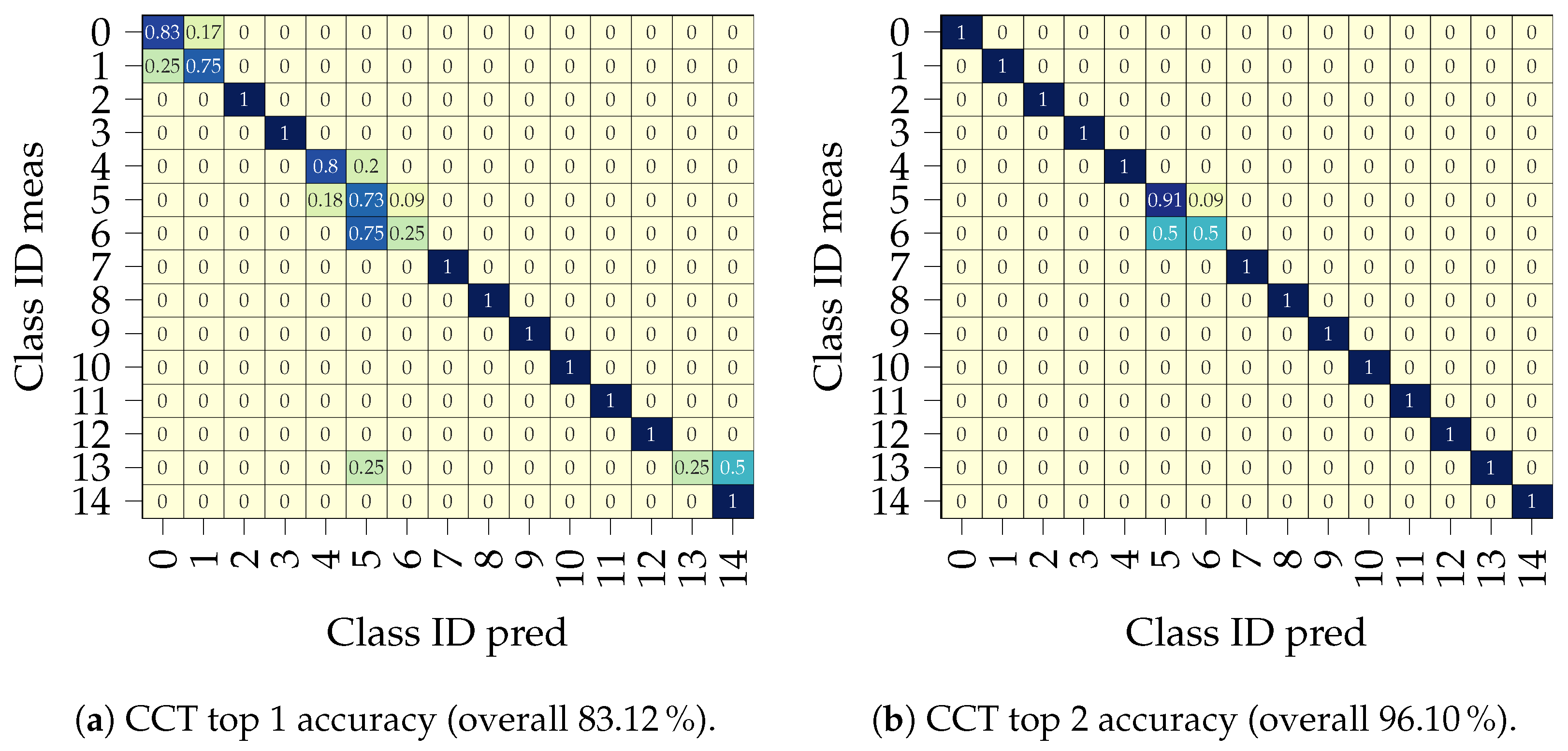
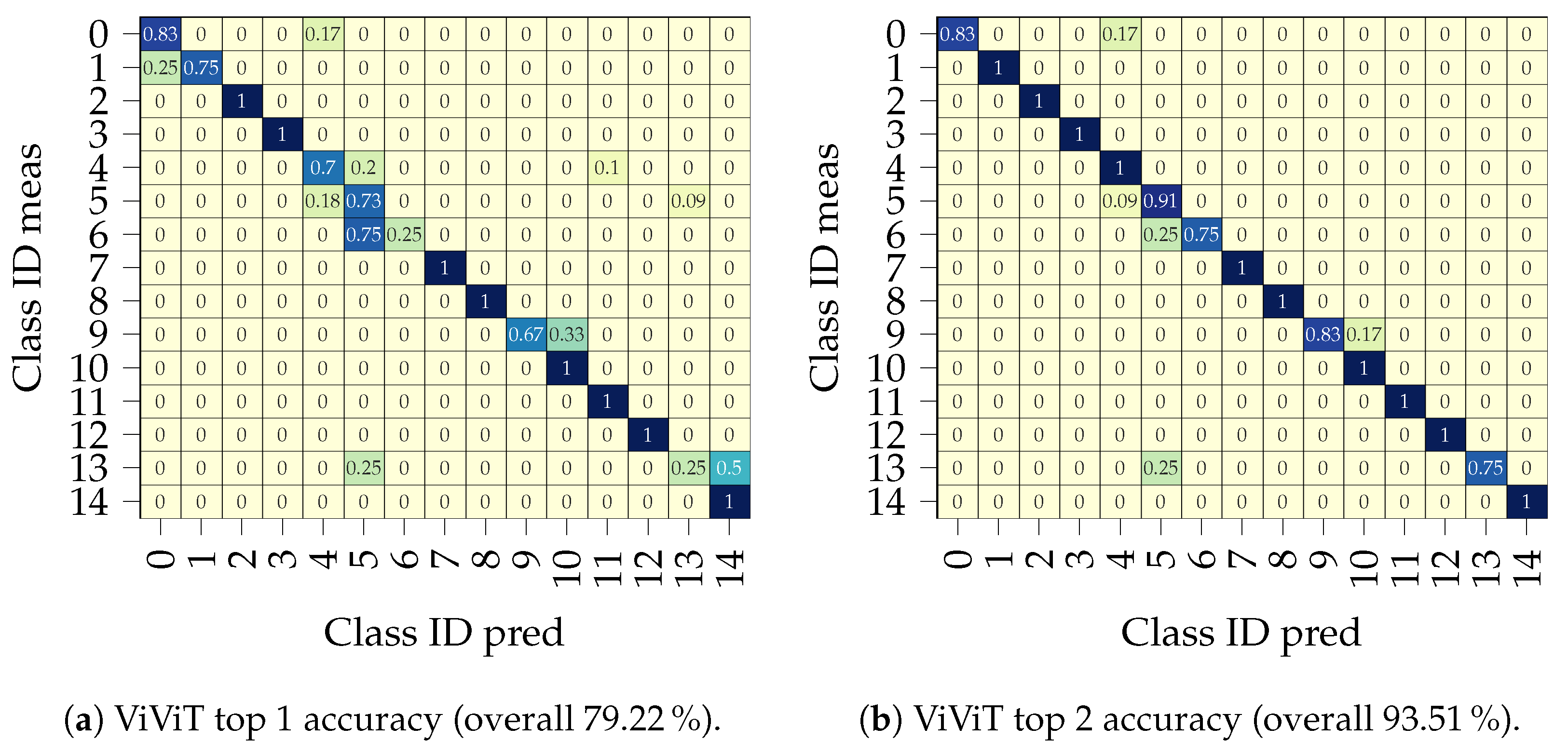
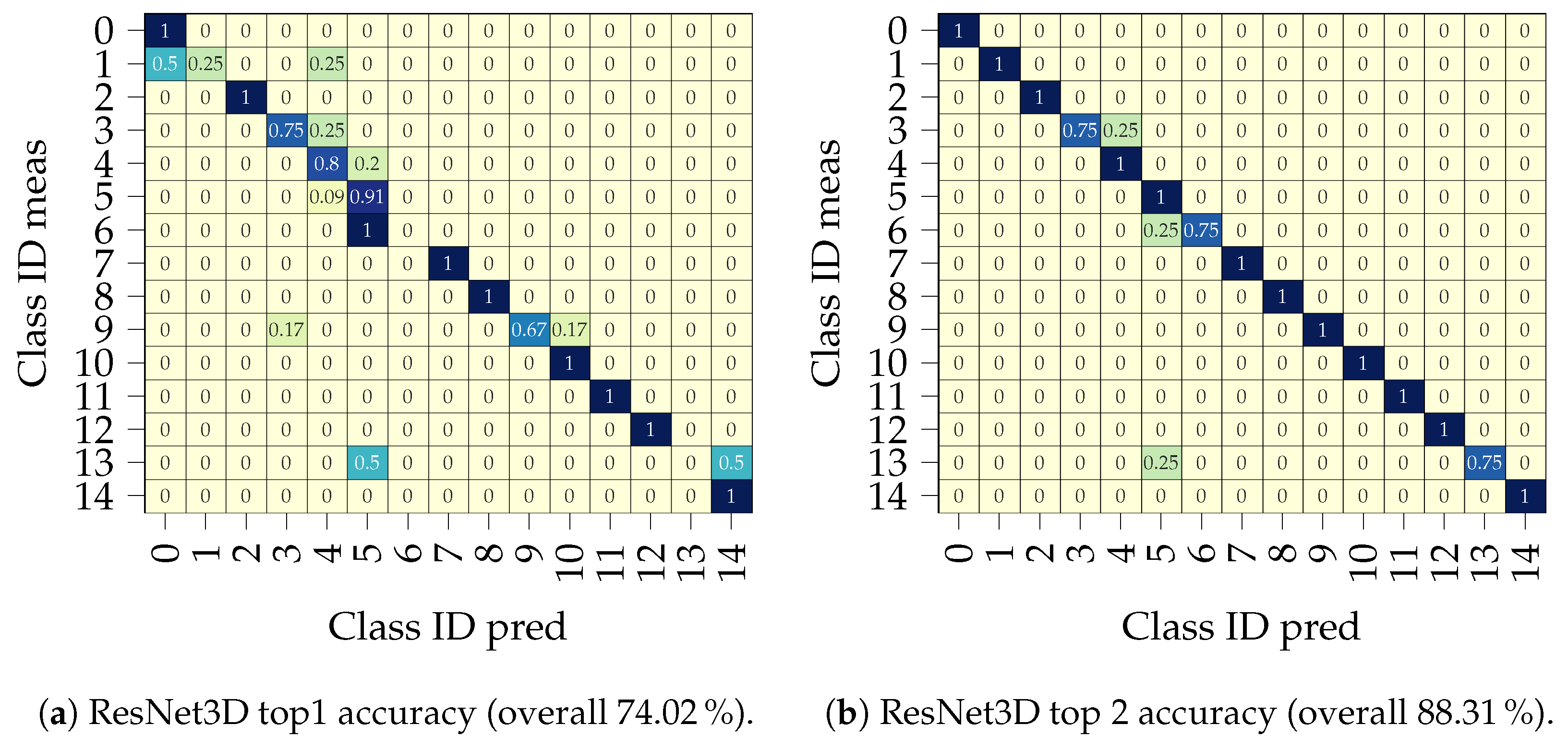
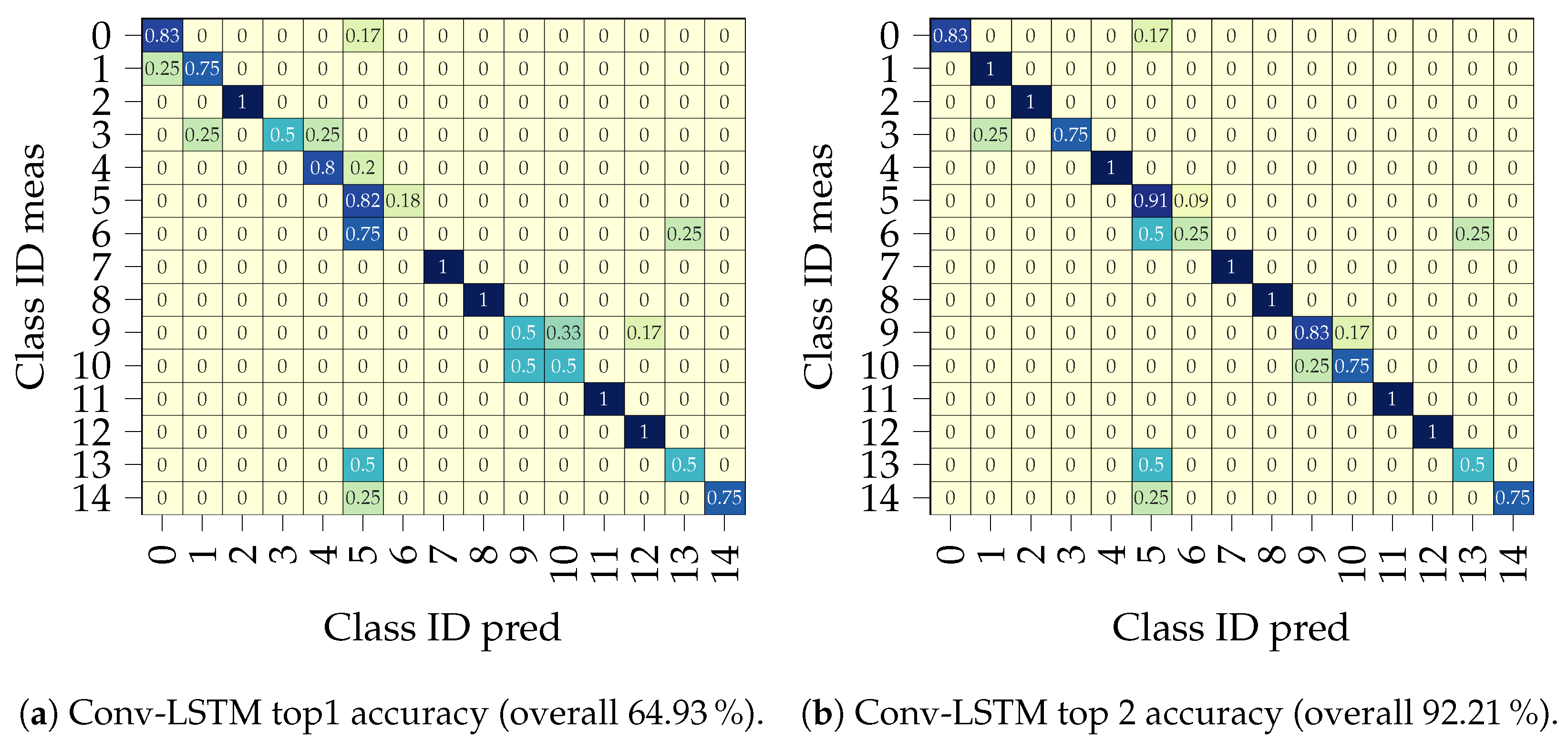
With current advances in automated driving, optical sensors like cameras and LiDARs are playing an increasingly important role in modern driver assistance systems. However, these sensors face challenges from adverse weather effects like fog and precipitation, which significantly degrade the sensor performance due to scattering effects in its optical path. Consequently, major efforts are being made to understand, model, and mitigate these effects. In this work, the reverse research question is investigated, demonstrating that these measurement effects can be exploited to predict occurring weather conditions by using state-of-the-art deep learning mechanisms. In order to do so, a variety of models have been developed and trained on a recorded multiseason dataset and benchmarked with respect to performance, model size, and required computational resources, showing that especially modern vision transformers achieve remarkable results in distinguishing up to 15 precipitation classes with an accuracy of 84.41% and predicting the corresponding precipitation rate with a mean absolute error of less than 0.47 mm/h, solely based on measurement noise. Therefore, this research may contribute to a cost-effective solution for characterizing precipitation with a commercial Flash LiDAR sensor, which can be implemented as a lightweight vehicle software feature to issue advanced driver warnings, adapt driving dynamics, or serve as a data quality measure for adaptive data preprocessing and fusion.
Keywords: ADAS; adverse weather; weather classification; artificial intelligence; deep learning; Vision Transformer; LSTM; automotive; LiDAR; precipitation measurement ADAS; adverse weather; weather classification; artificial intelligence; deep learning; Vision Transformer; LSTM; automotive; LiDAR; precipitation measurement
Graphical Abstract