Article

A Novel Multi-Beam SAR Two-Dimensional Ambiguity Suppression Method Based on Azimuth Phase Coding

by
Yihao Xu
1,2,
Fubo Zhang
1,
Wenjie Li
1,2,
Yangliang Wan
1,*,
Longyong Chen
1 and
Tao Jiang
1,2
1
National Key Laboratory of Microwave Imaging, Aerospace Information Research Institute, Chinese Academy of Sciences, Beijing 100190, China
2
School of Electronic, Electrical and Communication Engineering, University of Chinese Academy of Sciences, Beijing 100049, China
*
Author to whom correspondence should be addressed.
Remote Sens. 2024, 16(13), 2298; https://doi.org/10.3390/rs16132298
Submission received: 4 June 2024 / Revised: 20 June 2024 / Accepted: 21 June 2024 / Published: 24 June 2024
(This article belongs to the Special Issue Advances in Synthetic Aperture Radar Data Processing and Application)

Abstract

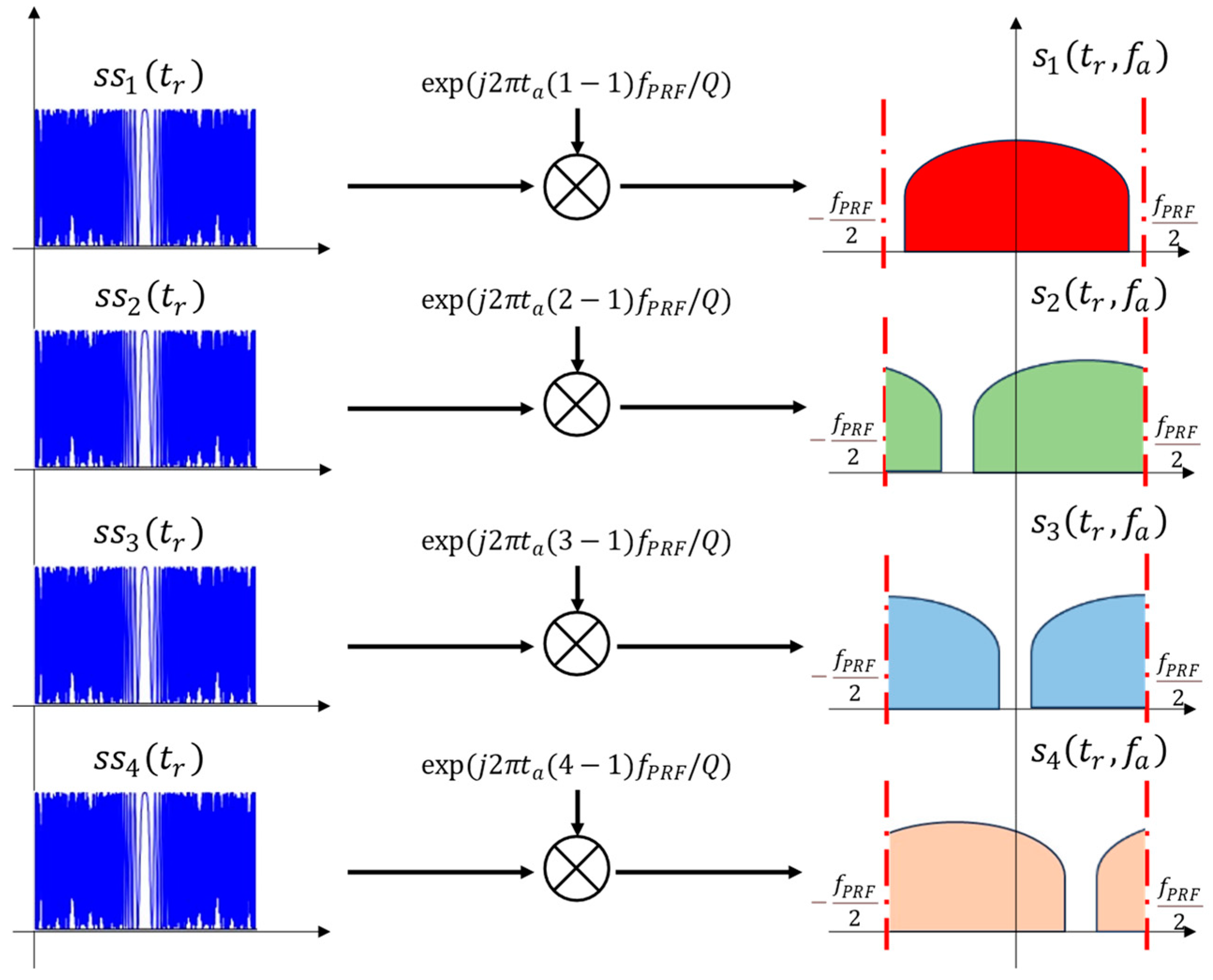
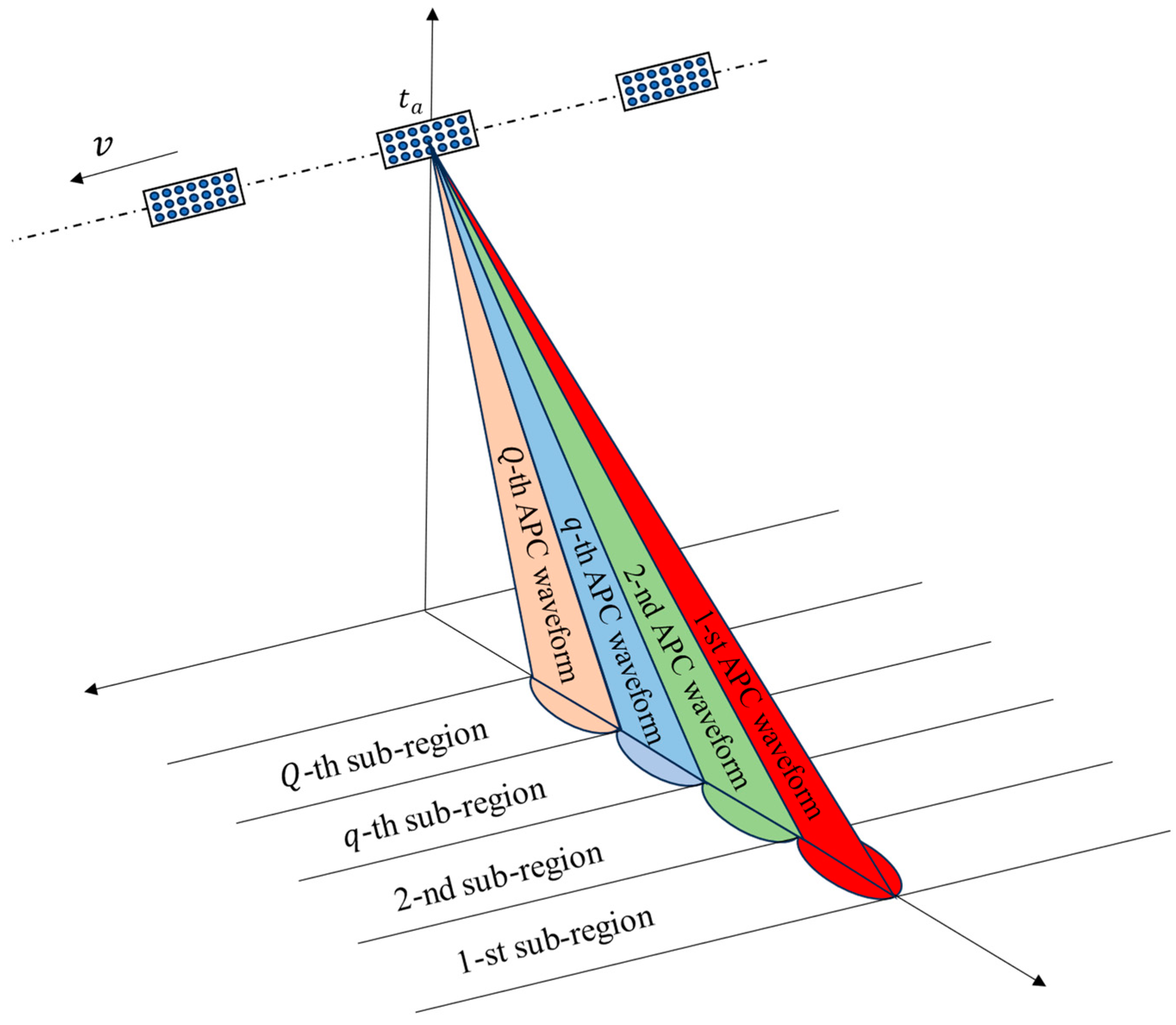
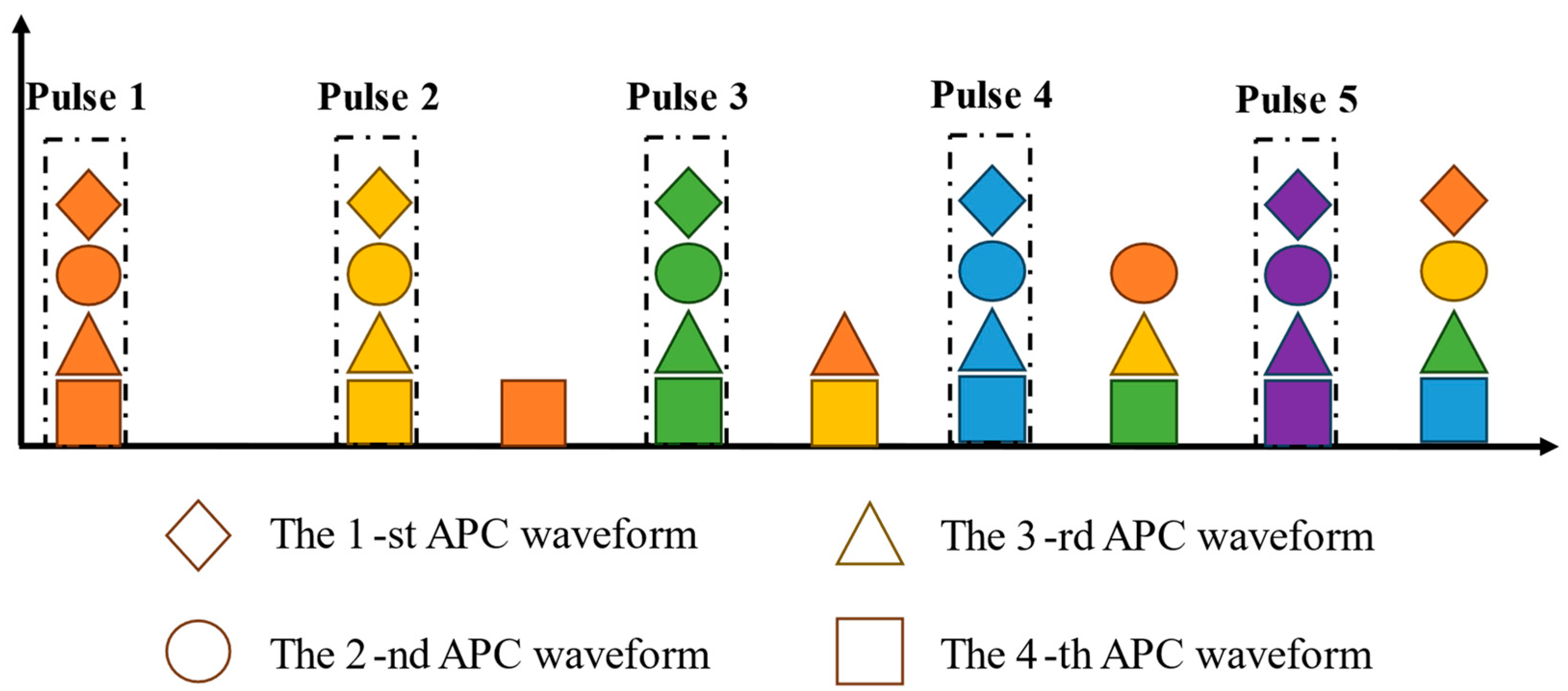
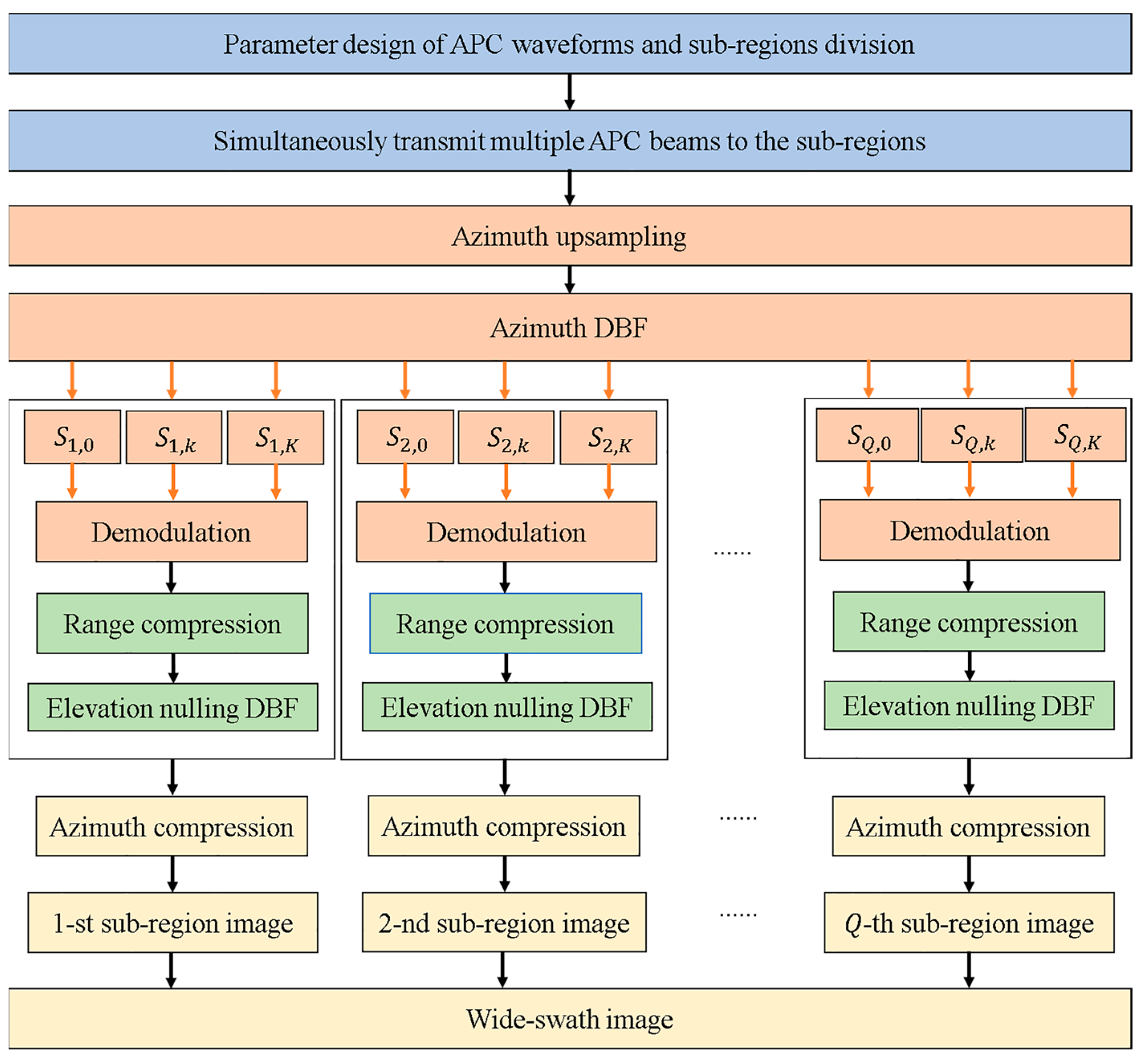
In order to address the problems of range ambiguity and azimuth ambiguity in the wide-swath imaging of synthetic aperture radar (SAR), this paper proposes a multi-beam SAR two-dimensional ambiguity suppression method based on azimuth phase coding (APC). The scheme employs an elevation simultaneous multi-beam transmission system with azimuth under-sampling, transmitting different APC waveforms to various range-ambiguous sub-regions. After receiving the echoes, the azimuth digital beamforming (DBF) is used to separate the APC waveform echoes with multi-order Doppler ambiguity, achieving azimuth reconstruction and range ambiguity suppression simultaneously. Finally, the elevation nulling DBF is used to further suppress range ambiguity and obtain the SAR wide-swath image. The superiority of this scheme is reflected in the following aspects: the azimuth DBF simultaneously suppresses azimuth and range ambiguity, the influence of height fluctuations on the ability to suppress range ambiguity is weakened, the use of elevation nulling DBF further enhances the level of range ambiguity suppression, and different range sub-regions can adopt different range resolutions and working modes. The feasibility of this scheme is verified through theoretical analysis and simulation.
Keywords: synthetic aperture radar (SAR); azimuth phase coding (APC); digital beamforming (DBF); two-dimensional ambiguity suppression synthetic aperture radar (SAR); azimuth phase coding (APC); digital beamforming (DBF); two-dimensional ambiguity suppression