Communication

A New Method for False Alarm Suppression in Heterogeneous Change Detection

1
School of Information and Communication Engineering, University of Electronic Science and Technology of China, Chengdu 611731, China
2
Department of Electrical and Information Engineering, Heilongjiang Institute of Engineering, Harbin 150026, China
*
Author to whom correspondence should be addressed.
Remote Sens. 2023, 15(7), 1745; https://doi.org/10.3390/rs15071745
Submission received: 19 February 2023 / Revised: 13 March 2023 / Accepted: 20 March 2023 / Published: 24 March 2023

Abstract

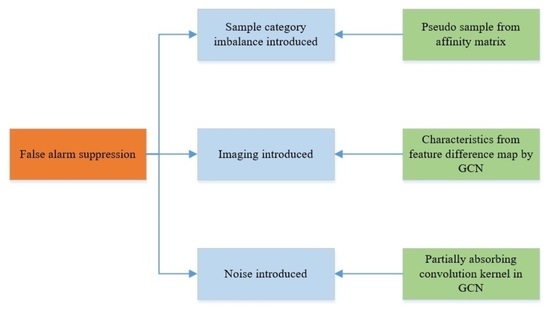
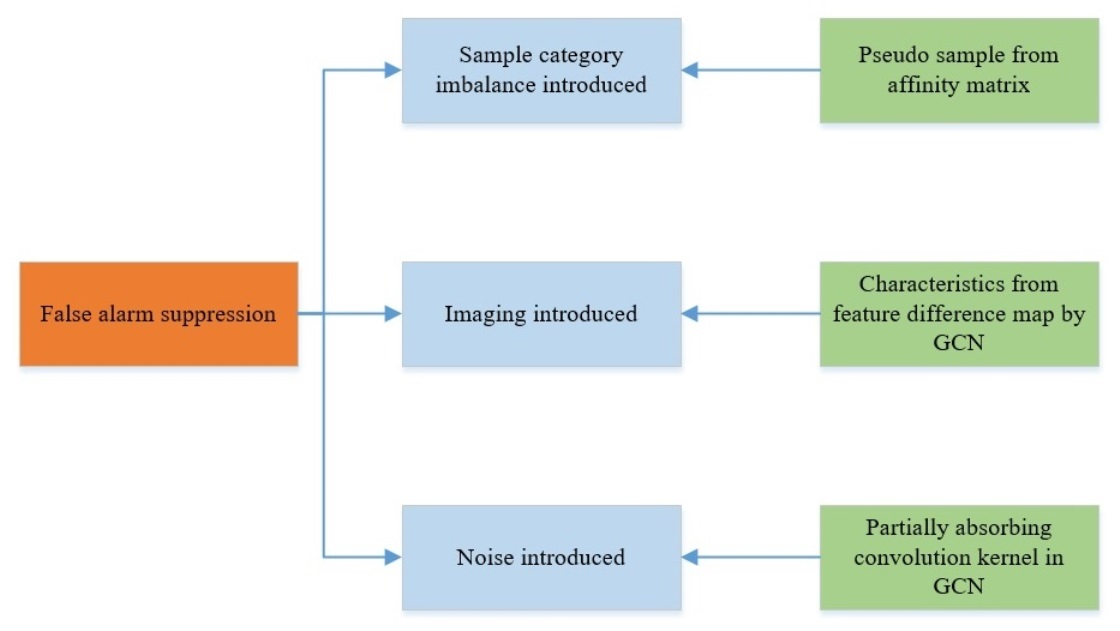
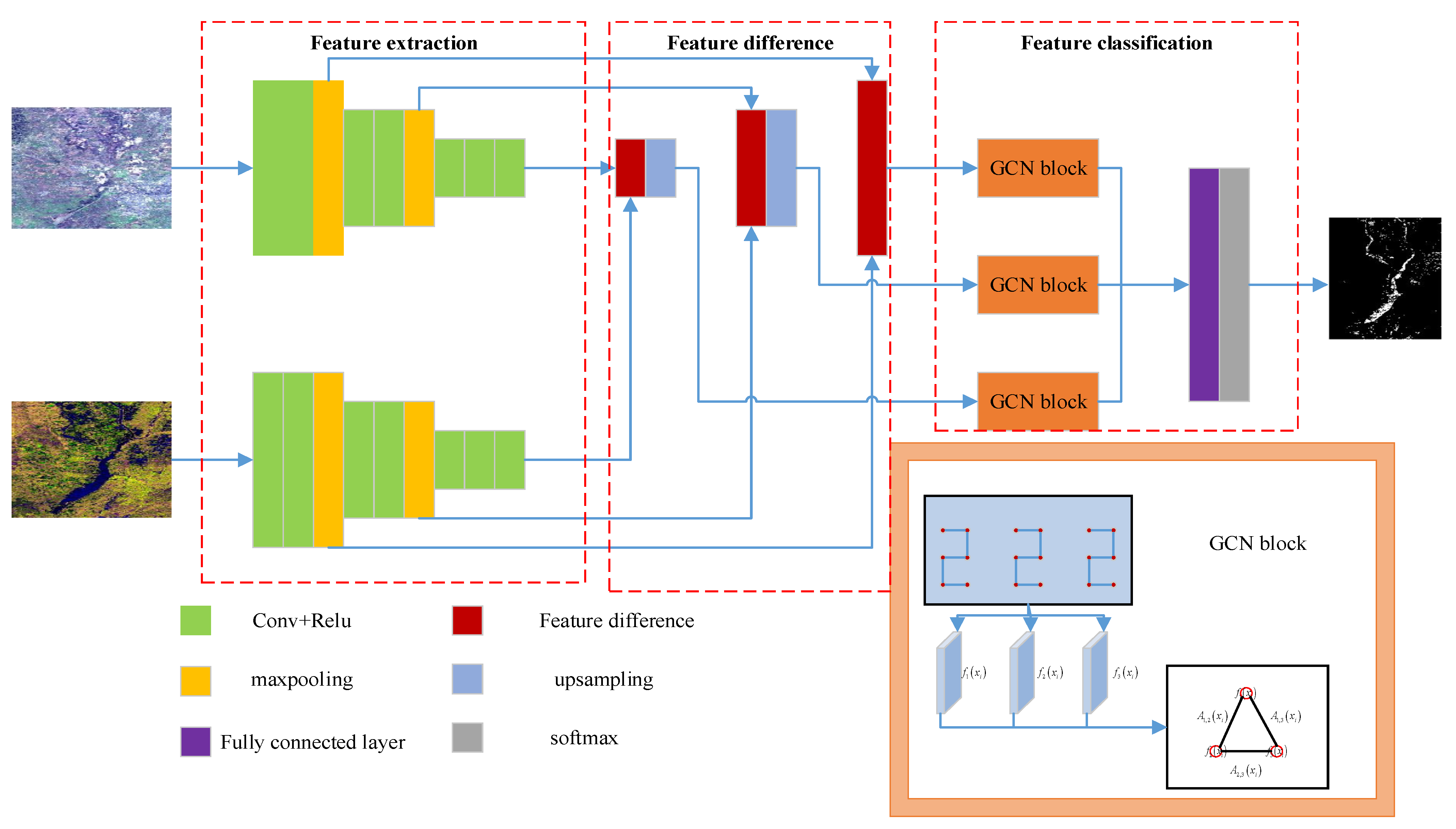
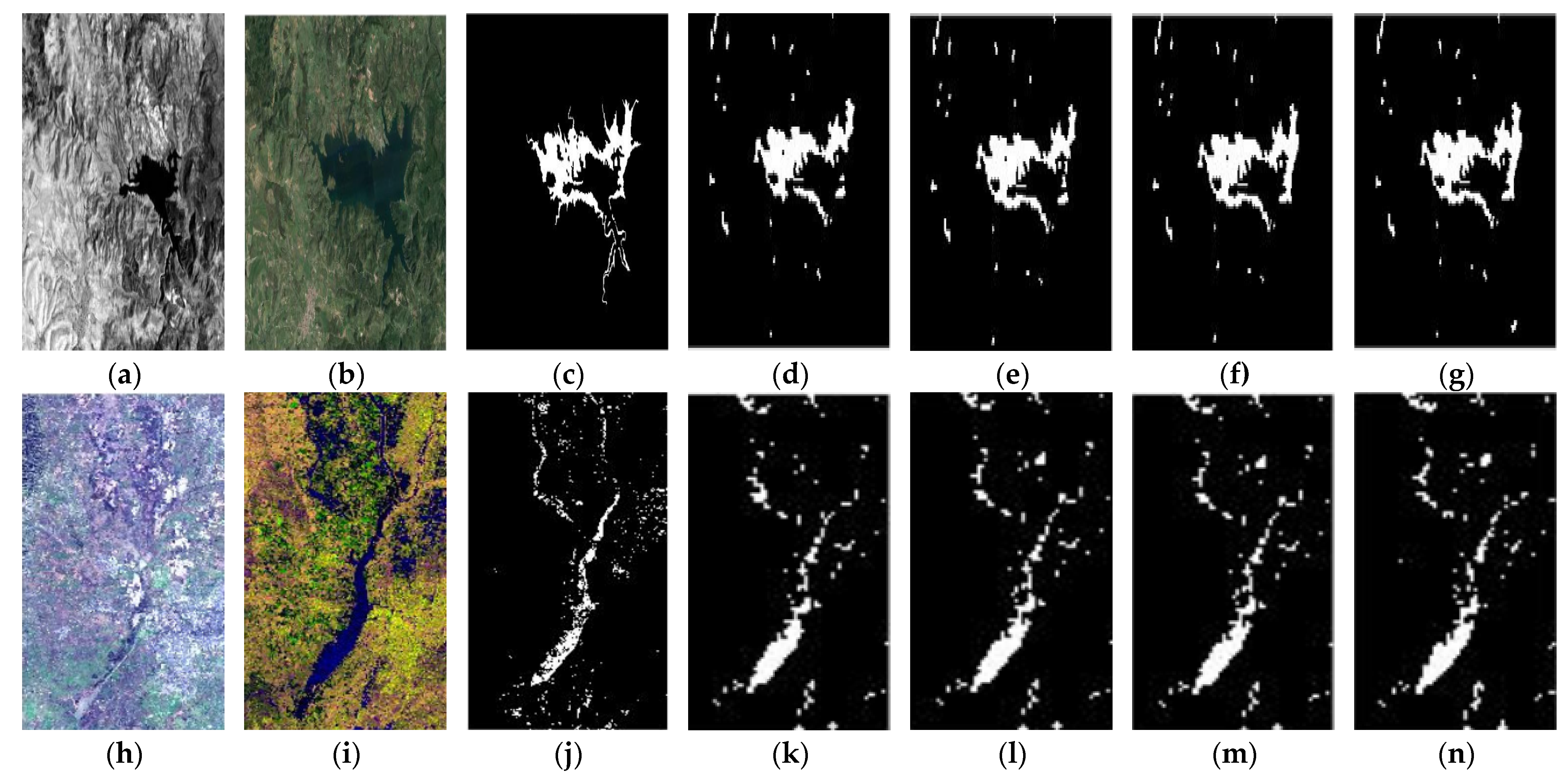
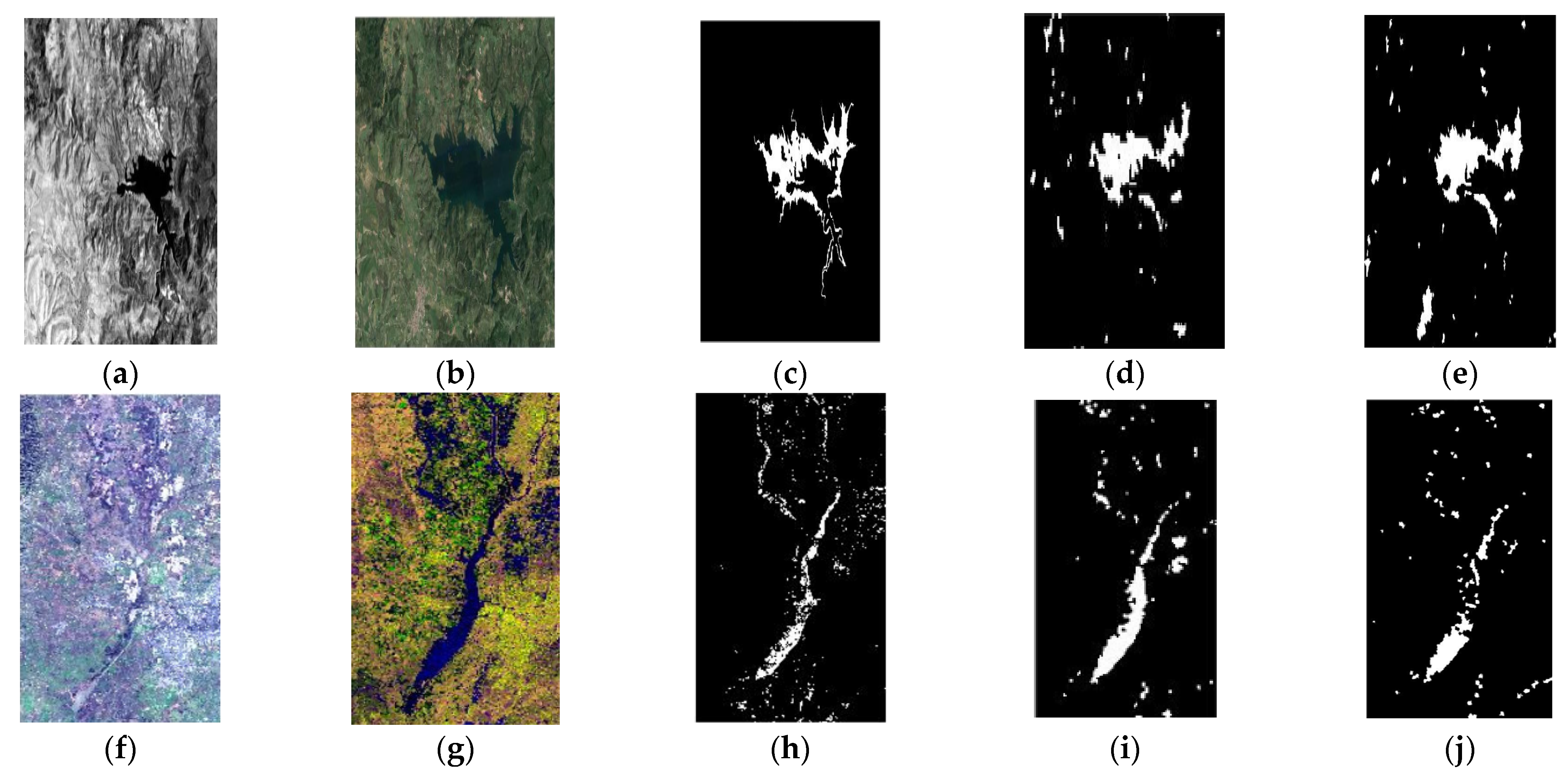
Heterogeneous change detection has a wide range of applications in many fields. However, to date, many existing problems of heterogeneous change detection, such as false alarm suppression, have not been specifically addressed. In this article, we discuss the problem of false alarm suppression and propose a new method based on the combination of a convolutional neural network (CNN) and graph convolutional network (GCN). This approach employs a two-channel CNN to learn the feature maps of multitemporal images and then calculates difference maps of different scales, which means that both low-level and high-level features contribute equally to the change detection. The GCN, with a newly built convolution kernel (called the partially absorbing random walk convolution kernel), classifies these difference maps to obtain the inter-feature relationships between true targets and false ones, which can be represented by an adjacent matrix. We use pseudo-label samples to train the whole network, which means our method is unsupervised. Our method is verified on two typical data sets. The experimental results indicate the superiority of our method compared to some state-of-the-art approaches, which proves the efficacy of our method in false alarm suppression.
Keywords: heterogeneous change detection; CNN; feature difference; GCN heterogeneous change detection; CNN; feature difference; GCN
Graphical Abstract