Article

Inter-Comparison of Four Models for Detecting Forest Fire Disturbance from MOD13A2 Time Series

1
School of Computer Science, China University of Geosciences, Wuhan 430074, China
2
Hubei Key Laboratory of Intelligent Geo-Information Processing, China University of Geosciences Wuhan, Wuhan 430074, China
3
Key Laboratory of Digital Earth Science, Aerospace Information Research Institute, Chinese Academy of Sciences, Beijing 100094, China
4
University of Chinese Academy of Sciences, Beijing 100049, China
*
Author to whom correspondence should be addressed.
Remote Sens. 2022, 14(6), 1446; https://doi.org/10.3390/rs14061446
Submission received: 25 February 2022 / Revised: 14 March 2022 / Accepted: 16 March 2022 / Published: 17 March 2022

Abstract

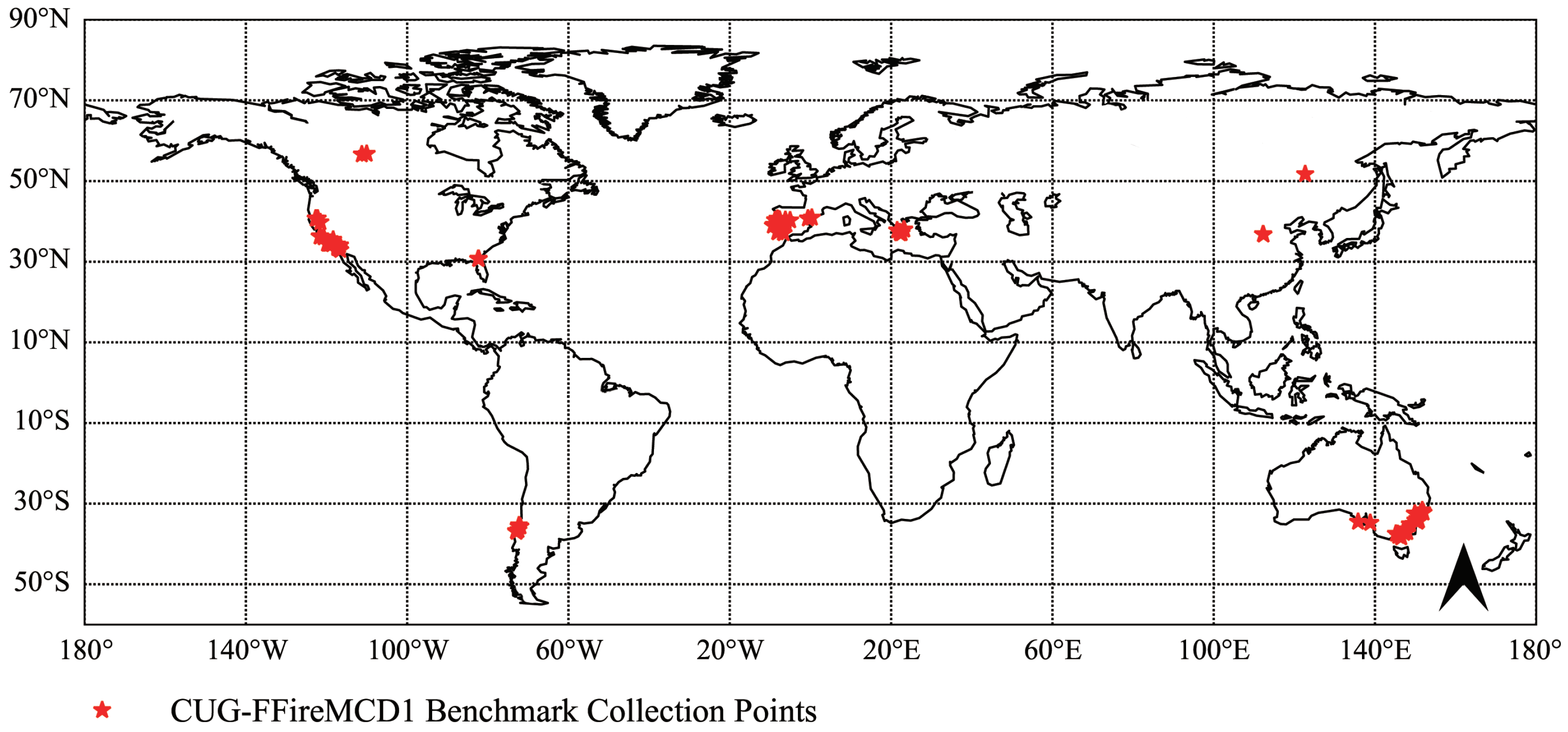
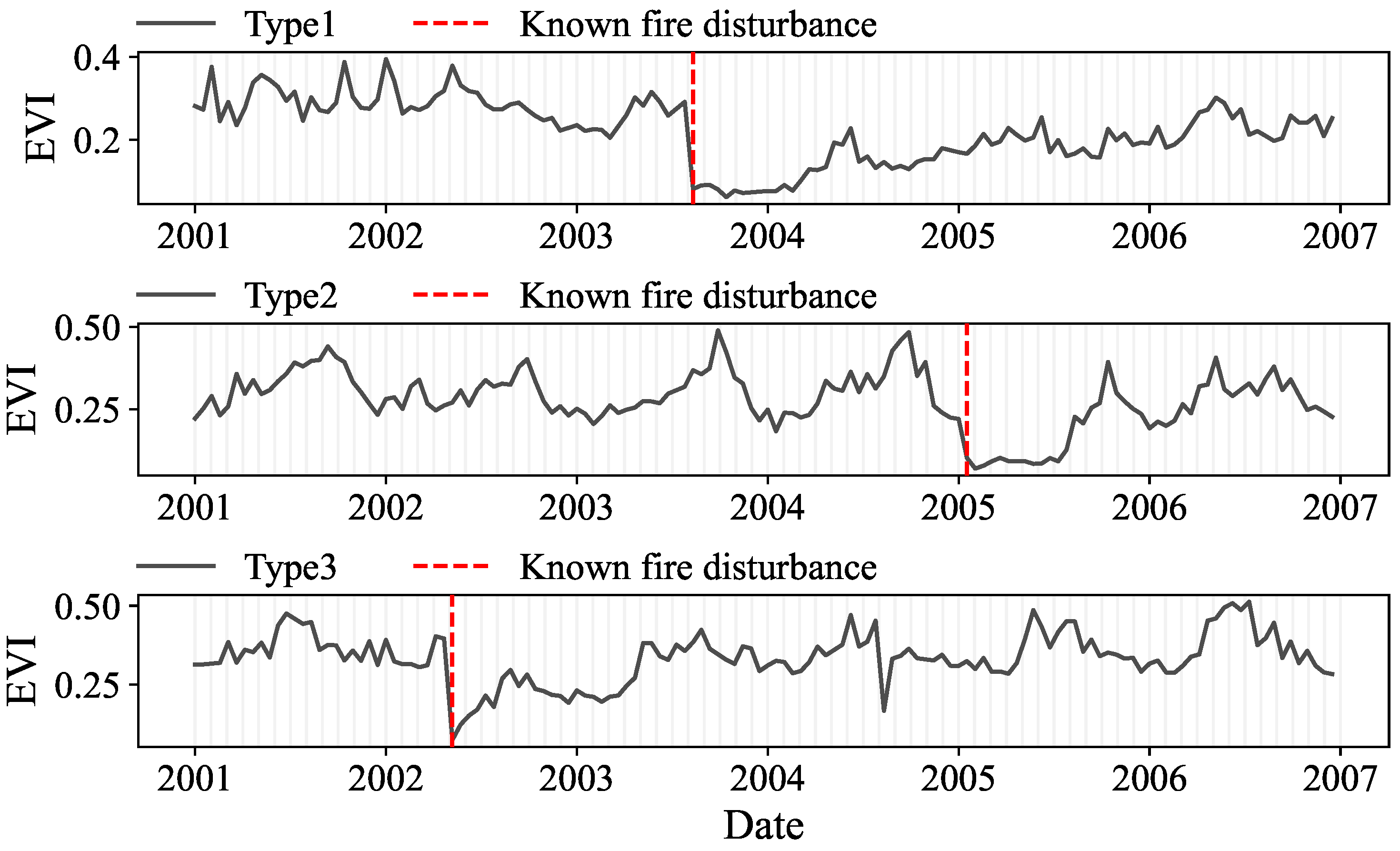
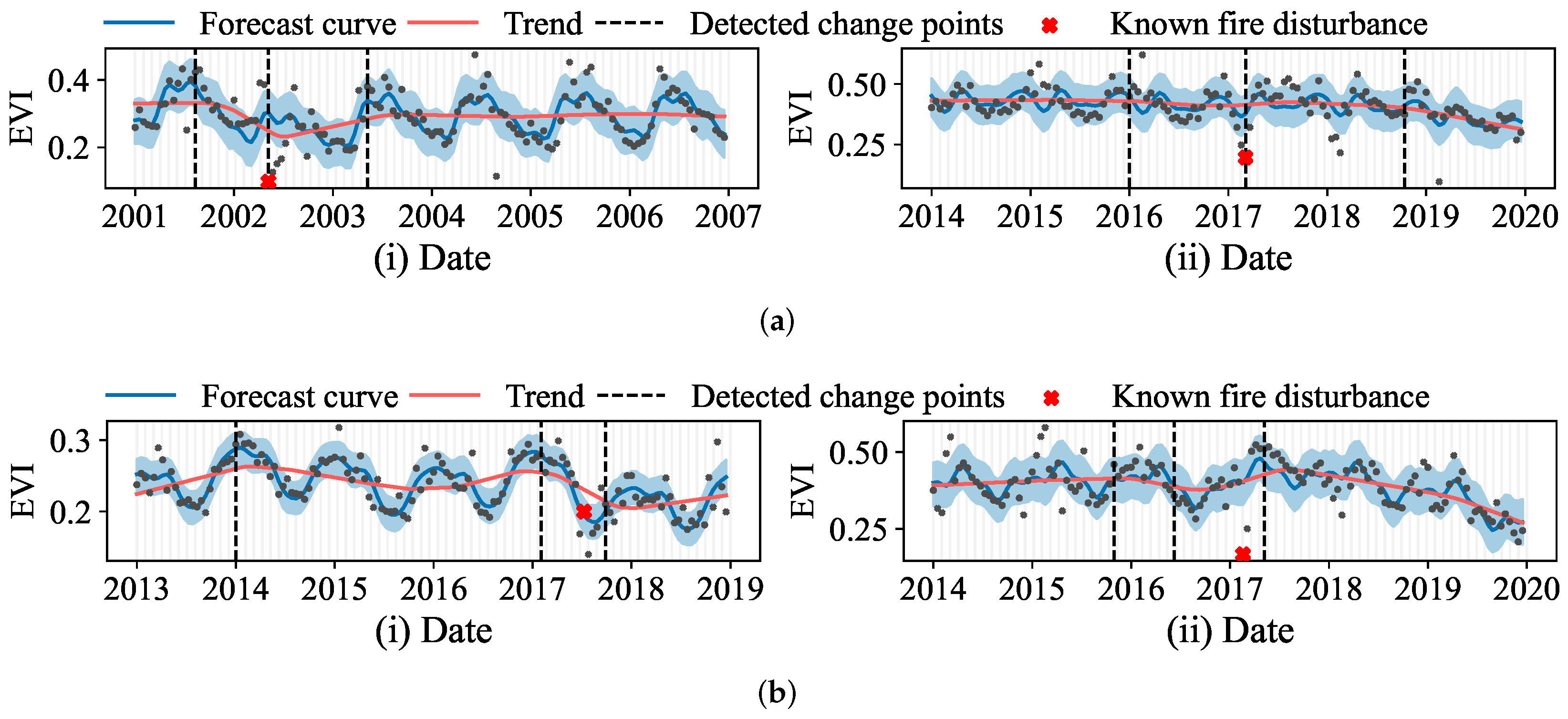
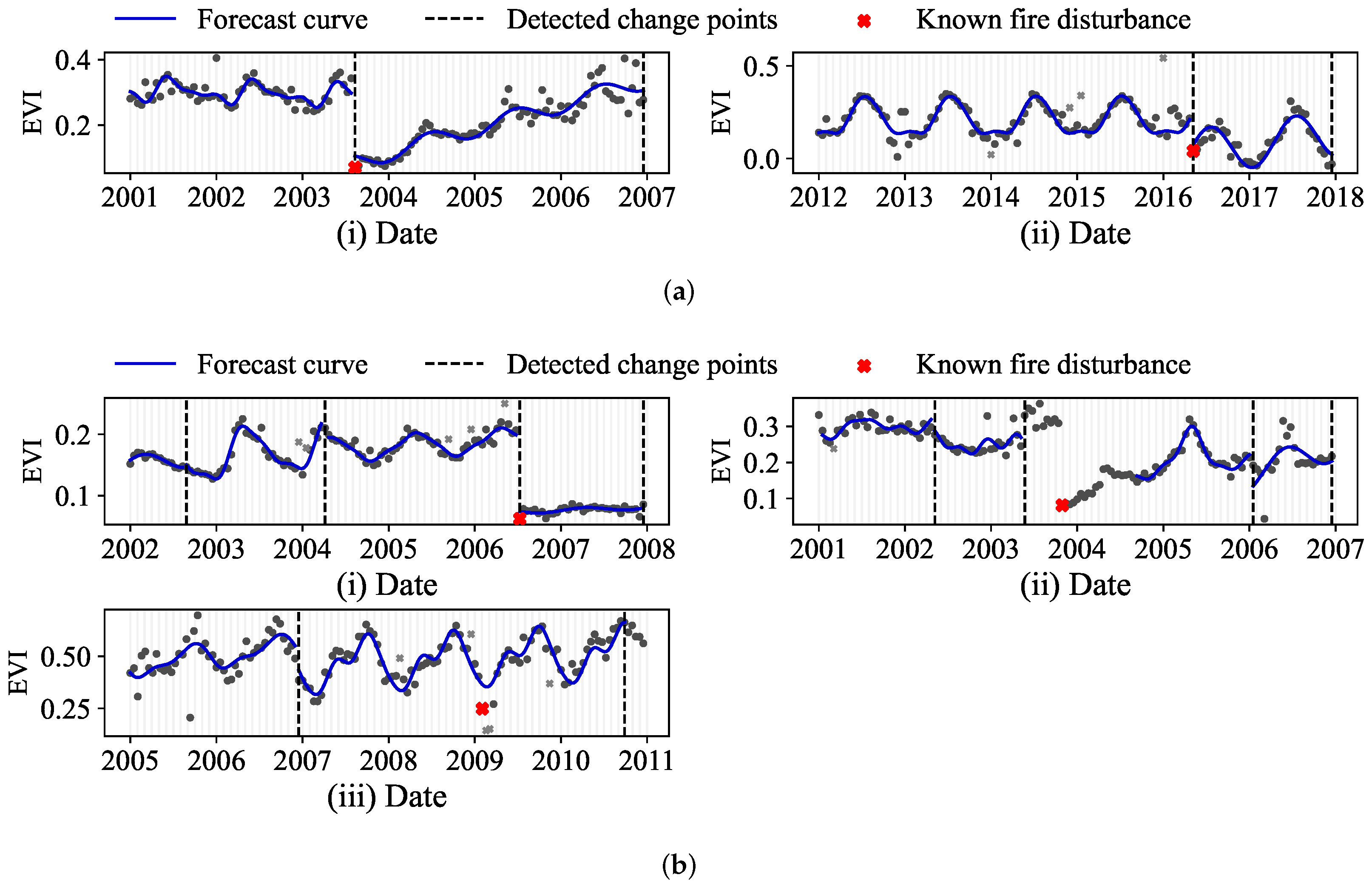
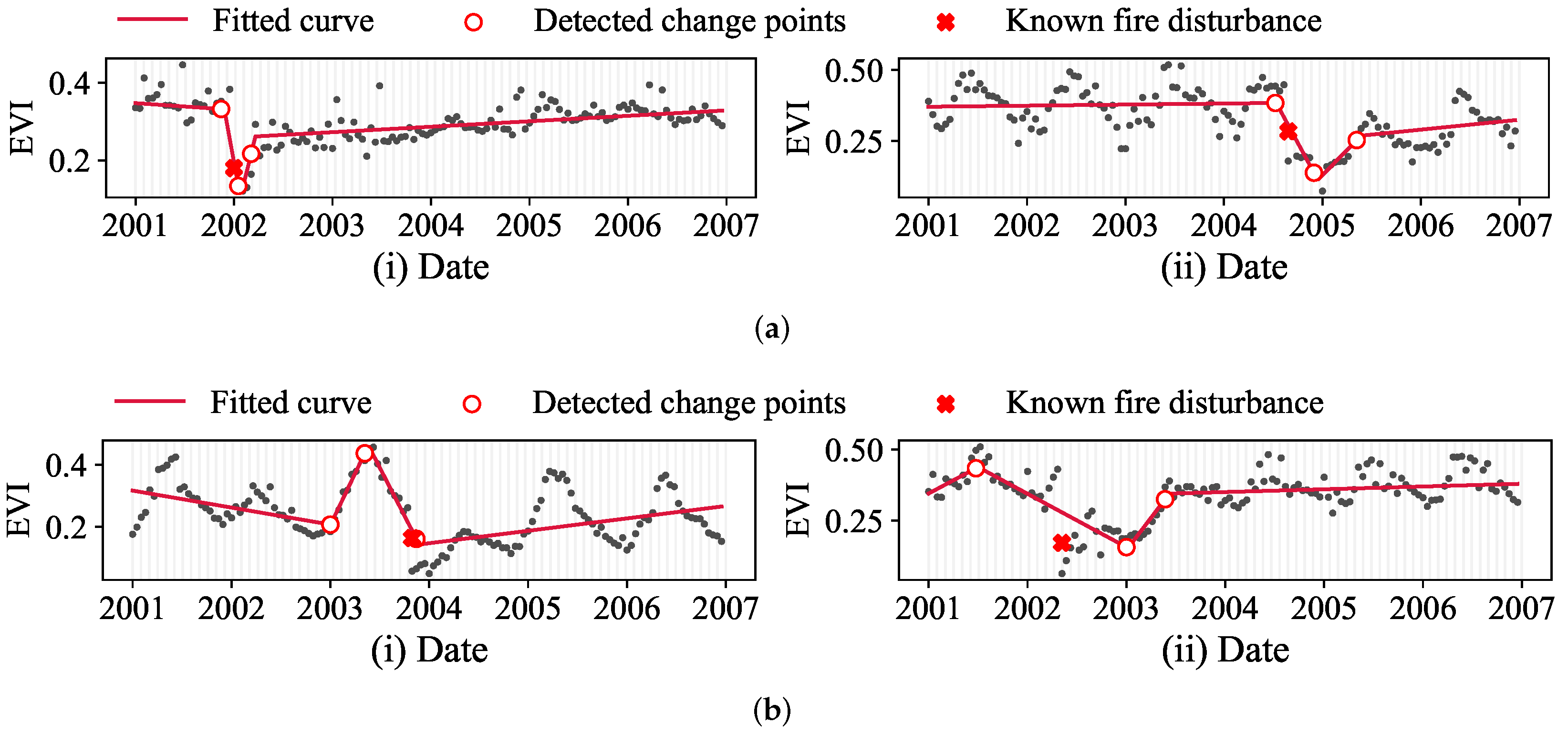
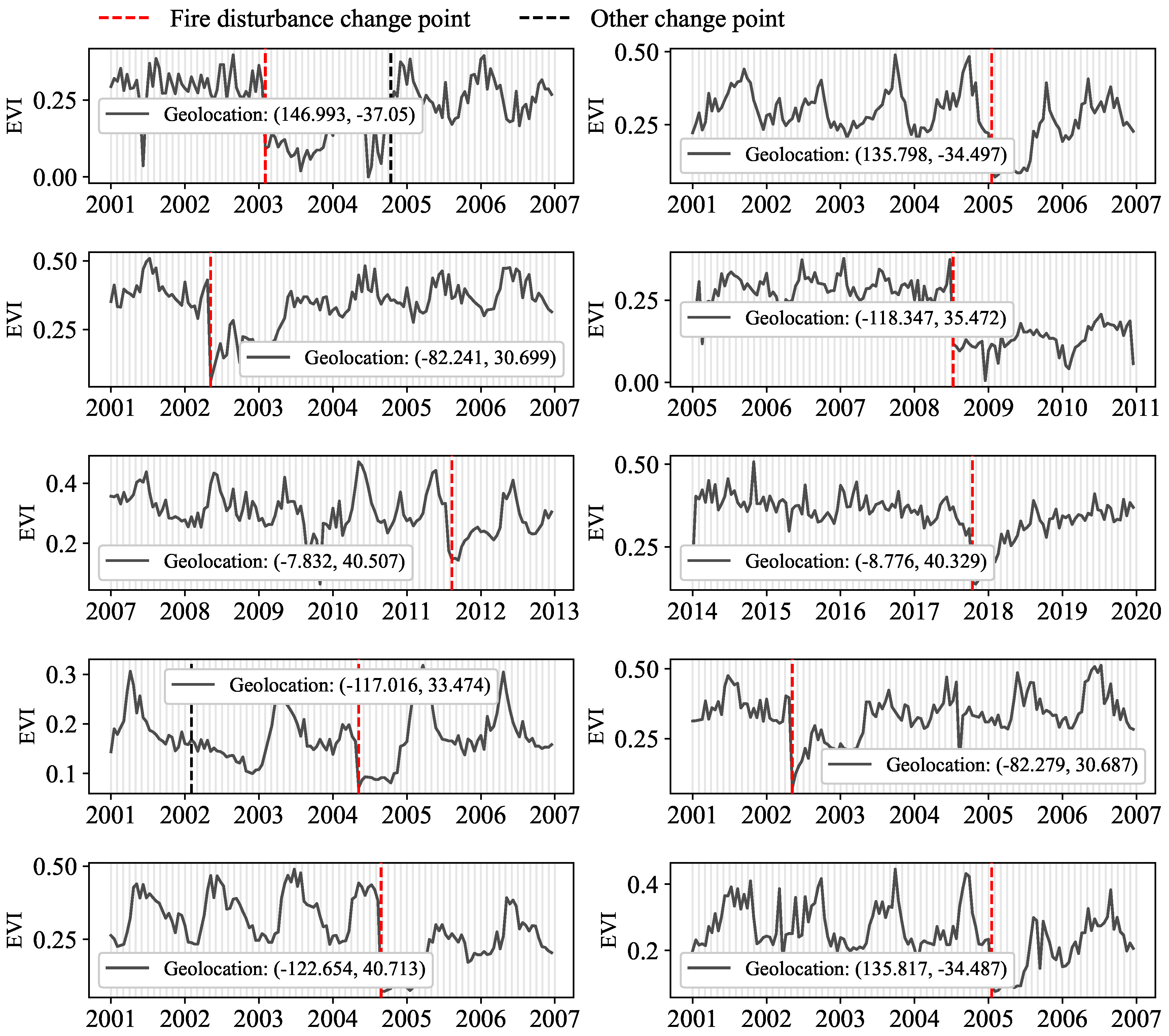
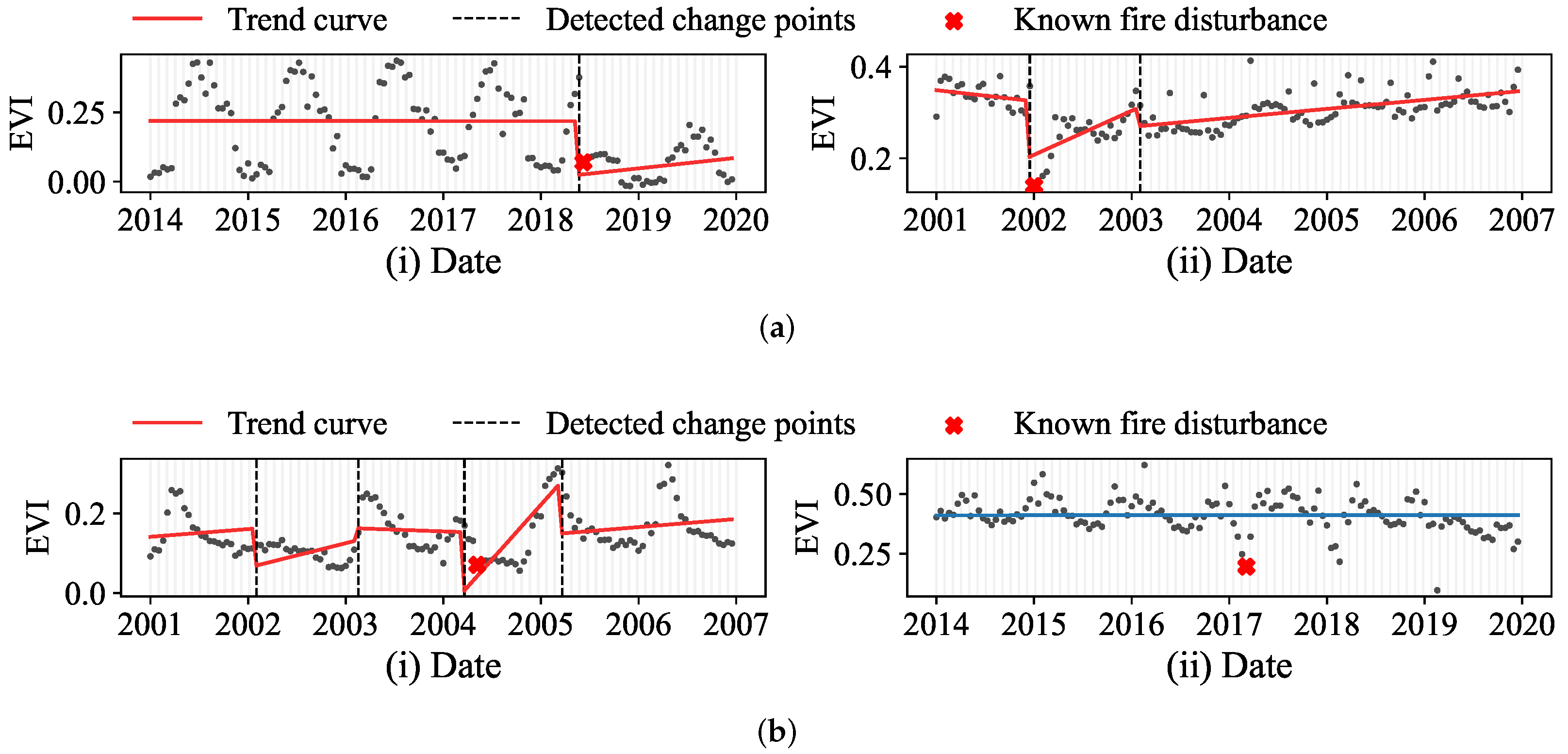
Many models for change point detection from time series remote sensing images have been developed to date. For forest ecosystems, fire disturbance detection models have always been an important topic. However, due to a lack of benchmark datasets, it is difficult to determine which model is appropriate. Therefore, we collected and generated a benchmark dataset specifically for forest fire disturbance detection, named CUG-FFireMCD1. The CUG-FFireMCD1 contains a total of 132 pieces of MODIS MOD13A2 time series, and each time series contains at least one fire disturbance. The occurrence time for a forest fire disturbance was determined using the National Cryosphere DesertDataCenter(NCDC) website, and the precise latitude and longitude coordinates were determined using the FireCCI51 dataset. In addition, we selected four commonly used time series change detection models and validate the advantages and limitations of the four models through dataset analysis. Finally, we use the detection results of the models and their applicable scenarios to label the additional change points. The four models we used are breaks for additive season and trend (BFAST), Prophet, continuous change detection and classification (CCDC), and Landsat-based detection of trends in disturbance and recovery (LandTrendR). The experiments show that the BFAST outperformed the other three models in forest fire disturbance detection from MOD13A2 time series, with the successful-detection-proportion rate of 96.2% with the benchmark dataset. The detection effect of the Prophet model is not as good as that of BFAST, but it also performs well, with the successful-detection-proportion rate of 87.9%. The detection results of CCDC and LandTrendR are similar, and the detection success rate is lower than that of BFAST and Prophet, but their detection results can be used as data support for labeling work. However, to apply them perfectly to MOD13A2 time series change detection, it is best to do some model adaptation. In summary, the CUG-FFireMCD1 data were verified using different types of time series change detection models, and the change points we marked are credible. The CUG-FFireMCD1 will surely provide a reliable benchmark for model optimization and the accuracy verification of remote sensing time series change detection.
Keywords: forest fire disturbance detection; BFAST; Prophet; CCDC; LandTrendR forest fire disturbance detection; BFAST; Prophet; CCDC; LandTrendR