Article

A Comparative Study on Classification Features between High-Resolution and Polarimetric SAR Images through Unsupervised Classification Methods

1
Aerospace Information Research Institute, Chinese Academy of Sciences, Beijing 100094, China
2
Key Laboratory of Technology in Geo-Spatial Information Processing and Application System, Chinese Academy of Sciences, Beijing 100094, China
3
School of Electronic, Electrical and Communication Engineering, University of Chinese Academy of Sciences, Beijing 101408, China
4
Suzhou Aerospace Information Research Institute, Suzhou 215223, China
*
Author to whom correspondence should be addressed.
Remote Sens. 2022, 14(6), 1412; https://doi.org/10.3390/rs14061412
Submission received: 1 February 2022 / Revised: 11 March 2022 / Accepted: 13 March 2022 / Published: 15 March 2022
(This article belongs to the Special Issue Recent Progress and Applications on Multi-Dimensional SAR)

Abstract

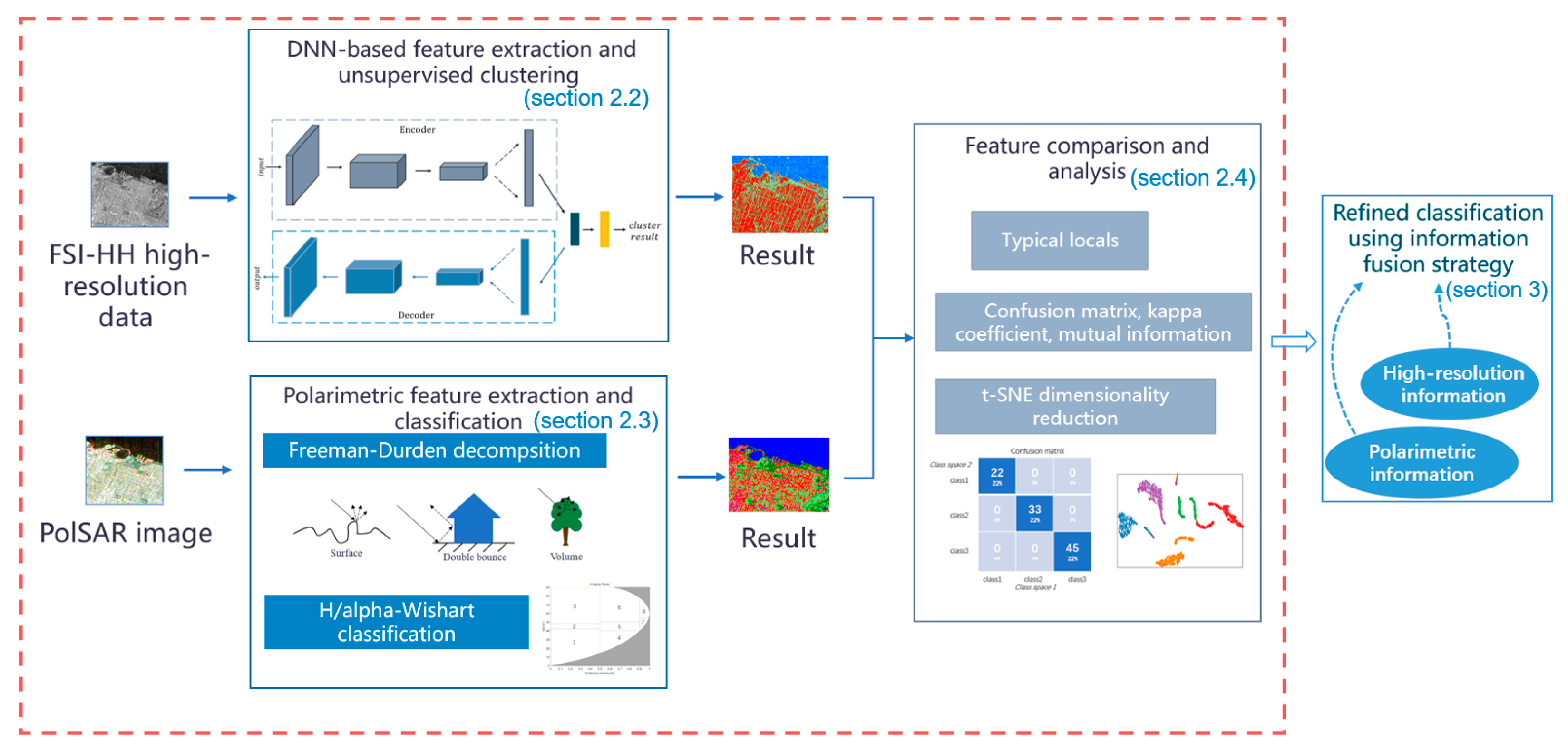
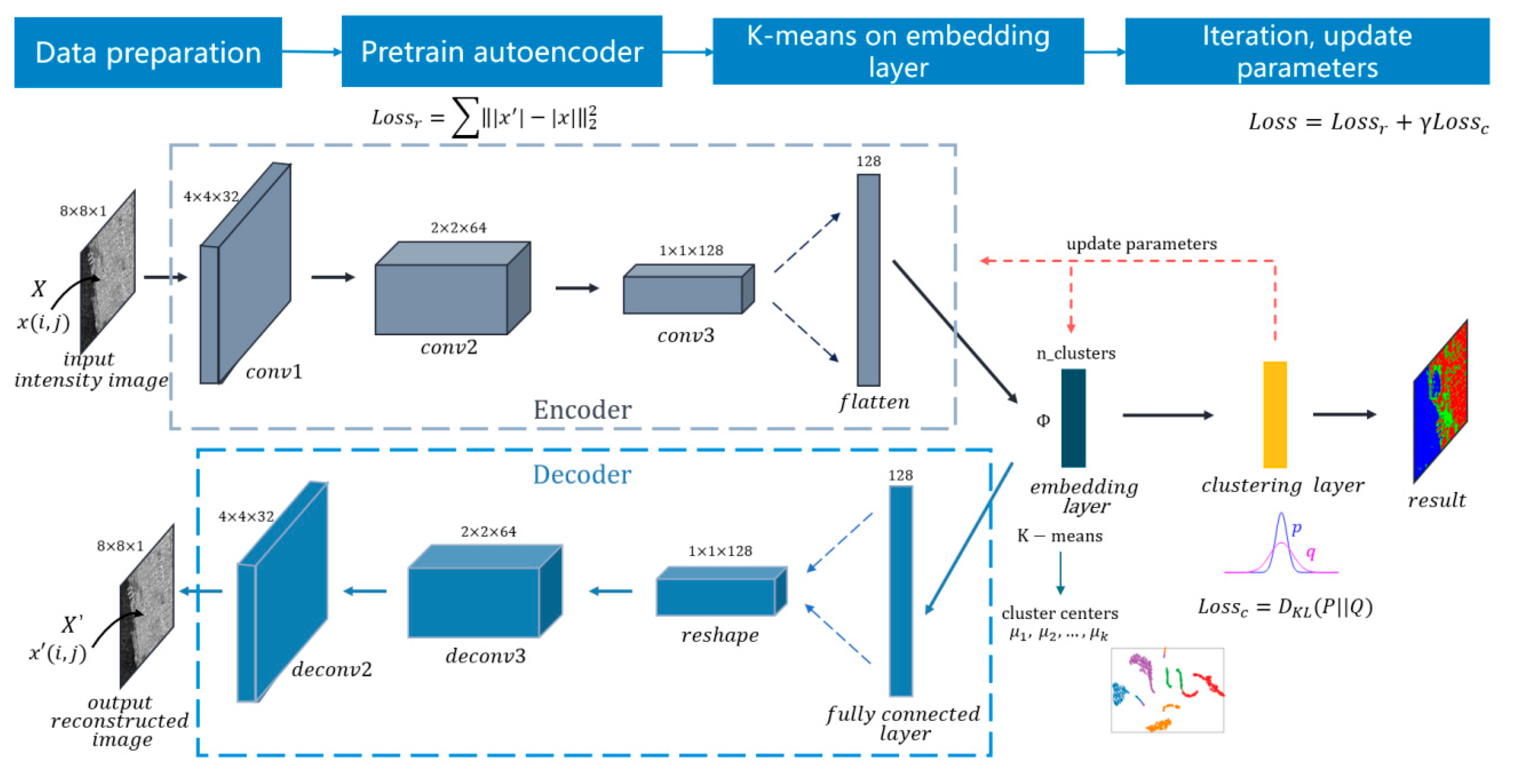
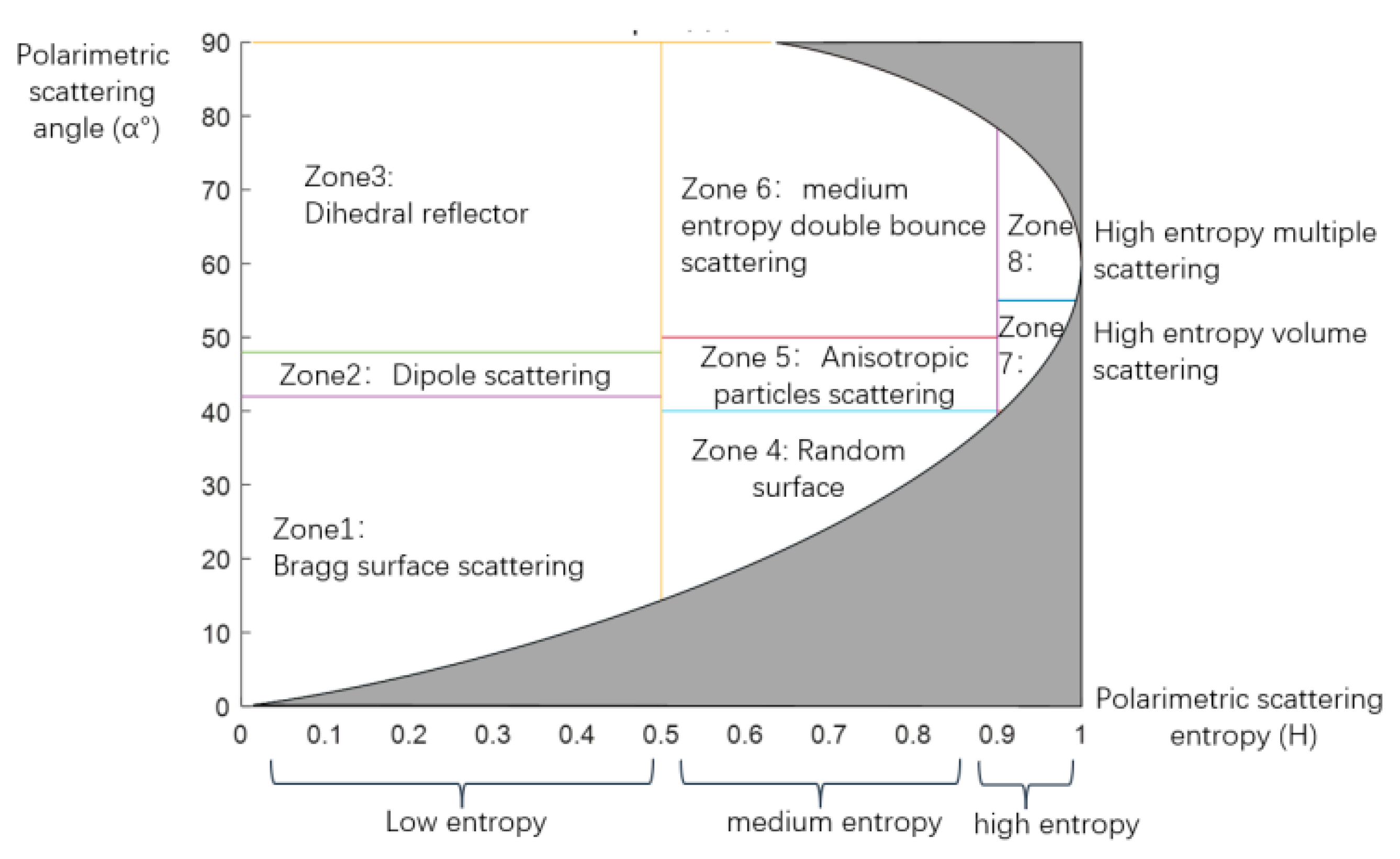
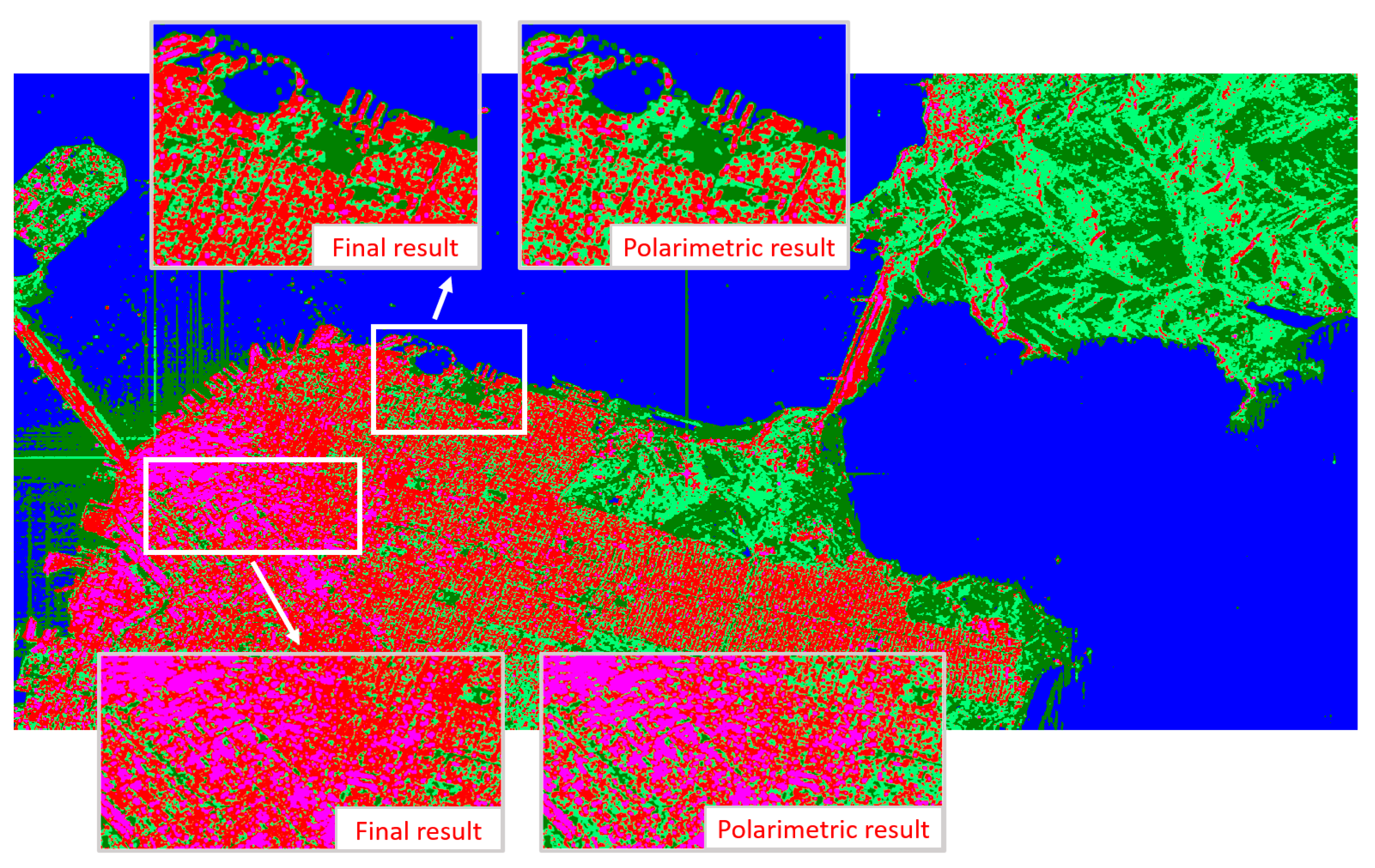
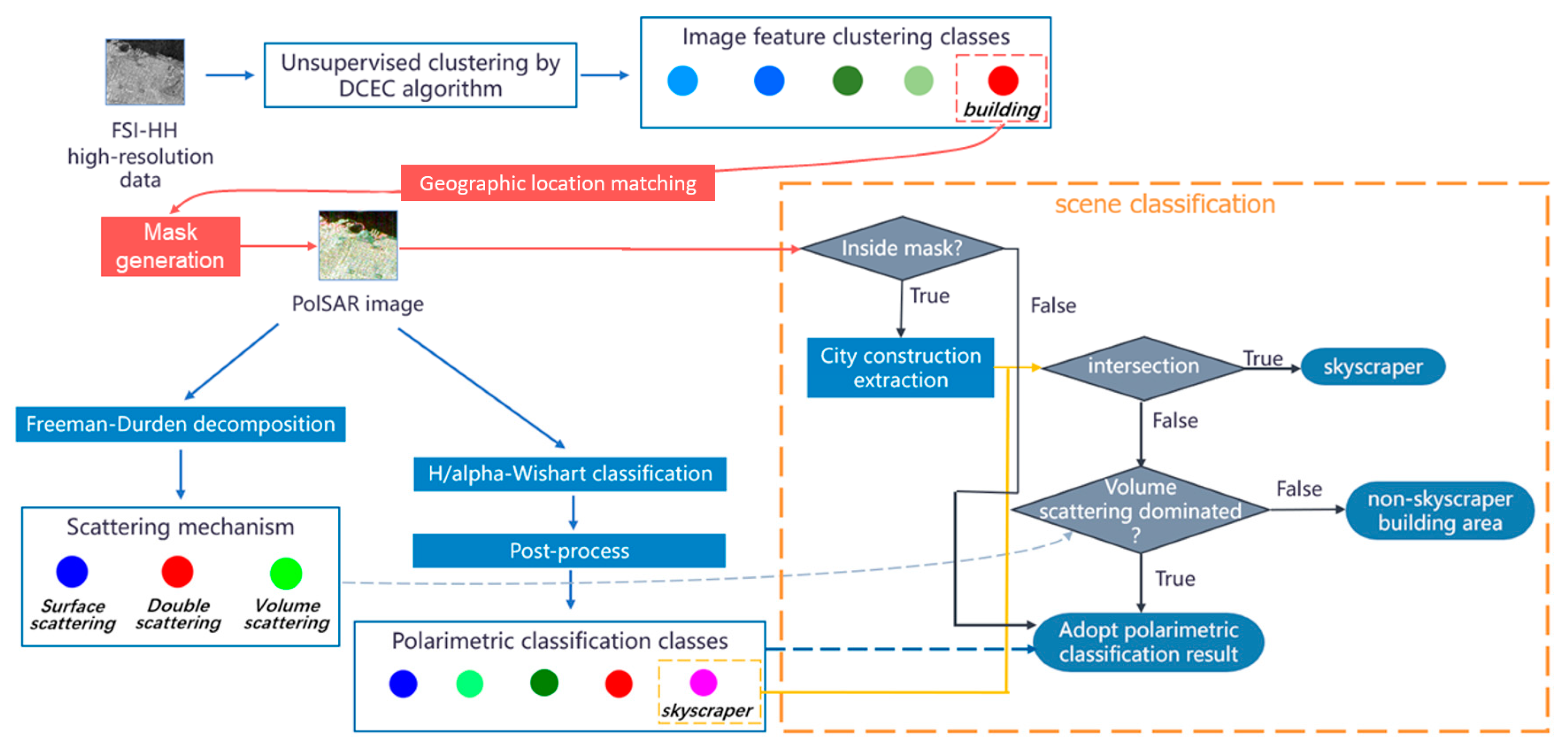
Feature extraction and comparison of synthetic aperture radar (SAR) data of different modes such as high resolution and full polarization have important guiding significance for SAR image applications. In terms of image and physical domain for higher spatial resolution single-polarized and coarser spatial resolution quad-pol SAR data, this paper analyzes and compares the feature extraction with unsupervised classification methods. We discover the correlation and complementarity between high-resolution image feature and quad-pol physical scattering information. Therefore, we propose an information fusion strategy, that can conduct unsupervised learning of the landcover classes of SAR images obtained from multiple imaging modes. The medium-resolution polarimetric SAR (PolSAR) data and the high-resolution single-polarized data of the Gaofen-3 satellite are adopted for the selected experiments. First, we conduct the Freeman–Durden decomposition and H/alpha-Wishart classification method on PolSAR data for feature extraction and classification, and use the Deep Convolutional Embedding Clustering (DCEC) algorithm on single-polarized data for unsupervised classification. Then, combined with the quantitative evaluation by confusion matrix and mutual information, we analyze the correlation between characteristics of image domain and physics domain and discuss their respective advantages. Finally, based on the analysis, we propose a refined unsupervised classification method combining image information of high-resolution data and physics information of PolSAR data, that optimizes the classification results of both the urban buildings and the vegetation areas. The main contribution of this comparative study is that it promotes the understanding of the landcover classification ability of different SAR imaging modes and also provides some guidance for future work to combine their respective advantages for better image interpretation.
Keywords: classification features; synthetic aperture radar (SAR); high resolution image information; polarimetric information; information fusion classification features; synthetic aperture radar (SAR); high resolution image information; polarimetric information; information fusion