Article

IOAM: A Novel Sensor Fusion-Based Wearable for Localization and Mapping

1
School of Computer Science, University of Nottingham Ningbo China, Ningbo 315100, China
2
Nottingham Ningbo China Beacons of Excellence Research and Innovation Institute, Ningbo 315040, China
3
Department of Electrical Electronic Engineering, University of Nottingham Ningbo China, Ningbo 315100, China
4
Tianjin Fire Science and Technology Research Institute of MEM, Tianjin 300381, China
*
Author to whom correspondence should be addressed.
Remote Sens. 2022, 14(23), 6081; https://doi.org/10.3390/rs14236081
Submission received: 21 October 2022 / Revised: 25 November 2022 / Accepted: 28 November 2022 / Published: 30 November 2022

Abstract

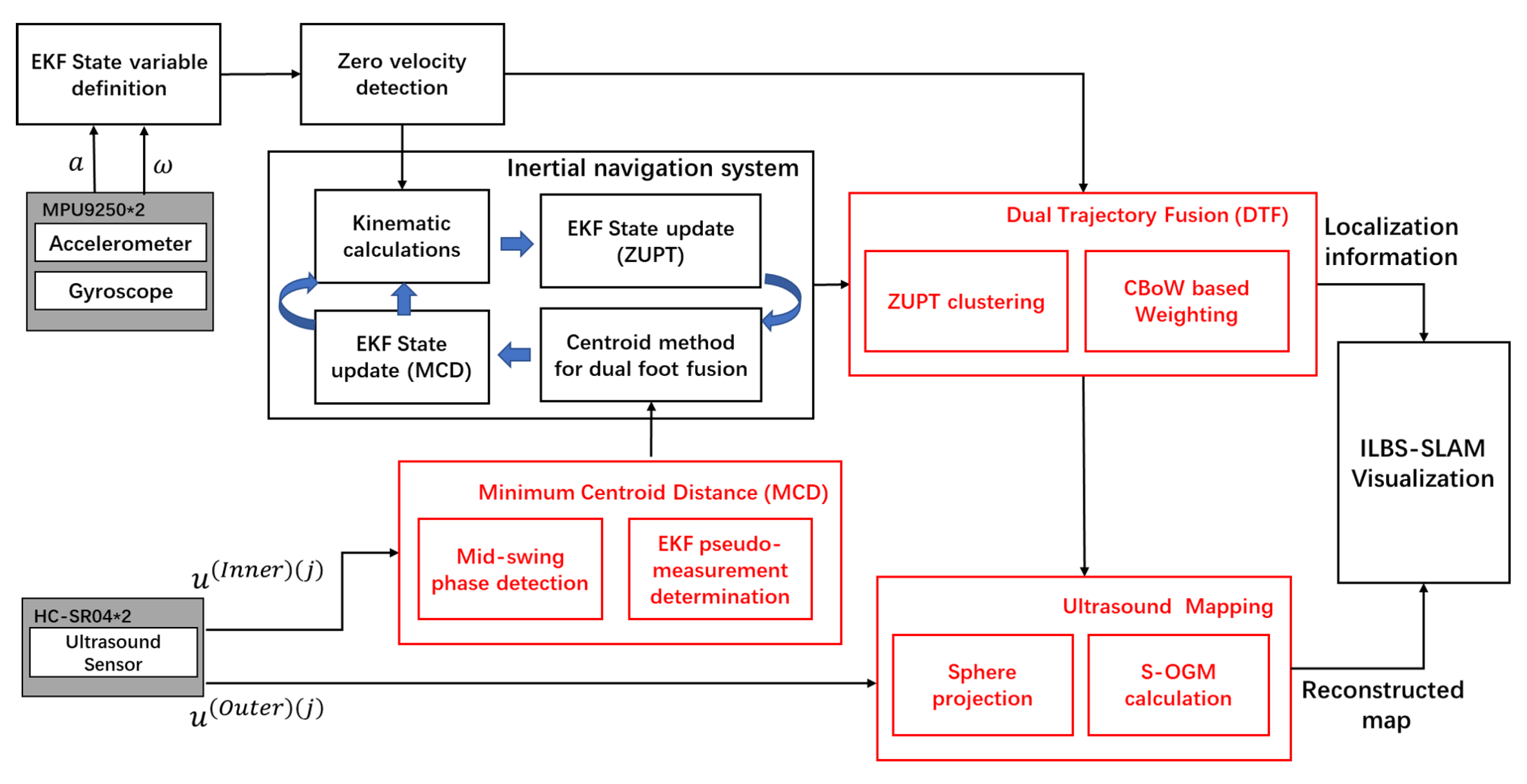
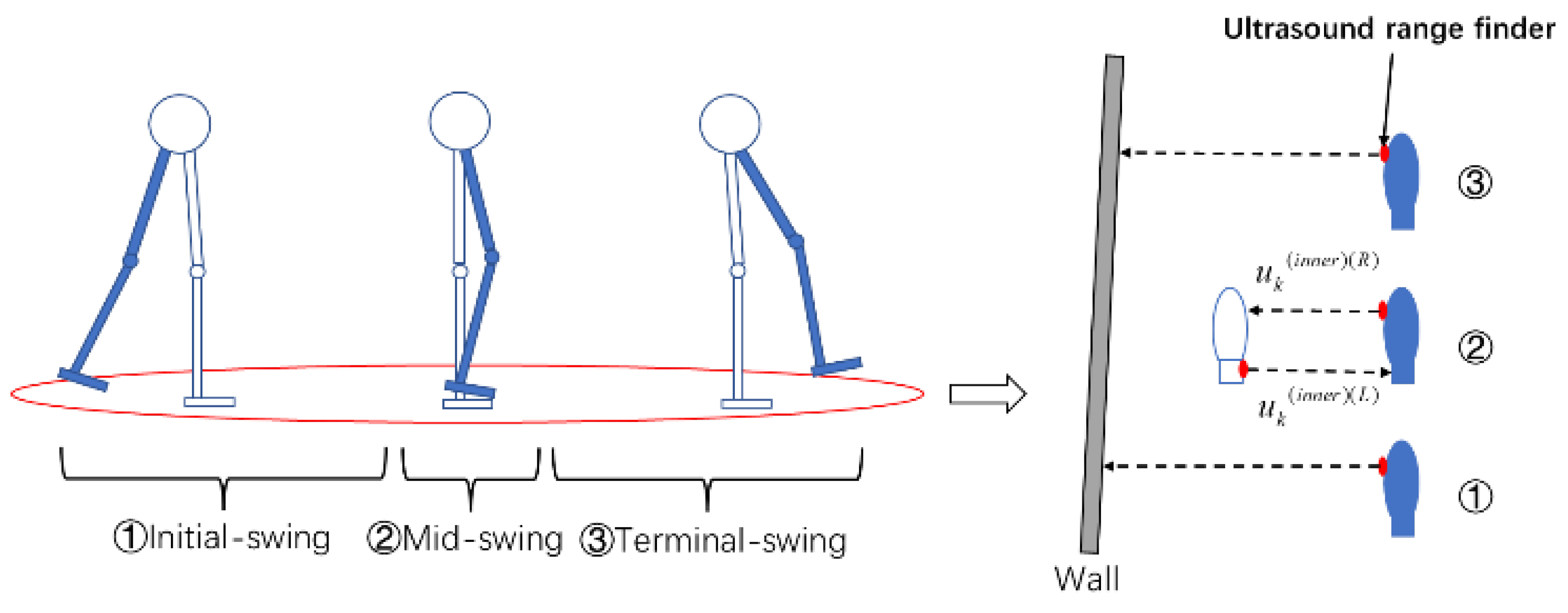
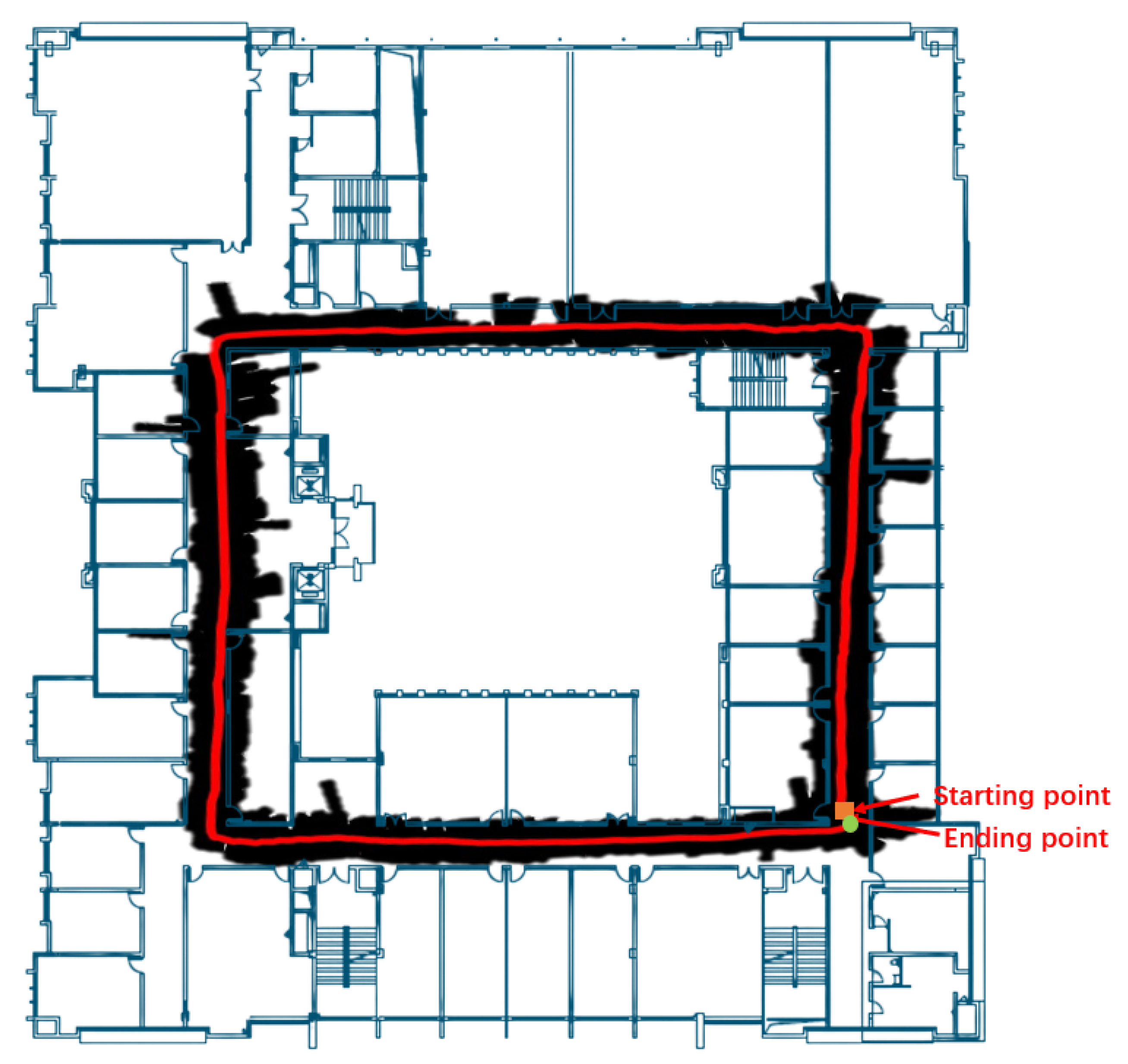
With the development of indoor location-based services (ILBS), the dual foot-mounted inertial navigation system (DF-INS) has been extensively used in many fields involving monitoring and direction-finding. It is a widespread ILBS implementation with considerable application potential in various areas such as firefighting and home care. However, the existing DF-INS is limited by a high inaccuracy rate due to the highly dynamic and non-stable stride length thresholds. The system also provides less clear and significant information visualization of a person’s position and the surrounding map. This study proposes a novel wearable-foot IOAM-inertial odometry and mapping to address the aforementioned issues. First, the person’s gait analysis is computed using the zero-velocity update (ZUPT) method with data fusion from ultrasound sensors placed on the inner side of the shoes. This study introduces a dynamic minimum centroid distance (MCD) algorithm to improve the existing extended Kalman filter (EKF) by limiting the stride length to a minimum range, significantly reducing the bias in data fusion. Then, a dual trajectory fusion (DTF) method is proposed to combine the left- and right-foot trajectories into a single center body of mass (CBoM) trajectory using ZUPT clustering and fusion weight computation. Next, ultrasound-type mapping is introduced to reconstruct the surrounding occupancy grid map (S-OGM) using the sphere projection method. The CBoM trajectory and S-OGM results were simultaneously visualized to provide comprehensive localization and mapping information. The results indicate a significant improvement with a lower root mean square error (RMSE = 1.2 m) than the existing methods.
Keywords: indoor location-based service; inertial navigation system; wearable sensing; data fusion indoor location-based service; inertial navigation system; wearable sensing; data fusion