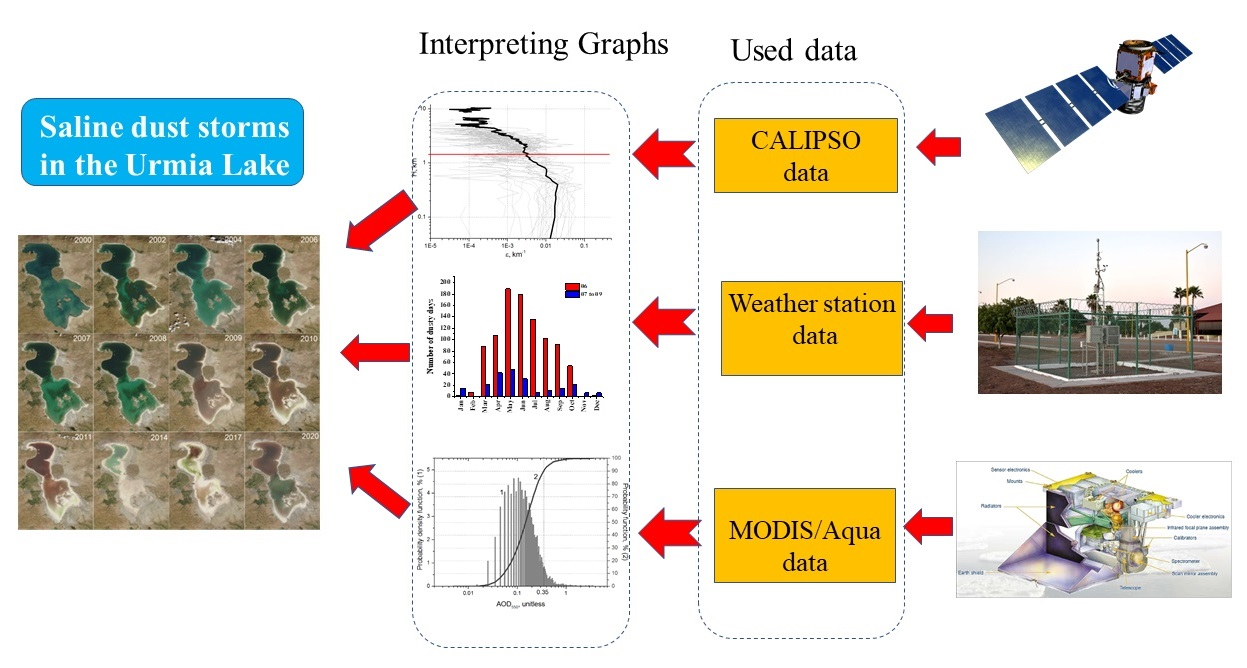
Long-Term Investigation of Aerosols in the Urmia Lake Region in the Middle East by Ground-Based and Satellite Data in 2000–2021

 ,
,  and
and 
Abstract
Share and Cite
Abadi, A.R.S.; Hamzeh, N.H.; Shukurov, K.; Opp, C.; Dumka, U.C. Long-Term Investigation of Aerosols in the Urmia Lake Region in the Middle East by Ground-Based and Satellite Data in 2000–2021. Remote Sens. 2022, 14, 3827. https://doi.org/10.3390/rs14153827
Abadi ARS, Hamzeh NH, Shukurov K, Opp C, Dumka UC. Long-Term Investigation of Aerosols in the Urmia Lake Region in the Middle East by Ground-Based and Satellite Data in 2000–2021. Remote Sensing. 2022; 14(15):3827. https://doi.org/10.3390/rs14153827
Chicago/Turabian StyleAbadi, Abbas Ranjbar Saadat, Nasim Hossein Hamzeh, Karim Shukurov, Christian Opp, and Umesh Chandra Dumka. 2022. "Long-Term Investigation of Aerosols in the Urmia Lake Region in the Middle East by Ground-Based and Satellite Data in 2000–2021" Remote Sensing 14, no. 15: 3827. https://doi.org/10.3390/rs14153827
APA StyleAbadi, A. R. S., Hamzeh, N. H., Shukurov, K., Opp, C., & Dumka, U. C. (2022). Long-Term Investigation of Aerosols in the Urmia Lake Region in the Middle East by Ground-Based and Satellite Data in 2000–2021. Remote Sensing, 14(15), 3827. https://doi.org/10.3390/rs14153827