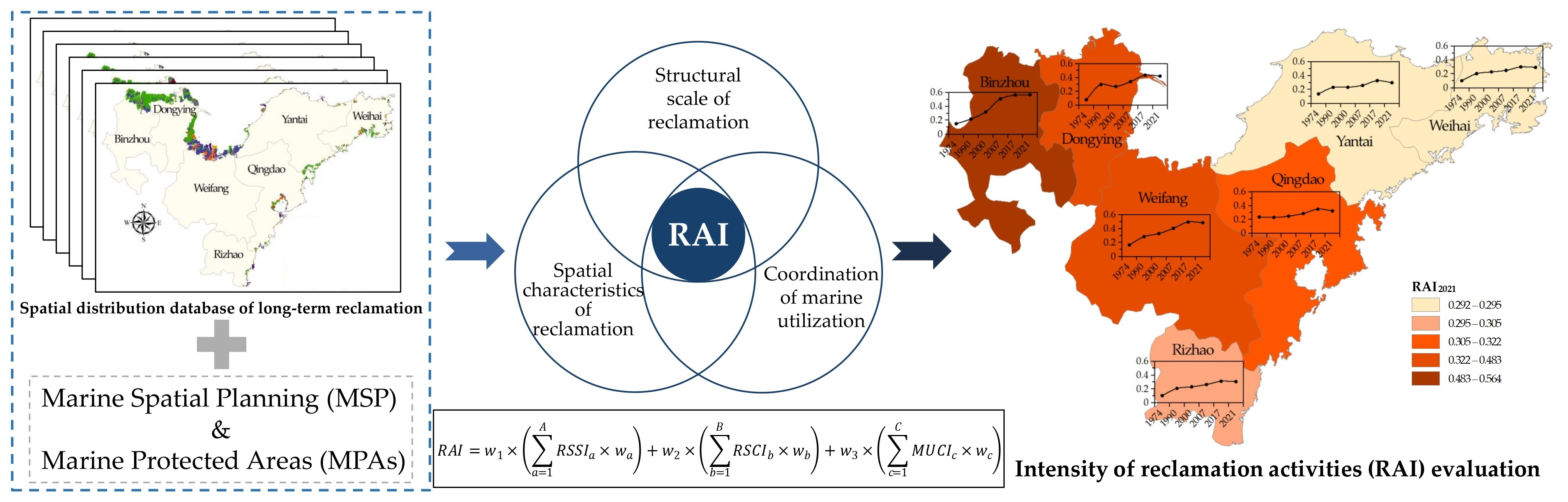
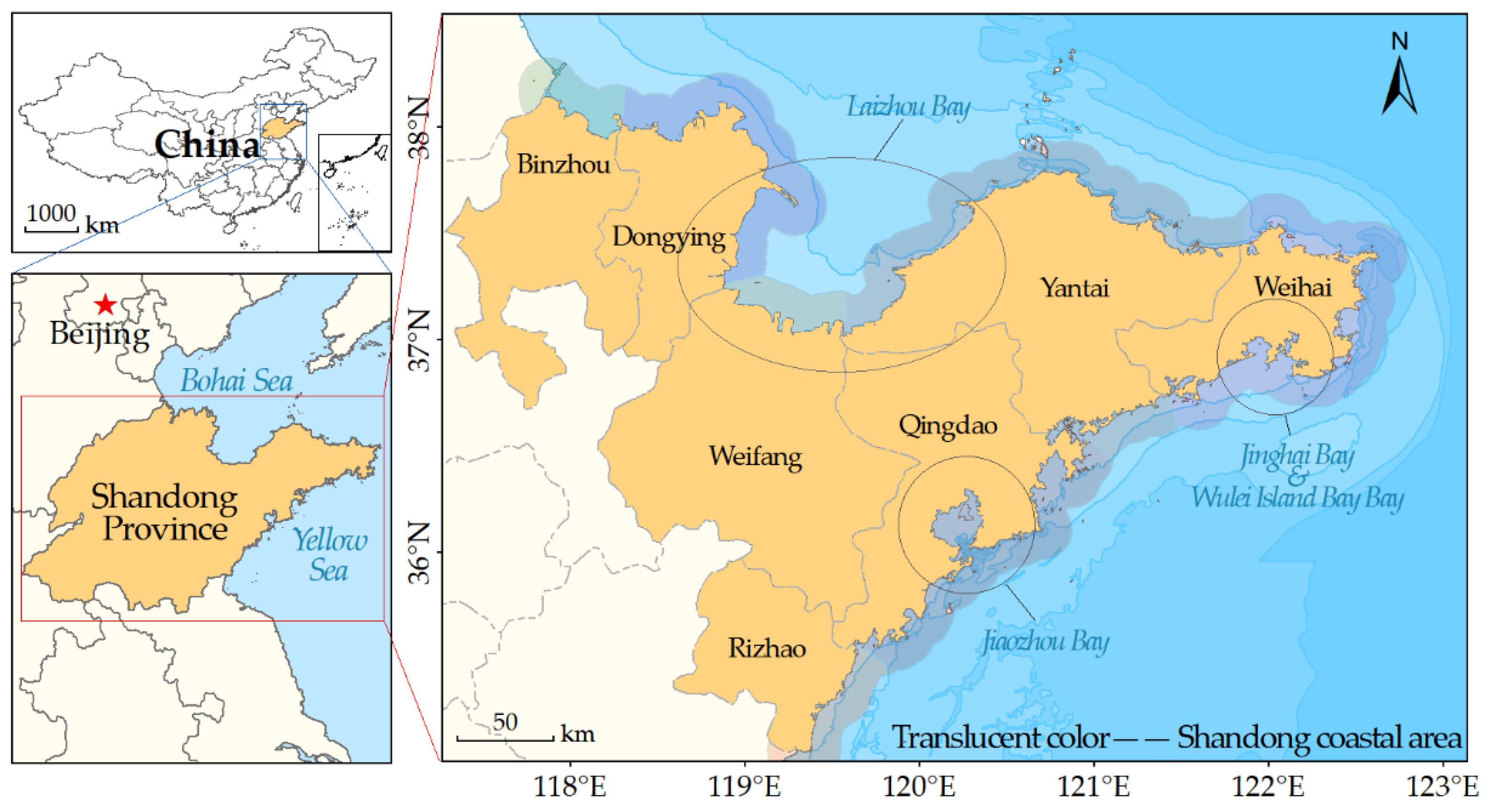
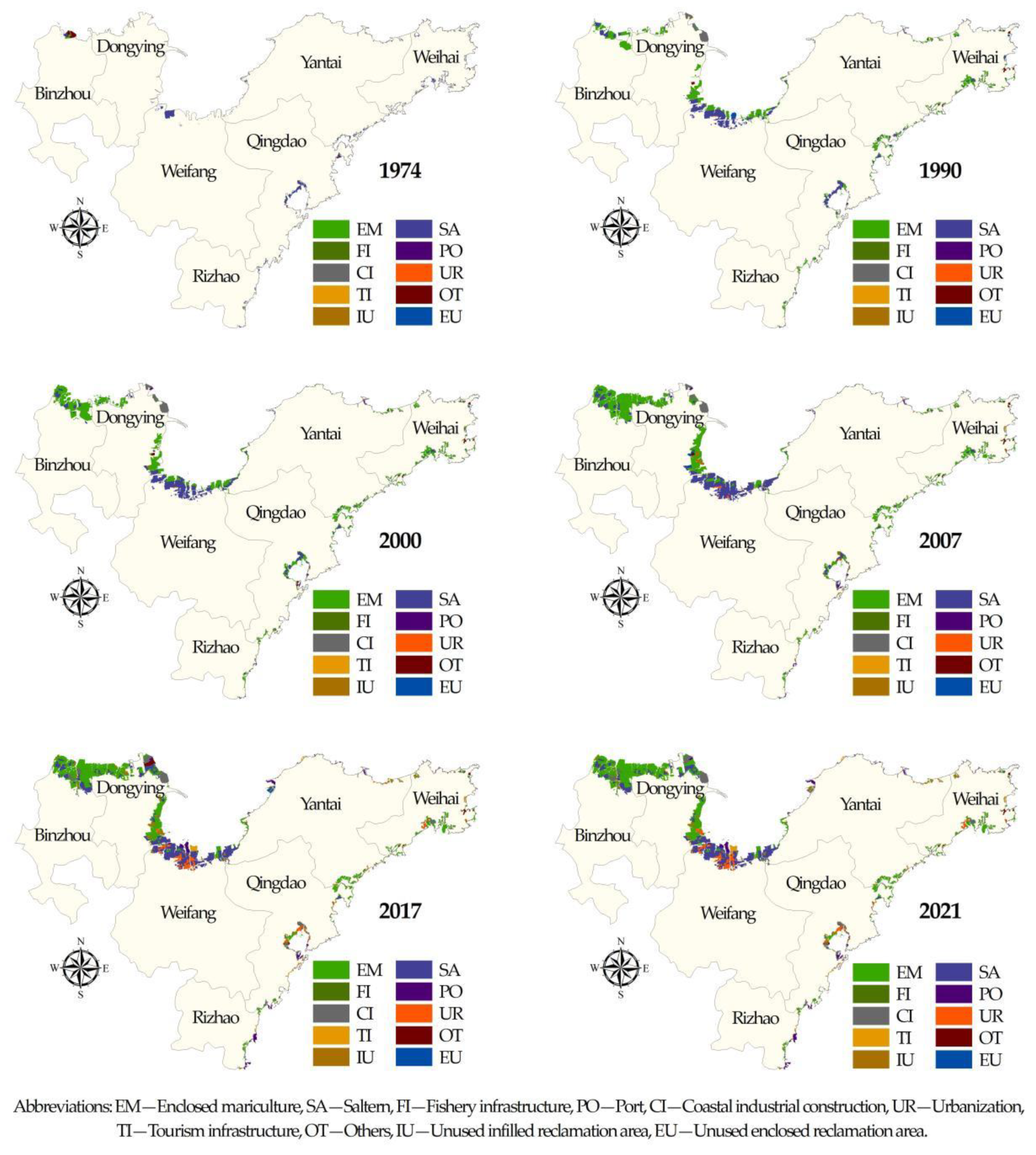
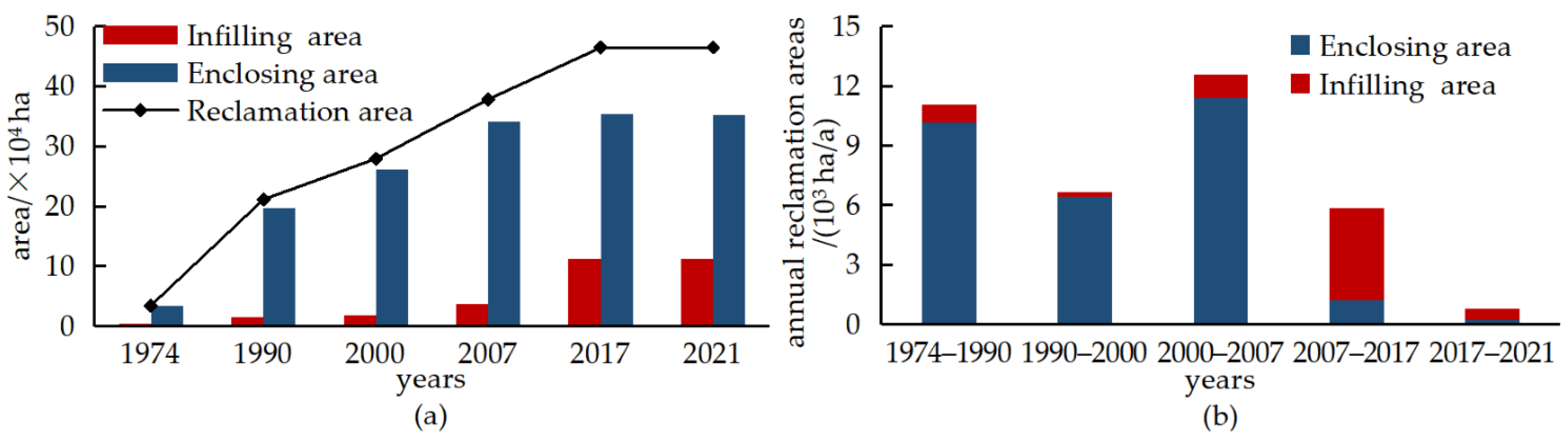
Quantitative Evaluation of Reclamation Intensity Based on Regional Planning Theory and Human–Marine Coordination Since 1974: A Case Study of Shandong, China

Abstract
Share and Cite
Liu, B.; Gong, M.; Wu, X.; Wang, Z. Quantitative Evaluation of Reclamation Intensity Based on Regional Planning Theory and Human–Marine Coordination Since 1974: A Case Study of Shandong, China. Remote Sens. 2022, 14, 3822. https://doi.org/10.3390/rs14153822
Liu B, Gong M, Wu X, Wang Z. Quantitative Evaluation of Reclamation Intensity Based on Regional Planning Theory and Human–Marine Coordination Since 1974: A Case Study of Shandong, China. Remote Sensing. 2022; 14(15):3822. https://doi.org/10.3390/rs14153822
Chicago/Turabian StyleLiu, Baijing, Meng Gong, Xiaoqing Wu, and Ziyang Wang. 2022. "Quantitative Evaluation of Reclamation Intensity Based on Regional Planning Theory and Human–Marine Coordination Since 1974: A Case Study of Shandong, China" Remote Sensing 14, no. 15: 3822. https://doi.org/10.3390/rs14153822
APA StyleLiu, B., Gong, M., Wu, X., & Wang, Z. (2022). Quantitative Evaluation of Reclamation Intensity Based on Regional Planning Theory and Human–Marine Coordination Since 1974: A Case Study of Shandong, China. Remote Sensing, 14(15), 3822. https://doi.org/10.3390/rs14153822