Article

Coupling Relationship Analysis of Gold Content Using Gaofen-5 (GF-5) Satellite Hyperspectral Remote Sensing Data: A Potential Method in Chahuazhai Gold Mining Area, Qiubei County, SW China

1
Department of Geography, University of Wisconsin-Madison, Madison, WI 53706, USA
2
School of Earth Sciences, Yunnan University, Kunming 650500, China
3
Engineering Research Center of Domestic High-Resolution Satellite Remote Sensing Geology for Universities of Yunnan Province, Kunming 650500, China
4
MNR Key Laboratory of Sanjiang Metallogeny and Resources Exploration & Utilization, Kunming 650051, China
5
The Second Geological Brigade of Yunnan Bureau of Geology and Mineral Exploration and Development, Wenshan 663000, China
*
Author to whom correspondence should be addressed.
Remote Sens. 2022, 14(1), 109; https://doi.org/10.3390/rs14010109
Submission received: 9 November 2021 / Revised: 22 December 2021 / Accepted: 24 December 2021 / Published: 28 December 2021

Abstract

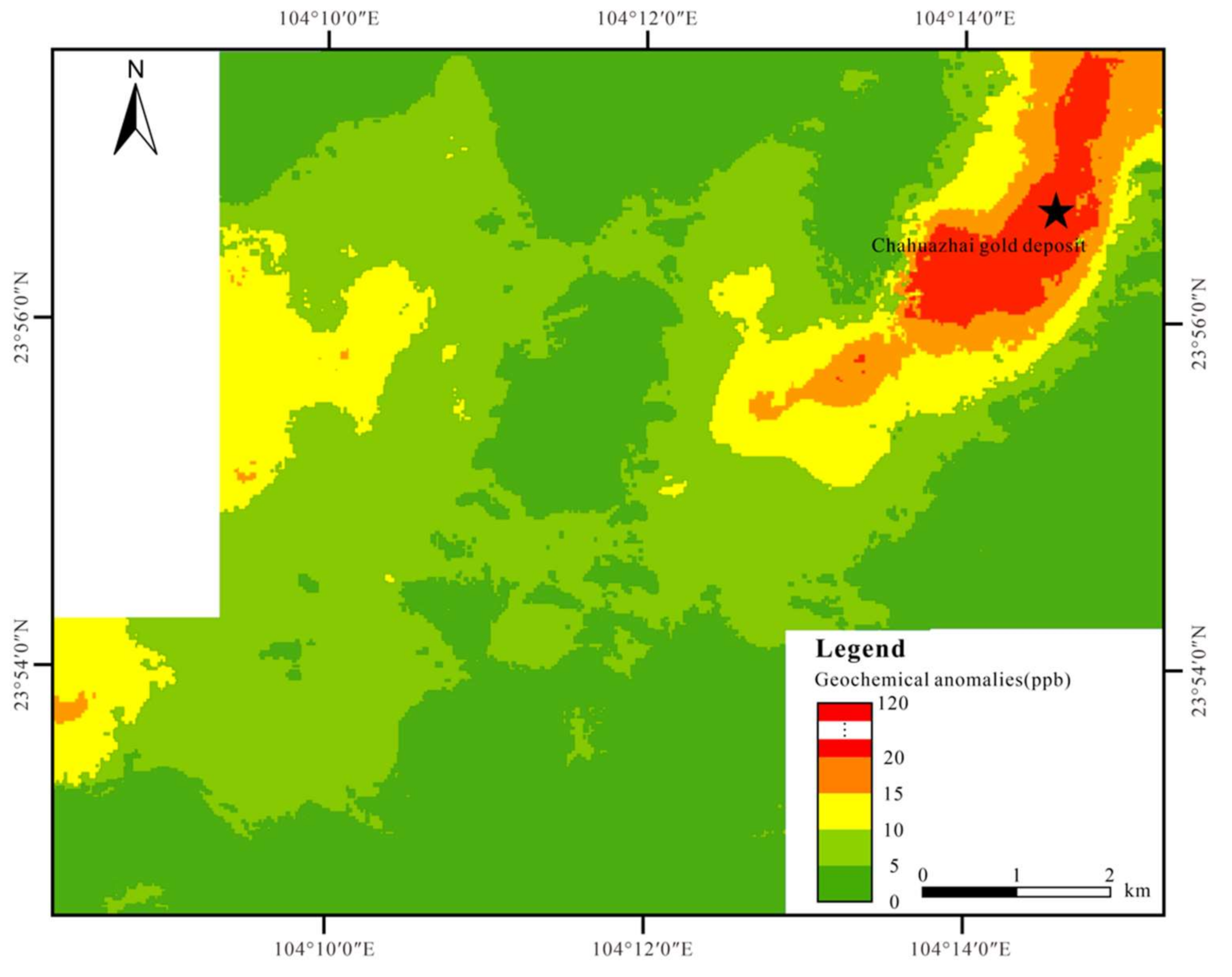
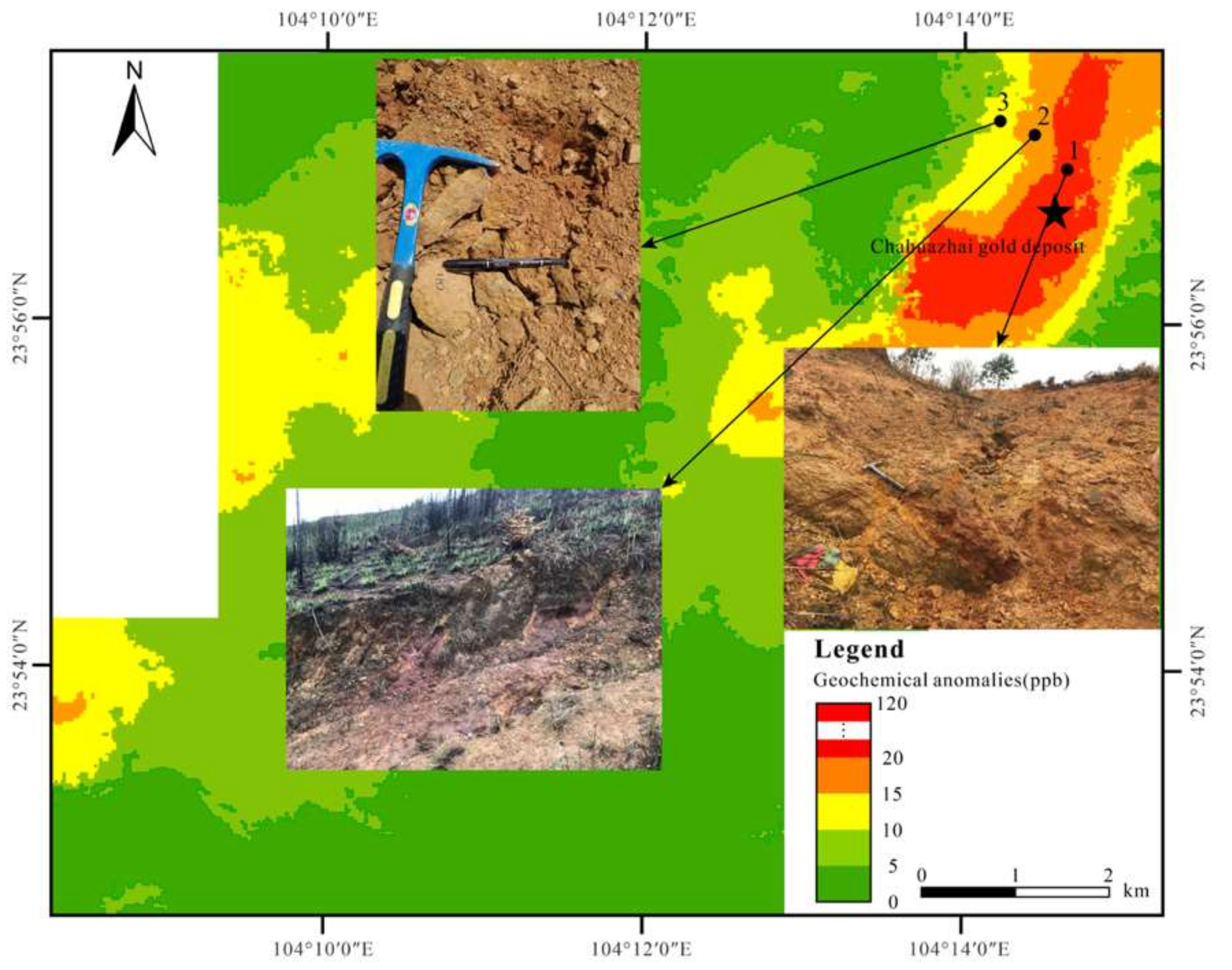
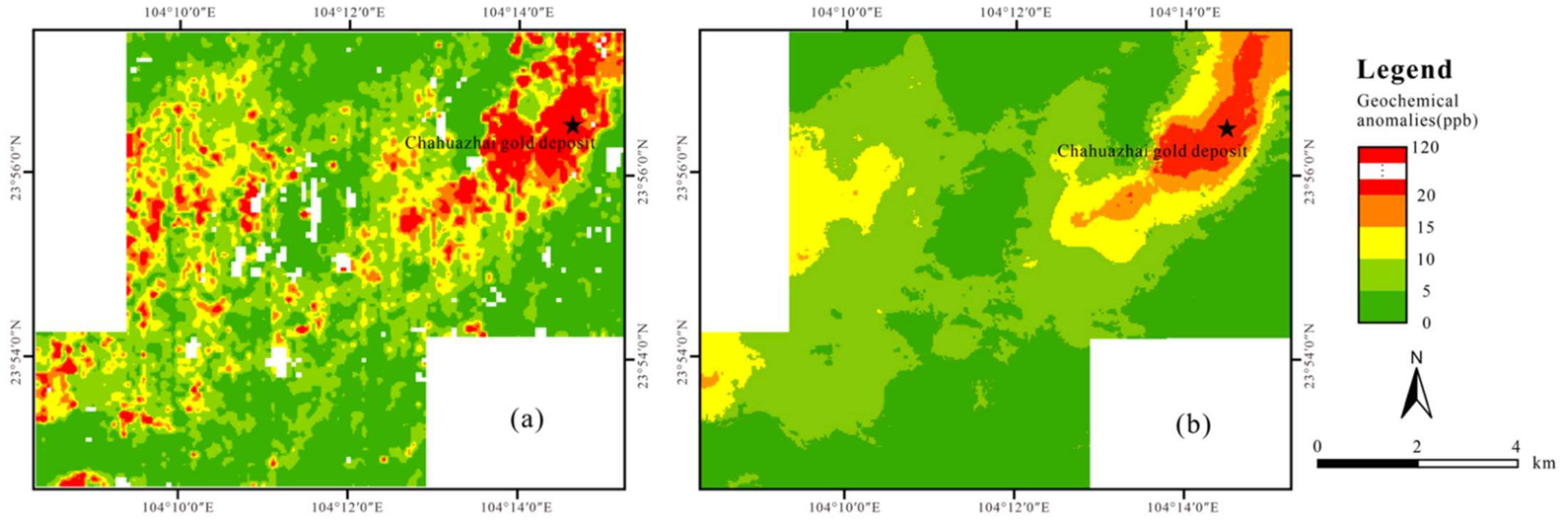
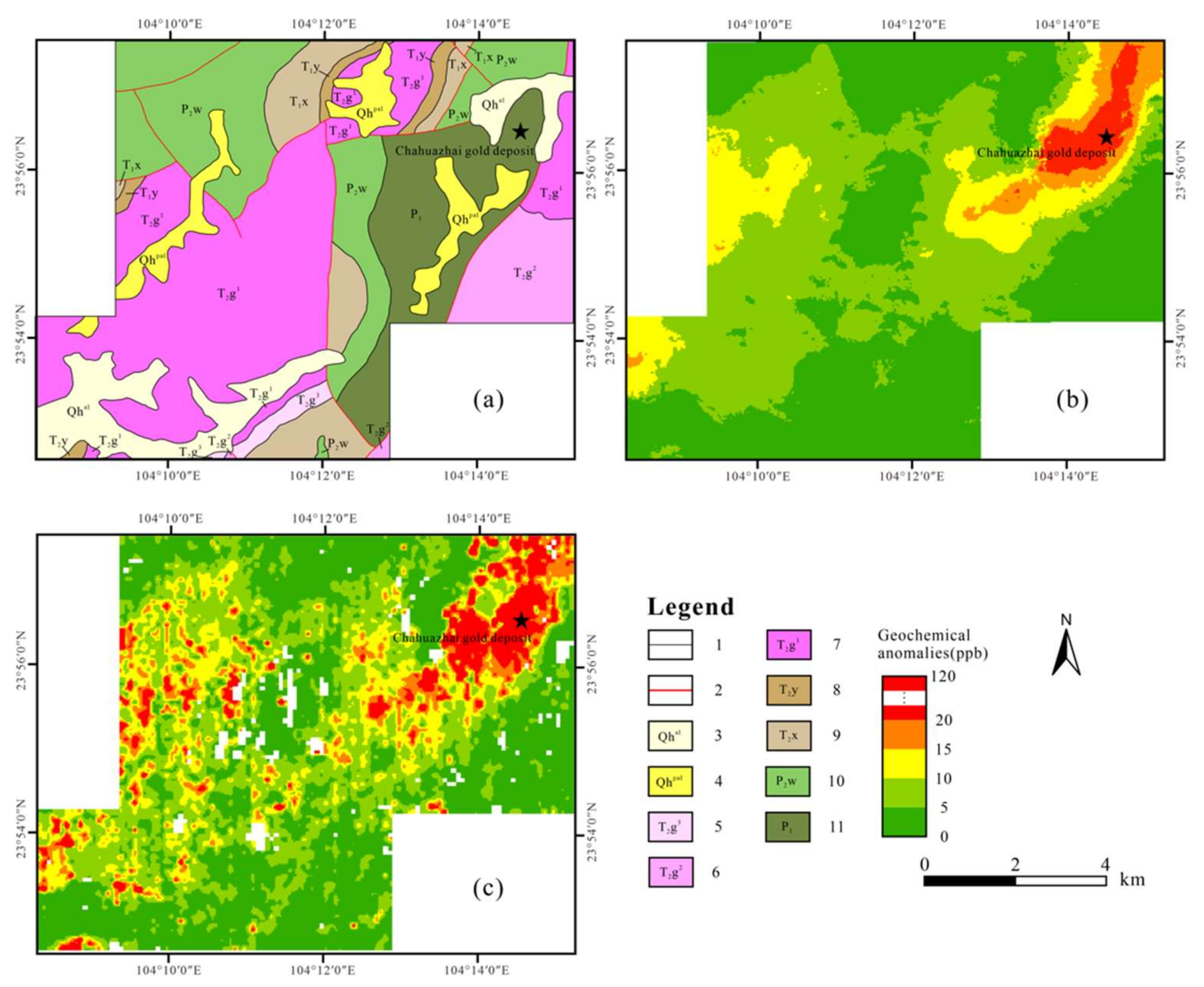
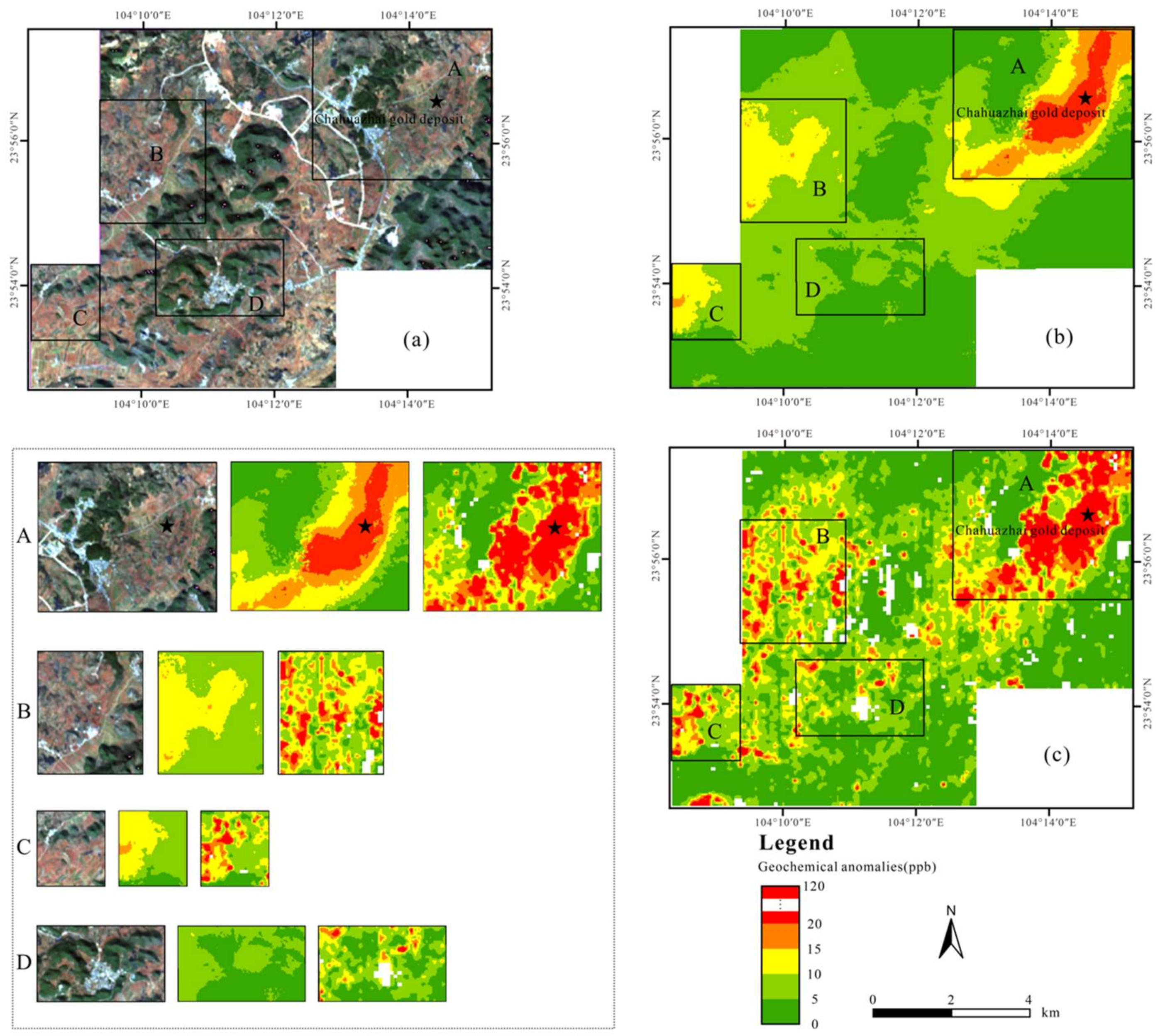
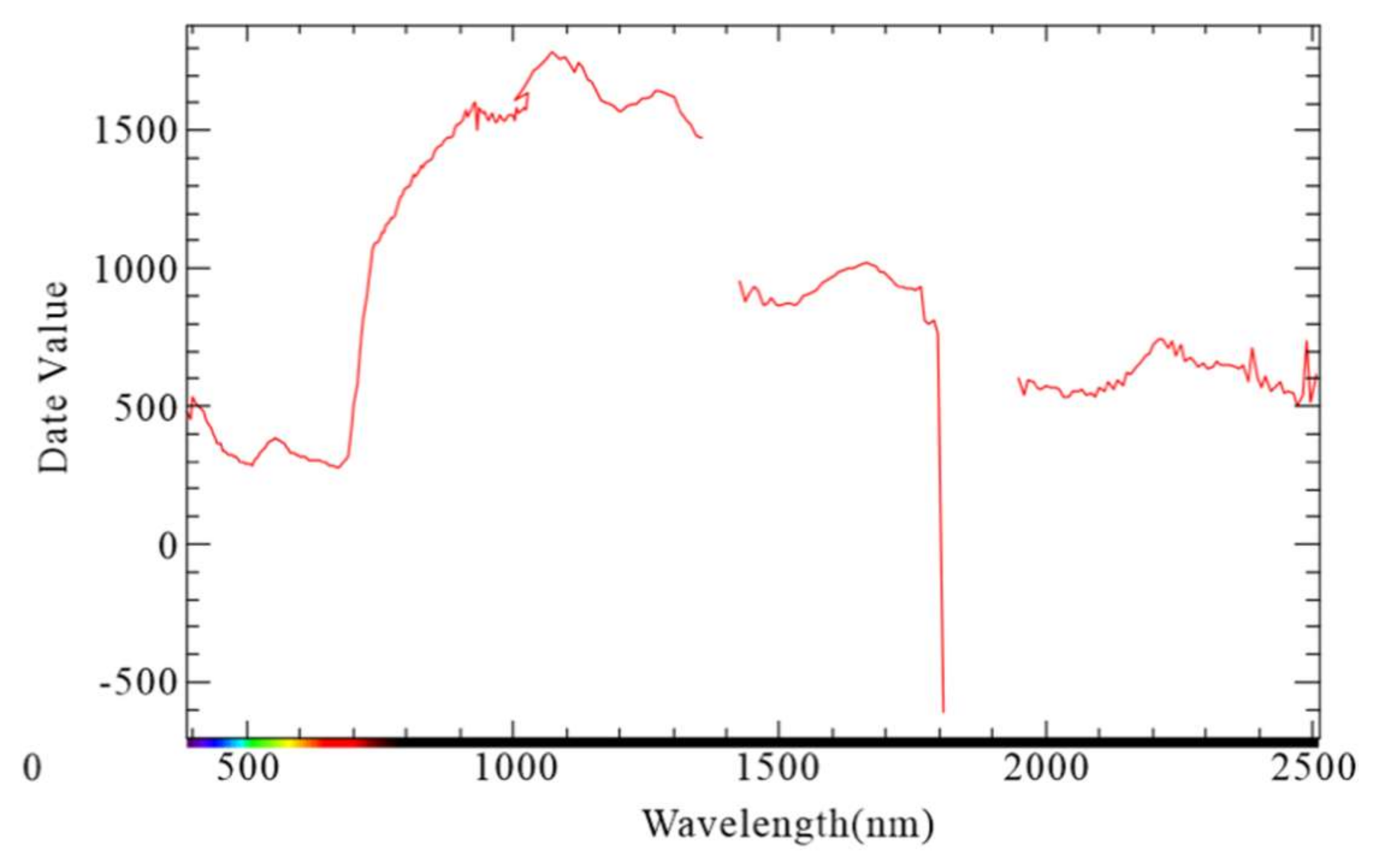
The gold (Au) geochemical anomaly is an important indicator of gold mineralization. While the traditional field geochemical exploration method is time-consuming and expensive, the hyperspectral remote sensing technique serves as a robust technique for the delineation and mapping of hydrothermally altered and weathered mineral deposits. Nonetheless, mineralization element anomaly detection was still seldomly used in previous hyperspectral remote sensing applications in mineralization. This study explored the coupling relationship between Gaofen-5 (GF-5) hyperspectral data and Au geochemical anomalies through several models. The Au geochemical anomalies in the Chahuazhai mining area, Qiubei County, Yunnan Province, SW China, was studied in detail. First, several noise reduction methods including radiometric calibration, Fast Line-of-sight Atmospheric Analysis of Spectral Hypercubes (FLAASH), Savitzky–Golay filter, and endmember choosing methods including Minimum Noise Fraction (MNF) transformation, matched filtering, and Fast Fourier Transform (FFT) transformation were applied to the Gaofen-5 (GF-5) hyperspectral data processing. The Spectrum-Area (S-A) method was introduced to build an FFT filter to highlight the spectral abnormal characteristics associated with Au geochemical anomaly information. Specifically, the Matched Filtering (MF) technique was applied to the dataset to find the Au geochemical anomaly abundances of endmembers with innovative large-sample learning. Then, Multiple Linear Regression (MLR), Partial Least Squares (PLS) regression, a Back Propagation (BP) network, and Geographically Weighted Regression (GWR) were used to reveal the coupling relationship between the spectra of the processed hyperspectral data and the Au geochemical anomalies. The results show that the GWR analysis has a much higher coefficient of determination, which implies that the Au geochemical anomalies and the spectral information are highly related to spatial locations. GWR works especially well for showing the regional Au geochemical anomaly trend and simulating the Au concentrated areas. The GWR model with application of the S-A method is applicable to the detection of Au geochemical anomalies, which could provide a potential method for Au deposit exploration using GF-5 hyperspectral data.
Keywords: coupling relationship analysis; GF-5 hyperspectral data; geographically weighted regression (GWR); spectrum-area (S-A); large-sample-learning; Au geochemical anomaly; Chahuazhai Carlin-type Gold Deposit; SW China coupling relationship analysis; GF-5 hyperspectral data; geographically weighted regression (GWR); spectrum-area (S-A); large-sample-learning; Au geochemical anomaly; Chahuazhai Carlin-type Gold Deposit; SW China