Article

Vegetation Drought Vulnerability Mapping Using a Copula Model of Vegetation Index and Meteorological Drought Index

1
Division of Earth Environmental System Science (Major in Environmental Engineering), Pukyong National University, Busan 48513, Korea
2
Department of Environmental Engineering, Pukyong National University, Busan 48513, Korea
3
Water Resources Management Research Center, K-Water Research Institute, Daejeon 34350, Korea
*
Author to whom correspondence should be addressed.
Remote Sens. 2021, 13(24), 5103; https://doi.org/10.3390/rs13245103
Submission received: 17 October 2021 / Revised: 25 November 2021 / Accepted: 13 December 2021 / Published: 15 December 2021

Abstract

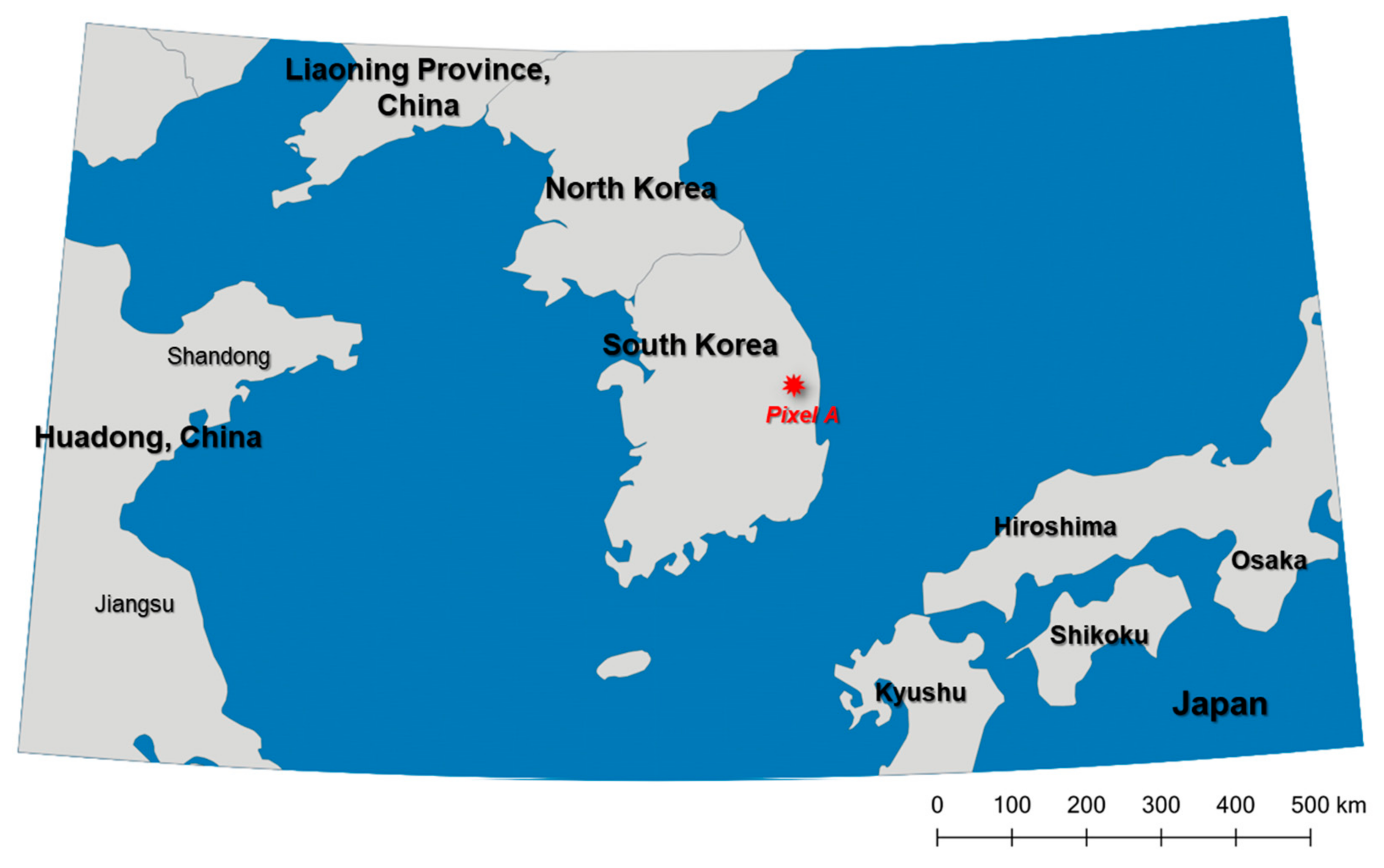
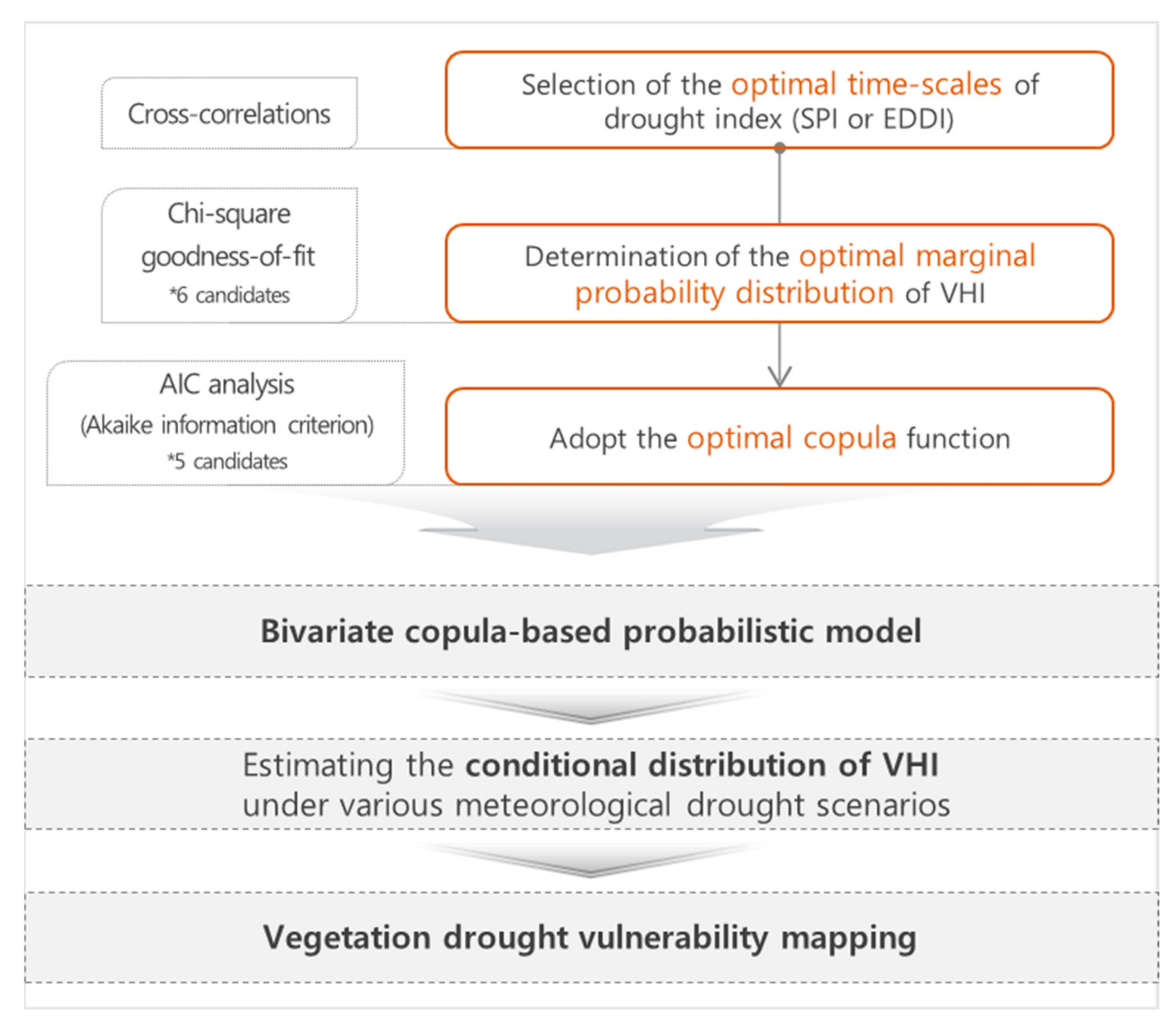
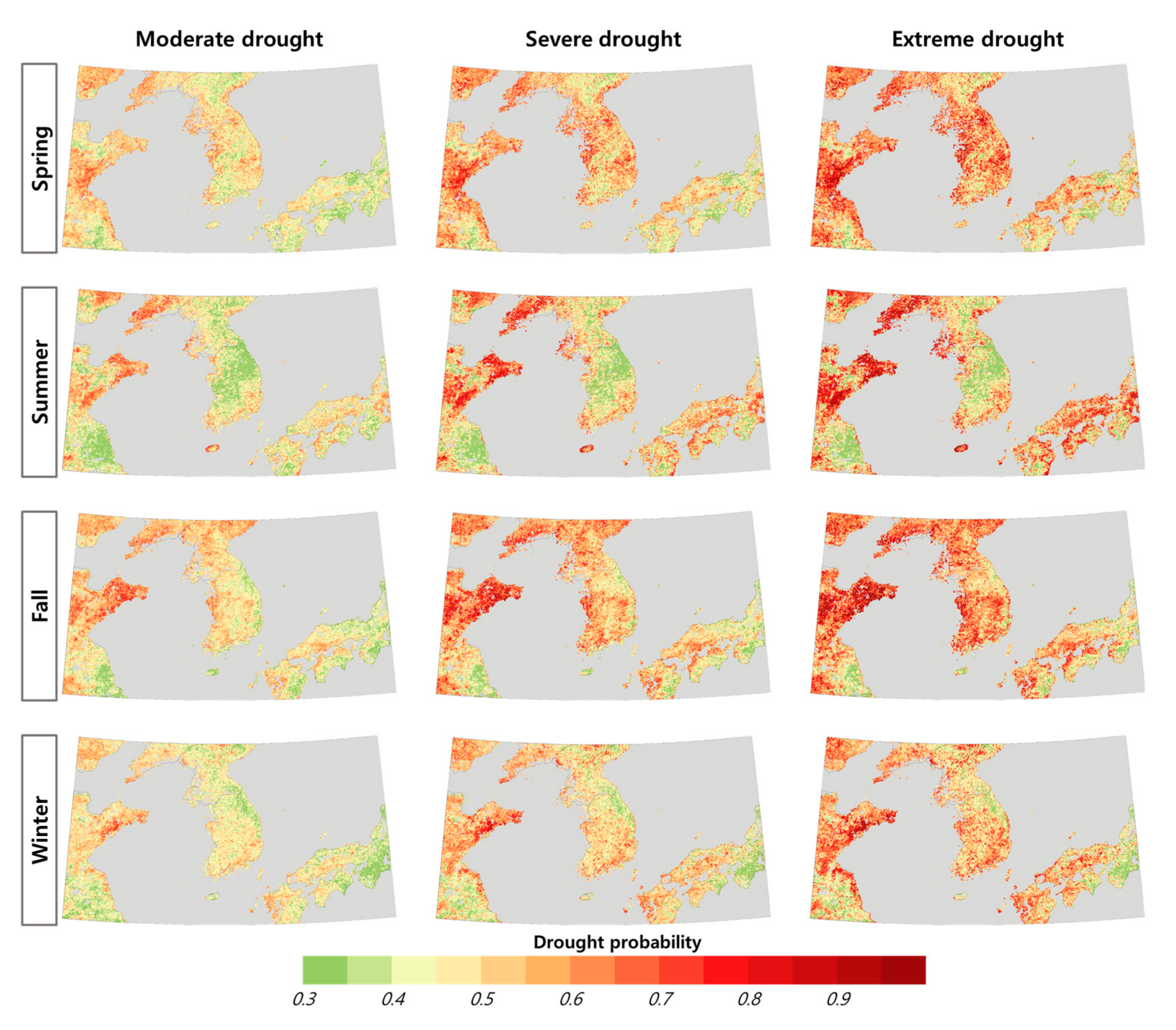
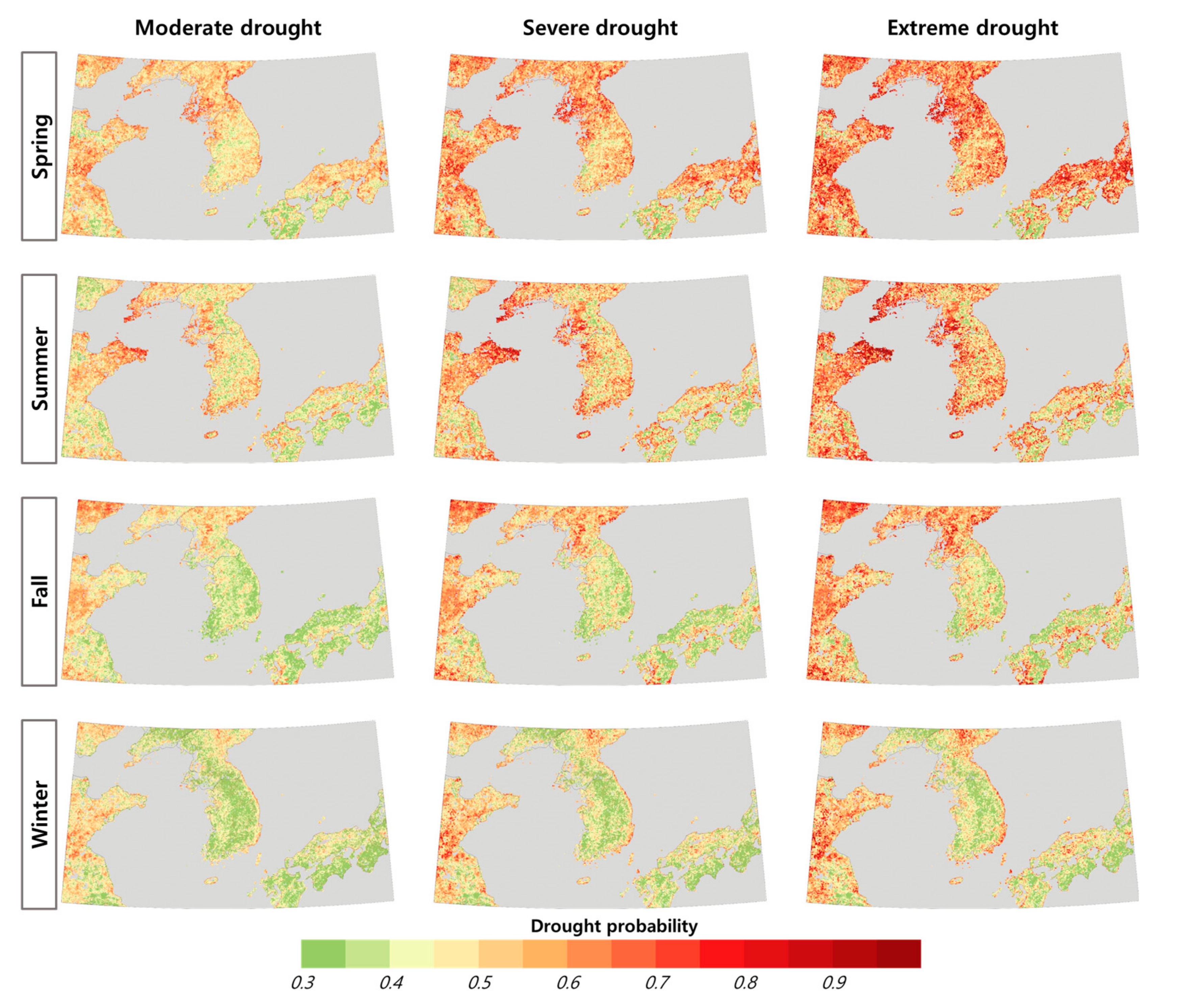
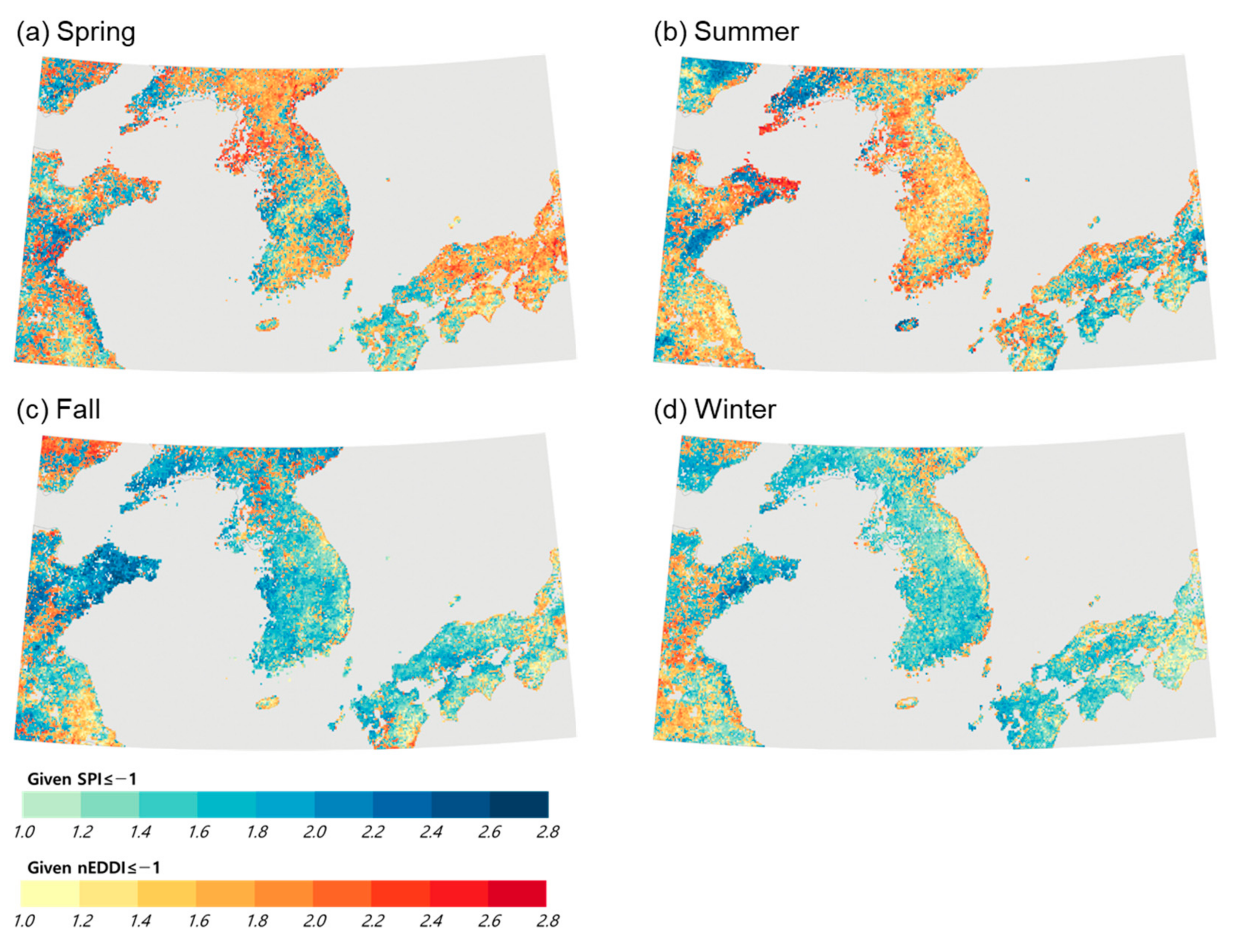
Since vegetation is closely related to a variety of hydrological factors, the vegetation condition during a drought is greatly affected by moisture supply or moisture demand from the atmosphere. However, since feedback between vegetation and climate in the event of drought is very complex, it is necessary to construct a joint probability distribution that can describe and investigate the interrelationships between them. In other words, it is required to understand the interaction between vegetation and climate in terms of joint probability. In this study, the possibility of drought stress experienced by vegetation under various conditions occurring during drought was investigated by dividing drought into two aspects (atmospheric moisture supply and moisture demand). Meteorological drought indices that explain different aspects of drought and vegetation-related drought indexes that describe the state of vegetation were estimated using data remotely sensed by satellites in parts of Far East Asia centered on South Korea. Bivariate joint probability distribution modeling was performed from vegetation drought index and meteorological drought index using Copula. It was found that the relationship between the vegetation drought index and the meteorological drought index has regional characteristics and there is also a seasonal change. From the copula-based model, it was possible to quantify the conditional probability distribution for the drought stress of vegetation under meteorological drought scenarios that occur from different causes. Through this, by mapping the vulnerability of vegetation to meteorological drought in the study area, it was possible to spatially check how the vegetation responds differently depending on the season and meteorological causes. The probabilistic mapping of vegetation vulnerability to various aspects of meteorological drought may provide useful information for establishing mitigation strategies for ecological drought.
Keywords: copula; vegetation; EDDI; SPI; VHI; remote sensing data copula; vegetation; EDDI; SPI; VHI; remote sensing data