Article

Simulating the Response of the Surface Urban Heat Environment to Land Use and Land Cover Changes: A Case Study of Wuhan, China
1
College of Geological Engineering and Geomatics, Chang’an University, Xi’an 710054, China
2
Key Laboratory of Western China’s Mineral Resource and Geological Engineering, Ministry of Education, Xi’an 710054, China
3
Big Data Center for Geosciences and Satellites (BDCGS), Xi’an 710054, China
4
College of Urban and Environmental Sciences, Northwest University, Xi’an 710127, China
5
School of Resource and Environmental Sciences, Wuhan University, Wuhan 430079, China
*
Author to whom correspondence should be addressed.
Remote Sens. 2021, 13(22), 4495; https://doi.org/10.3390/rs13224495
Submission received: 20 September 2021 / Revised: 3 November 2021 / Accepted: 6 November 2021 / Published: 9 November 2021
(This article belongs to the Section Urban Remote Sensing)

Abstract

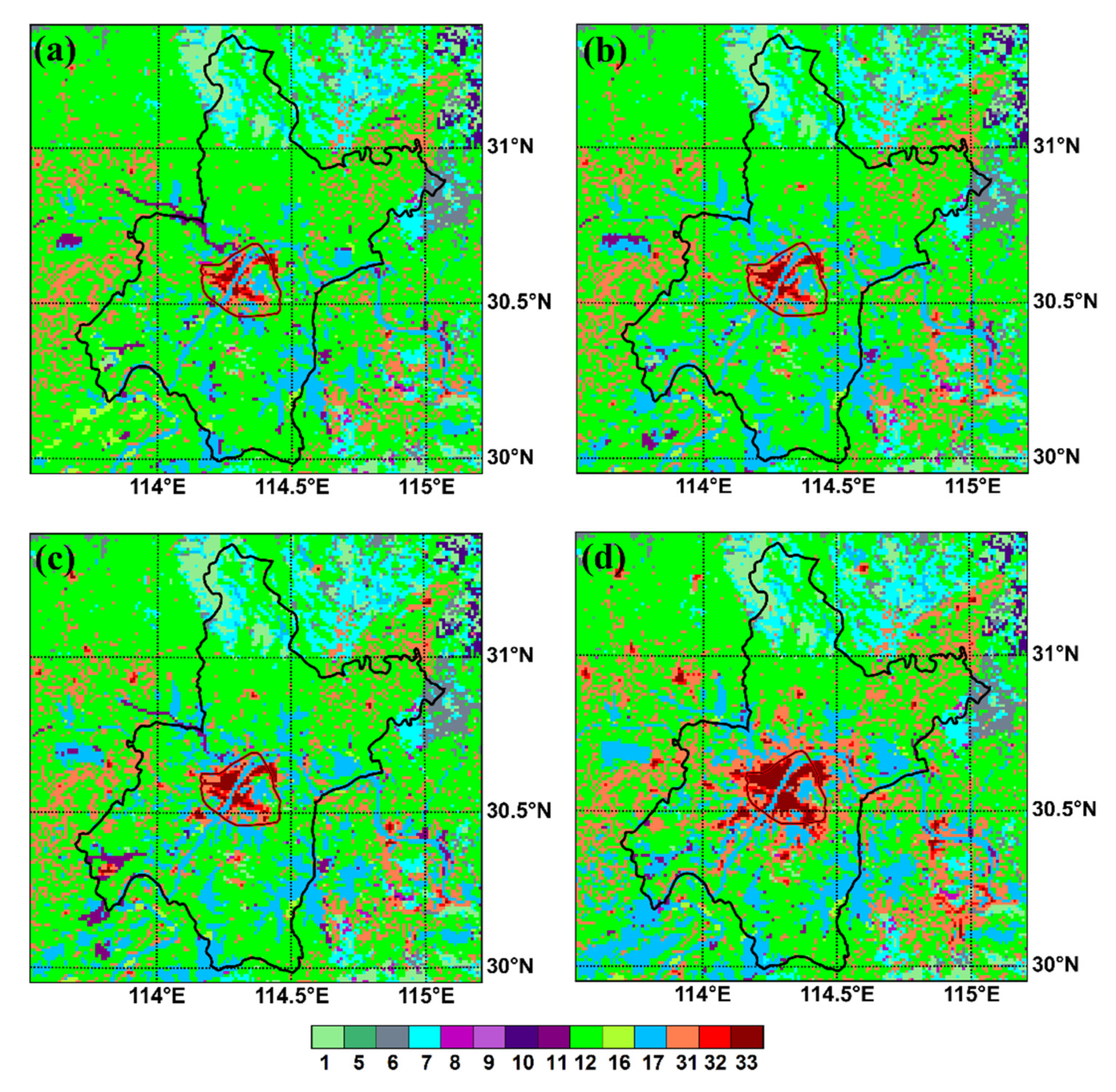
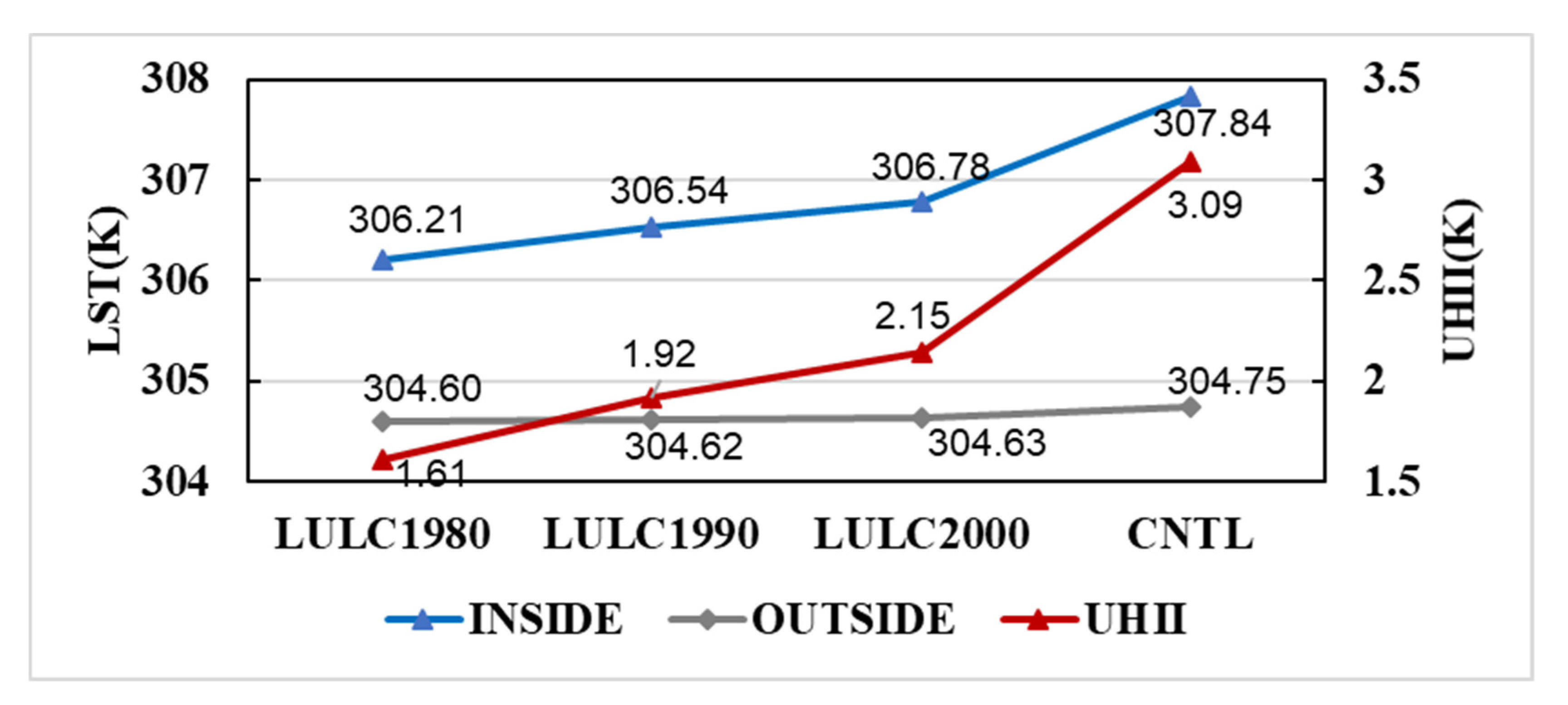
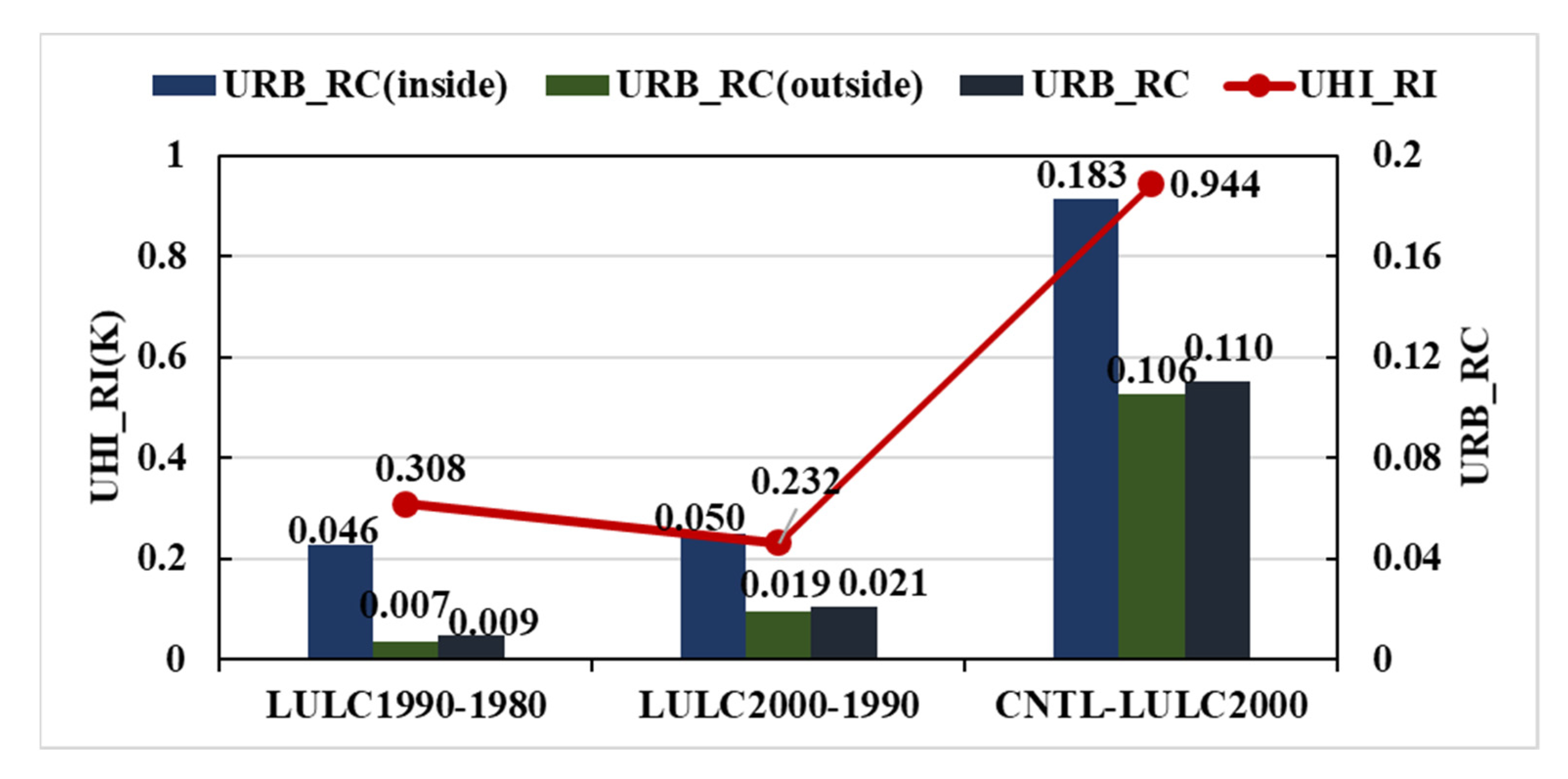
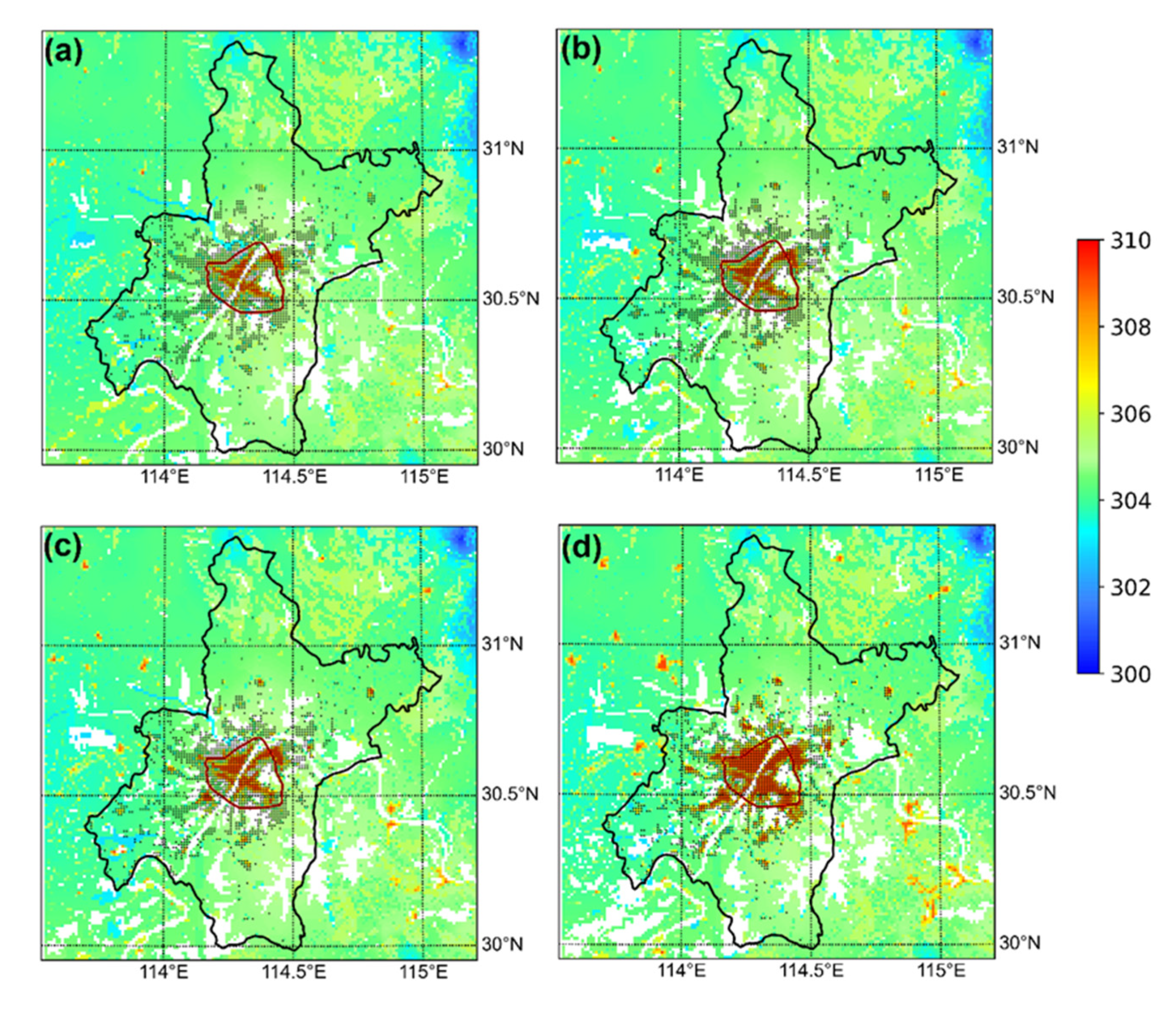
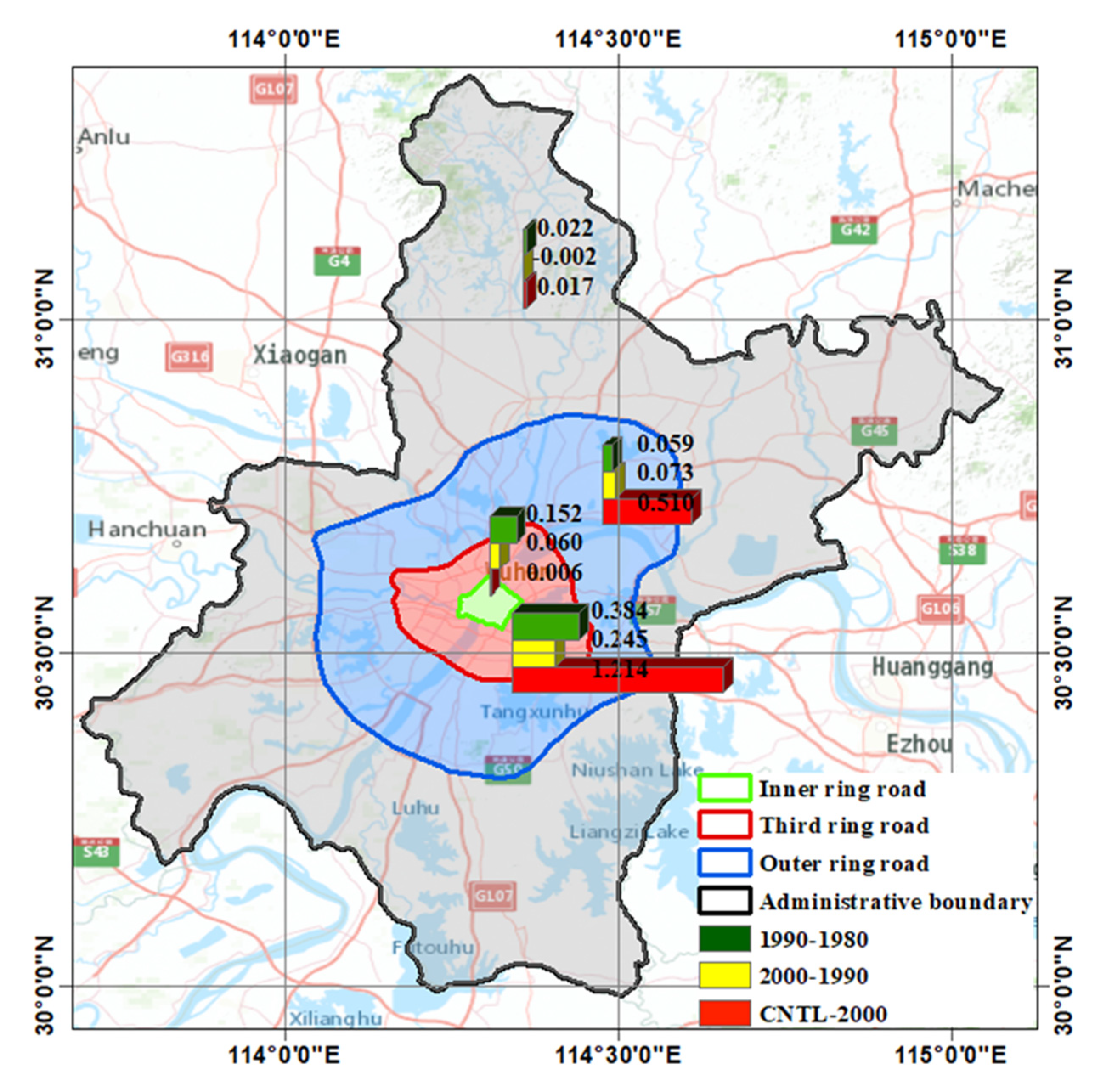
With the rapid process of urbanization, the urban heat island (UHI), the phenomenon where urban regions become hotter than their surroundings, is increasingly aggravated. The UHI is affected by multiple factors overall. However, it is difficult to dissociate the effect of one aspect by widely used approaches such as the remote-sensing-based method. To qualify the response of surface UHI to the land use and land cover (LULC) changes, this study took the numerical land model named u-HRLDAS (urbanized high-resolution land data assimilation system) as the modeling tool to investigate the effect of LULC changes on the UHI from 1980 to 2013 in Wuhan city, China. Firstly, the simulation accuracy of the model was improved, and the summer urban heat environment was simulated for the summer of 2013. Secondly, taking the simulation in 2013 as the control case (CNTL), the LULC in 1980, 1990, and 2000 were replaced by the LULC while the other conditions kept the same as the CNTL to explore the effect of LULC on UHI. The results indicate that the proper configuration of the modeling setup and accurate surface input data are considered important for the simulated results of the u-HRLDAS. The response intensity of UHI to LULC changes after 2000 was stronger than that of before 2000. From the spatial perspective, the part that had the strongest response intensity of land surface temperature to LULC changes was the region between the third ring road and the inner ring road of Wuhan. This study can provide a reference for cognizing the urban heat environment and guide policy making for urban development.
Keywords: u-HRLDAS; land use and land cover changes; land surface temperature; urban heat island u-HRLDAS; land use and land cover changes; land surface temperature; urban heat island