Letter

Single-Stage Rotation-Decoupled Detector for Oriented Object


1
College of Computer Science and Technology, University of Posts and Telecommunications, Chongqing 400065, China
2
State Key Laboratory of Remote Sensing Science, Aerospace information Research Institute, Chinese Academy of Sciences, Beijing 100101, China
*
Author to whom correspondence should be addressed.
Remote Sens. 2020, 12(19), 3262; https://doi.org/10.3390/rs12193262
Submission received: 1 September 2020 / Revised: 29 September 2020 / Accepted: 1 October 2020 / Published: 8 October 2020

Abstract

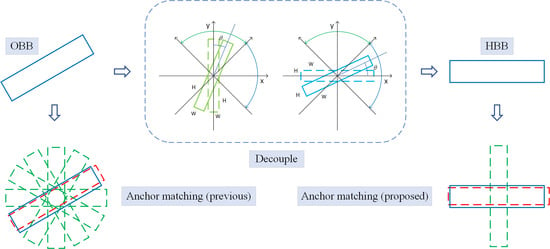
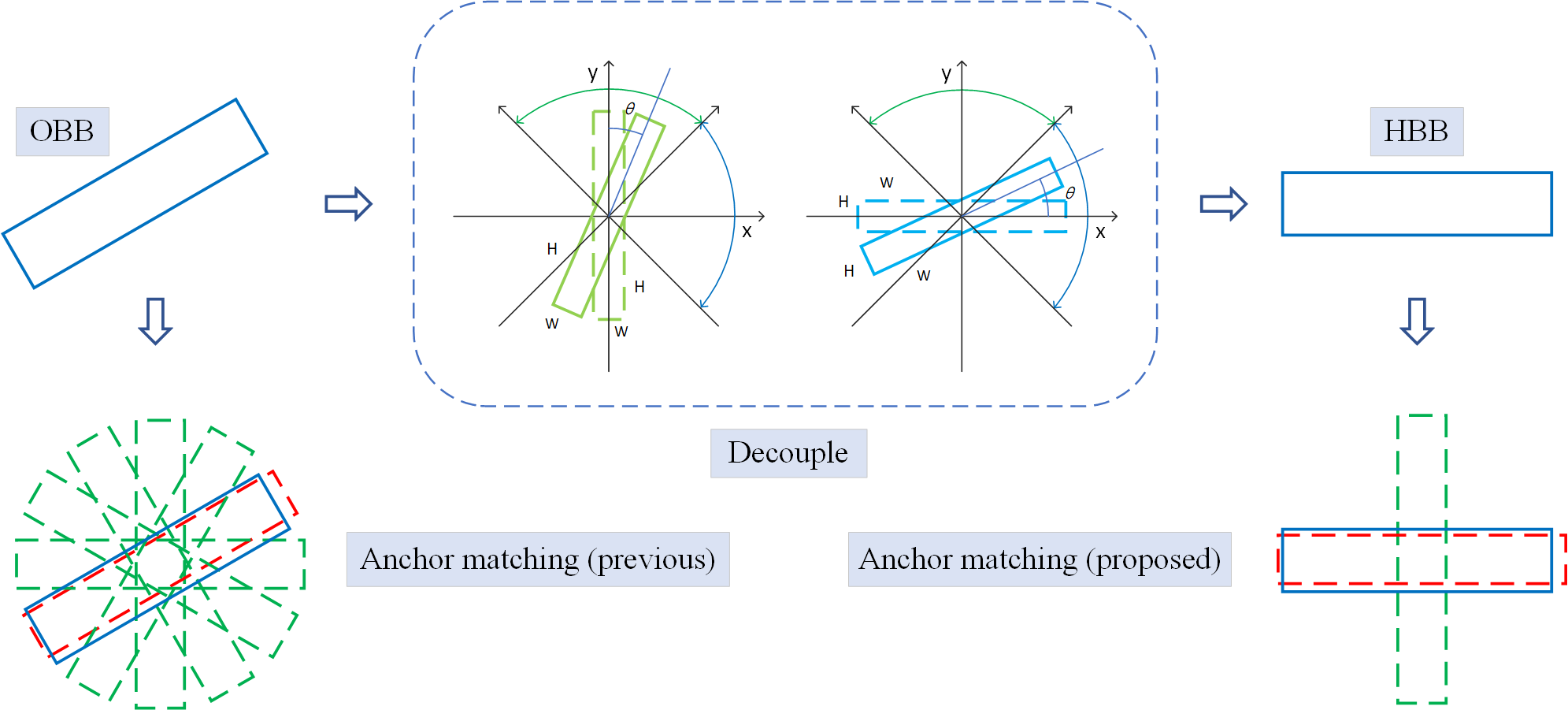
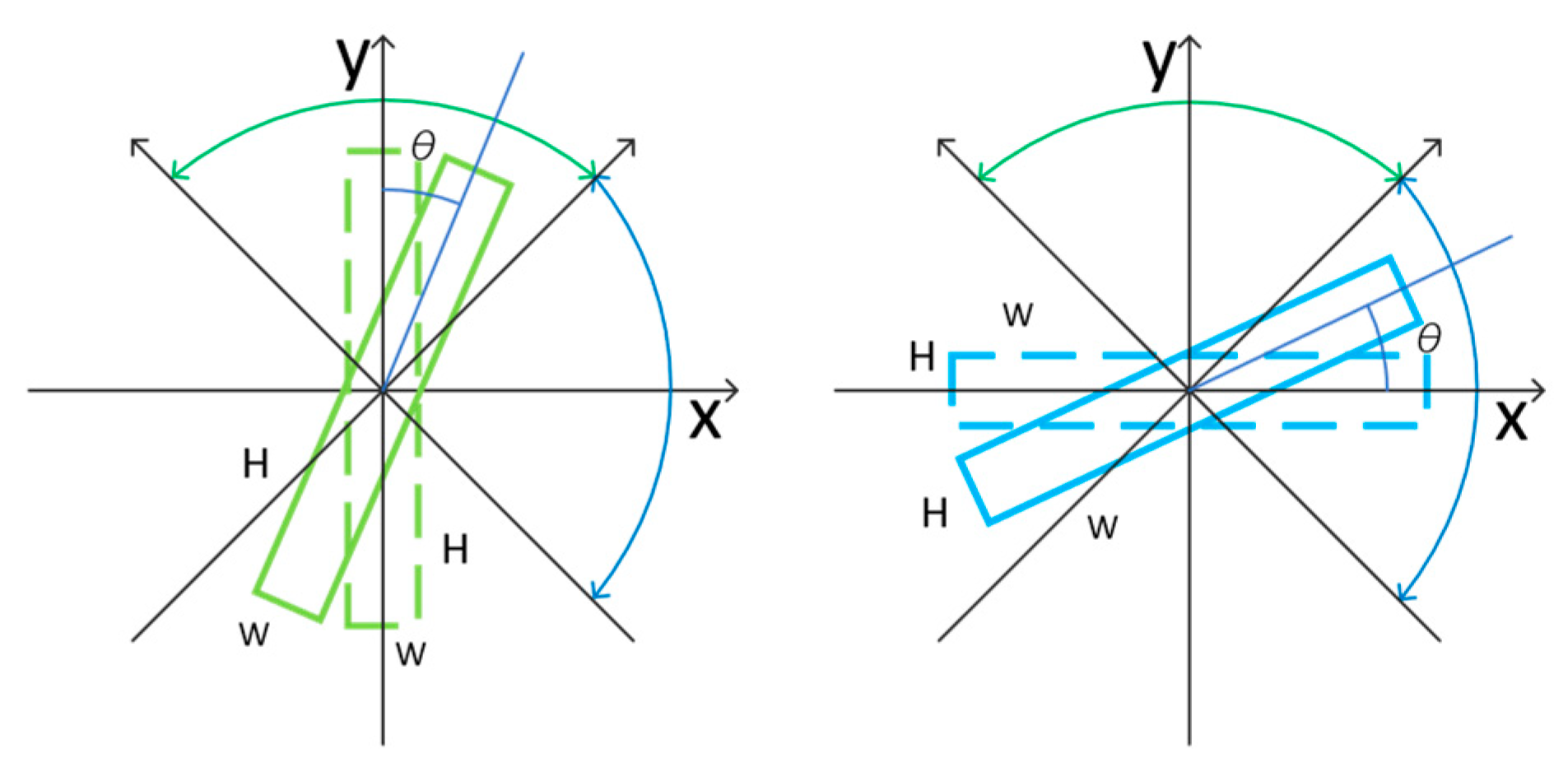
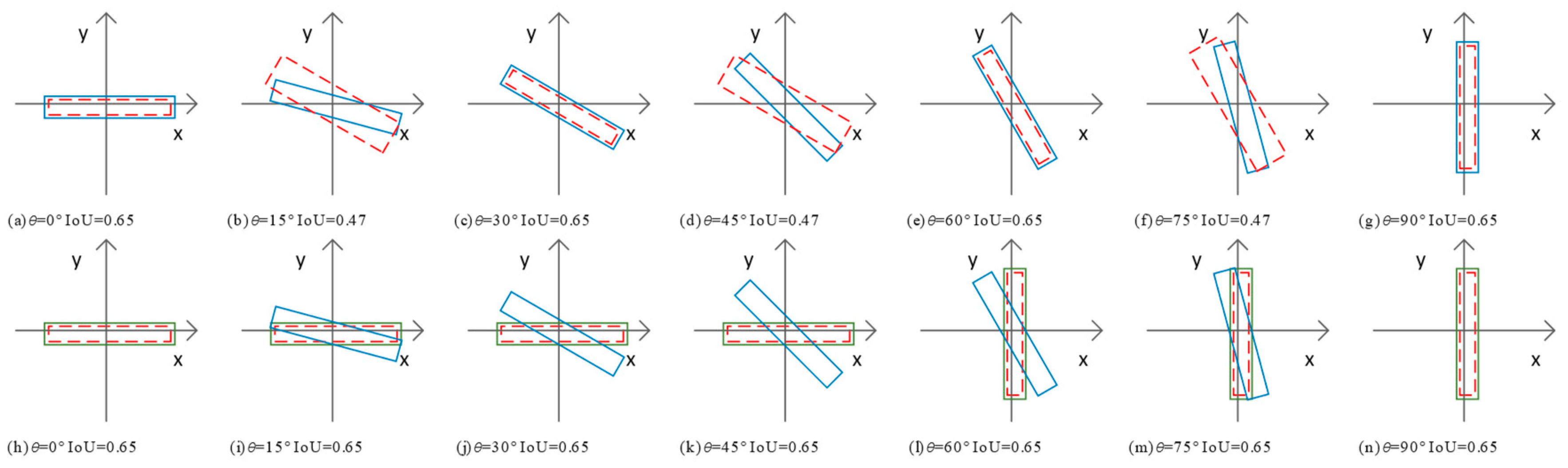
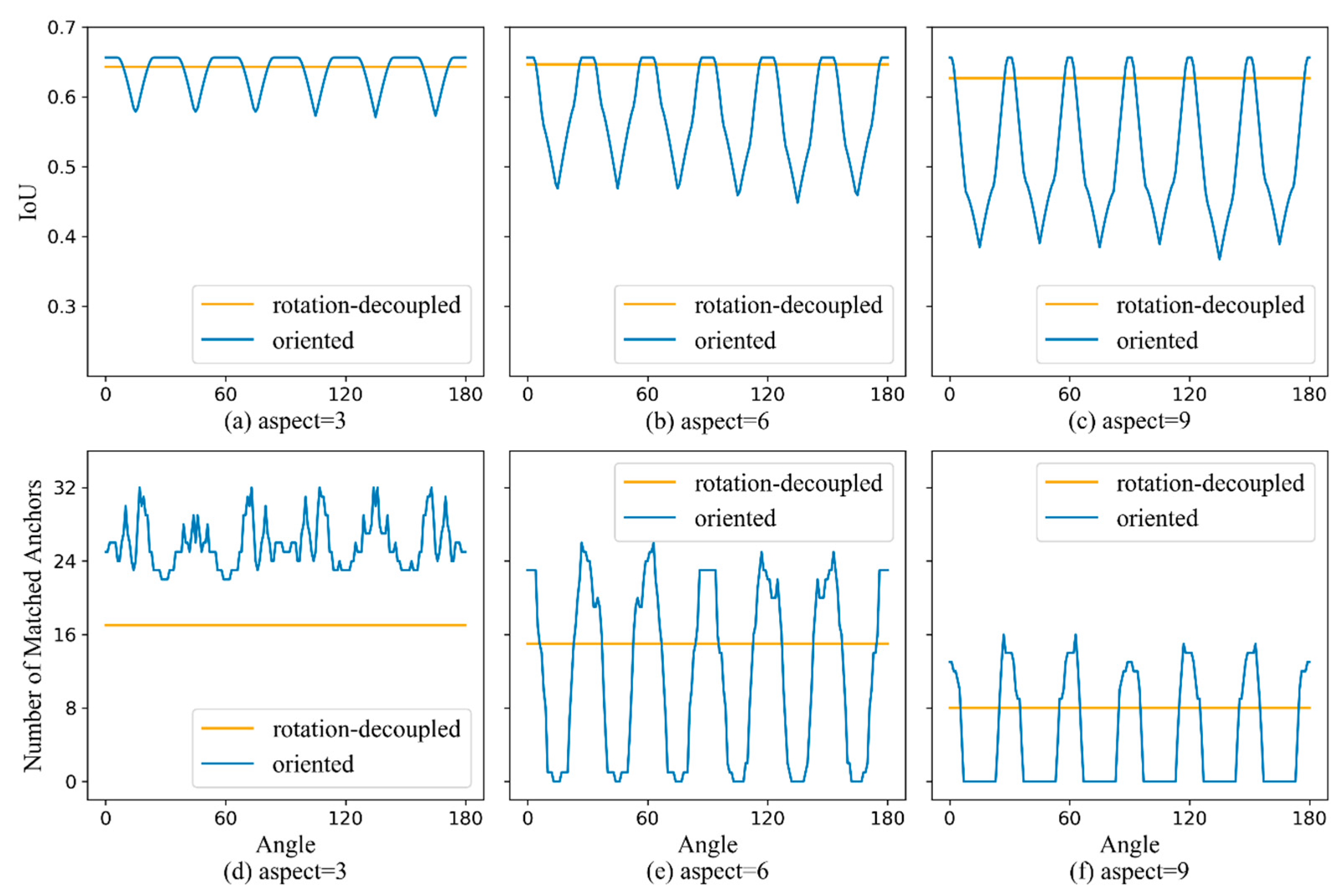
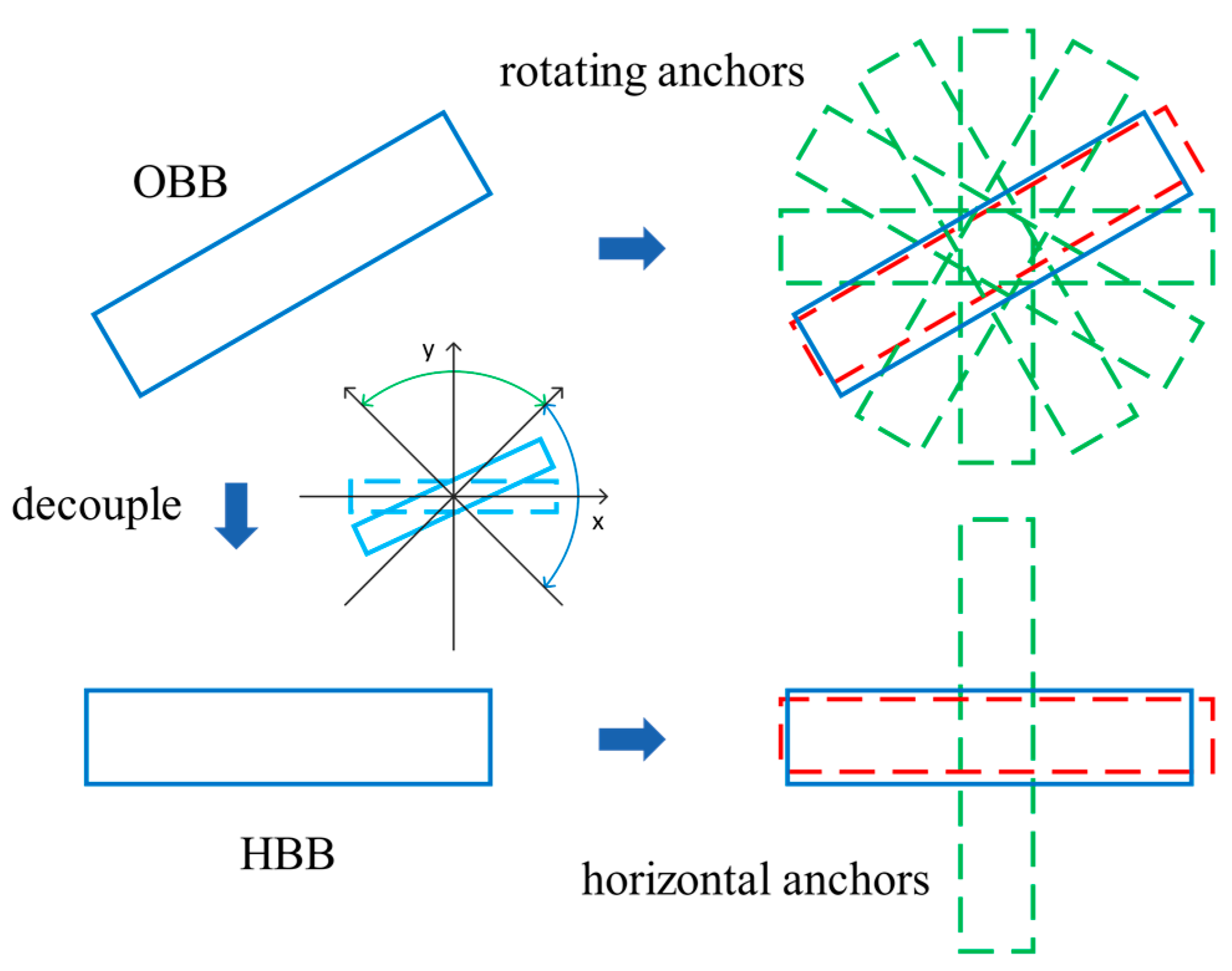
Oriented object detection has received extensive attention in recent years, especially for the task of detecting targets in aerial imagery. Traditional detectors locate objects by horizontal bounding boxes (HBBs), which may cause inaccuracies when detecting objects with arbitrary oriented angles, dense distribution and a large aspect ratio. Oriented bounding boxes (OBBs), which add different rotation angles to the horizontal bounding boxes, can better deal with the above problems. New problems arise with the introduction of oriented bounding boxes for rotation detectors, such as an increase in the number of anchors and the sensitivity of the intersection over union (IoU) to changes of angle. To overcome these shortcomings while taking advantage of the oriented bounding boxes, we propose a novel rotation detector which redesigns the matching strategy between oriented anchors and ground truth boxes. The main idea of the new strategy is to decouple the rotating bounding box into a horizontal bounding box during matching, thereby reducing the instability of the angle to the matching process. Extensive experiments on public remote sensing datasets including DOTA, HRSC2016 and UCAS-AOD demonstrate that the proposed approach achieves state-of-the-art detection accuracy with higher efficiency.
Keywords: object detection; aerial images; arbitrary-oriented; convolutional neural network object detection; aerial images; arbitrary-oriented; convolutional neural network
Graphical Abstract