Particle Size Parameters of Particulate Matter Suspended in Coastal Waters and Their Use as Indicators of Typhoon Influence



Abstract
1. Introduction
2. Materials and Methods
2.1. Theory Background
2.2. Calculations Approach
2.2.1. Particulate Backscattering Coefficient
2.2.2. Backscattering Efficiency
2.2.3. Particle Size Parameters Calculation
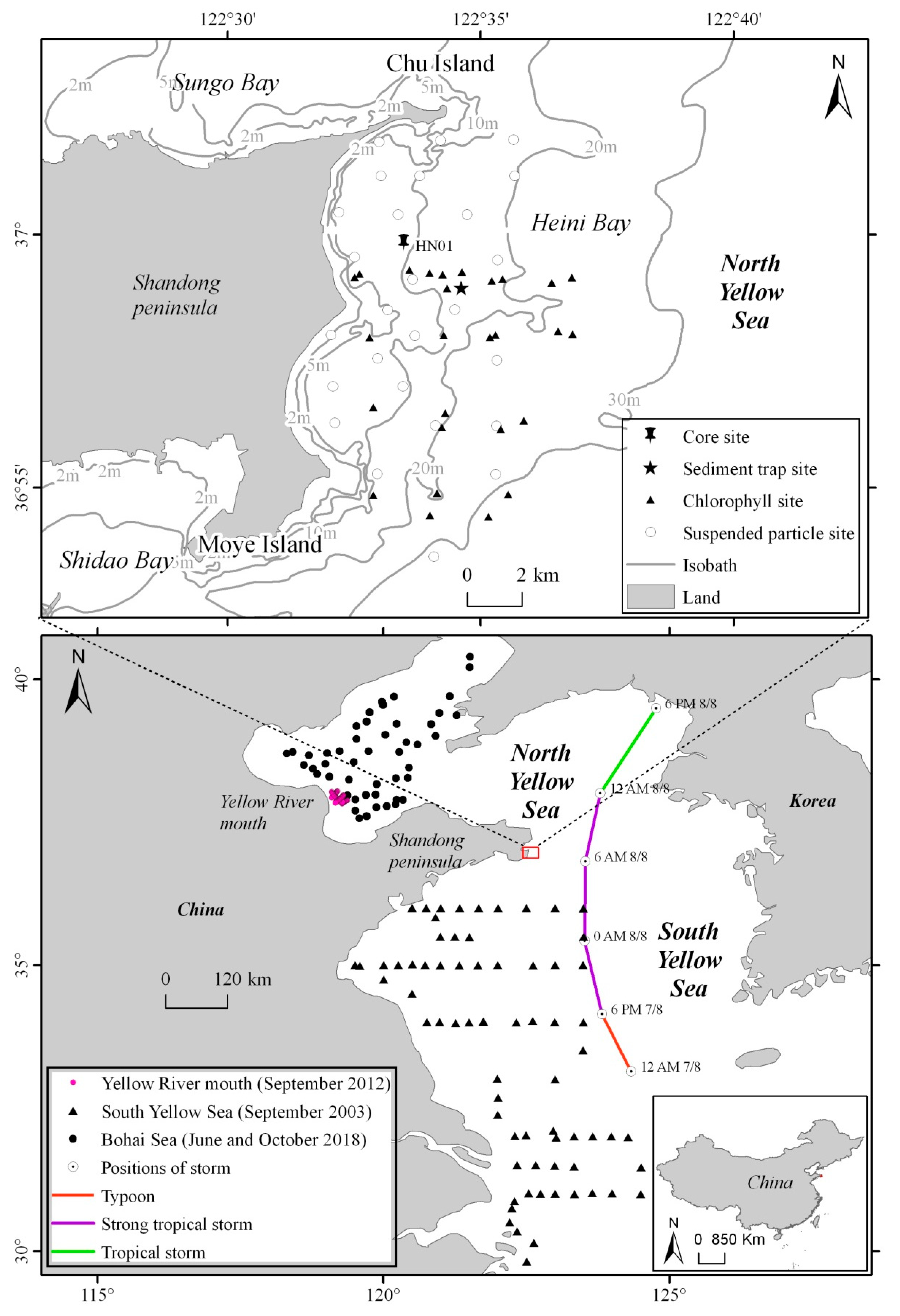
2.3. Study Area
2.4. Sampling
2.5. Sample Processing
2.6. MODIS Images
3. Results
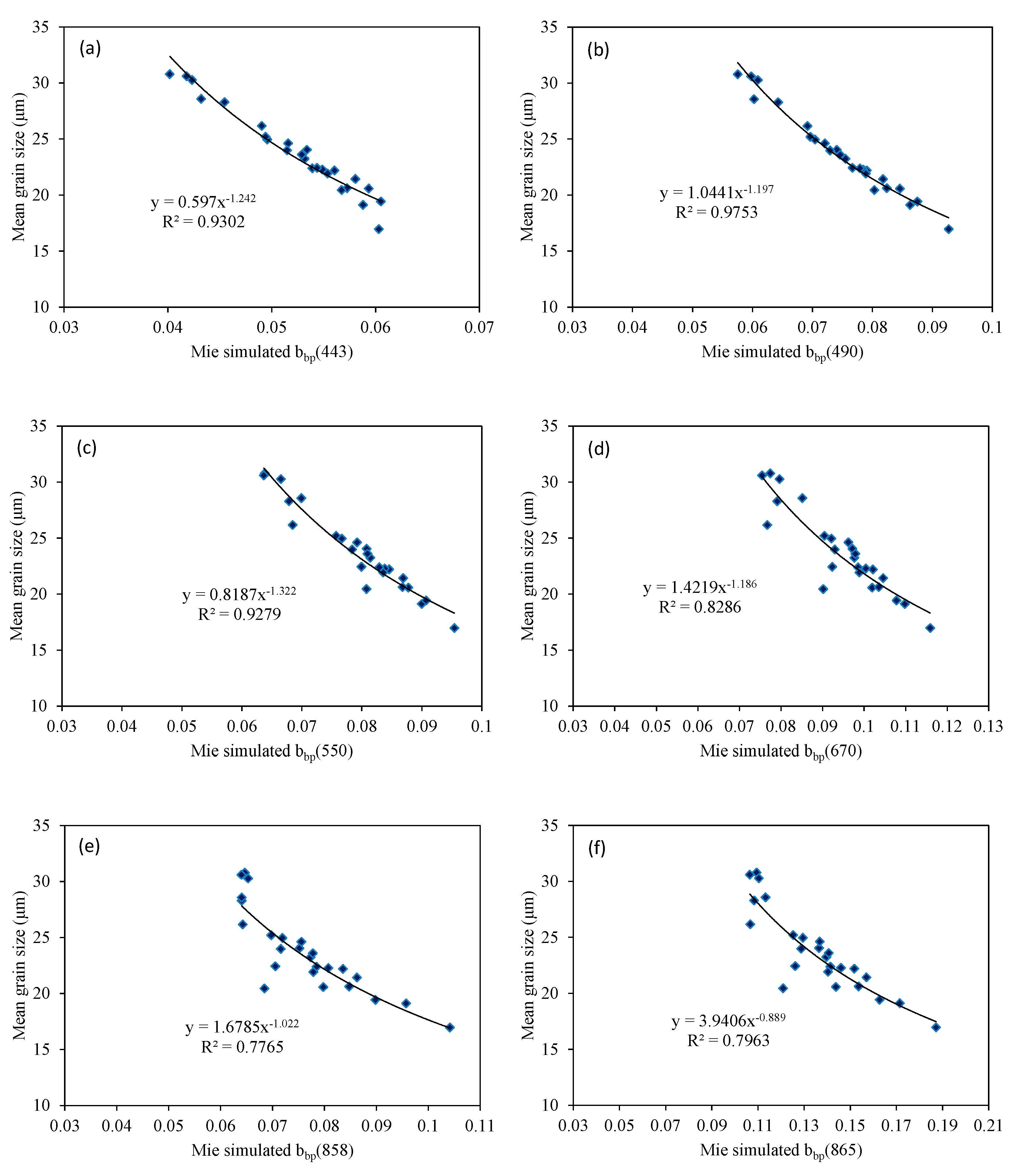
3.1. Parameter Determination
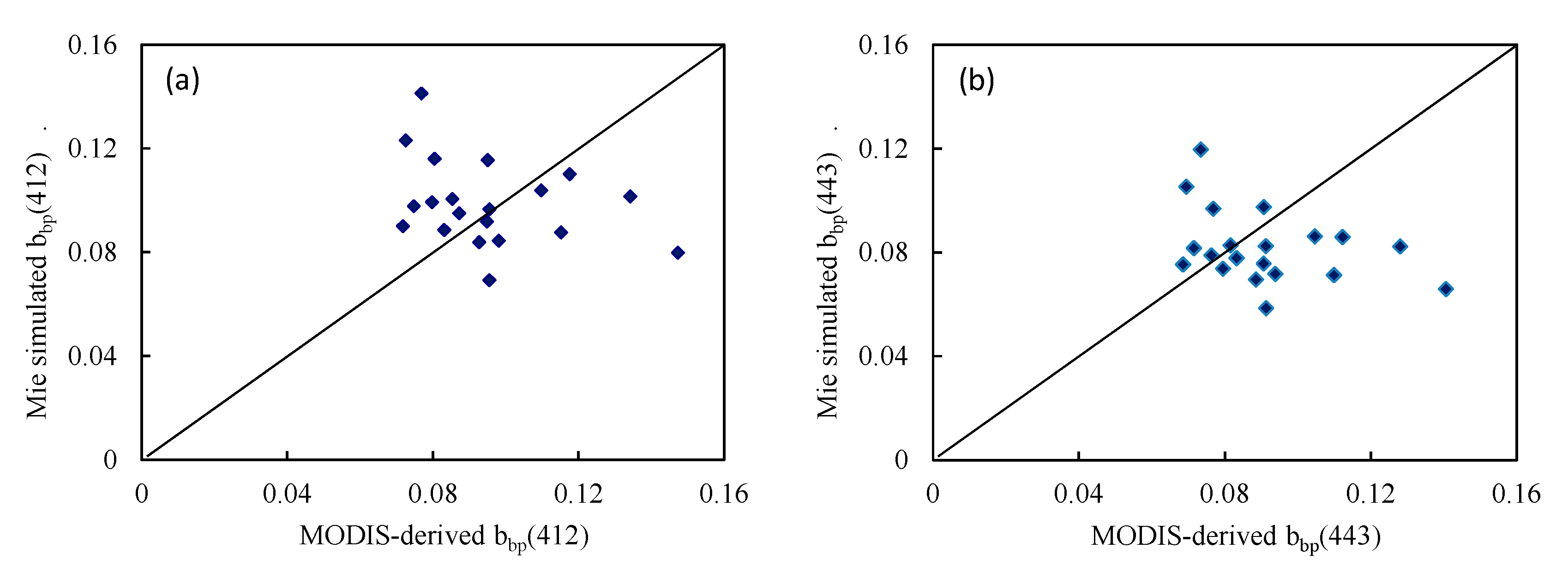
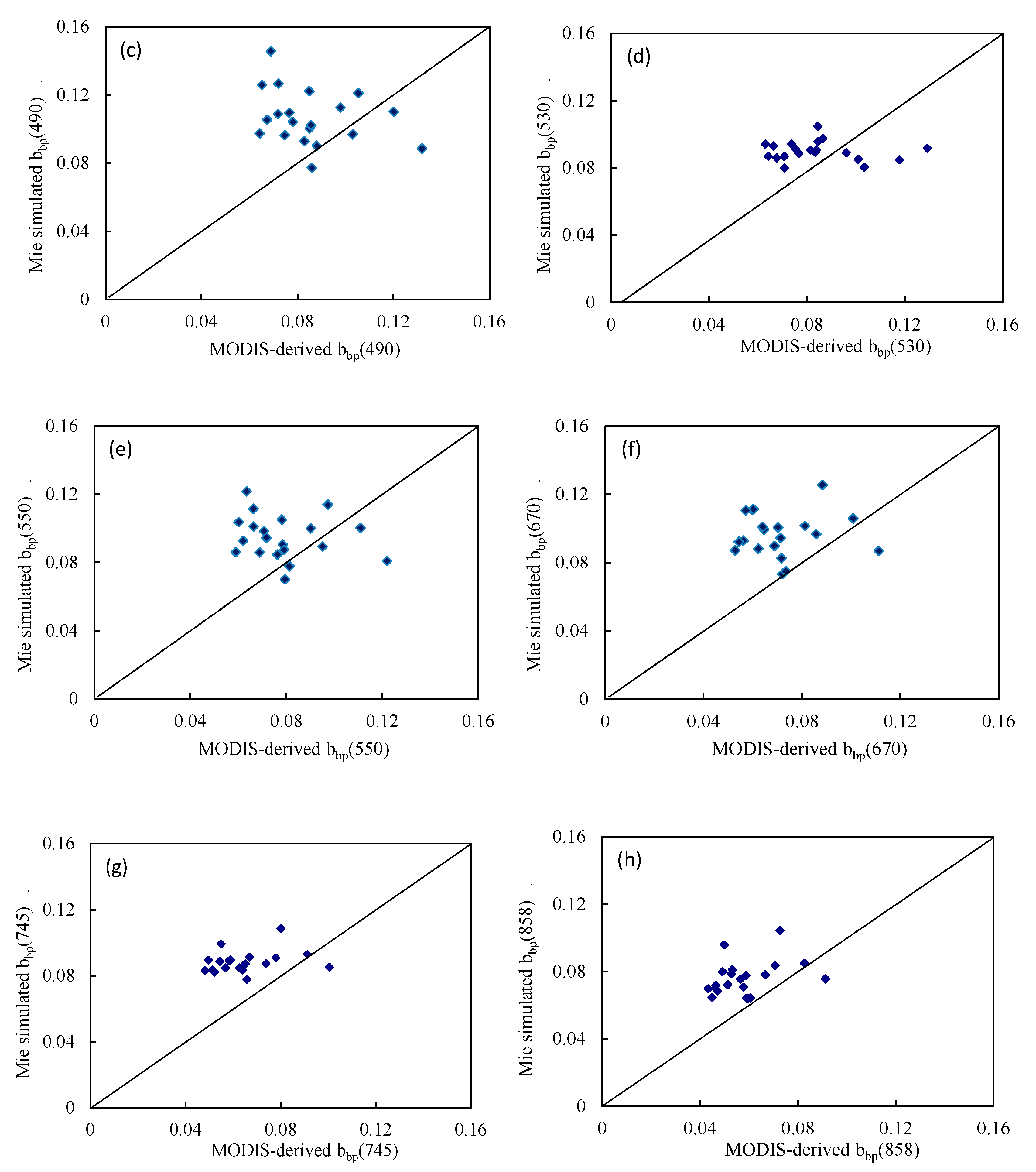
3.2. Calculation of the Backscattering Coefficient
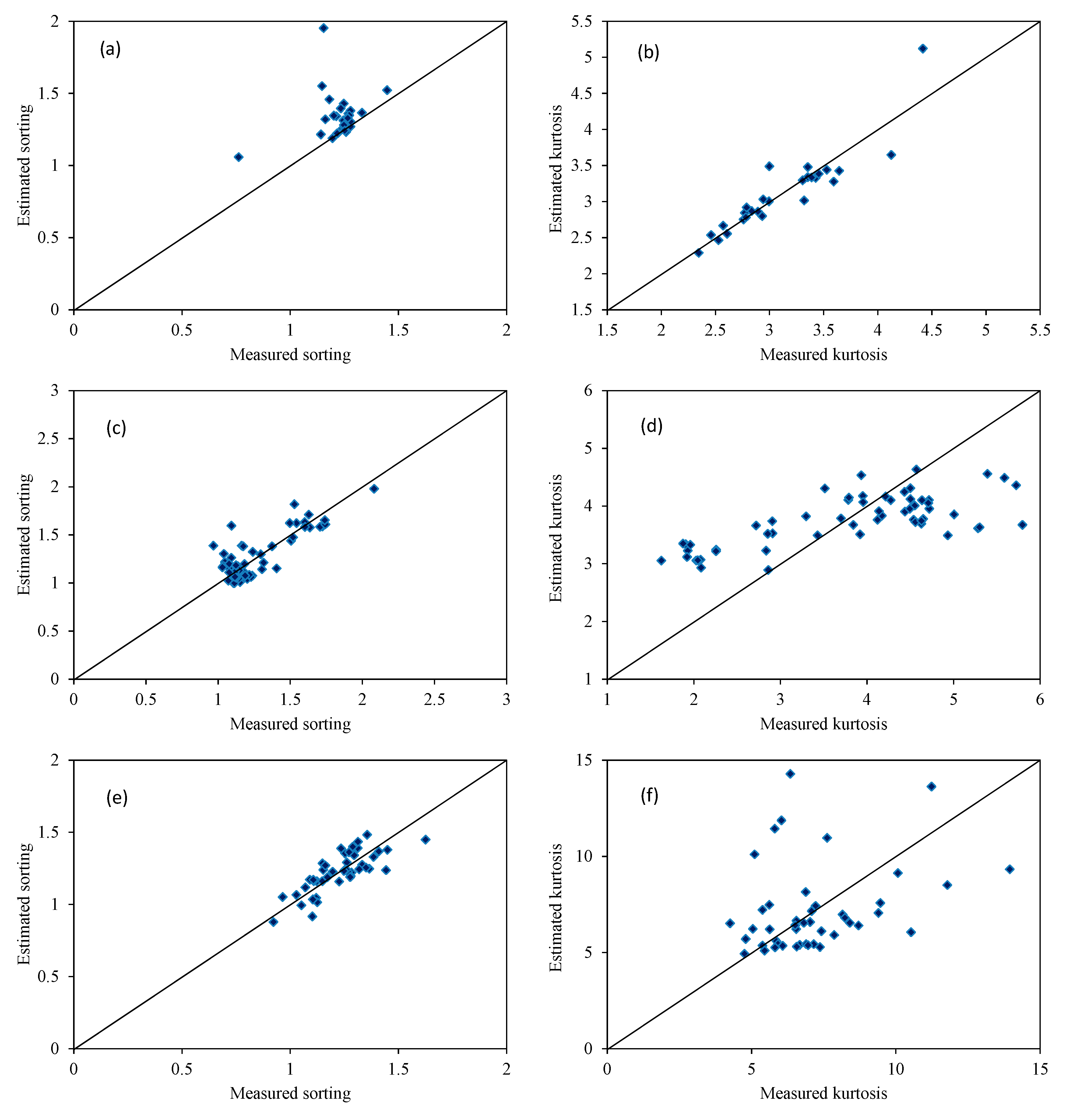
3.3. Calculation of the Suspended Particle Size Parameters
4. Discussion
4.1. Effects of the Mie Scattering input Parameters
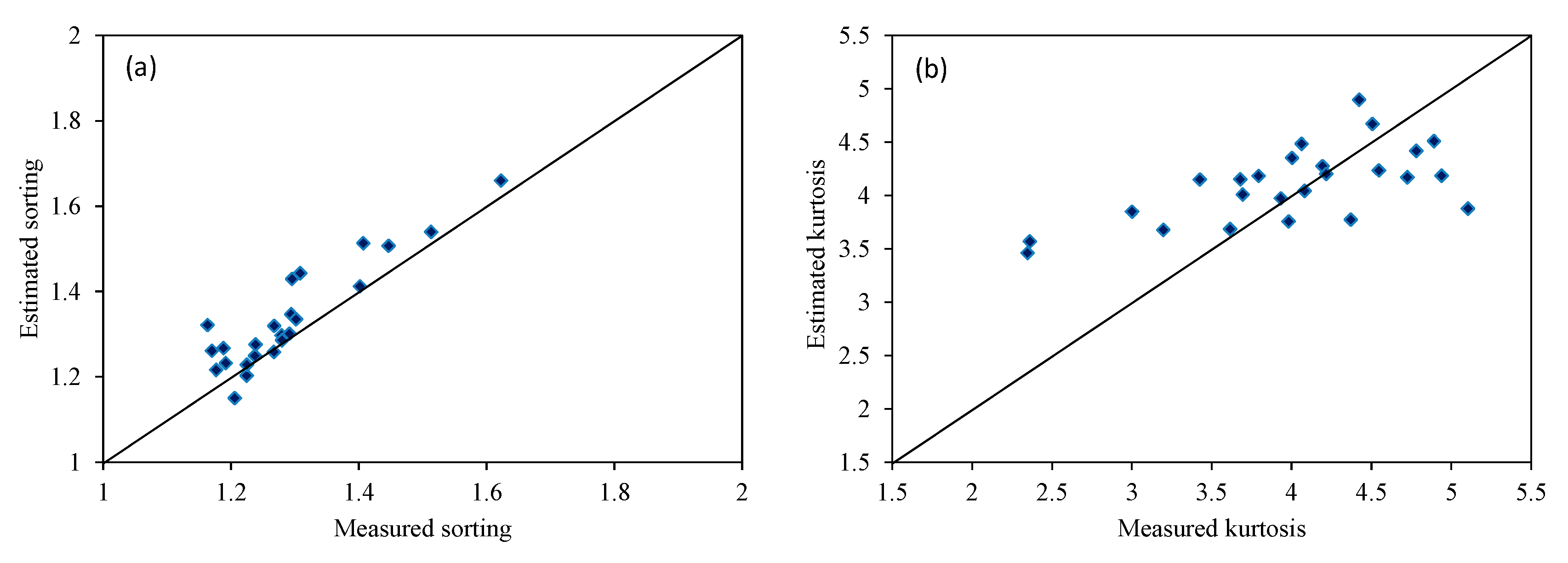
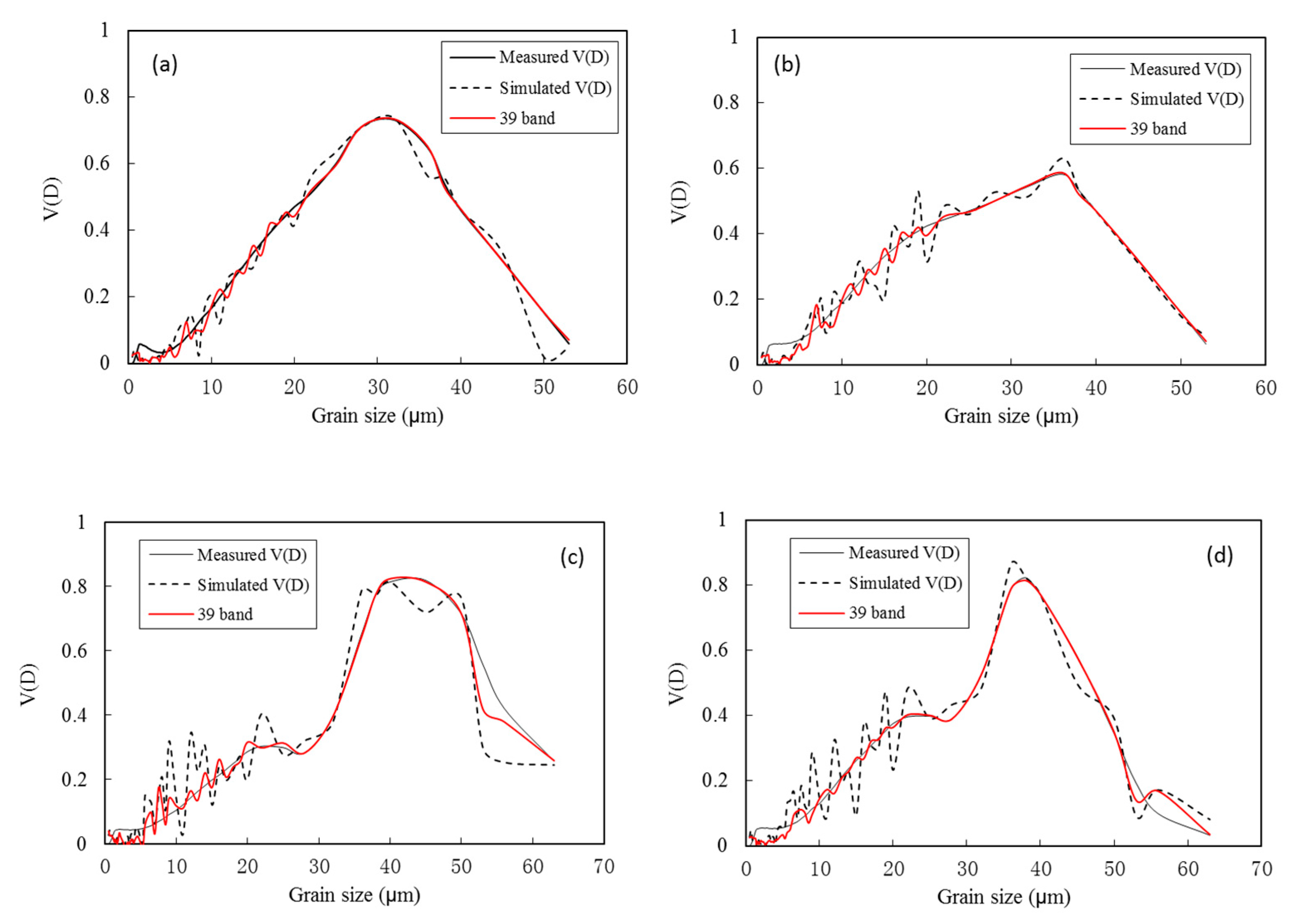
4.2. Estimation of the Particle Size Distribution
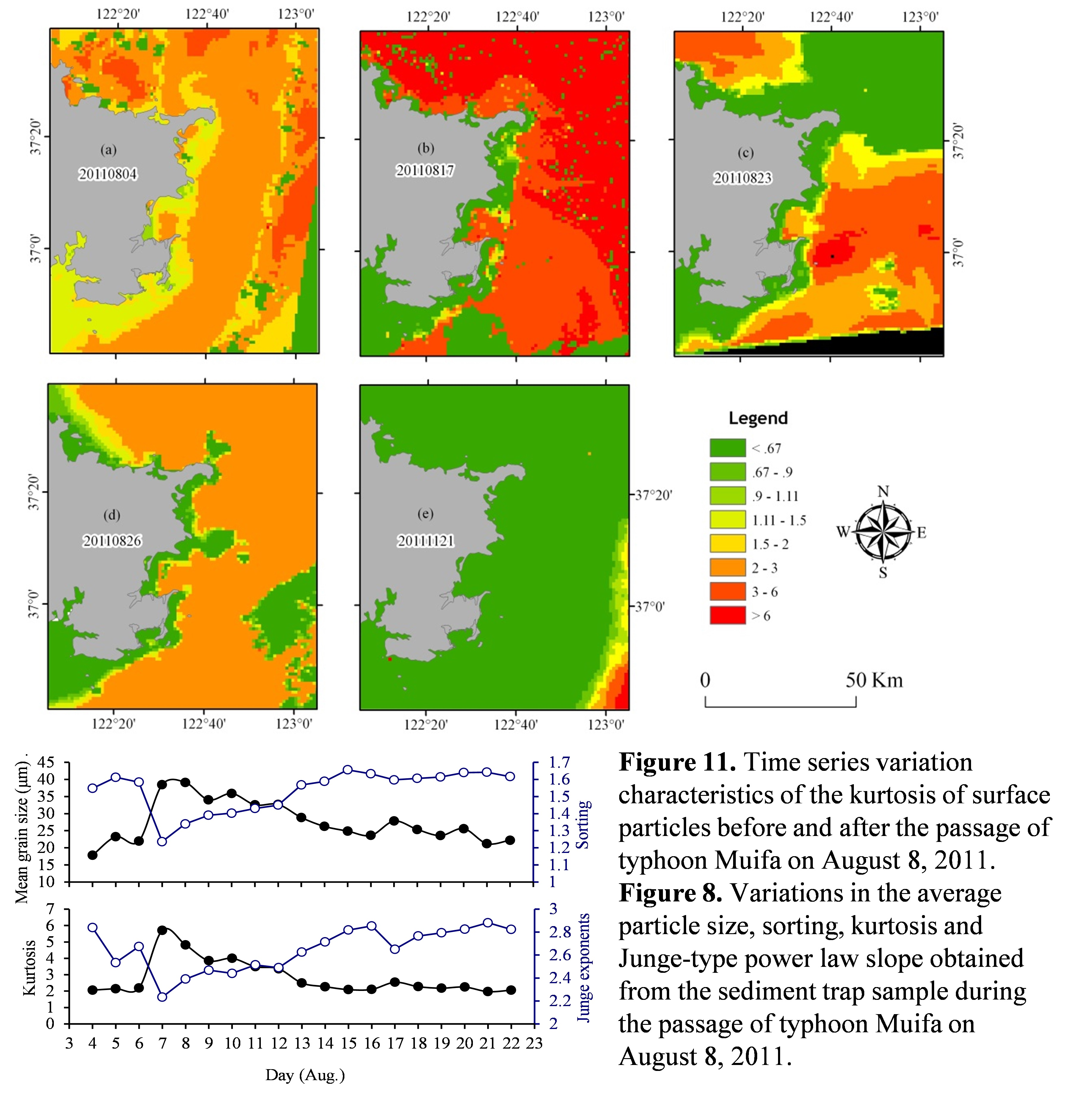
4.3. Estimated Particle Size Parameters around the Typhoon Impact
4.4. Monitoring the Typhoon Impact Range
5. Conclusions
Author Contributions
Funding
Acknowledgments
Conflicts of Interest
References
- Boss, E.; Pegau, W.S.; Gardner, W.D.; Zaneveld, J.R.V.; Barnard, A.H.; Twardowski, M.S.; Chang, G.; Dickey, T. Spectral particulate attenuation and particle size distribution in the bottom boundary layer of a continental shelf. J. Geophys. Res. Ocean. 2001, 106, 9509–9516. [Google Scholar] [CrossRef] [Scilit]
- Loisel, H.; Nicolas, J.M.; Sciandra, A.; Stramski, D.; Poteau, A. Spectral dependency of optical backscattering by marine particles from satellite remote sensing of the global ocean. J. Geophys. Res. Ocean. 2006, 111, 1–14. [Google Scholar] [CrossRef] [Scilit]
- Kostadinov, T.; Siegel, D.; Maritorena, S. Retrieval of the particle size distribution from satellite ocean color observations. J. Geophys. Res. Ocean. 2009, 114, 1–22. [Google Scholar] [CrossRef] [Scilit]
- Aurin, D.A.; Dierssen, H.M. Advantages and limitations of ocean color remote sensing in CDOM-dominated, mineral-rich coastal and estuarine waters. Remote Sens. Environ. 2012, 125, 181–197. [Google Scholar] [CrossRef] [Scilit]
- Slade, W.H.; Boss, E. Spectral attenuation and backscattering as indicators of average particle size. Appl. Opt. 2015, 54, 7264–7277. [Google Scholar] [CrossRef] [Scilit]
- International Ocean-Colour Coordinating Group. Remote Sensing of Ocean Colour in Coastal, and other optically complex, waters. In Reports of the International Ocean-Colour Coordinating Group Nr 3 IOCCG; IOCCG: Dartmouth, NS, Canada, 2000. [Google Scholar]
- Soja-Wozniak, M.; Baird, M.; Schroeder, T.; Qin, Y.; Clementson, L.; Baker, B.; Boadle, D.; Brando, V.; Steven, A.D.L. Particulate Backscattering Ratio as an Indicator of Changing Particle Composition in Coastal Waters: Observations From Great Barrier Reef Waters. J. Geophys. Res. Ocean. 2019, 124, 5485–5502. [Google Scholar] [CrossRef] [Scilit]
- Stramski, D.; Woźniak, S.B.; Flatau, P.J. Optical properties of Asian mineral dust suspended in seawater. Limnol. Oceanogr. 2004, 49, 749–755. [Google Scholar] [CrossRef] [Scilit]
- Stramski, D.; Kiefer, D.A. Light scattering by microorganisms in the open ocean. Prog. Oceanogr. 1991, 28, 343–383. [Google Scholar] [CrossRef] [Scilit]
- Morel, A.; Prieur, L. Analysis of Variation in Ocean Color. Limnol. Oceanogr. 1977, 22, 709–722. [Google Scholar] [CrossRef] [Scilit]
- Stavn, R.H.; Keen, T.R. Suspended minerogenic particle distributions in high-energy coastal environments: Optical implications. J. Geophys. Res. Ocean. 2004, 109, 1–14. [Google Scholar] [CrossRef] [Scilit]
- Buonassissi, C.; Dierssen, H. A regional comparison of particle size distributions and the power law approximation in oceanic and estuarine surface waters. J. Geophys. Res. Ocean. 2010, 115, 1–12. [Google Scholar] [CrossRef] [Scilit]
- Medina, R.; Losada, M.A.; Losada, I.J.; Vidal, C. Temporal and spatial relationship between sediment grain size and beach profile. Mar. Geol. 1994, 118, 195–206. [Google Scholar] [CrossRef] [Scilit]
- Stauble, D.K.; Cialone, M.A. Sediment dynamics and profile interactions: Duck94. Coast. Eng. 1996, 4, 3921–3934. [Google Scholar]
- Zhao, Y.; Zou, X.; Gao, J.; Wang, C. Recent sedimentary record of storms and floods within the estuarine-inner shelf region of the East China Sea. Holocene 2017, 27, 439–449. [Google Scholar] [CrossRef] [Scilit]
- Swindles, G.T.; Galloway, J.M.; Macumber, A.L.; Croudace, I.W.; Emery, A.R.; Woulds, C.; Bateman, M.D.; Parry, L.; Jones, J.M.; Selby, K.; et al. Sedimentary records of coastal storm surges: Evidence of the 1953 North Sea event. Mar. Geol. 2018, 403, 262–270. [Google Scholar] [CrossRef] [Scilit]
- Sahu, B.K. Depositional mechanisms from the size analysis of clastic sediments. J. Sediment. Res. 1964, 34, 73–83. [Google Scholar]
- Xiang, R.; Yang, Z.; Saito, Y.; Guo, Z.; Fan, D.; Li, Y.; Xiao, S.; Shi, X.; Chen, M. East Asia Winter Monsoon changes inferred from environmentally sensitive grain-size component records during the last 2300 years in mud area southwest off Cheju Island, ECS. Sci. China Ser. D 2006, 49, 604–614. [Google Scholar] [CrossRef] [Scilit]
- Judd, K.; Chagué-Goff, C.; Goff, J.; Gadd, P.; Zawadzki, A.; Fierro, D. Multi-proxy evidence for small historical tsunamis leaving little or no sedimentary record. Mar. Geol. 2017, 385, 204–215. [Google Scholar] [CrossRef] [Scilit]
- Puerres, L.Y.; Bernal, G.; Brenner, M.; Restrepo-Moreno, S.A.; Kenney, W.F. Sedimentary records of extreme wave events in the southwestern Caribbean. Geomorphology 2018, 319, 103–116. [Google Scholar] [CrossRef] [Scilit]
- Watson, E.B.; Pasternack, G.B.; Gray, A.B.; Goñi, M.; Woolfolk, A.M. Particle size characterization of historic sediment deposition from a closed estuarine lagoon, Central California. Estuar. Coast. Shelf Sci. 2013, 126, 23–33. [Google Scholar] [CrossRef] [Scilit]
- Folk, R.L.; Ward, W.C. Brazos River bar: A study in the significance of grain size parameters. J. Sediment. Petrol. 1957, 27, 3–26. [Google Scholar] [CrossRef] [Scilit]
- McManus, J. Grain Size Determination and Interpretation. In Techniques in Sedimentology; Tucker, M., Ed.; Blackwell: Oxford, UK, 1988; pp. 63–85. [Google Scholar]
- Huisman, B.J.A.; de Schipper, M.A.; Ruessink, B.G. Sediment sorting at the Sand Motor at storm and annual time scales. Mar. Geol. 2016, 381, 209–226. [Google Scholar] [CrossRef] [Scilit]
- Sun, X.; Luo, Y.; Huang, F.; Tian, J.; Wang, P. Deep-sea pollen from the South China Sea: Pleistocene indicators of East Asian monsoon. Mar. Geol. 2003, 201, 97–118. [Google Scholar] [CrossRef] [Scilit]
- Huang, J.; Li, A.; Wan, S. Sensitive grain-size records of Holocene East Asian summer monsoon in sediments of northern South China Sea slope. Quat. Res. 2011, 75, 734–744. [Google Scholar] [CrossRef] [Scilit]
- Stramski, D.; Babin, M.; Woźniak, S.B. Variations in the optical properties of terrigenous mineral-rich particulate matter suspended in seawater. Limnol. Oceanogr. 2007, 52, 2418–2433. [Google Scholar] [CrossRef] [Scilit]
- Doxaran, D.; Ruddick, K.; McKee, D.; Gentili, B.; Tailliez, D.; Chami, M.; Babin, M. Spectral variations of light scattering by marine particles in coastal waters, from the visible to the near infrared. Limnol. Oceanogr. 2009, 54, 1257–1271. [Google Scholar] [CrossRef] [Scilit]
- Zhang, X.; Gray, D.J. Backscattering by very small particles in coastal waters. J. Geophys. Res. Ocean. 2015, 120, 6914–6926. [Google Scholar] [CrossRef] [Scilit]
- Pinet, S.; Martinez, J.-M.; Ouillon, S.; Lartiges, B.; Villar, R.E. Variability of apparent and inherent optical properties of sediment-laden waters in large river basins–lessons from in situ measurements and bio-optical modeling. Opt. Express 2017, 25, A283–A310. [Google Scholar] [CrossRef] [Scilit]
- Tao, J.; Hill, P.S.; Boss, E.S.; Milligan, T.G. Variability of Suspended Particle Properties Using Optical Measurements within the Columbia River Estuary. J. Geophys. Res. Ocean. 2018, 123, 6296–6311. [Google Scholar] [CrossRef] [Scilit]
- Zhang, Y.; Huang, Z.; Chen, C.; He, Y.; Jiang, T. Particle size distribution of river-suspended sediments determined by in situ measured remote-sensing reflectance. Appl. Opt. 2015, 54, 6367–6376. [Google Scholar] [CrossRef] [Scilit]
- Zhang, X.; Stavn, R.H.; Falster, A.U.; Gray, D.; Gould, R.W., Jr. New insight into particulate mineral and organic matter in coastal ocean waters through optical inversion. Estuar. Coast. Shelf Sci. 2014, 149, 1–12. [Google Scholar] [CrossRef] [Scilit]
- Bader, H. The hyperbolic distribution of particle sizes. J. Geophys. Res. 1970, 75, 2822–2830. [Google Scholar] [CrossRef] [Scilit]
- Hulst, H.C.V.D. Light Scattering By Small Particles. Phys. Today 1957, 10. [Google Scholar] [CrossRef] [Scilit]
- Bricaud, A.; Morel, A. Light attenuation and scattering by phytoplanktonic cells: A theoretical modeling. Appl. Opt. 1986, 25, 571–580. [Google Scholar] [CrossRef] [Scilit] [PubMed]
- Mobley, C.D. Light and Water: Radiative Transfer in Natural Waters; Academic: San Diego, CA, USA, 1994; p. 592. [Google Scholar]
- Reynolds, R.; Stramski, D.; Wright, V.; Woźniak, S. Measurements and characterization of particle size distributions in coastal waters. J. Geophys. Res. Ocean. 2010, 115. [Google Scholar] [CrossRef] [Scilit]
- Mohammadpour, G.; Gagné, J.-P.; Larouche, P.; Montes-Hugo, M.A. Optical properties of size fractions of suspended particulate matter in littoral waters of Québec. Biogeosciences 2017, 14, 5297–5312. [Google Scholar] [CrossRef] [Scilit]
- Stramski, D.; Bricaud, A.; Morel, A. Modeling the inherent optical properties of the ocean based on the detailed composition of the planktonic community. Appl. Opt. 2001, 40, 2929–2945. [Google Scholar] [CrossRef] [Scilit]
- Sathyendranath, S.; Prieur, L.; Morel, A. A 3-Component Model of Ocean Color and Its Application to Remote-Sensing of Phytoplankton Pigments in Coastal Waters. Int. J. Remote Sens. 1989, 10, 1373–1394. [Google Scholar] [CrossRef] [Scilit]
- Zhang, M.W.; Tang, J.W.; Dong, Q.; Song, Q.T.; Ding, J. Retrieval of total suspended matter concentration in the Yellow and East China Seas from MODIS imagery. Remote Sens. Environ. 2010, 114, 392–403. [Google Scholar] [CrossRef] [Scilit]
- Morel, A. Optical properties of pure seawater. In Optical Aspects of Oceanography; Jerlov, N.G., Steemann Nielson, E., Eds.; Academic Press: London, UK, 1974; pp. 1–24. [Google Scholar]
- Smith, R.C.; Baker, K.S. Optical properties of the clearest natural waters (200–800 nm). Appl. Opt. 1981, 20, 177–184. [Google Scholar] [CrossRef] [Scilit]
- Morel, A.; Gentili, B.; Claustre, H.; Babin, M.; Bricaud, A.; Ras, J.; Tièche, F. Optical Properties of the “Clearest” Natural Waters. Limnol. Oceanogr. 2007, 52, 217–229. [Google Scholar] [CrossRef] [Scilit]
- Lee, Z.P.; Carder, K.L.; Arnone, R.A. Deriving inherent optical properties from water color: A multiband quasi-analytical algorithm for optically deep waters. Appl. Opt. 2002, 41, 5755–5772. [Google Scholar] [CrossRef] [Scilit] [PubMed]
- Qing, S.; Tang, J.W.; Cui, T.W.; Zhang, J. Retrieval of inherent optical properties of the Yellow Sea and East China Sea using a quasi-analytical algorithm. Chin. J. Oceanol. Limnol. 2011, 29, 33–45. [Google Scholar] [CrossRef] [Scilit]
- Bohren, C.F.; Huffman, D.R.; Kam, Z. Book-Review—Absorption and Scattering of Light by Small Particles. Nature 1983, 306, 625. [Google Scholar]
- Kerr, P. Optical Mineralogy; McGraw Hill Book Company: New York, NY, USA, 1977; p. 492. [Google Scholar]
- Krumbein, W.C. Size Frequency Distributions of Sediments. J. Sediment. Res. 1934, 4, 65–77. [Google Scholar] [CrossRef] [Scilit]
- Yu, X.; Shi, Y.; Wang, T.; Sun, X. Dust-concentration measurement based on Mie scattering of a laser beam. PLoS ONE 2017, 12, e0181575. [Google Scholar] [CrossRef] [Scilit]
- He, Z.; Mao, J.; Han, X. Non-parametric estimation of particle size distribution from spectral extinction data with PCA approach. Powder Technol. 2018, 325, 510–518. [Google Scholar] [CrossRef] [Scilit]
- Paige, C.C.; Saunders, M.A. LSQR: An algorithm for sparse linear equations and sparse least squares. ACM Trans. Math. Softw. 1982, 8, 43–71. [Google Scholar] [CrossRef] [Scilit]
- Golub, G.; Kahan, W. Calculating the singular values and pseudo-inverse of a matrix. J. Soc. Ind. Appl. Math. Ser. B Numer. Anal. 1965, 2, 205–224. [Google Scholar] [CrossRef] [Scilit]
- Liu, J.; Saito, Y.; Kong, X.; Wang, H.; Zhao, L. Geochemical characteristics of sediment as indicators of post-glacial environmental changes off the Shandong Peninsula in the Yellow Sea. Cont. Shelf Res. 2009, 29, 846–855. [Google Scholar] [CrossRef] [Scilit]
- Liu, Y.; Huang, H.; Yan, L.; Liu, X.; Zhang, Z. Influence of suspended kelp culture on seabed sediment composition in Heini Bay, China. Estuar. Coast. Shelf Sci. 2016, 181, 39–50. [Google Scholar] [CrossRef] [Scilit]
- SPSTC (Shandong Province Science and Technology Committee). Collection of Research Reports on Coastal Zone and Tidal Flat Resources in Shandong Province; Chinese Science and Technology Press: Beijing, China, 1991. (In Chinese) [Google Scholar]
- Yan, L.W. Sedimentary Environment Evolution in Representative Kelp (Laminaria Japonica)-Cultured Region (Harny Bay); The Thesis of Doctor’ Degree of University of Chinese Academy of Sciences: Beijing, China, 2008; pp. 35–40, (In Chinese with English abstract). [Google Scholar]
- Hu, L.; Shi, X.; Guo, Z.; Wang, H.; Yang, Z. Sources, dispersal and preservation of sedimentary organic matter in the Yellow Sea: The importance of depositional hydrodynamic forcing. Mar. Geol. 2013, 335, 52–63. [Google Scholar] [CrossRef] [Scilit]
- Gao, X.M.; Jiang, J.; Ma, S.Q.; Xu, W.Z. The inter-annual and inter-decadal variation of tropical cyclone affecting Shandong Province. Meteorol. Mon 2008, 399, 78–85, (In Chinese with English abstract). [Google Scholar]
- Niu, H.Y.; Liu, M.; Lu, M.; Quan, R.S.; Zhang, L.J.; Wang, J.J.; Xu, S.Y. Risk assessment of typhoon hazard factors in China coastal areas. J. East China Norm. Univ. (Nat. Sci.) 2011, 160, 20–25, (In Chinese with English abstract). [Google Scholar]
- Liu, X.; Huang, H.; Yan, L.; Liu, Y.; Ma, L. Dynamics of settling particulate matter during typhoon Muifa in Heini Bay, China. Chin. J. Oceanol. Limnol. 2015, 33, 210–221. [Google Scholar] [CrossRef] [Scilit]
- Liu, Y.; Huang, H.; Liu, X.; Yan, L.; Zhang, Z.; Zhang, Y.; Song, Z. Response of seafloor sediment composition to a strong storm event in the inner-shelf of Heini Bay, China. Cont. Shelf Res. 2019, 175, 1–11. [Google Scholar] [CrossRef] [Scilit]
- Shepard, F.P. Nomenclature Based on Sand-silt-clay Ratios. J. Sediment. Res. 1954, 24, 151–158. [Google Scholar]
- Yue, W.; Jin, B.F.; Zhao, B.C. Transparent heavy minerals and magnetite geochemical composition of the Yangtze River sediments: Implication for provenance evolution of the Yangtze Delta. Sediment. Geol. 2018, 364, 42–52. [Google Scholar] [CrossRef] [Scilit]
- Hu, G.; Xu, K.; Clift, P.D.; Zhang, Y.; Li, Y.; Qiu, J.; Kong, X.; Bi, S. Textures, provenances and structures of sediment in the inner shelf south of Shandong Peninsula, western South Yellow Sea. Estuar. Coast. Shelf Sci. 2018, 212, 153–163. [Google Scholar] [CrossRef] [Scilit]
- Toussaint, C.J.; Boniforti, R. Characterization and quantitative determination by X-ray diffraction of quartz, calcite and the clay minerals illite, kaolinite and chlorite in some lake, fluvial and sea sediments. Acta Crystallogr. 2001, 37, C317. [Google Scholar] [CrossRef] [Scilit]
- Petschick, R.; Kuhn, G.; Gingele, F. Clay mineral distribution in surface sediments of the South Atlantic: Sources, transport, and relation to oceanography. Mar. Geol. 1996, 130, 203–229. [Google Scholar] [CrossRef] [Scilit]
- Biscaye, P.E. Mineralogy and sedimentation of recent deep sea clay in the Atlantic Ocean and adjacent sea and oceans. Bull. Geol. Soc. Am. 1965, 16, 803–832. [Google Scholar] [CrossRef] [Scilit]
- Woźniak, S.B.; Stramski, D. Modeling the optical properties of mineral particles suspended in seawater and their influence on ocean reflectance and chlorophyll estimation from remote sensing algorithms. Appl. Opt. 2004, 43, 3489–3503. [Google Scholar] [CrossRef] [Scilit] [PubMed]
- Morel, A.; Ahn, Y.H. Optics of heterotrophic nanoflagellates and ciliates: A tentative assessment of their scattering role in oceanic waters compared to those of bacterial and algal cells. J. Mar. Res. 1991, 49, 177–202. [Google Scholar] [CrossRef] [Scilit]
- Aas, E. Refractive index of phytoplankton derived from its metabolite composition. J. Plankton Res. 1996, 18, 2223–2249. [Google Scholar] [CrossRef] [Scilit]
- Doxaran, D.; Babin, M.; Leymarie, E. Near-infrared light scattering by particles in coastal waters. Opt. Express 2007, 15, 12834–12849. [Google Scholar] [CrossRef] [Scilit]
- Schoonmaker, J.S.; Hammond, R.R.; Heath, A.L.; Cleveland, J.S. Numerical model for prediction of sublittoral optical visibility. In Proceedings of the Spie the International Society for Optical Engineering, Ocean Optics XII, Bergen, Norway, 26 October 1994; p. 12. [Google Scholar]
- Zhang, X.D.; Twardowski, M.; Lewis, M. Retrieving composition and sizes of oceanic particle subpopulations from the volume scattering function. Appl. Opt. 2011, 50, 1240–1259. [Google Scholar] [CrossRef] [Scilit]
- Babin, M.; Morel, A.; Fournier-Sicre, V.; Fell, F.; Stramski, D. Light scattering properties of marine particles in coastal and open ocean waters as related to the particle mass concentration. Limnol. Oceanogr. 2003, 48, 843–859. [Google Scholar] [CrossRef] [Scilit]
- Kobayashp, H.; Toratanij, M.; Matsumura, S.; Siripong, A.; Lirdwitayaprasit, T.; Jintasaeranee, P. Optical properties of inorganic suspended solids and their influence on ocean color remote sensing in highly turbid coastal waters. Int. J. Remote Sens. 2011, 32, 8393–8420. [Google Scholar] [CrossRef] [Scilit]
- Luo, Y.F. The Optical Properties and Reflectance Saturation in Typical Highly Turbid Waters. Ph.D. Thesis, University of Chinese Academy of Sciences, Beijing, China, 2018. (In Chinese with English abstract). [Google Scholar]





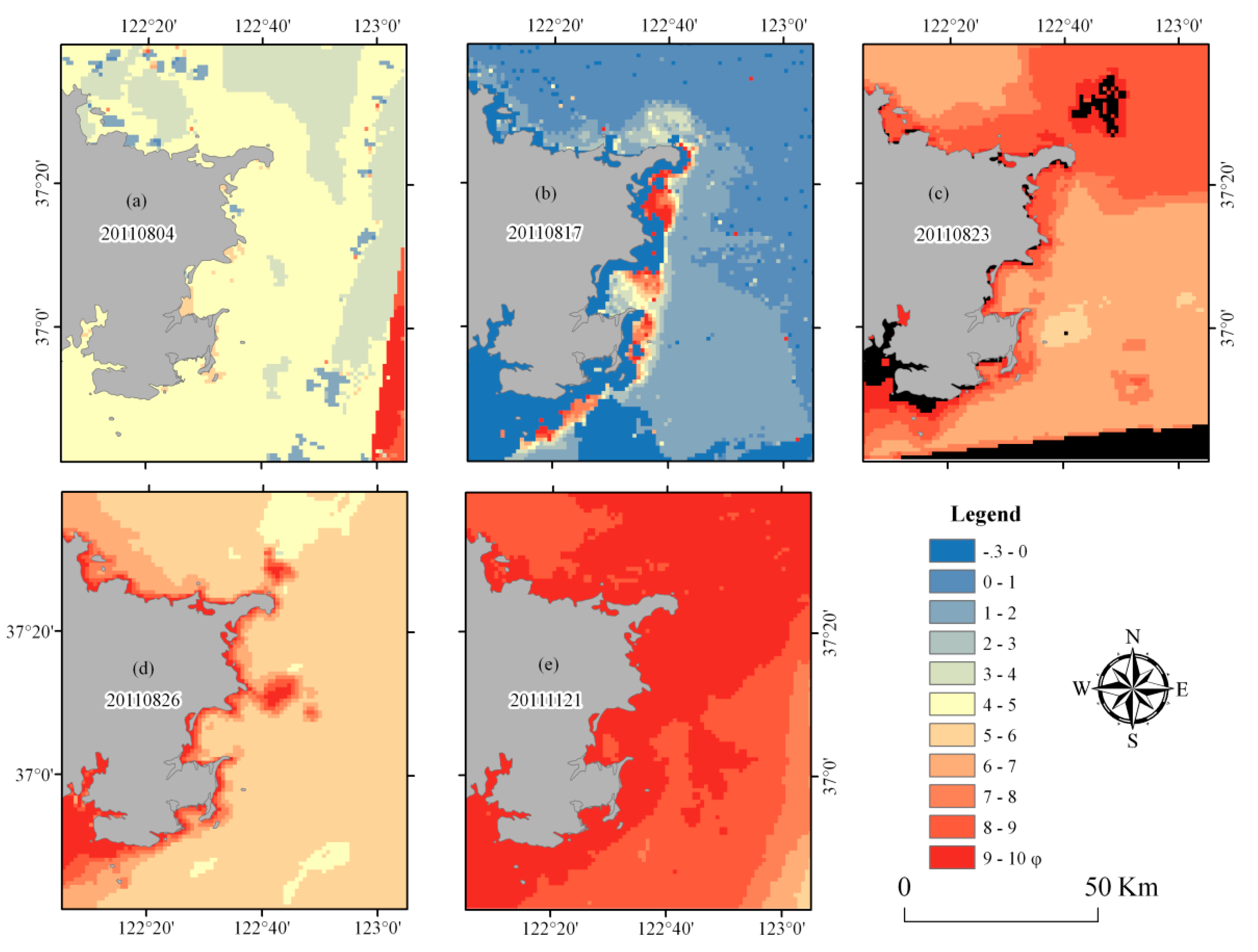
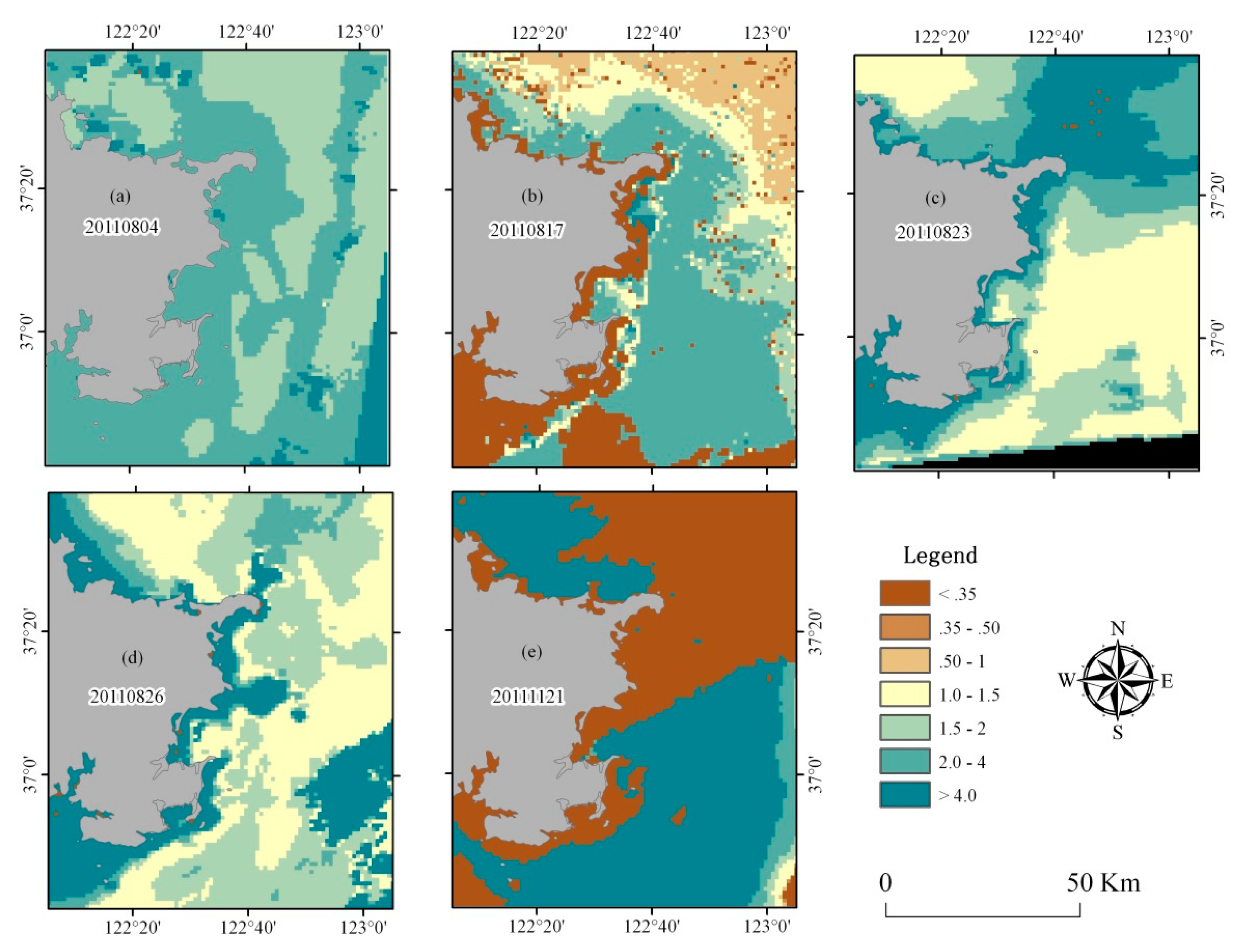
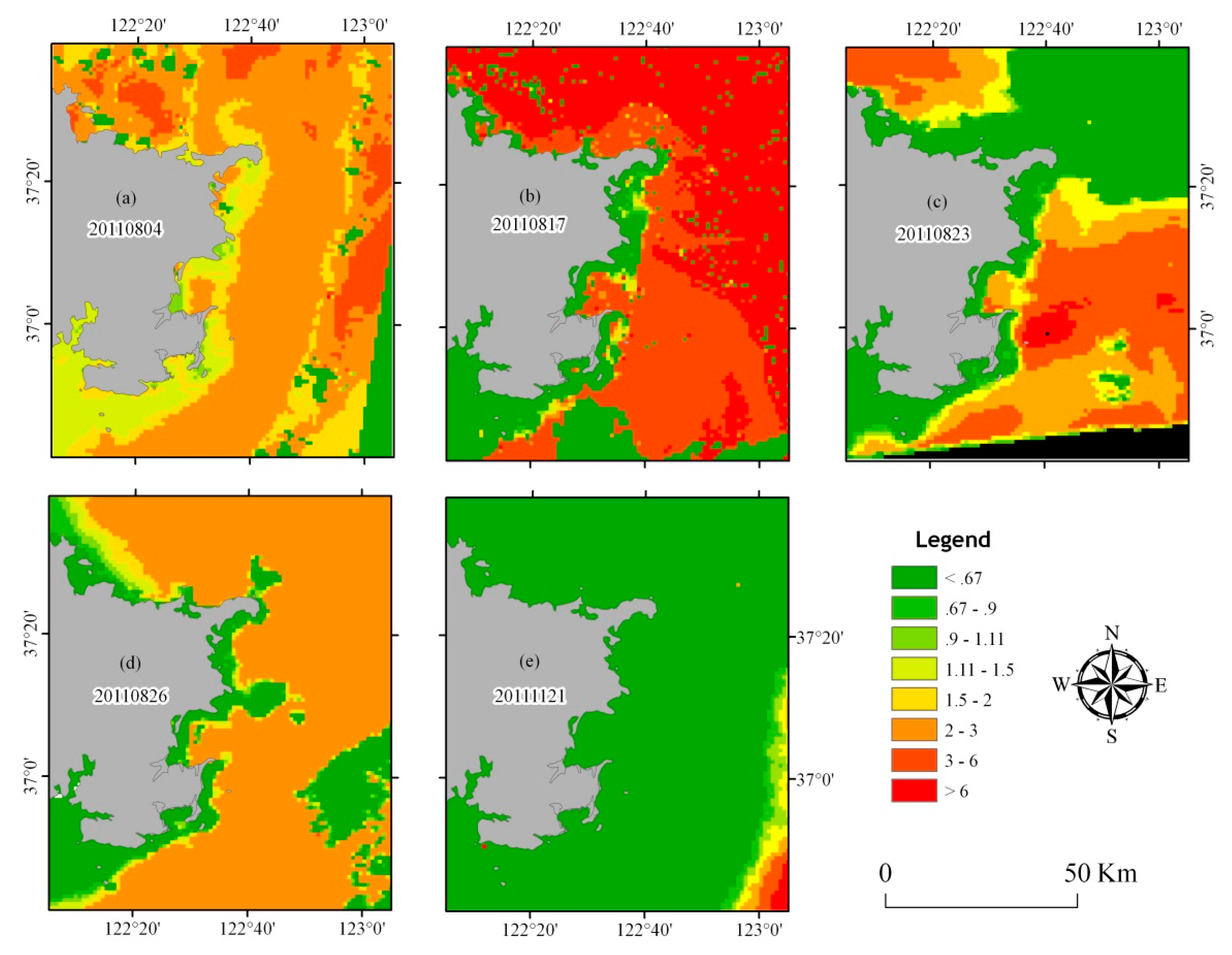

| Sorting | Skewness | Kurtosis | |||
|---|---|---|---|---|---|
| Very well sorted | −1.0 | Very platykurtic | |||
| 0.35 | Very negative | 0.67 | |||
| Well sorted | −0.30 | Platykurtic | |||
| 0.5 | Negative | 0.90 | |||
| Moderately sorted | −0.10 | Mesokurtic | |||
| 1.00 | Nearly symmetrical | 1.11 | |||
| Poorly sorted | 0.10 | Leptokurtic | |||
| 2.00 | Positive | 1.50 | |||
| Very poorly sorted | 0.3 | Very leptokurtic | |||
| 4.00 | Very positive | 3.00 | |||
| Extremely poorly sorted | 1.00 | Extremely Leptokurtic |
© 2020 by the authors. Licensee MDPI, Basel, Switzerland. This article is an open access article distributed under the terms and conditions of the Creative Commons Attribution (CC BY) license (http://creativecommons.org/licenses/by/4.0/).
Share and Cite
Liu, Y.; Huang, H.; Yan, L.; Yang, X.; Bi, H.; Zhang, Z. Particle Size Parameters of Particulate Matter Suspended in Coastal Waters and Their Use as Indicators of Typhoon Influence. Remote Sens. 2020, 12, 2581. https://doi.org/10.3390/rs12162581
Liu Y, Huang H, Yan L, Yang X, Bi H, Zhang Z. Particle Size Parameters of Particulate Matter Suspended in Coastal Waters and Their Use as Indicators of Typhoon Influence. Remote Sensing. 2020; 12(16):2581. https://doi.org/10.3390/rs12162581
Chicago/Turabian StyleLiu, Yanxia, Haijun Huang, Liwen Yan, Xiguang Yang, Haibo Bi, and Zehua Zhang. 2020. "Particle Size Parameters of Particulate Matter Suspended in Coastal Waters and Their Use as Indicators of Typhoon Influence" Remote Sensing 12, no. 16: 2581. https://doi.org/10.3390/rs12162581
APA StyleLiu, Y., Huang, H., Yan, L., Yang, X., Bi, H., & Zhang, Z. (2020). Particle Size Parameters of Particulate Matter Suspended in Coastal Waters and Their Use as Indicators of Typhoon Influence. Remote Sensing, 12(16), 2581. https://doi.org/10.3390/rs12162581