Article

Analysis and Potential Application of the Maturity of Growth Management in the Developing Construction Industry of a Province of China: A Case Study
1
School of Economics and Management, Chang’an University, Middle Section of South Second Ring Road, Xi’an 710064, China
2
School of Civil Engineering, Chang’an University, No. 161, Chang’an Road, Xi’an 710061, China
3
College of Engineering, University of Alaska Anchorage, 2900 Spirit Dr., Anchorage, AK 99504, USA
*
Authors to whom correspondence should be addressed.
Sustainability 2017, 9(1), 143; https://doi.org/10.3390/su9010143
Submission received: 19 July 2016 / Revised: 10 January 2017 / Accepted: 11 January 2017 / Published: 19 January 2017
(This article belongs to the Section Economic and Business Aspects of Sustainability)

Abstract

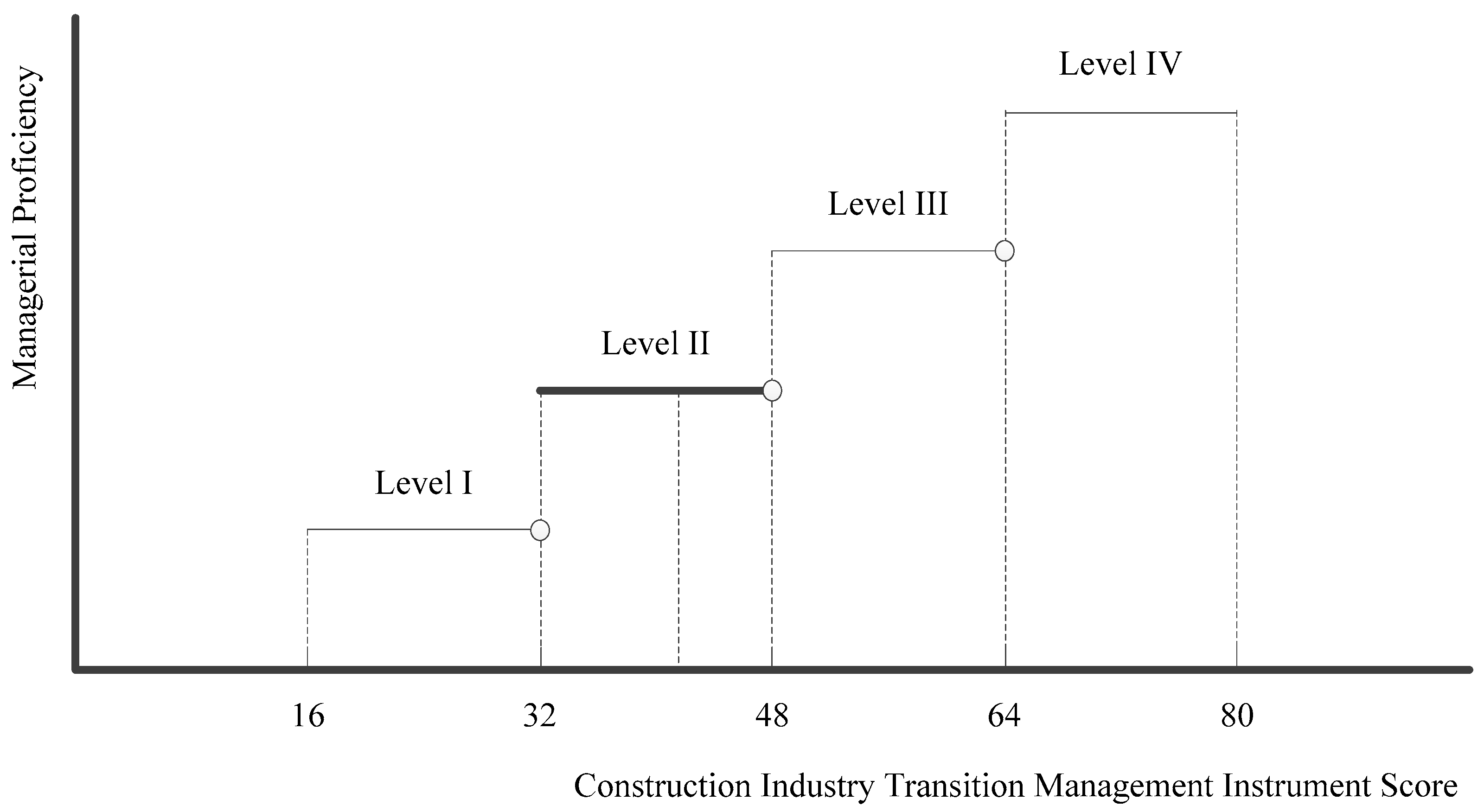
Construction industry is one of the major drivers of the economic sustainability of China’s provinces. An investigation of the status of the construction industry in China is needed to find out its maturity and health. The results of this investigation may help China define the impact factors required in order to promote the growth level of its construction industry. This research assesses the growth level of the construction industry in Shaanxi Province, China. This study utilizes both the original average score method and the newer entropy method to analyze the growth level of the construction industry based on its growth management model and growth drivers. An empirical survey of this research includes 123 construction companies in Shaanxi Province. The results show that the entropy method is better than the average score method to use when analyzing the maturity status of a local industry for future development. The maturity level of Shaanxi’s construction industry lies on the second tier in a four-tier ranking system. The advanced professional skills of project management are critically needed for future growth. Brand building is the most important factor needed to drive up Shaanxi’s construction industry. Standardization, knowledge management through lessons learned, and cost management for budget control by using information systems are required for Shaanxi’s construction project management. The Excellent Project Management Model of China is often used in Chinese project knowledge management. After maturity analysis, China’s local industries would be able to develop a sustainable strategy for optimizing their outcomes by removing the hurdles preventing future growth.
Keywords: China’s construction industry; maturity; economic sustainability; Excellent Project Management Model China’s construction industry; maturity; economic sustainability; Excellent Project Management Model