Article

Sustainability, Innovation, and Green Chemistry in the Production and Valorization of Phenolic Extracts from Olea europaea L.
1
Dipartimento di Statistica, Informatica, Applicazioni “Giuseppe Parenti” DiSIA, Laboratorio Phytolab—Polo Scientifico e Tecnologico, Università degli Studi di Firenze, Via Ugo Schiff 6, 50019 Firenze, Italy
2
Dipartimento di Scienze Agrarie e Forestali (DAFNE), Università degli Studi della Tuscia, Via S. Camillo De Lellis, 01100 Viterbo, Italy
*
Author to whom correspondence should be addressed.
Sustainability 2016, 8(10), 1002; https://doi.org/10.3390/su8101002
Submission received: 2 August 2016 / Revised: 1 October 2016 / Accepted: 4 October 2016 / Published: 9 October 2016

Abstract

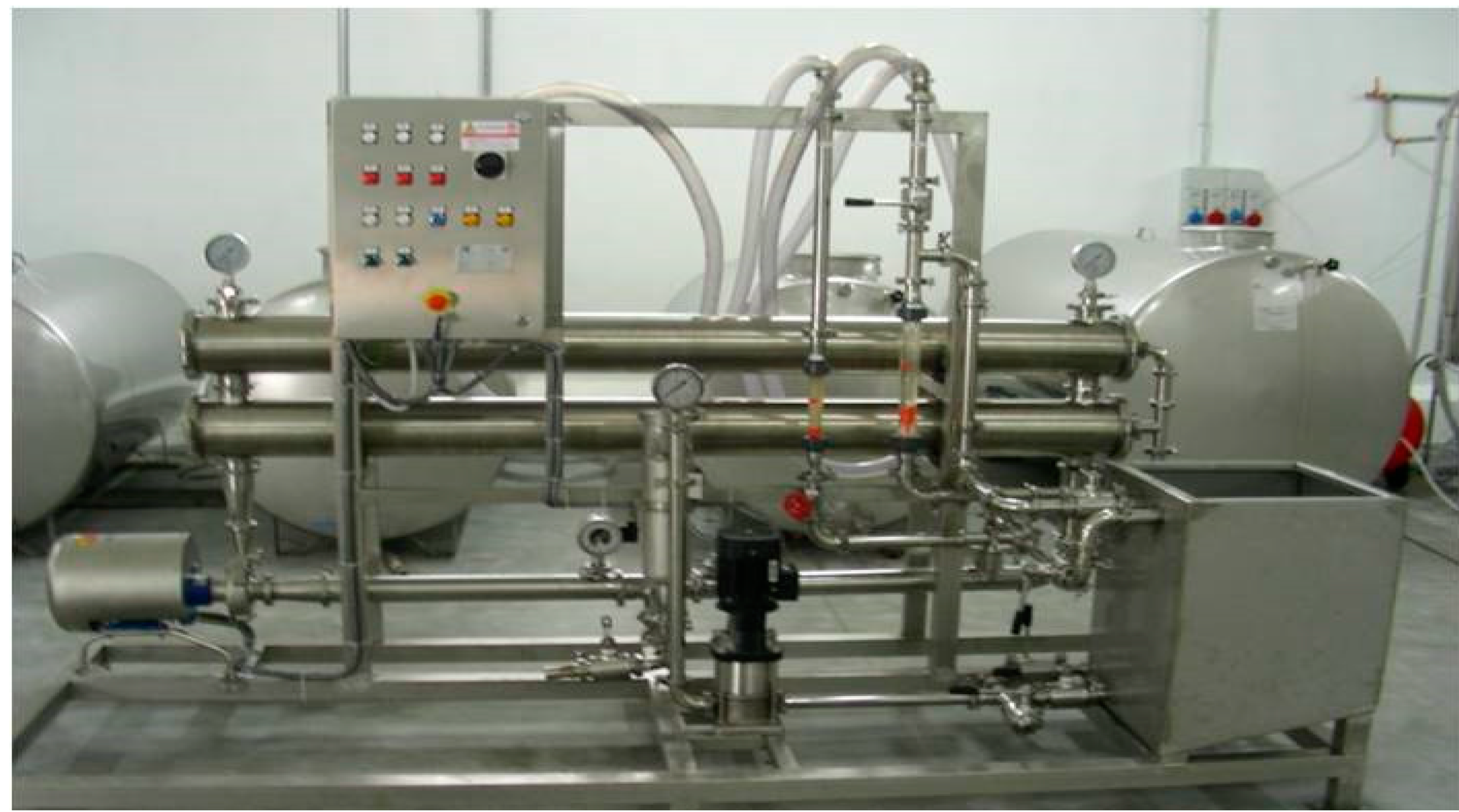
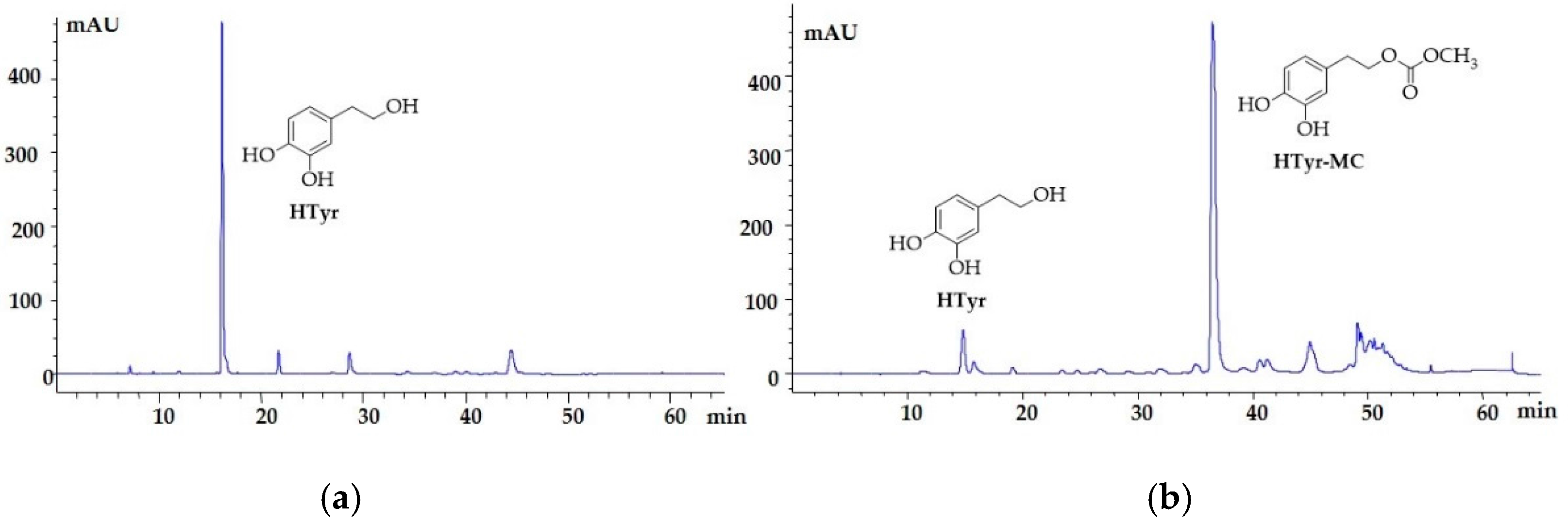
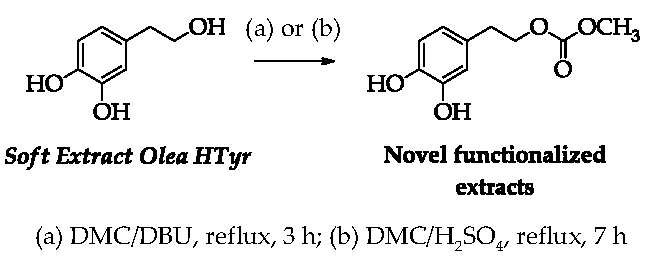
This paper describes a circular economy process based on environmentally and economically sustainable procedures which was applied to the sector of olive oil processing on an industrial scale. Olea europaea L. tissues and by-products represent a renewable and low-cost source of polyphenols, in particular hydroxytyrosol (HTyr), a naturally occurring compound well known for its biological properties. Specifically, green leaves (GL), dried leaves (DL), and pitted olive pulp were treated with water in a pneumatic extractor to obtain the corresponding polyphenolic extracts. Three standardized fractions, named Soft Extract Olea GL, Soft Extract Olea DL, and Soft Extract Olea HTyr resulted after the following two steps: a separation process carried out by membrane technology, and a concentration step performed under reduced pressure and low temperature. The polyphenolic fractions showed antiradical activity and have potential industrial applications in the food, nutraceutical, pharmaceutical, feed, and agronomic fields. Novel functionalized extracts containing hydroxytyrosol methyl carbonate (HTyr-MC) were obtained from Soft Extract Olea HTyr through an innovative approach based on green chemistry procedures, which appear to be a promising tool to increase the applications of the polyphenolic extracts.
Keywords: Olea europaea L. by-products; HTyr-enriched fractions; hydroxytyrosol; hydroxytyrosol methyl carbonate; HTyr-derived compounds; circular economy; green chemistry Olea europaea L. by-products; HTyr-enriched fractions; hydroxytyrosol; hydroxytyrosol methyl carbonate; HTyr-derived compounds; circular economy; green chemistry