


Abstract
Corporate Social Responsibility has been recognized by policymakers and development specialists as a feasible driver for rural development. The present paper explores both theoretically and empirically how firms involved in CSR provide development opportunities to rural communities. The research first evaluates the applied literature on the implementation of CSR by private firms and policymakers as means to foster sustainable rural development. The empirical research analyses the CSR activities of 100 firms from a variety of industries, sizes, and countries to determine the type of companies who are involved in rural development and the kind of activities they deployed. Results from the empirical research show that although rural development initiatives are not relevant for all types of companies, a significant number of firms from a variety of industries have engaged in CSR programs supporting rural communities. Firms appear to be interested in stimulating rural development and seem to benefit from it. This paper also includes an exploration of the main challenges and constraints that firms encounter when encouraging rural development initiatives.
1. Introduction
During the last decades, the concept of CSR has evolved from the idea of firms meeting legal and regulatory obligations with their employees, customers, suppliers, and the closely related society, towards a more pro-active role for firms by getting involved in environmental and societal strategies, collaborating with governmental and civil institutions as well as with international organizations [1,2,3,4,5,6,7,8,9,10]. Along this line, contemporary development policy prescriptions and empirical literature place emphasis on the potential of CSR as facilitator of rural development [3,7,11,12]. Applied literature and policy makers advocate CSR as a main driver for private firms to support development of poor communities by promoting closer integration with poor rural producers [11,12]. In the last decades, relevant efforts towards poverty remediation in rural areas through multi-sectorial collaboration have been encouraged by international organizations such as The World Bank and United Nations. Such organizations have developed programs based on alliances and partnerships among actors from different sectors (governments, civil society, the private sector, and other relevant stakeholders) for the promotion of rural development [10,13,14].
In literature, emphasis is placed on the integration of poor rural producers with private firms as a solution for rural development [3,7,11,12], but in practice a significant number of constraints complicates such integration. For instance, the working relationship with small and medium scale rural producers, represents additional challenges for the chain stakeholders. To date, extensive theoretical and empirical research exists about the participation of private firms in rural development through multi-sectorial collaboration or other CSR related initiatives. Literature offers an exploration of the benefits of CSR such as the enhancement of companies’ competitive advantage; increment of staff’s morale; cost-reductions resulting from sustainable actions like increasing eco-efficiency, recycling, and waste management; as well as access to niche markets and social image improvement [15,16,17,18]. Literature furthermore explores negative sides of CSR, analyzing cases where it has been used by firms as a way to enhance their (sometimes bad) reputation; as a response to pressures from NGOs or finally as a way to generate customer loyalty and positive image without a real commitment to development [3,4,6,11,12,19,20].
However an overview and assessment of the type of strategies that could be applied by private firms in relation to rural development is lacking. Such analysis could help firms to decide which strategies would best fit their interests and needs when engaging in CSR. This is relevant because with a broad concept like CSR, managers and scholars face a problem deciding upon the best strategies, principally due to the wide variety of available options [4,5,7,21]. Moreover, firms are generally subject to specific budget and profit maximization challenges. Therefore actions related to CSR are expected to be performed within certain parameters and scopes according to a firms’ objectives and business philosophy [22]. As such, the challenge related to CSR also relies on identifying and deciding which social causes and stakeholders should receive priority consideration in the decision-making process [1,23,24]. In an intention to provide managers, scholars, and stakeholders with such relevant information, the present research explores both theoretically and empirically how firms involved in CSR provide development opportunities to rural communities. The main objective from this research is to improve the current knowledge about the application of CSR for rural development. Looking at empirical case studies, it also tries to identify the critical conditions and activities that could facilitate (or hinder) the collaboration of private firms in rural development initiatives.
The research first evaluates applied literature about the utilization of CSR by private firms and policymakers as means to foster sustainable rural development. Then empirical data from 100 firms from a variety of industries, sizes, and countries is analyzed to determine the type of companies who are involved in rural development and the kind of activities they deploy. For this analysis firms were selected from the list of supporting companies of the United Nations Global Compact, which is a strategic policy initiative for businesses that are committed to align their operations and strategies with 10 globally accepted principles in the areas of human rights, labor, environment, and anti-corruption [10,25,26]. The UN Global Compact is a non-compulsory initiative, in which its supporting members deliberately decide to participate and to report their performance through a periodical report known as Communication on Progress “CoP” [10]. Every supporting firm is accountable for the reported information and the reliability depends on their integrity. Although no specific assessment is performed by UN officers, companies have external observers (customers, suppliers, and other stakeholders) which evaluate its accuracy [25,26,27].
The present research does not aim to judge or evaluate whether the intentions behind the analyzed CSR strategies are negative or positive, neither to assess the accuracy of the reports (in terms of monetary transfer or beneficiaries). The focus is merely on the identification of the type of firms encouraging rural development; the similarities found in the encouraged strategies; the main characteristics of its implementation; joint collaboration and integration with multi-level institutions; as well as on the mechanisms of dialog with local representatives and members of the communities. In this way the paper offers information to decision-makers that can serve as a reference when designing their own CSR strategies.
For those companies involved in rural development oriented CSR strategies, the empirical research identifies some of the main motives encouraging firms’ participation, which include: securing the provision of labor and part of the necessary resources from the rural communities neighboring their operation sites; managing potential risks through dialog and cooperation with local representatives; gaining a positive social image and recognition from specific groups (customers, industry associations, NGOs, or authorities); and, principally for agro-food and natural processing firms, developing small and independent rural producers to enhance their value chain. It was also found that there exists a similarity within the applied development initiatives. The activities could be grouped according to their characteristics and scope, identifying activities related to: dialog and agreements with locals, provision of training and education, preservation of natural resources, actions related to health and nutrition, preservation of local culture and identity, provision of housing or communitarian infrastructure, as well as provision of roads and communication infrastructure.
2. Private Firms Involved in Rural Development through CSR
2.1. Benefits and Challenges

The involvement of private firms is a key element to foster rural development strategies. Companies participating in integrated value chains are expected to act as a strategic partner providing market opportunities for rural producers, as well as sharing technology, skills, and knowledge necessary with them. The benefits for firms include continuous supply of their products; strengthening of their supply chain; positive market recognition; access to specific market niches, and improvement of their position to manage the risks involved in the process [1,2,7,15,16,17,28,29]. Moreover, even companies whose value chains are not directly linked with rural communities (i.e., financial services, mobile telecommunications, manufacturing, construction, chemicals, and others) might have the opportunity to generate benefits through rural development. Through CSR and stakeholder management strategies, firms could manage possible risks and contribute to the improvement of the socio-economic conditions of rural communities nearby their manufacturing or administrative sites. The win-win proposition expressed by Utting [4] recognizes that through the application of CSR strategies firms are able to receive different benefits like enhancement of company’s competitive advantage, customer recognition, cost reduction by eco-efficiency and recycling as well as an increase in the personnel’s morale and reduction of labor turnover. However, there are significant obstacles that must be faced by firms during their race to become better corporate citizens. For instance, companies undertaking costly initiatives could end up risking their price-cost competitiveness. Other obstacles related to multi-institutional interactions may result in bureaucracy and over-regulated processes representing resources and costs for companies without generating meaningful societal benefits in return—principally during the early stages of the process [2]. To have a broader perspective Table 1 summarizes the main benefits and challenges linked to CSR, as identified in literature.
Table 1.
Benefits and Challenges of Corporate Social Responsibility.
| Benefits | Challenges |
|---|---|
| - CSR generates positive effects on firm’s work environment, human capital attraction, and retention [30,31]. - The use of sustainability and CSR metrics helps decision-makers to set goals, gauge company’s progress, benchmark competitiveness, and compare alternatives of sustainable development [32,33,34,35]. - Access to economic incentives, favourable taxing, and preferential trade and sourcing programs [31,36]. - Companies with positive social image and responsible sourcing strategies have access to global markets and specialty niches [8,31,37]. - Stakeholder Dialog provides a way to personalize relationships with the company’s interest groups. It provides useful analytical concepts for diagnosis and prioritization of interests and strategies [1,8,33]. - Sustainable strategies can generate cost-reductions from increasing eco-efficiency, recycling, and waste management [4,36]. - Risks to profits, market share, supply, environmental treads, and reputation can be managed through CSR [4,5]. - Firms can strengthen their value chain by applying responsible sourcing initiatives [4,5,25,35]. | - CSR demands additional knowledge and resources from companies by getting involved in social concepts and areas beyond their expertise [31,38]. - Information about the performance of CSR strategies should be organized and properly displayed in a format that best supports the decision-making process [30,35]. - Firms usually must deal with bureaucratic procedures and regulations when interacting with governmental institutions [2,31,38]. - Generally managers find difficulties to demonstrate tangible-economic benefits from CSR, particularly in the short-run [4,30,33]. - Companies must identify their key stakeholders and define budgets and strategies to meet their demands according to their capacity and market conditions [1,31,35]. - Although consumers express willingness to make ethical purchases, it is not the most dominant criterion in their purchasing decision. Factors like price, quality, and convenience are still the most dominant [37,39]. |
Source: Analysis developed by authors based on applied literature.
2.2. Identification of Stakeholders and Strategies
Business leaders consider the reputation of their firm to be a crucial element of organizational success. Reputation is believed to be a criterion in purchasing decisions, and to contribute to the sales of a product, while conversely, a bad reputation may even contribute to product rejection or avoidance by consumers and stakeholders [37,39]. As stated by Trapp [40], consumers vote with their wallets for reputation of the companies. Currently, businesses are expected to be a good corporate citizen by contributing with financial and human resources to the community and to improve quality of life. Of course the main discourse for managers would lie in trade-offs between “concerns about profits” and “concerns about society” [1].
Firms are generally subject to specific budget and profit maximization challenges. Therefore actions related to CSR are expected to be performed within certain parameters and scopes according to the firms’ objectives and business philosophies [22]. Managers should be able to identify and decide which social causes and stakeholders should receive priority consideration in the decision-making process. As explained by Carroll [1], the challenge of stakeholder management is to ensure that the firms’ primary stakeholders achieve their objectives while other stakeholders are also considered and—if possible—satisfied. The concept of CSR implies different aims for different groups, while for one group it represents protecting the environment and society, to others it is all about paying greater attention to the interests of consumers and employees. In order to determine a firm’s very own aim and scope, various authors [1,4,8,11,25,41,42,43] recommend that managers—before getting involved in CSR strategies and rural development—should answer the following questions: (i) Who are the company’s stakeholders?; (ii) What are their stakes?; (iii) What opportunities and challenges are presented by the company’s stakeholders?; (iv) What CSR obligations (economic, legal, ethical, and philanthropic) does the company has with its stakeholders?; (v) What strategies, actions, or decisions should the company take to best deal with these responsibilities?
Besides rural communities, there are other players benefitting from the participation of firms in rural development strategies. Governments and civil institutions are also favored from the active participation of firms through CSR. Benefits like resources maximization, regularization of land tenancy, transparent operations, combatting poverty, and solutions for legal conflicts and other socio-economic problems are some of the outcomes generated through CSR in rural areas [16,17,44,45,46,47]. Since every actor is connected and interrelated, its active participation results are relevant to overcome the difficulties and challenges faced by firms when participating in rural development, minimizing problems such as additional bureaucratic procedures, additional resources, and difficulties in demonstrating tangible economic benefits, among others [48].
3. Empirical Research
The objective of the empirical research is to identify the motives, interests, and activities applied by firms when collaborating in rural development through CSR initiatives. Given that the concept of CSR represents a variety of approaches, it would be very difficult to evaluate the different activities deployed by firms without a specific set of guidelines which would provide a sort of criterion to analyze their reported activities. Therefore the present research analyzes the publicly-available information from a sample group of UN Global Compact “UNGC” supporting companies. The analyzed information was obtained from the companies’ Communication on Progress CoP reports.
The present analysis includes companies from different countries of the American continent. This continent was chosen because it hosts around 25% of the supporting members of the UN Global compact (more than 3000 firms). Furthermore, it hosts the countries with the highest growth rates of supporting companies in the last years (Argentina, Brazil, Colombia, Mexico, and the United States).
3.1. Methodology Applied for the Analysis of the Empirical Case Study
The empirical analysis focused on a sample from the list of participating businesses from the UN Global Compact web site. The sample is composed of 100 firms belonging to all the listed industry sectors (i.e., Construction, Mining, Personal Goods, Financial Services, Chemicals, Beverages, Oil and Gas processing, Food Producers, General Industry, and Retail among others listed in Table A1). The pursued objective is to analyze: (a) the type of firms involved in some form of support to rural communities, as well as (b) to identify the kind of activities that they are encouraging.
To generate a representative sample, the selection process took several criteria into account. First, the number of companies per country was determined based on the total number of companies from that country as listed in the UN Global Compact list of participant businesses (information consulted in January 2014). As shown in Table 2, the sample includes firms from: Brazil, Colombia, Mexico, United States, Argentina, Peru, Chile, Canada, Paraguay, Uruguay, Bolivia, and Venezuela. Secondly, company sizes (in terms of employees) were considered ensuring that the sample included: 25% of firms with less than 250 employees; 25% companies between 251 and 1000 employees; 25% firms between 1001 and 5000; and 25% transnational enterprises with more than 5001 employees. Third, the ownership type as listed by the Global Compact was considered. For instance, in the case of Brazil, as observed in Table 2, from the total supporting companies, 80% were privately owned, and 10% were publicly owned. Therefore in the Brazilian sample, which constitutes 20 companies, 16 privately owned and 2 publicly companies were included. State owned and “not specified” ownership types represented each around 5% of the total number of enlisted companies. Subsidiaries and FT-500 companies were not include in the sample because occurrence of these two types was significantly lower (less than 1%).
Table 2.
Composition of weighted samples of companies according to its country of origin and type of ownership.
| Weighted Sample—All Industries | |||||||
|---|---|---|---|---|---|---|---|
| Country | Sample 100 | Privately Owned | Publicly Traded | FT-500 | Subsidiaries | Not Specified | State-Owned |
| Brazil | 20 | 16 | 2 | - | - | 1 | 1 |
| Colombia | 19 | 15 | 1 | - | 1 | 1 | 1 |
| Mexico | 18 | 15 | 2 | - | - | 1 | - |
| United States | 16 | 10 | 3 | 2 | - | 1 | - |
| Argentina | 10 | 7 | 1 | - | 1 | 1 | - |
| Peru | 5 | 3 | 1 | - | 1 | - | - |
| Chile | 4 | 3 | - | - | - | 1 | - |
| Canada | 3 | 2 | 1 | - | - | - | - |
| Paraguay | 2 | 1 | - | - | - | 1 | - |
| Uruguay | 1 | 1 | - | - | - | - | - |
| Bolivia | 1 | 1 | - | - | - | - | - |
| Venezuela | 1 | 1 | - | - | - | - | - |
Finally, years of experience with Global Compact was also taken into account, selecting companies with different levels of experience (with a minimum of two years). Also for this distribution the number of actual affiliations in a particular country for a particular year was used as weighting factor.
To classify the type of activities and scopes that every company deployed to their particular stakeholders, firms whose actions followed specific goals and objectives related to social, economic or environmental improvements of rural areas were defined as rural development supporters. In this case, the provided goods were generally under the form of credits or investments; and specific returns were expected from these investments besides generating improvements for the members of the rural communities. This is distinct from rural philanthropy. The present manuscript recognizes as rural philanthropy the type of economic transfers or in-kind donations to rural communities under the form of charity. The type of activities recognized by the authors as rural philanthropy were those provided sporadically without a specific goal or long term plan (usually time-specific donations for contingences). Although rural philanthropy is in fact a form of support to rural areas, these activities were not considered in the general analysis of this paper, mainly because of the lack of long term plan and continuity.
The information was obtained from the CoP of the selected companies. The information was processed manually in a data sheet where all the activities deployed by the selected companies were grouped according to the objective pursued by each one of them. Although the reported activities were different from each other, there were similarities in purpose and expected outcome. Therefore, different groups of activities could be classified based on their aim. Activities were classified as: (i) dialog with locals; (ii) housing and infrastructure development; (iii) provision of training and education; (iv) encouragement of economic development and microcredits; (v) employment; (vi) health promotion; (vii) nutrition; (viii) preservation of cultural heritage; (ix) preservation of natural resources; as well as (x) development of roads and communication infrastructure. For instance, if a company performed interviews or applied surveys to their rural stakeholders, these activities were classified as “dialog with locals”. The same classification was applied for those companies assigning an employee or committee to organize focus groups, and to establish contact with local representatives (more detail in Section 3).
3.2. Results from the Empirical Research
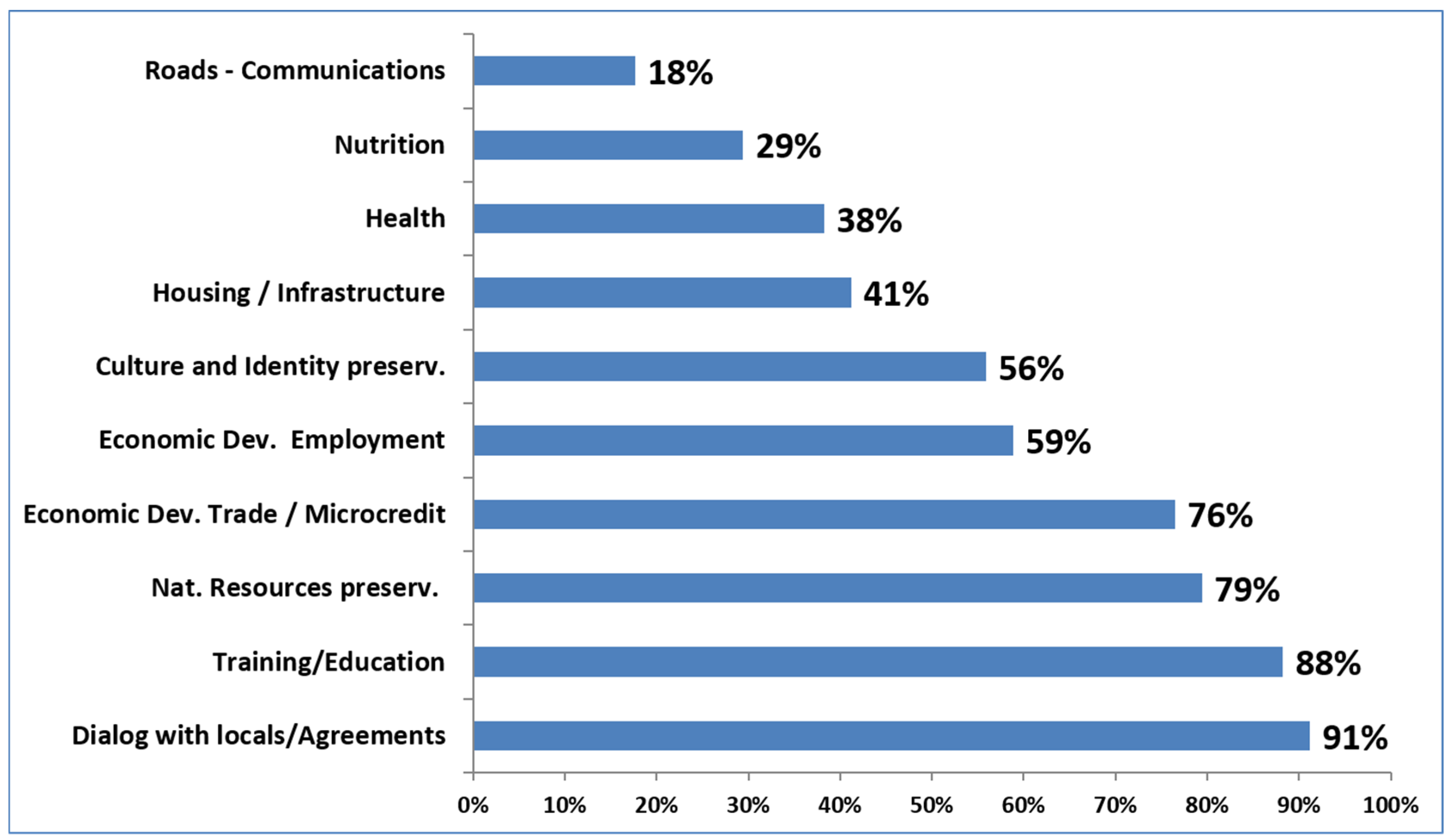
From the sample, 34% of the companies reported to have deployed rural development strategies. These companies come from a variety of industries such as: Personal Goods; Financial Services; Mobile Telecommunications; Chemicals; Industrial Equipment; Oil Equipment and Tools; Construction; General Retail; Nonlife Insurance; Support Services; Automobile; and Media.
Companies listed their principal interests and the factors that motivated them to promote rural development. The most recurrent motivation, as reported in the CoPs, was to support socio-economic improvement of rural communities neighboring their operation sites. Recognized by firms as primary stakeholders, neighboring communities represent a particular interest for business managers, principally because they generally provide labor and part of the resources necessary for their operations. As a way to manage potential risks, firms expressed their interest to establish continuous and effective dialogues with nearby communities to understand their needs and concerns, providing resources and communicating with local representatives to jointly promote development initiatives.
Another popular catalyst was to encourage social responsibility initiatives with rural producers in order to gain a positive social image and recognition from specific industry or market associations. In the latter, according to each industry or business model, firms reported to have obtained different certifications or validations for their production process, supply chain, or business ethics. As industry associations and consumers groups evaluating responsible practices following were found: IFFO global standards for Responsible Supply [49]; Extractive Industries Transparency Initiative EITI [50]; Starbucks C.A.F.E. [51]; IFC’s Good Practice for Strategic Community Investment [52]; British Retail Consortium Global Standards BRC [53]; Sure Global Fair [54].
An activity principally reported by agri-food and natural resource processing firms was to promote rural development for small and independent rural producers that belong to their value chain. As reported by the firms, these strategies facilitated the strengthening of their value chains, ensuring its continuous operation and growth. Other activities reported by the evaluated companies were the promotion of rural development among rural producers by providing capital, training, or technology through responsible sourcing initiatives, organic production, ethic trade, and others in order to gain access to specialty and niche markets with value added competitive products.
To analyze the rural development strategies applied by the evaluated firms, the reported activities were segmented according to their scope, i.e. Dialog and agreements with locals; Provision of training and education; Preservation of natural resources; Actions related to health; Encouragement of local culture and identity; Activities related to nutrition; Provision of housing or community infrastructure; and Provision of roads or communication infrastructure. The share of companies involved in each of these activities is displayed in Figure 1.
Figure 1.
Rural Development Strategies applied by the analyzed companies.
As observed in Figure 1, companies encouraging rural development recognize the importance of dialog with rural communities. Most firms reported to have established a sort of communication channel to facilitate dialog with their respective rural stakeholders. Other popular activities undertaken by the analyzed companies include providing training and education, economic development through microcredits or operating lending, promotion of natural resource preservation, and generation of employment opportunities.
3.3. Type of Strategies for Rural Development
Taking a closer look at the type of rural development activities deployed by the identified firms, the most popular are related to encouraging dialog, providing training and education, as well as encouraging preservation of natural resources and protection of the environment. The present section includes a closer look of each of these strategies.
3.3.1. Dialog with Rural Communities and Local Organizations
Most firms encouraging rural development are engaged in some sort of dialog with local communities. As shown in Table 3, the most popular dialog mechanism was the direct face-to-face communication with locals through interviews, surveys, communitarian assemblies, or even open house events. The second most popular mechanism was the dialog through commercial relations in various forms such as “employer-employee”, “buyer-supplier”, or “coach-entrepreneur”. The latter principally applied to companies encouraging entrepreneurship or by those whose supply chain includes rural producers and entrepreneurs. Another popular dialog activity was performed through NGOs or specialized groups who represent the interest of locals.
From the identified companies encouraging dialogs as part of their rural development strategies, about half of them reported to have designated a directive, staff group, or department oriented to manage the communication and dialog with stakeholders. This is for example the case for the U.S. Company, Starbucks, who reported the creation of the position Chief Community Officer “CCO”, whose main duties are related to lead their community, partner resources, government relations, diversity, and global responsibility teams [55]. Similar examples are observed in companies like Industria Agraria la Palma [56], Holcim Colombia [57], and Endesa [58] from Colombia; Minera Yanacocha [59] from Peru; Industrias Peñoles [60] and Fomento Económico Mexicano [61] from Mexico; and BRF Foods [62] from Brazil.
Table 3.
Types of rural development strategies reported by the evaluated firms.
| Type of Strategies | Number of Firms |
|---|---|
| Dialog with locals/Agreements | 31 |
| Direct Dialog (Surveys, Communitarian assemblies) | 23 |
| Dialog One to One (Commercial or Working relation) | 23 |
| Dialog through NGOs and local institutions | 23 |
| Committee or Responsible for Dialog | 18 |
| Indirect Dialog (workshops or public events) | 2 |
| Training/Education | 30 |
| Work related and Technical Skills training | 22 |
| Security and Safety Education | 22 |
| Material Supply Scholarships and Funding for students | 20 |
| Schools Building or Infrastructure improvement | 12 |
| Nat. Resources preservation | 27 |
| Environment technical training to Rural population | 21 |
| Support in preservation and reforestation campaigns | 17 |
| Technology Supply/Other | 13 |
| Economic Dev. Trade/Microcredit | 26 |
| Training and Microcredit for entrepreneurship | 16 |
| Supply Chain Development | 15 |
| Economic Dev. Employment | 20 |
| Employment Permanent contract | 19 |
| Employment Temporary contract | 6 |
| Culture and Identity preservation | 19 |
| Promotion of local activities, sports, and traditions | 17 |
| Support of local communitarian facilities | 9 |
| Housing/Infrastructure | 14 |
| Company + rural population involved in Construction | 11 |
| Provision of Materials | 7 |
| Credit | 3 |
| Health | 13 |
| Disease prevention Education | 10 |
| Medical brigades and check up | 4 |
| Medical Facilities (Construction or goods supply) | 1 |
| Nutrition | 10 |
| Nutrition related education | 5 |
| Supply of food goods | 4 |
| Brigades of Nutrition | 3 |
| Roads—Communications | 6 |
Source: Calculated by authors based on the information reported by participants of the UN Global Compact to January 2014.
Within the efforts to foster a constructive dialog with and understanding of their stakeholders, companies described their strategies to enhance communication. This is e.g., the case for Fibria Celulose [63] from Brazil, which describes its local community relationship model which includes four types of dialog:
- (1)
- “Engagement”, in which the company assumes the role of partner in local development of the communities that are most affected by their operations.
- (2)
- “Operational Dialog”, whereby local communities, other neighbors, and local government representatives are informed about local forestry operations and discuss about possible impacts and ways to mitigate them.
- (3)
- “Constructive Dialog”, in which instruments of dialog are used to disseminate activities and to enable the exchange of information with all stakeholders with an interest in the company’s activities.
- (4)
- “Face to Face meetings”, which consists in visits by Fimbria’s representatives to communities that are not covered by engagement and operational dialogue, in order to understand the local situation.
3.3.2. Training/Education
The second most popular strategy, as reported by the analyzed companies, was to provide training and support education and training for community members. As displayed in Table 3, the most popular form of support in terms of education was the provision of work and technical training, as well as safety and security training for employees. Most companies reported to have contracted labor force from neighboring rural communities; therefore, besides work related technical training to their employees, they also organized training sessions for their families, transferring knowledge about household safety, domestic economy, cooking, as well as other practical workshops. Other popular strategies involved providing school supplies, scholarship, or any other type of funding for students. A strategy also reported but by a smaller number of companies due to the size of the required investment, was to provide infrastructure, materials, or even the full construction of school facilities for their stakeholders at rural communities.
3.3.3. Natural Resources Preservation
A general awareness about environmental preservation and ecological consciousness was observed among the evaluated companies. Companies reported to have provided informative sessions and specific courses about ecological preservation to rural families. Other common measures observed were providing resources (both in terms of labour and materials) to support preservation and reforestation campaigns.
Some of the reported strategies involved the transfer of technology for environmental regeneration, such as water treatment stations, recycling infrastructure, and land recovery. From the latter, a close cooperation with governmental representatives at all levels (local and national) as well as the participation of NGOs was observed, principally because of the magnitude of the required budget and the amount of potential beneficiaries.
3.3.4. Infrastructure and Economic Development through Entrepreneurship and Employment
A common strategy to encourage entrepreneurship within the evaluated companies was to foster development through microcredits, as well as providing technology along with training and workshops to develop specific skills. This is e.g., the case for Indupalma [56], which reported the creation of local businesses with neighboring communities. Similar examples were observed with Furnas Centrais [64] and its projects to develop indigenous communities; Klabin [65] and its strategies to promote rural development with neighboring communities of its Montealegre Plant; The Rural Development Program from Fibria [63], which aims to develop legitimate leadership, build social capital, and restore a sense of citizenship and self-esteem; ENDESA [58] and its community productive projects; Invesa [66] and its “INTERACTUAR” program which considers the provision of training and resources to encourage entrepreneurship with locals; among many others reporting successful results.
In the case of the companies working with rural producers as part of their supply chain, most of the activities were oriented towards improving working conditions as well as to improve living conditions for the employees and their families in rural communities. For those companies working with independent producers, most of the activities were directed to providing technology and knowledge necessary to promote best practices, safety, and security, increase efficiency rates, and also to contribute with resources to generating improvements in their communities.
A measure deployed by some companies, as shown in Table 3, was to promote the active participation of government institutions, local representatives and civil institutions to collaborate in the generation of infrastructure necessary to improve the living conditions of local inhabitants. Examples of such infrastructure development projects were found in companies like Independence SA [67], Energía Electrica del Pacífico EPSA [68], Yanacocha [59], Pacific Rubiales [69], and Pichichi Sugar Mills [70], which encouraged joint projects with their respective stakeholders to build water treatment infrastructure for rural communities. Other infrastructure projects also identified included construction of schools, clinics, homes, roads, and communitarian spaces.
3.3.5. Promotion of Culture, Health, and Nutrition
Firms reported their participation in communitarian events and fairs in a way to integrate with the society. Other forms of support reported by companies like Indupalma [56], Peñoles [60], Souza-Cruz [71] and others, are grants for artistic activities and sport events.
Another form of integration and risk management, as reported by the evaluated companies, was the promotion of health and nutrition of the inhabitants of the nearby rural communities. A common measure deployed is to provide training and advice about best practices for nutrition and health; other measures also reported were the provision of brigades for medical check-up, medicines, and meals for youngsters and elder population.
4. Discussion
On the topic of CSR, a polarized opinion is found among the general public with respect to its real benefits and the reasons behind it. A line of literature concentrates on the improvement opportunity related to the reliability of the reported outcomes [3,4,6,11,12,19,20]. Furthermore, empirical analyses have stressed the need of a common ground between governments, civil institutions, and private firms in order to improve regulations, transparency, reporting, measuring, and applicability of CSR [3,11,12,16,17,18,20]. Other authors and supporters of CSR have looked at successful empirical cases and explored the different benefits CSR can offer [4,5,7,10,11,13,14,21,23,24]. The intention of this research was to address a gap in literature about the possibilities of CSR for rural development. For those already convinced about the potential of CSR for rural areas, there is limited information available about the kind of activities and the lessons drawn by private firms that are actively implementing such practices.
The analyzed information about corporate social responsibility explains how firms are expanding their responsibility for their products beyond their sales and delivery locations. As observed, firms have been migrating from mere profit oriented economic entities to more socially and environmentally concerned organizations. They aim to serve the society while still generating profit to ensure their own sustainability [1,4,5]. In line with the analyzed literature [1,8], the data showed how managers are taking the lead to encourage social responsible actions to support and benefit their primary stakeholders.
The results from the research showed that rural development oriented CSR programs are not only restricted to firms from the agri-food and natural resource processing industry. Companies from a variety of industries appear to be interested to stimulate rural development and to receive the benefits from the process. However, even though outcomes are mostly positive, the evaluated rural development strategies might not suit all kind of companies. Managers should first evaluate their role in the society they serve and identify their key stakeholders [1,25,37], after which they can engage in strategies according to their objectives, budget, and interests.
According to the literature, managers could find in CSR benefits such as maximizing profits, gaining access and recognition from markets, as well as to minimize environmental effects and potential risks [4,5,8,32]. However, in the analyzed CoPs, such benefits were not clearly expressed by the companies. Some of the most referred outcomes generated by CSR in rural areas included resource maximization, combatting poverty, and solutions for various socio-economic problems. At this point of the research, and due to its scope, it was not possible to determine specific economic benefits beyond the reported outcomes, although some of the companies indirectly refer to this, because of their current commercial relationships with their rural partners. In order to determine further benefits for private firms, it might be necessary to analyze the cases in more detail. This would be interesting follow-up research.
As shown in Table 3, many firms appear to agree that stimulation of entrepreneurship or offering employment opportunities are positive measures to minimize risks and to contribute to improved living conditions and wellbeing of the rural communities. Within the communities it can also reduce the economic dependence on the firms’ performance. As commented, in addition to rural communities, there are other players such as governments and civil institutions that benefit from the participation of firms in rural development strategies. To maximize the outcomes from CSR active multi-sectorial participation is relevant to overcome difficulties and challenges commonly faced by firms when participating in rural development and to increase resources. The evaluated firms report having received support from governmental institutions and NGOs to accomplish their projects. The main benefits from such multi-sectorial collaborations include the integration of different types of expertise such as social organization, natural resources preservation, public administration, and others. This complements the business skills and technical knowledge of the private firms. Another benefit is the availability of financial support from development funds encouraged by governments and international organizations. Therefore, the active participation of complementary actors, if well organized, could facilitate private firms to participate in rural development through CSR strategies.
The empirical research furthermore described in general terms the motivations and concerns reported by the evaluated firms. It also categorized the type of activities deployed. Limited details were provided about the specific actions or projects encouraged by the analyzed firms, mainly because this is very context specific.
Nevertheless, the literature review and the information obtained from the empirical research demonstrated some important facts to be considered by firms interested to participate in rural development oriented CSR to support one of their primary stakeholders:
- -
- Importance of dialog with stakeholders: A key factor to consider is to establish channels for dialog with interest groups and development allies. Proper communication and understanding of community concerns facilitates the integration process and enables the maximization of available resources by tackling specific needs [2,33,38]. As reported by the analyzed companies, a popular measure was to establish mechanisms to facilitate dialog, reporting significant results for integration with local communities.
- -
- The involvement and management of rural development: A key element to ensure positive results in rural development strategies is the involvement of top management and executives in order and to motivate their teams and provide the necessary resources [5,30,33]. As reported by the evaluated firms, a common way to facilitate the proper management of CSR related strategies is delegating its follow-up and operation to a specific person or group of persons (depending to a great extent on the resources and time available). In the case of SMEs, the activities were generally developed by the owner or founder to guarantee the efficient use of invested resources.
- -
- The benefits of multi-institutional cooperation: An ideal measure to maximize resources and increase the scope of development projects is through cooperation with key stakeholders like governments and civil institutions [8,31,34,36]. As reported by the analyzed firms, multi-institutional interaction benefited companies by enabling access to governmental incentives, as well as to advisory services from rural development specialists and NGOs which facilitated the effective and efficient use of available resources.
- -
- To act local and to start with small projects: The number of beneficiaries and size of projects depends mainly on the available budget and the institutions involved. However, as expressed by the analyzed companies, in order to ensure positive outcomes, it is necessary to keep a close follow up and management of the deployed activities. Due to stakeholders having limited available resources, we recommended breaking down the intended development projects in different stages, in which the first stages include a reduced number of beneficiaries, to measure the performance and to learn during the implementation process in order to improve the implementation in the subsequent stages.
The present research is, however, also limited in some ways. It included companies from different countries from the American continent, but outcomes might have been different, if for instance, it was performed on countries from other regions like Europe, Asia, or Africa. Similarly, the focus was not really on comparing firms with different sizes (e.g., SMEs and multinationals). This type of further research and comparisons could complement the current knowledge about the application of rural development oriented CSR.
5. Conclusions
Corporate Social Responsibility is regarded as a feasible driver for rural development. The information in this article showed how companies are collaborating to foster the socio-economic improvement of their rural stakeholders. Although focusing on rural development probably is not relevant for all types of companies, managers interested in supporting rural development through CSR strategies could use the identified strategies as a reference when designing their own strategies, considering of course, their particular case and needs.
The challenge for the future is to encourage a higher participation of firms in Rural Development, which for some cases would represent investing in groups that are not-directly linked to their operations, but that share common interests in land and society. As observed, multi-actor participation provides benefits for the actors involved. However, each stakeholder has specific roles. In the case of governments, their role is promoting effective policies and incentives to encourage corporative participation. For firms, their role is to on ensure their ethical operations, preservation of environment and profit maximization. Finally for civil institutions, the challenge is to ensure proper representation of the community’s interests and to collaborate with the rest of stakeholders to overcome the possible constraints inherent in development projects.
Acknowledgments
Miguel Arato is funded by Consejo Nacional de Ciencia y Tecnología CONACYT México and Instituto de Innovación y Transferencia de Tecnología de Nuevo León I2T2.
Author Contributions
The idea for this paper was conceived by Miguel Arato, Stijn Speelman and Guido Van Huylenbroeck; authors Miguel Arato and Stijn Speelman designed the experiments; Miguel Arato analyzed the data; Stijn Speelman and Guido Van Huylenbroeck contributed with the revision of the analysis of the obtained results; Miguel Arato and Stijn Speelman wrote the paper; and Guido Van Huylenbroeck revised and complemented the presented information.
Conflicts of Interest
The authors declare no conflict of interests.
Appendix
Table A1.
Companies included in the sample of 100 firms from all the listed industry sectors.
| # | Name | Type | Sector | Counrtry | Participant Since |
|---|---|---|---|---|---|
| 1 | YPF S.A. | Public Company | Oil & Gas Processing | Argentina | 26/10/2005 |
| 2 | Carboclor S.A. | Private Company | Oil & Gas Processing | Argentina | 18/06/2010 |
| 3 | Xstrata Pachon S.A. | Subsidiary | Mining | Argentina | 14/07/2010 |
| 4 | Bertora & Asociados | Private Company | Financial Services | Argentina | 01/10/2010 |
| 5 | Parex Klaukol S.A. | Private Company | Construction | Argentina | 21/10/2010 |
| 6 | Ferva S.A. | Private Company | Construction | Argentina | 11/05/2011 |
| 7 | Animana Trading S.A. | Private Company | Personal Goods | Argentina | 20/06/2011 |
| 8 | Seguridad Integral Empresarial | Private Company | Support Services | Argentina | 11/10/2011 |
| 9 | Santa Fe Associates International | Private Company | Financial Services | Argentina | 23/11/2011 |
| 10 | SA San Miguel A.G.I.C | Private Company | Food Producers | Argentina | 06/09/2012 |
| 11 | BANCO FIE S.A. | Private Company | Financial Services | Bolivia | 26/11/2006 |
| 12 | TIM Participacoes S.A. | Private Company | Mobile Telecom. | Brazil | 04/04/2008 |
| 13 | Duratex S.A. | Private Company | Construction | Brazil | 20/02/2008 |
| 14 | Celulose Irani S.A. | Private Company | Forestry & Paper | Brazil | 07/11/2007 |
| 15 | BRF Brasil Foods S.A. | Private Company | Food Producers | Brazil | 28/05/2007 |
| 16 | Dudalina SA | Private Company | Personal Goods | Brazil | 23/01/2007 |
| 17 | Beraca Sabara Quimicos e Ingredientes | Private Company | Chemicals | Brazil | 04/01/2007 |
| 18 | Chemtech Servicos de Engenharia | Private Company | Industrial Equipment | Brazil | 05/12/2006 |
| 19 | Promon S.A. | Private Company | Industrial Equipment | Brazil | 08/05/2006 |
| 20 | INFRAERO | Unknown | Aerospace | Brazil | 12/03/2004 |
| 21 | CPFL Energia S.A. | Private Company | Electricity | Brazil | 17/02/2004 |
| 22 | Copagaz Distribuidora de gás ltda | Private Company | Oil Equipment | Brazil | 27/06/2003 |
| 23 | Furnas Centrais Eletricas sa | State-owned | Electricity | Brazil | 27/06/2003 |
| 24 | Klabin S.A. | Public Company | Forestry & Paper | Brazil | 27/06/2003 |
| 25 | Nutrimental S/A industria e comercio | Private Company | Food Producers | Brazil | 27/06/2003 |
| 26 | Souza Cruz | Private Company | Tobacco | Brazil | 07/01/2003 |
| 27 | Suzano Papel e Celulose | Private Company | Forestry & Paper | Brazil | 07/01/2003 |
| 28 | Samarco Mineracao S.A. | Private Company | Industrial Mining | Brazil | 31/08/2002 |
| 29 | ArcelorMittal Brasil | Private Company | Industrial Mining | Brazil | 22/08/2001 |
| 30 | Fibria Celulose S.A. | Public Company | Forestry & Paper | Brazil | 26/07/2000 |
| 31 | Natura Cosmeticos S/A | Private Company | Chemicals | Brazil | 26/07/2000 |
| 32 | Central de restaurantes aramark ltda | Unknown | Beverages | Chile | 29/03/2007 |
| 33 | Telefónica | Private Company | Fixed Line Telecom. | Chile | 19/11/2006 |
| 34 | Aguas Andinas S.A. | Private Company | Gas, Water & Oil | Chile | 07/08/2006 |
| 35 | Poch & Asociados | Private Company | Support Services | Chile | 01/05/2006 |
| 36 | Pacific Rubiales Energy | Private Company | Oil & Gas Processing | Colombia | 25/01/2011 |
| 37 | Organizacion Terpel S.A | Private Company | Oil Equipment | Colombia | 14/01/2011 |
| 38 | Pichichi S.A Sugar Mill | Private Company | Food Producers | Colombia | 28/01/2010 |
| 39 | Harinera del Valle S.A. | Private Company | Food Producers | Colombia | 18/01/2010 |
| 40 | Datexco Company | Private Company | Support Services | Colombia | 10/03/2009 |
| 41 | Central Hidroelectrica. | Private Company | Electricity | Colombia | 05/01/2009 |
| 42 | Ingenio Risaralda, S.A. | Private Company | Food Producers | Colombia | 19/03/2008 |
| 43 | Invesa S.A. | Private Company | Chemicals | Colombia | 19/03/2008 |
| 44 | Eternit Colombiana S.A. | Private Company | Construction | Colombia | 10/08/2007 |
| 45 | Sociedades Bolivar S.A. | Private Company | Financial Services | Colombia | 17/07/2007 |
| 46 | Frisby S.A. | Private Company | Beverages | Colombia | 28/06/2006 |
| 47 | Arme S.A. | Private Company | General Retail | Colombia | 27/06/2006 |
| 48 | Empresa de Acueducto y alcantarillado | State-owned | Gas, Water & Oil | Colombia | 12/10/2005 |
| 49 | Labfarve Fundacion laboratorio de farmacologia vegetal | Private Company | Support Services | Colombia | 04/10/2005 |
| 50 | Empresa de Energia del Pacifico | Private Company | Electricity | Colombia | 22/04/2005 |
| 51 | Industrial Agraria La Palma | Unknown | Food Producers | Colombia | 27/01/2005 |
| 52 | Endesa Colombia | Public Company | Gas, Water & Oil | Colombia | 25/01/2005 |
| 53 | Novartis de Colombia | Subsidiary | Pharmaceutical | Colombia | 25/01/2005 |
| 54 | Holcim (Colombia) S.A. | Private Company | Construction | Colombia | 01/10/2004 |
| 55 | BPZ Exploracion and Produccion s.r.l | Private Company | Oil & Gas Processing | Peru | 31/10/2007 |
| 56 | Corporacion Pesquera Inca | Private Company | General Retail | Peru | 06/02/2007 |
| 57 | LHH-DBM Peru | Private Company | Support Services | Peru | 13/04/2004 |
| 58 | Compania de Minas Buenaventura | Public Company | Industrial Mining | Peru | 02/04/2004 |
| 59 | Agricola Chapi S.A. | Unknown | Food Producers | Peru | 31/03/2004 |
| 60 | Banesco Banco Universal | Private Company | Banks | Venezuela | 27/04/2009 |
| 61 | Banco De Seguros Del Estado | Private Company | Nonlife Insurance | Uruguay | 03/09/2008 |
| 62 | Pollpar S.A. | Unknown | Food Producers | Paraguay | 20/12/2006 |
| 63 | Vision Banco S.A.E.C.A. | Private Company | Financial Services | Paraguay | 20/12/2006 |
| 64 | Segtec | Private Company | Aerospace | Mexico | 31/01/2011 |
| 65 | Magnekon, S.A. | Private Company | Electronic | Mexico | 05/01/2011 |
| 66 | SRNS Latinoamerica S.A. | Private Company | Industrial Telecom. | Mexico | 20/05/2010 |
| 67 | Grupo SEICI | Private Company | Support Services | Mexico | 05/03/2010 |
| 68 | Maquinaria del Humaya Tepic | Private Company | Construction | Mexico | 13/01/2009 |
| 69 | Nomitek SA de CV | Private Company | Support Services | Mexico | 13/01/2009 |
| 70 | Genomma Lab Internacional | Private Company | General Retail | Mexico | 07/04/2008 |
| 71 | Diseno y Metalmecanica | Private Company | General Industry | Mexico | 20/02/2008 |
| 72 | Eli Lilly y Compania de Mexico | Private Company | Pharmaceutical | Mexico | 24/05/2007 |
| 73 | Agricola Chaparral S.P R. de R.L | Private Company | Food Producers | Mexico | 30/03/2006 |
| 74 | Industrias Penoles, SAB de CV | Private Company | Industrial Mining | Mexico | 30/03/2006 |
| 75 | Novartis Corporativo | Private Company | Pharmaceutical | Mexico | 18/01/2006 |
| 76 | Satelites Mexicanos, SA de CV | Private Company | Fixed Line Telecom | Mexico | 18/01/2006 |
| 77 | Cooperativa La Cruz Azul | Unknown | Construction | Mexico | 16/01/2006 |
| 78 | Arca Continental, S.A | Public Company | Beverages | Mexico | 16/01/2006 |
| 79 | Riqras S.A. De C.V. | Private Company | Beverages | Mexico | 14/06/2005 |
| 80 | Fomento Economico Mexicano | Private Company | Beverages | Mexico | 24/05/2005 |
| 81 | CEMEX | Public Company | Construction | Mexico | 06/12/2004 |
| 82 | Mountain Equipment Co-op | Private Company | Personal Goods | Canada | 20/02/2006 |
| 83 | Rideau Recognition Solutions | Private Company | General Industry | Canada | 11/02/2005 |
| 84 | Talisman Energy Inc. | Public Company | Oil & Gas Processing | Canada | 10/02/2004 |
| 85 | BDP International, Inc. | Private Company | General Industry | USA | 28/01/2010 |
| 86 | Humanscale | Private Company | General Industry | USA | 20/01/2010 |
| 87 | ScienceFirst, LLC | Private Company | Media | USA | 14/04/2009 |
| 88 | Technibus, Inc. | Private Company | Electronic | USA | 19/01/2009 |
| 89 | North American Community | Private Company | Media | USA | 05/02/2008 |
| 90 | Advanced Labelworx, Inc. | Private Company | General Industry | USA | 10/01/2008 |
| 91 | Dalberg Global Development Advisors | Private Company | Support Services | USA | 01/06/2007 |
| 92 | Sinak Corporation | Private Company | Construction | USA | 14/05/2007 |
| 93 | Act Global | Private Company | General Retail | USA | 23/03/2006 |
| 94 | The Coca-Cola Company | Public Company | Beverages | USA | 14/03/2006 |
| 95 | The Omanhene Cocoa Bean Company | Unknown | Not Applicable | USA | 26/05/2004 |
| 96 | Allied Soft | Private Company | Software | USA | 11/05/2004 |
| 97 | Starbucks Coffee Company | Public Company | Beverages | USA | 08/04/2004 |
| 98 | Seagate Technology | Public Company | Technology | USA | 06/04/2004 |
| 99 | Johnson Controls Inc. | Public Company | Automobiles | USA | 31/03/2004 |
| 100 | Green Mountain Coffee | Public Company | Beverages | USA | 11/03/2004 |
References
- Carroll, A.B. The pyramid of corporate social responsibility: Toward the moral management of organizational stakeholders. Bus. Horiz. 1991, 34, 39–48. [Google Scholar] [CrossRef]
- Martin, R.L. The virtue matrix: Calculating the return on corporate responsibility. Harv. Bus. Rev. 2002, 80, 68–75. [Google Scholar] [PubMed]
- Blowfield, M.; Frynas, J.G. Editorial Setting new agendas: Critical perspectives on Corporate Social Responsibility in the developing world. Int. Aff. 2005, 81, 499–513. [Google Scholar] [CrossRef]
- Utting, P. Corporate responsibility and the movement of business. Dev. Pract. 2005, 15, 375–388. [Google Scholar] [CrossRef]
- Cruz, J.M. The impact of corporate social responsibility in supply chain management: Multicriteria decision-making approach. Decis. Support Syst. 2009, 48, 224–236. [Google Scholar] [CrossRef]
- Carroll, A.B.; Shabana, K.M. The business case for corporate social responsibility: A review of concepts, research and practice. Int. J. Manag. Rev. 2010, 12, 85–105. [Google Scholar] [CrossRef]
- Archel, P.; Husillos, J.; Spence, C. The institutionalisation of unaccountability: Loading the dice of Corporate Social Responsibility discourse. Account. Organ. Soc. 2011, 36, 327–343. [Google Scholar] [CrossRef]
- Ma, J. A study on the models for corporate social responsibility of small and medium enterprises. Phys. Proc. 2012, 25, 435–442. [Google Scholar] [CrossRef]
- UN Global Compact. Global Corporate Responsibility Report; United Nations Global Compact Office: New York, NY, USA, 2013. [Google Scholar]
- UN Global Compact United Nations Global Compact Office. Available online: https://www.unglobalcompact.org (accessed on 16 August 2014).
- Frynas, J.G. The false developmental promise of corporate social responsibility: Evidence from multinational oil companies. Int. Aff. 2005, 81, 581–598. [Google Scholar] [CrossRef]
- Narrod, C.; Roy, D.; Okello, J.; Avendaño, B.; Rich, K.; Thorat, A. Public-private partnerships and collective action in high value fruit and vegetable supply chains. Food Policy 2009, 34, 8–15. [Google Scholar] [CrossRef]
- UNFPA. State of World Population. 2007. Available online: http://www.unfpa.org/publications/state-world-population-2007 (accessed on 15 July 2015).
- Rio +20 United Nations Conference on Sustainable Development. Available online: http://www.uncsd2012.org (accessed on 15 July 2015).
- Goldsmith, A. The private sector and rural development: Can agribusiness help the small farmer? World Dev. 1985, 13, 1125–1138. [Google Scholar] [CrossRef]
- Saraceno, E. Recent trends in rural development and their conceptualization. J. Rural Stud. 1995, 10, 321–330. [Google Scholar] [CrossRef]
- Ray, C. Further Ideas about Local Rural Development: Trade Production and Cultural Capital; Centre for Rural Economy: Newcastle University, UK, 2000; p. 49. [Google Scholar]
- Van den Heuvel, G.; Soeters, J.; Gössling, T. Global Business, Global Responsibilities: Corporate Social Responsibility Orientations within a Multinational Bank. Bus. Soc. 2011. [Google Scholar] [CrossRef]
- Richter, J. Public-private Partnerships for Health: A trend with no alternatives? Development 2004, 47, 43–48. [Google Scholar] [CrossRef]
- Rasche, A. Toward a model to compare and analyze accountability standards—The case of the UN Global Compact. CSR Environ. Manag. 2009, 16, 192–205. [Google Scholar] [CrossRef]
- Bacchetta, M.; Jansen, M. (Eds.) Making Globalization Socially Sustainable; World Trade Organization: Geneva, Switzerland, 2011.
- Murray, K.B.; Vogel, C.M. Using a hierarchy-of-effects approach to gauge the effectiveness of corporate social responsibility to generate goodwill toward the firm: Financial versus nonfinancial impacts. J. Bus. Res. 1997, 38, 141–159. [Google Scholar] [CrossRef]
- Hillman, A.J.; Keim, G.D. Shareholder value, stakeholder management, and social issues: What’s the bottom line? Strateg. Manag. J. 2001, 22, 125–139. [Google Scholar] [CrossRef]
- Carroll, A.; Buchholtz, A. Business and Society: Ethics, Sustainability, and Stakeholder Management; Cengage Learning: Boston, MA, USA, 2014. [Google Scholar]
- Kell, G.; Levin, D. The Global Compact network: An historic experiment in learning and action. Bus. Soc. Rev. 2003, 108, 151–181. [Google Scholar] [CrossRef]
- Rasche, A.; Gilbert, D.U. Institutionalizing global governance: The role of the United Nations Global Compact. Bus. Ethics Eur. Rev. 2012, 21, 100–114. [Google Scholar] [CrossRef]
- Kell, G. The global compact selected experiences and reflections. J. Bus. Ethics 2005, 59, 69–79. [Google Scholar] [CrossRef]
- O’Connor, A.; Meister, M. Corporate social responsibility attribute rankings. Public Relat. Rev. 2008, 34, 49–50. [Google Scholar] [CrossRef]
- Arato, M.; Speelman, S.; van Huylenbroeck, G. Benefits and Challenges of Integrated Initiatives for Sustainable Rural Development: The Case from Northern Mexico. OIDA IJSD 2014, 7, 31–48. [Google Scholar]
- Eilbirt, H.; Parket, I.R. The practice of business: The current status of corporate social responsibility. Bus. Horiz. 1973, 16, 5–14. [Google Scholar] [CrossRef]
- Hemphill, T.A. Legislating corporate social responsibility. Bus. Horiz. 1977, 40, 53–58. [Google Scholar] [CrossRef]
- Celma, D.; Martínez-Garcia, E.; Coenders, G. Corporate social responsibility in human resource management: An analysis of common practices and their determinants in Spain. CSR Environ. Manag. 2012, 21, 82–99. [Google Scholar] [CrossRef]
- Kemp, D.; Owen, J.R.; van de Graaff, S. Corporate social responsibility, mining and “audit culture”. J. Clean. Prod. 2012, 24, 1–10. [Google Scholar] [CrossRef]
- Sharmin, S.; Khan, N.A.; Belal, A.R. Corporate Community Involvement in Bangladesh: An Empirical Study. CSR Environ. Manag. 2014, 21, 41–51. [Google Scholar] [CrossRef]
- Székely, F.; Knirsch, M. Responsible leadership and corporate social responsibility: Metrics for sustainable performance. Eur. Manag. J. 2005, 23, 628–647. [Google Scholar] [CrossRef]
- Li, W. Study on the relationships between corporate social responsibility and corporate international competitiveness. Energy Proc. 2012, 17, 567–572. [Google Scholar] [CrossRef]
- Boulstridge, E.; Carrigan, M. Do consumers really care about corporate responsibility? Highlighting the attitude-behaviour gap. J. Commun. Manag. 2000, 4, 355–368. [Google Scholar] [CrossRef]
- Freeman, R.E.; Liedtka, J. Corporate social responsibility: A critical approach. Bus. Horiz. 1991, 34, 92–98. [Google Scholar] [CrossRef]
- Smith, N.C. Corporate Social Responsibility: Not Whether, But How; Center for Marketing: Dartmouth, MA, USA, 2003; pp. 3–701. [Google Scholar]
- Frain, J. Introduction to Marketing; Cengage Learning EMEA: Boston, MA, USA, 1999. [Google Scholar]
- Naftalin, A. Confrontation: Part 1 Measuring social responsibility: Chimera or Reality? Organ. Dyn. 1973, 2, 5–11. [Google Scholar] [CrossRef]
- Giessen, L.; Böcher, M. Rural Governance, forestry, and the promotion of local knowledge: The case of the German rural development program “Active Regions”. Small Scale For. 2009, 8, 211–230. [Google Scholar] [CrossRef]
- Shucksmith, M. Disintegrated Rural Development? Neo-endogenous Rural Development, Planning and Place-Shaping in Diffused Power Contexts. Sociol. Rural. 2010, 50, 1–14. [Google Scholar] [CrossRef]
- Murdoch, J. Networks—A new paradigm of rural development? J. Rural Stud. 2000, 16, 407–419. [Google Scholar] [CrossRef]
- Shortall, S.; Shucksmith, M. Integrated rural development: issues arising from the Scottish experience. Eur. Plan. Stud. 1998, 6, 73–88. [Google Scholar] [CrossRef]
- Giessen, L.; Böcher, M. Integrated Rural Development Policy in Germany and Its Potentials for New Modes of Forest Governance. Available online: https://www.researchgate.net/profile/Lukas_Giessen/publication/266881294_Integrated_Rural_Development_Policy_in_Germany_and_its_Potentials_for_new_Modes_of_Forest_Governance/links/5448b0170cf2f14fb8142e6c.pdf (accessed on 20 January 2016).
- Dutrénit, G.; Rocha-Lackiz, A.; Vera-Cruz, A.O. Functions of the Intermediary Organizations for Agricultural Innovation in Mexico: The Chiapas Produce Foundation. Rev. Policy Res. 2012, 29, 693–712. [Google Scholar] [CrossRef]
- Woodward, D.; Edwards, P.; Birkin, F. Some evidence on executives’ views of corporate social responsibility. Br. Account. Rev. 2001, 33, 357–397. [Google Scholar] [CrossRef]
- IFFO Global Standards for Responsible Supply. Available online: http://www.iffo.net/iffo-rs-standard (accessed on 17 August 2015).
- Extractive Industries Transparency Initiative (EITI). Available online: https://eiti.org/es (accessed on 15 July 2015).
- Starbucks C.A.F.E. Available online: http://www.starbucks.com/responsibility/sourcing/coffee (accessed on 15 July 2015).
- IFC’s Good Practice for Strategic Community Investment. Available online: http://www.ifc.org/wps/wcm/connect/topics_ext_content/ifc_external_corporate_site/ifc+sustainability/learning+and+adapting/knowledge+products/publications/publications_handbook_communityinvestment__wci__131957690757 (accessed on 15 July 2015).
- British Retail Consortium Global Standards. Available online: http://www.brcglobalstandards.com (accessed on 23 July 2015).
- Sure Global Fair SGF. Available online: http://www.sgf.org/home (accessed on 15 July 2015).
- Starbucks 2013 Communication on Progress. Available online: https://www.unglobalcompact.org/participation/report/cop/create-and-submit/active/22257 (accessed on 11 December 2014).
- Cop Indupalma. Available online: https://www.unglobalcompact.org/participation/report/cop/create-and-submit/active/22613 (accessed on 11 December 2014).
- Holcim Colombia Informe de Desarrollo Sostenible 2012. Available online: https://www.unglobalcompact.org/participation/report/cop/create-and-submit/learner/23357 (accessed on 11 December 2014).
- Informe de Sostenibilidad 2012 Codensa. Available online: https://www.unglobalcompact.org/participation/report/cop/create-and-submit/active/34071 (accessed on 11 December 2014).
- Minera Yanacocha S.R.L. Communication on Progress 2012. Available online: https://www.unglobalcompact.org/participation/report/cop/create-and-submit/advanced/18555 (accessed on 11 December 2014).
- Industrias Peñoles 2012 Sustainability Report. Available online: https://www.unglobalcompact.org/participation/report/cop/create-and-submit/active/22010 (accessed on 11 December 2014).
- Fomento Economico Mexicano 2013 Communication on Progress. Available online: https://www.unglobalcompact.org/participation/report/cop/create-and-submit/detail/21570 (accessed on 11 December 2014).
- BRF Brasil Foods S.A. 2013 Communication on Progress. Available online: https://www.unglobalcompact.org/participation/report/cop/create-and-submit/advanced/29331 (accessed on 11 December 2014).
- Communication on Progress—Fibria’s 2012 Sustainability Report. Available online: https://www.unglobalcompact.org/participation/report/cop/create-and-submit/active/22041 (accessed on 11 December 2014).
- Furnas Centrais Eletricas S/A Relatório de Sustentabilidade 2012. Available online: https://www.unglobalcompact.org/participation/report/cop/create-and-submit/active/26641 (accessed on 11 December 2014).
- Industrias Klabin Relatório de avaliação dos compromissos assumidos com o Pacto Global 2012. Available online: https://www.unglobalcompact.org/system/attachments/57841/original/Avaliacao_dos_compromissos_assumidos_com_o_Pacto_Global_VF_com_logo.pdf?1389014151 (accessed on 11 December 2014).
- Informe de Sostenibilidad Invesa 2012. Available online: https://www.unglobalcompact.org/participation/report/cop/create-and-submit/detail/21386 (accessed on 11 December 2014).
- Independence S.A. Memoria de Sostenibilidad 2011. Available online: https://www.unglobalcompact.org/participation/report/cop/create-and-submit/active/18275 (accessed on 11 December 2014).
- Energía Eléctrica del Pacífico EPSA 2° Comunicación de Progreso CHEC-PACTO GLOBAL. Available online: https://www.unglobalcompact.org/system/attachments/13653/original/Comunicaci_n_de_progreso_CHEC_2011.pdf?1325609383 (accessed on 11 December 2014).
- Pacific Rubiales Communication on Progress 2012. Available online: https://www.unglobalcompact.org/participation/report/cop/create-and-submit/advanced/22214 (accessed on 11 December 2014).
- Pichichi Sugar Mills Communication on Progress 2012. Available online: http://www.pactoglobal-colombia.org/index.php/adheridos-1/pichichi-s-a-sugar-mill (accessed on 11 December 2014).
- Souza Cruz Communication on Progress 2011-12. Available online: https://www.unglobalcompact.org/participation/report/cop/create-and-submit/active/29311 (accessed on 11 December 2014).
© 2016 by the authors; licensee MDPI, Basel, Switzerland. This article is an open access article distributed under the terms and conditions of the Creative Commons by Attribution (CC-BY) license (http://creativecommons.org/licenses/by/4.0/).
