Article

Evaluation of Public and Private Interventions for Rural Youth Entrepreneurship in Agricultural Territories: Evidence from the Avanzar Rural Program in Peru


by
Manuel Oliva-Cruz
1,*,
Nixon Haro
2,
Carmen N. Vigo
1,
Adita Cruz
1,
Lily Juarez-Contreras
1,
Denis Diaz-Julon
1,
Antonieta Cesinia Noli Hinostrosa
3,
Freddy Zuta Chávez
3,
Mirtha del Carmen Castro Flores
3,
Elvira Vargas Nuñez
3 and
Roger E. Guevara-Goñas
1,*
1
Instituto de Investigación para el Desarrollo Sustentable de Ceja de Selva, Universidad Nacional Toribio Rodríguez de Mendoza de Amazonas, Chachapoyas 01001, Peru
2
Departamento Académico de Ciencias Sociales y Humanidades, Universidad Nacional de Moquegua, Prolongación Calle Ancash s/n, Moquegua 18001, Peru
3
Proyecto Avanzar Rural, Agrorural, Ministerio de Desarrollo Agrario y Riego (MIDAGRI), Lima 15072, Peru
*
Authors to whom correspondence should be addressed.
Sustainability 2026, 18(9), 4573; https://doi.org/10.3390/su18094573
Submission received: 4 March 2026 / Revised: 23 April 2026 / Accepted: 27 April 2026 / Published: 6 May 2026

Abstract

This study evaluated the outcomes associated with the Avanzar Rural Project among young entrepreneurs from five regions of Peru. The research was conducted in 13 provinces across Amazonas, Áncash, Cajamarca, Lima, and San Martín, involving 146 participants from 60 producer organizations. Data were collected between September and October 2025 through a validated survey and analyzed using descriptive statistics, binary logistic regression, and Multiple Correspondence Analysis (MCA). The study follows an ex post design without a baseline or control group; therefore, the results reflect participants’ reported changes and statistical associations rather than causal effects. The findings indicate widespread reported improvements in productive performance, including income, asset acquisition, and production efficiency, alongside strengthened adaptive capacities and technical skills. Regression results show that access to productive assets and training in production technologies are key factors associated with income growth and increased sales. In contrast, climate adaptation capacities and sustainable management training are linked to improved resilience. In addition, limited access to digital training and infrastructure constrains market engagement. The MCA reveals significant territorial differences in economic performance, institutional development, environmental management, and market integration. In conclusion, the results suggest the importance of integrated and territorially differentiated support strategies that combine productive investment, capacity building, and market-oriented interventions to strengthen youth-led agricultural systems.

1. Introduction

Rural youth in Latin America face marked socioeconomic disadvantages compared with other population groups [1]. In many countries, poverty rates among rural young people exceed those of rural adults and urban youth, placing them in a particularly vulnerable position [2,3]. Their prospects are further constrained by limited access to productive resources such as land, credit, technology, and key inputs [4]. In many cases, the scarcity of local opportunities turns rural territories into “expulsion zones,” driving youth migration toward urban areas in search of better livelihoods [5]. This process, in turn, reinforces exclusion from formal markets and contributes to widening territorial development gaps [6]. These structural disadvantages not only affect the livelihoods of rural youth but also weaken the sustainability and long-term resilience of agricultural systems that depend on generational renewal and local innovation. As a result, youth outmigration reduces rural territories’ capacity to sustain productive diversification, respond to climate pressures, and maintain socially inclusive agricultural systems.
In this context, strengthening rural youth entrepreneurship has become a central strategy for promoting social inclusion and advancing the sustainable development of agricultural regions [1]. Youth-led businesses can contribute to rural economies by generating employment, reducing poverty, and diversifying productive activities, while also encouraging more sustainable agricultural practices, improved resource management, and climate-resilient production systems [7]. They can also foster innovation and facilitate the adoption of new technologies, supporting more sustainable and resilient agri-food systems [8]. International organizations such as FAO and IFAD highlight that investing in rural youth can generate wide-ranging benefits for food security, poverty reduction, and social stability [9]. In line with this, policy agendas increasingly emphasize the development of entrepreneurial capacities as a means to support generational renewal in family farming and to strengthen territorial resilience to future shocks [10]. From a sustainability perspective, rural youth entrepreneurship is thus increasingly understood as a mechanism that connects economic inclusion with adaptive capacity, natural resource management, and the resilience of agricultural landscapes.
In Peru, family farming accounts for around 70% of the food supplied to national markets [11], yet small-scale producers continue to face high levels of poverty and limited access to support services [12]. More than 80% of family farmers lack basic agricultural services—such as extension, financing, or technical assistance—revealing persistent gaps in policy coverage [13]. In response, the Government of Peru, together with the International Fund for Agricultural Development (IFAD), launched the Avanzar Rural Project (“Improvement and Expansion of Public Services for Local Productive Development in the Highland and Amazon Regions of Peru—Avanzar Rural—5 Regions”; hereafter referred to as the program) to expand access to productive development services for small and medium agricultural producers [14]. The initiative promotes sustainable resource management, strengthens rural enterprises, and expands both financial and non-financial services to improve productivity, inclusion, and resilience. Although Avanzar Rural is primarily conceived as a productive development intervention, its emphasis on capacity building, sustainable resource use, and resilience in climate-vulnerable territories positions it as a relevant policy instrument within broader discussions on sustainable agriculture. According to MIDAGRI [15], the program operates in 15 provinces and 101 districts across Amazonas, Áncash, Cajamarca, Lima, and San Martín—areas characterized by high levels of rural poverty and climate vulnerability. It targets approximately 17,400 organized small-scale producers (40% women and 20–30% youth). It indirectly benefits an estimated 57,420 people, supporting activities in agriculture, livestock, and value-added sectors such as dairy processing, rural agroindustry, and beekeeping. With a total budget of US$71.5 million financed by IFAD, the national government, and beneficiary contributions, implementation is led by Agro Rural (MIDAGRI) under the Central Executing Unit (NEC) model. In this context, the program provides a suitable empirical setting to examine how public policy interventions can influence sustainability-related outcomes at the intersection of youth entrepreneurship, agricultural production, and territorial resilience.
In recent years, a growing body of literature has examined rural youth entrepreneurship programs and development interventions, particularly in Latin America and other developing regions. These studies generally report positive effects on income generation, entrepreneurial skills, and market access through training, technical assistance, and financial support [7,16]. However, much of the existing research tends to analyze these outcomes separately, with limited attention to their interactions [8,17]. In addition, the role of territorial heterogeneity in shaping program outcomes remains underexplored, especially in rural areas exposed to climate vulnerability [18]. As a consequence, empirical evidence that integrates these dimensions within a comprehensive framework remains limited, hindering a more holistic understanding of the sustainability and resilience of rural youth enterprises.
Within this framework, identifying the factors that influence the sustainability and adaptive capacity of rural youth enterprises across their socioeconomic, productive, and organizational contexts becomes essential. Such evidence is needed to inform better policies and interventions that position youth-led businesses as effective drivers of territorial development and rural resilience.
In this context, the present study aims to evaluate the outcomes of the Avanzar Rural Program among rural youth entrepreneurs in Peru, integrating economic performance, climate adaptation capacities, natural resource management, and institutional support within a comprehensive analytical framework. In doing so, it seeks to contribute to a deeper understanding of how youth-centered policies can support the development of more sustainable and resilient agricultural systems in vulnerable rural regions.
To guide this analysis, the study addresses the following research questions: (i) What outcomes are reported by rural youth entrepreneurs participating in the Avanzar Rural Program? (ii) Which factors are associated with economic performance, adaptive capacity, and sustainability-related outcomes in these enterprises? Moreover, (iii) how do territorial differences shape patterns of performance, resilience, and market integration?

2. Conceptual Framework

This study is grounded in a conceptual framework that integrates capacity building, sustainability, and resilience in the context of rural youth entrepreneurship. Capacity building is understood as a process through which individuals and organizations develop the skills, knowledge, and resources required to improve their performance and respond to changing conditions [18,19]. In rural development settings, this typically involves technical training, business management capabilities, access to productive assets, and institutional support [20].
From a sustainability perspective, rural enterprises are assessed not only on economic performance but also on their capacity to manage natural resources responsibly and sustain their activities over time under environmental and market pressures [21]. This perspective is consistent with broader approaches to sustainable agriculture, which view productivity, environmental stewardship, and social inclusion as interconnected dimensions [22].
In this context, resilience refers to the ability of rural enterprises to anticipate, absorb, and adapt to external shocks, particularly those associated with climate variability and market fluctuations [23,24]. Within this study, resilience is closely linked to adaptive capacities, access to resources, and the implementation of sustainable practices.
These concepts are operationalized through several dimensions, including economic performance (income, assets, and sales), environmental management (resource use and climate adaptation), institutional strengthening (training and technical assistance), and market integration (digital tools and commercialization strategies) [25,26,27,28]. These dimensions guide both the selection of variables and the analytical approach used to interpret the results presented in the following sections.

3. Materials and Methods

3.1. Study Area

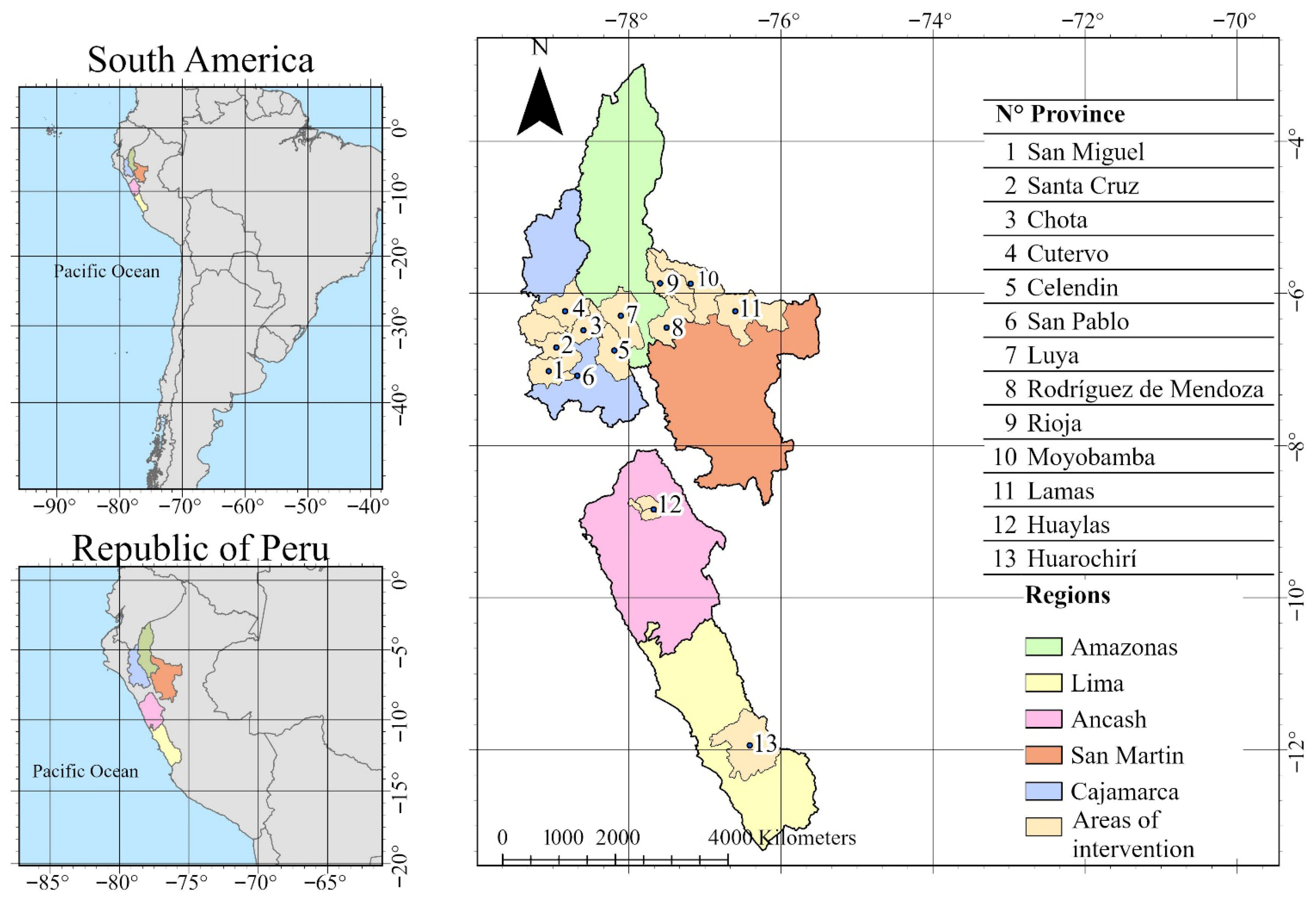
The study was conducted in five regions of Peru—Amazonas, Áncash, Cajamarca, Lima, and San Martín—where productive systems range from family farming to small-scale processing. These territories are dominated by small production units that often combine several activities to sustain livelihoods, a hallmark of family agriculture in Latin America [29]. However, limited access to markets, technical services, and productive support continues to restrict rural enterprise growth [30]. The regions are also highly exposed to climate change, as rainfall variability, extreme temperatures, and other events affect production and business stability [31]. Within this setting, the Avanzar Rural Program focused on these territories, supporting youth-led enterprises linked to value chains such as coffee, cacao, fruit crops, small livestock production, beekeeping, and rural tourism [15] (Figure 1).

3.2. Population, Sample, and Sampling

The study population comprised young members of 60 Producer Organizations (OPP) co-financed by the Avanzar Rural Program in 2021. On average, these organizations included about 60% youth aged 18–29, who were actively involved in implementing the supported enterprises.
Participants were selected through non-probabilistic purposive sampling based on availability and willingness to participate. Two to three active youth were surveyed per OPP. This sampling approach was appropriate because the research objective was to evaluate program outcomes, capacities, and sustainability-related processes among participating youth rather than to produce statistically representative estimates for the entire population. Therefore, the results should be interpreted as analytical insights derived from the study sample rather than as population-level estimates.
The final sample consisted of 146 young entrepreneurs from 60 producer organizations supported by the Avanzar Rural Program. In the study sample, women accounted for 53% of respondents, and men for 47%. Regarding education level, 60% of participants had completed university education, and 25% had completed higher technical education, meaning that more than 85% of the sample had post-secondary education. In addition, 12% had completed secondary school, and 3% had completed primary education.
According to program reports, approximately 40% of Avanzar Rural beneficiaries are women; therefore, women are slightly overrepresented in the study sample.
Because the study used purposive sampling, the findings cannot be generalized statistically to the entire rural youth population in the program regions. However, the sample includes active participants from multiple organizations and regions, which provides valuable analytical insights into the processes, capacities, and outcomes associated with the intervention. This approach is consistent with program evaluation studies, which aim to understand program effects and implementation processes rather than to estimate population parameters.

3.3. Instrument Design and Validation

The questionnaire was designed based on the dimensions established in the Operational Manual of the Program “Improvement and Expansion of Public Services for Local Productive Development in the Highland and Amazon Regions of Peru”—AVANZAR RURAL. The instrument was structured into thematic sections aligned with the program’s logical framework, covering general characteristics of participants, household and organizational context, economic performance (income, assets, and sales), productive efficiency, environmental management and natural resource use, climate adaptation capacities, organizational strengthening, market integration, and access to services.
To capture these dimensions, the questionnaire combined closed-ended, multiple-choice, dichotomous (yes/no), and semi-structured questions, allowing the collection of both quantitative and qualitative information. Several items incorporated predefined thresholds (e.g., percentage increases in income, productivity, or assets) to facilitate the assessment of reported changes relative to program indicators. In addition, multiple-response questions were included to reflect the diversity of practices and strategies adopted by participants, while open-ended items provided complementary insights into perceived changes, challenges, and future needs.
Content validity was assessed through expert judgment, with three specialists in rural development, program design and evaluation, and youth initiatives reviewing the instrument for relevance, clarity, and alignment with the study objectives, following established measurement validation frameworks [32]. A pilot test was conducted with youth from organizations outside the final sample to evaluate comprehension, refine wording according to the local context, and estimate survey duration, in line with standard recommendations for field instrument piloting [33]. For scaled sections, internal consistency was examined using Cronbach’s alpha, and items with low coherence within their respective dimensions were revised accordingly [34]. This process resulted in the final version of the questionnaire used in the study.
Data were collected between September and October 2025 through virtual and in-person methods. Most responses were collected via a Google Forms questionnaire, while eight surveys were administered face-to-face in areas with limited connectivity. Before participation, respondents were informed about the study objectives, the voluntary nature of participation, and the academic use of the data. Verbal informed consent was obtained in line with ethical guidance for minimal-risk social research in rural settings. All participants were adults, and no sensitive or identifying information was collected, ensuring anonymity and confidentiality.
This study follows an ex post evaluation design, based on participants’ reported changes following their involvement in the Avanzar Rural Program. This includes self-reported improvements in key indicators such as income, productive assets, production efficiency, and adaptive capacities. Due to the absence of baseline data or a control group, the study does not estimate causal impacts but rather identifies patterns of change and factors associated with improved performance and sustainability-related outcomes.
In addition, secondary data from program administrative records were reviewed to contextualize reported outcomes, including indicators of production, productivity, income, and variation in assets across supported enterprises.

3.4. Data Analysis

To strengthen data quality, trained enumerators administered the surveys and applied field controls, including remote supervision, daily reporting, and random verification of interviews. Data processing included cleaning steps (duplicate removal, range checks, format standardization) and coding of categorical variables. For multiple-response items, dichotomous variables were created, and declarative thresholds were converted to binary variables following recommended criteria for multivariate analysis [35]. Missing data were handled based on their proportion, using listwise deletion when minimal and median or multiple imputation when moderate, consistent with Rubin [36] and Little and Rubin [37]. Descriptive statistics were then generated to summarize participant distribution and indicator behavior.
Multinomial logistic regression was subsequently applied, and key assumptions were checked: suitability of the dependent variable; independence of observations; adequate sample size (≥10 events per parameter) [38]; absence of multicollinearity (VIF < 5) [35]; linearity in the logit for continuous predictors [39]; absence of complete separation [40]; and influence diagnostics using leverage, DFBETAS, and Cook’s distances [41]. Finally, Multiple Correspondence Analysis (MCA) was used to build enterprise typologies from categorical variables, verifying sample size and category distribution, record independence, and sparsity control through the Burt matrix [42]. Inertia was derived from the sum of eigenvalues for each factorial dimension, and contributions and cos2 values were examined to support unbiased axis interpretation. All analyses were conducted in InfoStat version 2020 [43] and SPSS version 25.
The variables included in the analysis were selected to reflect multiple dimensions of sustainability and resilience in rural youth enterprises. Economic variables (e.g., income, assets, sales) capture productive performance and economic viability; environmental variables (e.g., climate adaptation, natural resource management) reflect ecological sustainability; and institutional variables (e.g., training, technical assistance, organizational strengthening) represent enabling conditions that support long-term resilience. This structure is consistent with the conceptual framework and supports the integrated analysis of program outcomes.

4. Results

The results presented in this section are based on participants’ self-reported perceptions of changes and should be interpreted as indicative of observed patterns rather than objective measurements of impact.

4.1. Characteristics of Young Entrepreneurs and Productive Factors

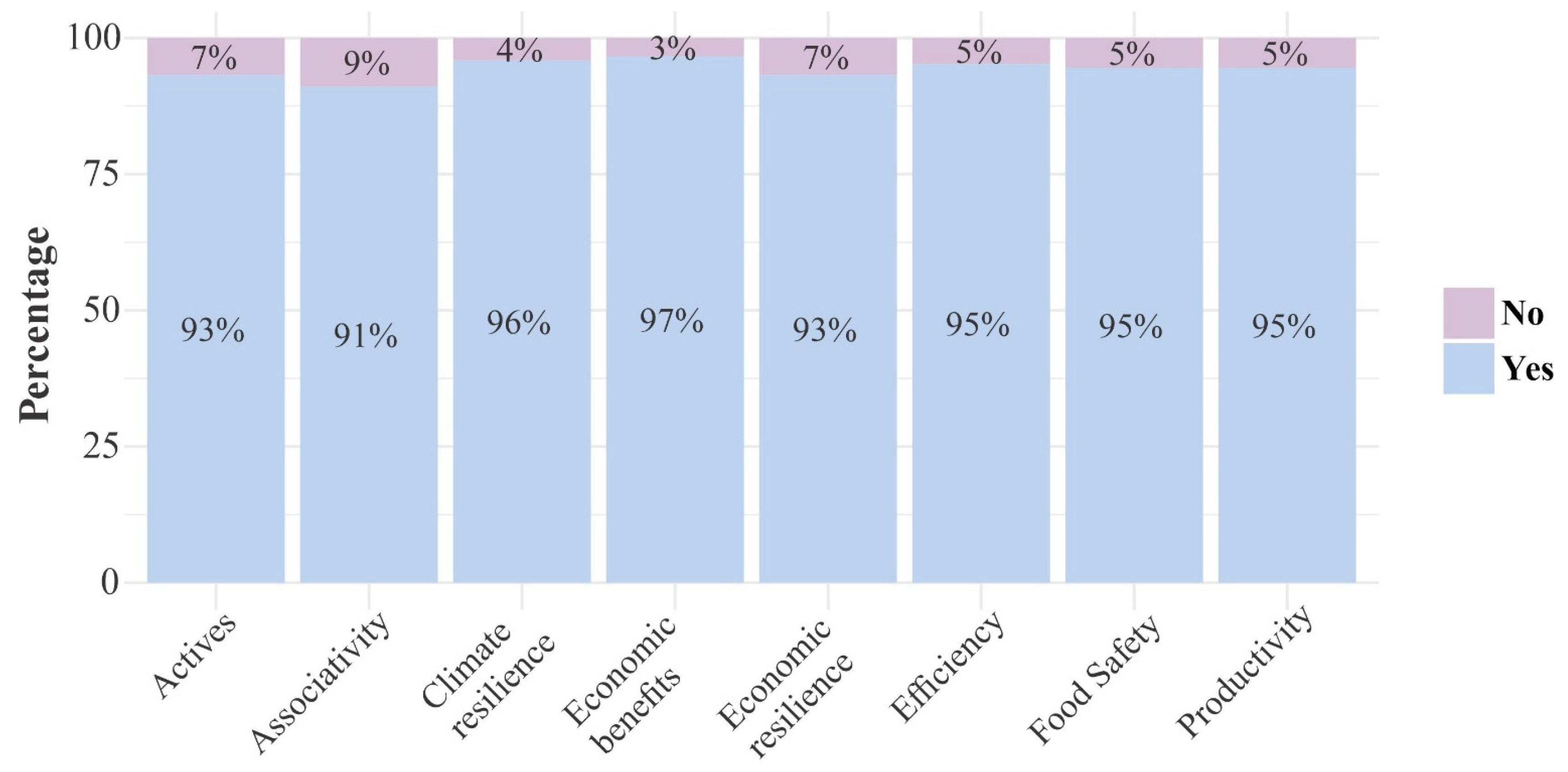
Among the surveyed participants, 97% reported an increase in income, 93% reported the acquisition of new productive assets (tools, machinery, and inputs), and 95% reported improved access to safe and nutritious food. In addition, 95% of respondents reported improvements in production efficiency, reflected in better resource use, higher product quality, and increased overall productivity. Likewise, 96% indicated feeling better prepared to face economic or productive challenges, while 93% reported strengthened adaptive capacities to climate change (Figure 2).
These patterns are consistent with the program’s administrative records for the analyzed sample, which indicate substantial improvements in key performance indicators, including production, income, and asset accumulation, across supported enterprises. Although variability was observed in productivity indicators, the general trends align with the positive changes reported by participants.
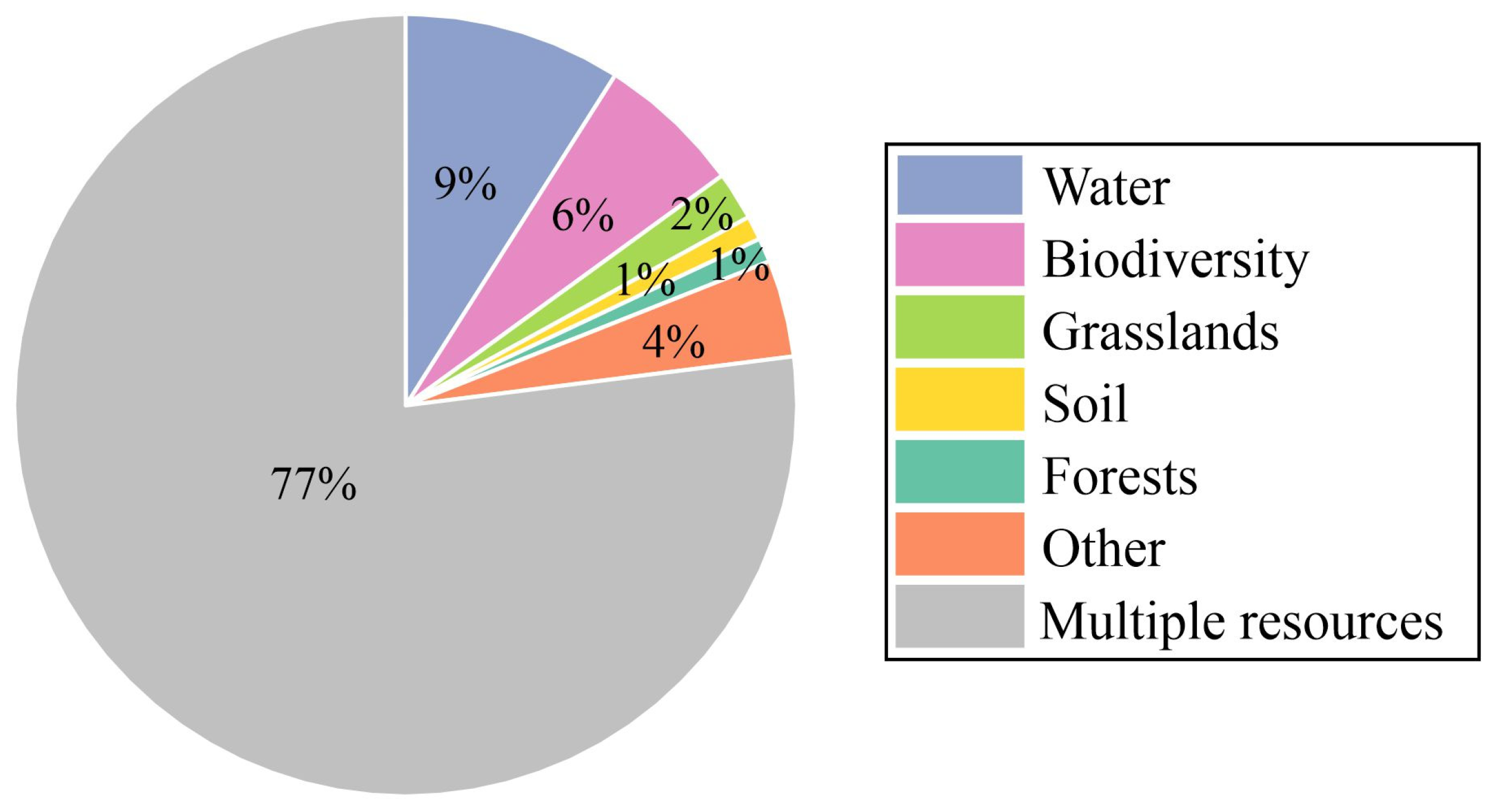
Regarding the availability of natural resources (Figure 3), most respondents (77%) reported relying on multiple resources simultaneously. Smaller proportions identified specific resources such as water (9%), biodiversity (6%), grasslands (2%), and other resources (4%). The latter category includes productive assets such as fruit plantations (e.g., avocado and coffee) and small livestock (e.g., poultry and guinea pigs).

4.2. Assessment of Capacity Building and Sustainability Among Rural Youth Entrepreneurs

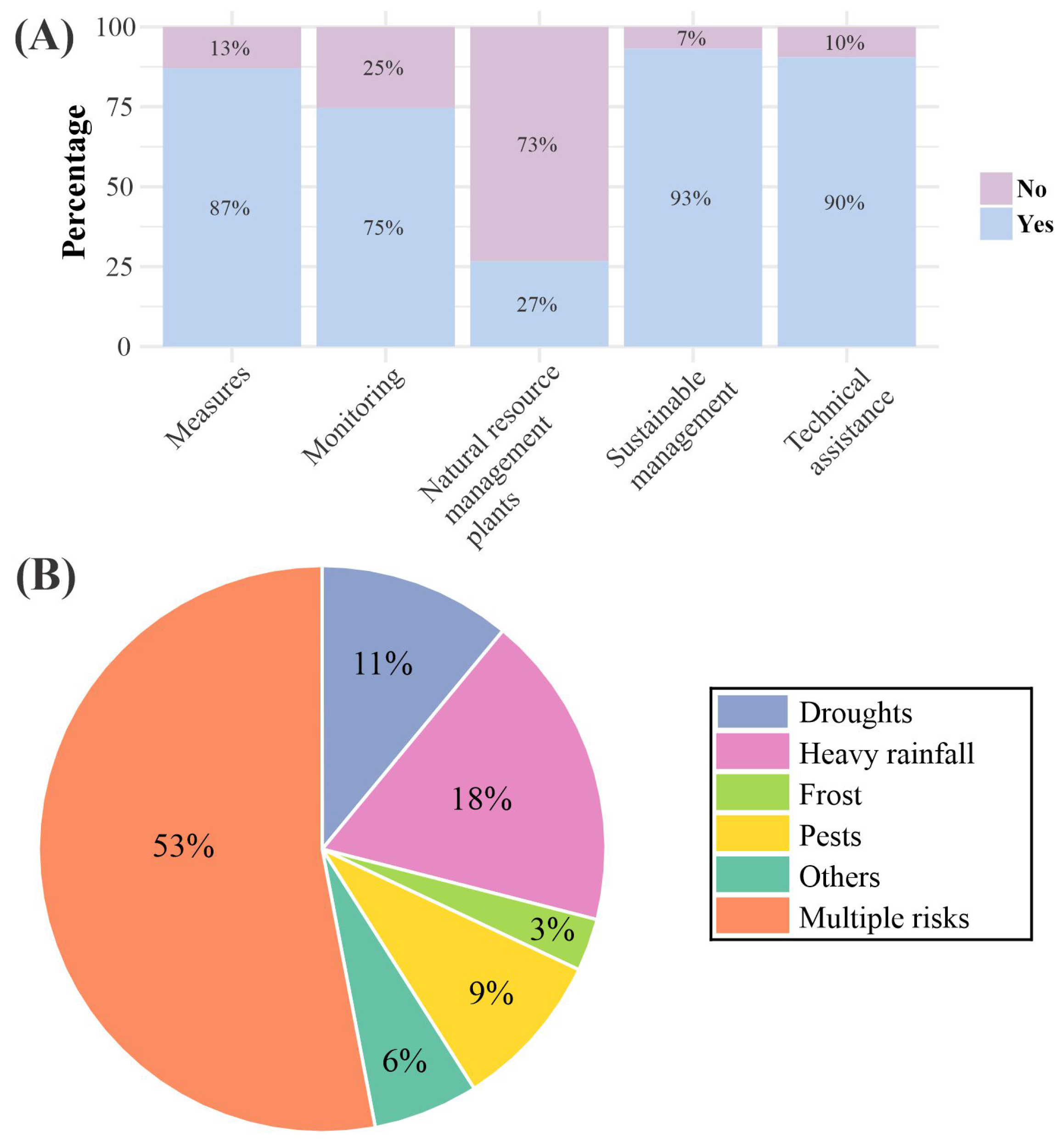
Most surveyed entrepreneurs indicated implementing measures to address climate change (87%) and monitoring the natural resources they use (75%). However, only 27% reported having a formal Natural Resource Management Plan (PNGRA), despite 93% indicating the application of sustainable management practices. In addition, 90% of respondents reported receiving training or technical assistance in business management, marketing, or finance through the program (Figure 4A).
Regarding climate risks, 53% of respondents reported being exposed to multiple risks simultaneously, including droughts, heavy rainfall, frost, and pests. Among specific risks, heavy rainfall was reported by 18% of participants, followed by droughts (11%), pests (9%), and other less frequent events such as frost (3%) and additional risks (6%) (Figure 4B).
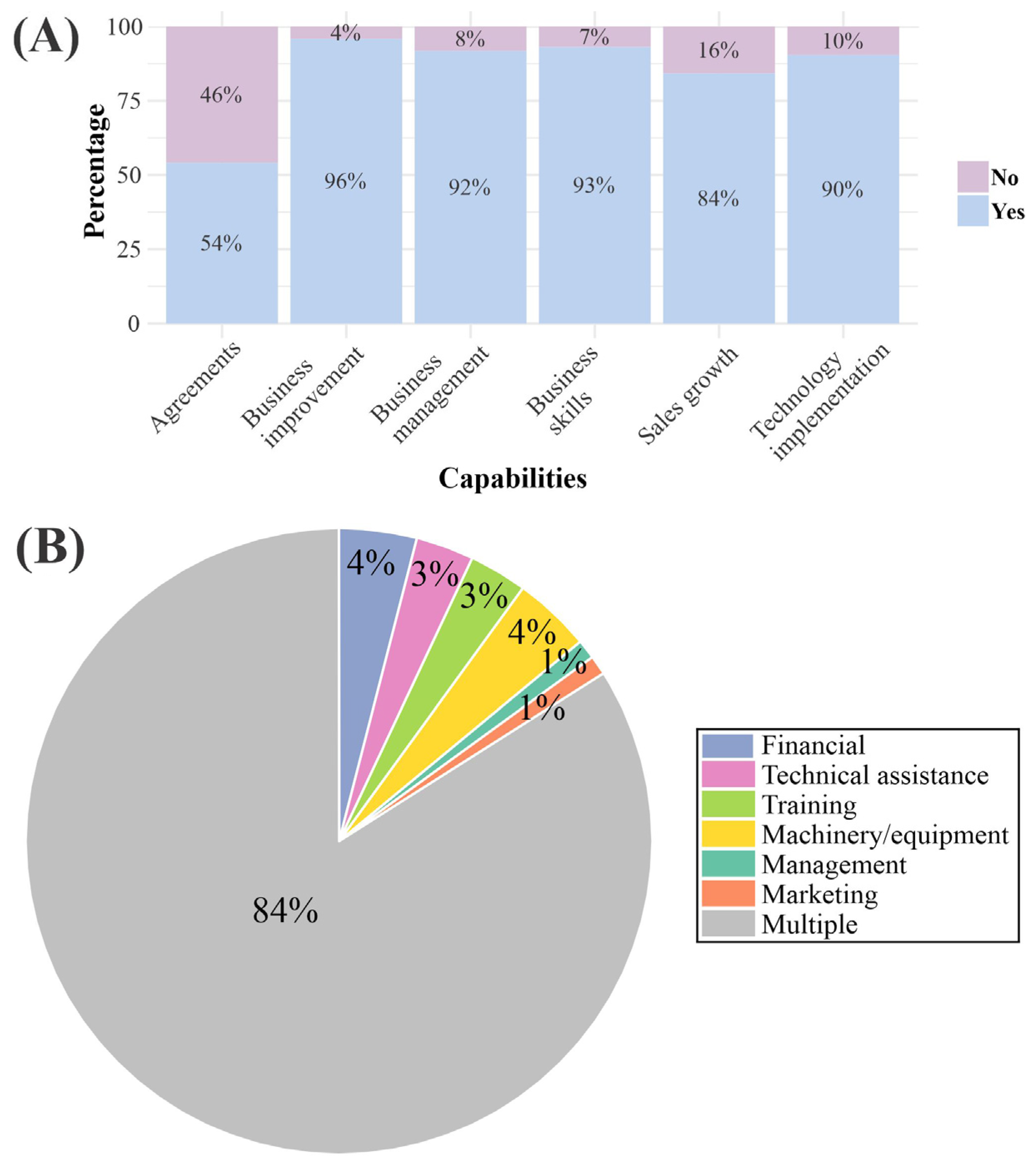
Most surveyed entrepreneurs indicated improvements in their entrepreneurial capacities, particularly in business improvement (96%), business management (92%), and business skills (93%). Likewise, 90% reported implementing new technologies in their enterprises, and 84% indicated increase sales. In addition, 54% of respondents reported having established agreements or partnerships with public or private institutions, while 46% had not yet done so (Figure 5A).
Regarding technical support, the majority of respondents (84%) reported receiving multiple types of support, including financial assistance, technical assistance, training, machinery or equipment, management support, and market access. Only small proportions reported receiving support in a single category, such as financial support (4%), technical assistance (3%), training (3%), or machinery and equipment (4%) (Figure 5B).
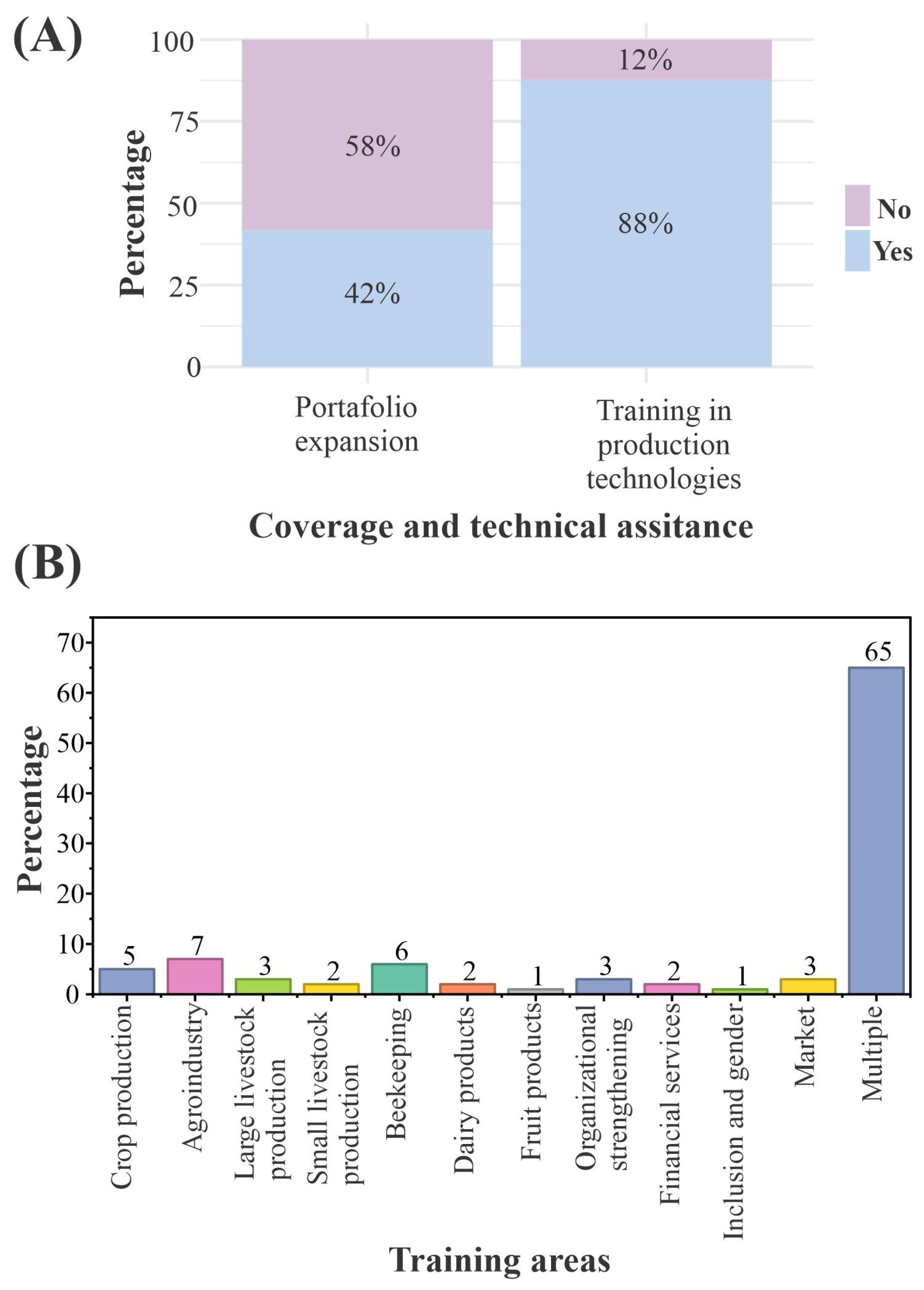
In the study sample, 42% of young entrepreneurs reported that their product portfolio had expanded, while 58% indicated no growth in this area. In contrast, 88% of respondents reported receiving training or practical instruction in production technologies, compared with 12% who did not (Figure 6A).
Regarding training areas, 65% of respondents reported receiving multiple types of training provided by the program, covering topics such as crop production, agroindustry, large and small livestock production, beekeeping, dairy processing, fruit production, organizational strengthening, financial services, inclusion and gender, and market-related skills. Only small proportions of respondents reported receiving training in a single area (Figure 6B).
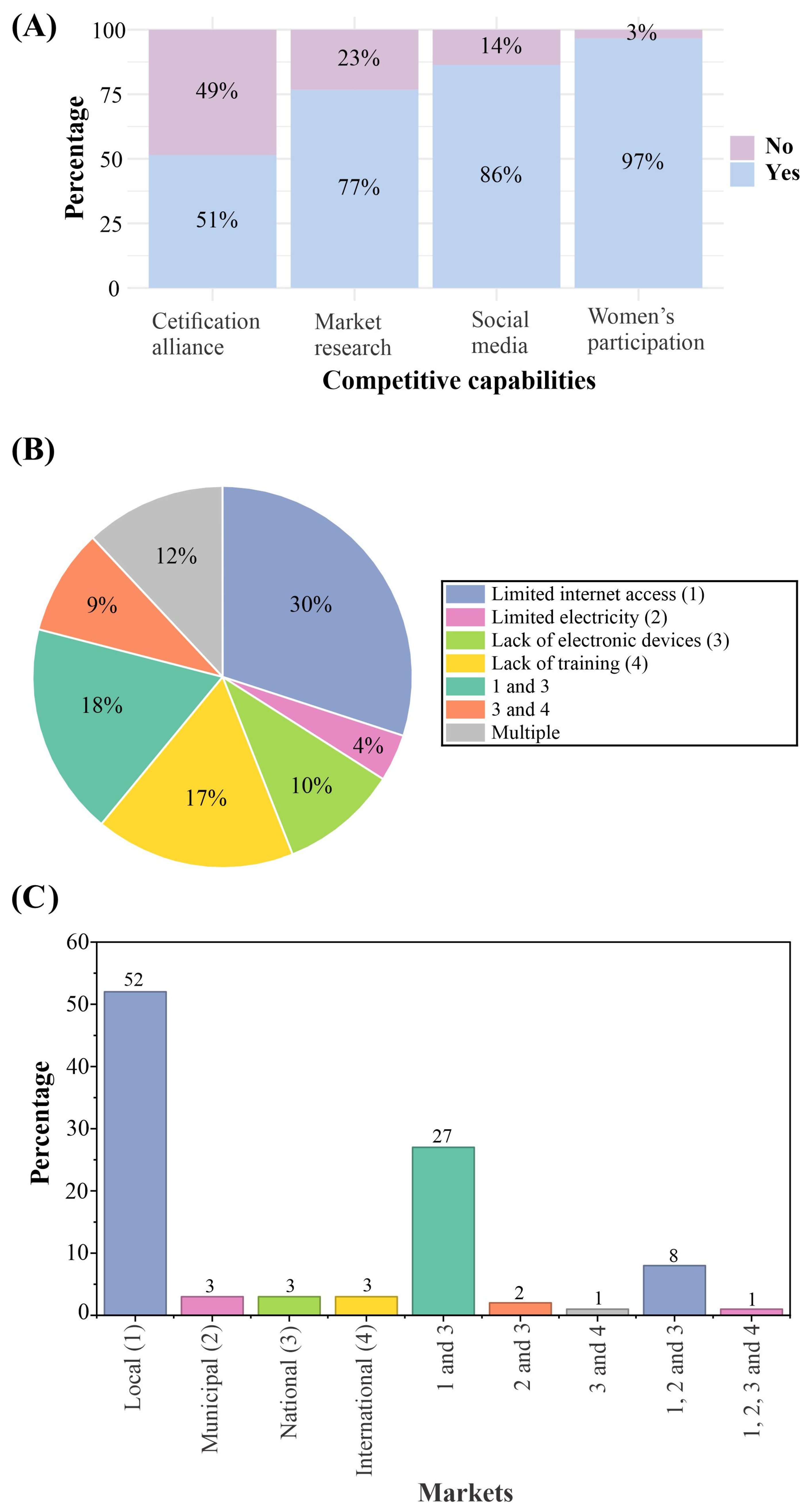
Among the commercial competitiveness factors, 51% of respondents reported that their initiatives had participated in alliances aimed at product certification, while 49% had not. Regarding access to market information, 77% indicated having access to market studies. The use of social media was also widespread, with 86% of enterprises using these platforms for management or promotional purposes. In addition, women’s participation was reported in 97% of the enterprises (Figure 7A).
Regarding barriers to the use of communication and digital tools, 30% of respondents reported limited internet access as the main constraint. Additionally, 18% reported a combination of limited internet access and lack of electronic devices, while 12% indicated facing multiple constraints simultaneously, including limited internet access, limited electricity supply, lack of electronic devices, and insufficient training (Figure 7B).
Regarding market access, 52% of respondents reported operating primarily in local markets, while 27% reported access to both local and national markets. Only a small proportion (3%) reported access to international markets (Figure 7C).
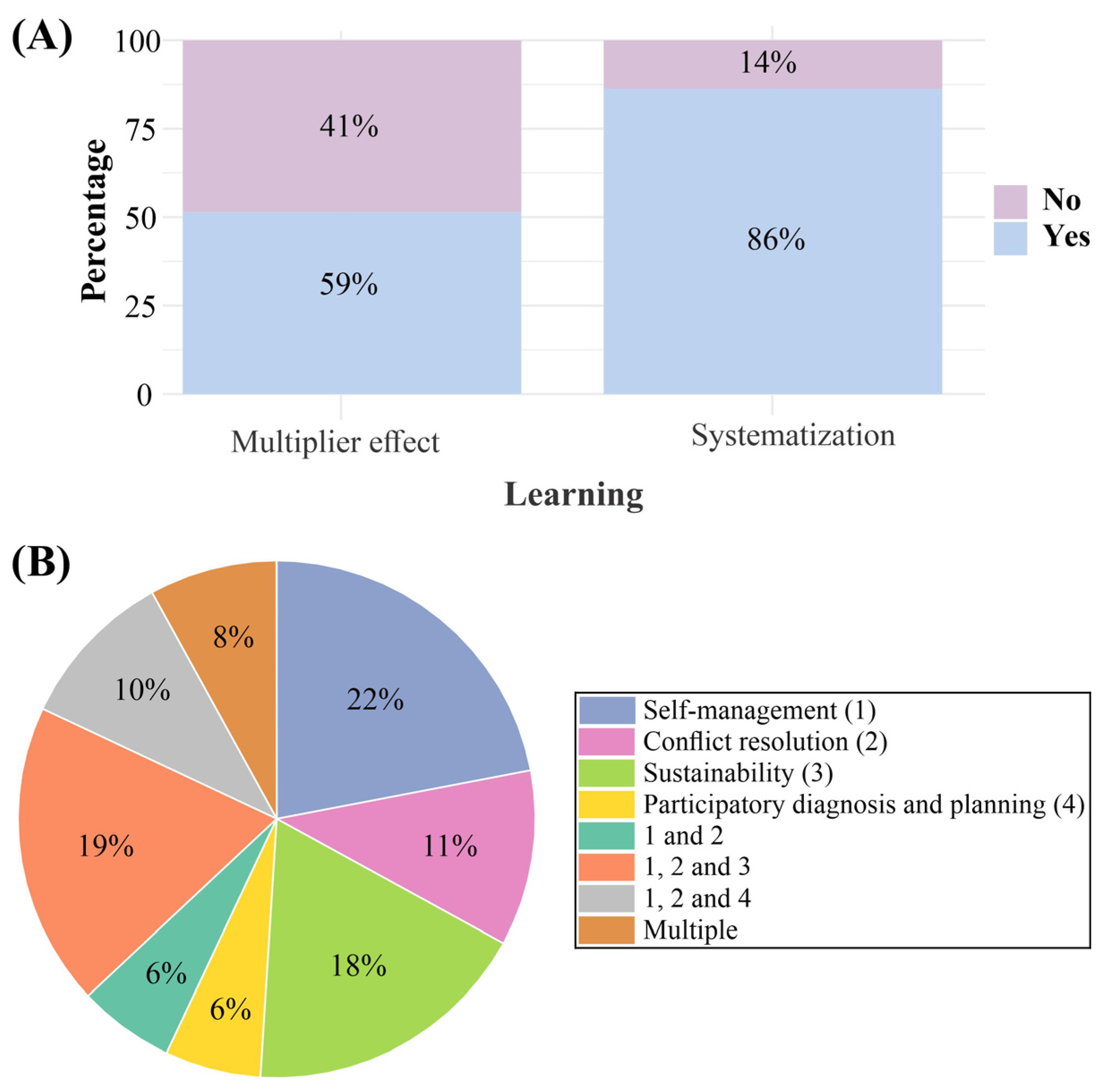
Regarding learning and knowledge transfer, 59% of respondents reported generating a multiplier effect by sharing knowledge or experiences with other entrepreneurs outside the program. In comparison, 41% reported not having done so. Regarding internal management, 86% of respondents reported having systematized or digitized information related to their enterprises, whereas 14% had not yet implemented this organizational practice (Figure 8A).
Among participants in the Avanzar Rural initiative’s training programs, the most frequently reported topics were self-management (22%), sustainability (18%), and conflict resolution (11%). Additionally, 19% of respondents reported receiving training in a combination of these areas, reflecting the integrated nature of the capacity-building approach (Figure 8B).

4.3. Factors Associated with Economic Performance, Adaptive Resilience, and Digital Commercialization in Rural Enterprises of the Avanzar Rural Program

The following results should be interpreted as indicative of statistical associations within the study sample rather than as evidence of causal relationships, given the sample size and non-probabilistic nature of the data.
Logistic regression analysis was conducted to identify factors associated with increases in income and sales among the surveyed participants (Table 1).
The probability of increasing income by at least 40% decreases sharply among those who did not acquire new productive assets: the negative coefficient (B = −1.54) and Exp(B) = 0.21 indicate that these youth have approximately 79% lower odds of increasing their income compared to those who invested in machinery, tools, or inputs. Similarly, not having increased asset value by at least 23% is associated with a lower probability of income growth, although this effect is marginal (p = 0.07). Differences by educational level, gender, or lack of training in business management did not show significant associations with income increases and therefore are not considered determinant factors in this model. These results indicate a strong association between access to productive assets and income growth, suggesting their relevance in supporting the economic dimension of sustainability in rural youth enterprises within the study sample.
For the increase in sales, the only factor with a statistically significant effect is the lack of training in production practices and technologies: entrepreneurs who did not receive this training have approximately 83% lower odds of increasing their sales volume or value (Exp(B) = 0.17; p = 0.01) compared to those who did receive training. The non-adoption of new practices or technologies and non-participation in local markets were not significant in this analysis (Table 1).
Logistic regression analysis was also performed to identify factors associated with economic adaptive capacity and perceived improvement in natural resource management (Table 2).
On the other hand, regarding economic adaptive capacities, young entrepreneurs who did not develop climate change adaptation skills had a significantly lower probability of strengthening their economic adaptation capacities (p = 0.01), indicating a close association between climate adaptation and economic resilience within the study sample. In terms of natural resource management, the most significant factor was the lack of training in sustainable management: those who did not receive this training were 17 times less likely to have improved their resource management (p = 0.02). This result shows a strong statistical association between training and perceived improvements in resource management.
Training in sustainable management thus emerges as a critical enabling factor for translating environmental awareness into concrete improvements in resource use and stewardship. Although other factors—such as the absence of technical assistance or the non-implementation of climate adaptation measures—were not statistically significant, their coefficients suggest a negative trend in the ability of youth enterprises to adapt and manage their resources sustainably (Table 2).
Logistic regression analysis was performed to identify factors associated with the use of digital platforms and perceived market impact on sales (Table 3).
Not having received training on the use of social media is significantly associated with a lower likelihood of using digital platforms to promote products or services (B = −3.02; p = 0.00), as is the lack of market studies (B = −2.91; p = 0.00), which also negatively influences the perception of market impact. Frequent participation in marketing-related training shows a significant positive association with perceived market impact (B = 3.13; p = 0.05). These results indicate that digital and marketing-related factors are statistically associated with market engagement outcomes within the study sample.
In contrast, variables such as not participating in local markets, not joining certification alliances, or lacking promotional materials or management documents did not exhibit statistically significant relationships (p > 0.05). Likewise, the lack of promotion of women’s participation in advertising activities approached significance (B = −2.23; p = 0.10), suggesting a potential association that may warrant further analysis (Table 3).

4.4. Multiple Correspondence Analysis

The Multiple Correspondence Analysis (MCA) enabled the identification of distinct patterns among the offices of the Avanzar Rural program across different territories (Hereafter referred to as zonal offices), based on economic, institutional, environmental, and commercial variables.
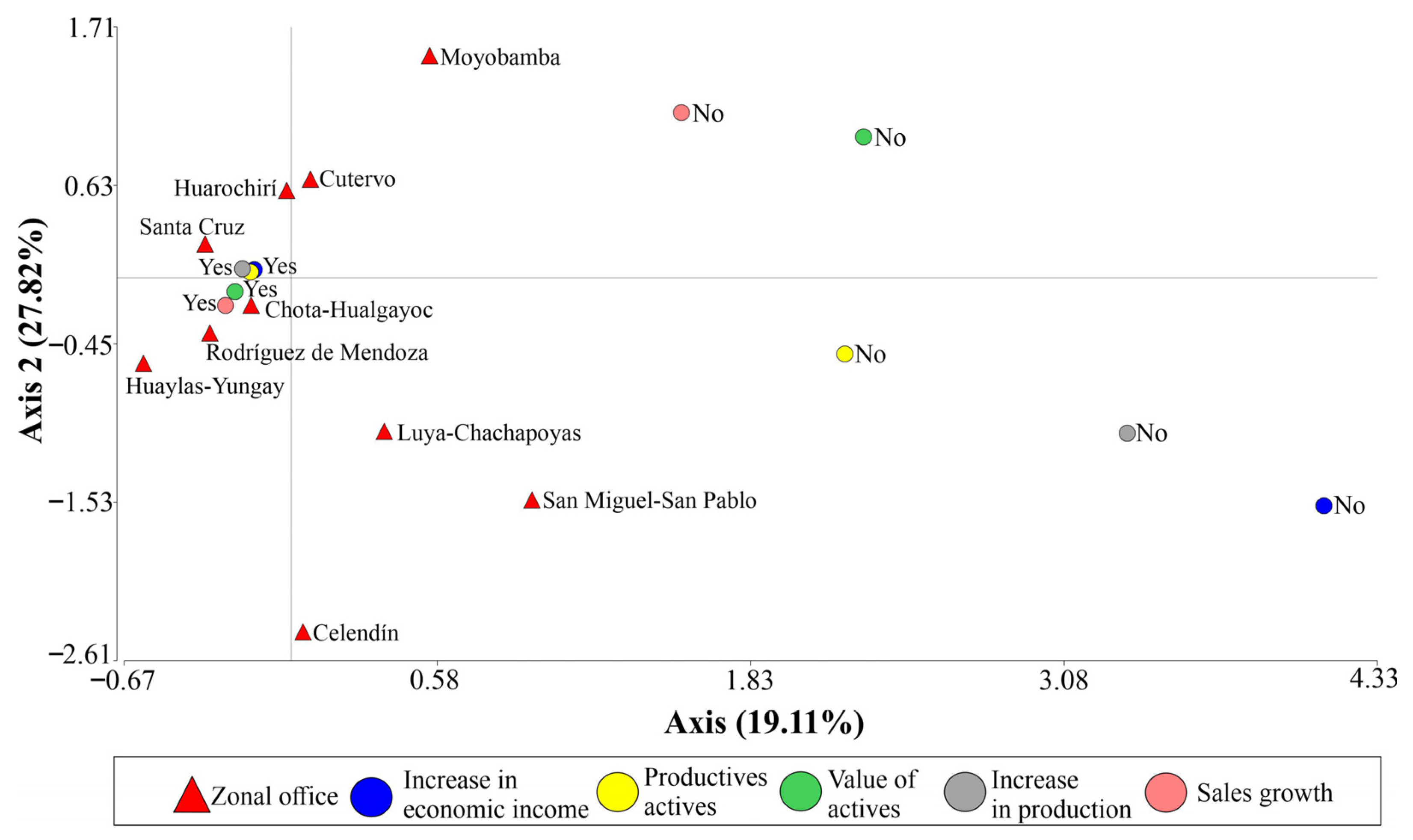
The first dimension, related to economic and productive variables, explained 46.93% of the total variability and differentiated between youth who reported improvements in income, the acquisition of tools or machinery, growth in assets, production, and sales, and those who did not. The zonal offices of Chota–Hualgayoc, Rodríguez de Mendoza, and Huaylas–Yungay were positioned closer to the categories associated with increases in assets and sales. Similarly, Huarochirí and Santa Cruz were closer to the categories associated with higher income and production. By contrast, Moyobamba was positioned near the category associated with no sales growth, while Luya–Chachapoyas and San Miguel–San Pablo were positioned closer to categories associated with lower economic performance (Figure 9).
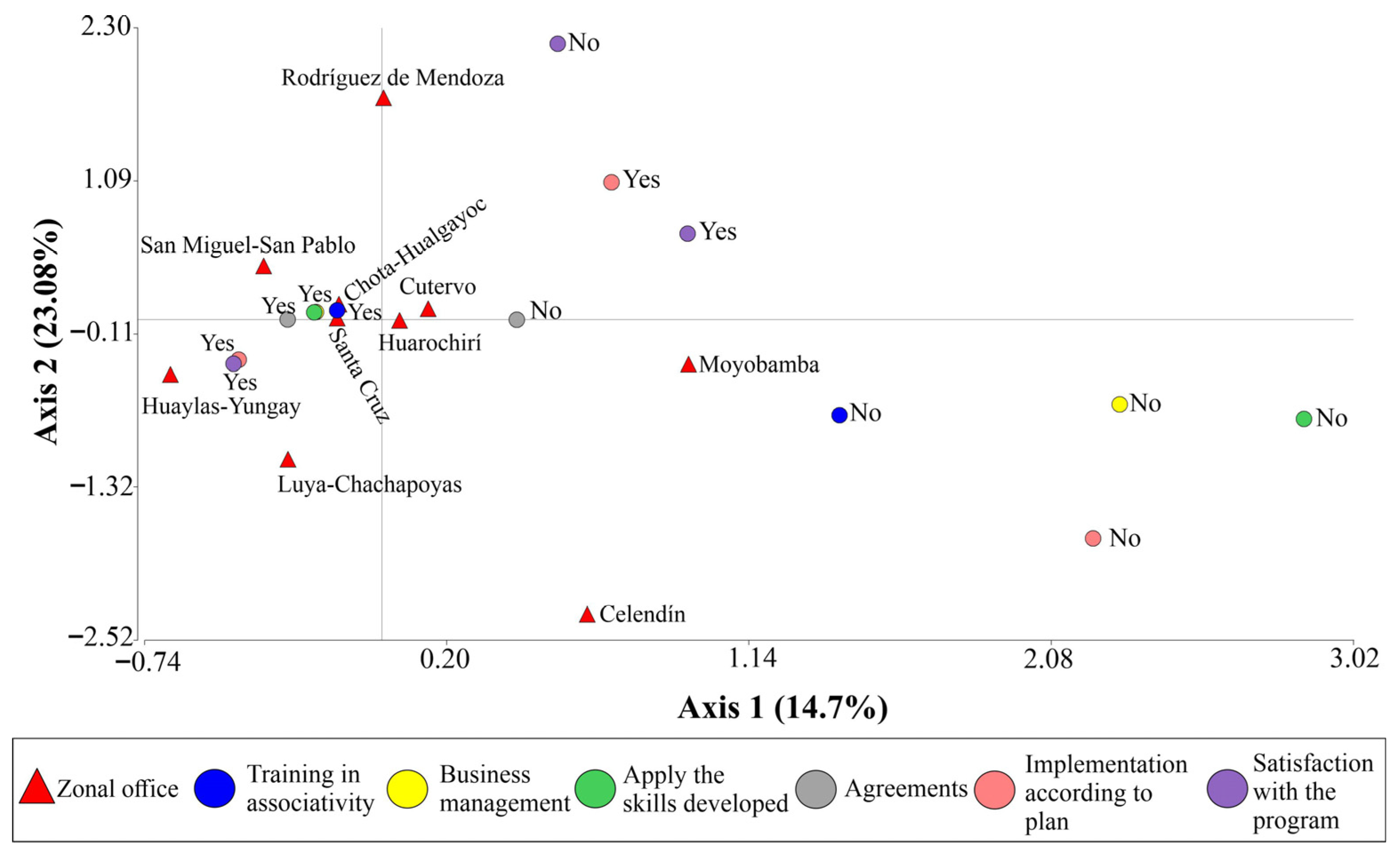
The second dimension, related to training, management, and institutional support (37.78% of the variability), contrasts organizations that have received technical assistance, applied what they have learned, signed contracts, and implemented their business plans, with those that have processes still pending or insufficiently consolidated. The zonal offices of Santa Cruz, San Miguel–San Pablo, and Chota–Hualgayoc align with a profile of institutional strengthening, associated with training activities and formalization processes. Conversely, Moyobamba and Celendín are positioned near the less consolidated profiles, showing delays in organizational development, while Luya–Chachapoyas, although demonstrating progress in implementation, shows a significant proportion of contracts that remain unformalized (Figure 10).
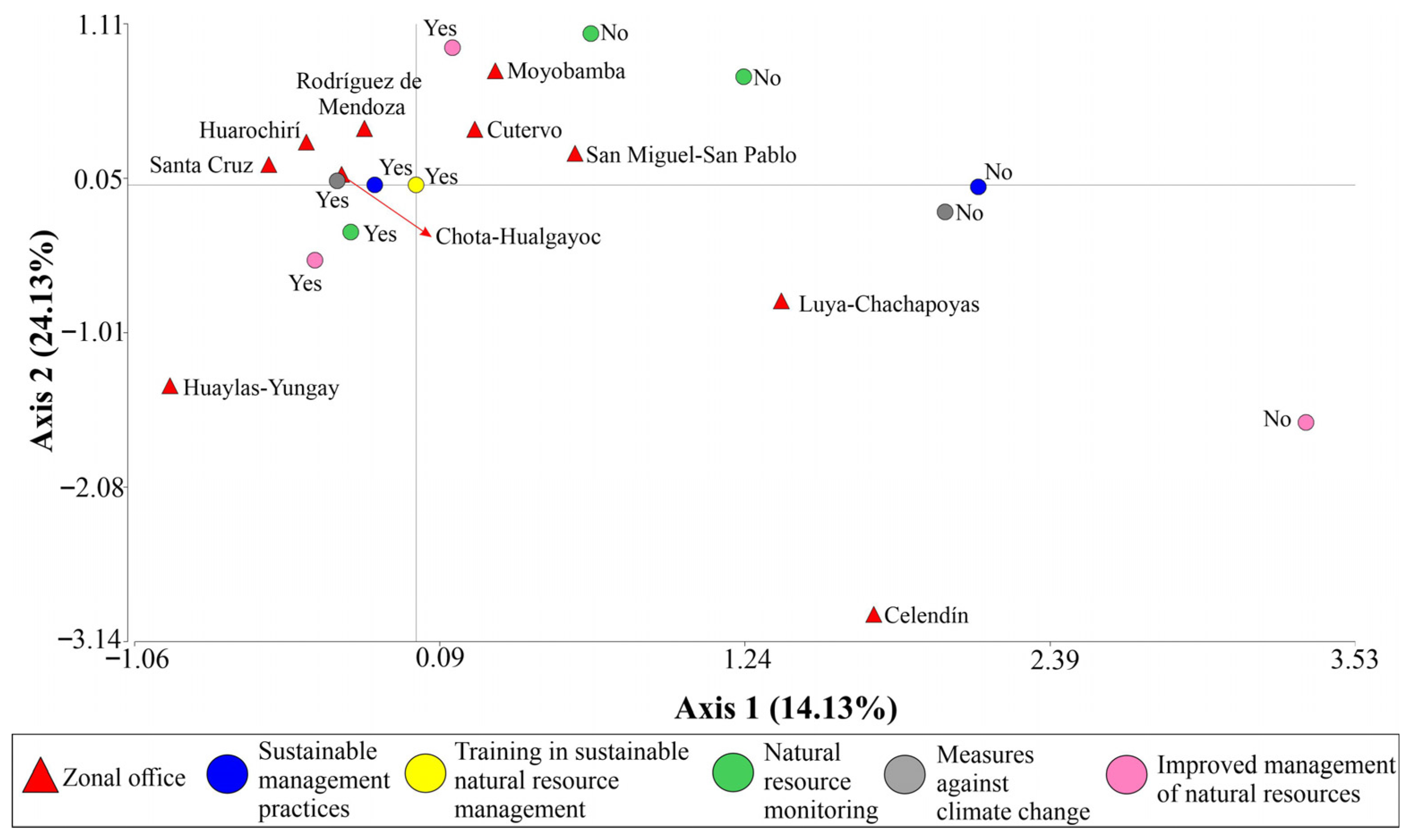
The third dimension, related to environmental management and sustainability (38.26% of the variability), enables the identification of territories that have adopted sustainable management practices and climate change adaptation measures. Santa Cruz, Chota–Hualgayoc, Huarochirí, and Rodríguez de Mendoza are associated with the most positive responses regarding environmental implementation, while Huaylas–Yungay stands out for its active resource monitoring and strong perception of environmental improvement. In contrast, Luya–Chachapoyas is positioned alongside territories that have not incorporated actions to address climate risks, and Moyobamba occupies an intermediate position, showing partial improvements but with less clearly defined environmental management practices (Figure 11).
This dimension reflects the relevance of climate adaptation and resource management within the observed patterns of rural enterprise performance.
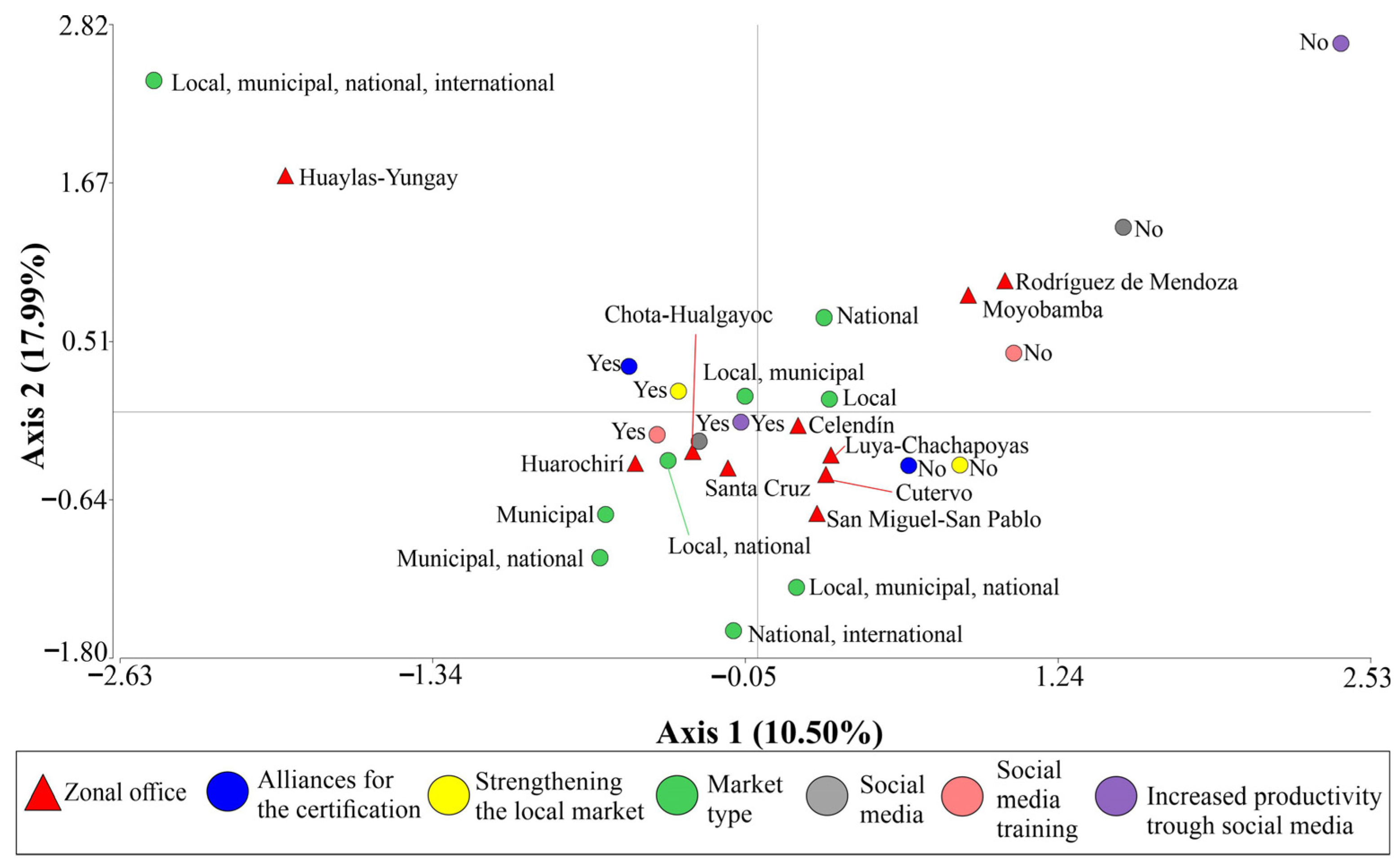
The fourth dimension, related to innovation, market, and communication (28.49% of the variability), reveals a differentiation between those who access broader markets and use digital promotional tools and those with more limited reach and lower technological integration. Santa Cruz, Huarochirí, and Chota–Hualgayoc are associated with more diversified and innovation-oriented strategies, including the use of social media, promotional materials, and participation across multiple market levels. In contrast, Rodríguez de Mendoza, Celendín, Moyobamba, and Luya–Chachapoyas show lags in both the adoption of digital technologies and market diversification, maintaining a more traditional and local approach (Figure 12).

5. Discussion

The high proportion of participants reporting improvements in income, asset acquisition, and production efficiency is consistent with the patterns observed in the results. It suggests that the intervention is associated with strengthened productive capacities among rural youth enterprises. These findings are consistent with previous research indicating that integrated rural development programs combining financial support, technical assistance, and capacity building can significantly enhance enterprise performance and income generation in smallholder systems [44,45]. In Latin America, Africa, and Asia, similar initiatives have shown that combining productive investments with training can generate synergies in income and productivity, particularly among youth-led enterprises operating under resource constraints [46,47,48].
Importantly, these self-reported improvements are supported by program administrative records, which show consistent increases in production and income indicators across the analyzed enterprises. This convergence between perceived outcomes and program-level data strengthens the credibility of the observed trends, although variability in productivity outcomes suggests that gains are not uniform across all participants. Such heterogeneity has been widely documented in rural entrepreneurship program, where differences in initial asset endowments, market access, and local conditions shape the magnitude of program effects [49,50,51].
Taken together, these findings contribute to addressing the research questions by providing evidence on (i) the outcomes associated with participation in the program, (ii) the factors linked to economic performance, adaptive capacity, and sustainability, and (iii) the role of territorial differences in shaping these patterns.
In line with these findings, from a sustainability perspective, the reliance on multiple natural resources reported by most participants reflects the multifunctional nature of smallholder agricultural systems. Diversified resource use has been associated with greater ecological resilience and reduced vulnerability to climate-related shocks, as it allows producers to distribute risks across multiple productive activities, especially in countries such as Colombia and Peru, where smallholder systems operate under high environmental variability [52]. This pattern is also reported in agroecological and climate-resilient farming systems, where diversification and resource integration are key strategies for maintaining productivity under conditions of environmental uncertainty [17,18,53,54].
However, these positive outcomes should be interpreted with caution. The high proportion of reported improvements may reflect, in part, the characteristics of the sample, which includes active program participants with relatively higher levels of education and engagement. This suggests a potential selection bias, where more capable or motivated individuals are both more likely to benefit from the intervention and to participate in the study. Therefore, the results should be understood as indicative of patterns among participating youth rather than as representative of the broader rural entrepreneurial population.
The findings related to capacity building and sustainability point to a recurring pattern. Most participants reported adopting improved practices and strengthening both their technical and managerial skills; however, this progress does not always translate into more formalized management processes. For example, although a large proportion indicated applying sustainable resource management practices, fewer participants reported using structured planning instruments such as formal management plans. This disconnect between practice and formalization has also been noted in other rural development contexts, where farmers often rely on experiential knowledge and gradual adaptation rather than formal planning tools [55,56].
The widespread use of climate adaptation measures, along with monitoring of natural resources, suggests that adaptive capacities were strengthened among participants within the context of the program. This is particularly relevant in rural regions of Latin America, where agricultural systems are increasingly exposed to multiple and overlapping climate-related stressors. Previous studies have shown that the combination of local knowledge and technical support plays a central role in building resilience, especially under conditions of climatic variability and limited resources [57,58,59]. In this context, the coexistence of droughts, heavy rainfall, pests, and other risks reported by participants reflects not only environmental pressures but also the need for more integrated adaptation strategies, rather than isolated responses.
At the same time, the strong presence of training and technical assistance across multiple areas—from production to business management and organizational strengthening—underscores the importance of integrated capacity-building approaches. Evidence from similar programs in the region suggests that combining technical training with continuous support tends to yield more sustained improvements in productivity and income than isolated interventions [60,61]. However, the limited expansion of product portfolios observed among participants indicates that knowledge alone may not be sufficient to drive diversification. Structural factors such as market access, scale, and resource availability often determine whether newly acquired capacities can be translated into concrete business outcomes.
Market-related findings further reflect this tension. Although most enterprises reported improvements in management capacity and a broad adoption of digital tools such as social media, their commercial reach remains largely concentrated in local markets. This situation aligns with broader regional patterns, in which rural enterprises typically operate within territorially embedded markets, benefiting from proximity but encountering difficulties when attempting to scale or reach higher-value segments [62,63]. Moreover, persistent barriers—including limited internet connectivity, insufficient digital infrastructure, and gaps in communication skills—continue to restrict the effective use of digital technologies in rural areas [64,65,66].
The emergence of learning dynamics, particularly the reported multiplier effect, indicates that knowledge transfer extends beyond direct beneficiaries and contributes to the spread of practices within local networks. This form of informal learning is widely recognized as a key component of rural innovation systems, where peer-to-peer exchange complements formal extension services and supports the adaptation of technologies to local conditions [67,68,69]. Similarly, the high levels of information systematization and organizational strengthening observed among participants suggest gradual improvements in management practices, which are essential for sustaining productive activities over time.
Overall, these findings suggest that capacity building in rural youth entrepreneurship operates through interconnected dimensions—technical, organizational, environmental, and commercial. At the same time, the persistence of structural constraints indicates that the effectiveness of these processes depends not only on individual capacities but also on the broader territorial context in which enterprises are embedded.
The regression analysis provides further insight into the factors associated with the economic and adaptive performance of rural youth enterprises, highlighting the roles of both material conditions and capacity-related variables. In particular, access to productive assets emerges as a key factor associated with income growth. This finding aligns with previous research showing that initial asset endowment plays a decisive role in shaping the performance of smallholder enterprises, especially in contexts where access to capital is limited [70,71,72]. Rather than operating independently, these assets seem to provide a foundation that supports the effective use of skills, labor, and technical knowledge.
In a similar vein, the relationship between training in production technologies and increased sales underscores the importance of targeted capacity-building interventions. Studies conducted in rural Latin America indicate that adopting improved practices and technologies is closely associated with gains in productivity and market performance. However, the extent of these effects often depends on local conditions and the continuity of technical support [73,74,75]. In this study, the absence of such training is associated with a lower probability of sales growth, suggesting that technical knowledge remains a key constraint to scaling productive activities.
The link between climate adaptation capacities and economic resilience further underscores their interconnectedness. Participants who reported not developing adaptation skills were less likely to strengthen their economic resilience, reinforcing the idea that economic stability in rural systems is closely tied to the ability to manage environmental risks. This perspective is consistent with the broader literature, which emphasizes that resilience in smallholder agriculture depends on integrating climatic, economic, and institutional factors rather than on isolated interventions [76,77].
In relation to environmental management, the strong association observed between training in sustainable practices and improvements in resource management suggests that knowledge transfer plays a key role in translating environmental awareness into concrete actions. At the same time, the presence of non-significant variables in the models indicates that these processes are not driven exclusively by training or technical assistance. Instead, they seem to be shaped by a combination of factors, including local conditions, organizational capacity, and access to resources, which may not be fully captured in the model.
The findings on digital commercialization also highlight the importance of specific competencies. The use of digital platforms is closely associated with training in social media and access to market information, pointing to the relevance of communication skills for effective market participation. This is consistent with recent studies showing that digital inclusion in rural areas depends not only on infrastructure but also on the capacity to use digital tools effectively for commercial purposes [78,79,80]. At the same time, the absence of significant effects for variables such as participation in local markets or certification alliances suggests that structural access alone may not be sufficient to generate commercial impact without complementary skills and strategies.
Even so, these results need to be interpreted with caution. The models rely on a relatively small sample and non-probabilistic data, which may affect the stability of the estimates and the extent to which the findings can be generalized. In addition, the ex post nature of the data, together with reliance on self-reported indicators, limits the ability to establish causal relationships. For this reason, the associations identified are better understood as indicative patterns within the study sample rather than as definitive determinants of performance outcomes.
The results of the Multiple Correspondence Analysis (MCA) show clear territorial differentiation in the performance and development of rural youth enterprises, suggesting that program outcomes are shaped by local conditions rather than distributed uniformly. Similar patterns have been reported in previous studies, indicating that rural development interventions often produce heterogeneous effects depending on factors such as access to resources, institutional support, and market integration [81,82,83].
Within the economic–productive dimension, the clustering of certain territories around improved outcomes in income, assets, and sales points to the importance of local enabling conditions in shaping enterprise performance. These may include improved market access, stronger organizational structures, or more favorable agroecological conditions. In contrast, the presence of territories associated with lower performance suggests that not all beneficiaries can take advantage of the opportunities provided to the same extent, indicating the relevance of context-sensitive approaches in rural development.
The institutional dimension also highlights the importance of organizational capacity and governance structures. Territories with higher levels of training, formalization, and business-plan implementation tend to exhibit stronger enterprise consolidation. This is consistent with the literature, which emphasizes that institutional strengthening—through training, technical assistance, and formal agreements—is essential for sustaining entrepreneurial activities and ensuring long-term viability [84,85,86,87]. In contrast, territories with weaker institutional profiles tend to face greater difficulties in translating program support into stable organizational outcomes.
Regarding the environmental dimension, the differences observed between territories that have adopted climate adaptation measures and those that have not reflect varying levels of engagement with sustainability practices. These variations suggest that the effectiveness of environmental interventions depends not only on the availability of training but also on local capacities to implement and sustain such practices over time. Previous research has shown that climate adaptation in rural systems is more effective when it is embedded in local knowledge systems and supported by continuous institutional accompaniment [88,89,90].
Finally, the dimension related to innovation, communication, and market access points to an uneven distribution of digital and commercial capacities across territories. While some regions show a more dynamic integration into broader markets—supported by the use of digital tools and promotional strategies—others remain largely confined to local markets with limited technological adoption. This reflects persistent structural gaps in digital inclusion and market access, which have been widely documented in rural areas across many countries, including Brazil, Mexico, Peru, Chile, and Ecuador [91,92,93,94,95,96]. These disparities indicate that strengthening digital and communication capacities may improve the competitiveness and resilience of rural youth enterprises.
Overall, the MCA results reinforce the idea that rural entrepreneurship development is inherently territorial. The interactions among economic, institutional, environmental, and technological factors vary across regions, giving rise to distinct development pathways. This underscores the importance of differentiated policy approaches that account for local conditions, rather than relying on uniform intervention strategies that may overlook territorial inequalities.
The findings of this study also point to several implications for the design and implementation of rural youth entrepreneurship programs. One key aspect is the importance of integrated support strategies that combine access to productive assets with continuous technical training, as these elements together address some of the main constraints faced by rural youth.
Another relevant issue is the limited expansion of product portfolios and restricted access to broader markets, suggesting structural constraints that limit the scaling of rural youth enterprises. In addition, the territorial differences identified suggest that uniform policy approaches may not be sufficient. Instead, context-specific strategies that account for local conditions are essential to improving the effectiveness of interventions. At the same time, the presence of knowledge transfer and multiplier effects highlights the role of rural youth as agents of innovation, indicating that strengthening peer learning and local networks may further enhance the impact of development programs.
This study also presents several limitations that should be considered when interpreting the results. To begin with, the use of non-probabilistic purposive sampling limits the representativeness of the findings, as the sample consists of active program participants and may introduce selection bias, particularly given the relatively high educational level observed.
Another aspect concerns the ex post design, along with the absence of baseline data or a control group, which makes it difficult to establish causal relationships. For this reason, the results should be interpreted as indicative of associations and reported changes rather than as direct program effects.
In addition, reliance on self-reported data may introduce response bias and may overestimate positive outcomes. Although administrative records were used to complement these findings, differences between perceived and objective measures cannot be ruled out entirely.
Finally, the statistical analyses are based on a relatively limited sample size, which may affect the robustness of the estimates. Likewise, some contextual factors—such as local market conditions or territorial differences—may not be fully captured in the models. Despite these limitations, the study provides valuable empirical insights into rural youth entrepreneurship and contributes to a better understanding of the processes of sustainability and resilience in agricultural systems.

6. Conclusions

This study presents evidence on the factors related to economic performance, adaptability, and sustainability indicators among local rural businesses led by young beneficiaries of the “Jóvenes Avanzar Rural” program. The findings indicate that access to productive assets and technical training are key factors associated with increases in income, sales, and resilience. In addition, the statistical analysis shows that asset acquisition and training in production technologies are closely linked to economic performance. In contrast, capacities for climate change adaptation and training in sustainable management are associated with greater resilience and improved resource management. Taken together, these results provide an integrated perspective on program outcomes, associated factors, and territorial dynamics shaping rural youth enterprise development.
From a theoretical perspective, these findings reinforce the understanding of rural youth entrepreneurship as a multidimensional process shaped by the interaction of economic, environmental, institutional, and territorial factors. From a practical standpoint, the results suggest that interventions may benefit from prioritizing integrated support strategies that combine access to assets, ongoing training, and the strengthening of market-oriented capacities, including digital skills and access to market information.
These conclusions should be interpreted with caution due to the use of non-probability sampling, the ex post design, and reliance on self-reported data, which limit the generalizability of the results and preclude causal inference. Future studies should consider longitudinal and comparative approaches to assess changes over time better and strengthen the robustness of the findings.

Author Contributions

Conceptualization: M.O.-C., N.H., E.V.N. and R.E.G.-G.; data curation: M.O.-C., A.C., L.J.-C. and D.D.-J.; investigation: M.O.-C., L.J.-C., F.Z.C. and M.d.C.C.F.; formal analysis: N.H. and A.C.N.H.; methodology: A.C., D.D.-J. and M.d.C.C.F.; writing—original draft: M.O.-C., N.H., C.N.V., L.J.-C., D.D.-J., M.d.C.C.F. and E.V.N.; writing—review and editing: A.C., A.C.N.H., F.Z.C. and R.E.G.-G.; validation: C.N.V.; supervision: C.N.V. and E.V.N.; resources: R.E.G.-G. All authors have read and agreed to the published version of the manuscript.

Funding

This research was funded by the Avanzar Rural Project of the Ministry of Agrarian Development and Irrigation (MIDAGRI) of Peru. The Vice-Rectorate provided additional support for the research of the Toribio Rodríguez de Mendoza National University of Amazonas.

Institutional Review Board Statement

Ethical review and approval were waived for this study by the Institutional Research Ethics Committee (CIEI) of the Universidad Nacional Toribio Rodríguez de Mendoza de Amazonas, as it involves voluntary, anonymous surveys with adult participants; does not include sensitive personal data; and represents minimal risk social research. Participants were informed of the study’s objectives, the voluntary nature of their participation, and the confidentiality of their information prior to data collection.

Informed Consent Statement

Informed consent was obtained from all participants involved in the study. Participants were informed about the objectives of the research, the voluntary nature of their participation, and the use of the data for academic purposes. All data were collected anonymously.

Data Availability Statement

The original contributions presented in this study are included in the article. Further inquiries can be directed to the corresponding author.

Acknowledgments

The authors acknowledge the support of the organizations and young rural entrepreneurs who participated in the Avanzar Rural Project and contributed valuable information for this study. During the preparation of this manuscript, the authors used Grammarly (Grammarly Inc., San Francisco, CA, USA, version 2025) to assist with English grammar and language editing. The authors reviewed and edited the text and take full responsibility for the final content of this publication.

Conflicts of Interest

The authors Antonieta Cesinia Noli Hinostrosa, Freddy Zuta Chávez, Mirtha del Carmen Castro Flores, and Elvira Vargas Núñez were formerly affiliated with Proyecto Avanzar Rural, Agrorural, Ministerio de Desarrollo Agrario y Riego (MIDAGRI). The remaining authors declare that the research was conducted in the absence of any commercial or financial relationships that could be construed as a potential conflict of interest.

References

  1. De La Vega-Leinert, A.C.; Kieslinger, J.; Jiménez-Moreno, M.; Steinhäuser, C. Young people’s visions for life in the countryside in Latin America. Geogr. Rev. 2022, 112, 371–395. [Google Scholar] [CrossRef]
  2. Rana, J.C.; Bisht, I.S. Reviving smallholder hill farming by involving rural youth in food system transformation and promoting community-based agri-ecotourism: A case of Uttarakhand state in north-western India. Sustainability 2023, 15, 8816. [Google Scholar] [CrossRef]
  3. Rodríguez-Díaz, P.; Almuna, R.; Marchant, C.; Heinz, S.; Lebuy, R.; Celis-Diez, J.L.; Díaz-Siefer, P. The future of rurality: Place attachment among young inhabitants of two rural communities of Mediterranean central Chile. Sustainability 2022, 14, 546. [Google Scholar] [CrossRef]
  4. Luna Manzanero, J.R. Youth in Latin America and the Caribbean in perspective: Overview of the situation, challenges, and promising interventions. Cienc. Saude Colet. 2021, 26, 2565–2573. [Google Scholar] [CrossRef]
  5. Díaz Baca, M.F.; Moreno Lerma, L.; Burkart, S.; Triana Ángel, N. Why do rural youth migrate? Evidence from Colombia and Guatemala. Front. Sociol. 2024, 9, 1439256. [Google Scholar] [CrossRef]
  6. Gaudin, Y.; Padilla, R. New Narratives for Rural Transformation in Latin America and the Caribbean: Towards a Renewed Measurement and Classification of Rural Areas; Economic Commission for Latin America and the Caribbean (ECLAC): Santiago, Chile, 2023. [Google Scholar]
  7. Mahn, D.; Lecuna, A.; Chavez, G.; Barros, S. Drivers of growth expectations in Latin American rural contexts. J. Entrep. Emerg. Econ. 2023, 15, 1247–1276. [Google Scholar] [CrossRef]
  8. Dzingirai, M. The role of entrepreneurship in reducing poverty in agricultural communities. J. Enterprising Communities People Places Glob. Econ. 2021, 15, 665–683. [Google Scholar] [CrossRef]
  9. Fiedler, Y. Empowering Young Agri-Entrepreneurs to Invest in Agriculture and Food Systems: Policy Recommendations Based on Lessons Learned from Eleven African Countries; Food and Agriculture Organization of the United Nations (FAO): Rome, Italy, 2020. [Google Scholar] [CrossRef]
  10. Cordova, M.; Huamán, F.; Liñan, T.; Powosino, R. Regenerative futures for Peru. In Regenerative and Sustainable Futures for Latin America and the Caribbean; Emerald Publishing Limited: Bingley, UK, 2022; pp. 235–254. [Google Scholar] [CrossRef]
  11. Eguren, F.; Pintado, M. La Agricultura Familiar en el Perú: Diagnóstico y Lineamientos para una Estrategia; Food and Agriculture Organization of the United Nations (FAO): Rome, Italy, 2014. [Google Scholar]
  12. Giller, K.E.; Delaune, T.; Silva, J.V.; Descheemaeker, K.; van de Ven, G.; Schut, A.G.T.; van Wijk, M.; Hammond, J.; Hochman, Z.; Taulya, G.; et al. The future of farming: Who will produce our food? Food Secur. 2021, 13, 1073–1099. [Google Scholar] [CrossRef]
  13. Borrero, H. Land inequality, farm size, and productivity: Insights from Peruvian agriculture. Agric. Econ. 2025, 56, 839–849. [Google Scholar] [CrossRef]
  14. Webb, R.; Bonfiglio, G.; Santillana, M.; Torres, N. Políticas de desarrollo rural. Econ. Soc. 2011, 77, 40–43. [Google Scholar]
  15. Ministerio de Agricultura y Riego (MINAGRI). Resolución Ministerial N.° 0189-2020-MINAGRI: Conforman el Grupo de Trabajo Multisectorial denominado Comité de Coordinación del Proyecto (CCP) del Proyecto Avanzar Rural. El Peruano, 12 August 2020.
  16. IDB Lab; Youth Business International. The Youth Entrepreneurship Program in Latin America and the Caribbean: Impact Report; Inter-American Development Bank: Washington, DC, USA, 2020. [Google Scholar] [CrossRef]
  17. Taboada, M.A.; Costantini, A.O.; Busto, M.; Bonatti, M.; Sieber, S. Climate change adaptation and the agricultural sector in South American countries: Risk, vulnerabilities and opportunities. Rev. Bras. Cienc. Solo 2021, 45, e0210072. [Google Scholar] [CrossRef]
  18. Cavazos, T.; Bettolli, M.L.; Campbell, D.; Sánchez Rodríguez, R.A.; Mycoo, M.; Arias, P.A.; Rivera, J.; Reboita, M.S.; Gulizia, C.; Hidalgo, H.G.; et al. Challenges for climate change adaptation in Latin America and the Caribbean region. Front. Clim. 2024, 6, 1392033. [Google Scholar] [CrossRef]
  19. Manju Prem, S.; Jayalekshmi, G.; Mohanraj, M.; Sneha, M.A.; Mathew, R. Enhancing organizational capacity: A holistic examination of evolution, methods, and challenges. J. Exp. Agric. Int. 2024, 46, 856–864. [Google Scholar] [CrossRef]
  20. Suyadi, A.; Handayani, E.; Tubastuvi, N.; Trinowo, M.E. Capacity building model for rural lower catagories: SWOT analysis. Int. J. Res. Bus. Soc. Sci. 2022, 11, 609–617. [Google Scholar] [CrossRef]
  21. Charina, A.; Kurnia, G.; Mulyana, A. The sustainability of small industries thriving across generation in rural areas. Sustainability 2023, 15, 12339. [Google Scholar] [CrossRef]
  22. Yletyinen, J.; Kuhmonen, I.; Stahlmann-Brown, P. Resilient and sustainable natural resource production: How are farmers and foresters coping? Ecol. Soc. 2024, 29, 6. [Google Scholar] [CrossRef]
  23. Malekinezhad, F.; Micha, E.; Maye, D. Examining the connection between resourcefulness and resilience: Analysis of UK rural SME firm-level enterprise characteristics. J. Rural Stud. 2024, 112, 103450. [Google Scholar] [CrossRef]
  24. Adekola, J.; Clelland, D. Two sides of the same coin: Business resilience and community resilience. J. Contingencies Crisis Manag. 2020, 28, 50–60. [Google Scholar] [CrossRef]
  25. Syamsiah, S.; Firmansyah, A.; Azhari, R. Sustainability strategies of young agrosociopreneurs in supporting national food security. BIO Web Conf. 2025, 186, 02013. [Google Scholar] [CrossRef]
  26. Dushkova, D.; Ivlieva, O. Empowering communities to act for a change: A review of the community empowerment programs towards sustainability and resilience. Sustainability 2024, 16, 8700. [Google Scholar] [CrossRef]
  27. Do, H.; Budhwar, P.; Shipton, H.; Nguyen, H.; Nguyen, B. Building organizational resilience, innovation through resource-based management initiatives, organizational learning and environmental dynamism. J. Bus. Res. 2022, 141, 808–821. [Google Scholar] [CrossRef]
  28. Yami, M.; Feleke, S.; Abdoulaye, T.; Alene, A.D.; Bamba, Z.; Manyong, V. African rural youth engagement in agribusiness: Achievements, limitations, and lessons. Sustainability 2019, 11, 185. [Google Scholar] [CrossRef]
  29. Altieri, M.A.; Nicholls, C.I. Agroecology: A brief account of its origins and currents of thought in Latin America. Agroecol. Sustain. Food Syst. 2017, 41, 231–237. [Google Scholar] [CrossRef]
  30. Salcedo, S.; Guzmán, L. (Eds.) Agricultura Familiar en América Latina y el Caribe: Recomendaciones de Política; Food and Agriculture Organization of the United Nations (FAO): Santiago, Chile, 2014. [Google Scholar]
  31. Intergovernmental Panel on Climate Change (IPCC). Summary for policymakers. In Climate Change 2022: Impacts, Adaptation and Vulnerability; Pörtner, H.-O., Ed.; Cambridge University Press: Cambridge, UK, 2022; pp. 3–33. [Google Scholar]
  32. Polit, D.F.; Beck, C.T. The content validity index: Are you sure you know what’s being reported? Critique and recommendations. Res. Nurs. Health 2006, 29, 489–497. [Google Scholar] [CrossRef] [PubMed]
  33. Connelly, L.M. Pilot studies. Medsurg Nurs. 2008, 17, 411–412. [Google Scholar] [PubMed]
  34. Tavakol, M.; Dennick, R. Making sense of Cronbach’s alpha. Int. J. Med. Educ. 2011, 2, 53–55. [Google Scholar] [CrossRef]
  35. Hair, J.F.; Babin, B.J.; Anderson, R.E.; Black, W.C. Multivariate Data Analysis, 8th ed.; Cengage: Boston, MA, USA, 2019. [Google Scholar]
  36. Rubin, D.B. Multiple Imputation for Nonresponse in Surveys; John Wiley & Sons: New York, NY, USA, 1987. [Google Scholar]
  37. Little, R.J.A.; Rubin, D.B. Statistical Analysis with Missing Data, 3rd ed.; Wiley: Hoboken, NJ, USA, 2019. [Google Scholar]
  38. Peduzzi, P.; Concato, J.; Kemper, E.; Holford, T.R.; Feinstein, A.R. A simulation study of the number of events per variable in logistic regression analysis. J. Clin. Epidemiol. 1996, 49, 1373–1379. [Google Scholar] [CrossRef]
  39. Hosmer, D.W.; Lemeshow, S.; Sturdivant, R.X. Applied Logistic Regression, 3rd ed.; John Wiley & Sons: New York, NY, USA, 2013. [Google Scholar]
  40. Heinze, G.; Schemper, M. A solution to the problem of separation in logistic regression. Stat. Med. 2002, 21, 2409–2419. [Google Scholar] [CrossRef]
  41. Pregibon, D. Logistic regression diagnostics. Ann. Stat. 1981, 9, 705–724. [Google Scholar] [CrossRef]
  42. Le Roux, B.; Rouanet, H. Multiple Correspondence Analysis; SAGE Publications: Thousand Oaks, CA, USA, 2010. [Google Scholar] [CrossRef]
  43. Di Rienzo, J.A.; Casanoves, F.; Balzarini, M.G.; Gonzalez, L.; Tablada, M.; Robledo, C.W. InfoStat (Version 2020); InfoStat Transfer Center: Córdoba, Argentina; FCA: Córdoba, Argentina; National University of Córdoba: Córdoba, Argentina, 2020. [Google Scholar]
  44. Yu, Y.; Appiah, D.; Zulu, B.; Adu-Poku, K.A. Integrating rural development, education, and management: Challenges and strategies. Sustainability 2024, 16, 6474. [Google Scholar] [CrossRef]
  45. Alawode, A. Evaluating agricultural subsidy reforms and their effects on smallholder farmer income and efficiency. Int. J. Adv. Res. Publ. Rev. 2025, 2, 180–201. [Google Scholar] [CrossRef]
  46. Ibarrarán, P.; Kluve, J.; Ripani, L.; Rosas, D. Experimental evidence on the long-term effects of a youth training program. ILR Rev. 2018, 72, 185–222. [Google Scholar] [CrossRef]
  47. Rosas, N.; Acevedo, M.C.; Zaldivar, S. Starting points matter: Cash plus training effects on youth entrepreneurship, skills, and resilience during an epidemic. World Dev. 2022, 149, 105698. [Google Scholar] [CrossRef]
  48. Giné, X.; Mansuri, G. Money or management? A field experiment on constraints to entrepreneurship in rural Pakistan. Econ. Dev. Cult. Change 2021, 70, 41–86. [Google Scholar] [CrossRef] [PubMed]
  49. Carter, M.; Tjernström, E.; Toledo, P. Heterogeneous impact dynamics of a rural business development program in Nicaragua. PSN Rural Agric. Dev. 2016, 138, 77–98. [Google Scholar] [CrossRef]
  50. Fanjul, A.P.; Herrera, L.; Munoz-Doyague, M.F. Fostering rural entrepreneurship: An ex-post analysis for Spanish municipalities. Technol. Forecast. Soc. Change 2023, 197, 122915. [Google Scholar] [CrossRef]
  51. Del Olmo-García, F.; Domínguez-Fabián, I.; Crecente-Romero, F.J.; Del Val-Núñez, M.T. Determinant factors for the development of rural entrepreneurship. Technol. Forecast. Soc. Change 2023, 191, 122487. [Google Scholar] [CrossRef]
  52. Beltrán-Tolosa, L.M.; Cruz-Garcia, G.S.; Ocampo, J.; Pradhan, P.; Quintero, M. Rural livelihood diversification is associated with lower vulnerability to climate change in the Andean-Amazon foothills. PLoS Clim. 2022, 1, e0000051. [Google Scholar] [CrossRef]
  53. Mihrete, T.B.; Mihretu, F.B. Crop diversification for ensuring sustainable agriculture, risk management and food security. Glob. Chall. 2025, 9, 2400267. [Google Scholar] [CrossRef]
  54. Mohammed, K.; Batung, E.; Kansanga, M.; Nyantakyi-Frimpong, H.; Luginaah, I. Livelihood diversification strategies and resilience to climate change in semi-arid northern Ghana. Clim. Change 2021, 164, 53. [Google Scholar] [CrossRef]
  55. Sule, S.; Hidayat, K.; Purnomo, M.; Cahyono, E.D. Linking farmer knowledge and learning to agricultural sustainability: A study of apple farmers in Indonesia. J. Glob. Innov. Agric. Sci. 2025, 13, 1021–1029. [Google Scholar] [CrossRef]
  56. Fronda, J.G. Farmer perspectives on understanding rural household behaviour in agricultural decision-making. Asian J. Agric. Rural Dev. 2023, 13, 240–247. [Google Scholar] [CrossRef]
  57. Šūmane, S.; Kunda, I.; Knickel, K.; Strauss, A.; Tisenkopfs, T.; Rios, I.D.I.; Rivera, M.; Chebach, T.; Ashkenazy, A. Local and farmers’ knowledge matters! How integrating informal and formal knowledge enhances sustainable and resilient agriculture. J. Rural Stud. 2018, 59, 232–241. [Google Scholar] [CrossRef]
  58. Mapfumo, P.; Mtambanengwe, F.; Chikowo, R. Building on indigenous knowledge to strengthen the capacity of smallholder farming communities to adapt to climate change and variability in southern Africa. Clim. Dev. 2018, 8, 72–82. [Google Scholar] [CrossRef]
  59. Osei-Acheampong, B.; Mensah, S.O. Impact of the rural enterprise programme interventions on smallholder farmers’ climate adaptation strategies: Qualitative evidence from Ghana’s transitional agroecological zone. Community Dev. 2025, 56, 125–150. [Google Scholar] [CrossRef]
  60. Delgrossi, M.E.; Galli, L.C.; de Avila, M.L.; Perafán, M.V.; de Miranda, R.J. The impact of technical assistance and rural extension for poor family farmers: The case of the Dom Hélder Câmara II Program. Rev. Econ. Sociol. Rural 2024, 62, e271282. [Google Scholar] [CrossRef]
  61. Garcia, A.; Cecchi, F.; Eriksen, S.; Lensink, R. The plus in credit-plus-technical assistance: Evidence from a rural microcredit programme in Bolivia. J. Dev. Stud. 2022, 58, 275–291. [Google Scholar] [CrossRef]
  62. Baù, M.; Chirico, F.; Pittino, D.; Backman, M.; Klaesson, J. Roots to grow: Family firms and local embeddedness in rural and urban contexts. Entrep. Theory Pract. 2019, 43, 360–385. [Google Scholar] [CrossRef]
  63. Beckmann, M.; Garkisch, M.; Zeyen, A. Together we are strong? A systematic literature review on how SMEs use relation-based collaboration to operate in rural areas. J. Small Bus. Entrep. 2023, 35, 515–549. [Google Scholar] [CrossRef]
  64. Likuwatan Werang, N.; Werang, M.; Yolandasari, P.; Husnaeni, Y.; Rizki, M. Digitalization initiatives in rural areas: An empirical analysis from West Java Indonesia. Public Policy Manag. Inq. 2025, 9, 61–75. [Google Scholar] [CrossRef]
  65. Toria, D.; Lily, J.; Fzlinda, N.; Abdul, I. Transforming rural entrepreneurship through digital innovation: A review on opportunities, barriers and challenges. J. Manag. Sustain. 2024, 14, 114–127. [Google Scholar] [CrossRef]
  66. García Zaballos, A.; Jorge, S.; Dalio, M.; Makwakwa, O.; Albornoz Basto, N. Digital Inclusion Strategies: A Primer for Latin American Policymakers; Inter-American Development Bank: Washington, DC, USA, 2024. [Google Scholar] [CrossRef]
  67. Sutherland, L.A.; Marchand, F. On-farm demonstration: Enabling peer-to-peer learning. J. Agric. Educ. Ext. 2021, 27, 573–590. [Google Scholar] [CrossRef]
  68. Nakano, Y.; Tsusaka, T.W.; Aida, T.; Pede, V.O. Is farmer-to-farmer extension effective? The impact of training on technology adoption and rice farming productivity in Tanzania. World Dev. 2018, 105, 336–351. [Google Scholar] [CrossRef]
  69. Peña-Torres, J.A.; Reina-Rozo, J.D. Agroecology and communal innovation: LabCampesino, a pedagogical experience from the rural youth in Sumapaz Colombia. Curr. Res. Environ. Sustain. 2022, 4, 100162. [Google Scholar] [CrossRef]
  70. Anas, K.; Naping, H.; Salman, D.; Tenriawaru, A.N. Differences in assets, strategies, and livelihood outcomes among oil palm smallholder typologies in West Sulawesi, Indonesia. Sustainability 2025, 17, 6064. [Google Scholar] [CrossRef]
  71. Tabe Ojong, M.P., Jr.; Hauser, M.; Mausch, K. Does agricultural commercialisation increase asset and livestock accumulation on smallholder farms in Ethiopia? J. Dev. Stud. 2022, 58, 524–544. [Google Scholar] [CrossRef]
  72. Gyimah, P.; Lussier, R.N. Rural entrepreneurship success factors: An empirical investigation in an emerging market. J. Small Bus. Strategy 2021, 31, 5–19. [Google Scholar] [CrossRef]
  73. Martinez, J.M.; Labarta, R.A.; Gonzalez, C. Impacts of the joint adoption of improved varieties and chemical fertilizers on rice productivity in Bolivia: Implications for global food systems. Front. Sustain. Food Syst. 2023, 7, 1194930. [Google Scholar] [CrossRef]
  74. Taramuel-Taramuel, J.P.; Delgado-López, M.A.; Aza-Fuelantala, O.E.; Barrios, D. Technological and socioeconomic characteristics of smallholder dairy farms in Indigenous Pastos communities of Colombia. Trop. Anim. Health Prod. 2025, 57, 363. [Google Scholar] [CrossRef]
  75. Chen, X. The role of modern agricultural technologies in improving agricultural productivity and land use efficiency. Front. Plant Sci. 2025, 16, 1675657. [Google Scholar] [CrossRef]
  76. Touch, V.; Tan, D.K.; Cook, B.R.; Liu, D.L.; Cross, R.; Tran, T.A.; Utomo, A.; Yous, S.; Grunbuhel, C.; Cowie, A. Smallholder farmers’ challenges and opportunities: Implications for agricultural production, environment and food security. J. Environ. Manag. 2024, 370, 122536. [Google Scholar] [CrossRef]
  77. Acevedo, M.; Pixley, K.; Zinyengere, N.; Meng, S.; Tufan, H.; Cichy, K.; Bizikova, L.; Isaacs, K.; Ghezzi-Kopel, K.; Porciello, J. A scoping review of adoption of climate-resilient crops by small-scale producers in low- and middle-income countries. Nat. Plants 2020, 6, 1231–1241. [Google Scholar] [CrossRef] [PubMed]
  78. Ravi, S.; Rajasekaran, S.R.C. A perspective of digital marketing in rural areas: A literature review. Int. J. Prof. Bus. Rev. 2023, 8, e01388. [Google Scholar] [CrossRef]
  79. Chen, J.; Hou, H.; Liao, Z.; Wang, L. Digital environment, digital literacy, and farmers’ entrepreneurial behavior: A discussion on bridging the digital divide. Sustainability 2024, 16, 10220. [Google Scholar] [CrossRef]
  80. Tiwasing, P.; Clark, B.; Gkartzios, M. How can rural businesses thrive in the digital economy? A UK perspective. Heliyon 2022, 8, e10745. [Google Scholar] [CrossRef] [PubMed]
  81. Li, R.; Song, H.; Zhang, J.; Zhang, J. The effects of a multifaceted poverty alleviation program on rural income and household behavior in China. Am. Econ. J. Econ. Policy 2025, 17, 319–357. [Google Scholar] [CrossRef]
  82. Marion, P.; Lwamba, E.; Floridi, A.; Pande, S.; Bhattacharyya, M.; Young, S.; Villar, P.; Shisler, S. The effects of agricultural output market access interventions on agricultural, socioeconomic, food security, and nutrition outcomes in low- and middle-income countries: A systematic review. Campbell Syst. Rev. 2024, 20, e1411. [Google Scholar] [CrossRef]
  83. Liu, H.; Ding, M.; Kan, Y.; Dong, Q. A study on the relationship between rural e-commerce development and farmers’ income growth. Sustainability 2025, 17, 3879. [Google Scholar] [CrossRef]
  84. Kintu, K. Mastering business planning and strategic development: Comprehensive approaches for achieving long-term success and competitive advantage. INOSR Arts Humanit. 2024, 10, 60–64. [Google Scholar] [CrossRef]
  85. Barron, M. Business training programs and microenterprise formalization in Peru. Cogent Econ. Financ. 2020, 8, 1791546. [Google Scholar] [CrossRef]
  86. Solekah, N.A.; Aisyah, E.N. Empowering young entrepreneurs: Financing application programs and bazaar expos to increase competitiveness in Malang, East Java. Community Empower. 2025, 10, 1282–1294. [Google Scholar] [CrossRef]
  87. Masha, A.; Shava, E.; Mambiravana, T.; Bwowe, P. Promoting youth empowerment through business mentorship in South Africa. Prizren Soc. Sci. J. 2022, 6, 48–57. [Google Scholar] [CrossRef]
  88. Zeren, G.; Tan, J.; Zhang, Q.; Qiuying, B. Rebuilding rural community cooperative institutions and their role in herder adaptation to climate change. Clim. Policy 2023, 23, 522–537. [Google Scholar] [CrossRef]
  89. Sakapaji, S. Integrating local and indigenous ecological knowledge (IEK) systems into climate adaptation policy for resilience building and sustainability in agriculture. Int. J. Sustain. Dev. Res. 2022, 8, 9–24. [Google Scholar] [CrossRef]
  90. Mekonnen, Z.; Kidemu, M.; Abebe, H.; Semere, M.; Gebreyesus, M.; Worku, A.; Tesfaye, M.; Chernet, A. Traditional knowledge and institutions for sustainable climate change adaptation in Ethiopia. Curr. Res. Environ. Sustain. 2021, 3, 100080. [Google Scholar] [CrossRef]
  91. Robinson, L.; Schulz, J.; Dodel, M.; Correa, T.; Villanueva-Mansilla, E.; Leal, S.; Magallanes-Blanco, C.; Rodriguez-Medina, L.; Dunn, H.; Levine, L.; et al. Digital inclusion across the Americas and Caribbean. Soc. Incl. 2020, 8, 244–259. [Google Scholar] [CrossRef]
  92. Boné-Andrade, M. Inclusión digital y acceso a tecnologías de la información en zonas rurales de Ecuador. Rev. Cient. Zambos 2023, 2, 1–16. [Google Scholar] [CrossRef]
  93. Salemink, K.; Strijker, D.; Bosworth, G. Rural development in the digital age: A systematic literature review on unequal ICT availability, adoption, and use in rural areas. J. Rural Stud. 2017, 54, 360–371. [Google Scholar] [CrossRef]
  94. García-Mora, F.; Mora-Rivera, J. Exploring the impacts of internet access on poverty: A regional analysis of rural Mexico. New Media Soc. 2021, 25, 26–49. [Google Scholar] [CrossRef]
  95. Nakayama, L.; Binotti, W.; Woite, N.; Fernandes, C.; Alfonso, P.; Celi, L.; Regatieri, C. The digital divide in Brazil and barriers to telehealth and equal digital health care: Analysis of internet access using publicly available data. J. Med. Internet Res. 2023, 25, e42483. [Google Scholar] [CrossRef]
  96. Prieto-Egido, I.; Aragon Valladares, J.; Muñoz, O.; Cordova Bernuy, C.; Simo-Reigadas, J.; Auccapuri Quispetupa, D.; Bravo Fernández, A.; Martinez-Fernandez, A. Small rural operators techno-economic analysis to bring mobile services to isolated communities: The case of Peru Amazon rainforest. Telecommun. Policy 2020, 44, 102039. [Google Scholar] [CrossRef]
Figure 1. Geographic location of the study area.
Sustainability 18 04573 g001
Figure 2. Productive performance factors.
Sustainability 18 04573 g002
Figure 3. Natural resources available to young entrepreneurs.
Sustainability 18 04573 g003
Figure 4. Environmental management and climate risks. (A) Adoption of environmental management practices. (B) Distribution of perceived climate risks.
Sustainability 18 04573 g004
Figure 5. Entrepreneurial capacities, management, and technical support. (A) Adoption of entrepreneurial capacities. (B) Types of support received by respondents.
Sustainability 18 04573 g005
Figure 6. Technical assistance and strengthening of productive capacities. (A) Coverage of portfolio expansion and training in production technologies. (B) Distribution of training areas.
Sustainability 18 04573 g006
Figure 7. Commercial competitiveness and market access. (A) Adoption of competitive capabilities. (B) Constraints related to connectivity and training. (C) Market access distribution.
Sustainability 18 04573 g007
Figure 8. Learning and knowledge transfer. (A) Learning outcomes among respondents. (B) Distribution of acquired skills.
Sustainability 18 04573 g008
Figure 9. Multiple Correspondence Analysis based on economic–productive performance.
Sustainability 18 04573 g009
Figure 10. Multiple Correspondence Analysis based on institutional management.
Sustainability 18 04573 g010
Figure 11. Multiple Correspondence Analysis based on environmental sustainability.
Sustainability 18 04573 g011
Figure 12. Multiple Correspondence Analysis based on market strategies and innovation.
Sustainability 18 04573 g012
Table 1. Factors Associated with Increases in Income and Sales.
Increase in IncomeB (Coefficient)Standard Errorp-ValueExp(B)Lower Limit 95%Upper Limit 95%
Did not acquire assets (Yes)−1.540.770.050.210.050.97
Did not increase asset value (Yes)−1.190.660.070.310.081.12
Education: Primary (Higher education)−0.021.180.990.980.110
Education: Secondary (Higher education)0.720.730.332.040.498.49
Education: Technical higher education (Higher education)0.130.460.781.140.462.8
Gender: Male (Female)−0.110.40.770.890.411.94
Did not receive training in business management (Yes)−0.330.710.650.720.182.92
Increase in SalesB (Coefficient)Standard Errorp-ValueExp(B)Lower Limit 95%Upper Limit 95%
Did not adopt practices or technologies (Yes)−1.420.830.090.240.051.22
Did not receive training in production technologies (Yes)−1.780.720.010.170.040.69
Did not participate in the local market (Yes)−0.740.620.240.480.141.61
Note: The reference categories are indicated in parentheses for each variable; Exp(B) indicates the odds ratio. An Exp(B) < 1 implies a reduction in the likelihood of obtaining the positive outcome. Statistical significance is considered when p < 0.05.
Table 2. Factors Associated with Economic Adaptation and Perceived Improvement in Natural Resource Management.
Economic Adaptation CapacitiesB (Coefficient)Standard Errorp-ValueExp(B)Lower Limit 95%Upper Limit 95%
Did not develop climate adaptation capacities (Yes)−2.591.060.010.070.010.59
Did not improve associativity and business management (Yes)−0.571.550.710.570.0311.79
Did not record an increase in sales (Yes)−1.271.170.280.280.032.78
Improvement in Natural Resource ManagementB (Coefficient)Standard Errorp-ValueExp(B)Lower Limit 95%Upper Limit 95%
Did not develop climate adaptation capacities (Yes)−1.971.20.10.140.011.46
Did not receive training in sustainable management (Yes)2.861.180.0217.431.72176.73
Did not implement measures to reduce climate risks (Yes)0.760.670.252.130.587.86
Did not receive technical assistance (Yes)1.881.480.216.550.36119.74
Note: The reference categories are indicated in parentheses for each variable. An Exp(B) < 1 indicates a reduction in the probability of belonging to the analyzed category relative to the base category, whereas an Exp(B) > 1 indicates an increase in that probability. Associations with p < 0.05 are considered statistically significant.
Table 3. Factors Associated with the Use of Digital Platforms and Perceived Market Impact on Sales.
Use of Digital Platforms to Promote Products/ServicesB (Coefficient)Standard Errorp-ValueExp(B)Lower Limit 95%Upper Limit 95%
Did not participate in the creation/strengthening of a local market (Yes)0.020.60.971.020.323.33
Perception of market impact—Very positive (Low impact)0.491.080.651.640.213.64
Perception of market impact—Positive (Low impact)−0.190.930.840.830.135.09
Did not receive training in the use of social media (Yes)−3.020.700.050.010.19
Does not promote the participation of women in advertising (Yes)−2.231.370.10.110.011.57
Impact of Market TypeB (Coefficient)Standard Errorp-ValueExp(B)Lower Limit 95%Upper Limit 95%
Did not participate in the certification alliance (Yes)−1.180.790.140.310.061.45
Did not participate in the local market (Yes)−0.780.80.330.460.12.19
Does not have management documents (Yes)−1.1610.250.310.042.22
Does not have promotional materials (Yes)−0.811.150.480.440.054.24
Frequency of marketing training—Frequently (Never)3.131.570.0522.771.05492.12
Frequency of marketing training—Infrequently (Never)1.331.370.333.780.2655.36
Does not use digital platforms (Yes)−0.661.280.610.520.046.38
Did not receive training in social media (Yes)1.470.990.144.340.6329.94
Does not have market research (Yes)−2.910.8500.050.010.29
Note: The reference categories are indicated in parentheses for each variable. An Exp(B) < 1 indicates a reduction in the probability of belonging to the analyzed category, whereas an Exp(B) > 1 indicates an increase in that probability. Associations with p < 0.05 are considered statistically significant.
Disclaimer/Publisher’s Note: The statements, opinions and data contained in all publications are solely those of the individual author(s) and contributor(s) and not of MDPI and/or the editor(s). MDPI and/or the editor(s) disclaim responsibility for any injury to people or property resulting from any ideas, methods, instructions or products referred to in the content.