Article

Investigation of Motorist Speeds and Crashes in School Zones for Sustainable Safety Policy
Mid-America Transportation Center, Department of Civil and Environmental Engineering, University of Nebraska, Lincoln, NE 68588, USA
*
Author to whom correspondence should be addressed.
Sustainability 2026, 18(9), 4517; https://doi.org/10.3390/su18094517
Submission received: 26 February 2026 / Revised: 23 April 2026 / Accepted: 28 April 2026 / Published: 4 May 2026
(This article belongs to the Special Issue Safety and Sustainability in Modern Transportation Systems)

Abstract

School zones in the United States require compliance of drivers to decreased speed limits during school start and end times, typically indicated by flashing beacons and warning signs. This study examined school zone safety by evaluating the effects of speed limit differentials on driver speeds in active school zones, the influence of roadway characteristics on driver behavior, and crash costs associated with school zones. The main goal was to attain a sustainable school zone safety policy. The analysis used speed observations from 378,506 vehicles, school and roadway characteristics, and crash data (2014 to 2018) across 18 study sites. Results showed that 85th-percentile speeds often exceeded posted speed limits during both active and passive school zone periods, with greater non-compliance being associated with larger speed limit differentials. Driver speeds were influenced by school zone status, vehicle type, time of day, traffic signals, street parking, and crosswalks. On average, speeds were 6.2 mph higher during passive periods than during active periods. However, high crash rates were observed during active school zone periods. Crashes during active periods resulted in average crash costs that were 52.5% lower than those during passive periods. The findings provide insights into human factors and mobility behavior in school zones, allowing transportation agencies to make informed and sustainable decisions for school zone design and safety.

1. Introduction

Ensuring the safety of children near schools is critically important, and school speed zones are used to enhance safety in these areas. Based on the Manual on Uniform Traffic Control Devices [1], a school zone refers to a selected roadway segment located upstream of, adjacent to, and downstream from school grounds or buildings or around corridors where activities related to school take place. School zones require motorists to obey a slower speed limit when they are active. The active status is indicated by flashing lights, which indicate the specific portions of the day or the days of the week when the lower school zone speed limit is to be observed. Additionally, signs showing an appropriate message may be utilized to notify drivers of reduced speed limits in active school zones.
The compliance of motorists with active school zone speed limits varies as a function of speed differentials; for example, driver speed reduction when the speed limit decreases from 45 mph to 25 mph is likely to differ from driver speed reduction when the reduction is from 35 mph to 25 mph. Furthermore, variations in speed reduction may occur based on surrounding land use and area types, such as rural or urban. In this research, a comprehensive assessment of school zone safety in Nebraska was conducted by evaluating the safety effects of various factors in and around schools. This study presents valuable insights into school zone safety by analyzing comprehensive driver speed data and school zone-related crashes to identify factors influencing safety during both active and passive periods.

2. Literature Review

School zone establishment requires cautious evaluation as they impact children’s safety and the safety of others around schools. Factors related to school zone safety may include the school zone speed limit, traffic signals, traffic calming techniques, land use, etc. Various school zone safety studies primarily focused on drivers’ behaviors or measures related to school zones. Nevertheless, in some cases, conclusions from research are inconsistent and contradictory. A few studies suggest that reduction of the speed limit in school zones is effective, while some studies suggest the opposite. For example, a study using remote sensing technology concluded that the signs used around school zones did not impact driver behavior in the city of Atlanta [2]. On the other hand, Hidayati et al. (2012) found that the mean vehicle speed of motorists was relatively higher compared to the posted speed limit despite a school safety zone being provided [3]. A similar observation was made by Trinkaus (1996), who found that most vehicles were moving at 25 mph when the speed limit was 20 mph [4]. On the other hand, Ash and Saito (2007) reported that school zones were associated with the reduction of the speed of motorists and improved compliance with the speed limit, according to various evaluation criteria [5]. Another research work gathered empirical data from Texas using 24 school zones and performed statistical analyses of motorists’ speed behaviors [6]. The study found that vehicle speeds during active school zone periods were statistically lower than those recorded during passive periods (i.e., in inactive school zones).
The role of traffic, the road, the time of day, and the characteristics of the schools’ surroundings, which may impact the driver behaviors in school zones, also received attention. Kattan et al. (2011) researched average speed, 85th-percentile speed, and drivers’ compliance in playground and school zones located in Calgary [7]. Their findings indicated that, compared to four-lane roads, two-lane roadways, the presence of fencing, traffic control devices (e.g., signals and stop signs), devices showing speeds or children, and extended school zone lengths were associated with lower vehicle speeds and higher compliance rates. Other factors studied included the presence of fencing [8], approach speed [9], and types of school [10].
In addition to the different factors discussed, drivers’ speeds also may vary by the time of a given day or the day of the week. Several studies reported that speeding is more prevalent during early morning hours and on weekends [11,12,13]. However, other researchers reported different findings. For example, Lazic (2003) reported no statistically significant difference in speeds during weekends [14]. Furthermore, Day (2007) reported no statistical significance in the difference in speeds among morning and afternoon peak periods [10].
Most studies investigated a single factor related to drivers’ behavior at a time. However, two studies, one by Kattan et al. (2011), based in Calgary, Alberta [7], and another by Fitzpatrick et al. (2009), based in Texas [6], studied several factors together and provided predictive speed models. However, due to the geographic location of the former and the consideration of the buffer zone at schools by the latter, the impact of factors and the predictive model may not be directly applicable to other school zones.
Some researchers focused on the application of different types of methods for speed control in work zones. Prior research examined the usefulness of Speed Monitoring Displays (SMDs) in improving speed compliance within school zones. Lee et al. (2006) found that SMDs caused positive changes in driver behavior, resulting in reduced speeds over time [15]. In a separate before–after study, Schrader (1999) evaluated traffic control devices from five school zones and reported that fiber-optic signs were effective in reducing vehicle speeds, whereas other measures showed limited effectiveness [16]. Additionally, several studies have suggested that beacons or flashing lights help in reducing motorists’ speeds [9,17,18]. However, Simpson (2008) reported no meaningful difference in vehicle speeds between locations with and without flashers during school-time periods, indicating mixed evidence regarding their effectiveness [19]. Gregory et al. (2016) observed that, when a driver’s trip was interrupted by a traffic signal at an intersection, they re-entered the road at a higher speed than those who did not have to stop at a school zone [20]. A sign for checking the speed before the intersection counteracted this effect. Sing (2011) [21] installed four types of signage (i.e., static school zone, enhanced school zone, variable speed limit, and vehicle activates signs) at school zones located on multi-lane roads. Among them, vehicle-activated signs performed the best in reducing vehicles’ speeds in school zones [21].
Driving simulator studies are beneficial as they reduce the risks involved with evaluating driving activities and facilitate data collection and lower the cost of creating experimental scenarios [22]. Zhao et al. (2015) used driving simulator-based experiments to examine the usefulness of various traffic control devices and found that the characteristics of traffic and geometric conditions of roadways were closely related to the usefulness of signs or markings [23]. Valdes et al. (2019) studied the familiarity of motorists and the surrounding environment of school zones [24]. The researchers developed twenty-four simulation scenarios incorporating pedestrians, street parking, and traffic demand to analyze driver behavior. Before introducing the traffic control device, it was found that the motorists who were familiar complied with the school zone speed limit with a higher rate than unfamiliar drivers. However, with the aid of traffic control devices, unfamiliar drivers exhibited improved compliance in 25% of the scenarios, whereas it was 67% for familiar drivers. Despite being an important research approach, simulator results may come under scrutiny to determine whether they accurately reflect real-world scenarios [22,25,26].
In addition to speed measurement, compliance rate is an important indicator of driver behavior in school zones. The reviewed literature included a broad range of compliance rates. Trinkaus (1996) reported a compliance rate of only 7% [4]. On the other hand, Ash and Saito (2007) found 65% of drivers always complied with reduced speed limits in school zones [5]. Kattan et al. (2011) researched compliance rates under different site characteristics and the results ranged from 30% to 50% [7]. Among different site characteristics, the presence of speed monitoring devices increased the compliance rate by 72% [7]. Compliance rates may vary by day of week and time of day. Strawderman et al. (2015) [11] found that the compliance rate varied from 16.3% on Sunday to 23.6% on Monday. Also, the authors found that, if drivers see the same speed signs in school zones more often, the compliance rate may increase from 7.2% to 46.7% on four-lane roads [11]. Another study conducted by Simpson (2008) found that the compliance rate in school zones under flasher and no-flasher conditions was 25% and 20%, respectively, for the duration of active school zone periods [19].
In addition to drivers’ behaviors, crash analysis regarding school zones is an important research component. Warsh et al. (2009) utilized pedestrian collision data for five-year periods and concluded that the majority of collisions happened around the school zone and reduced with longer distances from the school [27]. The study found that approximately half of these collisions occurred during periods when children were most likely traveling to or from school (i.e., active school zone hours).
Another study researched crashes including pedestrians and vehicles surrounding schools and the influence of different features related to the school environment [28]. Multivariate models of crash probabilities and corresponding severity were used to identify several significant factors, including the presence of driveways, land use properties, transit systems, commercial access, and population. In another study, Bunnarong and Upala (2018) analyzed pedestrian–vehicle collision data from 12 schools in Bangkok [29]. Geographic Information System (GIS) tools and spatial analyses, including Moran’s I statistic and Kernel Density Estimation, were used to geocode crash locations and to identify patterns and develop pedestrian crash zone maps, respectively.
Regarding crash prediction, Park et al. (2019) evaluated the safety impacts of roadway characteristics in school zones using five modeling approaches [30]. The Poisson inverse Gaussian model demonstrated the highest predictive accuracy. Their findings further indicated that wider shoulders and lanes, flashing beacons, and reduced driveway density were associated with lower crash frequencies.
Medina et al. (2010) examined the infrastructure condition of school zones in Puerto Rico and found a lack of adequate maintenance of crosswalk markings, signage, and signals for pedestrians at intersections [31]. They also focused on pedestrian behavior and found that around 87% of the observed 813 students made the crossing at the correct approach while 75% of them were using the shortest path. They further emphasized the importance of conducting crash analyses to more effectively identify potential safety issues in school zones. In situations where crash data are unavailable, Reyad et al. (2017) demonstrated the effectiveness of automated safety diagnostics using computer vision-based conflict analysis at school locations [32].
School zone safety has increasingly been examined within a sustainability framework that integrates safety, mobility, the environment, and other considerations. From a social sustainability perspective, prior studies identified school zones as high-risk environments for vulnerable users, particularly children, where excessive speeds and drivers’ non-compliance contribute to elevated crash risks [18]. Empirical evidence showed that reducing speeds and implementing built-environment interventions (e.g., signage, markings, and traffic calming) may reduce dangerous driving behaviors and improve safety outcomes [18]. From a mobility and economic sustainability perspective, school zone treatments influence traffic operations, including speed variability and delay. While lower speed limits may introduce minor impacts on travel time, studies suggest that well-designed school zones can balance safety improvements with acceptable operational performance, particularly when supported by context-sensitive design and enforcement strategies [33]. On the other hand, the sustainable mobility dimension is reflected through its linkage with motor mobility and walkability around the school zone [34]. Furthermore, in the case of the environmental dimension of sustainability, research indicated that speed variability and stop-and-go conditions in school zones may increase vehicle emissions and fuel consumption [33]. Conversely, smoother traffic flow and compliance with moderate speed reductions can mitigate these impacts. In summary, school zones must be studied thoroughly to develop a sustainable school zone policy.
The aim of this school zone research is to enhance safety and, where necessary, adjust speed regulations. However, the establishment of school zone speed limits is often influenced by legal frameworks. In several Midwestern cities in the United States, traffic engineers are granted discretion in determining the need and implementation of school zones [35,36,37]. In contrast, some states have adopted statutory speed limits. For example, in Illinois, the school zone speed is fixed at a 20 mph limit regardless of the roadway’s original posted speed [38]. Similarly, House Bill No. 4424 in Michigan mandates that school zone speed limits be set at no less than 25 mph and not exceed a 20 mph reduction from the regular speed limit [39].
In general, school zone policies primarily emphasize speed management and regulatory control to improve safety. As discussed, in the United States, speed limits in school zones are typically set between 15 and 25 mph and are enforced during periods of high pedestrian activity [40]. Prior research indicated that reduced speed limits alone may not ensure adequate compliance, as driver adherence is often limited in the absence of enforcement and complementary measures [41]. The literature further suggested that effective school zone policies require an integrated approach combining engineering treatments (e.g., signage and pavement markings), enforcement, and specific roadway design to influence driver behavior and improve safety outcomes [42]. While drivers generally reduce speeds during active school zone periods, non-compliance tends to increase with larger speed differentials, underscoring the importance of careful and context-specific policy implementation [43].
To summarize, the literature review indicated inconsistent and contradictory outcomes regarding the effectiveness of school zones in terms of motorists’ speed reduction. This led to a further review of factors surrounding school zones and various devices used to control speeds in school zones. The average speed and compliance rate of drivers were reviewed as performance metrics for school zones. In addition to the studies on driver behavior, safety and crash-related issues were examined, including a sustainable school zone framework and a corresponding policy. Based on these comprehensive aspects of school zones, the following are the key findings:
i.
The efficacy of speed reduction in school zones is inconsistent and has contradictory results.
ii.
Several methods for speed control in school zones have been considered. Some methods have better results than others but with no consistent pattern. As a result, many factors, such as the surroundings of the school zone, roadway properties, and geographic location, etc., were taken into consideration for further assessment.
iii.
While the geometrical aspects of roadways, traffic characteristics, and school surroundings are influential, a particular factor may not influence drivers’ behaviors in every school zone. Also, as far as the authors are aware, only two studies have analyzed the impacts of different factors and provided school zone speed prediction models. However, these models may not apply to other school zones.
iv.
Motorists’ compliance with the speed limits used for school zones varies widely.
v.
Traffic volumes were often disregarded to investigate school zone safety.
vi.
The impact of different categories of speed limits (e.g., 35 to 25 mph, 35 to 15 mph) has not been exclusively studied yet.
vii.
To the best of the authors’ knowledge, along with operational studies (i.e., average speed, compliance rate, factoring impacting speed, etc.), no study has been simultaneously conducted on school zone crash rates and crash costs analyses based on school zone active hours and non-active hours.

3. Objectives

In general, a school zone deals with elevated pedestrian activities, especially with young children, who are more vulnerable when crossing the street [44]. When the school zone is active (flashing beacon is on) and passive (flashing beacon is off), it is important to study the driver behaviors in the school zone to provide safety. To do that, this paper assessed observed drivers’ speeds and the accident history of both pedestrian–vehicle and vehicle-only crashes during active and passive school hours in Nebraska. Furthermore, findings from the literature showed few areas that still require further study. To bridge some of the research gaps, the following are the objectives of this study:
i.
To assess the impacts of various categories of speed limits on drivers’ behaviors in school zones.
ii.
To evaluate the impact of lane usage on drivers’ speed behaviors around school zones.
iii.
To assess the compliance rate of drivers in various scenarios.
iv.
To develop a school zone speed prediction model.
v.
Assessment of the crash rate and corresponding costs in active and passive school zone periods.
vi.
To draw recommendations regarding sustainable school zone establishment from the research findings.
The remainder of this paper is structured as follows: Section 4 discusses the data collection efforts. Section 5 analyzes the drivers’ behaviors and discusses the key findings. Section 6 discusses the crash rates and crash costs associated with active and passive school zones. Finally, Section 7 concludes by highlighting the contribution and findings from this study and discusses the limitations and recommendations for future studies.

4. Data Collection

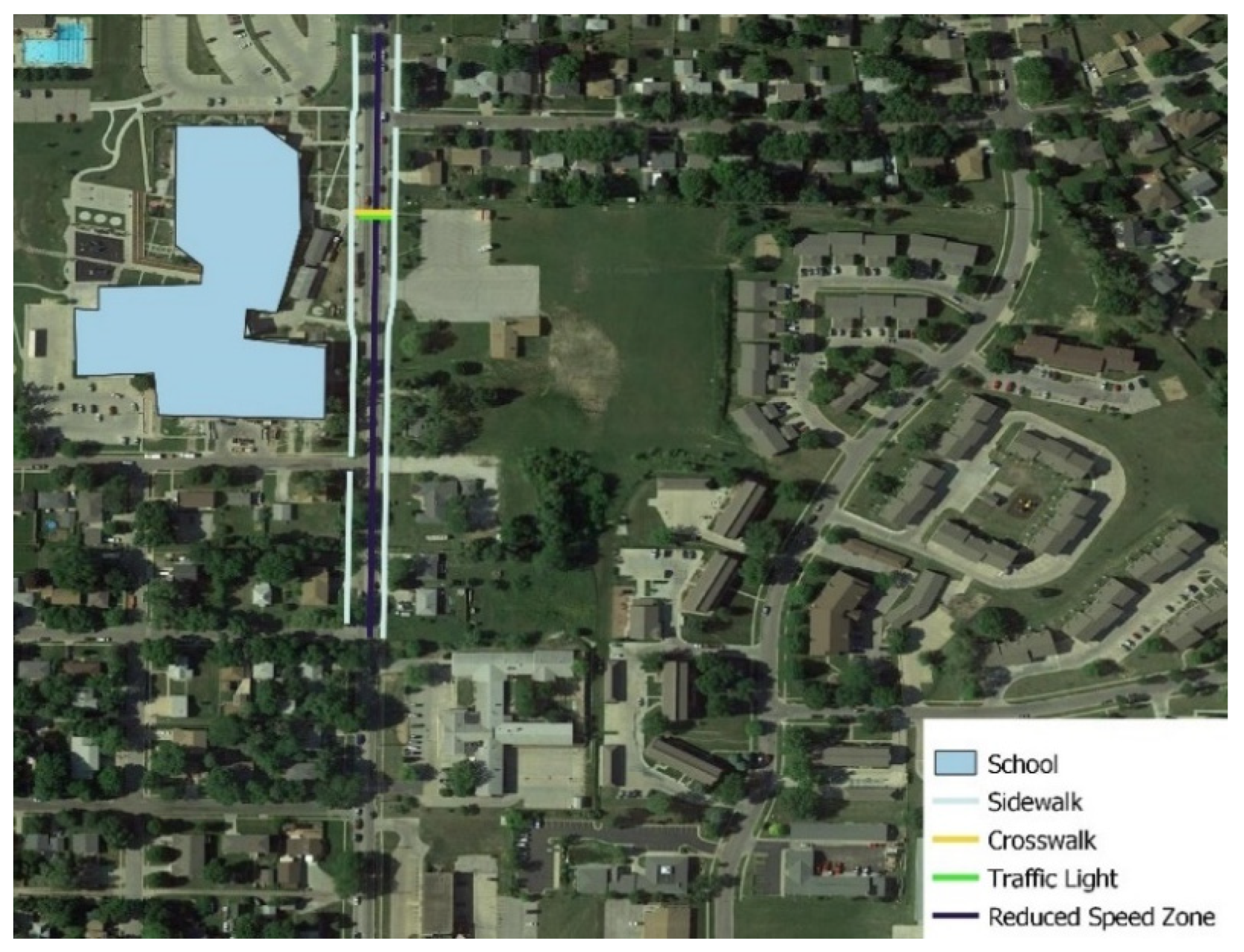
The research team collected data from 18 school zones in Lincoln, Nebraska [43]. The dataset consists of the characteristics of school zones, observed driver speeds, traffic demands, and crashes from 2014 to 2018 in areas surrounding schools. This research defines the intervals when the beacons of school zones are in operation as “flashing ON” (i.e., the active school zone period). In the morning, the beacon is activated 30 min before the start of school and remains active for 30 min after dismissal in the afternoon. For instance, for a school operating from 9:00 a.m. to 3:00 p.m., the flashing intervals are 8:30–9:00 a.m. and 3:00–3:30 p.m.. To evaluate school zone safety, this study collected drivers’ speed data at multiple school locations categorized by speed differentials (i.e., the difference between passive and active school zone speed limits) and school session timing. This research included fifteen elementary and three middle schools. This study observed a total of 378,506 vehicles across 18 sites in Nebraska. The collected data included vehicle classification, corresponding speeds, and timestamps. Information on the roadway segments designated as school zones was used to identify relevant reported crashes. For example, Figure 1 illustrates a representative study site and its corresponding school zone segments. Additional attributes captured in the dataset included the number of crosswalks and lanes, school visibility (i.e., whether drivers can see the school), fencing, traffic control devices, school zone length, loading areas, and parking on the streets, among others. Note that there were no speed monitoring devices installed at the study sites. In addition, there were no additional penalties involved for violation of school zone speed limits beyond the usual speeding-related penalties.
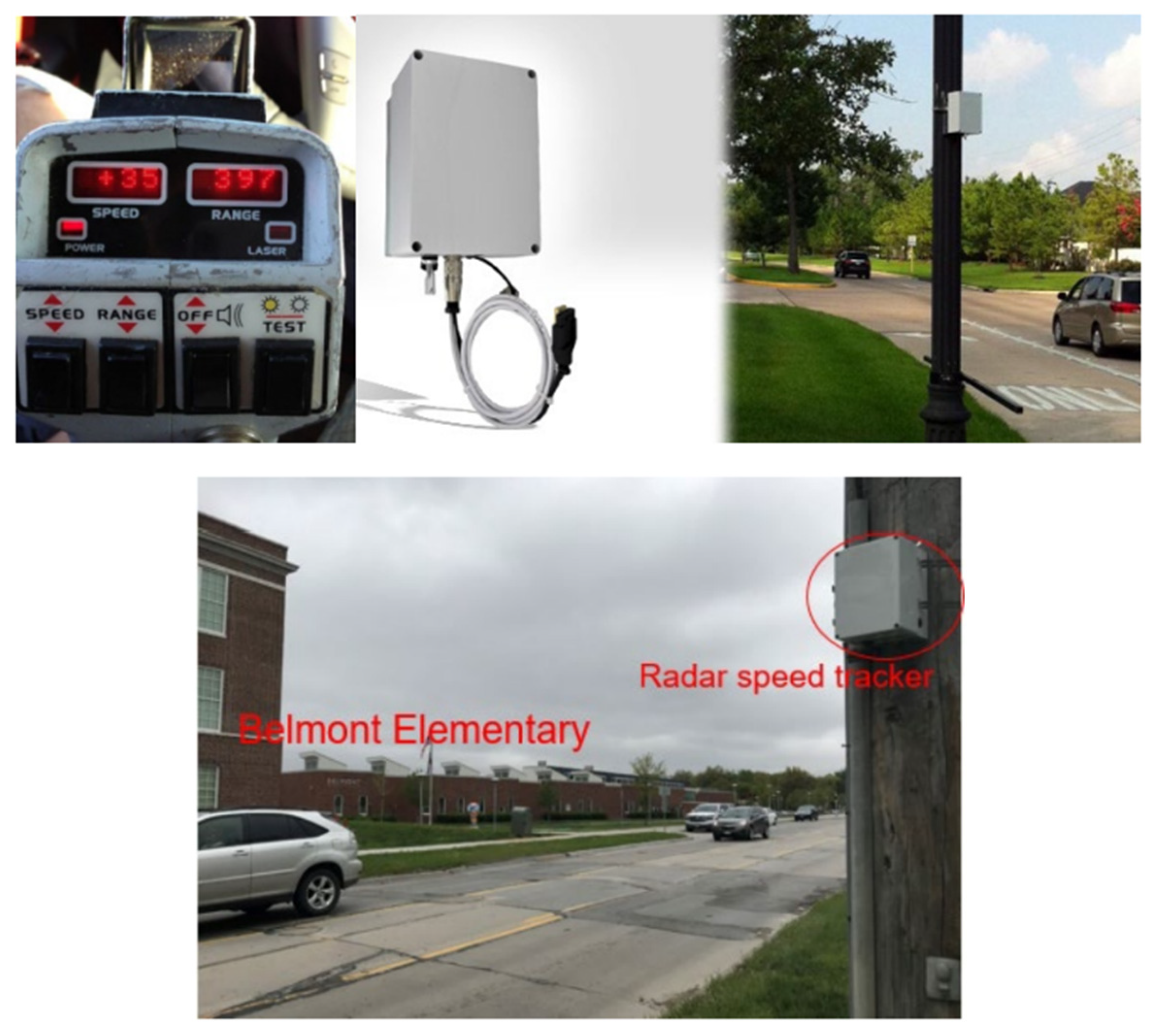
To minimize driver distraction and ensure naturalistic observations, the research team employed a radar-based traffic data collection device (Houston Armadillo Tracker). The equipment was pole-mounted for unobtrusive data collection (as shown in Figure 2). Speed data were continuously recorded over a 24 h period and subsequently validated via a laser-based device. Furthermore, the radar system automatically classified vehicles into large, small, and medium categories in accordance with FHWA guidelines (large: Classes 4–12; medium: Classes 2–3; small: Class 1).
Speed limit differentials were used to classify the 18 schools into four categories to examine driver compliance with reduced speed limits, as summarized in Table 1. Categories 3 and 4 each included only one school, due to the unusual speed limit transitions at La Vista Middle School and Central City Elementary School. Note that the decrease in speeds in these groups was smaller than the corresponding changes in the posted speed limits. Section 4 discusses this phenomenon in detail. Table 1 also includes the number of observations from the respective speed category.
This study utilized five-year crash data (2014–2018) obtained from the Nebraska Department of Transportation (NDOT). The NDOT crash database does not directly identify crashes occurring near schools. Therefore, relevant crashes were determined based on their spatial location within defined school zone boundaries, supplemented by local school district calendars. For example, the Lincoln Public Schools calendar was utilized to verify the specific dates and times of school operations for Lincoln sites. The analysis was limited to crashes occurring on regular school days, and partial school days were excluded because the corresponding traffic data were unavailable for those periods.

5. Driver Speed Analysis and Findings

5.1. Site-Specific Observations and Speed Categories

This study assessed school zone safety by analyzing variations in driver speeds under active and passive school zone conditions. Statistical studies of mean speeds were conducted for each school and data were aggregated to create categories from speed limit differentials.
Table 2 summarizes the results for each school. The findings showed that, except for at one site, the differences in mean speeds between active and passive periods were statistically significant at the 5% level (using t-tests). Of the 18 study locations, Site No. 4 (Elliott Elementary School) was the only site where the difference in mean speeds between active and passive conditions was not statistically significant.
Table 2 further indicates that mean speeds during passive school zone periods were generally close to, or slightly below, the posted speed limits. During active school zone periods, mean speeds decreased, but they still exceeded the reduced speed limits in most cases. An exception was observed at Central City Elementary School, where motorists traveled slightly below the school zone speed limit.
Table 3 lists the speed comparisons across the four school categories. At Category 1 schools (35 to 25 mph), mean speeds decreased from 32.64 mph to 27.15 mph, corresponding to a 16.82% reduction during active school zone periods. At Category 2 schools (40 to 25 mph), speeds declined from 39.01 mph to 30.27 mph, reflecting a 22.40% reduction. Category 3 (30 to 25 mph) and Category 4 (35 to 15 mph) included only one school. The observed speed reductions were 6.93% and 18.80% for the two school categories, respectively. Overall, the findings indicated that drivers generally traveled close to the posted speed limits during passive periods. Although speeds decreased during active school zone periods, most drivers did not fully adhere to the reduced speed limits.
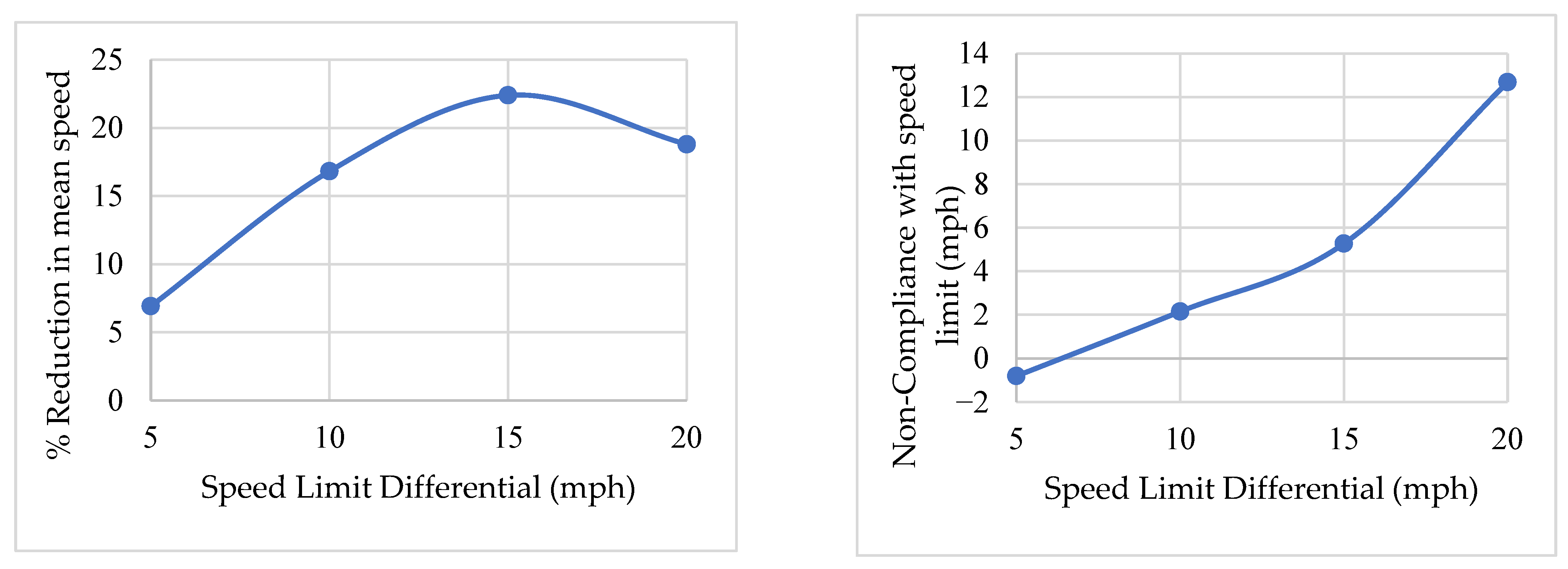
Table 3 indicates that a 5 mph speed limit differential (Category 3) reduced mean speed by 6.93%. A 10 mph differential (Category 1) was associated with a 16.82% reduction, while a 15 mph differential (Category 2) yielded the largest reduction of 22.4%. In contrast, a 20 mph differential (Category 4) resulted in a comparatively smaller reduction of 18.8% in mean speeds. Furthermore, the statistical tests at the 5% significance level confirmed that the differences in mean speed between the active and non-active school zones in the four speed categories are statistically significant.
Figure 3 illustrates how the percent speed reduction (i.e., the change from the average passive to the active mean speed) varies in response to the speed limit differential (left figure), and how the non-compliance of motorists (measured as the deviation of the mean speed from the active school zone speed limit) changes as the differential increases (right figure). The results show that larger speed limit differentials are associated with greater percentage reductions in mean driver speed. However, the magnitude of this effect diminishes beyond a 15 mph differential. At the same time, driver non-compliance increases with higher speed differentials. Specifically, mean speeds surpassed the speed limit set in school zones by 2.15 mph, 5.27 mph, and 12.69 mph for speed differentials of 10 mph, 15 mph, and 20 mph, respectively. Overall, while higher differentials led to greater speed reductions, differentials of 15 mph and 20 mph were associated with substantial non-compliance, resulting in mean speeds that remained considerably above the posted active school zone speed limits. For the 5 mph speed differential, the non-compliance was negative 0.81 mph. This means that the mean driver speed was 0.81 mph lower than the reduced school zone speed limit. Note that Section 5.2 provides more detailed information on individual vehicle speeds and the compliance.
Another approach to assessing motorists’ behavior in school zones is to examine 85th-percentile speeds in relation to both the posted and reduced speed limits. Table 4 presents the 85th-percentile speeds for both active and non-active school zone periods. The results indicate that, for the majority of cases, the 85th-percentile speed exceeded the corresponding speed limits during both periods. This finding is similar to that of a City of Lincoln study [34]. Category 3 and 4 have the largest difference for the 85th-percentile speed compared to its regular and reduced-speed-limit counterparts, respectively, for passive and active school zone periods.

5.2. Compliance Rate in Different Scenarios

Table 5 shows the compliance rate (i.e., compliance occurs when a driver’s operating speed is equal to or below the speed limit) for different speed categories and different variables. The right-most “Combined” column considers data from all the speed categories combined. For a given scenario, the first row represents the compliance rate (as a percentage) when the school zone is active, and the sample size is given in the parentheses. The second row (in the same scenario) shows similar data when the school zone is passive. For example, for the scenario with a medium vehicle type under speed Category 1, the compliance rate compared to the school zone’s reduced speed limit (i.e., 25 mph) is 35.7% for a sample size of 18,509 in an active school zone (i.e., when flashing is on). When the school zone is passive (i.e., flashing is off), the compliance rate is 73.7% compared to that for the regular speed limit of 35 mph obtained from 217,055 samples.
Table 5 shows that, without exception, for each scenario, the compliance rate was lower for school zones during the active period compared to during the passive counterpart. This indicates that drivers are more likely to abide by the regular speed limit than the speed limit set for school zones.
Among the four speed categories, the compliance rate for Category 4 was the lowest: 0.8% and 57.7% for active and passive periods, respectively. On the other hand, Category 3 had the highest compliance rates, which were 56.5% and 85.0%, respectively, for the active and passive periods. Combining the four speed categories, the overall compliance rates became 29.2% and 69.5%, respectively. Therefore, the compliance rate reduced by approximately 57% when the passive period changed to the active period.
For each speed category (except Category 4) and combined speed categories, the compliance rates of large vehicle types were higher than that of medium vehicles. Due to the typical larger stopping sight distance or the slow brake rates related to larger vehicles, drivers using large vehicles may be more prone to comply with the speed limit.
For combined speed categories, from passive to active school zones, the compliance rates reduced approximately by 54% (67.4% to 30.7%) and 60% (70.6% to 27.6%), respectively, for AM and PM periods. The lower rate of reduction (i.e., 54%) during the AM period may align with the previous research finding that drivers in the morning period tend to maintain higher speed compared to in the afternoon/evening.
For the combined speed category, the compliance rate during the active school zone period in the presence of street parking was higher (i.e., 34.9%) than with no street parking (26.0%).
Note that the compliance rate of individual vehicles discussed in this section has similar implications to those found in the previous section. Category 4, which has the highest speed differentials (i.e., 20 mph), had the lowest compliance rate, and Category 3, which has the lowest speed differentials (i.e., 5 mph), had the higher compliance rate during active school zone periods. Therefore, as the speed differentials increased, the compliance rate of drivers during active school zone periods reduced.

5.3. Speed Prediction Model

A multivariate linear regression model was developed. The observed driver speed was set as the dependent variable and a set of explanatory or independent variables was used to identify factors influencing speeds near schools. Table 6 summarizes the model estimates. The findings suggest that many crucial factors influence motorists’ speeds, including speed limit differential categories (Categories 1 through 4), status of beacons in school zones (active or inactive), vehicle classes (large, medium, or small), time of day (AM or PM), and parking on the street, traffic control devices, and crosswalks. Many other variables were selected but were not included in the final model due to their non-significance, such as traffic lane distributions, pavement marking, pedestrian signs, presence of loading areas, etc.
The estimated coefficients indicate that, for school zone flashing lights, higher speeds (by approximately 6.232 mph) were associated with inactive school zone signs. Simply put, when the school zone lights were on, motorists reduced their speeds by about 6.232 mph. Regarding speed limit differential categories, the model results suggest that drivers traveled at lower speeds in Categories 3, 4, and 1 compared to in Category 2.
In comparison to small vehicles, large and medium vehicles were associated with higher travel speeds. Additionally, speeds were slightly higher during the AM period (by 0.382 mph) compared to during the PM counterpart. Motorists drove faster when parking was not permitted (0.216 mph increase) and in the absence of traffic signals (0.593 mph increase). Conversely, crosswalks in school zones were related to reduced driver speeds.

5.4. Key Findings from Speed Analysis

This research investigated the impacts of speed differentials on driver speeds, the influence of roadway and environmental factors (e.g., on-street parking, traffic signals), and the safety implications related to school zones. Analysis of mean speeds indicated that all schools except one experienced speed reductions (with statistical significance) during active school zone periods. However, drivers generally continued to travel above the reduced speed limits. Larger speed differentials were associated with greater percentage reductions in mean speeds. However, this effect diminished beyond a 15 mph differential. Notably, driver non-compliance with reduced speed limits increased with an increasing speed differential. Specifically, speed differentials of 15 mph and 20 mph corresponded to mean speeds 5.27 mph and 12.69 mph beyond the active school zone limits, respectively. Overall, the findings suggest that, while drivers do reduce speeds in response to active school zones, greater speed differentials are associated with greater non-compliance with reduced speed limits.
Linear regression analysis identified several factors impacting driver speeds near schools, including speed limit differential categories, school zone status (active or passive), vehicle classification, time of day (AM or PM), on-street parking, presence of traffic signals, and presence of crosswalks. Drivers reduced their speeds by approximately 6.232 mph during active school zone periods. Medium and large vehicles were associated with higher speeds than small vehicles, and higher speeds were also observed during the AM period, in the absence of on-street parking, and where traffic signals were not present. Overall, the study suggests that driver speeds are affected by speed differentials, school zone status (active versus passive), time of day, and roadway characteristics such as parking, signals, and crosswalks, with drivers generally reducing speeds during active school zone periods.
Note that the nature of the findings from this research work is intuitive. It is important for local transportation agencies to quantify the results and act in response to studies conducted locally. Legal action or changes of existing plans cannot be based on predicable outcomes from research conducted elsewhere. Additionally, prior literature searches confirming inconsistent and contradictory findings warrant a new study for a given location or community.

6. Crash Data Analysis and Findings

6.1. Crash Rates in School Zones

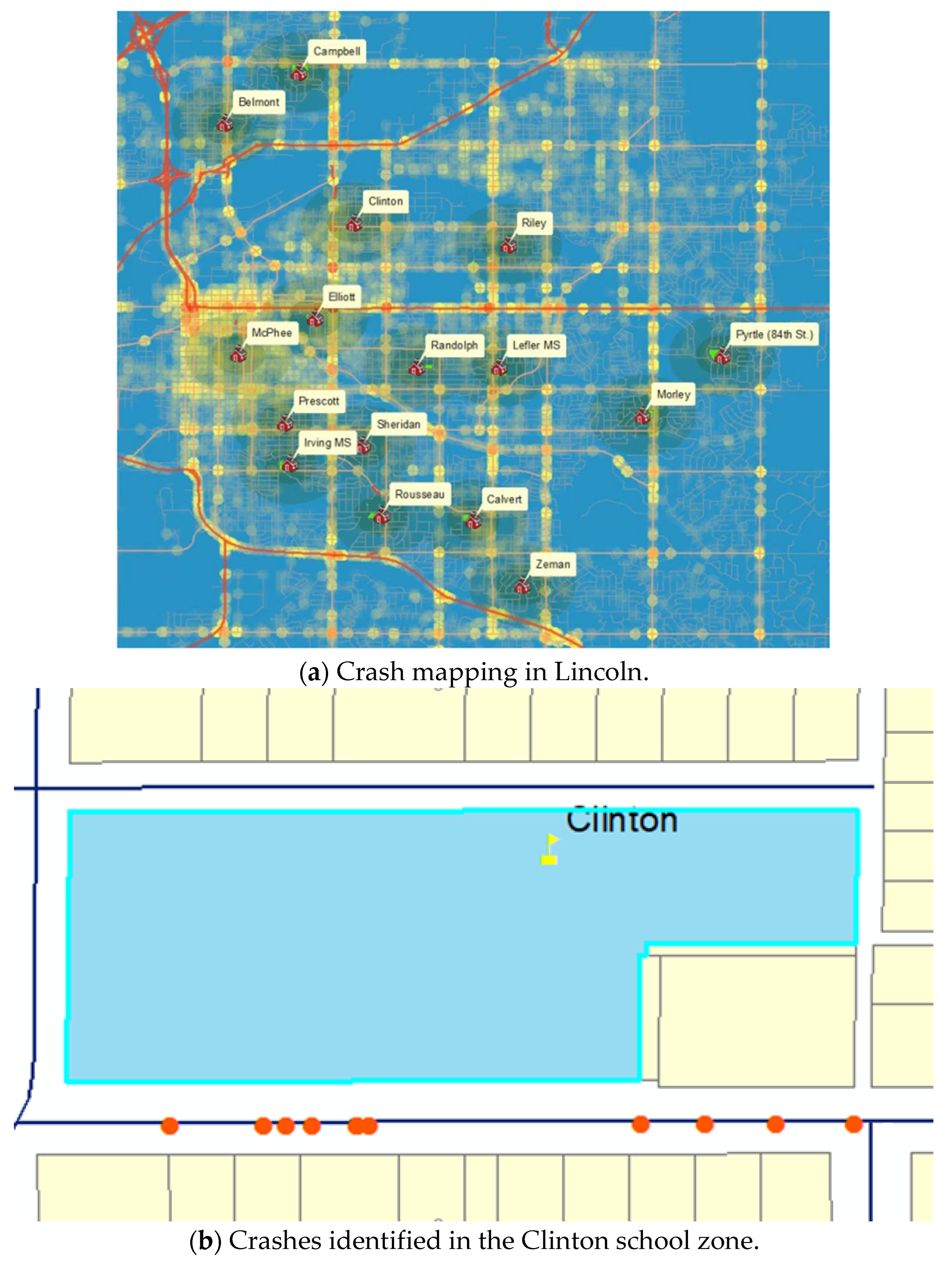
To further assess school zone safety, the research team mapped crashes reported between 2014 and 2018 in a GIS to identify those occurring near the observed schools. Figure 4a illustrates sixteen schools located in Lincoln along with the associated crash locations. The analysis was then refined to include only crashes occurring in school zone segments where hourly traffic data were available. For example, Figure 4b presents the Clinton school zone, where 10 crashes were identified. In total, 277 crashes were recorded within school zone segments, including 237 during passive periods and 40 during active periods.
This study evaluated crash rates under both active and passive school zone conditions. Five-year reported crashes per observed vehicle were calculated for each school and further grouped by speed differential categories, as presented in Table 7. Crash rates are expressed as five-year crashes per 1000 vehicles. School zone segment lengths were disregarded in the calculations, as they were relatively consistent across sites. The analysis assumed that the distribution of traffic volumes between active and passive periods over the five-year period was consistent with the proportions observed in this study for each site. Thorough hourly traffic counts beyond the collected datasets were not available. It is also noted that no crashes were recorded at Central City Elementary School during active school zone periods.
Table 7 indicates that most of the study sites had lower crash rates during passive periods. When categories were created using speed differentials, a similar pattern emerged, with lower crash rates observed during passive conditions. Across all sites, the overall crash rate increased by 108%, suggesting that motor vehicle crashes were more frequent when school zones were active in comparison to in regular periods.
The research team further analyzed crashes involving only motor vehicles as well as those related to both non-motorists (pedestrians and pedal cyclists) and motor vehicles during both periods. Table 8 lists the findings for each school. The results indicate that crash rates for both motor vehicle-only crashes and crashes involving motorists and non-motorists increased by more than 100% when the school zone was active compared to during passive periods.

6.2. Crash Costs in School Zones

Next, the research team compared the crash costs related to the severity of injury between the passive and active school zone periods using the crash costs published by the Federal Highway Administration (FHWA) [45].
The crash costs for 2016 were as follows:
  • $11,295,400 for fatal crashes;
  • $655,000 for suspected severe injury crashes;
  • $198,500 for suspected minor injury crashes;
  • $125,600 for possible injury crashes;
  • $11,900 for property damage-only crashes.
Table 9 summarizes average crash costs for both periods. The analysis assumed that non-reportable crashes (e.g., those occurring on private property and reported by drivers) incurred the same cost as property damage-only crashes. Accordingly, crashes occurring during active school zone periods were associated with substantially lower average costs—$53,984 less per crash than those during passive periods. When the single fatal crash was excluded from the analysis, this difference decreased, with average costs of $55,411 and $48,853 for the passive and active periods, respectively. However, costs during active periods remained 11.8% lower. Overall, the results indicate that active school zones are associated with reduced crash costs.

6.3. Key Findings from Crash Analysis

Crash rate analysis indicated a 108% increase during active school zone periods in comparison to their passive counterparts. This trend was consistent across crash types: motor vehicle-only crashes increased by 109%, and crashes relating to both motor vehicles and non-motorists rose by 105%. These findings suggest elevated crash rates during active school zone periods for both types. This increase is likely attributable to the heightened level of activity during these periods, including frequent stop-and-go movements, parking and departure activities, and the loading and unloading of students, etc.
An examination of crash severity revealed that active school zone periods cost 52.5% less than passive periods. On average, crashes occurring during active periods cost $53,984 less than those during passive periods. This indicates that, although crashes are more frequent during active school zone times, they tend to be less severe, likely because vehicle speeds are lower.
Overall, the primary benefit of school zones lies in their ability to reduce vehicle speeds and, consequently, crash severity. While higher crash rates are observed during active periods for both vehicle-only and vehicle–non-motorist crashes, this is not unexpected given the increased activity levels, including greater pedestrian and bicyclist presence, higher traffic interactions, and increased potential for driver distractions. Additionally, children often have limited ability to accurately judge vehicle speed and distance, further contributing to crash risk during these periods [45].

7. Conclusions and Recommendations

School zones are usually a useful technique for lowering vehicle speeds and enhancing safety around the schools. However, research on school zone safety suggests that the efficacy of school zones in reducing drivers’ speeds is ambiguous. The research findings are inconsistent and often contradictory. Factors impacting the school zone speeds and compliance rates of drivers vary from study to study. Furthermore, research that simultaneously examines drivers’ speeding behaviors and the accompanying crash rate and crash costs is rare. Therefore, this research focused on the effects of speed differentials (i.e., different speed limit categories) and different elements impacting drivers’ speed and crash analysis of 18 schools in Nebraska.
The speed analysis indicated that most schools experienced a statistically significant reduction in vehicle speeds during both periods. However, driver speeds generally remained above the reduced school zone limits. Larger speed limit differentials were associated with greater proportional reductions in mean speeds, although this effect diminished beyond a 15 mph differential. Overall, the findings suggest that, while drivers do reduce their speeds in active school zones, non-compliance with the posted reduced limits increases as the speed differential becomes larger. In addition, a multivariate linear regression model was developed to estimate driver speeds in school zones. The model results showed that driver speeds are impacted by factors like speed limit differentials, school zone activation status, classifications of vehicles, time of day (AM or PM), and roadway features including parking, traffic signal devices, and crosswalks.
Analysis of 5-year crashes in the 18 school zones revealed that active school zones experienced higher crash rates compared to passive school zones. This increase in crash rate was consistent across both vehicle-only and non-motorist-related crashes. On the other hand, analysis of crash severity showed that active school zone periods experienced lower crash costs on average compared to passive periods. The reduction in crash costs during active school zone periods is most likely attributable to the lower crash severity resulting from reduced vehicle speeds.
Drivers tend to reduce their speeds during active school zone periods and operate near the posted reduced limits, though not always in full compliance. Unconventional speed limit reductions (e.g., from 35 mph to 15 mph) do lead to lower speeds; however, the magnitude of reduction is less than expected given the size of the speed differential. According to the findings of this study, the following recommendations are presented to support sustainable school zone safety:
  • Transportation agencies should exercise caution when establishing school zones, as higher crash rates are observed during active periods;
  • An active school zone should not be considered a tool for reducing expected crashes;
  • Transportation agencies should reasonably anticipate that active school zones will reduce crash severity, resulting in safety benefits through lower crash-related costs;
  • Careful consideration should be given in setting speed limits for both active and passive school zone periods;
  • The presence of flashing lights for school zones, surrounding traffic signals, street parking, and crosswalks should be considered in speed limit designs as they are highly likely to impact drivers’ speed behaviors;
  • Speed limit differentials of 15 mph should be applied cautiously due to elevated levels of driver non-compliance, and differentials above 15 mph are not recommended.
The authors believe that the methodology of the research and the recommendations from this study will aid public agencies and practitioners in making more appropriate and sustainable decisions regarding school zones.
One may assume that advising against setting a bigger speed limit differential would result in high-speed traffic, which could perhaps increase the frequency and severity of crashes. However, pedestrians and nearby community members are generally aware when reduced speed limits are in effect during active school zone periods. As a result, they may assume that drivers will adhere to these limits and adjust their movements within the school zone accordingly. On the other hand, if the non-compliance of drivers increases (as found in this study with bigger speed differentials), the potential for crashes may increase as the non-compliance behaviors of motorists go against the expectations of the pedestrians.
This study was conducted under several assumptions stemming from data limitations, most notably, the absence of detailed hourly traffic data. The analysis relied on a limited dataset collected specifically for this study and assumed that traffic conditions at the study sites remained relatively consistent over the 2014–2018 period. Additionally, it was assumed that the distribution of traffic between active and passive school zone periods remained stable throughout the study timeframe.
Furthermore, Categories 3 and 4 each included only one school. Therefore, findings for these categories should be interpreted with caution. A standard linear regression model was employed in this study. Future research may consider models that explicitly account for clustering by site. However, the use of a standard linear regression framework provides a more practical and accessible approach for traffic agencies compared to more complex modeling techniques. Additionally, FHWA property damage-only crash costs were applied as a proxy for non-reportable crashes. Analysis results may be different depending on the validity of the assumptions. Furthermore, the prior crash data and drivers’ behaviors were based on Nebraska conditions. Therefore, these findings may not be directly applicable to locations other than those in the Midwest.

Author Contributions

The authors confirm their contributions to the paper are as follows: study conception and design: A.J.K.; data collection and analysis: A.J.K.; interpretation of results: A.J.K. and M.S.H.; draft manuscript preparation: A.J.K. and M.S.H. All authors have read and agreed to the published version of the manuscript.

Funding

Research funding was provided by the Nebraska Department of Transportation, grant number SPR-PI (19) M092.

Institutional Review Board Statement

Not applicable.

Informed Consent Statement

Not applicable.

Data Availability Statement

The data presented in this study are available on request from the corresponding author.

Acknowledgments

The authors would like to thank the City of Lincoln, the Nebraska Department of Transportation, and various other agencies for helping with the research. Yashu Kang and Harrison Redepenning are acknowledged for providing help with various aspects of the data collection, extraction, and research insights.

Conflicts of Interest

The authors declare no conflicts of interest.

References

  1. FHWA: Federal Highway Administration, US Department of Transportation. Manual on Uniform Traffic Control Devices; FHWA: Washington, DC, USA, 2009. [Google Scholar]
  2. Young, E.; Dixon, K. The effects of school zones on driver behavior. In Proceedings of the 2nd Urban Streets Symposium, Anaheim, CA, USA, 28–30 July 2003. [Google Scholar]
  3. Hidayati, N.; Liu, R.; Montgomery, F. The Impact of School Safety Zone and Roadside Activities on Speed Behaviour: The Indonesian Case. Procedia—Soc. Behav. Sci. 2012, 54, 1339–1349. [Google Scholar] [CrossRef][Green Version]
  4. Trinkaus, J. Compliance with a School Zone Speed Limit: An Informal Look. Percept. Mot. Ski. 1996, 82, 433–434. [Google Scholar] [CrossRef]
  5. Ash, K.G.; Saito, M. Attitudes and concerns of drivers with respect to school zone safety and speed compliance: Results of an opinion survey of drivers. In International Conference on Transportation Engineering 2007, ICTE 2007; ASCE: Reston, VA, USA, 2007; pp. 3140–3145. [Google Scholar]
  6. Fitzpatrick, K.; Brewer, M.; Obeng-boampong, K.; Sug, E.; Trout, N. Speeds in School Zones; No. FHWA/TX-09/0-5470-1, TxDOT Report 0-5470-1; Texas Transportation Institute: College Station, TX, USA, 2009. [Google Scholar]
  7. Kattan, L.; Tay, R.; Acharjee, S. Managing speed at school and playground zones. Accid. Anal. Prev. 2011, 43, 1887–1891. [Google Scholar] [CrossRef] [PubMed]
  8. Tay, R. Speed compliance in school and playground zones. ITE J. 2009, 79, 36–38. [Google Scholar]
  9. Saibel, C.; Salzberg, P.; Doane, R.; Moffat, J. Vehicle speed in school zones. ITE J. 1999, 69, 38–42. [Google Scholar]
  10. Day, S.W. Assessment of Driver Speed Compliance in Rural School Zones: Comparison of Speed by School Level and Time of Day. Ph.D. Thesis, Clemson University, Clemson, SC, USA, 2007. [Google Scholar]
  11. Strawderman, L.; Rahman, M.M.; Huang, Y.; Nandi, A. Driver behavior and accident frequency in school zones: Assessing the impact of sign saturation. Accid. Anal. Prev. 2015, 82, 118–125. [Google Scholar] [CrossRef]
  12. Ogle, J.H. Quantitative Assessment of Driver Speeding Behavior Using Instrumented Vehicles. Ph.D. Thesis, Georgia Institute of Technology, Atlanta, GA, USA, 2005. [Google Scholar]
  13. Ellison, A.B.; Greaves, S. Driver characteristics and speeding behaviour. In Proceedings of the 33rd Australasian Transport Research Forum (ATRF), Canberra, ACT, Australia, 29 September–1 October 2010. [Google Scholar]
  14. Lazic, G. School speed zones: Before and after study: City of Saskatoon. In Proceedings of the Transportation Association of Canada (TAC) Annual Conference and Exhibition, St John’s, NL, Canada, 21–24 September 2003. [Google Scholar]
  15. Lee, C.; Lee, S.; Choi, B.; Oh, Y. Effectiveness of speed-monitoring displays in speed reduction in school zones. Transp. Res. Rec. J. Transp. Res. Board 2006, 1973, 27–35. [Google Scholar] [CrossRef]
  16. Schrader, M. Study of effectiveness of selected school zone traffic control devices. Transp. Res. Rec. J. Transp. Res. Board 1999, 1692, 24–29. [Google Scholar] [CrossRef]
  17. Hawkins, N. Modified signs, flashing beacons and school zone speed. ITE J. 1993, 63, 41–44. [Google Scholar]
  18. Rothman, L.; Ling, R.; Hagel, B.E.; Macarthur, C.; Macpherson, A.K.; Buliung, R.; Fuselli, P.; Howard, A.W. Pilot study to evaluate school safety zone built environment interventions. Inj. Prev. 2022, 28, 243–248. [Google Scholar] [CrossRef]
  19. Simpson, C. Evaluation of effectiveness of school zone flashers in North Carolina. Transp. Res. Rec. J. Transp. Res. Board 2008, 2074, 21–28. [Google Scholar] [CrossRef]
  20. Gregory, B.; Irwin, J.D.; Faulks, I.J.; Chekaluk, E. Differential effects of traffic sign stimuli upon speeding in school zones following a traffic light interruption. Accid. Anal. Prev. 2016, 86, 114–120. [Google Scholar] [CrossRef]
  21. Singh, R.; Unit, S.R. Queensland multi-lane school zone trial. In Proceedings of the Australasian Road Safety Research, Policing and Education Conference, Perth, WA, Australia, 6–9 November 2011. [Google Scholar]
  22. Brooks, J.O.; Goodenough, R.R.; Crisler, M.C.; Klein, N.D.; Alley, R.L.; Koon, B.L.; Logan, W.C., Jr.; Ogle, J.H.; Tyrrell, R.A.; Wills, R.F. Simulator sickness during driving simulation studies. Accid. Anal. Prev. 2010, 42, 788–796. [Google Scholar] [CrossRef]
  23. Zhao, X.; Li, J.; Ding, H.; Zhang, G.; Rong, J. A generic approach for examining the effectiveness of traffic control devices in school zones. Accid. Anal. Prev. 2015, 82, 134–142. [Google Scholar] [CrossRef]
  24. Valdés, D.; Knodler, M.; Colucci, B.; Figueroa, A.; Rojas, M.; Colón, E.; Campbell, N.; Tainter, F. Speed behavior in a suburban school zone: A driving simulation study with familiar and unfamiliar drivers from Puerto Rico and Massachusetts. In International Conference on Applied Human Factors and Ergonomics; Springer: Cham, Switzerland, 2019; pp. 319–329. [Google Scholar]
  25. Jacobs, M.; Hart, E.P.; Roos, R.A. Driving with a neurodegenerative disorder: An overview of the current literature. J. Neurol. 2017, 264, 1678–1696. [Google Scholar] [CrossRef] [PubMed]
  26. Caffò, A.O.; Tinella, L.; Lopez, A.; Spano, G.; Massaro, Y.; Lisi, A.; Stasolla, F.; Catanesi, R.; Nardulli, F.; Grattagliano, I.; et al. The drives for driving simulation: A scientometric analysis and a selective review of reviews on simulated driving research. Front. Psychol. 2020, 11, 917. [Google Scholar] [CrossRef] [PubMed]
  27. Warsh, J.; Rothman, L.; Slater, M.; Steverango, C.; Howard, A. Are school zones effective? An examination of motor vehicle versus child pedestrian crashes near schools. Inj. Prev. 2009, 15, 226–229. [Google Scholar] [CrossRef]
  28. Clifton, K.J.; Kreamer-Fults, K. An examination of the environmental attributes associated with pedestrian–vehicular crashes near public schools. Accid. Anal. Prev. 2007, 39, 708–715. [Google Scholar] [CrossRef]
  29. Bunnarong, S.; Upala, P. Spatial Analysis to Identify Pedestrian Crash Zones: A Case Study of School Zones in Thailand. Open Transp. J. 2018, 12, 167–181. [Google Scholar]
  30. Park, J.; Abdel-Aty, M.; Lee, J. School zone safety modeling in countermeasure evaluation and decision. Transp. A Transp. Sci. 2019, 15, 586–601. [Google Scholar]
  31. Medina, A.M.F.; MECE; MFAV; Diaz, D.M.V. Simplified methodology for the evaluation of pedestrian safety in school zones. Inst. Transp. Eng. ITE J. 2010, 80, 36–44. [Google Scholar]
  32. Reyad, P.; Sayed, T.; Zaki, M.H.; Ibrahim, S.E. School zone safety diagnosis using automated conflicts analysis technique. Can. J. Civ. Eng. 2017, 44, 802–812. [Google Scholar] [CrossRef]
  33. Obiri-Yeboah, A.A.; Osei, K.K.; Opoku-Antwi, E.; Ackaah, W. School zone safety: An evaluation of driver speed characteristics, compliance rates, and safety measures. Afr. Transp. Stud. 2025, 3, 100068. [Google Scholar] [CrossRef]
  34. Swami, M.; Pathak, C.; Swami, S.; Jeihani, M. Promoting sustainable mobility: A walkability analysis for school zone safety. Sustainability 2024, 16, 9118. [Google Scholar] [CrossRef]
  35. Traffic Ordinance. Traffic Ordinance Article VII: Speed Regulations, Overland Park, Kansas. Available online: http://online.encodeplus.com/regs/overlandpark-ks/doc-viewer.aspx#secid-3098 (accessed on 3 February 2025).
  36. City of Lincoln. City of Lincoln School Zone Standards. Available online: https://lincoln.ne.gov/city/ltu/engine/traffic/school-zone-standards/ (accessed on 3 February 2025).
  37. Driving Regulations. Section 33–24, Champaign, Illinois. Available online: https://library.municode.com/il/champaign/codes/code_of_ordinances?nodeId=MUCO_CH33TRMOVE_ARTIIDRRE_S33-19.3SAIEIN (accessed on 1 January 2020).
  38. Vince, J.; Staff, P. Speeding in a School Zone in Illinois: Laws, Fines, 2016. Available online: https://patch.com/illinois/lakeforest/speeding-school-zone-illinois-laws-fines (accessed on 3 February 2025).
  39. State of Michigan. Act No. 446, Public Acts of 2016, State of Michigan, 2017. Available online: http://www.legislature.mi.gov/documents/2015-2016/publicact/pdf/2016-PA-0446.pdf (accessed on 3 February 2025).
  40. FHWA. Speed Limit Basics. 2026. Available online: https://highways.dot.gov/safety/speed-management/speed-limit-basics (accessed on 2 March 2026).
  41. McCoy, P.T.; Heimann, J.E. School speed limits and speeds in school zones. Transp. Res. Rec. 1990, 1254, 1–7. [Google Scholar]
  42. Zhao, X.; Li, J.; Ma, J.; Rong, J. Evaluation of the effects of school zone signs and markings on speed reduction: A driving simulator study. SpringerPlus 2016, 5, 789. [Google Scholar] [CrossRef] [PubMed][Green Version]
  43. Khattak, A.; Kang, Y. Research on School Zone Safety; Report Number M092; Nebraska Department of Transportation: Lincoln, NE, USA, 2020. [Google Scholar]
  44. Dewar, E.R.; Olson, P.L. Pedestrians and cyclists. In Human Factors in Traffic Safety, Second Edition; Dewar, R.E., Olson, P.L., Eds.; Lawyers & Judges Publishing Company: Tucson, AZ, USA, 2007; Chapter 18. [Google Scholar]
  45. Harmon, T.; Bahar, G.; Gross, F. Crash Costs for Highway Safety Analysis; FHWA Report FHWA-SA-17-071; United States Federal Highway Administration: Washington, DC, USA, 2018.
Figure 1. Study site example (Belmont Elementary).
Sustainability 18 04517 g001
Figure 2. Use of radar speed tracker and speed gun for data collection.
Sustainability 18 04517 g002
Figure 3. Speed limit differential, percentage reduction in mean motorists’ speeds, and level of non-compliance with active school zone speed limits.
Sustainability 18 04517 g003
Figure 4. Crashes mapping and identification in a school zone.
Sustainability 18 04517 g004
Table 1. School categories based on the changes in speed limits.
CategorySchoolsSpeed ReductionObservations
1 (35 to 25)Belmont, Calvert, Clinton, Elliott, Prescott, Sheridan, Rousseau, Randolph, McPhee, Riley, Lefler MS, Irving MS35 mph–25 mph245,442
2 (40 to 25)Campbell, Morley, Pyrtle, Zeman40 mph–25 mph92,873
3 (30 to 25)Central City Elem30 mph–25 mph6863
4 (35 to 15)La Vista MS35 mph–15 mph33,328
Table 2. Observed speed data at each studied school.
IDSchoolPosted SpeedReduced SpeedMean Speed (Passive)Mean Speed (Active)Mean Speed Diff.Vehicle Count
Passive
Vehicle Count
Active
Statistical Difference (α = 5%)
1Belmont352532.8125.767.0530,0102464TRUE
2Calvert352527.9324.643.298551965TRUE
3Clinton352531.5126.165.3515,7631318TRUE
4Elliott352529.0728.690.385753699FALSE
5Prescott352535.8127.278.547900461TRUE
6Sheridan352533.8828.045.842155198TRUE
7Lefler MS352532.5525.47.1556,5204200TRUE
8Irving MS352533.6527.546.1122,1532823TRUE
9Rousseau352534.0928.975.128510677TRUE
10Randolph352531.5128.612.928,3872331TRUE
11McPhee352533.1329.743.3929,7072389TRUE
12Riley352535.6728.866.8110,760748TRUE
13Campbell402539.7828.7910.9913,932778TRUE
14Morley402539.9729.1910.7815,1941077TRUE
15Zeman402537.7431.026.7244,4643365TRUE
16Pyrtle 402541.3830.0411.3413,160903TRUE
17Central City Elem302525.9924.191.86166697TRUE
18La Vista MS351534.127.696.4131,0092319TRUE
Table 3. Observed speed data (grouped by speed limit differential).
Category of SchoolSpeed LimitMean Speed%
Diff.
Vehicle Counts PassiveVehicle Counts ActiveStatistical Diff. (α = 5%)
PostedReducedPassiveActiveDiff.
1 (35 to 25)352532.6427.155.4916.82226,16919,273TRUE
2 (40 to 25)402539.0130.278.7422.4086,7506123TRUE
3 (30 to 25) 302525.9924.191.86.936166697TRUE
4 (35 to 15)351534.127.696.4118.8031,0092319TRUE
Note: Percent Difference (% Diff.) = [(Mean Speed Passive − Mean Speed Active) × 100]/(Mean Speed Passive).
Table 4. Observed 85th-percentile speed grouped by speed limit differential.
School CategoryPassive School ZoneActive School Zone
85th-Percentile Speed, mphDiff. from Speed LimitPercent Diff. from Speed Limit85th-Percentile Speed, mphDiff. from Speed LimitPercent Diff. from Speed Limit
1 (35 to 25)3725.733832
2 (40 to 25)45512.534936
3 (30 to 25) 401033.3341976.0
4 (35 to 15)30.254.7513.5291493.3
Table 5. Vehicle compliance rate (as a percentage) and corresponding sample size (in parentheses) during active and passive school zone periods for various scenarios.
VariablesLevel of VariablesCategory 1
(35 to 25)
Category 2 (40 to 25)Category 3 (30 to 25)Category 4 (35 to 15)Combined
Speed Category * 35.9 (19,273)
** 74.0 (226,169)
15.7 (6123)
61.0 (86,750)
56.5 (697)
85.0 (6166)
0.8 (2319)
57.7 (31,009)
29.2 (28,412)
69.5 (350,094)
Vehicle TypesSmall37.8 (149)
79.0 (2671)
9.1 (11)
78.7 (127)
66.7 (9)
98.5 (66)
0.0 (17)
81.2 (117)
34.0 (186)
79.5 (2981)
Medium35.7 (18,509)
73.7 (217,055)
15.6 (5931)
60.8 (84,543)
55.8 (626)
84.8 (5413)
0.9 (2228)
57.1 (29,911)
28.2 (24,594)
69.2 (336,922)
Large42.3 (515)
81.4 (6443)
20.4 (181)
69.8 (2080)
62.9 (62)
85.0 (687)
0.0 (74)
74.2 (981)
35.3 (832)
78.6 (10,191)
TimeAM37.6 (9504)
71.8 (77,079)
16.9 (3089)
60.0 (31,981)
62.7 (365)
85.1 (2078)
0.4 (1128)
53.7 (9985)
30.7 (14,086)
67.4 (121,123)
PM34.2 (9769)
75.1 (149,090)
14.5 (3034)
61.6 (54,769)
49.7 (332)
85.0 (4088)
1.2 (1191)
59.6 (21,024)
27.6 (14,326)
70.6 (228,971)
Street ParkingYes33.3 (9538)
72.5 (98329)
*** NA
NA
**** NC
NC
NA
NA
34.9 (10,235)
73.2 (104,495)
No38.4 (9735)
75.1 (127,840)
NC
NC
NA
NA
NC
NC
26.0 (18,117)
67.9 (245,599)
Traffic SignalYes37.0 (15,751)
75 (198,263)
NC
NC
NA
NA
NC
NC
28.1 (24,193)
69.5 (316,022)
No31.0 (3522)
66.8 (27,906)
NA
NA
NC
NC
NA
NA
35.2 (4219)
70.1 (34,072)
Number of Crosswalks in Zones143.7 (11,730)
74.4 (145,922)
22.4 (1855)
51.0 (29,126)
NA
NA
NA
NA
40.8 (13,585)
70.5 (175,048)
223.7 (7543)
73.1 (80,247)
15.3 (903)
35.3 (13,160)
NC
NC
NC
NC
20.4 (11,462)
66.2 (130,582)
3Na
Na
12.1 (3365)
75.2 (44,464)
NA
NA
NA
NA
12.1 (3365)
75.2 (44,464)
* Compliance rate in active school zone as a percentage (sample size) ** Compliance rate in passive school zone as a percentage (sample size) *** NA: Not applicable (i.e., this scenario does not exist for the underlying variable and speed category) **** NC: Not comparable (i.e., this scenario exists for the underlying variable and category but cannot be measured because the alternative scenario does not exist). Note: The “Combined” column considers all the speed categories together.
Table 6. Estimated linear regression model for drivers’ speeds.
VariablesCoefficientStd. Errort-StatisticSig.95% C.I.
LowerUpper
Intercept31.4881.102308.6160.00031.28831.688
Category 3 (30 to 25)−12.7430.070−180.9610.000−12.882−12.605
Category 4 (35 to 15)−4.8190.031−151.3810.000−4.882−4.757
Category 1 (35 to 25)−6.5200.025−259.8360.000−6.569−6.471
Category 2 (40 to 25)0 *
FlashingLight = OFF6.2320.030202.4180.0006.1716.292
FlashingLight = On0 *
CarClass = Large0.7360.0997.4180.0000.5410.930
CarClass = Medium1.9150.08721.8800.0001.7432.087
CarClass = Small0 *
Time = AM0.3820.01622.5230.0000.3490.415
Time = PM0 *
St_Parking = No0.2160.0229.5680.0000.1710.260
St_Parking = Yes0 *
Traf_Signals = No0.5930.03317.5850.0000.5270.659
Traf_Signals = Yes0 *
** Number of crosswalks −0.5130.014−36.2290.000−0.541−0.485
* This coefficient is fixed at zero as it is redundant within the model; adjusted R2 = 30.4% ** Number of crosswalks can be 1, 2, or 3.
Table 7. Crash counts and rate summary in school zones.
Name/
Category
Flashing Lights Off
(Passive School Zone)
Flashing Lights On
(Active School Zone)
Difference
(Off–On)
Percent
Change
Vehicle
Count
Crash
Count
Crash RateVehicle
Count
Crash
Count
Crash
Rate
Belmont30,01080.267246452.029−1.763−661.2
Calvert855150.58596511.036−0.452−77.2
Clinton15,76360.381131843.035−2.654−697.3
Elliott5753478.17069957.1531.017−12.4
Prescott7900141.77246124.338−2.566−144.8
Sheridan215520.92819815.051−4.122−444.2
Lefler56,520150.265420010.2380.02710.3
Irving22,15340.181282320.708−0.528−292.4
Rousseau851030.35367722.954−2.602−738.0
Randolph28,38730.106233100.0000.106100.0
McPhee29,707260.875238941.674−0.799−91.3
Riley10,760161.48774811.3370.15010.1
Category 1
(35 to 25)
226,1691490.65919,273281.453−0.794−120.5
Campbell13,932292.08277800.0002.082100.0
Morley15,194342.238107776.500−4.262−190.5
Zeman44,464120.270336520.594−0.324−120.2
Pyrtle
(on
84th St.)
13,16060.45690300.0000.456100.0
Category 2
(40 to 25)
86,750810.934612391.470−0.536−57.4
Central
City
Elem.
Category 3
(30 to 25)
616600.00069700.0000.000NA
La Vista
MS
Category 4
(35 to 15)
31,00970.226231931.294−1.068NA
Notes: Crash rate units are 5-year crashes per 1000 vehicles in the school zone. Percent change in crash rate = [(Passive − Active) × 100]/(Passive); NA = not applicable. Italic font for the rows in the Category 1, Category 2, Category 3, and Category 4 represent the summation of all the schools under those categories.
Table 8. Motorist and non-motorist crash rate summary.
Crash Rate CategoryPassive School Zone PeriodActive School Zone PeriodDifferencePercent Change
Motor Vehicle-Only Crash Rate0.641.34−0.7−109.4
Motor Vehicle and Non-Motorist Involved Crash Rate0.03430.0703−0.036−105.0
Notes: Crash rate units are 5-year crashes per 1000 vehicles in the school zone; percent change in crash rate = [(Passive − Active) × 100]/(Passive).
Table 9. Crash severity and costs in passive and active school zones.
Crash Severity Level and CostsPassive School Zone
Period
Active School Zone
Period
Non-reportable6913
Property damage only8614
Possible injury598
Visible injury205
Suspicious serious injury10
Disabling injury10
Fatal10
Total crashes23740
Total cost (2016 $)24,372,3001,954,100
Average cost per crash (2016 $)102,83748,853
Average cost per crash (2025 $)137,62665,380
Disclaimer/Publisher’s Note: The statements, opinions and data contained in all publications are solely those of the individual author(s) and contributor(s) and not of MDPI and/or the editor(s). MDPI and/or the editor(s) disclaim responsibility for any injury to people or property resulting from any ideas, methods, instructions or products referred to in the content.