


Abstract
Airblast sprayers remain the dominant pesticide delivery system in California citrus; however, mechanistic characterization of spray transport and off-target fate under realistic field-scale atmospheric variability remains limited. Regulatory airblast drift assessments in the United States (U.S.) currently rely on a sparse, dormant-apple canopy representation, despite substantial structural differences from foliated citrus canopies that may influence drift behavior. To address this gap, this study quantified airblast spray drift in a commercial citrus orchard across multiple downwind distances under varied daytime meteorological conditions and evaluated the influence of distance and weather variables on measured drift. Airborne and sedimentation drift were measured from a conventional axial-fan airblast sprayer operating at 10.3 bar, 5.1 km·h−1, and 935 L·ha−1 in a 4.0 m tall mandarin (Citrus reticulata) orchard using a U.S. Environmental Protection Agency (EPA)-approved, International Organization for Standardization (ISO) standard 22866-aligned protocol. Drift collectors (n = 2688), including flat cards, artificial foliage, and horizontal and vertical string samplers, were deployed from 33 m upwind to 183 m downwind of the orchard edge. Airborne drift measurements showed no significant vertical stratification or near-field decay between 8 m and 23 m downwind (p > 0.05), indicating rapid plume homogenization following canopy exit. In contrast, sedimentation drift declined sharply within 30 m and attenuated logarithmically with distance, governed by progressive droplet depletion and plume dilution. Estimated drift cessation distances were 127.5 m for artificial foliage and 182.1 m for horizontal string samplers. Drift magnitude varied significantly among trials (p < 0.05), reflecting sensitivity to meteorological variability. Multiple linear regression identified wind direction, wind speed, and atmospheric pressure as significant predictors of downwind deposition (p < 0.05), whereas air temperature and relative humidity primarily influenced drift through evaporative control of droplet lifetime. Collectively, these results demonstrate that spray drift from foliated citrus canopies is substantially attenuated relative to dormant-canopy scenarios. Although not intended to define regulatory buffer distances, the high-resolution dataset generated provides mechanistically interpretable parameterization inputs for next-generation airblast drift models, supporting improved representation of canopy interactions, plume evolution, and meteorological modulation in regulatory exposure assessments.
1. Introduction
Sustainable citrus production increasingly depends on regulatory frameworks that balance effective pest and disease management with measurable reductions in environmental and human health risk. Citrus (Citrus spp.) is a major agricultural commodity in California, which leads the United States (U.S.) citrus production, with approximately 267,700 bearing acres cultivated annually across diverse production regions [1]. While oranges account for most of the cultivated acreage, grapefruit, lemon, mandarin, and tangerine are also widely produced [2]. The economic importance of the citrus industry underscores the need for pests and disease management strategies that are both effective and environmentally responsible.
Citrus production systems are vulnerable to numerous pests and pathogens [3], and pesticide applications remain essential for managing economically significant pests such as citrus thrips (Scirtothrips citri) and for mitigating disease risks associated with Huanglongbing, which is transmitted by the Asian citrus psyllid (Diaphorina citri). In California citrus systems, tractor-drawn airblast sprayers are the predominant application technology used to deliver insecticides and other crop protection products throughout the tree canopy.
Although pesticides play a critical role in maintaining pest populations below economic thresholds, spray drift presents potential human health and environmental risks [4,5,6], including exposures to bystanders and nearby communities [7,8,9] and contamination of off-target ecosystems [6]. Underestimation of spray drift—defined here as off-site movement of spray particles during application excluding volatilization—may result in unrecognized exposure risks. Conversely, overestimation of drift can lead to unnecessarily restrictive mitigation requirements [10], limiting access to essential pest control chemistries, reducing effective treated acreage, and constraining management options for perennial specialty crops and invasive species under quarantine.
Spray deposition and drift from airblast applications are influenced by application parameters [11,12,13,14], canopy structure [15,16], and meteorological conditions [17], with droplet size serving as a primary determinant of drift potential [18,19,20]. Smaller droplets remain airborne longer and are more susceptible to wind transport, whereas larger droplets retain momentum and settle more rapidly onto target surfaces [21]. Accordingly, accurate assessment of spray drift requires consideration of total spray fate, including canopy interception and ground deposition [5,22,23,24,25]. Drift from citrus systems has been examined previously [26,27], yet challenges remain in translating these findings into regulatory modeling frameworks.
Regulatory agencies rely heavily on predictive spray drift models to support exposure and risk assessments [20], using estimated airborne and deposited fractions to evaluate, inhalation, dermal, and ingestion pathways. These models are intentionally designed to be accessible to regulators who may not specialize in the physics of airblast application. Pesticide application modeling generally falls into three categories: full-physics, mechanistic, and empirical approaches. Full-physics models, typically based on computational fluid dynamics (CFD), resolve detailed airflow and spray interactions [21,28], whereas mechanistic models employ simplified analytical formulations with reduced computational demand. Empirical models aggregate field data into composite deposition curves that relate downwind deposition to distance under generalized application categories.
The AGricultural DISPersal (AGDISP) model [29,30] exemplifies the mechanistic approach, balancing physical realism with usability. However, even advanced models are often limited by availability of site-specific inputs such as three-dimensional canopy architecture, spatially resolved wind fields, and high-frequency release variability. Hybrid approaches, such as look-up-table methods generated from precomputed simulations [31], attempt to bridge this gap but remain constrained by representativeness of the underlying scenarios.
Empirical modeling forms the basis of Tier I and Tier II assessments within the AgDrift® framework [32,33,34]. Tier I relies on predefined composite drift curves derived primarily from Spray Drift Task Force (SDTF) field studies, while Tier II allows limited adjustment for spray quality and release height. Due to the lack of application and weather parameters on product labels, the EPA currently employs the sparse dormant apple canopy scenario in AgDrift® as the default representation for all airblast sprayer assessments [20]. However, dormant apple canopies differ substantially from foliated citrus canopies in structure, leaf area density, and aerodynamic resistance, suggesting that drift from citrus applications may be systematically overestimated [35]. Given the diversity of citrus orchard architectures in terms of variety, age, and management, drift potential is expected to vary considerably [36], underscoring the need for canopy-specific model inputs.
This study is part of a broader research program designed to collect field-measured deposition and drift data across multiple perennial specialty crops using a standardized protocol. These datasets are intended to support the development of compact, computationally efficient mechanistic drift models driven by readily obtainable inputs, primarily for regulatory exposure and risk assessments, including endangered species evaluations. A previously developed mechanistic citrus airblast model [23,24,37] will be expanded and parameterized using new datasets collected across citrus, grapes [38], almonds [39], and both foliated and dormant apple canopies [10]. Because detailed field-specific canopy architecture is often unavailable, canopy type is envisioned as a primary model input, supplemented by representative sprayer configurations, droplet size distributions, and prevailing meteorological conditions drawn from a curated scenario library.
Given evidence indicating that drift from foliated citrus canopies may be substantially lower than from dormant apple canopies, this study was designed to generate empirical data to test that hypothesis. The specific objectives were to: (1) quantify airblast spray drift in a commercial citrus orchard across multiple downwind distances under varied daytime meteorological conditions; and (2) evaluate the influence of downwind distance and weather variables on measured airborne and sedimentation drift. The resulting dataset provides a foundation for improved estimation of off-target exposure from citrus airblast applications and supports parameterization and validation of a mechanistic drift risk-assessment modeling framework. The successful development and adoption of the mechanistic model is highly significant because it will greatly increase pesticide user, registrant, and regulatory confidence in pesticide drift evaluations.
2. Materials and Methods
This airblast spray-drift evaluation study was guided by a U.S. EPA-approved data-collection protocol [10,26,40], which, as noted in [10], followed the data collection protocol defined for the mechanistic drift model [40] in accordance with the Spray Drift Task Force protocol and integrated with ISO Standard 22866:2005(E) [41].
2.1. Study Site Characteristics
A commercial mandarin (Citrus reticulata) orchard in Del Rey, California (36°37′44.0″ N 119°34′19.9″ W), was used for the study. The 4.0 m tree height at the site falls within the mid-range of standard mature citrus tree heights (2.4–7.6 m [8–25 ft]) [42] and was deemed as a representative citrus orchard following consultation with industry experts. The orchard consisted of single-standing trees with variable gaps along the rows and a skirt height of ≤0.6 m (2 ft). In alignment with protocol requirements, the orchard featured a row length of ≥152 m (500 ft) and a neighboring open field of unvegetated ground extending ≥183 m (600 ft) downwind. Commercial citrus orchards rarely have such a large adjacent open field, making such suitable study sites difficult to find in the highly active agricultural landscape of the San Joaquin Valley. The upwind direction was defined as negative (into the orchard) and the downwind direction as positive (away from the orchard), with distances measured from the orchard edge. Tree and orchard characteristics are summarized in Table 1. Canopy profile and foliage density measurements were acquired from 10 randomly selected trees using a measuring tape, an extendable pole, and a plant canopy analyzer (LAI-2200C, LI-COR, Inc., Lincoln, NE, USA). Canopy measurement, field setup, and sprayer calibration were carried out from mid-March to early April 2021.
Table 1.
Features of citrus orchard used in the study. E = east; W = west; S = south; N = north.
2.2. Field Setup
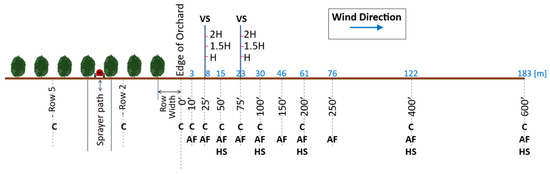
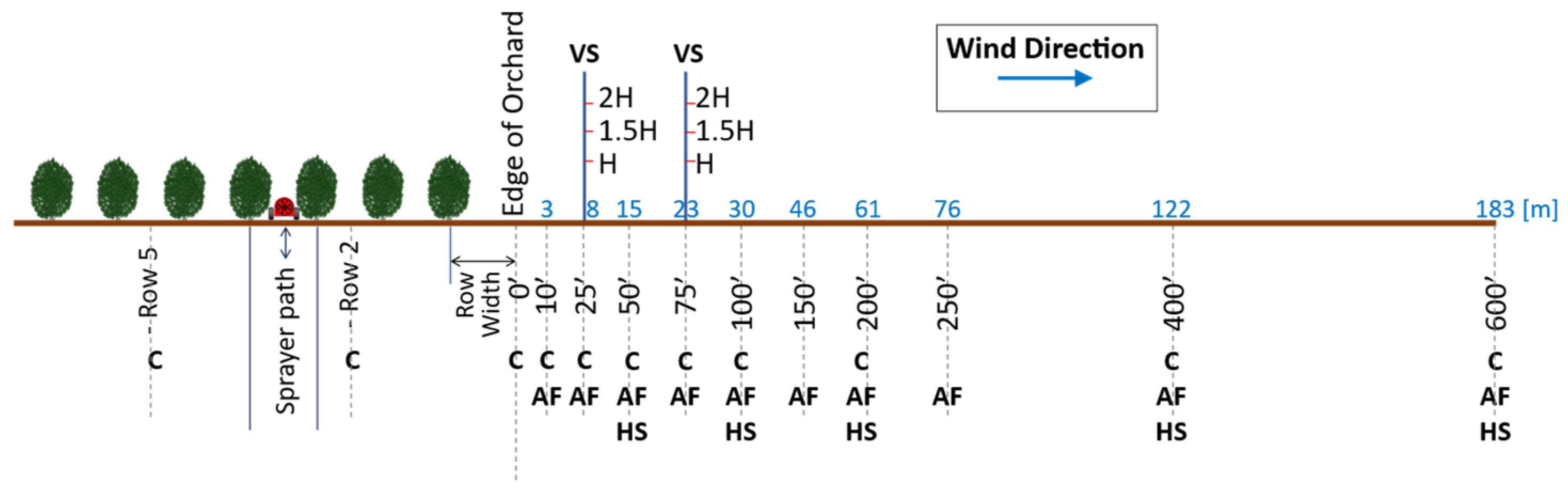
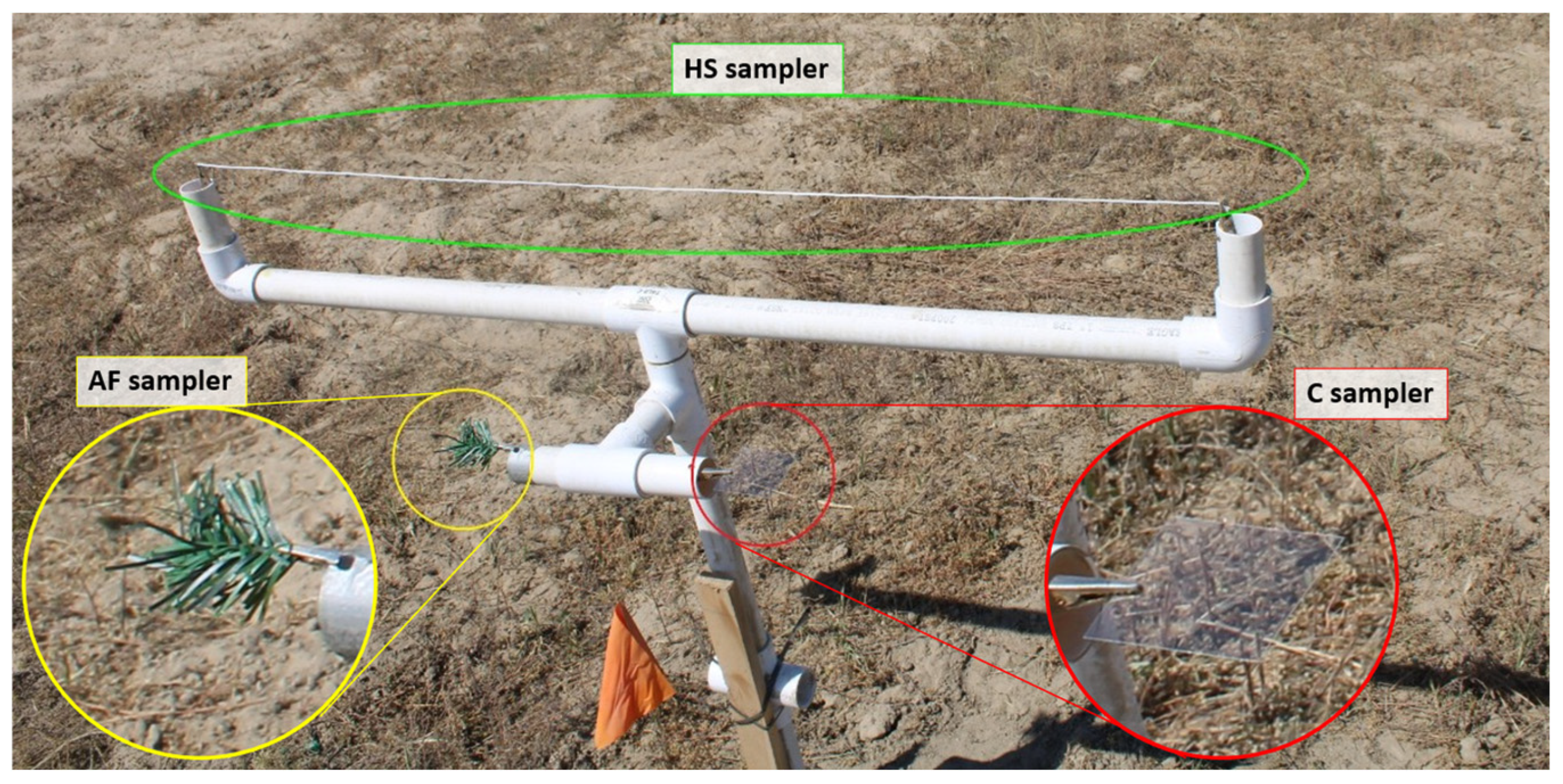
The field setup comprised artificial drift-sampling structures spread along four uniformly spaced transect lines (T1-T4; 18 m (60 ft) between neighboring lines). Figure 1 shows the placement of deposit samplers along a single transect line. Each collection station included sets of flat plastic cards (C), artificial foliage (AF), and/or string collectors (horizontal string (HS) and vertical string (VS)) [10,26,43].
Figure 1.
Deposit sampler placement along a transect (C = Flat card; AF = artificial foliage; HS = horizontal string; VS = vertical string; H = tree height).
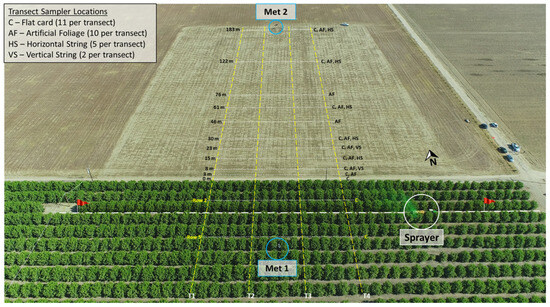
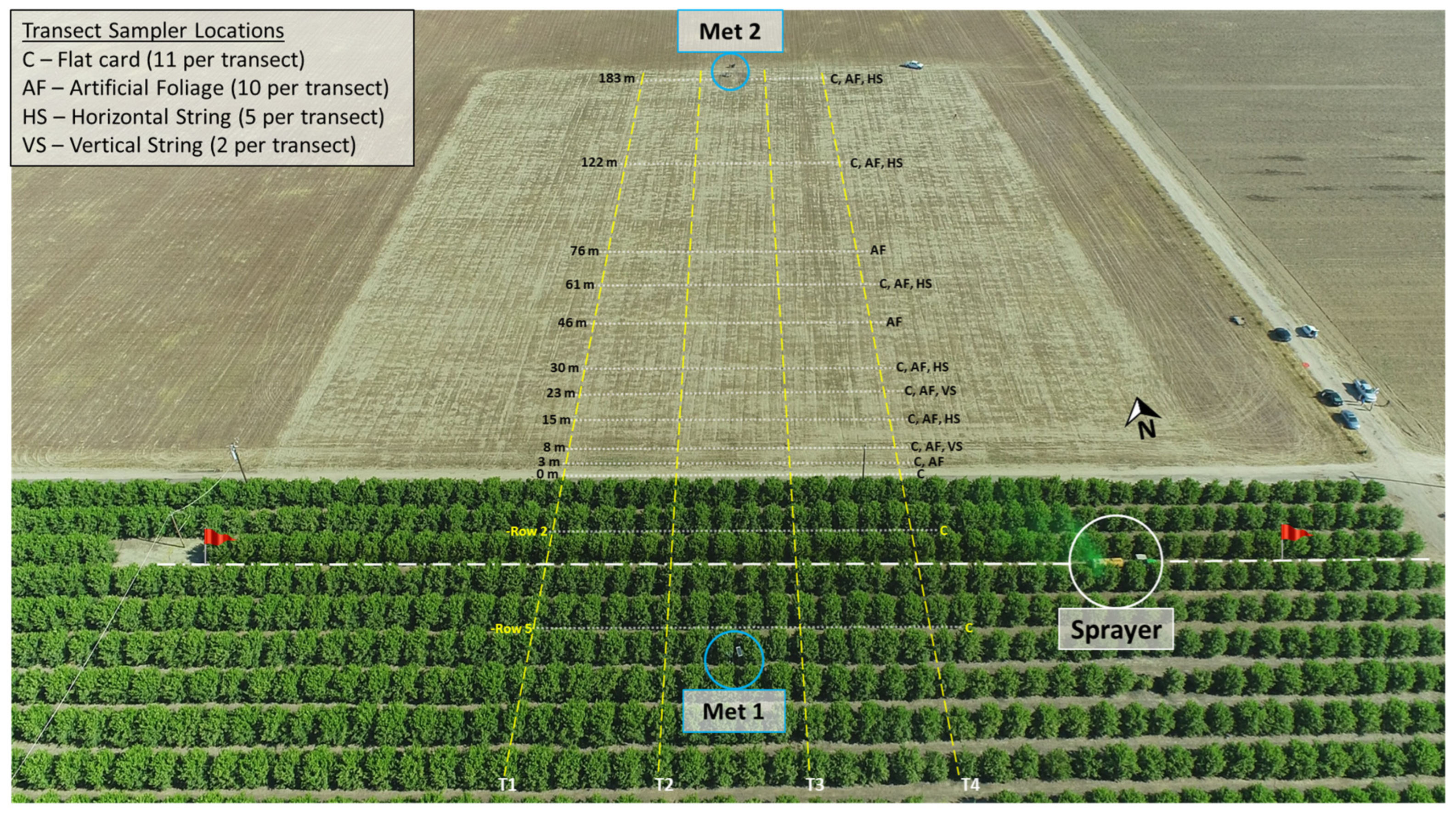
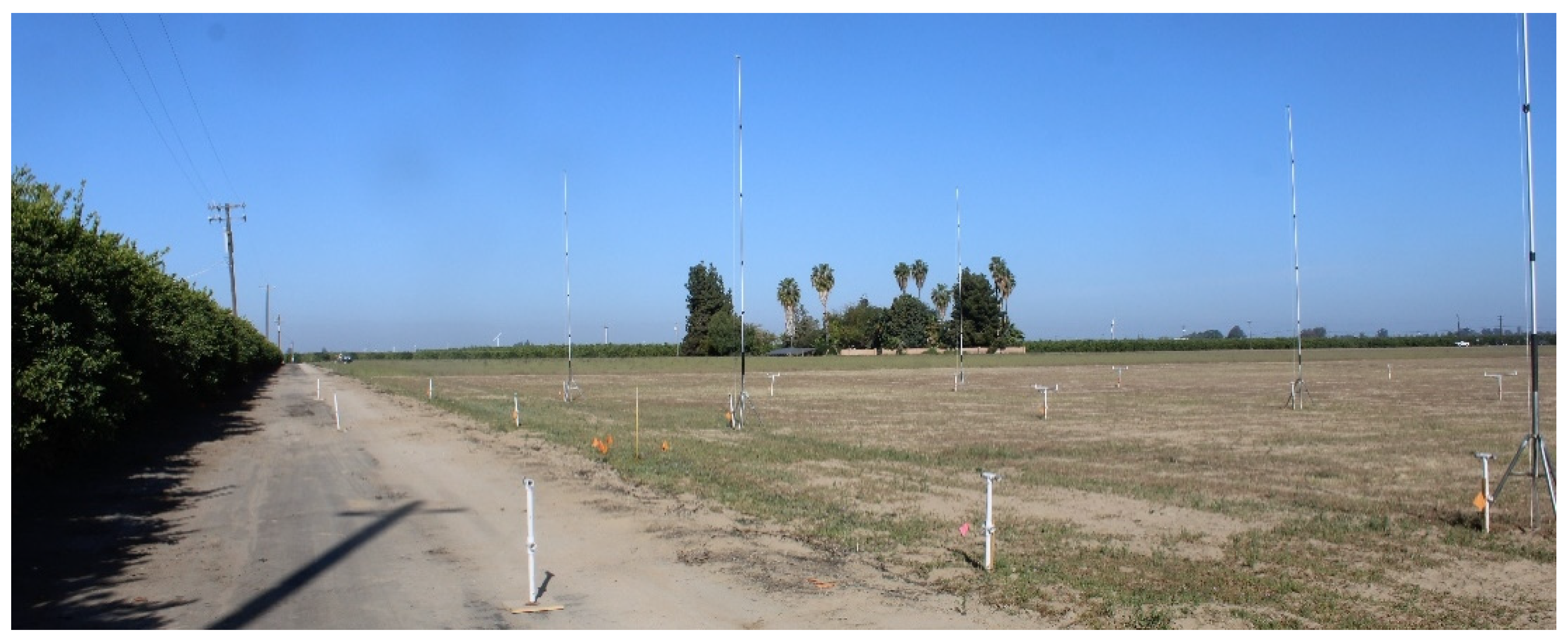
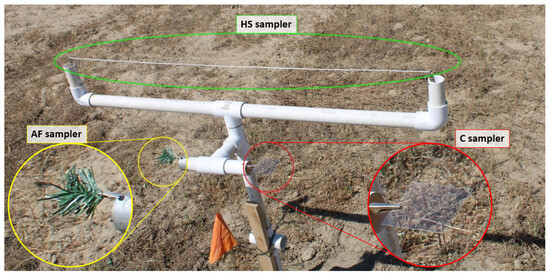
The same distribution of drift collectors—11 C, 10 AF, 5 HS, and 2 VS samplers—was replicated in the four sampling transects from inside the orchard to ≥183 m (600 ft) downwind in the open field (Figure 2). The HS and VS samplers were 0.18 cm diameter polyester strings (Spectra Cord/Speargun Line, SGT KNOTS Supply Co., Statesville, NC, USA). Towers designed to hold VS samplers were located at 8 m (25 ft) and 23 m (75 ft) downwind, with each having the basic station at the base at a sampling height of ~0.91 m (3 ft) above ground level (AGL). Prior markings were made on each VS at 1H, 1.5H and 2H (H implies tree canopy height) to ease cutting into three samples after each trial, as shown in Figure 1. Respective collection stations of similar distance were taken as subsamples. A section of the field setup showing sampling structures is presented in Figure 3. Figure 4 provides details of one structure used to hold a C, AF, and HS sampler concurrently; this type was deployed at 15, 30, 61, 122 and 183 m along each sampling transect. Another structure held a C sampler only (within the orchard at −34, −15, and 0 m), an AF sampler only (at 46 and 76 m), or both C and AF concurrently (at 3, 8, and 23 m).
Figure 2.
Oblique aerial view of the application area (orchard) and nearby sampling area (light-colored open field). The white dashed line indicates the sprayer travel path, and red flags mark the spray start and end points in both directions. The Met 1 station was located inside the orchard, 40 m (130 ft) upwind whereas Met 2 was located outside the orchard, 183 m (600 ft) downwind.
Figure 3.
Eye-level view of a section of the open field illustrating the experimental structures used for drift collection. Vertical string (VS) collectors were installed on taller structures, whereas flat cards (C), artificial foliage (AF), and horizontal string (HS) collectors were installed on shorter structures.
Figure 4.
One of the two structure types supporting a flat card (C; red circle), artificial foliage (AF; yellow circle), and a horizontal string (HS; green oval) collector simultaneously.
2.3. Weather Instrumentation and Measurement
Weather was monitored as standard practice by two weather stations (Met 1 and Met 2), consistent with previous studies [38,39]. Met 1 (located 40 m (130 ft) upwind within the orchard) and Met 2 (located 183 m (600 ft) downwind outside the orchard) were used to characterize site-specific microclimatic conditions relevant to spray drift occurrence. Data from the instruments (Table 2) were logged at one-minute intervals using Zentra ZL6 dataloggers (METER Group, Inc., Pullman, WA, USA) and CR1000/CR1000X dataloggers (Campbell Scientific, Logan, UT, USA) powered by 12 volts solar batteries maintained by solar panels. At the end of the trials described below, all sensor data were retrieved; each datapoint representing an average of 1 s measurements of each minute.
Table 2.
Instrumentation used to collect meteorological data. Sensors were installed at two meteorological stations (Met 1 and Met 2) at different heights. Met 1 was located inside the orchard, 40 m (130 ft) upwind, whereas Met 2 was located outside the orchard, 183 m (600 ft) downwind. Wind direction was monitored at Met 2 station and used to trigger the start of spraying for each trial. AGL = above ground level.
2.4. Application Equipment and Parameters
A D-2/40 diesel-engine-powered conventional airblast sprayer (Air-O-Fan, Reedley, CA, USA) hooked to a John Deere 6430 tractor (Deere & Co., Moline, IL, USA) was used. Sprayer calibration for the study involved evaluating forward travel speed, spray nozzle flowrates, and spray application rate for the chosen operating pressure, as well as fan air profile and velocity at the fan outlet. The target application rate was selected to conform to standards typically used by commercial growers in the growing region. Open nozzle number and position on the sprayer manifold were chosen to ensure that the spray was directed onto the target canopy. The application parameters used in the study based on the calibration are summarized in Table 3. Table 4 provides a detailed description of the nozzle type and configuration.
Table 3.
Spray application parameters used in the study. w.r.t. = with respect to; gpm = gallons per minute; gpa = gallons per acre.
Table 4.
Nozzle configuration of sprayers used in the study. w.r.t. = with respect to; gpm = gallons per minute.
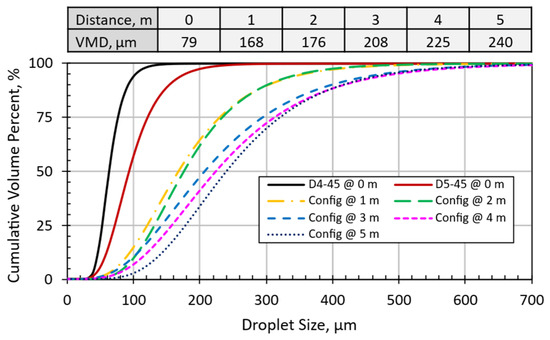
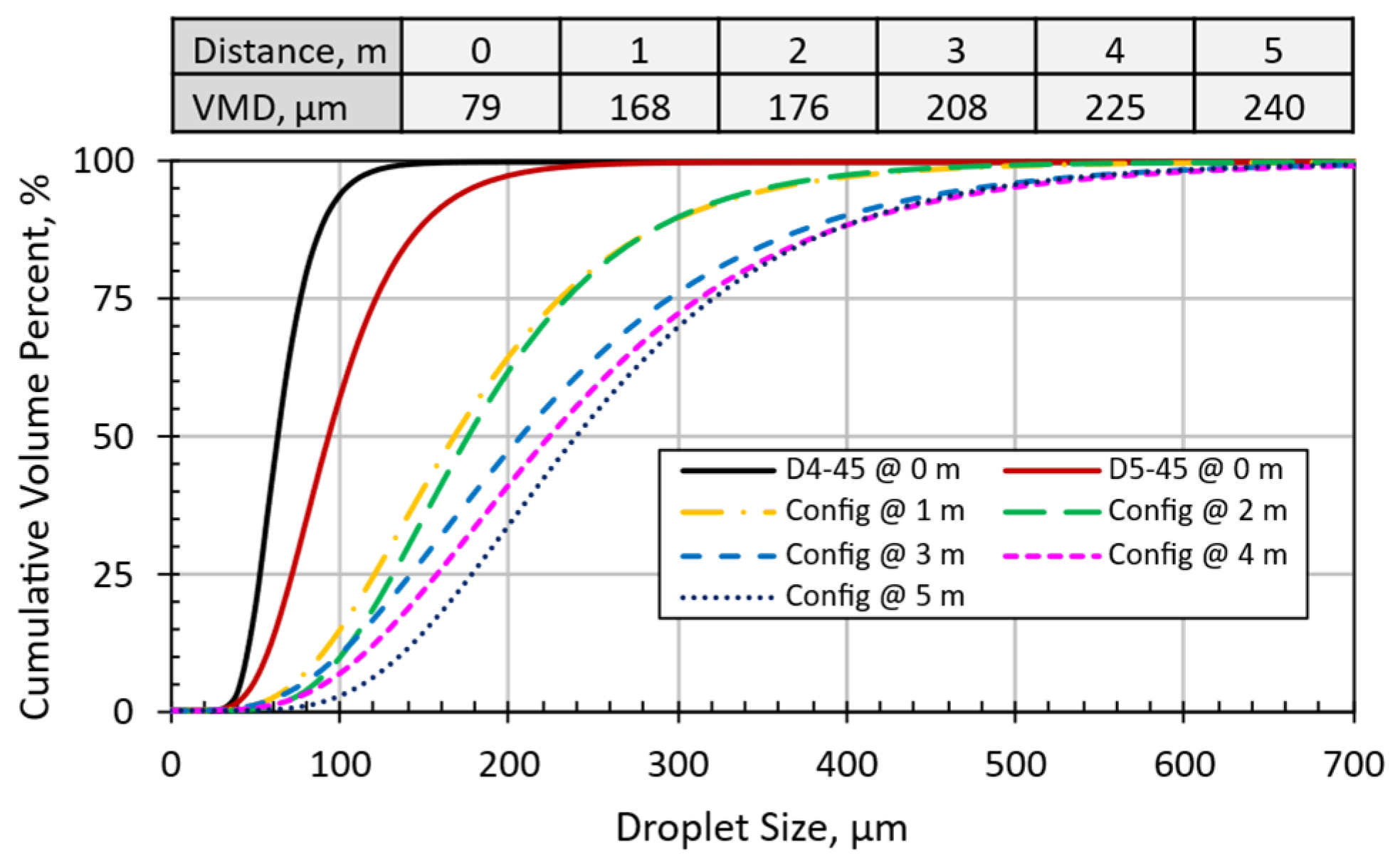
Since pyranine in solution at low concentrations has been shown in the literature as not altering the physical properties of water or droplet formation, water spray from the above nozzle configuration (Config) was characterized outdoors as representative measurements. Testing was performed under similar sprayer settings on a John Bean Redline Model 537T Smart Sprayer (Durand-Wayland, Inc., LaGrange, GA, USA) operated in manual stationary mode. A portable droplet/particle sizing system (VisiSize P15+, Oxford Lasers Ltd., Oxon, UK) was positioned at 1–5 m in 1 m increments from the sprayer outlet at 1 m AGL, representing positions within one tree canopy on the right side. Five replicate measurements of 1000 droplets each were accomplished at each location. The mean droplet spectra (Figure 5) can be characterized as ‘Very Fine’ spray at 0 m and ‘Fine’ to ‘Medium’ spray based on volume median diameter (VMD or Dv0.5) range [44]. VMD increased with distance from sprayer outlet, representing decreasing percentage volume of finer droplets.
Figure 5.
Spray droplet size spectra at sampled locations away from the sprayer outlet. VMD = volume median diameter.
2.5. Spray Application Trials
The spray equipment described above was used to conduct twenty-one spray trials (replications) from early to mid-April. The sprayer traveled along the third drive lane upwind (−21 m), as depicted in Figure 1 and Figure 2. Spraying exclusively in this drive lane was designed to generate data compatible with a companion study that will evaluate the non-crop-specific effects of shifting the sprayer upwind. Prior to spraying in each trial, a full set of drift samplers were set up and then retrieved after spraying. Real-time monitoring of ATMOS 41 sensor data at 1.8 m (6 ft) AGL at Met 2 was used to decide the start of spraying, based on the desired wind direction of sustained South wind (i.e., wind perpendicular to the sprayer direction) ±30°. In each trial, spray was applied from both sides of the sprayer over a distance of 152 m (500 ft); two passes in both directions totaling four. Seventeen treatment trials (trials 2 to 13 and 15 to 19) of 21 trials involving the application of a pyranine fluorescent tracer dye solution (Sodium 8-hydroxypyrene-1,3,6-trisulfonate; target concentration = 2000 ppm (or 2 g/L)) whereas four blank trials (trials 1, 14, 20, and 21) were conducted identically but with a clean tank with no dye. The dye did not have any effect on the physical properties of the spray liquid or droplets [45,46]. The drift samples totaling 2688 were retrieved into labeled zipper bags following each trial and kept in a cooler underlain with icepacks, together with tank samples obtained at different points during the experiment. Samples were delivered to the lab and refrigerated pending analysis, while weather data were obtained upon completion of each trial.
2.6. Sample Analysis
Each drift sample was analyzed by fluorometry in the lab to generate dye drift deposition data, expressed in ng/cm2 and as percentage of applied rate. The analysis was accomplished by transect and replication, such that all samples from Transect 1 were processed by replication prior to those from Transects 2, 3, and 4. Details of the sample analysis are provided in [26,47]. The tank samples were also analyzed to determine the actual concentration. The net application rate for each trial was quantified and combined with tank concentration data to normalize the spray drift values.
2.7. Statistical Analysis
Microsoft Excel was mainly used to organize and process the study data. Scatter plots were obtained from the processed data for airborne drift measured with VS samplers and downwind drift deposition (sedimentation) measured with C, AF, and HS samplers. Plots of the mean data were generated for visual comparison. Unlike the C drift deposition data which could not be reliably fitted, the drift deposition data from AF and HS samplers were fit using logarithmic functions and the drift cessation distance and endpoint deposition estimate were obtained using the fit equations. Airborne drift was compared between downwind distances. Downwind drift deposition was evaluated by examining the overall mean trend, transect-to-transect comparison, and contrasts between downwind (positive component) and upwind (zero or negative component) wind directions.
SigmaPlot 12.5 (Grafiti LLC, Palo Alto, CA, USA) was used to perform statistical analyses; all tests were done at the 5% significance level and included tests of fundamental assumptions such as normality (Shapiro–Wilk Test) and homogeneity of variance. Where necessary, post hoc pairwise comparisons were incorporated into the analyses; Tukey’s Test was used unless otherwise stated. A two-way ANOVA (downwind distance × sampling height) was applied to airborne drift data, and further two- and three-way ANOVAs were used for the drift deposition data. One-way ANOVAs were used to compare collection efficiency at the common horizontal sampler locations of 15, 31, 61, 122, and 183 m. Linear regressions were used to assess the main effects of weather variables on downwind drift deposition at those same locations. Multiple linear regression (MLR) was used to evaluate the combined influence of the weather parameters (solar radiation, wind direction, wind speed, air temperature, atmospheric pressure, and relative humidity) on mean drift deposition, with redundant and non-influential variables excluded; interactions were not considered.
3. Results
3.1. Weather Conditions
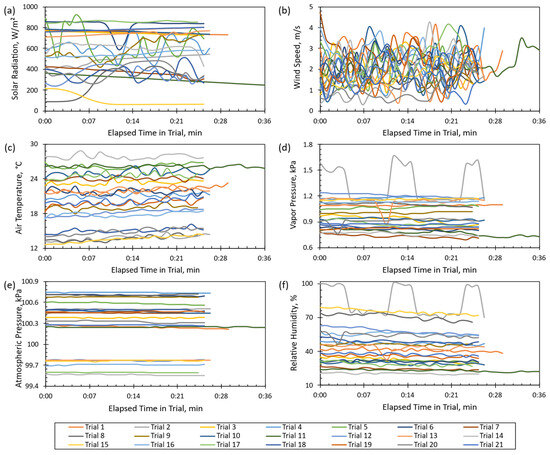
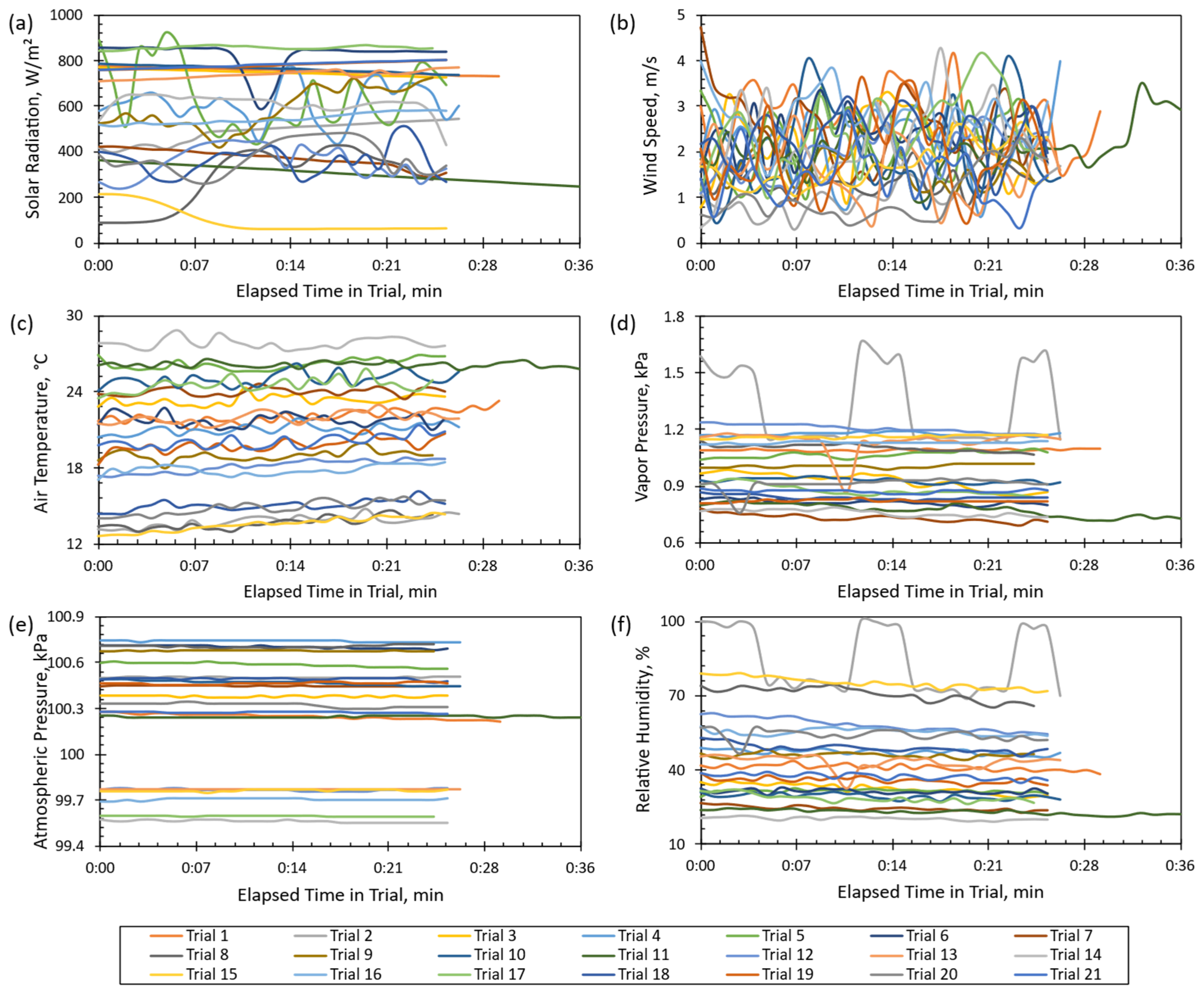
Figure 6 summarizes the meteorological conditions observed during the spray drift trials, as recorded by the all-in-one sensor located at 1.8 m AGL at the Met 2 station and used to guide trial initiation. Weather variables exhibited temporal variation across the 21 trials, while remaining comparatively stable within individual trials. Solar radiation reflected changing cloud cover, wind speed fluctuated during each trial, and air temperature and atmospheric pressure varied primarily among trials rather than within them. Relative humidity remained below 100% for all trials, with only brief transient periods approaching saturation during Trial 2.
Figure 6.
Temporal variation in weather variables during experimental trials: (a) solar radiation; (b) wind speed; (c) air temperature; (d) vapor pressure; (e) atmospheric pressure; and (f) relative humidity. Measurements were recorded at meteorological station Met 2 (1.8 m [6.0 ft] height) located 183.0 m (600 ft) downwind outside the orchard.
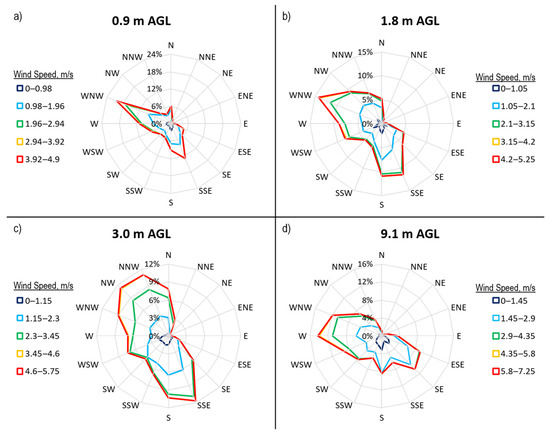
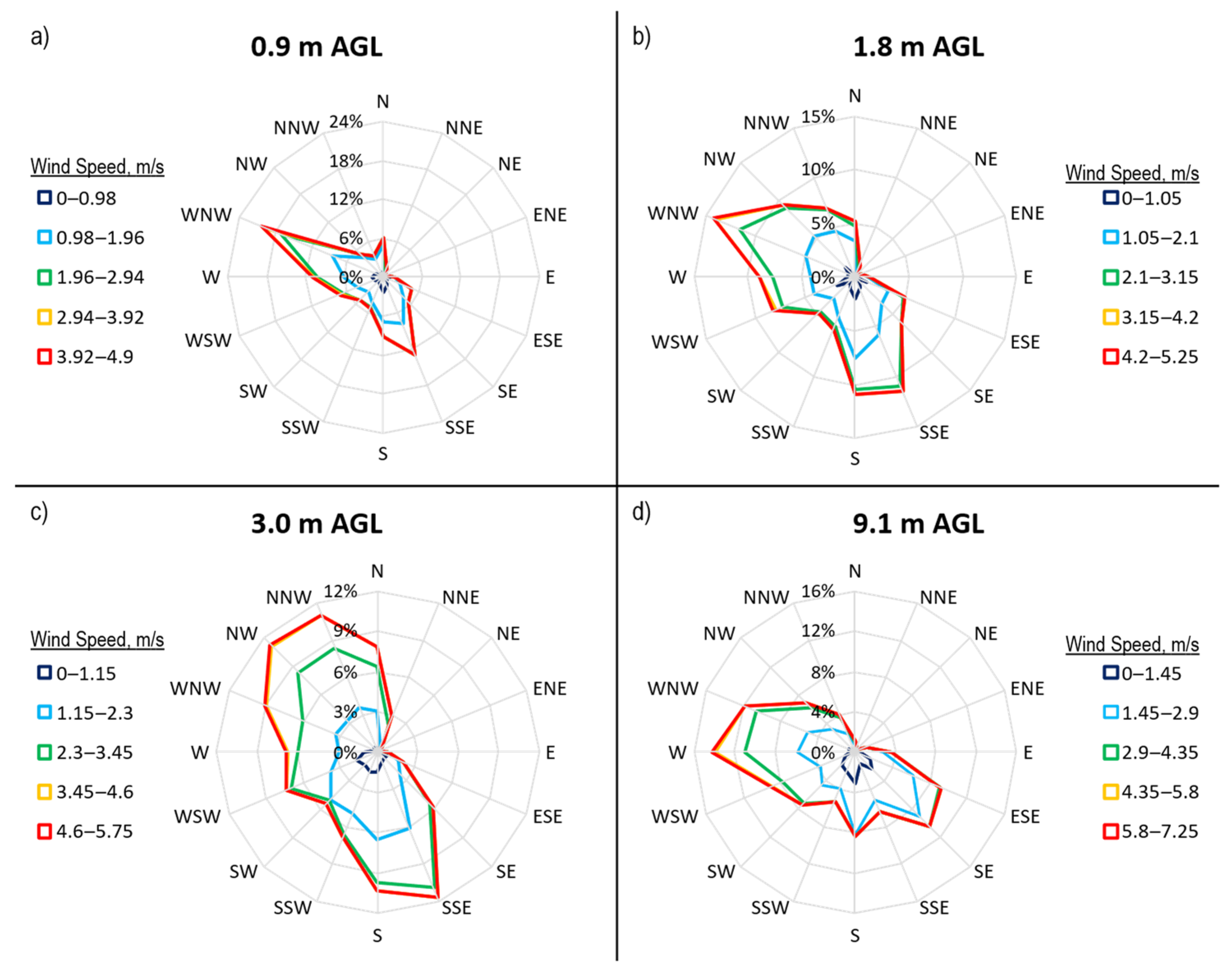
Wind direction and speed distributions measured at multiple heights AGL at the Met 2 station are summarized in the compass roses shown in Figure 7. These data indicate consistent predominant wind flow orientations during the trials, with increased directional variability observed at higher sampling heights.
Figure 7.
Compass roses of all wind speeds and directions during spray trials at Met 2 station at: (a) 0.91 m AGL; (b) 1.8 m AGL; (c) 3.0 m AGL; and (d) 9.1 m AGL. Met 2 was located outside the orchard, 183.0 m (600 ft) downwind.
Average meteorological conditions spanning each trial are summarized in Table 5 for the all-in-one sensors located at Met 1 (2 m AGL) and Met 2 (1.8 m AGL). Weather parameters across treatment trials ranged from 81.6 to 892.7 W/m2 for solar radiation, 0.7 to 1.7 m·s−1 for wind speed, and 12.8 to 26.5 °C for air temperature, with corresponding variation in vapor pressure, atmospheric pressure, and relative humidity. A two-way ANOVA comparing measurements between the two stations indicated no significant differences among weather variables (p > 0.05). Accordingly, Met 2 data were used exclusively in subsequent analyses of meteorological influences on spray drift.
Table 5.
Summary weather data for treatment trials measured using ATMOS 41 all-in-one weather sensors at Met 1 (2.0 m [6.5 ft] height) and Met 2 (1.8 m [6 ft] height). Met 1 was located 36.6 m (120 ft) upwind inside the orchard, and Met 2 was located 183.0 m (600 ft) downwind outside the orchard. N = north; E = east; S = south; W = west; combinations (e.g., WSW and SE) indicate intermediate wind directions.
3.2. Off-Target Spray Drift
3.2.1. Vertical String (VS) Samplers
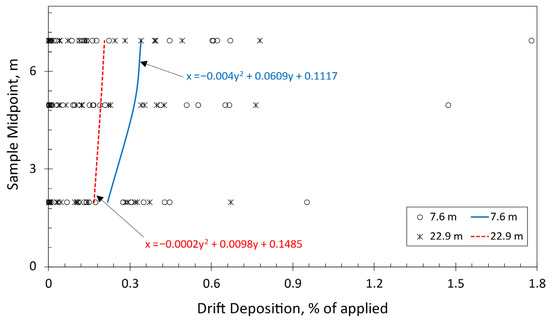
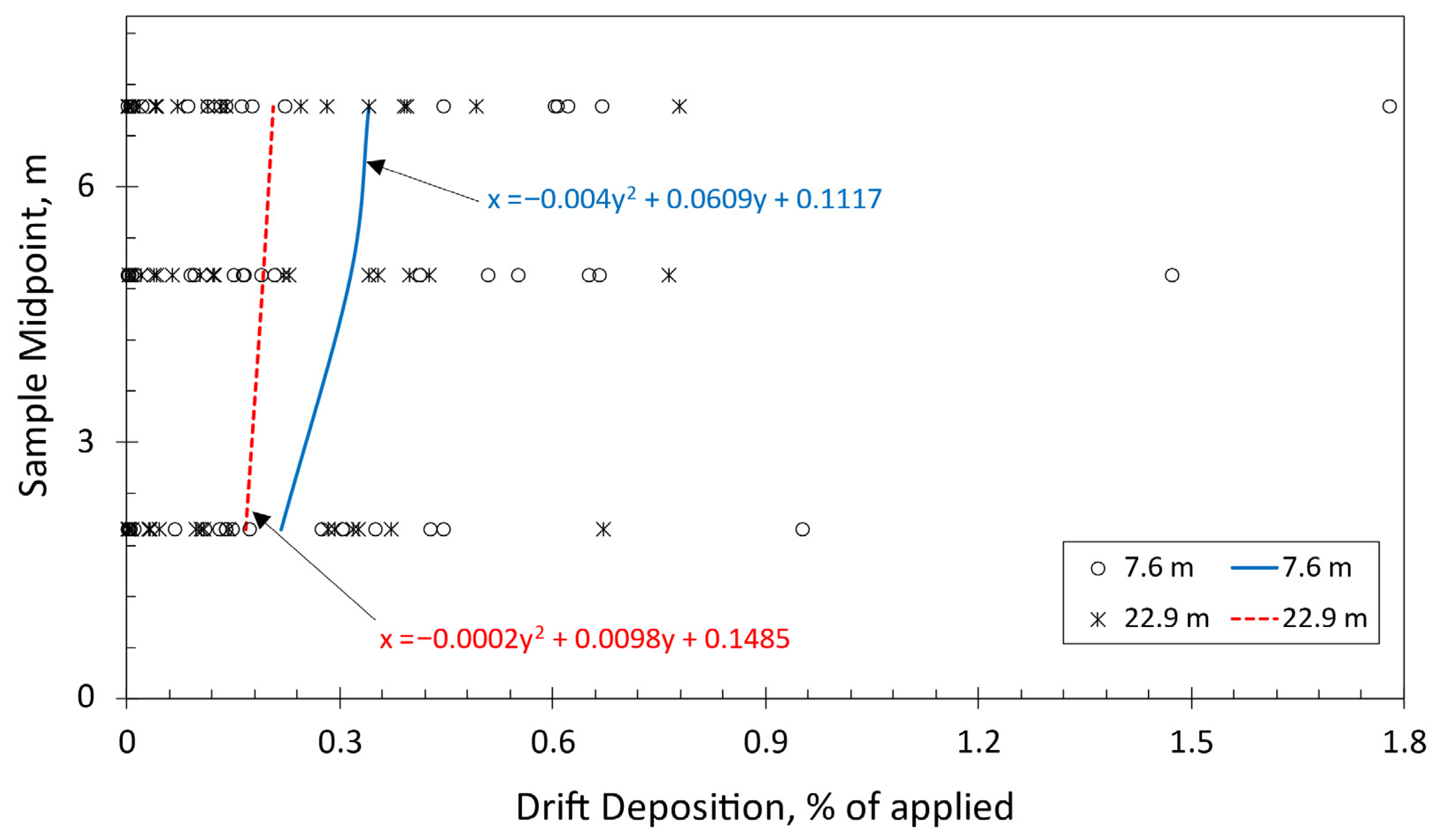
VS samplers were used to collect airborne spray drift at downwind distances of 8 m and 23 m. During sample collection, each string was carefully removed from the vertical structures and cut into three pre-marked sections corresponding to different heights AGL. Figure 8 presents a comparison of airborne drift deposition measured at the two downwind locations.
Figure 8.
Spray drift deposition representing airborne drift collected on vertical string samplers at downwind distances of approximately 8.0 m (25 ft) and 23.0 m (75 ft). Deposits were measured at string midpoints corresponding to heights of 1H (0–4.0 m), 1.5H (4.0–5.9 m), and 2H (5.9–7.9 m), where H represents tree height. Spray was applied using a conventional D-2/40 axial-fan airblast sprayer operating at 10.3 bar, 5.1 km·h−1, and 935 L·ha−1 in a 4.0 m tall mandarin orchard.
At 8 m downwind, deposition values measured at the lower (2 m AGL), middle (5 m AGL), and upper (7 m AGL) string sections were 0.22 ± 0.24%AD, 0.31 ± 0.38%AD, and 0.34 ± 0.44%AD, respectively. Corresponding deposition values at 23 m downwind were 0.17 ± 0.18%AD, 0.19 ± 0.21%AD, and 0.21 ± 0.22%AD for the lower, middle, and upper sections, respectively. A two-way ANOVA indicated no significant differences among the three vertical sections at either downwind distance (p > 0.05).
Although mean deposition at the 23 m location was numerically lower than that at 8 m (0.19 ± 0.02%AD versus 0.29 ± 0.07%AD), this difference was not statistically significant (p > 0.05). Overall, these results suggest that the vertical distribution of droplet volume within the airborne drift plume was relatively uniform at the nearer downwind location. While deposition at the middle and upper sections was slightly greater than at the lower section at 8 m, these vertical differences diminished at 23 m downwind, indicating increasing homogenization of the airborne drift plume with distance.
3.2.2. Flat Card (C) Samplers
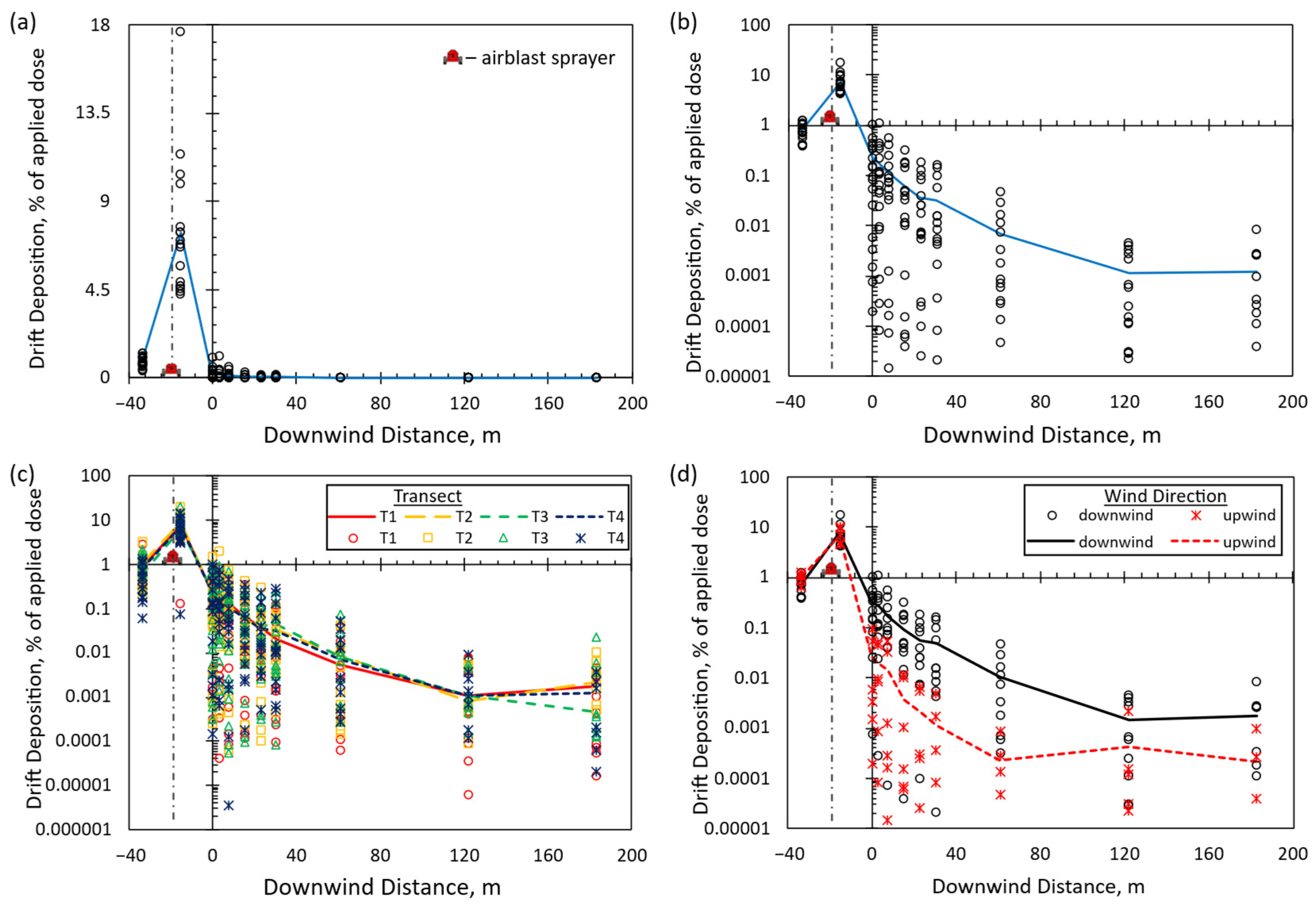
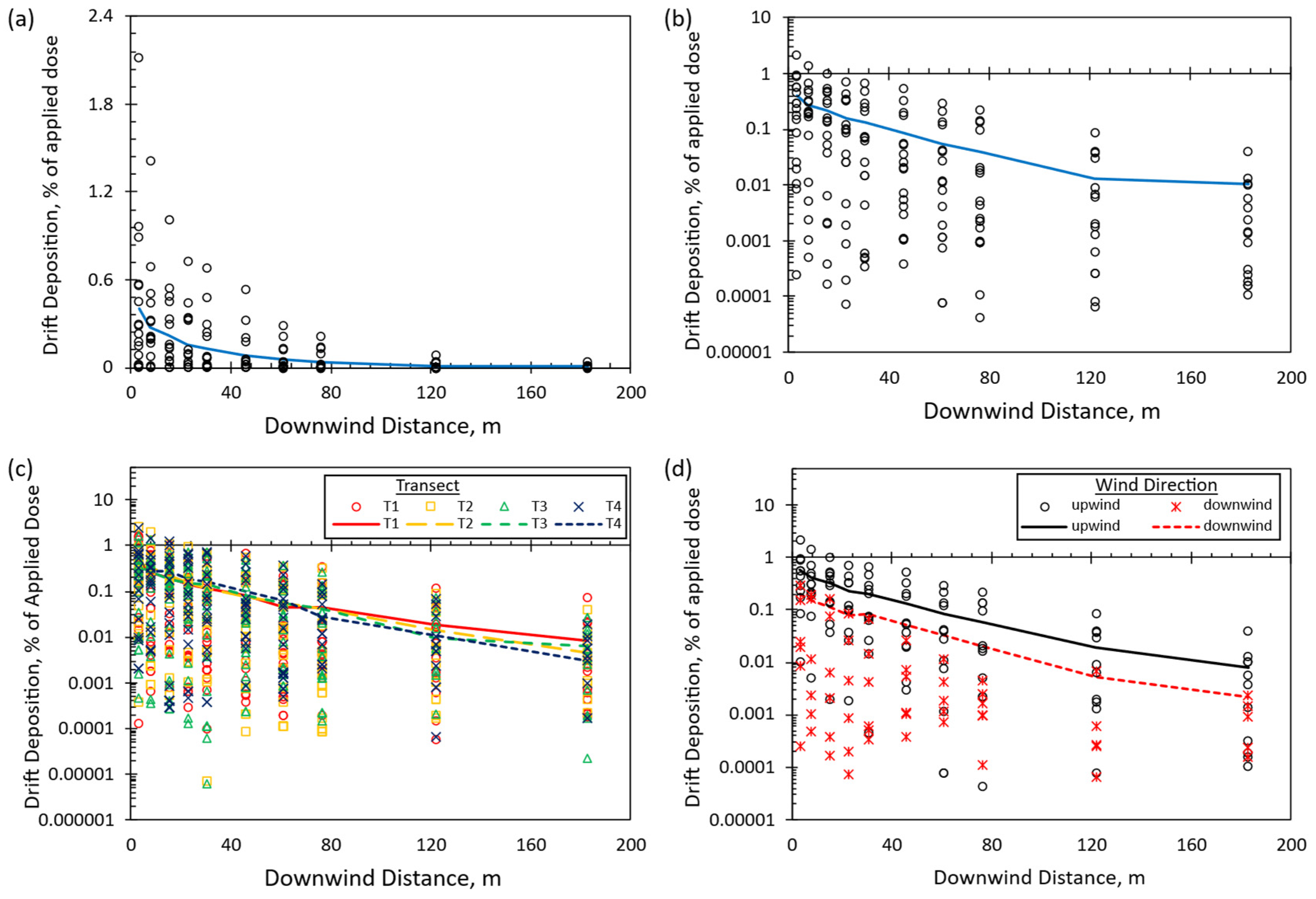
Spray deposition measured using C samplers is shown in Figure 9 for both upwind locations within the orchard and downwind locations beyond the orchard edge. Deposition within the orchard declined with distance from the sprayer travel path, indicating progressive interception by successive canopy rows and ground surfaces. At −34 m (Row 5 upwind), deposition averaged 0.83% ± 0.20% of the applied dose (AD), whereas deposition at −15 m (Row 2 upwind), increased to 7.80% ± 1.29%AD, reflecting proximity to the spray release and incomplete capture by dense canopy.
Figure 9.
Spray dye deposition collected on plastic card (C) samplers as a function of downwind distance (0 m = orchard edge) inside and outside the orchard. Panels show (a) linear plot of mean deposition; log-linear plots of (b) mean deposition, (c) transect comparison, and (d) wind direction comparison. Panels (a,b) present the same data in complementary formats to enhance visualization. Spray was applied using a conventional D-2/40 axial-fan airblast sprayer operating at 10.3 bar, 5.1 km·h−1, and 935 L·ha−1 in a 4.0 m tall mandarin orchard.
Beyond the orchard edge, drift deposition decreased sharply with increasing downwind distance (Figure 9a,b). Mean deposition at 0 m was 0.22% ± 0.02%AD and declined to 0.06% ± 0.01%AD at 15 m, 0.03% ± 0.01%AD at 30 m, 0.007% ± 0.002%AD at 61 m, and 0.001% ± 0.0007%AD at 183 m downwind. A three-way ANOVA (Table 6) indicated that downwind distance had a significant effect on drift deposition (p < 0.05), with pairwise comparisons showing that most of the reduction occurred within the first 30 m. Drift deposition also varied significantly among treatment trials (p < 0.05), while no significant differences were observed among sampling transects, demonstrating consistency across replicate lines.
Table 6.
Results of a three-way analysis of variance (ANOVA) conducted on spray drift data collected from artificial sampling structures—flat plastic cards (C), artificial foliage (AF), and horizontal string (HS)—to evaluate the effects of spray run, sampling transect, and downwind distance. DF = degrees of freedom; SS = sum of squares; MS = mean square; F = F-statistic. Spray was applied using a conventional D-2/40 axial-fan airblast sprayer operating at 10.3 bar, 5.1 km·h−1, and 935 L·ha−1 in a 4.0-m-tall mandarin orchard.
Wind direction strongly influenced measured deposition (Figure 9d). Under predominantly upwind wind conditions, deposition values were uniformly low at all downwind distances, whereas downwind wind conditions resulted in substantially higher deposition across the entire sampling domain. These patterns reflect the combined effects of plume transport and the limited collection efficiency of flat card samplers for fine droplets, particularly as downwind distance increased.
3.2.3. Artificial Foliage (AF) Samplers
Spray drift deposition collected using artificial foliage (AF) samplers is presented in Figure 10. Mean AF deposition was highest near the orchard edge, measuring 0.40% ± 0.05%AD at 3 m downwind, and declined steadily with increasing distance to 0.13% ± 0.02%AD at 30 m, 0.04% ± 0.01%AD at 76 m, and 0.005% ± 0.002%AD at 183 m (Figure 10a,b). This decay pattern reflects progressive depletion of airborne spray mass through settling, evaporation, and plume dilution.
Figure 10.
Spray drift deposition collected on artificial foliage (AF) samplers as a function of downwind distance. Panels show (a) linear plot of mean deposition; log-linear plots of (b) mean deposition, (c) transect comparison, and (d) wind direction comparison. Panels (a,b) are the same data in complementary formats to enhance visualization. Spray was applied using a conventional D-2/40 axial-fan airblast sprayer operating at 10.3 bar, 5.1 km·h−1, and 935 L·ha−1 in a 4.0 m tall mandarin orchard.
As with the card samplers, three-way ANOVA (Table 6) showed that downwind distance and spray trial significantly influenced AF drift deposition (p < 0.05), while no significant transect effect was detected (p > 0.05), indicating spatial consistency among sampling lines (Figure 10c). Wind direction also exerted a strong influence (Figure 10d). Under upwind wind conditions, deposition values at all downwind distances were substantially lower than those observed under downwind conditions, for which deposition at 3 m averaged 0.58% ± 0.60%AD and declined to 0.008% ± 0.012%AD at 183 m.
Logarithmic decay functions were fit to the overall, upwind, and downwind datasets to estimate drift termination distances—defined as the downwind distance beyond which predicted deposition yields zeros or negative values—and final deposition amounts (Table 7). These fitted relationships indicate extended downwind persistence of measurable drift for AF samplers relative to flat cards, reflecting the higher aerodynamic interception efficiency of the three-dimensional artificial foliage collectors.
Table 7.
Summary of estimated drift termination distance and final drift amount derived from artificial samplers—artificial foliage (AF) and horizontal string (HS)—based on logarithmic curve fitting. Spray was applied using a conventional D-2/40 axial-fan airblast sprayer operating at 10.3 bar, 5.1 km·h−1, and 935 L·ha−1 in a 4.0 m tall mandarin orchard.
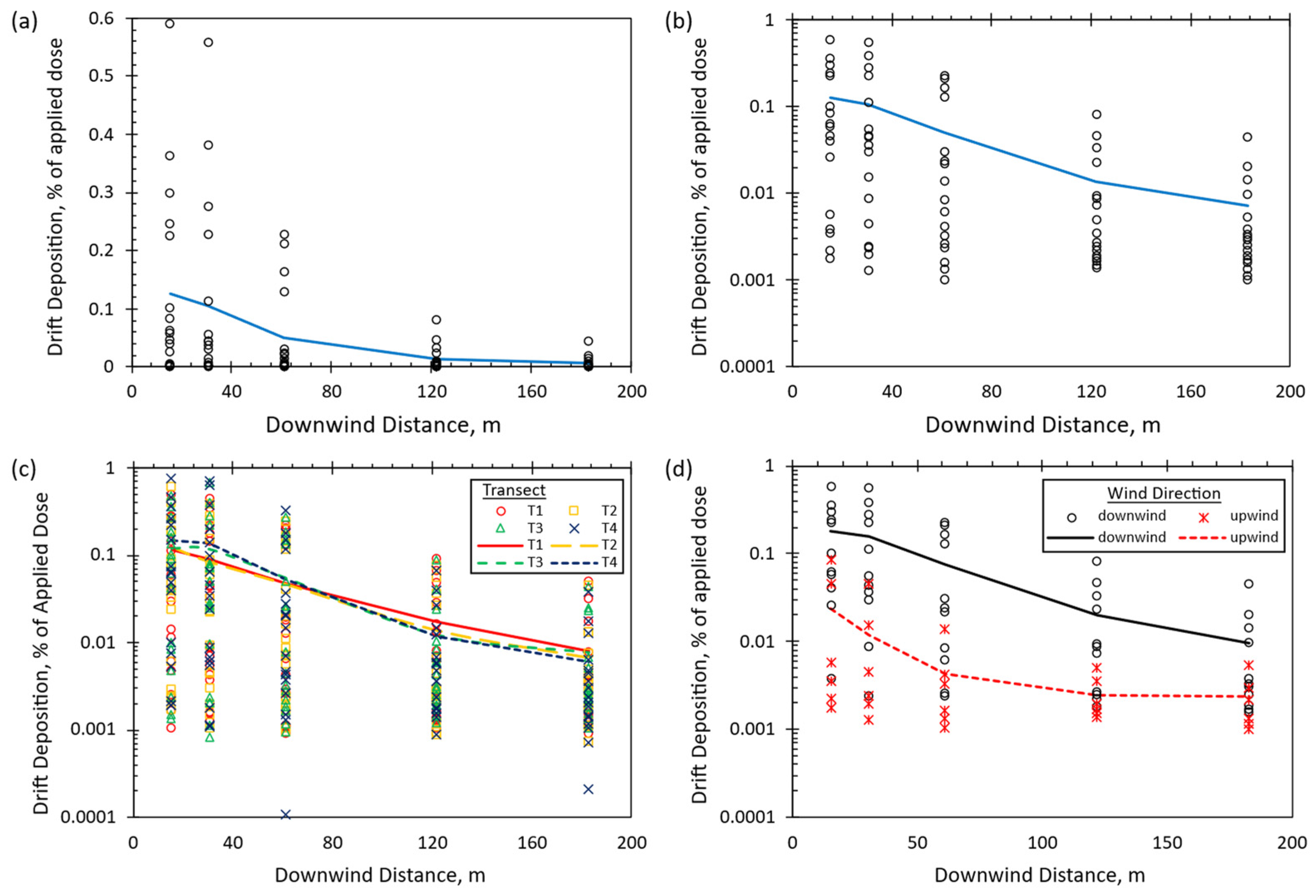
Figure 11.
Spray drift deposit collected on horizontal string (HS) samplers as a function of downwind distance. Panels show (a) a linear plot of mean deposition; log-linear plots of (b) mean deposition, (c) transect comparison, and (d) wind direction comparison. Panels (a,b) display the same data in complementary formats to enhance visualization. Spray was applied using a conventional D-2/40 axial-fan airblast sprayer operating at 10.3 bar, 5.1 km·h−1, and 935 L·ha−1 in a 4.0 m tall mandarin orchard.
3.2.4. Horizontal String (HS) Samplers
Drift deposition measured using HS samplers is shown in Figure 11. Mean deposition was 0.126% ± 0.016%AD at 15 m downwind and declined with distance to 0.106% ± 0.025%AD at 30 m, 0.051% ± 0.004%AD at 61 m, 0.014% ± 0.003%AD at 122 m, and 0.007% ± 0.001%AD at 183 m (Figure 11a,b). This pattern is consistent with progressive reduction in airborne spray mass with downwind transport.
Three-way ANOVA indicated that HS drift deposition differed significantly among spray trials, sampling transects, and downwind distances (p < 0.05). Although a small but significant transect effect was detected, the overall deposition trends were consistent across distances and wind conditions. Wind direction again influenced deposition strongly (Figure 11d). Under upwind wind conditions, deposition values were minimal at all distances, whereas downwind wind conditions produced markedly higher deposition, particularly within the near and intermediate field.
As with the AF data, logarithmic decay functions were fitted to the HS datasets to estimate drift termination distances. The longer termination distances estimated for HS samplers indicate greater sensitivity to fine and intermediate droplets that remain airborne over extended downwind distances.
3.3. Sampler Efficiency
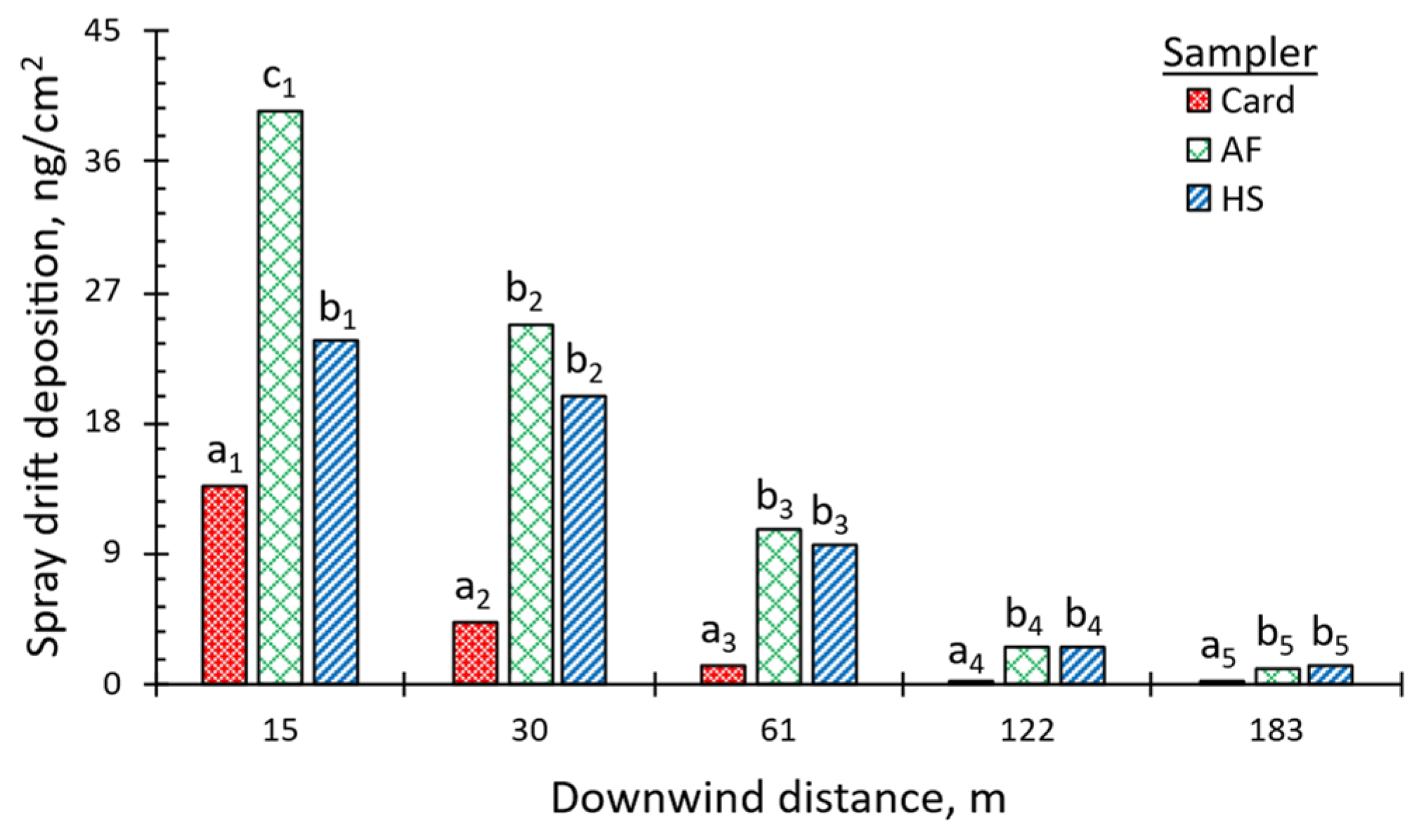
Figure 12 compares spray drift deposition measured using flat plastic card (C), artificial foliage (AF), and horizontal string (HS) samplers at common downwind distances. For all sampler types, deposition decreased monotonically with increasing distance, reflecting progressive reductions in airborne spray mass due to gravitational settling, evaporation, and plume dilution during downwind transport.
Figure 12.
Spray drift deposition at common downwind distances collected using artificial samplers—flat plastic card (C), artificial foliage (AF), and horizontal string (HS). Lowercase letters indicate mean separation. Multiple one-way ANOVAs were conducted, with subscripts denoting each specific analysis.
At the nearest downwind distance (15 m), AF samplers collected the highest deposition, followed by HS samplers, with C samplers collecting the least. These differences were statistically significant (p < 0.05) and reflect differences in aerodynamic interception efficiency among sampler types. Artificial foliage provides a three-dimensional, irregular surface that enhances droplet interception across a wide size spectrum, whereas HS samplers capture fine and intermediate droplets efficiently through extended interception length. In contrast, flat cards rely primarily on inertial impaction and exhibit reduced collection efficiency for fine droplets.
Between 15 and 30 m, deposition declined substantially for all sampler types, while the relative ranking among samplers persisted. Beyond 30 m, deposition continued to decrease sharply, with differences among sampler types diminishing at 122 and 183 m. At these farther distances, measured deposition approached low values regardless of sampler type, indicating that deposition became increasingly limited by availability of remaining airborne spray rather than by sampler-specific capture mechanisms.
Overall, significant differences among sampler types were most pronounced in the near field and diminished with distance. This pattern reflects the transition from a near-field regime, where sampler geometry strongly influences measured deposition, to a far-field regime characterized by plume homogenization and mass depletion, where interception efficiency plays a reduced role.
3.4. Meteorological Influence
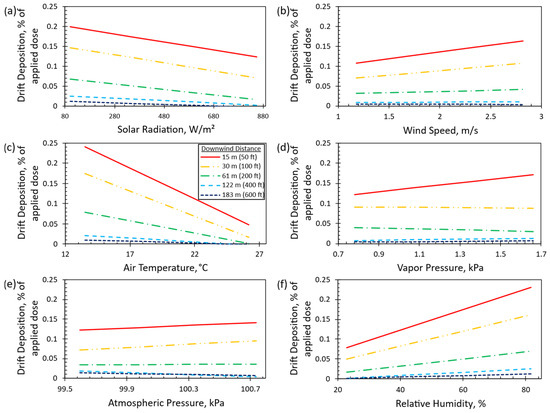
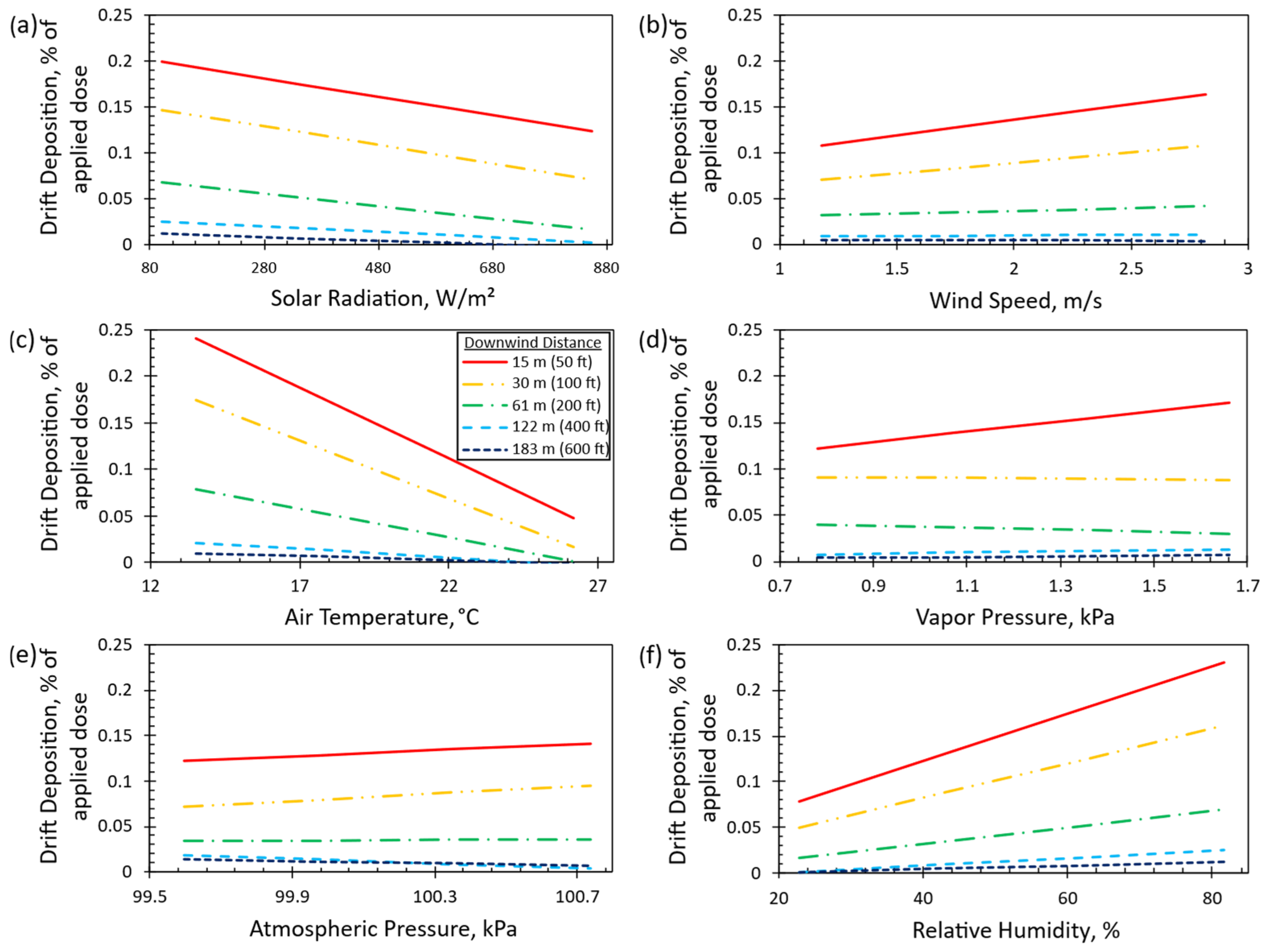
Correlations between meteorological variables measured at 1.8 m AGL at the Met 2 station and mean downwind drift deposition collected by C, AF, and HS samplers are presented in Figure 13. These relationships characterize the effect of weather conditions on spray drift at downwind locations common to all samplers (15, 30, 61, 122, and 183 m). In other words, they illustrate the general sensitivity of drift deposition to each meteorological variable across these distances. In all panels, higher deposition closer to the source and monotonic decreases with distance are expected outcomes of gravitational settling, plume dilution, and atmospheric dispersion. Superimposed on this spatial decay, each meteorological variable modifies droplet lifetime, momentum, and transport efficiency, thereby influencing how much material remains airborne long enough to be detected at increasing downwind distances. Overall, drift deposition generally decreased with increasing solar radiation and air temperature. In contrast, deposition tended to increase with increasing wind speed, vapor pressure, atmospheric pressure, and relative humidity, although an inverse relationship with atmospheric pressure was observed at the farthest downwind distances (122 and 183 m). These trends reflect the competing roles of atmospheric transport and droplet evaporation in controlling downwind drift persistence.
Figure 13.
Sensitivity of spray drift deposition to increasing values of selected weather variables: (a) solar radiation, (b) wind speed, (c) air temperature, (d) vapor pressure, (e) atmospheric pressure, and (f) relative humidity.
The combined influence of prevailing field weather conditions during the trials was evaluated using an MLR model, with weather variables included as independent predictors. The linear combination of six weather variables—including the downwind component of wind direction, cos(θ + 180°)—significantly predicted mean drift deposition (p < 0.05). However, only wind direction, wind speed, and atmospheric pressure were significant contributors to the model, whereas air temperature and relative humidity exhibited multicollinearity, as indicated by elevated variance inflation factors (VIFs). Additional MLR analyses were conducted to evaluate alternative predictor combinations. Excluding both redundant variables resulted in a non-significant model (p > 0.05). In contrast, omitting only relative humidity yielded a significant model with three significant predictors: wind direction, wind speed, and air temperature. Finally, removing only air temperature produced a significant model with four significant predictors—wind direction, wind speed, atmospheric pressure, and relative humidity—of overall mean drift deposition (p < 0.05), as summarized in Table 8.
Table 8.
Results of a multiple linear regression analysis based on data from an ATMOS 41 all-in-one weather sensor installed at a height of 1.8 m (6.0 ft) at the Met 2 station, used to evaluate the effects of weather variables on overall mean spray drift deposition. t = t-statistic; p = p-value; VIF = variance inflation factor.
4. Discussion
The mandarin orchard used in this study was representative of commercial California citrus production based on canopy structure, tree height, and management practices. Although the presence of a large adjacent open field is uncommon in commercial settings, it was necessary to allow unobstructed measurement of downwind spray transport and did not influence spray release or canopy-scale interception processes.
Across all sampler types, spray drift deposition declined consistently with increasing downwind distance, exhibiting rapid attenuation in the near field followed by progressive mass depletion farther downwind. Comparisons in [26] further showed that downwind deposition decreases with increasing canopy size (almond < citrus < grape) while drift termination distance decreases (almond > citrus > grape). Airborne drift measurements showed no significant vertical stratification between 8 m and 23 m downwind, suggesting rapid plume mixing following canopy exit. This behavior is consistent with canopy-induced turbulence and aerodynamic mixing reported previously for perennial cropping systems [17,18] and suggests that vertical concentration gradients diminish quickly beyond the orchard edge under the conditions studied.
Differences in downwind deposition among sampler types reflected contrasting aerodynamic interception efficiencies. Artificial foliage and horizontal string samplers consistently collected greater deposition than flat plastic cards in the near field, as also observed by [10,48], due to their enhanced ability to intercept fine and intermediate droplets. With increasing distance, these differences diminished as the remaining airborne spray fraction became increasingly fine and spatially uniform, indicating a transition from interception-controlled to transport-limited deposition.
Variability among treatment trials was primarily attributed to differences in meteorological conditions during spraying. Wind direction variations throughout the treatment periods, which are consistent with previous observations [9,17], remained within the ISO 22866 [41] allowance that no more than 30% of measurements exceed 45°, and they provide useful context for interpreting how weather variables influenced drift. Combined with changes in wind speed, air temperature, relative humidity, and atmospheric pressure influenced droplet transport, evaporation, and residence time, resulting in substantial trial-to-trial variability despite consistent sprayer configuration and canopy structure. The influence of these variables weakened with distance as plume dilution and droplet depletion became increasingly dominant, consistent with prior field observations [17].
When compared with drift measurements reported previously for dormant apple canopies [10], the citrus orchard evaluated in this study exhibited substantially lower downwind deposition across all sampler types (C: 79%; AF: 69%; HS: 82%). The dense, fully foliated citrus canopy provided greater surface area for spray interception, reducing the quantity of material available for off-target transport. These findings reinforce the importance of explicitly accounting for canopy architecture, as demonstrated previously [22], when evaluating airblast spray drift and caution against reliance on dormant-canopy surrogates for citrus systems.
4.1. Implications for Spray Drift Modeling
The meteorological sensitivity analyses highlight the importance of explicitly representing droplet evaporation, plume dilution, and distance-dependent transport processes in spray drift models, rather than relying solely on empirical downwind decay functions. Variables that directly control evaporation—particularly air temperature, relative humidity, and solar radiation—exert strong influence on droplet persistence and measured deposition, indicating that models assuming constant droplet size or implicit evaporation may misrepresent far-field drift under realistic field conditions.
Wind speed remained the dominant driver of near-field transport by enhancing horizontal advection and plume propagation. However, the diminishing response of deposition to increasing wind speed with distance demonstrates that wind speed alone is insufficient for predicting drift magnitude beyond the near field, where gravitational settling, evaporation, and plume dilution increasingly govern deposition behavior. This result supports the need for models that account for the shifting balance among transport and loss processes with downwind distance.
The absence of significant vertical stratification in airborne drift at farther downwind locations suggests progressive plume homogenization beyond short distances from the canopy edge. This finding supports simplified concentration profile assumptions in Gaussian-type or Lagrangian dispersion models for the far field, while reinforcing the need for higher spatial resolution in near-field regions where gradients remain pronounced.
Collectively, these results support a process-based modeling framework in which meteorological variables are mechanistically linked to droplet lifetime, transport efficiency, and deposition potential. Incorporating such relationships will improve the physical realism of drift prediction tools used in regulatory exposure assessments, particularly for perennial specialty crops where canopy interactions and meteorological variability play central roles in determining off-target transport.
4.2. Limitations of Study
Although this study provides a detailed evaluation of spray drift in a representative citrus orchard, several limitations should be noted. Spraying was conducted only in a single orchard row (−21 m), which limits assessment of how drift might vary with different upwind canopy positions. Strict wind-direction requirements also led to long wait times between trials, increasing the chance of unaccounted changes in atmospheric conditions. In addition, frequent wind-direction shifts during spraying made it difficult to maintain consistently downwind sampling conditions throughout each trial. These factors, along with the inherent variability of passive samplers, may constrain the broader generalization of the results. Thus, direct extension of the results to other application settings and cropping systems—including other citrus orchard architectures—should be approached with caution.
VMD was not measured directly within the tank mix containing the tracer dye. However, since pyranine was used at very low concentrations and has been shown in the literature not to alter the physical properties of water or droplet formation, water-based VMD measurements provided a representative characterization of the applied spray [44,45].
Beyond these logistical constraints, the experimental design was not intended for establishing regulatory buffer distances. The study relied on a single orchard site, a single sprayer configuration, and passive samplers that quantify deposition rather than toxicological exposure. Consequently, the dataset does not capture the range of application equipment, canopy architectures, formulation effects, or worst-case meteorological conditions typically required for regulatory buffer-zone determination. Given these limitations, and the inherent variability associated with field drift measurements, the results should be interpreted as mechanistic and comparative rather than prescriptive. Accordingly, while the findings provide valuable insight into spray drift processes and sampler performance, they are not sufficient to support the derivation of regulatory buffer zones or enforceable setback distances, and not sufficient for direct extrapolation to other crops.
5. Conclusions
This study provides a comprehensive, field-scale evaluation of off-target spray drift from airblast sprayer applications in a representative, fully foliated California citrus orchard, generating one of the most detailed empirical datasets available for this production system. Across all sampler types, measured drift deposition declined rapidly with downwind distance, reflecting progressive plume dilution and droplet depletion farther downwind. Airborne drift measurements exhibited minimal vertical stratification beyond short distances from the orchard edge, indicating rapid plume homogenization following canopy exit under the conditions evaluated. Variability in drift magnitude among trials was primarily associated with meteorological conditions, particularly wind direction, wind speed, and atmospheric pressure, while temperature and humidity influenced droplet persistence through evaporative processes. When compared with previously reported data for dormant apple canopies, downwind deposition from the foliated citrus canopy was substantially lower across all sampler types, highlighting the influence of canopy density and architecture on spray interception and off-target transport. These findings underscore the limitations of relying on dormant-canopy surrogates to represent citrus systems in regulatory spray drift assessments and emphasize the importance of accounting explicitly for canopy structure when evaluating airblast spray drift. Although the results are not intended to define regulatory buffer distances, the dataset provides mechanistically interpretable inputs to support development and refinement of computationally efficient, canopy-aware drift models. When combined with companion studies in other perennial specialty crops, this work contributes to a consistent empirical foundation for improving representation of canopy interactions, plume evolution, and meteorological modulation in spray drift modeling frameworks used for environmental exposure and risk assessment.
Author Contributions
Conceptualization, P.A.L., H.W.T. and M.J.W.; methodology, P.A.L. and H.W.T.; software, P.A.L.; validation, P.A.L.; formal analysis, P.A.L.; investigation, P.A.L.; resources, P.A.L.; data curation, P.A.L.; writing—original draft preparation, P.A.L.; writing—review and editing, G.W.D., M.J.W. and H.W.T.; visualization, P.A.L.; supervision, P.A.L.; project administration, P.A.L.; funding acquisition, P.A.L. and G.W.D. All authors have read and agreed to the published version of the manuscript.
Funding
This research was funded by: Citrus Research Board, grant number 5400-161; Almond Board of California, grant number Water14.Larbi; California Table Grape Commission, grant number Y20-4996; and Washington State Wine Commission, grant number Y20-5159. Additional funding for the research and funding for the APC was provided by the University of California Agriculture and Natural Resources.
Data Availability Statement
The data presented in this study are available on request from the corresponding author.
Acknowledgments
Special acknowledgments to the following people for providing field and/or lab assistance: Christian Basulto ((SRA), Agricultural Application Engineering Laboratory (AgAppE Lab), Kearney Agricultural Research and Extension Center (KARE Center)); Franz Niederholzer (University of California Cooperative Extension (UCCE), Colusa and Sutter/Yuba Counties); Mae Culumber and George Zhuang (Fresno County); Gabriel Torres (Tulare County); Daniel Cabrera, Sharon Asakawa, Ruben Chavez, and David Rodriguez Herrera, (UC ANR/AgAppE Lab); Ryan Puckett (KARE Center); Ramandeep Kaur Brar (UC ANR); German Zuniga-Ramirez (UC Davis Digital Ag Lab); Courtney Jallo and Maureen Thompson (Coalition for Urban and Rural Environmental Stewardship). Access to research site was made possible by two cooperating growers/landowners. During the preparation of this manuscript, the authors used Zotero reference management software (version 8.0.4, 64-bit) to ensure consistent referencing. Microsoft 365 Copilot was used during the revision stage to support manuscript editing and organization. The authors have reviewed, verified, and edited the output and take full responsibility for the content of this publication.
Conflicts of Interest
Author Harold W. Thistle was employed by the company TEALS, LLC, Whitesville, NY, USA. Author Michael J. Willett was employed by the company Integrated Plant Health Strategies LLC, Yakima, WA, USA. The remaining authors declare that the research was conducted in the absence of any commercial or financial relationships that could be construed as a potential conflict of interest.
Abbreviations
The following abbreviations are used in this manuscript:
| AF | Artificial foliage |
| AGDISP | AGricultural DISPersal |
| AGL | Above ground level |
| C | Flat plastic card |
| CFD | Computational fluid dynamics |
| EPA | Environmental Protection Agency |
| HS | Horizontal string |
| ISO | International Organization for Standardization |
| Met | Meteorological station |
| SDTF | Spray Drift Task Force |
| VMD | Volume median diameter |
| VS | Vertical string |
References
- United States Department of Agriculture (USDA) National Agricultural Statistics Service (NASS). Citrus Fruits 2022 Summary September 2022. Available online: https://ccqc.org/wp-content/uploads/USDA-NASS-Citrus-Fruits-2022-Summary-090822.pdf (accessed on 13 January 2024).
- California Department of Food and Agriculture (CDFA). 2022 California Citrus Acreage Report Sacramento, CA, August 2022. Available online: https://www.nass.usda.gov/Statistics_by_State/California/Publications/Specialty_and_Other_Releases/Citrus/Acreage/202208citac.pdf (accessed on 13 January 2024).
- University of California Statewide IPM Program (UC IPM). Agriculture: Pest Management Guidelines—Citrus UC IPM. Available online: https://web.archive.org/web/20260417231027/https://ipm.ucanr.edu/agriculture/citrus/#gsc.tab=0 (accessed on 15 April 2026).
- Cunha, J.P.; Chueca, P.; Garcerá, C.; Moltó, E. Risk assessment of pesticide spray drift from citrus applications with air-blast sprayers in Spain. Crop Prot. 2012, 42, 116–123. [Google Scholar] [CrossRef] [Scilit]
- Soheilifard, F.; Marzban, A.; Raini, M.G.; Taki, M.; van Zelm, R. Chemical footprint of pesticides used in citrus orchards based on canopy deposition and off-target losses. Sci. Total Environ. 2020, 732, 139118. [Google Scholar] [CrossRef] [Scilit]
- Schönenberger, U.T.; Simon, J.; Stamm, C. Are spray drift losses to agricultural roads more important for surface water contamination than direct drift to surface waters? Sci. Total Environ. 2022, 809, 151102. [Google Scholar] [CrossRef] [Scilit]
- Ellis, M.C.B.; Lane, A.G.; O’Sullivan, C.M.; Miller, P.C.H.; Glass, C.R. Bystander exposure to pesticide spray drift: New data for model development and validation. Biosyst. Eng. 2010, 107, 162–168. [Google Scholar] [CrossRef] [Scilit]
- Ellis, M.C.B.; van de Zande, J.C.; Berg, F.v.D.; Kennedy, M.C.; O’Sullivan, C.M.; Jacobs, C.M.; Fragkoulis, G.; Spanoghe, P.; Gerritsen-Ebben, R.; Frewer, L.J.; et al. The BROWSE model for predicting exposures of residents and bystanders to agricultural use of plant protection products: An overview. Biosyst. Eng. 2017, 154, 92–104. [Google Scholar] [CrossRef] [Scilit]
- Dubuis, P.-H.; Droz, M.; Melgar, A.; Zürcher, U.A.; Zarn, J.A.; Gindro, K.; König, S.L. Environmental, bystander and resident exposure from orchard applications using an agricultural unmanned aerial spraying system. Sci. Total Environ. 2023, 881, 163371. [Google Scholar] [CrossRef] [Scilit]
- Rathnayake, A.P.; Khot, L.R.; Hoheisel, G.A.; Thistle, H.W.; Teske, M.E.; Willett, M.J. Downwind Spray Drift Assessment for Airblast Sprayer Applications in a Modern Apple Orchard System. Trans. ASABE 2021, 64, 601–613. [Google Scholar] [CrossRef] [Scilit]
- Pergher, G.; Gubiani, R. The Effect of Spray Application Rate and Airflow Rate on Foliar Deposition in a Hedgerow Vineyard. J. Agric. Eng. Res. 1995, 61, 205–216. [Google Scholar] [CrossRef] [Scilit]
- Nuyttens, D.; Baetens, K.; De Schampheleire, M.; Sonck, B. Effect of nozzle type, size and pressure on spray droplet characteristics. Biosyst. Eng. 2007, 97, 333–345. [Google Scholar] [CrossRef] [Scilit]
- Grella, M.; Marucco, P.; Manzone, M.; Gallart, M.; Balsari, P. Effect of sprayer settings on spray drift during pesticide application in poplar plantations (Populus spp.). Sci. Total Environ. 2017, 578, 427–439. [Google Scholar] [CrossRef] [Scilit]
- Li, T.; Qi, P.; Wang, Z.; Xu, S.; Huang, Z.; Han, L.; He, X. Evaluation of the Effects of Airflow Distribution Patterns on Deposit Coverage and Spray Penetration in Multi-Unit Air-Assisted Sprayer. Agronomy 2022, 12, 944. [Google Scholar] [CrossRef] [Scilit]
- Cross, J.V.; Walklate, P.J.; Murray, R.A.; Richardson, G.M. Spray deposits and losses in different sized apple trees from an axial fan orchard sprayer: 1. Effects of spray liquid flow rate. Crop Prot. 2001, 20, 13–30. [Google Scholar] [CrossRef] [Scilit]
- Bock, C.H.; Hotchkiss, M.W.; Cottrell, T.E.; Wood, B.W. The Effect of Sample Height on Spray Coverage in Mature Pecan Trees. Plant Dis. 2015, 99, 916–925. [Google Scholar] [CrossRef] [Scilit] [PubMed]
- Grella, M.; Gallart, M.; Marucco, P.; Balsari, P.; Gil, E. Ground Deposition and Airborne Spray Drift Assessment in Vineyard and Orchard: The Influence of Environmental Variables and Sprayer Settings. Sustainability 2017, 9, 728. [Google Scholar] [CrossRef] [Scilit]
- Hong, S.; Park, J.; Jeong, H.; Lee, S.; Choi, L.; Zhao, L.; Zhu, H. Fluid Dynamic Approaches for Prediction of Spray Drift from Ground Pesticide Applications: A Review. Agronomy 2021, 11, 1182. [Google Scholar] [CrossRef] [Scilit]
- Grella, M.; Maffia, J.; Dinuccio, E.; Balsari, P.; Miranda-Fuentes, A.; Marucco, P.; Gioelli, F. Assessment of fine droplets (<10 μm) in primary airborne spray drift: A new methodological approach. J. Aerosol Sci. 2023, 169, 106138. [Google Scholar] [CrossRef] [Scilit]
- Bonds, J.A.S.; Nuyttens, D.; Dekeyser, D. Development of a spray drift database and an example of how it has been used to observe the effects of canopy and droplet size on drift profiles in apple orchards. Asp. Appl. Biol. 2016, 132, 385–390. [Google Scholar]
- Duga, A.T.; Delele, M.A.; Ruysen, K.; Dekeyser, D.; Nuyttens, D.; Bylemans, D.; Nicolai, B.M.; Verboven, P. Development and validation of a 3D CFD model of drift and its application to air-assisted orchard sprayers. Biosyst. Eng. 2017, 154, 62–75. [Google Scholar] [CrossRef] [Scilit]
- Salyani, M.; Farooq, M.; Sweeb, R.D. Spray Deposition and Mass Balance in Citrus Orchard Applications. Trans. ASABE 2007, 50, 1963–1969. [Google Scholar] [CrossRef] [Scilit]
- Larbi, P.A.; Salyani, M. Model to Predict Spray Deposition in Citrus Airblast Sprayer Applications: Part 1. Spray Dispersion. Trans. ASABE 2012, 55, 29–39. [Google Scholar] [CrossRef] [Scilit]
- Larbi, P.A.; Salyani, M. Model to Predict Spray Deposition in Citrus Airblast Sprayer Applications: Part 2. Spray Deposition. Trans. ASABE 2012, 55, 41–48. [Google Scholar] [CrossRef] [Scilit]
- Jensen, P.K.; Olesen, M.H. Spray mass balance in pesticide application: A review. Crop Prot. 2014, 61, 23–31. [Google Scholar] [CrossRef] [Scilit]
- Larbi, P.A.; Culumber, M.; Zhuang, G.; Douhan, G.; Thistle, H.W.; Willett, M.J. Evaluation of Downwind Spray Drift from Airblast Spray Applications in Almond, Citrus, and Grape. In 2022 ASABE Annual International Meeting, 17–20 July 2022; American Society of Agricultural and Biological Engineers: St. Joseph, MI, USA, 2022. [Google Scholar] [CrossRef] [Scilit]
- Larbi, P.A.; Salyani, M. CitrusSprayEx: An expert system for planning citrus spray applications. Comput. Electron. Agric. 2012, 87, 85–93. [Google Scholar] [CrossRef] [Scilit]
- Ryan, S.D.; Gerber, A.G.; Holloway, A.G.L. A Computational Study on Spray Dispersal in the Wake of an Aircraft. Trans. ASABE 2013, 56, 847–868. [Google Scholar] [CrossRef] [Scilit]
- Teske, M.E.; Thistle, H.W.; Ice, G.G. Technical Advances in Modeling Aerially Applied Sprays. Trans. ASAE 2003, 46, 985–996. [Google Scholar] [CrossRef] [Scilit]
- Teske, M.E.; Thistle, H.W.; Fritz, B.K. Modeling Aerially Applied Sprays: An Update to AGDISP Model Development. Trans. ASABE 2019, 62, 343–354. [Google Scholar] [CrossRef] [Scilit]
- Hong, S.; Zhao, L.; Zhu, H. SAAS, a computer program for estimating pesticide spray efficiency and drift of air-assisted pesticide applications. Comput. Electron. Agric. 2018, 155, 58–68. [Google Scholar] [CrossRef] [Scilit]
- Bird, S.L.; Perry, S.G.; Ray, S.L.; Teske, M.E. Evaluation of the AgDISP aerial spray algorithms in the AgDRIFT model. Environ. Toxicol. Chem. 2002, 21, 672–681. [Google Scholar] [CrossRef]
- Teske, M.E.; Bird, S.L.; Esterly, D.M.; Ray, S.L.; Perry, S.G. A User’s Guide for AgDRIFT® 2.0.07: A Tiered Approach for the Assessment of Spray Drift of Pesticides; Public Use Version C.D.I. Report No. 01-01; Spray Drift Task Force: Macon, MO, USA, 2003. [Google Scholar]
- Teske, M.E.; Thistle, H.W.; Schou, W.C.; Miller, P.C.H.; Strager, J.M.; Richardson, B.; Ellis, M.C.B.; Barry, J.W.; Twardus, D.B.; Thompson, D.G. A Review of Computer Models for Pesticide Deposition Prediction. Trans. ASABE 2011, 54, 789–801. [Google Scholar] [CrossRef] [Scilit]
- Salyani, M.; Farooq, M.; Sweeb, R.D. Mass Balance of Citrus Spray Applications. In 2007 ASABE Annual International Meeting, 17–20 June 2007; American Society of Agricultural and Biological Engineers: St. Joseph, MI, USA, 2007. [Google Scholar] [CrossRef] [Scilit]
- Khot, L.R.; Ehsani, R.; Albrigo, G.; Larbi, P.A.; Landers, A.; Campoy, J.; Wellington, C. Air-assisted sprayer adapted for precision horticulture: Spray patterns and deposition assessments in small-sized citrus canopies. Biosyst. Eng. 2012, 113, 76–85. [Google Scholar] [CrossRef] [Scilit]
- Larbi, P.A.; Salyani, M. Discretization for a spray deposition model: Criteria for temporal and spatial differencing. Comput. Electron. Agric. 2013, 97, 35–39. [Google Scholar] [CrossRef] [Scilit]
- Larbi, P.A.; Zhuang, G.; Thistle, H.W.; Willett, M.J. Downwind Drift from Grape Airblast Spray Applications: Field Evaluation to Support Mechanistic Model Development. Am. J. Enol. Vitic. 2025, 76, 0760025. [Google Scholar] [CrossRef] [Scilit]
- Larbi, P.A.; Culumber, M.; Thistle, H.W.; Willett, M.J. Downwind drift from almond airblast spray applications: Field measurement to aid mechanistic model development. Pest Manag. Sci. 2025, 81, 3811–3821. [Google Scholar] [CrossRef] [Scilit]
- Thistle, H.W.; Bonds, J.A.S.; Kees, G.J.; Fritz, B.K. Evaluation of Spray Drift from Backpack and UTV Spraying. Trans. ASABE 2017, 60, 41–50. [Google Scholar] [CrossRef] [Scilit]
- ISO 22866:2005; Methods for Field Measurement of Spray Drift. ISO: Geneva, Switzerland, 2005.
- How Tall Do Citrus Trees Grow? Complete Height Guide US Citrus Nursery. Available online: https://uscitrusnursery.com/blogs/citrus-simplified/citrus-questions-how-tall-do-citrus-trees-grow (accessed on 4 March 2026).
- Gregorio, E.; Rosell-Polo, J.R.; Sanz, R.; Rocadenbosch, F.; Solanelles, F.; Garcerá, C.; Chueca, P.; Arnó, J.; del Moral, I.; Masip, J.; et al. LIDAR as an alternative to passive collectors to measure pesticide spray drift. Atmos. Environ. 2014, 82, 83–93. [Google Scholar] [CrossRef] [Scilit]
- ASABE S572.1; Droplet Size Classification. ASABE: St. Joseph, MI, USA, 2009.
- Fritz, B.K.; Hoffmann, W.C.; Jank, P. A Fluorescent Tracer Method for Evaluating Spray Transport and Fate of Field and Laboratory Spray Applications. J. ASTM Int. 2011, 8, 1–9. [Google Scholar] [CrossRef] [Scilit]
- Ehmke, A.; Wegener, J.K.; Melfsen, A.; Hartung, E. Optimizing exposure data collection for plant protection products: Identifying ideal collectors with the fluorescent dye pyranine. J. Consum. Prot. Food Saf. 2024, 19, 245–253. [Google Scholar] [CrossRef] [Scilit]
- Larbi, P.A. Configuration and Assessment of a Submersible Fluorometer for Evaluating Fluorescent Dye Deposition. J. Test. Eval. 2022, 50, 20210617. [Google Scholar] [CrossRef] [Scilit]
- Thistle, H.W.; Ice, G.G.; Karsky, R.L.; Hewitt, A.J.; Dorr, G. Deposition of Aerially Applied Spray to a Stream within a Vegetative Barrier. Trans. ASABE 2009, 52, 1481–1490. [Google Scholar] [CrossRef] [Scilit]

Disclaimer/Publisher’s Note: The statements, opinions and data contained in all publications are solely those of the individual author(s) and contributor(s) and not of MDPI and/or the editor(s). MDPI and/or the editor(s) disclaim responsibility for any injury to people or property resulting from any ideas, methods, instructions or products referred to in the content. |
© 2026 by the authors. Licensee MDPI, Basel, Switzerland. This article is an open access article distributed under the terms and conditions of the Creative Commons Attribution (CC BY) license.