Article

Evaluating Emergency Shelter Resilience Under Population Pressure: A Case Study of Xi’an, China

1
School of Surveying and Mapping, Xi’an University of Science and Technology, Xi’an 710054, China
2
School of Architecture and Civil Engineering, Xi’an University of Science and Technology, Xi’an 710054, China
*
Author to whom correspondence should be addressed.
Sustainability 2026, 18(9), 4454; https://doi.org/10.3390/su18094454
Submission received: 14 March 2026 / Revised: 25 April 2026 / Accepted: 27 April 2026 / Published: 1 May 2026
(This article belongs to the Topic Advances in Urban Resilience for Sustainable Futures)

Abstract

Urban emergency shelters constitute essential spatial elements within the framework of urban disaster prevention and mitigation. Addressing the shortcomings of existing evaluation methods, which often overlook the relationship between shelters and their served populations, this study utilizes Xi’an as a case study to develop a resilience assessment model that integrates supporting facilities, operational efficiency, and safety performance. To link this model to the served population, the research incorporates the service population pressure index and employs the Gini coefficient alongside the Lorenz curve to assess the congruence between shelter resilience and population distribution. Moreover, the introduction of the intervention priority index and population vulnerability index facilitates a comprehensive determination of shelter intervention priorities. The results reveal that emergency shelters in Xi’an display a spatial pattern characterized by a “single core with multiple centers,” with higher resilience levels, service pressures, and intervention priorities concentrated in the central urban area and lower values observed in peripheral zones. Additionally, a significant spatial mismatch is identified between shelter resilience and population service demands. Despite relying on static population data and not accounting for the effects of population migration, the evaluation framework presented in this study offers a transferable methodological reference for the comprehensive evaluation of shelters in densely populated urban areas, contributing to sustainable urban development.

1. Introduction

Cities constitute a significant milestone in the evolution of human social organization, serving as pivotal nodes for socioeconomic activities and vital repositories of cultural and civilizational heritage. Characterized by high population densities, sophisticated economic systems, and concentrated infrastructural networks, cities are increasingly susceptible to various disruptions—including natural disasters and public emergencies—particularly in the context of accelerated climate change and rapid urban expansion, which challenge long-term urban sustainability [1]. In this regard, emergency shelters represent essential elements of urban safety infrastructure, playing a crucial role in safeguarding the public. The efficacy of their spatial configuration and operational administration is inherently connected to the safeguarding of inhabitants and the preservation of social stability, which are essential foundations of sustainable urban development. Accordingly, scholarly inquiry into the spatial distribution and optimization of emergency shelters has garnered growing attention in recent academic discourse.
Since the inception of the first standardized emergency shelter in Beijing in 2003, China has persistently advanced the development of standardized systems and infrastructure for emergency shelters. Following the 2008 Wenchuan earthquake, the construction of emergency shelters in China entered a phase characterized by standardized design, which enabled extensive nationwide implementation [2]. During this period, prevalent issues emerged, including an overemphasis on physical infrastructure at the expense of spatial planning and a preference for uniform standards over sustainable long-term management. Subsequently, the development of emergency shelters became increasingly integrated within the broader urban safety framework and comprehensive disaster prevention and mitigation strategies [3]. Notably, the 2022 Central Urban Work Conference explicitly emphasized, for the first time, the imperative to “focus on building safe and reliable resilient cities,” thereby elevating the emergency shelter system to a strategic priority in urban resilience construction [4]. By April 2025, urban emergency shelter development in China had experienced another phase of rapid progress, yielding significant accomplishments. Nevertheless, persistent challenges remain, such as imbalanced spatial distribution of facilities, gaps in service coverage, and a mismatch between service capacity and the fluctuating demands of the population. Consequently, the establishment of a rigorous and comprehensive evaluation framework for urban shelter systems is critical to improving overall construction quality, optimizing economic efficiency, and ensuring rational planning.
The contemporary development of multi-criteria quantitative models that integrate multi-source data to evaluate the performance of emergency shelters, alongside the visualization of outcomes via Geographic Information System (GIS) tools, has emerged as a predominant methodology for analyzing and appraising the rationality of spatial distribution. In constructing resilience evaluation models for emergency shelters, scholars frequently utilize techniques such as the Analytic Hierarchy Process (AHP) [5], the Technique for Order Preference by Similarity to Ideal Solution (TOPSIS) [6], and Grey Relational Analysis [7]. These evaluation frameworks are generally founded upon three fundamental principles: accessibility, safety, and effectiveness. Regarding accessibility, extant literature commonly conceptualizes it as the distance, travel time, or economic cost required to move between spatial points, positioning it as a central metric for assessing the rationality of shelter layout. Standard evaluation methodologies encompass the nearest neighbor distance method, buffer analysis, network analysis, cumulative cost resistance method, and the two-step floating catchment area method (2SFCA), among others. Recent studies have incorporated considerations of real-time traffic data and variations in evacuation capabilities across different age demographics [8,9,10]. In terms of safety, research predominantly addresses two dimensions: the safety of the geographical environment and the risk posed by the surrounding environment. The assessment of geographical environment safety typically involves core indicators such as geological conditions, terrain elevation, slope, and hydrological features, with the objective of mitigating direct hazards including landslides, debris flows, ground subsidence, and flooding. Conversely, the evaluation of surrounding environment risk focuses on analyzing the spatial distribution of flammable and explosive facilities and estimating the potential collapse zones of adjacent structures [11,12,13]. Concerning effectiveness, existing studies primarily evaluate three aspects: the intrinsic capacity of the site, the coordination capacity of external systems, and the support capacity of internal facilities. The intrinsic capacity pertains to indicators such as the effective evacuation area, population served, accessibility of internal roads, configuration of entrances and exits, and the width of evacuation routes. The support capacity of internal facilities encompasses the provision of emergency power, water supply, sanitation, accommodation, and signage systems [14]. The coordination capacity of external systems emphasizes spatial integration with critical infrastructures, including hospitals, fire stations, police stations, emergency material reserves, and large supermarkets, to facilitate the transfer of injured individuals, respond to secondary disasters, and ensure material supply [15,16,17]. In summary, although significant progress has been achieved in the evaluation of emergency shelters, particularly in capturing the resilience characteristics of individual shelters, these investigations frequently fall short in comprehensively assessing the relationship between the resilience of urban emergency shelters and the actual populations they serve. Moreover, they often neglect the influence of population vulnerability as an independent demand-side factor affecting the provision of emergency shelter services.
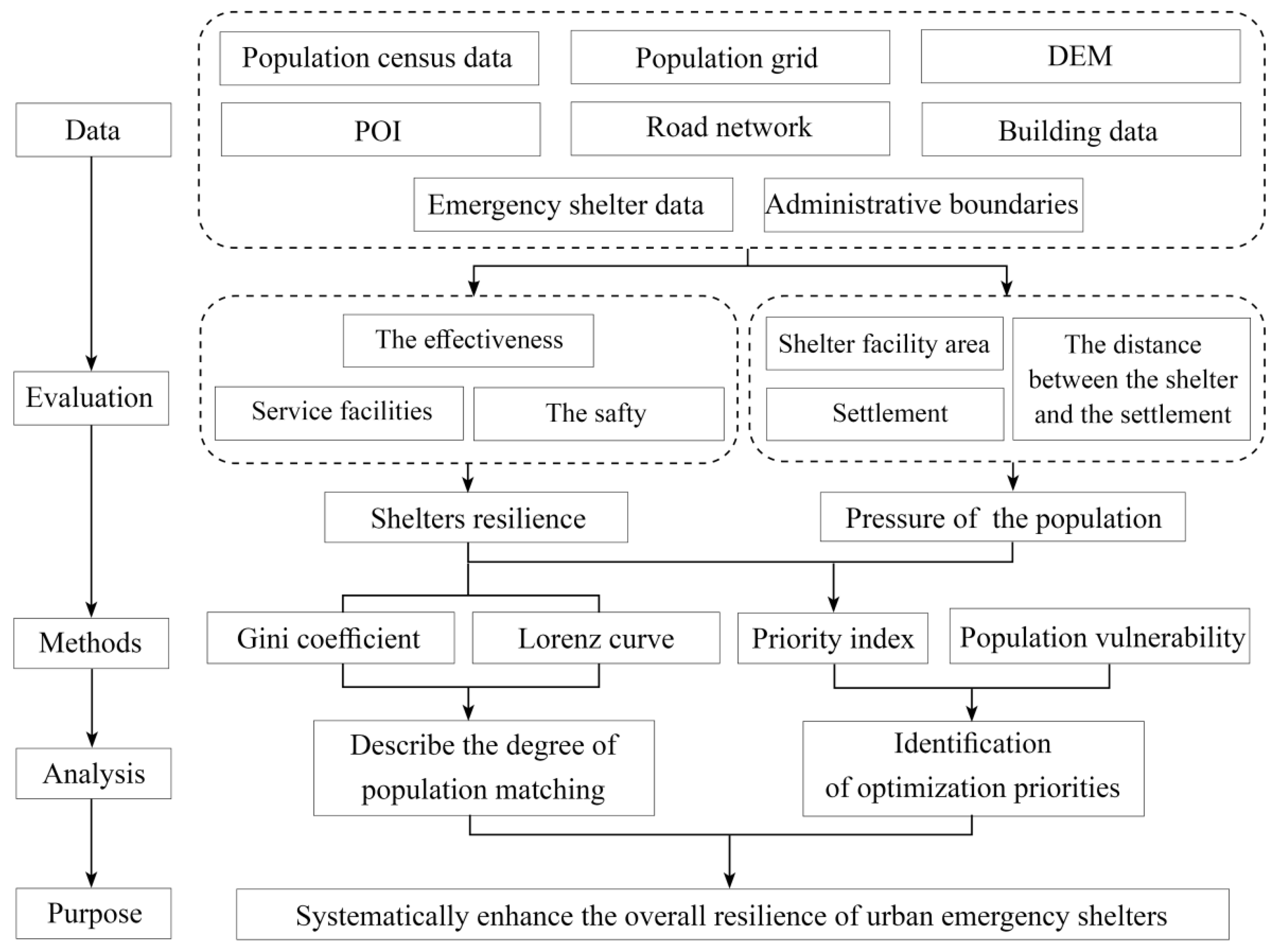
To address this research gap, the present study selects Xi’an as a case study and, in alignment with the stipulations of the Chinese national standard “Grading and Classification of Emergency Shelters” (GB/T 44013-2024) [18], concentrates on the emergency evacuation scenario wherein disaster-affected residents are able to reach emergency shelters within a distance of one kilometer in 15 min. A comprehensive assessment framework is developed accordingly. This research advances three distinct scientific contributions: First, it employs the Lorenz curve and Gini coefficient to quantitatively assess the spatial disparities between emergency shelter resilience and population demand at the systemic level, offering a robust diagnostic instrument for urban planners. Second, it introduces the Priority Index (PI), which effectively correlates shelter resilience with the pressure exerted by the served population, thereby identifying regions where emergency demand is incongruent with shelter resilience levels. Third, it formulates a population vulnerability index and integrates it with the Priority Index through a two-dimensional matrix analysis, categorizing shelters into five tiers of intervention priority and thus overcoming the constraints inherent in unidimensional evaluations. The technical framework is depicted in Figure 1.

2. Study Area

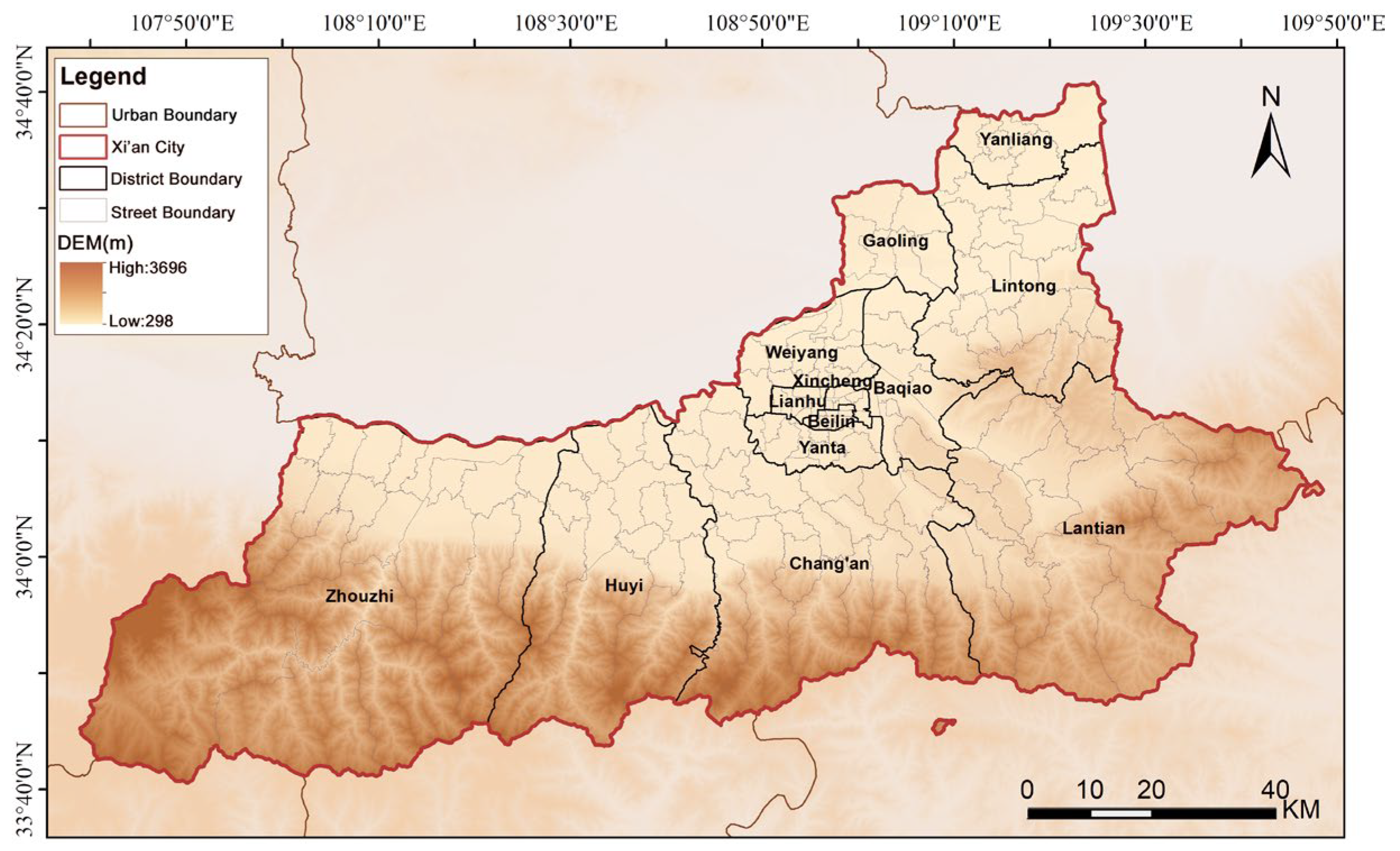
Xi’an is geographically situated between longitudes 107°40′ E and 109°49′ E, and latitudes 33°42′ N and 34°45′ N. As a pivotal city in northwestern China and a critical node within the Belt and Road Initiative, Xi’an holds a strategically important position in the region (see Figure 2) [19]. The city administers 13 districts and counties, encompassing a total area of 10,097.01 square kilometers, with the built-up urban area constituting only 21.17% of this total [20]. Regarding demographics, as of 2025, Xi’an’s permanent resident population is estimated at approximately 13.167 million, predominantly concentrated within the urban core. Notably, the proportion of residents aged 60 and above has reached 19.02%, reflecting a pronounced trend of population aging that presents significant challenges to the capacity of the urban emergency shelter system. From a natural geographic perspective, Xi’an is bordered by the Wei River and the Loess Plateau to the north and the Qinling Mountains to the south. The city’s complex topography and varied landforms render it susceptible to multiple natural hazards, including floods, landslides, ground subsidence, and earthquakes [21]. In addressing these risks, Xi’an has proactively promoted the development of emergency shelters in recent years, resulting in considerable advancements. However, a pronounced spatial imbalance persists in the allocation of these facilities, characterized by a concentration within the central urban area and insufficient coverage in the outlying districts and counties. This disparity raises critical issues related to the equitable provision of emergency services. Within this context, the current study utilizes Xi’an as a case study to undertake a thorough examination of the region’s emergency shelters.

3. Data Sources and Preprocessing

3.1. Data Sources

This research adopts a multi-source data integration methodology to assess urban emergency shelters, focusing on four principal dimensions: urban infrastructure status, population distribution, topographical features, and administrative boundaries (see Table 1 for specific indicators). Point-of-interest (POI) data, encompassing locations of emergency shelters, public security facilities, fire stations, government offices, and medical institutions within Xi’an, were collected via web scraping from Gaode Map (data as of April 2025; accessed on 15 April 2025; https://lbs.amap.com/). Information regarding the urban road network and building footprints was obtained from OpenStreetMap. The spatial distribution of the urban population was estimated by integrating 100-m resolution WorldPop population raster data from 2020 with data from the Seventh National Population Census. Additionally, topographic information was derived from a 12.5-m resolution Digital Elevation Model (DEM) provided by the ALOS satellite.

3.2. Explanation of Data Timeliness

This study synthesizes heterogeneous data obtained from multiple sources across different time periods. Given the reliability and gradual structural evolution of census data, the 2020 Seventh National Population Census is employed to characterize the population composition and establish a baseline framework. Statistical evidence indicates that by 2025, the permanent resident population of Xi’an experienced a marginal increase of only 1.66% relative to 2020, reflecting a high level of demographic stability. Therefore, the utilization of the 2020 census data is well substantiated. Furthermore, fundamental geographic features, including topography and administrative boundaries, exhibit minimal variation over time. Critical infrastructure elements such as emergency shelters, hospitals, and fire stations constitute fixed urban assets whose spatial configurations generally remain stable over several years. Accordingly, the Point-of-Interest (POI) data collected in 2025 reliably represent the current service capacities of these facilities. Although the datasets incorporated in this research originate from slightly different years, the inherent physical stability and statistical consistency of the data ensure that this temporal discrepancy exerts negligible influence on the principal conclusions of the study.

3.3. Data Preprocessing

To ensure spatial consistency and the precision of regional information, all spatial datasets utilized in this study were reprojected into the WGS_1984_UTM_Zone_49N coordinate reference system. Data processing was conducted using ArcGIS software (version 10.7; ESRI, Inc., Redlands, CA, USA). The specific procedures applied to each dataset are detailed as follows.
Urban Construction Data: The classification methodology for the original Point-of-Interest (POI) data—which encompasses emergency shelters, public safety facilities, fire stations, grassroots administrative units, medical institutions, and shopping centers—is summarized in Table 2. All datasets underwent rigorous screening and validation. For emergency shelters, an initial compilation of 737 records was assembled. After removing duplicates arising from multiple entrances or exits at identical locations and cross-verifying with open data from the Xi’an Emergency Management Bureau, 614 valid shelter sites were identified, collectively covering an area of 9,899,636 square meters (refer to Table 3). Among the shelters studied, 613 are categorized as regular point-type shelters, each of which can be directly represented by individual research points to characterize their spatial attributes. The remaining shelter is the Xi’an City Wall Relics Park Shelter, a linear emergency evacuation zone approximately 3.6 km in length, extending from north to south. Due to its linear nature, it is challenging to encapsulate its spatial characteristics using a single point. Given that the effective service radius of emergency shelters during an emergency is one kilometer, this linear area was excluded from the original dataset and subdivided into three independent assessment points. Consequently, the total number of research points amounts to 616, comprising 613 point-type shelters and 3 subdivided points. For other POI categories, Kernel density analysis was performed in ArcGIS on datasets pertaining to grassroots administrative units, primary medical facilities, and shopping centers, producing raster layers with a spatial resolution of 100 m and a search radius of 1000 m. For POI data related to public security institutions, fire stations, and Grade-A tertiary hospitals, network analysis based on Xi’an’s road network was utilized to compute the distance from each shelter to the nearest facility. Furthermore, the spatial join tool in ArcGIS was employed to quantify the number of flammable and explosive facility POI points located within a one-kilometer buffer zone surrounding each emergency shelter.
Data regarding building footprint area and height were sourced from OpenStreetMap. Given the positive correlation between building height and the potential extent of collapse, an isotropic collapse probability was assumed. Buffer zones were created in ArcGIS using multiples of building height (e.g., 0.5 H and 1.0 H) to evaluate the potential impact of building collapse on emergency shelters [22]. Additionally, the study incorporates the urban road network with the service areas of emergency shelters, calculating both the total road length and road density (measured in meters per square meter) within these service areas, which function as critical indicators of accessibility [23].
Population Data: This study utilized demographic information derived from the Seventh National Population Census of Xi’an, which documented a total population of 12,952,907 individuals distributed across 13 districts and 8 development zones. Notably, the Xixian New Area encompasses territories within both Xi’an and Xianyang cities. To ensure spatial consistency within the defined study area, the segment of the Xixian New Area situated in Xianyang was excluded, yielding an adjusted population total of 12,183,280. Given that the capacity of emergency shelters is intrinsically related to the population distribution within their respective service areas, and considering that census data are aggregated at the administrative level—thereby lacking the fine spatial granularity required for detailed spatial analysis—this research employed 100-m resolution population raster data from WorldPop as a weighting layer. This approach facilitated the spatial disaggregation of census data into raster units in accordance with Equation (1) [24].
P O P g r i d = P O P c o u n t y s h i p × W g r i d W c o u n t y s h i p
Within these variables, P O P g r i d denotes the estimated population within a specific grid cell; W g r i d signifies the population distribution weight assigned to a 1-hectare grid cell; W c o u n t y s h i p represents the aggregate population distribution weight for the county-level administrative region encompassing the grid cell; and P O P c o u n t y s h i p corresponds to the census-reported population of that county-level administrative region.
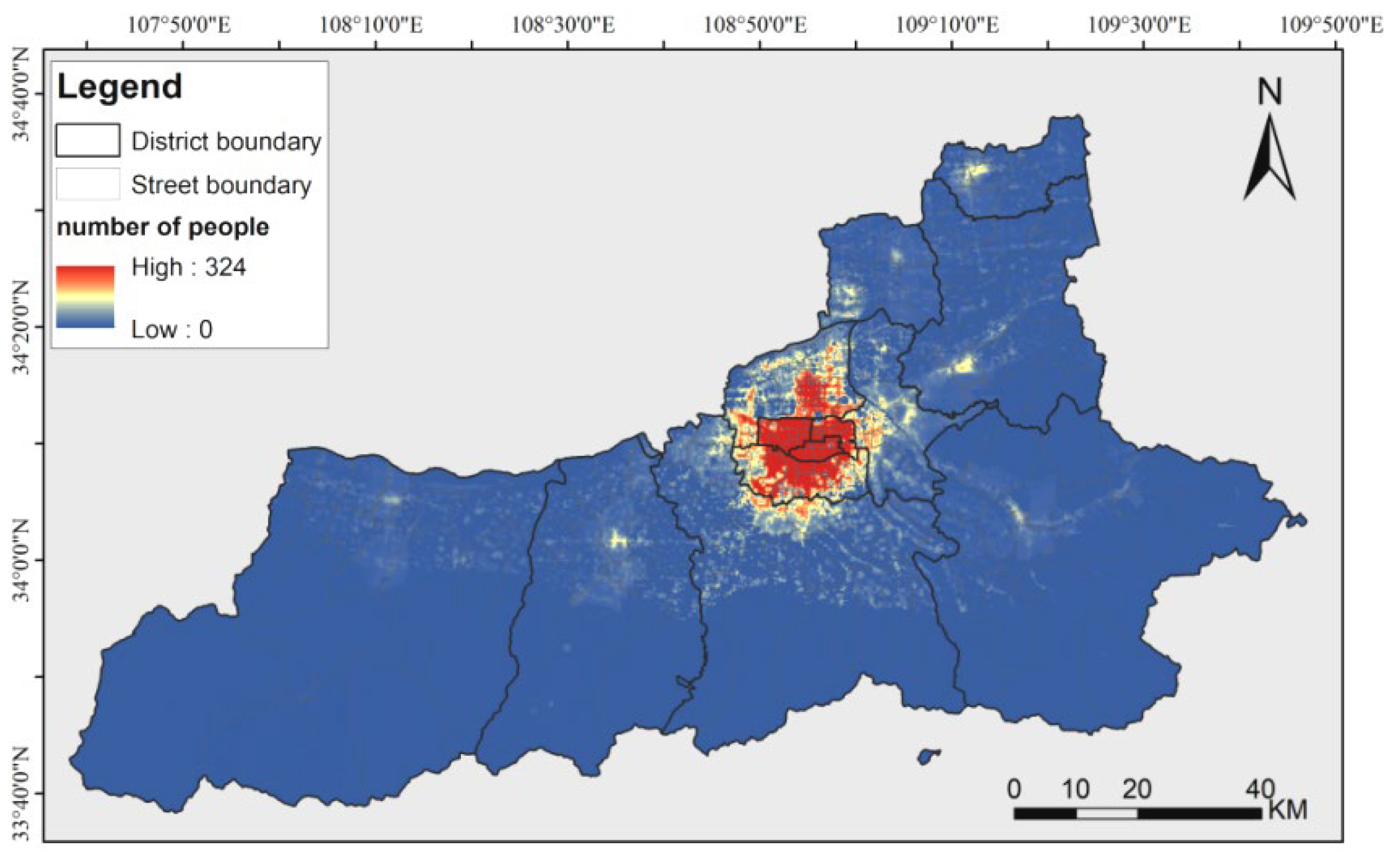
Figure 3 illustrates the spatial distribution of the population within Xi’an City, highlighting a markedly higher population density in the urban core compared to the peripheral counties and districts. This gridded population dataset forms the foundational basis for subsequent analyses of the population pressure at emergency shelters.
Topographic Data: Digital Elevation Model (DEM) data were analyzed utilizing ArcGIS software through a sequence of methodological steps, encompassing slope computation, neighborhood statistical analysis, and data resampling. These processes produced raster layers with a spatial resolution of 100 m, depicting elevation, slope, and their associated standard deviation metrics.
Given the heterogeneity in units and scales across different indicators, standardization was necessary to facilitate their comparability. In this study, the range normalization technique (min–max scaling) was employed to convert all indicator values into dimensionless scores within the interval [0, 1]. The standardization formula applied to positive indicators is delineated in Equation (2), while the corresponding formula for negative indicators is provided in Equation (3).
Positive indicators:
z = x x m i n x m a x x m i n
Negative indicators:
z = x m a x x x m a x x m i n
Within these variables, z signifies the standardized value, constrained between 0 and 1; x denotes the original indicator value; and x m a x and x m i n represent the maximum and minimum values of the indicator, respectively.

4. Methodology

4.1. Establishment of the Shelter Resilience Evaluation Index System

In order to precisely assess the functional performance of urban emergency shelters, it is essential to select suitable quantitative metrics. Within this context, resilience is conceptualized as the static, intrinsic capacity of shelters, emphasizing their robustness prior to disaster events rather than their dynamic recovery capabilities post-disaster. Drawing upon established theoretical frameworks, this study utilizes fifteen indicators distributed across three dimensions—supporting facilities, operational efficiency, and safety performance—to facilitate a comprehensive evaluation of the resilience of urban shelter systems. Within the evaluation framework, indicators for which increased values correspond to improved performance are designated as positive indicators (+), whereas those for which decreased values signify enhanced performance are classified as negative indicators (−) (refer to Table 4).
Within the framework for assessing the resilience of urban emergency shelters, the presence and accessibility of fundamental service facilities in the vicinity of these shelters are pivotal to their capacity for effective risk response. Such facilities are essential in guaranteeing the provision of basic living security for evacuees during periods of displacement and sheltering [25]. Specifically, governmental institutions—including police stations, fire departments, and local administrative units—play a critical role in maintaining social order and ensuring the continuity of essential operational functions amid urban emergencies [26]. Tertiary Grade-A hospitals not only deliver emergency medical care but also function as command centers for the coordinated disaster response within the health sector, whereas primary healthcare facilities provide frontline medical services to affected populations. Together, these entities form a hierarchical medical support system [27]. Concurrently, commercial establishments such as comprehensive markets, supermarkets, and farmers’ markets constitute vital nodes within the supply chain for essential goods, thereby fulfilling a crucial role in addressing the basic living requirements of residents following disaster events [28]. The closeness of service facilities to shelters, along with a greater density of their distribution, improves the ability to provide emergency support.
The assessment of the operational efficiency of emergency shelters involves characterizing their service capacity and evacuation effectiveness. This research combines road network data with the effective service radius of each shelter to ascertain both the actual service coverage and the population served. A more extensive service area and a higher number of beneficiaries are indicative of greater economic efficiency in facility construction [29]. Incorporating redundancy into shelter design is essential for achieving the reliability requirements of urban emergency response systems, as increased redundancy enhances overall system reliability. Furthermore, greater road density within the shelter’s service area and a lower average slope contribute positively to accessibility [30,31,32].
The safety performance assessment examines the physical security of the refuge and its adjacent environment. This investigation incorporates multiple hazard-related factors through the analysis of geospatial data. The elevation of a refuge site serves as a predictive measure for the likelihood of flooding and urban waterlogging, with higher elevations corresponding to a reduced risk of such events [33]. The standard deviation of elevation and slope within the service area serves as an indicator of the degree of terrain variability. A smaller standard deviation corresponds to a lower probability of geological hazards such as landslides [34]. Furthermore, the risk of building collapse is associated with both the distance between the shelter and the building, as well as the height of the building itself; specifically, a greater distance-to-height ratio corresponds to a lower risk of collapse [35]. This study also quantified the presence of flammable and explosive facilities—including gas stations, chemical plants, and pressure vessel warehouses—within a one-kilometer radius to evaluate potential explosion hazards.
Finally, this study employed a comprehensive weighting methodology that integrates both subjective and objective techniques to ascertain the weights of evaluation indicators. The subjective aspect involved the use of the Analytic Hierarchy Process (AHP) to develop judgment matrices derived from expert evaluations regarding the relative significance of each indicator [36]. To mitigate the limitations associated with individual viewpoints and to minimize potential biases inherent in subjective assessments, an expert panel consisting of nine professionals from varied disciplines was convened. For the objective aspect, the CRITIC method was utilized, which determines indicator weights by measuring both the contrast intensity and the degree of conflict among the indicators [37]. Ultimately, the final weights of the indicators were established through a game-theoretic integration model designed to optimize the equilibrium between subjective and objective weighting components [38].

4.2. Calculation of Population Pressure on Shelters

This study employs the inverse two-step floating catchment area (i2SFCA) method to assess the population pressure exerted on emergency shelters. By incorporating data pertaining to shelter area and evacuee capacity, this method enables the quantification of potential service demand pressure at each facility. Specifically, Xi’an City is partitioned into grid units measuring 200 m × 200 m, with the centroid of each grid serving as a demand point and emergency shelters designated as supply points. Calculations are conducted within a service radius of one kilometer. To model the distance decay effect, a Gaussian decay function is utilized, predicated on the assumption that the likelihood of residents utilizing a given shelter diminishes progressively with increasing distance. Furthermore, it is assumed that all residents travel on foot to the nearest shelter, without exceeding the one-kilometer service radius. The computational formula is presented in Equation (4) [39]:
C j = i = 1 n F i j S j = i = 1 m D i P i j   S j , ( i { d i j < d 0 } )
Within this set of variables, C j signifies the potential congestion level at shelter j, quantified in terms of persons per square meter. F i j denotes the projected number of evacuees originating from residential area i who opt to evacuate to shelter j. S j corresponds to the effective usable area of shelter j. D i represents the population residing within a 200 m by 200 m grid cell. The variable n indicates the total number of grid cells encompassing the urban area, while m refers to the total number of shelters within the city. Lastly, P i j signifies the relative attractiveness of shelter j to the inhabitants of area i, as determined by the formulation presented in Equation (5).
P i j = S j G ( d i j ) k = 1 m S k G ( d i k )
Within these variables, S k signifies the effective usable area of shelter k, while G ( d i k ) denotes the distance-decay function characterizing the relationship between residential area i and shelter k. In this study, a Gaussian function is utilized to represent the reduction in accessibility with increasing distance. The precise mathematical expression is provided in Equation (6):
G d i j = e 1 2 × d i j d 0 2 e 1 2 1 e 1 2 ,   d i j < d 0
Within these variables, d i j signifies the shortest path distance between settlement i and shelter j, while d 0 represents the predetermined distance threshold.

4.3. Lorenz Curve and Gini Coefficient

The Lorenz curve and Gini coefficient are extensively employed indicators for assessing equity in income distribution across diverse countries and regions. Given the conceptual analogy between income distribution and the allocation of public resources within the framework of social equity, this analytical approach has seen growing application in urban planning research, especially in evaluating the spatial distribution of public transportation systems and elderly care facilities [40]. Consistent with this methodology, the current study utilizes the Lorenz curve and Gini coefficient to quantify the degree of alignment between the resilience capacity of emergency shelters and the population pressure in their respective service areas, thereby identifying the extent of inequality in the spatial allocation of emergency shelter services.
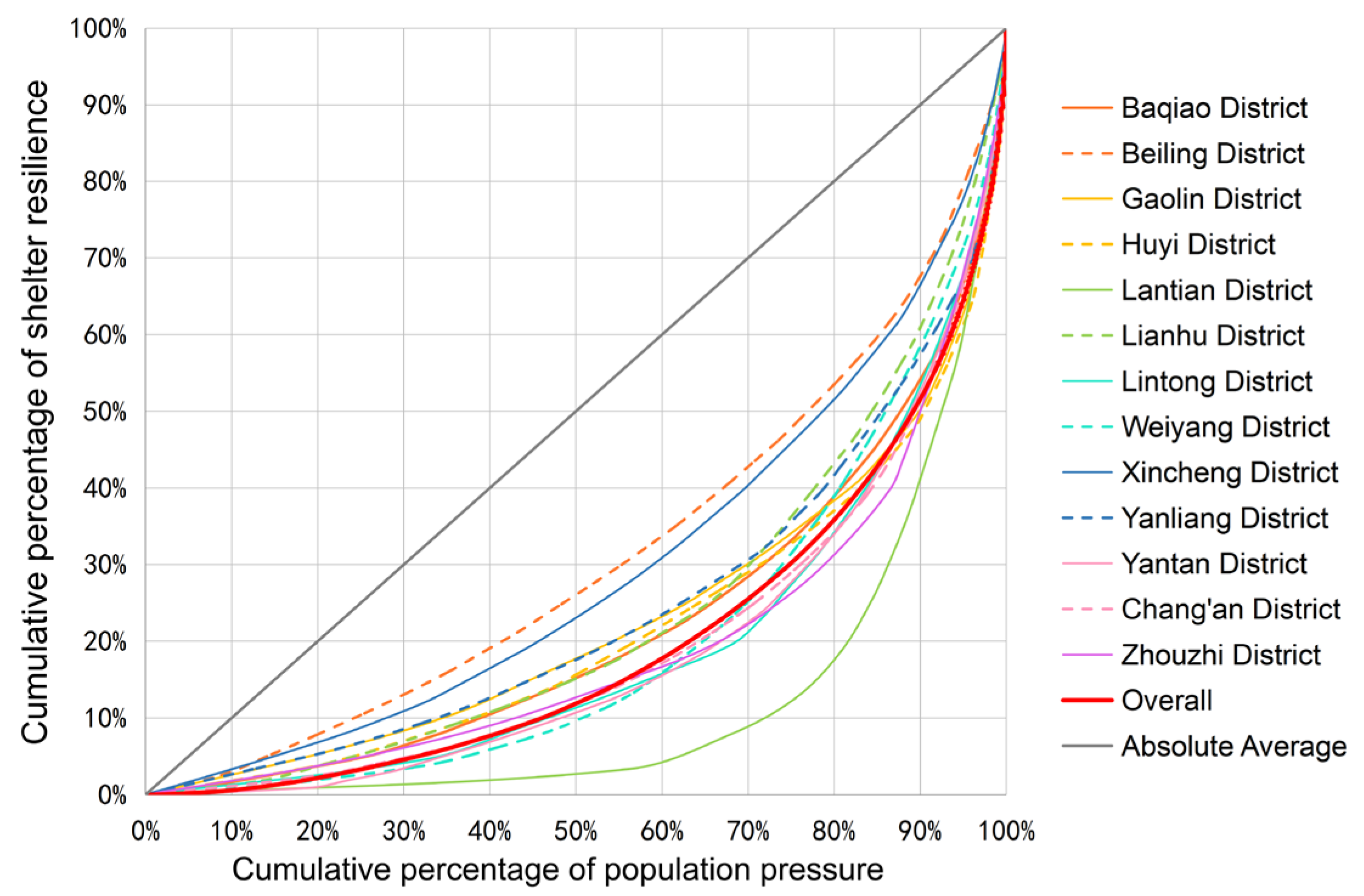
Specifically, the Lorenz curve in this study is generated by plotting the cumulative percentage of population pressure (persons per square meter) along the x-axis against the cumulative percentage of shelter resilience capacity on the y-axis. A more pronounced deviation from the line of equality signifies a greater imbalance between shelter resilience and population pressure. The Gini coefficient is subsequently computed based on this curve, as expressed in Equation (7).
G m = 1 β = 1 k X β X β 1 Y β + Y β 1  
Within these variables, G m denotes the Gini coefficient corresponding to a specific area. X β represents the cumulative percentage of population pressure accommodated by shelters within area m, while Y β signifies the cumulative percentage of shelter resilience in the same region. The index β ranges from 0 to k, where k corresponds to the total number of shelters in area m. The G m values vary between 0 and 1, as detailed in Table 5. A higher G m value signifies a more pronounced disparity between shelter resilience and population pressure in area m, indicating a reduced level of spatial equity within the urban context.

4.4. Intervention Priority

To improve the identification of emergency shelters necessitating immediate enhancement, this study utilizes a priority index that quantifies discrepancies between supply and demand. This index serves to identify critical facilities for optimization and to classify intervention priorities. The methodology for calculating the priority index is presented in Equation (8) [41].
P I = S P P R I
Within these variables, P I refers to the priority index of a shelter facility, R I denotes its resilience index, and S P P signifies the associated service population pressure. A higher P I value reflects a more pronounced deficiency in the shelter’s resilience capacity to manage population pressure, thereby underscoring a heightened urgency for prioritized intervention.
Furthermore, the effectiveness of emergency shelters is significantly affected by the demographic composition of the surrounding population. Specifically, elderly individuals and children exhibit slower evacuation speeds and greater dependency during disaster events, necessitating more stringent requirements for the design and allocation of emergency shelters. In response, this study develops a population vulnerability index, calculated based on the proportions of residents aged 65 and older and children under 14 within the service area, assigning equal weight (50%) to each group. Employing a two-dimensional matrix analysis, this vulnerability index is cross-referenced with an intervention priority index to facilitate differentiated and targeted recommendations for the planning and enhancement of emergency shelter infrastructure.

5. Results and Analysis

5.1. Resilience Evaluation of Emergency Shelters

5.1.1. Overall Resilience Analysis of Urban Emergency Shelters

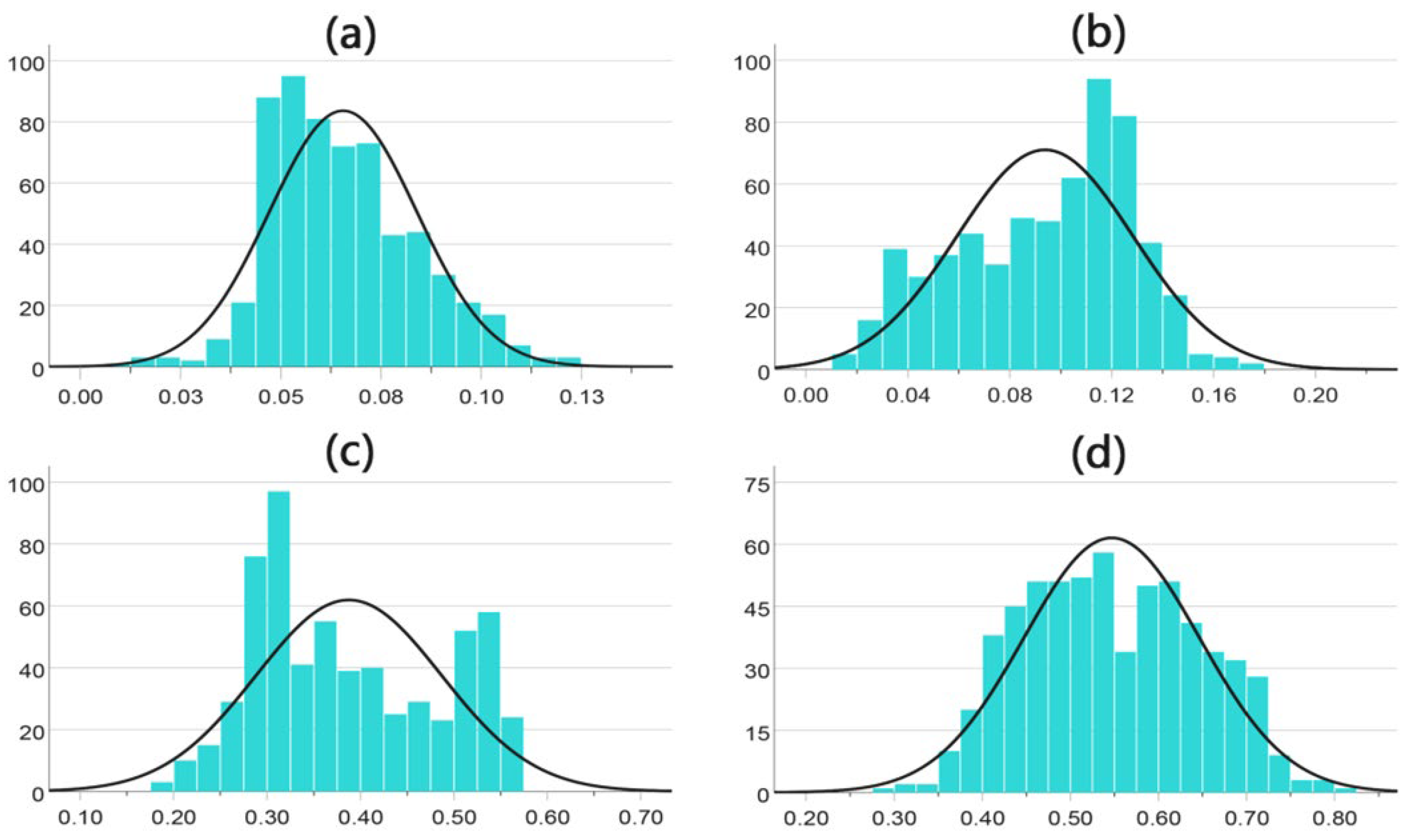
Utilizing the proposed resilience evaluation framework, this study conducted an assessment of the overall resilience of emergency shelters in Xi’an. The evaluation employed a scoring system ranging from 0 to 1. As presented in Table 6, the mean comprehensive resilience score across all shelters was 0.5469, with 47.08% of shelters exceeding this average. These findings suggest that the general level of comprehensive resilience among shelters in the study area remains relatively low. Among the various sub-indicators, shelter safety was attributed the greatest weight (0.6006), while the supporting facilities associated with shelter locations were assigned the lowest weight (0.1353). Figure 4 illustrates that the distribution of sub-indicator scores deviates from normality. Specifically, the negative skewness observed in the “operational efficiency” indicator implies that most shelters demonstrate relatively high efficiency scores, although a minority of poorly performing shelters reduce the overall average. Conversely, the positive skewness in the “supporting facilities” and “safety performance” indicates that the majority of shelters score low in these dimensions, with only a few achieving high scores. Table 7 summarizes the top ten and bottom ten shelters based on resilience evaluation scores, revealing that shelters with both high and low resilience coexist within the same administrative districts. This heterogeneity suggests that regional average scores may obscure substantial internal variability, underscoring the necessity for tailored intervention strategies targeted at individual shelters rather than uniform regional policies. Particular emphasis should be placed on shelters exhibiting low resilience, as improvements in these shelters are likely to yield the most significant benefits for the overall emergency shelter system.

5.1.2. Spatial Distribution of Emergency Shelter Resilience

This study classifies resilience assessment outcomes into five distinct categories—low, medium–low, medium, medium–high, and high—employing the natural breaks classification method. At the individual shelter scale, 88 shelters in Xi’an, representing 14.29% of the total, exhibit the lowest level of resilience and thus require either decommissioning or significant improvements. Furthermore, 131 shelters are identified as having medium–low resilience, indicating a need for enhancement or modification. The remaining shelters are distributed as follows: 140 classified as medium resilience, 151 as medium–high resilience, and 106 as high resilience. Utilizing ArcGIS software, the resilience scores of each shelter were spatially linked to their geographic locations, and the results were visualized according to the aforementioned five-tier classification. Consequently, a spatial distribution map illustrating the resilience levels of emergency refuge sites in Xi’an was produced.
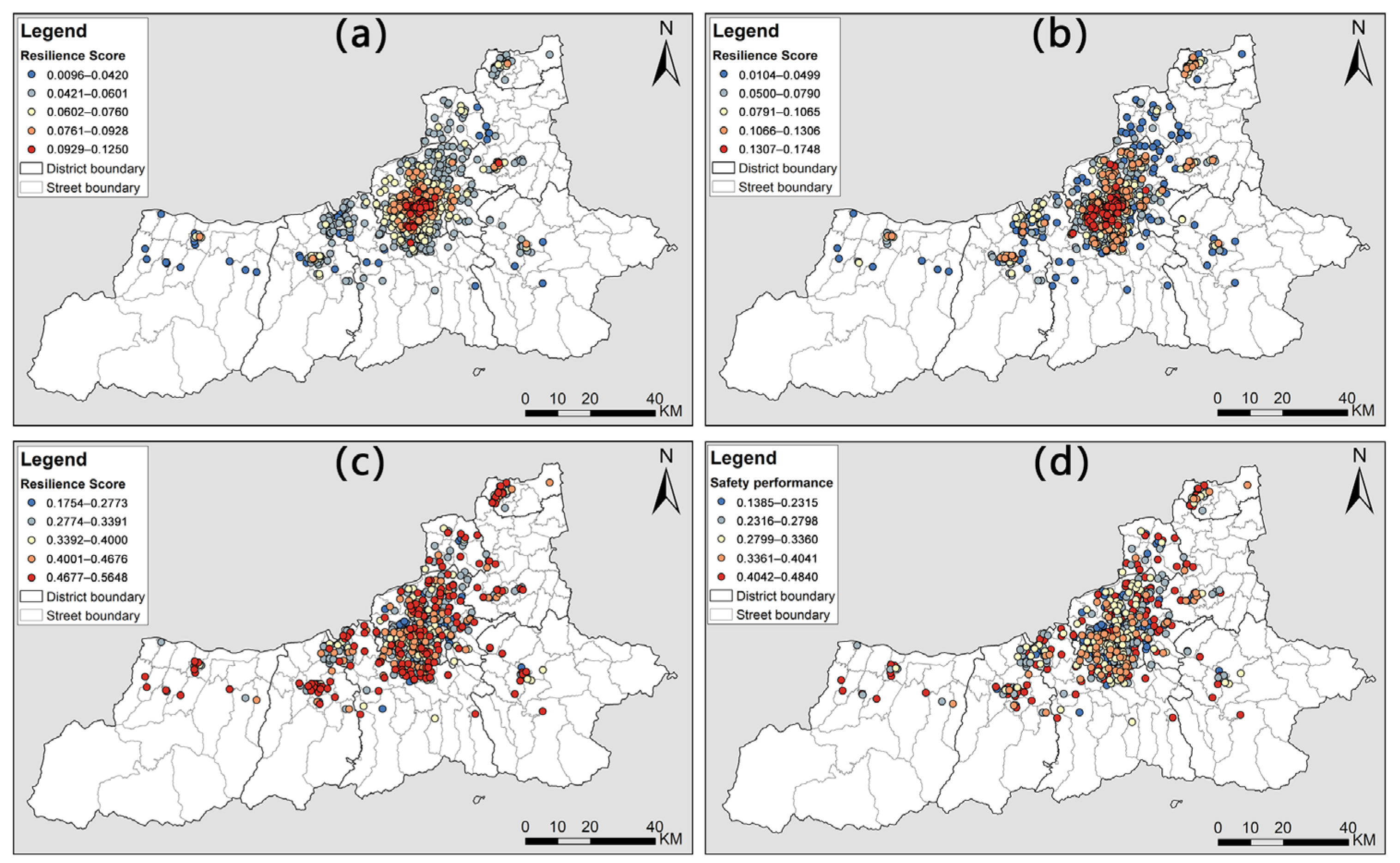
The spatial distribution of overall resilience in emergency shelters exhibits a clear pattern, with higher resilience observed in the urban core, moderate resilience in secondary centers, and lower resilience in peripheral areas (refer to Figure 5d). The central urban districts—namely Lianhu, Xincheng, Beilin, and Yanta—exhibit significantly higher resilience compared to other areas. Surrounding the urban core, Weiyang District demonstrates heightened resilience in proximity to the municipal government and Chanba Ruins Park; Baqiao District shows clusters of increased resilience near the Olympic Sports Center; and Chang’an District presents elevated resilience along its border with Yanta District, a phenomenon partly attributable to the presence of several universities, including Shaanxi Normal University, Northwest University of Political Science and Law, and Northwest University. In the more peripheral administrative divisions, comparatively higher resilience values are predominantly concentrated within their central zones.
Regarding supporting facilities, Xi’an exhibits a spatial distribution characterized by a decline from the central urban core toward the periphery (Figure 5a). The principal urban districts—Lianhu, Xincheng, Beilin, and Yanta—demonstrate markedly higher levels of supporting facility availability relative to outlying areas. In other districts and counties, resilience is predominantly limited by inadequate access to Grade-A tertiary hospitals, primary medical facilities, and shopping centers, leading to comparatively lower levels of supporting facility resilience. It is noteworthy that emergency shelters situated near district-level government offices display relatively higher resilience concerning supporting facilities.
Regarding the operational efficiency of emergency shelters, the majority exhibit moderate to high performance levels, reflecting a generally favorable status (see Figure 5b). Notably, shelters situated in the central urban districts—namely Lianhu, Xincheng, Beilin, and Yanta—demonstrate the highest levels of effectiveness. In contrast, shelters in Gaoling District receive the lowest evaluation scores. This diminished effectiveness in Gaoling District is primarily attributable to inadequate redundancy in shelter distribution and a sparse road network density within its service areas.
Regarding safety performance, most emergency shelters in Xi’an demonstrate relatively low levels, as illustrated in Figure 4c. Shelters located in the Huyi, Beilin, Lianhu, Weiyang, Gaoling, and Yanliang Districts are primarily influenced by factors such as potential building collapse zones and the proximity to flammable or explosive facilities. These districts are characterized by relatively flat terrain and simple geological features, which correspond to a comparatively lower risk of geological disasters. In contrast, certain shelters in the Zhouzhi, Chang’an, Yanta, Baqiao, Lantian, and Lintong Districts are situated in areas with complex topography, thereby increasing their susceptibility to geological hazards. Therefore, it is imperative that terrain and geomorphological conditions be thoroughly integrated into the safety performance assessments of shelters within these regions.

5.1.3. Cluster Analysis of Emergency Shelter Resilience

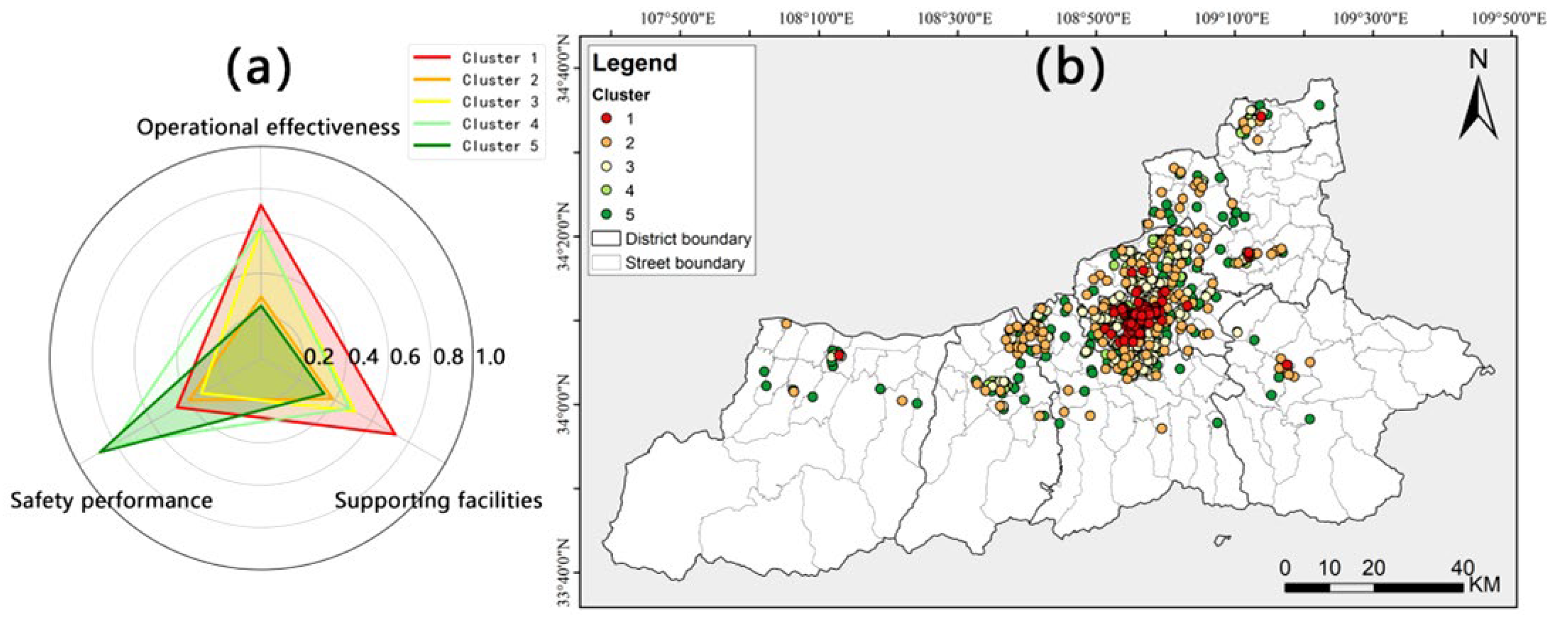
To more precisely characterize the heterogeneous resilience patterns of emergency shelters across multiple indicators, this study conducted a cluster analysis using the K-Means algorithm on standardized scores related to supporting facilities, operational efficiency, and safety performance. Figure 6a illustrates the standardized score profiles of the five distinct clusters across these three dimensions, depicted in a radar chart. The defining attributes of each cluster type are subsequently detailed as follows.
Shelters in Cluster 1 exhibit superior performance in support facilities and operational efficiency, ranking highest among the five clusters; however, their safety performance is moderate, resulting in an overall resilience that is relatively favorable. In contrast, shelters within Cluster 2 demonstrate significantly below-average scores across all three dimensions, categorizing them as having the lowest resilience levels. Cluster 3 shelters generally align with average levels in operational efficiency and support facilities, indicating fundamental service provision capabilities; nevertheless, their markedly low safety performance constitutes the primary limitation impeding resilience enhancement. Shelters classified under Cluster 4 represent the group with the most robust overall resilience, achieving high scores across support facilities, operational efficiency, and safety performance, without any notable deficiencies. Finally, Cluster 5 shelters attain the highest safety performance scores among all clusters, reflecting excellent site safety; however, their support facilities and operational efficiency are the lowest, resulting in an overall resilience rating that ranges from medium to low.
By integrating the spatial distribution map presented in Figure 5b, it is evident that the emergency shelters across different clusters display distinct spatial differentiation patterns. Clusters 1, 3, and 4 are predominantly located within the urban core, highlighting their advantages in terms of infrastructure support. Conversely, Category 5 emergency shelters are mainly located in the suburban peripheries of urban areas, indicating that although some shelters in these outlying regions demonstrate relatively favorable safety performance, they generally lack adequate supporting facilities. Shelters in Cluster 2 are predominantly located in urban–rural fringe areas and remote suburban regions, indicating the presence of significant resilience “blind spots” within these zones.

5.2. Spatial Distribution of Service Population Pressure

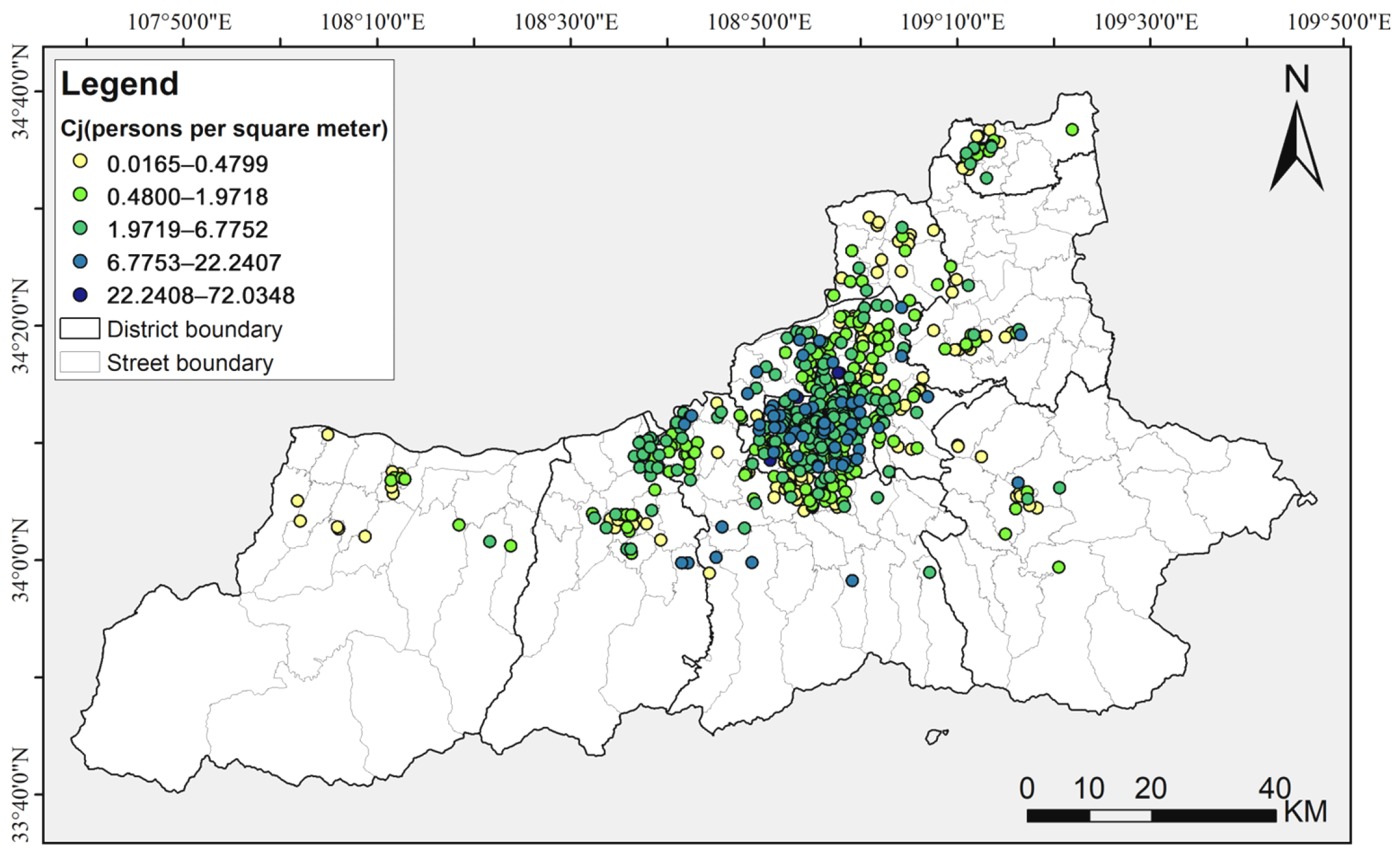
The population pressure exerted on each emergency shelter was quantitatively assessed utilizing the Inverse Two-Step Floating Catchment Area (i2SFCA) methodology. The derived values were spatially referenced to their corresponding geographic locations. To enhance spatial interpretability, the population pressure was stratified into five categories employing the geometric interval classification technique, and a spatial distribution map was produced to illustrate the variation in service pressure among emergency shelters throughout the city.
Figure 7 illustrates that the service population pressure on emergency shelters in Xi’an predominantly follows a spatial distribution pattern characterized by higher pressure in the urban core and lower pressure in peripheral regions. Shelters located within the central urban districts—specifically Lianhu, Xincheng, Beilin, and Yanta—experience an average service pressure exceeding 1.97 persons per square meter. This figure significantly surpasses both the pressure levels observed in other areas and the national per capita standard for effective shelter area as defined in China’s “Grading and Classification of Emergency Shelters” (GB/T 44013–2024). The elevated pressure in these districts can be primarily attributed to the concentration of major educational institutions, extensive commercial centers, corporate and public facilities, Grade-A tertiary hospitals, and numerous aging residential communities, all of which contribute to a high urban population density. As a result, emergency shelters in these areas face substantially increased service demands. In contrast, shelters located near prominent urban parks—such as City Wall Relics Park, Qujiang Park, and Xingqing Park—exhibit relatively lower population pressure. Weiyang District, currently functioning as Xi’an’s administrative center, ranks second only to the core urban districts in terms of service pressure, although its levels remain elevated compared to those in the outer suburban zones. Within Weiyang District, areas with reduced pressure are primarily associated with green spaces and parks adjacent to Han City Lake and the Ming Canal.
Conversely, the peripheral regions of Xi’an generally manifest low population pressure on emergency shelters, with sporadic high-pressure pockets typically localized within district centers. An exception to this trend is a conspicuous high-pressure cluster located in the northeastern sector of Huyi District and the northwestern sector of Chang’an District. This area, designated as the Western China Science & Technology Innovation Harbor (hereafter referred to as the Innovation Harbor) in Xi’an’s urban planning framework, integrates four principal functions—scientific research, education, entrepreneurship, and comprehensive services. The Innovation Harbor has attracted a substantial influx of researchers and technical professionals, thereby engendering relatively high population density and corresponding service pressure on emergency shelters in this zone.

5.3. Spatial Matching Between Shelter Resilience and Service Population Pressure

The spatial alignment between the resilience of urban emergency shelters and the service population pressure across different districts was assessed utilizing the Lorenz curve and Gini coefficient, as illustrated in Figure 8. The aggregate Gini coefficient for emergency shelters in Xi’an is 0.6058, signifying a substantial mismatch between shelter resilience and population demand. Within the districts, Beilin District exhibits a Gini coefficient of 0.3759, indicating a moderate level of imbalance between shelter resilience and population pressure. Nevertheless, owing to the exceptionally high population pressure in this district, the shelter system functions at a low-level equilibrium. In Baqiao, Gaoling, Huyi, Lianhu, Weiyang, Xincheng, and Yanliang Districts, Gini coefficients range from 0.4 to 0.6, reflecting a pronounced disparity between shelter resilience and population pressure. The remaining administrative regions display Gini coefficients exceeding 0.6, with Lantian County registering the highest value. These findings reveal a particularly acute imbalance between shelter resilience and service population pressure in these areas, highlighting an urgent need for optimization in the spatial distribution of emergency shelters.

5.4. Identification of Priority Intervention Shelters

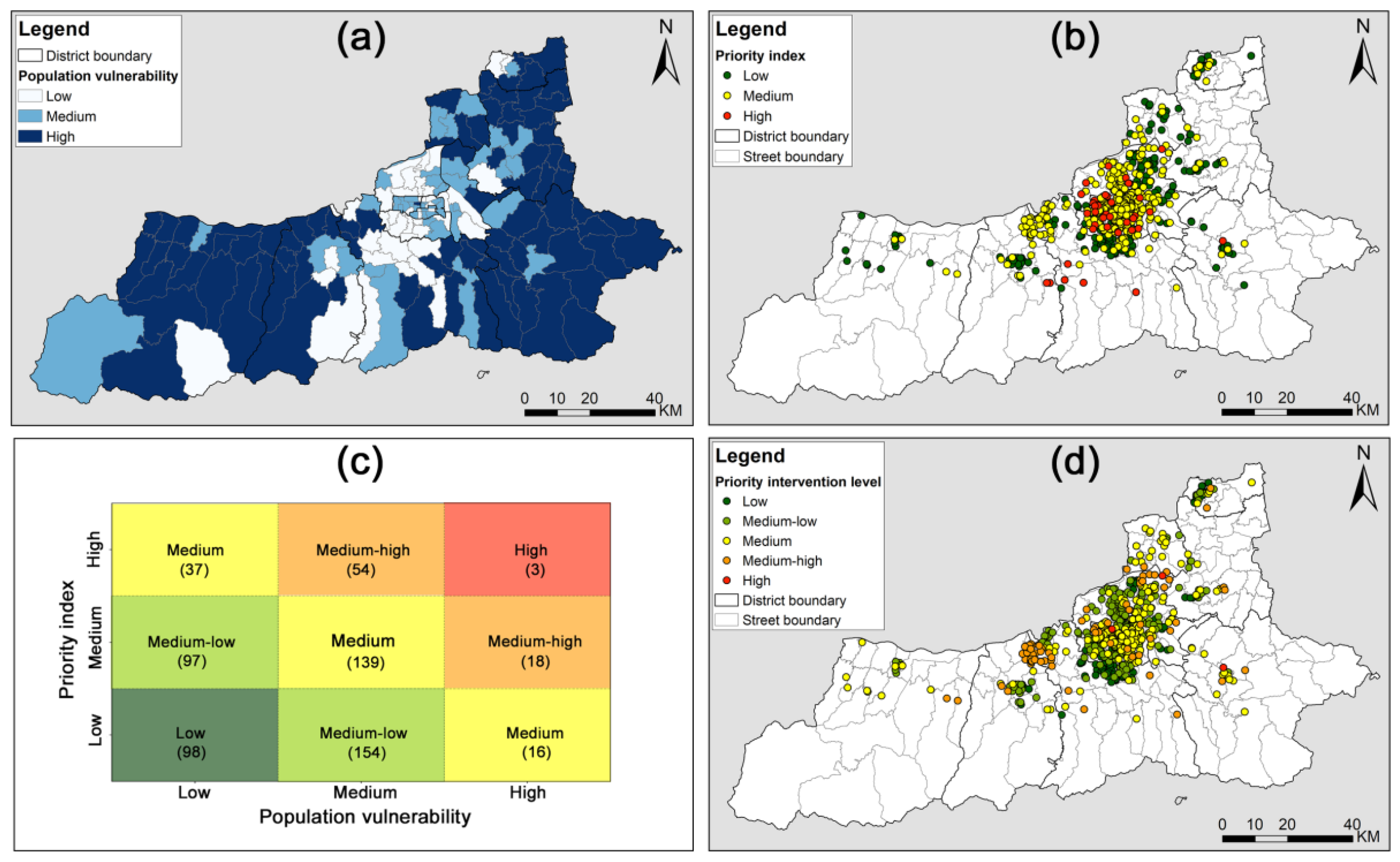
Expanding upon the evaluation of emergency shelter resilience in relation to the demand pressures of the service population within the urban districts of Xi’an, the priority index facilitates a more accurate determination of facilities necessitating immediate attention. Employing the geometric interval classification approach (Figure 9b), shelters are stratified into three priority levels—high, medium, and low—resulting in the following allocation: 37 shelters classified as high priority, 347 as medium priority, and 232 as low priority.
Emergency shelters situated within the central urban districts—namely Lianhu, Xincheng, Beilin, and Yanta—generally demonstrate a greater need for intervention relative to other areas. The Yanta District closely follows these core districts in terms of priority ranking. In contrast, peripheral regions, with the exception of the Innovation Harbor, exhibit comparatively lower overall intervention priority. Notably, specific sectors within Huyi and Chang’an Districts display elevated priority levels, largely attributable to their proximity to prominent university campuses such as Xi’an University of Architecture and Technology, Northwestern Polytechnical University, and Xi’an Fanyi University. Spatial analysis indicates that shelters located adjacent to high-density residential neighborhoods, major commercial centers, transportation nodes, Grade-A tertiary hospitals, and large educational institutions predominantly fall within the medium to high priority categories. Conversely, shelters positioned near industrial parks, science and technology innovation zones, enterprise clusters, and medium-density residential areas are more frequently classified as medium priority.
Regarding population vulnerability (see Figure 9a), Xi’an City exhibits a pronounced zonal differentiation characterized by elevated vulnerability in peripheral areas, minimal vulnerability in the emerging main urban zone, and moderate vulnerability within the traditional old urban districts. Specifically, Zhouzhi County, Lantian County, and Gaoling District—located on the city’s periphery—rank among the highest in terms of population structure vulnerability. This heightened vulnerability is primarily attributable to the significant outmigration of young and middle-aged labor forces from these regions. Conversely, Yanta District and Weiyang District register the lowest vulnerability scores, indicating robust resilience in their population structures. This resilience is largely due to the concentration of high-technology industries alongside a dense network of universities and research institutions within these districts, which collectively generate substantial high-quality employment opportunities and exert a strong “population attraction effect,” thereby drawing a considerable influx of young migrants. Meanwhile, traditional old urban districts such as Xincheng, Beilin, and Lianhu exhibit moderate levels of vulnerability, a condition likely linked to their saturated urban functions and relatively stable population compositions. The migration of labor from peripheral areas to emerging central urban districts has unintentionally intensified the aging demographic and increased the dependency ratio in these outlying regions. Consequently, these communities exhibit relatively diminished capabilities for social self-sufficiency and mutual support. Therefore, the optimization and enhancement of emergency shelters should prioritize policy support for areas characterized by vulnerable population structures.
Expanding upon this foundation, the current study utilizes a two-dimensional matrix analysis that integrates the priority intervention index with the population vulnerability index (refer to Figure 9c). The spatial distribution derived from this analysis is depicted in Figure 9d. Five distinct intervention types are identified: emergency intervention, demand-driven, vulnerability-driven, comprehensive concern, and low-intervention. Shelters classified under the emergency intervention type serve areas with a disproportionately high percentage of elderly individuals and children, where current population pressures have significantly surpassed the shelters’ resilience capacities. These shelters thus require urgent renovation, with recommendations emphasizing expansion, the incorporation of barrier-free and age-friendly facilities, and the enhancement of community emergency evacuation drills. Demand-driven shelters experience considerable population pressure; however, the demographic composition within their service areas remains relatively stable. The primary challenge for these shelters is inadequate spatial capacity, suggesting that interventions should prioritize increasing effective shelter area and optimizing the delineation of service zones. Vulnerability-driven shelters currently operate under manageable service pressures but serve populations with a relatively high proportion of elderly and children, whose disaster response capabilities are comparatively limited. Improvement efforts should focus on enhancing shelter accessibility, implementing elderly-friendly modifications, and conducting targeted awareness campaigns. Shelters categorized as comprehensive concern exhibit moderate levels of both service pressure and population vulnerability. It is advisable to subject these shelters to routine monitoring and progressively strengthen their facility resilience in alignment with broader urban renewal initiatives. Finally, low-intervention shelters face minimal population pressure and maintain a relatively healthy demographic structure, for which regular maintenance of existing infrastructure is deemed sufficient.

6. Discussion

6.1. Causes of Resilience Differences in Emergency Shelters

The resilience levels of emergency shelters in Xi’an City exhibit pronounced spatial differentiation, typically following a gradient distribution pattern characterized by relatively high comprehensive resilience in the urban core, moderate resilience in the secondary core areas, and comparatively low resilience in peripheral zones. This spatial pattern primarily arises from several key factors:
Firstly, disparities in resource allocation underpin the spatial differentiation of resilience. The urban core benefits from robust financial resources, conferring significant advantages in public service sectors such as administrative management, public security, and healthcare. To accommodate the dense population’s production and living requirements, the core area is equipped with a dense network of commercial outlets, medical institutions, administrative offices, and other essential service facilities. These infrastructures can be rapidly repurposed as external support resources for emergency shelters during disasters, thereby substantially enhancing their overall service capabilities. Conversely, peripheral areas suffer from a lower density of service facilities, resulting in a marked deficiency in available emergency resources.
Secondly, the optimization of the road network structure has improved the spatial efficiency of emergency shelters within the core area. The well-developed transportation infrastructure significantly enhances shelter accessibility, broadens their effective service coverage, and consequently increases their spatial service efficiency. In contrast, peripheral urban areas are constrained by the limited density and quality of their road networks, which impedes the full utilization of shelter capacities despite the shelters themselves being in adequate condition.
Thirdly, the interplay between topographic conditions and the built environment has produced differentiated risk profiles. The core area’s flat terrain offers inherent geological stability; however, the high-density urban development introduces additional safety hazards. Specifically, numerous potential risk sources, such as gas stations and fuel depots, are integrated within the comprehensive municipal infrastructure network. Moreover, densely clustered high-rise buildings are more vulnerable to secondary disaster effects during events such as earthquakes. This paradox results in some emergency shelters within the core area achieving high scores in infrastructure quality and accessibility, yet exhibiting lower safety ratings. This underscores the unique risk challenges confronting emergency shelters situated within the city’s densely built environment.

6.2. Spatial Heterogeneity of Crowding and Implications

From the perspective of spatial distribution, the overall congestion level of emergency shelters exhibits a pattern characterized by a concentration of high values in central areas and a gradient of differentiation toward the periphery. This pattern starkly contrasts with the spatial distribution observed in resilience assessments, thereby highlighting a pronounced contradiction within the urban core, where “high resilience indicators” coexist with “intense carrying pressure.”
More specifically, in central urban districts such as Lianhu, Xincheng, Beilin, and Yanta, although emergency shelters are more densely distributed compared to surrounding regions, factors such as their early establishment, high population density, and limited availability of open spaces constrain the scale and service capacity of these facilities. Consequently, these shelters generally experience significant overload pressures. It is noteworthy that within these core areas, congestion levels vary considerably among individual shelters, revealing a micro-scale pattern of uneven demand characterized by localized “hot” and “cold” spots.
In contrast, peripheral urban areas tend to exhibit relatively lower overall congestion levels; however, certain localized high-congestion points persist. These anomalies primarily stem from inadequate shelter distribution in specific localities, reflecting a complex spatial pattern of “widespread accessibility coupled with localized deficiencies” across peripheral counties and districts. Furthermore, the comparatively low congestion observed in peripheral zones should not be interpreted as indicative of abundant emergency resources but rather as a consequence of lower population densities within their respective service areas.

6.3. Sensitivity Analysis

To evaluate the stability of the combined weighting results, this study conducted a sensitivity analysis on the weights obtained through the integrated weighting method. Within this framework, α represents the proportion assigned to the subjective weighting component. Table 8 displays the Pearson correlation coefficients between the evaluation outcomes generated under different α values and those derived from the model utilized in this study (α = 0.92). The results demonstrate that all examined scenarios exhibit a highly significant positive correlation with the original findings (p < 0.001). Importantly, even in the extreme case of relying solely on objective weighting (α = 0), the correlation coefficient remains notably high at 0.873. As α approaches 0.92, the correlation coefficient correspondingly increases to 1.000. These findings suggest that despite variations in weight distribution within the resilience assessment model, the relative ranking of each evaluation unit remains stable, thereby affirming the robustness and reliability of the study’s conclusions.

6.4. Planning Recommendations

Building on the thorough evaluation of resilience and congestion from the previous study, this research outlines a set of optimization strategies targeting the key issues in both the central city area and the surrounding districts and counties, with the goal of fostering sustainable urban development.
In the central urban area—exemplified by Lianhu, Xincheng, Beilin, and Yanta Districts—several measures are proposed. Firstly, it is imperative to capitalize on the opportunities presented by urban renewal by systematically relocating certain administrative, educational, and commercial functions to emerging peripheral areas, thereby alleviating population density in the central urban zones at its origin. Secondly, existing open spaces, including squares, green areas, and school grounds, warrant thorough evaluation and refurbishment; employing three-dimensional development and related approaches can expand effective refuge zones, thereby addressing the critical issue of limited land amid high population density. Thirdly, to counteract aging transportation infrastructure and traffic congestion, accessibility to refuge sites should be enhanced through the establishment of emergency-exclusive lanes and optimization of micro-level traffic circulation. Fourthly, the safety of refuge locations situated near high-risk sites—such as gas stations, fuel depots, or densely built high-rise clusters—requires re-assessment; priority should be given to relocating or reconstructing facilities in these areas, and where constraints exist, the scope of disaster response should be explicitly limited to prevent secondary hazards, particularly in earthquake scenarios.
Regarding the peripheral districts and counties, including Gaoling, Yanliang, Lintong, Zhouzhi, and Huxian, the following recommendations are advanced. Initially, the placement of refuge facilities should be scientifically augmented based on demographic distribution and transportation accessibility, with proactive planning for emergency infrastructure in emerging population centers like the Innovation Port to avoid the reactive “build first, compensate later” approach observed in the core area. Secondly, in regions characterized by inadequate infrastructure and limited access to emergency resources, a fiscal investment framework aligned with emergency requirements should be instituted, emphasizing procurement of rescue equipment and stockpiling of emergency supplies. Concurrently, the hierarchical medical system should be strengthened through the development of regional medical sub-centers and enhancement of emergency response capabilities at primary healthcare facilities. Thirdly, in locales exhibiting low road density, supplementary pedestrian pathways or emergency access roads should be constructed in accordance with actual needs to improve refuge site accessibility and coverage. Lastly, for areas with a demographic profile marked by a high proportion of elderly and children, the spatial arrangement of refuge sites should be tailored to accommodate their specific needs, thereby effectively bolstering the emergency evacuation capacity for these vulnerable groups.

6.5. Study Limitations and Future Prospects

This study synthesizes multi-source data collected over the period from 2020 to 2025. While the article establishes the stability of these datasets within their respective dimensions in the data sources section, the absence of a fully synchronized, comprehensive dataset somewhat constrains the absolute precision of the supply-demand matching analysis across the temporal dimension. Future investigations employing more recent or real-time synchronized data sources are expected to improve the temporal relevance and accuracy of such assessments.
Moreover, the study utilizes data from the seventh national census and WorldPop grid datasets, which represent the static spatial distribution of the resident population. These data sources do not account for intra-day population mobility or seasonal fluctuations. Given that Xi’an is a globally recognized tourist destination with a highly dynamic population—receiving approximately 306 million tourists in 2024—this significant transient population was not explicitly incorporated into the refuge demand model [42]. This omission may result in an underestimation of the demand pressure on refuge facilities near major tourist areas. Future research should prioritize the integration of dynamic data sources, such as mobile phone signaling and smart card usage, to develop a dynamic assessment framework that combines both resident and mobile populations. Such an approach would more accurately capture the city’s emergency needs across different temporal scales.

7. Conclusions

This research presents an integrated framework that combines resilience evaluation with service population pressure analysis to prioritize interventions for emergency shelters in Xi’an. The findings indicate that, while shelters located in the urban core generally exhibit high resilience, they experience significantly greater service population pressure compared to those in peripheral areas, resulting in a pronounced imbalance between supply and demand. Consequently, the study advocates for a demand-driven, differentiated optimization strategy aimed at mitigating disaster risks for vulnerable populations, promoting equitable resource distribution between central urban zones and outlying regions, and supporting sustainable urban development. Despite certain limitations related to data currency and the dynamic characterization of population, the proposed assessment framework offers a robust scientific foundation and decision-making support for enhancing emergency shelter systems in densely populated urban environments.

Author Contributions

Conceptualization, Y.W. and S.F.; methodology, S.F.; software, S.F.; formal analysis, S.F.; investigation, S.F.; resources, Y.W.; data curation, S.F.; writing—original draft preparation, S.F.; writing—review and editing, Y.W.; visualization, S.F. supervision, Y.W.; project administration, Y.W. All authors have read and agreed to the published version of the manuscript.

Funding

This research received no external funding.

Institutional Review Board Statement

Not applicable.

Informed Consent Statement

Not applicable.

Data Availability Statement

The authors do not have the right to share the data. However, they will be made available to the reader upon reasonable request.

Acknowledgments

We acknowledge the reviewers for their constructive comments to improve the manuscript.

Conflicts of Interest

The authors declare no conflicts of interest.

References

  1. Lu, Y.; Zhai, G.; Zhou, S.; Shi, Y. Risk Reduction through Urban Spatial Resilience: A Theoretical Framework. Hum. Ecol. Risk Assess. 2021, 27, 921–937. [Google Scholar] [CrossRef]
  2. GB 21734-2008; Emergency Shelter for Earthquake Disasters—Site and Its Facilities. State Administration for Market Regulation: Beijing, China; Standardization Administration of China (SAC): Beijing, China, 2008. Available online: https://openstd.samr.gov.cn/ (accessed on 30 April 2025).
  3. Ministry of Emergency Management of the People’s Republic of China. Official Reply to Proposal No. 4840 (Social Management Category No. 352) of the Third Session of the 13th National Committee of the Chinese People’s Political Consultative Conference. 2020. Available online: https://www.mem.gov.cn/gk/jytabljggk/zxwytadfzy/202012/t20201209_375007.shtml (accessed on 30 April 2025).
  4. The Central People’s Government of the People’s Republic of China. Notice of the State Council on Issuing the National Emergency Response System Plan for the 14th Five-Year Plan Period. 2021. Available online: https://www.gov.cn/zhengce/content/2022-02/14/content_5673424.htm (accessed on 30 April 2025).
  5. He, L.; Xie, Z. Optimization of Urban Shelter Locations Using Bi-Level Multi-Objective Location-Allocation Model. Int. J. Environ. Res. Public Health 2022, 19, 4401. [Google Scholar] [CrossRef] [PubMed]
  6. Sung, C.-H.; Liaw, S.-C. Using Spatial Pattern Analysis to Explore the Relationship between Vulnerability and Resilience to Natural Hazards. Int. J. Environ. Res. Public Health 2021, 18, 5634. [Google Scholar] [CrossRef]
  7. Ekici, Ü.; Akay, M.E.; Moslem, S. Determination of Logistics Center Locations in Türkiye Using AHP-Based TOPSIS Methods. Transp. Res. Interdiscip. Perspect. 2026, 37, 101967. [Google Scholar] [CrossRef]
  8. Peng, J.; Liu, Y.; Ruan, Z.; Yang, H. Study on the Optimal Allocation of Public Service Facilities from the Perspective of Living Circle—A Case Study of Xiangyang High-Tech Zone, China. J. Urban Manag. 2023, 12, 344–359. [Google Scholar] [CrossRef]
  9. Zhao, D.; Shao, L.; Li, J.; Shen, L. Spatial-Performance Evaluation of Primary Health Care Facilities: Evidence from Xi’an, China. Sustainability 2024, 16, 2838. [Google Scholar] [CrossRef]
  10. Zhou, J.; Liu, W.; Lin, Y.; Wei, B.; Liu, Y. The Evaluation and Comparison of Resilience for Shelters in Old and New Urban Districts: A Case Study in Kunming City, China. Sustainability 2024, 16, 3022. [Google Scholar] [CrossRef]
  11. Cao, F. Evaluation of Urban Flood Resilience and Its Space-Time Evolution: A Case Study of Zhejiang Province, China. Ecol. Indic. 2023, 154, 110643. [Google Scholar] [CrossRef]
  12. Huang, Y.; Yin, Z.; Chu, H. Suitability Assessment of Emergency Shelters Based on GIS: A Case Study in Urban Function Optimization Area of Shanghai. IOP Conf. Ser. Earth Environ. Sci. 2019, 234, 012039. [Google Scholar] [CrossRef]
  13. Chen, C.; Cheng, L. Evaluation of Seismic Evacuation Behavior in Complex Urban Environments Based on GIS: A Case Study of Xi’an, China. Int. J. Disaster Risk Reduct. 2020, 43, 101366. [Google Scholar] [CrossRef]
  14. Li, H.; Zhao, L.; Huang, R.; Hu, Q. Hierarchical Earthquake Shelter Planning in Urban Area: A Case for Shanghai in China. Int. J. Disaster Risk Reduct. 2017, 22, 431–446. [Google Scholar] [CrossRef]
  15. Xu, Y.; Wang, W.; Chen, H.; Qu, M. Multicriteria Assessment of the Response Capability of Urban Emergency Shelters: A Case Study in Beijing. Nat. Hazards Res. 2024, 4, 324–335. [Google Scholar] [CrossRef]
  16. Wang, S.; Zhou, J.; Liang, H.; Zhou, L.; Wang, Z.; Zhao, S.; Wang, H. Optimization of Urban Service Facility Allocation for the SDGs: Current Status, Innovations, and Prospects. Sustain. Cities Soc. 2026, 142, 107291. [Google Scholar] [CrossRef]
  17. Yang, Q.; Liu, Y.; Duan, Z.; Liu, X. An Accessibility Analysis of Emergency Shelters in Shenzhen Using the Gaussian-Based Two-Step Floating Catchment Area Method and Clustering. Sustainability 2025, 17, 5250. [Google Scholar] [CrossRef]
  18. GB/T 44013-2024; Grading and Classification of Emergency Shelters. State Administration for Market Regulation: Beijing, China; Standardization Administration of China (SAC): Beijing, China, 2024. Available online: https://openstd.samr.gov.cn/ (accessed on 15 April 2026).
  19. Xi’an Municipal People’s Government. Administrative Divisions. 2026. Available online: https://www.xa.gov.cn/sq/csgk/zrdl/1.html (accessed on 26 April 2026).
  20. Xi’an Local Records Office. Geographical Location and Area. 2025. Available online: https://xadfz.xa.gov.cn/xadq/xagk/sqjj/1917402609204445185.html (accessed on 26 April 2026).
  21. Xi’an Municipal People’s Government. Notice of the General Office of Xi’an Municipal People’s Government on Issuing the Geological Disaster Prevention and Control Plan (2011–2015). 2013. Available online: https://www.xa.gov.cn/gk/zcfg/szfbgtwj/5d494eaf65cbd87465afae37.html (accessed on 28 May 2024).
  22. Nguyen, D.-T.; Shen, Z.; Honda, K.; Sugihara, K.; Nishino, T.; Truong, M.-H. A GIS-Based Model for Integrating Risk Estimations of Residential Building Damage and Shelter Capacity in the Case of Earthquakes. Nat. Hazards Rev. 2020, 21, 04019016. [Google Scholar] [CrossRef]
  23. Wang, Z.; Fu, H.; Zhou, L. Multiple Urban Resilience Evaluation of Resource-Based Cities’ Sustainable Transformation Effect. Resour. Conserv. Recycl. 2023, 191, 106912. [Google Scholar] [CrossRef]
  24. Bao, W.; Gong, A.; Zhao, Y.; Chen, S.; Ba, W.; He, Y. High-Precision Population Spatialization in Metropolises Based on Ensemble Learning: A Case Study of Beijing, China. Remote Sens. 2022, 14, 3654. [Google Scholar] [CrossRef]
  25. Datola, G. Implementing Urban Resilience in Urban Planning: A Comprehensive Framework for Urban Resilience Evaluation. Sustain. Cities Soc. 2023, 98, 104821. [Google Scholar] [CrossRef]
  26. Song, L.; Kong, X.; Cheng, P. Supply-Demand Matching Assessment of the Public Service Facilities in 15-Minute Community Life Circle Based on Residents’ Behaviors. Cities 2024, 144, 104637. [Google Scholar] [CrossRef]
  27. Xu, H.; Xue, B. Key Indicators for the Resilience of Complex Urban Public Spaces. J. Build. Eng. 2017, 12, 306–313. [Google Scholar] [CrossRef]
  28. Shi, Y.; Yao, Q.; Wen, J.; Xi, J.; Li, H.; Wang, Q. A Spatial Accessibility Assessment of Urban Tourist Attractions Emergency Response in Shanghai. Int. J. Disaster Risk Reduct. 2022, 74, 102919. [Google Scholar] [CrossRef]
  29. Jiao, H.; Feng, S. Towards Resilient Cities: Optimizing Shelter Site Selection and Disaster Prevention Life Circle Construction Using GIS and Supply-Demand Considerations. Sustainability 2024, 16, 2345. [Google Scholar] [CrossRef]
  30. Wang, X.; Guan, M.; Dong, C.; Wang, J.; Fan, Y.; Xin, F.; Lian, G. A Multi-Indicator Evaluation Method for Spatial Distribution of Urban Emergency Shelters. Remote Sens. 2022, 14, 4649. [Google Scholar] [CrossRef]
  31. Sajjad, M.; Chan, J.C.L.; Chopra, S.S. Rethinking Disaster Resilience in High-Density Cities: Towards an Urban Resilience Knowledge System. Sustain. Cities Soc. 2021, 69, 102850. [Google Scholar] [CrossRef]
  32. Liu, L.; Cheng, G.; Yang, J.; Cheng, Y. Population Spatialization in Zhengzhou City Based on Multi-Source Data and Random Forest Model. Front. Earth Sci. 2023, 11, 1092664. [Google Scholar] [CrossRef]
  33. Zhao, G.; Pang, B.; Xu, Z.; Yue, J.; Tu, T. Mapping Flood Susceptibility in Mountainous Areas on a National Scale in China. Sci. Total Environ. 2018, 615, 1133–1142. [Google Scholar] [CrossRef]
  34. Roy, S.; Bose, A.; Chowdhury, I.R. Flood Risk Assessment Using Geospatial Data and Multi-Criteria Decision Approach: A Study from Historically Active Flood-Prone Region of Himalayan Foothill, India. Arab. J. Geosci. 2021, 14, 999. [Google Scholar] [CrossRef]
  35. Wang, Y.; Han, Y.; Luo, A.; Xu, S.; Chen, J.; Liu, W. Site Selection and Prediction of Urban Emergency Shelter Based on VGAE-RF Model. Sci. Rep. 2024, 14, 14368. [Google Scholar] [CrossRef]
  36. Jbaihi, O.; Ouchani, F.Z.; Ghennioui, A.; Ferfra, M.; Cherkaoui, M. Technical Potential Appraisal and Optimal Site Screening Comparing AHP and Fuzzy AHP Methods for Large-Scale CSP Plants: A GIS-MCDM Approach in Morocco. Sustain. Energy Technol. Assess. 2024, 68, 103877. [Google Scholar] [CrossRef]
  37. Du, X.L.; Wang, Y.; Chen, F.X. Evaluation of Coal-Resource-Based Cities Transformation Based on CRITIC-TOPSIS Model. Sustain. Cities Soc. 2024, 103, 105271. [Google Scholar] [CrossRef]
  38. Fragnelli, V.; Gagliardo, S.; Gastaldi, F. A Game Theoretic Approach to an Emergency Units Location Problem. In Spatial Interaction Models: Facility Location Using Game Theory; Mallozzi, L., D’Amato, E., Pardalos, P.M., Eds.; Springer Optimization and Its Applications; Springer: Cham, Switzerland, 2017; Volume 118, pp. 171–191. [Google Scholar] [CrossRef]
  39. Wang, F. From 2SFCA to i2SFCA: Integration, Derivation and Validation. Int. J. Geogr. Inf. Sci. 2021, 35, 628–638. [Google Scholar] [CrossRef] [PubMed]
  40. Xing, L.; Chen, Q.; Liu, Y.; He, H. Evaluating the Accessibility and Equity of Urban Health Resources Based on Multi-Source Big Data in High-Density City. Sustain. Cities Soc. 2024, 100, 105049. [Google Scholar] [CrossRef]
  41. Zhang, S.; Lei, J.; Zhang, X.; Tong, Y.; Lu, D.; Fan, L.; Duan, Z. Assessment and Optimization of Urban Spatial Resilience from the Perspective of Life Circle: A Case Study of Urumqi, NW China. Sustain. Cities Soc. 2024, 109, 105527. [Google Scholar] [CrossRef]
  42. Xi’an Municipal Bureau of Statistics. Xi’an Statistical Yearbook 2024. 2024. Available online: https://tjj.xa.gov.cn/tjnj/2024/zk/indexch.htm (accessed on 29 August 2024).
Figure 1. The technical route of study.
Sustainability 18 04454 g001
Figure 2. Elevation and administrative boundaries of the study area in Xi’an, China.
Sustainability 18 04454 g002
Figure 3. Population Distribution Map of Xi’an City.
Sustainability 18 04454 g003
Figure 4. Distribution of resilience scores across sub-indices: (a) Supporting Facilities, (b) Operational Efficiency, (c) Safety Performance, and (d) Overall Resilience. The superimposed curves represent fits of the normal distribution.
Sustainability 18 04454 g004
Figure 5. Spatial distributions of: (a) supporting facility resilience; (b) Emergency shelter operational efficiency; (c) Emergency shelter safety; (d) Overall emergency shelter resilience.
Sustainability 18 04454 g005
Figure 6. Cluster analysis of emergency shelter resilience: (a) Radar chart of cluster centers; (b) Spatial distribution of clusters.
Sustainability 18 04454 g006
Figure 7. Spatial Distribution of Population Pressure on Emergency Shelters in Xi’an.
Sustainability 18 04454 g007
Figure 8. Lorenz Curve Analysis of Shelter Resilience and Service Population Pressure by District.
Sustainability 18 04454 g008
Figure 9. Spatial Distribution of Intervention Priority for Emergency Shelters: (a) Population Vulnerability; (b) Intervention Priority Index; (c) A Two-Dimensional Matrix; (d) Intervention Priority after Superimposing Population Vulnerability.
Sustainability 18 04454 g009
Table 1. Summary of data sources.
CategoryDataFormatTimeSource
Urban construction dataPoint of interest (POI) dataVector (Point)2025Gaode Map
Road network dataVector (Polyline)2024OpenStreetMap (OSM)
Building-related dataVector (Polygon)2023OpenStreetMap (OSM)
Emergency shelter dataTable2024Emergency Management Bureau of Xi’an
Population dataSeventh National Population CensusTable2020People’s Government of Xi’an
Population raster dataRaster (100 m)2020WorldPop
Topographic dataALOS DEMRaster (12.5 m)2023EARTHDATA (NASA)
Administrative division dataCity and district boundariesVector (Polygon)2022Resources and Environment Science and Data Center
Street-level boundariesVector (Polygon)2020The National Geospatial Information Public Service Platform
Table 2. Classification of points of interest (POIs) used in this study.
Big CategoryMid CategorySub Category
Public FacilityEmergency ShelterEmergency Shelter
Governmental Organization & Social GroupPublic Security OrganizationPolice Station
Fire Fighting Organization
Governmental OrganizationPrefecture Level Government and Institution; District & County Level Government and Institution; Town Level Government and Institution; Below Town level Government and Institution
Medical ServiceHospitalAAA Class Hospital
Primary Medical CareHealth Center; Clinic
Shopping CentersRetailConvenience Store; Supermarket
MarketAgricultural Products Market; Comprehensive Market
Note: The classification of points of interest (POIs) utilized in this study is derived from Amap’s categorization framework, with minor adjustments implemented to suit the specific requirements of the research.
Table 3. Classification of Emergency Shelters in Xi’an.
Type of ShelterQuantityShelter Area (m2)Service Population
Immediate Refuge3853,555,0192,546,977
Short-term Shelters1472,853,7601,826,290
Long-term Shelters823,490,8571,528,105
Total6149,899,6365,901,372
Table 4. Evaluation Model of Emergency Shelters’ Resilience.
First-Level IndicatorsSecond-Level IndicatorsAttributeAHP WeightCRITIC
Weight
Combined WeightInterpretation
Supporting FacilitiesPolice Station0.01300.0499 0.0158Distance to nearest police station.
Fire station0.01480.0440 0.0170Distance to nearest fire station.
Grassroots Administrative Units+0.01350.0609 0.0171POI density of Grassroots Administrative Units.
Grade-A Tertiary Hospital0.02280.0549 0.0252Distance to nearest Grade-A tertiary hospital.
Primary Medical Facilities+0.03960.0675 0.0417POI density of basic medical facilities.
Shopping Centers+0.01460.0662 0.0185POI density of shopping facilities.
operational efficiencyService Coverage+0.08810.0271 0.0835Effective service area within a 1 km network radius.
Service Redundancy+0.07080.1251 0.0750Ratio of overlapping service areas.
Road Accessibility+0.08520.05320.0828Road network density in the service area.
Slope0.02130.0425 0.0229Slope of shelter location.
Safety performanceElevation+0.05540.06340.0560Elevation of shelter location.
Elevation Std. Dev.0.07710.03960.0743Standard deviation of elevation.
Slope Std. Dev.0.07440.03960.0718Standard deviation of slope.
Flammable & Explosive Sites0.17680.08410.1698Number of flammable and explosive Site facilities within 1 km.
Distance-to-Height Ratio+0.23260.18210.2287The ratio of the horizontal distance between the shelter and the surrounding buildings to the height of the surrounding buildings.
Table 5. Classification of the Gini Coefficient Based on the United Nations Development Programme (UNDP).
Gini CoefficientInequality LevelInterpretation
<0.2Extremely lowHighly balanced
0.2~0.3LowRelatively balanced
0.3~0.4MediumModerate disparity
0.4~0.6HighSevere disparity
>0.6Extremely highCritical inequality
Table 6. Descriptive Statistics of Resilience Evaluation Results of Emergency Shelters.
IndicatorMinimumMaximumMeanStandard DeviationSkewnessKurtosis
Overall Resilience0.28090.80120.54690.09980.100−0.782
Supporting Facilities0.00960.12500.06550.01840.4400.207
operational efficiency0.01040.17480.09380.0346−0.370−0.779
Safety performance0.17540.56480.38750.09920.296−1.111
Table 7. Ranking of Emergency Shelter Resilience Scores.
IDDistrictSupporting FacilitiesOperational EfficiencySafety PerformanceOverall Resilience
ScoreRankScoreRankScoreRankScoreRank
Top-10 in resilience
607Beilin0.1077130.1451220.5485300.80121
265Xincheng0.0953440.1472150.5432640.78582
255Xincheng0.0947490.1459210.5424700.78303
233Xincheng0.121430.1412310.51651200.77904
66Huyi0.0881770.12551170.5504210.76405
38Huyi0.0877810.12591120.5500240.76366
388Yanta0.06482890.1410320.5478360.75367
400Chang’an0.05863610.1370460.5506190.74638
329Yanta0.07411770.11452150.5501230.73889
457Chang’an0.05414270.1271990.553080.734210
Bottom-10 in resilience
456Chang’an0.05194600.04325480.26855620.3637607
405Chang’an0.05004910.03075910.27675550.3574608
12Gaolin0.05653930.03815630.26135760.3559609
261Xincheng0.06382980.08353990.20746090.3547610
291Yanliang0.05923550.08743720.20676100.3533611
494Zhouzhi0.01316150.03565700.29774850.3464612
572Baqiao0.05064830.03075890.26215730.3434613
87Lantian0.05464200.04165530.21556070.3117614
142Lintong0.05623950.06744610.18266140.3062615
228Weiyang0.06622720.03845610.17636150.2809616
Table 8. Results of Sensitivity Test on Combined Weights.
Subjective Weighting Coefficient (α)00.10.20.30.40.50.60.70.80.91
Spearman’s rho (ρ)0.8730.8990.9230.9440.9620.9760.9860.9930.99810.999
Note: All correlation coefficients were significant at the two-tailed 0.01 level (p < 0.001).
Disclaimer/Publisher’s Note: The statements, opinions and data contained in all publications are solely those of the individual author(s) and contributor(s) and not of MDPI and/or the editor(s). MDPI and/or the editor(s) disclaim responsibility for any injury to people or property resulting from any ideas, methods, instructions or products referred to in the content.