Article

Transforming Workplace Irritation into Well-Being Through Positive Solitude and Social Interactions—An Attention Recovery Perspective

Faculty of Hospitality and Tourism Management, Macau University of Science and Technology, Macau 999078, China
*
Author to whom correspondence should be addressed.
Sustainability 2026, 18(9), 4446; https://doi.org/10.3390/su18094446
Submission received: 31 December 2025 / Revised: 20 April 2026 / Accepted: 23 April 2026 / Published: 1 May 2026
(This article belongs to the Section Economic and Business Aspects of Sustainability)

Abstract

Workplace irritation is a prevalent phenomenon in the hospitality industry and has detrimental effects on both individual and organisational outcomes. Whereas prior research has examined this toxic phenomenon, how irritated employees recover from such status has received limited attention. Based on the principles of attention restoration theory, the current study conceptualises the recovery process from workplace irritation as the restoration of attention and develops a dual-path, moderated-mediation model. Irritated employees may engage in dual parallel recovery paths: positive solitude and social interactions, which thereby enhance their subjective well-being. Furthermore, we employ extraversion as a moderator to regulate engagement across the dual paths. Using a multi-wave survey data collected from 356 hotel employees in China, our findings reveal that both positive solitude and social interactions mediate the relationship between workplace irritation and subjective well-being. Furthermore, our findings also support the moderating role of extraversion within the social interactions path. However, this study does not support a moderating role for this variable within the positive solitude path.

1. Introduction

Research in the hospitality domain has widely confirmed that hotel employees face the challenge of balancing standardised service procedures with the diverse needs of customers, thereby leading to chronic stress [1]. In this context, workplace irritation (WI), which refers to persistent fatigue and difficulty coping with work demands induced by factors such as unfair compensation, ambiguous roles, and excessive workloads, has become a prevalent phenomenon in this industry [2]. Therefore, a growing number of studies focus on this domain and identify multiple detrimental outcomes that undermine employees’ subjective well-being (SWB) and ultimately threaten the organisation’s performance and even long-term success [3,4].
Although workplace irritation has been documented in prior research, existing studies have largely focused on how this status unfolds its detrimental effects in the workplace, overlooking how employees recover from it. This research gap is surprising, as such a simplistic perspective neglects the proactive coping efforts made by employees before the workplace irritation is internalised and produces negative results [5]. To address this research gap, we develop a dual-path moderated mediation model to examine how irritated employees proactively engage in coping strategies to protect themselves against negative situations, with particular attention to the role of personal attentional resources in the recovery process.
Specifically, this study introduces attention restoration theory (ART) [6] as the overarching theoretical framework for understanding how employees recover from workplace irritation. ART has long been shown as a powerful theoretical framework for explaining how individuals take advantage of environments that facilitate involuntary attention, such as natural environments, to recover from depletion of attentional resources when exposed to resource-consuming environments [7,8]. Research has shown that the recovery during non-work time helps restore employees’ work-induced stress to normal levels, with psychological detachment playing a key role in this process [9,10]. Given psychological detachment as the key mechanism of attention restoration [11], the current study accordingly conceptualises the recovery process of irritated employees as the restoration of attention, a unique cognitive resource [12,13]. This conceptualisation in this study goes beyond the traditional perspective within the framework of conservation of resources theory [14,15], which captures a broad range of resources and explains how employees respond to resource depletion.
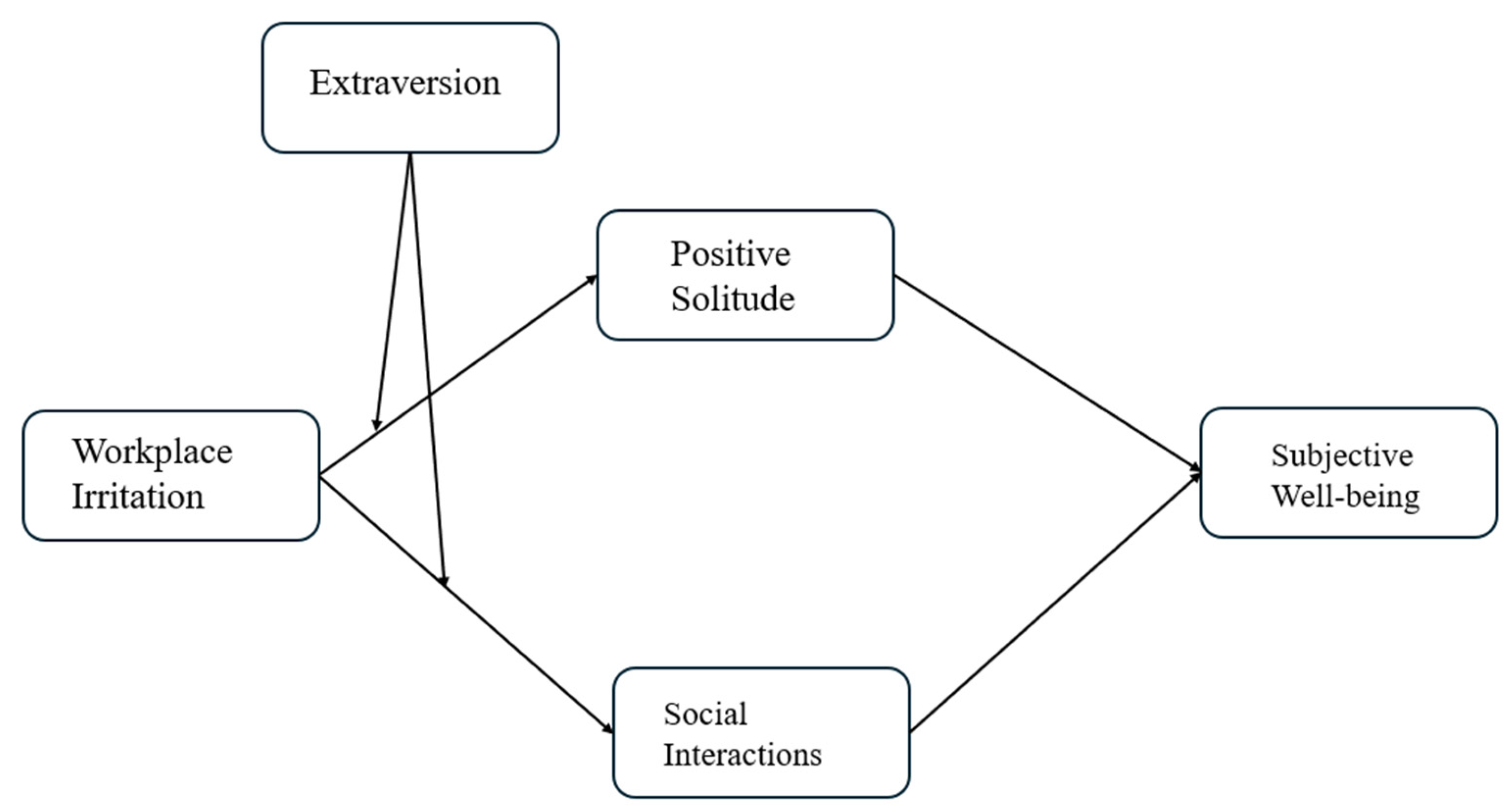
Furthermore, we propose that the recovery process depends heavily on the adoption of specific recovery strategies [16]. Specifically, we posit two distinct yet parallel recovery strategies: positive solitude (PS) and social interactions (SI). While positive solitude is a voluntary, satisfying, and meaningful state of being alone that fosters self-connection and personal growth [17], social interactions capture the dynamic process of interpersonal engagement driven by the desire for affiliation, facilitating bonding, cultural exchange, and mutual support [18]. Past literature has demonstrated that there are two primary pathways through which individuals achieve attentional recovery: positive solitude and social interaction [17,18]. Accordingly, the proposed model identifies these two constructs, rather than other non-workplace recovery options, as the focal mediating variables, because they represent the intrapersonal and interpersonal pathways through which employees actively regulate resources and restore subjective well-being. These two recovery strategies can be further understood in terms of the four restorative characteristics outlined by Attention Restoration Theory: being away, fascination, extent, and compatibility, which capture the essential nature of the recovery experience within the ART framework [19]. Therefore, we develop a dual-path model to understand how recovery from workplace irritation can be personalised, and to expand the pool of strategies for psychological detachment in the workplace context.
We further propose that a stable individual difference extraversion (EX) serves as a crucial boundary condition in this dual-path model [20,21]. Compared with introverts, who tend to engage in solitary activities such as reading and listening to music, extroverted employees, who are more likely to pursue social connections with friends or family members, more frequently utilise social activities to recover from workplace irritation [22]. Correspondingly, employees with lower levels of extraversion are expected to be more motivated to engage in active solitude strategies.
To address the research gap mentioned previously, this study seeks to answer two research questions: (1) How does workplace irritation motivate employees to proactively engage in attention restoration strategies (i.e., positive solitude and social interactions), and (2) how does extraversion moderate the pathway through which employees recover from irritation? Specifically, using the lens of ART, this study develops a dual-path moderated-mediation model to investigate how workplace irritation stimulates employees’ proactive engagement in two attention-restoration strategies (positive solitude and social interaction) and how extraversion conditions these recovery pathways. In sum, by building a dual-path model to illustrate how employees proactively recover from workplace irritation, the current study makes several theoretical and practical contributions. First, by introducing ART as the theoretical framework, this study is among the first to conceptualise recovery from workplace irritation as a dynamic process of attention restoration, thereby expanding ART’s application to the domain of organisational behaviour. Second, this study adds to the workplace irritation literature by establishing a dual-path mediation model (positive solitude and social interaction) to reveal the personalised and complex process of recovery from irritation, thereby enriching the pool of recovery strategies and advancing the literature on the sustainability of Human Resource Management (HRM). Third, by employing extraversion as a moderator, this study reveals the crucial role of stable individual differences in shaping the recovery process, thereby providing a deeper, more nuanced understanding of sustainable organisational human resource development.

2. Literature Review and Hypotheses

2.1. Attention Restoration Theory

Attention Restoration Theory (ART) was formally proposed by Kaplan and Kaplan (1995) to explain why and how certain environments can help individuals recover from mental fatigue [7]. According to ART, in attention-taxing environments, continuous attention depletion may lead to detrimental workplace outcomes, such as poorer decision-making and lower levels of self-control [13]. ART posits that exposure to environments rich in restorative qualities can alleviate this fatigue by allowing directed attention to rest. In these environments, a different, less effortful type of attention, involuntary attention, is engaged, facilitating a recovery process termed “attention restoration” [7,8]. To operationalize this, ART highlights four core attributes that constitute a restorative environment: being-away (a sense of psychological distance from routine demands), fascination (effortless attention drawn by the environment’s intrinsic interest), extent (the environment’s coherence and scope, creating a “whole other world”), and compatibility (the fit between the environment’s offerings and one’s inclinations or needs) [7].
Although ART was initially developed with natural settings such as forests and lakes in mind, subsequent studies have robustly demonstrated that its principles are not confined to such contexts. Prior research has increasingly applied this theory in the organisational literature to explain the recovery process under negative working contexts [16]. This theoretical expansion provides a solid foundation for applying ART to the complex social and psychological landscape of the workplace.
Within the framework of our research, we conceptualise the recovery process as the progression from a state characterised by diminished directed attention, manifested as workplace irritation, to one marked by the restoration of cognitive capacity. Drawing on Attention Restoration Theory (ART), the success of this transition depends on the extent to which employees’ chosen activities embody the four restorative characteristics outlined by the theory. Our model emphasises two such activities: positive solitude, which facilitates the restorative qualities of being-away and compatibility by providing relief from social demands; and social interactions, which, when experienced positively and voluntarily, offer fascination and compatibility through shared engagement. By anchoring our dual-path model in ART, this study explicitly links the fundamental mechanism of attention restoration to these two distinct employee behaviours, positive solitude and social interactions. This theoretical grounding allows us to formulate specific hypotheses about how the restorative attributes of these activities mediate the relationship between workplace irritation and subjective well-being, and how individual personality differences, particularly extraversion, moderate these pathways.

2.2. Workplace Irritation and Recovery Pathways

We first focus on how workplace irritation triggers dual-path recovery strategies. The cognitive fatigue and irritation induced by workplace demands generate psychological costs and a heightened need for recovery [23]. Positive solitude addresses this by offering a context relatively free from social and work-related demands, allowing for introspection and mental quiet. Such a context may facilitate the sense of being away and the effortless engagement associated with fascination in ART, thereby enabling the replenishment of depleted directed-attention resources [7]. We therefore hypothesise that workplace irritation drives employees’ use of this internally focused recovery strategy.
Conversely, workplace irritation may lead to a need for emotional validation and support. We propose that social interaction facilitates detachment not through solitude but by absorbing the individual’s attention in positive, supportive exchanges. Social interactions can provide an engaging alternative focus that shifts attention away from work stressors and creates temporary psychological distance from work demands, thereby supporting attentional recovery in a manner consistent with ART [7]. Thus, workplace irritation is also expected to prompt engagement in this externally focused strategy.
H1. 
Workplace irritation is positively related to engagement in positive solitude.
H2. 
Workplace irritation is positively related to engagement in social interactions.

2.3. The Mediating Roles of Positive Solitude and Social Interactions

Research has increasingly suggested that employees proactively shape the interface between their work and nonwork domains through work–nonwork balance crafting, which may help maintain or improve their well-being [24]. We further propose that both positive solitude and social interaction separately mediate the relationship between workplace irritation and subjective well-being. Accordingly, the proposed model identifies positive solitude and social interaction as two focal mediating mechanisms, as they capture the intrapersonal and interpersonal ways in which employees actively regulate resources and facilitate recovery-related well-being outcomes [25]. This selection is theoretically important, as prior research has shown that recovery contributes to the replenishment of internal resources and the maintenance of well-being. Building on this perspective, positive solitude may serve as an intrapersonal route to self-regulation, whereas social interaction may function as an interpersonal source of relational support for recovery.
Empirical research suggests that positive solitude, when accompanied by workplace mindfulness and job autonomy, may become a self-regulatory experience that helps employees transform the negative emotions associated with loneliness into productive outcomes [25]. Positive solitude may be restorative, as research on solitude and silence suggests that such experiences can support therapeutic outcomes, self-reflection, and personal growth [26]. These activities allow individuals to deliberately free themselves from the need to expend attention, regulate emotions, and deliberately replenish their exhausted spiritual resources [27]. This positive recovery not only enhances decision-making and emotional flexibility under high pressure but also creates a cognitive space for deliberate self-analysis and adaptive self-learning. This process of recovering psychological resources not only helps translate immediate perceptions into sustainable improvements in work productivity and subjective well-being but also strengthens the psychological foundation on which the long-term sustainability of the organisation’s human resources depends.
Social interactions, on the other hand, may serve as an important intermediary mechanism linking workplace stimulation to employees’ subjective well-being, Consistent with Attention Restoration Theory and research on at-work recovery, social interactions can help foster restorative conditions by facilitating a sense of being away, fascination, and compatibility, thereby supporting employees’ recovery experiences and well-being [6,13,28], enabling employees to consciously divert attention from the stimulus and activate recovery of psychological resources. Social interactions may function as a beneficial intermediary mechanism through which employees recover from workplace frustrations. In particular, social interactions appear to facilitate recovery experiences, especially relaxation, thereby reducing emotional exhaustion and enhancing job satisfaction, with positive implications for employee well-being [29]. As attention accumulates in the workplace, the role of social interaction becomes especially noticeable. Empirical evidence suggests that supportive social and leisure-related engagement can strengthen coping resources, facilitate access to social support, and promote recovery processes, thereby contributing to longer-term well-being and growth [30,31,32]. Through these spontaneous and relational processes, social interactions explain how employees actively transform workplace irritation into improved subjective well-being, emphasising their role as important mediators in resource recovery and emotional adaptation. In short, we make two hypotheses:
H3. 
Positive solitude mediates the relationship between workplace irritation and subjective well-being.
H4. 
Social interactions mediate the relationship between workplace irritation and subjective well-being.

2.4. The Moderating Role of Extraversion

“Extraversion” refers to a personality trait characterised by social abilities and vitality in social interactions [33]. Extroverts actively seek external stimuli and emotional support through social interactions [34]. In contrast, introverts tend to prefer solitude to maintain inner balance and consciously practice reflexive self-regulation. Research shows that people with low extroversion tend to consciously choose solitary activities as an adaptive mechanism to cope with attention demands in the workplace [35]. In this study, we believe that extroversion shapes how employees proactively manage workplace irritation through various strategies to maintain subjective well-being.
Studies show that less extraverted individuals are more likely to actively use positive solitude as a deliberate recovery strategy, in line with their self-orientation toward introspection and emotional regulation [36,37]. For introverts, loneliness provides a conscious psychological space that frees them from stress, independently triggering the recovery of cognitive and emotional resources [38]. Thus, lower levels of extraversion will promote an active, indirect pathway linking attention consumption to subjective well-being in the workplace via positive solitude. In contrast, extroverts have a stronger motivation for social engagement and are more likely to actively use social interaction as a conscious response strategy for managing incentives in the workplace. Extroverts frequently pursue and build social connections to manage their emotions and reduce stress, relying on interactions with others to receive immediate feedback and emotional support [39]. By intentionally engaging in social interactions, they can more effectively manage workplace stress, develop emotional connections, reduce negative emotions, and increase subjective well-being [40,41].
Thus, we propose that extraverted employees are more likely than introverted employees to exhibit the pathway linking workplace attention depletion and subjective well-being through social interactions. Employees with lower levels of extraversion are more likely to engage in positive solitude as a recovery strategy.
H5: 
Extraversion moderates the indirect relationship of workplace irritation on subjective well-being via positive solitude, such that lower levels of extraversion strengthen the indirect relationship.
H6: 
Extraversion moderates the indirect relationship of workplace irritation on subjective well-being via social interactions, such that higher levels of extraversion strengthen the indirect relationship.
Given the proposed hypotheses and the above insights, we propose the conceptual model illustrated in Figure 1.

3. Method

The data for this study were collected from frontline employees (including front office, housekeeping, and guest services departments) at a large-scale local hotel in Chongqing, China. We employed a purposive sampling method to ensure that all participants were at least 18 years old and engaged in direct service roles. Participation was entirely voluntary, and all respondents were assured of strict anonymity, with the data used exclusively for academic research. Detailed demographic characteristics of the sample are presented in Table A1.
To minimise common method bias, the study utilised a three-wave research design with one-week intervals between phases. At Time 1 (29 October–4 November 2024), 356 employees reported their level of workplace irritation. One week later, at Time 2 (5–11 November 2024), the same participants reported positive solitude, social interaction, and extraversion. Finally, at Time 3 (12–30 November 2024), subjective well-being was measured.
To ensure accurate data alignment across the three phases while maintaining respondent confidentiality, we implemented a unique alphanumeric matching code. Participants were asked to provide the last four digits of their mobile phone numbers, combined with the initial of their first name (e.g., “5678ZS”). Questionnaires were distributed on-site (paper-and-pencil/field survey) to ensure a high response rate and provide immediate clarification if needed. Data analysis, including measurement and structural model testing, was conducted using Mplus 8.3, while descriptive statistics were processed via SPSS 26.0.

4. Measures

In this study, the back-translation process proposed by Brislin [42] was employed to translate the original English questionnaire into Chinese. All items were measured by a 7-point Likert scale (1 = strongly disagree, 7 = strongly agree).
We measured workplace irritation using the seven-item scale by Gralla et al. [43]. The sample item is ‘I have difficulty relaxing after work’ (Cronbach’s alpha = 0.94). We measure positive solitude by using Ost-Mor et al.’s [44] seven-item scale. Sample item is ‘When I find time for myself, I succeed better at making plans’ (Cronbach’s alpha = 0.93). Employees’ engagement in social interactions was measured using Sonnentag et al.’s [45] four-item scale. Sample item is ‘I devote myself to enjoyable things’ (Cronbach’s alpha = 0.92). Following Tang and Lam’s [46] three-item scale, we measure employees’ extraversion in a three-item scale. Sample item is ‘I feel comfortable around people’ (Cronbach’s alpha = 0.91). Finally, subjective well-being was assessed using a seven-item scale from Agyeiwaah et al. [47]. Sample item is featuring ‘I am excited about my life’ (Cronbach’s alpha = 0.95). The standardized factor loadings and composite reliability values of all measurement items are reported in Table A2.

4.1. Participants

Across three phases, we collected questionnaires from 356 participants. Among them, 50.6% were female, and 49.4 were male. 29.5% were high school or middle school graduates, 19.9% held a vocational or associate degree, 37.1% held a bachelor’s degree, 13.5% with a master’s degree or higher. Moreover, regarding tenure, 9.3% of participants had less than 1 year, 31.7% had 1 to 3 years, 37.4% had 3 to 5 years, and 21.6% had more than 5 years. Finally, regarding the restoration of attention to weekly working hours, 54.2% of participants had more than 40 h, 19.7% had 30 to 40 h, 17.1% had 20 to 30 h, and 9.0% had less than 20 h.

4.2. Common Method Bias

According to Kock et al. [48], standard method bias is not considered serious if a single factor from the unrotated solution (including all measured items) explains less than 50% of the variance. In this study, the analysis revealed a single factor explaining 45.7% of the variance, suggesting that common method bias was unlikely to pose a significant concern.

4.3. Descriptive Statistics

Table 1 presents the means, standard deviations, average variance extracted (AVE), and correlations for the study variables. The AVE values for all constructs exceeded 0.5, indicating adequate convergent validity. The results further revealed that Workplace Irritation (WI) was significantly and positively associated with Positive Solitude (PS) (r = 0.68, p < 0.01). Similarly, Workplace Irritation (WI) exhibited a positive association with Social Interactions (SI) (r = 0.42, p < 0.01). These findings provided initial support for Hypotheses 1 and 2.

4.4. Comparison Models

The comparison of model fit indices demonstrated that the five-factor measurement model provided the best fit to the data (χ2 = 429.445, df = 367, χ2/df = 1.170, root mean square error of approximation [RMSEA] = 0.022, confirmatory fit index [CFI] = 0.993, Tucker–Lewis index [TLI] = 0.992, standardised root mean square residual [SRMR] = 0.029). The fit of the single-factor model was substantially poorer, as indicated by a significantly higher χ2 value (χ2 = 3991.475, df = 377, χ2/df = 10.587, RMSEA = 0.164, CFI = 0.601, TLI = 0.571, SRMR = 0.116). The deterioration in model fit as factors were combined supported the appropriateness of the five-factor structure in accurately representing the data, as shown in Table 2.

4.5. Hypothesis Testing

Table 3 presents the results of the direct, indirect, and moderated mediation analyses. Consistent with Hypotheses 1 and 2, WI was positively associated with PS (β = 0.73, SE = 0.04, 95% CI [0.64, 0.80], p < 0.01) and SI (β = 0.47, SE = 0.05, 95% CI [0.36, 0.57], p < 0.01). Both coefficients were positive, and their confidence intervals did not include zero, thus supporting H1 and H2.
The mediation results were also consistent with expectations. WI had a significant indirect effect on SWB through PS (β = 0.16, SE = 0.06, 95% CI [0.06, 0.28], p < 0.01), supporting H3. Similarly, the indirect effect of WI on SWB through SI was significant (β = 0.10, SE = 0.03, 95% CI [0.05, 0.17], p < 0.01), supporting H4. As both bootstrap confidence intervals excluded zero, the mediating roles of PS and SI were confirmed.
The moderated mediation results showed different patterns for the two indirect paths. The indirect effect through PS did not vary significantly across levels of EX (β = −0.01, SE = 0.02, 95% CI [−0.04, 0.02], p = 0.66). Because the confidence interval included zero, H5 was not supported. In contrast, the index of moderated mediation for the indirect path through SI was significant (β = 0.08, SE = 0.03, 95% CI [0.03, 0.15], p < 0.01), indicating that EX significantly strengthened the indirect effect of WI on SWB through SI. Therefore, H6 was supported.
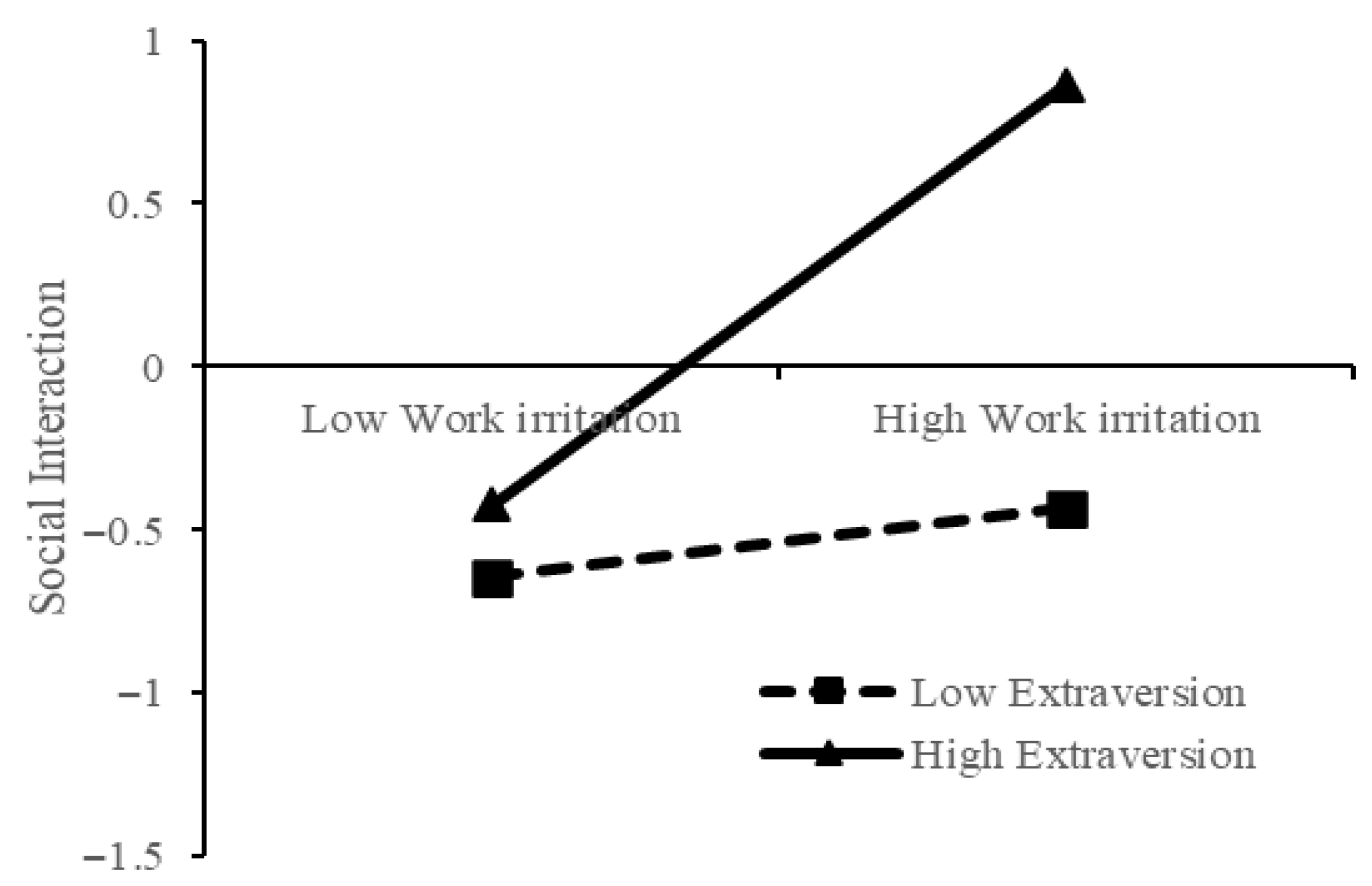
To further illustrate this moderation pattern, the conditional effects of WI on SI were examined at three levels of EX, as reported in Table 4. When EX was low (−1 SD), the effect of WI on SI was relatively weak (β = 0.12, SE = 0.09, 95% CI [−0.05, 0.31]). At the mean level of EX, the effect became stronger and significant (β = 0.45, SE = 0.10, 95% CI [0.25, 0.63]). When EX was high (+1 SD), the effect was strongest (β = 0.79, SE = 0.16, 95% CI [0.44, 0.99]). Taken together, these findings indicate that the positive relationship between WI and SI became progressively stronger as EX increased.
Figure 2 shows the same pattern visually. The slope for employees high in EX was steeper than that for those low in EX, indicating that higher extraversion amplified the positive effect of WI on SI. This graphical pattern was consistent with the conditional effects reported in Table 4.

5. Discussion

By conceptualizing recovery from workplace irritation as attentional restoration within the Attention Restoration Theory (ART) framework, this study develops a dual-path moderated mediation model to explain how workplace irritation influences subjective well-being and under what conditions this process varies. Consistent with prior research on recovery and restoration [16,49], our findings demonstrate that both positive solitude and social interactions serve as parallel mediators through which irritated employees replenish depleted attentional resources, buffer irritation, and enhance subjective well-being. This extends workplace irritation research, which has predominantly focused on negative outcomes rather than recovery mechanisms [2,50,51]. Furthermore, our results suggest that recovery preferences depend on extraversion: highly extraverted employees are more likely to engage in social interactions, aligning with prior evidence that extraverts benefit more from interpersonal engagement [52,53]. Notably, extraversion does not moderate the positive solitude pathway. A possible explanation is that positive solitude reflects individuals’ sense of connection with themselves, without emphasizing or requiring physical separation from others [54].

5.1. Theoretical Implications

This study makes several theoretical contributions. First, we are among the first to conceptualize workplace irritation recovery as a process of attentional restoration within the Attention Restoration Theory (ART) framework [6]. In doing so, we extend workplace irritation research from a predominant focus on antecedents and negative outcomes to a recovery-oriented perspective [50,52]. Our findings also highlight employees’ proactive role in the recovery process, underscoring the importance of self-regulatory mechanisms in negative work contexts [16,55]. Additionally, by introducing ART into the workplace setting, we contribute to the organizational stress literature and broaden the applicability of this framework beyond its traditional domains [56].
Second, by developing a dual-path mediating model, we identify two parallel recovery strategies, positive solitude and social interactions, to explain how employees recover from workplace irritation within the ART framework. Prior research has rarely examined these two strategies together in workplace settings [28,57,58]. Therefore, we enrich the pool of workplace recovery strategies, particularly from the perspective of attention restoration. Our findings also extend ART by demonstrating that recovery is not a singular process but a complex and personalized one shaped by different restorative experiences [28,59,60].
Third, by introducing extraversion as a critical boundary condition [33,34], this study further clarifies when and for whom particular recovery strategies are most effective. Specifically, our results show that workplace irritation and individual differences jointly influence recovery behavior, suggesting that recovery depends not only on situational factors but also on personality traits [28,53,61]. The finding that the social interaction pathway is stronger for extraverts aligns with established views of extraversion as socially oriented [52,62]. More importantly, extraversion does not moderate the positive solitude pathway. This suggests that positive solitude may serve as a relatively accessible recovery tool [25,26], as it does not rely on social bonding and may therefore benefit both introverts and extraverts [34,35,54].

5.2. Practical Implications

This study highlights the important role employees play in maintaining attention and psychological resources to achieve sustainable productivity. In the workplace, negative events are often unavoidable, and they can trigger anger, deplete attention, and weaken emotional stability and work efficiency [63]. Therefore, helping employees recover psychological resources is essential for sustaining both well-being and performance.
To address this challenge, two complementary recovery strategies are especially important: positive solitude and social interactions. Positive solitude supports recovery by enabling introspection and self-directed emotional regulation, whereas social interactions facilitate recovery through relationship engagement and interpersonal connection [33]. Together, these two strategies offer distinct but mutually reinforcing pathways for restoring attention and mental resources.
Organisations can further institutionalise these recovery strategies through concrete interventions. On the one hand, to support positive solitude, organisations may designate quiet spaces or reflective zones where employees can temporarily disengage from work demands without stigma. On the other hand, to encourage social interaction, organisations may offer voluntary group activities, such as team-building sessions or peer mentoring circles. By offering a range of recovery options, organisations allow employees to choose the strategies that best fit their personal preferences, thereby fostering more sustainable engagement.
These practices contribute directly to sustainable HRM. Recovery opportunities help interrupt the negative cycle of attentional depletion and burnout, thereby promoting long-term well-being and performance without compromising employee health. From this perspective, recovery should not be treated merely as an individual responsibility; rather, organisations that embed recovery support into daily operations are making a long-term investment in their workforce’s capacity to thrive.
In addition, a personality-sensitive approach to HR policies can further strengthen autonomous and equitable recovery. Extraverted employees may benefit more from collaborative initiatives such as team-building activities and peer mentoring, whereas introverted employees may prefer flexible work schedules or self-managed recovery opportunities. By aligning recovery support with diverse personality traits, organisations can cultivate a more active and resilient workforce, reinforce a sustainable human resource ecosystem, and ultimately enhance both employee well-being and productivity.

5.3. Limitations and Future Research Directions

This study has several limitations that suggest directions for future research. In addition, some sample attrition occurred across the three survey waves, which may have reduced the representativeness of the final matched sample and introduced potential attrition bias. First, because the sample was drawn from the hotel sector, the generalizability of the findings to other industries remains uncertain. Future research should test the proposed moderated mediation model in other occupational contexts to establish its boundary conditions and external validity. Second, although gender and tenure were controlled, they were not central to the theoretical model. Future studies could examine whether the focal relationships vary across these groups. Third, while this study identified recovery strategies for attention depletion, it did not examine what drives employees to engage in recovery proactively. Future research should investigate how individual, team, and organisational factors shape recovery initiation, ideally through longitudinal designs that also capture long-term developmental outcomes. Fourth, only two recovery pathways and one personality trait were examined. Future studies could consider a broader range of recovery behaviours and personality traits to understand better how person–recovery fits. Fifth, the cross-sectional design limits causal inference; experimental, longitudinal, and experience sampling approaches would help clarify causal direction and temporal dynamics. Sixth, although extraversion did not moderate the positive solitude pathway, replication is needed to determine whether this null effect is robust across alternative measures, larger samples, and different contextual conditions. Seventh, social interactions were measured using the item (“I devote myself to enjoyable things”), which may also capture non-social enjoyable activities and thus introduce construct-irrelevant variance; future study can consider refining the skill to improve clarity.

6. Conclusions

This study investigated how employees recover from workplace irritation and under what conditions recovery is most effective. Drawing upon Attention Restoration Theory, we developed and tested a dual-path moderated mediation model in which positive solitude and social interactions serve as parallel mediators, with extraversion moderating the social interaction path. Our findings demonstrate that: (1) workplace irritation negatively affects subjective well-being; (2) both positive solitude and social interactions mediate this relationship by restoring attentional resources; and (3) extraversion moderates the social interaction path—such that social interactions are more effective for extraverts—but does not moderate the positive solitude path, suggesting that positive solitude is a universally accessible recovery strategy.
These findings yield actionable recommendations for sustainable HRM. Organisations can support employee recovery by providing quiet spaces, flexible work arrangements, and voluntary social activities, while adopting a personality-sensitive approach that allows employees to self-select recovery strategies aligned with their dispositions. By enabling effective recovery, organisations not only mitigate the negative effects of workplace irritation but also foster long-term well-being and sustainable productivity.
Future research should extend our model by examining additional recovery strategies, incorporating other personality traits, employing longitudinal designs, and testing the generalizability of our findings across industries. Such efforts will advance our understanding of how organisations can create conditions that enable employees to thrive despite inevitable workplace stressors.

Author Contributions

Y.Z.: Project administration; Validation; Writing—review & editing; Conceptualization; Y.W.: Writing—original draft; Formal analysis; Investigation; Conceptualization; L.Z.: Writing—original draft; Conceptualization; Data curation; Formal analysis; Q.F.: Methodology; Software; S.C.—review & editing; Resources; J.T.: Writing—review & editing; Supervision. All authors have read and agreed to the published version of the manuscript.

Funding

This research received no external funding.

Institutional Review Board Statement

This study is waived for ethical review as this research did not collect any traceable data from respondents, and respondents’ personal identify and/or data cannot be identified by Institution Committee.

Informed Consent Statement

Informed consent for publication was obtained from all identifiable human participants.

Data Availability Statement

The original contributions presented in this study are included in the article. Further inquiries can be directed to the corresponding author.

Conflicts of Interest

The authors declare no conflict of interest.

Appendix A

Table A1. Demographic Characteristics of the Sample (N = 356).
VariableCategoryFrequency (n)Percentage (%)
GenderMale17649.4
Female18050.6
EducationJunior high school or below308.4
High school7521.1
Junior college/vocational college7119.9
Bachelor’s degree13237.1
Master’s degree or above4813.5
Years in current industryLess than 1 year339.3
1–3 years11331.7
3–5 years13337.4
More than 5 years7721.6
Average weekly working hoursLess than 20 h329.0
20–30 h6117.1
30–40 h7019.7
More than 40 h19354.2
Years working with supervisorLess than 3 months6016.9
3–12 months11632.6
1–3 years12635.4
More than 3 years5415.2
Table A2. Factor Loadings and Composite Reliability of Measurement Items.
VariableFactor Loading CR
Workplace irritation 1 0.8140.943
Workplace irritation 20.813
Workplace irritation 30.823
Workplace irritation 40.814
Workplace irritation 50.815
Workplace irritation 60.836
Workplace irritation 7 0.828
Workplace irritation 80.830
Positive solitude 10.8310.938
Positive solitude 20.813
Positive solitude 30.828
Positive solitude 40.827
Positive solitude 50.838
Positive solitude 60.812
Positive solitude 70.834
Social interactions 10.8470.921
Social interactions 20.868
Social interactions 30.880
Social interactions 40.856
Extraversion 10.8990.916
Extraversion 20.894
Extraversion 30.864
Subject well-being 10.8790.958
Subject well-being 20.852
Subject well-being 30.887
Subject well-being 40.872
Subject well-being 50.897
Subject well-being 60.864
Subject well-being 70.874

References

  1. Kharb, P.; Kumar, R. Strategies for Mitigating Job Stress and Improving Job Satisfaction in the Hotel Industry: A Multidimensional Approach with Reference to Delhi-NCR. Int. J. Hosp. Manag. Sci. 2023, 1, 116–127. [Google Scholar]
  2. Mohr, G.; Müller, A.; Rigotti, T.; Aycan, Z.; Tschan, F. The Assessment of Psychological Strain in Work Contexts: Concerning the Structural Equivalency of Nine Language Adaptations of the Irritation Scale. Eur. J. Psychol. Assess. Off. Organ Eur. Assoc. Psychol. Assess. 2006, 22, 198–206. [Google Scholar] [CrossRef]
  3. Cartwright, S.; Cooper, C.L. Managing Workplace Stress; Sage: Thousand Oaks, CA, USA, 1997; Volume 1. [Google Scholar]
  4. Eisenberger, R.; Huntington, R.; Hutchison, S.; Sowa, D. Perceived organizational support. J. Appl. Psychol. 1986, 71, 500. [Google Scholar] [CrossRef]
  5. Johari, F.S. Work-related stress and coping strategies: A systematic literature review. Int. J. Acad. Res. Bus. Soc. Sci. 2020, 10, 1016–1032. [Google Scholar] [CrossRef] [PubMed]
  6. Kaplan, R.; Kaplan, S.; Brown, T. Environmental preference: A comparison of four domains of predictors. Environ. Behav. 1989, 21, 509–530. [Google Scholar] [CrossRef]
  7. Kaplan, S. The restorative benefits of nature: Toward an integrative framework. J. Environ. Psychol. 1995, 15, 169–182. [Google Scholar] [CrossRef]
  8. Kaplan, S.; Berman, M.G. Directed attention as a common resource for executive functioning and self-regulation. Perspect. Psychol. Sci. 2010, 5, 43–57. [Google Scholar] [CrossRef]
  9. Sonnentag, S.; Kuttler, I.; Fritz, C. Job stressors, emotional exhaustion, and need for recovery: A multi-source study on the benefits of psychological detachment. J. Vocat. Behav. 2010, 76, 355–365. [Google Scholar] [CrossRef]
  10. Wütschert, M.S.; Pereira, D.; Schulze, H.; Elfering, A. Working from home: Cognitive irritation as mediator of the link between perceived privacy and sleep problems. Ind. Health 2021, 59, 308–317. [Google Scholar] [CrossRef]
  11. Berto, R. The role of nature in coping with psycho-physiological stress: A literature review on restorativeness. Behav. Sci. 2014, 4, 394–409. [Google Scholar] [CrossRef]
  12. Bellini, D.; Barbieri, B.; Loi, M.; Mondo, M.; De Simone, S. The restorative quality of the work environments: The moderation effect of environmental resources between job demands and mindfulness. Soc. Sci. 2023, 12, 375. [Google Scholar] [CrossRef]
  13. Ohly, H.; White, M.P.; Wheeler, B.W.; Bethel, A.; Ukoumunne, O.C.; Nikolaou, V.; Garside, R. Attention Restoration Theory: A systematic review of the attention restoration potential of exposure to natural environments. J. Toxicol. Environ. Health Part B 2016, 19, 305–343. [Google Scholar] [CrossRef]
  14. Bardoel, E.A.; Drago, R. Acceptance and strategic resilience: An application of conservation of resources theory. Group Organ. Manag. 2021, 46, 657–691. [Google Scholar] [CrossRef]
  15. Jabeen, Q.; Nadeem, M.S.; Raziq, M.M.; Sajjad, A. Linking individuals’ resources with (perceived) sustainable employability: Perspectives from conservation of resources and social information processing theory. Int. J. Manag. Rev. 2022, 24, 233–254. [Google Scholar] [CrossRef]
  16. Sonnentag, S.; Cheng, B.H.; Parker, S.L. Recovery from work: Advancing the field toward the future. Annu. Rev. Organ. Psychol. Organ. Behav. 2022, 9, 33–60. [Google Scholar] [CrossRef]
  17. Jones, L.; Nguyen, T.V.; Thomas, V.; Weinstein, N.; Hewings, R.; Smith, M.D. Positive Connections and Solitude: Contribution to Loneliness Interventions and Policy Development; Buckinghamshire New University: Wycombe, UK, 2023. [Google Scholar]
  18. Lehmann-Willenbrock, N. Dynamic interpersonal processes at work: Taking social interactions seriously. Annu. Rev. Organ. Psychol. Organ. Behav. 2025, 12, 133–158. [Google Scholar] [CrossRef]
  19. Hilbert, M.; Binnewies, C.; Berkemeyer, L. Synergies between recovery from work and restorative environments for sustainable development: An integrative theoretical perspective. Gr. Interakt. Organ. Z. Angew. Organ. GIO 2024, 55, 201–207. [Google Scholar] [CrossRef]
  20. Fodstad, E.C.; Erga, A.H.; Pallesen, S.; Ushakova, A.; Erevik, E.K. Personality traits as predictors of recovery among patients with substance use disorder. J. Subst. Use Addict. Treat. 2024, 162, 209360. [Google Scholar] [CrossRef]
  21. Sonnentag, S.; Reinecke, L.; Mata, J.; Vorderer, P. Feeling interrupted—Being responsive: How online messages relate to affect at work. J. Organ. Behav. 2018, 39, 369–383. [Google Scholar] [CrossRef]
  22. Russell, E.; Woods, S.A.; Banks, A.P. Tired of email? Examining the role of extraversion in building energy resources after dealing with work-email. Eur. J. Work. Organ. Psychol. 2022, 31, 440–452. [Google Scholar] [CrossRef]
  23. Demerouti, E.; Bakker, A.B. The job demands-resources model: Challenges for future research. SA J. Ind. Psychol. 2011, 37, a974. [Google Scholar] [CrossRef]
  24. Kerksieck, P.; Kujanpää, M.; de Bloom, J.; Brauchli, R.; Bauer, G.F. A new perspective on balancing life domains: Work–nonwork balance crafting. BMC Public Health 2024, 24, 1099. [Google Scholar] [CrossRef]
  25. Yan, H.; Huang, X.; Qian, C.; Chen, B. When lonely employees are productive: An intervention study on workplace mindfulness and job autonomy. Curr. Psychol. 2024, 43, 23036–23052. [Google Scholar] [CrossRef]
  26. Naor, L.; Mayseless, O. The Wilderness Solo Experience: A Unique Practice of Silence and Solitude for Personal Growth. Front. Psychol. 2020, 11, 547067. [Google Scholar] [CrossRef] [PubMed]
  27. Rydstedt, L.W.; Johnsen, S.Å.K. Towards an integration of recovery and restoration theories. Heliyon 2019, 5, e02023. [Google Scholar] [CrossRef]
  28. Chan, P.H.; Howard, J.; Eva, N.; Tse, H.H. A systematic review of at-work recovery and a framework for future research. J. Vocat. Behav. 2022, 137, 103747. [Google Scholar] [CrossRef]
  29. Garmendia, P.; Fernández-Salinero, S.; Holgueras González, A.I.; Topa, G. Social support and its impact on job satisfaction and emotional exhaustion. Eur. J. Investig. Health Psychol. Educ. 2023, 13, 2827–2840. [Google Scholar] [CrossRef]
  30. Chesney, M.A.; Neilands, T.B.; Chambers, D.B.; Taylor, J.M.; Folkman, S. A validity and reliability study of the coping self-efficacy scale. Br. J. Health Psychol. 2006, 11, 421–437. [Google Scholar] [CrossRef]
  31. Strassburger, C.; Wachholz, F.; Peters, M.; Schnitzer, M.; Blank, C. Organizational leisure benefits—A resource to facilitate employees’ work-life balance? Empl. Relat. 2023, 45, 585–602. [Google Scholar] [CrossRef]
  32. Zautra, A.J.; Arewasikporn, A.; Davis, M.C. Resilience: Promoting Well-Being Through Recovery, Sustainability, and Growth. Res. Hum. Dev. 2010, 7, 221–238. [Google Scholar] [CrossRef]
  33. Lukaszewski, A.W. Extraversion. In Encyclopedia of Personality and Individual Differences; Springer: Cham, Switzerland, 2020; pp. 1514–1519. [Google Scholar]
  34. Blevins, D.P.; Stackhouse, M.R.D.; Dionne, S.D. Righting the balance: Understanding introverts (and extraverts) in the workplace. Int. J. Manag. Rev. IJMR 2022, 24, 78–98. [Google Scholar] [CrossRef]
  35. Nguyen, T.V.T.; Weinstein, N.; Ryan, R.M. Who enjoys solitude? Autonomous functioning (but not introversion) predicts self-determined motivation (but not preference) for solitude. PLoS ONE 2022, 17, e0267185. [Google Scholar] [CrossRef] [PubMed]
  36. Nguyen, T.V.T.; Ryan, R.M.; Deci, E.L. Solitude as an approach to affective self-regulation. Personal. Soc. Psychol. Bull. 2018, 44, 92–106. [Google Scholar] [CrossRef]
  37. Weinstein, N.; Hansen, H.; Nguyen, T.V. Who feels good in solitude? A qualitative analysis of the personality and mindset factors relating to well-being when alone. Eur. J. Soc. Psychol. 2023, 53, 1443–1457. [Google Scholar] [CrossRef]
  38. Santos, D.B.A. The Well-Being Revolution: An Integrative, Scientific, and Practical Guide for a Happier Life. Doctoral Dissertation, University of Pennsylvania, Philadelphia, PA, USA, 2024. [Google Scholar]
  39. Wickett, R.; Muhlert, N.; Niven, K. The influence of personality on interpersonal emotion regulation in the context of psychosocial stress. Int. J. Environ. Res. Public Health 2023, 20, 3073. [Google Scholar] [CrossRef]
  40. Jolly, P.M.; Kong, D.T.; Kim, K.Y. Social support at work: An integrative review. J. Organ. Behav. 2021, 42, 229–251. [Google Scholar] [CrossRef]
  41. Di Pompeo, I.; D’aurizio, G.; Burattini, C.; Bisegna, F.; Curcio, G. Positive mood induction to promote well-being and health: A systematic review from real settings to virtual reality. J. Environ. Psychol. 2023, 91, 102095. [Google Scholar] [CrossRef]
  42. Brislin, R.W. Back-Translation for Cross-Cultural Research. Ph.D. Dissertation, The Pennsylvania State University, Philadelphia, PA, USA, 1969. [Google Scholar]
  43. Gralla, M.S.; Guendel, H.; Mueller, A.; Braehler, E.; Häuser, W.; Kruse, J.; Muschalla, B.; Rigotti, T.; Strauss, B.; Balint, E.M. Validation of the irritation scale on a representative German sample: New normative data. Sci. Rep. 2023, 13, 15374. [Google Scholar] [CrossRef]
  44. Ost Mor, S.; Palgi, Y.; Segel-Karpas, D. The definition and categories of positive solitude: Older and younger adults’ perspectives on spending time by themselves. Int. J. Aging Hum. Dev. 2021, 93, 943–962. [Google Scholar] [CrossRef]
  45. Sonnentag, S.; Arbeus, H.; Mahn, C.; Fritz, C. Exhaustion and lack of psychological detachment from work during off-job time: Moderator effects of time pressure and leisure experiences. J. Occup. Health Psychol. 2014, 19, 206. [Google Scholar] [CrossRef]
  46. Tang, C.M.F.; Lam, D. The role of extraversion and agreeableness traits on Gen Y’s attitudes and willingness to pay for green hotels. Int. J. Contemp. Hosp. Manag. 2017, 29, 607–623. [Google Scholar] [CrossRef]
  47. Agyeiwaah Bangwayo-Skeete, P.; Opoku, E.K. The impact of migrant workers’ inclusion on subjective well-being, organizational identification, and organizational citizenship behavior. Tour. Rev. 2024, 79, 250–265. [Google Scholar] [CrossRef]
  48. Kock, F.; Berbekova, A.; Assaf, A.G. Understanding and managing the threat of common method bias: Detection, prevention and control. Tour. Manag. 2021, 86, 104330. [Google Scholar] [CrossRef]
  49. Steed, L.B.; Swider, B.W.; Keem, S.; Liu, J.T. Leaving work at work: A meta-analysis on employee recovery from work. J. Manag. 2021, 47, 867–897. [Google Scholar] [CrossRef]
  50. Dormann, C.; Zapf, D. Social stressors at work, irritation, and depressive symptoms: Accounting for unmeasured third variables in a multi-wave study. J. Occup. Organ. Psychol. 2002, 75, 33–58. [Google Scholar] [CrossRef]
  51. Baethge, A.; Rigotti, T. Interruptions to workflow: Their relationship with irritation and satisfaction with performance, and the mediating roles of time pressure and mental demands. Work. Stress 2013, 27, 43–63. [Google Scholar] [CrossRef]
  52. Huang, J.L.; Bramble, R.J.; Liu, M.; Aqwa, J.J.; Ott-Holland, C.J.; Ryan, A.M.; Lounsbury, J.W.; Elizondo, F.; Wadlington, P.L. Rethinking the association between extraversion and job satisfaction: The role of interpersonal job context. J. Occup. Organ. Psychol. 2016, 89, 683–691. [Google Scholar] [CrossRef]
  53. Judge, T.A.; Zapata, C.P. The person–situation debate revisited: Effect of situation strength and trait activation on the validity of the Big Five personality traits in predicting job performance. Acad. Manag. J. 2015, 58, 1149–1179. [Google Scholar] [CrossRef]
  54. Palgi, Y.; Segel-Karpas, D.; Ost Mor, S.; Hoffman, Y.; Shrira, A.; Bodner, E. Positive Solitude Scale: Theoretical Background, Development and Validation. J. Happiness Stud. 2021, 22, 3357–3384. [Google Scholar] [CrossRef]
  55. Ilies, R.; Bono, J.E.; Bakker, A.B. Crafting well-being: Employees can enhance their own well-being by savoring, reflecting upon, and capitalizing on positive work experiences. Annu. Rev. Organ. Psychol. Organ. Behav. 2024, 11, 63–91. [Google Scholar] [CrossRef]
  56. Tang, P.M.; Klotz, A.; McClean, S.; Lee, R. From natural to novel: The cognition-broadening effects of contact with nature at work on creativity. J. Manag. 2024, 50, 2490–2533. [Google Scholar] [CrossRef]
  57. Lilius, J.M. Recovery at work: Understanding the restorative side of “depleting” client interactions. Acad. Manag. Rev. 2012, 37, 569–588. [Google Scholar] [CrossRef]
  58. Asselineau, A.; Grolleau, G.; Mzoughi, N. Quiet environments and the intentional practice of silence: Toward a new perspective in the analysis of silence in organizations. Ind. Organ. Psychol. 2024, 17, 326–340. [Google Scholar] [CrossRef]
  59. Bennett, A.A.; Gabriel, A.S.; Calderwood, C.; Dahling, J.J.; Trougakos, J.P. Better together? Examining profiles of employee recovery experiences. J. Appl. Psychol. 2016, 101, 1635. [Google Scholar] [CrossRef] [PubMed]
  60. Saito, H.; Lee, A.; Bui, H.T.; Baum, T. Fostering employee well-being and workplace recovery in the hospitality industry: The role of supportive break times at work. J. Hosp. Tour. Manag. 2024, 61, 91–100. [Google Scholar] [CrossRef]
  61. Tu, M.H.; Chi, N.W. How and when abusive supervision leads to recovery activities: The recovery paradox and the conservation of resources perspectives. J. Organ. Behav. 2024, 45, 558–575. [Google Scholar] [CrossRef]
  62. Wilmot, M.P.; Wanberg, C.R.; Kammeyer-Mueller, J.D.; Ones, D.S. Extraversion advantages at work: A quantitative review and synthesis of the meta-analytic evidence. J. Appl. Psychol. 2019, 104, 1447. [Google Scholar] [CrossRef] [PubMed]
  63. Ashkanasy, N.M.; Dorris, A.D. Emotions in the workplace. Annu. Rev. Organ. Psychol. Organ. Behav. 2017, 4, 67–90. [Google Scholar] [CrossRef]
Figure 1. Research framework.
Sustainability 18 04446 g001
Figure 2. The moderating effect of workplace irritation.
Sustainability 18 04446 g002
Table 1. Means, standard deviations, average variance extracted, and correlations.
VariableMeanSDAVE12345
1. Workplace irritation4.691.350.670.81
2. Positive Solitude4.601.360.680.68 **0.82
3. Social Interactions4.511.510.740.42 **0.45 **0.86
4. Extraversion4.671.610.790.59 **0.54 **0.49 **0.88
5. Subjective Well-being4.331.630.770.55 **0.53 **0.44 **0.41 **0.87
Note: ** p < 0.01. Bold values on the diagonal represent the square roots of the AVEs.
Table 2. Comparison models.
ModelDescriptionsχ2dfχ2/dfRMSEATFICFISRMR
Model 1Five factors: WI, PS, SI, EX, SWB.429.4453671.1700.0220.9930.9920.029
Model 2Four factors: WI, PS, SI, EX+SWB.1197.9813713.2290.0790.9090.8900.099
Model 3Three factors: WI, PS, SI+EX+SWB.2049.6053745.4800.1120.8150.7990.116
Model 4Two factors: WI, PS+SI+EX+SWB.3249.5943768.6430.1470.6830.6580.115
Model 5One factor: WI+PS+SI+EX+SWB.3991.47537710.5870.1640.6010.5710.116
Note: WI = workplace irritation, PS = Positive Solitude, SI = Social Interactions, EX = Extraversion, SWB = Subjective Well-being.
Table 3. Results of path, mediation, and moderated mediation analysis using Mplus 8.7.
ModelStandardised Effect (β)SEpLL 95% CIUL 95% CI
WI → PS0.73 **0.040.010.640.80
WI → SI0.47 **0.050.010.360.57
WI →PS → SWB0.16 **0.060.010.060.28
WI → SI → SWB0.10 **0.030.010.050.17
Index of moderated mediation
WI * EX →PS → SWB −0.010.020.66−0.040.02
WI * EX →SI → SWB0.08 **0.030.010.030.15
Note: All of the variables within the model were standardised prior to conducting the analysis. Gender, tenure, and working time were included as control variables. All reported p-values and confidence intervals are based on bias-corrected 95% confidence intervals obtained through bootstrap resampling (5000 iterations) in Mplus, SE = standard error, ** p < 0.01 (two-tailed), WI = Workplace Irritation, PS = Positive Solitude, SI = Social Interactions, EX = Extraversion, SWB = Subjective Well-being.
Table 4. Moderation effects at different levels of the moderating variables.
ModelStandardised Effect (β)SELL 95% CIUL 95% CI
Bootstrapping results for conditional effects of WI on SI at different levels of EX
−1 SD Low EX0.120.09−0.050.31
0 SD Medium EX0.450.100.250.63
+1 SD High EX0.790.160.440.99
Note: WI = Workplace Irritation, SI = Social Interactions, EX = Extraversion.
Disclaimer/Publisher’s Note: The statements, opinions and data contained in all publications are solely those of the individual author(s) and contributor(s) and not of MDPI and/or the editor(s). MDPI and/or the editor(s) disclaim responsibility for any injury to people or property resulting from any ideas, methods, instructions or products referred to in the content.